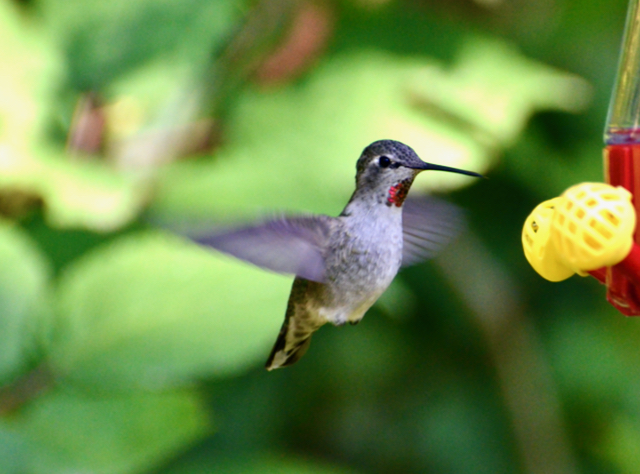
Anna and Rufous in Richmond Nature Park

Whenever I visit Vancouver, I’d go to Richmond Nature Park to see my avian friends, the hummingbirds there. Anna’s I’d seen before but still not met Rufous yet. Feeders provide the essential food they need and the small sanctuary is their haven for frolicking fun. I wasn’t fast enough to capture them with my camera as they play tag, but I was able to catch them while they were feeding or staying put on a branch for a few seconds.

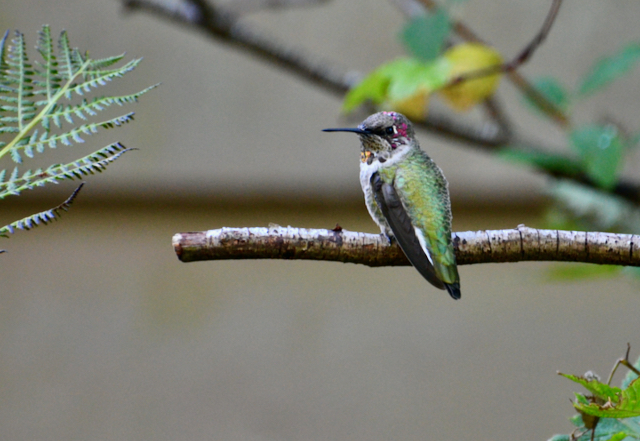
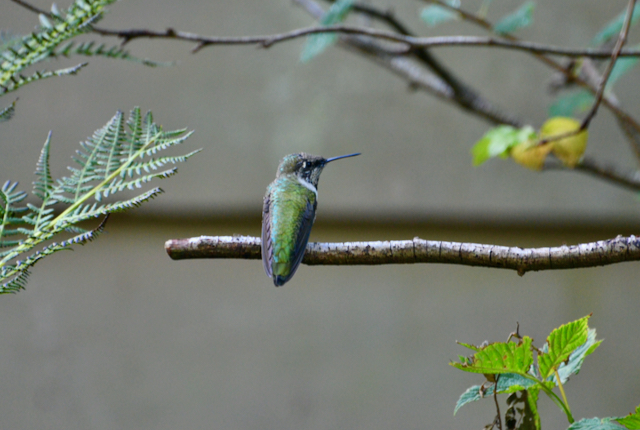
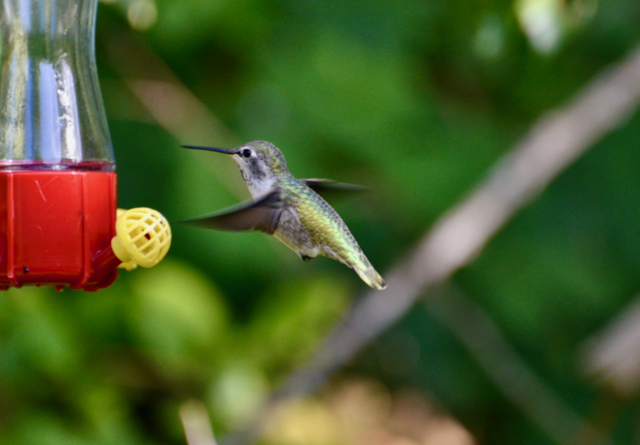
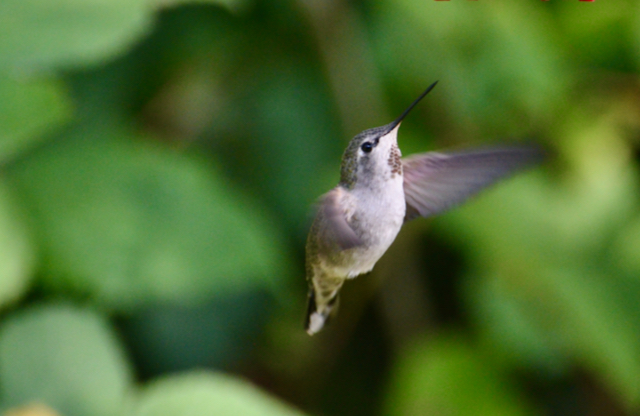
I’d only seen Anna’s Hummingbird there before. Each time I come back I learn something more. Here’s a little tidbit from Bird Note I found today: “Anna’s Hummingbird was named for Princess Anna de Belle Massena. John James Audubon himself was charmed by her, but it was actually naturalist René Primevère Lesson who named the bird in her honor.” Just learn too that Anna’s Hummingbird is Vancouver’s official City Bird. A couple photos of Anna’s:

.

.
But it’s meeting Rufous for the first time that makes my trip memorable this time. At first, I thought Rufous was a namesake like Anna, but actually it refers to the bird’s colour, reddish brown:

.

.
What caught my attention was its iridescent, bright orange neck plumage, called gorget (pronounced gor-jit, gorgeous indeed.) It shone like a metallic glare when I saw it, like a knight’s shining armour around the neck, something that these very inadequate photos can’t reflect:

.
But it’s not always orange, with different angles of sunlight, it can be totally brown or even black:

.
And I saw it change from black to yellow and then to orange almost at the same time as the bird moves its head ever so slightly, simply fascinating:

.

.
And if you look carefully at the gorget, you can see all three colours here in this picture below, and no, it’s not being stabbed or hooked, just perching on a bar:

.
Again, Mary Oliver’s line comes back to me:

“… I have always known you are present in the… wings of birds.” 
–– from the poem ‘Six Recognitions of the Lord’

I can say it again, substituting ‘wings’ with ‘every single feather.’

***

Related Post on Ripple Effects:

Anna’s Hummingbird: A Lesson in Smallness

Anna’s Hummingbird: A Lesson in Smallness

Earlier this week I spent a few days in Vancouver, British Columbia. The Richmond Nature Park was high on my agenda since I ‘discovered’ the place last time I visited and found it to be a haven for hummingbirds. This time, I’m not disappointed as I’ve seen many albeit it’s hard to take a good photo of them, for they are small and ultra fast.

Every hummingbird is a miracle in itself. They are the smallest of birds, most species measuring 3-5 inches (7.6 -10 cm) in length and about 0.1 oz. (3 – 4 grams) in weight. The bee hummingbird of Cuba is the smallest bird in the world, only 2 inches (5 cm) in length and weighs 0.07 oz (1.95 gram).

According to World of Hummingbird, depending on their activity, hummingbirds’ wing beats can range from 70 to 200 times per second (when diving). And they can dive! Up to 60 miles per hour. Hummingbirds are the only birds that can fly forward, backward, hover and stay still in the air, fly sideway, and even upside down.

During migration, the Rufous Hummingbird fly from the Gulf of Mexico to Alaska to breed, that’s nearly 4,000 miles. These small but powerful flyers can travel as much as 23 miles in one day. As they cross the Gulf of Mexico they may cover up to 500 miles at a time. Their average speed in direct flight is in the range of 20-30 mph (32 – 48 km/hr), and up to three times that fast during courtship dives. Interesting info. here.

There are numerous fascinating facts to be found online, but nothing beats the actual experience of watching these tiny birds flapping their wings to stay still in the air like a motorized flapping cross, or see their iridescent feathers shimmering in the morning light. They are just too fast for me to take photos, especially when darting in midair. I could only capture some while they were sipping nectar from a feeder, or perching on a branch.

When I visited Richmond Nature Park earlier this week, I only found Anna’s Hummingbirds, although the signs indicate Rufous also hang out there. From the info I’ve gathered, Anna’s Hummingbirds now don’t migrate but settle in the Pacific Coast of North America, from California to B.C. in Canada. So there I was, encountering these beautiful, small miracles that morning.

Here’s a male Anna’s Hummingbird staying still:

the female or immature ones are mostly green without the fuchsia red on their head and neck, but their iridescent plumage and the colourful spots on the head are a sight to behold:

“… I have always known you are present in the… wings of birds.”
–– Mary Oliver, from the poem ‘Six Recognitions of the Lord’

***