Into the Summer Woods

The horrific destruction of the town in Jasper National Park by wildfire yesterday makes me feel mournful not only for the human loss of homes and businesses––25,000 residents and visitors have evacuated, many with no homes to return to––but also for the majestic, natural beauty and the wildlife dwelling there. How do animals and even birds escape the engulfing fire, with flames reaching 100 metres high? The drive from Banff to Jasper is one of the most beautiful Parkways in Canada. As I write this, one third of the historic town of Jasper has been burned or damaged. The fire is still going, actually, hundreds of wild fires are still burning in Alberta and BC.

The posting of my birding experience on Ripple Effects seems to have taken a new purpose now:
to preserve memories, my very own encounter with Nature and the raw, authentic moments, for I know, these too are ephemeral.

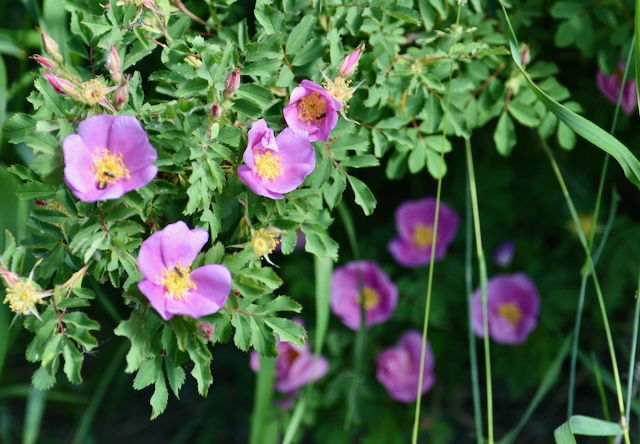
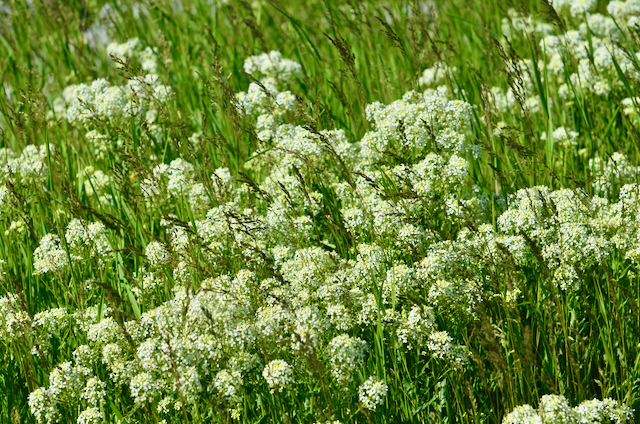
The following are some of the visual memories I’ve gathered in the past month near the Pond. First off, the summer wild flora, blooming bright and colourful are the Alberta provincial flower, the Wild Rose. If you can ID the other ones, do let me know:
Snow in July? Fortunately not. Thanks to poplar cotton, a monotonous stream now looks dramatic:

It’s always a pleasant surprise to see a deer suddenly appear nearby, and this is a handsome, young one:

A favourite sighting any time… the Belted Kingfisher, not easy to spot, but their distinct rattle calls give them away:

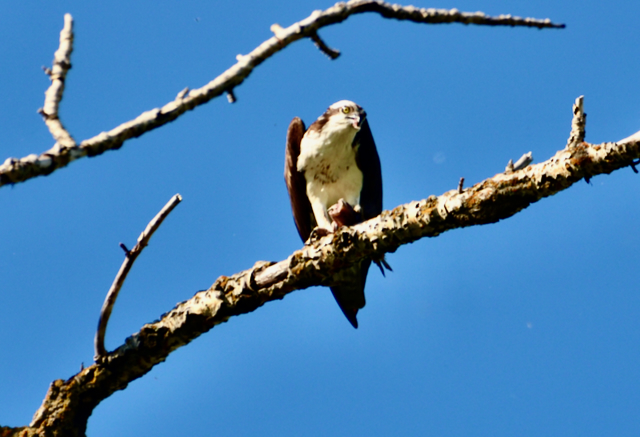
High up on a tree branch, the Osprey is chomping its prey. You can see half a fish under its claws:
For these two hungry baby European Starlings, it’s door dash delivery by Mama Starling, not fast enough as always:

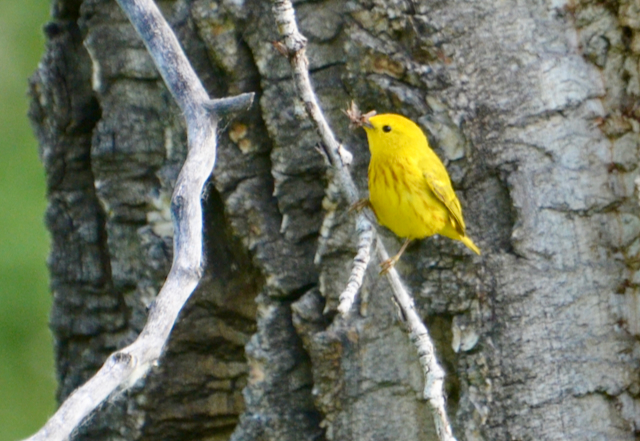
As for Mama, she just can’t wait to see babies grow up to search for their own food, just like these lovely Yellow Warblers:

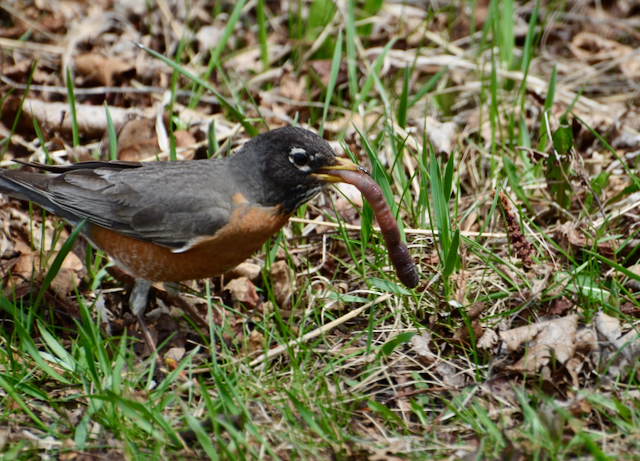
or this hungry Robin, swallowing whole a worm as long as its own body:
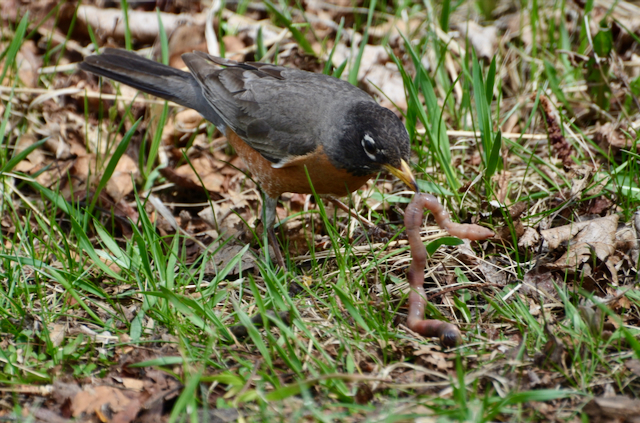
The ephemeral nature of life… the worm sure knows what that means.
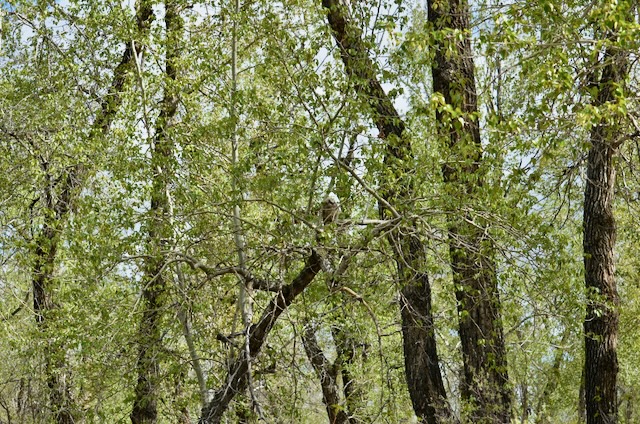
Baby Kicks off Spring Birding

The arrival of a new owlet is when I’m energized for another year of birding. Like the bear, I hibernate in the winter. I wouldn’t want to fight the elements in -20C temperatures with not much to see but a blanket of white. After waiting patiently for the snow to be gone and rain to let up, today is the first fine day to begin my few months of nature hopping. I was richly rewarded.

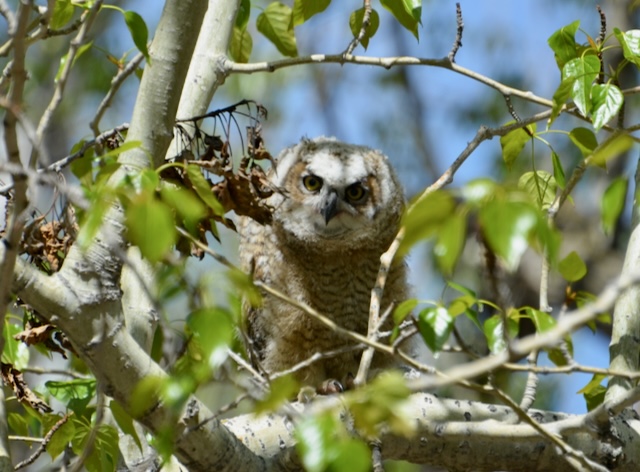
This single Great Horned Owlet makes it all worth the wait. Other birders told me that there were two babies this year, but one fell off a tree and was taken away by wildlife staff, hopefully to mend injury and recuperate. So, leaving this one all the more precious. Can you find baby here?

.
A close up for a better view of this adorable, downy ball:

.
Check out this photo below, see anything special? Only the owl can do this feat where both the head and the tail face the same direction. That’s right, baby has turned his head 180° :

.
Sure knows how to pose for the camera too:

.
and the natural, without needing to pose:

.
Mom is close by, but like all mothers, always in need of those precious 40 winks:

.
A fine day to start another year of nature hopping. More photos coming up…

A Rare Find!

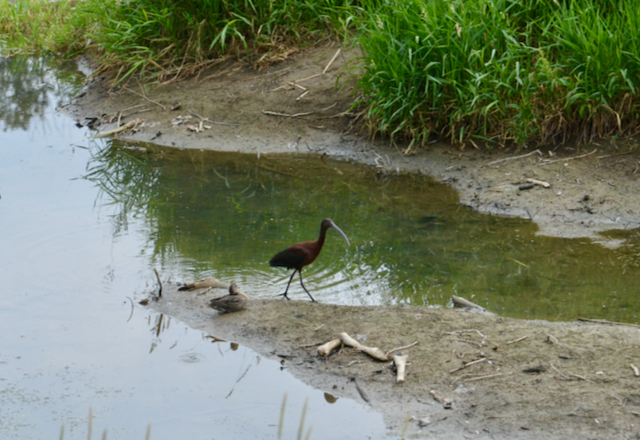
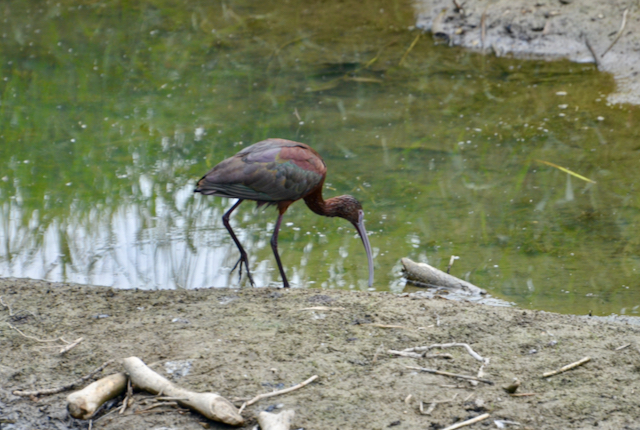
From afar I saw it. At first not paying much attention, for it looked like some kind of black bird but then I saw the long legs. Umm… maybe some sort of sandpiper? No, it’s not spotted or light brown but dark. And the most prominent feature was the long, down-curved bill.

Stepping closer quietly, I saw its deep maroon, multi-coloured plumage. Magnificent, maybe even magical. I haven’t seen this bird before.

Many of you might be able to ID it, but I had to do a lot of digging into Google search to discover what I’d just seen was a GLOSSY IBIS (Plegadis falcinellus). From Wikipedia, here’s the origin of the name: The scientific name derives from Ancient Greek plegados and Latin, falcis, both meaning “sickle” and referring to the distinctive shape of the bill.

And why am I so excited about seeing it? Look at this distribution map:

The glossy ibis can be found along the east coast of the United States from Maine to Texas. In the winter it lives from the Carolinas south to Florida and along the Gulf Coast to Texas. It is also found in Central America, South America, Africa, southern Eurasia and Australasia.

And where am I? In Alberta, Canada. From the map above, the second province from the west coast of Canada. Why is this glossy ibis here? A stray? Off course during migration? Or, just needs some cooler and crisper air up here?

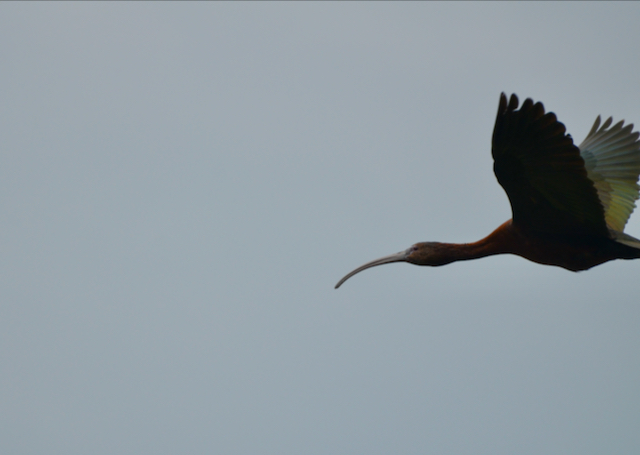
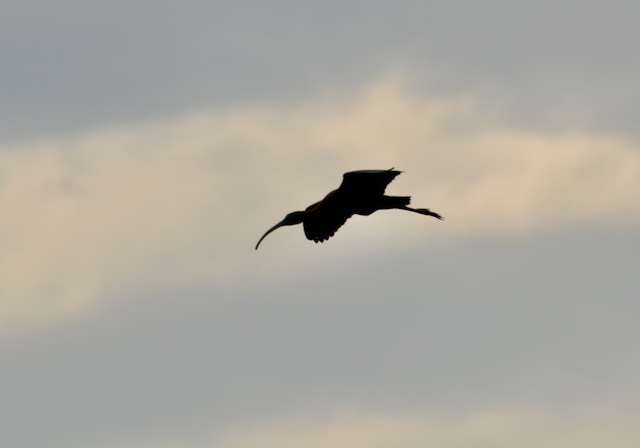
I just couldn’t help but moved another step closer and that was it for my short discovery. It flew away but in a circle, coming right back at me, as if saying farewell, then disappeared into the distant sky:


I sure hope it will find its way back to where it belongs… But fine too, if it feels the Pond is a safe, new home, however temporal. You’re welcome to stay!

***

Peaceful Coexistence


One afternoon, in just one hour, I saw twelve different kinds of living creatures at a pond. Here they are, can you ID them all:

Top left are the Red-necked Grebes which I ‘discovered’ for the first time early this spring.

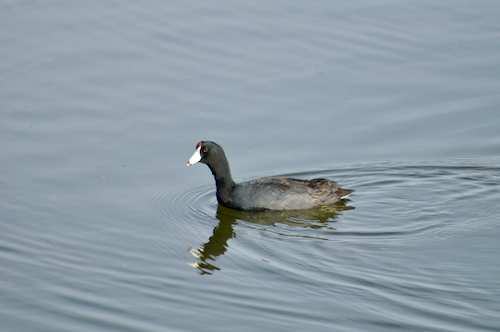
The ubiquitous mallard on the left second down, and at the bottom left, the American Coot.

The Franklin Gull on the upper right and below it, the Black Tern, which was so fast that I could hardly get a clear picture.

The red-winged blackbirds (third left down) as usual, called loudly and posed for me. The one big picture on its right is the female red-winged blackbird.

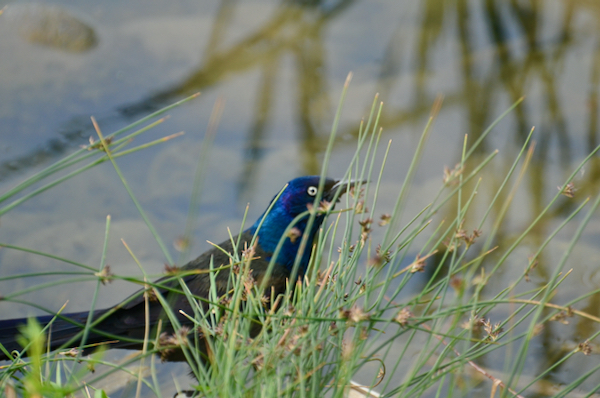
So what’s left are the bottom two… I was surprised to see a Grackle by the pond hiding behind the cattails, its head a beautiful, iridescent blue:

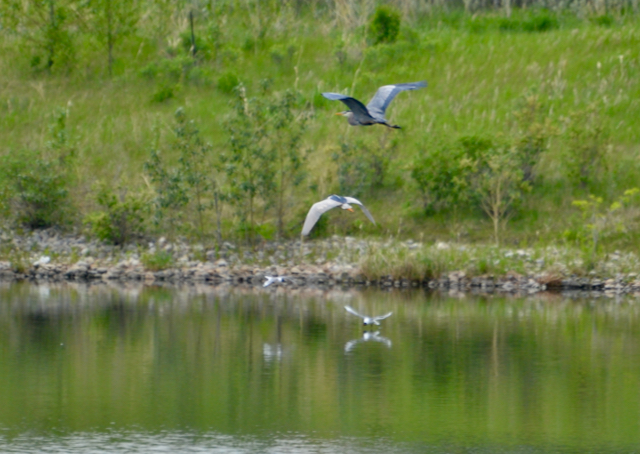
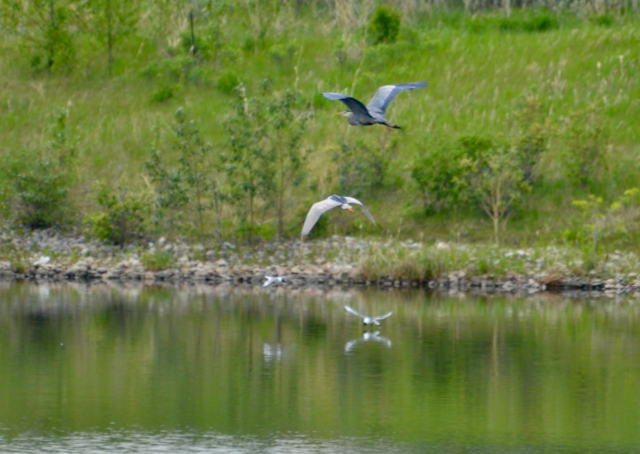
But the highlight of that one hour at the pond, two kinds of herons together, the Great Blue Heron and the Black-crowned Night Heron. Unfortunately I did’t have a clear pic of them both. They were hanging out and flew away together as I tried to get a few steps closer. That was the first time I saw a Black-crowned Night Heron, well, without the crown here:

The Great Blue Heron with Franklin Gulls accompanying:

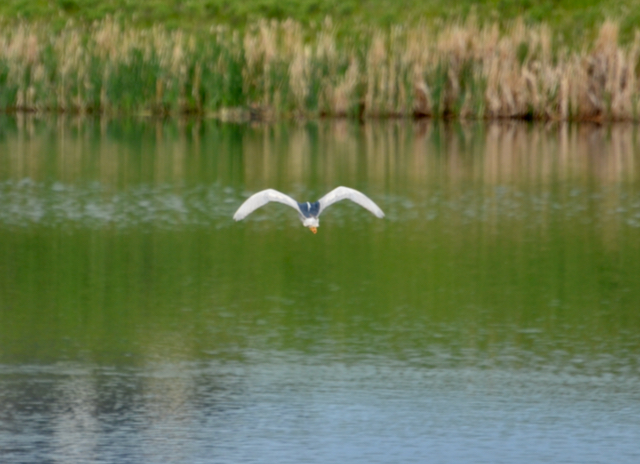
And the two Herons flew away together:

Didn’t I say twelve different kinds of living creatures? There are ten in the first tiled gallery. Well there was a beaver but I wasn’t able to capture it in picture as it dived and swam away. But this one I had lots of time to get my camera ready: Human

The birds didn’t seem to mind the loud choo-choos. So, let’s give an air elbow bump, live and let live.

***

The best laid plans of birds and men

Previously on Ripple, I posted about the Ospreys and human eyeing the same spot to execute their building plans. It turned out that the triangular structure human erected at the perennial home of the Osprey’s was to discourage them from building their nest, as one reader had commented. Apparently, some bridge work is on the agenda.
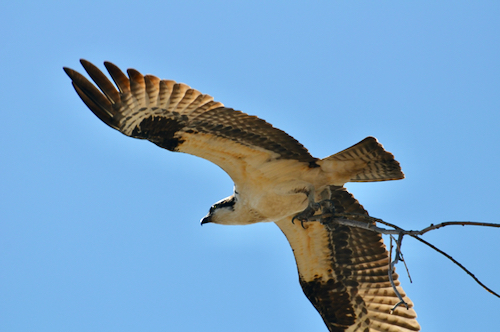
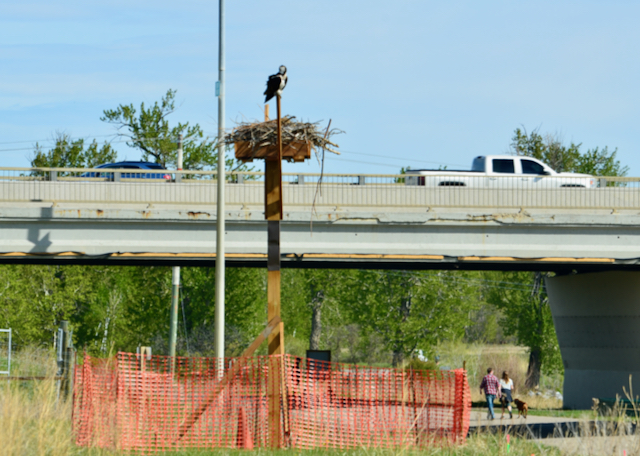
Human had a Plan B for the birds: Relocation. They built another structure and moved the nest there:

Would Mr. and Mrs. O. like their new home? It’s not far from the old site, but not exactly what they’d in mind I’m sure. Coexistence sounds ideal but may not be a beautiful picture:

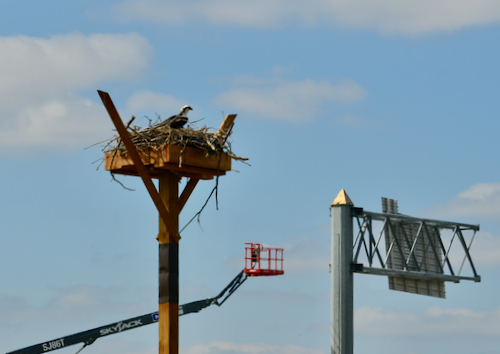
Here’s Mrs. O. inspecting the new home. Is it a good place for her babies to be born and safe for them to fledge?

Mrs. O. doing home inspection while an aloof Mr. O watches from a distance on the light pole.

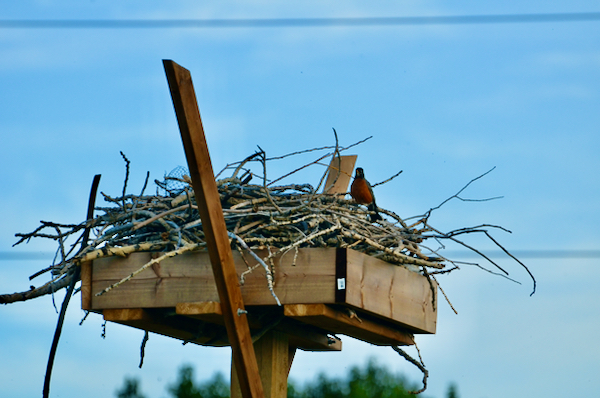
I saw them the first couples of days at their new home, but not afterwards. The next time I visited, the nest looked abandoned. A robin seemed interested, but too big for her family:

Now workers have begun work and fenced off the area. I might not be able to follow their story. Wherever they are, I wish them a happy summer and all the best for their family.

***

When human and bird collide

Spring is home construction season. The Ospreys are back and busy building their perennial home.

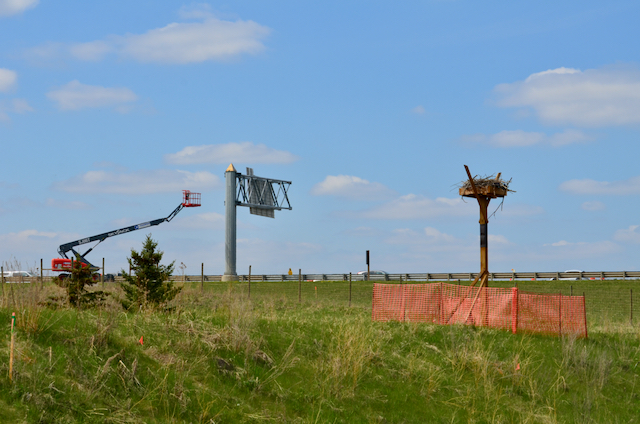
The Ospreys have the same address every year, that’s right on top of a highway sign. I don’t know why they like it up there above a busy highway while there are many trees close to a river nearby. No building permit required, so they are free to set up their family home and raise their young wherever they like.

This year is different. Some human have chosen that exact spot to work on something. Not sure what they’re planning for the site. A lift equipment is nearby and a little wooden triangular structure has been erected, right where the Ospreys are building their home.

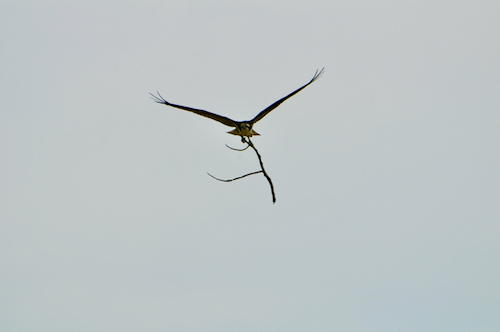
So there are two different building plans on the same site, but the Ospreys are undeterred. They haul in material from nearby trees, transporting one twig at a time.

Here’s making the best of a precarious situation. When you have an unknown, triangular intrusion right by your home, might as well use it as a watch tower.

I don’t know how the story will unfold. I sure hope co-existence will be the happy ending.

***

Spring Sightings

First time is always the most exciting. These past weeks, I came across three sightings of something I’d never seen before. They may be common for other birders or nature watchers, but what’s important for me is, those were my first time.

From afar, I knew that wasn’t a Chickadee or a Nuthatch, albeit about the same size but plumper. I took the picture and later looked it up. It was a Dark-eyed Junco. Sure I’ve heard of the junco before, but have never come face to face with one. I further found out that it was one of the most common birds in Canada. Oh really? This was the first time I saw it, and that made it special for me. Love that tiny pink beak.

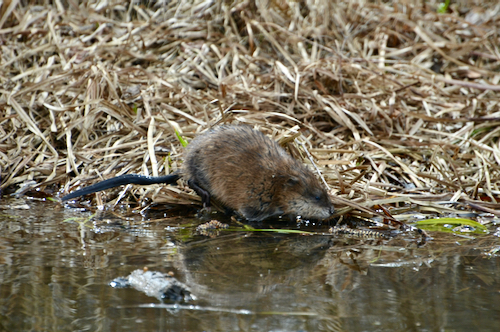
Another first-time is this photo here. Someone’s having a hearty meal, its delicate hands holding up a green shoot and chomping away. Can you guess what it is? Not a mouse:

Here, its tail gives it away… a baby muskrat. I’ve seen the adult ones but sighting a pint-size muskrat was my first time. At first I thought it was a baby beaver, but the narrow, long tail distinguishes it from the beaver, which has a flattened, paddle-like tail. Here’s a helpful page.

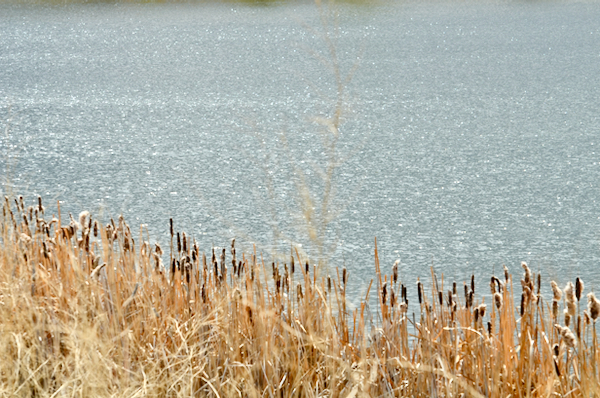
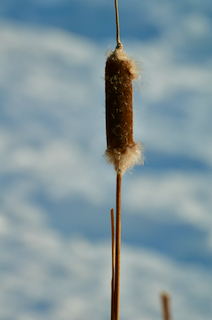
But the following is the most exciting find for me. In a shimmering pond lined with cattails…

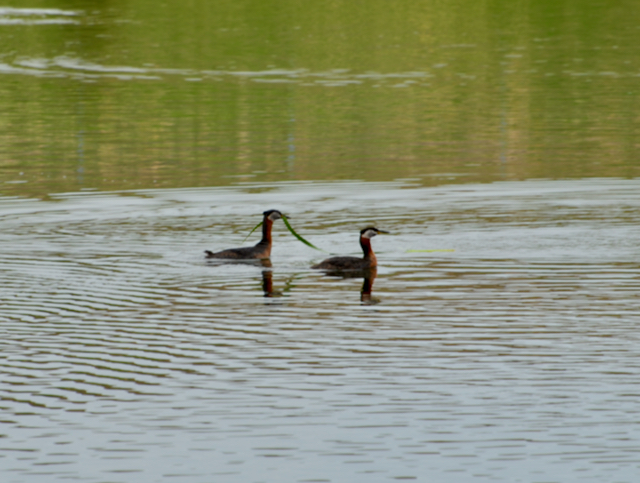
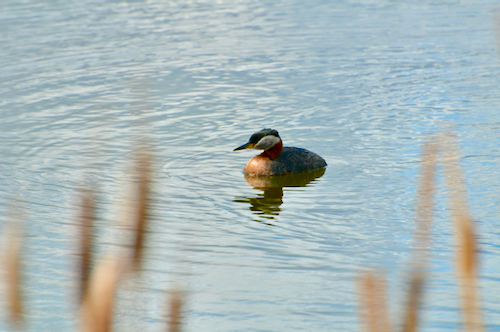
I found a water bird I’d never seen before. It had a greyish white patch on its cheek:

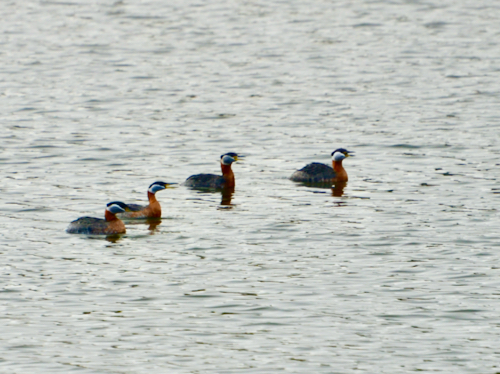
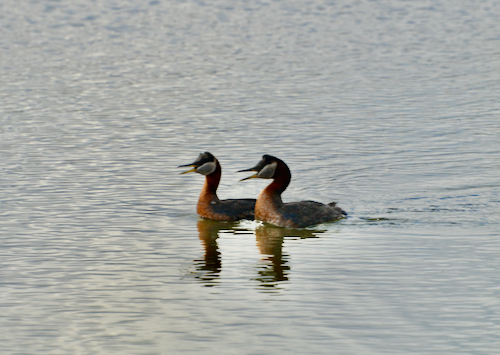
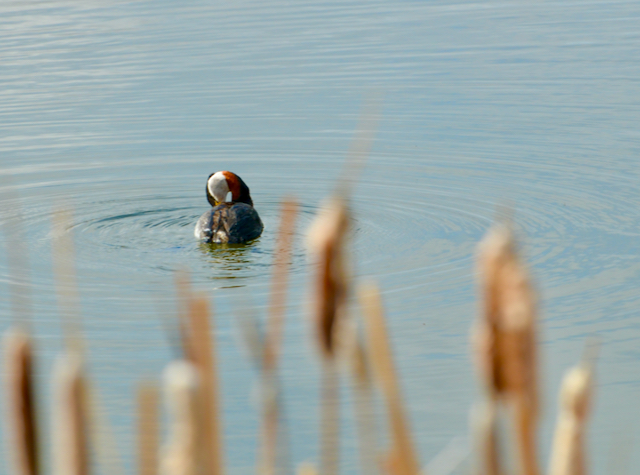
I learned later that it was a Red-necked Grebe, breeding mainly in Canada (distribution map here). A grebe is not a duck; it doesn’t have webbed feet. I went back several times and found there were two pairs of them. I look forward to seeing their babies on their back in the coming days or weeks. I’ll be visiting them often.

Their colour features are fine and distinct, rusty red long neck and breast, with a yellow strip along their beak. Loud and distinct calls. Male and female have similar appearance.

I can’t explain it… I’m mesmerized by their serene movement, and yes, crazy calls. I’ve gone back a few times already, at different times of the day and in different weather. Nature’s calming sessions.

***

Heralds of Spring

April is unpredictable. One day we have warm, sunny weather, the next there would be flurries. But the creek and pond have mostly melted. A new sound I heard a few weeks ago when I was walking by a stream, something I had never encountered before. The sound of melting: the cracking of ice, like a small firecracker had gone off.
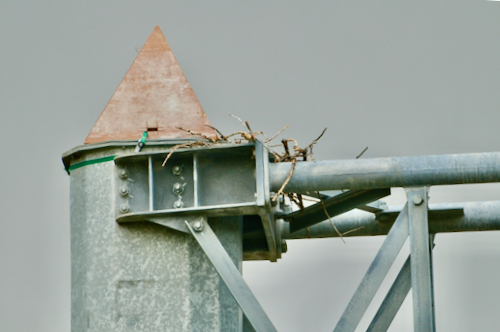
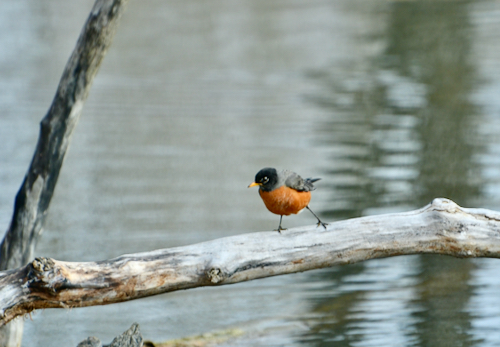
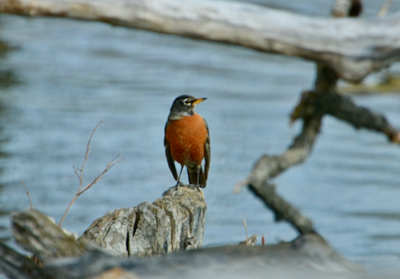
But this is the true herald. When I saw the first robin, I knew Spring had arrived. There were many of them during my walk last week, turning the woods into a convivial nesting playground.

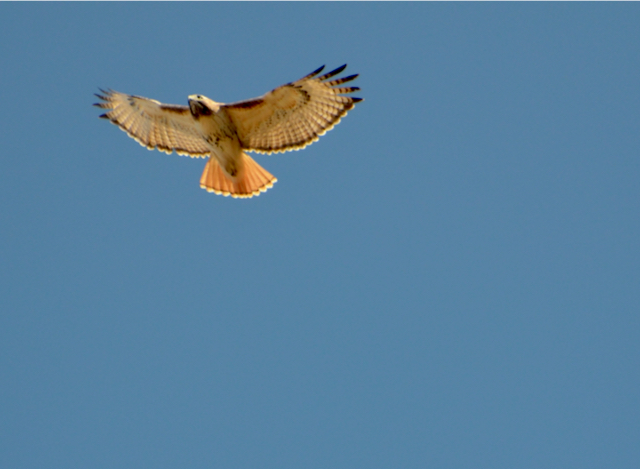
And up in the sky, a red-tailed hawk flew by. Sunlight seeping through its feathers:

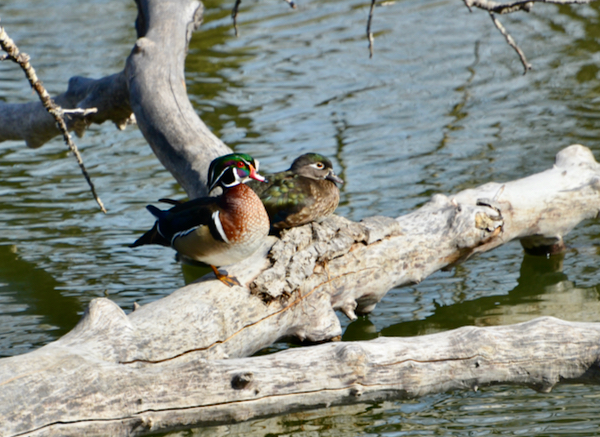
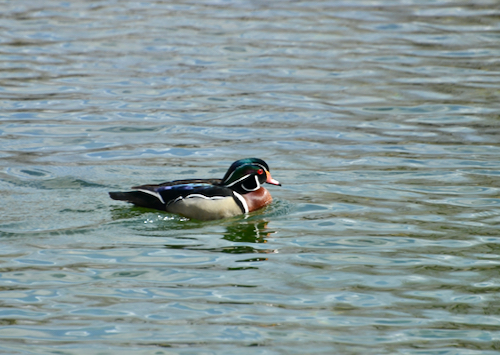
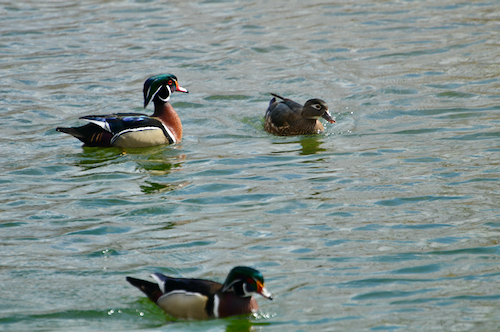
At the bird sanctuary, the wood ducks are back, brightening up a cold morning:

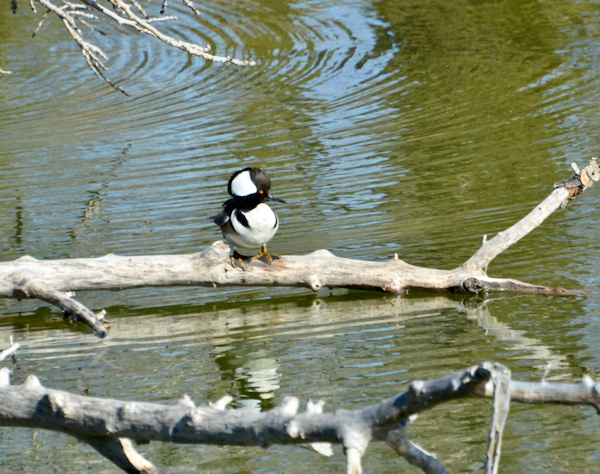
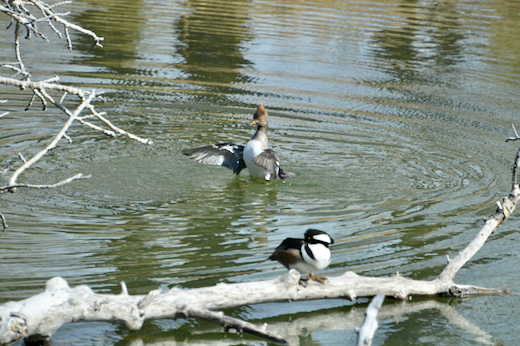
But here’s what made my day: my first time sighting a Hooded Merganser. This is rare in our locale. From their range map, they’re only passing through during migration.

I often think of the female Common Merganser as having hair like Lucille Ball’s. I’ve found another celeb look-alike… the male Hooded Merganser’s hair sure has an Elvis look:

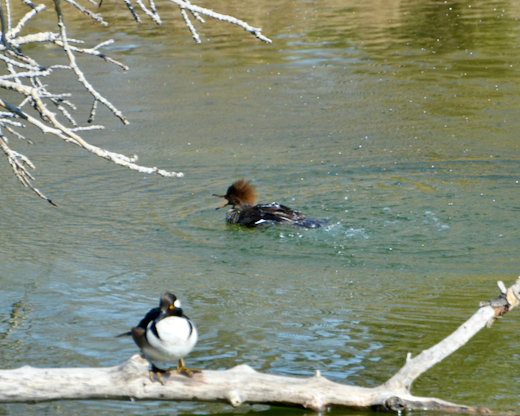
As for the female, I always find them to be more playful than the male, both the Common and now as I observed the Hooded one. Wish I’d taken a video to share. She was splashing and calling out in exuberance, while Elvis glanced back in nonchalant coolness:

Sure, shake your sillies out… Spring has sprung!

***

Swans in February

Previously on Ripple, I posted pictures of song birds that stay here in the winter. The House Finches surprised me, still chirping away in -24C (-10F) wintry air. But today, as I walk along the river, basking in the balmy weather (just at freezing point), I behold an even rarer sight. Trumpeter Swans!

Normally, they fly to the south and the Pacific Northwest beginning October, but ‘normal’ is no longer a term with relevance these days. Maybe the birds already knew that. With Texas bombarded with arctic storm and sub-zero F. temperatures this week, the Trumpeter Swans must have decided not to bother months before. Staying close by the river here above the 49th at least there’s food. And, as they say, if you don’t like the weather, just wait––normally five minutes––I’ll give it a few days.

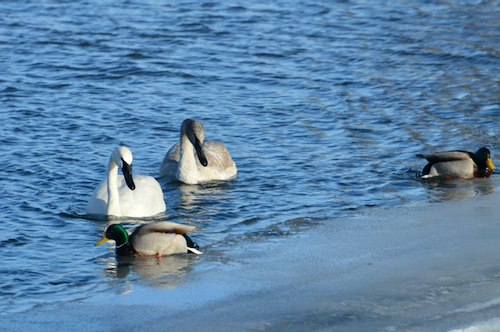
An adult Trumpeter Swan with two juveniles on the river close by the shore, unafraid of the few of us birding paparazzi shooting away.

Interestingly, two Mallards cling to the Swans closely, reminds me of the term ‘imprinting’. Parent Swan keeps an eye on them fondly. Neighbourhood watch.

Half a mile up the river, there’s another juvenile all on its own. I gather it must be a teenager, as the plumage is more white than grey as the younger ones, also for its personality. This one just wants some alone time, seeking independence. Note the black foot out:

A fruitful day of birding and workout chasing after swans.

***

A Winter Walk

What do you do when almost everything attractive is closed except the essentials which you’ve already stocked up for the next week or two? To the woods I go, to find relief for cabin fever and a breath of fresh air despite the crisp -12C (10F) weather on this winter day.

Dust of Snow

The way a crow
Shook down on me
The dust of snow
From a hemlock tree

Has given my heart
A change of mood
And saved some part
Of a day I had rued.

–– Robert Frost

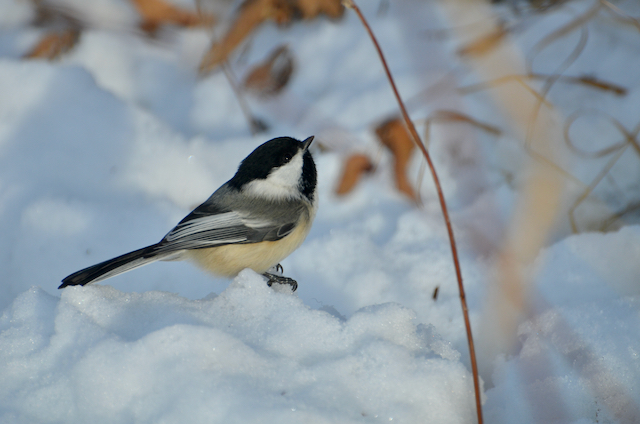
Frost is right. A dust of snow can dispel a stuffy mood. Also birds, mosaic of dried leaves on the ground, wavy patterns of the icy river, chickadees and downies on branches are some other natural remedies.

Or this bluejay in the tree which occupied me for half an hour or so. Why, such a common bird, you might say. But for me, not so, not on a cold, winter day.


Or, this swirling pattern of frost on water, where I spotted a goldeneye swimming by, oblivious to the cold. Don’t see her? Right by the rock:


But it’s this scene that mesmerized me most, entry to an imaginary place, where the escapist in me can flee:

***

Parable of the Migratory Birds

Fall is migration season. The Pond is a stopover for avian migrants enroute to coastal NW United States, or further south to the Gulf Coast and even Mexico. This year, for some reasons, the traffic at the Pond and the adjacent lake is particularly busy, all to a birder’s delight.

October came in like a lion and out like a lamb. We had heavy snow by the middle of the month when the leaves had not all fallen off from the trees and the grass was still green. The lowest temperature reached was -18°C, that, my friend to the south, is 1°F. The water at the Pond was frozen by the third week. But after that premature winter, we were blessed with warmer days towards the end of the month, and even breaking a one day record high on Nov. 2, reaching 23°C, or 73°F.

But it’s not the temperature that interests me. What I find amazing is the variety of waterfowl converging here on their way to the south and the way they come together.

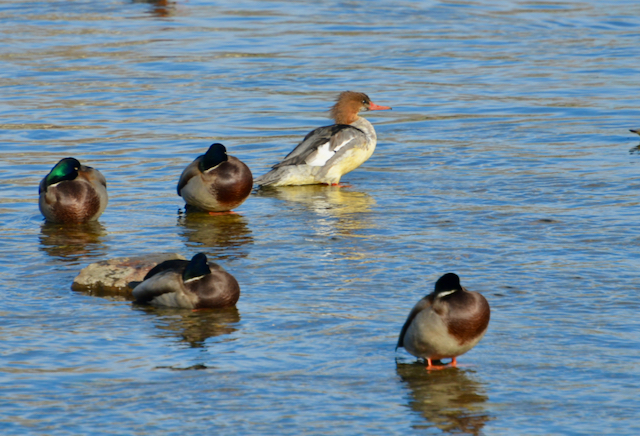
Here are some photos in the past couple of weeks. Mallards, Mergansers, and Ring-billed Gulls side by side. I think I heard Lady Merganser say: so what if my Lucille Ball hairstyle or its colour is different from yours, just let me be and swim to my heart’s delight. Whether you dip or dive for your food, these diverse avian species know how to get along and enjoy the warm sun, fresh air, and clear water:


What does it matter that a female Goldeneye is leading a flock of Buffleheads:

From the front of the line: Female Goldeneye, Male Buffleheads (wearing white hoodies), followed by two Female Buffleheads (white patch on cheek).

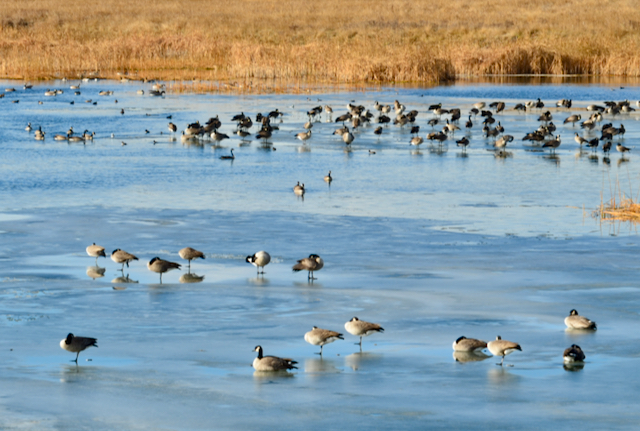
At a lake nearby, more migrants converged. It was a pool party of diversity: Canada Geese, Goldeneyes, Mallards, Coots, Gulls… those were just the ones I could see from afar. Only when there’s peaceful coexistence can they conserve energy for the long haul, and leisurely soak up the sun, preen their plumage, do yoga stretch, and of course, fuel up on nature’s buffet.

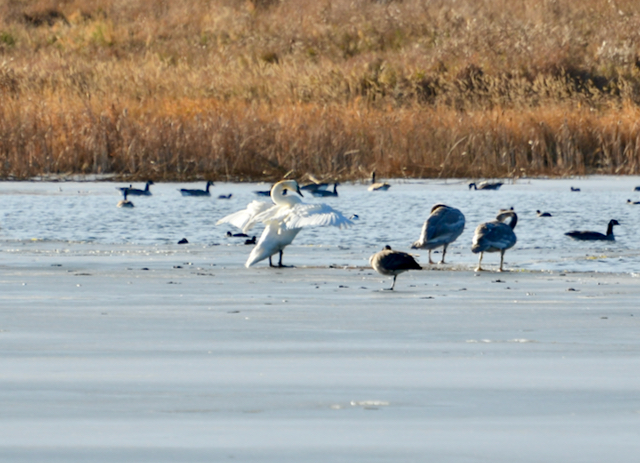
Thanks to other birders alerting me, that’s the first time I saw Swans here. From a far distance, I sighted several of them on the half frozen lake (or, half melting lake):


I can’t decide even after researching online whether they were Trumpeters or Tundra Swans as I was unable to see their bills from so far away, not even from the enlarged photo later. The two on the right in the picture above are juveniles as they’re greyish in colour. The one in the middle in the foreground standing on one leg is a Canada goose. Note the difference in size.

That day, I had my fill of avian sightings, albeit just watching from the shore far from the activity. The swans stood out in their sheer physical impression among all the ducks and geese, yet they were gentle and not bullies.


Maybe the migratory birds know that they’re only here temporarily, as they’re all in transit. As time is short and their presence ephemeral, might as well be at peace with each other and indulge in what they are given: Nature’s bounty, and enjoy their fill of common grace.

***

Clashing Beauty

Whenever I photograph birds, I try to avoid any human structures in the frame, even houses from a far distance, but that’s not possible all the time. Sometimes, the juxtaposition of human society and nature can be seen aesthetically, and not as a clash.

These pelicans are like dancing musical notes flying into the sky.

A steel and concrete bridge could be a major obstruction to natural beauty, but it’s there because a river runs through it:

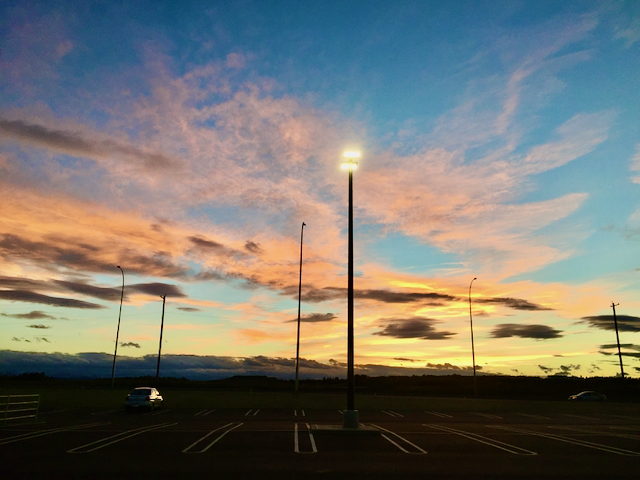
A sunset is still a sunset, even from the parking lot of a Costco. This is the first Costco opened on First Nation land in North America. Located in the Tsuu T’ina Nation bordering the southwest boundary of Calgary, Alberta, not too far from the Pond. A sunset is still a sunset no matter where you see it.


That voice from 1992 LA still rings true: we need to get along, human and nature, human and human. Signage in that Costco is bilingual, English and the Dene language (Northern Athabaskan) of the Tsuu T’ina Nation. We’re used to bilingualism in Canada, but this is the first time I see an Indigenous language posted together with English.

A needed directional pointer for things to come, not to stop but to press forward to accommodate multiplicity and live in harmony. That too, is a form of beauty.

***