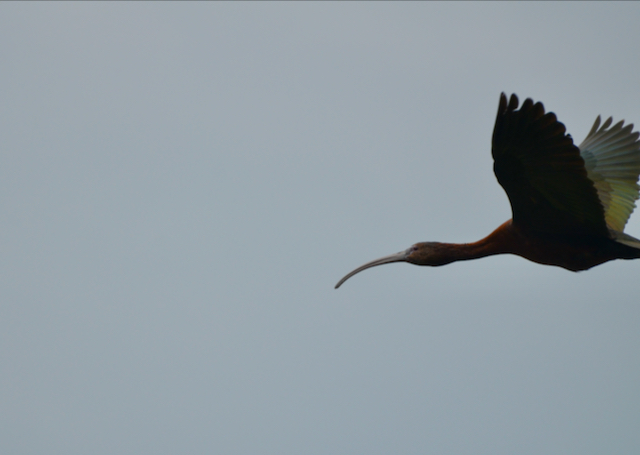
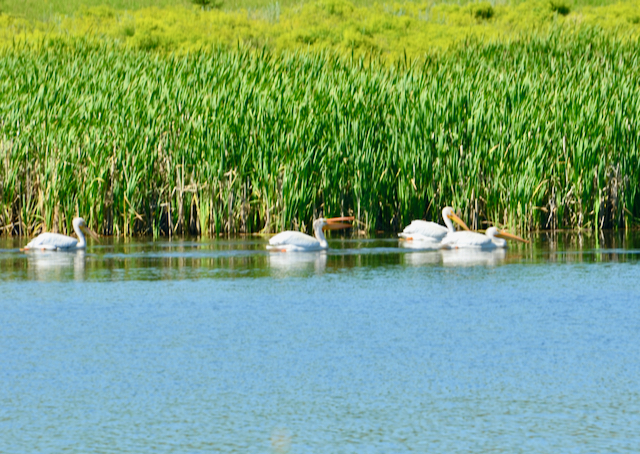
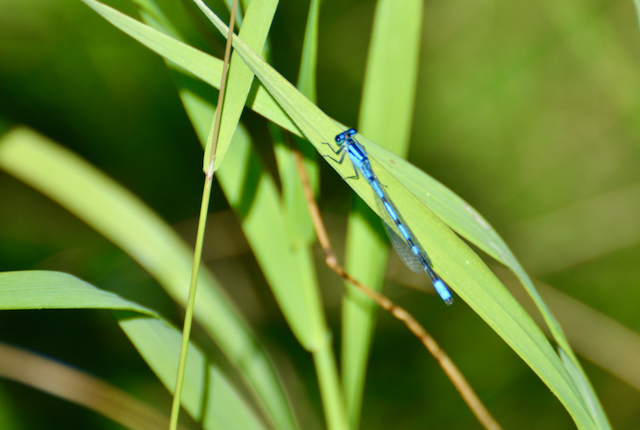
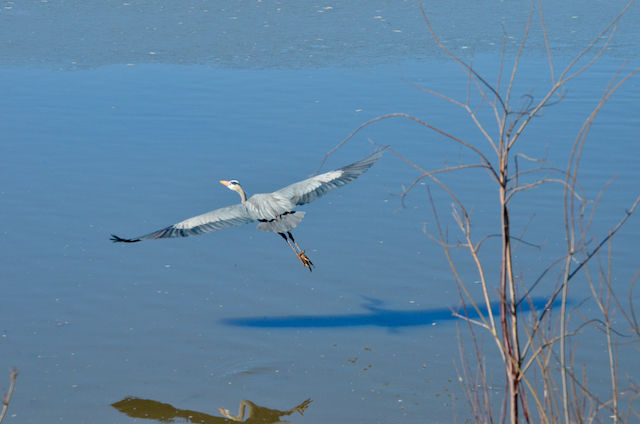
When the birds are gone

It may still be summer, but most of the migratory birds have started their winter journey south. My favourite avian friends seem to have departed without saying goodbye. So, I train my eyes to look at all the beauties that I haven’t noticed before when I was only focused on birding. Even the dandelions look good when contrasted with the clear, blue river, or the small butterfly, or is it a moth?

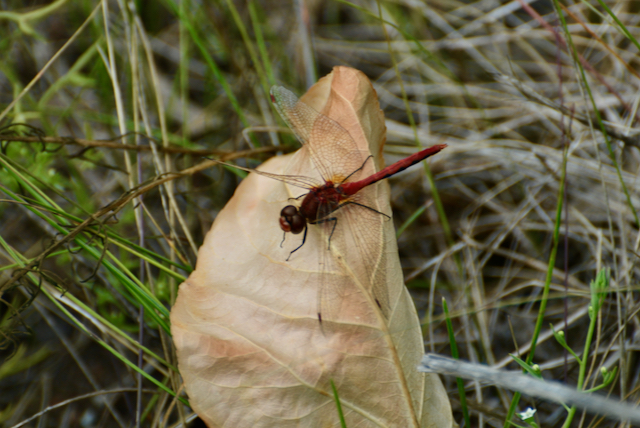
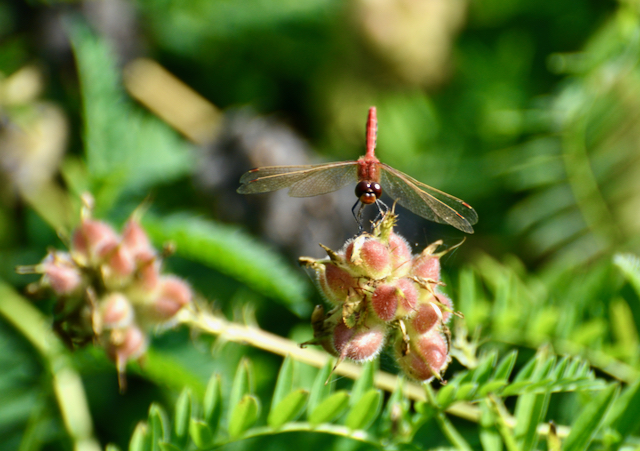
I’ve discovered a brand new interest. What are these red flying objects in front of my eyes, so many of them darting around. Red dragonflies… I haven’t noticed them before. My curiosity sent me to Google and yes, I’m sure they are dragonflies and not damselflies. The main difference is that dragonflies’ wings spread out like this when they’re at rest:

while damselflies fold up their wings at rest like this:
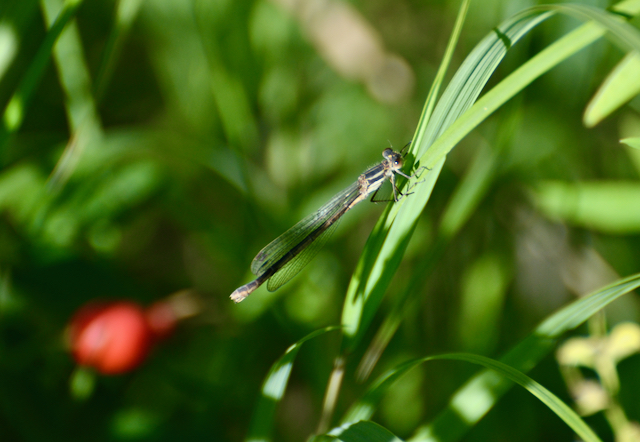
I’ve seen blue dragonflies before, lots of them here, but this time it’s the red dragonflies that are so abundant. I haven’t noticed them before. They are beautiful and easier to capture in photos than birds:
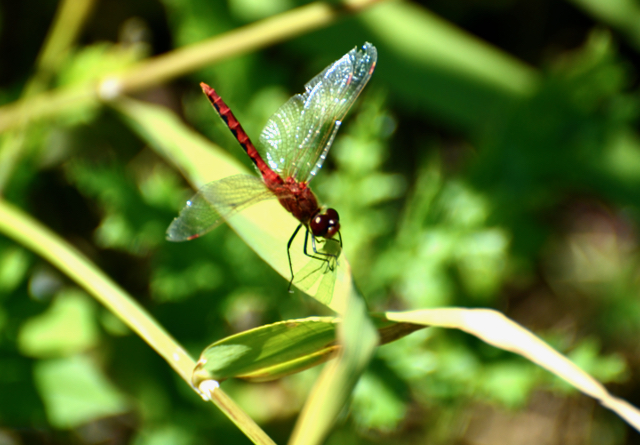
some intimate moments:

Of course I’ll miss my avian friends for another long absence until next spring, but there are other beauties to behold. It’s small things like these that sometimes make me jump out of bed with excitement. No, they won’t be around come winter, but I’m sure there are other blessings to explore then.

***

A good day birding is like…

watching a good movie. It’s not easy to come upon, therefore, most gratifying.

I’m partial to yellow birds: Warblers, Goldfinches, Vireos… and a more orangey hue, the Baltimore Oriole. These are all that I’ve seen around here in the hinterland above the 49th parallel, unlike many of you in the warm and welcoming south having the chance to see more colourful varieties.

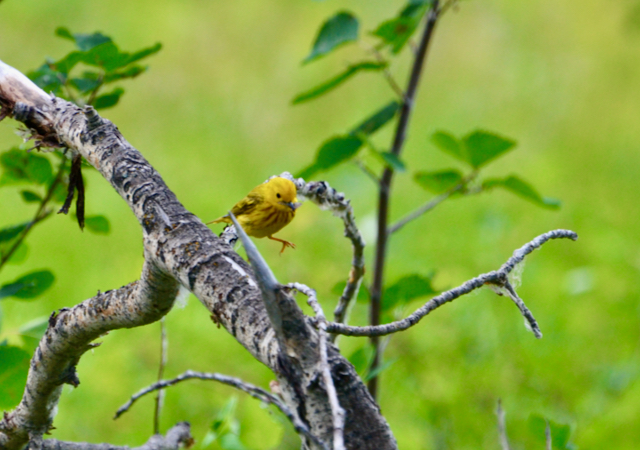
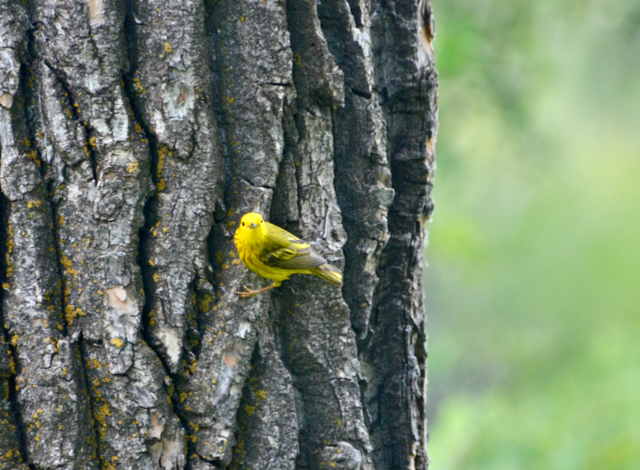
The woods by the Pond is a haven of warblers this year, but to capture one with the camera is highly challenging. They never stay still on a branch for more than a couple of seconds, let alone finding them clear from leaves. I can see them, small, yellow flying creatures in the air darting from tree to tree and hear them calling, as if teasing me, “catch me if you can.”

During my good day of birding a couple weeks ago I was able to get some of these tiny yellow warblers in my camera:

Serendipity is what makes good birding. Just as I was pleased with myself for taking some photos of yellow warblers, I found a warbler’s nest. A bonus! Trying my best to be as unobtrusive as possible, I took these pictures:

and look at this one carefully, you can see the tiny beak of a baby warbler sticking out:

I called it a good birding day and started to head back to my car when I saw an orangey thingy in a small tree at a distance. The Baltimore Oriole! I’ve heard from other birders that they’d seen one recently and everybody was looking for it. You who live in Baltimore or almost anywhere south of the 49th might have a good laugh at how excited we are in spotting a Baltimore Oriole. It’s not rare, but still a very special sighting for us. I took these from afar:

That’s a wrap of a good day birding. What more, I don’t need to write a review!

***

The Owl Family’s Debutante

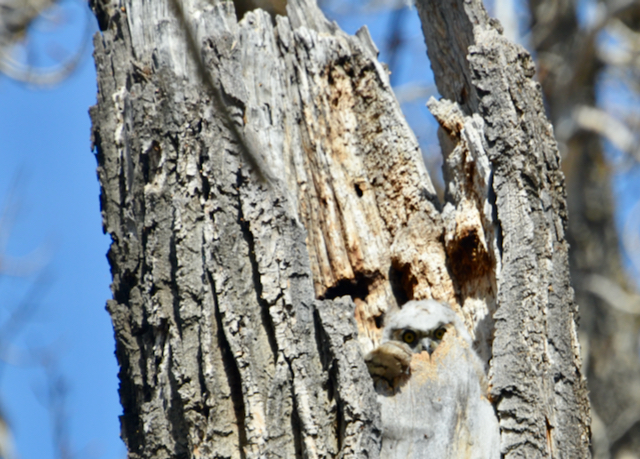
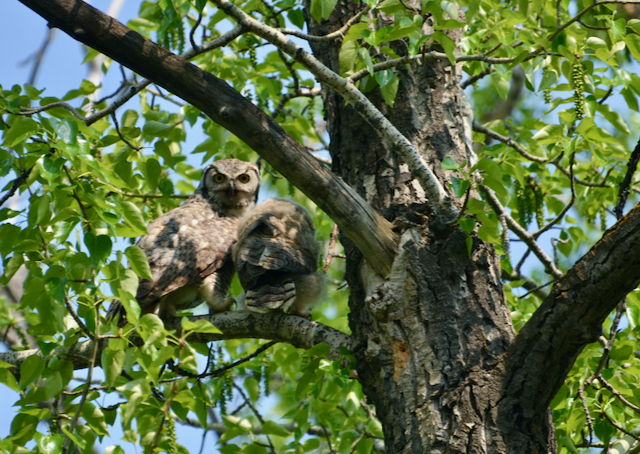
Another spring brings another owl baby. While I can’t tell if it’s the same owl family, it’s interesting that a Great Horned Owl family would use the same tree cavity to make their nest every spring to welcome their newborn(s), year after year.

Here it is, about a month ago, a brand new baby peeking out of the nest. Can you spot baby owl in this picture?

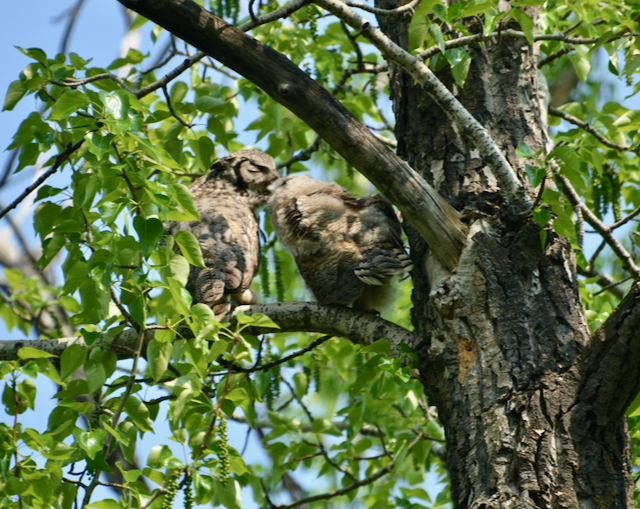
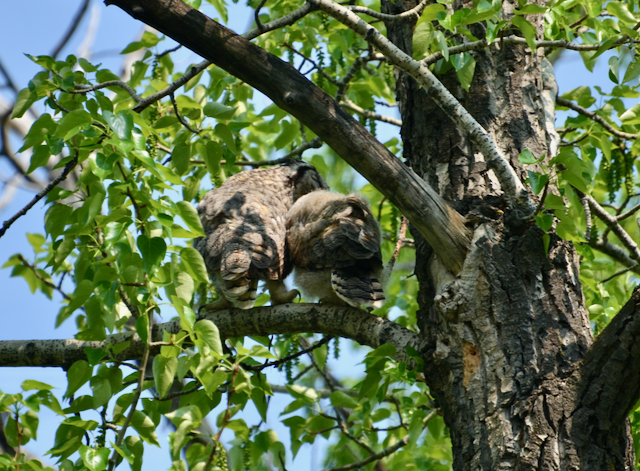
And now a few weeks later, baby has grown to almost the size of mommy owl, and the family has vacated their nest. So, it’s wonderful to see them out on a tree. Baby still has the downy coat on, but what impresses me is mommy owl—I like to think it’s the mother owl staying close to baby, as father owl usually goes to find food—like a sentinel watching closely, looking noble and stoic:

But of course, a mother is always a mother, and baby is always her baby, no matter how big he or she has grown. I’m glad that I was able to capture these endearing moments, albeit a little blurry since they were very far up a tree from a distance. Baby’s on the right in these pictures:

***

(Glitches while posting this. Have to repost. Previous post entitled Baby’s Day Out. Issues with the date. This post is published on Saturday May 27, 9:40 am.)

Remembering Gordon Lightfoot: Pussy Willows, Cattails, Soft Winds and Roses

The passing of Gordon Lightfoot yesterday at the age of 84 evokes a stream of nostalgic consciousness. The following is an old post dating back to more than ten years ago. I wrote it after visiting Unionville in Ontario; the profusion of cattails by the pond stirred up memories of listening to Lightfoot’s song. As a tribute to the Canadian music legend, I’m reposting it here.

____________

Took a short trip to Ontario last week and came home overwhelmed with nostalgia. It all started when I visited the town of Unionville and saw these, crowds and crowds of cattails growing profusely at the pond, the fields, and by the footbridge:

.

For some inexplicable reasons, I’m much fond of cattails. The first time I learned about them was from listening to the song by Gordon Lightfoot… before I’d actually seen one.

Some time in the 70’s, for many afternoons I sat in the art room of a high school somewhere in Alberta, working on some art project, but mostly doing nothing at all while listening to Gordon Lightfoot.  Mr. Hannington held a laissez faire art class… we could do just about anything, or nothing.  Usually, there would only be three or four of us in the room.  We would just sit around, chat, daydream, and immerse in the voice of Gordon Lightfoot on the radio.

I didn’t turn out to be an artist, while one of us did.  But I’ve remained partial to cattails, mesmerized by the song and the singer.  Those Lightfoot afternoons in the art room emerged from the depth of hazy memories, the lyrics were the soft winds caressing naked limbs as I walked in this natural reserve in Unionville.

Pussywillows, cattails, soft winds and roses
Rainpools in the woodland, water to my knees
Shivering, quivering, the warm breath of spring
Pussywillows, cat-tails, soft winds and roses

Catbirds and cornfields, daydreams together
Riding on the roadside the dust gets in your eyes
Reveling, disheveling the summer nights can bring
Pussywillows, cattails, soft winds and roses

Slanted rays and colored days, stark blue horizons
Naked limbs and wheat bins, hazy afternoons
Voicing, rejoicing the wine cups do bring
Pussywillows, cattails, soft winds and roses

Harsh nights and candlelights, woodfires a blazin’
Soft lips and fingertips resting in my soul
Treasuring, remembering, the promise of spring
Pussywillows, cattails, soft winds and roses

(To my artist friend CD: Keep the fire burning.)

***

Some of you had left comments in that old post. If you’re interested to know what you had said, click on the link to find out.

Not quite spring, but…

April may be the cruellest month for the poet, but for me, it’s a time for newness and hope. It’s Easter month, but winter’s not totally gone yet for us, despite the official arrival of spring according to the calendar.

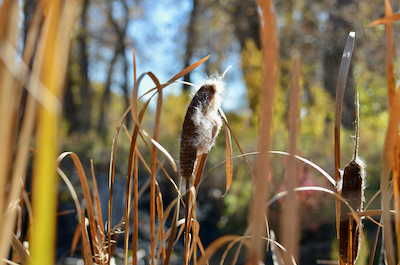
Many of you might be enjoying colorful roses blooming in your garden, this is what I see when I head out to the woods today––the last day of March––snow-covered creek and dried cattails from autumn past:

But the Pond is teeming with life, a cacophony of bird calls from everywhere. Here’s our first robin coming back from afar, the sure sign of spring:

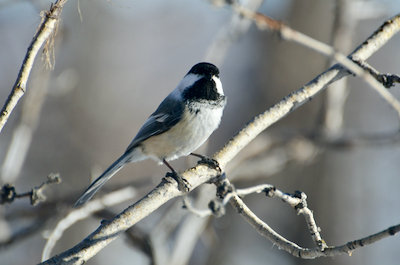
Plenty of buds for the hungry chickadee:

And from afar, a coyote, which doesn’t look too enthused about the changing season. I’ve to warn a mother pushing a baby carriage nearby:

On the river, it’s a different picture:

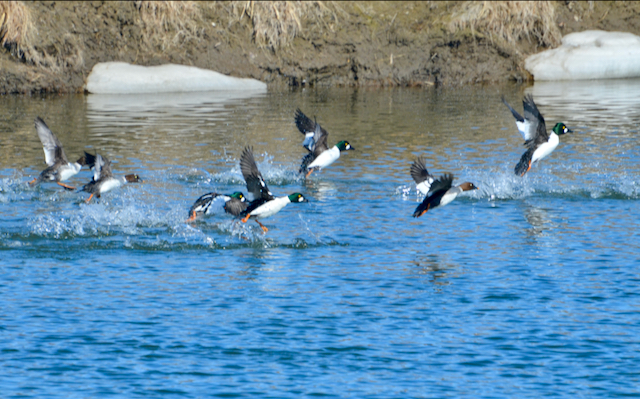
It’s courting season already. The male Goldeneyes doing their mating dance… stretching their necks upright and singing their tune. The females (brown heads) don’t seem too interested though:

Oops just a bit too close. It’s been a few months of house-bound inactivity, don’t mind me getting excited for a better pic:

***

A Warm Winter Day

Today is a balmy 5C (41F) winter day. Sunny with no wind, and the Pond is teeming with life and beauty. For the first time in two months, I take my camera out and soak up the scenery.

The chickadees which flutter even in -20’s temperatures are out in full force. Glad to see woodpeckers too, basking in the sunlight:

Yes, those are buds on the branches!

Glad to see a family of deer out enjoying the afternoon sun. This one comes right up to me, maybe hoping for a snack:

While I’m glad to see the woods teeming with activities, what capture my attention are the ice patches, melting and dripping in the warmth of this mid-winter afternoon:

Buds on tree branches and melting ice in January? Just a mid-winter interlude of hope… like a mirage in the desert. No matter, I’m enjoying every bit of this new year blessing.

***
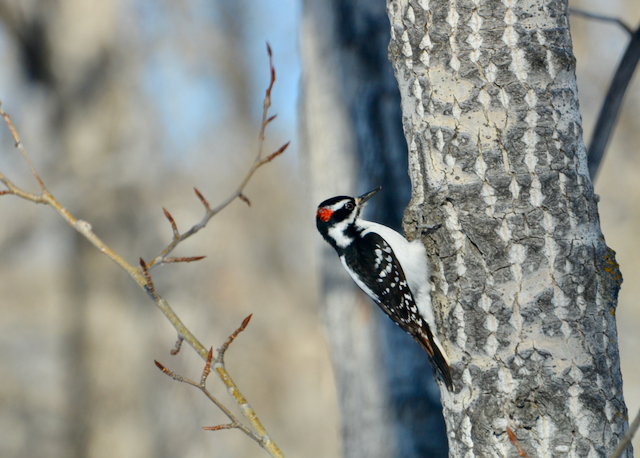
Delicious Autumn

“Delicious autumn! My very soul is wedded to it and if I were a bird I would fly about the earth seeking the successive autumns.” –– George Eliot, in her letter of Oct., 1841

Successive autumns, and never will winter come. What a marvellous thought! Just yesterday, we had our first snow, icy reminder for what’s to come. But the forecast is that we’ll get back to some warmer, seasonal autumn air in the coming week.

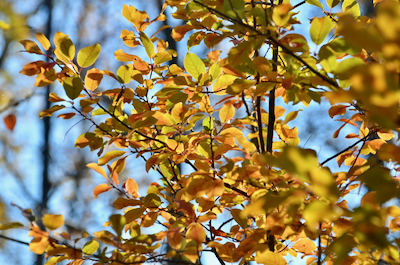
I like to dwell on those sunny days of fall. We don’t have many red leaves here, but the rusty and golden hue all around the pond is enticing and fresh.

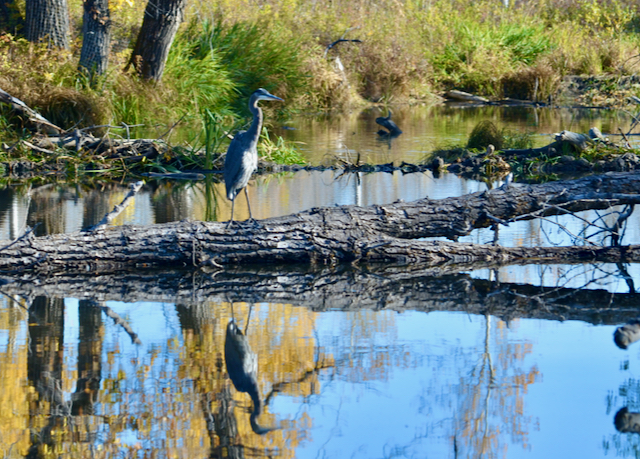
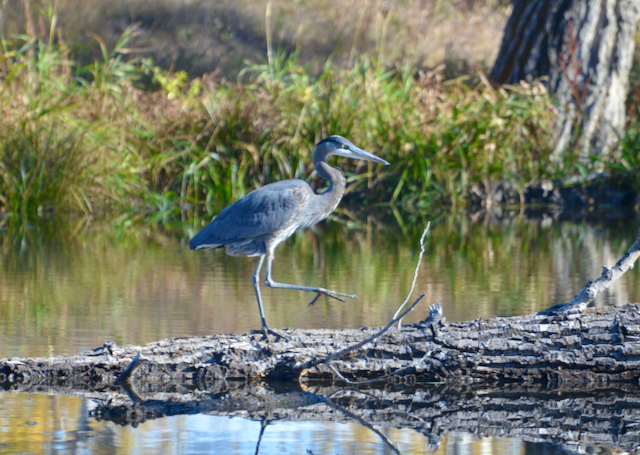
Many birds have migrated south. So, I was surprised and delighted to see this one still lingering …

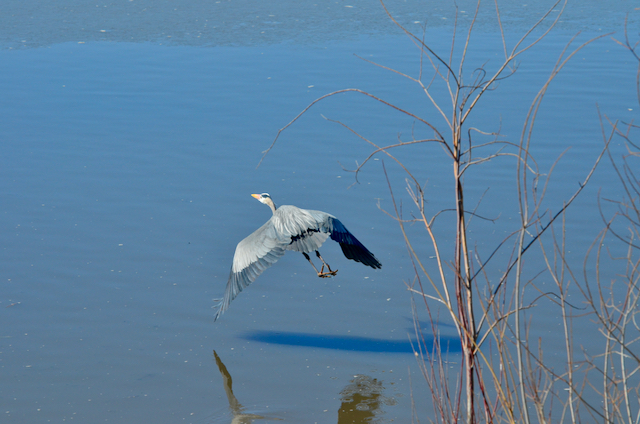
A Great Blue Heron in this part of the Pond by late October is rare. Like Proust’s madeleine dipped in tea, serendipitous sightings like this can last through many winters as fond memories conjure up during the shut-in, wintry days.

And with this little Proustian teaser, I’m dropping a hint of what’s to come on Ripple Effects in November. Stay tuned.

***

Seeing red… and what a delight

It was in a nature reserve adjacent to the Royal Botanical Gardens in Burlington, Ontario, that I saw my first Cardinal. A bird that might be common for many of you, but for me, it was my first time. And what a delight!

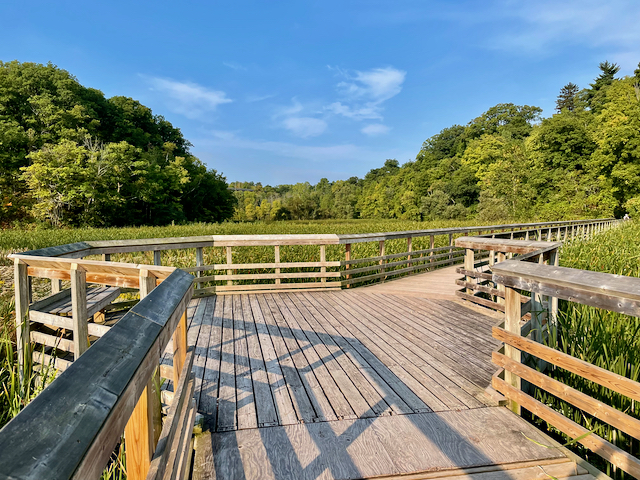
Early morning in September, a perfect day for birding. Soft sun rays illuminating the boardwalk, mesmerizing:

Saw my first Northern Cardinal in some low bushes. Here’s my first photo. The curiosity is mutual:

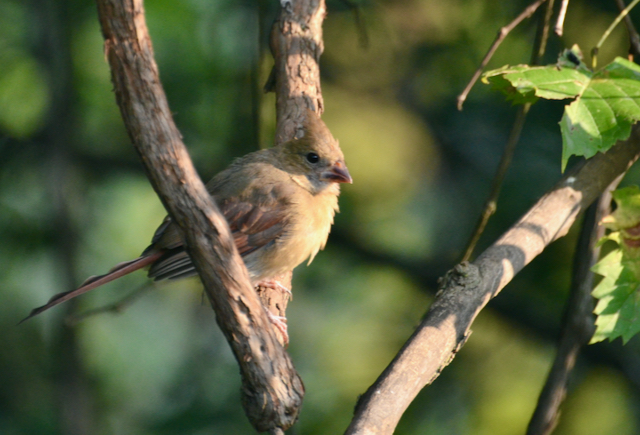
And after that, I was looking for reds all the way and had taken many more pictures of the bird with its habitat mainly in the southeastern part of North America. There were other birds and fields of goldenrods but it was red that I sought. I wasn’t disappointed. Had the chance of meeting a few other Cardinals, including the female and the juvenile:

Common, ordinary? Purely relative.

The sun emerged brighter, this time, shedding light to illuminate the mind’s eye, storing fond memories, an indelible reminder for me to return in the future.

***

A Rare Find!

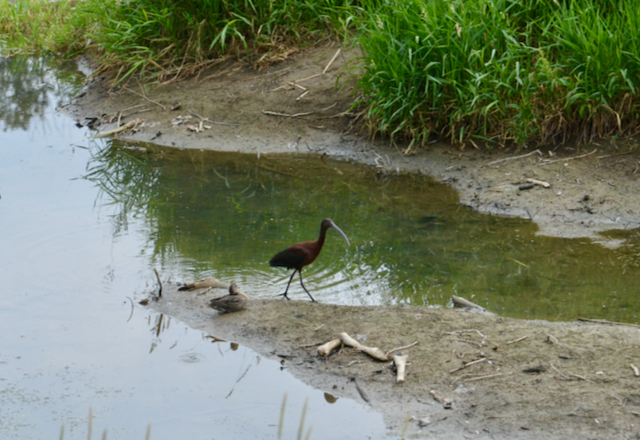
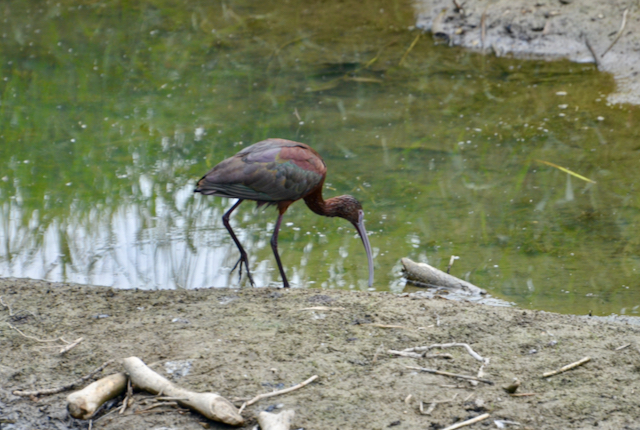
From afar I saw it. At first not paying much attention, for it looked like some kind of black bird but then I saw the long legs. Umm… maybe some sort of sandpiper? No, it’s not spotted or light brown but dark. And the most prominent feature was the long, down-curved bill.

Stepping closer quietly, I saw its deep maroon, multi-coloured plumage. Magnificent, maybe even magical. I haven’t seen this bird before.

Many of you might be able to ID it, but I had to do a lot of digging into Google search to discover what I’d just seen was a GLOSSY IBIS (Plegadis falcinellus). From Wikipedia, here’s the origin of the name: The scientific name derives from Ancient Greek plegados and Latin, falcis, both meaning “sickle” and referring to the distinctive shape of the bill.

And why am I so excited about seeing it? Look at this distribution map:

The glossy ibis can be found along the east coast of the United States from Maine to Texas. In the winter it lives from the Carolinas south to Florida and along the Gulf Coast to Texas. It is also found in Central America, South America, Africa, southern Eurasia and Australasia.

And where am I? In Alberta, Canada. From the map above, the second province from the west coast of Canada. Why is this glossy ibis here? A stray? Off course during migration? Or, just needs some cooler and crisper air up here?

I just couldn’t help but moved another step closer and that was it for my short discovery. It flew away but in a circle, coming right back at me, as if saying farewell, then disappeared into the distant sky:


I sure hope it will find its way back to where it belongs… But fine too, if it feels the Pond is a safe, new home, however temporal. You’re welcome to stay!

***

Midsummer Colours

As I look through my photos taken in the past few weeks, I find that the prominent colours are yellow and green. We don’t have bright red birds like the cardinal, so, I’ve long settled for yellow, green and blue as my summer colours.

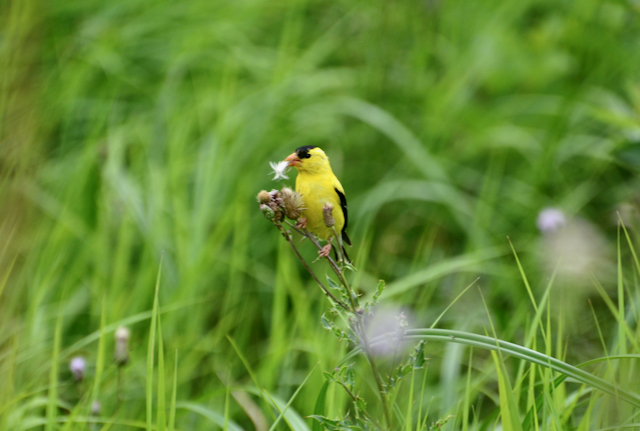
Two goldfinches made my day, vibrant golden yellow. They seemed not to be bothered by my presence as they were too busy with their breakfast:

well except this one with attitude:

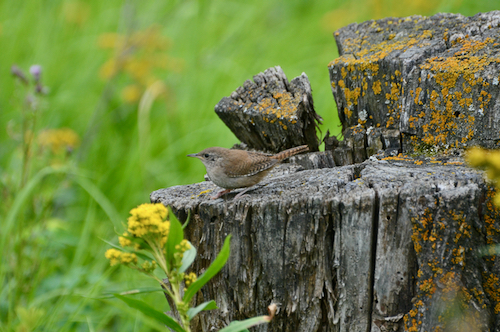
Another sort of yellow, unintended, for I was aiming at the wren. Only when I uploaded the photo did I notice the lichen on the stump:

Sometimes, an accidental shot needs not be deleted. Why, this looks like an impressionist painting to me:

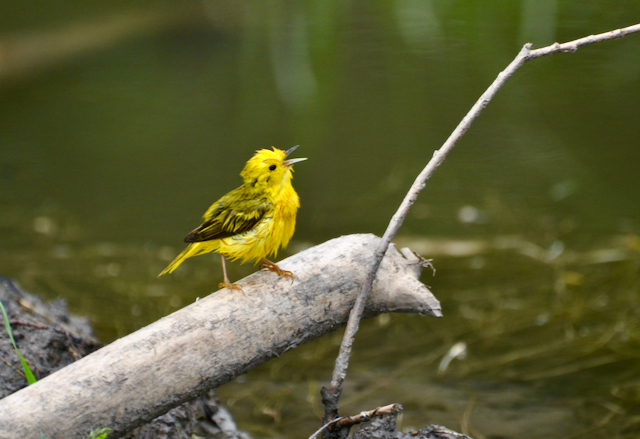
This one most symbolic, for the colours yellow and blue remind me of a war-torn country with millions of her people fleeing from their homeland. May this tiny yellow warbler, always so full of life and song, be a symbol of resilience for the ravaged country of Ukraine:

***

A Summer Splash

A few days ago, I happened to catch sight of a jolly yellow warbler bathing (or playing) in the water. He plunged right into the shallow stream, splashed around, after that flew up on a branch preening, singing, then splashed right back into the water and do it all over again just for the fun of it.

I’d like to tell you it was a bright, sunny day, inviting a cooling summer splash. But I can’t because it wasn’t. The day was grey, overcast, chilly even and with a thunder storm in the forecast.

This tiny warbler’s joie de vivre defies the gloominess of the day or any imminent storm… a mighty hard lesson to learn from a three inch creature.

***

Sabbath Pondering

The Peace of Wild Things

When despair for the world grows in me
and I wake in the night at the least sound
in fear of what my life and my children’s lives may be,
I go and lie down where the wood drake
rests in his beauty on the water, and the great heron feeds.
I come into the peace of wild things
who do not tax their lives with forethought
of grief. I come into the presence of still water.
And I feel above me the day-blind stars
waiting with their light. For a time
I rest in the grace of the world, and am free.

–– Wendell Berry

***