Books Into Movies at Upcoming Film Festivals

One consolation of seeing leaves turn yellow (yes, I’m seeing it already) is the kick-off of fall Film Festivals. This year at TIFF and NYFF, there are several movie adaptations of books and stage plays. The following are some titles announced so far. (Images below are book covers. For film images click on links.)

Toronto International Film Festival (TIFF Sept. 4 – 14)


hector and the search for happinessHector And the Search for Happiness by François Lelord

I don’t like to compare, but for this one, the film version may just be better than the book which I found disappointing considering the appealing title. With a globe-trotting storyline, what better way to experience it than to see the sights and hear the sounds on the big screen. But of course, how it’s adapted is crucial. Considering the cast, I hope the film can bring at least a couple hours of happiness: Simon Pegg, Rosamund Pike, Toni Collette, Stellan Skarsgård, Christopher Plummer.


The HumblingThe Humbling by Philip Roth

In this adaptation of Roth’s 30th book (published 2009), Al Pacino plays the older man attempting to experience a total rejuvenation via an affair with a much younger woman, played by Greta Gerwig. Directed by Barry Levinson (Oscar Best Director for Rain Man, 1988). I’d read several of Roth’s previous books and learned not to be shocked by what he described. However, would I be interested to explore what’s in store in The Humbling? TIFF has about 300 films screening, I think I’ll let the diehard Roth or Pacino fans rush in for this one, albeit I’m quite fond of Greta Gerwig. BTW, a film adaptation of his Pulitzer Prize (1998) winning American Pastoral had been announced.
 

The Prophet

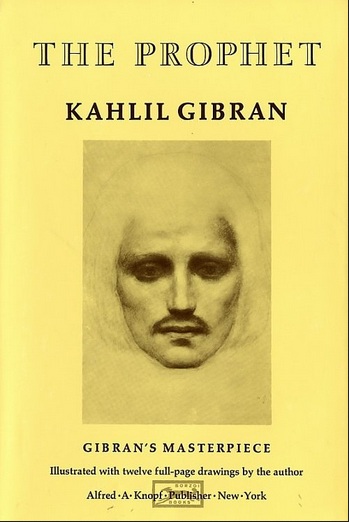
Kahlil Gibran’s The Prophet

If Proust’s Remembrance of Things Past can be turned into graphic novels, Kahlil Gibran’s The Prophet can be visualized in an animated film. Animations are not my usual movie choice in recent years but this time at TIFF I’d like to catch this one. The adaptation is a collaboration of international animation artists, voiced by Beasts of the Southern Wild‘s child star Quvenzhané Wallis, with Liam Neeson voicing the poet. Directed by Roger Allers, who is the writer and/or director of some memorable Disney collection such as The Little Matchgirl (2006), The Lion King (1994), Aladdin (1992), Beauty and the Beast (1991).


Plays of StrindbergMiss Julie (Play) by August Strindberg

Newest film version of the 1888 play by Swedish playwright August Strindberg. Adapted and directed by Liv Ullmann, the famous Ingmar Bergman actress; maybe relevant here is her role in Persona (1966). Apparently, or maybe not so, Strindberg was exploring the psychological make-up of ‘womanhood’ and the complex interplay of nature, nurture, and circumstance. I finished reading the play with an apprehensive sigh… will this be a good role for Jessica Chastain? This is not a sympathetic character, Miss Julie, a confused, flirtatious mistress seducing her valet. A film that would rest mainly on character and acting. So maybe Chastain is a good choice. The valet? Colin Farrell, not too sure about that one. Samantha Morton’s the cook, thus forms the triangle of power play.


My Old LadyMy Old Lady (Play) by Israel Horowitz

American playwright Israel Horowitz adapted his own 1996 stage play onto screen and directed it, with three prominent actors performing. This one is on my must-see list at TIFF. An American inherited from his late father a Paris apartment which to his surprise, is occupied by an old lady who, according to the legal arrangement, has the right to live there till she dies. Her daughter forms the invincible alliance. This entangled threesome: Two-time Oscar winner Maggie Smith (The Prime of Miss Jean Brodie, California Suite), who will turn 80 later this year, her equally formidable daughter, Kristin Scott Thomas (Oscar nom for The English Patient), and the unlucky (or maybe not) American, Kevin Kline (Oscar winner for A Fish Called Wanda). Whether a stage play or film, these three would make a dream cast.


Still Alice

Still Alice by Lisa Genova

Julianne Moore plays an accomplished academic, Columbia (Harvard in book) University professor battling early onset Alzheimer’s disease, based on the novel by neuroscientist turned writer Lisa Genova. Genova first self-published her book, later Simon and Schuster picked it up and the rest is history. It’s now selling in 30 countries and translated into more than 20 languages. Genova, a Ph.D in neuroscience, gives much credibility to her book. How will the film pan out? Julianne Moore would be one who can deliver a nuanced performance. Cast includes Kristen Stewart and Alec Baldwin.


WildWild by Cheryl Strayed 

On the heels of his Oscar nominated Dallas Buyers Club last year, Canadian director Jean-Marc Vallée brings out a totally different kind of production. Wild is based on the NYT #1 Bestseller memoir by Cheryl Strayed. Screenplay by the reliable Nick Hornby (Oscar Best Adapted Screenplay nom for An Education, 2009). Following the death of her mother, Strayed, then 26, divorced, devastated, drugged, went on a long-distance hike, 1,100 miles on the Pacific Crest Trail through California and Oregon. ‘Wild’ has a double inference here: the nature trail and the character walking on it. The journey could well be redemptive and perilous at the same time. The books in Strayed’s backpack included Faulkner and Flannery O’Connor. Reese Witherspoon and Gaby Hoffmann star.


**


NEW YORK FILM FESTIVAL (NYFF Sept. 26 – Oct. 2)


Gone GirlGone Girl by Gillian Flynn
To open NYFF is the premiere of this highly anticipated film adaptation of Gillian Flynn’s popular suspense novel. Two-time Oscar Best Director nominee David Fincher (The Social Network, 2010; The Curious Case of Benjamin Button, 2009) helms. Yes, the buzz is also due to Ben Affleck (Oscar winner, Argo, 2012) playing the husband who finds his wife missing one day and thus begins the extraordinary sequence of events down the rabbit hole. Rosamund Pike plays the mysteriously gone girl. Yes, I’ve read the book. And just because of that, knowing the twists and ending, will I still be interested in watching this ‘suspense thriller’?


Inherent ViceInherent Vice by Thomas Pynchon
Five-time Academy Award nominee, writer/director Paul Thomas Anderson’s works include The Master (2012) and There Will Be Blood (2007) for which Daniel Day-Lewis won one of his three Best Actor Oscars. But the film I like best is his Punch-Drunk Love (2002). Author Pynchon’s most famous book probably is Gravity’s Rainbow, which I’ve only heard of but not read. Actually, I haven’t read any of Pynchon’s noir detective novels. Pot seems to be the motif. Anderson directs Joaquin Phoenix again after The Master, cast includes Reese Witherspoon, Josh Brolin, Owen Wilson, Jena Malone.


***

Two Fine French Films

For this week in the blogging events Paris in July 2014 and Dreaming of France, I’m sharing with you two fine, French Films. They are not new movies, but probably you had missed them when they first screened a few years ago, or they might not have screened in your area. I came across them only recently. Interestingly, they make a fine pair for they both touch on very similar themes.

My Afternoons with Margueritte (“La tête en friche”, 2010)

This comedy based on the book by French author Marie-Sabine Roger stars the famous French actor Gérard Depardieu as an uncouth, middle-aged construction worker, Germain Chazes. His lack of literacy skill is benign when compared to the low self-image he suffers as a result of the constant taunting from his teachers and classmates when he was young, and the life-long scolding from a harsh and overbearing mother (Claire Maurier). To his misfortune, Germain still has to live near her and take care of her, a woman now has senility to add to her abusive outbursts.

Germain’s life comes to a turning point when he meets Margueritte (Gisèle Casadesus, who just turned 100 in June this year!) one afternoon on a park bench. Margueritte is an elderly lady living in a retirement home, and spends her afternoons in the park. She soon engages Germain to open up. Thus begins an unlikely friendship between the two.

My Afternoons with Margueritte

More importantly, Margueritte leads Germain to a whole new world of books and literature. She reads to him The Plague by Albert Camus, going through it in ten afternoons. He listens and is totally entranced by the language and the imagery.

When she reads to him Promise At Dawn, the memoir by Romain Gary, he is absorbed by the author’s description of his late mother’s love for him, and especially moved by the imagery of Gary “howling at her grave like an abandoned dog.” He begins to see his own predicament with the lens from the books Margueritte reads to him.

Who says literature belongs to the academics, or those in the ivory tower of the intellectual and sophisticated. Why is it so incongruent to hear a construction worker quoting Camus, or his seeing the world in literary imageries, or being tender and caring for a change. Germain’s friends tease him, they want the old Germain back. But Germain knows too well that he has crossed the point of no return, and that his transformation is empowering.

Soon, with the help of his girl friend Annette (Sophie Guillemin), Germain learns to read on his own. Further, he has learned to give back to Margueritte in an endearing way. As far as the story trajectory goes, Germain could well write a book entitled How Camus Can Change Your Life (that’s mine, not in the film).

Charming performances and great screen chemistry between Depardieu and Casadesus. A heart-warming story with sprinkles of humour for added appeal. A delightful and worthwhile film to watch.

~ ~ ~ Ripples


Queen to Play (“Joueuse”, 2009)

Along the same thematic line is this quiet and stylish production set in the beautiful French island Corsica just off the mainland. From Depardieu’s construction worker we now have a middle-aged chambermaid, Hélène (Sandrine Bonnaire), who works in a seaside hotel. Hélène goes through an inner transformation even more dramatic than Germain’s. It is interesting to watch the game where the Queen is the most powerful piece is freed from its male dominance for a change.

Originally titled “Joueuse” (The Player), the film is based on the novel by French author Bertina Henrichs. Director Caroline Bottaro has  displayed an inviting game board for us viewers to interact with, for watching the film makes us witnesses to a game change.

Sandrine Bonnaire’s portrayal of Hélène is sensitive and nuanced. The turning point of her life comes one day while cleaning a room. Through the translucent curtain swayed by the soft wind, she sees the hotel guests, a couple (Jennifer Beals, Dominic Gould), playing chess out in the balcony. She is fully mesmerized. The game board, the pieces they touch, their mutual affection bonded by the game not only send out vibes of sensuality but of intellectual stimulation. (She beats him, BTW) From then on, Hélène is obsessed with chess.

She gives her husband Ange (Francis Renaud) an electronic chess set for his birthday. While he is unappreciative of the gift, many a nights Hélène would slip out of bed quietly and learn to play on her own. She now sees every piece of crumb, every salt and pepper set on the table a movable chess piece, any checkered surface a chessboard on which she can prance to her imagery delight.

Queen to play

Other than her hotel job, Hélène does cleaning for a mysterious widower, Dr. Kröger, played by Kevin Kline, his first French-speaking role. Hélène finds a chess set on his bookshelf and asks him to teach her the game. Skeptical and annoyed at first, Dr. Kröger agrees when she offers to clean his place for free in exchange for chess lessons. He soon discovers that Hélène is not only serious but gifted. After a few lessons, she begins to win repeatedly.

But Hélène keeps her pursuit secret, afraid of reverberations, and misunderstanding from her husband. Why does she need to be so sneaky? Can’t a woman desire matters of the mind? Can’t a chambermaid be absorbed by the game of chess, set foot on a male-dominated, intellectual territory? Would Hollywood make a movie like this?

Hélène’s teenaged daughter is her supporter at home when her husband finds out. He too later yields to her passion as Hélène enters her first tournament upon Dr. Kröger’s recommendation.

Oh I love these French films, for they unabashedly praise the arts, literature, and intellectual pursuits; their protagonists quietly shattering social norms and barriers to personal fulfillment. Queen to Play reminds me of Muriel Barbery’s novel The Elegance of the Hedgehog.

Do you need to know how to play chess to enjoy the film? No. Actually, the camera seldom focuses on the chessboard. Instead, we see the faces of the chess players, that is where we read all the emotions.

Intriguing as chess moves, beautiful as the crafted pieces, the film is a joy to watch, a satisfying winner.

~ ~ ~ 1/2 Ripples

Paris In July 2014Dreaming of France Meme Eiffel***

Related Posts on Ripple Effects:

The Elegance of the Hedgehog Book Review

Séraphine and the Wrought-Iron Chair: Review of the film Séraphine

Haute Cuisine Movie Review

Old Tales, New Takes

From the comments in my post What Maisie Knew (2012): From Book to Film, I see literature lovers, especially those who have read Henry James’s novel, are curious to watch the movie, wondering what a modern day film version could offer. Here is a good example of an adaptation exerting artistic and creative freedom to transpose while bringing out the spirit of the source material, ideas transferred as types onto the screen.

I can imagine too for literature purists, this is horror story. To them, movie adaptations are by definition a lower form of creation. They may be more acceptable if they follow exactly the same story lines and characterization. Any diversion spells disloyalty. How faithful and literal they are in the transposition is the sacred measure of their quality.

Having seen some retelling of literature effectively turned into cinematic form, I had long discarded the ‘loyalty’ criterion in my personal viewing. A ‘faithful adaptation’ doesn’t guarantee success, an example is the newest Romeo and Juliet (2013) which, using a modern day term, is pretty ‘lame’.

On the other hand, you might have enjoyed some movies without being aware of the literary source on which they are based, however loosely:

Apocalypse Now – Joseph Conrad’s Heart of Darkness

Bridget Jones’s Diary – Jane Austen’s Pride and Prejudice

The Claim – Thomas Hardy’s The Mayor of Casterbridge

Clueless – Jane Austen’s Emma

Cruel Intentions – Choderlos de Laclos’s Les Liaisons Dangereuses

Easy A – Nathaniel Hawthorne’s The Scarlet Letter

The Hours – Virginia Woolf’s Mrs. Dalloway

Jude – Thomas Hardy’s Jude the Obscure

The Lion King – Shakespeare’s Hamlet

My Fair Lady – Bernard Shaw’s Pygmalion

From Prada to Nada – A Latina version of Austen’s Sense and Sensibility

O Brother, Where Art Thou? – Homer’s Odyssey

Ran (Kurosawa’s, another evidence that literature is universal) – Shakespeare’s King Lear

West Side Story – Shakespeare’s Romeo and Juliet

Of course there are those that still use the same title without having to hide an alter ego, but have given the source material a contemporary spin. Because of their new angle to an old story, viewers can glean fresh insights and gain a deeper appreciation. Here are a few productions in recent years that are worth watching:


Coriolanus (2011)


coriolanus_03Ralph Fiennes’ directorial debut. Shakespeare’s Coriolanus is placed in present day, fictional Rome. Modern politics, urban warfare, but same old human hunger for power, the treachery of pride and the ever complex entanglements of family ties. Ralph Fiennes is superb as Coriolanus rivalling and later aligning with his archenemy Aufidius (Gerald Butler). Vanessa Redgrave and Jessica Chastain play the two significant others in the life of Coriolanus the vengeful career warrior, his mother and wife. Alas, what’s a woman to do?


Much Ado About Nothing (2012)

Much Ado About Nothing (2012)If a movie adaptation had already been made by Kenneth Branagh with Emma Thompson and all the Brits in full period costumes and a colourful set, what is one supposed to do for a remake? Joss Whedon was ingenious enough to shoot it in a couple of weeks, like on a whim, right in his own Santa Monica, California home, in black and white. Every room, furniture, wine glass, and the swimming pool is Whedon’s, but every line is Shakespeare’s. Old story, modern humour. A most creative take.


Trishna (2011)

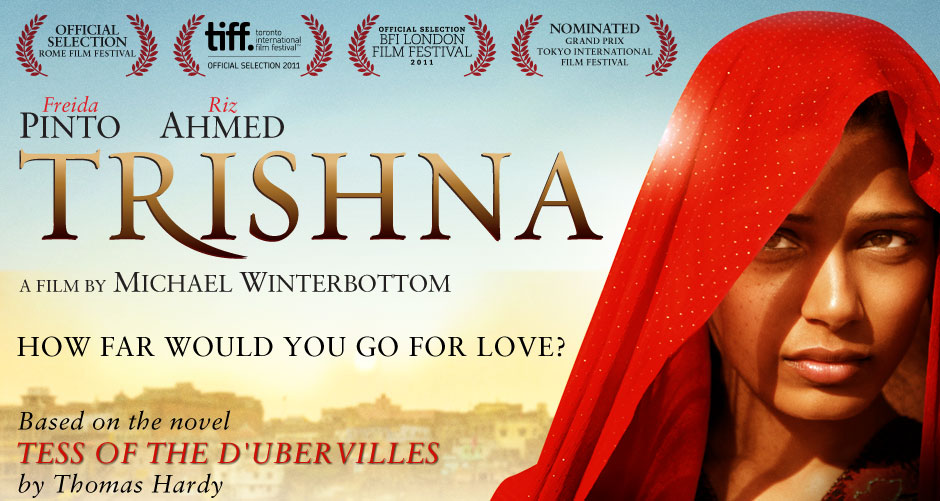
TrishnaThis is British director Michael Winterbottom’s third adaptation of a Thomas Hardy novel, after Jude (1996, Jude the Obscure) and The Claim (2000, The Mayor of Casterbridge set in 1860’s California). This time he transports us to India. From the mass of humanity, we zoom in to one innocent girl in a poor rural area, 19 year-old Trishna. The trajectory of her fate and encounters parallel Tess of the d’Urbervilles in Thomas Hardy’s novel, equally poignant and tragic. The transposition is convincing. Freida Pinto of Slumdog Millionaire fame is perfectly cast as Trishna. Winterbottom’s naturalistic style matches the mood of the novel. Not easy to watch at times as we follow a powerless female in a class-centred, male dominated world. A beautifully shot film.


Blue Jasmine (2013)

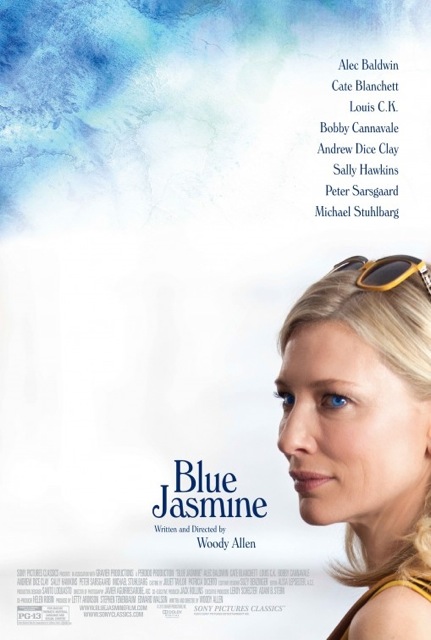
Blue Jasmine Movie PosterI’ve written a full post on this. I see Blue Jasmine as Woody Allen’s homage to Tennessee Williams’ A Streetcar Named Desire. A different time and place, altered names and backstories, but same kind of struggles, parallel character types. Vivien Leigh won an Oscar for her role as Blanche in the 1951 movie version as a displaced, worldly older sister coming to take shelter with her younger, less well-to-do sister. Cate Blanchett won hers playing Jasmine who faces similar predicaments. In typical Woody Allen style, a pathos and humour mashup. Blue Jasmine is an excellent new take on a piece of classic literature. Of course, in this case, we only see the overarching parallels, but it does speak to the subliminal power of old tales.


***

RELATED POSTS:

Can A Movie Adaptation Ever Be As Good As the Book?

Tess of the d’Urbervilles (2008 TV): The Lite Version Part 1, Part 2

Blue Jasmine: Homage and Re-imagining 

Slumdog Millionaire (2008)

A Summer in Genoa (2008, Michael Winterbottom, Colin Firth)

Book Sale 2014: A Very Restrained Purchase

It’s that time of the year again… no, I don’t mean nesting habit of birds. I’m referring to The Crossroads Market Annual Book Sale. A diversion from my usual avian pics for Saturday Snapshot, here’s a photo of my very restrained purchase this year.

Readers familiar with my previous annual book loot will know how I’d hauled back home dozens of like-new or even unopened books at $2 each. All for the good cause of supporting Servants Anonymous Society.

Due to the boxes of still unread inventory from previous years, I’d decided to refrain from gratifying my hoarding instinct this time. The result is this minimal bagging of just four books, which I’d spent hours hand picking. Again, $2 each, all in mint condition:

Book Sale 2014


The reasons for these selections? Three had sold film rights and two of them are already in development for a movie adaptation. The fourth  one isn’t going to be a movie, but no less dramatic.

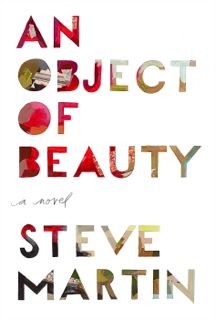
An Object of Beauty by Steve Martin 

Other than being known as the Father of the Bride, Steven Martin is also a talented banjo player. I’ve heard his banjo playing, but as for his books, quite a few of them actually, I still haven’t had the pleasure to enjoy. So here it is, a Steve Marin novel with 22 full-colour art reproductions inside. Story is set in the demanding art world of Manhattan, about Sotheby’s up-and-coming and very ambitious Lacey Yeager who has set her mind on climbing high on the career ladder. Amy Adams had bought the film rights, aiming at producing and starring in it. Who is writing the screenplay? Ned Benson, who wrote and directed The Disappearance of Eleanor Rigby Him and Her, which had me mesmerized at TIFF last year.

The Secret Scripture by Sebastian Barry

The novel won the prestigious James Tait Black Memorial Prize in the UK and the Costa Awards in 2008, Irish Book Awards’ Novel of the Year, and short-listed for the Man Booker Prize. Roseanne McNulty has lived in a mental asylum for fifty plus years. Now at the ripe old age of one hundred, she decides to write her life story. Fascinating. So the book chapters transport the character and her readers between the present and the past. I look forward to the movie adaptation, just take a look at this perfect casting: the legendary Vanessa Redgrave as the older Roseanne McNulty and the talented Jessica Chastain as the younger. Producer is Noel Pearson, the Irish theatre and film producer who brought us the Oscar winning My Left Foot (1989, Daniel Day-Lewis). The Secret Scripture film adaptation has great potentials. Shooting is reported to be starting in June this year.

The Sisters Brothers by Patrick DeWitt

Here in Canada, this is a multiple award winner: 2011 Governor General’s Literary Award, 2011 Rogers Writers’ Trust Fiction Prize, 2011 Scotiabank Giller Prize Finalist, 2011 Man Booker Prize Finalist, and selected as Amazon #1 Best Book of 2011. Film rights have been purchased by John C. Reilly’s production company… yes, the actor John C. Reilly, to turn this Western, yes, cowboy novel in the style of Elmore Leonard and True Grit into film. Should be an interesting read and movie. I don’t know about John C. Reilly, but, would he be willing to collaborate with the Coen brothers for the project?

The Film Club by David Gilmour

This is not the David Gilmour of Pink Floyd fame. Again, despite being an award-winning Canadian author, one time TV personality and CBC film critic, university lecturer, people outside of Canada upon hearing the name would likely think of someone more famous, at least Google does. Due to his recent incendiary remarks on his preferences re. writers and literature, this Canadian Gilmour just may have raised some awareness, adding notoriety to his name.

However, for me it’s not about him but about this audacious parenting experiment he conducted. At the time, his son was a 16 year-old who had an incurable avoidance of school. Watching him loiter at the edge of the cliff of boredom and aimlessness, what is a father to do? Well, Gilmour let his son drop out of school, but on two conditions: watch three movies with him every week, and, no drugs. Not a bad offer. A father and son film club instead of school… only in Canada, eh? Which titles were in his syllabus? As a film buff, I’m totally intrigued by his unorthodox parenting method, already half way through the book. Will definitely share with you eager parents when I’m done.

***

You might want to see what others have posted for their Saturday Snapshot. CLICK HERE to Melinda of West Metro Mommy Reads.

What Maisie Knew (2012): From Book to Film

With all due respect to Henry James, I’d rather be watching this contemporary adaptation of his work than slashing through the thickets of his novel. A thicket of a book, the last time I used this description was with Proust. And, if I’m to decipher long and incomprehensible sentences I’d rather be reading Proust than James. Nevertheless, James’s novel is a dense and deep psychological analysis of a dysfunctional marriage and its fallout on the child, a relevant issue today. Nobody wins in cases like that.

When published in 1897, it was probably one of the earliest fictional depictions of divorce and child-custody. Precocious Maisie knows much more than her parents could ever imagine. Like a volleyball, she is being tossed back and forth between her Mama and Papa, whichever side she lands on loses, for they both want their life to be free from child-rearing, free from ties and obligations. The notion of being ‘free’ recurs in the last chapters of the book, a key to how Maisie ends up choosing who to follow — her governess Mrs. Wix, someone who is not obsessed with being ‘free’, but who is committed to Maisie’s welfare.

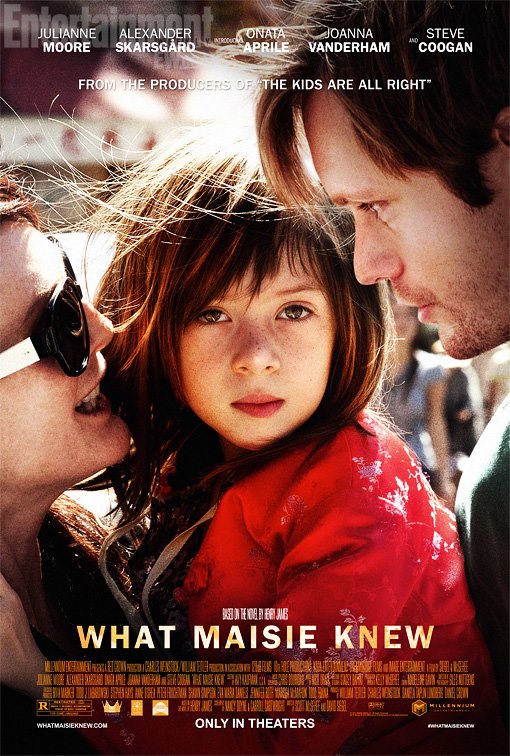
What Maisie Knew


Again, may I reiterate here as in previous posts about books to movies, the two are totally different art forms. Here, one is a 300 page literary work, internal, dense and deep. The other is a 93-minute production of visual storytelling, enhanced by dialogues and musical score. To achieve this end, screenwriters Nancy Doyne and Carroll Cartwright have to pick and choose the most relevant storyline and characters, and opt out of lengthy, internal exploration of psychological entanglements, something the literary form can describe readily. The screenwriters have done a good job in their choices, keeping the story simple and relevant for viewers a hundred years after the book was published. Despite the subject matter, the movie is enjoyable and highly watchable.

Set in modern day NYC, it smoothly tells a poignant story from the child’s point of view. Six-year-old Maisie (Onata Aprile) is eyewitness and victim of her parents’ constant quarrels and later divorce, a young child caught in the thorns and thistles of adult relationships. It is unfortunate that the most sensitive and observant child is often the most vulnerable. The naturalistic capture by the camera of Maisie’s quiet observations is most heart-wrenching. Maisie learns that the adult world is a busy place, her presence, an inconvenience. Thanks to the screenwriters’ gentler treatment, the movie spares us from some cruel, hateful fights in the book. We see Maisie ultimately get a taste of what it’s like to be cared for and to have some simple, childhood joy. The ending shot is beautiful.

Unlike Maisie in the novel, there is no moral dilemma for her in the movie. No doubt, the moral element is crucial in James’s novel. Divorce and adultery must have poked deep into the heart of James’s readers in his days. But our contemporary society has, alas, evolved into a ‘morally neutral’ state of numb resistance. The screenwriters may well know too that entertainment value comes before the didactic. We see no moral choices here with Maisie in the movie. After all, a young child will readily cling to whoever that loves her in deeds rather than mere words. Kudos to the filmmakers, they know the heart of a child.

Directors Scott McGehee and David Siegel capture the story from Maisie’s viewpoint, natural and realistic, camera lens often at a lower angle. Certain shots are particularly affective, from inside a taxi, the transport of choice in Manhattan, at different times the vehicle that takes away Mama, Papa, and caring Margo. We would see from inside the taxi out to Maisie standing on the roadside, abandoned and distraught.

The wonderful cast is what makes the movie so absorbing, and at times, even heartwarming, despite its subject matter. The then seven year-old Onata Aprile is a natural. Julian Moore’s solid performance as her mother Susanna is convincing. She is a touring rock-and-roll singer who has passed her prime. Jealous and temperamental, Susanna’s love for Maisie is possessive, and often displayed in empty words. British actor Steve Coogan, known to North American viewers by his recent starring role in Philomena, plays the career-minded art dealer father Beale. Like his ex-wife, he is too busy with his own life to care for a child. They both say they love Maisie, showering bursts of affection whenever they see their child.

What saves Maisie is the awkwardly positioned step-parents, her father’s new wife and Maisie’s former babysitter Margo (Joanna Vanderham, the parallel of Ms. Overmore in the book) and her mother’s new love interest, the tall and young bartender Lincoln (Alexander Skarsgård, a Sir Claude parallel). As predicted, they soon are abandoned themselves and the two quickly form a tie that includes Maisie in their life. Diverging from James’s story, the two are genuinely loving and caring, a soothing balm to Maisie and the viewers.

Overall, a fine, contemporary adaptation of the novel. To James purists, a loose reinvention; for viewers seeking meaningful entertainment, this should be on the list of films to watch.

~ ~ ~ Ripples


 ***

More Downton Ripples

Two years ago, some time after Downton Abbey Season 2 had finished airing on PBS, I wrote my first “Downton Ripples” post. I subtitled it “How I Overcome Downton Abbey Withdrawal Syndrome”. In that post, I’d listed some books and movies/TV productions that relate to the setting similar to Downton Abbey, for I was fascinated by the Great War period after watching Downton.

Some of the authors I read included Robert Graves, Hemingway, Evelyn Waugh, and watched Brideshead Revisited, A Handful of Dust, Easy Virtue and discovered Lost Empires, the TV series with a young Colin Firth together with Laurence Olivier, amazing.

This time, after Season 4, the withdrawal syndrome seems to have numbed a bit, but the ripples continue to spread. Again, Downton has prodded me to seek out the literature around the time between WW1 and WW2 Europe. While there are many present day authors writing about that era, I’d like to hear more authentic voices. I went looking for writers actually living in that period of history to hear their stories.

The following is a list of titles I’ve gone through this time, some I have finished, some still on my ‘To be’ agenda:

Parade’s End (2012, BBC/HBO co-production)

Parade's End Blu-Ray Cover

This series complements Downton Abbey perfectly. While Downton is light and heart-warming, soapy in its feel, Parade’s End is cerebral and literary, its social commentary of the time harsher and more incisive. I think the difference is, Julian Fellowes creates as a contemporary screenwriter, and knowing what modern day viewers want, he caters to their desire. Yes, he has offered us charming entertainment, and for the stars and the show, opportunities for Emmy and Golden Globe noms and wins.

Parade’s End is another story. Playwright Tom Stoppard (Emmy and BAFTA nom for this) adapts from Ford Madox Ford, a writer during WWI period, contemporary of Hemingway, Fitzgerald, the Lost Generation after The Great War, and witness to the destruction of the old world order and individual lives. Sure social barriers were dismantled, but together with such collapse came the shattering of long-held values and beliefs. Through the protagonist Christopher Tietjens, we can feel the intense struggles and poignancy of a man caught in such desolation.

I first saw Parade’s End on HBO when there was a window of free viewing. After watching one episode, I knew I must subscribe to continue with the rest of the series, and so I did. Effective advertising indeed. That was last year, and I recently just finished re-watching Parade’s End on Blu-Ray.

Parade’s End is the first time I watch Benedict Cumberbatch in a leading role (Emmy nom), an impressive performance as Christopher Tietjens, one of the last remaining honourable men struggling to stay afloat in the drowning waves of social change and ideals. Rebecca Hall (BAFTA nom) is effective as the scheming and seductive wife Sylvia. The young, almost ethereal Adelaide Clemens as suffragette Valentine Wannop is perfect. She makes me think of Carey Mulligan. And what a wonderful connection — Mulligan will be the star of the new film Suffragette, which I highly anticipate.

Parade’s End by Ford Madox Ford

Parade's End BBC Book Cover copy

This will be my major challenge in TBR books this year. Image here is the BBC Book edition I bought in a book sale a few years back. It has 906 pages, and is made up of four novels — Some Do Not, No More Parades, A Man Could Stand Up, and The Last Post. A more recent edition is the reissue of Penguin Modern Classic, with a new introduction written by Booker Prize winner Julian Barnes (The Sense of an Ending). You can read the intro here.

Parade’s End by Tom Stoppard

Parade's End Script by Tom Stoppard

I enjoy reading the scripts of productions I like. It’s a kind of deconstruction, if you will, demythisizing of sort. I’m fascinated by the skills of a screenwriter who uses words to elicit images for the director to execute, translating the literary into the visual using words. To write for the screen almost sounds like an oxymoron. I’ve read Julian Fellowe’s Downton Abbey scripts and found it most interesting. I’d like to explore Tom Stoppard’s journey of adaptation. But first, I need to tackle Ford Madox Ford’s original texts.

T. S. EliotT. S. Eliot — After Downton and Parade’s End, I’m all geared up to explore deeper into the the psyche and spirituality of the time. Why, after all, what had lost in a generation was not just the physical bodies or social structures, but the internal, the destruction of a value and belief system. I’d like to read and reread Eliot’s works, delve into a time that prompted the poet to see hollow men, and women come and go, talking of Michelangelo. What’s underneath the façade of human progress?

The Europeans by Henry JamesThe Europeans by Henry James — A voice from the dawn of the 20th Century. I have finished listening to the amusing auidiobook of The Europeans. Yes, unlike many readers’ impression of James’ works, The Europeans is a delightful read (listen). It is like a medley of E. M. Forster and Jane Austen. Humorous depiction of the different POV’s between a pair of European sister/brother coming to visit their American cousins residing in the outskirt of Boston. With some LOL moments. My next James read is The Ambassadors.

The Collected Stories of Stefan ZweigStefan Zweig — While Lady Edith’s love Michael Gregson headed to Germany and mysteriously gone missing, the then famous (real life) writer Stefan Zweig in Austria was lamenting the spread of anti-semitism in the continent. It’s interesting that Downton has led me to connect, at least in historical timeline, with an author I’ve just recently discovered, thanks to Wes Anderson’s The Grand Budapest Hotel, to which he has credited the works of Stefan Zweig. I’ve recently read Zweig’s Chess Story, and now delving into his short stories.

***

Books to Movie Adaptations Updates

Here are some updates that look promising, books that are in various stages of development into movies. For yourself or your book group, should make a good reading list:

East of Eden Book CoverEast of Eden — This just came out two days ago, Hunger Games director Gary Ross will write the screenplay of this new adaptation of John Steinbeck’s classic, with Jennifer Lawrence to star. For J. Law fans, this is good news. But for devotees of the original 1955 movie adaptation directed by the legendary Elia Kazan with the debut breakout role for James Dean, this modern version definitely is uncalled for, a rebel without a cause.

An Object of BeautyAn Object of Beauty — The movie version of Steve Martin’s novel about the NYC art gallery scene is now a project of Amy Adams’, with Ned Benson writing the screenplay. I have high expectation of this one, having seen Benson’s wonderful works The Disappearance of Eleanor Rigby: Him and Her last year at TIFF. The cast has not been announced but Amy Adams will be the producer and actor in her new project.

A Walk In the WoodsA Walk In The Woods — from the vast open sea in All Is Lost to the Appalachian Trail, Robert Redford will appear in this adaptation of the 1998 personal memoir by Bill Bryson, a walk on the Appalachian Trail to ‘rediscover America.’ Nick Nolte is also reported to be in the cast. Screenplay by Michael Arndt (Little Miss Sunshine, Toy Story 3, The Hunger Games), directed by Ken Kwapis (The Office). The movie is scheduled to come out in 2015. Enough time to read or reread, or even walk the Trail yourself. Who knows, you might see the film crew while there.

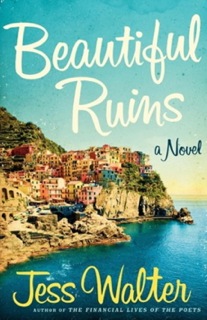
Beautiful RuinsBeautiful Ruins Author Jess Walter of this popular novel will co-write the screenplay with writer/director Todd Field. I’ve seen Field’s Oscar nominated adaptation of Little Children (2006 with Kate Winslet nom. for Best Actress), a haunting film. I trust his talents with Beautiful Ruins. Considering the Italian coastal setting of the book, the movie would likely offer some beautiful cinematography. Imogen Poots is on board, so far.

The Dinner The Dinner — Dutch author Herman Koch’s novel is like a dynamite. I’m half way through the lighted fuse as I type this post, so it’s not full-blown yet, but I’m totally engrossed in this book based on a real-life crime. The dinner menu in an elegant restaurant ingeniously parallels the plot development. I missed it at TIFF last year. And since, I’m not aware that it has made its presence on the big screens here in North America. But hopefully this year we will have the chance to see it. Even if it doesn’t show in your city, read the book still. (Update: to read my book review on Goodreads CLICK HERE.)

Hundred Foot JourneyThe Hundred-foot JourneyAnother culinary movie. This one is much lighter than the above, based on Richard C. Morais’s novel. Story is about a family from India moves to France, opening an Indian restaurant across from a Michelin-starred fine French restaurant. Cultural clashes, the reverse of The Best Exotic Marigold Hotel. The book is quite entertaining, the movie comes with some big names. Producers Steven Spielberg and Oprah Winfrey, Helen Mirren to star, and directed by the prolific Lasse Hallström (Chocolat, 2000; The Shipping News, 2001; Salmon Fishing In the Yemen, 2011)

The GiverThe Giver – The highly popular young adult book by Lois Lowry finally gets a movie appearance, over twenty years after its publication in 1993. Utopia turned bad, ideals and reality. With so many movies on a dystopia, will this still look fresh? Cast include Jeff Bridges as The Giver, and look here, Meryle Streep, Taylor Swift, Alexander Skarsgard, Philip Noyce directs. One of Noyce’s previous works is the adaptation of Graham Greene’s novel The Quiet American (2002). Many may have read this title in school. Time to reread.

The Little PrinceThe Little PrinceLots of talents are behind this newest animation based on the beloved story by French author and pilot Antoine de Saint-Exupéry. Those lending a voice include: Rachel McAdams, James Franco, Marion Cotillard, Jeff Bridges, Paul Giamatti. While I love the earlier musical version (1974, with Gene Wilder as The Fox), I welcome a new adaptation, for I know this will bring the book to the limelight for a new generation. Making a movie nowadays looks to be the most effective way to introduce literature to a younger generation (or whatever generations).

Secret ScriptureThe Secret Scripture — By the Booker Prize short-listed Irish author Sebastian Barry. The novel is an internal dialogue of a close to 100 years-old patient in a mental hospital, Roseanne McNulty, reminiscing her younger days. The older character will be played by the brilliant Vanessa Redgrave, her younger self by the talented Jessica Chastain. I last see them together in a film was in Ralph Fiennes’s directorial debut, the modern version of Shakespear’s Coriolanus. Don’t think these two ladies will appear in the same scene in The Secret Scripture since they are of different time periods, but good to know that the roles are being played by two wonderful actors.

***

Previous Books to Movies Lists:

2014 Book To Movie Adaptations

Upcoming Book to Movie Adaptations

Great Movies Expectations

Related Posts:

My book review of The Dinner posted on Goodreads

Book Review of The Hundred-Foot Journey by Richard C. Morais

Do We Need Another Rebecca Remake? Another Grapes of Wrath?

***

12 Years A Slave, Narrative of Solomon Northup: A Voice That Must Be Heard

“Is everything right because the law allows it?” — Solomon Northup

This is one of those cases where after watching the movie, I knew I must read the original source material, especially that it was written by Solomon Northup himself. If the movie is an artistic, cinematic account of a dark page in history, Solomon’s narrative is the quintessential eyewitness report, a first-person, authentic voice that is both a victim and a legitimate accuser of an inhumane and unjust system.

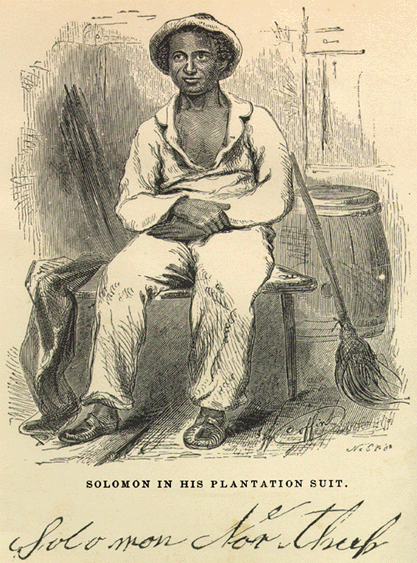
Solomon Northup copy

Born a free man in the State of New York, Solomon was happily living in Saratoga Springs, married to Anne and enjoying a loving family life as father to Elizabeth, 10, Margaret, 8, and Alonzo, 5. In March, 1841, his life was tragically altered when he was deceived by two men, Brown and Hamilton, and followed them to Washington, believing that he was to be hired to play the violin in a circus. Solomon was later drugged, kidnapped, chained and beaten. Together with other captured victims, he was smuggled to New Orleans and sold as a slave, his name changed to Platt, erasing any evidence of a previous life.

Having no free papers to prove his identity, transported and sold like a chattel to the Bayou in Louisiana, Solomon’s fate was sealed hundreds of miles away from home. His agony was heart-wrenching:

Were the events of the last few weeks realities indeed? — or was I passing only through the dismal phases of a long, protracted dream? It was no illusion. My cup of sorrow was full to overflowing … To the Almighty Father of us all — the freeman and the slave — I poured forth the supplications of a broken spirit, imploring strength from on high to bear up against the burden of my troubles, until the morning light aroused the slumberers, ushering in another day of bondage. (p. 77)

Solomon Northup’s eloquent writing immediately draws me in. It has a traditional and formal ring to the ear, but not archaic; it exudes clarity, finesse and grace. I’m struck by his stylish narrative even when he is describing depravity and injustice. After reading, I can see how the book had inspired director Steve McQueen’s beautifully rendered, artistic cinematic work on such an ugly subject matter. 

The movie follows the memoir closely, albeit leaving out a lot of details. Reading the source material after the movie can fill those in, making it so gratifying.

It was strictly forbidden of slaves to learn to read or write; pen and paper were prohibited. Any slave found to have even minimal education would be severely punished. Solomon had to feign ignorance all the years as a slave to survive. His memoir was written after he gained back his freedom in 1853.

I was most impressed that while Solomon yearned for deliverance and justice, he harboured no traces of personal vengeance against his tormenters. He had proven himself a man of integrity. Often he was sought after for his resourcefulness and his skills in playing the violin. He had entertained masters, and offered momentary relief to fellow slaves.

For two years Solomon was under the kind master William Ford, but had to be sold to the ‘slave breaker’ Edwin Epps to escape from Ford’s jealous and murderous slave driver Tibeats. The subsequent ten years with Epps became an extended living nightmare.

While the movie adaptation is an excellent production which I gave 4/4 Ripples, I find  Solomon Northup’s memoir even more engrossing. I’m particularly impressed by the fact that the book is not a self-absorbed account of sufferings, but as a careful memoirist, he records many details that are informative and even interesting, such as the natural vegetation of the Bayou environment, the cotton and sugar cane crops growing from seeding to harvesting, and the geography of the locales.

Like a perceptive ethnographer, he chronicles plantation life as a slave, the dwellings, diet, work load, daily chores, maltreatments. From his candid revealing, we are led into the subjective world of slavery, being sensitized to what it is like living in bondage and helplessness, constantly fearful of severe whipping and even death. Like a suspense writer, Solomon leads us to follow his risky attempts to seek help, and await in bated breath the day of his rescue. 

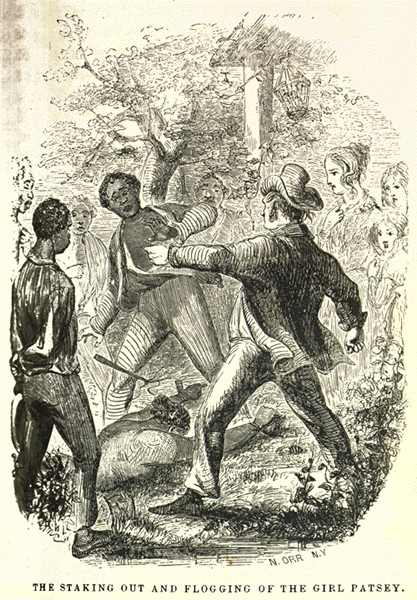
An incisive observer of human nature, Solomon sharply describes the psychological makeup of the alcoholic psychopath Epps, and the conflicting power relation binding Epps and his wife, complicated by his gratuitous fondness of the slave girl Patsey. We see in the movie Patsey suffers the brunt of her Mistress’ jealousy, and the maltreatment under her Master who tries to please his wife. The traumatic scene in the movie where Solomon is ordered by Epps to whip Patsey is described even more poignantly in the book. I’m surprised that the literary narrative has a more powerful hold on me than the visual rendition in this scene.

Flogging of Patsey copy

The memoir serves its purpose as a piece of personal narrative that’s poignant and deeply moving. The resilience and faith of Solomon Northup is crucial in his later being rescued. His longing for freedom and justice that is devoid of personal vengeance is most admirable and inspiring.

The rescue is a long and testing process, not so short as in the movie which I feel is a bit off balance. The adaptation should have given viewers a sense of the actual attempt especially in his home state of New York among those who try to find and rescue him. Thanks to the free-thinking, itinerant carpenter Bass from Canada who came to work for Epps for a short time, Solomon saw a crack opened for a chance to relay news back to the North by way of Bass.

Solomon had disappeared from the lives of his wife and three children for twelve years. Thankfully they were all well. When he reunited with them, he had the pleasure of seeing his newborn grandson, named after him by a devoted daughter. His youngest son Alonzo had the plan to make enough money to buy back his freedom if he could be located. It was indeed a moving scene as depicted in the following sketch from the book:

Family Reunion copy

After he had regained freedom, the slave trader Burch, ‘a speculator in human flesh’, was arrested and brought to trial in Washington, where he kidnapped and sold Solomon into slavery. However, Solomon was denied the right to be a witness against Burch for he was a black man. Burch was later found not guilty and discharged. Solomon wrote in his memoir:

A human tribunal has permitted him to escape, but there is another and a higher tribunal, where false testimony will not prevail, and where I am willing, so far at least as these statements are concerned, to be judged at last. (p. 319)

His faith in that ‘higher tribunal’ and an ultimate judge had carried Solomon Northup through the twelve years of slavery. His narrative not only is a voice that testifies against the injustice of man, but poignantly declares that freedom transcends physical bondage. Amidst inhumanity and despair, he had chosen to remain human, and to value integrity and faith. Solomon Northups’ ordeal is a glimmer of light in a dark page of history.

The Oscars dim by comparison.

~ ~ ~ ~ Ripples

CLICK HERE to read my movie review of 12 Years A Slave

***

Free Download:

Twelve Years A Slave, Narrative of Solomon Northup, NY, Miller, Orton & Mulligan, 1855, 336 pages, with appendix of legal documents and papers. You can download the PDF version of the original 1855 publication free here.

***

2014 Book to Movie Adaptations

I’m sure without any more suggestions, you have plenty to read already. But just in case you’re one of those who likes to read the book before watching its movie adaptation, here’s a list to add to your 2014 reading:

A Most Wated ManA Most Wanted Man by John Le Carré

The most recent John Le Carré novel to be adapted into a movie. He has eight so far. Philip Seymour Hoffman, Rachel McAdam, Robin Wright, Daniel Brühl star. Directed by Anton Corbijn whose last film was the thoughtful The American (2010), a film adaptation I found to be much better than the book. A Most Wanted Man is to be premiered at Sundance Film Festival, Jan. 16-26, 2014, in Park City, Utah.

The DoubleThe Double by Fyodor Dostoyevsky 

A government clerk after seeing his own double–but a completely opposite personality from his introverted and unsure self–ultimately goes down a path of madness. Should be one captivating psychological thriller, but interestingly according to IMDb, it’s a comedy. Jesse Eisenberg stars (I can see the casting is spot on). At TIFF last year. To be screened at Sundance this January.

EVERY-SECRET-THING-199x300Every Secret Thing by Laura Lippman

Acclaimed psychological thriller about missing children and their abductors now turned into suspense drama by director Amy Berg, known for her riveting documentary West of Memphis (2012) about the ‘West Memphis Three’. Adapted screenplay by Nicole Holofcener, who wrote and directed the recent, award winning indie film Enough Said (2013). Dakota Fanning, Diane Lane.

.

Far from the Madding Crowd

Far From the Madding Crowd by Thomas Hardy

Carey Mulligan stars as Bathsheba Everdene, screenplay adaptation by David Nicholls, who has written other classics adaptations such as Great Expectations (2012), Tess of the D’Urberville (2008). But my personal favourite of his works is the gem When Did You Last See Your Father? (2007) And if you’ve seen the intense Danish film The Hunt (just nom for an Oscar), you’d be curious to see its director Thomas Vinterberg at the helm of this latest Hardy adaptation.

gone-girl

Gone Girl by Gillian Flynn

A woman mysteriously disappears on the day of her wedding anniversary. A NYT bestseller, the thriller will be directed by David Fincher, two-time Oscar nominee for The Social Network (2010) and The Curious Case of Benjamin Button (2008). Ben Affleck, Roasmund Pike, and Neil Patrick Harris star.

.

Hector and teh Search for HappinessHector and the Search For Happiness by François Lelord

Psychiatrist turned writer Lelord’s internationally popular book about a psychiatrist’s globe-trotting search for happiness. Sounds like a delightful read and an original movie idea. Intriguing cast includes Rosamund Pike, Toni Collette, Christopher Plummer, Simon Pegg, Stellan Skarsgård. If I’m attracted by the cover to read the book, it will be this one.

Labor-DayLabour Day by Joyce Maynard

From the POV of a 13 year-old boy, how his labour day weekend changes his life as an escaped convict (Josh Brolin) asks him and his mother (Kate Winslet) for a temporarily shelter. Mother and son soon find that he could well be the husband and father they respectively need. But of course, there are twists and turns. Jason Reitman (Up In The Air, 2009) writes the screenplay and directs. Winslet got a Golden Globe nom for Best Actress for her role.

Life Itself A Memoir Book CoverLife Itself by Roger Ebert

Ebert’s memoir is adapted into a documentary by Steve James, whose film ‘Hoop Dreams’ was greatly supported by Ebert twenty years ago. Life Itself the book is an eyewitness history of film criticism in America, on top of a moving personal memoir. The doc will premiere in Sundance beginning today Jan. 16 – 26. Click here to read my personal encounter with the legend.

Madame BovaryMadame Bovary by Gustave Flaubert

A quick jump for Mia Wasikowska from Jane Eyre to Emma Bovary. Of course, she’s also Alice in Wonderland, and a sequel of that will be coming out in 2016. Paul Giamatti co-stars. I’m delighted to see all these classics being adapted into modern movies, raising awareness for a new generation of readers. Let’s just hope the film does justice to the literary source.

.

The Monuments MenThe Monuments Men by Robert Edsel

I’ve mentioned this before. The true but untold story of how a group of rescuers called ‘The Monuments Men’ in war-torn Europe saved art and artifacts from the Nazi’s. In the introduction of the book, the author writes: “Hitler and the Nazis pulled off the ‘greatest theft in history’, seizing and transporting more than five million cultural objects to the Third Reich.” Star George Clooney, Matt Damon, Cate Blanchett, Jean Dujardin (The Artist), Hugh Bonneville (so Lord Grantham finally gets the chance to go into the battlefield).

The BibleNoah

Read the Bible. This epic adaptation is based on the Biblical account of Noah and the Great Flood. Helmed by Darren Aronofsky, Oscar nominee for Best Director for Black Swan (2010). Russell Crowe is Noah, and Anthony Hopkins is … uh… Methuselah. Others include Emma Watson, Logan Lerman (as Ham), Douglas Booth (Shem), Nick Nolte (?) Interesting postmodern interpretation I suspect.

Winter's TaleWinter’s Tale by Mark Helprin

All ye Downton Abbey and Lady Sybil fans, this is the first movie Jessica Brown Findlay made after Downton, with co-stars Colin Farrell, Jennifer Connelly, Will Smth. Directed by Akiva Goldsman, Oscar winner of Best Adapted Screenplay for A Beautiful Mind (2001). The setting is interesting as it depicts the story from both the beginning and the end of the 20th C. Another time warp fantasy. Click here to the book’s webpage.

***

More titles mentioned by commenters (A sequel list will come at a later date):

Serena by Ron Rash (Jennifer Lawrence, Bradley Cooper)

Suite Français by Irène Némirovsky (Michelle Williams, Kristin Scott Thomas)

Son of God based on The Bible

***

The Book Thief (2013): From Book to Film

It’s been a week since I watched The Book Thief, but the face of Geoffrey Rush still creeps into my mind every now and then. We were talking about famous faces on a previous post. A good actor draws you right into his character without distractions from his previous roles, and here’s a good example. Regardless of Rush’s successful roles in the past, here in The Book Thief, I only see Hans, the nondescript yet loving step-father to Liesel.

The Book Thief

The movie is an adaptation of the popular 2005 YA novel of the same name by Markus Zusak. The book had appeared on the New York Times Bestseller list for 375 weeks. It had since been translated into more than forty languages. Congruent with the age target of the book, this is an appropriate adaptation. It is a PG movie, so we won’t see the violence and horror as intense and explicit as in Schindler’s List.

Before anyone jumps to shoot it down as a ‘sanitized’ version of the Holocaust, let me just say it pertains to the spirit of the novel in quietly depicting life in a small German town under the pressure of Nazi warmongering. It shows a side of the usual WWII movies we seldom see, the ordinary German folks. Zooming in on a street in a small town, it shows the effects of a fierce political regime have on its grass-root citizens: husbands and wives, children, friends, neighbors and acquaintances like the neighborhood tailor or accountant, some of whom suddenly taken away and labelled as the Enemy: Jews.

The focus of the story is on the humanity. No doubt, the majority of the town folks are swayed by and immersed in Nazi ideology, yet there are still a few who stand silently against the ferocious regime, but can do nothing. Even a feeble voice of dissent will send them to conscription regardless of age. That’s what happens to Hans.

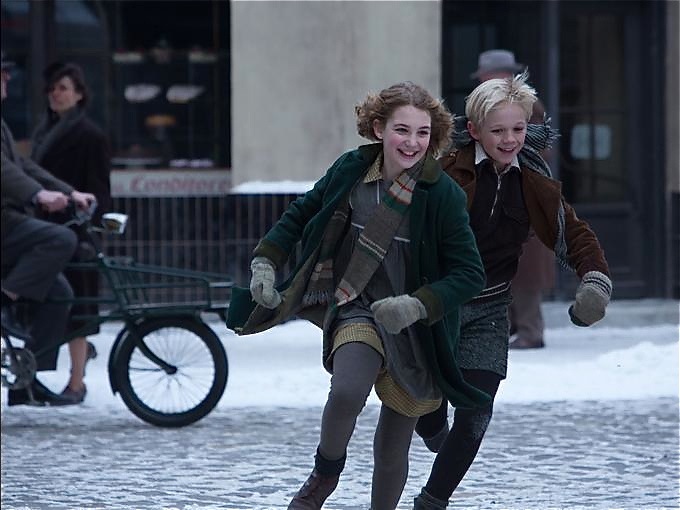
As in the book, we have Death as the voice-over narrator, quietly looming over the fictional town Molching, busy at work. Liesel (Sophie Nélisse) arriving at her new home to her adopted parents on Heaven Street. Yes, ironic, since her little brother has died during the trip. The girl soon finds her new home a comfort, and makes a new friend with Rudy (Nico Liersch) next door. Her step-mother is Rosa, played by Emily Watson who reprises her role as in The War Horse as the seemingly tough and bossy wife and overseer of the home. Her husband is Hans, played by Geoffrey Rush with affective charisma, who shows himself from the beginning that he is the emotion powerhouse, the engine that runs the movie.

Directed by Brian Percival (who helms episodes of Downton Abbey), the movie is unabashedly explicit in its emotional channeling. By that, I don’t mean it’s overtly sentimental and melodramatic. The fine line that separates the two may be the word ‘restraint’. Rush and Watson have depicted this quality memorably. He may look oblivious in appearance, but is ever wise and compassionate in spirit; she conversely holds a feisty facade only to hide a tender and caring heart. It is a delight watching them relate to each other.

Liesel and Rudy 1

For a YA novel turned into film, the spotlight has to be on the young protagonist Liesel. Sophie Nélisse is a precocious rising star who has won a Genie in the acclaimed French Canadian film Monsieur Lazhar (2011). She has already won a Spotlight Award at the Hollywood Film Festival for The Book Thief. Nico Liersch playing Rudy looks to be a few years too young, but being a good actor, the two loyal friends ultimately shine through as the movie picks up its momentum.

The plot line of hiding the Jewish young man Max, son of Han’s wartime comrade to whom he owes his life, adds texture to the story. Max inspires Liesel to love words even more, igniting that spark in her later to write down her story. To Max, the hiding place is more than a shelter from the storm. It is his connection to the decency and dignity of being human. The snowball fight in his hideout in the basement is one of my favorite scenes.

As for books, reading, and words, looks like they just work as a cover, in both the book and the movie. That Liesel comes as an illiterate ten year-old in Germany may not be quite plausible. The few episodes where she steals a book are incidental, lacking potent effects. The movie nevertheless is persuasive in its subtle way by turning mere book characters into flesh and blood human beings. The Book Thief is about humans. It shows their ugly face that haunts even Death, and their triumphant side that makes Death envious, the power to love, to hope, and to live despite tragedy and loss.

This is not a great film, but one that quietly touches, and subversively moves one to tears. It will not make any major award list, and would likely be dismissed by some critics. But this is the kind of films that, years later, one would discover serendipitously and exclaim, “Why have I missed this little gem?”

~ ~ ~ Ripples

Read Some Possible Oscar Contenders

Emphasis on the ‘possible’. At this point of the race, some films have not been released other than screened in Film Festivals. The frontrunner so far is 12 Years A Slave. And then there are the rest, some long shots, some longer. But I’d like to include them on this list because I want to draw your attention to the books which inspire these film adaptations.

How come Gravity isn’t here? You ask. It’s a frontrunner too. Yes. But, ah… find me the book first. No book? Maybe because it’s much easier to pass you the 3D glasses.

Here’s a list of fall/winter reading to gear up for the upcoming Awards Season.

12 Years A Slave by Solomon Northup

12 Years a Slave copyThe movie adaptation directed by Steve McQueen is TIFF13 People’s Choice Award winner. From past years, this accolade is a good predictor of Oscar wins. Based on the real life story of Solomon Northup, a free black man in Upstate New York who was kidnapped into slavery in Louisiana. For twelve years he suffered in the hands of several masters. First published in 1853, the book is Northup’s first-person accounts of slavery in 19th C. America, noteworthy for its historical value and poignancy. The actor Chiwetel Ejiofor a likely Oscar Best Actor nom for his role as Solomon Northup. You can download the whole book in its original form here.

August: Osage County by Tracy Letts

August Osage CountyThe play won the 2008 Pulitzer Prize for Drama. Members of a dysfunctional family inevitably come together after tragedy strikes. The stage production was described by the NYT as ‘a fraught, densely plotted saga of an Oklahoma clan in a state of near-apocalyptic meltdown’. Before you see how the A-list cast interpret their roles on screen, maybe reading the play is rewarding since you get to experience the story first hand before being influenced by Meryl Streep, Julia Roberts, Benedict Cumberbatch, Ewan McGregor…

The Monuments Men by Robert Edsel

The Monuments MenI’ve mentioned this title in a previous post. Now I’ve got the book in my hands. The true but untold story of how a group of rescuers called the Monuments Men in war-torn Europe saved  art and artifacts from the Nazi’s. In the introduction of the book, the author writes: “Hitler and the Nazis pulled off the ‘greatest theft in history’, seizing and transporting more than five million cultural objects to the Third Reich.” George Clooney, Matt Damon, Cate Blanchett, Jean Dujardin (The Artist), Hugh Bonneville (so Lord Grantham finally gets the chance to go into the battlefield).

A Captain’s Duty: Somali Pirates, Navy SEALS, and Dangerous Days at Sea by Richard Philips

A Captain's Duty..Another likely contender that has been getting a lot of buzz is this thriller starring Tom Hanks, based on Captain Richard Phillips’ real life ordeal in the hands of Somali pirates. A lawsuit will begin in a few weeks filed by the crew of the ship Maersk Alabama against the shipping company for sending them to pirate-infested waters unprepared. They also claim the Captain was at fault in the case. Their attorneys had set up a Webpage to clarify the truths from the fiction. A turbulent epilogue to the real life adventure on high seas.

The Lost Child of Philomena Lee by Martin Sixsmith

The Lost Child of Philomena Lee copyJudi Dench could get a possible Best Actress Oscar nomination with her role as Philomena Lee. In her youth as an unwed mother, Philomena was sent to the convent of Roscrea, Limerick, her baby taken away and ‘sold’ to America for adoption. As she became an adult, Philomena was determined to search for her lost child. I missed this at TIFF13. Maybe an Oscar nomination for Dench could raise the prospect of it being screened in our theatres.

.

‘Hateship, Friendship, Courtship, Loveship, Marriage’ by Alice Munro

Hateship-Friendship-Courtship-Loveship-Marriage-book-cover copyWith Alice Munro garnering the newest top honor as Nobel Laureate, hopefully the film adaption of this short story with a shorter title Hateship, Loveship will receive a wider release. It has been a long while since Away From Her (2006). The film receives positive feedbacks at TIFF13. A good cast with Kristen Wiig (Best Actress and Best Original Screenwriting Oscar noms for Bridesmaids), Guy Pearce (The King’s Speech), Hailee Seinfeld (True Grit), Nick Nolte (too many to name).

The Secret Life of Walter Mitty by James Thurber (Click on link to read the story online.)

The Secret Life of Walter MittyInteresting to see another film adaptation of a short story. This one I have a feeling that it’s very loosely based on Thurber’s character Walter Mitty, considering it’s a Ben Stiller movie. I’m sure many have read this story in school, time to reread just to get the Walter Mitty psyche, then go and check out the Ben Stiller ride. Other than Stiller, there are Kristen Wiig (again, in two short story film adaptations the same year), Sean Penn (can you imagine?), Shirley MacLaine.

The Wolf of Wall Street by Jordan Belfort

The Wolf of Wall Street copyCoincidence that Leonardo DiCaprio jumps from being Jay Gatsby to Jordan Belfort, the real life fraud on Wall Street, notorious for his highflying lifestyle and his operating a boiler room brokerage firm Stratton Oakmont. A multimillionaire at 26, he was later indicted in 1998 for securities fraud and money laundering but only served 22 months in federal prison. The Wolf of Wall Street is his unabashedly candid memoir. Martin Scorsese directs with DiCaprio touted as a likely contender in the Best Actor Oscar category.

The Book Thief by Markus Zusak

The Book Thief copyNo Oscar buzz around this one, but a look at the movie trailer, I know I want to see it. Yes, mainly because of Geoffrey Rush I admit. And also, Brian Percival… ring a bell? Director of Downton Abbey. The film will be released in November, a time slot where contenders are placed. So, you can say it’s a long, long shot for, who knows, maybe Geoffrey Rush, or Emily Watson? I admit I still haven’t read this very popular YA title. I’d like to do that before watching the film. Is this one on your movie viewing radar?

***

TIFF 2013: Books into Films

Have been in Toronto all week for the Toronto International Film Festival. Taken a lot of photos but these few I’m going to share with you first for Saturday Snapshot Sept. 14, for they are what Ripple Effects is all about: Books and Films.

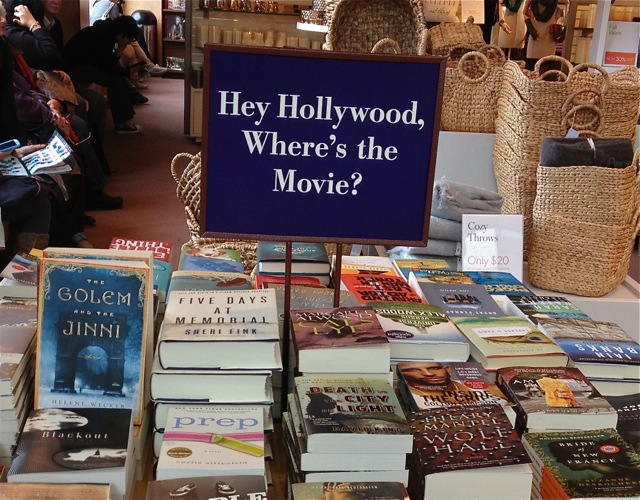
Saw this sign in a major bookstore beside a TIFF screening venue:

Hey Hollywood

The movie is in the book.

Indeed, many of this year’s TIFF selections are based on literary sources.

Film Adaptations at TIFF 2013

Books to filmsFrom biographies to biopics:

Biographies into BiopicsIf you or your book group are starting a new season of reading, you may find some interesting titles in the following list of films screened at TIFF this year (click on link to the film adaptation):

12 Years a Slave by Solomon Northup

August: Osage County by Tracy Letts (Pulitzer Prize-winning play)

Child of God by Cormac McCarthy

The Dinner by Herman Koch

The Double by Fyodor Dostoevsky

The Double by Nobel Prize-winning author José Saramago (Film: Enemy)

Half of a Yellow Sun by Chimamanda Ngozi Adichie

Hateship, Friendship, Courtship, Loveship, Marriage by Alice Munro (Film: Hateship, Friendship)

Horns by Joe Hill

How I Live Now by Meg Rosoff

The Invisible Woman by Claire Tomalin

Known and Unknown by Donald Rumsfeld (Film: The Unknown Known)

Labor Day by Joyce Maynard

Long Walk to Freedom by Nelson Mandela

Mary Queen of Scotland by Stefan Zweig (Film: Mary Queen of Scots)

The Railway Man by Eric Lomax

Salinger by David Shields and Shane Salemo

The Sea by John Banville

The Switch by Elmore Leonard (Film: Life of Crime)

Under the Skin by Michel Faber

***

Saturday Snapshot is hosted by Melinda of West Metro Mommy Reads. Click here to see what others have posted.

***