I woke up at 1:30 am last night and couldn’t get back to sleep. Casually grabbed Joan Didion’s new book Blue Nights I got from the library and started reading, thinking I could read myself back to sleep. But I was kept awake the next few hours until I finished it. I simply could not put it down.

Blue nights are the span of time following the summer solstice when the twilights turn long and blue… and over the course of an hour or so, this blue deepens, becomes more intense even as if darkens and fades… Blue nights are the opposite of the dying of the brightness, but they are also its warning.
A poignant ‘sequel’ to The Year of Magical Thinking, which is about the death of Didion’s husband of 40 years, the writer/screenwriter John Gregory Dunne. That all happened in December 2003. John had a heart attack right in the living room of their home as Joan was preparing dinner in the kitchen. That was also a few days after their daughter Quintana Roo was hospitalized with septic shock and a coma.
Blue Nights is a memoir of Quintana, who died of her illness twenty months after her father’s passing. To say it’s a memoir is sanitizing it. In her sensitive and moving voice, Didion describes a searing separation. She recalls the memorable moments, and the mementos around her NYC apartment that prove so futile in evoking a life, a daughter adopted since birth.
Didion remembers the leis Quintana wore at her wedding in NYC’s St. John the Divine on July 26, 2003. Thus begins the book. The wedding reflected Quintana’s yearning for her childhood in Brentwood Park, California. In the garden were stephanotis, lavender and mint. And it was stephanotis that she wore on her braid as she walked down the aisle.
All the deaths that Didion had encountered among friends and all the ICU visits of others seemed to foreshadow the ultimate fate of her own daughter, dead just 20 months after her wedding.
But nothing can prepare one for the death of one’s child. In fact, Didion painfully states that, time and time again in the book:
When we talk about mortality, we are talking about our children.
Deaths of friends since had only reinforced the looming weight of a blue night. In the spring of 2009, upon a short notice, one of those phone calls everyone dreads, Didion went to say farewell to Natasha Richardson in a NYC hospital, transported there from Montreal. It was only a minor fall on a bunny slope of a Quebec ski hill, but she succumbed to a brain injury soon after. Didion had known Natasha since she was a young teenager, daughter to Vanessa Redgrave and Tony Richardson, among Didion’s closest friends.
She is particularly disturbed by those who label her and her family ‘privileged’. As I read the book, I can see why she rejects such a term. Death befalls all, even the ‘privileged’, and spares no one with the subsequent pain. It is the starkest common denominator. And with both her husband and only daughter passing within months of each other… she has a reason to rage. But the pathos lies in the muffled cries she lets out.
And to say one still has memories to cherish is the most ironic euphemism ever to console the grieving:
Memories are by definition of times past, things gone. Memories are the Westlake uniforms in the closet, the faded and cracked photographs…
Alas, Blue Nights is exactly that book, an attempt to capture memories before they slip away, and a grief made public so others can share and maybe by so doing, preserve a life.
This is not just a grief observed and incisively expressed, it is also an attempt at keeping the momentum to live. Writing down the pain and loss could well have a certain therapeutic effect as we see the slight humor sprinkled towards the last chapters in an intense and poignant recollection. And yet the end is still the loss, albeit now is shared and hopefully a suffering lightened, however minute the relief.
~ ~ ~ 1/2 Ripples
Blue Nights by Joan Didion, Alfred A. Knopf, NY, 2011, 188 pages.
***
Other related posts on Ripple Effects:
Natasha Richardson, Nell & the White Countess
Reading the Season: C. S. Lewis



 Natasha Richardson met Liam Neeson on the set, and married him that year. Jodie Foster is Nell, who grows up in the wild forest of N. Carolina, far away from human civilization. She knows no language, well, none that other human can understand. The only two people she has seen are her mother and her twin sister, whom she communicates with a language of their own. After they die, Nell is left alone to deal with her loss and survival, until one day, she is discovered by Dr. Jerome Lovell (Liam Neeson) and Dr. Paula Olson (Natasha Richardson). From an initial academic interest, Lovell has grown to appreciate Nell as a person, and wants to bring her back to human society. While both doctors have good intentions, others do not. Herein lie the conflicts in the plot, the wild child versus the modern world, the experimental object versus the human being. All three main characters put forth an impressive performance. If you can still get hold of the DVD, now may be the poignant time to reminisce.
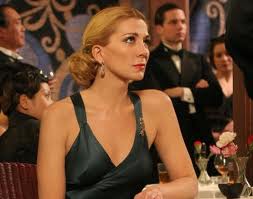
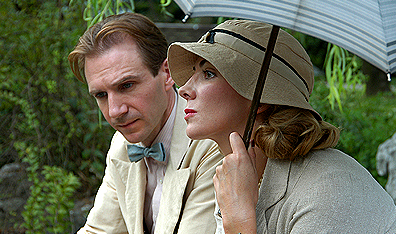 A lesser known film by Natasha Richardson, The White Countess (2005) is a Merchant Ivory production (Merchant’s last film), its screenplay by the talented writer Kazuo Ishiguro (The Remains of the Day). The story takes place in the exotic setting of Shanghai, China, shortly before WWII. Slightly resembling Casablanca (1942), the movie excels in its mood and atmosphere. Ralph Fiennes is Todd Jackson, a blind, former American diplomat who meets a Russian refugee Sofia (Natasha Richardson) in a night club. Sofia belongs to a family of nobility, a White Russian countess herself, but now has to work in the lowliest line to support her family. The Japanese invasion sets the stage for suspense, and the plot thickens. Vanessa Redgrave plays Sofia’s aunt, and has delivered some moving moments performing with her daughter. Natasha’s aunt Lynn Redgrave is also in the movie. Now those scenes are ever more memorable. The behind-the-scenes interviews with the three of them, together with Ralph Fiennes, commentary with Natasha Richardson and director James Ivory in the Special Features are just priceless now. I purchased the DVD a while back, and have seen it several times. I know I’ll treasure it even more now.
 Ripple Effects