Great Film Expectations

For an updated list of 2012 premieres of film adaptations, CLICK HERE.

With written works from Suzanne Collins’ The Hunger Games to Shakespeare’s Coriolanus materialized on the big screen, what else can we anticipate in this year and next?

Here’s an update of some upcoming film adaptations from literary works. Great choices for book groups too.

A Most Wanted Man by John Le Carré
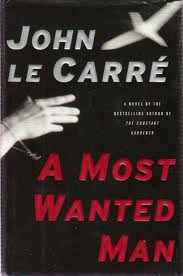
On the heels of the acclaimed “Tinker Tailor Soldier Spy”, this time, Philip Seymour Hoffman is the man. Directed by Anton Corbijn whose last film was the deep and thoughtful “The American, a film I found to be much better than the book.

.

Anna Karenina by Leo Tolstoy

Finally, dates are set for the premiere: Sept. 7 in the UK, Nov. 9 in the US. I look forward to this one: Tom Stoppard screenplay, Joe Wright (Atonement, Pride & Prejudice) directs, Keira Knightly as Anna, Matthew MacFadyen Oblonzky, Jude Law Alexai, Aaron Johnson Count Vronsky, and Downton Abbey‘s Michelle Dockery (Lady Mary) as Princess Myagkaya, plus many other British stars.

.

Cloud Atlas by David Mitchell 

Winner of multiple awards and shortlisted for a Booker in 2004, the apocalyptic novel is adapted by Tom Tykwer (Run Lola Run) and The Wachowski’s (Matrix’s). Tom Hanks, Halle Berry, Susan Sarandon, Ben Whishaw (Bright Star), Hugh Grant, Jim Broadbent. Here’s Susan Sarandon’s take on the production.

.

The Emperor’s Children by Claire Messud 
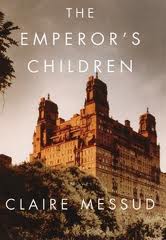
Some big names affiliated with this project are Richard Gere, Eric Bana, Keira Knightly, Emma Thompson, Rachel McAdams. Director Scott Cooper (Crazy Heart) on board. But I can find no more news after this announcement, which is fine, gives me more time to get to the book first. It’s been on my TBR list for a few years now.

.

Great Expectations by Charles Dickens

To coincide with the 200th birthday of Charles Dickens and the Olympics in London, Mike Newell (Enchanted April, Four Weddings and a Funeral) directs, screenplay by David Nicholl (One Day, Tess of d’Urbervilles, When Did You Last See Your Father) who may be also writing the third Bridget Jones movie. Ralph Fiennes is Magwitch, Helena Bonham Carter Miss Havisham, Jeremy Irvine, Pip.

.

The Great Gatsby by F. Scott Fitzgerald 
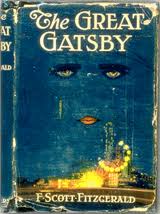
What will F. Scott think when he sees his masterpiece produced in 3D in the 21st Century? Woody: do give us a sequel to “Midnight In Paris” with your brilliant imagination. Australian director Bez Luhrmann is poised to bring us this new version of Gatsby in 3D, which I’m sure will stir up lots of discussions. It has already. But no matter how I dislike 3D (except Hugo), I want to see Leo DiCaprio play Jay G., Carey Mulligan, Daisy B., and Tobey Maguire, Nick C. Do Click Here to read a Guardian preview close to 3D.

.

The Guernsey Literary and Potato Peel Pie Society by Mary Ann Shaffer and Annie Barrows

Kenneth Branagh will direct Kate Winslet in this popular novel about the power of literature in desperate wartime. This is a reprise of their cooperation from 1996, when Branagh, as Hamlet, also directed Winslet as Ophelia. No dates have been set for its production or release, but something to keep in mind.

.

The Hobbit by J. R. R. Tolkien

Coming out in three parts. “The Hobbit: An Unexpected Journey” in 2012, and “The Hobbit: The Desolation of  Smaug’ in Dec. 2013, and ‘The Hobbit: There and Back Again’ in July, 2014. Peter Jackson attempts to reprise his Rings Trilogy magic. Elijah Wood, Ian McKellen, Cate Blanchett, Orlando Bloom… the whole gang. Again, we’ll get to see beautiful New Zealand as setting.

.

The Invisible Woman: The Story of Nelly Ternan and Charles Dickens by Claire Tomalin
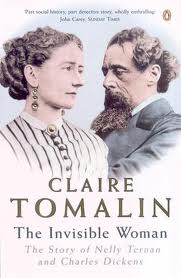
Claire Tomalin’s account of Charles Dickens’ affair with the young writer Nelly Ternan will be brought to screen with script from Abi Morgan (Shame, The Iron Lady) to be directed by Ralph Fiennes, who will play Dickens himself. To add to the rave, Kristin Scott Thomas is also on board. Felicity Jones will be playing Nelly Ternan. Fiennes never ceases to amaze us with his versatility, after directing Shakespeare’s Coriolanus in postmodern style.

.

Les Miserables by Victor Hugo

Tom Hooper of “The King’s Speech” directs an all star cast in this musical offering. Hugh Jackman as Jean Valjean, Russell Crowe as Inspector Javert (is he going to sing too?), Helena Bonham Carter, Anne Hathaway join in the chorus. Just too bad Geoffrey Rush and Colin Firth are missing here. Release date for North America is Dec. 2012, which means it can be a contender in next Awards Season.

.
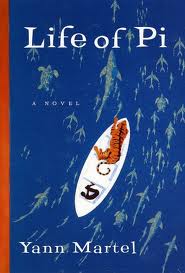
Life of Pi by Yann Martel

Director Ang Lee picked 17 year-old Suraj Sharma of Delhi, India, from 3,000 teenagers to play Pi Patel. Interesting that Tobey MacGuire will play Yann Martel, the author of the book which won the 2002 Man Booker Prize. The film to be shot in 3D has a December 2012 release date. Again, films opening in December usually have eye on the next Awards Season. Will keep our eyes peeled.

.

Midnight’s Children by Salman Rushdie
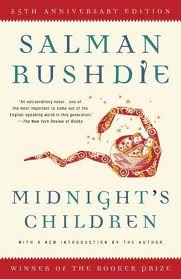
The Booker of Bookers winning work will see its author Salman Rushdie team up with acclaimed Canadian director Deepa Mehta in the film adaptation. Mehta in a recent interview hinted it will debut either at the Venice or the Toronto Film Festival this fall. You can still join us for a slow Read-Along of Midnight’s Children before the film comes out.

.

Rebecca by Daphne DuMaurier 

On the drawing board of Dreamwork and Working Title. Who can take the helm to reprise an adaptation made famous by Alfred Hitchcock, and actors to replace Sir Laurence Olivier as Mr. de Winter and Joan Fontaine as the new Mrs? Now, why does Carey Mulligan emerges in my mind… and Michael Fassbender

.

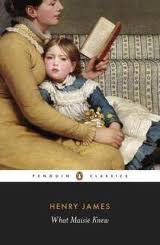
What Maisie Knew by Henry James

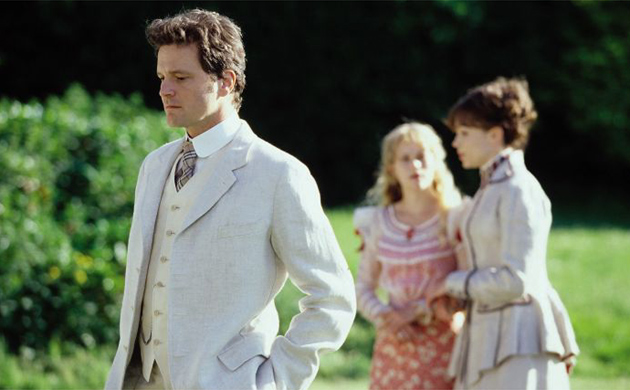
Looks like a good classic to read before seeing the movie. Julianne Moore and Alexander Skarsgård lead the cast. I’ve enjoyed previous Henry James adaptations of The Wings of the Dove, The Golden Bowl, and The Portrait of a Lady. Look forward to this one.

.

Books to be turned into TV series:

The Corrections by Jonathan Franzen

To be adapted into an HBO TV series with an all-star cast under the helm of Noah Baumbach (The Squid and the Whale). Stars include Ewan McGregor, Maggie Gyllenhaal, Rhys Ifans, Dianne Wiest, Chris Cooper and Greta Gerwig. But, will the author be involved in any of the writing?

.

A Visit From the Goon Squad by Jennifer Egan

Again, HBO has bought the rights to this one. The 2011 Pulitzer Prize winner is to be adapted into a half-hour TV series.

.

.

The Art of Fielding by Chad Harbach

Yet again, it’s HBO that will be developing the novel into a TV drama series, another project by the “uber producer” Scott Rudin, who also oversees “The Corrections.”

.

***

What are some of  your most anticipated films or books in the coming year(s)?
The Importance of Being Earnest by Oscar Wilde

To celebrate St. Patrick’s Day, I’d like to post my second selection for the Ireland Reading Challenge 2012, and raise a toast to Oscar Wilde for his LOL funny three-act play The Importance of Being Earnest.  

Though written in 1894, Wilde’s work is surprisingly modern. Subtitled “A Trivial Comedy for Serious People”, it is a mashup of mistaken identities, social satire, biting ironies, and one-liners worthy of our late-night talk shows.

You can finish the breezy eighty-some pages in one sitting, but don’t read it in public. You don’t want to be mistaken. To most people, only a lunatic would LOL alone without a bluetooth hanging on his ear.

Jack Worthing is in love with Gwendolen Fairfax of London, cousin of his friend Algernon Moncrieff. But obstacles abound for his courtship. As a country gentleman with many responsibilities, he has to create a wayward younger brother and town-dweller named Earnest as an excuse for him to go out to town for pleasure and to see Gwendolen. While in town, he has taken the name Earnest. Algernon, just the opposite, has to create an invalid Bunbury in the country for him to visit so he can meet and woo Jack’s ward Cecily, while pretending he is Earnest, Jack’s younger brother from London.

Locales may be a hindrance, their major obstacle is Lady Bracknell, Gwendolen’s mother and Algernon’s Aunt, a formidable and feisty gatekeeper of aristocratic matrimony.

With Downton Abbey’s dialogues still ringing in my ears (been re-watching the blu-rays perpetually since its Season 2 Finale on PBS) I can easily imagine the Dowager Countess of Grantham, Violet Crawley, uttering Lady Bracknell’s lines. Screening for Jack’s eligibility as a suitor for her daughter Gwendolen, Lady Bracknell conducts the following interview.

LADY BRACKNELL:  How old are you?

JACK:  Twenty-nine.

LADY BRACKNELL:  A very good age to be married at. I have always been of opinion that a man who desires to get married should know either everything or nothing. Which do you know?

JACK (after some hesitation):  I know nothing, Lady Bracknell.

LADY BRACKNELL:  I am pleased to hear it. I do not approve of anything that tampers with natural ignorance. Ignorance is like a delicate exotic fruit; touch it and the bloom is gone. The whole theory of modern education is radically unsound. Fortunately in England, at any rate, education produces no effect whatsoever…

LADY BRACKNELL:  Are your parents living?

JACK:  I have lost both my parents.

LADY BRACKNELL:  To lose one parent, Mr. Worthing, may be regarded as a misfortune; to lose both looks like carelessness.

JACK:  The fact is, Lady Bracknell … I don’t actually know who I am by birth. I was … well, I was found.

LADY BRACKNELL:  Found!

JACK:  The late Mr. Thomas Cardew, an old gentleman of a very charitable and kindly disposition, found me, and gave me the name of Worthing, because he happened to have a first-class ticket for Worthing in his pocket at the time. Worthing is a seaside resort.

LADY BRACKNELL:  Where did the charitable gentleman who had a first-class ticket for this seaside resort find you?

JACK (gravely):  In a hand-bag.

LADY BRACKNELL:  A hand-bag?

JACK (very seriously):  Yes, Lady Brakcnell. I was in a hand-bag—a somewhat large, black leather hand-bag, with handles to it—an ordinary hand-bag in fact.

LADY BRACKNELL:  In what locality did Mr. Thomas Cardew come across this ordinary hand-bag?

JACK:  In the cloak-room at Victoria Station. It was given to him in mistake for his own.

LADY BRACKNELL:  The cloak-room at Victoria Station?

JACK:  Yes. The Brighton line.

LADY BRACKNELL:  The line is immaterial. Mr. Worhting. I confess I feel somewhat bewildered by what you have just told me. To be born in a hand-bag, whether it had handles or not, seems to me to display a contempt for the ordinary decencies of family life…

And many more lines that would show you Wilde could have made one great Oscar host.

***

The Movie (2002, DVD)

I’ve got the DVD. It never fails to delight no matter how many times I re-watch it. Lady Brecknell is portrayed by Judi Dench, as proficient as any Dench performance, albeit a bit too severe here. But just as well, she’s a monster to Jack Worthing.

Jack is played by the ever talented Colin Firth. Dispelling the Mr. Darcy myth, Firth shows he can be one freewheeling comedic actor. Having seen many of his works, I find that with the right words to say, he can always deliver in style, even if he needs to stammer to get his words out.

Before Mamma Mia! (2008), Colin Firth had sung in a movie strumming a guitar, it is here. With Rupert Everett as the piano playing Algernon, the two come together in a duet to woo their love.

Frances O’Connor, who plays Fanny Price in Mansfield Park (1999), is Gwendolen, animated but much intimidated by her icily fierce mother Lady Brecknell. Reese Witherspoon is Cecily, Jack’s 18 year-old ward. The gals can easily call each other sisters if not for the mistaken identity of their love interest, Earnest. Thinking they are romantic rivals, the ladies are at each other’s throat as much as their genteel upbringing can allow, and  quickly become allies once the misunderstanding clears up.

Both Jack and Algernon are willing to go all out to have their names changed to Earnest via christening by the minister Dr. Chasuble, a role mastered easily by veteran actor Tom Wilkinson. Dr. Chasuble is a silent admirer of Cecily’s governess Miss Prism, played by Anna Massey with much comedic sense and timing.

At the end, Jack finds out his true parentage, realizes that he is more kin than kind to Algernon, and three matrimonies ensue, a happy ending Jane Austen would have approved. The movie adaptation is an enjoyable way to go through the play, not just with sight, sound and cinematic fun, but a delightful all-star cast.

Some tidbits: The film won a Best Costume Design award from Italy, and Reese Witherspoon was a nominee of the Teen Choice Award 2002. Looking at the cast today, we see 3 Oscar winners and 1 Oscar nominee.

As usual, the DVD carries special features like The Making Of and Behind the Scene featurettes, interviews with stars and crew, and audio commentary, always a valuable companion to the main feature.

~ ~ ~ Ripples

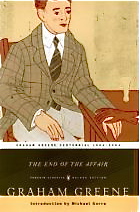
The End of the Affair: Book and Movie

It’s a bit ironic to post this on Valentine’s Day. It’s a story of an extramarital affair, and it doesn’t end well. But then again, maybe this is the best time to talk about it.

This is my second instalment to meet the Graham Greene Challenge hosted by Carrie of Books and Movies. Spoiler Alert here. But since it’s a classic, I’m sure many of you have read it or seen the movie.

The End of the Affair

The book opens with a meeting between novelist Maurice Bendrix and civil servant Henry Miles on a cold, rainy night in 1946 London. Miles’ wife Sarah had ended an affair with Bendrix 18 months earlier. Bendrix has not seen them since. In this chance meeting on the street, Bendrix observes that Miles is heavy-laden, suspecting Sarah has ‘secrets’. Volunteering to hire a detective to tail the wife for the husband, Bendrix is in fact acting out of jealousy, for he too wants to find out who Sarah is seeing now. “Anyone who loves is jealous.”

Again, in just 160 pages, Greene has intricately explored the depth and complexity of the human psyche, love and hate, trust and insecurity, faith and lameness. Yes, the lameness in Bendrix’s leg can well be a metaphor for his numbness of unbelief. Isn’t there such an argument: “If God does not exist, everything is permitted?”

Love with all its smothering, blinding passion, its persistent, burning desire, its all-consuming emotions that distill into pure jealousy and hate… Graham Greene is a master of such incisive descriptions. But here’s the rub, they’re all found in an adulterous affair.

Isn’t that a pity that such intensity of love is often depicted outside of a marriage. Why, we see them all the time in literature and movies. And, don’t we tend to cheer for the romantic heroes and heroines? Guinevere and Lancelot, for example, to whom Bendrix in the book alludes when he talks to the detective Parkis, who has named his son Lance. Readily come to mind are some others: Madame Bovary, Anna Karenina, and in the epic cinematic versions like The English Patient, in a more restrained way Out of Africa, and the near success in The Bridges of Madison County…  didn’t you wish Meryl Streep would have gone with Clint Eastwood? I’m just thinking, if Ralph Fiennes were the one beckoning her, she’d probably had jumped out of her husband’s truck.

O the fantasy of romance vs. the mundane reality of a marriage. The forbidden fruit seems sweeter, for it arouses excitement, it entices with adventure. Bendrix accuses the oblivious and dull husband Henry Miles as an accomplice in Sarah’s affairs, calling him ‘an eternal pimp’:

“You pimped with your ignorance. You pimped by never learning how to make love with her, so she had to look elsewhere. You pimped by giving opportunities… You pimped by being a bore and a fool…”

There might be some truths in his rants. But then again, are these reasons enough to drive one to discard the marriage vow and seek other allurements? Alas, it seems like boredom is the major impediment to fulfilling that commitment… “If I could love a leper’s sores, couldn’t I love the boringness of Henry?” Sarah tries to reason with herself.

But of course, here, the key is the End of the affair between Bendrix and Sarah. What causes the end is none other than God Himself according to Sarah. A bomb drops near Bendrix’s home while they are both there, striking him dead. Sarah, in her horror and desperation, prays to a God she doesn’t believe to exist, but pleads for the life of her lover just the same. She makes the promise that if God gives Bendrix back his life, she would stop seeing him. As she’s still kneeling by her bed praying, Bendrix walks into the room, injured but very much alive. Thus begins the agony of keeping a promise to a God whose existence now has become an inconvenient truth.

We learn at the end, Sarah has attempted to shift her love from Bendrix to God, albeit with much searing pain. She has gone to a priest and converted to Catholicism. In the crucifix she knows that God Himself is a suffering God too. If only she can see the scale of the pain in the nail-pierced hands in a greater cosmic proportion compared to her own…

***

The marvellous cinematography, the diffused lighting of many scenes, all work to cast a romantic veil over an adulterous affair. Two Oscar noms in 2000 included one in cinematography and one for Julianne Moore as Sarah Miles. Ralph Fiennes plays Bendrix, a suitable choice. He is in his element. Since The English Patient (1996), Fiennes seems to have mastered the persona of the romantic tragic hero and obsessed lover.

While the screenwriter is understandably free to invent more scenes for the visual storytelling and change some plot points, one alteration I feel  is definitely unacceptable and that’s the character Richard Smythe. In the book, Smythe is an atheist whom Sarah visits several times to discuss views about atheism. Ironically it is Smythe’s atheistic stance that drives Sarah into believing God. She then confides in Father Crompton her wish to convert to Catholicism. But in the film, Smythe is the priest, and what more, he is implied to be another of Sarah’s lovers. I think here is where integrity to the source material should have given priority over dramatic effects.

***

And what does Colin Firth have to do with The End of the Affair? Well, for all you Colin fans, he is among some A-list stars to have signed with the UK audiobook provider Audible to record their reading of their favorite classic novel.

Audible’s founder, Donald Katz, told the Observer: “Colin Firth could read me the back of a Marmite jar and I would listen.” Well, Colin has chosen, not Marmite or Cornflakes, but for more flavour, Graham Greene’s The End of the Affair. CLICK HERE to read the announcement and see what other stars are reading for Audible’s recordings.

Now we have another portal to appreciate Colin, and, another channel to enjoy a Graham Greene book.

Update May 7, 2012: The Audiobook The End of the Affair narrated by Colin Firth is released today.

***

The Quiet American by Graham Greene: Book and Movie

This is my first selection for the Graham Greene Challenge hosted by CarrieK at Books And Movies.

I watched the film The Quiet American some years back, but not read the book. And my memory is vague. Only remember Michael Caine and Brendan Fraser, the setting in Vietnam, in the early 50’s, a complex fusion of political thriller, murder mystery, and a love triangle.

But now that I’ve read the book I’m thoroughly intrigued, thanks to this Penguin Classics Graham Greene Centennial Edition (1904 – 2004), with the intro written by American novelist Robert Stone. Stone’s novel Dog Soldiers about the Vietnam war and its effects won the 1975 National Book Award. From his introduction, I’ve come to appreciate how intricate and multi-layered the conflicts are, and, how political the novel stands.

Interesting to learn from Stone about the joke embedded in the title: the only quiet American is a dead American. In the midst of a colonial war between the French and the communists in 1950’s Saigon, American Alden Pyle’s subversive brand of democracy satisfied none other than his own idealism. A Harvard grad, armed with naiveté and book knowledge, a CIA under the guise of the American Economic Attaché, Pyle’s involvement might well represent American meddling in other country’s affairs in the name of spreading democracy.

We see all these through the eyes of the narrator, the British reporter Thomas Fowler. Much older, more experienced, and having been posted in Vietnam for some years, Fowler has grown to love the humanity therein, but is plagued by bitter cynicism. He doesn’t take sides, he just writes his story as an observer, smokes his opium pipe prepared by his young mistress Phuong, and lies in bed with her. But Fowler’s noncommittal stance comes to a breaking point at the end:

… one has to take sides. If one is to remain human.

The Quiet American is noted for its divergent from Greene’s ‘Catholic’ novels. But the existential issues are very much in the forefront. Fowler is a man of conscience, albeit aloof in his outward stance. The climax comes as he resolves a moral dilemma. Guilt is his nemesis, regarding his wife in England, regarding Phuong, and much more acutely at the end of the novel, regarding Pyle. The book ends with this line:

I wished there existed someone to whom I could say that I was sorry.

And then there’s Phuong, manipulated by her older sister, weaves herself between the two foreigners whom she sees as her ticket out of the country and into a dream future. I find her reaction to Pyle’s death most disturbing.

In a short 180 pages, Greene has brilliantly depicted the political complexities of the conflicts at the time, and addressed the internal war waged within a man’s conscience, ironically, a man whose outward creed is noninvolvement. I’m thoroughly intrigued by the story that is told with depth, eloquence and skill by a master storyteller.

~ ~ ~ 1/2 Ripples

***

The Movie: DVD

I watch the film again after finishing the book. It has altered some characters, and taken a more sympathetic view of Phuong. But the overall story and perspective remain intact. Upon this second time viewing, I find several interesting facts that I wasn’t aware of before.

Michael Caine was nominated for a Best Actor Oscar and Golden Globe in 2003 for his role as British reporter Thomas Fowler. He has portrayed the character convincingly. Brendan Fraser as the young American I feel is a miscast. If they’re making the film today, James Franco would be my choice for Alden Pyle.

Director is the award-winning Australian Phillip Noyce. (Rabbit-Proof Fence, 2002). One of the two screenwriters is Christopher Hampton who got an Oscar nom for his adapted screenplay Atonement from Ian McEwan’s novel. He is also the screenwriter for the current film A Dangerous Method. Executive producers were two personalities whom I highly respect, Anthony Minghella of The English Patient fame plus some more, and Sydney Pollack whose credits are too numerous to mention. It was a great loss that they both passed away within two months in 2008.

The DVD comes with a resource of special features. Other than all the interviews and making-of, there is a useful “Vietnam Timeline”, outlining the history of Vietnam from 1940 to 1980. Further, I appreciate the inclusion of original book reviews. One line particularly stands out. From the 1956 review of the book by John Lehman of The New Republic: 

The Quiet American is one of the most icily anti-American books I’ve ever read.

Oh…  the wealth of information one can gather from watching these special features.

~ ~ ~ Ripples

***

Year End Tally and 2012 Outlook

Lots to say on this post, but I promise you I’ll keep the pace swift. First off, a wrap-up of this my fourth year of blogging. I’m always amused to see what words people use to come to Ripple Effects. So, here are some of them over this past year.

Search Engine Terms

  • modern day insane asylum
  • stranger than fiction free will or predestination
  • Vermeer skulls
  • how many hunting license were sold before and after  the movie Bambi
  • Toronto International Film Festival social impact
  • culture and imperialism in Mansfield Park
  • Shawshank Redemption sewer pipe
  • Hemingway beaten up by Canadian authors
  • what value in life if not together
  • how to get in touch with Diane Keaton

Give you a feel of what Ripple Effects is all about, right? Yes, it’s a mixed bag of ruminations on books and films, where crawling through a sewer pipe could be noted as an existential quest, and always, a lookout for the minutest ripples of current culture… while maintaining humor and sanity doing all that. And, if you know how to get in touch with Diane Keaton, do let me know.

Most Popular Post

Slowly heading towards half a million views, this turtle does not intend  to win any races, but is glad just the same to see some posts maintaining their popularity. This is the all time most popular post:

Memorable Movie Love Quotes which I compiled and posted for Valentine’s Day 2008. I sure hope that the 24,000 views in 2011 have contributed to some consolidation (and conciliation?) of relationships.

My Personal Best Picks

There are posts people may like, there are also posts that I favour more. Books into films is Arti’s ‘specialty’, and it’s always fun to link the two, albeit I know they are distinctly different art forms.  Some of my favorite posts in 2011 are:

And that leads me to the coming new year. From my upcoming book to movie lists, I look forward to reading the following titles, as they are in development with their film adaptations:

Books to Read in 2012 (before the film comes out)

  • The Marriage Plot by Jeffrey Eugenides
  • The Emperor’s Children by Claire Messud
  • Runaway (short story) by Alice Munro
  • Midnight’s Children by Salman Rushdie
  • As I Lay Dying by William Faulkner

Book Challenges in 2012

I’m excited to sign up for two Book Challenges sponsored by CarrieK. at Books And Movies.

2012 Graham Greene Challenge — What better way to delve into books and movies than reading Graham Greene, who had almost all of his works adapted into feature film or TV series. I’ve selected these titles:

  • The Quiet American
  • The End of the Affair
  • Brighton Rock

.

2012 Ireland Challenge — I’m to pick four titles, including fiction and non-fiction by Irish writers with setting in Ireland. Now this is uncharted water for me. I’ve John Banville and Anne Enright in my TRB pile which I want to get to, and Deirdre Madden’s book suggested by litlove. I’m open to other recommendations.

  • Molly Fox’s Birthday by Deirdre Madden
  • The Sea by John Banville
  • The Gathering or
  • The Forgotten Waltz by Anne Enright

Most Anticipated Books to be Released in 2012

  • When I Was a Child I Read Books by Marilynne Robinson
  • Some Assembly Required: A Journal of My Son’s First Son by Anne Lamott

I’ll be reading screenplays too. Selections will likely be driven by spur of the moment, but these I’d like to get hold of:

Screenplays to Read in 2012

  • The Descendants (see how Alexander Payne adapts from novel)
  • Midnight In Paris (Woody Allen’s always fun to read)
  • Young Adult (Screenwriter Diablo Cody’s script after Juno)

Ironically, I find reading and blogging feed my procrastination. Finishing a book or a blog post is usually the best reason to delay, pulling me away from ‘real’ writing… I still have a screenplay half finished. 2012 looks like a good year to get that done.

And then of course…

The Awards Season 2012

  • Golden Globes – Jan. 15
  • SAG Awards (Screen Actors Guild) – Jan. 29
  • BAFTA Awards (British Academy) – Feb. 12
  • WGA Awards (Writers Guild) – Feb. 19
  • Independent Spirit Awards – Feb. 25
  • The 84th Academy Awards – Feb. 26

As we edge towards the end of the year, my thanks to all who have visited, and those who have stirred up ripples by leaving their thoughts. The pond is all yours.

Best Wishes to All for a Wonderful 2012!

Happy New Year!

***

Upcoming Books Into Movies — List 3

For an update of this post, CLICK HERE to Great Film Expectations.

What makes a book movie material? I’m not thinking of the plot-driven page turners. I mean literary fiction, albeit the term is open to debate. Anyway, what baffles me is, how do filmmakers determine whether a book is good for a movie adaptation? Just let me give a few examples.

The English Patient. Michael Ondaatje’s Booker Prize winning novel that reads like poetry and leaves me swirling in nostalgic daze. When Anthony Minghella finished reading it in one sitting late one night, he knew right away that he must make the movie. Well, he did and won 9 Oscars for his film. But for another equally poetic work that I’ve enjoyed, Fugitive Pieces by Anne Michaels, its movie adaptation just didn’t work that well for me.

I can name many others. Muriel Barbery’s philosophical novel The Elegance of the Hedgehog stirred up deep resonance in me, but its movie adaptation Le Hérisson failed to produce such impact. Booker Prize winner Kazuo Ishiguro’s novel The Remains of the Day delves into the internal worlds of the two main characters, and is turned into film effectively, thanks to the fine performance of the actors, Anthony Hopkins and Emma Thompson.  Ishiguro’s more recent work, Never Let Me Go is both cerebral and emotionally charged, it too enjoys a good film transposition.

Or, how about short stories like Alice Munro‘s “The Bear Came Over The Mountain”, about an elderly couple dealing with the wife’s Alzheimer’s. When 28 year-old Sarah Polley finished reading the short story on the plane, she decided she would adapt it into film and who she would get to play the main character. The result is Polley’s directorial debut, the Oscar nominated film Away From Her, with Julie Christie getting a nom for Best Actress and Sarah Polley for Best Adapted Screenplay.

I’ve learned to appreciate books and movies as two distinct art forms. While I used to delve into the ‘loyalty’ issue, how close the film is to its source material, now I’m more accepting to new interpretations and diverse visual representations as long as the work holds up to its artistic values. But one thing still baffles me: How does a filmmaker decide whether a book is movie material?

The following are my recent findings on some literary works that are or will be adapted into films (ie, movie rights sold). On the top of the list, generating a lot of buzz these days is Jeffrey Eugenides’s The Marriage Plot. Now, it’s on my TBR list, as I’m still no. 213  in the hold lineup at my local library. But for those of you who have read the book, what do you say? Do you think the book makes good movie material? And the most intriguing for me, as always, how do you transpose philosophical ruminations into a visual medium? How do you dramatize intellectual angst?

Here’s Ripple Effects generated Upcoming Books Into Movies — List 3.  If you’ve missed List 1 and List 2, just click on the links. Some of the works mentioned on those previous lists have already been shown on screen. Arti will continue to furnish you with updated info on future books into films.  And all ye book group members, here are your 2012 suggestions:

Upcoming Books Into Movies — List 3

The Marriage Plot by Jeffrey Eugenides (2015, Scott Rudin producer, who will also bring you Jonathan Franzen’s The Corrections in 2013. Impressive record as a producer of modern literary works into films: Revolutionary RoadDoubtNo Country for Old MenTrue Grit… and soon Extremely Loud and Incredibly Close)

The Emperor’s Children by Claire Messud (Keira Knightly, Richard Gere, Eric Bana, Emma Thompson, Rachel McAdams will be directed by Scott Cooper, who did Crazy Heart, 2009)

The Paris Wife by Paula McLain (From producer Ileen Maisel who’s bringing you a new Romeo & Juliet in 2012. I’m curious to see how they approach this adaptation, a sequel to Midnight In Paris?)

A Visit from the Goon Squad by Jennifer Egan (TV movie. The Pulitzer Prize winning novelist cited the HBO series The Sopranos as her inspiration.)

The Weekend by Bernhard Schlink (2013, Schlink has a previous work The Reader adapted into film.)

Before I Go To Sleep by S. J. Watson (Ridley Scott has got the film rights, and it’s going to be “a blend of the popular and the literary.” What’s popular may well be the subject matter these days, memory and the loss of it.)

Les Misérables by Victor Hugo (2012, A Musical in “good old-fashioned 2D”, directed by Tom Hooper of The King’s Speech. Anne Hathaway, Huge Jackman, Russell Crowe, Helena Bonham Carter, Geoffrey Rush. Sorry, no Colin Firth singing here.)

Runaway by Alice Munro (short story, screenplay by Jane Campion. Like I said earlier in this post, a short story can be turned into a deep feature film. I await this one from Campion, who won a screenwriting Oscar as well as the Palme d’Or for her 1994 film The Piano. Her more recent Bright Star on the poet John Keats reaffirms her literary style in the visual medium.)

***

Other related posts on Ripple Effects:

Can a movie adaptation ever be as good as the book?

Upcoming Books Into Films (List 1)

More Upcoming Books Into Movies (List 2)

Movies Reviewed

Photo Source: Films, Wikimedia Commons, Books, Arti’s file.

Book Trailers: Ads, Lure, and Paradox

Watched any good book trailers lately?  No, not movies, books. Book trailers… they’ve been around since 2003. You might be aware that more and more publishers and authors are embracing this marketing tool in recent years.

If you type in the term ‘book trailers’ on YouTube, you can find many of them cater to the mash and morph generation. Quirk Books, publisher of Pride and Prejudice and Zombies, has produced some popular trailers of their modern takes on classic works. Amazon named their  “Sense and Sensibility and Sea Monsters” book trailer as the best book trailer of 2009.

Now, I don’t want to digress and start talking about the morphing of the classics with contemporary culture, or things like getting the news from The Colbert Report, I’ll leave those to another post. But since book trailers have piqued my interest lately, let me show you their more recent release: The Meowmorphosis, a contemporary twist on Kafka’s classic. Here’s the book trailer (If you can’t view the videos on this post, click on the link to watch them on YouTube. And, do come back):

But of course, book trailers are for all. When you spread your net, you want to catch as wide a multitude as possible, don’t you? Look at this one promoting an upcoming book by the popular crime fiction writer Michael Connelly:

You probably think you’re watching a movie trailer. And that’s what I speculate, book trailers just might well be prompts for potential movie adaptations. Film option, anyone? And for Connelly, he already has two of his books turned into popular movies: ‘Blood Work’ (2002, Clint Eastwood), and ‘The Lincoln Lawyer’ (2011, Matthew McConaughey)

But really, book trailers are an attractive bunch, most of them. They appeal to the digitally savvy and visually driven. While some readers may not appreciate the visualization of the literary, leaving little room for imagination, others welcome these dramatizations and animations. Their stunning effects can be just mesmerizing. Look at this trailer with over 1 million views, Going West by New Zealand novelist Maurice Gee:

What a marvel of video production, don’t you agree? Now, here’s a more important question: Will you go and buy this book to read after watching the trailer, or, are you more likely to just add another view count to the video and a click on ‘like’?

This last trailer just about sums up the apparent paradox: It takes the visual to sell the word. I’d held Lane Smith’s appealing hardcover children’s book It’s A Book in my hands in a bookstore, marvelled at its conception. Look at this adorable trailer:

In this eWorld of ours, we need a real hardcover book to explain to children what a book is… or used to be, if you take the apocalyptic view.  We’re told a book isn’t something you scroll, tweet, or text, and no need to charge up. But the fact is, those are the very functions you do to view and share the trailer.

And it’s a book trailer, with all its visual images and special effects, uploaded and viewed online and hopefully gone viral, that helps boost book sales. Another mash? Or simply an inevitable paradox nowadays?

And, speaking of paradox, can you imagine the eBook version of It’s A Book?

***

Sarah’s Key: Book into Movie

“When a story is told, it is not forgotten…”   — “Sarah’s Key” the movie

The Background: Vel d’Hiv Roundup

The story has to be told, because it is based on a historical event that has long been ignored. On July 16 and 17, 1942, the French police in Paris rounded up more than 13,000 Jews in Paris, among them 4,000 children, and confined them in the Velodrome d’Hiver (Winter Velodrome), an indoor bicycle racing track and stadium not far from the Eiffel Tower. There in the Velodrome the Jews were kept under French police guard for five days with no food and just one tap. They were subsequently sent to internment camps outside of Paris, where children were torn apart from their parents. Apart or together, they shared the same fate. From the internment camps, young and old alike were later transported by train to the Auschwitz extermination camp. The Velodrome, which was situated in the 15th arrondissement of Paris, has since been torn down but the event remains a dark page in France’s history.

The Vel d’Hiv roundup had been ignored for decades in the classrooms of the nation. Post-war French leaders from de Gaulle to Mitterrand had kept mum on the issue of France’s role in deporting Jews to the death camps. It was not until Jacques Chirac became president in 1995 that the French state accepted its official complicity, in particular, the Vel d’Hiv roundup. Here’s an excerpt of Chirac’s historical speech taken from a TIME magazine article:

France, homeland of the Enlightenment and of human rights, land of welcome and asylum; France, on that very day, accomplished the irreparable,” Chirac said in his speech, using the Vel d’Hiv roundup as a metaphor for all Vichy crimes. “Failing her promise, she delivered those she was to protect to their murderers.

A story based on this true event ought to be noticed. The French drama based on true accounts, “La Rafle” (“The Round Up”), was released in 2010 to a large audience in the country. And for us in North America, we have the novel Sarah’s Key (2007) and its movie adaptation (2010) to inform us of that horrific event and the imagined scenario of its impact on the lives involved.

(Spoiler Alert from here on.)

The Book

Written by Tatiana de Rosnay and published in 2007, the book has been on the New York Times bestseller list for 120 weeks. It has sold 5 million copies world wide and been released in 38 countries. de Rosnay has published works in French. This is her first English language book.

The book weaves two stories together 60 years apart. 10 year-old Sarah Starzynski’s family is one of those being rounded up on July 16, 1942. On the spur of the moment, Sarah hides and locks her 4 year-old brother Michel in a cupboard in the wall of their bedroom, thinking there he will be safe until she comes back for him. It was horrific for her and her parents to find out later that they won’t be returning at all.

Sarah and her parents are kept in Vel d’Hiv in appalling conditions, only to be deported to an internment camp where she is separated from them. Her determination never wavers though in getting back home to let her brother out of the locked cupboard. She has kept the key, guarding it with her life.

Fast forward to 2002. Julia Jarmond, a U.S. expatriate married and working as a journalist in Paris, delves into the research of the Vel d’Hiv roundup for a magazine article commemorating its 60th anniversary. She is totally absorbed by the little-known event. What’s more, she finds out that the apartment that used to belong to her French husband’s grandparents and which is now under renovation for her to move in was the very home of Sarah and her family.

At the same time, Julia struggles with a personal dilemma. At 45, mother to 11 year-old Zoé, and after two miscarriages, Julia is excited to find out she is pregnant. Her husband does not share her sentiment however, pressing her to abort. The poignant story of Sarah inspires Julia’s decision as the story unfolds.

While I whole-heartedly admire the author for her intention to honor the victims of Vel d’Hiv and her eagerness to expose the atrocities afterwards, I have reservations about the literary quality judging from the style and structure of the book. At several points, I feel the writing redundant. And for a novel written for an adult readership, it gives me the feeling of being talked down to, told what to think and how to feel.

Structurally, it presents the two stories in alternating chapters. The shifting is abrupt as the chapters are only three pages long. This lasts till the middle of the book when the story of Sarah’s key comes to an end. That occurs when Sarah makes it back to her apartment and discovers the heart-wrenching horror. The rest of the book is the continuation of modern day Julia’s story, her persistence to discover Sarah’s trail after the war and dealing with her own personal dilemma. Compared to Sarah’s story, this latter part seems trivial and anti-climatic.

The Movie

One year after it premiered at the TIFF, I finally have the chance to see this movie as it is being screened only recently in one theatre here in town.

Screenwriter director Gilles Paquet-Brenner has gleaned the essence of the novel and tightened the plot in an engrossing way. By virtue of its form, the movie has the advantage of showing rather than telling.  It can condense paragraphs of words into a cinematic moment frozen in the mind’s eye. The film is captivating, telling the story with vivid and haunting images.

We see the recreated Vel d’Hiv and its appalling condition. We see a woman plunging to her death from a high level in the Velodrome, an apparent suicide. We see the horror of children torn away from their mothers in the internment camp. We see too the desperation of Sarah finally running up to her apartment, pounding on the door of the new family living there. We see her barging into her bedroom and unlocking the cupboard. And from inside there with the camera pointing out, we see the terror on Sarah’s face as she looks in. We hear her scream.

The storytelling is carried out by the excellent performance of the two main actors, Mélusine Mayance as Sarah and Kristin Scott Thomas (“I’ve Loved You So Long”, 2008) as Julia Jarmond. The structure of the plot limits young Sarah to only the first part of the film, albeit her portrayal is memorable, her unseen presence lingers through the movie.

Kristin Scott Thomas always delivers. Her role as the persistent journalist Julia is convincing and a pleasure to watch. Her cool demeanor conveys the fact that it takes intelligence and professionalism to find the truth as a journalist, and yet, once exposed, the truth can have the affective power to inspire and turn one’s life around. Scott Thomas has aptly portrayed this change.

Nevertheless, the weakness of the film lies in the lack of character development in the ‘minor’ roles. If given more depth, they can sharpen the conflicts and enhance the story. I’m thinking of Julia’s relationships with husband Betrand (Frédéric Pierrot, “I’ve Loved You So Long”, 2008) who insists on her abortion, and with her daughter Zoé (Karina Hin).

And since I’ve been looking for ‘intrusions of grace’ lately, there’s a scene here that is of note. It is not in the book, but screenwriter/director Paquet-Brenner has aptly created a poignant cinematic moment with it.  When Sarah and another girl are trying to crawl under a barbed wire to escape from the internment camp, they are caught by a guard. But upon the urgent appeal of Sarah, he softens. Using his bare hands to hold up the wire, he pushes the girls through. The camera then closes up on his bleeding hand, pierced by the barbs, an apt allusion. How we need these ‘intrusions of grace’ to shed a glimmer of hope amidst overwhelming darkness.

“Sarah’s Key” may well be one of those examples where the movie speaks more powerfully than its source material. If you are time-pressed, go for the cinematic rendition.

***

To read more about the Vel d’Hiv roundup and related articles, click on the following links:

Behind the French Ruling on WWII Deportations of Jews“, TIME.

“Remembering the Vel d’Hiv” The Economist.

“Letters from Drancy” The Guardian.

“Vel d’Hiv Roundup” Wikipedia

More Upcoming Books into Movies

Wondering what to read in the fall? Here are some books being adapted into movies at various stages of development. Some may come out later this year, most in 2012, and others may materialize even further. Your book group may be interested to look at the following titles. Some are bound to generate lively discussions. Consider this a sequel to my earlier list which you can find by clicking here.

***

Anna Karenina by Leo Tolstoy (Can’t resist mentioning this again. Joe Wright of ‘Atonement’ directing, Tom Stoppard screenplay, and an excellent British cast)

As I Lay Dying by William Faulkner (James Franco directing)

Austenland by Shannon Hale (Keri Russell)

The Book of Negroes by Lawrence Hill

Coriolanus by William Shakespeare (Ralph Fiennes directs and stars)

Crooked House by Agatha Christie (Gemma Arterton)

Gods Behaving Badly by Marie Phillips

Great Expectations by Charles Dickens (Helena Bonham Carter, Ralph Fiennes)

The Guernsey Literary and Potato Peel Pie Society by Mary Ann Shaffer and Annie Barrows (Kenneth Branagh directing)

The Humbling by Philip Roth

The Hypnotist by Lars Kepler

Italian Shoes by Henning Mankell (Kenneth Branagh directing Anthony Hopkins)

Ivan the Fool by Leo Tolstoy

King Lear by William Shakespeare (Al Pacino)

Let The Great World Spin by Colum McCann

The Lucky One by Nicholas Sparks

Major Pettigrew’s Last Stand by Helen Simonson

Midnight’s Children by Salman Rushdie

Mister Pip by Lloyd Jones (Hugh Laurie)

Paradise Lost by John Milton (Bradley Cooper as Lucifer)

Romeo and Juliet by WIlliam Shakespeare (Hailee Steinfeld)

What Maisie Knew by Henry James (Julianne Moore)

The Winter Queen by Boris Akunin

***

I know many book lovers are usually hesitant to see their beloved stories and fictional characters transposed on screen. But just imagine for a moment a best-case scenario, which book would you like to see adapted into a movie? And, who do you have in mind as the ideal cast?

***

CLICK HERE to read related posts:

“Can a Movie Adaptation Ever be as Good as the Book?”

“Upcoming Books Into Movies — List 3”

**

True Grit: A Cool Summer Read and Movie

14 year-old Mattie Ross has just got herself a place on my short list of favorite fictional heroines, alongside Elizabeth Bennet. Come to think of it, if Jane Austen were to write a Western novel, I’m sure she’d have created a character like Mattie Ross, determined, principled, curious, fearlessly independent, her heart sincere and her morals strong.


Kudos must go to author Charles Portis, who has described with succinct and flowing prose the captivating adventure of Mattie Ross. It’s a hero’s journey, but Mattie is no reluctant heroine. No more than a child, she hires the meanest of them all, Marshal Rooster Cogburn in Fort Smith, Arkansas, and goes with him, against his strong objection, to hunt down Tom Chaney, the killer of her father.

Portis’s storytelling is alluring and comedic, capturing my attention from the opening lines. The vision of 14 year-old Mattie is clear and crisp. Reminiscing as an adult now, her voice is vivid and affective. I’m won over soon by her articulate dealing in the adult world, protecting her own interest and yet still pouring out the heart of a child. Portis’s description is lucid, at times eloquent, and at times, deadpan humorous. His characters come alive with their vernacular dialogues of the American South after the Civil War. Many of the pages are script-ready for their cinematic effects.

I admit this is my first Western novel if my memory serves me correctly. My other one in the Western genre is Elmore Leonard’s short story “3:10 to Yuma” which I read after watching the movie. Here the reason is similar. I waited in a long line of holds from the public library for this book because of the fine movie adaptation I’d seen. The Coen brothers’ soulful rendition of True Grit (2010) got me curious… I just wonder how much of the movie is their creation, and how much is the author’s own.

I’m totally surprised to learn from reading the novel that the remake of “True Grit” is mostly a faithful adaptation of Portis’s novel. Not that I’m concerned it needs be accurately transposed, for I don’t expect movies to go the fidelity route anymore. But that’s exactly my surprise, that the Coen brothers have stayed with the plot and character development, and derived their scene sequences almost to the dot, unlike the 1969 John Wayne flick, which has changed the ending totally.

Not only that, under Joel and Ethan Coen’s direction, the movie is imbued with soul and heart. The Biblical quotes and allusions in Portis’s novel are eloquently woven into the narration and music of the film, something that’s missing in the 1969 version. The leitmotif of “Leaning On the Everlasting Arm” is deadpan ironic in the ending, albeit instilling meaning throughout. Without their leaning on each other they would not have overpowered Tom Chaney (Josh Brolin) and the bandits with whom he takes cover, and definitely would not have survived at the end.

In True Grit, characters make the movie. The film is spot-on in depicting the dynamics of the man-hunt trio, Mattie Ross (Hailee Steinfeld), Federal Marshal Rooster Cogburn (Jeff Bridges), and Texas Ranger LaBoeuf (Matt Damon). Hailee Steinfeld is a natural, and owns the role of tough and precocious Mattie, deservedly receiving a Best Actress Oscar nom at this year’s Academy Awards. At 13, Steinfeld beat out 15,000 other girls in the audition to get the role.  Just one year later, she has landed at the Oscars.

Portis’s intricate portrayal of the threesome in the novel is sensitively transposed visually on screen. The common goal in capturing a killer supersedes any rivalry between the two men in front of a 14 year-old girl, who has got both of them “pretty well figured”. One day when he has a sober minute to look back to his drunken, drifting life, Rooster would likely credit this episode of his journey with Mattie to capture the coward Tom Chaney as the most rewarding. The girl has gotten and drawn out the best of him.

First published in 1968, the book has since become a modern American classic. Some have compared it with Huckleberry Finn. But it has been neglected in subsequent years until the 2010 Coen brothers’ adaptation came out. It has garnered 10 Oscar noms earlier this year, including Best Picture, Best Director and Best Adapted Screenplay. Now we see the fresh reprints by The Overlook Press, New York. Thanks to the movie, the once overlooked book is back in print and on the new and popular shelves in bookstores, even now months after the Oscars.

Ah yes… books and movies, still the best summer treats.

True Grit by Charles Portis, published by The Overlook Press, NY. 2010, with Afterword by Donna Tartt, 235 pages.

Book and Movie:

~ ~ ~ 1/2 Ripples

Book Sale 2011

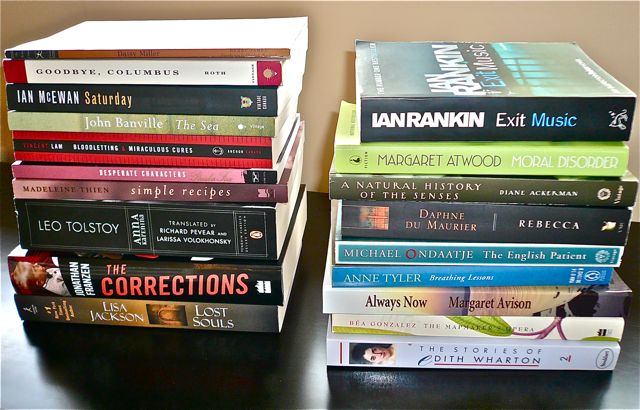
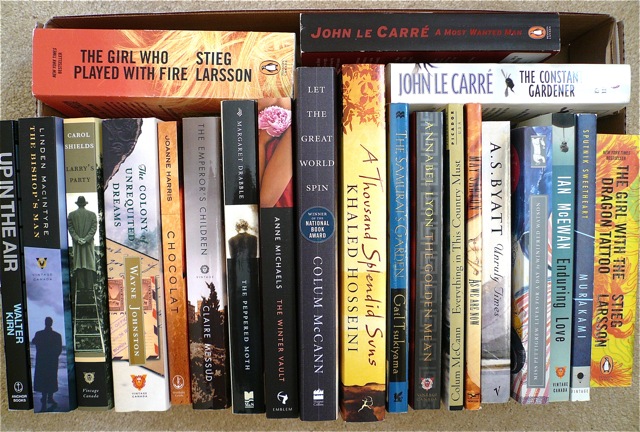
If you ask me, I really can’t tell the difference between my summer reading and that of the other seasons. But, in terms of timing, I’d say the annual Book Sale at the Crossroads Market marks the kickoff… and not the summer solstice. It’s a charity book sale in support of the Servants Anonymous Society. I’ve posted my boxes of loot in the past couple of years. Here’s Arti’s annual book haul, 2011.

Again, as a picky screener, I spent hours looking through tons of books under that giant tent and picked out only those that were in mint condition… some I suspect have not even been opened. They were all $1.50 each. That’s the price if you buy in multiples of 10. Short of 10, $2 each. Best of all, it’s for a good cause… great excuse for hoarding. Well, at least I wasn’t tugging a rolling tote or luggage like some did.

.
Here’s a list of my haul, in no particular order:

  1. Unruly Times: Wordsworth and Coleridge in Their Time by A. S. Byatt
  2. As We Are Now by May Sarton (love her Journal of a Solitude)
  3. Chocolat by Joanne Harris (film is interesting, curious about the book)
  4. Enduring Love by Ian McEwan (after Atonement, like to try more of McEwan’s works)
  5. Sputnik Sweetheart by Haruki Murakami (for JLC 5)
  6. The Samurai’s Garden by Gail Tsukiyama (another one for JLC 5)
  7. Everything Is Illuminated by Jonathan Safran Foer (great find, book is brand new)
  8. Miss Pettigrew Lives for a Day by Winifred Watson (the movie is delightful)
  9. The Winter Vault by Anne Michaels (13 years after her Fugitive Pieces, I’m curious)
  10. Up In The Air by Walter Kirn (always like to read the source material of a good movie)
  11. The Bishop’s Man by Linden MacIntyre (winner of 2009 Giller Prize)
  12. The Golden Mean by Annabel Lyon (finalist, 2009 Giller Prize)
  13. The Colony of Unrequited Dreams by Wayne Johnston (numerous Canadian literary prize winner, just can’t resist a title like that)
  14. The Emperor’s Children by Claire Messud (NYT Book Review Best Book of the Year 2006. I’ve wanted to read it since it first came out)
  15. Let The Great World Spin by Colum McCann (my own copy finally)
  16. Everything in This Country Must: A Novella and Two Stories by Colum McCann
  17. The Peppered Moth by Margaret Drabble
  18. Larry’s Party by Carol Shields
  19. A Thousand Splendid Suns by Khaled Hosseini (Following The Kite Runner, a movie version is coming out)
  20. Things Fall Apart by Chinua Achebe (still haven’t read this classic)
.
Went back another day and more multiples of 10:
  1. Heat And Dust by Ruth Prawer Jhabvala (1975 Booker Prize Winner, RPJ is the screenwriter of many Merchant Ivory productions, including “Heat And Dust” starring Julie Christie)
  2. Middlesex by Jeffrey Eugenides (Pulitzer Prize winner, 2003)
  3. The Handmaid’s Tale by Margaret Atwood (First the book, then the movie, and then the opera, yes, opera)
  4. The Hours by Michael Cunningham (Pulitzer Prize winner, 1999. After the film, I’ve wanted to read this for years. Glad I found a trade paperback edition without Streep/Moore/Kidman on the cover)
  5. The Brief Wondrous Life of Oscar Wao by Junot Diaz (Pulitzer Prize winner, 2008)
  6. Our Mutual Friend by Charles Dickens (I’m partial to The Modern Library Classics, so this is a good find)
  7. The City of Yes by Peter Oliva (Found out from the cover that the author is owner of one of the still surviving indie bookstore in our city… a novel on Japan… interesting connections!)
  8. The Pillars of the Earth by Ken Follett (Other shoppers at the Book Sale urged me to get it, or else I wouldn’t have picked it up… about 2 lbs and 973 pages. But for $1.50… alright.)
  9. The Illuminator by Brenda Rickman Vantrease
  10. The Sunday Philosophy Club by Alexander McCall Smith
  11. The Lost Art of Gratitude by Alexander McCall Smith
  12. Little Earthquakes by Jennifer Weiner (Author of In Her Shoes, looks like a breezy summer read)
  13. The Shack by Wm. Paul Young (Have been avoiding this, but my $1.50 curiosity took over)
  14. Limitations by Scott Turow (I used to be a fan of legal thrillers, so let me indulge again… it’s summer)
  15. The Girl With the Dragon Tattoo by Stieg Larsson (Finally, after the dust has settled. The Swedish movie is good, but not sure about the Hollywood version coming out)
  16. The Girl Who Played With Fire by Stieg Larsson (That’s all, couldn’t find the third one)
  17. False Impression by Jeffrey Archer (Have enjoyed some of his previous books)
  18. The Constant Gardener by John Le Carré
  19. A Most Wanted Man by John Le Carré
  20. Tinker Tailor Soldier Spy by John Le Carré (The film version is coming out this year with Colin Firth. But this little old paperback is the black sheep of the lot. I found the first 18 pages missing after I came home. But hey, I’m not complaining)

How do I alleviate the burden of so many books? Well, this is how I figure. I don’t see them as a TBR list, but new inventory of my personal library. They’re at a fraction of the cost if I were to buy them new.  Besides, how many people read all the books in a library?

***

What’s your summer reading plan?

***

(If you’re interested, here are my finds from the Book Sale of 2010 and 2009.

You may also like to explore the list of “Upcoming books into films”)

Howards End by E. M. Forster

Howards End requires slow reading. That’s how I savor every page, dig out every gem and delve into every contentious issue it raises. It is a book exploring dichotomies: Rich and poor, male and female, town and country, art and business, life and death.  After reading several contemporary novels, where the everyday vernacular is part of the text, it is immensely gratifying to immerse in the literary and poetic narratives, deep and yet highly amusing story of E. M. Forster’s masterpiece.

Howards End is a cozy country home, pristine and idyllic. Its owner, Ruth Wilcox, like her property, is untainted and well set in traditions. Her husband Henry Wilcox is a stark contrast. He is the new rich, entrepreneurial, business-minded and successful in the London financial circuit. Shortly before her death, Ruth finds a new friend in Margaret Schlegel and is introduced to a different world when Ruth visits her in London. Margaret, her out-spoken sister Helen, and younger brother Tibby who is attending Oxford, represent the new wave of social progressives with a vision of an egalitarian society, and who find their fulfillment in the arts and intellectual pursuits.

Before her passing in a nursing home, Ruth wills that Howards End be left to Margaret Schlegel. This comes as a shock to the rest of the Wilcoxe family, who deliberately disregard the wish. By chance, the Schlegel sisters come across Leonard Bast, an impoverished man who due to some ill advice from Henry Wilcox, has lost his job and livelihood. Herein lies the thread that Forster so skillfully weaves through his characters and storyline, exposing conflicts of the classes, of conscience and ideals.

I’ve seen the Merchant Ivory film adaptation a few times over the years, but this is my first experience with the source material. While I read it with Emma Thompson (Margaret Schlegel), Helena Bonham Carter (Helen Schlegel), Anthony Hopkins (Henry Wilcox), Vanessa Redgrave (Ruth Wilcox), Samuel West (Leonard Bast)… constantly appearing on my mind, they are no hindrances to my enjoyment. Rather, I just have to marvel at how superb their performances had been in light of my reading Forster’s characterization.

.

.

The book transports me to a world different in time and space, but feels ever so close. One hundred years have passed since its publication in 1910, the issues are still relevant, and the characters authentic and real. Like just a few weeks ago, I was writing about the two different art forms of books and films, and how we should treat each one separately to appreciate them. Here’s Margaret addressing this very issue:

What is the good of the arts if they’re interchangeable? What is the good of the ear if it tells you the same as the eye? Helen’s one aim is to translate tunes into the language of painting, and pictures into the language of music…. Oh, it’s all rubbish, radically false. If Monet’s really Debussy, and Debussy’s really Monet, neither gentleman is worth his salt — that’s my opinion.

Thank you Margaret for your comment.

Listening to the sisters arguing about every single issue is most entertaining. Here’s Margaret again:

We have great arguments over it. She says I’m dense; I say she’s sloppy.” (makes me think of Elinor and Marianne Dashwood, Sense and Sensibility)

After all, it’s the reflexive self that’s valuable, and the perceptive Schlegel sisters are prone to analyze. Helen is quick to make Leonard Bast feel comfortable when he accepts the invitation to tea at the Schlegel’s:

Cake?” said Helen. “The big cake or the little deadlies: I’m afraid you thought my letter rather odd, but we’ll explain–we aren’t odd, really–nor affected, really. We’re over-expressive: that’s all.

Thank you Helen, for that last line.

For Leonard Bast, the impoverished clerk with richness of soul, the meeting of the sisters is just too much for him… another world that he yearns to belong but knows he will never enter. Forster’s lyrical description just might well expose his ambivalent psyche. Leaving the Schlegel home, Bast steps out onto the street:

London was beginning to illuminate herself against the night. Electric lights sizzled and jagged in the main thoroughfares, gas-lamps in the side streets glimmered a canary gold or green. The sky was a crimson battlefield of spring, but London was not afraid. Her smoke mitigated the splendour, and the clouds down Oxford Street were a delicately painted ceiling, which adorned while it did not distract. She has never known the clear-cut armies of the purer air. Leonard hurried through her tinted wonders, very much part of the picture. His was a grey life, and to brighten it he had ruled off a few corners for romance. The Miss Schlegels–or, to speak more accurately, his interview with them–were to fill such a corner…

And who would have thought the rich and callous but now widowed Henry Wilcox would ask for Margaret’s hand in marriage. Forster’s sensitive rendering again is marvellous as he describes Henry proposing to Margaret:

She had too much intuition to look at him as he struggled for possessions that money cannot buy. He desired comradeship and affection, but he feared them…

But what kind of a marriage will that be? The following conversation could well foreshadow their future together. This takes place when Margaret asks Henry about his initiated friendly talk with her brother Tibby:

What did you talk about? Me, presumably.”

“About Greece too.”

“Greece was a very good card, Henry… Well done.”

“I was telling him I have shares in a currant-farm near Calamata.”

“What a delightful thing to have shares in! Can’t we go there for our honeymoon?”

“What to do?”

“To eat the currants. And isn’t there marvellous scenery?”

“Moderately, but it’s not the kind of place one could possibly go to with a lady.”

“Why not?”

“No hotels.”

“Some ladies do without hotels. Are you aware that Helen and I have walked alone over the Apennines, with our luggage on our backs?”

“I wasn’t aware, and, if I can manage it, you will never do such a thing again.

The undercurrent of power and conflicts… intriguing storytelling.

And finally, I must stop. But not until I’ve quoted this conversation between Helen and Leonard Bast. The finality of life renders all material goods meaningless. Is this cold comfort though for the poor? Even with such a good line as this one uttered by Helen: “Death destroys a man: the idea of Death saves him.”, Forster may just well be toying with us again. Here’s Helen with her exposition on the existential and Bast’s response:

I love Death–not morbidly, but because He explains. He shows me the emptiness of Money. Death and Money are the eternal foes… Men like the Wilcoxes… building up empires… But mention Death to them and they’re offended, because Death’s really Imperial, and He cries out against them for ever.” …

Leonard looked at her wondering… Death, Life, and Materialism were fine words, but would Mr. Wilcox take him on as a clerk?

Oh, the subtle humour…

And the ultimate ironic ending makes this already enjoyable read ever more intriguing… Forster’s version of the meek inheriting the earth?

~ ~ ~ ~ Ripples


***