Kingsman: The Secret Service

I started Proust’s The Guermantes Way a few months ago, still have some five hundred pages to go. So if I have two hours to spare, why do I not get back to it and make some headway, instead of going to the theatre to see Kingsman: The Secret Service on the first day of its screening?

For pure escape, of course. And then there’s the CF factor.

Yes, if the Colin Firth you have in mind is Mr. Darcy doing his graceful dive into the pond, you’re in for a big cognitive dissonance. Indeed, you can call this a paradigm shift for Colin Firth. He’s still a gentleman, mind you, dapper and poised, but he is one suave, choreographed fighting and killing machine, six month in the training, as he admitted in (real life) interviews.

British director Matthew Vaughn, who brought us Kick-Ass (2010) and X-Men: First Class (2011), had taken on adapting the Marvel comics created by Dave Gibbons and Mark Millar (Kick-Ass) by mashing fantasy and realism into one big action-packed, stylish, fun and at times farcical British spy adventure. The production is like an homage to Ian Fleming’s James Bond and all those in the secret intelligence service MI6, from Q to M.

But to evoke an even deeper root, The Kingsman is Arthur (Michael Caine) and his knights, Galahad (Colin Firth), Lancelot (Jack Davenport), and the mastermind Merlin (Mark Strong). A pure fantasy. Behind the facade of a tailor shop in London is the  organization’s high tech base, and rightly so, for a gentleman’s suit is his armour, and the Kingsmen are the new knights.

Firth’s dapper presence is a prime model showing off the bespoke tailoring. What you see on screen you can also get, a collaboration of the film’s costume designer Arianne Phillips and the online retailer Mr. Porter. A Kingsman brand of wardrobe and accessories is the exclusive product spinoffs. Fantasy meets reality.

Kingsman

Not just a fashion statement though. What Galahad Harry Hart tells the young recruit Eggsy (Taron Egerton), who comes from a seedy part of London, records of petty crimes under his belt, raised by a single mother with an abusive boyfriend, all subsequent to the early death of his father, a former Kingsman: “Being a Kingsman has nothing to do with the circumstances of one’s birth; if you’re prepared to adapt and learn, you can transform.” After thinking a bit, Eggsy responds, “Like My Fair Lady.” If there’s any mindful lesson one can glean from watching this seemingly mindless entertainment, here it is.

Back to the task at hand. The dual plot lines are tightly woven as we see Eggsy going through a demanding training and screening process, at the same time Hart has to deal with the high tech villain cum philanthropist Richmond Valentine (Samuel L. Jackson). Valentine sees mankind as a virus. He has developed the means to eradicate the pests, from a mind-controlling implant to a free-for-all SIM card through which he can activate, gleefully watching people kill off each other.

Comic book clarity, black and white, no shades of grey. While the plot may be formulaic, there are special effects and production designs that are fresh and captivating. I particularly like the tailor shop cum secret organization lair, with its underground passageways, and yes, the neat arrays of wardrobe accessories that are lethal weapons in disguise.

As an R-rated movie, some scenes are demanding of the viewers, and in the genre of action/adventure/comedy, graphic violence is prolific. The church scene may not sit well with some, albeit the explanation of the carnage is offered only after the very long and deadly sequence. Valentine is playing God to control their minds and impulses. Despite its flaws, which are easily covered by the quick change of scenes, overall it is a well-paced, well-acted, and stylish production.

Music is prominent in conveying the spectacle and thrills, as well as humour. I chuckle when I hear the British composer Edward Elgar’s Pomp and Circumstance accompanying one of the explosive, climatic sequence at the end, the extravaganza of human heads turned fireworks, a good reminder and celebration of where all the fantasy of the gentleman spy originates.

As with a genre of this kind, the movie is not for everyone. If you can’t stand the sight of blood, or graphic violence, or hear the F word prolifically uttered, or are reluctant to let farcical surrealism override a rational mind, then maybe you’d like to stay home and attack your TBR pile of reads. Don’t bother flipping through the comic book either. As the bookstore clerk warned me when I asked about it, “It’s very graphic.”

And yet, the two hours of pure escapism has proven to be invigorating. I’m just about ready to get back to Proust.

~ ~ ~ Ripples

Paddington: The Marmalade to Spread on Your Day

What can a little bear from ‘Darkest Peru’ do to ease one’s tension, uplift a depressed mood, or simply elicit laughs out loud? Plenty. Paddington can do plenty of good for all of the above. I’d chosen the right film to come out of a stressful month.

Clever, fast-paced, passionate, and very funny, Paddington the movie is 95 minutes of pure delight. Although Michael Bond’s stories first came out in 1958, director and screenwriter Paul King has brought out some relevant, contemporary issues in his adaptation such as migrating to a new land, finding a home, striving to belong, accepting diversity, and basically the universal search for ways we can all live together despite differences.

Paddington

The movie begins with a black-and-white old news reel. I like that already. An English explorer, Montgomery Clyde (Time Downie), heads over to ‘Darkest Peru’ and discovers a talking bear family. As he leaves, he urges them to visit London. After an earthquake that killed his Uncle Pastuzo (Michael Gambon, voice), the little bear (charmingly voiced by Ben Whishaw) is sent out by Aunt Lucy (voice of Imelda Staunton) to head for a new life in this believed-to-be-friendly London. To send him off, Aunt Lucy hangs a little sign with a string around his neck that says: “Please look after this bear. Thank you.”

And so the little stowaway with a suitcase full of marmalade hides on board a cargo ship and is transported to a foreign land where the Brown family finds him at Paddington Station. Thus his new name.

Despite the chaos that ensues in the Brown household, and the initial reluctance of Mr. Brown (Hugh Bonneville, who is like a Papa bear himself), and daughter Judy (Madeleine Harris, “So embarrassing!”), Paddington’s inept charm readily wins the heart of the enthusiastic Mrs. Brown (the always enthusiastic Sally Hawkins) and very friendly young son Jonathan (Samuel Joslin). Later, Paddington finally gains even the public’s favour with his serendipitous heroism on the streets of London.

Here is no place to argue against stock characters. Of course we need a villain; we have the parallel of Cruella De Vil of 101 Dalmatians in the form of Millicent, played by Nicole Kidman. I’m sure she enjoys doing that too. Driving a van that says Taxi when the sliding door is opened, she soon reveals herself a taxidermist when the door is closed. Good to see stars letting loose in non-typecast roles. Julie Walters and Jim Broadbent also present for you to discover. And if you know what the Paddington Bear author Michael Bond looks like, you can find him in cameo too.

Very well integrated are the effects of real-life, human actors interfacing with the animated bear and other cartoonish scenarios. Do we need to know how the technical genius behind the screen worked, how they used around 600 shots with bears, which required 350 people across two countries working on the visual effects for three years… to enjoy the film? Definitely not, maybe best we don’t go into the complexities of CGI’s, simulations, and yes, how to deal with fur. The final results are all what the technical team had striven for, delivering what they would like us to see. I can fully appreciate the effects. Kudos to them all.

It is definitely a snub Paddington doesn’t get an Oscar nomination, in any category. While in the land of its origin (England, not Peru), Paddington is nominated for two 2015 BAFTA Awards (The ‘British Oscars’): Best Adapted Screenplay and Best British Film. So I do hope the box office here can redeem the slight on this side of the Atlantic. Go see how the little bear and his new-found family can dispel your winter blues. Noms or no noms, this is a winner in my book.

As for that sign Aunt Lucy hangs around Paddington’s neck, we may need to heed it even more in this conflict-ridden world of ours:

“Please look after this bear. Thank you.”

~ ~ ~ 1/2 Ripples

***

Click on the link to the fascinating article in The Telegraph, Paddington: The technology behind the small bear from Darkest Peru.


2015 Books to Movies

First off, I’m excited that two movies I reviewed months ago last year and which I’d given top ripples both won the Golden Globe Best Motion Picture Award last night: The Grand Budapest Hotel (Musical or Comedy) and Boyhood (Drama). The Golden Globe Awards marks the new year with excitement and glamour, an apt recognition of fine films made in the previous year, as we eagerly await the ultimate, the Academy Awards. That will be a final wrap for 2014 movies. So what is in-store for us in 2015? For those familiar with Ripple Effects, one of my focus is on books being turned into movies. The Books Into Films posts are some of the most popular on this blog. I’m particularly interested in the adaptation process, how one art form is transposed into another medium. What works, what doesn’t? And above all, how to appreciate each on its own terms. Here is my first list of books to read (or reread) before you go and watch the movie, all scheduled to be released in 2015, some with known dates, some more tentative. A second list will appear in the online review magazine Shiny New Books come January 29.

 ***

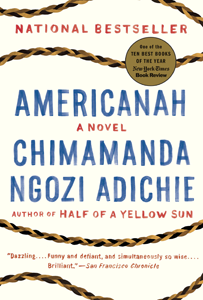
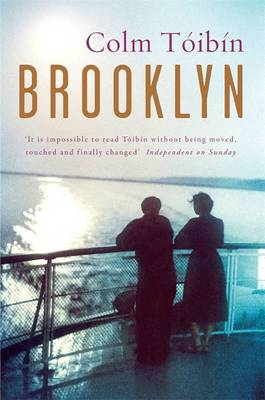
Americanah by Chimamanda Ngozi Adichie americanah The acclaimed novel by the award-winning author of Half of the Yellow Sun, Americanah tells a story that crosses three continents in the countries of Nigeria, US, and England, linking two lovers through the expanse of time and space, and exploring the evermore relevant issues of race, identity, drifting and belonging. Adichie’s novel is the winner of the 2013 National Book Critics Circle Award for Fiction among other accolades. It is now adapted into film starring Lupita Nyong’o, on the heels of her 2013 Oscar win as Patsey in 12 Years A Slave, and David Oyelowo, 2015 Golden Globe nominee for his role as Martin Luther King Jr. in Selma.   Brooklyn by Colm Tóibín Brooklyn_Colm_Toibin Once again the story of migrating and shifting ground, this time from Dublin to Brooklyn. Colm Tóibín’s 2009 Costa Novel Award winner and longlisted novel on the Booker Prize that year tells the story of Ellis Lacey moving to America from Ireland in the 1950’s, as many did, for new life and opportunities. But her story did not end there. The movie adaptation will premiere at Sundance Film Festival January 26, 2015. Saoirse Ronan plays Ellis. She has come a long way in her career with her first breakout role as young Briony in Ian McEwan’s Atonement. Cast includes Domhnall Gleeson, Jim Broadbent and Julie Walters.   Far from the Madding Crowd by Thomas Hardy far-from-the-madding-crowd A highly anticipated film adaptation of Hardy’s classic. That Carey Mulligan is playing Bethsheba Everdene increases my curiosity even more, especially as I hear her sing the folksy tune in the movie trailer. Those who hold onto the Julie Christie’s 1967 portrayal as the definitive version should see this for comparison. Screenplay by David Nicholls, who is no stranger to classics on screen, having previously adapted Tess of the D’urbervilles (TV, 2008), and more recently Great Expectations (2012). What makes this newest Hardy adaptation sound promising is its Danish director Thomas Vinterberg, whose film The Hunt was nominated for a 2014 Best Foreign Language Film Oscar. Matthias Schoenaerts plays Gabriel Oak. Note the name, he will appear in another book to film production.   In The Heart of the Sea by Nathaniel Philbrick in-the-heart-of-the-sea-book-cover The book records the true story of the tragic loss of the American whaleship The Essex from Nantucket when it was capsized by a sperm whale in the Pacific Ocean in November 1820. A real life Moby Dick, In The Heart of the Sea was the winner of the 2000 National Book Award for Nonfiction. The crews were stranded at sea for months. The book chronicles the tragedy and the horrific experience by a few survivors. Oscar winning director Ron Howard (A Beautiful Mind, 2001) cast the star of his acclaimed production Rush (2013), Chris Hemsworth, in this adaptation. Also notable is Ben Whishaw playing Herman Melville. A versatile actor, Whishaw had played the poet John Keats, the new Q in James Bond, and is now the voice of Paddington Bear, replacing Colin Firth.   Kingsman: The Secret Service by Dave Gibbons and Mark Millar secret-service-kingsman So what’s Colin Firth been busy doing? One of his new movies coming out in 2015 is the adaptation of a comic book, The Secret Service, created by Dave Gibbons and Mark Millar, definitely not something Firth or his fans could have expected when Mr. Darcy dove into that pond at Pemberley. A comic book? You gasp. That’s right, a totally legit read nowadays, when you have the graphic novel of Proust’s In Search of Lost Time on the same shelf in the library. Firth plays Harry Hart training up a young recruit for the Secret Service, with Taron Egerton, Mark Strong, Michael Caine, Samuel L. Jackson, directed by Matthew Vaughn who had all warmed up with Kick-Ass and X-Men. From the trailer, it sure looks like a visual delight, action-filled, slick and clever. The Secret In Their Eyes by Eduardo Sacheri The Secret in Their Eyes This originally Argentine crime thriller was first adapted into a Spanish movie that won the Best Foreign Language Film Oscar in 2010. As soon as I finished watching the film, I downloaded the music soundtrack; it was deeply moving. This is no ordinary crime thriller, but a poignant, psychological exploration of human experience and memories. The new English version of the film has an appealing cast starring Chiwetel Ejiofor (nominated for an Oscar for his role in 12 Years A Slave), Julia Roberts and Nicole Kidman, helmed by Hunger Games and Captain Phillips director Billy Ray. Ray also wrote the screenplay. I highly anticipate this English version, albeit I admit the original language version is usually the more affective and authentic rendition. Silence by Shûsaku Endô Silence  Shûsaku Endô’s historical fiction (1966) on the plight of the Catholic Jesuit missionaries to Japan in the 17th Century is a deep and disturbing novel. It touches on multiple levels of the human spirit and psyche, issues that are not easily labelled by the term ‘religion’, dealing with the problem of faith in a God that appears to be silent in the midst of suffering and persecutions of His followers. In a culture that is xenophobic at the time, Endô, a Catholic himself, confronts the issue of doubt and the power of evil head-on. The book reads like a page turner, and I expect the film adaptation to be cinematically gratifying in the hands of an auteur of the Catholic tradition, Martin Scorsese. The new edition of the book includes Scorsese’s preface. The film is shot in Taiwan instead of Japan, with a perfect cast: Liam Neeson, Andrew Garfield and Adam Driver, screenplay by Jay Cock, screenwriter of The Age of Innocence.

***

More to come… On January 29, go to Shiny New Books the online review magazine for my second list of 2015 Books into Films.

Before I Go To Sleep (2014): Movie or Book?

Spoiler Alert: This post may contain information that one could deem spoilers, and, not just for this movie but for the other one, yes, you guessed it, Gone Girl

Before I Go To Sleep

If as some say Gone Girl is misogynist, then Before I Go to Sleep is the counter argument. Why of course, there’s a 50/50 chance that the villain is the female or the male character, and in some cases, both. And if it’s both, does that make the movie misanthropic?

So much about our humanity, which is what these crime suspense thrillers are all depicting, albeit in a more exaggerated way. Here is the movie adaptation of the very popular debut novel written by British writer S. J. Watson. Again, allow me to answer a question up front, book or movie first?

I know, there’s a likely chance that you have no intention to touch either, but here’s just an interesting thought, especially with the Gone Girl phenom still rippling. For this one, I’d say read the book first, mainly because if one goes to the movie unprepared, one would likely find the premise preposterous. A woman waking up every morning with no memory? But actually there are real-life cases which the author mentions in the epilogue of the book.

On the last page Watson notes that his novel, though totally fictitious, is inspired by actual medical cases, particularly that of Clive Wearing‘s, the British musicologist, conductor and BBC music producer, who has the same amnesiac condition, albeit his is an even shorter memory span, just a short minute or so.

Before I Go To Sleep is about a woman Christine (Nicole Kidman) who wakes up every morning with a total blank, forgetting who or where she is, and not knowing the person lying beside her in bed. He happens to be her husband Ben (Colin Firth), who has to explain to her every morning and reminds her who she is, and that an accident occurred fifteen years ago when she was 25 had left her in a state of amnesia with just a day’s memory span, but no matter, he tells her that he loves her.

Actually quite an interesting premise for a suspense thriller, the amnesiac as a vulnerable, ready victim. To add to the mystery, Christine receives a phone call from a Dr. Nasch (Mark Strong) every morning after Ben leaves the house for work. He tells her he has been helping her and gets her to look for a camera in a shoe box hidden inside her closet. In there she can replay what she has recorded the night before, bits and pieces of her memories.

The movie is a graphic and more suspenseful enactment of the novel, directed by Rowan Joffe, who had written the screenplay and directed Graham Greene’s Brighton Rock (2010). But I had found impressive his screenplay for The American (2010) which, under the direction of Anton Corbijn (A Most Wanted Man, 2014), is one of the rare spy thriller that is soulful. Come to think of it, I can’t help but think such a collaboration, Joffe screenplay, Corbijn directs could have made Before I Go To Sleep a better movie.

As I had mentioned in my review of the novel Before I Go To Sleep, the major flaw of the book is that the author forgets that it’s his character who has amnesia, not his readers. So every chapter starts off with her reading more or less the same journal entry she wrote the night before is a bit too tedious.

Such a condition has been improved in the movie by Joffe, and with the convincing performance by Kidman, we are made sympathetic observers instead of being bored by the repetition. A video camera to jot her memory is also a better way to capture visual anguish than reading from a journal. Making the film more interesting than the novel are the flashbacks Christine has, the bits and pieces that she remembers. But then again, are those real memories or fragments of her imagination?

Colin Firth has shattered his Mr. Darcy persona for good. It is still a pleasure to watch him, albeit Darcy devotees and purists may find some scenes uncomfortable, faced with the revelation that O, Colin Firth is an actor, an impressive one yes, but not the real Mr. Darcy they love to keep in their memory.

This is a second partnership between Firth and Kidman, shortly after The Railway Man (2013). Their next collaboration will be the upcoming film Genius (2015), another book to movie adaptation to watch for.

Mark Strong is probably one of the most underrated actors today. He has been in so many movies, delivering strong performance… Zero Dark Thirty (2012), Tinker Tailor Soldier Spy (2011), plus many others and dating back to 1997, with Colin Firth in the first Fever Pitch (1997). Further, he’s my favourite Mr. Knightley in Emma (TV, 1996). His upcoming work is on my must-see list: The Imitation Game (2014).

Book to movie, here’s one that I have to say, I’ve enjoyed the movie more than the book, albeit it’s nothing more than leading and misleading, and slow revealing until the climatic end. Again I note, as with others of the crime and suspense genre, it’s not for everyone. But like Gone Girl, it has shoved to the forefront, domestic violence or violence of any sort involving the betrayal of trust, manipulation and self-gratification in dominance. Fortunately, this movie has a happier ending.

~ ~ 1/2 Ripples

***

Related Reviews on Ripple Effects:

Before I Go To Sleep by S. J. Watson Book Review

Gone Girl The Movie (2014)

The Railway Man Movie Review (2013)

The Railway Man Book Review 

The Gone Girl Ripples: Binge-Watching Hitchcock

Caution: This post may contain SPOILERS, depending on how your imagination works.

**

“If you want to analyze everything in terms of plausibility then you end up doing a documentary.” – Alfred Hitchcock

Alfred Hitchcock is the best person to defend any outrageous act in a movie, and I’m thinking here about the one in the last section of Gone Girl, the altered scene that is different from Gillian Flynn’s book.

After watching the movie, something drove me back to Hitchcock. So in the past week, I’ve binge-watched all the Hitchcock thrillers that I could find, over half a dozen. Three of them I will discuss here, for they are like prototypes of Gone Girl. I’m sure both Flynn and Fincher have had the master’s influence silently creeping up their spine.

Surprisingly, the most obvious element common in these Hitchcock films is light-hearted humour, which I didn’t find in Gone Girl. Some dialogues are LOL funny.  Crime and suspense can happen side by side with laughter; good and evil indwells at the same time. It is like Hitchcock is asking how can we separate these two sides of human nature?

And a common setting of these stories? Right within a marriage and the family.

Suspicion (1941)

This is the film that’s closest to Gone Girl‘s first part. Joan Fontaine won the Best Actress Oscar with her role as the naive but devoted Lina as she falls for the suave and charming Johnnie played by Cary Grant. They get married shortly after they meet. As the film progresses, Lina suspects her husband more and more. Hitchcock tells the story from Lina’s point of view, dropping clues so we are as suspicious as Lina. Despite his outward charm, Johnnie could just be a scoundrel after her rich father’s money.

Cary-Grant-in-SuspicionWith this suspicion in mind, a glass of milk can be seen as poison. Here is an unforgettable shot as we see Johnnie walks up the long flight of stairs holding the healthy drink on a platter, now perceived (by us, as directed by Hitchcock) as poison.

Without spilling any spoilers, I read that Hitchcock’s own preferred ending is different from what the audience see in the eventual cut released on screen. Who can mess with Cary Grant’s good guy image? Not even the master himself.

~ ~ ~ Ripples

**

Strangers On A Train (1951)

Two people unknown to each other meet on a train. One is a tennis star Guy Haines (Farley Granger) and the other a psychotic misanthrope Bruno Anthony (Robert Walker), who suggests they crisscross two murder schemes: he kills Guy’s wife so the tennis pro can marry his lover, and Guy kills Bruno’s father whom the son loathes. At his stop, Guy gets off the train taking the conversation with this stranger as a joke, and forgetting his initial-inscribed lighter on the compartment table.

So the one who takes this plan seriously goes ahead and follows through, while the other is drawn into a crime being the prime suspect. When Guy refuses to carry out his part, Bruno goes back to the crime scene so he can plant the lighter there to incriminate Guy. Here we can see Hitchcock’s signature style in extending his suspense in the most mundane act. As he is heading over there, Bruno drops Guy’s lighter through the grills of a street sewage hole. The camera closes up on a frantic hand stretching as far into the hole as possible to retrieve the lighter lodged in there. This is the kind of shots that could lodge in our memory even after we forget the whole storyline.

No matter how suspenseful and wicked the plot, Hitchcock’s movies are fun to watch. The key person to suspect something is wrong is usually a minor character, a younger sister with thick glasses, brainy, observant. We find her here as Guy’s lover Ann’s younger sister Barbara, played by the director’s own daughter Patricia Hitchcock.

The noir writer Raymond Chandler adapted Patricia Highsmith’s first novel of the same name. Those who think black-and-white movies dating back sixty years could not possibly be as entertaining as what we have today must see this one.

~ ~ ~ 1/2 Ripples

**

Shadow of a Doubt (1943)

Still earlier, seventy years ago, the Pulitzer winning playwright and novelist Thornton Wilder was one of three co-writers of the screenplay based on a short work by Gordon McDonell, who won the Best Writing Oscar for his original story.

http://trueclassics.files.wordpress.com/2010/10/family-shadow-of-a-doubt.jpg

Again, the setting is quiet small town America, Santa Rosa, where nothing happens much. That’s the ironic setting at the beginning of the film when Young Charlie (Teresa Wright), the eldest girl in a ‘typical’ family, lying on her bed, lamenting the boredom of suburban living. She suddenly thinks of an idea that would make her day.

So Young Charlie springs up and heads to the telegram office to send a message to her favorite relative Uncle Charlie (her namesake, played by the ubiquitous Joseph Cotton), her mother’s younger brother, a charmer living in NYC, urging him to come visit them. While there, Mrs. Henderson hands her a telegram from her Uncle Charlie that says he’s coming to visit them in a couple of days.

Young Charlie is elated. Here’s the following conversation she has with Mrs. Henderson:

Young Charlie:  Mrs. Henderson,  do you believe in telepathy?

Mrs. Henderson:  Well, I ought to. That’s my business.

Young Charlie:  Oh, not telegraphy. mental telepathy. Like… well, suppose you have a thought, and suppose the thought’s about someone you’re in tune with. Then across miles, that person knows what you’re thinking and answers you. And it’s all mental.

Mrs. Henderson:  I don’t know what you’re talking about. I only send telegrams the normal way.

It’s this kind of unexpected pleasantries that make Hitchcock films so enjoyable, even in the midst of crime and suspense. As we would soon see, young Charlie has a crush on her Uncle Charlie. But that’s just the beginning of the film, and we soon find Uncle Charlie just may not be what he seems to be.

Young Charlie: … we’re not just an uncle and a niece. It’s something else. I know you. I know that you don’t tell people a lot of things. I don’t either. I have a feeling that inside you somewhere, there’s something nobody knows about.

Uncle Charlie:  Something… nobody knows?

Young Charlie:  Something secret and wonderful and… I’ll find it out.

Uncle Charlie:  It’s not good to find out too much, Charlie.

Young Charlie: But we’re sort of like twins. Don’t you see?

These dialogues sum up the premise of the movie Gone Girl 70 years later. How much do we know about another person, even if that person is one of our family. How can one get inside the head of another and read the mind? There can be dark secrets within the mind that knowing them may endanger the one who discovers them.

The setting is similar too, a sleepy, innocent American small town and a newcomer from NYC. Good and evil are like twins, they lie obliviously beside each other.

Hitchcock is such a brilliant creator of suspense. Even just with young Charlie rushing through busy streets to get to the library before it closes at 9 pm keeps me on the edge of my seat, for I want to know if she makes it before it closes since she needs to find the missing newspaper page her Uncle Charlie is trying to throw away. What’s on there that he needs to hide it from her family?

Exactly, you have to run to the library to find yesterday’s paper to read on a piece of news story. That’s filmmaking dating back 70 years, but no less suspenseful and thrilling. Well, the library just closed as she gets there, but after knocking on the door, the librarian lets her in, scolds her a little then gives her three minutes to find what she needs.

As the camera zooms in, we finally see the news on the page: the nationwide search for the Merry Widow Murderer.

~ ~ ~ ~ Ripples

**

Filmmaking techniques have advanced unimaginably since Hitchcock’s time, yet after changes and changes, we are more or less the same, and films remain one of the most agile means to expose and entertain all in one shot.

To Read my review of Gone Girl the movie, CLICK HERE.

**

Spoilers as Pointers

Last week, I wrote a review of Gone Girl, the movie adaptation of Gillian Flynn’s wildly popular book, and I caught myself tiptoeing around the story trying not to drop any spoilers. Now as I think back to it, that episode leads me to a minor revelation.

Why do I have to be so extra careful? The answer is obvious enough. If I just hint at what the major twist is, I’d be giving away the story, largely diminishing the viewer’s enjoyment, eliminating the element of surprise. In reply to some comments, I’d even suggested to people not to read the book first if they are going to see the movie.

Here’s the question I’ve been mulling over this past week, and I can’t help but be a bit amused. I don’t think I’ve ever written a post in this state of mind before. The word used by a commenter was ‘restraint’. I felt more like ‘silenced’.

Did I put a “Spoiler Alert” at the beginning of my review of say, Anna Karenina (2012)? Since its publication as a serial in the 1870’s, the trajectory of this extra-marital affair is well-known; critics are not muffled from discussing the tragic end of that gone girl. Revealing the storyline has not dampened people’s interest from reading the book or watching its movie adaptations, ten of them so far, as full features or TV series.

Or take The Great Gatsby, that fateful yellow car ride ultimately leads to the end of Gatsby. Ooops, there goes the spoiler. With this, have I killed the movie for would-be viewers? I don’t think so. Why? Simply because that green light blinking across the shore is so powerful a lure, driving a man to dream the impossible dream. And we want to see the elaborate efforts this enigmatic character exerts to strive for that unreachable goal.

Or, let’s say, 12 Years A Slave (2013) based on Solomon Northup’s memoir. Here, the title is the spoiler. The slave had to survive the twelve years in order to write his own memoir. But of course, we want to know how he survived, his resilience, and what he has to say about the slavery system, about human nature.

Or take a contemporary novel, Life of Pi (2012). After a shipwreck, a 16 year-old boy adrift on the Pacific Ocean for 227 days on a life raft is finally rescued and lives to tell his tale. Now that’s giving away the whole story. Does that spoil the fun of watching the movie? Not at all. Why? Because we see spectacular scenes of the boy pitted against nature, persevering over perils that could shatter or enhance his faith, dealing with personal loss, recapturing memories and reality … we are hooked because there are rich layers of meaning packed inside a simple storyline.

So, for stories that explore more than the plot can tell, even though we may know the ‘what’, we want to see the ‘how’. We want to get on the ride and enjoy the scenery, for there are interesting and intriguing sights along the way.

To spoil or not to spoil… depends if the book is just only about the plot, manipulating the twists and turns to shock and surprise, yes, a clever page turner, then a spoiler would definitely diminish the enjoyment, robbing the viewer of the element of surprise and entertainment.

But if the kind of reading or viewing offers a deeper exploration of characters and the human condition, or framing from a historical or social backdrop to confront issues, or depicting scenes of a shared humanity, or unpacking subtext and meaning… then, dropping a spoiler may not be so disastrous.

I know, there are exceptions and I’m not trying to generalize, but, could the acceptability of spoilers be the pointers to the difference between literature and pulp fiction?

***

Related Movie Reviews on Ripple Effects:

Gone Girl (2014)

12 Years A Slave (2013)

Anna Karenina (2012)

The Great Gatsby (2013)

Life of Pi (2012)

***


The Gone Girl Phenom: A Reality Show in the Making?

NOTE: It is my full intention to drop NO SPOILERS in this post. Can one write a review but save the spoilers? Yes, but difficult. I’ll try to do that. What’s more, take this as an ‘op-ed’ on a book-to-film phenom, and a small commentary on our contemporary media-driven culture.

**

Let me cut to the chase. To answer the question that a lot of you may have, no need to crack open my head: If you have already read the book, will that hinder you from fully enjoying the film?

The answer is yes. For a film that predicates on the twists and turns in the plot line, where suspense is built on keeping the audience in the dark, a person having read the book before seeing the movie has to be amnesic to be surprised. As in my case, my suspense is more like “will Gillian Flynn throw us a curve ball here?” That’s why by the time the third act comes, with its slightly altered storyline, it then began to pique my curiosity more.

However, and this is a big However, Gone Girl is many things. Above all, it is pure Fincher entertainment. Following his Social Network (2010) and Girl with the Dragon Tattoo (2011), Gone Girl is stylish, slick, absorbing and contemporary. It depicts adults behaving badly like a Hitchcock thriller. It is a modern film noir where, albeit not in black and white, the mostly dim, sepia tone, together with the numbing electronic pulses of the music combine to elicit mystery and suspense. A hyperbole of a marriage gone wrong, it is about the knowable and unknowable of ourselves and others, even those close to us. It is about violence in our thoughts and actions, and the fronts we put up to cover the deviance.

But then, don’t read too much into it. This is not a philosophical quest in finding who we are, albeit the question has been asked in the film, nor is it a diatribe on our social condition, the marriage institution, or domestic violence. This movie is simply as it is, pure entertainment.

For me, the most crucial issue it touches on has to do with our mass, popular culture, our media-driven, insatiable thirst for sensational headlines, or hashtags for that matter, and our crowd-sourcing way in forming opinion. Like a satire, it points to the influence of our TV personalities, the link between popularity and credibility, the follower and fan-based momentum.

A former Entertainment Weekly writer, Gillian Flynn’s third novel Gone Girl debuted in the New York Times Bestseller list in 2012 and has been there for 91 weeks. The two weeks before the film premieres, its sales has doubled.

Gone Girl Movie Still

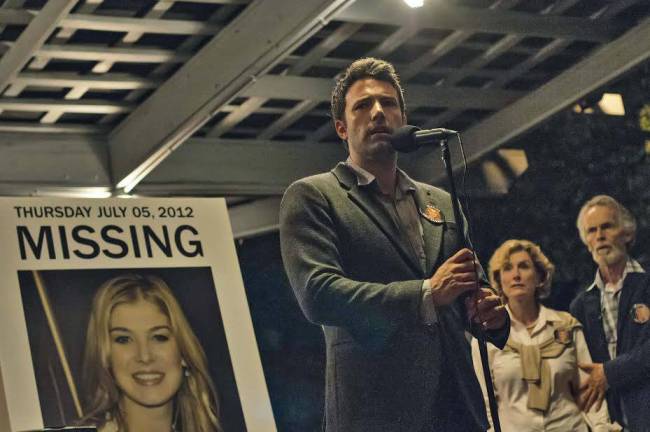
The story seems straight forward enough. Amy Dunn, a New Yorker transplanted in Missouri after she follows her husband Nick to move back to his hometown as his mother is diagnosed with cancer. On their fifth anniversary, Amy is gone missing. Nick soon becomes the prime suspect in the case. Although a body has not been found, murder is on everyone’s mind. With this premise the story unfolds, and we are off to a ride of twists and turns all the way to the end.

Ben Affleck and Rosamund Pike are convincing as the troubled couple. Affleck, who is not known as a superb character actor, is above his previous level here. Although I must say, having read the book could affect how we judge his performance. As for Rosamund Pike, I have no doubt this is her breakout role. Glad to see she finally get this golden opportunity after her supporting parts in An Education (2009), and in Pride and Prejudice (2005) playing Jane, the eldest Bennet sisters, overshadowed by Keira Knightly’s Lizzy.

However for me, I’m most impressed by Kim Dickens in her portrayal of the thinking detective Rhonda Boney perfectly, a role that usually falls upon a male star, like Columbo, or the doubting, persistent detective that looks at evidence and not dwell on prejudice. Her character is the one I like the best in the movie.

The production also benefits from supporting roles from Carrie Coon playing Nick’s twin sister Margo, Neil Patrick Harris as Amy’s former boyfriend Desi Colling, Tyler Perry as defence lawyer Tanner Bolt, although more screen time and story could have been written for him.

If you have read the book, what’s in it for you in the movie? Several things. First off, watch for how the savvy former Entertainment Weekly writer Gillian Flynn transforms her novel into a screenplay, and how a talented director in turn crafts a stylish and absorbing film out of Flynn’s script, from mere words on the page. While you’re at it, watch how a cast of actors interpret their roles (with many cues from the director I’m sure) and make the characters come to life. How do they compare with your imagination while reading the book?

The director of photography plays a dominant role in styling the visual, the light and shadow, the overall tone. Together with the suspenseful, numbing and electrifying music and the smooth editing, the 149 minutes feel like 90. Likely awards nominations for several categories, in particular adapted screenplay, editing, and acting categories. But Best Picture? I have major reservations about that.

Treat this as a modern day Hitchkock movie, a contemporary Film Noir that’s slick and teasing. Fincher’s Girl With A Dragon Tattoo may be the warm-up task, a borrowed source. But here is an authentic American book-to-movie success story. The trend from this day on could well be authors writing more ‘ready-for-movie’ novels.

Now, to the media frenzy. The surge in Gone Girl sales and all the hype pushed the movie in this past opening weekend to the number one spot in box office sales, an impressive $38 million, doubled that of Ben Affleck’s own Best Picture Oscar Argo (2012).

The product may be good, but still a movie needs a strong marketing end. So, all the buzz are the generated effects from a successful marketing campaign, and a large fan base sure is a major asset. All indications point to the Gone Girl phenom could well send the movie to hit targets in profits and Oscar noms.

According to Variety, Chris Aronson, president of domestic distribution at Fox, had said, “we did an excellent job of marketing the movie and making it a cultural event where people had to see it in order to be part of the conversation.”

“That’s a testament to the film becoming a zeitgeisty film,” he said.

Exactly. Nowadays, looks like there’s a more acute pressure for one to be part of the conversation at parties or the Friday social, and especially, on social media. And zeitgeist is just the right word to describe a phenom. I’ll be harsh to say it’s a ploy, but the fan-based momentum is just the right fuel to ignite a trend like a wildfire. But amidst the rave, judge for yourself the worth of the movie and decide if you want to be in this reality show or not.

This may be the very issue satirized in the film. View the production for what it’s worth, seek the evidence, and think for yourself how many ripples you’ll give it. Then decide if you ‘like’ it or not.

~ ~ ~ Ripples

Your comment is most welcome. By all means, share your opinion on the movie, the book, or my post. But while you’re at it, for the pleasure of those who have not read the book or seen the movie, please observe the NO SPOILER intention here.

***

Awards Update:

Jan. 15, 2015: Rosamund Pike nominated for an Oscar for Best Actress

Dec. 11: 4 Golden Globes noms: Best Director David Fincher, Best Actress (Drama) Rosamund Pike, Best Screenplay Gillian Flynn, Trent Reznor, Atticus Ross for Best Original Score

Dec. 10: Rosamund Pike gets SAG nom for Best Female Actor

The Hundred-Foot Journey: A Delicious Fusion

Oscar-nominated director Lasse Hallström serves us a tasty treat in the fairy-tale style of his previous, acclaimed Chocolat (2000). The underlying ingredient that spices up the story this time is more than just dainty sweets. This one is surprisingly gratifying.

Produced by Steven Spielberg and Oprah Winfrey, “The Hundred-Foot Journey” is adapted from the light-hearted novel of the same name by Richard C. Morais. Oscar nominated screenwriter Steven Knight (Eastern Promises, 2007) has done a marvelous job in turning the cartoonish style of a book into a robust and more complex cinematic parable, with dashes of humor and clever dialogues for added delights.

THFJ Movie Poster

The story is most relevant today in our world overwhelmed by warring differences and conflicts. It is an immigrant story. It also presents an ideal case of how cultures can coexist and harmony can be found in diversity.

The Kadam family leaves India after the tragic loss of their mother and their family restaurant in a fire caused by an angry mob. After a short stay in London, Papa (Om Puri) leads his family to settle in the picturesque village of Saint-Antonin-Noble-Val in Southern France. The first few minutes of back story is concise and captivating.

Papa soon finds a derelict restaurant for sale. His own Maison Mumbai, the first Indian restaurant in the vicinity is subsequently opened, a seemingly arduous venture. Papa is a headstrong patriarch, undeterred by the initial protests of his sons, and the Michelin starred Le Saule Pleureur across the street. The proprietor of that haute cuisine establishment is the formidable Madam Mallory (Helen Mirren), who is determined to drive her competitor out.

On opposite sides of this one-hundred-foot wide roadway thus rage the battle of sights, sounds, and aromas, of spices and sauces, ambiance and costumes, an all-out war of clashing cultures.

Indian spices

Hassan (Manish Dayal) is the head cook of the Kadam family. He has learned the skills from his late mother; loving memories of her cooking fuel his gastronomic passion. Furthermore, Hassan is endowed with a distinct talent for the culinary art. He is most ready to explore brave new tastes.

The young sous chef across the street, Marguerite (Charlotte Le Bon), plays no small part in Hassan’s curiosity of French cooking. The two strike up an ambivalent relationship as both friends and foes.

After Madam Mallory discovers the gift in Hassan, she offers to take him under her wings. Such a proposition is, expectedly, rejected by Papa. However, it is Hassan’s decision and passion after all. His determination soon overrides the objection from Papa.

By taking his first step to cross the great hundred-foot divide, Hassan turns the page of both parties in the cuisine conflicts. His journey ultimately leads to an additional Michelin star for Le Saule Pleureur and fame for himself. Hassan’s excelling and competing in the qualifying challenge in Paris is the bridge reconciling the two sides of the road.

It is fun to see the hostile rivals Madam Mallory and the patriarch of the Kadam family coming together. Their changed demeanor brings out the latent, better qualities of each other, offering us some nuanced performance and heart-warming scenes. I must note that there were constant, spontaneous laughs and even restrained applause in the theatre of the preview screening I was in.

Peace offering

The film itself is a smorgasbord of international talents. Acclaimed Swedish director Lasse Hallström takes the helm. English Screenwriter Steven Knight adapts a novel by Richard C. Morais, an American born in Portugal and raised in Switzerland. English star Dame Helen Mirren masters some French accented English dialogues, her previous Oscar winning role as The Queen is amusingly embedded. Papa Om Puri is a veteran Indian actor with a British OBE honor. Mandish Dayal who plays Hassan is American born of Indian descent; his love interest is the up-and-coming actress Charlotte Le Bon (also in Yves Saint Laurent, 2014), a French-Canadian from Montreal.

Director of photography Linus Sandgren (American Hustle, 2013, Swedish born BTW) entices viewers with his close-ups of fresh fruits, vegetables, spices, and market offerings. For those who may wonder, those spiked, round objects are sea urchins. The agile and well-paced sequences of food being prepared are most effective. In contrast, the wide-angle, bird’s eye views of the picturesque Southern France countryside are equally mesmerizing.

Music is an important ingredient in the film. Composed by the prolific A. R. Rahman, who won two Oscars for his work in Slumdog Millionaire, the score adds a distinguished Indian flare. With the lively Indian music juxtaposed against the backdrop of serene Southern France, the film offers viewers some interesting mixes of sights and sounds.

There are times when the editing could be tighter, scenes that need to be made clearer and more coherent, especially in the last third of the film. However, the overall production is a delicious offering. The gratifying finish serves the idea that, apart from the Michelin, home is where the ultimate star is to be found, a thought to savor and an enticement for tasting it all over again. I know I will go for a second helping.

~ ~ ~ Ripples

***

Awards Update:

Dec. 11: Helen Mirren gets a Golden Globe nom for Best Performance by an Actress in a Motion Picture – Comedy or Musical

Other Related Posts on Ripple Effects:

My book review of The Hundred-Foot Journey by Richard C. Morais

Haute Cuisine Movie Reivew

Gourmet Rhapsody by Muriel Barbery 

Books Into Movies at Upcoming Film Festivals

One consolation of seeing leaves turn yellow (yes, I’m seeing it already) is the kick-off of fall Film Festivals. This year at TIFF and NYFF, there are several movie adaptations of books and stage plays. The following are some titles announced so far. (Images below are book covers. For film images click on links.)

Toronto International Film Festival (TIFF Sept. 4 – 14)


hector and the search for happinessHector And the Search for Happiness by François Lelord

I don’t like to compare, but for this one, the film version may just be better than the book which I found disappointing considering the appealing title. With a globe-trotting storyline, what better way to experience it than to see the sights and hear the sounds on the big screen. But of course, how it’s adapted is crucial. Considering the cast, I hope the film can bring at least a couple hours of happiness: Simon Pegg, Rosamund Pike, Toni Collette, Stellan Skarsgård, Christopher Plummer.


The HumblingThe Humbling by Philip Roth

In this adaptation of Roth’s 30th book (published 2009), Al Pacino plays the older man attempting to experience a total rejuvenation via an affair with a much younger woman, played by Greta Gerwig. Directed by Barry Levinson (Oscar Best Director for Rain Man, 1988). I’d read several of Roth’s previous books and learned not to be shocked by what he described. However, would I be interested to explore what’s in store in The Humbling? TIFF has about 300 films screening, I think I’ll let the diehard Roth or Pacino fans rush in for this one, albeit I’m quite fond of Greta Gerwig. BTW, a film adaptation of his Pulitzer Prize (1998) winning American Pastoral had been announced.


The Prophet

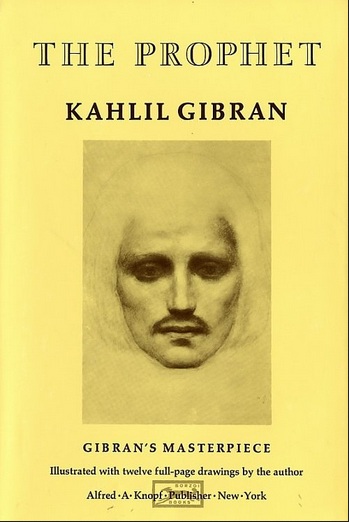
Kahlil Gibran’s The Prophet

If Proust’s Remembrance of Things Past can be turned into graphic novels, Kahlil Gibran’s The Prophet can be visualized in an animated film. Animations are not my usual movie choice in recent years but this time at TIFF I’d like to catch this one. The adaptation is a collaboration of international animation artists, voiced by Beasts of the Southern Wild‘s child star Quvenzhané Wallis, with Liam Neeson voicing the poet. Directed by Roger Allers, who is the writer and/or director of some memorable Disney collection such as The Little Matchgirl (2006), The Lion King (1994), Aladdin (1992), Beauty and the Beast (1991).


Plays of StrindbergMiss Julie (Play) by August Strindberg

Newest film version of the 1888 play by Swedish playwright August Strindberg. Adapted and directed by Liv Ullmann, the famous Ingmar Bergman actress; maybe relevant here is her role in Persona (1966). Apparently, or maybe not so, Strindberg was exploring the psychological make-up of ‘womanhood’ and the complex interplay of nature, nurture, and circumstance. I finished reading the play with an apprehensive sigh… will this be a good role for Jessica Chastain? This is not a sympathetic character, Miss Julie, a confused, flirtatious mistress seducing her valet. A film that would rest mainly on character and acting. So maybe Chastain is a good choice. The valet? Colin Farrell, not too sure about that one. Samantha Morton’s the cook, thus forms the triangle of power play.


My Old LadyMy Old Lady (Play) by Israel Horowitz

American playwright Israel Horowitz adapted his own 1996 stage play onto screen and directed it, with three prominent actors performing. This one is on my must-see list at TIFF. An American inherited from his late father a Paris apartment which to his surprise, is occupied by an old lady who, according to the legal arrangement, has the right to live there till she dies. Her daughter forms the invincible alliance. This entangled threesome: Two-time Oscar winner Maggie Smith (The Prime of Miss Jean Brodie, California Suite), who will turn 80 later this year, her equally formidable daughter, Kristin Scott Thomas (Oscar nom for The English Patient), and the unlucky (or maybe not) American, Kevin Kline (Oscar winner for A Fish Called Wanda). Whether a stage play or film, these three would make a dream cast.


Still Alice

Still Alice by Lisa Genova

Julianne Moore plays an accomplished academic, Columbia (Harvard in book) University professor battling early onset Alzheimer’s disease, based on the novel by neuroscientist turned writer Lisa Genova. Genova first self-published her book, later Simon and Schuster picked it up and the rest is history. It’s now selling in 30 countries and translated into more than 20 languages. Genova, a Ph.D in neuroscience, gives much credibility to her book. How will the film pan out? Julianne Moore would be one who can deliver a nuanced performance. Cast includes Kristen Stewart and Alec Baldwin.


WildWild by Cheryl Strayed 

On the heels of his Oscar nominated Dallas Buyers Club last year, Canadian director Jean-Marc Vallée brings out a totally different kind of production. Wild is based on the NYT #1 Bestseller memoir by Cheryl Strayed. Screenplay by the reliable Nick Hornby (Oscar Best Adapted Screenplay nom for An Education, 2009). Following the death of her mother, Strayed, then 26, divorced, devastated, drugged, went on a long-distance hike, 1,100 miles on the Pacific Crest Trail through California and Oregon. ‘Wild’ has a double inference here: the nature trail and the character walking on it. The journey could well be redemptive and perilous at the same time. The books in Strayed’s backpack included Faulkner and Flannery O’Connor. Reese Witherspoon and Gaby Hoffmann star.


**


NEW YORK FILM FESTIVAL (NYFF Sept. 26 – Oct. 2)


Gone GirlGone Girl by Gillian Flynn
To open NYFF is the premiere of this highly anticipated film adaptation of Gillian Flynn’s popular suspense novel. Two-time Oscar Best Director nominee David Fincher (The Social Network, 2010; The Curious Case of Benjamin Button, 2009) helms. Yes, the buzz is also due to Ben Affleck (Oscar winner, Argo, 2012) playing the husband who finds his wife missing one day and thus begins the extraordinary sequence of events down the rabbit hole. Rosamund Pike plays the mysteriously gone girl. Yes, I’ve read the book. And just because of that, knowing the twists and ending, will I still be interested in watching this ‘suspense thriller’?


Inherent ViceInherent Vice by Thomas Pynchon
Five-time Academy Award nominee, writer/director Paul Thomas Anderson’s works include The Master (2012) and There Will Be Blood (2007) for which Daniel Day-Lewis won one of his three Best Actor Oscars. But the film I like best is his Punch-Drunk Love (2002). Author Pynchon’s most famous book probably is Gravity’s Rainbow, which I’ve only heard of but not read. Actually, I haven’t read any of Pynchon’s noir detective novels. Pot seems to be the motif. Anderson directs Joaquin Phoenix again after The Master, cast includes Reese Witherspoon, Josh Brolin, Owen Wilson, Jena Malone.


***

Two Fine French Films

For this week in the blogging events Paris in July 2014 and Dreaming of France, I’m sharing with you two fine, French Films. They are not new movies, but probably you had missed them when they first screened a few years ago, or they might not have screened in your area. I came across them only recently. Interestingly, they make a fine pair for they both touch on very similar themes.

My Afternoons with Margueritte (“La tête en friche”, 2010)

This comedy based on the book by French author Marie-Sabine Roger stars the famous French actor Gérard Depardieu as an uncouth, middle-aged construction worker, Germain Chazes. His lack of literacy skill is benign when compared to the low self-image he suffers as a result of the constant taunting from his teachers and classmates when he was young, and the life-long scolding from a harsh and overbearing mother (Claire Maurier). To his misfortune, Germain still has to live near her and take care of her, a woman now has senility to add to her abusive outbursts.

Germain’s life comes to a turning point when he meets Margueritte (Gisèle Casadesus, who just turned 100 in June this year!) one afternoon on a park bench. Margueritte is an elderly lady living in a retirement home, and spends her afternoons in the park. She soon engages Germain to open up. Thus begins an unlikely friendship between the two.

My Afternoons with Margueritte

More importantly, Margueritte leads Germain to a whole new world of books and literature. She reads to him The Plague by Albert Camus, going through it in ten afternoons. He listens and is totally entranced by the language and the imagery.

When she reads to him Promise At Dawn, the memoir by Romain Gary, he is absorbed by the author’s description of his late mother’s love for him, and especially moved by the imagery of Gary “howling at her grave like an abandoned dog.” He begins to see his own predicament with the lens from the books Margueritte reads to him.

Who says literature belongs to the academics, or those in the ivory tower of the intellectual and sophisticated. Why is it so incongruent to hear a construction worker quoting Camus, or his seeing the world in literary imageries, or being tender and caring for a change. Germain’s friends tease him, they want the old Germain back. But Germain knows too well that he has crossed the point of no return, and that his transformation is empowering.

Soon, with the help of his girl friend Annette (Sophie Guillemin), Germain learns to read on his own. Further, he has learned to give back to Margueritte in an endearing way. As far as the story trajectory goes, Germain could well write a book entitled How Camus Can Change Your Life (that’s mine, not in the film).

Charming performances and great screen chemistry between Depardieu and Casadesus. A heart-warming story with sprinkles of humour for added appeal. A delightful and worthwhile film to watch.

~ ~ ~ Ripples


Queen to Play (“Joueuse”, 2009)

Along the same thematic line is this quiet and stylish production set in the beautiful French island Corsica just off the mainland. From Depardieu’s construction worker we now have a middle-aged chambermaid, Hélène (Sandrine Bonnaire), who works in a seaside hotel. Hélène goes through an inner transformation even more dramatic than Germain’s. It is interesting to watch the game where the Queen is the most powerful piece is freed from its male dominance for a change.

Originally titled “Joueuse” (The Player), the film is based on the novel by French author Bertina Henrichs. Director Caroline Bottaro has  displayed an inviting game board for us viewers to interact with, for watching the film makes us witnesses to a game change.

Sandrine Bonnaire’s portrayal of Hélène is sensitive and nuanced. The turning point of her life comes one day while cleaning a room. Through the translucent curtain swayed by the soft wind, she sees the hotel guests, a couple (Jennifer Beals, Dominic Gould), playing chess out in the balcony. She is fully mesmerized. The game board, the pieces they touch, their mutual affection bonded by the game not only send out vibes of sensuality but of intellectual stimulation. (She beats him, BTW) From then on, Hélène is obsessed with chess.

She gives her husband Ange (Francis Renaud) an electronic chess set for his birthday. While he is unappreciative of the gift, many a nights Hélène would slip out of bed quietly and learn to play on her own. She now sees every piece of crumb, every salt and pepper set on the table a movable chess piece, any checkered surface a chessboard on which she can prance to her imagery delight.

Queen to play

Other than her hotel job, Hélène does cleaning for a mysterious widower, Dr. Kröger, played by Kevin Kline, his first French-speaking role. Hélène finds a chess set on his bookshelf and asks him to teach her the game. Skeptical and annoyed at first, Dr. Kröger agrees when she offers to clean his place for free in exchange for chess lessons. He soon discovers that Hélène is not only serious but gifted. After a few lessons, she begins to win repeatedly.

But Hélène keeps her pursuit secret, afraid of reverberations, and misunderstanding from her husband. Why does she need to be so sneaky? Can’t a woman desire matters of the mind? Can’t a chambermaid be absorbed by the game of chess, set foot on a male-dominated, intellectual territory? Would Hollywood make a movie like this?

Hélène’s teenaged daughter is her supporter at home when her husband finds out. He too later yields to her passion as Hélène enters her first tournament upon Dr. Kröger’s recommendation.

Oh I love these French films, for they unabashedly praise the arts, literature, and intellectual pursuits; their protagonists quietly shattering social norms and barriers to personal fulfillment. Queen to Play reminds me of Muriel Barbery’s novel The Elegance of the Hedgehog.

Do you need to know how to play chess to enjoy the film? No. Actually, the camera seldom focuses on the chessboard. Instead, we see the faces of the chess players, that is where we read all the emotions.

Intriguing as chess moves, beautiful as the crafted pieces, the film is a joy to watch, a satisfying winner.

~ ~ ~ 1/2 Ripples

Paris In July 2014Dreaming of France Meme Eiffel***

Related Posts on Ripple Effects:

The Elegance of the Hedgehog Book Review

Séraphine and the Wrought-Iron Chair: Review of the film Séraphine

Haute Cuisine Movie Review

The Railway Man (2013) Movie Review

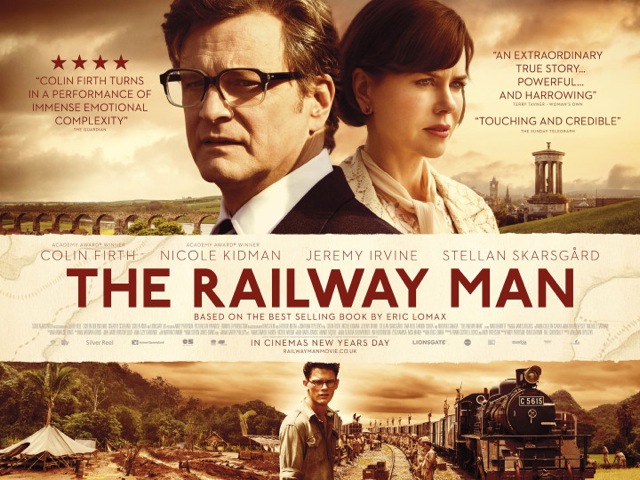
Premiered at the Toronto International Film Festival last September, ‘The Railway Man’ has only recently made its way into North American theatres, a slow train considering the story dates back to a chapter in World War II history that has generally been ignored. It had taken Eric Lomax decades to open up and tell his story as a Japanese prisoner of war. His autobiography The Railway Man was published in 1995, half a century after his ordeal.

The Railway Man


Noting the demographics of the audience in the theatre I was in, it is likely that the passing of a generation could mean the eventual silencing of eyewitnesses and victims, or those who have heard from them first-hand. While a movie adaptation of Eric Lomax’s autobiography is important for raising awareness of the events in the Pacific theatre during the War, the real difficulty is to attract younger viewers today to go into a movie theatre to watch it.

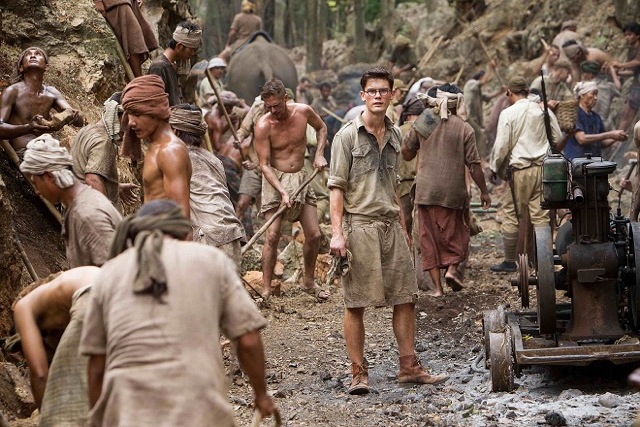
Of the numerous full-length features on WWII, only David Lean’s 1957 “The Bridge on the River Kwai” comes to mind for a movie that deals with this chapter in history. Eric Lomax was a young signals officer in Singapore when the British surrendered to the Imperial Japanese Army in 1942. He and other British soldiers were transported to Thailand to work on the Thailand-Burma Railway as slave laborers. Notoriously known as The Death Railway, the conditions there were horrendous. Many POW’s died and others were tortured. Lomax was one of them.

Having read his memoir, I find ‘The Railway Man’ a more realistic depiction of the POW’s conditions. Lean’s film where the men are portrayed in top physical shape marching to the famous whistling tune looks like a summer camp when compared to the atrocities Lomax and others had suffered. The war ended in 1945, but not the psychological torments of former POW’s.

‘The Railway Man’ begins with Lomax (Colin Firth) in 1980, a middle-aged veteran, still a railway enthusiast, encountering Patti Wallace (Nicole Kidman) while travelling on a train. This first part of the movie is the most enjoyable in that we see Colin Firth in his most natural and easiest demeanor, romantic yet reserved, with a dash of quirkiness. Nicole Kidman, with minimal make-up, gives an admirable understated performance. The two make good screen chemistry. Viewers will have more of their partnership in some upcoming productions.

Colin Firth & Nicole Kidman

As they chat on the train, David Lean’s ‘Brief Encounter’ is mentioned, a life imitating art experience thus ensues except this one leads to a long-term relationship. Eric and Patti soon get married. On their honeymoon, the nightmares of Lomax’s traumatic past begin to expose. He drops on the floor wrenching from fearful flashbacks.

Observing in anguish, Patti seeks to find out more from Lomax’s fellow veteran Finlay (Stellan Skarsgård) who cautions her of the scars of war and the never-ending torments. Thus leads to the second act where we see flashbacks into Lomax’s horrific POW experiences.

Jeremy Irvine puts forth an impressive effort in his portrayal of a courageous and decent young Lomax. After the radio he has made and his hand-drawn map of the railway line are discovered by his Japanese captors, the young Lomax bravely steps out to admit his involvement in order to spare his fellow soldiers the punishment. He is beaten, interrogated as a spy, and repeatedly tortured. Throughout, the young Japanese officer Nagase (Tanroh Ishida) is in full command.

Jeremy IrvineThe film goes back and forth in time during the bulk of the story, not roughly, but in an unbalanced way. The WWII sequences are intense, but the present day scenes exude a lethargic sense of inaction. While the talents of both Firth and Kidman can readily be tapped, the screenplay allows no further development other than the close-ups of a repressed and traumatically disturbed Lomax and a loving but exasperated Patti watching from the sideline. Here is a time when you would wish the director (Jonathan Teplitzky) and screenwriters (Frank Cottrell Boyce and Andy Paterson) had exerted more artistic freedom and creative energy into the film.

The plot turns a new direction as Finlay finds out that the Japanese officer Nagase (now played by Hiroyuki Sanada) who was involved in Lomax’s torture is still alive. Adding to Lomax’s burden, Finlay has pressured him to take revenge. Indeed, it is with a vengeful resolve that Lomax seeks Nagase out in a war museum in Thailand, where Nagase is a tour guide by the River Kwai, showing visitors the same prison camp wherein Lomax was once a captive.

As the torturer and the victim confront, tension rises. In the most critical moment, the murderous vengeance that Lomax has harbored is snapped. Nagase expresses genuine remorse and offers his apology to Lomax. Vengeance is thus dissolved into forgiveness.

This third act is supposedly the most moving section. Unfortunately it drags on too long, losing the power of the cathartic punch. While Firth’s performance is riveting as he enters the torture room and relives the past, the verbal exchanges between the adversaries and their ultimate reconciliation look contrived. As in the book, which leaves readers little explanation as to Lomax’s change of heart, I assume therein lies the difficulty for the screenwriters to invent a realistic and dramatic scenario.

Nonetheless, stories like this ought to be told for the understanding of historic truths and of the human heart. It just may sound like an over-simplification, but maybe the long road to reconciliation does start with a word of apology.

~ ~ ~ Ripples

CLICK HERE To read my book review of The Railway Man by Eric Lomax.

***

This movie review was published in the May 10 issue of Asian American Press.

Old Tales, New Takes

From the comments in my post What Maisie Knew (2012): From Book to Film, I see literature lovers, especially those who have read Henry James’s novel, are curious to watch the movie, wondering what a modern day film version could offer. Here is a good example of an adaptation exerting artistic and creative freedom to transpose while bringing out the spirit of the source material, ideas transferred as types onto the screen.

I can imagine too for literature purists, this is horror story. To them, movie adaptations are by definition a lower form of creation. They may be more acceptable if they follow exactly the same story lines and characterization. Any diversion spells disloyalty. How faithful and literal they are in the transposition is the sacred measure of their quality.

Having seen some retelling of literature effectively turned into cinematic form, I had long discarded the ‘loyalty’ criterion in my personal viewing. A ‘faithful adaptation’ doesn’t guarantee success, an example is the newest Romeo and Juliet (2013) which, using a modern day term, is pretty ‘lame’.

On the other hand, you might have enjoyed some movies without being aware of the literary source on which they are based, however loosely:

Apocalypse Now – Joseph Conrad’s Heart of Darkness

Bridget Jones’s Diary – Jane Austen’s Pride and Prejudice

The Claim – Thomas Hardy’s The Mayor of Casterbridge

Clueless – Jane Austen’s Emma

Cruel Intentions – Choderlos de Laclos’s Les Liaisons Dangereuses

Easy A – Nathaniel Hawthorne’s The Scarlet Letter

The Hours – Virginia Woolf’s Mrs. Dalloway

Jude – Thomas Hardy’s Jude the Obscure

The Lion King – Shakespeare’s Hamlet

My Fair Lady – Bernard Shaw’s Pygmalion

From Prada to Nada – A Latina version of Austen’s Sense and Sensibility

O Brother, Where Art Thou? – Homer’s Odyssey

Ran (Kurosawa’s, another evidence that literature is universal) – Shakespeare’s King Lear

West Side Story – Shakespeare’s Romeo and Juliet

Of course there are those that still use the same title without having to hide an alter ego, but have given the source material a contemporary spin. Because of their new angle to an old story, viewers can glean fresh insights and gain a deeper appreciation. Here are a few productions in recent years that are worth watching:


Coriolanus (2011)


coriolanus_03Ralph Fiennes’ directorial debut. Shakespeare’s Coriolanus is placed in present day, fictional Rome. Modern politics, urban warfare, but same old human hunger for power, the treachery of pride and the ever complex entanglements of family ties. Ralph Fiennes is superb as Coriolanus rivalling and later aligning with his archenemy Aufidius (Gerald Butler). Vanessa Redgrave and Jessica Chastain play the two significant others in the life of Coriolanus the vengeful career warrior, his mother and wife. Alas, what’s a woman to do?


Much Ado About Nothing (2012)

Much Ado About Nothing (2012)If a movie adaptation had already been made by Kenneth Branagh with Emma Thompson and all the Brits in full period costumes and a colourful set, what is one supposed to do for a remake? Joss Whedon was ingenious enough to shoot it in a couple of weeks, like on a whim, right in his own Santa Monica, California home, in black and white. Every room, furniture, wine glass, and the swimming pool is Whedon’s, but every line is Shakespeare’s. Old story, modern humour. A most creative take.


Trishna (2011)

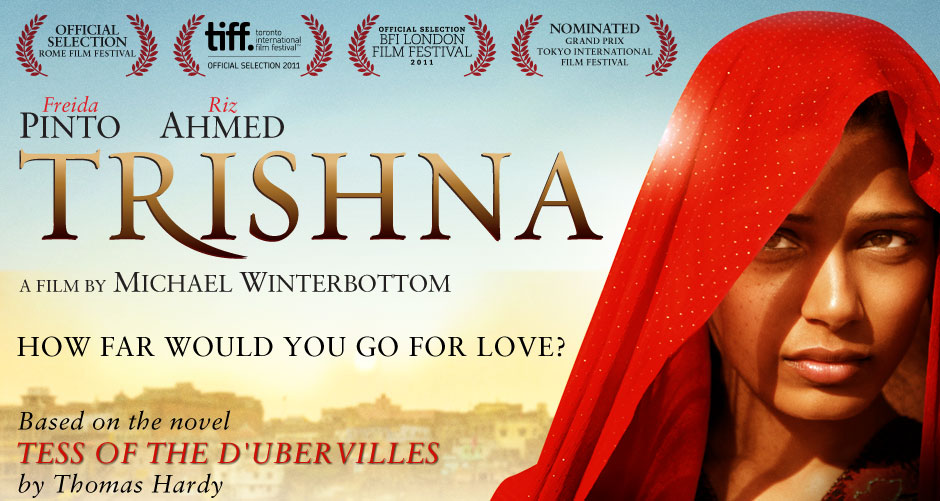
TrishnaThis is British director Michael Winterbottom’s third adaptation of a Thomas Hardy novel, after Jude (1996, Jude the Obscure) and The Claim (2000, The Mayor of Casterbridge set in 1860’s California). This time he transports us to India. From the mass of humanity, we zoom in to one innocent girl in a poor rural area, 19 year-old Trishna. The trajectory of her fate and encounters parallel Tess of the d’Urbervilles in Thomas Hardy’s novel, equally poignant and tragic. The transposition is convincing. Freida Pinto of Slumdog Millionaire fame is perfectly cast as Trishna. Winterbottom’s naturalistic style matches the mood of the novel. Not easy to watch at times as we follow a powerless female in a class-centred, male dominated world. A beautifully shot film.


Blue Jasmine (2013)

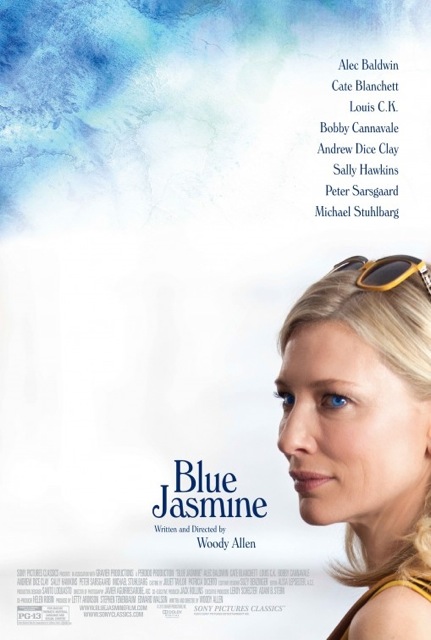
Blue Jasmine Movie PosterI’ve written a full post on this. I see Blue Jasmine as Woody Allen’s homage to Tennessee Williams’ A Streetcar Named Desire. A different time and place, altered names and backstories, but same kind of struggles, parallel character types. Vivien Leigh won an Oscar for her role as Blanche in the 1951 movie version as a displaced, worldly older sister coming to take shelter with her younger, less well-to-do sister. Cate Blanchett won hers playing Jasmine who faces similar predicaments. In typical Woody Allen style, a pathos and humour mashup. Blue Jasmine is an excellent new take on a piece of classic literature. Of course, in this case, we only see the overarching parallels, but it does speak to the subliminal power of old tales.


***

RELATED POSTS:

Can A Movie Adaptation Ever Be As Good As the Book?

Tess of the d’Urbervilles (2008 TV): The Lite Version Part 1, Part 2

Blue Jasmine: Homage and Re-imagining 

Slumdog Millionaire (2008)

A Summer in Genoa (2008, Michael Winterbottom, Colin Firth)