Spoilers as Pointers

Last week, I wrote a review of Gone Girl, the movie adaptation of Gillian Flynn’s wildly popular book, and I caught myself tiptoeing around the story trying not to drop any spoilers. Now as I think back to it, that episode leads me to a minor revelation.

Why do I have to be so extra careful? The answer is obvious enough. If I just hint at what the major twist is, I’d be giving away the story, largely diminishing the viewer’s enjoyment, eliminating the element of surprise. In reply to some comments, I’d even suggested to people not to read the book first if they are going to see the movie.

Here’s the question I’ve been mulling over this past week, and I can’t help but be a bit amused. I don’t think I’ve ever written a post in this state of mind before. The word used by a commenter was ‘restraint’. I felt more like ‘silenced’.

Did I put a “Spoiler Alert” at the beginning of my review of say, Anna Karenina (2012)? Since its publication as a serial in the 1870’s, the trajectory of this extra-marital affair is well-known; critics are not muffled from discussing the tragic end of that gone girl. Revealing the storyline has not dampened people’s interest from reading the book or watching its movie adaptations, ten of them so far, as full features or TV series.

Or take The Great Gatsby, that fateful yellow car ride ultimately leads to the end of Gatsby. Ooops, there goes the spoiler. With this, have I killed the movie for would-be viewers? I don’t think so. Why? Simply because that green light blinking across the shore is so powerful a lure, driving a man to dream the impossible dream. And we want to see the elaborate efforts this enigmatic character exerts to strive for that unreachable goal.

Or, let’s say, 12 Years A Slave (2013) based on Solomon Northup’s memoir. Here, the title is the spoiler. The slave had to survive the twelve years in order to write his own memoir. But of course, we want to know how he survived, his resilience, and what he has to say about the slavery system, about human nature.

Or take a contemporary novel, Life of Pi (2012). After a shipwreck, a 16 year-old boy adrift on the Pacific Ocean for 227 days on a life raft is finally rescued and lives to tell his tale. Now that’s giving away the whole story. Does that spoil the fun of watching the movie? Not at all. Why? Because we see spectacular scenes of the boy pitted against nature, persevering over perils that could shatter or enhance his faith, dealing with personal loss, recapturing memories and reality … we are hooked because there are rich layers of meaning packed inside a simple storyline.

So, for stories that explore more than the plot can tell, even though we may know the ‘what’, we want to see the ‘how’. We want to get on the ride and enjoy the scenery, for there are interesting and intriguing sights along the way.

To spoil or not to spoil… depends if the book is just only about the plot, manipulating the twists and turns to shock and surprise, yes, a clever page turner, then a spoiler would definitely diminish the enjoyment, robbing the viewer of the element of surprise and entertainment.

But if the kind of reading or viewing offers a deeper exploration of characters and the human condition, or framing from a historical or social backdrop to confront issues, or depicting scenes of a shared humanity, or unpacking subtext and meaning… then, dropping a spoiler may not be so disastrous.

I know, there are exceptions and I’m not trying to generalize, but, could the acceptability of spoilers be the pointers to the difference between literature and pulp fiction?

***

Related Movie Reviews on Ripple Effects:

Gone Girl (2014)

12 Years A Slave (2013)

Anna Karenina (2012)

The Great Gatsby (2013)

Life of Pi (2012)

***


Conversation with Juliette Binoche

The highlight of my TIFF14 experience is attending the Mavericks Conversation with Juliette Binoche.

Conversations with Juliette Binoche

Director of TIFF Piers Handling structured the conversation in three sections preceded by showing excerpts of Binoche’s filmography in chronological order. Thanks to these visual gems, the audience got the sense of the actor’s wide repertoire. At fifty, Binoche has had more than thirty years of acting experience, and 50 feature films under her belt.

Juggling with my iPhone for photos, a pen and a small notebook, keeping my eyes on the maverick on stage, looking through photographers and audience sticking their hands out into the aisle and midair to take photos, I managed to jot down some sketchy notes.

Juliette Binoche knew she wanted to act at age 15 when her mother brought her to Paris to see a stage play. After she had made up her mind, “I was unstoppable.” She went to drama school in Paris, from the stage she soon landed film roles, and the rest is history.

Binoche had worked with numerous legendary directors who are cinematic icons themselves. Here are some samples:

The first director she worked with was Jean Luc Godard in Hail Mary (1985), later André Téchiné in Rendez-vous (1985), Krzysztof Kieslowski in Three Colours: Blue, White, Red (1993-94), Hou Hsiao-Hsien in Flight of the Red Balloon (2007), Abbas Kiarostami in Certified Copy (2010), Olivier Assayas in Summer Hours (2008), and now Clouds of Sils Maria at TIFF14, just to name a few.

But she has also said no to others. Stephen Spielberg came to her three times to no avail. “I don’t want to be in any system. Hollywood is a system. Not even in French system.”

Director she likes to work with: Michael Haneke (Amour, 2012; The White Ribbon, 2009) Binoche worked with him in Hidden (2005) and Code Unknown (2000).

Juliette Binoche

North American audience might have known some of her more popular works like her Oscar winning The English Patient (1996), or Chocolat (2000), but I was gratified to see clips from her lesser known works like:

The Unbearable Likeness of Being (1988, adaptation of Milan Kundera’s novel, with Daniel Day-Lewis), or Three Colours: Blue (1993, Krzysztof Kieslowski directs, the first of the Trilogy)

But the stage is still very much on her mind. “I love the theatre.” She was in August Strindberg’s Mademoiselle Julie, Harold Pinter’s Betrayal, and soon a new production of Sophocles’s Antigone on the London stage.

**

Some more sketchy notes:

On long takes: “fantastic, close to life, liberation, freedom, trust, thrilling.”

On aging: “It’s truth”

On the relationship between the director, the actor, and the script:

“The actor and director are one in the film. Nothing about me. It’s the director bringing out [the script] through me. Words are written on the page then you live it, like an incarnation. You live it, bring the script to life.”

“Trust is what makes the miracle… trust between actor and director.”

On actors:

“We are incarnated philosophers.”

On genres:

“I never divide. You cannot divide things. The comic side of life and the tragic side come together… connected. I never divide into genres.”

When asked about “failure”:

“What does ‘failure’ mean? You learn about yourself through extremes, over obstacles. How you see success depends on your point of view. To me it’s a journey… taking risks, facing the unknown. That’s the joy of it.”

**

Of all the film clips, one struck deep in me with inexplicable resonance. And that’s from Binoche’s Oscar winning role as the WWII nurse Hana in The English Patient (1996). For me, that was one of the most memorable movie moments of all time.

Here’s that tender scene when Hana is led by candles on the path to Kip, who then takes her to the Medieval Chapel. He harnesses and raises her up to look at the frescoe paintings on the walls. Holding a flare for light, she dangles from the ceiling, immersed in pure delight. And the music, composer Gabriel Yared’s Bach-like melody has remained in my mind ever since:

On her role playing Hana:

“She has to start from scratch. I like people who have to start over again.”

On director Anthony Minghella: “friendly and loving.”

And Michael Ondaatje’s reaction to that mesmerizing cinematic moment: “I wish I had written this scene in my book.”

 **

The conversations were just a little over an hour. The standing in line waiting for 90 minutes in front of CBC’s Glenn Gould Studio to get in (for a good seat to take my photos, but as you can see, still not close enough) was worth it. I likely won’t have another chance to see and hear Juliette Binoche in person again.

***


Tuffing it out at TIFF14

Attending TIFF is always a memorable experience. The tough part, I’ve to admit, is the constant waiting in line to enter the theatre even when you have a ticket. It’s all for your advantage of course, with the general seating, the earlier in line the better seat you can find. Hundreds of ticket holders queuing up around the block is a typical TIFF sighting in downtown Toronto every September.

But waiting in line for over an hour to see a 70 minute film? That was for the screening of Jean-Luc Godard’s newest work Goodbye to Language 3D. Was it worth it? Let’s just say, it’s an existential experience. And we even had the privilege of sitting down, albeit in the rain, Waiting for Godard:

Waiting for Godard

As expected, Godard himself didn’t show. But I got to experience his latest work wearing 3D glasses. Never imagined the legendary French New Wave auteur whose first works date back to the 1950’s, and who had made such iconic films like Breathless (1960) and Vivre Sa Vie (1962), now at 83, would be stirring up a newer wave of postmodern, visual fragments in 3D. The concept of ‘film’ just might need to be redefined with his Goodbye To Language 3D.

I’d seen twelve films over the ten-day film festival, purposely skipping those which I think would likely be released in our theatres in the next few months. So no, I didn’t watch the Grolsch People’s Choice Award Winner, The Imitation Game, starring Benedict Cumberbatch. All the buzz surrounding it points to the repeat of previous People’s Choice winners like 12 Years A Slave (2013), Silver Linings Playbook (2012), The King’s Speech (2010), Slumdog Millionaire (2008), with a trajectory towards the Oscars.

Nor have I seen other more popular productions like Black and White, Mr Turner, The Judge, The Theory of Everything, While We Were Young, Whiplash, Wild, Hector and the Pursuit of Happiness, which I just might have the chance for a free promo ticket coming up in our city soon.

The highlight for me has to be the Mavericks Conversation with Juliette Binoche. The 1.5 hour standing in line outside CBC’s Glenn Gould Studio was worth it. Juliette Binoche is one of my all time favourite actors. So this 90 mins. of conversations, retrospective film clips of her works, Q & A is one of the gem of TIFF14 for me. A more detailed post will come later.

In chronological order over ten days, here’s the annotated list of my viewing, for now. Detailed reviews might follow:

Clouds of Sils Maria — Clouds appear like a slithering snake at the top of the Swiss Alps. They silently creep in, wrap the mountains and disappear just as you begin to marvel. Apt metaphor for aging, fame, and the ephemeral. While Juliette Binoche always delivers, it’s Kristen Stewart that had my full attention and respect. Kudos to acclaimed French director Olivier Assayas.

Winter Sleep — Winner of this year’s Palme d’Or at the Cannes Film Festival, three hours of incisive and meditative exploration into the human soul. According to IMDb, Turkish director Nuri Bilge Ceylan has won 62 times. But this my first taste of his work and yes, that’s the kind of films I look for in a film festival.

Force Majeure — A loving married couple bringing their two young children on a ski vacation is confronted with a most unexpected and testing scenario. Should the husband’s spontaneous response to a near accident be the gauge of his love for and loyalty to his wife and family? A stylish and at times very funny, well crafted film.

High Society — Not all festival films are created equal. Here’s one that, alas, is a waste of my time standing in line and sitting through. The topic is interesting enough, albeit has been dealt with countless times: a love (or lust?) affair shattered by class and social differences. Well intentioned, but just another cliché riddled with flaws.

Still Alice — Julianne Moore is very effective in portraying a Columbia U. linguistic prof afflicted with early onset Alzeimer’s, adapted from the popular book by Lisa Genova. This might just be Moore’s chance for another Oscar nom. Can a film be too loyal to the book? Yes, I think it is here. While the movie is well executed, I think the director could have taken a little more liberty in using the medium for more cinematic moments.

Maps to the Stars — Nom for the Palme d’Or, and Julianne Moore winning Best Actress at Cannes this year, Canadian director David Cronenberg’s newest feature is a bold, dark, and wild satire of the celeb life of Hollywood’s rich and famous. Problem is, maybe it’s the public who’d like to see Hollywood glamourized. They want to follow the maps to the stars. So, would they want to see a film that shatter their fantasy? And, would Hollywood insiders like to be depicted as thus?

Goodbye to Language 3D — See my opening paragraphs

Seymour: An Introduction — Ethan Hawke’s documentary on the once prominent concert pianist turned inspiring piano prof at NYU. Quiet, gentle and full of wisdom, Seymour Bernstein imparts not only musical knowledge and skills to his students, but changing their perspectives on life as well. The film also explores the interface between talent and craft. A classical music lover’s film. Pure joy.

Miss Julie — Jessica Chastain is Miss Julie in this newest film adaptation of August Strindberg’s play. Screenplay written and directed by the legendary Bergman actress Liv Ullmann. Beautiful set design and cinematography. The opening leads me to reminiscence of Fanny and Alexander. Chastain offers an exquisite portrayal of the messed up and very lonely Miss Julie; Colin Farrell is surprisingly good, while Samantha Morton has a strong supportive role.

Kahlil Gibran’s The Prophet — An international collaboration of animators crafted this beautifully rendered story embedding sayings from Kahlil Gibran’s classic The Prophet. Liam Neeson is the voice of the Poet. Beast of the Southern Wild‘s child star Quvenzhané Wallis is Almitra. The end credits lead me to a surprise finding: With thanks to the government of Alberta and B.C. Now I’m intrigued.

My Old Lady — Playwright Israel Horovitz wrote the screenplay from his stage play, came on stage to introduce the film. Mentioned Maggie Smith was willing to be part of it because she didn’t die at the end; Kevin Kline took up the role because “this could be my last chance to get the girl.” The girl? The ever beautiful Kristin Scott Thomas. A charming film.

Time Out of Mind — If there’s any major disappointment at TIFF for me it’s this one. If as some say, The Secret Life of Walter Mitty is Ben Stiller’s vanity project, then Time Out Of Mind is Richard Gere’s. First off, spending some time on the street digging inside garbage bins, sleeping on park benches, or not shaving for a few days don’t make one a homeless man. A homeless man lives a homeless life, and that’s the essence of the being. A Hollywood celeb’s portrayal by Gere is putting on make-up to look like one, pretentious, exposing the inauthenticity. Even his gait gives him away. The camera work and sounds are showy and contrived; trying to be naturalistic, they present a flashy and artificial rendition. To capture a day in the life of the homeless, go do a documentary. Yes, I’m afraid I totally disagree with the critics on this one.


Boyhood (2014): The Moment Seizes Us

Boyhood is a groundbreaking film. It has taken director Richard Linklater twelve years to shoot, most uniquely, with the same cast. The actors had to commit to many annual shootings over this twelve-year period. This is not a documentary. Written by Linklater himself, the film follows a linear narrative storyline of a boy named Mason, played by Ellar Coltrane, who is very patient indeed; he had to wait twelve years to have his work put on screen.

We first see Mason in 2001 when he is just six years old starting grade one and 165 minutes later, we see him at eighteen, entering college. He literally grows up in front of our eyes. You may shrug with a casual, ‘Ok… so what?’

Here are the implications of what this all means in the hands of a director with the gift of depicting perceptively the essence of human relationships, most notably, from his trilogy Before Sunrise (1995), Before Sunset (2004), Before Midnight (2013). The passage of time is prominent in his trilogy with the films screened nine years apart. In there, we follow the chance meeting of actors Ethan Hawke and Julie Delpy on a train to their married life eighteen years later. While time is also of the essence here (just a pun, no hurry), Boyhood has a distinct difference.

Boyhood

Like time-lapse photography of a seedling to fruition we used to watch in biology class, Boyhood captures the life of Mason in one seamless unity. The editing is fluid and smooth. We see the passage of time from the games he plays (from Game Boy to Xbox to Wii), the social and political changes, the ephemeral shifting of pop culture, especially music (from Coldplay to Arcade Fire and those in between), and the evolving of technology. Most important of all, we see the human factor tossed and carried along in the current of time.

Linklater leads us to see Mason in the context of his family life, or whatever that defines it. What I see is not a happy boyhood. At the beginning of the film, Mason and his two-year-older sister Samantha (Lorelei Linklater) have to leave their friends and move from small town Texas to Houston, where their determined single-parent mom (Patricia Arquette) can attend college to improve her job prospect. During this time, their divorced and absent dad (Ethan Hawke) suddenly reappears back into their lives.

Dad brings joy to the children. He is full of life and cares about them, at least while it is his turn to take them out. This may be ordinary in America nowadays, divorced parenthood, but I see the yearning in the hearts of the children on screen for a happy, reconciled family. There is deeper pain than just the loneliness we see on the surface of Mason and Samantha.

The brilliance of the director is in the captivating telling of what seems to be an ordinary, typical childhood. In a realistic style as if allowing me the viewer to be an invisible observer, Linklater makes me care for every member of this family.

But the character I find most admirable is mom Olivia. She does her best to improve her lot for the sake of her children. Her decisions may not be welcomed by them, and she makes mistakes, but she sticks to her guns with what she thinks is right and presses on. Ultimately she reaches her goal in getting a college teaching post. Arquette’s performance is understated and affective. My prediction is a possible acting nomination(s) for her come Awards Season.

We soon see Olivia remarry, this time to her psychology professor Bill (Marco Perella). It turns out to be a mistake. Bill later reveals himself to be a controlling alcoholic, abusive to his wife and kids. While Mason and Samantha gain a pair of step brother and sister of their own age, they now live under the roof of a harsh disciplinarian stepfather.

A poignant scene which I will not easily forget is after an abusive episode, Olivia disappears. Unable to find his wife, a fuming Bill has all four children sit on the sofa for interrogation, and gets each of them to hand him his/her cell phone. He checks the messages and usage history to see if any of them has communicated with their mother.

Mason has questioned his mom, “Why do you marry him? He’s a jerk.” Olivia answers, “So you can have a family.” Without missing a beat, he says, “we already have one.” Linklater has me at the edge of the seat, amazing with a film like this, to see how mom Olivia gets herself and her own kids out of such a dire situation under Bill’s roof.

In contrast, it is a joy to see the children with their birth father. And most importably, we see the bond of genuine love between the parents and their children despite the divorce. It is gratifying to see that, through the years, the adults grow up as well.

As time passes, we see Mason emerges to be an artistic youth, with a passion for photography. And yet, like his dad, he disregards rules and structures. We see him continue to seek out what it is that makes life meaningful. And yet, the adults in his life seem to be as confused as he is. Mason sees them make bad choices, struggles with his own, and questions ‘so what’s the point?’ Olivia too, after all that life hands her, and ultimately seeing her kids graduate from high school and herself achieving respectability with her college teaching career, utters “I just thought there will be more.”

Eventually, we see Mason at eighteen. The film ends with his first day of settling in a college dorm. He quickly makes friend with his roommate and his girlfriend and her roommate. They skip the orientation and go hiking. On the mountainous path, they sit down and talk, young people facing a brand new chapter in their lives. Like the vast mountain ranges, their future lays out in front of them, appealing and yet full of challenges and mystery. We see too that Mason has found a new soulmate as the girl shares with him, “You know how everyone’s always saying seize the moment? I don’t know, I’m kind of thinking it’s the other way around, you know, like the moment seizes us.”

As the film fades to black, I breathe out a sigh of relief. At least, there’s no irreparable disaster. No matter what has happened in the past twelve years, the present is most livable, and the future is hopeful.

~ ~ ~ ~ Ripples 

***

Awards Update:

Feb. 22, 2015: Patricia Arquette wins Oscar for Best Supporting Actress.

Feb. 21, 2015: Patricia Arquette wins Best Supporting Actress at Indie Spirit Awards, Richard Linklater wins Best Director.

Feb. 8, 2015: 3 BAFTAs Wins, Best Film, Best Director, Best Supporting Actress

Jan. 15, 2015: 6 Oscar noms, Best Picture, Best Director, Actor, Actress, Original Screenplay, Editing.

Jan. 11, 2015: 3 Golden Globe wins, Best Picture Drama, Best Director, and Best Supporting Actress.

Dec. 11: 5 Golden Globes noms: Best Picture – Drama, Richard Linklater for Best Director and Best Screenplay, Patricia Arquette and Ethan Hawke for Best Supporting Actress and Actor.

Dec. 10: 3 SAG Noms: Best Performance by a Cast in a Motion Picture, Best Male Supporting Actor, Best Female Supporting Actor

Dec.7: Boyhood wins Best Picture, Best Director, Best Actress, and Best Editing in the L.A. Film Critics Awards

Dec. 7: Boyhood wins Best International Independent Film Award at BIFA (UK)

Dec.1: Boyhood wins Best Picture, Richard Linklater Best Director, Patricia Arquette Best Supporting Actress from the New York Film Critics Circle

Dec.1: Boyhood wins Audience Award at Gotham Awards 2014

Other Related Posts:

Before Sunrise, Before Sunset, Before Midnight

The Tree Of Life

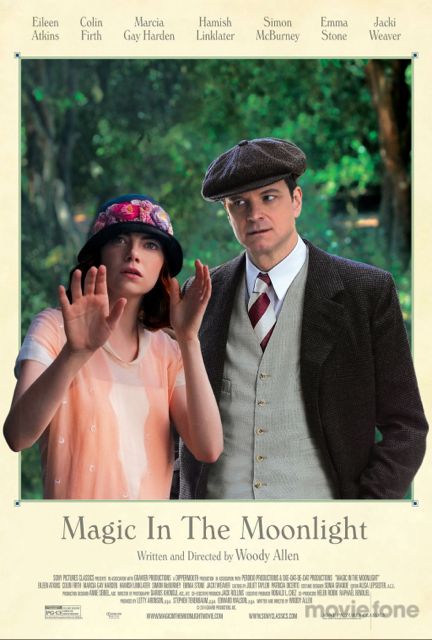
Magic In The Moonlight (2014) Enchants Despite Flaws

Let me guess. To see or not to see, that is the question on your mind. No? You’ve decided to skip it, heeding critics’ view that it is a ‘minor’ Woody Allen?

Magic In The Moonlight Poster 1

Well, here’s my take. To begin with, a director’s repertoire has to be large and significant enough to be categorized into ‘major’ and ‘minor’. I’ve enjoyed Allen’s previous ‘minor’ works like Match Point (2005), Crimes and Misdemeanors (1989), or his noir dealing with magic and the circus Shadows and Fog (1991). Or, is that a ‘major’?

For some reasons, even a ‘minor’ Allen work piques my interest. Further, a new Woody Allen movie is like the perennials shooting up in the summer garden. Going to see one has been on my summer to-do list in recent years.

This 47th directorial feature of Allen’s uses magic as the storyline, a reprise of his well-known preoccupation. Instead of casting himself as a magician like he did in Scoop (2006), Allen has Colin Firth play the role of the renowned Wei Ling-soo, master of illusions who specializes in disappearing and reappearing acts shrouded in oriental mystique. Just a reflection of the time, 1928 Berlin.

After a successful show, Stanley Crawford, Wei Ling-soo’s real-life persona, is recruited by his childhood friend and fellow magician Howard Burkan (Simon McBurney) to go with him to the Côte d’Azur in France to debunk a fake clairvoyant, played by Emma Stone.

Stanley is pleased to take up the challenge, for in his rational mind, the spirit world does not exist. He will be doing everyone a favour to expose the trickery of this young, self-proclaimed spiritualist Sophie Baker, whom he firmly believes to be a crook. Stanley tells Howard, ‘she can’t fool me’. In his mind, Sophie and her mother (Marcia Gay Harden) are out to hoodwink the heir of a rich family, Brice (Hamish Linklater) and his mother Grace (Jacki Weaver), a fraudulent scheme that must be thwarted.

You might have read about the mismatch of Firth and Stone starring together. If there is anything that seems incompatible, it is Stone playing a medium with the expertise of contacting the dead in a séance. No matter, Stone’s appearance can only substantiate the magic.

Sure enough, the ‘minor’ notion applies with the film’s simple, stretched-out, single plot line. A subplot could add more texture to the film, and giving some talented actors more story and character development. Further, there are moments and dialogues that look tedious and unnecessary. Thanks to the cast of fine actors, we can see their concerted effort in making the film more interesting than the simple plot can offer.

DSCF9550.RAF

And there are scenes we have seen before. The Gatsby-esque ball, the observatory moment as in Manhattan (1979), as well as reminiscence of other sources. But then again, are fairy tales not meant to be retold?

You might want to add in one more familiarity. France. This is the second time in four years Allen makes a movie in France. Following the successful Midnight In Paris (2011), cinematographer Darius Khondji reframes the country with idyllic French Riviera through a golden filter. I would not argue against that ‘repeat’.

And the music, how often we hear them in movies depicting the 1920’s, in particular, Allen’s own. From Cole Porter’s “You Do Something To Me” (opening credits, sets the mood right away) to Harry Carroll and Joseph McCarthy’s “I’m Always Chasing Rainbow” (Brice serenading Sophie), from Beethoven to Ravel, music only adds in the magic.

Stanley takes Sophie along for a ride to Provence to visit his Aunt Vanessa (Eileen Atkins). The veteran, low-keyed but always reliable Atkins as the wise and knowing Aunt Vanessa plays a pivotal role in the story. While Sophie has the chance to demonstrate her extraordinary gift by revealing Aunt Vanessa’s past, Aunt Vanessa has also shown that she knows her nephew Stanley much more than he knows himself.

And (possible) spoilers coming up...

One of my favourite scenes is in the third act, when the seemingly oblivious Aunt Vanessa while playing a card game of solitaire is subtly prodding her nephew to clearer self-understanding, to act upon his heart rather than relying only on his rationale. This one reminds me of a nuanced and endearing scene in another movie, exactly with these two actors, Atkins and Firth, playing mother and son and engaging in a similar kind of dialogue. Yes, the two of them are charming together in both. That movie? What A Girl Wants (2003).

But what’s interesting is Colin Firth here shines as a chatty Darcy. He plays the role with such an amusing familiarity as if he has just changed costume from an Austen set to the 1920’s. Stanley feels superior, thinks Sophie beneath him. He is arrogant and smug at the start, challenging and badgering Sophie at every turn, full of pride and prejudice. Why of course, Sophie, from small town America, has not heard of Nietzsche, or Bora Bora, can’t tell Dickens from Shakespeare. A ready target for Stanley’s jest.

And Stanley is such an expert in alienating people. Sophie’s mom Mrs. Baker could not have agreed more with Lizzy’s mom Mrs. Bennet, this guy is an obnoxious snob. From Darcy to Stanley, two sides of the same coin. Firth knows how to play this one by heart.

Quite like Darcy, Stanley is such a poor (first-time) marriage proposer. Take her under his wings? No rational reason for doing this? Against his better judgement? Haven’t we heard such a marriage proposal before when Darcy first messed up his in front of an incredulous and fuming Lizzy Bennet?

Not to aspire to his ‘major’ endeavours, Magic in the Moonlight is a lighter piece in Allen’s humungous directorial repertoire. He deals with it like bringing work on his vacation, emphasis on the vacation. Don’t we all need a break every now and then? And isn’t the French Riviera an ideal spot?

~ ~ ~ Ripples

 ***

I’m linking this review to Paulita’s Dreaming of France Monday Meme. CLICK HERE to see what others have posted.

***

Related Posts on Ripple Effects:

Midnight In Paris (2011)

Blue Jasmine (2013)

To Rome With Love (2012)

***


The Hundred-Foot Journey: A Delicious Fusion

Oscar-nominated director Lasse Hallström serves us a tasty treat in the fairy-tale style of his previous, acclaimed Chocolat (2000). The underlying ingredient that spices up the story this time is more than just dainty sweets. This one is surprisingly gratifying.

Produced by Steven Spielberg and Oprah Winfrey, “The Hundred-Foot Journey” is adapted from the light-hearted novel of the same name by Richard C. Morais. Oscar nominated screenwriter Steven Knight (Eastern Promises, 2007) has done a marvelous job in turning the cartoonish style of a book into a robust and more complex cinematic parable, with dashes of humor and clever dialogues for added delights.

THFJ Movie Poster

The story is most relevant today in our world overwhelmed by warring differences and conflicts. It is an immigrant story. It also presents an ideal case of how cultures can coexist and harmony can be found in diversity.

The Kadam family leaves India after the tragic loss of their mother and their family restaurant in a fire caused by an angry mob. After a short stay in London, Papa (Om Puri) leads his family to settle in the picturesque village of Saint-Antonin-Noble-Val in Southern France. The first few minutes of back story is concise and captivating.

Papa soon finds a derelict restaurant for sale. His own Maison Mumbai, the first Indian restaurant in the vicinity is subsequently opened, a seemingly arduous venture. Papa is a headstrong patriarch, undeterred by the initial protests of his sons, and the Michelin starred Le Saule Pleureur across the street. The proprietor of that haute cuisine establishment is the formidable Madam Mallory (Helen Mirren), who is determined to drive her competitor out.

On opposite sides of this one-hundred-foot wide roadway thus rage the battle of sights, sounds, and aromas, of spices and sauces, ambiance and costumes, an all-out war of clashing cultures.

Indian spices

Hassan (Manish Dayal) is the head cook of the Kadam family. He has learned the skills from his late mother; loving memories of her cooking fuel his gastronomic passion. Furthermore, Hassan is endowed with a distinct talent for the culinary art. He is most ready to explore brave new tastes.

The young sous chef across the street, Marguerite (Charlotte Le Bon), plays no small part in Hassan’s curiosity of French cooking. The two strike up an ambivalent relationship as both friends and foes.

After Madam Mallory discovers the gift in Hassan, she offers to take him under her wings. Such a proposition is, expectedly, rejected by Papa. However, it is Hassan’s decision and passion after all. His determination soon overrides the objection from Papa.

By taking his first step to cross the great hundred-foot divide, Hassan turns the page of both parties in the cuisine conflicts. His journey ultimately leads to an additional Michelin star for Le Saule Pleureur and fame for himself. Hassan’s excelling and competing in the qualifying challenge in Paris is the bridge reconciling the two sides of the road.

It is fun to see the hostile rivals Madam Mallory and the patriarch of the Kadam family coming together. Their changed demeanor brings out the latent, better qualities of each other, offering us some nuanced performance and heart-warming scenes. I must note that there were constant, spontaneous laughs and even restrained applause in the theatre of the preview screening I was in.

Peace offering

The film itself is a smorgasbord of international talents. Acclaimed Swedish director Lasse Hallström takes the helm. English Screenwriter Steven Knight adapts a novel by Richard C. Morais, an American born in Portugal and raised in Switzerland. English star Dame Helen Mirren masters some French accented English dialogues, her previous Oscar winning role as The Queen is amusingly embedded. Papa Om Puri is a veteran Indian actor with a British OBE honor. Mandish Dayal who plays Hassan is American born of Indian descent; his love interest is the up-and-coming actress Charlotte Le Bon (also in Yves Saint Laurent, 2014), a French-Canadian from Montreal.

Director of photography Linus Sandgren (American Hustle, 2013, Swedish born BTW) entices viewers with his close-ups of fresh fruits, vegetables, spices, and market offerings. For those who may wonder, those spiked, round objects are sea urchins. The agile and well-paced sequences of food being prepared are most effective. In contrast, the wide-angle, bird’s eye views of the picturesque Southern France countryside are equally mesmerizing.

Music is an important ingredient in the film. Composed by the prolific A. R. Rahman, who won two Oscars for his work in Slumdog Millionaire, the score adds a distinguished Indian flare. With the lively Indian music juxtaposed against the backdrop of serene Southern France, the film offers viewers some interesting mixes of sights and sounds.

There are times when the editing could be tighter, scenes that need to be made clearer and more coherent, especially in the last third of the film. However, the overall production is a delicious offering. The gratifying finish serves the idea that, apart from the Michelin, home is where the ultimate star is to be found, a thought to savor and an enticement for tasting it all over again. I know I will go for a second helping.

~ ~ ~ Ripples

***

Awards Update:

Dec. 11: Helen Mirren gets a Golden Globe nom for Best Performance by an Actress in a Motion Picture – Comedy or Musical

Other Related Posts on Ripple Effects:

My book review of The Hundred-Foot Journey by Richard C. Morais

Haute Cuisine Movie Reivew

Gourmet Rhapsody by Muriel Barbery 

Books Into Movies at Upcoming Film Festivals

One consolation of seeing leaves turn yellow (yes, I’m seeing it already) is the kick-off of fall Film Festivals. This year at TIFF and NYFF, there are several movie adaptations of books and stage plays. The following are some titles announced so far. (Images below are book covers. For film images click on links.)

Toronto International Film Festival (TIFF Sept. 4 – 14)


hector and the search for happinessHector And the Search for Happiness by François Lelord

I don’t like to compare, but for this one, the film version may just be better than the book which I found disappointing considering the appealing title. With a globe-trotting storyline, what better way to experience it than to see the sights and hear the sounds on the big screen. But of course, how it’s adapted is crucial. Considering the cast, I hope the film can bring at least a couple hours of happiness: Simon Pegg, Rosamund Pike, Toni Collette, Stellan Skarsgård, Christopher Plummer.


The HumblingThe Humbling by Philip Roth

In this adaptation of Roth’s 30th book (published 2009), Al Pacino plays the older man attempting to experience a total rejuvenation via an affair with a much younger woman, played by Greta Gerwig. Directed by Barry Levinson (Oscar Best Director for Rain Man, 1988). I’d read several of Roth’s previous books and learned not to be shocked by what he described. However, would I be interested to explore what’s in store in The Humbling? TIFF has about 300 films screening, I think I’ll let the diehard Roth or Pacino fans rush in for this one, albeit I’m quite fond of Greta Gerwig. BTW, a film adaptation of his Pulitzer Prize (1998) winning American Pastoral had been announced.


The Prophet

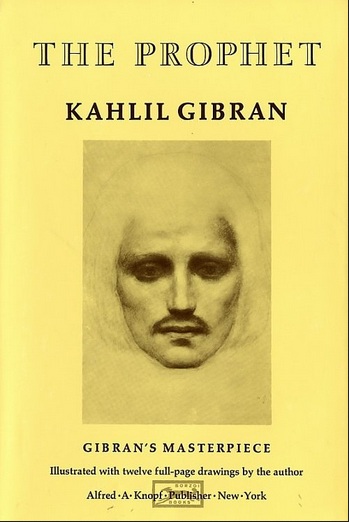
Kahlil Gibran’s The Prophet

If Proust’s Remembrance of Things Past can be turned into graphic novels, Kahlil Gibran’s The Prophet can be visualized in an animated film. Animations are not my usual movie choice in recent years but this time at TIFF I’d like to catch this one. The adaptation is a collaboration of international animation artists, voiced by Beasts of the Southern Wild‘s child star Quvenzhané Wallis, with Liam Neeson voicing the poet. Directed by Roger Allers, who is the writer and/or director of some memorable Disney collection such as The Little Matchgirl (2006), The Lion King (1994), Aladdin (1992), Beauty and the Beast (1991).


Plays of StrindbergMiss Julie (Play) by August Strindberg

Newest film version of the 1888 play by Swedish playwright August Strindberg. Adapted and directed by Liv Ullmann, the famous Ingmar Bergman actress; maybe relevant here is her role in Persona (1966). Apparently, or maybe not so, Strindberg was exploring the psychological make-up of ‘womanhood’ and the complex interplay of nature, nurture, and circumstance. I finished reading the play with an apprehensive sigh… will this be a good role for Jessica Chastain? This is not a sympathetic character, Miss Julie, a confused, flirtatious mistress seducing her valet. A film that would rest mainly on character and acting. So maybe Chastain is a good choice. The valet? Colin Farrell, not too sure about that one. Samantha Morton’s the cook, thus forms the triangle of power play.


My Old LadyMy Old Lady (Play) by Israel Horowitz

American playwright Israel Horowitz adapted his own 1996 stage play onto screen and directed it, with three prominent actors performing. This one is on my must-see list at TIFF. An American inherited from his late father a Paris apartment which to his surprise, is occupied by an old lady who, according to the legal arrangement, has the right to live there till she dies. Her daughter forms the invincible alliance. This entangled threesome: Two-time Oscar winner Maggie Smith (The Prime of Miss Jean Brodie, California Suite), who will turn 80 later this year, her equally formidable daughter, Kristin Scott Thomas (Oscar nom for The English Patient), and the unlucky (or maybe not) American, Kevin Kline (Oscar winner for A Fish Called Wanda). Whether a stage play or film, these three would make a dream cast.


Still Alice

Still Alice by Lisa Genova

Julianne Moore plays an accomplished academic, Columbia (Harvard in book) University professor battling early onset Alzheimer’s disease, based on the novel by neuroscientist turned writer Lisa Genova. Genova first self-published her book, later Simon and Schuster picked it up and the rest is history. It’s now selling in 30 countries and translated into more than 20 languages. Genova, a Ph.D in neuroscience, gives much credibility to her book. How will the film pan out? Julianne Moore would be one who can deliver a nuanced performance. Cast includes Kristen Stewart and Alec Baldwin.


WildWild by Cheryl Strayed 

On the heels of his Oscar nominated Dallas Buyers Club last year, Canadian director Jean-Marc Vallée brings out a totally different kind of production. Wild is based on the NYT #1 Bestseller memoir by Cheryl Strayed. Screenplay by the reliable Nick Hornby (Oscar Best Adapted Screenplay nom for An Education, 2009). Following the death of her mother, Strayed, then 26, divorced, devastated, drugged, went on a long-distance hike, 1,100 miles on the Pacific Crest Trail through California and Oregon. ‘Wild’ has a double inference here: the nature trail and the character walking on it. The journey could well be redemptive and perilous at the same time. The books in Strayed’s backpack included Faulkner and Flannery O’Connor. Reese Witherspoon and Gaby Hoffmann star.


**


NEW YORK FILM FESTIVAL (NYFF Sept. 26 – Oct. 2)


Gone GirlGone Girl by Gillian Flynn
To open NYFF is the premiere of this highly anticipated film adaptation of Gillian Flynn’s popular suspense novel. Two-time Oscar Best Director nominee David Fincher (The Social Network, 2010; The Curious Case of Benjamin Button, 2009) helms. Yes, the buzz is also due to Ben Affleck (Oscar winner, Argo, 2012) playing the husband who finds his wife missing one day and thus begins the extraordinary sequence of events down the rabbit hole. Rosamund Pike plays the mysteriously gone girl. Yes, I’ve read the book. And just because of that, knowing the twists and ending, will I still be interested in watching this ‘suspense thriller’?


Inherent ViceInherent Vice by Thomas Pynchon
Five-time Academy Award nominee, writer/director Paul Thomas Anderson’s works include The Master (2012) and There Will Be Blood (2007) for which Daniel Day-Lewis won one of his three Best Actor Oscars. But the film I like best is his Punch-Drunk Love (2002). Author Pynchon’s most famous book probably is Gravity’s Rainbow, which I’ve only heard of but not read. Actually, I haven’t read any of Pynchon’s noir detective novels. Pot seems to be the motif. Anderson directs Joaquin Phoenix again after The Master, cast includes Reese Witherspoon, Josh Brolin, Owen Wilson, Jena Malone.


***

Two Fine French Films

For this week in the blogging events Paris in July 2014 and Dreaming of France, I’m sharing with you two fine, French Films. They are not new movies, but probably you had missed them when they first screened a few years ago, or they might not have screened in your area. I came across them only recently. Interestingly, they make a fine pair for they both touch on very similar themes.

My Afternoons with Margueritte (“La tête en friche”, 2010)

This comedy based on the book by French author Marie-Sabine Roger stars the famous French actor Gérard Depardieu as an uncouth, middle-aged construction worker, Germain Chazes. His lack of literacy skill is benign when compared to the low self-image he suffers as a result of the constant taunting from his teachers and classmates when he was young, and the life-long scolding from a harsh and overbearing mother (Claire Maurier). To his misfortune, Germain still has to live near her and take care of her, a woman now has senility to add to her abusive outbursts.

Germain’s life comes to a turning point when he meets Margueritte (Gisèle Casadesus, who just turned 100 in June this year!) one afternoon on a park bench. Margueritte is an elderly lady living in a retirement home, and spends her afternoons in the park. She soon engages Germain to open up. Thus begins an unlikely friendship between the two.

My Afternoons with Margueritte

More importantly, Margueritte leads Germain to a whole new world of books and literature. She reads to him The Plague by Albert Camus, going through it in ten afternoons. He listens and is totally entranced by the language and the imagery.

When she reads to him Promise At Dawn, the memoir by Romain Gary, he is absorbed by the author’s description of his late mother’s love for him, and especially moved by the imagery of Gary “howling at her grave like an abandoned dog.” He begins to see his own predicament with the lens from the books Margueritte reads to him.

Who says literature belongs to the academics, or those in the ivory tower of the intellectual and sophisticated. Why is it so incongruent to hear a construction worker quoting Camus, or his seeing the world in literary imageries, or being tender and caring for a change. Germain’s friends tease him, they want the old Germain back. But Germain knows too well that he has crossed the point of no return, and that his transformation is empowering.

Soon, with the help of his girl friend Annette (Sophie Guillemin), Germain learns to read on his own. Further, he has learned to give back to Margueritte in an endearing way. As far as the story trajectory goes, Germain could well write a book entitled How Camus Can Change Your Life (that’s mine, not in the film).

Charming performances and great screen chemistry between Depardieu and Casadesus. A heart-warming story with sprinkles of humour for added appeal. A delightful and worthwhile film to watch.

~ ~ ~ Ripples


Queen to Play (“Joueuse”, 2009)

Along the same thematic line is this quiet and stylish production set in the beautiful French island Corsica just off the mainland. From Depardieu’s construction worker we now have a middle-aged chambermaid, Hélène (Sandrine Bonnaire), who works in a seaside hotel. Hélène goes through an inner transformation even more dramatic than Germain’s. It is interesting to watch the game where the Queen is the most powerful piece is freed from its male dominance for a change.

Originally titled “Joueuse” (The Player), the film is based on the novel by French author Bertina Henrichs. Director Caroline Bottaro has  displayed an inviting game board for us viewers to interact with, for watching the film makes us witnesses to a game change.

Sandrine Bonnaire’s portrayal of Hélène is sensitive and nuanced. The turning point of her life comes one day while cleaning a room. Through the translucent curtain swayed by the soft wind, she sees the hotel guests, a couple (Jennifer Beals, Dominic Gould), playing chess out in the balcony. She is fully mesmerized. The game board, the pieces they touch, their mutual affection bonded by the game not only send out vibes of sensuality but of intellectual stimulation. (She beats him, BTW) From then on, Hélène is obsessed with chess.

She gives her husband Ange (Francis Renaud) an electronic chess set for his birthday. While he is unappreciative of the gift, many a nights Hélène would slip out of bed quietly and learn to play on her own. She now sees every piece of crumb, every salt and pepper set on the table a movable chess piece, any checkered surface a chessboard on which she can prance to her imagery delight.

Queen to play

Other than her hotel job, Hélène does cleaning for a mysterious widower, Dr. Kröger, played by Kevin Kline, his first French-speaking role. Hélène finds a chess set on his bookshelf and asks him to teach her the game. Skeptical and annoyed at first, Dr. Kröger agrees when she offers to clean his place for free in exchange for chess lessons. He soon discovers that Hélène is not only serious but gifted. After a few lessons, she begins to win repeatedly.

But Hélène keeps her pursuit secret, afraid of reverberations, and misunderstanding from her husband. Why does she need to be so sneaky? Can’t a woman desire matters of the mind? Can’t a chambermaid be absorbed by the game of chess, set foot on a male-dominated, intellectual territory? Would Hollywood make a movie like this?

Hélène’s teenaged daughter is her supporter at home when her husband finds out. He too later yields to her passion as Hélène enters her first tournament upon Dr. Kröger’s recommendation.

Oh I love these French films, for they unabashedly praise the arts, literature, and intellectual pursuits; their protagonists quietly shattering social norms and barriers to personal fulfillment. Queen to Play reminds me of Muriel Barbery’s novel The Elegance of the Hedgehog.

Do you need to know how to play chess to enjoy the film? No. Actually, the camera seldom focuses on the chessboard. Instead, we see the faces of the chess players, that is where we read all the emotions.

Intriguing as chess moves, beautiful as the crafted pieces, the film is a joy to watch, a satisfying winner.

~ ~ ~ 1/2 Ripples

Paris In July 2014Dreaming of France Meme Eiffel***

Related Posts on Ripple Effects:

The Elegance of the Hedgehog Book Review

Séraphine and the Wrought-Iron Chair: Review of the film Séraphine

Haute Cuisine Movie Review

Haute Cuisine Movie Review

My first entry for the Paris In July 2014 blogging event is a review of the 2012 French film Haute Cuisine (original name Les Saveurs du Palais, which can be translated as ‘The Taste of the Palace’ or ‘The Taste of the Palate’)


***

Haute Cuisine Movie Poster


The film begins with scenes on the remote Crozet Island in Antarctica, at the Alfred Faure Scientific Base. The cook, Hortense Laborie (Catherine Frot), is preparing dinner for the dozens of workers there. It’s a special occasion, her own farewell dinner. This is the menu she has prepared:

  • Thai clear soup with fresh foie gras
  • Sweet and sour duck with Sarlat potatoes
  • Saint-Honoré cake

Not your ordinary cafeteria food for workers in Antarctica, but then, Hortense Laborie is no ordinary cook. If her one year gig working on the Crozet island sounds extraordinary, it is yet not as remarkable when compared to her previous job. Hortense was the personal chef of the French president (Jean d’Ormesson) for two years before she quit and sought a change in venue for her talents. Her kitchen used to be in the Élysée Palace in Paris, the official residence of the French President.

Haute Cuisine is a movie based on the real-life story of Danièle Delpeuch, a Périgord farmer and renowned country cook appointed by the Palace Élysée to be the personal chef for French President François Mitterrand in 1988. She was responsible for preparing home-made, simple cooking for the President’s own private meals and his personal guests.

In the movie, as soon as she stepped into the Palace’s Main Kitchen Hortense knows what she is up against: a macho army of 24 all-male chefs who guard their territory like a castle. They serve 70,000 meals in a year, using some of the copper pots and pans dating back to Louis-Phillippe’s days. Hortense does not work right in that kitchen, but that is her source of supplies and ingredients (initially), and the battlefield for territory and sphere of culinary power and influence. The battle begins as soon as she steps on this holy ground.

The Battleground 1

Hortense works in a small, homely kitchen joined by a tunnel with the Main Kitchen. Her helper is a young pastry chef Nicholas Bauvois (Arthur Dupont). The two form an unlikely alliance and share an endearing camaraderie. Frot’s portrayal of Hortense is most amiable. She is not a harsh boss over Nicholas, but she can stand her ground and be assertive in front of the Main Kitchen chefs, and even with the President’s staff. Hortense is an iron fist inside an elegant, velvet glove.

So from the kitchen in Antarctica to Paris, the film goes back and forth to tell the story of Hortense, how she gets the Palace job and why she quits two years later. The shifting between the two time frames are smooth and seamless. With the two drastically different settings juxtaposed against each other, viewers can savour the irony: That the exquisite culinary skills and fine art of Hortense’ cooking are more appreciated by the Crozet Island workers than the Palace Élysée.

A delightful movie not just for foodies, Haute Cuisine is like a layer cake, blending multiple tastes together by tackling various issues of contention… the battle between the sexes in the work place (the kitchen is probably the most volatile), efficiency in meal preparation vs. passion for cooking, and, the dilemma of all food lovers: gratification or health (no sauces, fats, or cheeses? How can that be in French cuisine?)

A well crafted film that moves as efficiently as an experienced server, removing your empty plate as soon as the food is consumed, quietly slips in the next item for you to enjoy without a break. Yes, it’s relatively fast-paced, lean and fat-free with no wastage; to top it all off, the delightful, well-timed and orchestrated music composed by the prolific Gabriel Yared is like the light cream on the Saint-Honoré cake.

The President deeply appreciates Hortense’s home-grown culinary offerings. Her ingredients are locally grown right from the Palace garden,or nearby markets, or from her own farm, yes, truffles too. The tastes remind him of home when he was growing up as a boy. He has found a foodie soul-mate in Hortense. Here’s her first meal for him and his five guests (with two hours’ notice as to the number of guests):

Stuffed Cabbage

  • Brouillade with ceps and chervil
  • Stuffed cabbage with Scottish Salmon and Loire carrots (“I like things to come from somewhere”)
  • Saint-Honoré (her Granny’s recipe)

But I personally like this one the best:

Beef fillet pastry wrapped


  • Cream of asparagus soup with chervil
  • Fillet of beef (pastry wrapped) with Chanterelle Fricassee
  • Cream tart with fruit of the forest and pistachio nougatines

A virtual meal, so delicious and satisfying… and best of all, fat-free.

~ ~ ~ Ripples 


***


Paris In July 2014

This is my first post for the blogging event Paris in July, 2014.

This year the hosting team has expanded to four. From the original creators Karen and Tamara, we now have Adria and Bellezza. Thanks to their time and dedication, we can travel to France on a virtual flight, no need for tickets, no baggages to drag along.

Also discovered another similar blogging event and that’s a Monday Meme Dreaming of France from Paulita’s An Accidental Blog. The more the merrier I’d say.

Dreaming of France Meme Eiffel

 ***

Click Here to the New York Times’s profile of Danièle Delpeuch, the real-life personality on whom the movie is based.

Other Food Related Posts on Ripple Effects, coincidentally, all Paris-related:

Gourmet Rhapsody by Muriel Barbery

The Hundred-Foot Journey by Richard C. Morais (movie adaptation coming out in August, 2014)

***

Ida’s Choice: Thoughts on Pawlikowski’s Ida (2013)

This review is about the acclaimed Polish-born director Pawel Pawlikowski’s newest film Ida (2013)It was screened at TIFF 2013, and since then, at numerous other film festivals. Slowly, it has arrived at the big screens in our cities recently. The following post discusses crucial thematic elements. Therefore, spoiler warning.

***

What forms one’s identity? Is it nationality? Race and ethnicity? Or something that transcends these boundaries? And, does one have a choice?

IDA

At the beginning, Anna’s (Agata Trzebuchowska) Catholicism is chosen for her. Raised in a Polish convent as an orphan, Anna knows no other kind of life. As an 18 year-old novitiate on the verge of taking her vow to become a nun, her Mother Superior tells her she should meet her closest relative. The one living relative she has is her mother’s sister, her aunt Wanda (Agata Kulesza).

Wanda is a hard-drinking, life-weary and tormented soul. Having lived through the horror of the second world war, she is confronted by yet another formidable front in post-war Poland, Soviet Communism. As a state prosecutor and later a judge, Wanda survived by compromising with the oppressive regime. She rises to a respectable position while sending many to their doom.

Poland in the 1960’s saw the beginning of wavering in hardline communism, a loosening up in society. Wanda has now become disillusioned and cynical, immersing in alcohol and one-night stands. With Anna appearing at her doorstep, she has to confront with not only a family’s dreadful past but her own existential present. Her licentious lifestyle is a sharp contrast to Anna’s spiritual devotion. A foil of the sacred and the profane, but not in a dogmatic frame. We see the two learning to appreciate and understand each other in a poignant way.

The sacred and the profane

For Anna, coming out of the convent does not mean only an eye-opener of the real world. From her aunt, she learns that her real name is Ida Lebenstein, and she is a Jew. Her parents were murdered during the Nazi occupation of Poland. She was kept safe in the shelter of the Catholic nuns. Her lineage concealed. Now Anna/Ida has to face with a seemingly incompatible identity, as her aunt bluntly puts it, ‘a Jewish nun’.

Aunt and niece go on a road trip to seek out the graves of Ida’s parents and eventually discover more about their deaths. They begin to know each other in a deeper way. The knowledge and the experience they have with each other may be life affirming for Ida; unfortunately for Wanda, they lead to despair.

While on the road, Wanda picks up a hitch-hiker, a young jazz musician, saxophonist Lis (Dawid Ogrodnik). He opens up yet another window for Anna, that of jazz, Coltrane, and all the rest.

The 80-minute, visually inspiring film is shot in aesthetically stunning black and white cinematography, 1.37:1 Academy Ratio with a square frame; the medium is the message. Austere, minimal, suggestive of harsh, bygone days, and with human characters often in the bottom of the frame, small and insignificant compared to the vast landscape. What is human in the whole scheme of things? How does one define oneself?

Small characters against large landscape

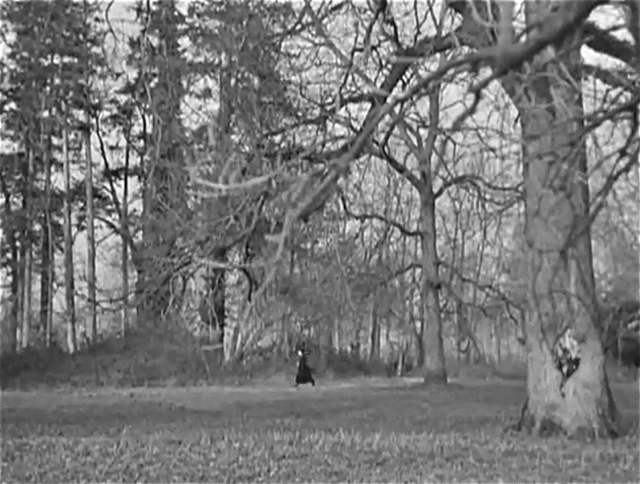
The cinematography reminds me of Robert Bresson’s Diary of a Country Priest. The young priest comes into his first parish, dwarfed and intimidated by the burden of his task, the spiritual warfare for which he is unprepared:

Walking through the woods

Like Bresson, Pawlikowski uses a non-actor for a major role. Agata Trzebuchowska plays Ida. She has never acted before. Pawlikowski found her in a coffee shop. Her portrayal of Anna/Ida is hauntingly authentic. Her face is pristine, yet her gaze is wise beyond her looks. Her aloof expression offers an unspoken evaluation of the world she sees, both in and out of the convent’s walls.

After a pivotal event, Ida tries on her aunt’s dresses, her high heels, smokes her cigarette and imagines another life. In this elegant attire she dances with the Jazz musician Lis. She listens to him play Coltrane on his sax. A whole new world awaits her if she so chooses. But it only entices for a short while. Ida yearns for something deeper, more meaningful. “And then?” she asks Lis several times in response to his offer of coming along with him.

Three characters, three different choices. Wanda chooses a way out that’s tragic.

The young musician Lis chooses jazz and whatever that path might take him. Despite his desire to have Ida come along with him, he does not, or maybe cannot, answer her two-word questions: “And then?” What’s the purpose, after all?

Ida chooses the transcendent over the secular, not that she judges the world, but that she yearns for meaning in the spiritual. It is not so much about choosing Catholicism over her Jewish lineage, but that she has made her own decision in becoming who she is. Ida’s choice is one that surpasses arbitrary, man-made boundaries of race and ethnicity, or the appeal of materials and pleasures; she chooses to devote to her Christ who had sacrificed all.

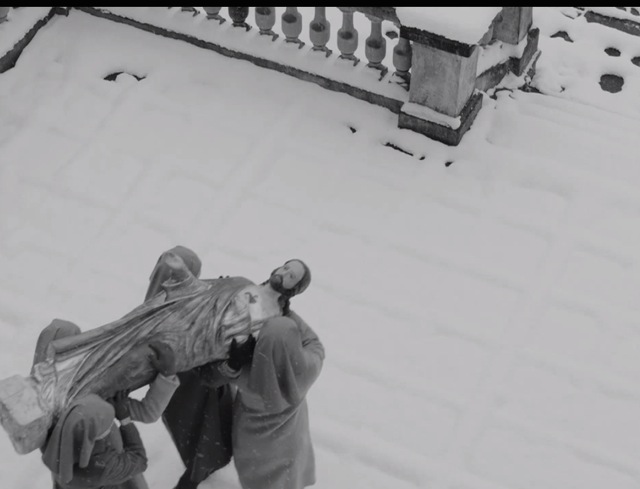
An image from the beginning of the film vividly comes back to my mind. Anna and three others carrying the Christ statue on their shoulders like a cross:

Carrying Christ

In the final shot we see Ida back in her habit attire. The moving camera captures a resolved and almost rejuvenated face, walking briskly with her little suitcase in hand, heading back to the convent. This place is now a personal choice.

~ ~ ~ 1/2 Ripples

***

Awards Update:

Feb. 22, 2015: Ida wins The Oscar for Best Foreign Language Film of the Year.

Feb. 21, 2015: Ida wins Best Foreign Language Film at the Independent Spirit Awards.

Feb. 8, 2015: Wins BAFTA Best Film not in the English Language

Jan. 15, 2015: 2 Oscar noms, Best Foreign Language Film, Best Cinematography

Dec. 11: Golden Globe nom for Best Foreign Language Film

Dec. 7: Ida wins Best Foreign Language Film and Agata Kulesza Best Supporting Actress at the L.A. Film Critics Awards

Dec. 1: Ida wins Best Foreign Language Film from the New York Film Critics Circle

Other posts you might like:

Nebraska: Colour Is Superfluous

Diary of a Country Priest: An Easter Meditation

Diary Of A Country Priest: Film Adaptation

The Lunchbox (2013): A Meal that Binds

The Lunchbox premiered at Cannes last year. Since then, it had appeared in many other international film festivals, nabbing nominations and wins. I missed it at TIFF last September, so am glad I’ve the chance to watch it in the theatre recently. Here’s my review published in the May 18 issue of Asian American Press, a weekly newspaper based in Minneapolis, MN. That’s right, folks, it’s globalization.

***


The Lunchbox Movie Poster

The lunchbox, dabba, is a stackable unit of four or five round metal cans fastened by straps on the side that flip up to attach to a handle on top. Every day in Mumbai, India, five thousand dabbawallahs, or lunchbox deliverymen, would fetch the dabbas from homes after housewives have filled them with hot food and deliver the tiffin to their husbands in their offices. After lunch, they would return the empty dabbas back to each home.

In Mumbai alone, there are five thousands dabbawallahs, many of them illiterate. For one hundred and twenty years, they carry dozens of dabbas on their bicycles, negotiate the mass of humanity and impossible street traffic and railways to bring office workers a hot meal from home, or from dabba preparation outlets. Harvard University had studied their inexplicable coding and delivery system. Their finding: only one in a million of these dabbas would ever get lost.

dabbawallah

If you think the title is too mundane for a movie, then just focus on that one-in-a million lost lunchbox. It is picked up from a young housewife, Ila (Nimrat Kaur), and delivered to the wrong recipient, Saajan Fernandes (Irrfan Khan, Life of Pi, 2012), a retiring office worker who has been on the job for thirty-five years. Thus begins the exchange of short notes then letters placed inside these tiffin cans, two strangers who are socially worlds apart, but joined together by a savory meal.
The veteran actor Irrfan Khan won Best Actor at the 8th Asian Film Awards in March this year for his role in The Lunchbox, adding to his several other wins for the film. His subtle and nuanced performance requires no dialogues. Indeed, both Saajan and Ila have not shared a frame together in the movie. I would not so much call this a romantic comedy as their relationship is purely platonic. The romance could well be the ideals and dreams they stir up in each other’s mind through the exchange of written notes. If there is anything comedic it comes as finding a listening ear, a slight relief from the mundane and inescapable in life.

It is interesting to watch how writer/director Ritesh Batra reveals to us the dabba as a metaphor. Like the stackable cans, the story is multi-layered. It touches on marriage, human connections, memories, and dreams. From the mass of humanity, we focus on two individuals striving to find meaning in their daily existence. Like the fastener that strap tight the cans of the dabba, Ila is caught in a loveless marriage with her husband Rajeev (Nakul Vaid), and the aging Saajan is bound by memories of his late wife.

Ila prepares lunch

The film begins with Ila’s attempt to make a delicious meal for her husband Rajeev to win back his heart through his stomach, an advice from an upstairs neighbor Ila calls Auntie (Bharati Achrekar). Ila communicates with Auntie by talking out of her kitchen window. Herein lies the subtle humor of the movie. We do not see Auntie, except just hear her voice. She is like an invisible adviser to Ila’s love life. Poignantly, Auntie herself has been taking care of her own husband, Uncle, who is bedridden and in a comatose state for fifteen years. If life is a bondage like the dabba, Auntie doesn’t show it a bit from her cheerful voice.

Ila’s delicious meals soon get through to the heart of Saajan, the mistaken recipient. Saajan lives alone, and seems to be heading straight to even more meaningless days in his retirement. The note exchanges gradually break through his isolation. Further, albeit reluctantly, he has to train his replacement at work, the young and enthusiastic Shaikh (Nawazuddin Siddiqui). Now this is one lively character that not only offers a humorous foil to the withdrawn Saajan, but like Auntie, Shaikh is optimistic about life, even though he has grown up an orphan. Soon, Shaikh has broken down the barrier with Saajan and the two establish a kind of father/son relationship.

Saajan & Shaikh

With The Lunchbox, his debut feature, Batra has won several screenplay and directing awards. He is definitely one promising filmmaker to watch. His approach here is naturalistic. Shooting on location in Mumbai, the camera captures realistic, ethnographic street scenes and the mass on public transits, telling this Mumbai story in situ. Through the handwritten notes hidden in the mundane dabba, delivered by a traditional human service, the film vividly shows us that even in our day of emails and instant messaging, the route to connect is still through the human heart.

~ ~ ~ 1/2 Ripples 

***

Related Movie Reviews on Ripple Effects:

Life of Pi (2012): The Magical 3D Experience
English Vinglish (2012)

Slumdog Millionaire (2008)

The Namesake (2006): Movie Review

***

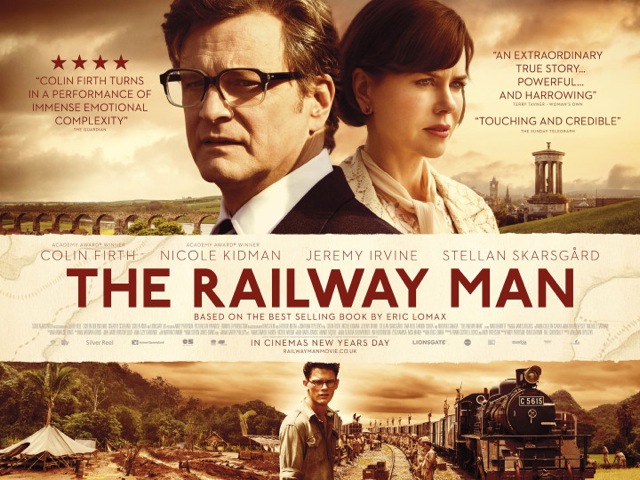
The Railway Man (2013) Movie Review

Premiered at the Toronto International Film Festival last September, ‘The Railway Man’ has only recently made its way into North American theatres, a slow train considering the story dates back to a chapter in World War II history that has generally been ignored. It had taken Eric Lomax decades to open up and tell his story as a Japanese prisoner of war. His autobiography The Railway Man was published in 1995, half a century after his ordeal.

The Railway Man


Noting the demographics of the audience in the theatre I was in, it is likely that the passing of a generation could mean the eventual silencing of eyewitnesses and victims, or those who have heard from them first-hand. While a movie adaptation of Eric Lomax’s autobiography is important for raising awareness of the events in the Pacific theatre during the War, the real difficulty is to attract younger viewers today to go into a movie theatre to watch it.

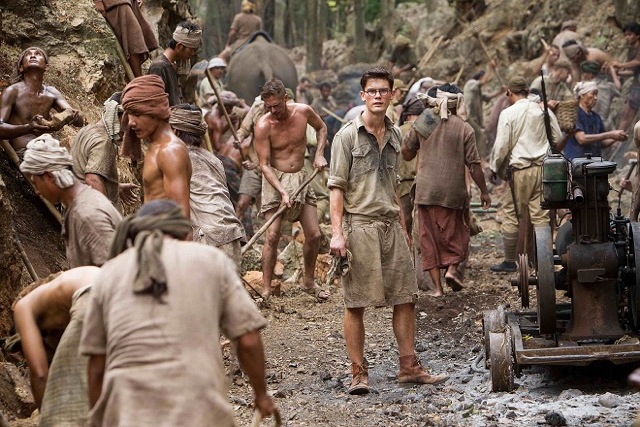
Of the numerous full-length features on WWII, only David Lean’s 1957 “The Bridge on the River Kwai” comes to mind for a movie that deals with this chapter in history. Eric Lomax was a young signals officer in Singapore when the British surrendered to the Imperial Japanese Army in 1942. He and other British soldiers were transported to Thailand to work on the Thailand-Burma Railway as slave laborers. Notoriously known as The Death Railway, the conditions there were horrendous. Many POW’s died and others were tortured. Lomax was one of them.

Having read his memoir, I find ‘The Railway Man’ a more realistic depiction of the POW’s conditions. Lean’s film where the men are portrayed in top physical shape marching to the famous whistling tune looks like a summer camp when compared to the atrocities Lomax and others had suffered. The war ended in 1945, but not the psychological torments of former POW’s.

‘The Railway Man’ begins with Lomax (Colin Firth) in 1980, a middle-aged veteran, still a railway enthusiast, encountering Patti Wallace (Nicole Kidman) while travelling on a train. This first part of the movie is the most enjoyable in that we see Colin Firth in his most natural and easiest demeanor, romantic yet reserved, with a dash of quirkiness. Nicole Kidman, with minimal make-up, gives an admirable understated performance. The two make good screen chemistry. Viewers will have more of their partnership in some upcoming productions.

Colin Firth & Nicole Kidman

As they chat on the train, David Lean’s ‘Brief Encounter’ is mentioned, a life imitating art experience thus ensues except this one leads to a long-term relationship. Eric and Patti soon get married. On their honeymoon, the nightmares of Lomax’s traumatic past begin to expose. He drops on the floor wrenching from fearful flashbacks.

Observing in anguish, Patti seeks to find out more from Lomax’s fellow veteran Finlay (Stellan Skarsgård) who cautions her of the scars of war and the never-ending torments. Thus leads to the second act where we see flashbacks into Lomax’s horrific POW experiences.

Jeremy Irvine puts forth an impressive effort in his portrayal of a courageous and decent young Lomax. After the radio he has made and his hand-drawn map of the railway line are discovered by his Japanese captors, the young Lomax bravely steps out to admit his involvement in order to spare his fellow soldiers the punishment. He is beaten, interrogated as a spy, and repeatedly tortured. Throughout, the young Japanese officer Nagase (Tanroh Ishida) is in full command.

Jeremy IrvineThe film goes back and forth in time during the bulk of the story, not roughly, but in an unbalanced way. The WWII sequences are intense, but the present day scenes exude a lethargic sense of inaction. While the talents of both Firth and Kidman can readily be tapped, the screenplay allows no further development other than the close-ups of a repressed and traumatically disturbed Lomax and a loving but exasperated Patti watching from the sideline. Here is a time when you would wish the director (Jonathan Teplitzky) and screenwriters (Frank Cottrell Boyce and Andy Paterson) had exerted more artistic freedom and creative energy into the film.

The plot turns a new direction as Finlay finds out that the Japanese officer Nagase (now played by Hiroyuki Sanada) who was involved in Lomax’s torture is still alive. Adding to Lomax’s burden, Finlay has pressured him to take revenge. Indeed, it is with a vengeful resolve that Lomax seeks Nagase out in a war museum in Thailand, where Nagase is a tour guide by the River Kwai, showing visitors the same prison camp wherein Lomax was once a captive.

As the torturer and the victim confront, tension rises. In the most critical moment, the murderous vengeance that Lomax has harbored is snapped. Nagase expresses genuine remorse and offers his apology to Lomax. Vengeance is thus dissolved into forgiveness.

This third act is supposedly the most moving section. Unfortunately it drags on too long, losing the power of the cathartic punch. While Firth’s performance is riveting as he enters the torture room and relives the past, the verbal exchanges between the adversaries and their ultimate reconciliation look contrived. As in the book, which leaves readers little explanation as to Lomax’s change of heart, I assume therein lies the difficulty for the screenwriters to invent a realistic and dramatic scenario.

Nonetheless, stories like this ought to be told for the understanding of historic truths and of the human heart. It just may sound like an over-simplification, but maybe the long road to reconciliation does start with a word of apology.

~ ~ ~ Ripples

CLICK HERE To read my book review of The Railway Man by Eric Lomax.

***

This movie review was published in the May 10 issue of Asian American Press.