The Blue Herons on the Pacific Coast

Went out to Vancouver Island recently. Saw many Great Blue Herons, birds that are not rare but still not as abundant in my neck of the woods. The herons are common sights along the West Coast.

This is what I found when I saw them––there was always some human presence nearby. I know it’s humans that are impinging on their habitat, but still love to see the picture of coexistence, how they still thrive living side-by-side people, unlike what I’m used to at the Pond in my neck of the woods, where they are usually far away, solitary, and would fly away instantly when humans come near.

A heron silhouetted with the sailboats:

I like this sight too… a shared seashore:

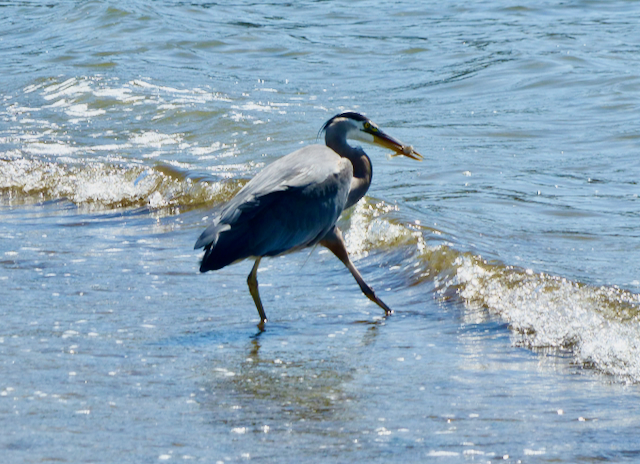
I spent almost an hour with this bird at the beach that late morning. Took many photos of it, walking close to it to take some of these shots, and watched it pick out its brunch:
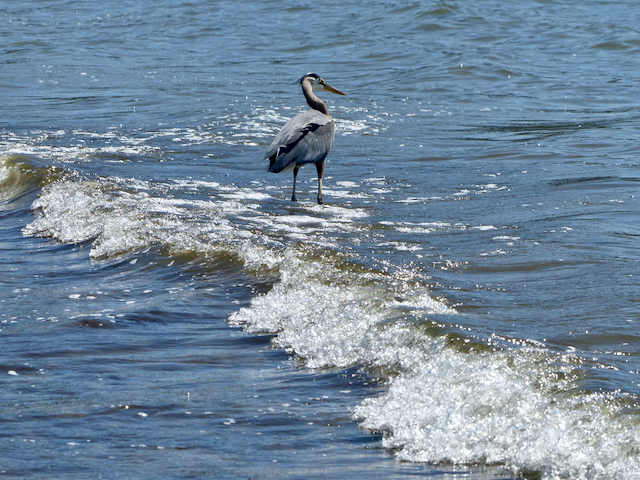
You can see the small fish in its beak.

__________

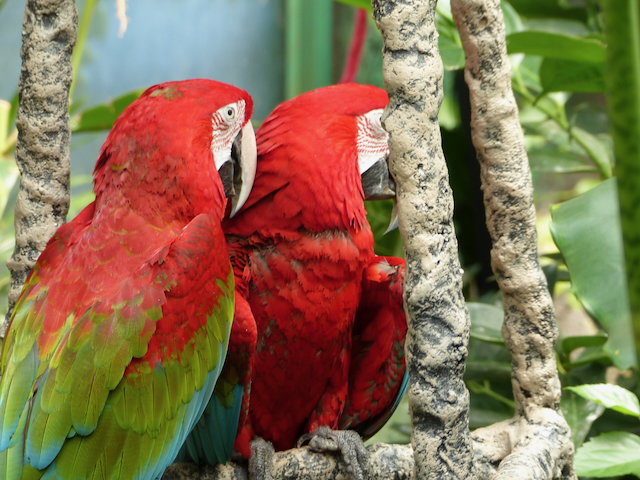
As a postscript, here are some birds I saw visiting the Butterfly Gardens in Victoria, B.C. While I saw some birds I hadn’t seen before, like the Flamingo, or the Macaws or Parakeets not as house pets, I found them ‘too easy’ to capture in photos. The place was very interesting to visit, no doubt, with butterflies flying freely everywhere and very informative and educational displays, yet, I felt like an imposter bird photographer.
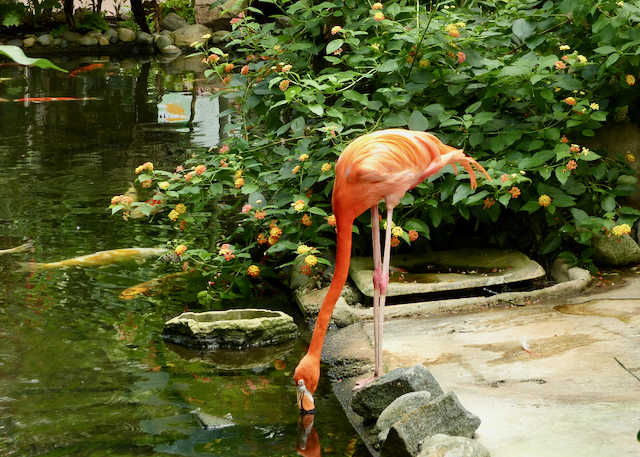
Something like taking pictures of animals in a zoo as opposed to photography on a Safari. Surely, lacking the opportunity of the latter, I suppose seeing them in a confined environment is a second best way to meet them? A contentious issue.

***

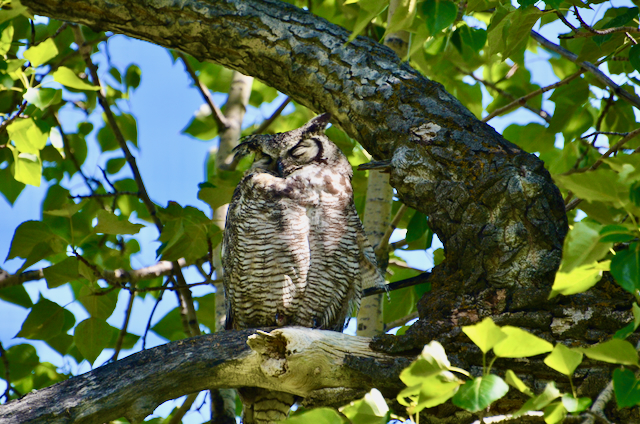
Here’s Looking at You, Kid

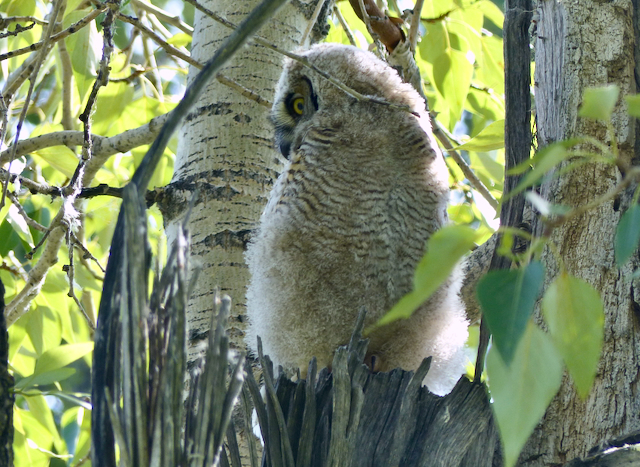
After weeks of waiting, one owlet is big enough to come out… a nesting doll.

Waking up is hard work. Early owly yawn:

like my fur?

Where’s little bro? He’s too young to come out. Still in the nest… taking it all in:

…. six days later, I found little bro out with Papa or Mama, see him?

No? How about now, zooming in:

and a close-up:

Here’s looking at you, kid. Soon, they’ll be gone, and another season of anticipation will pass. The circle of life.

To the movies next.

***

2025 Babies: First Glimpse

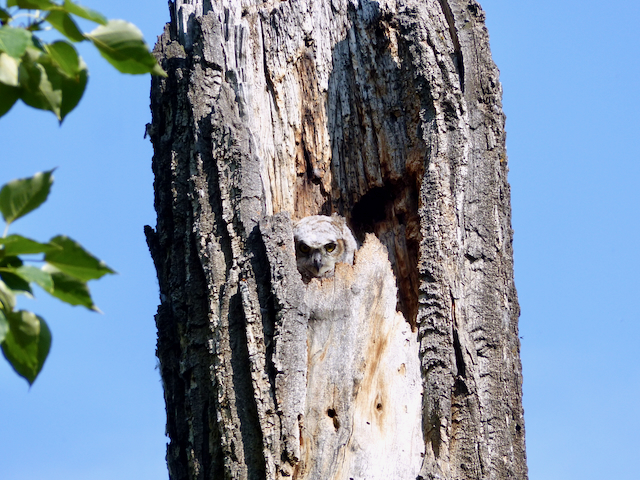
In this indistinct, dead tree trunk hides an annual fanfare,

for such an ordinary tree cavity is the seasonal residence of the Owl Family.

This year, there are two newborns. See them peeking out? For some far-fetched resemblance, I think of Mount Rushmore.

Just a few weeks old, but already gulping down voles and whatever Mama and Papa feed them. Still not out yet, but curious just the same.

Hello world! It’s wonderful to see so many things from high up here. What are all those long black things pointing at us, and all those funny looking, two-legged creatures crawling on the ground, craning their necks to look at us? How funny they look! Hoot, our first glimpse of the world sure is interesting.

Such a sentiment isn’t shared by Papa Owl.

Those two-legged creatures? Just too blasé for me to take a look.

***

Morning Feeding

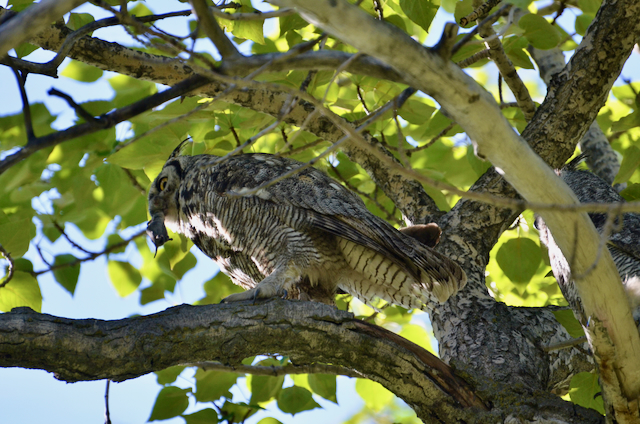
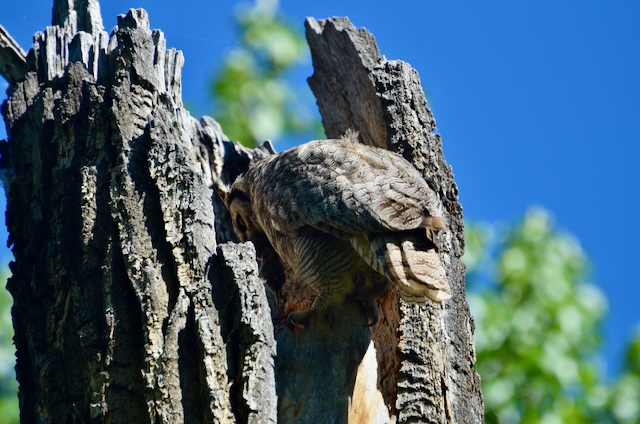
Just as I was feeling a bit disappointed at not actually seeing any birds while hearing lots of them around me in the woods, I looked up a tree and saw this. What timing! A parent owl, let’s just say it’s Mama owl, with a vole in her mouth just about to fly back to the nest for morning feeding.

I couldn’t capture the flying, but here she is, dipping the mole down into the nest, the annual seasonal residence for the Owl Family. Pardon the blurry photos as I was just too excited to capture the moment. The nest was at least 50 feet away high up on the empty trunk of an old tree.

This year, other birders tell me that there are three owlets in there… just a few weeks old. Will see them come out soon. But right at that moment, I was happy to see Mama owl giving them their morning feeding… couldn’t imagine these babies eating up a mole, though, with their tiny beaks.

All this time, Papa sat on a tree nearby watching and keeping guard.

A googling search led me to some videos seeing owls, even the tiny owlets, actually gulp down a rodent whole, shot from a camera placed inside their nest. I don’t have that privilege, but in a few weeks these furry babies will show their faces out on a branch, cute and downy, leaning against each other… and I’ll forget how they devour a vole, gulping it down whole inside their nest.

***

The poet’s spring thoughts

Lines Written in Early Spring

I heard a thousand blended notes,
While in a grove I sate reclined,
In that sweet mood when pleasant thoughts
Bring sad thoughts to the mind.

To her fair works did Nature link
The human soul that through me ran;
And much it grieved my heart to think
What man has made of man.

Through primrose tufts, in that green bower,
The periwinkle trailed its wreaths;
And ’tis my faith that every flower
Enjoys the air it breathes.

The birds around me hopped and played,
Their thoughts I cannot measure:—-
But the least motion which they made,
It seemed a thrill of pleasure.

The budding twigs spread out their fan,
To catch the breezy air;
And I must think, do all I can,
That there was pleasure there.

If this belief from heaven be sent,
If such be Nature’s holy plan,
Have I not reason to lament
What man has made of man?

––– William Wordsworth

***

Photos taken by Arti in spring and summer 2024

And then there were two

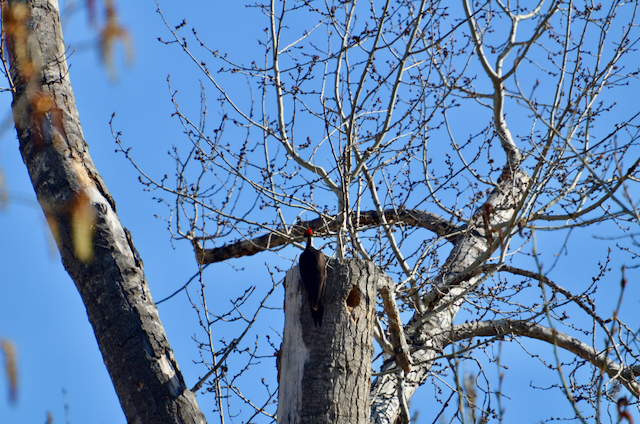
Yesterday was my first official spring birding. Soon as I stepped out of my car in the woods, I heard a loud peculiar call. I saw a large, black bird landing on top of a tree. One positive thing about a late start to spring for us is the bare branches. Surely, green leaves are warming to the eyes, but bare branches allow clearer views of birds. Can you see it?

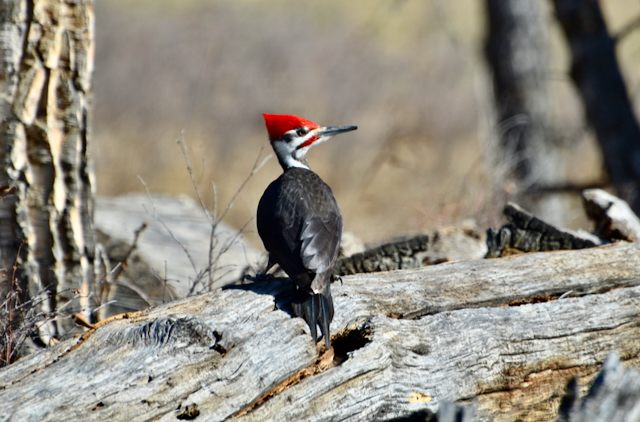
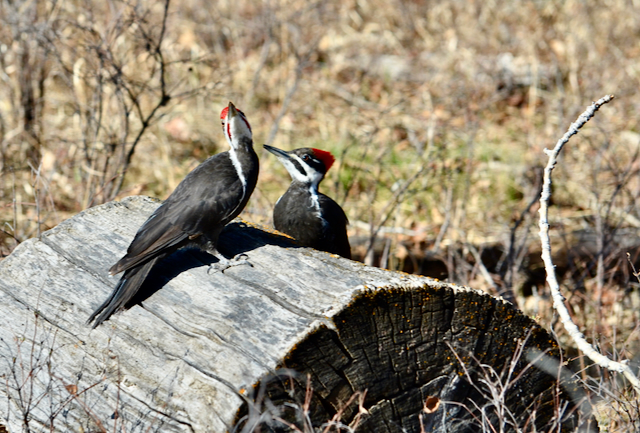
Soon I found that it wasn’t just a black bird. The red crown gave it away. A pileated woodpecker, my long lost friend! I’ve seen many woodpeckers in my neck of the woods, downy, hairy, northern flicker… but I haven’t seen, let alone photographed, a pileated woodpecker for many years.

It soon flew away, but not too far. I followed quietly, stepping over dead leaves, dry twigs and trunks to a more favourable vantage point. It landed on a large trunk on the ground, allowing me to get up close and personal.

Just as I was congratulating myself for the good fortune in my first spring outing of the year, I saw two. How rare it is to see two pileated woodpeckers together, for me anyway. This pair wasn’t afraid of nature paparazzi like myself, for I’m sure they must have known I was around. I was able to get a good pose, but still natural in situ.

Looks like a good birding year is in store for me.

Birding Highlights 2024

Time to take stock of memorable moments of the year. Here are some exciting bird sightings. I admit, nothing spectacular, but still memorable for me.

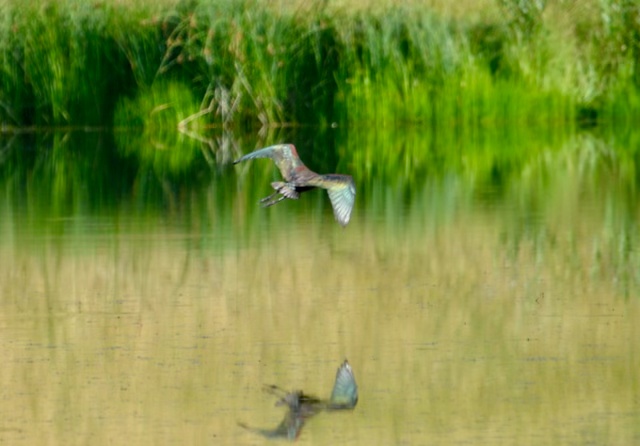
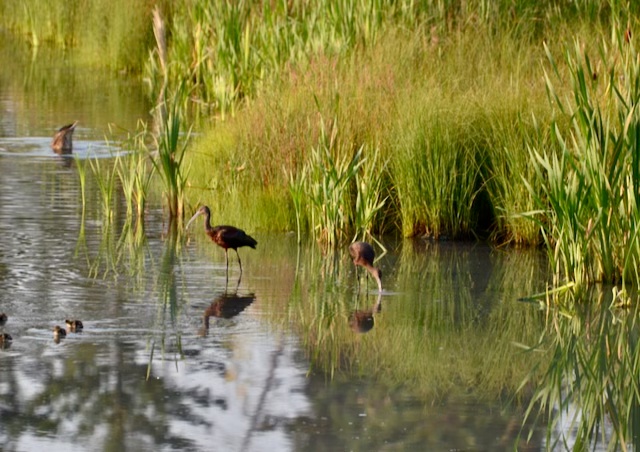
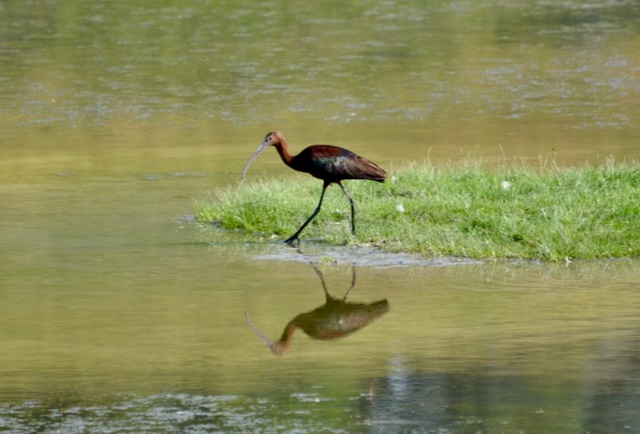
In August, 2022, I saw a Glossy Ibis in my neck of the woods. I had to go online to check it out as I’d never seen one before. I was elated to ID it. Here’s the post. What a rare find I thought, for they were mostly found in the Atlantic coasts to the east and the Gulf Coast of Texas to the south. Here in the Prairies? and at the foot of the Rocky Mountains in Western Canada? Must be a stray.

But two years later almost to the date, this August, I saw a Glossy Ibis again. This time, not just one but two, and even closer to my home. Here they are, pictures are blurry but the memory is clear. They were at a distance too far for my lens to capture in sharper focus. I like to imagine them as Impressionist paintings:

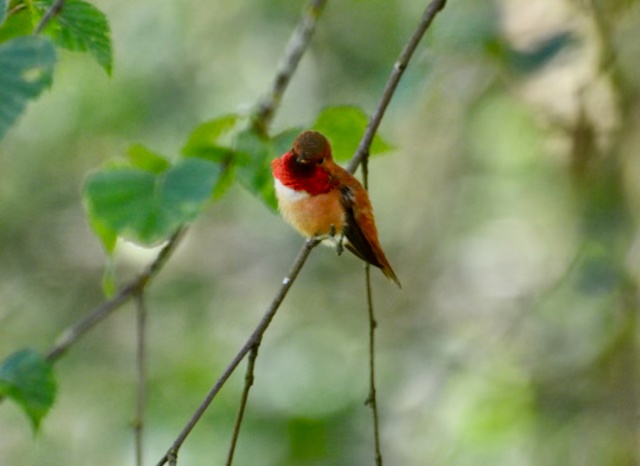
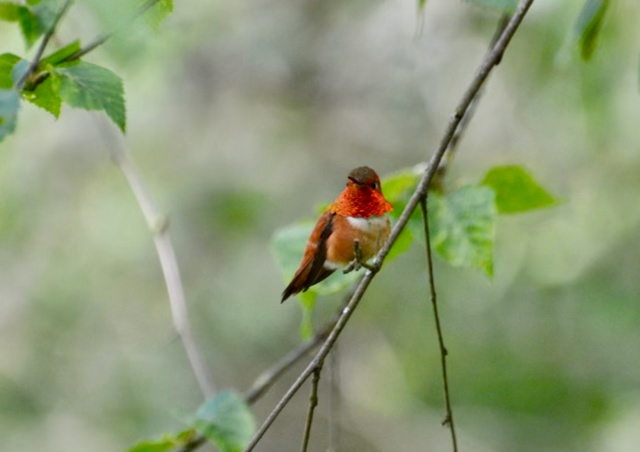
Another highlight of birding 2024 is seeing the Rufus Hummingbird for the first time in Richmond Nature Park in June this year. I’d seen Anna’s Hummingbird before but this time Rufus also. Here’s my post where more photos were posted and the origin of their names. Here’s Rufus, and look at the beautiful  iridescent necklace. It changed colour as I walked around it. I should have taken a video.

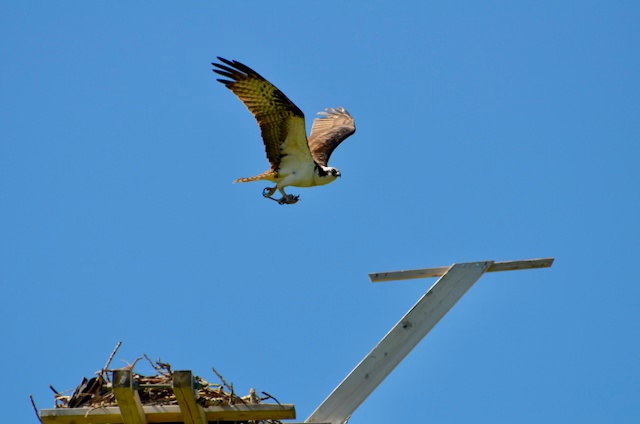
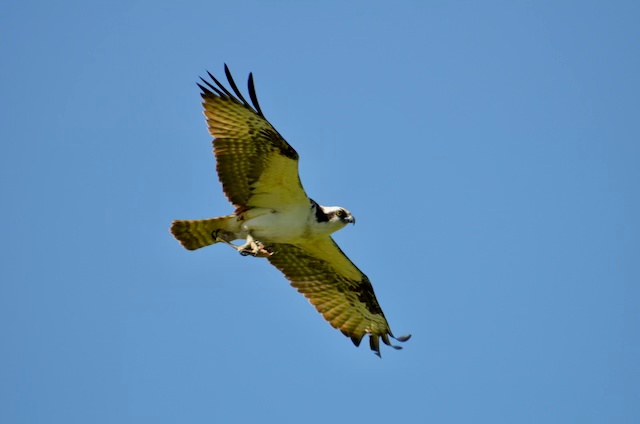
And the Osprey that got relocated due to road construction had found a new home (I like to think this one I saw was the one being forced out of its nest.) Looks like the benevolent construction crew had built a new structure for the Osprey to start a new home. Here it is tending its nest and I can’t see what exactly she’s carrying in her claws, looks like two babies, or some sort of fish meat:

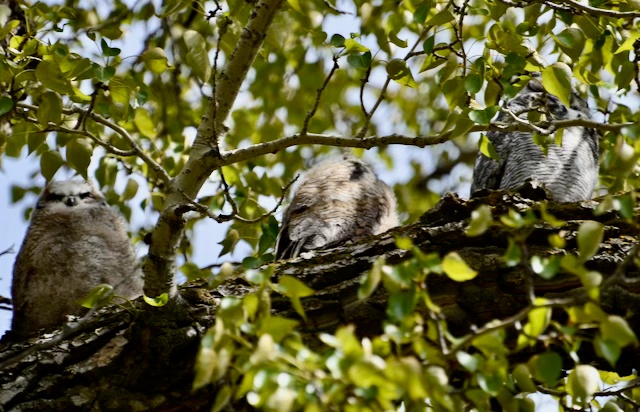
And of course, even though it’s a perennial event, welcoming new babies to the Owl Family is always a highlight and the start of the birding season every year. Here are a few pics of these cute little ones:

While I treasure memorable photos like these, I look forward to some novel birding experiences in 2025, and take some photos I’ve never done before.

***
Four hours of fantasy in the air

Thursday, October 10, I boarded the Air Canada flight at 9 pm EST from Toronto heading west to Calgary. I expected a Gravol-driven four hours of dozing before I landed. Who’d have known that those four hours would become the most extraordinary flight experience I’ve ever had.

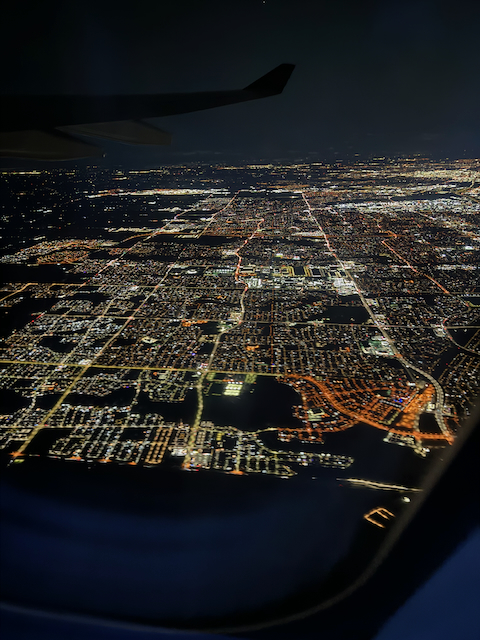
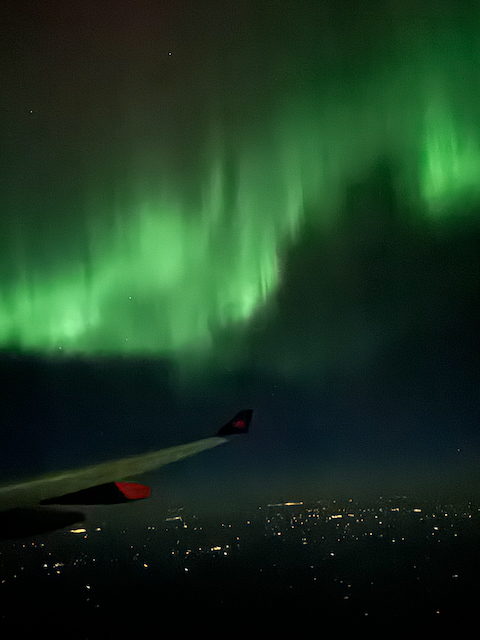
First off, as we departed, I took this photo of the Toronto area. I thought to myself, hey, that was quite a nice pic. But not until I was up in the air the next hour did I realize there was something even more fantastic in store for me, manmade lightings compared to awesome cosmic wonders.

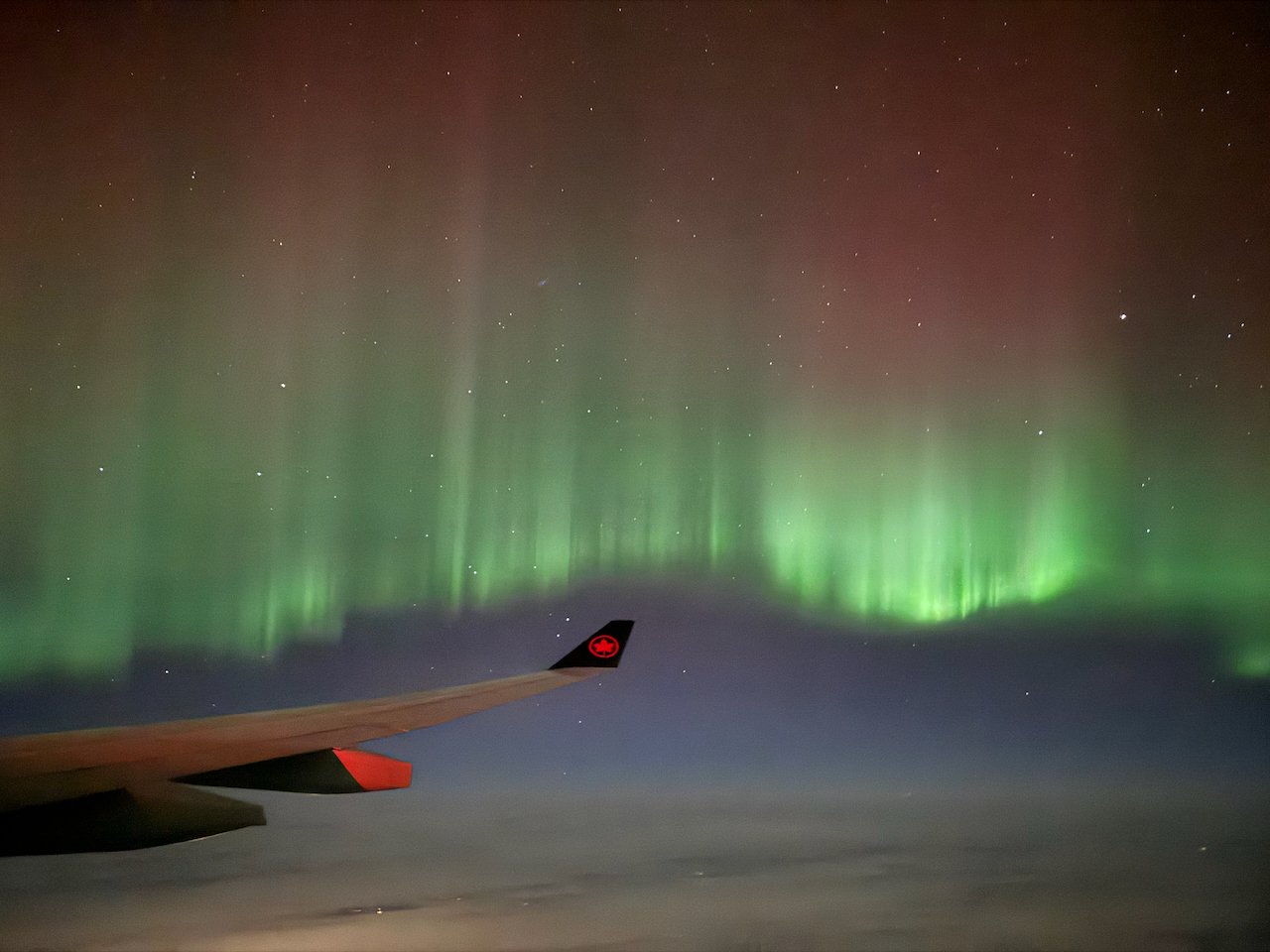
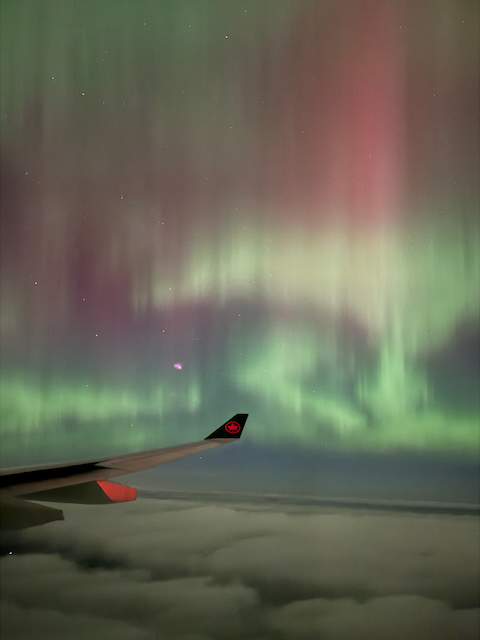
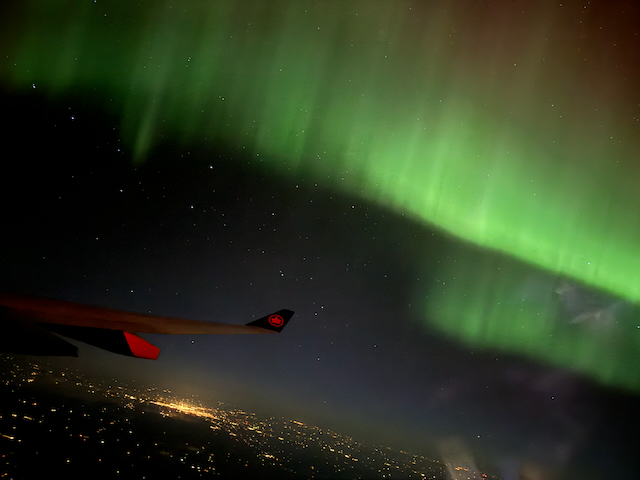
Our pilot had mentioned the possible appearance of the Aurora Borealis when we took off, but it didn’t occur to me to look out the window with much hope, because all I could see was the flashing red light from the right wing of the plane against the darkness. It’s only when the young man in front of me covering the head of his seat mate with his jacket as she did something by her window. I was wondering what they were doing when he showed me the photo they got on their phone of the Northern Lights.

For the next few hours I had taken over 100 photos on my iPhone. The amazing thing is, I could hardly see anything out the window with my naked eyes, but what’s caught by my camera lens was some fantastic sights. What I could see was only darkness, but what’s really happening was a cosmic show of spectacular wonders. And, I don’t mind the Air Canada logo on the wing in my pictures, just proved that I took these photos 30,000 feet up in the air.

Here are a few of them, no editing, no sharpening or colour changes, and of course, no AI generated effects.

Happy Thanksgiving!

***

Into the Summer Woods

The horrific destruction of the town in Jasper National Park by wildfire yesterday makes me feel mournful not only for the human loss of homes and businesses––25,000 residents and visitors have evacuated, many with no homes to return to––but also for the majestic, natural beauty and the wildlife dwelling there. How do animals and even birds escape the engulfing fire, with flames reaching 100 metres high? The drive from Banff to Jasper is one of the most beautiful Parkways in Canada. As I write this, one third of the historic town of Jasper has been burned or damaged. The fire is still going, actually, hundreds of wild fires are still burning in Alberta and BC.

The posting of my birding experience on Ripple Effects seems to have taken a new purpose now:
to preserve memories, my very own encounter with Nature and the raw, authentic moments, for I know, these too are ephemeral.

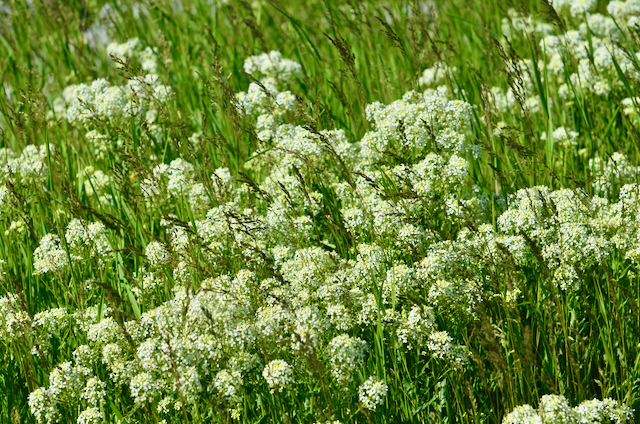
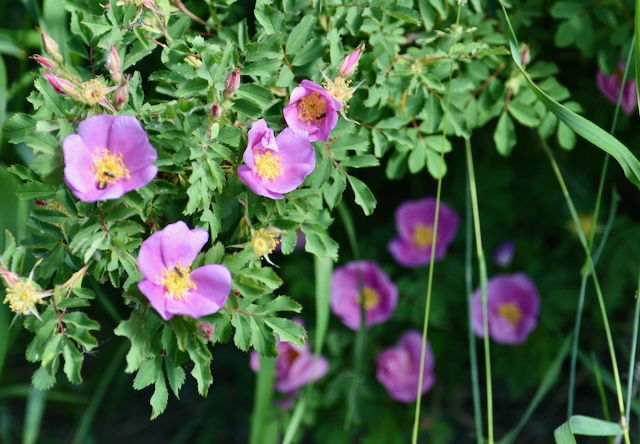
The following are some of the visual memories I’ve gathered in the past month near the Pond. First off, the summer wild flora, blooming bright and colourful are the Alberta provincial flower, the Wild Rose. If you can ID the other ones, do let me know:

Snow in July? Fortunately not. Thanks to poplar cotton, a monotonous stream now looks dramatic:

It’s always a pleasant surprise to see a deer suddenly appear nearby, and this is a handsome, young one:

A favourite sighting any time… the Belted Kingfisher, not easy to spot, but their distinct rattle calls give them away:

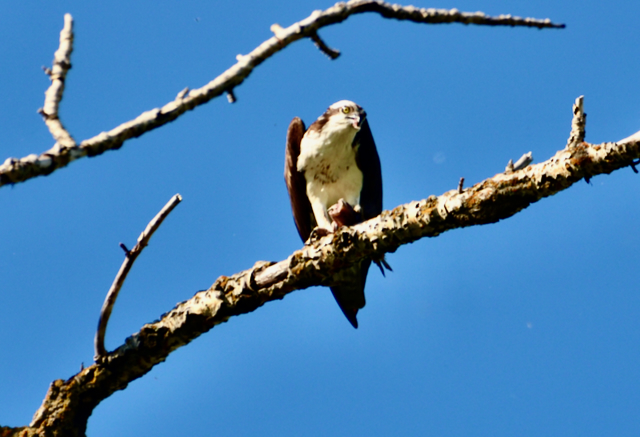
High up on a tree branch, the Osprey is chomping its prey. You can see half a fish under its claws:

For these two hungry baby European Starlings, it’s door dash delivery by Mama Starling, not fast enough as always:

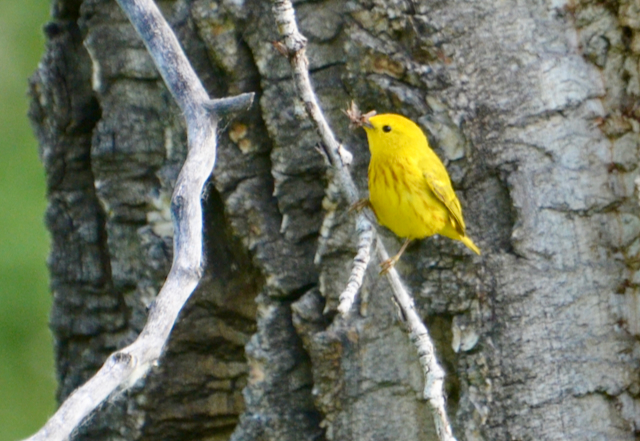
As for Mama, she just can’t wait to see babies grow up to search for their own food, just like these lovely Yellow Warblers:

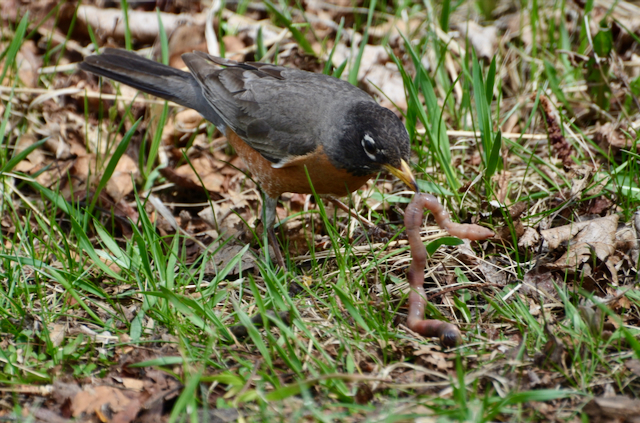
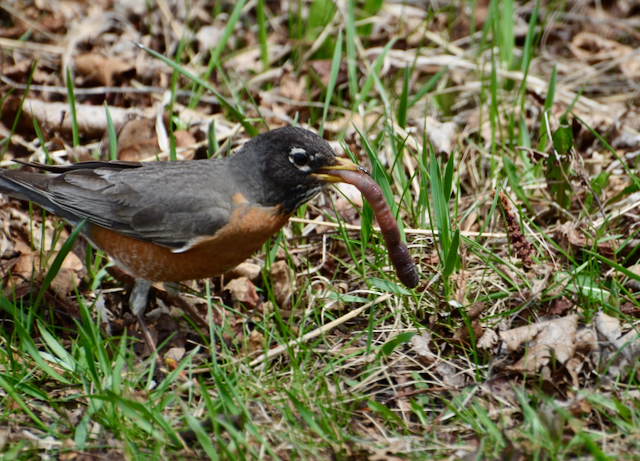
or this hungry Robin, swallowing whole a worm as long as its own body:

The ephemeral nature of life… the worm sure knows what that means.

Anna and Rufous in Richmond Nature Park

Whenever I visit Vancouver, I’d go to Richmond Nature Park to see my avian friends, the hummingbirds there. Anna’s I’d seen before but still not met Rufous yet. Feeders provide the essential food they need and the small sanctuary is their haven for frolicking fun. I wasn’t fast enough to capture them with my camera as they play tag, but I was able to catch them while they were feeding or staying put on a branch for a few seconds.

I’d only seen Anna’s Hummingbird there before. Each time I come back I learn something more. Here’s a little tidbit from Bird Note I found today: “Anna’s Hummingbird was named for Princess Anna de Belle Massena. John James Audubon himself was charmed by her, but it was actually naturalist René Primevère Lesson who named the bird in her honor.” Just learn too that Anna’s Hummingbird is Vancouver’s official City Bird. A couple photos of Anna’s:

.

.
But it’s meeting Rufous for the first time that makes my trip memorable this time. At first, I thought Rufous was a namesake like Anna, but actually it refers to the bird’s colour, reddish brown:

.

.
What caught my attention was its iridescent, bright orange neck plumage, called gorget (pronounced gor-jit, gorgeous indeed.) It shone like a metallic glare when I saw it, like a knight’s shining armour around the neck, something that these very inadequate photos can’t reflect:

.
But it’s not always orange, with different angles of sunlight, it can be totally brown or even black:

.
And I saw it change from black to yellow and then to orange almost at the same time as the bird moves its head ever so slightly, simply fascinating:

.

.
And if you look carefully at the gorget, you can see all three colours here in this picture below, and no, it’s not being stabbed or hooked, just perching on a bar:

.
Again, Mary Oliver’s line comes back to me:

“… I have always known you are present in the… wings of birds.” 
–– from the poem ‘Six Recognitions of the Lord’

I can say it again, substituting ‘wings’ with ‘every single feather.’

***

Related Post on Ripple Effects:

Anna’s Hummingbird: A Lesson in Smallness

And now there are four

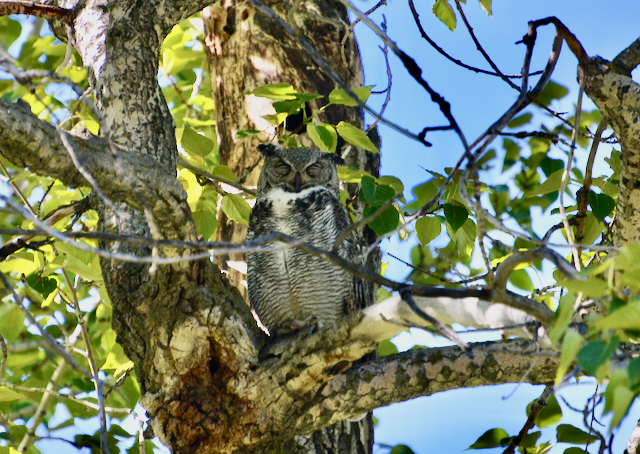
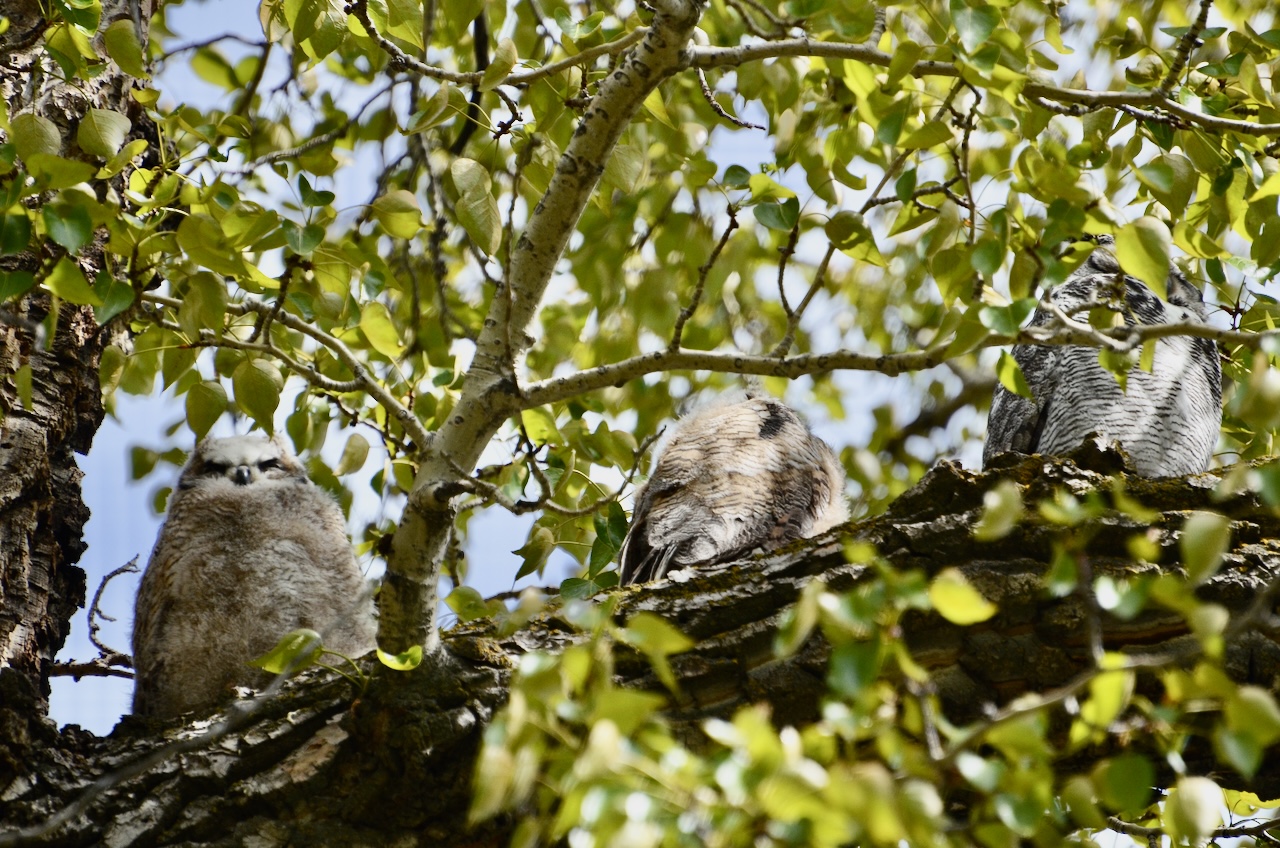
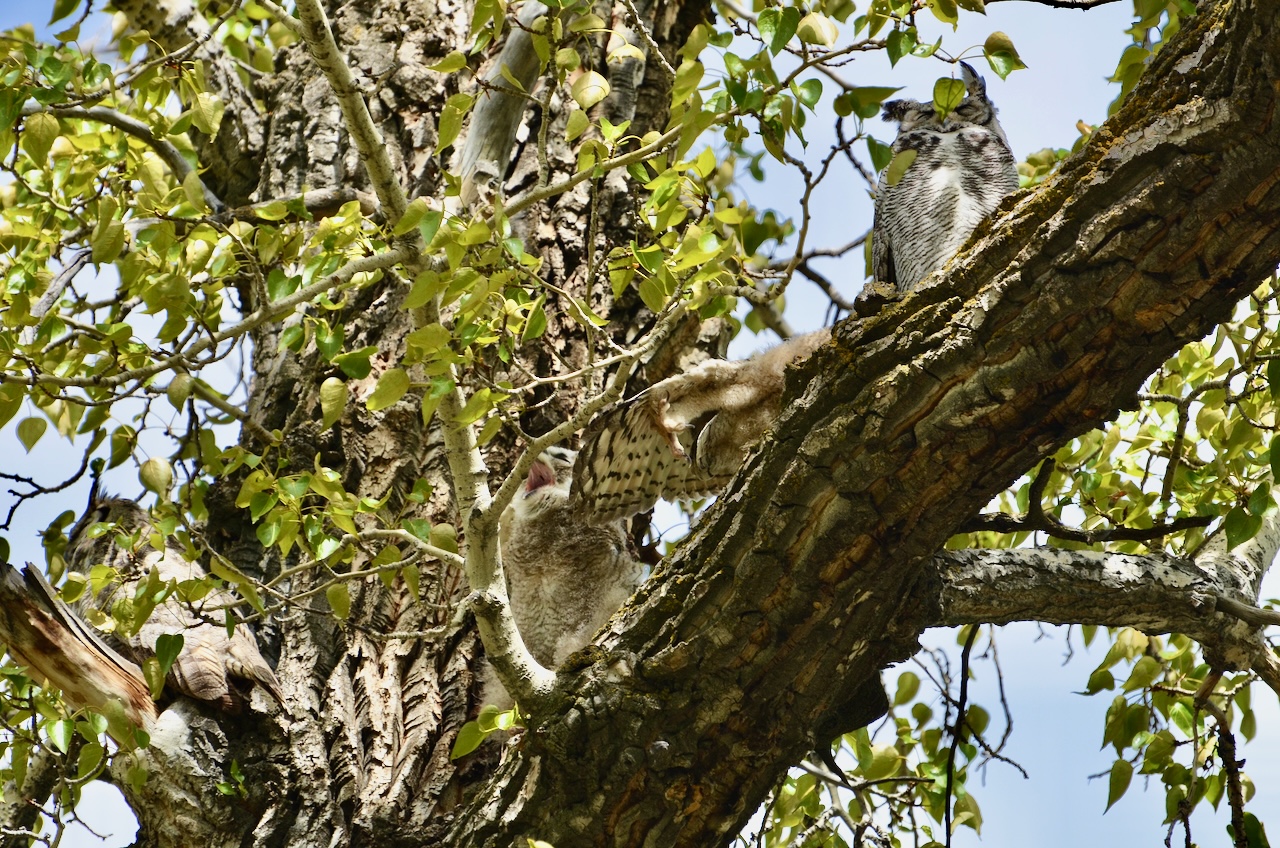
The baby owl that fell out of a tree and taken away by wildlife staff has now returned home. Good to see all the members of the Owl Family are back together again. Hard to find a good camera angle when you’re way down on the ground, but here’s what I’ve captured.

The Owl Family. The two owlets in the middle, with mom and dad on each side of the young. Three of them on one branch, the other parent on another branch to the left:

Can you spot all four of them here?

.
A closer look at three of them:

.
Looks like Baby O. has fledged and learned to spread its wings. What doesn’t kill you makes you stronger. Glad to see all’s well now with the Owl Family:

Soon the young ones will be gone. To where I don’t know. At least I’m glad I’ve a chance to see wings spread out and ready before they fly away. I’m sure Mama and Papa Owls feel the same.

***
Anna’s Hummingbird: A Lesson in Smallness

Earlier this week I spent a few days in Vancouver, British Columbia. The Richmond Nature Park was high on my agenda since I ‘discovered’ the place last time I visited and found it to be a haven for hummingbirds. This time, I’m not disappointed as I’ve seen many albeit it’s hard to take a good photo of them, for they are small and ultra fast.

Every hummingbird is a miracle in itself. They are the smallest of birds, most species measuring 3-5 inches (7.6 -10 cm) in length and about 0.1 oz. (3 – 4 grams) in weight. The bee hummingbird of Cuba is the smallest bird in the world, only 2 inches (5 cm) in length and weighs 0.07 oz (1.95 gram).

According to World of Hummingbird, depending on their activity, hummingbirds’ wing beats can range from 70 to 200 times per second (when diving). And they can dive! Up to 60 miles per hour. Hummingbirds are the only birds that can fly forward, backward, hover and stay still in the air, fly sideway, and even upside down.

During migration, the Rufous Hummingbird fly from the Gulf of Mexico to Alaska to breed, that’s nearly 4,000 miles. These small but powerful flyers can travel as much as 23 miles in one day. As they cross the Gulf of Mexico they may cover up to 500 miles at a time. Their average speed in direct flight is in the range of 20-30 mph (32 – 48 km/hr), and up to three times that fast during courtship dives. Interesting info. here.

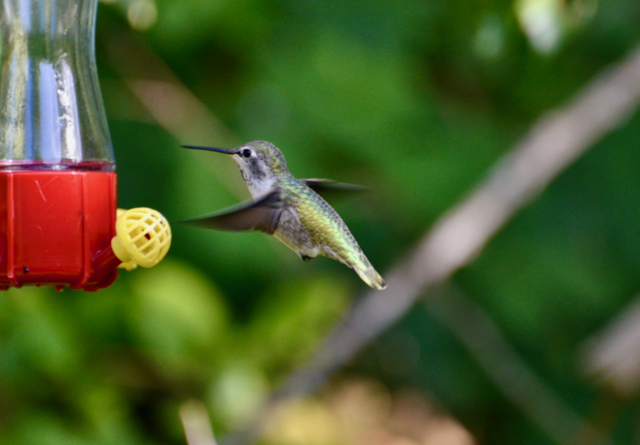
There are numerous fascinating facts to be found online, but nothing beats the actual experience of watching these tiny birds flapping their wings to stay still in the air like a motorized flapping cross, or see their iridescent feathers shimmering in the morning light. They are just too fast for me to take photos, especially when darting in midair. I could only capture some while they were sipping nectar from a feeder, or perching on a branch.

When I visited Richmond Nature Park earlier this week, I only found Anna’s Hummingbirds, although the signs indicate Rufous also hang out there. From the info I’ve gathered, Anna’s Hummingbirds now don’t migrate but settle in the Pacific Coast of North America, from California to B.C. in Canada. So there I was, encountering these beautiful, small miracles that morning.

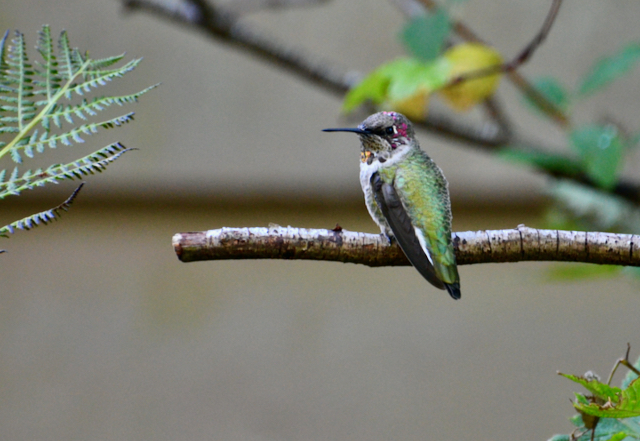
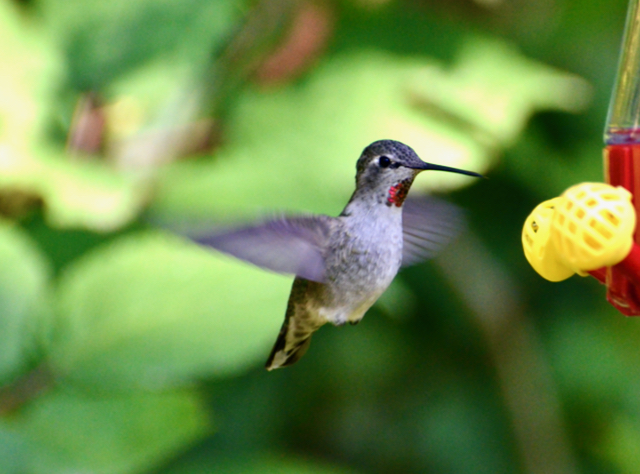
Here’s a male Anna’s Hummingbird staying still:

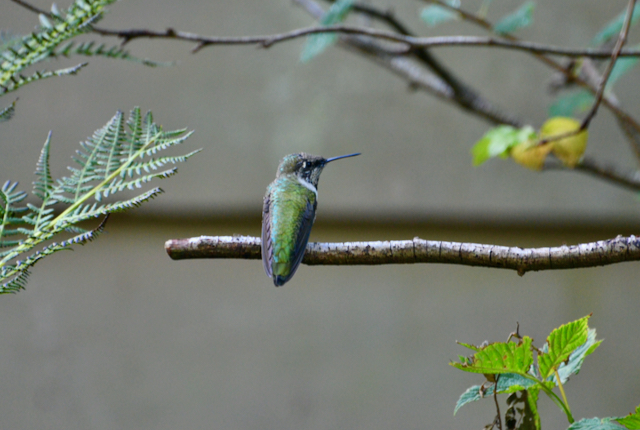
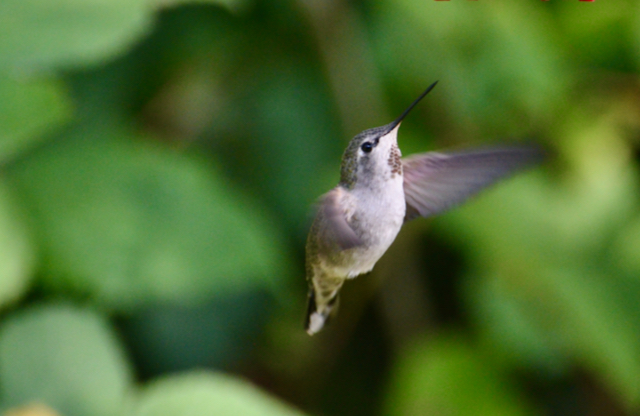
the female or immature ones are mostly green without the fuchsia red on their head and neck, but their iridescent plumage and the colourful spots on the head are a sight to behold:

“… I have always known you are present in the… wings of birds.”
–– Mary Oliver, from the poem ‘Six Recognitions of the Lord’

***