Salk Institute, La Jolla, CA

Hope lies in dreams, in imagination, and in the courage of those who dare to make dreams into reality.  — Jonas Salk

American medical researcher and virologist Jonas Edward Salk (1914-1995) discovered the polio vaccine in 1955. In 1960, he founded the Salk Institute for Biological Studies, to create a collaborative environment for exploring the basic principles of life.

Some of the renowned consulting scientists at the conception of the Institute included Warren Weaver, who first coined the term “molecular biology’, and Francis Crick, co-discoverer of the DNA molecule. The Salk Institute remains one of the top research facilities in the world, generating five Nobel Laureates since its inception.

The building of the Salk Institute began in 1962 on 27 acres of pristine land donated by The City of San Diego. The site is endowed with a vantage point 350 feet above the Pacific Ocean on the coastal bluffs of La Jolla.

Jonas Salk commissioned the renowned architect Louis I. Kahn (1901-1974) to design the structures: “Create a facility worthy of a visit by Pablo Picasso.” Kahn proficiently rose to the challenge.  The Salk Institute was completed in 1965. In 1992, it received the American Institute of Architects Twenty-Five Year Award.

So much for the objective facts. Here’s my experience.

I joined an architectural tour of the site. As I came to the courtyard, the entrance to the main area, I was confronted with this view. This could well be the most existential space I’d ever set foot on:

What first captivated me was the void in between the two mirrored structures. The buildings on both sides act as a frame to augment the negative space in the middle. That lookout is towards the Pacific Ocean. As I saw it then, it looked like a misty unknown, an entrance towards eternity.  The last part of Terrence Malick’s film The Tree of Life came to mind.

“Architecture is the reaching out for the truth.” — Louis I. Kahn

Through the massive centre court made of travertine marble flows a stream towards the direction of the ocean, a visual metaphor for life. The water collects into a pool at the end that leads to a small waterfall, then recirculates:

Angled walls offer view from every step:

“The sun never knew how great it was until it struck the side of a building.” — Louis I. Kahn

Like parallel mirrors, concrete walls can form infinite, interesting vantage points:
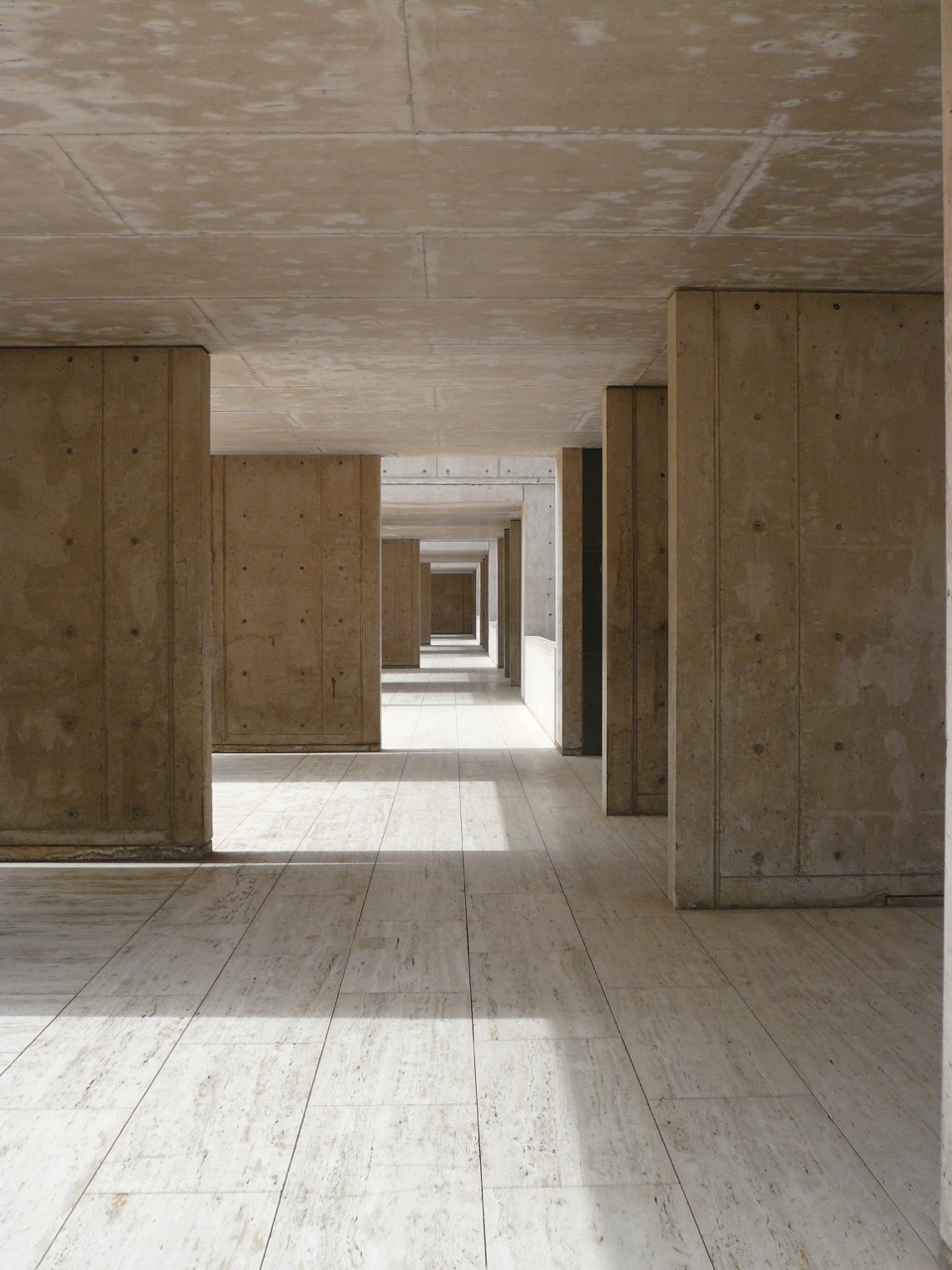
Every room of the senior scientists looks out into the ocean… for creativity, inspiration, and the view of the greater scheme of things.

***

At the reception building where we met to begin the tour, I discovered the work of another artist: Dale Chihuly’s glass work The Sun, suspended from the ceiling:
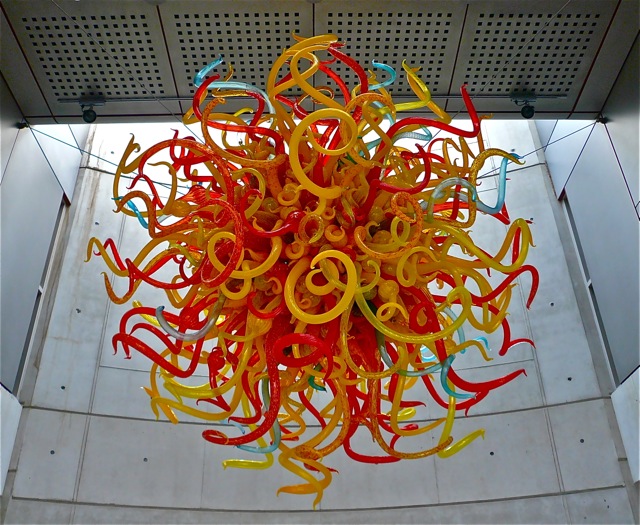
Chihuly’s glasswork is a showcase of colors and vibrancy, depicting visually the exploratory spirit of the Institute. And I think, a wonderful contrast to the minimalist concrete walls around.

***

As soon as I came back home, I took out a DVD which I’d bought some years now but still haven’t yet watched. How wonderful to have that waiting for me: 2004 Oscar Nominee for Best Documentary, a film by Nathaniel Kahn My Architect: A Son’s Journey.

Son of Louis Kahn and Harriet Pattison, Nathaniel Kahn embarked on a journey to discover the father who died when he was only eleven, a father whom he wishes to have known more before a heart attack ended his life inside a washroom at a New York Subway station.

The film is not only a personal journey, but a reconciliation, a late and poignant search for a father and a son’s identity. Further, it’s a tribute to a great architect from his peers, as his son seeks out those who had known the architect professionally: Philip Johnson, I. M. Pei, Frank O. Gehry, Moshe Safdie, Robert A. M. Stern.

It is also about three women and their families who had experienced the joy and pain of being Kahn’s own, a complicated predicament in his life and after his death.

It is also a virtual gallery of the magnificent works situated all over the world. The most impressive to me, other than Salk Institute, is the one on the cover of the DVD, The National Parliament Building in Dhaka, Bangladesh.

“Design is not making beauty, beauty emerges from selection, affinity, integration, love.” — Louis I. Kahn

***

All photos of Salk Institute taken by Arti of Ripple Effects, Feb. 2, 2012. All Rights Reserved.

Photo of DVD cover from myarchitectfilm.com

***

Click here to read more about Louis I. Kahn

Click here to see glass artist Dale Chihuly’s works.

Click here to read more about the architecture of Salk Institute

Click here to read more about Salk Institute

Click here to read my review of the film The Tree of Life

***

A Change of Scenery

What a difference a few hours of air travel can do… this past week I’ve come out of hibernation above the 49th parallel and travelled to balmy San Diego. My world was transformed from snow-capped rockies to surf’s up ocean… and was rewarded with some spectacular sights.

Surf's Up
Birds of Paradise
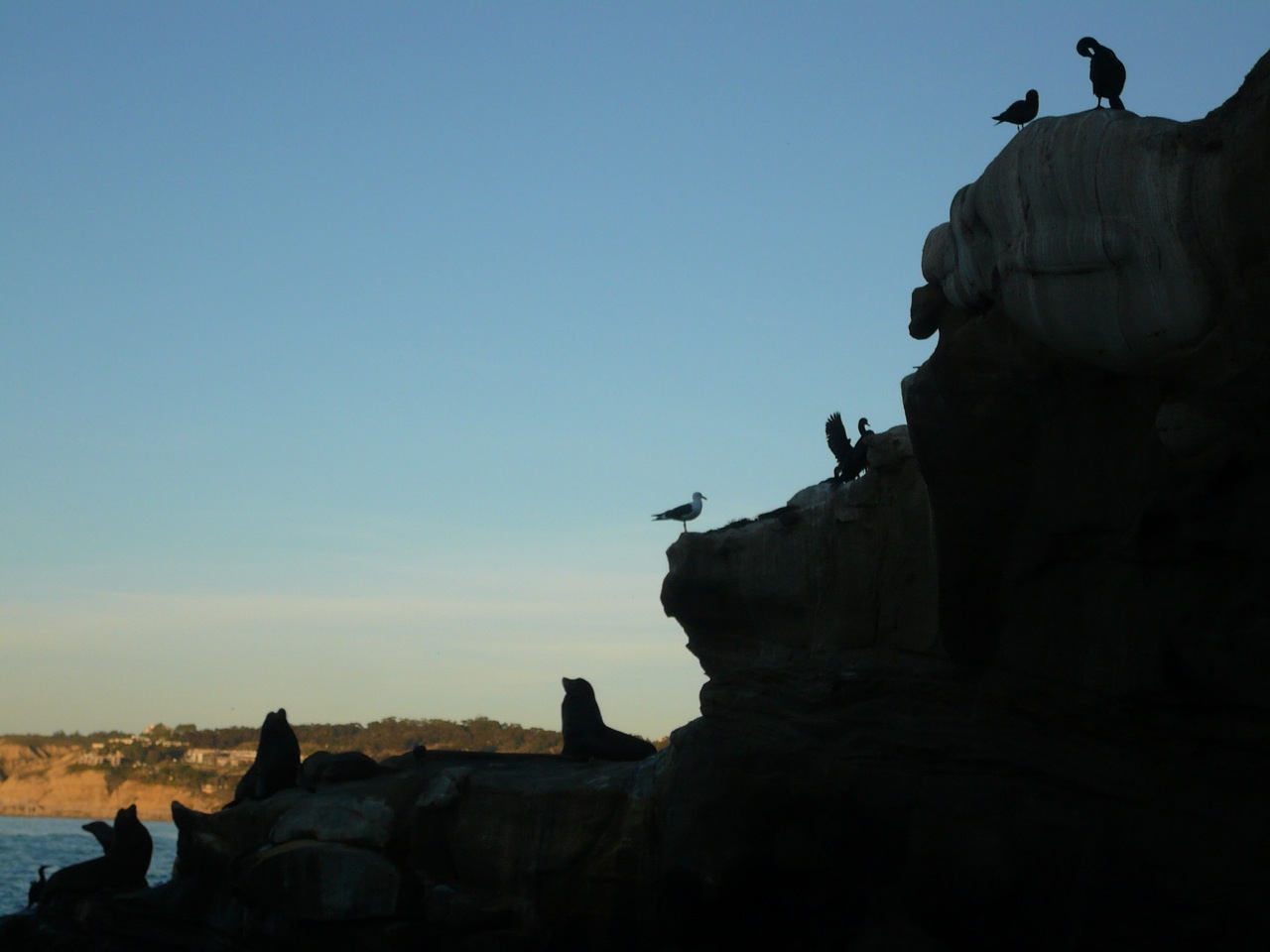
Birds and seals at La Jolla Cove
Palms in Sihouettes
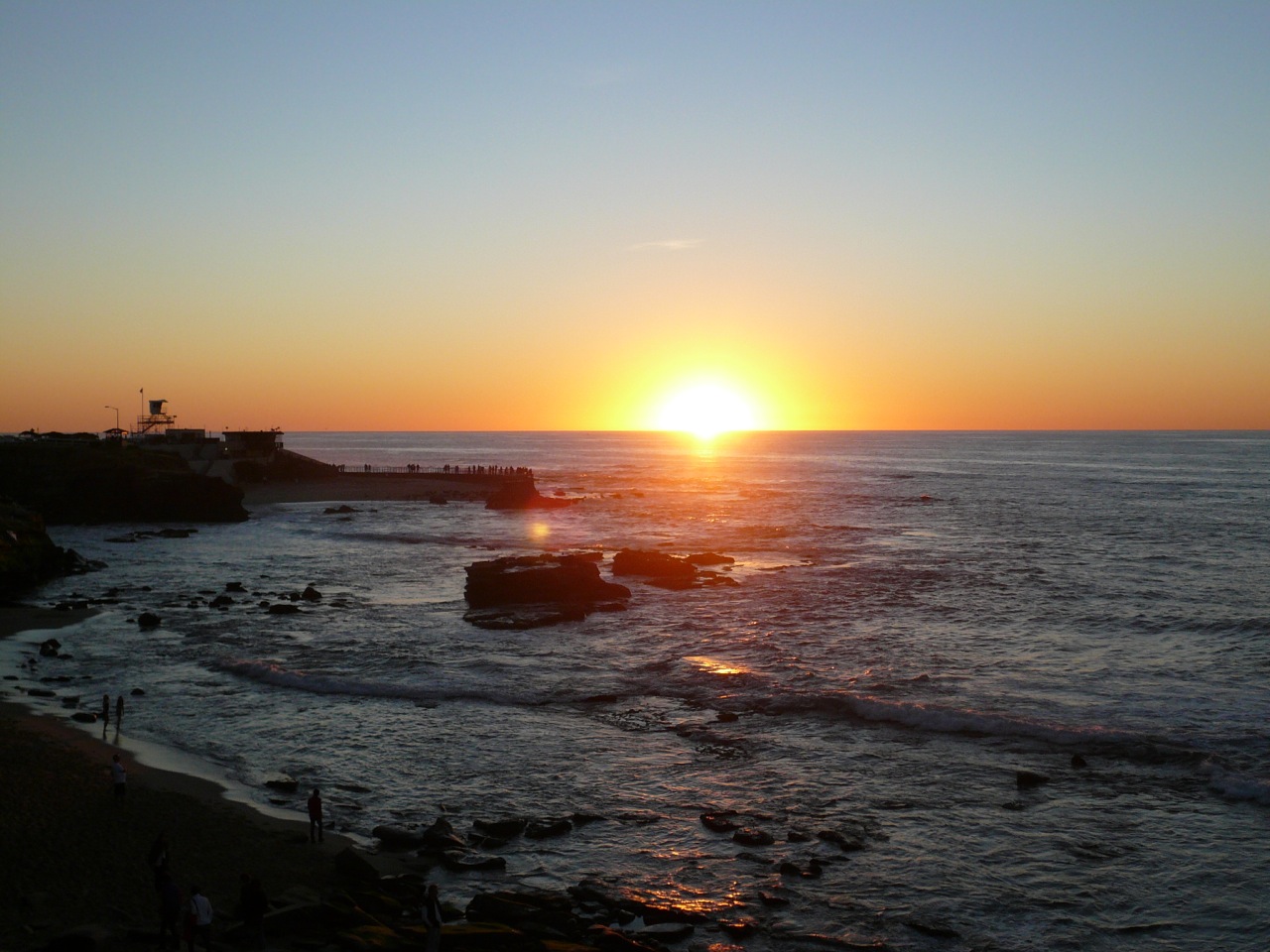
Pacific Sunset

From the ocean to inland, with my Ohio cousin in Thelma and Louise style, we drove through the Mojave Desert, and arrived at Las Vagas. No, not for the slot machines, but was amused to see the town literally painted red celebrating the Chinese New Year: The Year of the Dragon. Here’s a fascinating masterpiece from Jean Philippe Patisserie: A life-size dragon, about 8 feet long and a cherry blossom tree all made of milk, dark, and white chocolate, lanterns of rolling fondants, pearls and flowers of sugar:

The next day, we took a bus tour into Arizona, a five hour drive to the South Rim of the Grand Canyon… a sight no dragon can match:

The Grand Canyon: view from the South Rim

Fred Harvey, a visionary immigrant from London, started the Fred Harvey Company there in the South Rim of the Grand Canyon. In the late 1800’s to the turn of the century, his company and the Santa Fe Railway changed the scene of hospitality by creating comfortable and reasonably priced tourist facilities and meals. Above all, he had the revolutionary spirit to hire a female architect Mary Colter to design the buildings at a time where the Southwest was dominated by macho inhabitants. Her buildings are all on the National Register of Historic Places today.

Mary Colter was an architectural pioneer. For forty years, she designed for the Fred Harvey Company. Her works blended with the natural environs and the native inhabitants of the Grand Canyon. Her materials were mostly wood and stone, her style rustic. Here’s the Bright Angel Lodge where Harvey offered many women employment opportunities. The waitresses in the dining room were known as Harvey Girls.

Bright Angel Lodge

Another Colter work: The Lookout Studio, which offers a breathtaking vantage point to the Grand Canyon.

Lookout Studio

I was pleasantly surprised to find this plaque at the entrance of the Lookout Studio:

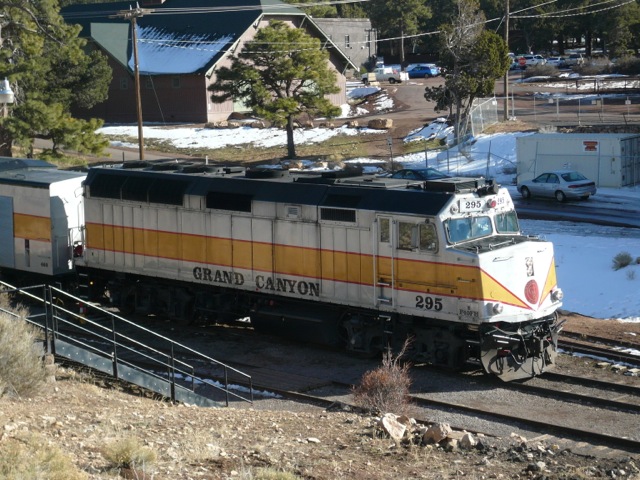
The Grand Canyon Railway begins in Williams, Arizona, and for 60 miles, bring its passengers north through beautiful forest and mountain scenery to their destination at the Grand Canyon. The first passenger train arrived at the Canyon in 1901. During the 1960’s, travel was taken over by the automobile. But today, it has resurfaced as a vibrant mode of tourist attraction.

More sights to share… coming up.

***
Looking for “Intrusions of Grace” in Nature

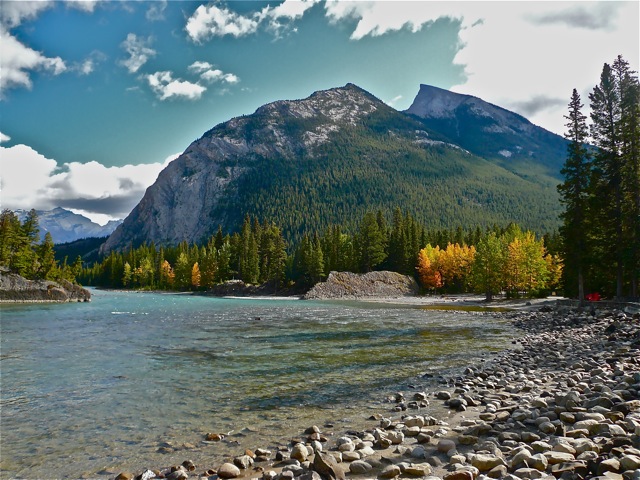
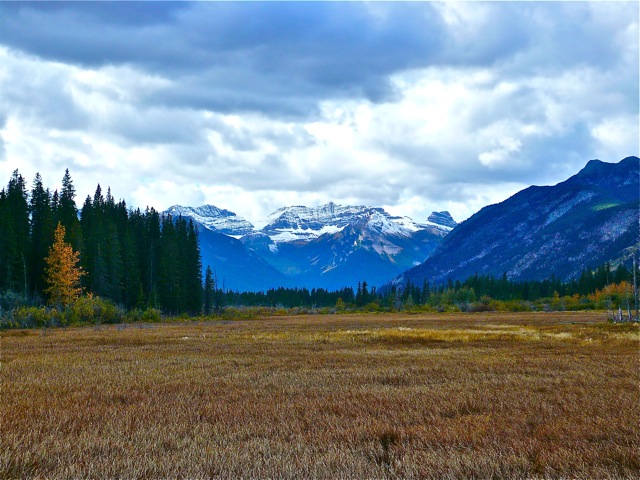
This may be the easiest to find, especially with our glorious fall this year. Not intrusions, but infusion of common grace. I’m amazed because everywhere I turn, I see beauty that’s out there and so accessible to me. Like their raison d’etre is for me to behold and enjoy. From the macro scale like these scenery at Banff National Park:

.

To the medium range, nature in our city streets:

.

To the micro scale. Last long weekend, I walked the Douglas Fir Trail. Again, I’m grateful for our urban parks:

And what an apt occasion, Thanksgiving Day, for me to discover all these minute wonders on the Trail. First, the colours:

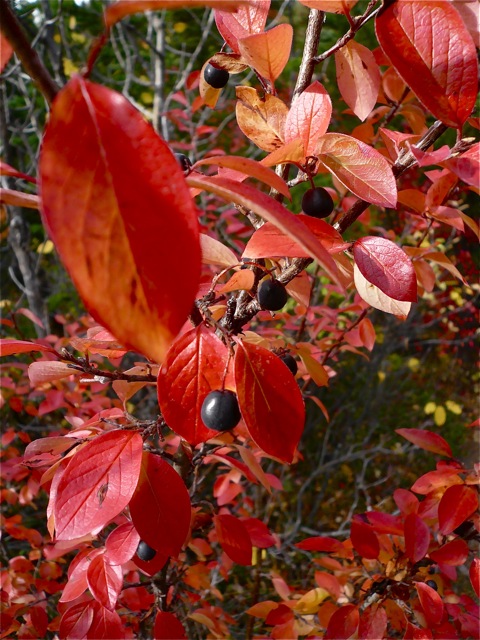
Nature in the miniscule… the varieties of berries. Black against red:

Red against green:

And these pure whites like pearls in the undergrowth:

And the vibrant lives on two fallen twigs… I was mesmerized:

If we’re intruded by grace, I’m more than willing to give in.

***

All photos taken by Arti of Ripple Effects in the fall of 2011. ALL RIGHTS RESERVED.

Signs of Fall

The changing of the seasons is best captured in nature. Immersed in the glorious sunshine and unusually mild temperatures, I took these photos in my neck of the woods on the last day of summer. Yes, I’ve enjoyed my occasional trips out to the B.C. Coast, or my excursions in Toronto, where the sign of fall is the Film Festival. But I’ve been solidly grounded all these years in Southern Alberta.

Here are the reasons…

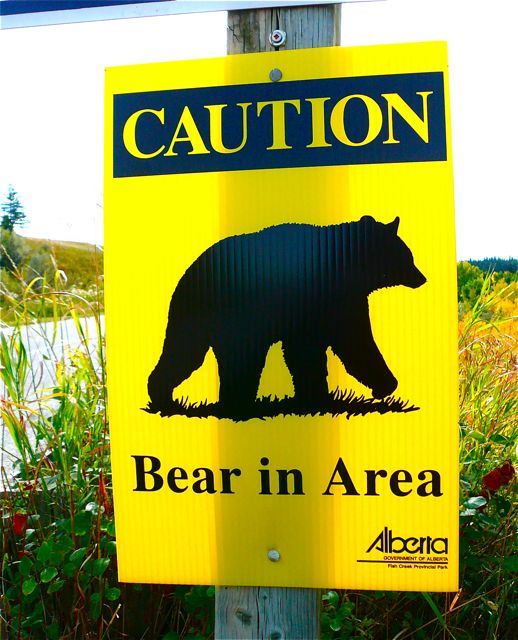
These are glimpses of Fish Creek Provincial Park, a natural sanctuary of 13.8 km2 (3,330 acres) right within our City’s boundary. It is one of the largest urban parks in North America. This is where I see the signs of fall, Alberta style.

.

.

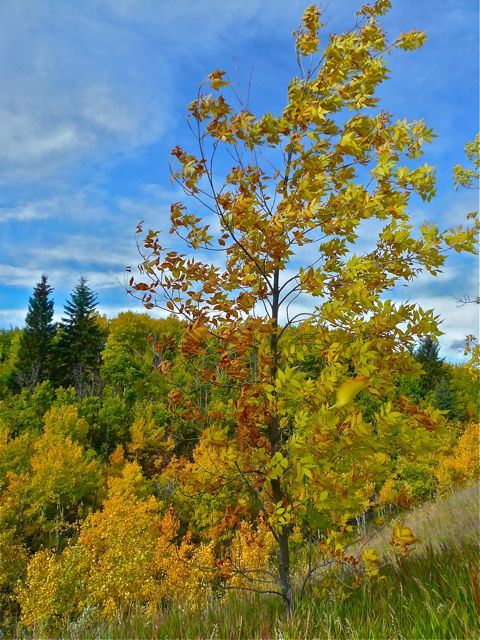
I won’t see the red as in B.C. or the East Coast where maples are prevalent, but here our own golden, rusty shades are soothing and ethereal. Remember the colour scheme in that movie “Far From Heaven” with Julianne Moore, or Terrence Malick’s “Days of Heaven“?  Funny that both films have the same word in their title.

.

.

.

And with succulent fruits ready for the picking, here’s a sure sign of fall:

.

****

All Photos taken by Arti of Ripple Effects, September, 2011.

ALL RIGHTS RESERVED.

For more wonderful fall photos CLICK HERE to my post Looking for ‘Intrusions of Grace’ in Nature

A Sequel to Days of Heaven, Mr. Malick?

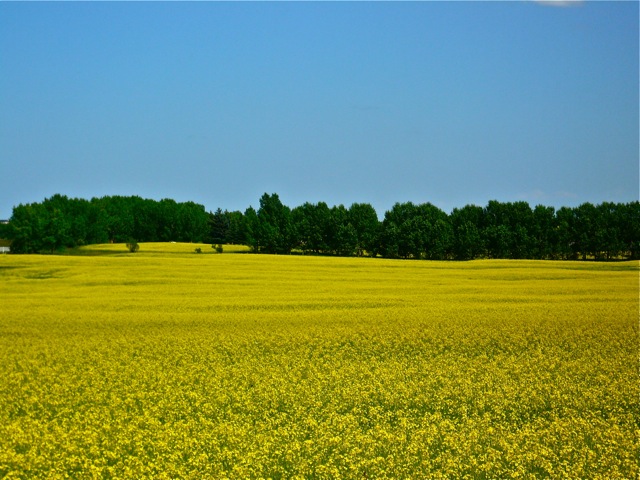
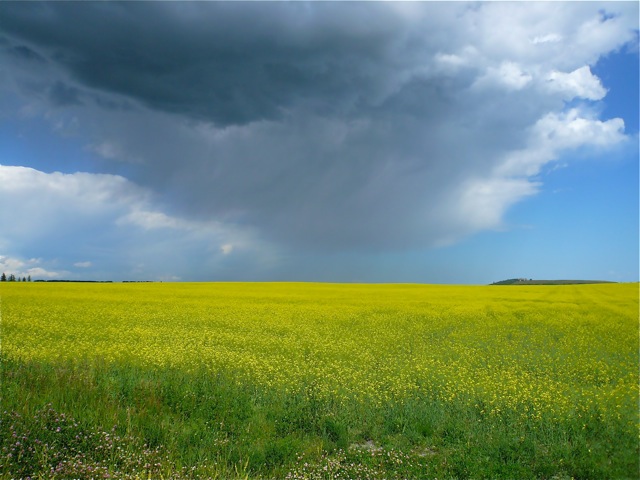
It has been over thirty years since you directed the cinematic “Days of Heaven” on location here in Southern Alberta. The four-foot tall wheat in the massive field near Lethbridge was the main attraction I understand. So it’s been decades now, lots have changed. But as to this relatively pristine province of Alberta, I can say the land is still wide and the sky still blue after all these years.

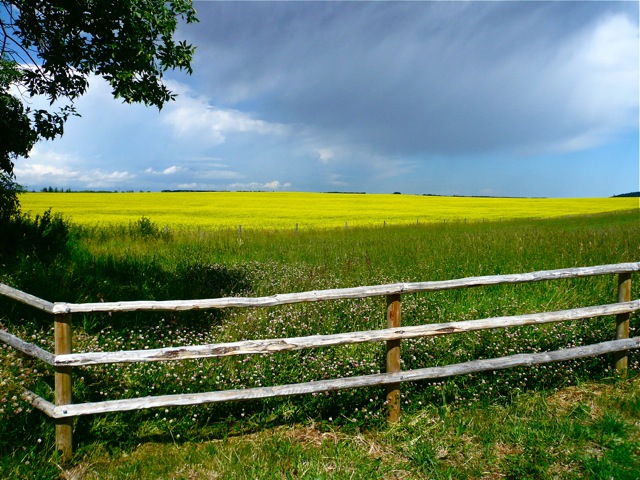
As I was driving through the open country a couple of weeks ago, I was captivated by, no, not the wheat fields, but the rapeseed farms (a better term is canola). The colour was brilliant yellow, equally cinematic as the golden wheat fields. A thought came to me…

Mr. Malick, how about coming back for a sequel to your beautiful film “Days of Heaven”?

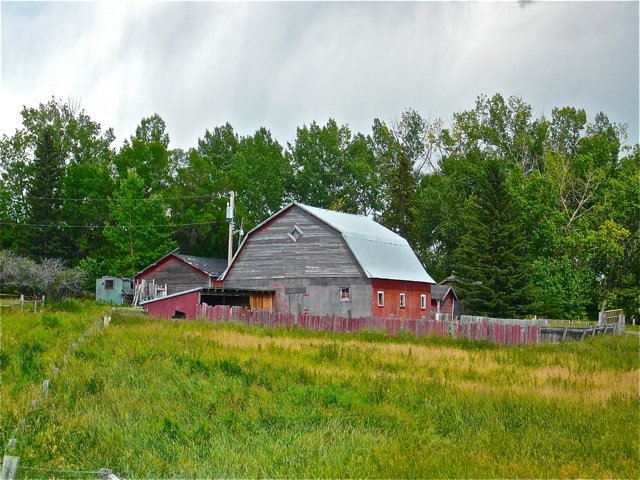
Here are some sights I took in on that brilliant mid-summer day:

And if you need a location scout…

***
All photos on this post are taken by Arti of Ripple Effects in July 2011. ALL RIGHTS RESERVED.

To read my review of Days of Heaven, CLICK HERE.

To read my review of The Tree of Life, CLICK HERE.

Urban Sanctuary

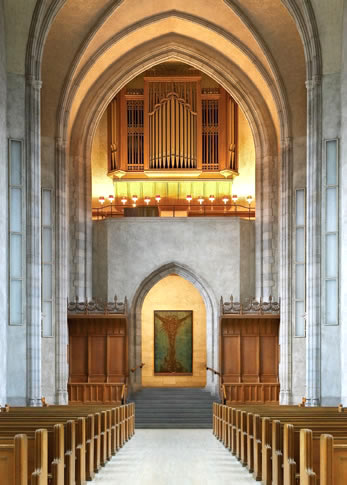
June has been a month of travelling for me. From the natural beauty of Vancouver to über busy and congested Metro Toronto, I’ve shifted gear and gone from park to overdrive in two short weeks. Quiet garden paths have been replaced by the 12-lane Highway 401, rain forest has turned into concrete jungle. And so I was pleasantly surprised by this serendipitous find right in the heart of downtown Toronto. Amidst the hustle and bustle, I found this sanctuary… literal and spiritual, the Trinity College Chapel on the campus of the University of Toronto:

Every step into the magnificent architecture instills awe and wonder, every artefact a symbol:

Looking back to the choir loft is another stunning view (this photo from Wikipedia):

The painting on the wall in the narthex, a crucifix, is entitled “Mediterranean Christ” by the artist Juan Sala Santonja:

***

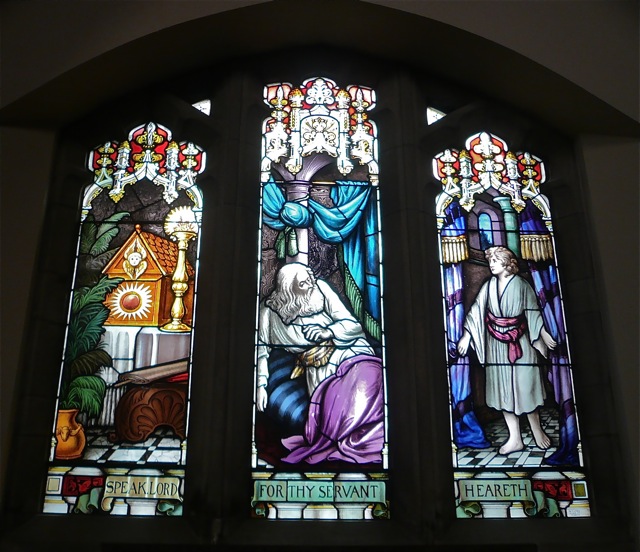
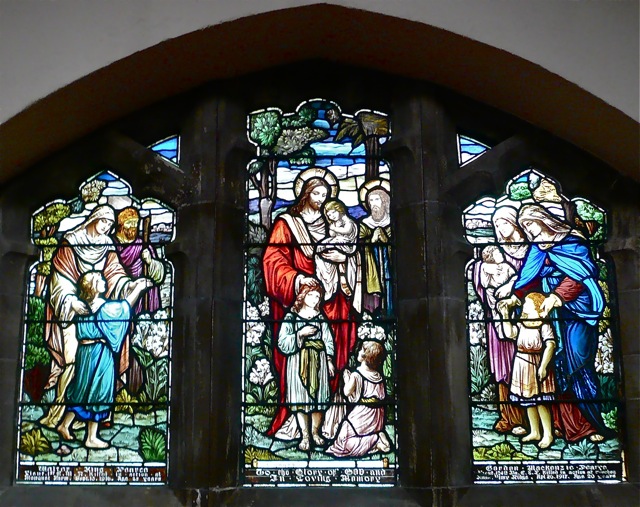
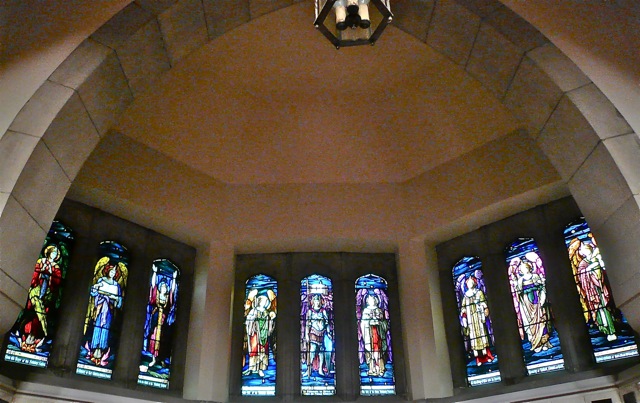
Another joy of discovery is Grace Church On the Hill, Anglican. My expectation of my short sojourn in Toronto had never been stained glass or religious art. But here I was, beholding Biblical themes in beautiful stained glass:

This contemporary wall sculpture created by Catherine Widgery of Montreal juxtaposes well among the stained glass, for its message points to a similar theme:

Entitled “By Her Own Radiant Light”, John Milton’s verse is engraved on a brass plaque beside the installation:

By her own radiant light, though sun and moon

were in the flat sea sunk.

And Wisdom’s self

oft seeks to sweet retired solitude,

Where, with her best nurse

Contemplation,

She plumes her feathers,

and lets grow her wings.

The pamphlet beside the art installation conveys the meaning: As the Moon’s illumination is the reflection of the Sun, Christian disciples are reflectors of the Greater Light. The phases of the moon suggest an eternal cycle of life, death and rebirth. Loss returns to fullness; darkness becomes light. The fragments of reflected light on water form a triangle below the full moon. Each fragment of light is a single piece of metal, cut and assembled so as to suggest the light’s effect on the surface of the water. At the heart of the circle, the light reflected on the surface is brilliant and intense, and diminishes as it spreads farther from the source.

As someone who’s always drawn to ripples, I spotted this installation right away as I entered the  sanctuary. Reading Milton’s verse and the explanation of the art work helped me gain a deeper appreciation of the visual symbolism.

No rain forests and greenery, but I was drawn to explore another landscape, one where art and imagination formed a bridge towards the unseen and spiritual, no less powerful in bringing out the wonders of creation and the Creator, the Source of Light and Wisdom.

***

CLICK HERE to watch a video clip with visual artist Catherine Widgery

PHOTOS: All photos were taken by Arti of Ripple Effects except the one noted from Wikipedia. Arti’s photos taken in June, 2011. All Rights Reserved.

The Tranquil Side of Vancouver

I’m not a hockey fan. I go to Vancouver mainly for the tranquility of forests, gardens and greenery. There are places where one can be utterly alone, in quiet solitude. Especially now after the ugly Stanley Cup riot, I must show you this side of Vancouver, the quiet gardens and forests that offer one a haven far from the madding crowd.

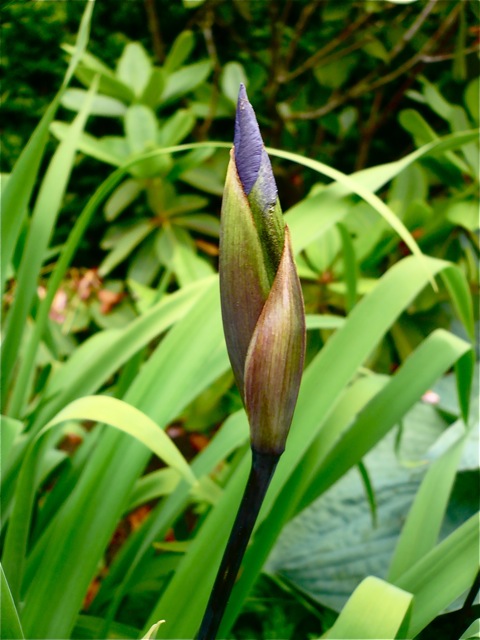
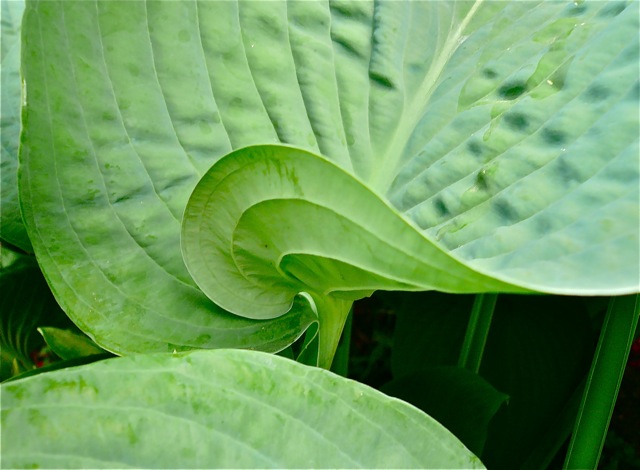
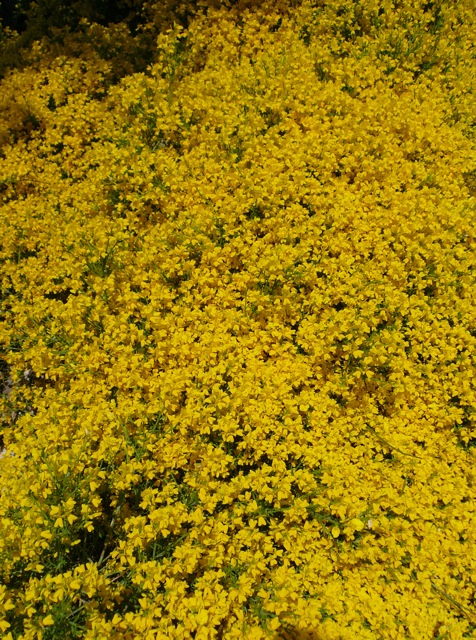
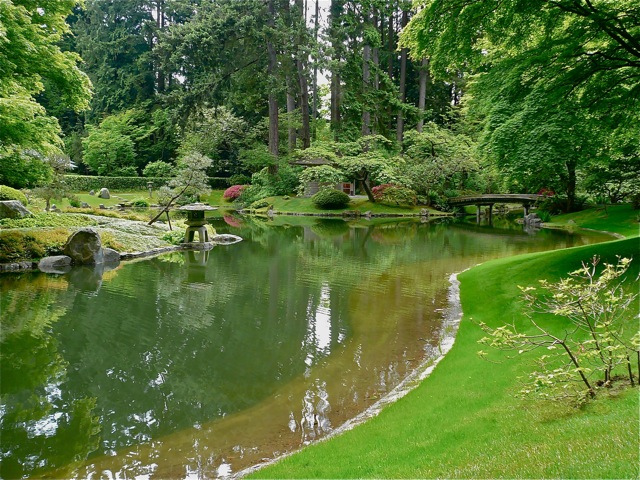
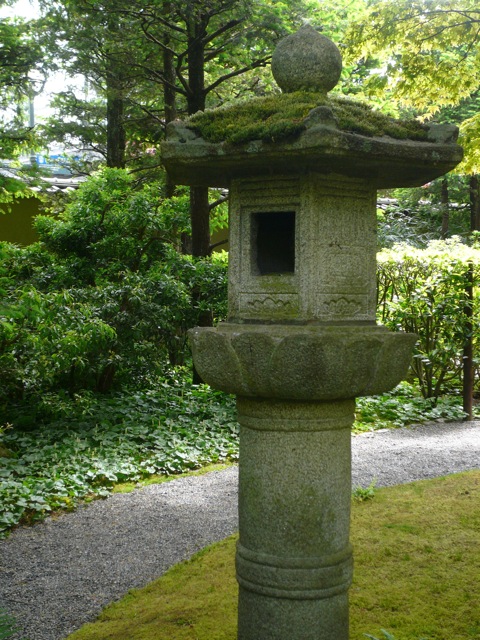
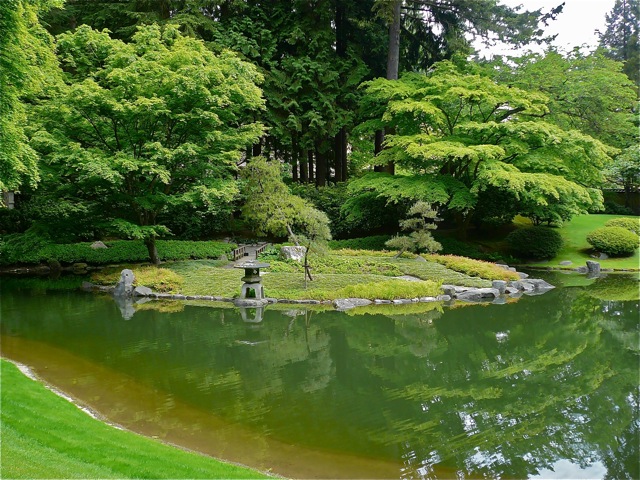
The flora on the UBC campus… the budding irises, hanging wisteria, exploding rhododendrons, and the unknown flowers and foliage (I’d appreciate your identifying them for me below the rhododendron)… and the sequestered Nitobe Japanese Garden:


The Nitobe Japanese Garden:

.

***

Art of gardening

nature reshaped, redesigned

 prune the riotous heart

***

All photos and writing by Arti of Ripple Effects, June, 2011. ALL RIGHTS RESERVED.

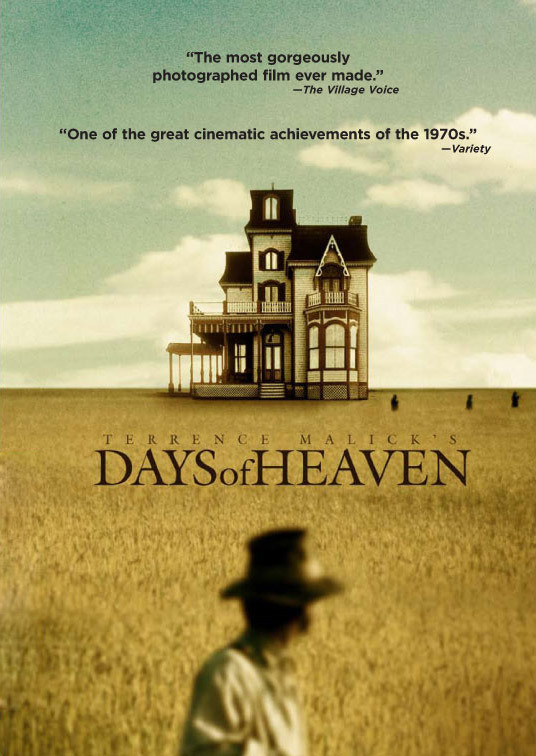
Days of Heaven (1978) by Terrence Malick

It all began when I watched the “The Tree of Life” trailer in the theatre. I was mesmerized. A few seconds into the trailer I decided it would be a must-see for me. Then later it won the Palme d’Or at the Cannes Film Festival on May 22. I’m now catching up on Terrence Malick’s previous works before “The Tree of Life” screens here in our city in a few weeks time.

The reclusive auteur Terrence Malick has only made five feature films in his directing career which spans four decades: Badlands (1973), Days of Heaven (1978, Won Oscar for Best Cinematography), The Thin Red Line (1998, seven Oscar noms), The New World (2005), and The Tree of Life (2011, Won Palme d’Or at Cannes, so far). His academic background in philosophy at Harvard and later as a Rhode Scholar at Oxford has found its expressions in his cinematic creation.

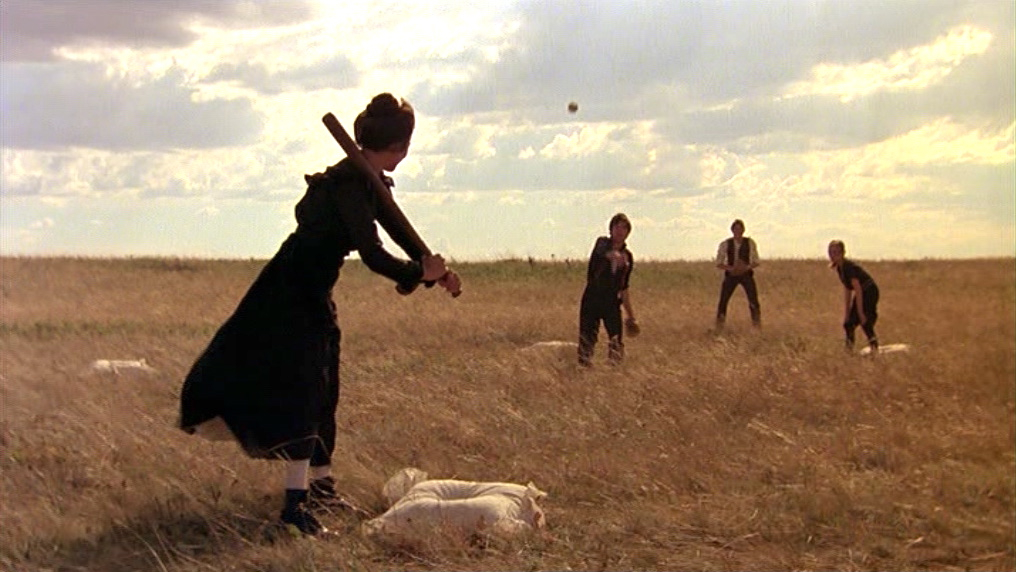
“Days of Heaven” in the Criterion Collection is a fantastic restoration and transfer. I watched it on the DVD. I suppose the Blu-ray would be even more spectacular. Some call “Days of Heaven” one of the most beautiful films ever made. Well, I haven’t seen all movies ever made to say that, nevertheless, of all that I have seen, such a statement is certainly not an exaggeration. Using mostly natural light, every shot is cinematic poetry. Enthralling scene sequences joined together to produce a piece of artwork that speaks the quiet, and sometimes silent, language of visual eloquence.

Written and directed by Malick, the film is nostalgically set in the 1910’s. The story is about Bill (Richard Gere), a hot-tempered steel mill worker in Chicago, who has to flee after an altercation leaving a man dead. He and his lover Abby (Brook Adams), and his younger sister Linda (Linda Manz) run away together and end up working in the harvest on a Texas farm. Pretending to be Bill’s sister, Abby is soon courted by the farmer (Sam Shepard). Overhearing that the farmer has only a year to live due to an illness, Bill persuaded Abby to marry the farmer so they can inherit his properties after his death. Every choice has its consequence. The plot unfolds in intriguing ways. Biblical parallels are deftly embedded in the scenes, Abraham and Sarah, the plague of locusts, Linda’s voice over allusion to the apocalypse… not just offering stunning images but thought-provoking as well.

And I must mention, I have a connection to the movie. It was shot right here in southern Alberta, and some scenes right here in Calgary, in Heritage Park to be exact. No, I wasn’t an extra. But proud that this regarded by some as one of the most beautiful films was shot entirely on location here in this province. It is the magnificent expanse of Alberta’s wheat fields and not those in Texas that we see in the film. The reason: from the DVD commentary I learn that the wheats were four feet tall in Alberta while those in Texas were only two feet.


***

CLICK HERE to read my review of The Tree of Life (2011) by Terrence Malick.

CLICK HERE to my post “A Sequel to Days of Heaven, Mr. Malick?”

Photo Source: Screenmusings.org. Use as per outlined in Fair Use, for review and educational purposes only.

Of Words and Spring

April is the month of empty dreams
Half the days gone
waiting for words and spring
still frozen ground
and on the screen
a frigid page as white as snow.

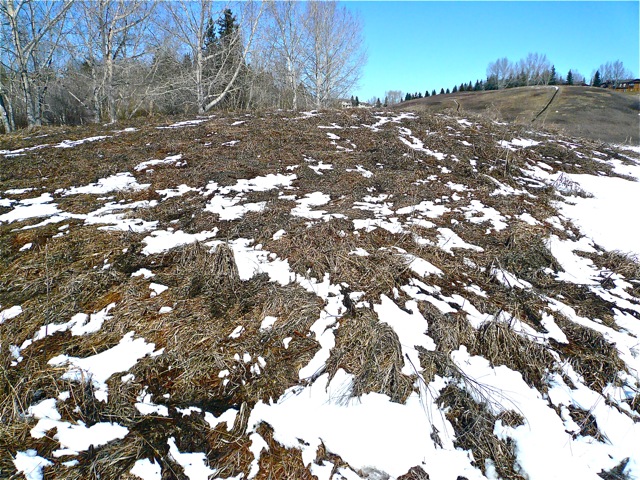
Brown could be the color of hope
After the white
for all I know
green is too much to wish for
I’m contented to see a patch
of dry and withered brown.

The sun is a perpetual sign
that there’s still hope
But it’s no herald of the seasons
for its presence comforts all year long
warming my blank and barren state
as I await for words and spring.

But Easter is an apt reminder
that The Word had come
spoken clear to half-frozen ears
His body hung on a lifeless tree
Blood and water flowed
onto parched and dusty earth

So what if no words come to me
That dreaded writer’s block
reigning the winter of sterility
numbing senses,
snatching thoughts,
seizing any sign of spring.

It’s not about a post or a blog,
Or even buds and melting snow.
The Word had come
lived and loved among us,
broken, bled, died and rose,
melting frozen hearts to greet
a new Spring and eternal growth.

Poem and Photos by Arti of Ripple Effects, April 2011. All Rights Reserved.


Winter Wonderland

I caught this lone cross-country skier on a frozen creek in snow country.  Let this be my Christmas card to all:

May your Christmas be as serene and exhilarating as this magical moment.


***

And, thanks to a reader’s suggestion, may the following carol warm the winter chills and quiet the holiday frenzy.

‘In The Bleak Midwinter’


A Merry Christmas To All!

***

Photo taken by Arti of Ripple Effects, December 2010, All Rights Reserved.

Winter in November

Just a mere two weeks ago, I was taking an Autumn walk, where I enjoyed a feast of sight and sound.

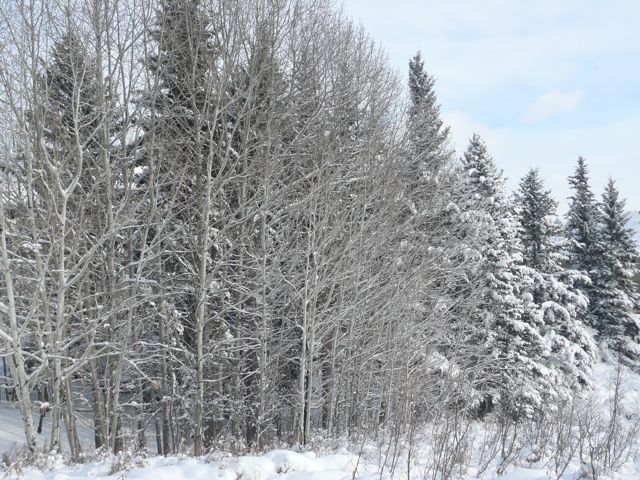
But now, besieged by a snow storm two days ago, we have been made captives by the fierce side of nature.  We skid through icy roads and make it home only to perform our due diligence, the removal of mountains of snow on our driveway and sidewalk.

After two days, I am determined to break out of this physical and psychological confinement.  If we are to have winter in November, so be it.  Might as well embrace nature in all her facets.  Donning a toque, gloves, winter jacket and snow boots, I ventured out earlier today.  Here are some of the sights:

As I treaded through knee-deep snow, I came upon the place where I spotted my deer friend munching on his foliage just two short weeks earlier.  And even just a few days ago, I saw his clan scavenging the dry grass.  Where could they be hiding in this minus 15 C temperature?  What would they have for supper? Where and how do they sleep at night with the fierce wind blowing at even colder minus 20’s?

Just then the sun broke out through the overcast sky,  I seemed to hear my deer friend saying: Don’t worry about us.  We’ve gone through numerous winters, and still able to raise a clan.  As long as the sun comes out everyday…

Even the evergreens seemed to be waving at me, you mind your own slippery drive and cabin fever, we’ll be fine.


Yes, as long as the sun comes out everyday, we’ll soon see spring.

***

A Late Autumn Walk

What’s more pleasurable

than a late Autumn walk in the wild

Chopin as companion, ballade cinematic

Tonal colors streamed through earbuds

Sight and sound in perfect harmony


.

Stripped of adorning leaves,

the birches displayed their true essence.

Backbones strong against the wind,

Branches lifted to reach the remaining sun

Stoic elegance intertwined Romanze Larghetto


.

.

And then we met,

A surprise encounter, a momentary start,

Among the low bushes a deer, antlers majestic,

Eyes darted up from his quiet meal,

Weighing my next move.


I walked past without stopping.

It’s not polite to stare,

especially when someone’s eating.

His gaze held me a moment, then let me pass.

I sensed a mutual respect, nature shared.


And so we parted, unperturbed,

after just a split second of cautious exchange,

leaving each other feeding freely,

foliage in his mouth,

and Chopin in my ears.


***


This is what I was listening to… Chopin Piano Concerto No. 1, Second Movement, Romanze Larghetto.