Summers come and summers go, reading lists for students tend to remain a constant, or… no?
According to The Boston Globe, the following are a few titles from high school summer reading lists over the years:
1915-1916 (long list of choices for regular year and summer)
- Walden by Henry David Thoreau
- Gulliver’s Travels by Jonathan Swift
- Mill on the Floss by George Eliot
- Works by Stevenson, Twain, and Dickens
1984 (requirements by grade and academic level)
- The Grapes of Wrath by John Steinbeck
- Jane Eyre by Charlotte Bronte
- The Woman Warrior by Maxine Hong Kingston
2009 (recommendations, not requirements)
- Twilight by Stephenie Meyer
- Into the Wild by Jon Krakauer
- Angels and Demons by Dan Brown
- Pride and Prejudice and Zombies by Seth Grahame-Smith
ah… the times they are a-changin.
Instead of (or, hopefully, on top of) reading the original Pride and Prejudice, students today are offered the zombies version… optional, of course. The current view is, students should be enticed to read, not forced to. Reading is supposed to be fun, after all, it’s summer.

Around the same time, Newsweek published The Meta-List of Top 100 Books of all time. The List is a compilation of 10 top book lists, including Modern Library, the New York Public Library, St. John’s College reading list, The Telegraph, The Guardian, Oprah’s, and others. The Meta-List… the mother of all lists.
Here are the top 30, just for a taste of the selections. For the complete list, click on the above link.
- War and Peace by Leo Tolstoy (1869)
- 1984 by George Orwell (1949)
- Ulysses by James Joyce (1922)
- Lolita by Vladimir Nabokov (1955)
- The Sound and the Fury by William Faulkner (1929)
- Invisible Man by Ralph Ellison (1952)
- To the Lighthouse by Virginia Woolf (1927)
- The Illiad and The Odyssey by Homer (8th Century B.C.)
- Pride and Prejudice by Jane Austen (1813)
- Divine Comedy by Dante Alighieri (1321)
- Canterbury Tales by Geoffrey Chaucer (15th Century)
- Gulliver’s Travels by Jonathan Swift (1726)
- Middlemarch by George Eliot (1874)
- Things Fall Apart by Chinua Achebe (1958)
- The Catcher in the Rye by J. D. Salinger (1951)
- Gone with the Wind by Margaret Mitchell (1936)
- One Hundred Years of Solitude by Gabriel Garcia Marquez (1967)
- The Great Gatsby by F. Scott Fitzgerald (1925)
- Catch-22 by Joseph Heller (1961)
- Beloved by Toni Morrison (1987)
- The Grapes of Wrath by John Steinbeck (1939)
- Midnight’s Children by Salman Rushdie (1981)
- Brave New World by Aldous Huxley (1932)
- Mrs. Dalloway by Virginia Woolf (1925)
- Native Son by Richard Wright (1940)
- Democracy in America by Alexis de Tocqueville (1835)
- On The Origin of Species by Charles Darwin (1859)
- The Histories by Herodotus (440 B.C.)
- The Social Contract by Jean-Jacques Rousseau (1762)
- Das Kapital by Karl Marx (1867)
… and so on and so forth. You get the idea. Nothing on the top 100 list is later than 1987 (Beloved by Morrison) except Pullman (no. 84), and quite a few dating back to Centuries B.C.
Now, is this literary elitism that has not caught up with the times? Or, has our younger generation been short changed by not being taught to appreciate some valuable cultural legacy? How do we reconcile the discrepancy between what’s recommended to our students and what experts think are the best books ever written? Or, reading tastes vary, people are free to read whatever they like… Any list produced is therefore prescriptive and hegemonic?
Of course, one could argue summer reading lists are not academic syllabi, give our students a break. They’ll have the chance to read these great books at school… or, will they ever?
Still another debate would be the all too familiar struggle even among book lovers: Literary or Popular Fiction, old or contemporary classics? How do we choose? Reading widely or reading deeply?
And, the very practical question: How can I extend my 24 hours?
***

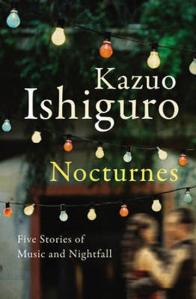 Nocturnes is a recently published short stories collection by
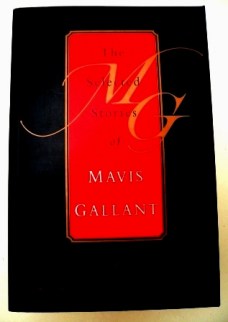 The Selected Stories of Mavis Gallant: 887 pages. Having seen the video of Mavis Gallant reading in a Paris book shop and her conversation with Jhumpa Lahiri, thanks to
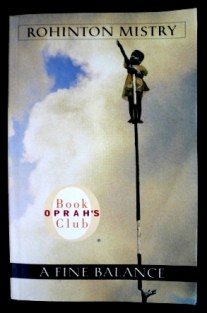 A lady held up a heavy box for me to take this one out underneath: A Fine Balance by Canadian writer Rohinton Mistry. “That’s a good pick,” she said.
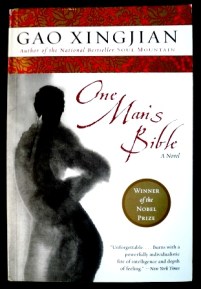 One Man’s Bible by Gao Xingjian, winner of the 2000 Nobel Prize for Literature, the first Chinese recipient of the Prize. Born in China, Gao has been living in France since 1987. The book is translated into English by Mabel Lee, associate professor of Chinese at the University of Sydney. Interesting… although this one I can read the original, the chance of me finding it in a farmers market here in Cowtown, Canada is not great. I’ll settle for the translation.
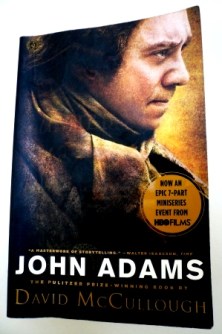 I missed the Golden Globe winning TV miniseries. So, grabbing the original material is just great. David McCullough’s 721 pages John Adams won the 2002 Pulitzer Prize for biography. This is a handsome movie-tie-in- cover edition with many color pictures. What a find!
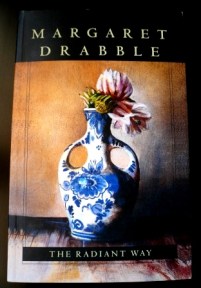 Talking about wonderful covers. How about this one: Margaret Drabble’s The Radiant Way. I’ve never seen this edition of Drabble’s book. A pleasure just to look at.
 And what’s summer reading without beach reads. Here’s my copy of The Devil Wears Prada by Lauren Weisberger. Again, seldom do I see a trade paperback of this title.


 Ripple Effects