Confessions of a Shopaholic: Book and Movie

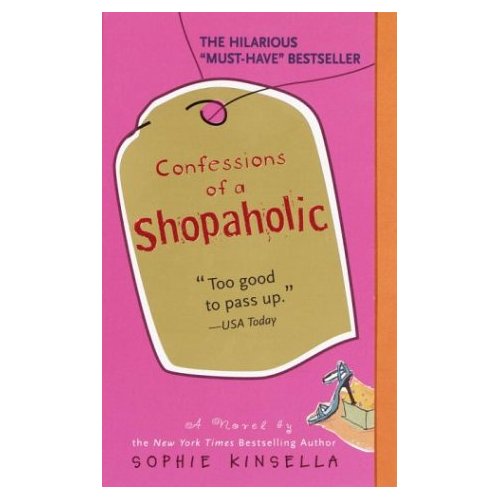
confessions-of-a-shopaholic-book-cover

‘Are you serious?’ my son exclaimed as he pried open my Amazon package.

‘It’s just a filler to make up the amount for free shipping,’  I said.  (Didn’t he know it was for his CD that I had to make this purchase in the first place?)

Ok, after reading Thomas Hardy, Jhumpa Lahiri, Philip Roth, not to mention the very hard-to-get-through Amy Bloom, all in a month’s time, I needed a break.  A break it is.

The book Confessions of a Shopaholic is like a commercial break:  it gives you a chance to relax in between tense moments, a filler, but unlike most commercials, it’s entertaining, very funny, and not as dismissible as it looks.  (To my copy-writer friend: Nothing personal,  it’s just the genre.)

I’d many LOL moments, and several times I caught myself reading with a smile on my face.  How many books have you read that can elicit that facial response? Not that I looked at the mirror while I read, but I just noticed.

I learned a long time ago that the best kind of humor is the self-deprecating kind.  Kinsella’s Shopaholic series just might have extended that axiom to include her own gender.  But why not, Jane Austen did that too, plus the other gender along the way.  And that reminds me, reading Shopaholic conjures up images of Bridget Jone’s Diary,  which in turn,  and remotely, suggests certain Austen-esque styling.

Rebecca Bloomwood is a twenty-five year old college grad lucky enough to have launched a job as a financial journalist at Successful Saving.  A whole new world opens up to her as she gets her VISA card and automatically given an overdraft limit at her bank.  Loaded with such financial ammunition, Becky plunges right into the swirl of brandname fashion and all other fancy stuff a gal just got to have.  After all, they’re all an investment to her, and shopping just seems to be the ideal workout. How can she keep fit just sitting at home?

“They should list shopping as a cardiovascular activity.  My heart never beats as fast as it does when I see a ‘reduced by 50%’ sign.”

In no time, Becky Bloomwood the financial journalist has sunk deep in debt.  The irony becomes more acute when she is invited to appear on TV as an adviser on personal finance management.

Kinsella has crafted a modern day satire on the female psyche vis-a-vis consumerism.  Ok, some female psyche… not all.  Her sharp observation of human nature, and spot-on nuances on both genders, together with the generous unleashing of self-deprecating humor, effectively mask the didactic end of  Shopaholic.  The book might have delivered the message for us all in today’s slumping economy.  It has unwittingly (or perhaps wittingly) depicted some of the causes of such a major breakdown in our financial system:  the allure of credits, the insatiable quest for posession, the deception of desire over need, and the tyranny of brandname consumerism.

The author has effectively created a comic caricature.   Rebecca is an addict in denial, but she’s amiable nonetheless.  We laugh at her flaws and errors because we can sympathize with her predicament, or maybe even identify with some of her weaknesses.  The book is almost script-ready, it has the funny dialogues, the colorful characters, the dramatic elements.  Although the story doesn’t get fired up until the last hundred pages, it’s an enjoyable read overall.

~ ~ ½ Ripples
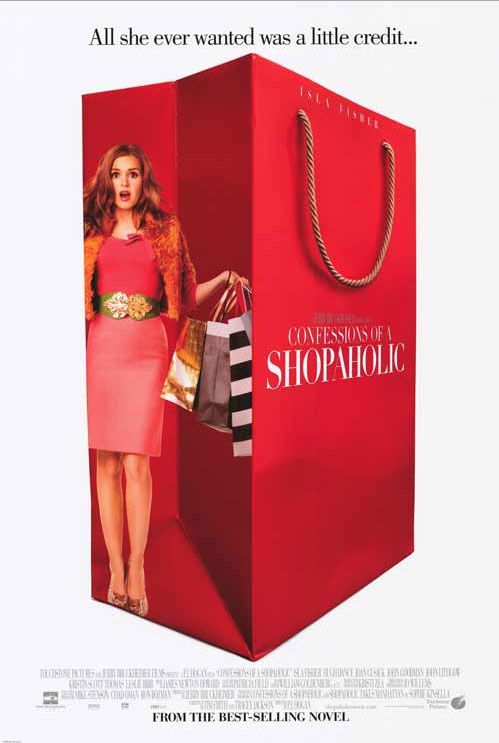
confessions_of_a_shopaholic_movie_poster

And for the movie, well, the movie is a different matter.

Australian director P.J. Hogan (My Best Friend’s Wedding, 1997) has wasted some highly workable comedic materials, and a talented supporting cast like Kristin Scott Thomas, Joan Cusack, John Lithgow, and John Goodman.  He has reduced a pleasing, humorous, and relatively intelligent book into a slapstick, patchy, and mindless farce.  LOL response in the theatre was almost nil, because the script is simply flat and not funny, despite the earnest attempt of the cast.  Isla Fisher (Definitely Maybe, 2008) has downgraded Becky Bloomwood into a stereotypical, silly female wrapped in pink;  Hugh Dancy (The Jane Austen Book Club, 2007), who plays her boss and later love interest, seems too constrained to be effective.  The movie simply epitomizes and confirms the bad rap ‘chick flicks’ are getting.

Throughout, I’ve the feeling that I’m watching the sequel of The Devil Wears Prada (2006) but without its depth of characterization, and Becky Bloomwood is the dumbed down version of Elle Woods in Legally Blonde (2001)… alas, a pitiful rendition of Pretty In Pink (1986).   What it lacks in brain it rescues itself with a little heart in the latter part.  But the fond feeling comes too little too late.

And I can’t help myself but to ask if the movie was directed by a female, would it be quite different.  But then I’d be stereotyping.

~ ½ Ripples

*****
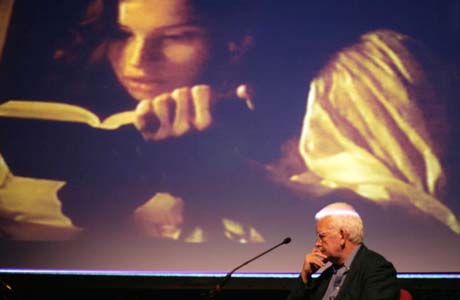
Too Much Jane?

davies460

Andrew Davis pondering

The Welsh filmmaker Peter Greenaway once made a controversial remark criticising film versions of literary work as mere “illustrated books”.  Regarding Jane Austen’s work, he said:

Cinema is predicated on the 19th century novel.  We’re still illustrating Jane Austen novels–there are 41 films of Jane Austen novels in the world.

What a waste of time.

Click here for the Wales news article containing the above quote.

To the discomfort of Mr. Greenaway, there have been more Austen adaptations made since he spoke.  As recent as just two weeks ago, BBC has announced that a four-episode production of Emma will be launched this fall.  The award-winning writer Sandy Welch (Jane Eyre, 2006, TV; Our Mutual Friend, 1998, TV) is working on the new script, with actors pending.

Why do we need another Austen adaptation?  Do we need another “illustrated book” as Greenaway has argued?

I was surprised to hear such remarks from Mr. Greenaway, himself an art house filmmaker.  He certainly doesn’t need to be reminded of the power of the visual.  I have expressed my stance against his argument in a previous post entitled ‘Vision not Illustration’.  But as more Austen adaptations appear, laying ratings and profits aside, I still believe there is an artistic merit in turning book into film.

The visual has an immense power in bringing out the essence of the literary.  An image can elicit deep and hidden thoughts, stir up emotions of past experiences, point to new insights, and unleash multiple responses in just a short lapse of time.  The cliché  “A picture speaks a thousand words” has its application in this visually driven generation.  Not that I do not treasure the classics, or the literary tradition.  Far from it.  I think a good film adaptation can, at best, enhance our enjoyment of the literary, and if it fails, can only help us appreciate the original genius even more.

If Bach, over 300 years ago, could invent Theme and Variations, why can’t we in this post-modern age, where multiple narratives are cherished, create adaptations to a recognized original?  Of course, the key is held by the filmmakers. It takes the insightful and  interpretive lens of a good writer, director, and cinematographer to craft a fresh perspective, one that can evoke a new vision and yet still remain true to the spirit of the original.

Kate Harwood of BBC explains why another adaptation of Emma is ensued:

In Emma, Austen has created an intriguing heroine, and our four-hour canvas allows us to explore this multi-faceted character in detail.  Emma was Austen’s last novel, written when she was at the height of her craft, and we are delighted that such an esteemed writer as Sandy Welch is bringing her vision to this appealing story.

How appropriate it is for Harwood to see film as a canvas for visual exploration, and the writer’s vision as a crucial element in the creative process.

I say, bring on more Austen adaptations.  Jane would be most pleased… belatedly.

*****

The above posted article has since been published in the Jane Austen Centre Online Magazine, where you can read more about Jane and her world.  Click here to go there.   

Click here to read my review of Part 1 and Part 2 of Sense and Sensibility, broadcast on PBS Masterpiece Classic Feb. 1 and 8.

Tess of the D’Urbervilles (2008, TV): Part 2

tessThe “lite version” of Part 1 has turned into a heavy and somber continuation on PBS Masterpiece.  In this second and final part, screenwriter David Nicholls and director David Blair unleash the gloomy Hardy worldview unreservedly,  releasing the bleak and dismal elements that are almost too much for new year viewing.  The music has played a major and dramatic role in setting the tone and mood of the movie.  The cinematography too, in contrast to the lush green opening in the first part, has drawn us into a slough of mud, grey and black.  Hardy’s view of nature lamenting the tragic condition of his heroine is effectively conveyed, engrossing albeit a tad too melodramatic.

Kudos to David Nicholls for a meticulous job in adaptation.  He has kept the plot intact, for the most part faithful to Hardy’s book.  While a couple of incidents are left out, quite meaningful and symbolic too, but not to diminishing effects.  These include the sleepwalking episode, the Freudian slip of Angel’s innermost longing to love Tess despite all restraints.  The second being Tess’ mercy-killing of pheasants wounded by hunters, a sensitive portrayal of her own predicament.  However, Hardy would not have her killed off so easily.  Like the sadistic “President of the Immortals” in his view, Hardy the author wreaks havoc on his heroine, leading her into scenes after scenes of tragic events beyond her control.

tess-part-23

Tess can forgive Angel for his sexual sin, but he refuses to forgive her.  Actually, what sin has she committed if she was innocently violated by Alec D’Urberville when she was a young girl.  She loves Angel unconditionally, but his love for her is marred by constraints.  Later, she cannot avoid stalking by Alec, who keeps preying on her, and in her most needy and vulnerable, takes advantage of her again by manipulating her love for her family.  Whatever dignity she may have Tess ultimately sacrifices it for her beloved family.  But I admire Tess’  integrity, yes I like to see it as integrity, and not pride, that has sustained her until that very end when she finally has no choice but to yield to Alec’s sinister scheme.

It is for this reason that I find Gemma Arterton’s portrayal of Tess as just a proud and feisty gal to suit modern viewers incongruent with the book.  She may look innocent enough, but her performance at times is contrived and lacks the striving complexity required.  But her tears are effective and moving, I must say.  While Hans Metheson has delivered his diabolic role adequately, Eddie Redmayne as the losing lover at the end is a bit lacking.

And Angel, oh, what a tragic character.  The seemingly altruistic lover cannot stand the test against social mores.  In the book, the chapter describing the mutual confession of sins between the newlyweds is aptly entitled:  “The Woman Pays”.  What an irony of double standard!  This might well be the name of the novel.  While Hardy may have held an entangled and agnostic view of the transcendent, his social critique is incisive and spot-on.

the-stonehenge-1

At long last, Tess and Angel can enjoy marital bliss, but only for a painful, fleeting moment.  Tess says in her anguish:  “It is too late”,  the four words that define the tragedy of her life.  As a young girl, she did not understand the meaning of Alec’s sinister advances until too late.  And now as a married woman, her husband has come to her rescue too late.  I learn from the end notes of my Penguin edition that the original title of the book was Too Late, Beloved! What a heart-wrenching story.

PBS has a link to an online interactive Q & A with screenwriter David Nicholls.  In there he  answers the many questions viewers have regarding the process of turning book into film. I have enjoyed Nicholls’ previous adaptation of Blake Morrison’s memoir into the movie “And When Did You Last See Your Father”, starring Colin Firth and Jim Broadbent, an excellent and sensitive film.  I look forward to seeing more of Nicholls’ work in the future.

~ ~ ½ Ripples

Click here to go back to Tess of the D’Urbervilles, Part 1.

*****

Tess of the D’Urbervilles (2008, TV): The Lite Version

tess-of-the-durbervilles-movie

After reading Thomas Hardy’s Tess of the D’Urbervilles just shortly before watching the new re-make on PBS Masterpiece, I can fully understand why screenwriter David Nicholls has done what he did.  He has turned a heavyweight into a light classic.  For if Hardy’s book is to be adapted in spirit and letter, it would certainly be less appealing and just too heavy a burden to cast upon our collective psyche.

As an author, Hardy himself personifies the sadistic ‘President of the Immortal’ he perceives.  Humans are just the playthings for The Immortal’s jest.  As an agnostic, he can’t just outright blame it all on God, since he isn’t sure even if God exists.  But in the book, he makes his readers know clearly the cosmic tragedy his characters are caught in, by turning Browning’s lines into:

God’s not in his heaven:  all’s wrong with the world!

If we can see Hardy on the streets today, I’m sure he’s the guy who takes Murphy’s Law to heart:  Anything bad that can happen will happen.  That’s what he makes of his heroine Tess in the story.  A pure, beautiful and innocent country girl, fresh and untouched for life, is being caught in all sorts of circumstances that will bring only heart-wrenching consequences, one after the other all the way to the end.

David Nicholls has spared us the looming Hardy worldview and lightened it up for us, and I don’t blame him for that.  For who needs more tragedies of cosmic proportion in this very tumultuous time in our human history.   Mind you, he has presented the plot faithfully.  In this first part at least, you see the sequence of events in the book adapted to the dot, albeit in a much more condensed and hurried pace.  Considering the full length of the book is about 400 pages, and the made-for-TV movie is four hours long, that means for every hour he has to cover 100 pages.  From this first part, I’d say he has done an admirable job.

tess-and-alec

Now to Gemma Arterton.  I’ve enjoyed her role as Elizabeth Bennet in ITV’s Lost In Austen.  So it is with high expectation that I come to watch Tess.  If the screenplay is a light version, then Arterton’s Tess is aptly portrayed, for I have a feeling that she has turned it into a comic character at the beginning of the movie.  But maybe that is to contrast her later portrait of lost innocence.  Nevertheless, I feel there is something lacking, maybe the almost god-like purity and depth of love in Tess are qualities just too demanding for so young an actress to depict.

Hans Matheson’s Alec D’Urberville is much more attractive than the detestable Alec described in the book.  Though the obvious villain, his dark and sensual appearance is symptomatic of a soul in turmoil. He has added complexity to his character that even sheds a bit of appeal. I look forward to his crucial role in the latter part of the story.

angel-clareIn contrast, Angel Clare is the innocent lover.  His willing to challenge his strict Victorian upbringing in a clergy family for love of a milkmaid indicates his bold rejection of social norms and family expectations… up to this stage.   Eddie Redmayne has delivered a convincing performance.
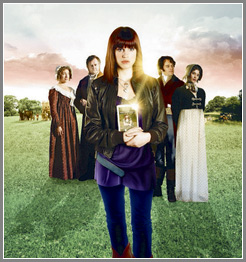
The character that really draws my attention, surprisingly, is Tess’ younger sister Liza-Lu, played by Jo Woodcock.  For some reason that face has the look and intensity that’s so fitting in a film like this.  And the three milkmaids that offer the much needed relief to the story, Marion, Retty and Izz, are well cast and portrayed.  They play no minor roles in Tess’ life.

Finally, I must also mention the new host of Masterpiece Laura Linney.  I admit, she’s more what I had in mind for the character of Tess while reading the book.  Unfortunately that part is taken.  Oh well, I’ll see her again next week, and in future Masterpiece presentations.

So, for a lighter and entertaining take on the tragic story of Tess,  and to browse through the plot in a few visually appealing hours while sidestepping the somber philosophical view of Hardy’s, this BBC production offers a viable choice.

(Photos Source: bbc.co.uk)

~ ~ ½ Ripples (so far)

Click here to go to Tess of the D’Urbervilles, Part 2

*****


Lost in Austen: Episode 1 (TV, 2008)

lost-in-austen

What a delight it was for me to catch the Canadian premiere of Lost in Austen on the new VIVA channel last night, two months after its UK debut on ITV. No, I had not anticipated it with much eagerness, I admit, nor had I held any expectations before I watched it. But, what a pleasant surprise.

I was somewhat skeptical about another time-travel movie and yet another take on Pride and Prejudice. It seems we are doing Jane Austen a disservice to have so many different “versions” of her ingenious work, turning P & P into a modern day literary cliché. How many more original antics can screen writers squeeze out after all the adaptations and fan fiction spin-offs in recent decades? But this one is fresh and original. It is laugh-out-loud funny, entertaining, with intelligent dialogues and a new perspective. I’m afraid to say too, that there are moments with SNL type of parody on the story and its characters, especially Colin Firth’s role as Mr. Darcy.

But it’s all harmless fun. “No offense taken.” I’m sure Jane, with her sense of humor and satire, would have responded, or Colin, for that matter.

lost-in-austen-amanda-priceAmanda Price (Jemima Rooper, The Black Dahlia, 2006), a modern day working female living in Hammersmith, London, is a JA addict. Reading Pride and Prejudice has become her escape from her lacklustre life. She reminds me of Renée Zellweger’s Bridget Jones, although Amanda here manages to keep her weight under control and has a boyfriend that gets drunk on beer and proposes to her with a beer bottle tag as a wedding ring. So, it is a real fantasy for her to find Elizabeth Bennet (Gemma Arterton, Quantum of Solace, 2008 ) in her bathroom, showing her a portal that leads straight to the Bennet house. But understandably, Amanda is a bewildered and reluctant time-traveler, at least at this point.

The freshness of the story comes from all the twists that do not follow Jane Austen’s story. As with my usual reviews, I don’t like to give out spoilers. But I have to say, the key to these ingenious renderings is that Amanda Price swaps places with Elizabeth Bennet. With Lizzy out of the picture in P & P, the rest of the story is up to the screen writer Guy Andrews’ and director Dan Zeff’s own imagination.

In this first episode, most of the major characters are introduced. All of them deliver a lively performance, although I’m particularly fond of Amanda and Mr. Bingley (Tom Mison). The music reminds me of the 1995 BBC production, energetic and swift. In turn, the pacing is quick and effective. My main criticism though, is the set design of the interior of the Bennet house. It looks more like a modern day rather than an early 19th Century setting, quite incompatible with the exterior of the house.

Right from the start, I have resolved to not take this TV production too seriously, but just immerse myself in the wild and fanciful ride it freely takes me. After all, Jane herself had excelled in this very act, transporting us to meet all sorts of characters and situations through the imaginary worlds of her novels. I’m sure she would have a good laugh too tonight if she were watching with me… now that would be a fantasy indeed.

Just Click to read my review of the other episodes:

Episode 2

Episode 3

Episode 4

*****


Then She Found Me: Book Review

This is one of those frequent examples where a film is so drastically different from the book that they are virtually two very separate entities. But what’s unusual is, I’ve enjoyed them both.

Then She Found Me, published in 1990, is written by award winning New England author Elinor Lipman. Helen Hunt, together with Alice Arlen and Victor Levin, wrote the screenplay and turned it into a movie. I can understand why those who have read the book first before seeing the movie are flabbergasted. The only commonality between the book and the film other than the title may just well be the two main characters, the quiet and rational high school Latin teacher April Epner and her birth mother Bernice Graverman, the ostentatious TV talk show host who wants to claim back the daughter she had given up for adoption more than 30 years ago. There are almost no traces of the original story in the movie.

The amusing character contrast in the book is a springboard for some creative channelling for Hunt and her screenwriter team, kudos to Lipman’s original conception of the story idea. Despite its digression from the book, the movie still works and entertains. What more, it has preserved the spirit of the book and has brought to the screen the basic issues the book touches on, the major one being the meaning of motherhood, and the inevitable debate over the value of the birth versus the adoptive mother. For my detailed review of the movie, click here.

The She Found Me is my introduction to Elinor Lipman, the acclaimed author of eight books of fiction and short stories. The book is almost script ready, for it is predominantly dialogues, witty, intelligent, and incisive dialogues. Lipman’s sensitivity and subtle humor effectively bring out the nuances of her characters and their relationships, at times sarcastic, at times genuine, at times poignant.

36 year-old April Epner is a high school Latin teacher, quiet, rational, academic, and single. Her long-sleeved cotton jersey and drop-waist Indian cotton jumper persona hides a kind and genuine soul. The only parents she has known all her life are her adoptive Jewish parents Trude and Julius Epner, Holocaust survivors, who have lovingly brought her up and given her a Radcliffe education. After they have passed away and as she stands in the crossroads of her life, the last thing April needs is to be found by a brassy and impulsive talk show host Bernice Graverman, who claims to be her birth mother. Conscientious April has to match wit with evasive Bernice, with the help of her school librarian Dwight, who happens to be much more than just a supplier of encyclopedic information. Without giving out spoilers, let me just say the story unfolds with sprightly twists and turns, effectively driven by Lipman’s first-rate, cutting and entertaining dialogues.

Those who have seen the movie but have not read the book should move right along to savor the source material. In here you’ll find the intended closure to the seemingly unsolvable conflict and ambivalence. I can see this as a good choice for book/movie discussion in reading groups and book clubs.

As I was reading, I thought I saw Jane Austen cameo. What Lipman has created here is something close to what Austen would have written today: a contemporary comedy of manners, a likable heroine reminiscence of Anne Elliot, an anti-Darcy male character, albeit with similar height and social ineptness, and through the characters and their situations, dares to explore some serious social issues that are masked by very funny, sharp and witty lines. The result is a tasty concoction of humor and heart.

And lo and behold, guess whose portrait I see when I open up Elinor Lipman’s website ?

Then She Found Me by Elinor Lipman is published by Washington Square Press, 1990, 307 pages.

~ ~ ~ Ripples

The Stone Angel (2007): Book Into Film

** The following review contains spoilers**

Since its publication in 1964, this is the first time The Stone Angel is adapted into a movie. As I mentioned in my review of the book last week, whoever that attempts to do this has a formidable task. This classic Canadian novel by Margaret Laurence is a depiction of memories encased in deep inner turmoil. The fleeting and random reminiscence of 90 year-old Hagar Shipley juxtaposing with the present would also prove challenging to bring on screen.

Director, screenwriter, and producer Kari Skogland has made a bold attempt at filling this tall order. Filming the movie in rural Manitoba, The Stone Angel delivers some nice shots of the prairie backdrop, even though Manawaka is a fictional town in the story. The sequences of flashbacks are aptly dealt with quite seamlessly.

The movie has its greatest asset in the cast, in particular Oscar winner Ellen Burstyn (Alice Doesn’t Live Here Anymore, 1974) as Hagar Shipley, and Christine Horne as her younger counterpart. Canada’s own Ellen Page also plays a minor role as Arlene, the girl Hagar’s son John (Kevin Zegers) wants to marry, and of course, against the wish of his mother. The two Ellen’s have some tense moments together. Page’s screen time may be too short though to gratify her fans.

Any fine actor, however, can only perform within the confines of the script. Here lies my major concern: the alteration of the crux of the story, maybe to appeal to a contemporary or a younger audience. The film is a much more mellow and sexed up version of the book. The fiery, ingrained pride of Hagar is much subdued. In fact, she has been changed to an even amiable character. Further, I feel the shifting of the time from the 60’s to modern day somehow trivializes the story. Who would have thought Marvin (Dylan Baker) would be talking on the cell phone and Hagar smoking marijuana…one item off her bucket list?

What author Margaret Laurence has depicted is not just any ordinary stubborn, grumpy old woman, but Hagar Shipley, the tragic heroine, however disdainful. She rages against the dying of the light and doesn’t go gentle with just about everyone because of her deep-seated hubris…even while facing death. The book’s final image of her wrestling the glass of water from the nurse, drinking it without help, wraps up the life of this fierce character. And it’s pathetic to see her pride leading her to make decisions and to act in ways that could well have caused the tragedies in her life.

The scene at the abandoned shed should have led to the poignant, climatic revelation. In the book, Hagar tries to run away from the fate of being confined to a nursing home. She spends a night in this derelict shack and encounters a stranger. During their conversation, she unknowingly verbalizes the pain and guilt she has been carrying all her life by talking about the tragic end of her beloved son John. The name of this newly formed confidant, Murray F. Lees, yes, Flees, points to her perpetual running away from constraints, or maybe even from herself.

But in the movie this stranger is Leo (Luke Kirby), who uses the shed to make out secretly with his girlfriend and then goes on to discuss forbidden sex and share a ‘joint moment’ with the 90 year-old woman.  In the theatre, I heard laughter.  The pathos that should have accompanied this pivotal scene either did not materialize or has been much lessened.

The portrayal of young Hagar played by Christine Horne, while proficient, may have also missed the gist of the story. We see a beautiful red-hair Hagar and a romanticised Bram (Cole Hauser) immersed in blissful courtship and marriage, at least in the first part of the movie. In the book Bram Shipley, a widower-farmer fourteen years her senior, is as rough and callous as Hagar is proud and obstinate.  Their marriage is rocky even from the start, reinforcing the notion that in defying her father, Hagar has made a decision that would later bring her great torments.

By depicting a softer Hagar, and toning down her abrasive pride, the film has diluted much of the poignancy and intensity of the conflicts. The strained relationship between Hagar and her favorite son John has not been sufficiently developed to elicit the emotional impact of the tragedy. Hagar has long placed her hope on John, whom she has esteemed to be worthy to wrestle with the angel, but he ends up breaking her heart. The swift dealing of the mother son relationship in the film fails to depict Hagar, like the stone angel, has been blind to her circumstances. Fortunately, the film has kept the authentic scene of Hagar reconciling with her elder son Marvin, who has taken care of her in her old days. It is Marvin who has wrestled with the angel and won.

The final scene with the Pastor Rev. Troy (Ted Atherton) singing the hymn, touching even the ‘holy terror’ in her death bed, draws the film to a poignant and peaceful close. The audience sees a yielding Hagar going gently into the good night. The voice over of Dylan Thomas’ quote seems inconsistent with what we see.  If Laurence could have her way, she likely would have concluded with the last image of the book where Hagar stubbornly tries to drink from the glass without the help of her nurse, defiant to the end.

I have a reader, a student apparently, once asked me whether he should skip a book he was studying in class and just use the movie version for his course work.  My advice is, watch the movie for entertainment, but read the book for your assignments… the two could be very different entities.

~ ~ ½ Ripples

Then She Found Me (2007)


Then She Found MeLet me guess, movie making is as demanding and draining as child rearing…and, if you’re doing both together, well…kudos to you.  Case in point, a gaunt and much thinner Helen Hunt.  Well, maybe that was on purpose for her role.  Anyway, after some intermittent hiatus since her second marriage in 2001 and the birth of her daughter in 2004, the Oscar winning actress (As Good As It Gets, 1997) comes out with a film that she co-writes, directs, and stars in.  Then She Found Me shows that Hunt is alive and well, and that she certainly can multi-task.

As a directorial debut, Then She Found Me is a gem of a film. Based on the novel of the same name by Elinor Lipman, TSFM has been on the drawing board for a long ten years.  To read NY Times’ Interview with Helen Hunt, Click Here. Hunt adapted the book into screenplay with Alice Arlen and Victor Levin throughout a few years’ period. 

Dramedy is the word for this genre of film.  The drama component of the movie spurs on some meaningful exploration:  of motherhood, adoption, marriage, parenting, faith, and God… But it’s a comedy, first and foremost, and we’re rewarded by its remaining so.  The movie is funny, smart, warm-hearted and entertaining…and best of all, we’re spared all the possible preachy sessions that could have come out from dealing with its subject matters.

Juggling motherhood and movie-making could have explained Hunt’s tired and thinner look.  On screen, such an appearance is suitably in character, for she portrays a 39 year-old kindergarten teacher April Epner, newly married, and in a desperate rush to become pregnant before time runs out.  As an adopted child, April is all the more longing for a baby of her own, thinking of the deeper relationship, bonding and meaning that can naturally come out from giving birth to and raising her own child as opposed to adopting one. To this view, her step-brother, the natural son of her Jewish adoptive mother responds, “No, it’s the same”.

Well, she soon finds out.  Her excitement of finally getting pregnant is not shared by new husband Ben (Matthew Broderick).  It is obvious that he is not eager to become a parent, or a husband, for that matter.  Actually, this news comes to him after he feels that he has made a mistake in getting hitched for life, and has moved back to live with his mother.  Sadly, Ben is still a boy, donning a baseball cap and expects everyone, especially his wife, to accept his Peter Pan confusion.

But that’s not all.  Just after her husband has left her, April’s Jewish adoptive mother dies.  And to top it all off, April encounters her birth mother Bernice (Bette Midler).  Well to be exact, her mother has found her.  But at this chaotic point in her life, April is ambivalent about coming face to face with her birth mother, especially one who is so brassy, imposing and self absorbed.  Bernice is a local TV talk show host.  After 39 years of absence, she suddenly decides she wants to find her daughter.  But upon questioning by April why she had given her up after a short parenting gig, Bernice may have understood April’s ambivalence.  And I like it when the film leaves the queries as queries… simple answers to questions like these are never easy to find.

Helen Hunt and Colin Firth

Confused and emotionally fragile, April finds new romance and support in Frank (Colin Firth), the recently divorced father of a student in her class.  His artist wife has left him for another guy and at the moment, she’s travelling the world with him. Underneath Frank’s calm and affable demeanor is a very hurt, confused, and anguished man.  If Colin Firth thinks he still has not shed his stereotyped Darcy image, this is the time to do it.  His versatility as an actor just shines through in this conflicting character.  Once bitten, twice shy.   Frank is emotionally vulnerable, yet he also yearns to establish a meaningful and loving relationship with April.  The intermingling of two fragile and affable characters is the springboard to some amusing and poignant moments.

As a first time director of a full length movie, Hunt has done a proficient job, despite some minor problems with pacing and congruence of scenes.  Certain shots could have been shortened to maximize the intended humor while some scenes ought to be connected more smoothly.  The audience may need to fill in the blanks at times.  Having said that, I feel that my enjoyment is not tampered a bit.  One note of caution though, the language is part of the reason it gets an R rating, and that might turn away some viewers.  

Kudos should go to the admirable acting by Hunt herself, as well as Firth and Midler.  Midler is effective as a self-serving intruder at first, yet is sensitive enough to change, especially as she empathizes with April’s anxiety … learning to be a mother after all these years.  And I must mention Salman Rushdie, yes, the Salman Rushdie, who plays a supportive role as the obstetrician.  He has effectively sprinkled in some subtle humor.

Further, I admire Hunt for not shying away from the problem of faith, loss, and God.  The plot lends itself naturally to the exploration of these complex issues, and Hunt has boldly dealt with them directly. The religious expressions and prayers uttered might be in Hebrew, but the yearning, and the angst, is poignantly human and universal. 

Well, Mother’s Day has come and gone, but motherhood lasts a lifetime.  As a devoted single-parent to his children, Frank in the movie has demonstrated that the marriage vow “for better or for worse, in sickness and in health” can aptly apply to parenting.  And for all mothers, birth, adoptive, as well as those like Frank, who has to bear the responsibilities as one, it is in the nitty gritty of everyday realities that motherhood, or parenthood for that matter, finds its meaning and fulfillment. 

(The indie film is currently being screened on limited engagement in North America. It’s rated R in the U.S. for language and sexual content. In Canada, it’s rated from 14A to G, depending on the Province where it’s shown.)

To read my review of the book Then She Found Me, click here.


  ~ ~ ~ Ripples


And When Did You Last See Your Father? Book Review

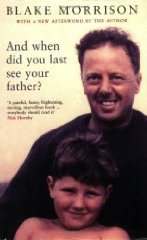
when-did-you-last-see-your-father-book-cover2I saw the movie When Did You Last See Your Father? at the Toronto International Film Festival last September, twice. I didn’t have the chance to read the book until a couple of days ago, about 7 months later. But as I read, all the scenes came back to me, and I appreciate the film even more than before. Yes, this is definitely a successful attempt at turning Book Into Film…and a hugely impressive one at that. The stellar cast with Jim Broadbent as the father and Colin Firth as the adult son, plus the exceptional supporting roles have brought out the spirit and the essence of the book poignantly, thanks to the very artistic and sensitive treatment by director Anand Tucker. To read my review of the movie, click here.

Blake Morrison is a contemporary British poet and writer. He was literary editor of The Observer and the Independent on Sunday before writing full time in 1995. AWDYLSYF is a memoir of his relationship with his father, Arthur Morrison, who died of cancer at age 75. Published in 1993, the book has won literary awards, and has been translated into many languages, from Japanese to Syrian.

The name of the book has its source in a painting of the same title by the Victorian artist W. F. Yeames. Yeames depicted an imaginary scene during the English Civil War. The young son of a Cavalier (Royalist) was questioned publicly by the enemy, the Roundheads (Parliamentarian), as to the whereabouts of his father. The question posed a serious dilemma for the boy. If he answered truthfully, he would endanger his father. If not, he would be commiting the immoral act of lying. Click here to read the story behind the painting.

And Painting by W. F. Yeames, When Did You Last See Your Father

Such a dilemma finds a parallel in the book. And it is apparent that Morrison has chosen to do the former, for the story he tells is incredibly candid, up-close and personal. As a reader, I’m glad he has done that. Eulogies are sometimes euphemism honoring the dead in order to please the living. But what Morrison has delivered is a courageously honest narrative of a precarious father-son relationship marked by ambivalence and love-hate sentiments. I can sense the pain such exposure could bring to the people involved, his mother, his sister, close family and friends. But I feel Morrison has burst the romantic bubble of the naturally congenial relationships we assume as we look at other people’s family portraits, or see families depicted in movies and novels. Love does not come naturally because of the tie that binds. Respect still needs to be earned, and loving acts need to be learned, for both parent and child.

The 20 independent, short chapters darting back and forth across the landscape of memory record the poignant reminiscence of a son living under the shadow of a powerful father. Arthur Morrison was a revered doctor in the town of Earby, in the County of Yorkshire…revered because of his imposing, domineering and callous demeanor. He could always get his way, and get out of troubles. In his recalling of childhood episodes, son Blake has aptly intermingled humor with pathos, all the more bringing out the complexity of character, and the ambivalence we sometimes feel towards our loved ones.  And to be fair, Arthur had cared for his family, albeit in his own patriarchal and egotistic manner.

He was gregarious.  In all social situations, he was the one leading the conversation and successfully avoiding topics that he was ignorant about…and was sure to stay away from games like Trivial Pursuit.

He hates feeling fallible: ‘I may not be right but I’m never wrong’ is the motto on a horrible brass wall-plate he has. He isn’t a vain man, but he is a proud, even bumptious one, a man with a puffed chest who learnt to water-ski in his fifties and thought he could go on forever.

How can such a character be brought to face his own imminent demise? Blake Morrison describes his father’s fast deterioration after diagnosed with cancer. The preparation though seemed to be harder for those who were going to be left behind than the patient himself. There was a relationship that needed mending, and, there were truths to be revealed. For years, Morrison had suspected the intimate relationship between his father and Auntie Beaty, a family friend. It had affected his perspective on his father, and on himself as a son. But he wasn’t given such a privilege. Other people’s secrets are theirs to own, even though that person is your father. And the living won’t tell: “Please leave me one last small piece–it’s mine” Auntie Beaty pleaded.

So the pressing question is: How is a son to prepare for the imminent demise of his own father, having lived in such a precarious relationship? The revelation comes at the end of the book. Death and mortality has a way of helping us put things in perspective:

Don’t underestimate filial grief, don’t think because you no longer live with your parents, have had a difficult relationship with them, are grown up and perhaps a parent yourself, don’t think that will make it any easier when they die.

Faced with the finality of death, all grievances one has towards the dying seem minute in comparison. As a son now, Blake has to learn to let go of his father, ironically, a lesson his father had failed to learn in the raising of his own son. Grievances give way to caring, to the consoling of the living, to the respect of a life lived on its own terms, to forgiveness, to closure.

In his Afterword, Morrison writes:

When young, we were impatient with our parents: now we want to atone for our callowness, and to acknowledge what they were and all they did.

Poignant words for us to ponder.


And when did you last see your father? by Blake Morrison is published by Granta Books, London. 1993. 230 Pages.

A movie tie-in edition by Granta Books is published October 2007.
~ ~ ~ ½ Ripples

The Ripple Rating System

At long last, a clarification on the Ripple Rating System.

First, some FAQ.

Q:  Why do the movies you review on your blog mostly get 3 Ripples, only a few 2.5 Ripples, and very few 4 Ripples?

A:  I love films, but my time is also precious.  So I usually pick those which I think I’ll enjoy, or which I’m curious about before I go see them.  I’m a selective movie goer, as most people are.  The same is true for readers picking which books they’ll read, or music lovers which song to buy…The ratings reflect whether I’ve made the right choice, in a way.  So far, I haven’t come across many that compel me to give 4 Ripples… but there are a few…

Q: How do you know which movies you’ll enjoy?

A:  I read about them, know the background first…sometimes, I go to the source material and read the book on which a movie is based.  I particualrly like to do this because I’m interested in the process of turning Book Into Film … Other times, I go to see the movie first, and then read the book if I am particularly moved.

Of course, the Ripples reflect personal resonances.  Nevertheless, they are given after considerable critical analysis and evaluation, and hopefully do not come out as mere impulse.  They might stir up ripples among my readers too, and that’s what the comment box is for.

I like NY Times movie critic A. O. Scott’s statement in his introduction to the book The New York Times Guide to the Best 1,000 Movies Ever Made:

This collection is more likely to start arguments than to settle them, argument being one of the solemn duties of criticism and, more importantly, one of the great pleasures of movie-going.”

You are welcome to express your opinion. But please comment in a way that shows your respect for other readers and yourself.

So here it is, Arti’s Ripple Rating System explained:

~ Ripple               = Stay away, I did

~ ~ Ripples         = Manage your time better

~ ~ ½ Ripples     = Average, Okay

~ ~ ~ Ripples     = Good, worth seeing

~ ~ ~ ½ Ripples  = Superior, must-see

~ ~ ~ ~ Ripples  = Almost Perfect

A Room With A View (2007 TV)

It will probably take another Merchant Ivory production to best an earlier version.  The 1985 movie A Room With A View has ingrained in my memory certain images of sight and sound that are difficult to replace, like Lucy opening the window and the camera slowly zooms in the beautiful view of Florence, highlighting the Il Duomo. Or the ending shot of the silhouettes of Lucy and George sitting by the same window… To me, A Room With A View is Kiri Te Kanawa singing Puccini’s aria “O mio babbino caro” (O My Beloved Father), achingly depicting the agony of unrequited love.  Further, it is also the humor that underlies the whole story as Forster has intended, as evidenced by the chapter (or scene) titles.

Nevertheless, I came to watch this newest BBC production with an open mind.  I was eager to see how a 21st Century, Andrew Davis rendition would present this E. M. Forster love story.  Every new adaptation of an old classic should offer us a new vision.  With such endeavors Andrew Davis has proven to be relatively successful in the past with his Austen and Dickens adaptations.  Here, I anticipate another window opening out to a fresh and different view.

For this adaptation, Davis writes the screenplay as Lucy’s flashback.  And, letting his imagination roam, he has Lucy coming back to the same Florentine room in The Bertolini, by herself, as a young widow.  So with this in mind, the overall sepia tone throughout fits well with the context, a memory re-lived, through the eyes of a lonely young woman who has lost her husband in the war.  The colorless overtone might well depict the sombre mood of a very different Lucy.

But there’s the rub. With this new “twist”, Davis has put himself in a difficult position in that, the present might be sombre and sad, but the past is most vibrant and radiant.  He’s got in his hands the difficult task of reconciling the two. What mood should he establish?  The sombre loss of the present or the fantastic journey of self-discovery and the ecstasy of a young heart heeding true love of the past?   umm…alright, let’s just go on with the show…

I have appreciated the fine cinematography and camerawork. The attraction of the Florentine art and architecture as well as Rome’s grandeur are caught with a sense of depth, not just picturesque shots, ironically, thanks to the lack of color.  They are frames from Lucy’s point of view, a well-protected, English young woman’s first encounter with greatness and history outside of her familiar, parochial life.

As for the actors, I have mixed feelings.  In the 1985 movie, Helena Bonham-Carter’s fresh persona of Lucy Honeychurch is sensitively matched by Julian Sand’s poised portrayal of George Emerson, an ideal image of young love.  Somehow, I don’t feel the chemistry here between Elaine Cassidy (When Did You Last See Your Father, 2007) and Rafe Spall.  The film is supported by some excellent acting though by veterans like Sophie Thompson (Emma, 1996) as Charlotte Bartlett, Mark Williams (Sense and Sensibility 2008 TV) as Mr. Beebe, Sinead Cusack as Miss Lavish, and Timothy Spall (Enchanted, 2007) as the elder Emerson.  Tim and Rafe Spall dispaly an authentic father son relationship on screen, naturally.

Timothy and Rafe Spall

A weak link I feel is Laurence Fox as Cecil Vyse.  No, I’m not trying to compare him with Daniel Day Lewis’s performance, which is inimitable.  But I truly feel it’s a miscast here.  Fox as a chap who is no good for anything but books, one who is so physically inapt to avoid a game of tennis?  Not very convincing.  What we have in this TV version is more like an eerie and chain-smoking Wickham or Willoughby.  Speaking of which, the smoke screen connecting to his almost every appearance may well be intentional, visually depicting how marred and distorted Cecil is in his view of himself and of others, particularly, Lucy.

Indeed, as the title well conveys, it is the metaphor of seeing that is the key notion throughout the TV adaptation.  In order to impress into our mind, the director has us see lots of scenes by the window. But of course, it’s not so much of looking out but looking in that is crucial here.  The whole story is built on Lucy’s seeing clearly what is in her heart, and that the one who has drawn her out of her own self-deception is the one who can offer her ultimate bliss, and that is George Emerson.  It is not just about Cecil turning down a tennis match, but it is the last straw, the pivotal turning point where Lucy realizes how egotistic Cecil  is. Lucy to him is but an object of art and music, but not as a woman, definitely not as a lover.  Forster describes it most strikingly, “The scales fell from Lucy’s eyes.”  A Biblical allusion no less than an epiphany.

In this case of course, by following her heart, Lucy is making the moral choice of defying the long tradition of the English class system, smashing the inequalities underneath the civility, and unmasking the snobbishness she has been raised to aspire to.  In her new voice, as Cecil has noticed, Lucy has announced a new-found insight.  As an admirer of Jane Austen along with his fellow Bloomsbury writer Virginia Woolf, Forster might have written lines that Elizabeth Bennet could have uttered, lines like:

I won’t be protected.  I will choose for myself what is ladylike and right.  To shield me is an insult. Can’t I be trusted to face the truth but I must get it second-hand through you?

Or,

If a girl breaks off her engagement, every one says: ‘Oh, she had someone else in her mind;’ … It’s disgusting, brutal!  As if a girl can’t break it off for the sake of freedom.

Unfortunately, these lines find no place in the film.

Forster is not afraid to let us see a very muddled Lucy, being confronted by her own feelings and passions that are contrary to her up-bringing, loving someone from a lower social status.  The open view of Italy has offered her a wider spectrum to what she is accustomed to seeing. Here lies the muddled complexity of characterization…For often in life, we are walking confusion, unsure of our feelings, insecure about our actions, isn’t such muddledness the very commonality of our being human?

But thanks to her humility, Lucy comes to realize what is in her heart, and who she wants to be.  In her recanting of her engagement to Cecil, she admits to be less educated, not as well-versed in the arts and music as Cecil.  Maybe because of that, she is more flexible to explore and to associate with those allegedly seen as socially lower than herself.  Here lies the paradox, It takes the uneducated eye to find understanding. Cecil is an intellectual, expert in things but not people, his highly educated mind has done nothing for him but left him in a room with no view.

Zadie Smith in her brilliant 2003 Orange Word Lecture entitled “Love, Actually”, discussed the writing of E. M. Forster and Jane Austen. Regarding Lucy’s gaining insight, Smith observed incisively:

It is not by knowing more that Lucy comes to understand, but by knowing considerably less.

As for Davis’ new “twist” at the end … I think that has altered the whole story from a light-hearted piece of social satire and endearing love story to a sombre drama with an awkward ending.  And for the last scene, Lucy going on a picnic with the cab-driver, and their final gesture… I think Davis has gone too far with his gratuitous imagination.  If that is the new vision he is offering us,  I’d rather stick with the old view.

~ ~  Ripples

*******

Photo Source of window with a view: StudentsVille

Nim’s Island (2008)

I don’t want to miss any Jodie Foster movies.  She’s one of my all time favorites.  I’m also eager to watch Abigail Breslin again after her Little Miss Sunshine.  Further, after reading Annie Dillard’s novel, I just need something light and mindless.  Coincidentally, between these two, I only have to change lenses, for the view is more or less the same: the beauty and wonder of nature. 

Nim’s Island is a mixture of Swiss Family Robinson, Home Alone, Stranger Than Fiction, and Mr. Brooks.  Based on the popular children’s book of the same name by Wendy Orr, it’s about a girl called Nim who lives an idyllic life on a pristine island with her scientist dad Jack.  The island’s rich natural resources and wildlife are the sources of Jack’s research and Nim’s pleasure.  Her friends are Selkie the sea lion, Fred the iguana, Galileo the frigate bird, and the giant sea turtle…what’s his name? … Anyway, it’s a zoo out there on Nim’s island, but Nim and Jack keep it real organized, educational, and fun.

One of Nim’s favorite past time is reading the stories of her adventure hero Alex Rover (Gerard Butler, P.S. I Love You, 2007).  So, when a huge tropical storm hits the island, and her dad hasn’t come home for a few days collecting protozoa samples out in the open sea, she calls to Alex Rover for help.  Actually, it is the creator of Alex Rover that emails Nim first, asking about information to write the next novel, mistakenly thinking Nim is Jack’s research assistant. 

Far from being an adventure hero, Alexandra Rover, the author, is a recluse suffering from agoraphobia, whose best friend is her Purell hand sanitizer. She hasn’t been out of her San Francisco apartment for months. But knowing Nim is all alone on an island needing help, and prodded by her own adventure hero, she ventures out against her fears.  So there’s the interesting set up of the plot, the rest of the story is the adventures of Alex Rover the writer heading to the island to help out Nim, the real heroine.

The film suffers from some scenes and dialogues that appear to be banal and trite.  With its interesting storyline I think it can be done better with more creativity and imagination.  Having said that, I must say that the movie is beautifully shot on location in Queensland, Australia.  In a day and age when kids, and parents, for that matter, find it impossible to have fun outside of video games and electronic gadgets, this movie and the book can offer a wholesome alternative.

There is a new edition of the book that’s a movie tie-in, including 8 pages of color pictures from the film. It is illustrated whimsically by Kerry Millard.  A fun read.  And for all the budding biologists, zoologists, oceanographers, and for that matter, environmentalists in your home, this is a must-read. 

The intended age group I feel should be a bit lower for both the movie and the book.  I’d say a target audience and reader Age 6 – 10 would be more appropriate than the now 9 – 12.  

The best combination:  Go see the movie and then to the bookstore.

Now with that combination, I’ll have to give it

                  ~ ~ ~ Ripples