Back in 2007, the Welsh-born film director Peter Greenaway made the following stark comment:
“Cinema is predicated on the 19th-century novel. We’re still illustrating Jane Austen novels — there are 41 films of Jane Austen novels in the world — what a waste of time.”
I’m afraid since then, must be to Greenaway’s disdain, more Jane Austen movie adaptations had come out. As recent as early this year, Greenaway had reiterated his stance with an even starker comment: “all film writers should be shot.”
Not that he’s anti-Austen, or holds a grudge against Tolkien or Rowling… I don’t think, but that he is pushing for a non-text-based, purely visual medium for movies.
Well, I’m glad his view remains just that, a personal opinion, and that writer/director Whit Stillman had not become a casualty of such an incendiary thought.

For thanks to Stillman, we have an intelligent, delightful and worthy adaptation of Jane Austen’s novella Lady Susan, a first for the author’s lesser known Juvenilia, apart from her famous six novels. The film is definitely not an illustrated book, but a worthy stand-alone cinematic production that Jane would approve.
As for dear Jane, I think she’d be pleased to know that her works are being cherished enough to be adapted into this modern invention called a movie two centuries later, and that in this post-modern era, we have a director by the name of Whit Stillman who’s enthused enough to turn her novella, written when she was still in her teenage years, into a movie production.
The epistolary novella “Lady Susan” was deemed unfinished and published posthumously. So this is a plus as Stillman could finished it for Jane, with an ending that’s aligned with the plot’s trajectory, and in a style that’s so well melded one would marvel at the perfect alchemy of Austenesque characters and language. Smartly borrowing the name of another of her novella “Love and Friendship”, Stillman toys with dear Jane’s uncontested approval.
While written in letters format, “Lady Susan” is highly entertaining. Austen’s talent is apparent on every page. How well she presents her characters merely through their written correspondences. Acerbic commentaries from an 18 year old? Hard to believe. But indeed, here are some lines describing Mr. Johnson (Stephen Fry), Lady Susan’s only friend Alicia’s (Chloë Sevigny) husband:
“My dear Alicia, of what a mistake were you guilty in marrying a man of his age! just old enough to be formal, ungovernable, and to have the gout; too old to be agreeable, too young to die.” (Letter 29, Lady Susan Vernon to Mrs. Johnson)
Interestingly, Stillman has toned down Lady Susan’s language and made her a more amicable heroine. The above lines were shortened and delivered by Kate Beckinsale in a casual manner. Yes, turning the letters into movie scenes are tricky, crafting mere letter writers into flesh and blood can be challenging, something I hope Greenaway can appreciate.
Stillman has taken Love & Friendship to 21st C. audience with fast paced, short scenes. The settings are elegant, the period costumes appealing, overall, a fine cinematic production. It is an apt visual presentation of Austen’s ingenuity. Writing “Lady Susan” while merely 18 or 19, she had seen through the marriage system of her country, understood human nature and foibles, depicting her characters and the main heroine, no, anti-heroine, with piercing sarcasm and generosity.
Having read the novella first could be an advantage as the viewer knows exactly who the characters are and the backstory as the film begins. With the literary source in mind, the viewer can also have a heightened appreciation of the cinematic rendering and alterations needed to make it work as a movie. The fusion of Austen / Stillman humour is most delightful, punctuated with some whimsical rendering on screen that I won’t mention here but leave for viewers to enjoy.
Kate Beckinsale portrays Lady Susan with deadpan astuteness. Deadpan or dead-on, no matter, for Beckinsale is a fine Lady Susan, newly widowed, not too young to be gullible and definitely not too old to flirt for her own gains. Don’t blame her, for she has a sixteen year-old daughter Frederica (Morfydd Clark) to mind, and so, two eligible candidates who need to wed.
If one were to find fault, blame it on the social system allowing the female population only one track to go for sustainability, i.e. to find a husband. The ultimate goal of the marriage contract is more for finance than romance. (Maybe that’s why we love Pride and Prejudice so much, for its triumph of true love.) Here in this story, it’s a social milieu where love is remote and friendship useful. Lady Susan Vernon ultimately finds her conquest, never one to boast, just a project accomplished, all bottom lines met.
Stillman has a wonderful cast to work with, and they look like they had a lot of fun making the film, the most lively being Sir James Martin (Tom Bennett). It must be a joy to be silly without restraint, yes, let it all out.
Alicia, Lady Susan’s only friend, is aptly played by Chloë Sevigny, who reunites with Kate Beckinsale from “The Last Days of Disco” (1998) where the two are the yuppie heroines under Stillman’s direction. Great to see the two friends in “Disco” have now emerged as allies yet again, this time in a comedy of manners with real Austen roots.
Stillman is a master of dialogues, and so’s Austen. In both the novella and the film, conversations make the characters. But mind you, Janeites know this, and it shows in Stillman’s film, Austen’s humour is not your roll on the floor laughing type of funny

but a clever kind of jokes that elicits a knowing chuckle or a smile, ones that exude insight into human nature, ones that you’d want to jot down:

And for those who have read the epistolary novella penned by a young female writer of the 18th century, one cannot help but marvel at her prodigious astuteness and now director Stillman’s revealing of her brilliant mind. A long time Austen ‘apologist’, Stillman’s previous work “Metropolitan” (1990) is unabashedly a “Mansfield Park” of the time. My favorite line in that movie is uttered by the Fanny Price parallel character Audrey Rouget (Carolyn Farina), when she is talking to Tom Townsend (Edward Clements) about one of her favorite Austen works, Mansfield Park. Tom has not read any Austen but feels qualified to criticize nonetheless:
Tom: But it’s a notoriously bad book. Even Lionel Trilling, one of her greatest admirer thought that.
Audrey: Well, if Lionel Trilling thought that, he’s an idiot.
(But of course, it was Tom who hasn’t read any Austen that has misread Trilling.)
That was Stillman’s debut film. Since “Metropolitan”, he had proven his mastery in the comedy of manners in our times… preppies, yuppies, and maybe someday I hope, millennials. To say his oeuvre is a conglomeration of Woody Allen, Noah Baumbach, and Wes Anderson would be unfair, neglecting his own style of humour and social observations, although his works do leave traces of all the above.
When awards season comes, I anticipate the film to receive some nominations, specifically Adapted Screenplay, Set Design, Costumes and Hair, and perhaps directing.
Here’s my recommendation: read Jane’s novella Lady Susan first before watching the movie would probably reap the most enjoyment. Afterwards, there’s the bonus. Yes, Whit Stillman has wrapped it all up with the novel Love & Friendship: In Which Jane Austen’s Lady Susan Vernon Was Entirely Vindicated published by Little, Brown and Co. in May, 2016. Icing on the cake.
Jane Austen doesn’t need a defender, but I’m sure she wouldn’t mind getting acknowledgement for her lesser known Juvenilia, some works started when she was only twelve. “Love & Friendship” is a first attempt and a worthy homage to her ingenuity. I’m glad there are many prospects. Whit Stillman and Jane Austen make one fine match indeed.
~ ~ ~ 1/2 Ripples
***
Related posts on Ripple Effects:
Love & Friendship and Other Prospects
Mansfield Park: Jane Austen the Contrarian
 Often it’s the cast of an upcoming movie that prods me to read a book. This one has been on the New York Times Bestseller List for years since its publication. No matter how popular it is, I’m motivated only now mainly because of the first rate cast: Alicia Vikander, Michael Fassbender, Rachel Weisz, directed by Derek Cianfrance. Instead of a place beyond the pines (his last work) we have an island off the Australian coast, with the story about a lighthouse keeper and his wife bringing up a baby they found in a boat washed up onshore.
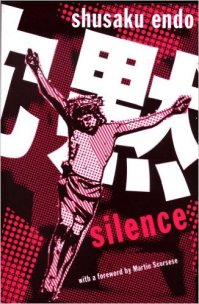 This one is just the opposite. I want to read it regardless of whether it will be made into a film or not. But what a bonus it is to know the adaptation is a Martin Scorsese’s work with Liam Neeson, Adam Driver, Andrew Garfield, and Ciarán Hinds. I highly anticipate this film, albeit I expect the viewing experience won’t be pleasant. I’ve read it before but want to reread it before watching. The book is heart-wrenching as Endô describes the persecutions and tortures Christians and Jesuit missionaries suffered in 17th century Japan. How Scorsese, a Catholic himself, handles the subject matter – the choice between apostasy vs. martyrdom – and have these character actors interpret the internal and physical torments will be intriguing to see. Scorsese wrote the forward of this edition of the book (image here).
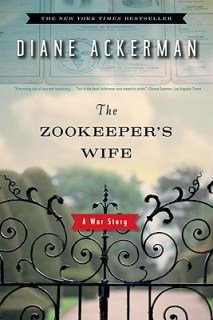 This is a worthy, true story to be made into film. Jan and Antonina Zabinski were keepers of the reputable Warsaw Zoo. During the Holocaust, Jan smuggled Jews out of the Warsaw Ghetto into their facility, saving hundreds. Antonina did the day-to-day chores of protecting them, hiding them in the cages, feeding them and keeping their spirits up. The parallel and irony of men and beasts are obvious. Acclaimed nature writer Diane Ackerman drew from Antonina’s diary to write her non-fiction work, a historical account of a heroic rescue mission. Screenplay by Angela Workerman, a scribe to note. Jessica Chastain and Daniel Brühl play the altruistic Zabinski couple.
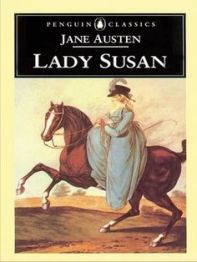 This has been in my iBooks for a long while, so long that I’d deleted it and now reloaded it again as the film adaptation is coming out. Entitled Love and Friendship, screenplay is based on Austen’s early novella Lady Susan, with Kate Beckinsale as Lady Susan Vernon. It will be interesting to see how the epistle form is translated onto screen. It will premiere at the Sundance Film Festival Jan. 23. Whether we will actually see it in our movie theatres is another matter. I hope it will be screened in the not too distant future.
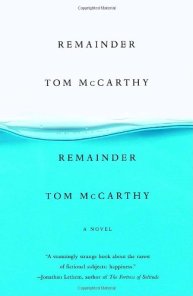 I bought this book at Harvard Book Store – the independent book store in Harvard Square since 1932 – during my New England Road Trip last fall. I’d read McCarthy’s 2015 Booker shortlisted Satin Island and knew Remainder had been adapted into film before I went on the trip. So it was a title I’d intended to get at that bookstore. Remainder is McCarthy’s debut work (2006). An unnamed Londoner is struck by a falling object and lapse into a coma. As he awakes, he has lost all memory and needs to re-enact his past to find his identity and authenticity of being. The Telegraph had called McCarthy “a Kafka for the Google Age”. Interesting to see how that translates onto screen. The film premiered at the BFI London Film Festival last October. Will screen at Berlin International Film Festival in February, 2016.
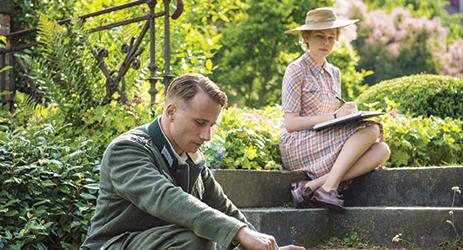
 The film adaptation of Booker short-listed and multiple award winning novel by Irish writer Sebastian Barry has already been completed, but has yet come up with a release date. So, I’ve plenty of time to read the book. The narrator is a 100 year-old mental hospital patient recalling her life. The old and the young are played by Vanessa Redgrave and Rooney Mara respectively. Directed by Jim Sheridan, the Oscar nominated director who introduced us to Daniel Day-Lewis in the excellent productions first in My Left Foot: The Story of Christy Brown and later In the Name of the Father.








 Ripple Effects