August Rush (2007)

Autust Rush

In a fairy tale, you could throw all the right ingredients up in the air, and everything will fall in place into a gourmet feast right in front of you eyes.  Of course, the table will be set in fancy, with candlelights and all that jazz (you know, just like the “Be my guest” scene in Beauty and the Beast).  But moving-making is no fairy tales, even when you’re shooting one. 

A modern version of Dickens’ Oliver Twist, August Rush is a contemporary fairy tale set right in the realistic and metropolitan New York City: great setting.  A boy growing up in a boys’ home heading out to search for his birth parents merely by following the music in his heart: good story line.  That music has the power to unite souls and connect lost relations: magical idea. And the title ‘August Rush’: how cool is that?

Well, August Rush has all the right ingredients… but it lacks the quintessential elements: a good recipe and a good cook.  Without a good script that delivers intelligent and engaging dialogues, and quality directing to bring it to fruition, the characters remain banal, the story and scenes contrived and the intended magic is simply a concoction in saccharine.  It might still please, but not gratify.

Mind you, I wanted to see the film work.  I’d appreciated the music.  I was enthralled by the ingenious scores juxtaposing classical orchestral work with jamming guitars and raucous rock bands.  I’m also a fan of Keri Russell, have thoroughly enjoyed her performance in The Upside of Anger (2005), in particular.  But her great effort here in August Rush just can’t compensate for her lack of chemistry with Jonathan Rhys Meyers, who, I’m afraid, may be a miscast. I also feel that Freddie Highmore’s character August Rush needs a bit more depth (and less smile), and the overacting of Robin Williams may have done more harm than good…but of course, we need a villain in a fairy tale, don’t we.

Keri Russell plays a young cellist Lyla who is rising to fame in NYC.  She gets pregnant by rock band lead singer Louis (Jonathan Rhys Meyers) in a one-night stand.  The next morning Lyla’s father abruptly stops their relationship before it can even get started.  Louis goes back to England, and both give up their musical career. Months later, Lyla gets in a car accident and gives birth to a son but is told by her father that the baby didn’t survive. The boy grows up in an orphanage.  Compelled by the music he has been hearing in his heart, he runs away to NYC to look for his birth parents. He soon befriended a young busker who leads him to the Wizard, a modern day Fagin (Robin Williams).  The Wizard manages a group of young street musicians, squatters in a shabby abandoned building. Seeing the potential gains from his new found talent, the Wizard takes the prodigy under his controlling wings, until the boy breaks free and follows his inner music that ultimately leads him to the end of his search.

I’m all for wholesome, uplifting and inspiring films, and strongly believe in the power of music, but all good intentions cannot catapult August Rush to reach its lofty goals. 

~ ~ ½ Ripples

Juno (2007)

Update Feb. 23:  Juno just won the Best Feature at the Independent Spirit Awards in Santa Monica today. Ellen Page won Best Actress and Diablo Cody the Best First Screenplay. 

Update Feb.11:  Diablo Cody just won the Best Original Screenplay for Juno at the BAFTA (British Academy for Film and Television Arts) Awards last night in London.

Update Jan. 22:  Juno has just been nominated for 4 Academy Awards including Best Picture, Best Director, Best Actress, and Best Original Screenplay. 

Just 13 days into the New Year and we’ll have the 65th Golden Globe Awards…so little time for so many movies to watch before then.  But, I’m glad I got a glimpse of a few of the nominees and I’ve to say, so far, my time well spent.

By now, Juno is no surprise.  This little indie film has been nominated for Best Picture (Comedy or Musical) by the Hollywood Foreign Press Association for a Golden Globe.  Not bad for the young cast led by Canadian actress Ellen Page from Halifax and Michael Cera of Arrested Development fame, to be up against Tom Hanks and Julia Roberts of Charlie Wilson’s War, or for first time screenwriter Diablo Cody getting the Best Screenplay nod.  That she has already won 6 awards for Juno could well lead her way into the Oscars.

The pleasant surprise about Juno is not just the stylish motion graphics in the opening title sequence, the hip music and witty dialogues, the affable characters, or the teenage culture it depicts, but the implicit message this film is getting across.  Director Jason Reitman (Thank You For Smoking, 2005) has again created another social commentary, but this time, making a more powerful and affective statement.

Juno is a 16 year-old high school girl, very forthcoming, very lively, very self-assuring, and…very pregnant. What she intends to do about her predicament and how her Dad and stepmom react form the backbone of the story.  And…what a fresh and welcoming perspective the plot brings to the screen in this day and age.  I’d say, a very brave movie indeed.  In the story, the young characters may not have their act together, at least they have the fundamental element to deal with their situation, their genuine humanity, and their respect for life.

In contrast, the character that Jason Reitman (Arrested Development, The Kingdom, 2007) plays shows that adults may still need to grow up, or, that the road to maturity is a life-long journey.  Let’s not judge so quickly…

A heart-warming and pleasant movie for the new year.  No, it’s not promoting teenage pregnancy, but a viable alternative and a very humane solution to the problem. In an imperfect world, a close to perfect scenario.

~ ~ ~ Ripples

The Message of Christmas

Hopefully by now, the dust has settled, and frantic frenzies can now be turned into some placid ponderings…

A Charlie Brown Christmas (1965 TV) remains my all time favorite Christmas special.  Charles Schulz has wittingly shrunk all humanity into his pint-sized Peanuts gang.  Aren’t we all but tiny specks in the vast universe, and yet our strives and questions are ever so close and immediate.

And for Charlie Brown, little did he know that by throwing up his arms and ranting his disappointment and frustration, had asked the existential question for us all:  “Isn’t there anyone who knows what Christmas is all about?”

And for Linus, little did he know that by answering this question, had delivered not only the Message of Christmas, but the crux of Christianity, pointed us all, the peanuts of the universe, to the way of reconciliation and redemption.

…Out of the mouth of babes (Psalm 8:2)…

A blessed Christmas to all!

Miss Potter for Christmas

It’s not too early to make up a Christmas gift list, or actually start some Christmas shopping. I’ve a recommendation here for a DVD that you can safely watch with your children. But you’d also want to watch it by yourself too, because then you can savour in solitude the touching moments an adult can appreciate, and yes, shed a private tear, and let the movie work its magic freely in your heart.

Miss Potter (2006) is the story of Beatrix Potter, the creator of Peter Rabbit, one of the best loved children icons of all times. The film is a gem glittering with acting talents. As Beatrix, Renée Zellweger (Oscar for Cold Mountain 2003) brings to the screen a most delightful character, her genuine and innocent demeanor captures the audience’s heart the very moment she appears. She receives nominations this year for a Golden Globe and a Saturn Award for her role in Miss Potter, and well deserved.

Ewan McGregor (of Star Wars and Moulin Rouge fame, no relation to farmer McGregor) plays the slightly comical first-time publisher who has made history with his appreciation and confidence in the talents of Beatrix. The two naturally fall in love. Like a Jane Austen novel, such a relationship is frowned upon by Beatrix’s upper-middle class family and openly forbidden. But this time, a hundred years after Jane, Beatrix boldly confronts the inequitable and restrictive Victorian values and norms.

Emily Watson, herself an Oscar nominee for her role in Gosford Park, (and she is excellent in Angela’s Ashes), plays a lively supporting role as McGregor’s unmarried sister. The social issue of the unmarried female in a male-dominated society is freely explored through her outspoken character, but not without poignancy.

I must mention the song written for the movie, which has won the 2007 World Soundtrack Award for Best Original Song Written for Film. “When You Taught Me How To Dance” is sung by Ewan McGregor in the film during a mesmerizing and moving scene. As the credit rolls in the end, this touching tune is heard again, this time in its entirety performed by Katie Melua. Now, she’s another story to write about.

The captivating soundtrack matches the beautifiul scenery and period costume, together with the excellent script and the whimsical animation of Beatrix’s animal friends, make the movie utterly enjoyable and gratifying, but still delivering effectively the depth of sentiments and the dramatic twists and turns.

The DVD includes background on Beatrix Potter, commentary by director Chris Noonan and a making-of documentary with extensive interview with Renee Zellweger, plus a music video performed by Katie Melua singing “When You Taught Me How To Dance”. A valuable collection and I’m sure, a welcomed gift.

~ ~ ~ Ripples

Beatrix Potter: A Journal (2006)

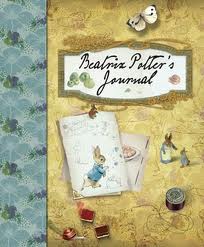
Beatrix Potter A Journal Book Cover

As a companion to the movie, and another great gift idea, is the book Beatrix Potter: A Journal which came out last year. A visual journal in the vein of Nick Bantock, the book is an imaginary scrapbook Beatrix would have made to chronicle her own life, with handwritten entries and notes, amusing drawings, little attached booklets, photo albums, and letters that can be taken out from envelopes. The book corresponds amazingly well with the movie, like a visual commentary.

Here are a couple sample pages from the journal:

webpage-beatrix-journal-3.jpg

webpage-beatrix-journal-4.jpg

~~~3 Ripples for both Movie and Book

Adora Svitak: “Tiny Literary Giant”

“Knights!  Clear the square of townsfolk!” the Duke cried.  Within a few moments, the square was empty except for the Duke, the Duchess, Myles, Didoni, and the large, burly knights who were guarding the Duke.  The men put the litter down, and the Duchess lay down to rest.  The Duke was telling Didoni what he wanted on his portrait.

“Make me look strong and majestic. I want no one to think that I am a weakling, like my soft older brother the King,” the Duke said imperiously.

“Knights! Clear the square of townsfolk!” the Duke cried. Within a few moments, the square was empty except for the Duke, the Duchess, Myles, Didoni, and the large, burly knights who were guarding the Duke. The men put the litter down, and the Duchess lay down to rest. The Duke was telling Didoni what he wanted on his portrait.  
“Why not paint a suit of armor?” Myles suggested before he could stop himself.

“Yes! The lad has quite the idea!” the Duke exclaimed. “Paint me in a suit of armor, with nothing amiss. Make my eyes as sharp as an eagle’s, and my nose straight and curved at the end. My lips I care for not— but make them solemn.”

Didoni nodded.

“It shall be done of course, your Grace,” Didoni said, already beginning to sketch on his canvas.

                                —- Excerpt from Adora Svitak’s Historical Fiction


 Adora Svitak Website

Just as I was saying in my last post that I’d never come across any literary prodigy, the name Adora Svitak came up on my computer screen last night.  The above excerpt is one of the sample writings from her website,  where you can also find her poems and fantasy writing.  Adora is a 10 year-old girl from Redmond, Washington.  Whether you want to label her a prodigy or not really does not change what has taken place in her life.  Here are the milestones so far:

Age 2.5: 

Could read and write simple words.

Age 3.5:

Read her first chapter book.

Age 4:

Started writing short stories.

Age 6:

Got a laptop from her Mom, writing began to take off.

Age 7:

Published 296-page Flying Fingers, a collection of her own fiction and writing tips for others (with her Mom).  Appeared on Good Morning America, interviewed by Diane Sawyer, who called her “Tiny Literary Giant”.  Met Peter Jennings and was given his book The Century For Young People, which remained her favorite.  Started Adora’s Blog.  http://www.adorasvitak.com/Blogger.html

Age 8:

Had written over 400 short stories and 100 poems, typed 60-80 words per minute, read 3 books at a time, 18 books a week.  Oh, that’s nothing, you might say, “My kid could do that.”  Just wait, Voltaire’s Candide?

Another book in the work, a collection of her poems called Dancing Fingers.

Promoted literacy to children in the UK.  Here’s The Guardian report: http://books.guardian.co.uk/news/articles/0,,1713183,00.html

Age 9:

Completing her first full-length novel Yang in Disguise,  serving as a spokesperson for Verizon Reads campaign for literacy, working on an animated computer program to help develop childhood literacy.

Montel Interview: http://www.metacafe.com/watch/439176/adora_svitak_9_year_old_author_criticize_george_bushs_iraq_pol/

Note: According to her interview on Montel, the proceeds of her book Flying Fingers will be going to the National Education Association and she would auction off some of her works to raise money for the victims of hurricane Katrina, rebuilding libraries in schools.

All in all, I feel that this gifted little girl doesn’t really care whether you label her “literary prodigy” or not.  She’s having the time of her life in her reading, writing, cooking, playing, and helping others how to read and write…  And, how many 10 year-olds can have the terms “Writer, Poet, Humanitarian” to describe themselves on their website?   http://www.adorasvitak.com/Main.html

But is this Art?…But is this Prodigy?

The comments in my last post have spurred some insightful ideas on the whole notion of what Art is, and whether a child’s production can include such inherent elements as soulful expression, and purposeful creation driven by theoretical stance.

I think a more appropriate question is, “But is this Prodigy?”

In his review of the documentary My Kid Could Paint That, New York Times film critic A. O. Scott acknowledges that it is natural for parents to cherish their children’s work. Those doodlings and finger paintings posted on the fridge door are priceless. He goes on to say:

The untaught sense of color and composition that children seem naturally to possess sometimes yields extraordinary results, and the combination of instinct and accident that governs their creative activity can produce astonishing works of art.

Except that these magical finger-paint daubings and crayon scribblings aren’t really works of art in any coherent sense of the term, but rather the vital byproducts of play, part of the cognitive and sensory awakening that is the grand, universal vocation of childhood.

The influential abstract art critic Clement Greenberg had made the following controversial remark: 

In visual arts, prodigies don’t count. In music and literature, yes, but not in art.”

The statement reiterates his view that:

The making of superior art is arduous.”

I tend to agree with him. 

I have seen music prodigies, not having reached the ripe old age of 10 or 12, performing complex pieces of classical compositions.  In contrast to a child pouring paint and spreading it out intuitively with her fingers, I saw behind those performances the countless hours of excruciating practice, the intricate and sometimes impossible eye-hand coordination, the mastery of the theory and the appreciation of the structure of the work, to ultimately evoking the very spirit intended by the composer as they perform. 

Not only that, the best of them make it deceptively simple.  They make the audience feel that they are watching a natural, born with such ability and talent, rendering hard work an oxymoron.  I’m not doubting there’s intuition and instinct involved.  But in every superb playing I see intuitive musicality alchemized with extraordinary mastery of skills and discipline. 

As for literary prodigies?  Maybe because of my limited exposure, I have yet to read one.

My Kid Could Paint That

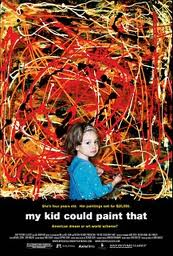
If you type in “Marla Olmstead” in your Google search, 37 pages of information will come up. From these pages, you’ll know that she is a painter, born in Binghamton, New York. Her paintings have been compared to Wassily Kandinsky (the pioneer of modern art) and Jackson Pollock (the legendary drip artist). You’ll also learn that her works have been sold for tens of thousands of dollars. And soon enough, you’ll learn that Marla Olmstead is 7 years-old.

Nominated for a Grand Jury Prize at Sundance this year, My Kid Could Paint That is director Amir Bar-Lev’s quest to find out the true story behind this little girl who has been hailed as a “pint-size Picasso”. In the film, we see her using professional paintbrushes and other art accessories to work on canvases over 5 feet tall.

The first half of the documentary we see Marla Olmstead having her first showing in a NY Gallery, she was only 4 then. Her paintings sold like hot cakes, with a waiting list of more than 200 buyers, ready to snatch up anything she would produce. No need to worry about getting work for the next few years. As a 4 year-old, Marla had already earned more than $300,000, which her parents said had been put aside in a college fund. (Would she be going to college?)

Marla Olmstead Marla’s Burning Blue Ball

Then came the bombshell half way into the film. In a February, 2005, CBS’s 60 Minutes reporting, Marla and her parents were painted in a very different light. In the program, Charlie Rose interviewed Ellen Winner, a psychologist who has studied gifted children and specializes in visual arts. She saw a video tape taken by a hidden camera in the home of the Olmstead’s, unobtrusively recording Marla at work. What she suspected was a coach behind the child, someone prodding her on, even directing her moves. After the airing of the CBS program, a once beautiful art prodigy was overnight turned into an ordinary child with manipulative parents in the background steering her purposefully towards financial gain.

Sales began to drop, and warm praises turned into damning accusations. Loving parents are now seen as manipulative frauds. The Olmsteads have since made their own DVD to disprove the detrimental claims. You can see some of the clips showing Marla painting at home in the website http://www.marlaolmstead.com/

Director Amir Bar-Lev has successfully captured the emotional reactions Marla’s parents had in response to the 60 Minutes interview, and their attempt to defend their name in denying their invovlement in Marla’s artistic productions. Interestingly, the film does not take a stand. Rather, it has raised more questions than provided answers:

For those of us who are parents, what are our motives in raising our children? How can we decide what’s ‘best’ for them? How much influence should we or do we have over our children’s development? Where is the line between nature and nurture, pleasure and porfit? What’s more, what is art anyway? And the definition of modern art? Or, talent, for that matter? Does talent has to be associated with a monetary value or fame before it can be recognized?

Every one would have very different view of this story, and his/her own personal set of queries. I went to see this movie with a painter friend of mine. Not surprisingly, as we came out of the theatre, we had very different reactions to the film. Well one question I know I have, and it’s for my mom. Mom, if you’re reading…why wasn’t I given the big canvases and professional paintbrushes and those huge tubes of paints when I was a kid? How come I only got pencil crayons?

~~~3 Ripples