Great Film Expectations

For an updated list of 2012 premieres of film adaptations, CLICK HERE.

With written works from Suzanne Collins’ The Hunger Games to Shakespeare’s Coriolanus materialized on the big screen, what else can we anticipate in this year and next?

Here’s an update of some upcoming film adaptations from literary works. Great choices for book groups too.

A Most Wanted Man by John Le Carré
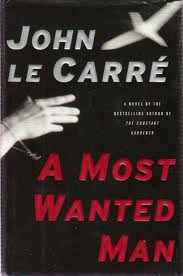
On the heels of the acclaimed “Tinker Tailor Soldier Spy”, this time, Philip Seymour Hoffman is the man. Directed by Anton Corbijn whose last film was the deep and thoughtful “The American, a film I found to be much better than the book.

.

Anna Karenina by Leo Tolstoy

Finally, dates are set for the premiere: Sept. 7 in the UK, Nov. 9 in the US. I look forward to this one: Tom Stoppard screenplay, Joe Wright (Atonement, Pride & Prejudice) directs, Keira Knightly as Anna, Matthew MacFadyen Oblonzky, Jude Law Alexai, Aaron Johnson Count Vronsky, and Downton Abbey‘s Michelle Dockery (Lady Mary) as Princess Myagkaya, plus many other British stars.

.

Cloud Atlas by David Mitchell 

Winner of multiple awards and shortlisted for a Booker in 2004, the apocalyptic novel is adapted by Tom Tykwer (Run Lola Run) and The Wachowski’s (Matrix’s). Tom Hanks, Halle Berry, Susan Sarandon, Ben Whishaw (Bright Star), Hugh Grant, Jim Broadbent. Here’s Susan Sarandon’s take on the production.

.

The Emperor’s Children by Claire Messud 
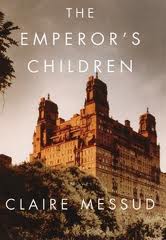
Some big names affiliated with this project are Richard Gere, Eric Bana, Keira Knightly, Emma Thompson, Rachel McAdams. Director Scott Cooper (Crazy Heart) on board. But I can find no more news after this announcement, which is fine, gives me more time to get to the book first. It’s been on my TBR list for a few years now.

.

Great Expectations by Charles Dickens

To coincide with the 200th birthday of Charles Dickens and the Olympics in London, Mike Newell (Enchanted April, Four Weddings and a Funeral) directs, screenplay by David Nicholl (One Day, Tess of d’Urbervilles, When Did You Last See Your Father) who may be also writing the third Bridget Jones movie. Ralph Fiennes is Magwitch, Helena Bonham Carter Miss Havisham, Jeremy Irvine, Pip.

.

The Great Gatsby by F. Scott Fitzgerald 
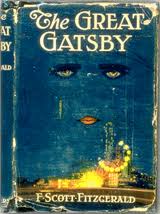
What will F. Scott think when he sees his masterpiece produced in 3D in the 21st Century? Woody: do give us a sequel to “Midnight In Paris” with your brilliant imagination. Australian director Bez Luhrmann is poised to bring us this new version of Gatsby in 3D, which I’m sure will stir up lots of discussions. It has already. But no matter how I dislike 3D (except Hugo), I want to see Leo DiCaprio play Jay G., Carey Mulligan, Daisy B., and Tobey Maguire, Nick C. Do Click Here to read a Guardian preview close to 3D.

.

The Guernsey Literary and Potato Peel Pie Society by Mary Ann Shaffer and Annie Barrows

Kenneth Branagh will direct Kate Winslet in this popular novel about the power of literature in desperate wartime. This is a reprise of their cooperation from 1996, when Branagh, as Hamlet, also directed Winslet as Ophelia. No dates have been set for its production or release, but something to keep in mind.

.

The Hobbit by J. R. R. Tolkien

Coming out in three parts. “The Hobbit: An Unexpected Journey” in 2012, and “The Hobbit: The Desolation of  Smaug’ in Dec. 2013, and ‘The Hobbit: There and Back Again’ in July, 2014. Peter Jackson attempts to reprise his Rings Trilogy magic. Elijah Wood, Ian McKellen, Cate Blanchett, Orlando Bloom… the whole gang. Again, we’ll get to see beautiful New Zealand as setting.

.

The Invisible Woman: The Story of Nelly Ternan and Charles Dickens by Claire Tomalin
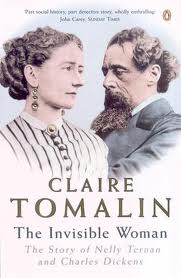
Claire Tomalin’s account of Charles Dickens’ affair with the young writer Nelly Ternan will be brought to screen with script from Abi Morgan (Shame, The Iron Lady) to be directed by Ralph Fiennes, who will play Dickens himself. To add to the rave, Kristin Scott Thomas is also on board. Felicity Jones will be playing Nelly Ternan. Fiennes never ceases to amaze us with his versatility, after directing Shakespeare’s Coriolanus in postmodern style.

.

Les Miserables by Victor Hugo

Tom Hooper of “The King’s Speech” directs an all star cast in this musical offering. Hugh Jackman as Jean Valjean, Russell Crowe as Inspector Javert (is he going to sing too?), Helena Bonham Carter, Anne Hathaway join in the chorus. Just too bad Geoffrey Rush and Colin Firth are missing here. Release date for North America is Dec. 2012, which means it can be a contender in next Awards Season.

.
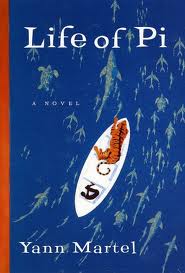
Life of Pi by Yann Martel

Director Ang Lee picked 17 year-old Suraj Sharma of Delhi, India, from 3,000 teenagers to play Pi Patel. Interesting that Tobey MacGuire will play Yann Martel, the author of the book which won the 2002 Man Booker Prize. The film to be shot in 3D has a December 2012 release date. Again, films opening in December usually have eye on the next Awards Season. Will keep our eyes peeled.

.

Midnight’s Children by Salman Rushdie
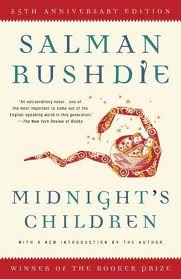
The Booker of Bookers winning work will see its author Salman Rushdie team up with acclaimed Canadian director Deepa Mehta in the film adaptation. Mehta in a recent interview hinted it will debut either at the Venice or the Toronto Film Festival this fall. You can still join us for a slow Read-Along of Midnight’s Children before the film comes out.

.

Rebecca by Daphne DuMaurier 

On the drawing board of Dreamwork and Working Title. Who can take the helm to reprise an adaptation made famous by Alfred Hitchcock, and actors to replace Sir Laurence Olivier as Mr. de Winter and Joan Fontaine as the new Mrs? Now, why does Carey Mulligan emerges in my mind… and Michael Fassbender

.

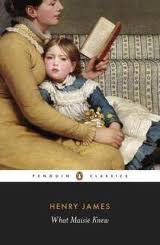
What Maisie Knew by Henry James

Looks like a good classic to read before seeing the movie. Julianne Moore and Alexander Skarsgård lead the cast. I’ve enjoyed previous Henry James adaptations of The Wings of the Dove, The Golden Bowl, and The Portrait of a Lady. Look forward to this one.

.

Books to be turned into TV series:

The Corrections by Jonathan Franzen

To be adapted into an HBO TV series with an all-star cast under the helm of Noah Baumbach (The Squid and the Whale). Stars include Ewan McGregor, Maggie Gyllenhaal, Rhys Ifans, Dianne Wiest, Chris Cooper and Greta Gerwig. But, will the author be involved in any of the writing?

.

A Visit From the Goon Squad by Jennifer Egan

Again, HBO has bought the rights to this one. The 2011 Pulitzer Prize winner is to be adapted into a half-hour TV series.

.

.

The Art of Fielding by Chad Harbach

Yet again, it’s HBO that will be developing the novel into a TV drama series, another project by the “uber producer” Scott Rudin, who also oversees “The Corrections.”

.

***

What are some of  your most anticipated films or books in the coming year(s)?

We Need To Talk About Kevin (2011)

On International Women’s Day, we need to talk about mothers. Motherhood, the role that can bring so much joy, and so much grief. No grief can compare to that of seeing your child self-destruct, and in the process, destroying others.

To start with, the wandering, free-spirited Eva (Tilda Swinton) before motherhood reflects an unsettling soul. Seems like she accidentally trespasses into the territory that calls for extreme commitment when she gets pregnant. While other expectant mothers fully embrace their swollen bellies, Eva faces her pregnancy with apprehension and awkwardness. Once Kevin is born, she knows full well that it is an irreversible life-long occupation.

Kevin screams all day and night as a baby, is incommunicable as a toddler, foul-mouthed, menacing and hateful as a child. The first thing he does to his newborn younger sister while visiting her in the hospital is to splash water into her eyes. This act will be repeated when he becomes a teenager, but it won’t be as harmless as water. Can’t his parents see it coming? I must give credit to Tilda Swinton, who has given us an audacious and engaging performance as Eva, but one, I’m afraid, that may not appear quite as sensible as it should.

If you are not a tiger mom, but has a tiger son on your hands, what are you to do? Wouldn’t you have sought professional help for your child, or counselling for yourself? Yes, we see Eva take Kevin to a doctor when he’s a non-communicating toddler, but what about all the years hence, until at 16 when all hell breaks loose? Ezra Miller as teenaged Kevin is a persona of a most disturbed young man; unfortunately, his self-absorbed, relentless evil scheming renders his performance two-dimensional.

I have not read the book by Lionel Shriver. We Need to Talk About Kevin was the Orange Prize Winner of 2005, an award honoring women’s writing. Shriver might well have depicted her characters and their inner turmoils with more depth, as a literary rendition can.

I knew of the plot in general before I stepped into the theatre. My expectation was that the film would be exploring the issues of parental responsibility and guilt from raising a wayward child despite all good intentions. I thought it would deal with the problem of evil, or the issue of nature and nurture, and the choices we can make in spite of our predicament.

But the film surprises me in that it has not delivered what could have been a study of any of the above issues. Maybe parental guilt, but still, not in depth. We only see the stunned look of Eva in every scene. Even before the tragic end, with overwhelming evidences of a terribly disturbed son, we hear little communication between Eva and her unsuspecting husband Franklin (John C. Reilly), who encourages Kevin’s interest in archery. (ah-ha… big hint)  Seems like director Lynne Ramsay’s goal is just to shock and disturb with exaggerated visuals and sounds, or its lack of to create mood. The ubiquitous red, another obvious hint. It is effective as an absorbing, suspenseful thriller, relentless in its portrayal of evil, but for the purpose of…?

The film has been talked about much in the UK. And on both sides of the Atlantic, many critics have given it high acclaim; others have pointed to its Oscar snub. While I had high expectation before I saw it, I left with a void of disappointment, which, I’m afraid, has extinguished my interest to read the book. If you have read it, I’d love to hear you tell me otherwise.

But on this very day, let us give kudos to all mothers who, regardless of results, stay true to their role and love in spite of everything. This we can see in the final scene and the last shot, the embrace in prison, probably the most meaningful in the whole film.

~ ~ 1/2 Ripples

***

Oscar Nominations 2012

Feb. 26th is Oscar night. I’m reposting here my take on the Best Picture nominees, and some more… a post I wrote on Jan. 24th, shortly after they were announced at 5:30 am PST.

***

With the announcement of the 84th Academy Awards Nominees this morning, I’ve prepared here a guide to the nominated films for Best Picture plus some more. I’ve seen them all except one, which I admit is somewhat unexpected, that’s Extremely Loud and Incredibly Close. For some of the others, do click on the link in the title to read my full review.

Here are the 9 nominees for Best Motion Picture:

The Artist —  Riding high the waves in this Awards Season, and most likely to grab the top Oscar. Kudos to the filmmakers for taking a bold and contrary step to pay homage to the silent era of Hollywood. Audacious in its attempt at a black and white silent film in 2011, where CGI and 3D’s are the cinematic effects, a long way from the great advancement of sound. Sure it’s light and frothy, which makes me admire all the more the boldness and foresight of the financial backers. Actions do speak louder than words. 10 noms in all.

The Descendants —  Well acted, probably George Clooney’s best performance I’ve seen, a close Oscar contender with Jean Dujardin of The Artist for Best Actor. The idyllic setting in Hawaii shrouds conflicts among family members: between husband and wife, parents and children, and in the extended level, relatives when it comes to monetary gains and interests. A fine film from Oscar winning director Alexander Payne of Sideways fame. While there are interesting twists and turns, the ending is predictable. A close contender with The Artist for Best Picture.

The Tree of Life — I’m excited to see Terrence Malick’s existential epic included in the list.  The film generally draws two opposing reactions, like its premiere in Cannes, boos and applause. Ironically, those might well be the two ways the film portrays, two possible views towards life. Other noms: Terrence Malick for Best Director, and deservedly, Emmanuel Lubezki for Best Cinematography.

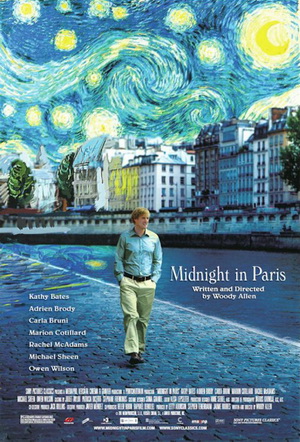
Midnight In Paris — It has been a long time since Woody Allen won a Best Picture Oscar (Annie Hall, 1977), glad it’s time again for a nod, even though its chance of winning is slim. As in a few other nominated movies on this list, nostalgia is key. An imaginary trip back to Paris during the literary and artistic golden age of Gertrude Stein, Hemingway and Picasso, an aspiring writer from California learns the notion of golden is only relative. What’s precious may well be the time at hand. Woody Allen also receives noms for Directing and Original Screenplay.

Hugo — Leading the Oscar nom counts with 11. Another homage to the cinema, or, the creation of the cinema dating back to the Lumière Brothers, but specifically to Georges Méliès, the French innovator of cinematic special effects. Interesting to see Martin Scorsese uses the modern technique of 3D to honor the pioneer Méliès. A visually stunning adaptation of Brian Selznick’s The Invention of Hugo Cabret. Scorsese has proven to me that 3D doesn’t have to be synonymous with soulless gimmick. Heart-warming, beautiful film for everyone.

The Help — As Roger Ebert was labelled “a lackey for imperialism” after writing that he likes ‘Downton Abbey’, I must put in this Disclaimer: I have high respect for the courageous fighters in the civil rights movement, both on a societal level like Martin Luther King Jr. and those making personal steps like Rosa Parks. How I feel about this movie is strictly to do with the movie itself. Ok, here it is: I find it riddled with simplistic and contrived sentiments. The pool of major acting talents are morphed into caricatures. As I was watching, I felt they were all acting, not being. Can’t blame them, they were following a script and a director. Viola Davis nom for Best Actress, Jessica Chastain and Octavia Spencer for Best Supporting Actress. And the Oscar likely goes to Spencer.

The War Horse — Again, a Disclaimer here: I’m not against animals in movies… often, it’s the humans that leave much to be desired. Personally, I’m surprised that this is from Spielberg. Lacklustre storytelling, cliché moments and superficial characterization. The most natural and beautiful actor could well be Joey, the horse. The film is an adaptation of the children’s book of the same name written from the POV of the horse. Now, that sounds fresh and unique.

Moneyball — Can strike the heart of even non-baseball fans. A well paced and edited, engaging movie. The real story of Oakland A’s general manager Billy Beane. It’s always satisfying when the underdog wins, David overcoming Goliath, especially when money is involved. Brad Pitt getting Best Actor nom, and Jonah Hill Best Supporting. Other categories include Editing and Adapted Screenplay.

Extremely Loud and Incredibly Close — The is the only one among the nine I have yet to see, for truly I did not expect it to be nominated for Best Picture. I’ve read Jonathan Safran Foer’s novel, the source material, with mixed feelings. And for it to be adapted into a film, much has to be done to interpret, alter, and display.  So, I reserve judgement on the film until I’ve seen it.

Other Nominees:

Meryl Streep for Best Actress in The Iron Lady — If you want historical accuracy, go see a documentary. But even there it depends on the POV of the filmmaker.  Director Phyllida Lloyd (Mamma Mia!) has conjured up an internal world of the only woman Prime Minister of Britain, Margaret Thatcher. Unless she comes to rebut the director’s view, who are we to argue against it? Let’s just go beyond the debates and appreciate the marvellous performance by Meryl Streep. This might well be her chance for a second Best Actress Oscar since Sophie’s Choice in 1983. Jim Broadbent always complements superbly.

Michelle Williams for Best Actress in My Week With Marilyn — Michelle Williams proves her amazing versatility here. I mean, after seeing Wendy and Lucy, Blue Valentine, can you imagine a more diverse role as Marilyn Monroe? She delivers convincingly. Kenneth Branagh gets the nom for Best Supporting Actor as Sir Laurence Olivier. And who’s that obscure chap that gets to spend a week with Marilyn? Why, he’s Eddie Redmayne, Angel Claire in Tess of the D’Urbervilles.

Gary Oldman for Best Actor in Tinker Tailor Soldier Spy — Film scholar David Bordwell suggests that we see it as ‘a moving mosaic’. This film is made up of fragments of John Le Carré’s complex and massive work. So it’s better that you’ve read it first before watching. But if you’re like me, abandoning the book without finishing, you can still appreciate the overall atmosphere and the fine acting. Intricately weaving characters and time frames, the film’s intriguing ending has prompted me to go back to the book after watching it. CLICK HERE to read Bordwell‘s insightful review to help you through the Labyrinth.

***

CLICK HERE for a full list of Nominees.

The End of the Affair: Book and Movie

It’s a bit ironic to post this on Valentine’s Day. It’s a story of an extramarital affair, and it doesn’t end well. But then again, maybe this is the best time to talk about it.

This is my second instalment to meet the Graham Greene Challenge hosted by Carrie of Books and Movies. Spoiler Alert here. But since it’s a classic, I’m sure many of you have read it or seen the movie.

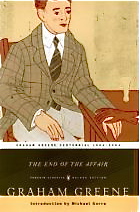
The End of the Affair

The book opens with a meeting between novelist Maurice Bendrix and civil servant Henry Miles on a cold, rainy night in 1946 London. Miles’ wife Sarah had ended an affair with Bendrix 18 months earlier. Bendrix has not seen them since. In this chance meeting on the street, Bendrix observes that Miles is heavy-laden, suspecting Sarah has ‘secrets’. Volunteering to hire a detective to tail the wife for the husband, Bendrix is in fact acting out of jealousy, for he too wants to find out who Sarah is seeing now. “Anyone who loves is jealous.”

Again, in just 160 pages, Greene has intricately explored the depth and complexity of the human psyche, love and hate, trust and insecurity, faith and lameness. Yes, the lameness in Bendrix’s leg can well be a metaphor for his numbness of unbelief. Isn’t there such an argument: “If God does not exist, everything is permitted?”

Love with all its smothering, blinding passion, its persistent, burning desire, its all-consuming emotions that distill into pure jealousy and hate… Graham Greene is a master of such incisive descriptions. But here’s the rub, they’re all found in an adulterous affair.

Isn’t that a pity that such intensity of love is often depicted outside of a marriage. Why, we see them all the time in literature and movies. And, don’t we tend to cheer for the romantic heroes and heroines? Guinevere and Lancelot, for example, to whom Bendrix in the book alludes when he talks to the detective Parkis, who has named his son Lance. Readily come to mind are some others: Madame Bovary, Anna Karenina, and in the epic cinematic versions like The English Patient, in a more restrained way Out of Africa, and the near success in The Bridges of Madison County…  didn’t you wish Meryl Streep would have gone with Clint Eastwood? I’m just thinking, if Ralph Fiennes were the one beckoning her, she’d probably had jumped out of her husband’s truck.

O the fantasy of romance vs. the mundane reality of a marriage. The forbidden fruit seems sweeter, for it arouses excitement, it entices with adventure. Bendrix accuses the oblivious and dull husband Henry Miles as an accomplice in Sarah’s affairs, calling him ‘an eternal pimp’:

“You pimped with your ignorance. You pimped by never learning how to make love with her, so she had to look elsewhere. You pimped by giving opportunities… You pimped by being a bore and a fool…”

There might be some truths in his rants. But then again, are these reasons enough to drive one to discard the marriage vow and seek other allurements? Alas, it seems like boredom is the major impediment to fulfilling that commitment… “If I could love a leper’s sores, couldn’t I love the boringness of Henry?” Sarah tries to reason with herself.

But of course, here, the key is the End of the affair between Bendrix and Sarah. What causes the end is none other than God Himself according to Sarah. A bomb drops near Bendrix’s home while they are both there, striking him dead. Sarah, in her horror and desperation, prays to a God she doesn’t believe to exist, but pleads for the life of her lover just the same. She makes the promise that if God gives Bendrix back his life, she would stop seeing him. As she’s still kneeling by her bed praying, Bendrix walks into the room, injured but very much alive. Thus begins the agony of keeping a promise to a God whose existence now has become an inconvenient truth.

We learn at the end, Sarah has attempted to shift her love from Bendrix to God, albeit with much searing pain. She has gone to a priest and converted to Catholicism. In the crucifix she knows that God Himself is a suffering God too. If only she can see the scale of the pain in the nail-pierced hands in a greater cosmic proportion compared to her own…

***

The marvellous cinematography, the diffused lighting of many scenes, all work to cast a romantic veil over an adulterous affair. Two Oscar noms in 2000 included one in cinematography and one for Julianne Moore as Sarah Miles. Ralph Fiennes plays Bendrix, a suitable choice. He is in his element. Since The English Patient (1996), Fiennes seems to have mastered the persona of the romantic tragic hero and obsessed lover.

While the screenwriter is understandably free to invent more scenes for the visual storytelling and change some plot points, one alteration I feel  is definitely unacceptable and that’s the character Richard Smythe. In the book, Smythe is an atheist whom Sarah visits several times to discuss views about atheism. Ironically it is Smythe’s atheistic stance that drives Sarah into believing God. She then confides in Father Crompton her wish to convert to Catholicism. But in the film, Smythe is the priest, and what more, he is implied to be another of Sarah’s lovers. I think here is where integrity to the source material should have given priority over dramatic effects.

***

And what does Colin Firth have to do with The End of the Affair? Well, for all you Colin fans, he is among some A-list stars to have signed with the UK audiobook provider Audible to record their reading of their favorite classic novel.

Audible’s founder, Donald Katz, told the Observer: “Colin Firth could read me the back of a Marmite jar and I would listen.” Well, Colin has chosen, not Marmite or Cornflakes, but for more flavour, Graham Greene’s The End of the Affair. CLICK HERE to read the announcement and see what other stars are reading for Audible’s recordings.

Now we have another portal to appreciate Colin, and, another channel to enjoy a Graham Greene book.

Update May 7, 2012: The Audiobook The End of the Affair narrated by Colin Firth is released today.

***

The Quiet American by Graham Greene: Book and Movie

This is my first selection for the Graham Greene Challenge hosted by CarrieK at Books And Movies.

I watched the film The Quiet American some years back, but not read the book. And my memory is vague. Only remember Michael Caine and Brendan Fraser, the setting in Vietnam, in the early 50’s, a complex fusion of political thriller, murder mystery, and a love triangle.

But now that I’ve read the book I’m thoroughly intrigued, thanks to this Penguin Classics Graham Greene Centennial Edition (1904 – 2004), with the intro written by American novelist Robert Stone. Stone’s novel Dog Soldiers about the Vietnam war and its effects won the 1975 National Book Award. From his introduction, I’ve come to appreciate how intricate and multi-layered the conflicts are, and, how political the novel stands.

Interesting to learn from Stone about the joke embedded in the title: the only quiet American is a dead American. In the midst of a colonial war between the French and the communists in 1950’s Saigon, American Alden Pyle’s subversive brand of democracy satisfied none other than his own idealism. A Harvard grad, armed with naiveté and book knowledge, a CIA under the guise of the American Economic Attaché, Pyle’s involvement might well represent American meddling in other country’s affairs in the name of spreading democracy.

We see all these through the eyes of the narrator, the British reporter Thomas Fowler. Much older, more experienced, and having been posted in Vietnam for some years, Fowler has grown to love the humanity therein, but is plagued by bitter cynicism. He doesn’t take sides, he just writes his story as an observer, smokes his opium pipe prepared by his young mistress Phuong, and lies in bed with her. But Fowler’s noncommittal stance comes to a breaking point at the end:

… one has to take sides. If one is to remain human.

The Quiet American is noted for its divergent from Greene’s ‘Catholic’ novels. But the existential issues are very much in the forefront. Fowler is a man of conscience, albeit aloof in his outward stance. The climax comes as he resolves a moral dilemma. Guilt is his nemesis, regarding his wife in England, regarding Phuong, and much more acutely at the end of the novel, regarding Pyle. The book ends with this line:

I wished there existed someone to whom I could say that I was sorry.

And then there’s Phuong, manipulated by her older sister, weaves herself between the two foreigners whom she sees as her ticket out of the country and into a dream future. I find her reaction to Pyle’s death most disturbing.

In a short 180 pages, Greene has brilliantly depicted the political complexities of the conflicts at the time, and addressed the internal war waged within a man’s conscience, ironically, a man whose outward creed is noninvolvement. I’m thoroughly intrigued by the story that is told with depth, eloquence and skill by a master storyteller.

~ ~ ~ 1/2 Ripples

***

The Movie: DVD

I watch the film again after finishing the book. It has altered some characters, and taken a more sympathetic view of Phuong. But the overall story and perspective remain intact. Upon this second time viewing, I find several interesting facts that I wasn’t aware of before.

Michael Caine was nominated for a Best Actor Oscar and Golden Globe in 2003 for his role as British reporter Thomas Fowler. He has portrayed the character convincingly. Brendan Fraser as the young American I feel is a miscast. If they’re making the film today, James Franco would be my choice for Alden Pyle.

Director is the award-winning Australian Phillip Noyce. (Rabbit-Proof Fence, 2002). One of the two screenwriters is Christopher Hampton who got an Oscar nom for his adapted screenplay Atonement from Ian McEwan’s novel. He is also the screenwriter for the current film A Dangerous Method. Executive producers were two personalities whom I highly respect, Anthony Minghella of The English Patient fame plus some more, and Sydney Pollack whose credits are too numerous to mention. It was a great loss that they both passed away within two months in 2008.

The DVD comes with a resource of special features. Other than all the interviews and making-of, there is a useful “Vietnam Timeline”, outlining the history of Vietnam from 1940 to 1980. Further, I appreciate the inclusion of original book reviews. One line particularly stands out. From the 1956 review of the book by John Lehman of The New Republic: 

The Quiet American is one of the most icily anti-American books I’ve ever read.

Oh…  the wealth of information one can gather from watching these special features.

~ ~ ~ Ripples

***

Oscar Nominations 2012

With the announcement of the 84th Academy Awards Nominees this morning, I’ve prepared here a guide to the 9 nominated films for Best Picture plus a few more. I’ve seen them all except one, which I admit is somewhat unexpected, that’s Extremely Loud and Incredibly Close. For some of the others, do click on the link in the title to read my full review.

Here are the 9 nominees for Best Motion Picture:

The Artist —  Riding high the waves in this Awards Season, and most likely to grab the top Oscar. Kudos to the filmmakers for taking a bold and contrary step to pay homage to the silent era of Hollywood. Audacious in its attempt at a black and white silent film in 2011, where CGI and 3D’s are the cinematic effects, a long way from the great advancement of sound. Sure it’s light and frothy, which makes me admire all the more the boldness and foresight of the financial backers. Actions do speak louder than words. 10 noms in all.

The Descendants —  Well acted, probably George Clooney’s best performance I’ve seen, a close Oscar contender with Jean Dujardin of The Artist for Best Actor. The idyllic setting in Hawaii shrouds conflicts among family members: between husband and wife, parents and children, and in the extended level, relatives when it comes to monetary gains and interests. A fine film from Oscar winning director Alexander Payne of Sideways fame. While there are interesting twists and turns, the ending is predictable. A close contender with The Artist for Best Picture.

The Tree of Life — I’m excited to see Terrence Malick’s existential epic included in the list.  The film generally draws two opposing reactions, like its premiere in Cannes, boos and applause. Ironically, those might well be the two ways the film portrays, two possible views towards life. Other noms: Terrence Malick for Best Director, and deservedly, Emmanuel Lubezki for Best Cinematography.

Midnight In Paris — It has been a long time since Woody Allen won a Best Picture Oscar (Annie Hall, 1977), glad it’s time again for a nod, even though its chance of winning is slim. As in a few other nominated movies on this list, nostalgia is key. An imaginary trip back to Paris during the literary and artistic golden age of Gertrude Stein, Hemingway and Picasso, an aspiring writer from California learns the notion of golden is only relative. What’s precious may well be the time at hand. Woody Allen also receives noms for Directing and Original Screenplay.

Hugo — Leading the Oscar nom counts with 11. Another homage to the cinema, or, the creation of the cinema dating back to the Lumière Brothers, but specifically to Georges Méliès, the French innovator of cinematic special effects. Interesting to see Martin Scorsese uses the modern technique of 3D to honor the pioneer Méliès. A visually stunning adaptation of Brian Selznick’s The Invention of Hugo Cabret. Scorsese has proven to me that 3D doesn’t have to be synonymous with soulless gimmick. Heart-warming, beautiful film for everyone.

The Help — As Roger Ebert was labelled “a lackey for imperialism” after writing that he likes ‘Downton Abbey’, I must put in this Disclaimer: I have high respect for the courageous fighters in the civil rights movement, both on a societal level like Martin Luther King Jr. and those making personal steps like Rosa Parks. How I feel about this movie is strictly to do with the movie itself. Ok, here it is: I find it riddled with simplistic and contrived sentiments. The pool of major acting talents are morphed into caricatures. As I was watching, I felt they were all acting, not being. Can’t blame them, they were following a script and a director. Viola Davis nom for Best Actress, Jessica Chastain and Octavia Spencer for Best Supporting Actress. And the Oscar likely goes to Spencer.

The War Horse — Again, a Disclaimer here: I’m not against animals in movies… often, it’s the humans that leave much to be desired. Personally, I’m surprised that this is from Spielberg. Lacklustre storytelling, cliché moments and superficial characterization. The most natural and beautiful actor could well be Joey, the horse. The film is an adaptation of the children’s book of the same name written from the POV of the horse. Now, that sounds fresh and unique.

Moneyball — Can strike the heart of even non-baseball fans. A well paced and edited, engaging movie. The real story of Oakland A’s general manager Billy Beane. It’s always satisfying when the underdog wins, David overcoming Goliath, especially when money is involved. Brad Pitt getting Best Actor nom, and Jonah Hill Best Supporting. Other categories include Editing and Adapted Screenplay.

Extremely Loud and Incredibly Close — The is the only one among the nine I have yet to see, for truly I did not expect it to be nominated for Best Picture. I’ve read Jonathan Safran Foer’s novel, the source material, with mixed feelings. And for it to be adapted into a film, much has to be done to interpret, alter, and display.  So, I reserve judgement on the film until I’ve seen it.

Other Nominees:

Meryl Streep for Best Actress in The Iron Lady — If you want historical accuracy, go see a documentary. But even there it depends on the POV of the filmmaker.  Director Phyllida Lloyd (Mamma Mia!) has conjured up an internal world of the only woman Prime Minister of Britain, Margaret Thatcher. Unless she comes to rebut the director’s view, who are we to argue against it? Let’s just go beyond the debates and appreciate the marvellous performance by Meryl Streep. This might well be her chance for a second Best Actress Oscar since Sophie’s Choice in 1983. Jim Broadbent always complements superbly.

Michelle Williams for Best Actress in My Week With Marilyn — Michelle Williams proves her amazing versatility here. I mean, after seeing Wendy and Lucy, Blue Valentine, can you imagine a more diverse role as Marilyn Monroe? She delivers convincingly. Kenneth Branagh gets the nom for Best Supporting Actor as Sir Laurence Olivier. And who’s that obscure chap that gets to spend a week with Marilyn? Why, he’s Eddie Redmayne, Angel Claire in Tess of the D’Urbervilles.

Gary Oldman for Best Actor in Tinker Tailor Soldier Spy — Film scholar David Bordwell suggests that we see it as ‘a moving mosaic’. This film is made up of fragments of John Le Carré’s complex and massive work. So it’s better that you’ve read it first before watching. But if you’re like me, abandoning the book without finishing, you can still appreciate the overall atmosphere and the fine acting. Intricately weaving characters and time frames, the film’s intriguing ending has prompted me to go back to the book after watching it. CLICK HERE to read Bordwell‘s insightful review to help you through the Labyrinth.

***

CLICK HERE for a full list of Nominees.

2012 Golden Globes Results

Some of the major winners at the 69th Golden Globes Awards last night.

  • Best Motion Picture – Drama: The Descendants
  • Best Motion Picture – Comedy or Musical: The Artist
  • Best Actress – Drama: Meryl Streep (Iron Lady)
  • Best Actor – Drama: George Clooney (The Descendants)
  • Best Actress – Comedy or Musical: Michelle Williams (My Week with Marilyn)
  • Best Actor – Comedy or Musical: Jean Dujardin (The Artist)
  • Best Director – Motion Picture: Martin Scorsese (Hugo)
  • Best Screenplay – Motion Picture: Woody Allen, Midnight In Paris

I must say I’m not too excited about this year’s Golden Globes to start with. Main reason: how can they totally snub Terrence Malick’s The Tree of Life? Not even one single nomination for that epic production! I hope the Academy Awards can correct that negligence.

But I’m glad though for The Artist winning Best Picture, Comedy or Musical. It offers me a unique experience: watching a silent movie made in 2011 in the theatre, a successful, nostalgic attempt paying homage to the golden era of Hollywood. Last night, Uggie got a chance to share the spotlight.

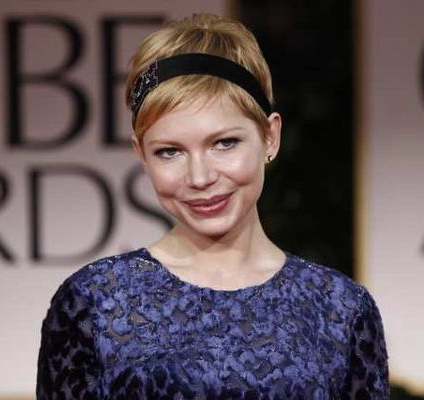
Michelle Williams is impressive as Marilyn Monroe. Just a look at her at the Golden Globes and you’ll know how acting and make-up can create a whole world of difference. The transformation of an understated actor into a legendary personality in a dreamscape is what’s so magical about the cinema.


George Clooney is good in The Descendants, a showcase for his acting talent. You can actually see a tear welling up in his eye then flow slowly down his cheek to the tip of his nose. That scene is so deeply imprinted in my memory.

Haven’t seen Iron Lady yet, but what I remember from last night Meryl Streep winning Best Actress is her presenter, the inimitable, ever poised (even more so this time… marvellous result of some great workout?): Colin Firth.

And last but not least, excited to see Woody Allen once again getting recognized for his talent, albeit not in directing, still a worthy nod, winning Best Screenplay with Midnight In Paris. And I must mention this: not too long ago I read a book entitled Insanity Defense: The Complete Prose by Woody Allen. In it I read a story called “A Twenties Memory”.  O what a discovery! Of course! This piece of writing dating back to 1971 must be the original spark that later materialized into the script for Midnight In Paris, some forty years later. CLICK HERE to read “A Twenties Memory”. This just shows it’s never too late to bring ingenuity to life.

***

For a full list of nominations and winners, CLICK HERE.

***

Midnight’s Children Read-A-Long

Midnight’s Children Read-Along has begun. Here are the post to:
Midnight’s Children Read-Along Begins
Midnight’s Children by Salman Rushdie, Book One
Midnight’s Children Book Two (Part A: up to ‘Alpha and Omega’) 
Midnight’s Children Read-Along Book Two Part B
Midnight’s Children: Book Three

On Dec. 29 of last year, I posted “Year End Tally and 2012 Outlook“, and I thought that would be it. The two challenges I’ve taken up for this year, the Graham Greene and the Ireland Reading, would be sufficient in lieu of any new year’s resolutions. Further, there will always be movie reviews and other choices in reading on the spur of the moment.

Along came the new year and another opportunity. Thanks to Mrs. B of The Literary Stew, who suggested to me a read-a-long of Salman Rushdie’s Midnight’s Children, I gladly accepted the idea. We’re excited that Bellezza of Dolce Bellezza and Colleen of Books in the City will also be joining us. I know that on Bellezza’s blog, she has a few who have shown interest. You’re invited to hop on as well.

Salman Rushdie’s Midnight’s Children won the 1981 Booker Prize. In 1993, it was awarded the Booker of the Bookers trophy, the best novel to have won the Booker Prize for Fiction in the Award’s 25-year history. I admit I haven’t read any Rushdie before, so I just thought this would be a good one to start. Do click on the link above to Booker’s website for the synopsis and bio.

Another major reason for my interest in reading it this year is that its film adaptation is currently in post-production. Acclaimed Canadian director Deepa Mehta (Water, 2005) is at the helm of the production. Rushdie is closely involved in the process with Mehta in condensing his novel into 130 pages of screenplay. Filming has already been completed in Sri Lanka. According to IMDb, it will be released this fall.

My copy is the 25th Anniversary Edition. It has 533 pages. Considering the dense writing and the historical backdrop of the novel, it sounds like a book that calls for reading camaraderie and dialogue. Also, we’ve decided to take it slow. By so doing, we can also pursue other readings or blogging activities while doing this.

So here’s our plan. The novel is divided into 3 sections, with the middle the longest, so we’ll split it in two. We’ll begin reading in March. One month for each part. Review posts are to be posted according to the following schedule:

March 31 — Book One
April 30   — Book Two (Part A ending with ‘Alpha and Omega’)
May 31    —  Book Two (Part B starting with ‘The Kolynos Kid’)
June 30   — Book Three

You’re welcome to join us in this slow read. Just indicate in the comment section and leave a link. 

**

And to everyone, Happy Reading in 2012!

***

Upcoming Books Into Movies — List 3

For an update of this post, CLICK HERE to Great Film Expectations.

What makes a book movie material? I’m not thinking of the plot-driven page turners. I mean literary fiction, albeit the term is open to debate. Anyway, what baffles me is, how do filmmakers determine whether a book is good for a movie adaptation? Just let me give a few examples.

The English Patient. Michael Ondaatje’s Booker Prize winning novel that reads like poetry and leaves me swirling in nostalgic daze. When Anthony Minghella finished reading it in one sitting late one night, he knew right away that he must make the movie. Well, he did and won 9 Oscars for his film. But for another equally poetic work that I’ve enjoyed, Fugitive Pieces by Anne Michaels, its movie adaptation just didn’t work that well for me.

I can name many others. Muriel Barbery’s philosophical novel The Elegance of the Hedgehog stirred up deep resonance in me, but its movie adaptation Le Hérisson failed to produce such impact. Booker Prize winner Kazuo Ishiguro’s novel The Remains of the Day delves into the internal worlds of the two main characters, and is turned into film effectively, thanks to the fine performance of the actors, Anthony Hopkins and Emma Thompson.  Ishiguro’s more recent work, Never Let Me Go is both cerebral and emotionally charged, it too enjoys a good film transposition.

Or, how about short stories like Alice Munro‘s “The Bear Came Over The Mountain”, about an elderly couple dealing with the wife’s Alzheimer’s. When 28 year-old Sarah Polley finished reading the short story on the plane, she decided she would adapt it into film and who she would get to play the main character. The result is Polley’s directorial debut, the Oscar nominated film Away From Her, with Julie Christie getting a nom for Best Actress and Sarah Polley for Best Adapted Screenplay.

I’ve learned to appreciate books and movies as two distinct art forms. While I used to delve into the ‘loyalty’ issue, how close the film is to its source material, now I’m more accepting to new interpretations and diverse visual representations as long as the work holds up to its artistic values. But one thing still baffles me: How does a filmmaker decide whether a book is movie material?

The following are my recent findings on some literary works that are or will be adapted into films (ie, movie rights sold). On the top of the list, generating a lot of buzz these days is Jeffrey Eugenides’s The Marriage Plot. Now, it’s on my TBR list, as I’m still no. 213  in the hold lineup at my local library. But for those of you who have read the book, what do you say? Do you think the book makes good movie material? And the most intriguing for me, as always, how do you transpose philosophical ruminations into a visual medium? How do you dramatize intellectual angst?

Here’s Ripple Effects generated Upcoming Books Into Movies — List 3.  If you’ve missed List 1 and List 2, just click on the links. Some of the works mentioned on those previous lists have already been shown on screen. Arti will continue to furnish you with updated info on future books into films.  And all ye book group members, here are your 2012 suggestions:

Upcoming Books Into Movies — List 3

The Marriage Plot by Jeffrey Eugenides (2015, Scott Rudin producer, who will also bring you Jonathan Franzen’s The Corrections in 2013. Impressive record as a producer of modern literary works into films: Revolutionary RoadDoubtNo Country for Old MenTrue Grit… and soon Extremely Loud and Incredibly Close)

The Emperor’s Children by Claire Messud (Keira Knightly, Richard Gere, Eric Bana, Emma Thompson, Rachel McAdams will be directed by Scott Cooper, who did Crazy Heart, 2009)

The Paris Wife by Paula McLain (From producer Ileen Maisel who’s bringing you a new Romeo & Juliet in 2012. I’m curious to see how they approach this adaptation, a sequel to Midnight In Paris?)

A Visit from the Goon Squad by Jennifer Egan (TV movie. The Pulitzer Prize winning novelist cited the HBO series The Sopranos as her inspiration.)

The Weekend by Bernhard Schlink (2013, Schlink has a previous work The Reader adapted into film.)

Before I Go To Sleep by S. J. Watson (Ridley Scott has got the film rights, and it’s going to be “a blend of the popular and the literary.” What’s popular may well be the subject matter these days, memory and the loss of it.)

Les Misérables by Victor Hugo (2012, A Musical in “good old-fashioned 2D”, directed by Tom Hooper of The King’s Speech. Anne Hathaway, Huge Jackman, Russell Crowe, Helena Bonham Carter, Geoffrey Rush. Sorry, no Colin Firth singing here.)

Runaway by Alice Munro (short story, screenplay by Jane Campion. Like I said earlier in this post, a short story can be turned into a deep feature film. I await this one from Campion, who won a screenwriting Oscar as well as the Palme d’Or for her 1994 film The Piano. Her more recent Bright Star on the poet John Keats reaffirms her literary style in the visual medium.)

***

Other related posts on Ripple Effects:

Can a movie adaptation ever be as good as the book?

Upcoming Books Into Films (List 1)

More Upcoming Books Into Movies (List 2)

Movies Reviewed

Photo Source: Films, Wikimedia Commons, Books, Arti’s file.

Book Trailers: Ads, Lure, and Paradox

Watched any good book trailers lately?  No, not movies, books. Book trailers… they’ve been around since 2003. You might be aware that more and more publishers and authors are embracing this marketing tool in recent years.

If you type in the term ‘book trailers’ on YouTube, you can find many of them cater to the mash and morph generation. Quirk Books, publisher of Pride and Prejudice and Zombies, has produced some popular trailers of their modern takes on classic works. Amazon named their  “Sense and Sensibility and Sea Monsters” book trailer as the best book trailer of 2009.

Now, I don’t want to digress and start talking about the morphing of the classics with contemporary culture, or things like getting the news from The Colbert Report, I’ll leave those to another post. But since book trailers have piqued my interest lately, let me show you their more recent release: The Meowmorphosis, a contemporary twist on Kafka’s classic. Here’s the book trailer (If you can’t view the videos on this post, click on the link to watch them on YouTube. And, do come back):

But of course, book trailers are for all. When you spread your net, you want to catch as wide a multitude as possible, don’t you? Look at this one promoting an upcoming book by the popular crime fiction writer Michael Connelly:

You probably think you’re watching a movie trailer. And that’s what I speculate, book trailers just might well be prompts for potential movie adaptations. Film option, anyone? And for Connelly, he already has two of his books turned into popular movies: ‘Blood Work’ (2002, Clint Eastwood), and ‘The Lincoln Lawyer’ (2011, Matthew McConaughey)

But really, book trailers are an attractive bunch, most of them. They appeal to the digitally savvy and visually driven. While some readers may not appreciate the visualization of the literary, leaving little room for imagination, others welcome these dramatizations and animations. Their stunning effects can be just mesmerizing. Look at this trailer with over 1 million views, Going West by New Zealand novelist Maurice Gee:

What a marvel of video production, don’t you agree? Now, here’s a more important question: Will you go and buy this book to read after watching the trailer, or, are you more likely to just add another view count to the video and a click on ‘like’?

This last trailer just about sums up the apparent paradox: It takes the visual to sell the word. I’d held Lane Smith’s appealing hardcover children’s book It’s A Book in my hands in a bookstore, marvelled at its conception. Look at this adorable trailer:

In this eWorld of ours, we need a real hardcover book to explain to children what a book is… or used to be, if you take the apocalyptic view.  We’re told a book isn’t something you scroll, tweet, or text, and no need to charge up. But the fact is, those are the very functions you do to view and share the trailer.

And it’s a book trailer, with all its visual images and special effects, uploaded and viewed online and hopefully gone viral, that helps boost book sales. Another mash? Or simply an inevitable paradox nowadays?

And, speaking of paradox, can you imagine the eBook version of It’s A Book?

***

Sarah’s Key: Book into Movie

“When a story is told, it is not forgotten…”   — “Sarah’s Key” the movie

The Background: Vel d’Hiv Roundup

The story has to be told, because it is based on a historical event that has long been ignored. On July 16 and 17, 1942, the French police in Paris rounded up more than 13,000 Jews in Paris, among them 4,000 children, and confined them in the Velodrome d’Hiver (Winter Velodrome), an indoor bicycle racing track and stadium not far from the Eiffel Tower. There in the Velodrome the Jews were kept under French police guard for five days with no food and just one tap. They were subsequently sent to internment camps outside of Paris, where children were torn apart from their parents. Apart or together, they shared the same fate. From the internment camps, young and old alike were later transported by train to the Auschwitz extermination camp. The Velodrome, which was situated in the 15th arrondissement of Paris, has since been torn down but the event remains a dark page in France’s history.

The Vel d’Hiv roundup had been ignored for decades in the classrooms of the nation. Post-war French leaders from de Gaulle to Mitterrand had kept mum on the issue of France’s role in deporting Jews to the death camps. It was not until Jacques Chirac became president in 1995 that the French state accepted its official complicity, in particular, the Vel d’Hiv roundup. Here’s an excerpt of Chirac’s historical speech taken from a TIME magazine article:

France, homeland of the Enlightenment and of human rights, land of welcome and asylum; France, on that very day, accomplished the irreparable,” Chirac said in his speech, using the Vel d’Hiv roundup as a metaphor for all Vichy crimes. “Failing her promise, she delivered those she was to protect to their murderers.

A story based on this true event ought to be noticed. The French drama based on true accounts, “La Rafle” (“The Round Up”), was released in 2010 to a large audience in the country. And for us in North America, we have the novel Sarah’s Key (2007) and its movie adaptation (2010) to inform us of that horrific event and the imagined scenario of its impact on the lives involved.

(Spoiler Alert from here on.)

The Book

Written by Tatiana de Rosnay and published in 2007, the book has been on the New York Times bestseller list for 120 weeks. It has sold 5 million copies world wide and been released in 38 countries. de Rosnay has published works in French. This is her first English language book.

The book weaves two stories together 60 years apart. 10 year-old Sarah Starzynski’s family is one of those being rounded up on July 16, 1942. On the spur of the moment, Sarah hides and locks her 4 year-old brother Michel in a cupboard in the wall of their bedroom, thinking there he will be safe until she comes back for him. It was horrific for her and her parents to find out later that they won’t be returning at all.

Sarah and her parents are kept in Vel d’Hiv in appalling conditions, only to be deported to an internment camp where she is separated from them. Her determination never wavers though in getting back home to let her brother out of the locked cupboard. She has kept the key, guarding it with her life.

Fast forward to 2002. Julia Jarmond, a U.S. expatriate married and working as a journalist in Paris, delves into the research of the Vel d’Hiv roundup for a magazine article commemorating its 60th anniversary. She is totally absorbed by the little-known event. What’s more, she finds out that the apartment that used to belong to her French husband’s grandparents and which is now under renovation for her to move in was the very home of Sarah and her family.

At the same time, Julia struggles with a personal dilemma. At 45, mother to 11 year-old Zoé, and after two miscarriages, Julia is excited to find out she is pregnant. Her husband does not share her sentiment however, pressing her to abort. The poignant story of Sarah inspires Julia’s decision as the story unfolds.

While I whole-heartedly admire the author for her intention to honor the victims of Vel d’Hiv and her eagerness to expose the atrocities afterwards, I have reservations about the literary quality judging from the style and structure of the book. At several points, I feel the writing redundant. And for a novel written for an adult readership, it gives me the feeling of being talked down to, told what to think and how to feel.

Structurally, it presents the two stories in alternating chapters. The shifting is abrupt as the chapters are only three pages long. This lasts till the middle of the book when the story of Sarah’s key comes to an end. That occurs when Sarah makes it back to her apartment and discovers the heart-wrenching horror. The rest of the book is the continuation of modern day Julia’s story, her persistence to discover Sarah’s trail after the war and dealing with her own personal dilemma. Compared to Sarah’s story, this latter part seems trivial and anti-climatic.

The Movie

One year after it premiered at the TIFF, I finally have the chance to see this movie as it is being screened only recently in one theatre here in town.

Screenwriter director Gilles Paquet-Brenner has gleaned the essence of the novel and tightened the plot in an engrossing way. By virtue of its form, the movie has the advantage of showing rather than telling.  It can condense paragraphs of words into a cinematic moment frozen in the mind’s eye. The film is captivating, telling the story with vivid and haunting images.

We see the recreated Vel d’Hiv and its appalling condition. We see a woman plunging to her death from a high level in the Velodrome, an apparent suicide. We see the horror of children torn away from their mothers in the internment camp. We see too the desperation of Sarah finally running up to her apartment, pounding on the door of the new family living there. We see her barging into her bedroom and unlocking the cupboard. And from inside there with the camera pointing out, we see the terror on Sarah’s face as she looks in. We hear her scream.

The storytelling is carried out by the excellent performance of the two main actors, Mélusine Mayance as Sarah and Kristin Scott Thomas (“I’ve Loved You So Long”, 2008) as Julia Jarmond. The structure of the plot limits young Sarah to only the first part of the film, albeit her portrayal is memorable, her unseen presence lingers through the movie.

Kristin Scott Thomas always delivers. Her role as the persistent journalist Julia is convincing and a pleasure to watch. Her cool demeanor conveys the fact that it takes intelligence and professionalism to find the truth as a journalist, and yet, once exposed, the truth can have the affective power to inspire and turn one’s life around. Scott Thomas has aptly portrayed this change.

Nevertheless, the weakness of the film lies in the lack of character development in the ‘minor’ roles. If given more depth, they can sharpen the conflicts and enhance the story. I’m thinking of Julia’s relationships with husband Betrand (Frédéric Pierrot, “I’ve Loved You So Long”, 2008) who insists on her abortion, and with her daughter Zoé (Karina Hin).

And since I’ve been looking for ‘intrusions of grace’ lately, there’s a scene here that is of note. It is not in the book, but screenwriter/director Paquet-Brenner has aptly created a poignant cinematic moment with it.  When Sarah and another girl are trying to crawl under a barbed wire to escape from the internment camp, they are caught by a guard. But upon the urgent appeal of Sarah, he softens. Using his bare hands to hold up the wire, he pushes the girls through. The camera then closes up on his bleeding hand, pierced by the barbs, an apt allusion. How we need these ‘intrusions of grace’ to shed a glimmer of hope amidst overwhelming darkness.

“Sarah’s Key” may well be one of those examples where the movie speaks more powerfully than its source material. If you are time-pressed, go for the cinematic rendition.

***

To read more about the Vel d’Hiv roundup and related articles, click on the following links:

Behind the French Ruling on WWII Deportations of Jews“, TIME.

“Remembering the Vel d’Hiv” The Economist.

“Letters from Drancy” The Guardian.

“Vel d’Hiv Roundup” Wikipedia

More Upcoming Books into Movies

Wondering what to read in the fall? Here are some books being adapted into movies at various stages of development. Some may come out later this year, most in 2012, and others may materialize even further. Your book group may be interested to look at the following titles. Some are bound to generate lively discussions. Consider this a sequel to my earlier list which you can find by clicking here.

***

Anna Karenina by Leo Tolstoy (Can’t resist mentioning this again. Joe Wright of ‘Atonement’ directing, Tom Stoppard screenplay, and an excellent British cast)

As I Lay Dying by William Faulkner (James Franco directing)

Austenland by Shannon Hale (Keri Russell)

The Book of Negroes by Lawrence Hill

Coriolanus by William Shakespeare (Ralph Fiennes directs and stars)

Crooked House by Agatha Christie (Gemma Arterton)

Gods Behaving Badly by Marie Phillips

Great Expectations by Charles Dickens (Helena Bonham Carter, Ralph Fiennes)

The Guernsey Literary and Potato Peel Pie Society by Mary Ann Shaffer and Annie Barrows (Kenneth Branagh directing)

The Humbling by Philip Roth

The Hypnotist by Lars Kepler

Italian Shoes by Henning Mankell (Kenneth Branagh directing Anthony Hopkins)

Ivan the Fool by Leo Tolstoy

King Lear by William Shakespeare (Al Pacino)

Let The Great World Spin by Colum McCann

The Lucky One by Nicholas Sparks

Major Pettigrew’s Last Stand by Helen Simonson

Midnight’s Children by Salman Rushdie

Mister Pip by Lloyd Jones (Hugh Laurie)

Paradise Lost by John Milton (Bradley Cooper as Lucifer)

Romeo and Juliet by WIlliam Shakespeare (Hailee Steinfeld)

What Maisie Knew by Henry James (Julianne Moore)

The Winter Queen by Boris Akunin

***

I know many book lovers are usually hesitant to see their beloved stories and fictional characters transposed on screen. But just imagine for a moment a best-case scenario, which book would you like to see adapted into a movie? And, who do you have in mind as the ideal cast?

***

CLICK HERE to read related posts:

“Can a Movie Adaptation Ever be as Good as the Book?”

“Upcoming Books Into Movies — List 3”

**