Small Things Like These: from Novella to Screen

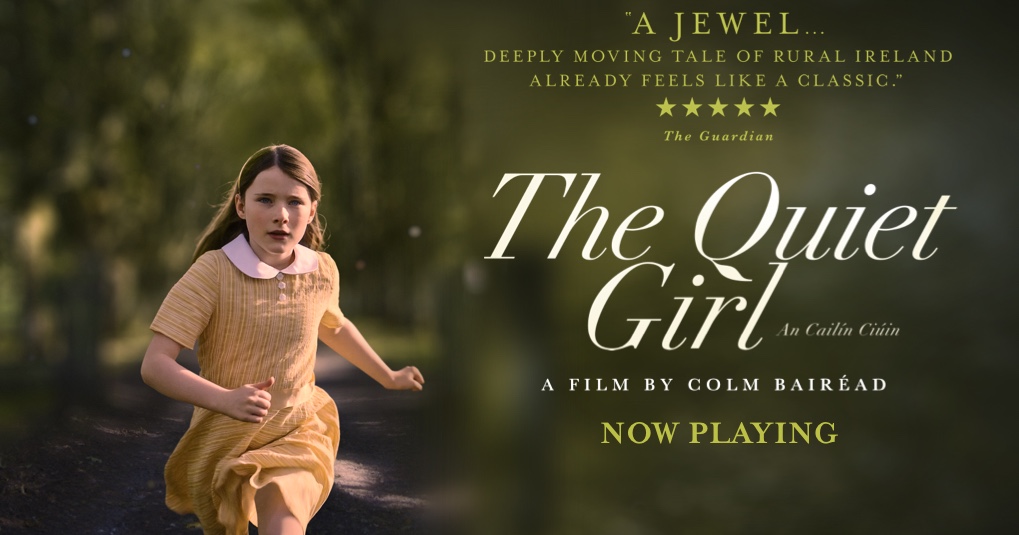
Here’s an interesting fact. Claire Keegan’s books Foster (2010) and Small Things Like These (2020), both have 128 pages. While short as a standalone book, both novellas exemplify Keegan’s style of writing: sparse descriptions that carry powerful punches. I’m glad to note that their film adaptations are worthy productions akin to her style, quiet, nuanced, and poignant. Foster is made into the film The Quiet Girl in 2022. (My review here) Small Things Like These is newly released, directed by Tim Mielants and starring Cillian Murphy, following his Oscar role as Oppenheimer.

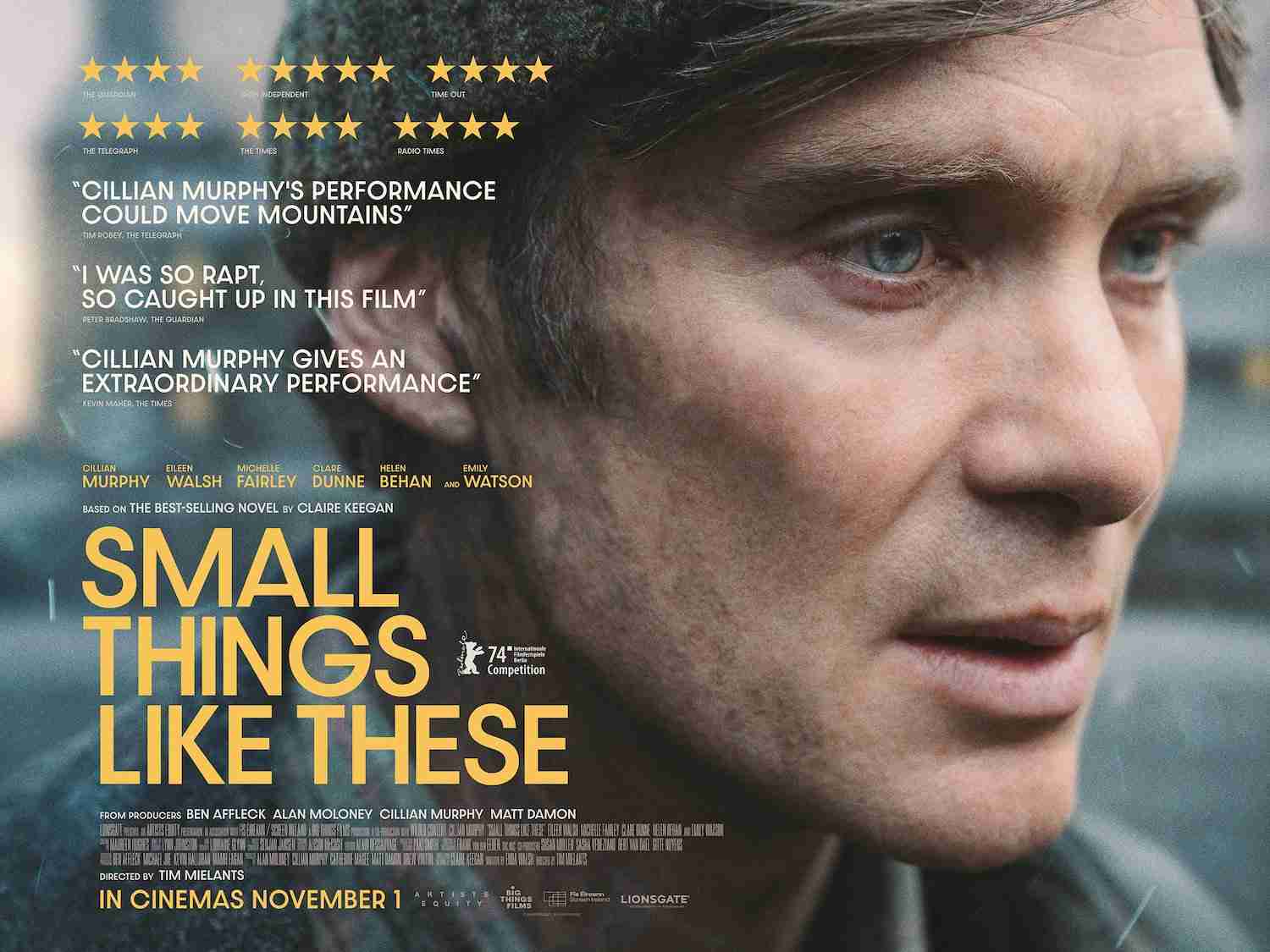
Bill Furlong (Cillian Murphy, Oppenheimer) is a coal merchant in an Irish town. It’s Christmas time, cold and snowy, after the dirty lifting of heavy bags of coal, the devoted husband and father comes back to a warm household, wife Eileen (Eileen Walsh) has supper ready and his five girls make up the chirpy harmony of home. The uneventful routine is disrupted one day when Bill makes his delivery to the local convent, witnessing a rough handling of a teenage girl being shoved into the entrance of the Catholic institution. Another time, when he stepped into the building to deliver his invoice, a girl scrubbing the floor comes up to him begging him to take her away. The next time he makes his delivery, he finds the girl locked inside the coal storage, dirty and shivering in cold.
The Magdalene Laundries are institutions operated by the Roman Catholic orders to house ‘fallen women’, asylums notorious for their abuse of the young women there, unpaid workhouses doing laundries for profit, unwed mothers having their babies forcibly taken away to be adopted. There have been features and TV series on this subject but the most exposure for viewers outside the UK is probably the movie Philomena (2013) starring Judi Dench and Steve Coogan. The note at the end of Small Things Like These explains the historic context, dedicating it to the more than 56,000 young women who were sent to the institutions between 1922 and 1998 for purpose of “penance and rehabilitation.”

Following his Best Actor Oscar win as physicist J. Robert Oppenheimer whose work, albeit not fully within his control, had affected the result of World War II, here in Small Things, Murphy is equally effective in his portrayal of a coal deliverer, fighting an internal war of conflict, a moral dilemma, to act upon his conscience thereby counteracting an institution that is all powerful in his town, or just to keep silent and do nothing to safeguard the wellbeing of his family. His wife says to him clearly like a warning, considering his soft heart: “If you want to get on in life, there are things you have to ignore.”

Bill’s past is interposed with his present throughout the film, for he was orphaned as a child but was raised by a loving woman. The compassionate upbringing he received could well had formed his sensitivity towards others’ suffering. Murphy’s performance of a troubling soul is heart wrenching, nuances captured aptly by closeups. Another frequent closeup shot is his handwashing after coming home from work, cleaning with soap and brushing out the black coal soots in his hands almost obsessively, a visual telling of his reluctance to join in the darkness of the world.

It’s small things like these, courageous acts by a common man despite social pressures and the negative consequences for his own family that make Bill a heroic figure. All five of his daughters need to get a good education in the Catholic-run system in town. To be at odds with Sister Mary (Emily Watson) is to have the door shut on his girls in terms of education and a good future. All these details are readily available as one reads Keegan’s book, but for those who have no contextual background before watching the film, such consequences of Bill’s moral dilemma may not be so easily grasped by the viewer. The film does drop hints in a few dialogues and subtly in certain scenes. For a 98-minute feature, more elaboration to denote these issues could be helpful in terms of the congruence of the storytelling and especially in magnifying the price Bill has to pay for his courageous act of compassion.

Overall, a worthy adaptation of Keegan’s novella. Come awards time later this year, I hope to see Murphy being acknowledged for his performance here. It’s small films like this that make cinema arts gratifying aesthetically and meaningful socially in our world that needs constant critique and reflection.

~ ~ ~ 1/2 Ripples

Related Posts on Ripple Effects:

The Quiet Girl Movie Review: From the Literary to the Visual

Passing by Nella Larsen: from Novella to Screen

Novellas to Screen

***

Novellas in November is hosted by 746 Books and Bookish Beck
‘His Three Daughters’ is a Rare Gem

In the midst of spectacles and action thrillers coming out nowadays, it’s refreshing to see a quiet gem has arrived on Netflix. His Three Daughters focuses on a topic common in real life and in movies, siblings coming back to their ailing parents’ home to prepare for their final parting. Maybe to offset such a heavy subject matter some of these movies are handled in a comedic or even farcical way, This is Where I Leave You (2014) and August: Osage County (2013) come to mind. In contrast, writer director Azazel Jacobs in His Three Daughters (2023) confronts the subject in a realistic and mindful way, eliciting from his three main actors honest and powerful performance. Jacobs is apt too in infusing witty dialogues and subtle humour. What a gratifying turn from his previous film French Exit (2020).

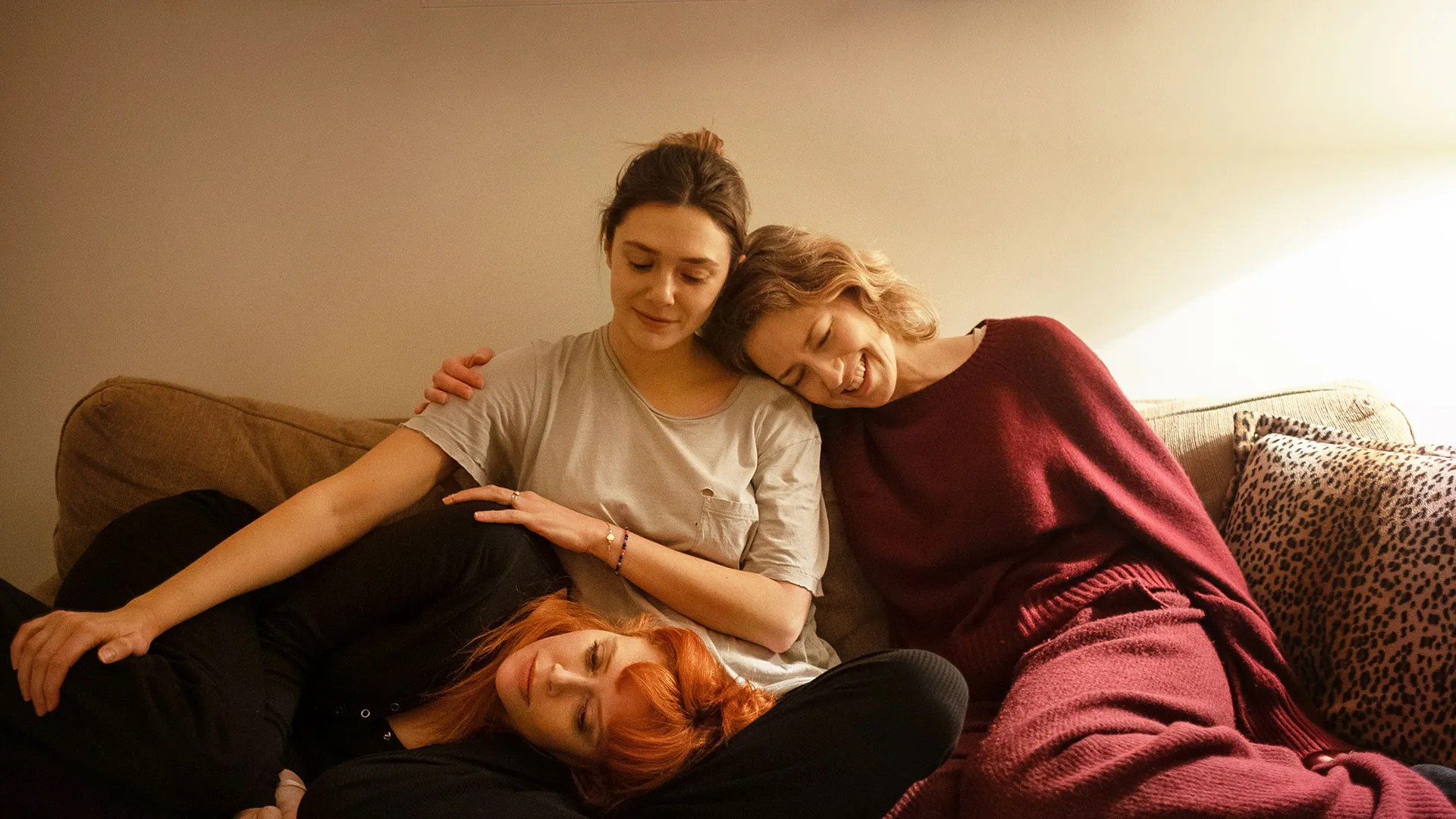
Under one roof in their father’s NYC apartment, three estranged sisters learn to live with each other once again. Carrie Coon (The Gilded Age) is the eldest daughter Katie, the take-charge type, from cooking, dealing with palliative nurses, getting a DNR (do-not-resuscitate) form signed by the father before he slips away, to writing his obituary while micro managing her teenage daughter at home in Brooklyn. Her intolerance of her stepsister Rachel (Natasha Lyonne, Orange is the New Black) who smokes weed and bets on sport games constitutes the main conflict in the sibling relationships. Trying to mediate between the two is Christina (Elizabeth Olsen, Sorry for your Loss) who is always reconciliatory. She’s preoccupied with her young daughter and husband at home far away across the country.

As for the father, he remains unseen behind closed or slightly opened door in his bedroom, his presence only denoted by the rhythmic beeping of the monitor to which he’s hooked up. Such concealing allows the viewers to focus on the trio, for what’s equally pressing is the rebuilding of sisterhood and the way to move forward after their father is gone. Dying relationships among the living are crying out to be heard and reconciled.

Rachel has been living in the apartment with their father all along, while the other two sisters just recently arrive to take care of things at this final stage of their father’s life. New house rules are set up. A pivotal scene comes when Rachel’s friend Benjy (Jovan Adepo) confronts the other two sisters as he points out the reality of their family dynamics. A new perspective begins to sink in as they come to realize their own shortfalls, a reality check that doesn’t go down easy for anyone.

In this chamber piece rich in dialogues, Coon, Lyonne, and Olsen are impeccable in displaying the raw and honest emotions of sibling love, hate, overt and hidden sentiments they hold against each other. But the overall mood is not all serious and somber. There’s underlying humour throughout, especially the opening scene, which reminds me of early Woody Allen works. Music is minimal to amplify the conversations, silence to enhance tension and ambivalence. Despite being shot inside an apartment with minimal exterior scenes, the camera is effective in conveying suspense, loss, and love.

As for the twist towards the end, it’s open to interpretations; however, it does seem incongruent with the earlier part. To avoid spoilers, I won’t be discussing it here. No matter, it’s the process reaching to the end that’s what the film so powerfully depicts. I hope to see more of this kind of cinematic gems to appear in theatres and on streaming platforms.

~ ~ ~ 1/2 Ripples

***

Related posts on Ripple Effects:

August: Osage County, Play and Movie Review

The Savages, with Philip Seymour Hoffman and Laura Linney

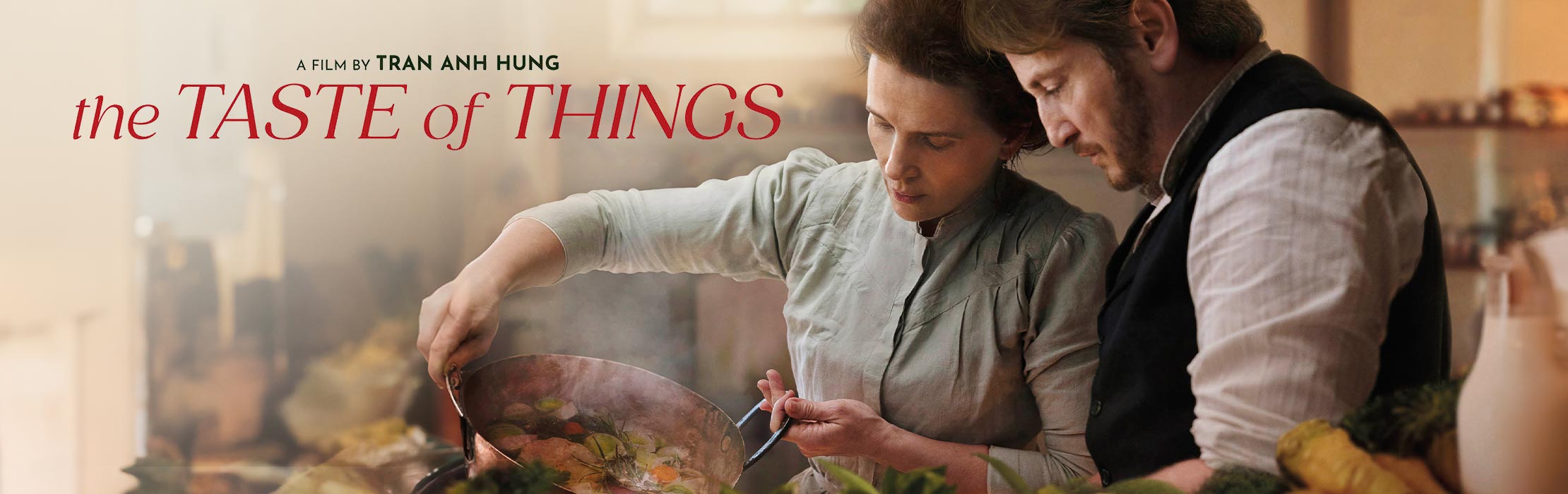
‘The Taste of Things’: the Country Kitchen as Vermeer’s Studio

At last year’s Oscar time, I was a little surprised that the buzzy Anatomy of a Fall wasn’t selected as the official entry by France to enter the race for Best International Feature Film. Instead, it was The Taste of Things. Now that I have the chance to watch it, I can understand why it was the choice and I totally agree with it. That it did not win seems immaterial, for its aesthetic value and the honour of being chosen to represent France make it a worthy accolade.

The Taste of Things is a delectable feature, a celebration of French gastronomy and its historic, culinary traditions, an exquisite and aesthetically riveting period film set in a country house. Vol-au-vent, pot-au-feu, roast rack of veal with braised vegetables… To say it’s a delicious food movie is just lowering the level of enjoyment, like eating an ice cream cone compared to being served baked alaska prepared by a gourmet. The film is not just about the taste of food, but of love, beauty, sensuality, and human connection, offering a deeply gratifying viewing experience.

Directed by the Vietnamese-French filmmaker Anh Hung Tran––whose first film The Scent of Papaya won a César Award in 1994 as well as accolades at Cannes––The Taste of Things sent Tran to Cannes again in 2023 and this time a Palme d’Or nominee and winning Best Director.

Tran reunited Juliette Binoche with her ex Benoît Magimel for the film. The two were divorced twenty years ago. Maybe a past relationship had some bearings on stirring up fond memories, for the pair exudes admirable chemistry on screen. Magimel plays the fictional gourmet Dodin Bouffant, nickname ‘Napoleon of gastronomy’, who resides in a country house during the late 19th century. His cook for twenty years has been Eugénie, superbly portrayed by Binoche, ethereal even in a rustic kitchen.

While Babette’s Feast (1988 Oscar’s Best Foreign Language Film) comes to mind readily, it’s the visual memory of Girl with a Pearl Earring (2004) that enhances my appreciation of The Taste of Things. Indeed, Dodin’s kitchen is like Vermeer’s studio, large window allowing natural light to pour in, the colour scheme of period costume and set design (Tran’s wife Nu Yên-Khê Tran), the naturalistic capturing of characters and their movement make it an exquisite, artistic production.

Inspired by Marcel Rouff’s novel La vie et la passion de Dodin-Bouffant, Gourmet (The Life and Passion of Dodin-Bouffant, Gourmet), writer director Tran wrote the screenplay of The Taste of Things as a prequel to Rouff’s novel, imagining the bond of love between Dodin and his longtime cook Eugénie. Dodin has proposed marriage to Eugénie time and again but is turned down every time. The twist comes when Eugénie falls ill and the reversal of roles emerges. Dodin begins to cook for her––love expressed through the ingenuity of new dishes meticulously prepared and the enjoyment of watching her savour his handiwork.

It’s interesting to note that there’s no music in the whole film. Massenet’s Méditation in piano version comes on only when the end credits roll. With no soundtrack, the essence is in the ambient sounds of nature, bird songs outside the country kitchen, and inside, the sounds of cooking, the crackling of the fire, and the gentle conversations among the characters as they prepare meals. In an interview, Tran mentions that: “The sound is the flavour of the picture. The picture has the beauty; the flavour of it comes from the sound.” 

Another crucial ingredient is the camerawork. Cinematography (Jonathan Ricquebourg) is the key in capturing the overall aesthetics and mood of the film. The camera is like a quiet observer, moving gently, often in long takes, following the characters in the kitchen, their movement like a choreographed sequence, smooth, seamless, serene and subtle. While the food preparation may seem complicated and time-pressed, the overall mood in the kitchen is always harmonious. The would-be apprentice, fourteen-year-old Pauline (Bonnie Chagneau-Ravoire) is particularly impressive. A tidbit: The French chef Pierre Gagnaire, owner and head chef of his eponymous restaurant, is the consultant for the movie. He himself has a role in there as well.

Overall, an artistic achievement to savour. Vermeer’s kitchen or Dodin’s studio? A fitting fusion of imaginary connections.

~ ~ ~ 1/2 Ripples

***

Thanks to Words and Peace for hosting Paris in July 2024

Note: All posts on Ripple Effects written by Arti, the real person.

***

Related Posts on Ripple Effects:

Anatomy of a Fall or how to dissect a marriage

Paris in July 2022: A Culinary Sojourn

Girl with a Pearl Earring: the painting, the novel, and the movie

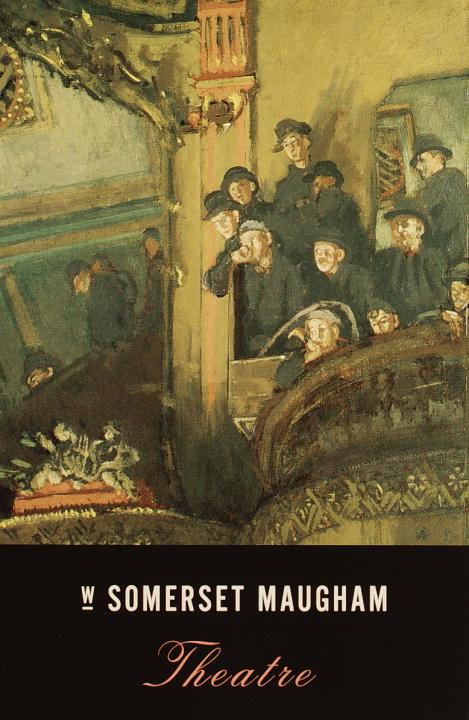
The 1937 Club: Maugham’s ‘Theatre’ from Book to Screen

To wrap up my week for The 1937 Club, I’m re-posting my review of W. Somerset Maugham’s Theatre published in 1937 which some of you have read. As I’m still reading Virginia Woolf’s The Years, haven’t time to reread Maugham’s book this time. I want to re-post my review mainly because I’d like to share my thoughts back in 2010 when I wrote it, and see how much our society has changed in terms of what is real, the main issue by which in Maugham’s book, the son Roger is so disturbed regarding his theatre actress mother Julia Lambert.

As for book turned into films, those familiar with Ripple Effects know that I see the literary and the visual as different art forms, therefore being ‘faithful’ isn’t the major qualifier for a good adaptation. However, in this case, I’m quite disappointed that the essence or, the main issue, as represented by Roger’s frustration with his mother has not been transposed onto the screen, downplaying the tension and conflict that’s so crucial in the book.

_____________________

Two pages into the book I knew right away I had seen it before. Of course, that’s the movie Being Julia (2004). Annette Bening got a Best Actress Oscar nom for her portrayal of Julia Lambert, a famous actress on the London stage in the 1930’s. The movie is a colourful account of how a successful stage actress deals with her mid-life crisis. Garnering fame, fortune, and achievement in bounty, what more could she ask for but… love and passion. And during the course, obstacles, jealousy, and betrayal are all overcome, and revenge carried out; on or off stage, no matter, it’s equally exciting for the glamorous Julia Lambert.

But not until I read this novel on which the movie was based did I realize that a most important passage had been left out. And oh what an omission! For the crux of the book rests on those few pages. And not only that, the screenwriter had chosen to alter a character to suit his fancy, rounding off the edges of conflicts and alleviating tensions in presenting a smooth and suave storyline.

In the movie, Julia’s son Roger is a young man fresh out of Eton and planning to attend Cambridge after the summer. That much is true to the book. Roger is shown to be a devoted son, lovingly supportive of his mother in her pursuits in career and love life. But this is not the case in the novel.  Maugham has crafted Roger as a critical young man, offering the necessary tension to the story. In a crucial scene at the end of the book, he questions Julia’s behaviour and integrity. These challenges form the climatic confrontation between mother and son, projecting the meaning behind the very title of the novel.

Here is an excerpt from this scene that captures the essence of the whole book. Julia asks Roger:

“What is it you want?”
Once again he gave her his disconcerting stare.  It was hard to know if he was serious, for his eyes faintly shimmered with amusement.
“Reality.”
“What do you mean?”
“You see, I’ve lived all my life in an atmosphere of make-believe…. You never stop acting. It’s second nature to you. You act when there’s a party here. You act to the servants, you act to Father, you act to me. To me you act the part of the fond, indulgent, celebrated mother. You don’t exist, you’re only the innumerable parts you’ve played. I’ve often wondered if there was ever a you or if you were never anything more than a vehicle for all these other people that you’ve pretended to be. When I’ve seen you go into an empty room I’ve sometimes wanted to open the door suddenly, but I’ve been afraid to in case I found nobody there.”

By turning Roger into a complacent and docile young man, the screenwriter had failed to present the necessary tension in the story. Further, by avoiding the character foil between the successful actress mother and her meaning-pursuing, idealistic son, the movie fails to deliver the essential subtext, despite an impressive performance by Annette Bening.

Further, the best is yet to come in the book… such is the ingenuity of Maugham.  After a superb, revengeful performance, overarching her rival, the young and beautiful Avice Crichton, and drawing everyone’s admiration back to herself, Julia celebrates on her own with a nice meal and mulls over a gratifying notion, on the very last page:

“Roger says we don’t exist. Why, it’s only we who do exist. They are the shadows and we give them substance. We are the symbols of all this confused, aimless struggling that they call life, and it’s only the symbol which is real. They say acting is only make-believe. That make-believe is the only reality.”

This is ever so relevant for us today. With all the online personae we can create and project, all behind the guard of anonymity, Roger’s quest for what’s real remains a valid search.

Sherry Turkle, the acclaimed ‘anthropologist of cyberspace’, has observed the liminal reality in our postmodern world and stated her own quest:

“I’m interested in how the virtual impinges on what we’ve always called the real, and how the real impinges on the virtual.”

Let’s just hope that the advancement of technology would not get the better of us, blurring the lines of fact and fiction, offering shields for fraud and deceits. Behind the liminal existence, let’s hope too that we still care what’s real and what’s not, and that our humanity will still be valued and not be compromised or lost in the vast abyss of bits and bytes.

The upcoming Academy Awards too, is another platform to showcase such a duality. I always find the acceptance speeches of award winners intriguing: what’s genuine and what’s fake in their thank you’s. Are they presenting their real self or merely acting? Outside of their roles, which part of them is authentic? Or, do they ever get out of their roles?

It’s interesting too to explore the influence of movies nowadays. Again, the postmodern emphasis is on the narrative, multiples of them, and storytelling the vehicle of meaning. Does the notion of Maugham’s character Julia mirror our world… that movies have become the symbols of what we call life? That make-believe has sometimes been merged with reality? Can we still tell them apart? Or, should we even try? Considering the pervasive effects of pop culture in our life today, considering a single movie can command a worldwide box office sale of $2.4 billion, and counting… Maugham was prophetic indeed.

***

Again, I thank Simon and Karen for hosting. Looking forward to the next year club in the coming months.

The Zone of Interest and the Banality of Evil

How does a German family spend their summer holidays? Imagine this one with mom and dad and their five children in a country house. Family picnic by the river, dad fishing, mom admiring her large and impressive garden, children splashing in the pool. Dad got a surprise birthday present, a canoe, which he takes to the quiet stream with two of his older children surrounded by bird songs. Dad not only loves his family, but his horse, his dog, and those lilac bushes.

A picture of an idyllic and peaceful family life. Zoom out a bit, the country house is right adjacent to the Auschwitz concentration camp, separated by just a wall, barbed wire on top. We can only see the top of the prison buildings. Yes, we also see heavy smoke shooting out from tall chimneys.

This is an actual, historic setting. The master of the household is Rudolf Höss (Christian Friedel), commandant of the Auschwitz concentration camp. He rides to work on his beloved horse, doesn’t have far to go, only next door. An idyllic family life and the horrors of genocide co-exist side by side, the Garden of Eden and Hell separated by just one wall. As for the wall, Rudolf’s wife Hedwig (Sandra Hüller) is thinking of growing some vine to cover it, making it disappear altogether.

Writer-director Jonathan Glazer’s Zone of Interest is a macabre juxtaposition of normality and atrocity, a cinematic representation of what the political thinker and philosopher Hannah Arendt calls the banality of evil. It doesn’t take a monster to commit monstrous acts. Ordinary people had committed them without questioning, as Judith Butler wrote about Arendt’s book on the trial of Adolf Eichmann, one of the organizers of the Holocaust:

In a sense, by calling a crime against humanity ‘banal’, [Arendt] was trying to point to the way in which the crime had become for the criminals accepted, routinised, and implemented without moral revulsion and political indignation and resistance.

The Guardian, Aug. 29, 2011

Glazer’s ingenuity in depicting the ‘horror next door’ is by not showing us visually but audibly. While we see the Höss family going about their daily life, we can hear constant gunshots, dogs barking, guards yelling, furnace rumbling, and anguished cries. Indeed, the whole Höss family have learned to ignore such ‘disturbances.’ Their callousness is chilling. When Rudolf received the order to transfer from Auschwitz to Oranienburg, Hedwig tells him that she wants to stay right there with the children while Rudolf can attend his new post alone. Their rationale: “The life we enjoy is very much worth the sacrifice.” Hedwig adds in, “this is the way Hitler would want us to live.” Here is their dream home.

If such a normal family can be complicit to evil without questioning, Arendt’s implication is that we who consider ourselves ordinary folks can also be susceptible to commit criminal wrongdoings out of the desire for group conformity or self-interest. It doesn’t take a villainous monster to commit atrocious acts, we all have the propensity for evil. That wall separating the garden and hell could be the metaphoric, thin line between good and evil within ourselves. Another chilling thought, this time much closer in our own backyard.

Two-time Oscar nominated cinematographer Lukasz Zal (Cold War, 2019; Ida, 2015) placed cameras in and outside of the house unobtrusively to capture the actors in their natural way. Shot in natural lighting, with no camera people on set, the film is a raw depiction of the behavior of a family in their mundane mode of living, a heartless picture of irony to what’s taking place on the other side of the wall.

Two scenes particularly stand out for me. Hedwig tries on a long fur coat––loot from the prisoners next door––looking into a full-length mirror, clutching the collars and posing from side to side as if trying it in a boutique shop. Another scene is one of the older boys using his flashlight to examine something while in bed at night. An insert shot shows what he’s studying: teeth with gold trims; not hard to figure out where they come from.

Any relief from such insensitivity? Glazer has inserted some fairytale-like sequences in reverse black and white of a girl hiding food in the bushes, for the prisoners we presume, that’s when we hear the voice-over of Rudolf reading to his children the story of Hansel and Gretel in their bed. Fairytale or dream sequence, or for real, is that one of the Höss girls? No matter, that’s the humanity we seek.

Loosely based on Martin Amis’ novel, Zone of Interest is an ‘arthouse’ style of filmmaking that offers a unique perspective of the Holocaust without showing any of the prisoners, except the one that works in the Höss garden. Sounds elicit unseen implications. The film starts and ends with a long, eerie cacophony of anguish and squeals with the screen a blurry mass of grey. The effects evoked are none less haunting than actual shots of the concentration camp. The ending scene comes back to today and the way the camera captures the people there is most effective in wrapping up this retelling of history.

With its one hour and forty-five minutes duration, the film is succinct, well-paced and edited, naturalistic in its styling, and leaves viewers with haunting ponderings after. Winner of four Cannes Prizes, The Zone of Interested is nominated in five categories in this coming Academy Awards on March 10: Best Picture, Best International Feature Film, Director, Adapted Screenplay, and Sound. Hope it could get some worthy recognition on this side of the Atlantic.

~ ~ ~ ~ Ripples

Related Ripple Reviews:

Anatomy of a Fall

Ida’s Choice: Thoughts on Pawlikowski’s Ida

Ripples from the 2024 Oscar Nominations

The 96th Academy Awards nominations were announced on January 23. To Oscar watchers, the Best Picture list is no surprise. All the ten movies have been garnering praises all along in the past year. Here are some ripples from Arti’s Pond. My views may not reflect yours, so, you’re welcome to throw in your two pebbles to generate yours.

This year the nominations are voted by members of The Academy of Motion Picture Arts and Sciences from 93 countries, over 9,400 eligible voters. Here are the ten Best Picture nominees with links to my full review and others a capsule review here.

Here are the Best Picture Nominees for the 96th Academy Awards:

American Fiction –– My favourite of all the nominees that I have watched on this list. Clever, funny, and superbly performed. While I haven’t read the literary source Percival Everett’s 2001 novel Erasure, I find the movie in itself thought-provoking, well-edited, and with a relevant, hilarious twist at the end. A heartfelt description of family relations while presenting an acerbic satire on racial stereotyping in the publishing industry, extending to the general American society. Winner of TIFF’s People’s Choice Awards last September, a choice, I suppose, is easier for us unhindered outsiders to make. 5 Oscar noms.

Anatomy of a Fall –– My full review here. 5 Oscar noms.

Barbie –– While Greta Gerwig is one of my favourite film writers, directors, and actors, I’m afraid I don’t share the enthusiasm of the populist. Is it that hard to imagine a girl growing up just might not like dolls and least of all a Barbie, and who averts anything pink? Exactly, it’s hard for me to embrace the movie that is a sensory overload of objects I’m apathetic about. Nevertheless, I must say, Greta, your dealing with existential issues of being and nothingness using a doll is ingenious. Above all, you’re bold to laugh at Mattel, Man and Money. Biggest irony is, in laughing at the three M’s you’re raking in billions of box office sales. 8 Oscar noms

The Holdovers –– My full review here. 5 Oscar noms.

Killers of the Flower Moon –– A typical Martin Scorsese film with in-depth storytelling using his trump cards, strong character actors Leonardo DiCaprio and Robert De Niro. How the discovery of oil brings not only wealth to the Osage people but grief and heartbreak is a chapter in early FBI history. But the movie doesn’t focus so much on the FBI investigation but the dubious marriage relationship between Earnest (DiCaprio) and Molly (Lily Gladstone). As I watched, I was thinking if I were the editor, I’d cut out an hour of its 3 hours 26 mins length and it can still run smoothly. A breakout performance for Gladstone. I first saw her in Kelly Reichardt’s Certain Women and later in First Cow, but Scorsese has brought out the strong actress in her. 10 Oscar noms

Maestro –– As a Leonard Bernstein fan since my college days, still have his book The Joy of Music on my shelf, his LP box album of the complete Beethoven’s Nine Symphonies with the NY Philharmonic in my LP collections, I’m disappointed that Bradley Cooper chooses to depict the side of the iconic composer, conductor, pianist, educator and writer that is the most disturbing and least admirable, i.e. his betrayal of his devoted wife. Of course, it makes sensational movie materials. Cooper’s portrayal comes off as flippant and cocky. Yes, Carey Mulligan deserves an Oscar nom after putting up with all those smoking and having had to inhale constantly as well. 7 Oscar noms.

Oppenheimer –– You might be surprised, but I still haven’t watched this Oscar frontrunner with 13 noms and for some reasons, have a weak desire to. Go ahead, psychoanalyze me.

Past Lives –– My full review here. 2 Oscar noms.

Poor Things –– It’s all good with fantastic set design and art rendering, fresh and meaningful storyline touching on existential issues behind its comic veneer. An adult behaving like a child isn’t anything new, we see these bodies almost everyday, but Emma Stone as Bella makes it entertaining, enlightening and thought-provoking. Mark Ruffalo deserves an Oscar nom. Brilliant LOL scene where he tries to pair with Bella’s crazy dance moves to deflect her oddity on the dance floor. All good except one section that I feel is gratuitous on the part of director Yorgos Lanthimos and that’s the Paris chapter where Bella works as a prostitute to earn money. No need to repeat her act with man after man after man. 11 Oscar noms.

The Zone of Interest –– On the top of my TBW list. 5 Oscar noms.

The 96th Academy Awards will take place Sunday, March 10, at the Dolby Theatre in Hollywood, Los Angeles.

‘American Symphony’ is a Must-See 2023 Documentary

While waiting for Maestro to come to our city’s theatres, serendipity strikes. I found this newly released documentary on Netflix. Two classical music features coming out at the same time, I thought. But to my surprise, American Symphony isn’t about a classical music icon like Leonard Bernstein in Maestro but––it would make an interesting contrast–– Jon Batiste, the Louisiana born and Juilliard trained musician, singer, songwriter, composer, pianist and bandleader on The Late Show with Stephen Colbert.

Directed by Matthew Heineman, a multiple award-winning and Oscar nominated director, who has brought us an intimate and moving love story. I knew nothing about Batiste before watching this doc, only seen him on Stephen Colbert, the bandleader that gives an assured, warm smile when the camera focuses on him. American Symphony showcases Batiste’s new composition of the same name, as well as following his celebrated rise to the summit of musical stardom in 2022 when he garnered eleven Grammy nominations across genres and winning five including Album of the Year.

What captivates me is not only Batiste’s talents or his music. Surely these as well as his process of creativity are what make this doc highly entertaining, but what’s inspirational is the focus of his relationship with his wife, writer Suleika Jaouad, whose myeloid leukemia has returned after years of dormancy. In the midst of jubilation and career honors, there’s the searing pain of seeing his wife suffer in hospital. Batiste stays by her side as she goes through bone marrow transplant, and lovingly supports her through the whole treatment.

What is soul-stirring is the inward revealing of Batiste’s faith in his God, his humility in the midst of career wins and recognitions, and his readiness to accept whatever that could come his way. The doc is an intimate look into the duality of triumph and suffering, the vibrancy and the vulnerability of life, a candid and endearing love story.

As for the eponymous ‘American Symphony’, Batiste’s new composition, we get to see its rehearsal process throughout the feature, and savor excerpts of it towards the end. This last section is a revelation. The work had its world premiere in Carnegie Hall to a full house in September 2022. An innovative symphony encompassing tributes to jazz icons and the Black cultural roots, Batiste at the piano, a full orchestra, vocals from classical and gospel traditions, and including Native Americans in their own costumes and with their drums and songs, yearnings of human voices in cacophony, a moving experience. It would be interesting to see Maestro after watching American Symphony.

~ ~ ~ 1/2 Ripples

***

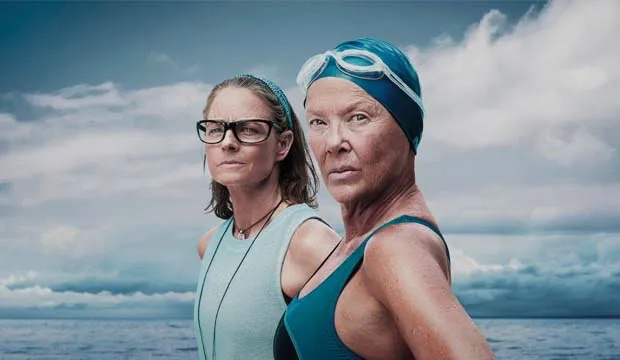
‘NYAD’ is a movie of two heroes

Diana Nyad is the first person to swim more than 100 miles from Havana, Cuba to Key West, Florida without a protective shark cage. The date was September 2, 2013. Nyad reached Florida shore after 53 hours of swimming in open water at the age of 64.

First off, I’m aware of the controversy surrounding this achievement of Nyad’s, as well as those of her past as a marathon swimmer. However, I’m here to discuss the movie NYAD only, so that’s what this post is about. The movie is based on Diana Nyad’s memoir Find a Way: the Inspiring Story of One Woman’s Pursuit of a Lifelong Dream (2016); since I’ve not read the book, I won’t be touching on any of its content or comparing the source material with the adaptation.

NYAD is the first narrative feature of Oscar winning documentarian couple Jimmy Chin and Elizabeth Chai Vasarhelyi. Chin himself is no stranger to extreme sports. An acclaimed mountaineer and National Geographic photographer who has reached the top of Mount Everest twice and skied down its vertical surface. With Free Solo (my review), the husband-and-wife filmmakers won the Best Documentary Feature Oscar in 2019. The film chronicles rock climber Alex Honnold scaling the 3,000 feet vertical wall of El Capitan in California’s Yosemite National Park using his bare hands and feet, solo and free from ropes and safety gears.

I can see right away how this feat of Honnold’s parallels that of Nyad’s, who swam in the open ocean with no enclosed protection from sharks, albeit in her successful, final attempt, donned a jellyfish protective suit to finish her challenge. Both the mountain climber and the marathon swimmer possess the same drive: an obsessive, iron will.

Annette Bening is perfect in her portrayal of Nyad, a determined but difficult, and sometimes abrasive character. It takes such kind of one-track stubbornness––and a whole supporting team including an expert navigator (John Bartlett, aptly played by Rhys Ifans), boat pilot, medic, jellyfish expert, shark detracting divers, and others––sailing alongside the marathon swimmer to achieve such an arduous venture.

Above all, it’s Nyad’s lifelong friend and coach Bonnie Stoll––superbly-matched casting of Jodie Foster––who supports and trains her during this grueling ordeal, albeit reluctantly at the start. Nyad might be the ultimate triumph, but it is Bonnie, the loyal friend being pushed into her own onerous hero’s journey that makes it possible, preparing the swimmer both physically and psychologically to realize her dream. Bening and Foster playing off each other is the best stroke of the movie. A moving scene towards the end shifts the focus of the motivating force, surely it requires an indomitable will, but it’s deep, genuine love that finishes the course.

As documentary filmmakers shooting their first dramatic narrative, Chin and Vasarhelyi deftly insert actual footage of Nyad’s earlier failed attempts, the first one when she was only 28, as well as her interviews and talks. Such inclusions strengthen the authenticity of the drama. It’s inspiring to see that Nyad is not afraid to look at her past failures. Ironically, it is her first failed attempt at 28 that sparks the idea to try again when she’s 60, and prods her to face the challenge head-on at 61, then tries again, and again, until she finally achieves her goal in her fifth attempt at 64. Showing such repeated efforts could make the film look redundant, but Bening and Foster’s on screen relationship captures my attention throughout.

Bening needs to be applauded for her willingness to go all out to portray Nyad in the most realistic way she could. Chin had noted in an interview that the actress spent four to eight hours a day in the water shooting the film, “and she did all the swimming.” To prepare for her role, Bening, who was well into her 60’s at the time, had to go through a year of intense training in swimming and physicality before the production. Most likely Mary Oliver had struck Bening just the same as her poetic voice had moved Nyad. In the movie, these lines from ‘The Summer Day’ were the initial motivation inspiring Nyad to take up such a Herculean challenge at 60:

“Doesn’t everything die at last, and too soon?
Tell me, what is it you plan to do
with your one wild and precious life?”

Another insertion the directors use to dramatize the seemingly monotonous swims is fantasy sequences, which are not too well received by some reviewers. Not for me. Like one lost in the desert wearing out to the brink of expiring with thirst, mirages appear in the hallucinated mind. This is a parallel situation. In the dire demand of the grueling swim in treacherous waters almost to the brink of death, disorientation could set in.

Another dramatic device are the faded flashbacks of Nyad as a young swimmer, including some hazy implications of abuse. While serving the biopic element of the feature, these flashbacks lack the significance and continuity with the present day Nyad and her goal. Tighter editing and elaboration of these scenes might serve their purpose better.

Must mention is the original score by Alexandre Desplat whose expansive repertoire include two Oscar wins (The Shape of Water, The Grand Budapest Hotel). The song selections are interesting as well, maybe only appeal to certain demographics; some of these titles must have brought back fond memories from viewers of Nyad’s generation. The opening of the film are underwater shots of Nyad swimming in the pool, and to my pleasant surprise, ‘The Sound of Silence’ comes on, reminiscence of a similar scene where a dazed Benjamin, freshly graduated from college trying to figure out his path in life. We all know where that comes from.

I’m excited to see Chin and Vasarhelyi venture out into the narrative feature genre. The fusion of dramatization with actual documentary footage is an effective transition into their new mode of storytelling. NYAD is an inspiring film not just for its subject matter but for the performance of the two lead actors which is most memorable.

~ ~ ~ Ripples

***

‘Anatomy of a Fall’ or how to dissect a marriage

In lieu of heading to Toronto for TIFF as in pre-Covid time, I stay put in my city hoping some of my anticipated films might trickle down. Of the nine titles on my to-be-watched list, only one came to the Calgary International Film Festival. I’m glad it’s this year’s Palme d’Or winner Anatomy of a Fall.

French director Justine Triet is the third woman to have won the Palme d’Or, Cannes Film Festival’s top prize in sixty-eight years. The two previous winners were Julia Ducournau for Titane in 2021 and Jane Campion for The Piano in 1993. It’s interesting to note that Triet co-writes the screenplay with her husband Arthur Harari, encompassing English, French and a little German in the dialogues, showing how language can connect as well as alienate a couple depending upon the circumstance.

A teacher and struggling writer, Samuel (Samuel Theis) is found dead on the snow-covered ground of his chalet in the French Alp. The only other person in the house at that time is his wife Sandra (Sandra Hüller), a successful German novelist who has just finished an interview with a journalist in the living room, and loud music is on all this time from somewhere else in the house. The body is discovered by their eleven year-old son, Daniel (Milo Machado Graner), who comes home after walking their family dog Snoop. Actually, it’s Snoop that first finds the body as Daniel is visually impaired.

Two possibilities are pondered in the investigation of the fall, suicide or murder, Samuel being pushed out of the balcony outside the high attic. The main segment of the film is the trial a year later of Sandra, the wife, who stands accused of murdering her husband, with their blind son the sole witness in the courtroom drama. Sandra seeks the help of an old friend Vincent (Swann Arlaud) to be her attorney. Vincent isn’t a high profile lawyer, but he’s empathetic and rational in his reasoning. Since accidental death is the least plausible in this case, the only option to defend his client is to present evidence for suicide. Sandra might look stoic and aloof but Vincent’s support is essential during such a difficult time.

Vincent (Swann Arlaud) and Sandra (Sandra Hüller) in Anatomy of a Fall

Intense and riveting throughout, Anatomy of a fall brings back the joy of pure cinema experience, that is, watching a film that’s made up of a well-crafted script delivered by superb acting, captured in astute camera work, especially with close-ups depicting the nuances of emotions, with no CGI effects, no car chases or apocalyptic explosions, just mere human interactions that speak volumes. And with that note, I must add too that sound or its absence is important in the film. From the loud music of a song by 50 Cent at the beginning to the piano pieces played by Daniel, extension of his inner struggles, all are crucial in the storytelling.

When a wife is on trial for the murder of her husband, every minute detail of their marital relationship will be dissected, dirty laundries aired out and conversations scrutinized without discretion. Out of consideration for not hurting Daniel’s feelings, he is excused on the day some raw evidence from a recording of a fight between his parents is to be played out in court, but he insists to be there. ‘I’ve already been hurt,’ he says.

And it is this voice recording––juxtaposed with flashback sequences for us viewers––that form the pivotal segment of the film, a highly charged, epitome of powerful acting especially from Hüller. It is also this raging recording that casts a doubt in Daniel’s mind regarding his mother, and a little clarity in understanding the balance of relational power between his parents. The flashback scene is for us viewers; in court, only the voices are heard. For Daniel, that is enough. What follows is the key to the the ingenuity of the script, leading to the eventual outcome of the trial.

Not only is her marriage on trial, Sandra’s own personal, psychological makeup is questioned. The prosecutor (Antoine Reinartz) uses anything he can find to create an image of Sandra being a cold and revengeful wife. The content of her novels are examined and taken as a revealing of her psyche. Herein lies an intriguing issue: can a work of fiction be used as evidence to incriminate its author in a court of law? For the prosecutor, to help his case, it’s convenient to equate Sandra’s novels as parallels of her real life. Defence lawyer Vincent is quick to rebut this reasoning, “is Stephen King a serial killer?”

The two and a half hour duration could have been tightened a bit, but sitting through it in the dark theatre with my sole attention drawn to the nuanced performance by the whole cast and in high anticipation of the trial result, I wasn’t aware of the time passing. Just found out France has submitted another film to enter the Best International Film category for 2024 Oscars, rendering Anatomy of a Fall out of the race in that category. Nevertheless, Hüller is worthy of a Best Actress Oscar nom, Machado Graner playing Daniel deserves some high praises, and Triet’s directing and her original screenplay need to be noted, the film could have a chance in the Best Picture category. Overall, a captivating work of suspense, character study, and intelligent filmmaking.

~ ~ ~ 1/2 Ripples

***

The Netflix Diversion

As two of my highly anticipated movies (see my list here) coming out in the fall will be on Netflix: Maestro and NYAD, I just can’t resist anymore. Three days ago I decided to subscribe to Netflix. While waiting for these two movies to show up, I’ve got plenty of others to watch. These past few days, I’ve finished a few. Yes… daily life has been a bit diverted. My capsule reviews in the following. All three TV series are worth watching and the doc on Joan Didion, a must-see.

BEEF –– A road rage incident pushes two lives down the abyss of rage and revenge which ultimately torpedoes into an explosive meltdown. The fight between Amy Lau (Ali Wong), an entrepreneur, wife and mother living in an upper middle class neighborhood and her adversary Danny Cho (Steven Yeun), a handyman striving to make ends meet as a dutiful son and watchful older brother is not only a satire of the disparity between the rich and the poor, but a realistic depiction of the existential angsts shared by all regardless of social and economic status, or, as the series has effectively shown, racial background. Highly addictive, cleverly written and first-rate acting. 13 Primetime Emmy Awards nominations.

The Diplomat –– Kate Wyler (Keri Russell) is appointed by the POTUS (Michael McKean) as the new ambassador to the United Kingdom, a post she reluctantly takes up. With her previous experience in war-torn countries and Afghanistan which she expects to return, her new post in London is a major cultural clash, hence resulting in some mismatched decorum and humorous moments. Adding to her maladjustment and complicating matters when dealing with volatile, international crises is her husband Hal (Rufus Sewell), himself the former ambassador to the UK. The once political influencer now has to take up the role as a diplomat’s wife in a precarious marriage. Interesting play on gender politics, marital/power relationships, on top of intense, political chess play. Russell is nominated for Outstanding Lead Actress in a Drama Series in the upcoming Emmy Awards, deservedly. Interesting to note some of the language used here is quite similar to the rage-filled one in BEEF.

The Lincoln Lawyer –– I pick up from the current Season 3. While I like Michael Connelly’s character, former LAPD detective Harry Bosch, more than his Mickey Haller, a lawyer who works out of a Lincoln dealing with seedy clients, I’ve enjoyed the TV adaptation. Haller, aptly played by Manuel Garcia-Rulfo, is a pleasing yet complex character, resourceful, smart, an upholder of the law but has his blind spots. As a recovering addict, vulnerability coexists with his assets. Other characters are also well cast, jumping out of Connelly’s novels to become well fleshed-out and likable human beings (we just might be using this term more now to distinguish between the real and the fake), making up a lively supporting cast. Interesting to note that in the 10 episodes of S3, despite dealing with crimes and criminals, the language used is relatively free of foul play.

________________

Joan Didion: The Center Will Not Hold

Directed by Griffin Dunne, actor/director and Joan Didion’s nephew, this brief, biographical documentary of Didion follows her career and life during some of America’s tumultuous decades. Dunne’s interviews with her aunt elicit some intimate conversation and poignant memories from Didion, by now frail and with apparent impediment. An astute observer of society, Didion had given us some monumental commentaries of her times with her writings. Listening to the narration in the documentary and seeing the iconic photos and footage of significant turns of history, Didion’s analyses just as well could have applied to our world today, just as she has quoted in her Slouching Towards Bethlehem the line in Yeats’s poem: “Things fall apart; the centre cannot hold.”

The latter part of the documentary is about Didion’s own personal tragedy, chronicling the sudden death of her husband John Gregory Dunne and just months later, her daughter Quintana, her grief poured out in The Year of Magical Thinking and Blue Nights. English playwright David Hare had been her anchor in transforming mourning and loss into artistic expression on stage, giving her some sort of a closure. Hare directs the Broadway play adaptation of The Year of Magical Thinking with Vanessa Redgrave as the sole performer. Redgrave shared a similar experience as her daughter Natasha Richardson died suddenly after a ski accident. The documentary has kept a short clip from the play and presented personal recollections from Hare and those close to her life, friends and colleagues. A poignant and moving feature.

~ ~ ~ 1/2 Ripples

***

Related Posts on Ripple Effects:

Blue Nights: A Book Review

Voice of the Poet: Things Fall Apart

‘Past Lives’ and the Road not Taken

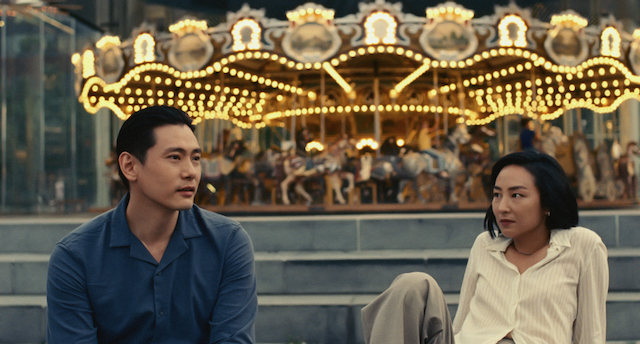
Hae Sung (Teo Yoo) visits Nora (Greta Lee) in New York, a scene from “Past Lives”. Photo courtesy of Elevation Pictures

“Past Lives” is a meticulously crafted feature that is autobiographical in nature, naturalistic in style, and far-reaching in its resonance. The directorial debut of Korean-Canadian playwright Celine Song who is now based in the US, it premiered at Sundance early this year and subsequently was nominated for a Golden Berlin Bear at the 73rd Berlinale. Most recently on July 2, its accolades continued at the Hollywood Critics Association Midseason Awards winning Best Indie Film, Best Actress for Greta Lee and Best Screenplay for Song.

Nora (Greta Lee), immigrated to Canada from South Korea when she was twelve, following her parents’ decision. As a child, she has always been Na Young (Moon Seung-ah), now given a new name, Nora, by her father as they prepare to leave. Her departure severs a close tie with her childhood sweetheart Hae Sung (Seung Min Yim).

Twelve years later, Nora makes a move to New York City from Canada in pursuit of a career in writing, a decision this time of her own choosing. While there, she happens to come into contact with Hae Sung (Teo Too) online. The two meet again via texts and Skype but that connection is short-lived as Nora initiates a termination, for she wants to focus on her writing career and setting roots in her newly adopted home. Fast forward some more years, Hae Sung comes to New York in person to seek her out. Nora’s past thus re-emerges. 

In a writer’s retreat, Nora meets Arthur (John Magaro) and they soon fall in love. When Hae Sung comes to New York, Nora has been married to Arthur for seven years. Despite being in a secure and loving marriage, Nora feels the conflicts of navigating between two men from the present and the past, as well as choosing a path for the future. ‘Yet knowing how way leads on to way’ as the poet Robert Frost poignantly utters, she laments the loss that comes with only one path to tread, one road to take. 

While it may sound like a typical immigrant story–the ambivalence of losing and gaining as one makes decisions about leaving one’s homeland to start a new life in a foreign country–Nora’s narrative ripples out beyond the immigrant experience. We are all constrained by time and space. Somewhere in our life, we are bound to have left behind a part of ourselves, our childhood, our roots as we move forward to another stage of life.

In the opening bar scene where Nora sits in between her husband and her childhood sweetheart, she is the interpreter of two languages, navigating between cultures, and juggling two identities of self. Nora finds herself acting as an intermediary between two men who love her but in different ways and as a different persona, Nora and Na Young. This is a real-life scenario Song had once found herself in and which became the initial spark of the making of “Past Lives.”

Arthur is in an awkward situation. In one of the pivotal scenes, an intimate husband and wife conversation in bed, he tells Nora that she speaks Korean in her dreams, “there’s a part in you that I won’t be able to know.” That part is the first twelve years of Nora’s life where Arthur was absent and which Hae Sung longs to recapture. Arthur admits, “I can’t compete.” However, instead of handling the conflict as a clichéd love triangle, Song has turned it into a cinematic pondering of life choices, what one leaves behind and what one gains in a new chapter of life. 

Magaro delivers a superb portrayal of the ambivalence in Arthur’s predicament. His screen presence and dialogues with Nora offer much clarity. As well, his is a character that has the power to elicit deep empathy from viewers, on top of adding some subtly humorous moments. I wish there is more of such screen time for this admirable role. Arthur’s mature love for Nora overrides any jealousy or traces of inferiority complex when Nora casually compares the two men, effectively shifting viewers’ attention from the reunion of childhood sweethearts to this third party, the loving and silent husband stepping aside to let his wife dwell on her past. 

And Nora appreciates Arthur’s love, albeit it doesn’t eliminate the lament she feels about the loss of a former self. Having transplanted in New York City, she has gained a new cultural identity as a ‘Korean-American.’ After meeting Hae Sung again, she finds him firmly rooted as a ‘Korean-Korean.’ Song’s dialogues are astute. Lee’s screen presence is affable and nuanced, a pleasant character with whom viewers can readily empathize. Hae Sung seems to subscribe firmly in In-Yun, the Korean concept of predestined fate.

Young Hae Sung (Seung Min Yim) and young Nora (Moon Seung-ah) part ways. Photo courtesy of Elevation Pictures

There is a recurring shot which speaks volume. A fork in the alley where young Hae Sung and Na Young walk home after school in Seoul. Two roads diverge. On the left is the boy continuing his way, on the right is his sweetheart, walking up the steps, two separate paths, two life trajectories. It’s not about taking the road less travelled as Frost would tell with a sigh, but the road not taken that keeps the traveller thinking what could have been. While such is a typical existential pondering of the immigrant experience as one leaves one’s homeland to start another life, it is also a universal question as we concede our limitation as humans, feeling the loss of opportunities or the what if’s with the road not taken. Song’s feature is like a visual depiction of Frost’s poem, illustrating a real life scenario. 

Song excels here in elliptical storytelling. Some sequences are almost dreamlike with blocked-out dialogues, or a still camera pointing at Hae Sung and Nora gazing at each other in silence; viewers are free to imagine what’s going through their minds.

However, with the short 105 minutes film duration, I feel more time could have been spent on a deeper characterization of Hae Sung in Korea. What kind of a man has he grown into other than merely the soju drinking young man or later just the outward changes in appearance; and how he still clings to a childhood image of Na Young now that they are adults. If Hae Sung can be developed into a more solid, three-dimensional character instead of like a ghost of Nora Past, the conflicts could have a more powerful impact. 

Surely, this is Nora’s story, and Lee has delivered effectively with pathos and realism. Further, Song has proven herself to be a filmmaker to watch in the future. 

~ ~ ~ Ripples

___________________________

I thank Asian American Press for the permission to repost my review here in full.

‘The Quiet Girl’ Movie Review: From the literary to the visual

The Quiet Girl (An Cailín Ciúin) is the first Irish-language film to be nominated for an Oscar, representing Ireland in the Best International Feature category in this year’s 95th Academy Awards held on March 12th.

In this his debut feature, Irish director Colm Bairéad adapts Claire Keegan’s short story “Foster” in a style that’s akin to the literary source. Together with director of photography Kate McCullough (Normal People, 2020), Bairéad has created on screen a sparse and sensitive rendering of Keegan’s story, camera shots that are calm storytelling and restraints that convey emotional depth. The choice of the 4:3 Academy aspect ratio gives the feeling of a time past, like an old home video preserving a young girl’s memorable experience.

Cáit (Catherine Clinch) is sent away to spend the summer with her mother’s relatives, Eibhlín (Carrie Crowley) and Seán Cinnsealach (Andrew Bennett). Having lived in an impoverished household full of siblings and one more expecting, with a father who takes ‘liquid supper’ before coming home and an overburdened mother, Cáit experiences for the first time in her short stay at the Cinnsealach’s quiet and childless farm home what it means to be cared for, and towards the end, learns that keeping silent can be an act of love.

Just like Keegan’s style of using the minimal to convey much, The Quiet Girl is sparse and sensitive in its visual storytelling. Eibhlín is shown to be kind right from the beginning, Seán less so, hardly acknowledges Cáit. His reticence is nuanced though, a slight turn of his head even when he’s facing the TV and with his back to the child betrays a moment of thought, of self-reflection. Seán’s coming around is endearing, like the moment he leaves a single cookie on the table as he walks by Cáit in the kitchen. Actions speak louder than words.

In the bedroom she’s in, Cáit observes the wallpaper with train images and the boy’s clothing she now wears, as her own suitcase is still in her Da’s car trunk as he has forgotten to leave it with her in his rush to leave. She observes her new environment and the people she’s with, and gets some shocking information when a nosy neighbor spills out the Cinnsealachs’ tragic past to her.

As one who has just read Keegan’s short story and been deeply moved by her writing, I come to this review not to compare how ‘faithful’ the film adaptation is, which it is, but that how some of the ‘cinematic moments’ in the book are transposed on screen.

Writer director Bairéad has added some scenes of Cáit in school and at home at the beginning of the film, enhancing the characterization of the girl, quiet and alone, even at home. While the ponderous visual storytelling deserves praise, I do find in certain moments, Bairéad could have added just a bit more dramatic effects, not for gratuitous purpose, but to elicit a more powerful punch towards the cathartic end.

[The following contains spoiler]

Two examples I have in mind. First is when Seán decides they should stop letting the girl wear the boy’s clothes and that he’ll drive them to town to buy Cáit new clothes for herself. That’s a defining moment bringing up a painful, unspoken past, and stopping their substituting Cáit for the one they had lost. Eibhlín is picking gooseberry at the kitchen table with Cáit. Here’s the excerpt from Keegan’s story about the very moment her husband tells them to go change and get ready to go into town to buy clothes for Cáit:

The woman keeps on picking the gooseberries from the colander, stretching her hand out, but a little more slowly each time, for the next. At one point I think she will stop but she keeps on until she is finished and then she gets up and places the colander on the sink and lets out a sound I’ve never heard anyone make, and slowly goes upstairs.

That sound that the girl has ‘never heard anyone make’ is bone chilling even when I was just reading the words, and would have been a most effective cinematic moment to convey pain and grief. Unfortunately what could have been a stirring moment for viewers did not materialize in that scene.

The second is more crucial, a scene that I take as the climax of the story, the girl’s accident at the well. More intensity in visual storytelling, or even just sound instead of the subtle handling of the incident––not for the sake of mere dramatic effects but to show the gravity of the mishap and its implications–– is needed to elicit more potently the poignant act of silence later when Cáit is determined not to mention the accident to her mother who has sensed something must have happened when the girl comes home sneezing.

The cathartic ending of the film is to be applauded for it has brought out Keegan’s powerful writing most vividly. What’s more heartrending than just reading is that we can see the face of the girl running and hear the final word she utters to Seán as she flies into his embrace. That is the power of film.

~ ~ ~ Ripples

__________________________

This is my third post participating in the Reading Ireland Month hosted by Cathy 746 Books.

Previous posts:

“Foster” by Claire Keegan: Short story review

The Banshees of Inisherin: Movie review