2025 is a Year of Anniversaries

250th Birth Anniversary of Jane Austen (December 16)

It’s a great loss that Jane died so young, at 41, from a painful illness. The legacy of her six completed novels continue to thrive today. Movie adaptations are still being made, most notable is the upcoming new version of Pride and Prejudice with Emma Corrin as Lizzy, Jack Lowden as Mr. Darcy, and Olivia Colman as Mrs. Bennet. But we will never forget that iconic wet shirt scene of Colin Firth diving into the pond way back in 1995, thirty years ago.
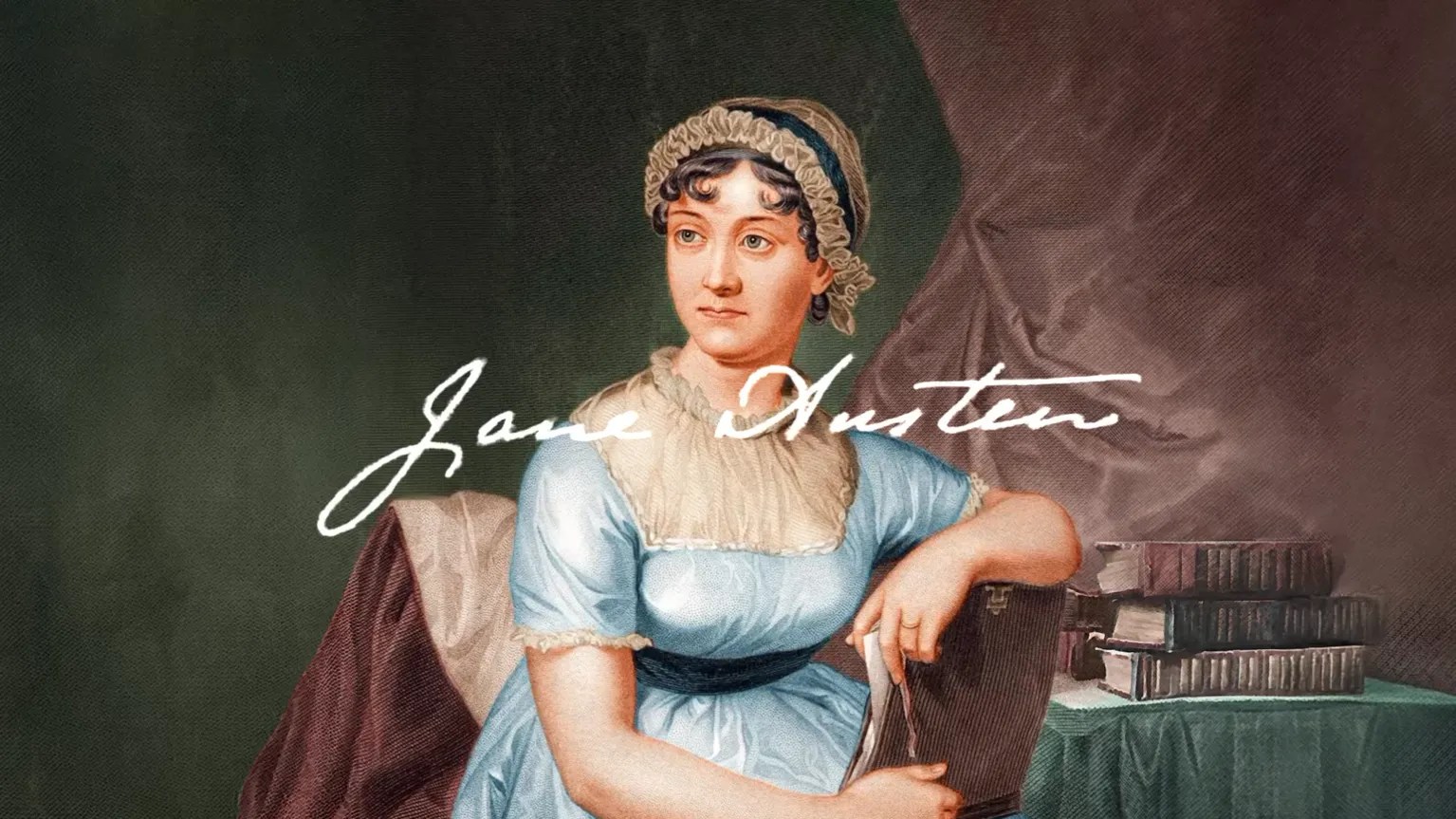
30th Anniversary* of Jane Austen Screen Adaptations:

Pride and Prejudice Austenmania was ignited with this six-part BBC TV series. Andrew Davis’ screenplay brings Colin Firth and Jennifer Ehle together as the pivotal pair. To many, myself included, the definitive version of all the adaptations; yes, my prejudice here. 

Sense and Sensibility That same year, 1995, we saw the breakout work of Taiwanese American director Ang Lee, proving his versatility, with Emma Thompson basking in the limelight receiving her Best Adapted Screenplay Oscar.
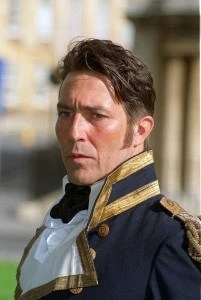
Persuasion While not as popular as Pride and Prejudice, a novel that shows a more mature writer showing her own sense of wisdom in handling love and life. Ciaran Hinds is an impressive Captain Wentworth. 

Clueless One of the first modern renditions of Austen novels. Here’s an American teenager playing Emma in her high school. What follows are numerous contemporary parallels of Austen’s works, like Bridget Jones’s Diary, and across cultures, Bride and Prejudice, From Prada to Nada. 

*Jane Austen’s House in Chawton is celebrating the 30th Anniversary of these adaptations with their own special AUSTENMANIA! events.

***

100th Anniversary of the publication of some modern classics, books and poems* Listing a few here:
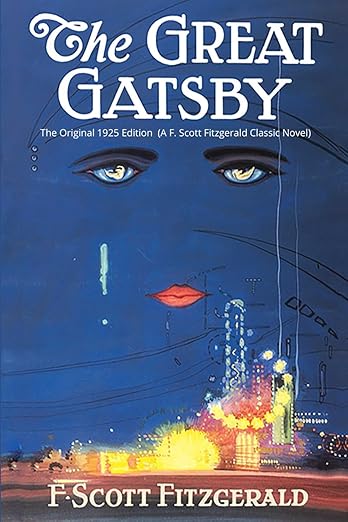
The Great Gatsby by F. Scott Fitzgerald

One of my all-time favourite books. Filmmaker Baz Luhrmann highlights all the zeitgeist of the jazz age, the wild parties, and the gaudy excess but fails to bring out the deep character of the man behind those façade, a romantic hanging on hope and seeing every obstacle as a green light. My Ripple Review here.

Mrs. Dalloway by Virginia Woolf

This is one example that the movie adaptation is as good as or even surpasses the book, for it shows more than words can tell. While I admire Woolf’s stream of consciousness, both in expression and withholding, director Steven Daldry’s multi-faceted depiction of Clarissa’s internal world projected into the psyche of two other women is exceptional. David Hare’s screenplay adapting Michael Cunningham’s The Hours is an exemplary transposition of literature onto the screen. And watching Meryl Streep, Nicole Kidman and Julianne Moore in one film is sure worth one’s ticket, or time. 

The Painted Veil by W. Somerset Maugham

Somerset Maugham is one of those writers who take you to places but still remain intact with his characters, the backdrop of foreign lands are merely that, backdrop, while the characters lead the story. I’ve seen the movie adaptation, and in my Ripple review I had written this: “Transforming great lines from a book into equally inspiring visual story-telling is an arduous task, and it’s something that mere beautiful cinematography cannot suffice.”

Carry On, Jeeves by P. G. Wodehouse

The third of Wodehouse’s 20 Jeeves and Wooster books. Jeeves is a marvellous invention, a character that reminds me of Mr. Carson of Downton Abbey. There are lots of LOL moments. He’s like a Swiss army knife, a tool of multiple usages. Wodehouse makes him more than utilitarian though. In the interactions between employer and butler, the joke always falls on the former. And that’s the fun of it. 

No More Parades by Ford Madox Ford

No More Parades is the second book in the Parade’s End tetralogy by Ford Madox Ford (1873-1939) Set in the time of WWI, where poetry was written in the trenches. In its core a love story movingly depicted in the BBC five-episode TV series (2012), one of the most understated and neglected productions. A young Benedict Cumberbatch and Rebecca Hall are the mismatched couple, but it’s the pristine Adelaide Clemens that shines as idealistic suffragette Valentine. 

The Hollow Men by T. S. Eliot

‘The Hollow Men’ is the title poem of this collection of poetry by Eliot, astute critic of his times. “We are the hollow men/we are the stuffed men/Leaning together/Headpiece filled with straw.” Alas, a look at our world today one would find how after one hundred years, Eliot’s critique of his society still stands.

*The popular ‘Year Reading Club’ on Kaggsy’s and Simon’s book blogs are featuring the 1925 Club reading event this October, where we read books published in 1925 and share our thoughts in our blogs.

***

50th Anniversary of some iconic movies:

Where were you in 1975? Watched any of these movies in the theatre?

Jaws dir. by Stephen Spielberg

One Flew Over the Cuckoo’s Nest dir. by Miles Forman

The Man Who Would be King dir. by John Houston

Monty Python and the Holy Grail dir. by Terry Gilliam and Terry Jones

Dog Day Afternoon dir. by Sidney Lumet

Barry Lyndon dir. by Stanley Kubrick

The Return of the Pink Panther dir. by Blake Edwards

Three Days of the Condor by Sydney Pollack

Farewell, My Lovely dir. by Dick Richards

Funny Lady dir. by Herbert Ross

***

Not born yet? How about 1985?

40th Anniversary of:

The Breakfast Club dir. by John Hughes

Back to the Future dir. by Robert Zemeckis

The Color Purple dir. by Stephen Spielberg

A Room with a View dir. by James Ivory

Out of Africa dir. by Sydney Pollack

The Purple Rose of Cairo dir. by Woody Allen

Vagabond dir. by Agnès Varda

Witness dir. by Peter Weir

***

Numerous posts on Jane Austen, as well as movies and books mentioned in the above lists are posted here at Ripple Effects. Seek them out using the Search feature on the top of the left sidebar.

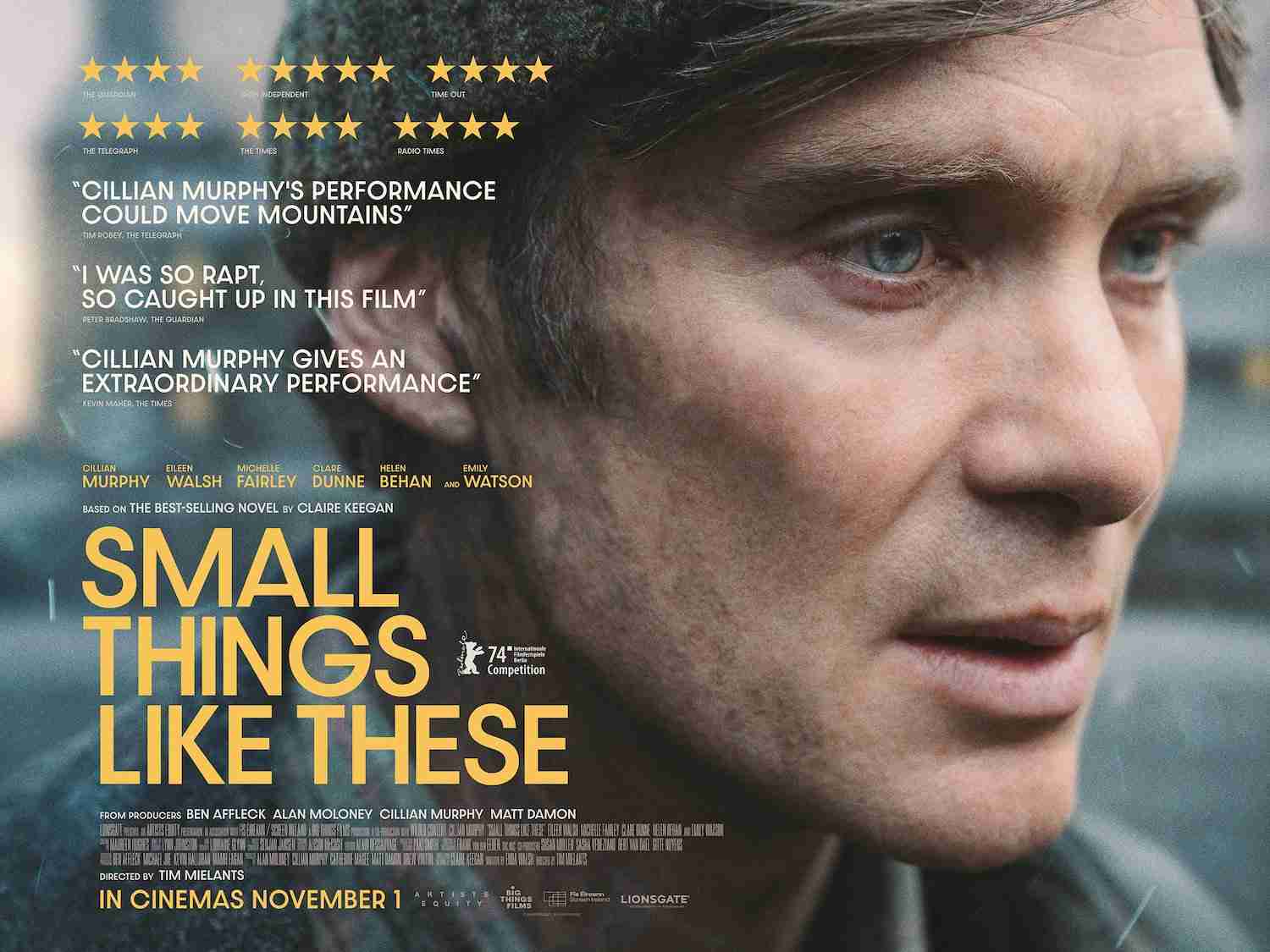
Small Things Like These: from Novella to Screen

Here’s an interesting fact. Claire Keegan’s books Foster (2010) and Small Things Like These (2020), both have 128 pages. While short as a standalone book, both novellas exemplify Keegan’s style of writing: sparse descriptions that carry powerful punches. I’m glad to note that their film adaptations are worthy productions akin to her style, quiet, nuanced, and poignant. Foster is made into the film The Quiet Girl in 2022. (My review here) Small Things Like These is newly released, directed by Tim Mielants and starring Cillian Murphy, following his Oscar role as Oppenheimer.

Bill Furlong (Cillian Murphy, Oppenheimer) is a coal merchant in an Irish town. It’s Christmas time, cold and snowy, after the dirty lifting of heavy bags of coal, the devoted husband and father comes back to a warm household, wife Eileen (Eileen Walsh) has supper ready and his five girls make up the chirpy harmony of home. The uneventful routine is disrupted one day when Bill makes his delivery to the local convent, witnessing a rough handling of a teenage girl being shoved into the entrance of the Catholic institution. Another time, when he stepped into the building to deliver his invoice, a girl scrubbing the floor comes up to him begging him to take her away. The next time he makes his delivery, he finds the girl locked inside the coal storage, dirty and shivering in cold.

The Magdalene Laundries are institutions operated by the Roman Catholic orders to house ‘fallen women’, asylums notorious for their abuse of the young women there, unpaid workhouses doing laundries for profit, unwed mothers having their babies forcibly taken away to be adopted. There have been features and TV series on this subject but the most exposure for viewers outside the UK is probably the movie Philomena (2013) starring Judi Dench and Steve Coogan. The note at the end of Small Things Like These explains the historic context, dedicating it to the more than 56,000 young women who were sent to the institutions between 1922 and 1998 for purpose of “penance and rehabilitation.”

Following his Best Actor Oscar win as physicist J. Robert Oppenheimer whose work, albeit not fully within his control, had affected the result of World War II, here in Small Things, Murphy is equally effective in his portrayal of a coal deliverer, fighting an internal war of conflict, a moral dilemma, to act upon his conscience thereby counteracting an institution that is all powerful in his town, or just to keep silent and do nothing to safeguard the wellbeing of his family. His wife says to him clearly like a warning, considering his soft heart: “If you want to get on in life, there are things you have to ignore.”

Bill’s past is interposed with his present throughout the film, for he was orphaned as a child but was raised by a loving woman. The compassionate upbringing he received could well had formed his sensitivity towards others’ suffering. Murphy’s performance of a troubling soul is heart wrenching, nuances captured aptly by closeups. Another frequent closeup shot is his handwashing after coming home from work, cleaning with soap and brushing out the black coal soots in his hands almost obsessively, a visual telling of his reluctance to join in the darkness of the world.

It’s small things like these, courageous acts by a common man despite social pressures and the negative consequences for his own family that make Bill a heroic figure. All five of his daughters need to get a good education in the Catholic-run system in town. To be at odds with Sister Mary (Emily Watson) is to have the door shut on his girls in terms of education and a good future. All these details are readily available as one reads Keegan’s book, but for those who have no contextual background before watching the film, such consequences of Bill’s moral dilemma may not be so easily grasped by the viewer. The film does drop hints in a few dialogues and subtly in certain scenes. For a 98-minute feature, more elaboration to denote these issues could be helpful in terms of the congruence of the storytelling and especially in magnifying the price Bill has to pay for his courageous act of compassion.

Overall, a worthy adaptation of Keegan’s novella. Come awards time later this year, I hope to see Murphy being acknowledged for his performance here. It’s small films like this that make cinema arts gratifying aesthetically and meaningful socially in our world that needs constant critique and reflection.

~ ~ ~ 1/2 Ripples

Related Posts on Ripple Effects:

The Quiet Girl Movie Review: From the Literary to the Visual

Passing by Nella Larsen: from Novella to Screen

Novellas to Screen

***

Novellas in November is hosted by 746 Books and Bookish Beck

Book to Screen in Development 2024 and Beyond

Last post I listed some adaptations from books to the big and small screens coming out this fall in the festival circuit or via streaming platforms. Here are more titles currently in development or in production.

James (2024) by Percival Everett

Stephen Spielberg executive producer, in pre-production, to be directed by Taika Waititi (Jojo Rabbit, 2019) James is Percival Everett’s re-imagination of The Adventure of Huckleberry Finn from the perspective of escaped slave Jim. Currently, the highly acclaimed novel is long-listed for this year’s Booker Prize. Short list will come out Sept. 16 and James is expected to be on there. This is the second movie adaptation of Everett’s novels. After the success last year of his Erasure being turned into the Oscar winning American Fiction–for Best Adapted Screenplay–James is a highly anticipated encore. 

Hamnet (2020) by Maggie O’Farrell

Another one on Stephen Spielberg’s list as producer, now in production. The adaptation of O’Farrell’s novel is directed by Nomadland’s Oscar winning Chloé Zhao, with a talented British cast: Jessie Buckley, Emily Watson, Paul Mescal, and Joe Alwyn. The book is a fictional account of Shakespeare and his wife’s loving relationship with their son Hamnet and their coping with his tragic death at the age of eleven. Zhao’s previous films (before Marvel’s The Eternals) are nuanced and soulful cinematic works. I look forward to her helming this adaptation about love and grief.

Knife: Meditations after an Attempted Murder (2024) by Salman Rushdie

Rushdie’s personal account of the traumatic, life altering event of being stabbed multiple times while on stage in upstate New York, August 2022, and his slow and painful recuperation. Ironically, he was speaking on the topic of keeping writers safe. His memoir will be adapted to the screen by the Oscar winning documentarian Alex Gibney. I’ve given this book 4 stars on Goodreads, was totally riveted by Rushdie’s writing. Hope Gibney’s is an effective documentation and a cautionary testimonial to safeguard artists from harm.

The Chronicles of Narnia (1950’s) by C. S. Lewis

After crashing the glass ceiling, catapulting Barbie to a record $1.4 billion box office sale by a sole woman director, Greta Gerwig is tasked to write and helm at least two of C. S. Lewis’s beloved children series as Netflix films. In a BBC interview, Gerwig said: “I’m slightly in the place of terror because I really do have such reverence for Narnia… I’m intimidated by doing this. It’s something that feels like a worthy thing to be intimidated by.” Let’s hope her fear is a driving force to push her towards excellence in adapting this meaningful book series.

Crying in H Mart (2021) by Michelle Zauner

Poignant memoir of Zauner’s, singer songwriter of the band Japanese Breakfast, about her rediscovery of her Korean heritage and reestablishing a deeper mother-daughter relationship through food and cooking… alas, after her mother’s terminal cancer diagnosis. As an Asian American, her father is Caucasian of Jewish heritage, Zauner’s book is a new and significant voice. She is writing the script herself, Will Sharpe (The White Lotus) directing. Zauner will create the soundtrack with her group Japanese Breakfast. The memoir is an American Book Award winner (2022) and the 2021 Goodreads Choice Award for Memoir & Autobiography, 55 weeks in the NYT Bestseller list.

Tomorrow and Tomorrow and Tomorrow (2022) by Gabrielle Zevin

Here’s another contemporary, literary voice from a biracial American writer. Like H Mart author Zauner, Zevin’s father is of Jewish and mother Korean heritage. Its title alluding to Shakespeare’s Macbeth, Tomorrow and Tomorrow and Tomorrow is a unique and original story about self, love, and video games. Goodreads Choice Awards in Fiction (2022) and top book of the year on numerous lists, and one of my best reads last year. Excited to find out that Paramount Pictures had acquired the film rights even before the book was published, and recently learned that Siân Heder, the Oscar winning director of CODA (2021), has signed on to direct.

The Woman in Cabin 10 (2016) by Ruth Ware

Ruth Ware’s popular suspense thriller takes place on a cruise ship, with British star Keira Knightley on board as a journalist who is the only eyewitness to a murder. The Netflix movie will be directed by Simon Stone (The Dig, 2021). Other Ruth Ware books on the drawing board for adaptation are The Turn of the Key and The It Girl. No further info on these.

Run Rose Run (2022) by Dolly Parton and James Patterson

Dolly Parton and country music fans take note, the legendary singer’s dip into the literary ink pot with her first fiction, a thriller she co-wrote with James Patterson, is to be adapted onto screen. The NYT bestseller about a young singer songwriter on the rise and on the run will be produced by Reese Witherspoon.

***

Do you have any books you’d like to see adapted to a movie or TV series?

From Book to Screen 2024 Fall

Late August kicks off the annual film festival season, and come September, arrays of new offerings on streaming platforms. I haven’t done actual research, but just a feeling that nowadays, more and more movies are adapted from printed sources. The following is a list of upcoming books adapted to full features in theatres, or TV movies and series for streaming:

Conclave by Robert Harris (2016) 

International Premiere at TIFF in September, in theatres November. Directed by Edward Berger (2023 Oscar winner All Quiet on the Western Front) with a stellar cast led by Ralph Fiennes, Stanley Tucci, and John Lithgow. Peter Straughan (Tinker Tailor Soldier Spy, 2011) adapts from Harris’s novel revealing the dark secrets and intrigues in the intense proceedings in electing a new Pope.

The Critic or Curtain Call (2015) by Anthony Quinn

Had its world premiere at TIFF last year and slowly trickling to theatres this September. Directed by Anand Tucker (Girl with a Pearl Earring, 2003) with an exciting British cast with Ian McKellen as the eponymous, acerbic critic, his power and influence affecting many. Co-stars include Lesley Manville, Gemma Arterton, Mark Strong, Romola Gerai, Ben Barnes.

The Day of the Jackal by Frederick Forsyth (1971) 

10 episodes on Peacock, remake of the iconic 70’s movie. Political thriller recounting the plot to assassinate French President Charles de Gaulle after he signed the treaty leading to Algeria’s independence. In this new version, Eddie Redmayne is the assassin Jackal.


Disclaimer by Renée Knight (2015)

Oscar winning director Alfonso Cuarón (Roma, 2018) helms a stellar cast including Cate Blanchett, Lesley Manville, Kevin Kline, Sacha Baron Cohen, Kodi Smit-McPhee. A mini-series where Blanchett plays a TV documentary journalist who exposes dark secrets of others is threatened with the revealing of her own past. Canadian premiere at TIFF in September, mini series on Apple TV+

Here, graphic novel (2014) by on Richard McGuire

McGuire’s works are multi-faceted and highly acclaimed, as permanent collections at MoMA, The Morgan Library and others, print form in The New Yorker, The New York Times, Le Monde… Can a movie version do justice to this multi-talented artist? The team that made the eras-spanning Forrest Gump (1994), director Robert Zemeckis, screenwriter Eric Roth, star Tom Hanks and Robin Wright re-unite to bring us Here. Interesting addition to the cast that I look forward to is Michelle Dockery. In theatre come November.

Interior Chinatown by Charles Yu

The National Book Award winning novel of 2022, a genre defying writing that fuses a novel and a screenplay. The story of a young Chinese American actor struggling to escape stereotypical roles in Hollywood. Stand-up comedian and actor Jimmy O. Yang (Crazy Rich Asians, 2018) stars. 10 episodes on Hulu.

The Nickel Boys by Colson Whitehead (2019) 

New York Film Festival’s (Sept. 27 – Oct. 14) opening film. The winner of the 2020 Pulitzer Prize for Fiction is adapted into film with the title slightly changed to Nickel Boys. Friendship between two Black teenagers in the notorious reform institution, the Dozier School for Boys in Jim Crow-era Florida sustains the two of them during their harrowing residency. 

The Outrun by Amy Liptrot (2016)

Liptrot’s award winning memoir of her troubled past is adapted to the screen and directed by Nora Fingscheidt (The Unforgivable, 2021) starring Saoirse Ronan. From wild living and alcoholic ruin in London, Liptrot rehabilitates herself as she seeks the sanctuary of nature and her childhood home in Orkney off the northeastern coast of Scotland.

The Perfect Couple by Elin Hilderbrand (2018) 

A Nantucket-set wedding disrupted by a murder which makes everyone a suspect. Goodreads declares Hilderbrand “the queen of the summer beach read.” Nicole Kidman, Live Schreiber, Dakota Fanning anchor the Netflix mini-series coming out in September.  

The Return based on The Odyssey by Homer (ca. 8th – 7th C. BC)

World premiere at TIFF, in theatres December. Ralph Fiennes as Odysseus, returning home to Ithaca after the Trojan War and misadventures twenty years later to find his kingdom changed. Juliette Binoche is the patient wife Penelope, trying to buy time to wait for his return and at the same time warding off unruly suitors. Son Telemachus (Charlie Plummer) not so patient. 

Wicked by Gregory Maguire (1995)

Based on the musical, which in turn adapted from the book by L. Frank Baum’s The Wonderful Wizard of Oz (1900), this new rendition as a movie is directed by Jon M. Chu (In the Heights, 2021; Crazy Rich Asians, 2018) Cynthia Erivo (Harriet, 2019) and Jonathan Bailey (Bridgerton, 2020-2024) star.

***

More to come…

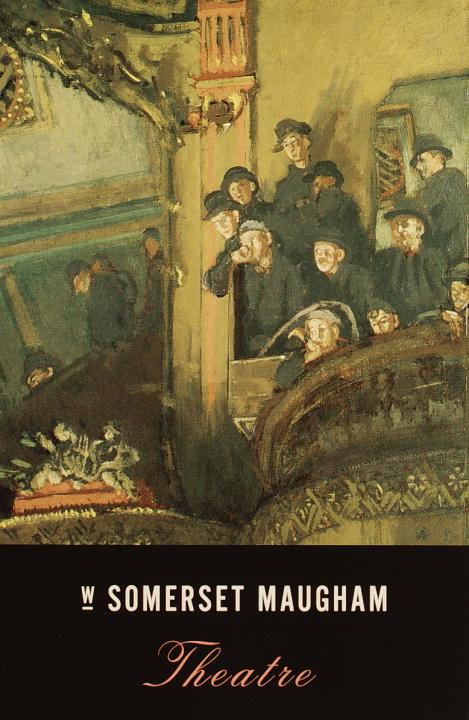
The 1937 Club: Maugham’s ‘Theatre’ from Book to Screen

To wrap up my week for The 1937 Club, I’m re-posting my review of W. Somerset Maugham’s Theatre published in 1937 which some of you have read. As I’m still reading Virginia Woolf’s The Years, haven’t time to reread Maugham’s book this time. I want to re-post my review mainly because I’d like to share my thoughts back in 2010 when I wrote it, and see how much our society has changed in terms of what is real, the main issue by which in Maugham’s book, the son Roger is so disturbed regarding his theatre actress mother Julia Lambert.

As for book turned into films, those familiar with Ripple Effects know that I see the literary and the visual as different art forms, therefore being ‘faithful’ isn’t the major qualifier for a good adaptation. However, in this case, I’m quite disappointed that the essence or, the main issue, as represented by Roger’s frustration with his mother has not been transposed onto the screen, downplaying the tension and conflict that’s so crucial in the book.

_____________________

Two pages into the book I knew right away I had seen it before. Of course, that’s the movie Being Julia (2004). Annette Bening got a Best Actress Oscar nom for her portrayal of Julia Lambert, a famous actress on the London stage in the 1930’s. The movie is a colourful account of how a successful stage actress deals with her mid-life crisis. Garnering fame, fortune, and achievement in bounty, what more could she ask for but… love and passion. And during the course, obstacles, jealousy, and betrayal are all overcome, and revenge carried out; on or off stage, no matter, it’s equally exciting for the glamorous Julia Lambert.

But not until I read this novel on which the movie was based did I realize that a most important passage had been left out. And oh what an omission! For the crux of the book rests on those few pages. And not only that, the screenwriter had chosen to alter a character to suit his fancy, rounding off the edges of conflicts and alleviating tensions in presenting a smooth and suave storyline.

In the movie, Julia’s son Roger is a young man fresh out of Eton and planning to attend Cambridge after the summer. That much is true to the book. Roger is shown to be a devoted son, lovingly supportive of his mother in her pursuits in career and love life. But this is not the case in the novel.  Maugham has crafted Roger as a critical young man, offering the necessary tension to the story. In a crucial scene at the end of the book, he questions Julia’s behaviour and integrity. These challenges form the climatic confrontation between mother and son, projecting the meaning behind the very title of the novel.

Here is an excerpt from this scene that captures the essence of the whole book. Julia asks Roger:

“What is it you want?”
Once again he gave her his disconcerting stare.  It was hard to know if he was serious, for his eyes faintly shimmered with amusement.
“Reality.”
“What do you mean?”
“You see, I’ve lived all my life in an atmosphere of make-believe…. You never stop acting. It’s second nature to you. You act when there’s a party here. You act to the servants, you act to Father, you act to me. To me you act the part of the fond, indulgent, celebrated mother. You don’t exist, you’re only the innumerable parts you’ve played. I’ve often wondered if there was ever a you or if you were never anything more than a vehicle for all these other people that you’ve pretended to be. When I’ve seen you go into an empty room I’ve sometimes wanted to open the door suddenly, but I’ve been afraid to in case I found nobody there.”

By turning Roger into a complacent and docile young man, the screenwriter had failed to present the necessary tension in the story. Further, by avoiding the character foil between the successful actress mother and her meaning-pursuing, idealistic son, the movie fails to deliver the essential subtext, despite an impressive performance by Annette Bening.

Further, the best is yet to come in the book… such is the ingenuity of Maugham.  After a superb, revengeful performance, overarching her rival, the young and beautiful Avice Crichton, and drawing everyone’s admiration back to herself, Julia celebrates on her own with a nice meal and mulls over a gratifying notion, on the very last page:

“Roger says we don’t exist. Why, it’s only we who do exist. They are the shadows and we give them substance. We are the symbols of all this confused, aimless struggling that they call life, and it’s only the symbol which is real. They say acting is only make-believe. That make-believe is the only reality.”

This is ever so relevant for us today. With all the online personae we can create and project, all behind the guard of anonymity, Roger’s quest for what’s real remains a valid search.

Sherry Turkle, the acclaimed ‘anthropologist of cyberspace’, has observed the liminal reality in our postmodern world and stated her own quest:

“I’m interested in how the virtual impinges on what we’ve always called the real, and how the real impinges on the virtual.”

Let’s just hope that the advancement of technology would not get the better of us, blurring the lines of fact and fiction, offering shields for fraud and deceits. Behind the liminal existence, let’s hope too that we still care what’s real and what’s not, and that our humanity will still be valued and not be compromised or lost in the vast abyss of bits and bytes.

The upcoming Academy Awards too, is another platform to showcase such a duality. I always find the acceptance speeches of award winners intriguing: what’s genuine and what’s fake in their thank you’s. Are they presenting their real self or merely acting? Outside of their roles, which part of them is authentic? Or, do they ever get out of their roles?

It’s interesting too to explore the influence of movies nowadays. Again, the postmodern emphasis is on the narrative, multiples of them, and storytelling the vehicle of meaning. Does the notion of Maugham’s character Julia mirror our world… that movies have become the symbols of what we call life? That make-believe has sometimes been merged with reality? Can we still tell them apart? Or, should we even try? Considering the pervasive effects of pop culture in our life today, considering a single movie can command a worldwide box office sale of $2.4 billion, and counting… Maugham was prophetic indeed.

***

Again, I thank Simon and Karen for hosting. Looking forward to the next year club in the coming months.

The Zone of Interest and the Banality of Evil

How does a German family spend their summer holidays? Imagine this one with mom and dad and their five children in a country house. Family picnic by the river, dad fishing, mom admiring her large and impressive garden, children splashing in the pool. Dad got a surprise birthday present, a canoe, which he takes to the quiet stream with two of his older children surrounded by bird songs. Dad not only loves his family, but his horse, his dog, and those lilac bushes.

A picture of an idyllic and peaceful family life. Zoom out a bit, the country house is right adjacent to the Auschwitz concentration camp, separated by just a wall, barbed wire on top. We can only see the top of the prison buildings. Yes, we also see heavy smoke shooting out from tall chimneys.

This is an actual, historic setting. The master of the household is Rudolf Höss (Christian Friedel), commandant of the Auschwitz concentration camp. He rides to work on his beloved horse, doesn’t have far to go, only next door. An idyllic family life and the horrors of genocide co-exist side by side, the Garden of Eden and Hell separated by just one wall. As for the wall, Rudolf’s wife Hedwig (Sandra Hüller) is thinking of growing some vine to cover it, making it disappear altogether.

Writer-director Jonathan Glazer’s Zone of Interest is a macabre juxtaposition of normality and atrocity, a cinematic representation of what the political thinker and philosopher Hannah Arendt calls the banality of evil. It doesn’t take a monster to commit monstrous acts. Ordinary people had committed them without questioning, as Judith Butler wrote about Arendt’s book on the trial of Adolf Eichmann, one of the organizers of the Holocaust:

In a sense, by calling a crime against humanity ‘banal’, [Arendt] was trying to point to the way in which the crime had become for the criminals accepted, routinised, and implemented without moral revulsion and political indignation and resistance.

The Guardian, Aug. 29, 2011

Glazer’s ingenuity in depicting the ‘horror next door’ is by not showing us visually but audibly. While we see the Höss family going about their daily life, we can hear constant gunshots, dogs barking, guards yelling, furnace rumbling, and anguished cries. Indeed, the whole Höss family have learned to ignore such ‘disturbances.’ Their callousness is chilling. When Rudolf received the order to transfer from Auschwitz to Oranienburg, Hedwig tells him that she wants to stay right there with the children while Rudolf can attend his new post alone. Their rationale: “The life we enjoy is very much worth the sacrifice.” Hedwig adds in, “this is the way Hitler would want us to live.” Here is their dream home.

If such a normal family can be complicit to evil without questioning, Arendt’s implication is that we who consider ourselves ordinary folks can also be susceptible to commit criminal wrongdoings out of the desire for group conformity or self-interest. It doesn’t take a villainous monster to commit atrocious acts, we all have the propensity for evil. That wall separating the garden and hell could be the metaphoric, thin line between good and evil within ourselves. Another chilling thought, this time much closer in our own backyard.

Two-time Oscar nominated cinematographer Lukasz Zal (Cold War, 2019; Ida, 2015) placed cameras in and outside of the house unobtrusively to capture the actors in their natural way. Shot in natural lighting, with no camera people on set, the film is a raw depiction of the behavior of a family in their mundane mode of living, a heartless picture of irony to what’s taking place on the other side of the wall.

Two scenes particularly stand out for me. Hedwig tries on a long fur coat––loot from the prisoners next door––looking into a full-length mirror, clutching the collars and posing from side to side as if trying it in a boutique shop. Another scene is one of the older boys using his flashlight to examine something while in bed at night. An insert shot shows what he’s studying: teeth with gold trims; not hard to figure out where they come from.

Any relief from such insensitivity? Glazer has inserted some fairytale-like sequences in reverse black and white of a girl hiding food in the bushes, for the prisoners we presume, that’s when we hear the voice-over of Rudolf reading to his children the story of Hansel and Gretel in their bed. Fairytale or dream sequence, or for real, is that one of the Höss girls? No matter, that’s the humanity we seek.

Loosely based on Martin Amis’ novel, Zone of Interest is an ‘arthouse’ style of filmmaking that offers a unique perspective of the Holocaust without showing any of the prisoners, except the one that works in the Höss garden. Sounds elicit unseen implications. The film starts and ends with a long, eerie cacophony of anguish and squeals with the screen a blurry mass of grey. The effects evoked are none less haunting than actual shots of the concentration camp. The ending scene comes back to today and the way the camera captures the people there is most effective in wrapping up this retelling of history.

With its one hour and forty-five minutes duration, the film is succinct, well-paced and edited, naturalistic in its styling, and leaves viewers with haunting ponderings after. Winner of four Cannes Prizes, The Zone of Interested is nominated in five categories in this coming Academy Awards on March 10: Best Picture, Best International Feature Film, Director, Adapted Screenplay, and Sound. Hope it could get some worthy recognition on this side of the Atlantic.

~ ~ ~ ~ Ripples

Related Ripple Reviews:

Anatomy of a Fall

Ida’s Choice: Thoughts on Pawlikowski’s Ida

Upcoming Books to Screen Reading List

A Gentleman in Moscow by Amor Towles

Towles’ 2016 novel is currently filming and will likely come out at the end of 2023 or early 2024. Ewan McGregor plays Count Alexander Rostov who, in the aftermath of the Bolshevik Revolution, is kept under house arrest in at the Metropol Hotel across the street from the Kremlin, a sentence laid down by a Bolshevik tribunal. The book is developed into an 8-episode TV series on Amazon. Quite an original story idea and the dramatization will likely liven up the seemingly mundane life of the aristocrat banished to the servants quarter of a luxury hotel.

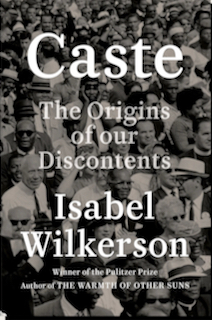
Caste: The Origin of our Discontent by Isabel Wilkerson

Oscar-nominated Ava DuVernay is producing, directing and writing the screen adaptation of Pulitzer Prize winner Isabel Wilkerson’s critically acclaimed non-fiction work, using a multiple story structure to investigate the ‘unspoken system that has shaped America and chronicles how lives today are defined by a hierarchy of human divisions dating back generations.’ DuVernay has been a powerful filmmaker and spokesperson probing systemic inequality, the nation’s discriminatory past and present. Her works include Selma (2014), 13th (2016), and When They See Us (2019). Caste will be a Netflix movie.

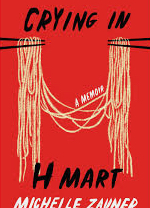
Crying in H Mart by Michelle Zauner

The memoir of the lead musician of the indie pop band Japanese Breakfast is Goodreads Choice Awards for Memoir in 2022. Zauner movingly describes how she comes to terms with her identity as a Korean-American when she goes back to her root in Oregon to care for her mother suffering from terminal cancer. Music and food strengthen their bond. The actor in The White Lotus and director of The Electrical Life of Louis Wain Will Sharpe will direct. A casting call went out on Twitter to play Zauner on screen. Just a thought… Zauner could be a prime candidate to play herself.

Killers of the Flower Moon: The Osage Murders and the Birth of the FBI by David Grann

Where there’s oil, there will be blood. One of the most-touted movies of 2023 is this adaptation of the non-fiction book by Grann, winner of the 2018 Edgar Award. Grann chronicles the discovery of oil in the Osage County in Oklahoma where several of the natives there were murdered. The Osage Murders is the newly created FBI’s first big case, with its young director J. Edgar Hoover rising to the challenge. Premiered at Cannes in May and under the helm of Martin Scorsese, with a superb cast with Leonardo DiCaprio, Robert De Niro, Lily Gladstone, Brandon Fraser, Jesse Plemon, John Lithgow, and Tantoo Cardinal, herself a highly decorated Canadian aboriginal actress, the movie will be nothing short of epic.

Mrs. March by Virginia Feito

Reads like a Patricia Highsmith psychological novel with a touch of mystery… in particular, Edith’s Diary. Suspense novels nowadays often feature an unreliable narrator stringing out a sequence of events and perceptions that blur the line between reality and the delusionary. Emmy winner Elisabeth Moss’s new production company is developing the movie and Moss will play the title character. I’ve listened to the audiobook and look forward to seeing how Moss portrays the internal multiverse of Mrs. March. The old classic The Three Faces of Eve (1957) comes to mind. Feito is writing the screenplay.

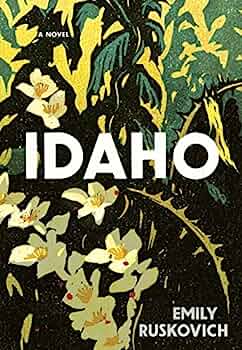
Idaho by Emily Ruskovich

Ruskovich is an O. Henry Prize winner and this her debut novel has garnered praises on its originality, masterful language and imagery. A family spending a hot August day in an Idaho mountain collecting birch wood faces a fateful turn in their lives. A psychological thriller exploring dementia and its ripple effects. The New Yorker review has this powerful statement: ‘The book is also an affecting portrait of how love can endure when memory fails.’ This one is high on my TBR list. Another title Elizabeth Moss’s new production company is developing.  

Tomorrow, and Tomorrow, and Tomorrow by Gabrielle Zevin

2022 Goodreads Choice Awards for Best Fiction. Here’s another example of some outstanding Asian American writers and artists not known for their mixed racial roots and identity but have approached the subject in their novels nonetheless. Zevin, whose mother is Korean and father Jewish, touches on such an issue from an original and fresh perspective: two young people meet in the real world of video game creation. I’ve listened to the audiobook and found it to be one of the most unique and interesting reads I’ve come across in recent years. Zevin’s other book The Storied Life of A. J. Fikry is now streaming on various platforms.

The Zone of Interest by Martin Amis

British writer Martin Amis’s 2015 Walter Scott Prize winning novel is turned into a film directed by Jonathan Glazer. Premiered at this year’s Cannes Film Festival and garnering the Grand Prix and the FIPRESCI Prize. The story is a macabre juxtaposition of horror and a love affair. The commandant of the Auschwitz concentration camp, Rudolf Höss, and his wife strive to build an idyllic family home situated right next to the death camp. To add to the horrific irony and complexity, a Nazi official has an affair with the commandant’s wife. Critics have cited Amis’s book as a very different Holocaust novel, and the movie has now become a notable in the 2023 international awards circuit.

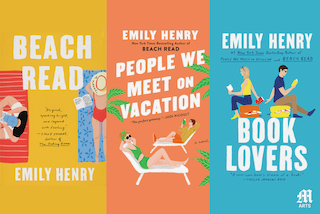
Emily Henry’s Books to Screen

For beach read fans, summer reading has to include Emily Henry’s novels. If you’re a fan of hers and like to see her works on screen, here’s the good news: all three of Henry’s popular books are in development into rom-coms:

People We Meet on Vacation  
The 2021 Goodreads Choice Awards for Romance Novel is to be directed by Brett Haley. Screenwriter Yulin Kuang’s adapted script has already received endorsement and high praise from Henry herself.

Book Lovers
Two years in a row, Henry won the 2022 Goodreads Choice Awards for Romance with Book Lovers, perhaps a contemporary queen of the genre? Sarah Heyward is set to write the script, movie will be produced by Tango (Aftersun, 2022)

Beach Read
Just announced is that the Emmy nominated writer director Yulin Kuang, screenwriter for People We Meet on Vacation, is taking the helm to write and direct Beach Read, Henry’s third popular fiction to be transported onto screen. Contemporary rom-com, breezy, light, and… will it re-create the wave that Nora Ephron was once so well-known for?

***

‘Living’: The Old Becomes New

Living is based on the Japanese auteur Akira Kurosawa’s classic Ikiru (1952, meaning of title: ‘to live’). Nobel laureate Kazuo Ishiguro adapted it to make an English version with Bill Nighy in mind when he wrote the screenplay, creating a setting in 1950’s London. Interestingly, Kurosawa himself was inspired by Leo Tolstoy’s The Death of Ivan Ilyich when he made Ikiru, and with his eloquent camera, transposed the Russian master’s novella into a Japanese story on screen.

With Living, the Japanese-British novelist Ishiguro has succinctly condensed Kurosawa’s 142 minute film into a shorter feature of 102 minutes, helmed by South African director Oliver Hermanus. It’s interesting to note the cross-cultural transferral, for the film is about the universal theme that we all share as a humanity, living a meaningful life in the face of death.

This is one of the less-hyped movies during the 2022 Awards Season, despite the film getting two Oscar nominations: Best Adapted Screenplay for Ishiguro, and Best Actor for Bill Nighy, his first and long due Oscar nod.

It’s timely that I finally get the chance to watch Living now in April, a month that signifies new births. Considering the change in the main character Mr. Williams (Bill Nighy), even the idea of resurrection is apt when taken metaphorically, from death to life, ironically, for a man who has just been diagnosed with terminal illness.

As the head of the public works department at County Hall for numerous years, Williams is contented with following the bureaucratic daily routine by the clock, pushing papers to other departments, or, if the file has to stay in his, stalling it till it becomes extinct.

The camera angles give us a vivid perspective. From the overhead shot above the train station, we see a mass of uniformity, men in dark suit and bowler hat heading to work. Looking down from above, they are small and insignificant. And from the slow motion of them walking, we see the wheel of work turning, ever so slowly, in mundane routine heading to the office and the same vehicle bringing them home at the end of the day.

After Williams gets the confirmed diagnosis of cancer and that he will have just six months to live, there appears the audio motif of a clock ticking; this time, it’s not to remind him of work routine but the limited time of life remaining.

In the wake of the ominous news, Williams’ reactions change from stoically bearing the shock to actively seeking a meaningful existence, and ultimately finding a purpose that he feels can fulfill his life. Nighy’s performance is immersive, reserved, and nuanced, and at times, allowing a ray of deadpan humour to seep through. If the restrained ‘Englishness’ is what the actor naturally possesses, or one that he has fully grasped in his cultural milieu, then it has served him perfectly in this role.

In an online interview, Ishiguro explains this ‘Englishness’ as a metaphor:

A certain type of Englishness becomes a universal metaphor for something that is inside all human beings, the need to conform, perhaps a fear of emotions, the frustration of wanting to express yourself but not being able to break out of your professional role, or the role that society has given you. There were many things I thought we could talk about of the whole human condition by looking at this type of figure.

Many scenes in Living are direct parallels of Kurosawa’s Ikiru with his protagonist Kanji Watanabe (Takashi Shimura). Both men confide their terminal illness not to their son who lives with them, but to a stranger in a restaurant, sharing their last wish, that is, to live life, for a change. The sympathetic listener brings the despondent man to various places for him to ‘live it up’. In both films, we see the same places but in different cultural context, amusement parks, bars, dance hall, strip club, but what Williams and Watanabe find are but superficial, ephemeral flares.

The ultimate change in Williams is sparked by a young, female staff Margaret Harris (Aimee Lou Wood), who needs his reference as she has found a new job. Meeting her by chance on the street, Williams invites her to have a ‘simple’ lunch with him at the Fortnum, where he can write her reference letter. It’s there that we see Williams break out with a genuine smile for the first time, forty-one minutes into the movie. Harris’s youthful and vivacious spirit later inspires Williams to go back to the office as a new man after his few days of escapade, to get down to work and this time, doing something that’s meaningful and benevolent.

A crucial addition in Living, and kudos to Ishiguro, is bringing in a young, new worker, Peter Wakeling (Alex Sharp), to the public works department, first day on his job. From his fresh, untainted eyes, we see the novice civil servant being open and ready to accept whatever the bureaucratic system requires of him. His boss Williams’ new-found purpose and subsequent change at work has left him with an indelible impression. And with co-worker Miss Harris, a warm storyline of budding romance adds flavour to the film, albeit introduced a bit late towards the end.

One poignant scene in both films is the protagonist singing in a bar. For Nighy, this is probably the best cinematic moment for him to leave his mark as a soulful singer, a deep and heartfelt performance in contrast to his farcical ‘Christmas is all around’ in Love Actually (2003). The scene here in Living is when a slightly drunk Williams asks the pianist at a pub to play as he sings ‘The Rowan Tree,’ a Scottish folk song that evokes longing for the past and loved ones gone.

Later, in the remake of Kurosawa’s iconic scene from Ikiru, we see Williams sitting on a swing and hearing his moving reprise of the song, this time sober and clear of what’s waiting for him. As the final credits roll, the mesmerizing voice of Lisa Knapp stirs ripples in my heart long after the visuals end.

‘The Rowan Tree’ sung by Lisa Knapp

________________

~ ~ ~ 1/2 Ripples

Books to Screen Adaptations 2023 and Beyond

Like to read the book first before watching the movie adaptation in the theatre or streaming? Here’s a new list.

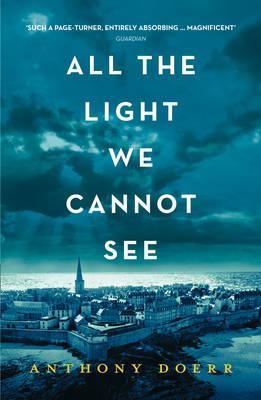
All the Light We Cannot See by Anthony Doerr

The 2015 Pulitzer Prize for Fiction winner is being developed into a Netflix mini-series. To seek authentic representation, the filmmakers embarked on a global search for a blind actor to play Marie-Laure, one of the two main characters in the historical novel set in WWII. Penn State doctoral student Aria Mia Loberti won the casting call. An outstanding academic achiever, this will be Loberti’s acting debut.

A Man Called Otto (Ove) by Fredrik Backman

The English version of the heartwarming Swedish novel-turned-movie A Man Called Ove, about a grumpy old man’s suicide attempt being disrupted by his boisterous new neighbours. The title character’s name is changed to a relatively more common name and will be played by an even more familiar name, Tom, Tom Hanks.

A Haunting in Venice (Hallowe’en Party) by Agatha Christie

The adaptation of Hercule Poirot’s 32nd mystery will be directed by once again, Kenneth Branagh, his third Poirot role, after Murder on the Orient Express and Death on the Nile. Set in post WWII Venice where the renowned detective finds himself again as an accidental sleuth in a murder mystery. An eclectic cast with Kelly Reilly (abrasive Yellowstone schemer), James Dornan (no shade), Tina Fey (no kidding), and Michelle Yeoh (for kicks?)

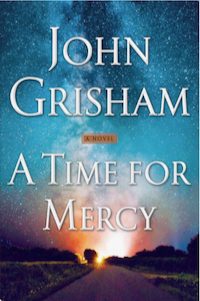
A Time for Mercy by John Grisham

A sequel to Grisham’s debut novel A Time to Kill (1989). Matthew McConaughey will reprise his role as lawyer Jake Brigance, from the 1996 movie adaptation. A Time for Mercy (2020) is Grisham’s third Brigance novel after Sycamore Row (2013). It will be adapted into an HBO series.

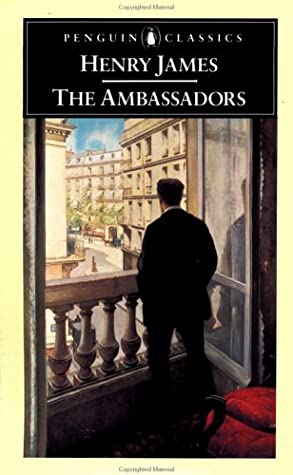
The Ambassadors by Henry James

In pre-production and to be directed by Mike Newell whose filmography include Four Weddings and a FuneralGreat Expectations, and The Guernsey Literary and Potato Peel Pie Society, among 78 titles, which means, he can do rom coms and literary adaptations. The heavy and serious Henry James just might get a makeover under the helm of Newell. I have this book on my shelf, now’s a good time to dust it off.

The Critic (Curtain Call) by Anthony Quinn

A crime thriller in a theatre setting. According to IMDb, it’s a story of ambition, blackmail and desire… a whodunnit wrapped in a Faustian pact. And the cast just makes it hard to resist: Leslie Manville, Gemma Arterton, Romola Garai, Mark Strong, Ian McKellen, Ben Barnes. Directed by Anand Tucker (Girl with a Pearl Earring

The Maid by Nita Prose 

The popular novel would make one entertaining movie. Molly Gray, a maid in a luxury hotel, is caught in a web of a murder mystery, her innocence and pure heart is no defence from the accusations and schemes of the real world. Many readers and reviewers place her in an autistic spectrum but I just see her as the female version of Sheldon Cooper (of The Big Bang Theory and Young Sheldon). Florence Pugh (Oscar nom for her role as Amy in Little Women, 2019) is on board to play Molly, a good choice. 

Disorientation by Elaine Hsieh Chou

Nobel Laureate Malala Yousafzai’s own production company, Extracurricular, is in talks to adapt Chou’s debut novel for an Apple TV+ series. That’s a most interesting combination of talents. Book is a satire, yes, LOL humour at times, about a Taiwanese American doctoral student playing literary sleuth and trying to stay afloat in the turbulent academic sea. Reminds me of Sandra Oh in The Chair.

The Nightingale by Kristin Hannah

Kristin Hannah’s worldwide bestseller about two estranged sisters during the German occupation of France in WWII will be played by real life sisters Dakota and Elle Fanning, each a star in their own right. Its release had been delayed, but might not need to wait till 2023. The latest info is late December, 2022.

__________

Upcoming Remakes:

The Color Purple by Alice Walker

Never Let Me Go by Kazuo Ishiguro

The Spy Who Came in from the Cold by John Le Carr´é

One Day by David Nicholls

‘Mrs. Harris Goes to Paris’ is a respite for any season

Like a gentle breeze under the shade of a full, oak tree to dispel the summer heat, this little gem of a movie is a fairy tale, surely pure escapism from a harsh and scorching world. Newly released on July 15, this is a delightful watch not just for the summer.

Mrs. Ada Harris (Lesley Manville) is a cleaning lady and war widow in 1957 London, scraping by counting pennies cleaning people’s homes and offering to do invisible mending in her spare time. One day, seeing a Christian Dior dress while cleaning the home of Lady Dant (Anna Chancellor) sets off an adventure of a lifetime. Mrs. Harris wants to save enough money to go to Paris and buy one for herself. Dreams are for everyone; Mrs. Harris has the will, and she’ll find the way somehow.

Adapted from Paul Gallico’s novella, director Anthony Fabian brings to the screen a fairy tale for adult viewers, and with the cooperation of Christian Dior in Paris, turns the haute couture of fashion into a down-to-earth story of the ordinary people. Mrs. Harris is as invisible as her mending, but her heart and personality stand out to be noticed and exude her vibes in gentle persuasion.

Paul Gallico (1876-1976) is a wonderful weaver of tales. The Snow Goose is the most memorable read from my growing up years. I have not read his Mrs. Harris Goes to... series, but after watching this movie, it’s on my TBR list. Not as soul stirring as The Snow Goose or dramatic as The Poseidon Adventure (1972 movie adaptation), Mrs. Harris nonetheless reaffirms kindness, beauty and hope still exist and are much needed to dispel the harshness of our times.

Lesley Manville is the driving force in this movie. The versatile actor first caught my admiration in Mike Leigh’s Another Year (2010) playing the vulnerable and lonely character Mary, for which she was nominated and had won several acting awards. Manville can also be brutal and violent, like the powerful matriarch in Let Him Go (2020), and then turn into Princess Margaret in The Crown (S5, 2022). But to be more in line with this current film is her role in Phantom Thread (2017) playing Daniel Day-Lewis’ co-dependent sister, a role for which she received an Oscar nom.

Supporting cast is strong. Isabelle Huppert (Things to Come, 2016; Gabrielle, 2005) plays the manager and gatekeeper of the Dior fashion house, Mrs. Colbert, a character that reminds me of Meryl Streep in The Devil Wears Prada (2006). In a scene towards the end of the movie, we see a different Mrs. Colbert in her humble home, stripped down, ordinary and vulnerable. A poignant moment. Other supporting roles are also effective, like Mrs. Harris’ loyal friend Vi (Ellen Thomas), the gentle and caring Archie (Jason Isaacs), and the young pair of fresh faces, Alba Baptista playing Natasha, the model with a deeper aspiration and her secret admirer André (Lucas Bravo, Emily in Paris).

What caught my attention from the start was the original soundtrack composed by Rael Jones (Suite Française, 2014). The music corresponds perfectly with the lighthearted mood, flowing by smoothly like a whimsical character. At the end as the credits roll, there’s a piece with a waltz styling. I noticed as the audience exited, what looked like a mother and her adult daughter dancing to the tune, the first time I saw such a spontaneous ripple effect in a movie theatre.

There are some down period in the middle of the film, however, the cast and the camera make up for such moments. Overall, a delightful two-hour respite from the summer heat, or any season.

~ ~ ~ Ripples

__________________

A Paris in July 2022 post, event hosted by Thyme for Tea and Readerbuzz.

Book to Screen Bingeables

The word is in the OED, could well have gained relevance during the pandemic. Currently, two 2022 Netflix series can be described as such, bingeable. Both are adaptations from books in the genre of crime and courtroom drama. One major factor that makes them watchable is that both are created by David E. Kelly. A legal series associated with Kelly is likely to be of quality. His filmography too long to list.

THE LINCOLN LAWYER

Maggie and Mickey in the Netflix series The Lincoln Lawyer

Based on Michael Connelly’s The Brass Verdict (2008), the second book in his Mickey Haller series. The successful LA criminal defence attorney works mostly in his chauffeur-driven Lincoln Town Car, hence the namesake of the title. Unlike the book and Matthew McConaughey’s portrayal in the 2011 movie adaptation, Mickey here in the Netflix TV series (S1, 10 episodes) is more vulnerable, less self-assured, yet unrelenting in seeking the truth, and above all else, possessing genuine care for his daughter and ex-wives; in other words, a better man.

Other than the writing, a major asset is the cast. No big name A-listers, but the roles are aptly filled: Manuel Garcia-Rulfo as Mickey, Neve Campbell as ex Maggie the prosecutor, Krista Warner as their teenage daughter Hayley; and at the office, yes there’s an office other than the back of the Lincoln, Becki Newton as Lorna, another ex, Angus Sampson as Cisco. Jazz Raycole as driver Izzy whom Mickey offers the job after defending her in court. Must mention is Christopher Gorham (Auggie Anderson back in Covert Affairs 2010-14) as the high profile client Trevor Elliot accused of the double murder of wife and her lover.

The 10 episodes flow well with several storylines going at the same time, adding interest and complexity. And as author Connelly has generously sprinkled in his books, the human side of his characters is the driving force behind the stories and conflicts. Mickey needs to come back from rehab, having developed drug dependency for pain relief after a surfing accident, on top of that, to gain back the trust and love from his ex-wife and in sharing the responsibility of parenthood… and wishful thinking it might seem, pursuing a second chance in a failed marriage.

Career wise, the high-profile case of defending video game developer Trevor Elliot could catapult him back on the track of success after his hiatus. What’s intriguing is that we see Mickey and Trevor often in a cat and mouse game. Newly handed down by a judge this case as the previous defence lawyer was gun down just days before the trial, and with not much to go on, Mickey has to rely on instinct, logical thinking, gut, as well as Lorna and Cisco’s unconventional investigative techniques.

The adaptation has an updated storyline that’s different from the 2008 book, but Connelly’s mark is there, as well as Kelly’s smart screenplay and direction. The meaning of the title? Disclosed at the end, the hidden key to this bingeable series.

_________________

ANATOMY OF A SCANDAL

The main cast of Anatomy of a Scandal

Across the Atlantic, we have a notable British court case dealing with a reputable Member of Parliament being charged with the rape of his staff researcher, a 6-episode adaptation of the 2018 novel by Sarah Vaughan.

Some well-known actors make up the cast of this Netflix mini-series. Rupert Friend plays MP James Whitehouse, Sienna Miller as wife Sophie, who stands by him until the truth is revealed. Prosecutor is Kate Woodcroft played by Michelle Dockery––Lady Mary Crawley of Downton––donning a wig, gown and glasses, convincing as a Queen’s Counsel. The victim is Olivia Lytton (Naomi Scott); defence barrister for James is Angela Regan (Josette Simon).

A rape case hanging on the issue of consent, both the prosecutor and defence offer persuasive arguments. Both sides contributed to some intense scenes in a sexual, criminal trial that involves, by its very nature, the need to be explicit and exact in its language and graphic in its description. Can the concept of ‘boys will be boys’, or, the misunderstanding of intent, ‘yes’ or ‘no’, be a viable defence for rape?

Similar storylines had appeared in movies such as The Riot Club (2014), very similar indeed, as the privileged boys from Oxford University, like the Libertines here, exercise freely their liberties and vulgarity. More recently, the Oscar winning Promising Young Woman (2020), written and directed by Emerald Fennell and starring Carey Mulligan, delivers a U.S. medical school version.

More than just courtroom drama. The backstory of these characters is intriguing and as the truth reveals itself, the moral complexity multiplies. Interestingly, the ‘brass verdict’ concept in The Lincoln Lawyer finds affiliation here. Cinematography is slick and editing is fast-paced. An apt transposition of Vaughan’s novel.

~ ~ ~ Ripples for both

Hamaguchi takes ‘Drive My Car’ to the highway of life

Among the ten Best Picture Oscar nominees this year, one is Japan’s official entry for Best International Feature Film. That Drive My Car is nominated also in the Best Picture category as well as in Directing and Adapted Screenplay is a major boost for director Ryûsuke Hamaguchi. The most recent precedent would be the South Korean feature Parasite in 2020.

The following is my review of Drive My Car, a screen adaptation based on Haruki Murakami’s short story. I thank Asian American Press for allowing me to repost it in full here on Ripple Effects.

___________

Ever since his five-hour epic Happy Hour garnered accolades in 2015, Japanese director Ryûsuke Hamaguchi has continued to fascinate juries in the festival circuit. During a pandemic year, he made two features, both screened to high acclaims. Wheel of Fortune and Fantasy won the 2021 Silver Berlin Bear Jury Prize and Drive My Car swept Cannes, winning Best Screenplay, the FIPRESCI Prize and the Prize of the Ecumenical Jury.

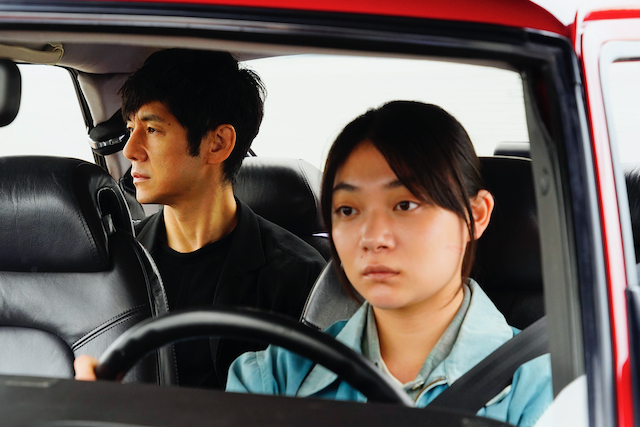
Hidetoshi Nishijima and Toko Miura in “Drive My Car”

Drive My Car is Hamaguchi’s creative and imaginative extension of Haruki Murakami’s minimal short story included in his collection Men Without Women. Two individuals unlikely to meet in ordinary circumstances, bare their soul to each other, one a stage actor and director Kafuku (Hidetoshi Nishijima), the other, a young female driver Misaki (Tôko Miura). The conversations that take place in the car prompt them to confront their own past.

The film opens with a long backstory. Kafuku has a loving and intimate relationship with his wife Oto (Reika Kirishima), a TV writer. Her story ideas come while the couple is making love. Both being in the arts, they support each other in an intimate way until one day Kafuku comes home unexpectedly and finds Oto in bed with another man. Kafuku walks back out quietly. The next day, Oto suggests they talk that night when he returns from work. Deeply hurt but fear for the collapse of their marriage, he delays coming home. When he finally gets home late that night he finds Oto has collapsed from a cerebral hemorrhage. She dies later without regaining consciousness. 

This prologue takes 40 minutes and that’s when the introductory credits appear on screen. Hamaguchi will take another two hours and more to tell the rest of his story which begins two years after Oto’s death. Despite the three-hour duration, the film captivates with thought provoking parallels between art and life and reveals the characters’ existential anguish with a quiet poignancy. 

Kafuku loves to drive his fire red Saab 900. He practices his lines while driving by interacting with dialogues recorded by his late wife Oto. As this main section of the movie begins, Kafuku is driving to Hiroshima to direct Anthon Chekhov’s Uncle Vanya at a theatre festival. However, upon arrival, he is disappointed to learn that due to insurance stipulations, he is not allowed to drive but the festival has provided him with a driver to drive his car. She is twenty-three year old Misaki (Toko Miura). 
The audition soon takes place. Kafuku has chosen actors from various Asian countries who deliver their lines in their native language including Korean, Mandarin, Japanese, Tagalog, and Korean sign language used in a most poignant way by a deaf actress. With such a cast, this performance of Uncle Vanya will be a powerful display of shared humanity.

Coming to the audition is Takatsuki (Masaki Okada). Kafuku recognizes him right away as the man he had seen making love to his wife in his home. To Takatsuki’s surprise, Kafuku casts him in the lead role. The two start to have talks with each other outside of the rehearsal, the subject they share: Oto.  

The parallel between the lines in Uncle Vanya Kafuku practices in the car and his real-life predicament is startling, and poignantly so. If he had returned home earlier that fateful night he might have been able to save Oto. Seized with guilt and grief, he recites the lines, ‘I am forty-seven years old. I may live to sixty; I still have thirteen years before me; an eternity! How shall I be able to endure life for thirteen years? What shall I do? How can I fill them? … If only I could live the rest of my life in some new way!’

A play within a film and lines corresponding to the real-life situation of the character is an intriguing way to tell a story. The mirroring effect can be emotionally gripping. Olivier Assayas’s Clouds of Sils Maria (2014) comes to mind. As Maria Enders (Juliette Binoche) practices the lines of the play she’s going to perform with the help of her assistant Valentine (Kristen Stewart), she is actually describing her own predicament. 

Reticent and appearing nonchalant, driver Misaki has a scarred childhood. Hearing the lines spoken in the car and as Kafuku talks about his guilt and loss, she too opens up. Two characters with a shattered past is thrown into each other’s internal turmoil, thus begins the healing of wounds and a step towards recovery. The aerial shot of the red Saab smoothly moving on the highway could well be a metaphor for the tranquility and freedom both occupants are seeking desperately.

A twist in the plot makes Takatsuki unable to perform in the play. Kafuku takes up the role as Vanya, a miserable man despondent with life. In a cathartic, final scene of the play, the lines are delivered in silence as the deaf actress playing Sonya encourages Vanya with her expressive sign language. The audience in the theatre, close up on Misaki, read the subtitles above the stage: ‘We must live our lives. Yes, we shall live, Uncle Vanya. We’ll patiently endure the trials that fate sends our way…’ As she finishes her speech pointing to eternal rest when they see God, the stage lights dim, with an oil lamp offering a tiny flicker of flame.

The last few minutes of the epilogue wraps the feature with a gratifying end.

____________

~ ~ ~ 1/2 Ripples