Our Mega Culture

A look at our summer offerings on the big screens can readily point to one fact: Bigger and louder is what we get. Apparently, they seem to be the key to box office sales. After all, aren’t those figures the raison d’etre, the reason why movies are made in the first place?

From Box Office Mojo come these stats: Iron Man 3 ($400m+ domestic box office sales, 8 weeks in release), Star Trek Into Darkness ($200m+, 6 weeks), Man of Steel ($200m+, 2 weeks), World War Z ($88m, 1 week). Don’t think it’s only the superheroes and zombies that dominate, Luhrmann’s spectacle The Great Gatsby rakes in $142 million in 7 weeks.

Here’s the irony: the bigger your city is, the more small movies you can see. And if you’re like me dwelling in one of those hamlets not on the list of ‘selective cities’, then you’re stuck with bigness all summer, like it or not. (This is my list of ‘small’ movies I’m waiting for.)

The French director Jean-Luc Godard once said:

As soon as you can make films, you can no long make films like the ones that made you want to make them.

The legendary film critic Pauline Kael interpreted his statement as follows [1]:

This we may guess is not merely because the possibilities of making big expensive movies on the American model are almost nonexistent for the French but also because as the youthful film enthusiast grows up, if he grows in intelligence, he can see that the big expensive movies now being made are not worth making. And perhaps they never were: the luxury and wastefulness, that when you are young seems … magical, become ugly and suffocating when you’re older and see what a cheat they really were.

Kael wrote that in 1966, that’s forty-seven years ago. How I wish she could be around now. Sure like to hear what she has to say about all the summer blockbusters we’re getting. What we have mainly are sequels to previous blockbusters, their makers hoping the trend would perpetuate. Would Kael revise her view now? Big movies not only are still being made, they have become more and more popular. It seems viewers don’t care much that the emperor has no clothes.

It’s Gatsby’s idea, isn’t it? The grander, louder and more spectacular the party you throw, the higher chance you just might get what you’re looking for. Alas, look at the ending.

Who makes the trend? The marketers of movies would tactfully say they’re just offering what people want. But subtly, or not so subtly, what people want is also shaped by marketers. Mass appeal and popularity have overridden discernment and individuality. Do you find viewers’ tastes have changed over the years? Or, do movie goers nowadays belong to a different demographics than before?

What I’m concerned is the obliteration of the already elusive notion of film as an art form. We’re now too dominated by bigness, and spectacles, and technologies, rather than going into the story, characters, techniques, meaning… the still, small voice of fine artistry.

Star Trek Into Darkness

I’d the chance, ok, my choice, to go watch Star Trek Into Darkness and Man of Steel recently. Interesting contrasts there. I used to be a Star Trek fan. Yes, used to be because the Star Trek we have today is a totally different product altogether, albeit the character names remain the same. This current one looks like school children play-acting… serious pretending, frantic scurrying here and there, and loud blasts into oblivion. The only adult seems to be Benedict Cumberbatch as Khan.

Man of Steel has more mature actors and more serious acting, but the second half is not much different, gratuitous CGI action sequences that are 30 minutes too long, and loud blasts into oblivion.

The constant bombardment of expanded loudness in the theater had only one effect on me, made me turn off my receiver, same effect as somebody wanting to win an argument by raising his voice at me.
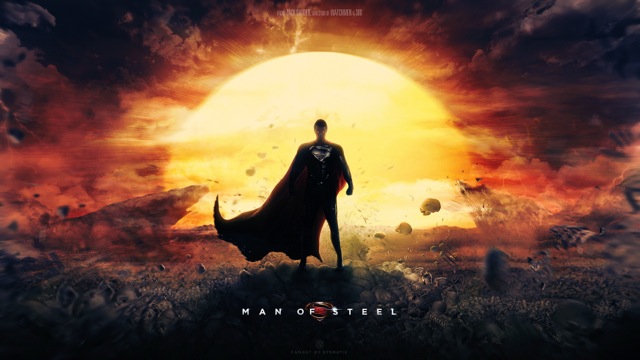
Man of Steel 1

Truth be told, because of the cast I went to see this revision of Superman. Kevin Costner and Diane Lane as Clark Kent’s earth parents? Who can miss that? Amy Adams as Lois Lane? I’m sold. And, Michael Shannon as the evil General Zod coming to turn earth into Krypton? I must see how he does it.

And the current Star Trek, what strange new world it has gone to where no one had predicted before. My favorite is still the original TV series. As for the movies? It’s Star Trek VI: The Undiscovered Country (1991). That’s the swan song of the original TV cast and one where Christopher Plummer as the Klingon General Chang recites Shakespeare like he’s at the Stratford Festival. His lines come from The Merchant of Venice, The Tempest, Romeo and Juliet, Julius Caesar and Hamlet. If you want postmodernism across the media, here you have a perfect mash-up. Yes, light years away from the Star Trek of Summer 2013, and generations apart.

Steven Spielberg in a recent statement made at the opening of a new USC Cinematic Arts building predicted there would be an ‘implosion’ in the movie industry, ‘where three or four or maybe even a half-dozen megabudget movies are going to go crashing into the ground, and that’s going to change the paradigm.”

He also added we might have to pay $25 to see the next Iron Man, but $7 to see Lincoln. A scenario which George Lucas echoed. Umm… if those are the ticket prices for the different kinds of movies in the future, not a bad sort of a paradigm shift.

***

[1] These two quotes are taken from Pauline Kael’s review of Jean-Luc Godard’s Band of Outsiders (1964), from American Movie Critics: An Anthology from the Silents Until Now, Expanded Edition, edited by Phillip Lopate, published by The Library of America, N.Y., 2008.


Summer Viewing List

Summer Reading Lists have begun to sprout everywhere. Some prefer lighter beach reads, and others use this time to catch up on heavier non-fiction works.

While I love book lists and recommendations, as a cinephile, I also have my list… films to be watched, those I highly anticipate to come around hopefully soon to my city. Here’s my TBV (To Be Viewed) list for this summer on the big screen:

Frances Ha – A NYC set black and white film in 2013? The trailer evokes Woody Allen’s Manhattan. I know Noah Baumbach has his own style, considering some of my favourite films are his works, The Squid and the Whale, Fantastic Mr. Fox. Co-writer and star Greta Gerwig, who is a good balance to Ben Stiller in Greenberg and distinctive in To Rome With Love albeit in a minor role, should be a delight. This I highly anticipate.

Before Midnight – The third and final instalment of Richard Linklater’s chance encounters of Before Sunrise, and Before Sunset. Real time, dialogue driven films almost created a genre of their own in the first two instalments. Ethan Hawke and Julie Delpy regroup nine years later in Greece. Whatever had happened in their lives between years?

Summer breeze, makes me feel fine…

Before Midnight

Much Ado About Nothing – Shakespeare and summer go hand-in-hand. Not in the park, this one’s shot right in director/screenwriter, of Avengers’ fame Joss Whedon’s own backyard in Santa Monica, CA. A postmodern take, and … black and white? Keeping the original work handy can help to reveal what’s Shakespeare’s and what’s Whedon’s.

Blue Jasmine – Woody Allen has been bringing us a new film a year over the past four decades. Can you not admire the stamina and creativity of this man, now 78. Allen’s 2013 instalment brings him home to NY and CA. Cate Blanchett, Alec Baldwin, Peter Sarsgaard star. I highly anticipate his 2014 work though, already announced and in pre-production. This time, back to France with Colin Firth. Yes folks, just another year.

Blowing through the jasmine in my mind…

Jasmine

Gambit – scheduled to come out later this year, Colin Firth and Cameron Diaz reprise the 1966 British comedy that starred Michael Caine and Shirley MacLaine. Alan Rickman also in this new remake. Much ado about a fake Monet painting. Should be another breezy flick but probably after summer, if it ever comes this way.

To The Wonder – Terrence Malick’s 2012 work just one year after The Tree of Life still hasn’t arrived here, albeit screened months ago in other more major cities. Not as highly acclaimed as the mesmerizing Tree of Life, To The Wonder is still alluring for me, a Malick fan. Good to see that the reclusive director seems to be busier now so we don’t have to wait for a decade to see his next work.

What Maisie Knew – Again, still not here albeit has been screened in other more major cities. Just rubs it in once more as to where I’m living. Julianne Moore and Alexander Skarsgård lead the cast in this newest Henry James adaptation. I’ve enjoyed previous James’ work on screen like The Wings of the Dove, The Golden Bowl, and The Portrait of a Lady. What Maisie Knew seems like a smaller work, looking at the novel. So would like to read that before seeing the film.

Summer in February – After Downton Abbey, Dan Steven’s new film … looks like an artsy romance. Alas, don’t think it will come to North America though. But hopefully PBS or HBO or the Movie Channel will one day pick it up. Dominic Cooper and Dan Stevens fall for the same girl in an Edwardian artist colony in Cornwall. From the trailer, looks very artsy and Downtony.

Inside Llewyn Davies – Coen Brothers’ newest film on 1960’s NY folk music scene. Oscar Isaac, Carey Mulligan, Justin Timberlake star. And they all sing… Music and singing play a key role in many Coen films. Now this one focuses on a musical period I love, and follows the erratic life of a fictional folk singer/songwriter. Just found out it is scheduled to be released in December. Long wait, but considering the timing, this one is bound to show up as a contender comes next Award Season.

And, while waiting for all these to come on the big screen (yes, I still feel movies ought to be viewed on the big screen, at least the first time), summer is also the best time to catch up on some classics I’ve missed in past years/decades. This list can be unending. Another post.

***

Related posts you might like:

Upcoming Books to Movie Adaptations

Woody Allen’s Midnight In Paris movie review

Terrence Malick’s The Tree of Life movie review

True Grit: A Cool Summer Read and Movie

***

Jasmine photo from Wikipedia Commons, Movie Poster original source unknown

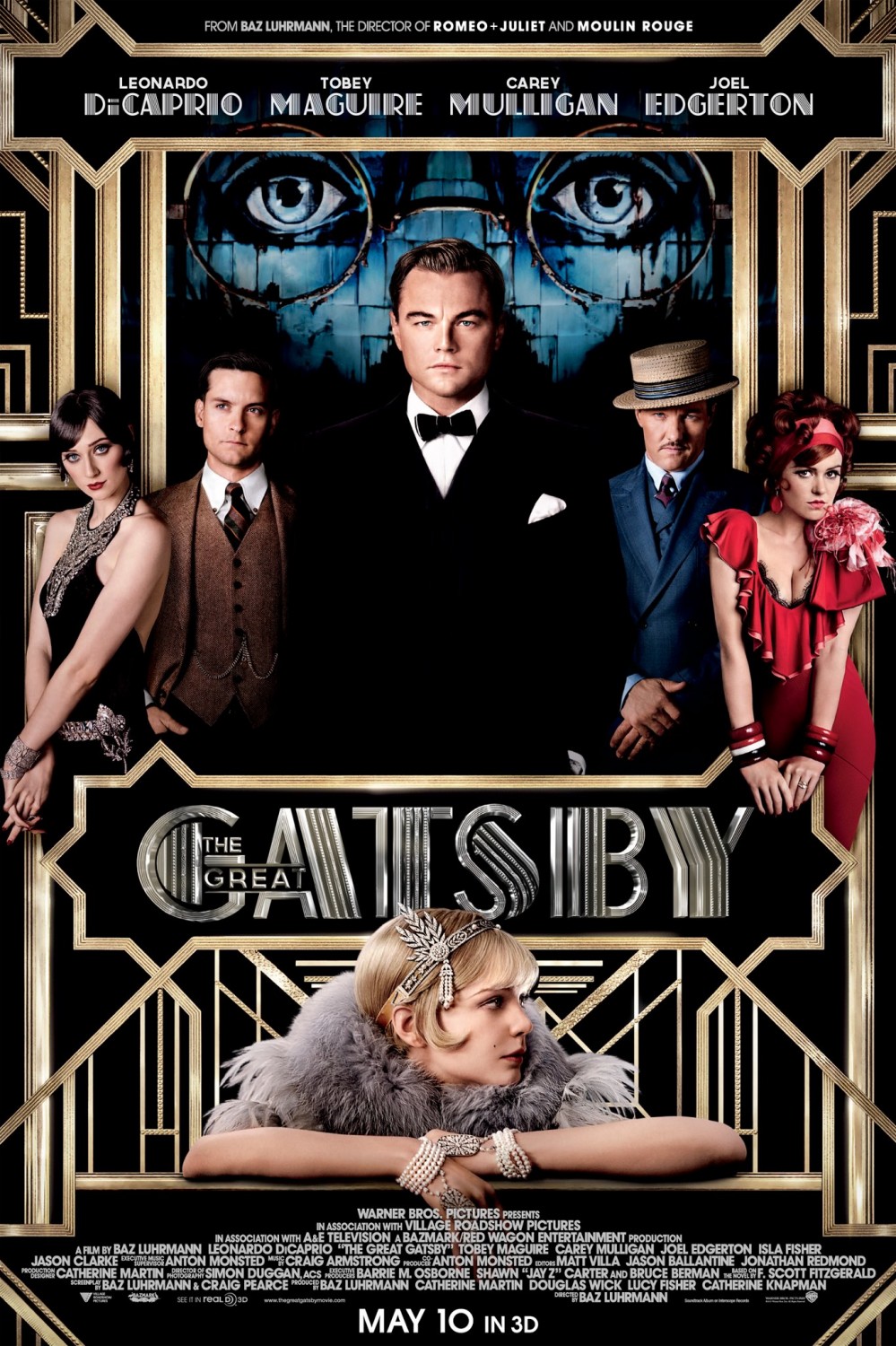
The Great Gatsby (2013): Movie Review

In just 172 pages, F. Scott Fitzgerald has captured the zeitgeist of the Jazz Age, and told the stirring story of love and loss. In this new adaptation of the book, director Baz Luhrmann has used an estimated $127 million, glamorizing with 3D and over the top cinematic effects.

Here is a prime example of ‘the medium is the message.’ Instead of depicting extravagance and excess, the production has become that.

the-great-gatsby-poster1

I went in with an open mind. After all, I had expected a mashed-up, postmodern fusion Luhrmann style. So, even the Jay-Z curated hip hop selections a la Gershwin cacophony was fine with me. After all, it was the unruly Jazz Age, so be it. Gatsby’s creamy yellow roadster speeding towards Manhattan, zigzagging its way through busy streets, Fast and Furious 1920’s version is still acceptable. By the way, the movie was shot in Australia. So, all the Manhattan scenes are visual remixes.

But the main issue for me is the 3D. Not much to be gained there but hindrances. The effects make me feel like I’m looking into a View-Master, artificial and gratuitous. For Gatsby, the extravaganzas in his mansion are only means to an end, to attract his love, Daisy; in Luhrmann’s hands, they are an end in themselves. The flamboyant and ostentatious parties, like their uninvited guests, overstay their welcome in the first part of the almost 2.5 hour production.

If Luhrmann had only used more of his wealth of resources: the rich and talented cast, to explore the story more and go deeper into characterization, and less partying, the movie would have been a wonder.

After all the glitz and glam in the first act, my enjoyment begins when Gatsby meets Daisy in Nick’s humble abode, a set up masterminded by Gatsby. It has taken him five years to this very moment. It is this scene that draws me in from being just an aloof onlooker. From without to within, it is the story and the characters that engage me more than the visual spectaculars.

Leonardo DiCaprio is a fine Gatsby, convincing and comical at times. Carey Mulligan may not be the Daisy I had conjured up from reading the book, but she has mastered her role well on her own terms. She’s a much sweeter, less careless Daisy than I had in mind. Elizabeth Debicki is an apt Jordan Baker. Joel Edgerton as sneaky and snobbish Tom Buchanan needs to smile more, and Tobey Maguire as Nick Carraway less. The veteran actor Amitabh Bachchan is a good choice for Meyer Wolfsheim. Isla Fisher as Myrtle Wilson, what a change from a shopaholic, and Jason Clarke too much a hunk to be wimpy Wilson.

One major alteration that I’ve appreciated is Nick writing out the story as a therapy recommended by his doctor, apparently a psychiatrist. The story of Jay Gatsby is also Nick’s own story as a writer. By articulating his experience in words he pays tribute to an unforgettable character, a dreamer who always sees the green light. Without giving out a spoiler, let me just say, the little twist at the end is a nice touch to this new adaptation of The Great Gatsby.

Does it worth a watch? I’d say yes, even in the 3D version. Curiosity is insatiable. And hopefully, the visual spectaculars can draw the viewer back once again to the literary offering Fitzgerald had first created. That’s one positive effect a movie adaptation can generate.

~ ~ 1/2 Ripples

***

A related Post I wrote 3 years ago at the announcement of this new adaptation. My open letter to Baz Luhrmann:

The Great Gatsby: A New Version

***

Ruth Prawer Jhabvala: A Tribute to Rootlessness

On April 3, one day before Roger Ebert died, Ruth Prawer Jhabvala passed away from illness at the age of 85. Her death seemed to have been overshadowed in the next few days by Ebert’s. I feel here’s a life that ought to be noted as well, but maybe for a special reason.

ruth-prawer-jhabvala

Ruth Prawer Jhabvala was best known for her Oscar winning adaptations of E. M. Forster’s A Room With A View and Howards End. Her other screenplays include Kazuo Ishiguro’s The Remains of the Day, Henry James’s The Golden Bowl and The Bostonians, among a total of twenty-six.

But for Ruth (to discard formality and to focus on the person, allow me to call her Ruth), adapting screenplays was only a hobby. Her main calling was to be a writer of her own stories. She had heeded that call with fervour since childhood. Guardian’s obituary mentions Ruth once said about her writing time as “the only three hours in the day I’m really alive.”

There are thirty titles by Ruth Prawer Jhabvala on Goodreads, including novels, short story collections, and her works in anthologies. Among her accolades, most well known is the 1975 Booker Prize for her novel Heat and Dust, about the meeting of East and West in India. Her short stories had been published in The New Yorker since 1957, thirty-nine of them. Her latest appeared just one month before her death. She is the only person who had ever won both the Booker and the Oscar. Two Oscars, to be exact.

Reading her obituaries from several sources, I’m more intrigued by this matter of laying down roots, or rather, of rootlessness in the landscape of our life.

**

Ruth was born in Cologne in 1927 to a Polish father and a German mother. Her family was assimilated Jews in Nazi Germany. Her grandfather was the cantor in Cologne’s biggest synagogue. Her father Marcus was a lawyer. Assimilated or not, Ruth and her brother had to flee with her parents in the nick of time in 1939 to England. She was 12.

For the next twelve years, she grew up in London, learned a new language, adopted a new identity, and later graduated in English literature from Queen Mary College, London University. In 1948, upon finding out all members of his family were killed in the Holocaust, more than forty of them, Ruth’s father took his own life.

In 1951, when she was 24, Ruth married the architect Cyrus Jhabvala in London and followed him back to his native country India. Another uproot and transplant, this time, to a whole new continent. They settled in Delhi. For the next 25 years, Ruth immersed herself in her adopted country as a wife, mother, and writer. Colonial and post-colonial Indian life, East-West relationship and caste conflicts became her subject. Despite her effort in total immersion, she had not taken roots in India.

Finally, In 1976, a third continent, as Ruth and her husband moved to New York City. There, she found a place closest to a notion of home, paradoxically, because of “many people like herself: refugees, outsiders, interesting American discontents,” wrote the remaining Merchant-Ivory-Jhabvala collaborators, director James Ivory, in Time magazine’s tribute.

**

While still in India, Ruth had already collaborated with Merchant and Ivory on several movies. Now in New York, she lived in an apartment on the same block as they. The proximity of actual geographical location fostered a prolific period of their lives. Together, they had joined hands in more than twenty productions. Their forty years of collaboration remains the longest in movie history.

Ivory Jhabvala Merchant
Ivory, Jhabvala, Merchant

How did rootlessness affect her perspective? In Guardian’s obituary, I found this inspiring excerpt:

I stand before you as a writer without any ground of being out of which to write: really blown about from country to country, culture to culture, till I feel—till I am—nothing.” And yet, she said, this was one of her strengths. Many of her stories are about a kind of inner travel: feeling rootless, her protagonists find new ways to feel at home in the worlds they happen to inhabit.

Perhaps, in the vast landscape of literature, such rootlessness is essential for the imagination to take flight. Rootlessness allows flexibility and fluidity of navigation, the freedom to roam. Rootlessness can more readily unlock the wayfaring spirit within, and embrace change.

One result of being rootless could well be the hybrid identity. Amusingly the Merchant-Ivory-Jhabvala team itself is a good example. Producer Ishmael Merchant was a Muslim from Bombay who had settled in America; director James Ivory is the son of a French-Irish American; Ruth Prawer Jhabvala was a Polish-German-Jew from Cologne, Delhi, London, and New York City.

Perhaps as Nick Carraways, the narrator in The Great Gatsby, observes, only by being “within and without” can we see “the inexhaustible variety of life.”

***

Related posts and links:

Obituaries and tributes from The Guardian, The Telegraph, The Paris Review, Time Magazine, The New York Times.

Since 1957, The New Yorker had been publishing Ruth Prawer Jhabvala’s short stories, a total of 39, her last appeared only one month before her death. Thanks to The New Yorker, we can now read Ruth Prawer Jhabvala’s short stories online.

My book review of Howards End, my post on the Merchant Ivory production of Howards End, my review of A Room With A View (TV, 2007)

***

Photo Sources:

First photo from The Paris Review; Second photo from The Telegraph

Roger Ebert, A Close Encounter

In memory of Roger Ebert, I will recount an unforgettable experience I had two years ago. I took the following photos, which now are even more memorable.

He was still tweeting just two days before his passing on April 4. Ebert’s presence and influence had been ubiquitous over his four-decade career as a film critic. But it just takes one single encounter to make all the difference to me.

***

Thanks to the Toronto International Film Festival, in September 2011 I had the chance to meet the legend. It was only natural for me to think that wherever there were film festivals, there were film critics. But I never would have thought that I would see Roger Ebert in person and to shake hands with him.

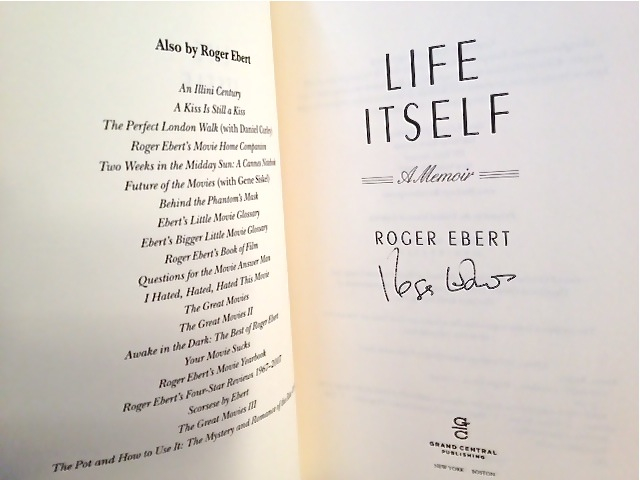
It was pure serendipity. While browsing in Indigo Books on Bay Street, I noticed a sign saying Roger Ebert would be in that store signing his memoir Life Itself a few days later. I had long followed his reviews since his “Siskel and Ebert” days, the two-thumbs-up duo. By the way, Ebert’s right thumb-up had been trademarked. Reviewing films for the Chicago Sun-Times since 1967, Roger Ebert was the first film critic to win a Pulitzer Prize for criticism (1975). He remained prolific even unto his last days.

Roger Ebert autograph Life Itself

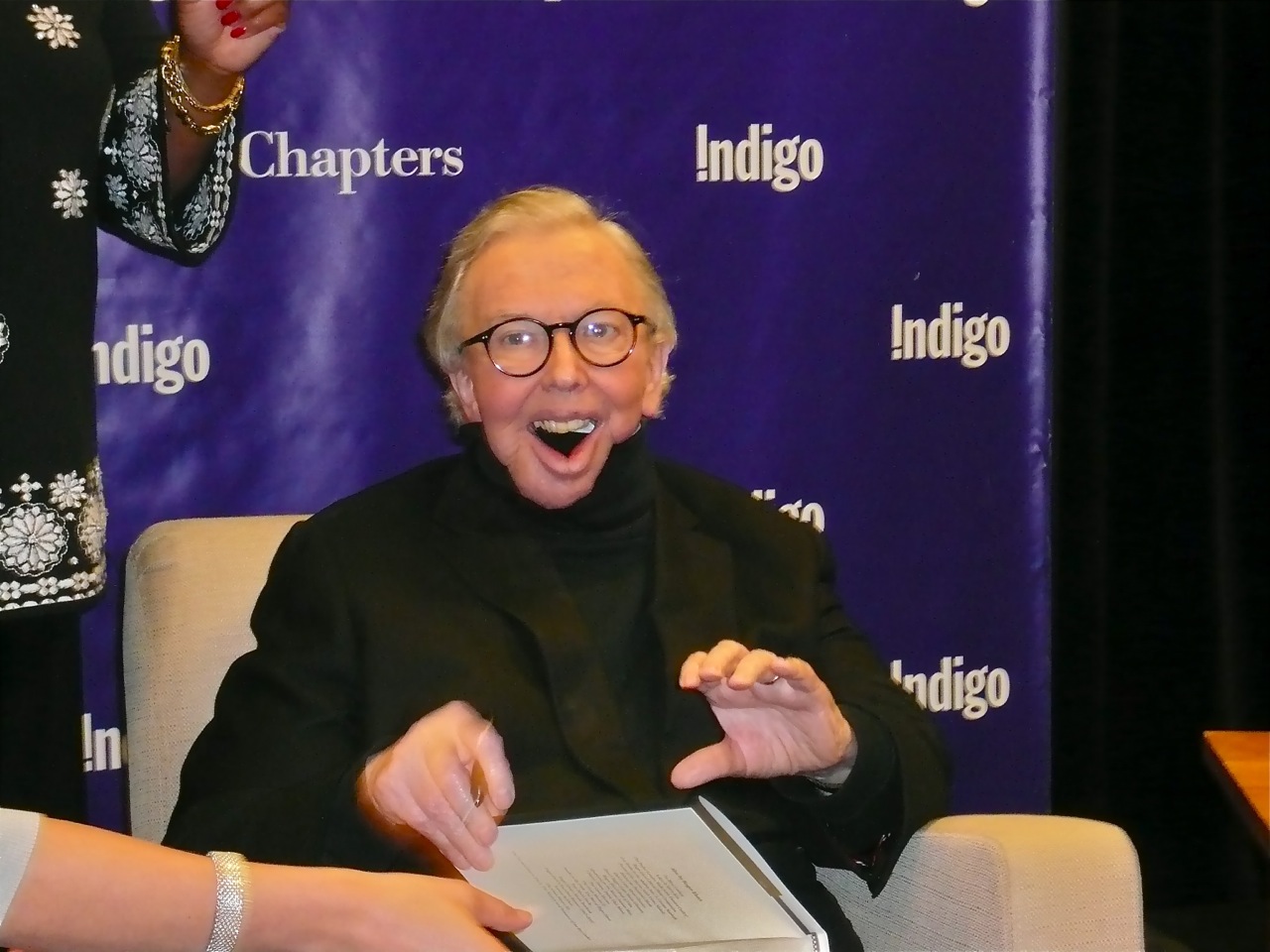
So after seeing the sign I was thrilled to know I would have a chance to see Ebert in person, right there in Toronto. To me, such an encounter was not just about an autograph, or seeing a celebrity up close. It was about seeing a man who after torturous cancer treatments and surgeries for his thyroid, salivary gland and jaw, had lost a part of his face and the ability to talk and eat, and yet still maintained his humor and passions, who continued to press on to new ventures… this was about seeing life itself.

In the late afternoon on September 14, 2011, at the signing area in Indigo Books on Bay Street, people had been lining up for over an hour. I was one of them. At 7 pm, Roger came in walking slowly and with aid, stepped on stage and faced the crowd.

Ebert Signing

Together with his wife Chaz, they gave us a wave. Then he sat down and began signing. Photographs were allowed except for the rule of no posing. I waited my turn to go up to him, shake his hand and get his autograph in my copy of his memoir.

The Q & A session also began.

Roger’s wife Chaz was his voice. Personable and a film lover herself, Chaz shared some of her views of the TIFF selections. As executive producer of “Ebert Presents at the Movies”, she answered some questions without consulting Roger. But for most questions addressed to Roger, he would write in a small coiled notebook, handed it to Chaz to read out his answer.

Roger & Chaz

Here are some of the notes I had taken. Keep in mind this was a casual Q & A session in September, 2011. I’m sure Roger’s view towards 3D and CGI had changed considering his 4-star review of Ang Lee’s Life of Pi.

Q. Who influenced you the most?
A. He pointed to his wife standing behind him.

Q. Which decade is your favorite?
A. The 70’s… where you had The Godfather, Raging Bull…

Q. Buster Keaton or Charlie Chaplin?
A. Buster Keaton, albeit both are great.

Q. 3D?
A. Don’t ask. Story is number one.

Q. CGI (computer-generated imagery)?
A. Movies with CGI are soulless.

Q. All time best?
A. Citizen Kane.

Q. Favorite actor?
A. Robert Mitchum.

Q. Contemporary?
A. Al Pacino, Philip Seymour Hoffman, Tilda Swinton

Q. Favorite Canadian directors?
A. Atom Egoyan, David Cronenberg, Norman Jewison, Guy Maddin (thumb up)

Q. James Cameron?
A. Is James Cameron Canadian? Chaz asked in surprise.

Q. Favorite book?
A. A Fine Balance by Rohinton Mistry (Canadian! A voice came from the back)

Q. Any pressure from movie producers to write a good review?
A. No, he hasn’t been pressured. He was beyond reproach, Chaz answered.

Q. Any movies you haven’t seen?
A. The Sound of Music

Q. If there’s a movie made about you, who’d you want to play you?
A. Philip Seymour Hoffman. Chaz added, Oprah to play me. Diana Ross would be good too.

Q. Advice for potential film critics?
A. Do you want to get paid?

Q. Yes and no. (The questioner covered all bases.)
A. Start blogging. Roger replied. 

Q. How does your life influence the way you review a film?
A. It generates every word.

Definitely more than just an autograph. What an encounter. What a night.

***

Photos of Roger Ebert were taken with just a pocket camera at the event, book autograph page shot with iPhone at home.

Saturday Snapshot is hosted by Alyce of At Home With Books. Click Here to see what others have posted.

Upcoming Book to Movie Adaptations

2012 has been a great year for movie adaptations based on or loosely tied to books. Argo, Beast of the Southern Wild, Les Misérables, Anna Karenina, Life of Pi, Lincoln, Silver Linings Playbook are all from adapted screenplays.

Now that the Award Season is behind us, time to move forward to see what some of the upcoming movie adaptations are in the works. The following is a list of films in various stages of development, with some scheduled to be released in 2013. Time to read or reread the books before your see the movies.

**

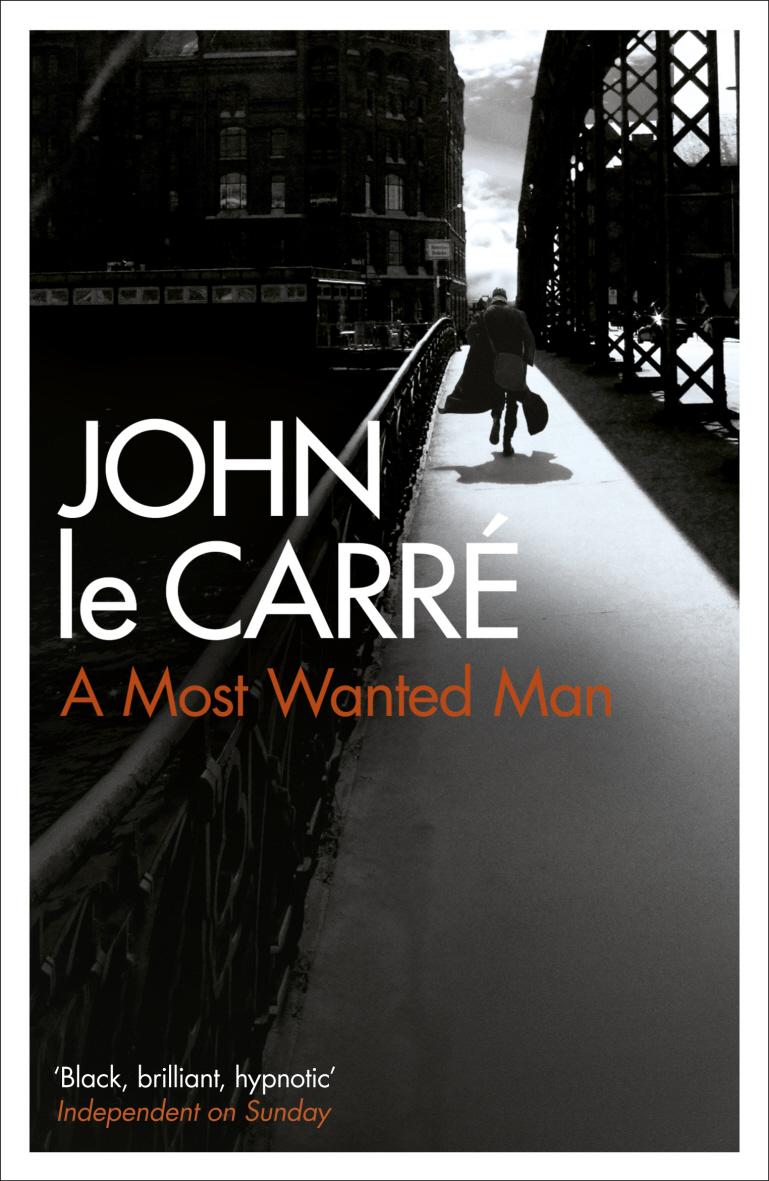
A Most Wanted Man 

A Most Wated Man

Philip Seymour Hoffman stars in John le Carré’s thriller (2008) with a contemporary theme of international war on terror. Hopefully it will reprise the depth of the star-studded Tinker Tailor Soldier Spy. Robert Wright, Rachel McAdams, and Willem Dafoe are in.

A Wrinkle In Time

A Wrinkle in Time

After the success of LOTRNarnia, The Hobbit, some think it’s time to remake Madeleine L’Engle’s YA Sci-Fi classic A Wrinkle In Time. Disney it is, together with Bedrock with Jeff Stockwell (A Bridge to Terabithia, 2007) writing the script. Let’s hope it’s a production worthy of its literary source.

Before I Go To Sleep 

Before I Go to Sleep

Adapted from S. J. Watson’s popular and intriguing novel about a woman having bouts of amnesia every morning she wakes up. If your memory or enthusiasm needs a little prodding, here’s this cast: Nicole Kidman, Colin Firth, and Mark Strong. Nobody can forget Colin Firth as Mr. Darcy (TV 1995), but do you remember Mark Strong as Mr. Knightley in Emma (TV 1996)? Both were in Tinker Tailor Soldier Spy (2011) and Mark Strong in the recent Zero Dark Thirty (2012). I can’t wait for this one. Will have to read the book first.

The Book Thief

The Book Thief

The popular and acclaimed YA book by Markus Zusak with setting in WWII Nazi Germany. YA or not, it’s been on the NYT Bestseller List for over 4 years. Interesting fact is, Downton Abbey director Brian Percival will helm the production, which will star Geoffrey Rush (The King’s Speech, 2010) and Emily Watson (Anna Karenina, 2012). The young Canadian actress Sophie Nélisse who’s brilliant in the Oscar nominated Monsieur Lazhar (Canadian entry for Best Foreign Language Film, 2011) will play young Liesel.

Devil’s Knot

Devil's Knot

Based on Mara Leveritt’s book Devil’s Knot: The True Story of the West Memphis Threethe true case of the wrongful conviction and imprisonment of three teenaged boys for eighteen years for the murder of three children in West Memphis, Arkansas. Colin Firth and Reese Witherspoon star. Acclaimed Canadian director Atom Egoyan helms, with music score by the recent Oscar winning Canadian composer for Life of Pi Mychael Danna. Yes, sounds like an international joint effort. The film has a 2013 release date in the U.S.

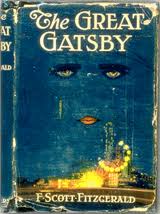
The Great Gatsby

The Great Gatsby

Completed in 2012, but delayed its release until May 2013. Just as well, considering all the mighty rivals of last year’s movies. The trailer looks unsettling, and in 3D, I’m afraid the Baz Luhrmann version may focus on the loud and glitzy but ignore the true colours of Jay Gatsby. Of course, innocent until proven guilty. My eyes are peeled. Leo DiCaprio is Jay, Carey Mulligan Daisy, Isla Fisher Myrtle, Tobey Maguire Nick. Quite a cast.

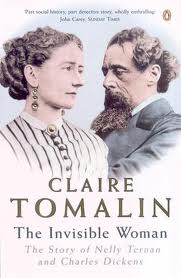
The Invisible Woman

The Invisible Woman

Claire Tomalin’s account of Charles Dickens’ affair with the young writer Nelly Ternan will be brought to screen with script from Abi Morgan (Shame, The Iron Lady) to be directed by Ralph Fiennes, who will play Dickens himself. To add to the rave, Kristin Scott Thomas is also on board. Felicity Jones will be playing Nelly Ternan. Fiennes never ceases to amaze us with his versatility, after directing Shakespeare’s Coriolanus in postmodern style, now comes Dickens.

The Piano Tuner

The Piano Tuner

It has been reported that the iconic German director Werner Herzog (Cave of Forgotten Dreams, 2010) is directing the movie adaptation of this 2002 book by Daniel Mason. Set in 1890’s Burma where the British Empire was having its glorious era, the chords of harmony and dissonance ring. Not a lot of info on it, but as I read a few book reviews, which are all careful not to reveal any spoilers, I can see this can be a colourful and thought-provoking cinematic offering in the hands of an auteur whose career has spanned half a century.

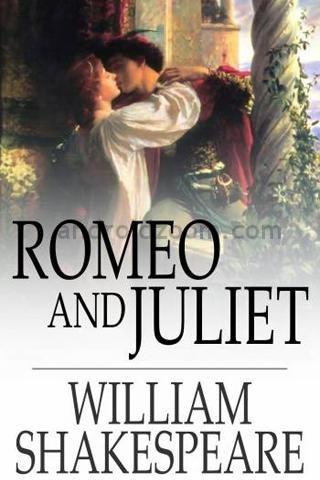
Romeo and Juliet

Romeo and Juliet

Don’t rant about Jane Austen’s novels being turned into just too many movies. Shakespeare probably holds the record. This time, a 21st C. version of Romeo and Juliet will be written by none other than Julian Fellowes, who has brought us the wildly and globally popular Downton Abbey, something Shakespeare just might approve. The new pair of star-crossed lovers? Douglas Booth (Great Expectations, TV 2011) and Hailee Steinfeld (True Grit, 2010), with a cast of prominent US and British actors.

The Sea

The Sea

Irish writer John Banville adapts his own Booker-winning novel (2005) of the same title. Ciaran Hind (Persuasion, 1995) stars. Banville has also written the screenplay of the Oscar nominated movie Albert Kobbs with Glenn Close. I was planning to read The Sea last year for the Ireland Reading Challenge but later made another choice. Now knowing there will be a movie, I should get back to it.

Suite Française

Suite Française

The heart-wrenching novel by Irène Némirovsky with setting in German occupied WWII Paris. Kristin Scott Thomas (I’ve Loved You So Long, 2008) and Michelle Williams star with Rust and Bone actor Matthias Schoenaerts. Glad to know screen adaptation is written by the Oscar winning screenwriter Ronald Harwood, who has given us such memorable films like The Browning Version (1994), The Pianist (Oscar win 2002), Being Julia (2004), The Diving Bell and the Butterfly (Oscar nom, 2007), and the recent Dustin Hoffman directorial debut Quartet (2012). I’m reading this book together with the Bonhoeffer bio. Can’t wait to see the film.

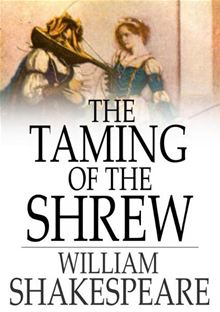
The Taming of the Shrew

Taming of the Shrew

Yes, another Shakespeare’s play in the works. This one will be adapted by the screenwriter who has brought us The Iron Lady (2011), the movie Meryle Streep won an Oscar for playing Magaret Thatcher. Coincident? This time, the iron lady is Katharina, and she’ll be played by recent Oscar winner Anne Hathaway. From Fantine to the Shrew? She’ll need a lot of method acting and we’ll need a lot of forgetting to see her in that new role. As for Petruchio? Let me know who you think should be the one. No, I’m not the casting director, but I’ll put in a good word for you.

***

Do you know of any other literary titles to be adapted into films in the coming year? Let me know in a comment.

Thanks for your input, here are the titles some of you have added to my list:

Serena

Broken

Mr. Morgan’s Last Love

August: Osage County

Much Ado About Nothing

***

The Girl In the Cafe (2005): The Hunger for Connection

February is the month that raves about love. It’s also Awards Season, culminating with the Oscars. With all the competing productions on the big screen, are you getting a bit overwhelmed by now? Or maybe a little indigestion even?

Here’s a little gem of a film, like lemon sorbet, simple and fresh, just to clear the palette. It’s only recently that I come across this DVD dated a few years back. O what a find! I took it out from the public library, have watched it three times, and maybe more before I ultimately return it.

Directed by David Yates (State of Play, TV) and written by the screenwriter who has brought us Bridget Jones’s Diary, Notting Hill, Four Weddings and a Funeral, Love Actually… Richard Curtis, The Girl in the Cafe is a reason why we should not dismiss TV movies or those that go directly from production to DVD.

The Girl in the Cafe

The story begins with a chance encounter. Lawrence (Bill Nighy, The Best Exotic Marigold Hotel) is an aging civil servant, a senior-level analyst working for the British Chancellor (Ken Stott). During one coffee break Lawrence, single, well no, married to his job, shares a table with a girl Gina (Kelly Macdonald, Dolly in Anna Karenina) in a crowded cafe. Thus sparks a genuine connection between the two. On a whim, Lawrence asks Gina to accompany him to attend the G8 Summit in Reykjavík, Iceland, the following week.

What’s that? Gina asks. Right, a most incompatible relationship. But just because of that, the drama, and conflict, sparks off. Lawrence’s shy demeanour fits perfectly with Gina’s quiet composure. But for both actors, their restrained and understated performance form the very essence of this charming and thought-provoking film.

Once there in Reykjavík, Gina is appalled by the facts she learns about world poverty from Lawrence, like, one child dying in every three seconds. She takes a very personal stance on the success of the Millenium Development Goals to fight extreme poverty. While heavy police force keeps protesters out of the Conference venue, Gina becomes one small voice that speaks out from inside, genuine and innocent among seasoned politicians, albeit bringing Lawrence unexpected ambivalence. Some may find it uncomfortable to watch this scenario, but I feel it is one that deserves to be played out, and definitely to be heard.

What grabs me right away as the movie begins is the soul stirring song ‘Cold Water’ as the images of Lawrence going by his daily routine all alone. At coffee break, he steps into the crowded cafe, and finds another soul also alone. It’s gratifying and a pleasure to watch them connect and warm up to each other in a most genuine and tender manner.

As the film ends, ‘Cold Water’ reprises, but by now I see the parallel. Not only do Lawrence and Gina reach out for human connectedness and love, the millions of dying children in extreme poverty are also uttering these words of the lyrics:

“Cold water surrounds me now.
And all I’ve got is your hand.
Lord can you hear me now?
Or am I lost?”

Don’t we all need a helping hand for the different kinds of hunger we experience as human? The song and the music in the film augment its impact in a quiet and haunting way.

Bill Nighy owns the role of Lawrence. His self-deprecating and gentle manner fits in perfectly with Kelly Macdonald’s authentic and genuine Gina. The two have such connectedness in their performance that they earned Golden Globes nomination for Best Actor and Actress the following year.

The DVD came with special features which include director and screenwriter’s commentary. That is definitely a bonus after viewing the film. From there I found out Nighy and Macdonald were in the British TV series State of Play before doing The Girl in the Cafe. So that’s exactly what I did… went to the library to borrow the DVD’s of the TV series, and binged-watched all six episodes, which I highly recommend as well.

~ ~ ~ Ripples

***

Watch on YouTube Damien Rice’s ‘Cold Water’ with lyrics.

***

Read my other reviews on films about love:

I’ve Loved You So Long

Away From Her

Never Let Me Go 

This Fall: Read the Book Before you See the Film

UPDATE: This list will be updated whenever there’s new info. So, bookmark it if you like. Just added Lincoln (Team of Rivals), The Reluctant Fundamentalist, and The Hobbit: An Unexpected Journey. CLICK ON THE TITLES to read my book and film reviews. For others, the link will lead you to info of the production.

**

Some highly anticipated film adaptations from literary sources will be coming out this fall. Released in this latter part of the year, to be premiered at major film festivals, some of them are poised for the Awards Season next spring.

Here’s an update of these great expectations. The Great Gatsby for some reasons has delayed its release until next summer, so one less book to read if you’re to finish them before the movies come out.  These titles also make good selections for book groups:

Anna Karenina by Leo Tolstoy

To premiere in the UK and at Toronto International Film Festival (TIFF) on the same date, September 7. You still have time to read this masterpiece before the film comes out as a general release in November. You may need to read a bit more than 10 pages a day if you start now. But still doable. Update: The Read-Along has just been completed. The film is now screening in selective cities. Read my book reviews here for first half and here for the last parts.

.

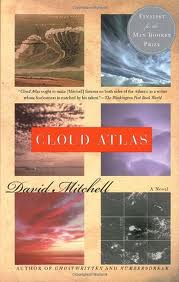
Cloud Atlas by David Mitchell

To premiere at TIFF on Sept. 8. Legendary filmmakers Tom Tykwer (Run Lola Run), Andy and Lana Wachowski (The Matrix) join hands to make this ‘unfilmable’ acclaimed literary work. Tom Hank, Halle Berry, Jim Broadbent…

Update: The film has been released and has received mixed reviews. 

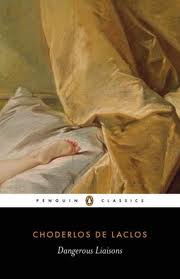
Dangerous Liaisons by Pierre Choderlos de Laclos

How about this… The French notorious literary classic Les Liaisons Dangereuses by Pierre Choderlos de Laclos, published in 1782, adapted into film in the 21st C. with a setting in 1930’s Shanghai, China, helmed by Korean director Hur Jin-Ho, cast with Chinese and Korean actors. I’ve seen two adaptations in the past, Michelle Pheiffer/John Malkovich’s Dangerous Liaisons (1988) and Annette Bening/Colin Firth’s Valmont (1989), but this one strikes me as something totally different.

Great Expectations by Charles Dickens

In time to mark this bicentenary of the birth of Charles Dickens, a showcase of British talents: screenplay by David Nicholls (Tess of the D’Urbervilles, When Did You Last See Your Father) directed by Mike Newell (Four Weddings and A Funeral, Harry Potter), Ralph Fiennes (The English Patient), Helena Bonham Carter (The King’s Speech), Jeremy Irvine (War Horse)…

.

The Hobbit by J. R. R. Tolkien

World premiere Nov. 28, 2012 in New Zealand for Part 1 of the Trilogy, ‘The Hobbit: An Unexpected Journey’, ‘The Hobbit: The Desolation of Smaug’ in Dec. 2013, and ‘The Hobbit: There and Back Again’ in July, 2014. Peter Jackson attempts to reprise his Rings magic with cast from previous Rings Trilogy Elijah Wood, Ian McKellen, Cate Blanchett, Orlando Bloom… Again, we’ll get to see beautiful New Zealand as setting.

.

Les Misérables by VIctor Hugo

A film version of the stage musical to be released in December. Directed by Oscar winner Tom Hooper of The King’s Speech. If you want to hear them sing, here’s the chance… Anne Hathaway, Hugh Jackman, Russell Crowe, Helena Bonham Carter, Amanda Seyfried…  The trailer is mesmerizing. Update: The production has just been shown in industry screenings and received euphoric reception. Major contender for 2013 Oscars.

.

Life of Pi by Yann Martel

To open the 50th NY Film Festival on Sept. 28 with its world premiere. I’m glad this 2003 Booker Prize winning novel by Canadian author Yann Martel finds its film adaptation in the hands of Oscar winning director Ang Lee. From the trailer, I have the feeling that Lee has masterfully grasped the magical realism of the book. Lee’s versatility ranges from Jane Austen (Sense and Sensibility) to martial art (Crouching Tiger, Hidden Dragon). I highly anticipate this one, albeit as someone prone to motion sickness, I’m apprehensive about seeing the rough ocean journey in 3D.

.

Midnight’s Children by Salman Rushdie. Film Review

To premiere at the Gala Presentation at TIFF Sept. 9. Salman Rushdie turns his Best of the Booker, epic novel into screenplay, working closely with Canadian director Deepa Mehta on the film production. I’m interested to see how magic realism transposes from the literary to the visual, albeit I know full well the two are different forms of artistic medium. For the few of us who had spent four months reading along, I think the only regret we have might be that we can’t go to see the film together.

.

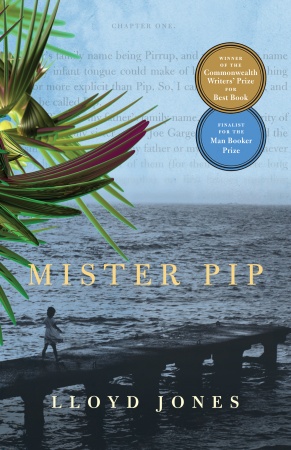
Mr. Pip by Lloyd Jones

Winner of the 2007 Commonwealth Prize, Lloyd Jones’s character Pop Eye Mr. Watts brings to the Papua New Guinea island of Bougainville during the civil war in the 1990s not just Charles Dicken’s Great Expectations, but friendship to a 13 year-old girl Matilda. Film adaptation directed by Chronicles of Narnia‘s Andrew Adamson. And for all you fans of ‘House’, Mr. Pip is none other than Hugh Laurie.

.

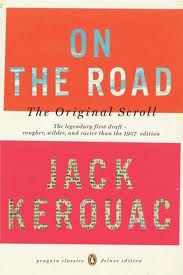
On The Road by Jack Kerouac

First screened at Cannes Film Festival in May and later in Europe, producer Francis Ford Coppola’s adaptation of this beat generation classic finally comes to North American at TIFF this Sept. Directed by Walter Salles (Motorcycle Diaries) and with a cast including Kristen Stewart, Amy Adams, Viggo Mortensen, Kirsten Dunst.

.

The Reluctant Fundamentalist by Mohsin Hamid

Published in 2007, the book was included in Guardian‘s list of 50 books that defined the decade and shortlisted for the Booker Prize. The story of a young Pakistani working in NYC, graduated top of his class from Princeton, finding love in an American girl, and success on Wall Street, has his world turned upside down after 9/11. The film just opened the 69th Venice Film Festival last night. Directed by the acclaimed, India-born Mira Nair (Monsoon Wedding, The Namesake), the film and the book should stimulate lively discussions in your book group. Stars Riz Ahmed, Kate Hudson, Kiefer Sutherland, Liev Schreiber.

Teams of Rivals by Doris Kearns Goodwin. Film Review.

It has been noted that Steven Spielberg ensured the film rights to Goodwin’s book even before she wrote it. His film Lincoln is partly based on it, an epic production that reportedly involves more than 140 speaking parts. Acclaimed as a strong Oscar 2013 contender, the film portrays Lincoln’s tenacious fight for the passage of the 13th Amendment.

.

What Maisie Knew by Henry James

James’s novel published in 1897 has its film adaptation set in modern day New York City. It depicts a family break down from the point of view of a six-year-old girl as she is torn between her parents going through a divorce. Film directed by Bee Season and The Deep End’s Scott McGehee and David Siegel, Julianne Moore and Alexander Skarsgård star.

.

***

Posts you may like:

Lincoln (2012): Some Alternative Views

Anna Karenina Read-Along: Parts 1-4, Parts 5-8

Midnight’s Children Read-Along

Midnight’s Children Film Adaptation: Movie Review

Life of Pi by Yann Martel: Read the book Before the 3D Experience

CLICK on the following links to my previous posts for lists of film adaptations from other literary titles in development or with film rights sold:

Great Film Expectations

Upcoming Books Into Movies — List 3

More Upcoming Books Into Movies

***

Prometheus (2012): Still Searching

“What has been will be again, what has been done will be done again;
there is nothing new under the sun. ” — Ecclesiastes 1:9

**

We went to see Prometheus on Fathers Day. That’s a ‘family movie’ for us. Literal meaning: son taking father to the theatre, mom gladly tagged along as chaperone.

The quote above was what came to mind as I left the theatre. Haven’t I seen them all somewhere before? The whole idea of advanced ancient civilizations, as one blogger mentioned von Daniken (Chariots of the Gods), or the enemy inside (literally), or a robot watching old films to be informed of the human way (Wall-E). O wait, maybe there are plenty of CGI techniques that are new and that my amateur and non-technical eyes could not pick out. And the fact that I chose not to watch the 3D version means I’d missed out a lot of technical extravaganza.

Let’s just pick up where I left off.

I watched the very first, Ridley Scott’s Alien, in the theatre… that was 1979. In one notorious cinematic moment, the alien bursts out from within a human belly. That’s quite original I think, shocking scene at that time. So there incubates the subsequent alien offshoots, not only in movies, but I’ve read something like that too, unexpectedly, in the book The Astronaut’s Wife.

Prometheus is the latest version of Ridley Scott’s Alien. At the start we see a couple of archeologists/scientists discovering some ancient cave paintings pointing to a star map that they think could be invitation for them to find out the origin of human life. Following their instinct, they are put to cryo sleep and waken up in the year 2093 on the space exploration vessel Prometheus heading towards those stars.

Prometheus is a space ship purely for scientific discovery. It is also privately funded by Weyland (unrecognizable Guy Pearce) for his own agenda, to find the means to eternal life. Heading the ship’s operation is hard-nosed Meredith Vickers (Charlize Theron). Unfortunately, her character seems unnecessary except to deliver a few trite dialogues.

Leading the scientific team is Dr. Elizabeth Shaw, most aptly played by Noomi Rapace (Lisbeth… obvious name derivation). She has a chance to demonstrate her Dragon Tattoo Girl agility in combat, in resourcefulness, in quick thinking, and in acting. She’s a ‘believer’, wearing a cross necklace, always searching for the truth, despite the discovery that her Maker could be a creator-turned-terminator. She wants to know why.

In contrast, there’s David, an android/robot programmed to offer objective and unemotional info in all areas from scientific data to the various scopes of human civilization, icily played by Michael Fassbender (Jane Eyre, Shame, A Dangerous Method…) In a short exchange, David asks Elizabeth why she needs to know the reason for her Maker turning against its own creation. Elizabeth gives the answer: because I’m human and you’re just a robot.

So the search lands them on the moon LV 223 where they find some humanoid creatures with much more advanced technology. But who made them? Soon they see their dangerous predicament as some organic matter inside these ‘engineers’ are still alive and can turn agressive and powerful. Spectacular warfares ensue and lives lost as a result. And I should stop here to avoid giving away any more spoilers.

The movie ends with the idea that the search continues, and so will its sequels…

I’m not a fan of the Sci-Fi/futuristic genre. But I’m glad in the year 2093, these things remain: Chopin’s music, classic films, Christmas, and human’s search for their Maker.

~ ~ ~ Ripples

The Downton Ripples

Or, How I Overcome Downton Abbey Withdrawal Syndrome.

First, I bought the Blu-rays and rewatched both Season 1 and 2 several times. And then, I let my curiosity lead and follow mere intuition. Downton has prompted me to seek out books and films with setting in the early part of the 20th C.

I was most intrigued by the irreversible changes modernity has brought about, but on a more sombre note, I was moved to learn of the grave number of lives lost in a war I knew so little, WWI.

As heir to Downton Matthew Crawley has aptly noted while fighting in the trenches:

War has a way of distinguishing between the things that matter and the things that don’t.

The Great War did not end all wars as claimed, but had ended countless lives of a young generation, and altered numerous others. On the positive side, it had toppled society’s status quo and broken down previously impenetrable barriers, when men of different social classes fought side by side in the trenches, and where women played a substantial role in the war effort.

And then there are the stories of individuals and families… I’ve thoroughly enjoyed this reading and watching spree. But I have to stop somewhere and share with you what marvellous works you can follow while waiting for Downton Abbey Season 3 to arrive.

So, here’s Arti’s Annotated List of Downton Ripples:

Lady Almina and the Real Downton Abbey by Fiona Carnarvon — A springboard to all my WWI period exploration. What impressed me was that Highclere Castle itself was actually turned into a hospital during the War and many of its staff enlisted and some killed. I was moved by the number of casualties and the horrific conditions in the battlefields. My full review of the book is posted here. 

The World of Downton Abbey — by Jessica Fellowes, niece of write/creator of the series Julian Fellowes. A compendium to the production, the hardcover larger-sized book is filled with photos, background info and quotes from the actors. After skimming through the whole book, one item stands out: Mr. Bates’ fall. That’s when Mrs. O’Brien trips him and he falls flat on his face on the gravel. How did they shoot this? Any special effects? Well, unfortunately for Mr. Bates, none whatsoever.

This is what Bates, Brendan Coyle said:

I must have done it 18 times and by the end I was wounded! I wore knee pads and a torso shield, but when you fall you have to really commit to falling.

Ouch! Some method acting.

Lost Empires (1986)— 7 Episode mini-series based on J. B. Priestly’s novel set in 1913, a year before WWI broke out. Colin Firth is young Richard Herncastle. Lost both parents at 19, he follows his Uncle Nick on his travelling magic stage show, learning the ropes of the itinerant performer in the music hall circuit. A coming-of-age saga chronicling the loss of innocence in love and life. Some noted actors in the series include Sir Laurence Olivier and John Castle.

A Farewell to Arms (1929) — Hemingway’s WWI semi-autobiographical sketch of love and loss. I listened to the audiobook read by Mad Men’s John Slattery. In authentic Hemingway style, his narrative is matter-of-fact and stoic. After that I watched the 1932 movie adaptation with Gary Cooper and Helen Hayes. An adaptation that makes me wish Hemingway was the screenwriter and director.

Brideshead Revisited (1945)– Evelyn Waugh has used a huge and magnificent mansion owned by an aristocratic family to tell his story. Something like Downtown but in a much serious tone. Its subtitle “The Sacred and Profane Memories of Captain Charles Ryder” sets the stage for a tug of war between God and man. I listened to the audio book read by Jeremy Irons, who has turned Waugh’s narratives into pure poetry. Probably the best audiobook I’ve ever listened to.

I’m still watching the 11 Episode TV series (1981) with Jeremy Irons playing the main character of Charles Ryder. So far, I’ve enjoyed the detailed and slower-paced depiction of the work. The book really needs a whole series to tell its story.

I’ve also rewatched the 2008 movie adaptation. As much as I respect the actors in it, Emma Thompson, Matthew Goode, Michael Gambon… I think it has trivialized Waugh’s masterpiece. The adaptation has taken the crux of the matter out and replaces with photogenic visuals and a story converted for more popular appeal. But it could well send one back to the book for curiosity’s sake.

Easy Virtue (2008) — For something totally light and swift, I rewatched this movie based on a Noel Coward play. Filled with Coward’s own music and some Cole Porter, the film depicts how the changes of the times have brought to yet another aristocratic family.

Larita (Jessica Beale) is the first woman race car driver to cross the finish line in Monte Carlo. The year is 1930. An American, she marries on a whim John Whittaker (Ben Barnes), the son of an English aristocratic family… and quickly becomes enemy on the home front to matriarch Veronica Whittaker (Kristin Scott Thomas), and subversive ally to her husband, disillusioned WWI officer played by Colin Firth. If you’re interested, here’s my full review of the movie.

A Handful of Dust (1988) — After Brideshead Revisited I went on to watch another of Evelyn Waugh’s adaptation. Again, a large mansion… how many of these architectural heirlooms do they have in England? Anyway, the master of this house Tony Last (James Wilby) is too busy looking after his property that he loses his wife Brenda (Kristin Scott Thomas). Title comes from T.S. Eliot’s The Waste Land (1922)… that sent me into reading the poem again.

Goodbye To All That (1929) — Autobiography of Robert Graves, English poet and writer. I’m most impressed by the men of letters in that period, they enlisted readily. Robert Graves and Siegfried Sassoon were both involved in the most devastating battles in France. Both were seriously injured. Deep in the trenches they wrote poetry. Their views towards the war changed as time went by, but their experiences in the battlefields brought about poignant legacies as eye witnesses of a horrific war and its aftermath. Ironically, Graves handles his subject matter with some light-hearted reminiscence.

The Remains of the Day (1993) — Not quite the same period but a bit later in the brewing year before England’s engagement in WWII. I rewatched this film adaptation of Kazuo Ishiguro’s Booker Prize winning novel in full, sumptuous Merchant Ivory style. The film leads me to think of a few parallels… Darlington ~ Downton, Stevens ~ Carson, but I’m glad Carson has more heart. And in both Downton and Remains of the Day, a character named Richard Carlisle.

The list goes on with Passchendaele and Birdsong yet to read and watch. But I know when Season 3 of Downton commences, I’ll gladly return and transfix myself once again in the Crawley family.

What have you been doing since Downton Abbey?

***

You may also be interested in:

Quotable Quotes from Downton Abbey

Lady Almina and the Real Downton Abbey

Vision not Illustration

Read a post entitled “It’s All About the Story” on the Austenblog relating the controversial remarks the Welsh filmmaker Peter Greenaway made recently in an international film festival.  He criticised modern blockbusters like the Harry Potter and Lord of the Rings series, dismissing them as “not films but illustrated books”.  As for all the Austen movies sprouting up in recent years, Greenaway said:

Cinema is predicated on the 19th-century novel.  We’re still  illustrating Jane Austen novels—there are 41 films of Jane Austen   novels in the world.  What a waste of time.”

This is my response.  I recognize that not all attempts of turning books into films are successful, many far from being effective.  However, a good movie should be the portrayal of a vision, not mere illustration or graphic representation of the written words.  As I have commented in that post, let’s just say a film is the visualization of the novel, not mere illustration.

And there is a major difference between vision and illustration: the former is seeing through an interpretive lens, rather than simply transferring images from one medium to another like the latter.

That’s why we may like a certain adaptation over another of the same Austen novel, and that’s why there can be more than one movie on the same story… Just as Bach had created Theme and Variations, we can have Story and Adaptations. That’s the reason why we still go to the concert hall and listen to different masters playing the same pieces of music, infusing into their performance their own unique persona and interpretation.  As an art-house filmmaker, Mr. Greenaway should have grasped this very fundamental notion.

As for future endeavors to turn Austen novels into films, I say, “All the best!”

Becoming Jane (2007)

I’ve delayed watching this movie till now.  I wanted to avoid all that hype about Jane Austen.  Even as a JA fan, I’ve hesitated jumping on the Austen bandwagon of what I suspect to be mere commercialism.  Well, after a few months waiting for the dust to settle, I went into a second-run movie theatre this crisp October day with very little expectation, and was pleasantly surprised…I thoroughly enjoyed the movie!

Becoming Jane

As I mentioned in my reply to a visitor who had left a comment on my WWAW post, like many of life’s simple pleasures, a movie does not have to be ‘deep’ to be enjoyable.  However, simplicity does not mean superficiality.  Becoming Jane is heart-felt story-telling.  It has many witty renderings especially carved out for Austen readers, like the mirror images reminiscent of Pride and Prejudice.  The first part of the movie moves along breezily with its humour; but it is the sombreness in the latter part that makes the story so poignant.

Based on the recorded short-lived courtship between Austen and a young lawyer named Tom Lefroy, the backdrop of the movie has its historical accuracy:  the Austen family, Jane’s close relationship with her sister Cassandra, the inequitable social environment wherein Jane as a female, had to write anonymously, and the torment that one had to face having to choose between marrying to survive and marrying for love, and suffer the social disgrace and financial ruins resulting from it.

Other than the basic background, the movie never intends to be a serious, historically grounded account.  It is pure fiction, and as one of the contemporaries of Jane Austen the Gothic writer Ann Radcliffe says in the movie,  it is the imagination, and not real-life experience, that gives rise to story-telling.  From this spirit evolves the beautiful story of Becoming Jane, purely imaginary, idealistic, noble, and yet painfully poignant.  The movie leads us ever so subtly to realize the bitter taste of love over the sweetness of romance.

The simple script will not work if not for the great acting, or understated acting rather, of all its cast members.  Anne Hathaway has once again robbed the Brits of a coveted role, yes, an American playing one of the best-loved British authors (The other one I’m thinking of is Renée Zellweger playing Bridget Jones). James McAvoy is comparable in his charm as Tom Lefroy.  The supporting roles are all played by excellent veterans like Maggie Smith, Julie Walters, Ian Richardson, and James Cromwell.  Anna Maxwell Martin as Cassandra provides immeasurable support to Hathaway.  I was deeply affected by her lead role as Esther Summerson in the BBC production of Bleak House (2005).  Here once again she has demonstrated that her acting is superb.

I have enjoyed the cinematography, the costume, the music, and yes, even the disheartened twist at the end.  I came out of the movie theatre contented.   So what if the story is pure speculation.  Sometimes it takes the imaginary to lead us to look more directly at love, life, and the choices we make.   Maybe that’s why we are always drawn to stories, fiction … and movies.

~~~3 Ripples