‘The Only Girl in the Orchestra’ is a Passionate Production

This 34 minute documentary short is a tribute to Orin O’Brien, the first female musician hired full time by the New York Philharmonic in 1966 under the directorship of Leonard Bernstein. The trailblazing, unsung hero is spotlighted, albeit reluctantly, by her niece, filmmaker Molly O’Brien, who had looked up to her aunt as someone to emulate ever since she was a child. The 34 minute screen time, however, reveals a humble character who refuses to be called ‘an artist’, and looks at her achievements as ‘accidental,’ rather, seeing her life as one who has simply enjoyed the experience of playing her beloved double bass and making music together with other musicians.

I find what’s inspiring throughout the documentary is Orin’s humility. She could have boasted about many things, including her parental heritage of early Hollywood, the old-time movie stars George O’Brien (the classic Sunrise, 1927) and Marguerite Churchill, or her own self-propelled motivation to reach her musical goal. It was her deep desire to play in an orchestra that led her to learn the double bass in high school, read all she could get her hands on about the subject, later entering Juilliard and becoming not just a female trailblazer in a male dominated arena but further expanding her influence as an acclaimed teacher mentoring numerous young musicians. Yet she offers these words that impress me the most:

This is my theory of how to enjoy your life incredibly. You don’t mind playing second fiddle… I think it’s better to love something so much you do it for its own sake and also for the wonderful people that you’re playing with. You’re creating something together, which is better than something alone.

After 55 years in the New York Philharmonic, Orin retired at age 86 in 2021. She keeps on going with her passion in teaching and mentoring. The documentary follows her as she turns a new page in her life. Retirement doesn’t mean ending a musical career.

The other prominent character in this short feature is Orin’s instrument, the double base. Positioned at the back of the orchestra, often unnoticed, the double base plays a supporting role in the background, nonetheless is essential for producing the foundational rhythm and creating the deepest resonance in a piece of music. The score throughout the film is a case in point. Orin’s double basses are like pets to her. The ‘Orin’s Duke’ is a double bass made in the 1750’s, with a history of playing for George III.

A trailblazer that deserves more than 34 minutes of tribute to her life and career, this gem of a documentary could well reflect what Orin stands for, a pure joy, passionate in its production, unassuming but inspiring in essence.

The 95th Academy Awards nominations were announced a few days ago. The Only Girl in the Orchestra is given the nod deservedly as a nominee in the Best Documentary Short Film category. Before the March 2 awards show, don’t miss Orin’s documentary now streaming on Netflix.

~ ~ ~ ~ Ripples

***
‘His Three Daughters’ is a Rare Gem

In the midst of spectacles and action thrillers coming out nowadays, it’s refreshing to see a quiet gem has arrived on Netflix. His Three Daughters focuses on a topic common in real life and in movies, siblings coming back to their ailing parents’ home to prepare for their final parting. Maybe to offset such a heavy subject matter some of these movies are handled in a comedic or even farcical way, This is Where I Leave You (2014) and August: Osage County (2013) come to mind. In contrast, writer director Azazel Jacobs in His Three Daughters (2023) confronts the subject in a realistic and mindful way, eliciting from his three main actors honest and powerful performance. Jacobs is apt too in infusing witty dialogues and subtle humour. What a gratifying turn from his previous film French Exit (2020).

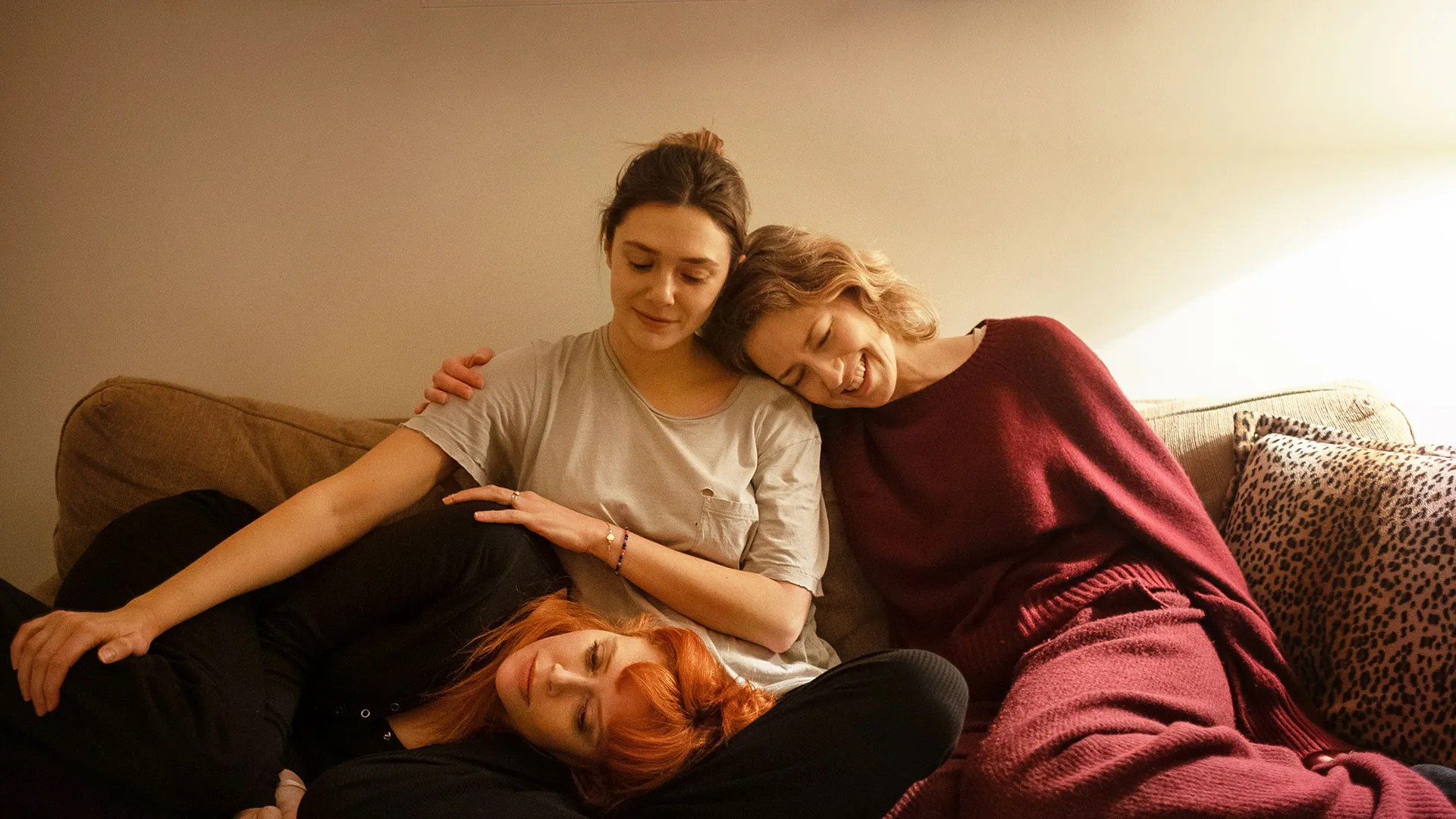
Under one roof in their father’s NYC apartment, three estranged sisters learn to live with each other once again. Carrie Coon (The Gilded Age) is the eldest daughter Katie, the take-charge type, from cooking, dealing with palliative nurses, getting a DNR (do-not-resuscitate) form signed by the father before he slips away, to writing his obituary while micro managing her teenage daughter at home in Brooklyn. Her intolerance of her stepsister Rachel (Natasha Lyonne, Orange is the New Black) who smokes weed and bets on sport games constitutes the main conflict in the sibling relationships. Trying to mediate between the two is Christina (Elizabeth Olsen, Sorry for your Loss) who is always reconciliatory. She’s preoccupied with her young daughter and husband at home far away across the country.

As for the father, he remains unseen behind closed or slightly opened door in his bedroom, his presence only denoted by the rhythmic beeping of the monitor to which he’s hooked up. Such concealing allows the viewers to focus on the trio, for what’s equally pressing is the rebuilding of sisterhood and the way to move forward after their father is gone. Dying relationships among the living are crying out to be heard and reconciled.

Rachel has been living in the apartment with their father all along, while the other two sisters just recently arrive to take care of things at this final stage of their father’s life. New house rules are set up. A pivotal scene comes when Rachel’s friend Benjy (Jovan Adepo) confronts the other two sisters as he points out the reality of their family dynamics. A new perspective begins to sink in as they come to realize their own shortfalls, a reality check that doesn’t go down easy for anyone.

In this chamber piece rich in dialogues, Coon, Lyonne, and Olsen are impeccable in displaying the raw and honest emotions of sibling love, hate, overt and hidden sentiments they hold against each other. But the overall mood is not all serious and somber. There’s underlying humour throughout, especially the opening scene, which reminds me of early Woody Allen works. Music is minimal to amplify the conversations, silence to enhance tension and ambivalence. Despite being shot inside an apartment with minimal exterior scenes, the camera is effective in conveying suspense, loss, and love.

As for the twist towards the end, it’s open to interpretations; however, it does seem incongruent with the earlier part. To avoid spoilers, I won’t be discussing it here. No matter, it’s the process reaching to the end that’s what the film so powerfully depicts. I hope to see more of this kind of cinematic gems to appear in theatres and on streaming platforms.

~ ~ ~ 1/2 Ripples

***

Related posts on Ripple Effects:

August: Osage County, Play and Movie Review

The Savages, with Philip Seymour Hoffman and Laura Linney

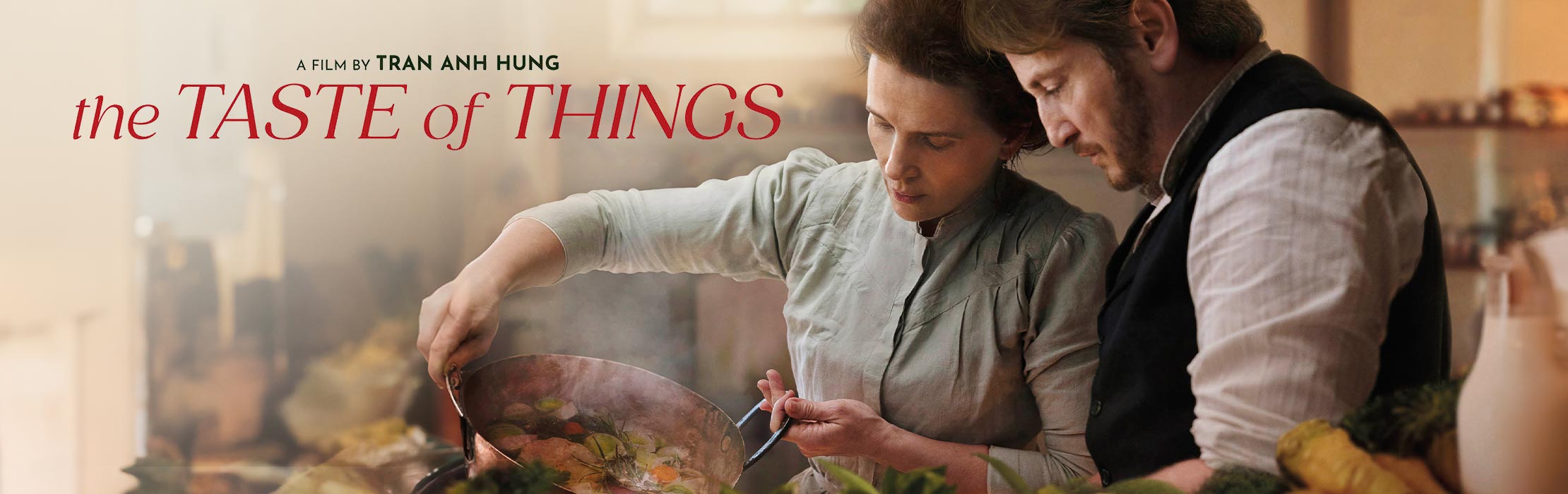
‘The Taste of Things’: the Country Kitchen as Vermeer’s Studio

At last year’s Oscar time, I was a little surprised that the buzzy Anatomy of a Fall wasn’t selected as the official entry by France to enter the race for Best International Feature Film. Instead, it was The Taste of Things. Now that I have the chance to watch it, I can understand why it was the choice and I totally agree with it. That it did not win seems immaterial, for its aesthetic value and the honour of being chosen to represent France make it a worthy accolade.

The Taste of Things is a delectable feature, a celebration of French gastronomy and its historic, culinary traditions, an exquisite and aesthetically riveting period film set in a country house. Vol-au-vent, pot-au-feu, roast rack of veal with braised vegetables… To say it’s a delicious food movie is just lowering the level of enjoyment, like eating an ice cream cone compared to being served baked alaska prepared by a gourmet. The film is not just about the taste of food, but of love, beauty, sensuality, and human connection, offering a deeply gratifying viewing experience.

Directed by the Vietnamese-French filmmaker Anh Hung Tran––whose first film The Scent of Papaya won a César Award in 1994 as well as accolades at Cannes––The Taste of Things sent Tran to Cannes again in 2023 and this time a Palme d’Or nominee and winning Best Director.

Tran reunited Juliette Binoche with her ex Benoît Magimel for the film. The two were divorced twenty years ago. Maybe a past relationship had some bearings on stirring up fond memories, for the pair exudes admirable chemistry on screen. Magimel plays the fictional gourmet Dodin Bouffant, nickname ‘Napoleon of gastronomy’, who resides in a country house during the late 19th century. His cook for twenty years has been Eugénie, superbly portrayed by Binoche, ethereal even in a rustic kitchen.

While Babette’s Feast (1988 Oscar’s Best Foreign Language Film) comes to mind readily, it’s the visual memory of Girl with a Pearl Earring (2004) that enhances my appreciation of The Taste of Things. Indeed, Dodin’s kitchen is like Vermeer’s studio, large window allowing natural light to pour in, the colour scheme of period costume and set design (Tran’s wife Nu Yên-Khê Tran), the naturalistic capturing of characters and their movement make it an exquisite, artistic production.

Inspired by Marcel Rouff’s novel La vie et la passion de Dodin-Bouffant, Gourmet (The Life and Passion of Dodin-Bouffant, Gourmet), writer director Tran wrote the screenplay of The Taste of Things as a prequel to Rouff’s novel, imagining the bond of love between Dodin and his longtime cook Eugénie. Dodin has proposed marriage to Eugénie time and again but is turned down every time. The twist comes when Eugénie falls ill and the reversal of roles emerges. Dodin begins to cook for her––love expressed through the ingenuity of new dishes meticulously prepared and the enjoyment of watching her savour his handiwork.

It’s interesting to note that there’s no music in the whole film. Massenet’s Méditation in piano version comes on only when the end credits roll. With no soundtrack, the essence is in the ambient sounds of nature, bird songs outside the country kitchen, and inside, the sounds of cooking, the crackling of the fire, and the gentle conversations among the characters as they prepare meals. In an interview, Tran mentions that: “The sound is the flavour of the picture. The picture has the beauty; the flavour of it comes from the sound.” 

Another crucial ingredient is the camerawork. Cinematography (Jonathan Ricquebourg) is the key in capturing the overall aesthetics and mood of the film. The camera is like a quiet observer, moving gently, often in long takes, following the characters in the kitchen, their movement like a choreographed sequence, smooth, seamless, serene and subtle. While the food preparation may seem complicated and time-pressed, the overall mood in the kitchen is always harmonious. The would-be apprentice, fourteen-year-old Pauline (Bonnie Chagneau-Ravoire) is particularly impressive. A tidbit: The French chef Pierre Gagnaire, owner and head chef of his eponymous restaurant, is the consultant for the movie. He himself has a role in there as well.

Overall, an artistic achievement to savour. Vermeer’s kitchen or Dodin’s studio? A fitting fusion of imaginary connections.

~ ~ ~ 1/2 Ripples

***

Thanks to Words and Peace for hosting Paris in July 2024

Note: All posts on Ripple Effects written by Arti, the real person.

***

Related Posts on Ripple Effects:

Anatomy of a Fall or how to dissect a marriage

Paris in July 2022: A Culinary Sojourn

Girl with a Pearl Earring: the painting, the novel, and the movie

A Tribute to Canada’s Nobel Laureate Alice Munro: Munro and Movies

Alice Munro had died at the age of 92 on Monday, May 13, 2024, in Port Hope, Ontario. Winner of the Nobel Prize for Literature in 2013 and the Man Booker International Prize in 2009, Munro solidified her stature in literature with her mastery of the short story. As a tribute to her passing, I’m reposting something I wrote on the occasion of her Nobel Prize win back in 2013 in the following. In that article, I’d also included a short review of the film Away From Her, based on her short story “The Bear Came Over the Mountain”.

_____________

On October 12, 2013, I wrote:

Thanks to the Swedish Academy, Alice Munro doesn’t need a blockbuster movie to raise awareness of her works. Described by The New York Times as ‘Master of the Intricacies of the Human Heart’, and with her story settings mostly in rural counties and small towns, the 82 year-old writer must have known how the small and intimate can have far-reaching effects.

The short story as a literary form too must have gained importance and legitimation overnight now that Munro is honored as Nobel Laureate. The novel isn’t the only peak of the mountain of literary pursuits. Readers too, can now be totally comfortable with reading ‘just a short story’.

Back to movies, with our contemporary mega, blockbuster culture, it sure looks like the general public needs to see a movie before knowing about a literary work. While I don’t like the idea, I’ve to admit that could well be the case nowadays. But for Munro, can anyone name a full feature movie that’s based on her short stories?

Right. Actually there are four* (see correction below). Edge of Madness (2002) is relatively unknown. Another one interestingly is an Iranian film, Canaan, which won the Audience Awards–Best Film at the Fajr International Film Festival in 2008. A better known adaptation is Away From Her (2006). It remains one of my all time favorite films. The most recent completed production is Hateship Loveship which premiered at TIFF13. I regret missing it when I was there in September. A film based on her story ‘Runaway’ is currently in development.

With Munro winning the Nobel, hopefully we’ll have the chance to see a general release of Hateship Loveship. So there you go, Munro could well be helping to reverse the trend: the writer promoting the film.

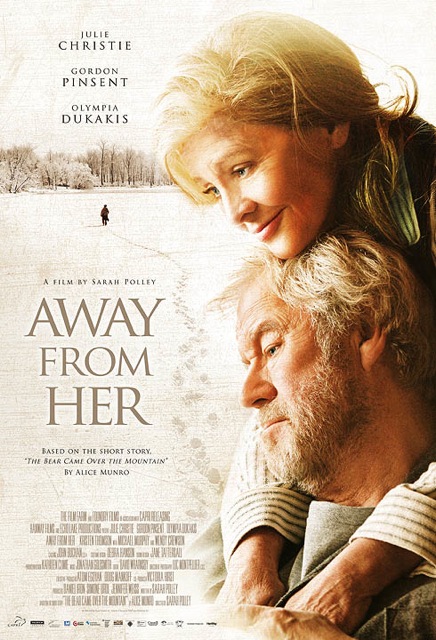
To celebrate Munro’s Nobel win, I’d like to repost in the following a review of Away From Her which I wrote in 2008. The film was directed by the young and talented Canadian actor/director Sarah Polley, who was nominated for an Oscar for her adapted screenplay based on Munro’s short story ‘The Bear Came Over the Mountain’. Julie Christie received an Oscar nomination for her role as Alzheimer’s afflicted Fiona.

You can read Munro’s story ‘The Bear Came Over the Mountain’ now online, thanks to a timely reprint by The New Yorker.

Capri_AwayFromHer_PosterB

AWAY FROM HER: A Short Review

How can you turn a good short story into a full length movie without compromising its quality? By turning it into a screenplay written by an equally sensitive and passionate writer, and then, through her own talented, interpretive eye, re-creates it into a visual narrative. Along the way, throw in a few veteran actors who are so passionate about what the script is trying to convey that they themselves embody the message.

Sarah Polley has made her directorial debut with a most impressive and memorable feat that I’m sure things will go even better down her career path. What she has composed on screen speaks much more poignantly than words on a page, calling forth sentiments that we didn’t even know we had. As Alzheimer’s begins to take control over Fiona, what can a loving husband do? Julie Christie and Gordon Pinsent stir up thoughts in us that we’d rather bury: how much are we willing to give up for love? Or, how would we face the imminence of our loved ones’ and our own mental and physical demise?

Based on the story by Alice Munro, ‘The Bear Came Over the Mountain’, Polley brings out the theme of unconditional love not with your typical Hollywood’s hot, young, and sexy on screen, but aging actors in their 60’s and 70’s. It may not be as pleasurable to watch wrinkled faces hugging and kissing, or a man and a woman in bed, bearing age spots and all, but such scenes effectively beg the question: why feel uncomfortable?

Why does love has to be synonymous with youth, beauty, and romance? It is even more agonizing to watch how far Grant is willing to go solely for love of Fiona. Lucky for us, both writers spare us the truly painful at the end. It is through persistent, selfless giving that one ultimately receives; however meager and fleeting that reward may seem, it is permanence in the eyes of love. And it is through the lucid vision of a youthful 28-year-old writer/director that such ageless love is vividly portrayed…. Oh, the paradoxes in life.

~ ~ ~ Ripples

* Correction: According to IMDb, there are 14 screen adaptations of Munro’s work, both in movies and TV. Runaway is in production currently.

The Netflix Diversion

As two of my highly anticipated movies (see my list here) coming out in the fall will be on Netflix: Maestro and NYAD, I just can’t resist anymore. Three days ago I decided to subscribe to Netflix. While waiting for these two movies to show up, I’ve got plenty of others to watch. These past few days, I’ve finished a few. Yes… daily life has been a bit diverted. My capsule reviews in the following. All three TV series are worth watching and the doc on Joan Didion, a must-see.

BEEF –– A road rage incident pushes two lives down the abyss of rage and revenge which ultimately torpedoes into an explosive meltdown. The fight between Amy Lau (Ali Wong), an entrepreneur, wife and mother living in an upper middle class neighborhood and her adversary Danny Cho (Steven Yeun), a handyman striving to make ends meet as a dutiful son and watchful older brother is not only a satire of the disparity between the rich and the poor, but a realistic depiction of the existential angsts shared by all regardless of social and economic status, or, as the series has effectively shown, racial background. Highly addictive, cleverly written and first-rate acting. 13 Primetime Emmy Awards nominations.

The Diplomat –– Kate Wyler (Keri Russell) is appointed by the POTUS (Michael McKean) as the new ambassador to the United Kingdom, a post she reluctantly takes up. With her previous experience in war-torn countries and Afghanistan which she expects to return, her new post in London is a major cultural clash, hence resulting in some mismatched decorum and humorous moments. Adding to her maladjustment and complicating matters when dealing with volatile, international crises is her husband Hal (Rufus Sewell), himself the former ambassador to the UK. The once political influencer now has to take up the role as a diplomat’s wife in a precarious marriage. Interesting play on gender politics, marital/power relationships, on top of intense, political chess play. Russell is nominated for Outstanding Lead Actress in a Drama Series in the upcoming Emmy Awards, deservedly. Interesting to note some of the language used here is quite similar to the rage-filled one in BEEF.

The Lincoln Lawyer –– I pick up from the current Season 3. While I like Michael Connelly’s character, former LAPD detective Harry Bosch, more than his Mickey Haller, a lawyer who works out of a Lincoln dealing with seedy clients, I’ve enjoyed the TV adaptation. Haller, aptly played by Manuel Garcia-Rulfo, is a pleasing yet complex character, resourceful, smart, an upholder of the law but has his blind spots. As a recovering addict, vulnerability coexists with his assets. Other characters are also well cast, jumping out of Connelly’s novels to become well fleshed-out and likable human beings (we just might be using this term more now to distinguish between the real and the fake), making up a lively supporting cast. Interesting to note that in the 10 episodes of S3, despite dealing with crimes and criminals, the language used is relatively free of foul play.

________________

Joan Didion: The Center Will Not Hold

Directed by Griffin Dunne, actor/director and Joan Didion’s nephew, this brief, biographical documentary of Didion follows her career and life during some of America’s tumultuous decades. Dunne’s interviews with her aunt elicit some intimate conversation and poignant memories from Didion, by now frail and with apparent impediment. An astute observer of society, Didion had given us some monumental commentaries of her times with her writings. Listening to the narration in the documentary and seeing the iconic photos and footage of significant turns of history, Didion’s analyses just as well could have applied to our world today, just as she has quoted in her Slouching Towards Bethlehem the line in Yeats’s poem: “Things fall apart; the centre cannot hold.”

The latter part of the documentary is about Didion’s own personal tragedy, chronicling the sudden death of her husband John Gregory Dunne and just months later, her daughter Quintana, her grief poured out in The Year of Magical Thinking and Blue Nights. English playwright David Hare had been her anchor in transforming mourning and loss into artistic expression on stage, giving her some sort of a closure. Hare directs the Broadway play adaptation of The Year of Magical Thinking with Vanessa Redgrave as the sole performer. Redgrave shared a similar experience as her daughter Natasha Richardson died suddenly after a ski accident. The documentary has kept a short clip from the play and presented personal recollections from Hare and those close to her life, friends and colleagues. A poignant and moving feature.

~ ~ ~ 1/2 Ripples

***

Related Posts on Ripple Effects:

Blue Nights: A Book Review

Voice of the Poet: Things Fall Apart

A Midsummer Day’s Meditation

Many gems in this treasure trove of poetry from Mary Oliver’s Devotions. For a birder, these simple words particularly resonate. Sharing a few here:

THIS MORNING

This morning the redbirds’ eggs
have hatched and already the chicks
are chirping for food. They don’t
know where it’s coming from, they
just keep shouting, “More! More!”
As to anything else, they haven’t
had a single thought. Their eyes
haven’t yet opened, they know nothing
about the sky that’s waiting. Or
the thousands, the millions of trees.
They don’t even know they have wings.

And just like that, like a simple
neighborhood event, a miracle is
taking place.

I WAKE CLOSE TO MORNING

Why do people keep asking to see
God’s identity papers
when the darkness opening into morning
is more than enough?
Certainly any god might turn away in disgust.
Think of Sheba approaching
the kingdom of Solomon.
Do you think she had to ask,
“Is this the place?”

ON MEDITATING, SORT OF

Meditation, so I’ve heard, is best accomplished
if you entertain a certain strict posture.
Frankly, I prefer just to lounge under a tree.
So why should I think I could ever be successful?

Some days I fall asleep, or land in that
even better place—half asleep—where the world,
spring, summer, autumn, winter—
flies through my mind in its
hardy ascent and its uncompromising descent.

So I just lie like that, while distance and time
reveal their true attitudes: they never
heard of me, and never will, or ever need to.

Of course I wake up finally
thinking, how wonderful to be who I am,
made out of earth and water,
my own thoughts, my own fingerprints—
all that glorious, temporary stuff.


THE WORLD I LIVE IN

I have refused to live
locked in the orderly house of
reasons and proofs.
The world I live in and believe in
is wider than that. And anyway,
what’s wrong with Maybe?

You wouldn’t believe what once or
twice I have seen. I’ll just
tell you this:
only if there are angels in your head will you
ever, possibly, see one.

***

Tár: To Catch a Falling Star

There are movies that you admire especially upon rewatching but still leave you emotionally detached. The overall tone is artistic and elegant, the camera clever, editing seamless, fantasy sequences enhance the tension, and needless to say, superb acting delivered by the cast. You admire and appreciate the director’s execution, yet you’re not emotionally engaged. Tár is one such movies for me.

Writer director Todd Field’s masterpiece is a film packed with ideas and layered with symbolism conveyed through technical brilliance. It explores power and ambition, identity politics, the separation of the art from the artist, and cancel culture in our contemporary society. Using a phrase ubiquitous in this awards season, it is everything, everywhere, all at once.

At the beginning of the film, New Yorker writer Adam Gopnik (playing himself) introduces conductor and composer Lydia Tár (Cate Blanchett) by reading out a list of her accolades for his live audience and us, movie viewers who would see, in the next two and a half hours, how a radiant star fall from grace. As the film opens, Tár is at the summit of the classical music world, helming the prestigious Berlin Philharmonic. A Harvard PhD, she was mentored by Leonard Bernstein in the emergence of her career, and is currently one of only 15 EGOT winners (Emmy, Grammy, Oscar, Tony); her upcoming book Tár on Tár will no doubt be a bestseller.

Field’s feature is nominated for six Oscars in this awards season. It is a forceful narrative and an astute study of power set within an artistic and cultured realm. Blanchett’s Tár embodied success driven by ambition and sustained by ruthless arrogance. She may appear courteous and mild mannered, and that’s where the danger lies. She doesn’t need to raise her voice to be heard.

From the beginning of the movie, the sequence of the custom tailoring of her suit––a symbol of power––sets the premise. The film is not about gender politics, for Tár’s position is a given; she is already at the podium leading a world renown orchestra and is hailed as one of the best living composers.

There are, of course, higher mountains to scale. The self-propelled driving force soon turns Tár into a delusional egotist, her self-will overriding all that comes in her way, destroying not just her career but her relationship with her spouse Sharon (Nina Hoss), concert-master in the orchestra. Field wrote the screenplay with Blanchett in mind. He had mentioned in an interview that if she declined the role, he would not go ahead with the movie. Blanchett delivers with convincing mastery. 

While being a fictional character, Tár embodies some real-life issues with much relevance in contemporary society. Her being in a lesbian marriage exemplifies the fact that power can corrupt regardless of gender and sexual orientation. She has the power to endow opportunities and thereby raising the career of young musicians to new heights, or, destroy them. Her obsession with success soon becomes unmanageable, distorting her view of reality, pulling her into the abyss of delusion and even madness. 

Among the various issues the film touches on, the Juilliard teaching scene is particularly telling. Tár is teaching a conducting class in a lecture theatre. The camera expertly captures the ten-minute scene with one long take (no cutting). The blocking of the two main characters––Tár and the student Max (Zethphan Smith-Gneist)––speaks volumes.

Max chooses a contemporary piece by the Icelandic composer Anna Thorvaldsdottir to conduct. Stopping him midway, Tár brings up the importance of Bach’s work, sitting down beside him as equal to discuss and ask if he would consider conducting a Bach piece. Here’s Max’s response:

“Honestly, as a BIPOC, pangender person, I’d say Bach’s misogenystic life makes it kind of impossible for me to take his music seriously.” He’s referring to the composer having had fathered 21 offsprings. 

Boycotting Bach for his brood of children?

Here’s Tár’s restrained response: “I’m unclear as to what his prodigious skill on the marital bed has to do with [his Mass in] B minor.” Pointing out the issue of separating the art from the artist.

Drawing out the thought in Max, she says: “Can classical music written by a bunch of straight Austro-German church going white guys exalt us?” To answer that, she invites Max to sit by her side at the piano, going through with him some Bach pieces. To her credit, in both instances, her persuasion is gentle and egalitarian as the camera captures teacher and student sitting at the same level.

Max’s viewpoint is a biting issue today: can a BIPOC (Black, Indigenous, People of Colour), pangender person acknowledge the contribution of straight, ancient white guys? Tár’s response is obvious. The artists’ works override their nationality, colour and gender. Likewise, she challenges Max to look at the composer of his own choice, Icelandic, female composer Anna Thorvaldsdottir. What is the resemblance that Max has to identify with her?

Brilliant question. To which Max responds by picking up his stuff and walks out, with a verbal swipe of expletive for his teacher. Tár replies: “And you’re a robot. The architect of your soul appears to be social media.”

Who wins this debate? Field leaves it to his viewers to decide. As with the other issues laid out in the film as well as the ending, there are more questions than answers. Yes, Blanchett’s performance is top-notch, but I come out having a higher appreciation of Field’s writing.

~ ~ ~ Ripples

‘Miracle and Wonder: Conversations with Paul Simon’ by Malcolm Gladwell

This is the best use of the audiobook format. You listen to conversations held by Malcolm Gladwell and his colleague, journalist Bruce Headlam, with the legendary singer songwriter Paul Simon; you hear him talk about his creative process and share interesting tidbits along the way; you hear myths debunked from Gladwell’s trademark inquiries; you discover new personal insights. Above all, you can hear the music icon who had created many world famous tunes over his 65 year career, now at 80, pick up his guitar and sing his own songs or listen to the recordings that had made him and his singing duo Art Garfunkel a household name. And more, you can hear reflections from other influential musicians like Renee Fleming, Sting, Herbie Hancock… For me, this listening experience has opened the floodgate of reminiscence and memories.

A myth debunked. No, Simon didn’t write his breakout hit “The Sound of Silence” in the subway under hauntingly existential circumstances, but in the bathroom of his parents’ house. The walls were tiled and the water running, he played his guitar in the dark and could hear echoes. He was 22. That was all he remembers now. No matter, that tune and the lyrics had sent echoes to the heart and soul of millions around the world.

The inspiration of “Bridge Over Troubled Waters” came from a line in the Black Gospel singer Rev. Claude Jeter’s (1914-2009) song “Mary Don’t You Weep”–– it says “I’ll be a bridge over deep water if you trust in my name,” a Biblical metaphor. While the title and lyrics were sparked by Jeter’s Gospel song, the melody was inspired by J. S. Bach. Another interesting tidbit is that sound engineer Roy Halee reminisces that it took him more than 100 hours to make the recording of “Bridge Over Troubled Water” as they explored different mixes of sound effects. Simon notes that the song had rippled to many different stylings and sung by so many others that he doesn’t feel it’s his own anymore. And he’s fine with that. In particular, he pays tribute to Aretha Franklin’s soulful rendition.

A poignant moment. When the first “Saturday Night Live” came back on after the tragedy of 9-11, the producer called Simon and asked him to perform in his show. I think you have to do “The Boxer”, he said. An iconic New Yorker song, a fighter that carries the reminders of being struck down yet still remains with resilience and tenacity. In the audiobook, Simon recollects that he had tried to put words in the bridging stanza but none came and so he decided to just use “lie la lie…lie lie lie lie lie lie lie lie la lie…” not knowing such wordless echoes would cross linguistic borders when live audience around the would join in spontaneously when he performed.

Where to locate Paul Simon? He refuses to be called a folk singer. His songs inspired by very different sources. His creative process often sparked by distant memories of tunes and rhythms. After the breakup with Garfunkel, he ventured into a musical fusion of cultures and stylings. Gladwell spends some time talking with Simon about how the song “Take Me to the Mardi Gras” came to be. There are at least five sources of creative contributions: the Black Gospel singer Claude Jeter, R & B musicians from Alabama, a New Orlean jazz brass band, Jamaica reggae, and plausibly, according to Gladwell’s instinct, a Yiddish riff. Such freedom to adapt different cultural roots in his compositions leads him later to his album “Graceland.”

Herein lies Gladwell’s sensibility, one I totally embrace and thanks to him, lays out in words the notion that has long lodged in my mind. Using Simon as an exemplar, a Jewish singer songwriter from Queens, NY, Gladwell says:

As a New Yorker, your cultural identity is something you get to hold loosely. It influences you, but it doesn’t define you. You’re free to roam and window shop and come up with your own combination.

The melting pot theory debunked––as attuned to Nathan Glazer’s social theory in Beyond the Melting Pot––well, at least in NYC during Simon’s early creative decades, this kind of freedom existed. But isn’t that a true requirement for one to be a global citizen, a member of our shared humanity, transcending ethnic borders and arbitrary barriers? Unfortunately, such a fluid cultural perspective has shifted in recent years to a narrow view demanding artists, writers, filmmakers… to stay in their cultural lane, to use Gladwell’s metaphor.

Another fascinating tidbit…wait till you get to where Gladwell links taste with memory when he talks about how Stephen Sondheim regrets that his lyrics in the “West Side Story” song “Maria” aren’t quite right, and then goes on to discuss with Simon about finding faults in his own compositions. BTW, “Homeward Bound” is Simon’s “Maria.”

Another issue Gladwell investigates is the mystery of longevity in the creative process, using David Galenson’s book Old Masters and Young Geniuses to compare and analyze why some artists hit their peaks as young prodigies while others are late bloomers, sustaining a long creative journey. Where to locate Paul Simon in this spectrum? I’ll leave that interesting topic for you to experience when you listen to this exceptional audiobook.

~ ~ ~ ~ Ripples

Miracle and Wonder: Conversations with Paul Simon by Malcolm Gladwell and Bruce Headlam with Paul Simon, audiobook ©2021 Pushkin Industries and Paul Simon (P)2021 Pushkin Industries and Paul Simon

***

Sabbath Pondering

The Peace of Wild Things

When despair for the world grows in me
and I wake in the night at the least sound
in fear of what my life and my children’s lives may be,
I go and lie down where the wood drake
rests in his beauty on the water, and the great heron feeds.
I come into the peace of wild things
who do not tax their lives with forethought
of grief. I come into the presence of still water.
And I feel above me the day-blind stars
waiting with their light. For a time
I rest in the grace of the world, and am free.

–– Wendell Berry

***

Spring Cleaning

A Purification

At start of spring I open a trench
in the ground. I put into it
the winter’s accumulation of paper,
pages I do not want to read
again, useless words, fragments,
errors. And I put into it
the contents of the outhouse:
light of the sun, growth of the ground,
finished with one of their journeys.
To the sky, to the wind, then,
and to the faithful trees, I confess
my sins: that I have not been happy
enough, considering my good luck;
have listened to too much noise,
have been inattentive to wonders,
have lusted after praise.
And then upon the gathered refuse
of mind and body, I close the trench,
folding shut again the dark,
the deathless earth. Beneath that seal
the old escapes into the new.

–– Wendell Berry

Women Direct Films 2022

Director Jane Campion and cinematographer Ari Wegner on the set of
The Power of the Dog (Source: Netflix)

Last year on this day, March 8, I listed films directed by women in recent years. A month later, Chloe Zhao became the second woman in the 93 year history of the Oscars to win Best Director with Nomadland. And this year, in the upcoming 94th Academy Awards on March 27, two of the ten Best Picture nominees are directed by women, Jane Campion’s The Power of the Dog and Sian Heder’s CODA.

This may look bright and hopefully the trend will hold. After all, women first directed films in 1896! I wrote about that in my March 8 post last year. However, the latest data aren’t that promising. According to the Celluloid Ceiling Report (Figure 2) published in January 2022, the percentage of women directors working on the top 100 films decreased from a record high of 16% in 2020 to 12% in 2021.

For this March 8, 2022, here’s a new list of some upcoming movies directed by women. There are, needless to say, many more women working behind the scenes as film editors, script writers, cinematographers, production designers, sound professionals, costume and makeup artists, composers, casting directors, producers… all striving to break through the celluloid ceiling.

________

Aline directed by Valérie Lemercier, a fictionalized biopic of Céline Dion.

Where the Crawdads Sing directed by Olivia Newman, adaptation of the popular novel by Delia Owens.

Hallelujah: Leonard Cohen, A Dream, A Song a documentary co-directed by Dayna Goldfine

She Said ­­directed by Maria Schrader, based on the book that chronicles the fall of Harvey Weinstein and the rise of a movement. Carey Mulligan and Zoe Kazan star.

Barbie directed by Greta Gerwig, the cast that brings a doll to life includes Margot Robbie, Ryan Gosling, America Ferrera, Simu Liu.

Turning Red directed by Domee Shi, whose animated short Bao won her an Oscar in 2019. Sandra Oh, Billie Eilish and Finneas O’Connell lend their voice and talents.

Don’t Worry Darling directed by Olivia Wilde, who has been called ‘a modern-day renaissance woman’. Attractive cast includes Florence Pugh, Harry Styles, Chris Pine, Gemma Chan.

I Wanna Dance With Somebody directed by Kasi Lemmons, acclaimed director of Harriet (2019) turns her attention to depict the life of Whitney Houston.

The Stars at Noon directed by Claire Denis, who just won the Silver Berlin Bear for Best Director at Berlinale 2022. Adaptation of the 1986 novel by Denis Johnson.

Catherine, Called Birdy directed by Lena Dunham, based on the children’s novel by Karen Cushman, on the adventures of a 14 year-old girl in medieval England.

The Mother directed by Niki Caro, who has helmed an interesting variety of works like Mulan (2020), The Zookeeper’s Wife (2017), Whale Rider (2002). An action thriller, The Mother stars Jennifer Lopez and Joseph Fiennes.

Lady Chatterley’s Lover directed by Laure de Clermont-Tonnerre, adaptation of D. H. Lawrence’s classic novel.

Persuasion directed by Carrie Cracknell. Another Jane Austen classic to be transposed onto screen coming out this year.

Rosaline directed by Karen Maine. A comedic take on Romeo and Juliet from the POV of Rosaline Capulet, Juliet’s cousin and Romeo’s first love.

***

Waiting for Spring

Waiting for Spring

Though cloudy skies, and northern blasts,
Retard the gentle spring awhile;
The sun will conqu’ror prove at last,
And nature wear a vernal smile.

The promise, which from age to age,
Has brought the changing seasons round;
Again shall calm the winter’s rage,
Perfume the air, and paint the ground.

The virtue of that first command,
I know still does, and will prevail;
That while the earth itself shall stand,
The spring and summer shall not fail.

Such changes are for us decreed;
Believers have their winters too;
But spring shall certainly succeed,
And all their former life renew.

Winter and spring have each their use,
And each, in turn, his people know;
One kills the weeds their hearts produce,
The other makes their graces grow.

Though like dead trees awhile they seem,
Yet having life within their root,
The welcome spring’s reviving beam
Draws forth their blossoms, leaves, and fruit.

But if the tree indeed be dead,
It feels no change, though spring return,
Its leafless naked, barren head,
Proclaims it only fit to burn.

Dear Lord, afford our souls a spring,
Thou know’st our winter has been long;
Shine forth, and warm our hearts to sing,
And thy rich grace shall be our song.

–––– John Newton