2nd Blogaversary and Nostalgic Musing

August 29th slipped by quietly.  Just like the first day I started, inconspicuously.  Upon a casual suggestion from my son, I set up a blog and posted my first mini movie review, oblivious to what I was venturing into, not knowing what a widget was, or how to embed a link.

Now two years and 176 posts later, I am a happy sojourner in the blogosphere.  Still, I have no idea where this will lead, but I’m not too concerned, because through these past blogging days, I’ve been enriched and gratified.

My thanks to all who have taken the time to stop by Ripple Effects.  I know a few might have just stumbled upon, your visit is just as valued.  While some bloggers might tell you they live on comments, and I don’t deny the life-sustaining power of comments, I must express my appreciation for my silent readers. A click on the readership map on the sidebar can tell where they are.  To all of you out there from all corners of the world, I want to assure you that you’re more than a red dot on the map.

These two years have seen some unexpected ripples, like a screenwriter leaving her comment in my review of her movie, or, a writer suggesting a differing opinion to a book I reviewed and pointing me to his own work. The most encouraging would be a private email from a reader who told me she had sent my post link to someone whom she thought could be comforted from a personal tragedy. The blogosphere is a virtual world of human experiences and pathos, a reality no less poignant and alive than our everyday encounters.

I’m glad to see as well that Ripple Effects has evolved into some sort of a mini forum where ideas are exchanged and experiences shared.  I’ll be all the more gratified if the trend continues, where people would come for the comments as well as the posts, or even instead of … just the same.  You are all contributors.

I’m inspired too that we can explore together the universals among us all, sentiments that connect rather than segregate, and to seek beauty in the mundane, the transcendence in the temporal.  My thanks to all of you who regularly leave thought-provoking comments to make Ripple Effects a worthwhile stop in the hustle and bustle of life.  I’d be happy if it can be a restful way station along the journey.
P1010249_2_2

I’ve been a book and movie lover since childhood.  As a young reader, I would rate the stories I’d read, putting a check mark or two by each title in the table of contents.  I remember also, for my own pleasure, I would write up chapter summaries of a book that I loved, illustrating the content with pencil crayons.

As for movies, I practically grew up with them,  both on TV and in theaters, during the pre-VCR days. I was a good re-teller of stories too, recounting in details the plot of movies that had touched me, to whomever that had patience enough to listen to a child.

Two people came to my mind as I write this.  During my childhood days growing up in Hong Kong, our family had had live-in maids helping with cooking and housekeeping.  One of them had been with us since my infancy.  I had watched her many times, peeping into her spartan sleeping quarter in her after work hours, and found her reading in bed.  She read classical Chinese literature, now that’s like reading Shakespeare without Coles Notes, or even Beowulf without translation.  Who says Renée the concierge in the Hedgehog isn’t a realistic character?

Another came at a later stage, looking after our meals. She was always the one who had patience enough to listen to me retelling stories from movies.  I would go into the kitchen and follow her around, describing to her in details the exact plot and even dialogues from movies I had seen.

I remember one time, I was especially moved by a film entitled ‘Misunderstood’, (Incompreso, Golden Palm Prize, Cannes Film Festival, 1966).  It was about a child whose mother had died.  The only memento of her was a tape recording of her voice, which he listened to frequently, until one day he accidentally erased it.  As I was telling her the story, I saw tears well up in her eyes, and she begged me for more.  That was one of the most gratified moments for me as a child… I had been heard.

I think blogging opens for us this powerful access and offers us unimaginable possibilities… every single voice can be heard, every view readily expressed and acknowledged.  Even if the feedback is an opposing opinion, it just means that the ripples have reached far or near, spurring resonance deep enough to rebound. In this world ruled by technology and bytes, blogging might well be one of the most human of modern inventions.  A voice can still be heard by those who have patience enough to hear.

***
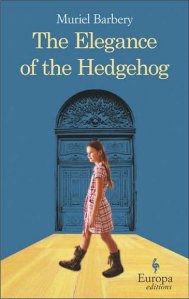
The Elegance of the Hedgehog

To read my Movie Review of The Hedgehog (Le Hérisson, 2009), CLICK HERE.

It’s all about seeing and being seen.

the-elegance-of-the-hedgehog

Hailed as the French publishing phenomenon in recent years, The Elegance of the Hedgehog has maintained 102 weeks straight on France’s best seller lists since its publication in 2006, and sold over 1 million hardback copies in 2007.

Author Muriel Barbery has created an intellectual delicacy for us to savor.   She is a former philosophy teacher in France and is now living in Japan.   Only in France you may say, where philosophy is still a compulsory subject in schools.  But no, it’s an international sensation reaching as far as South Korea, translated into half a dozen languages, sold its film rights, and garnered several literary awards.  The ripples finally reached North America last September… why so late?

This modern tale takes place in a luxury apartment at 7 rue de Grenelle, a prestigious address in Paris.  Its eight exclusive units are home to the upper echelon of French society, the elite in politics, finance, lifestyle and education.

Renée Michel knows too well what this is like… she lives here, in the quarter especially meant for her, the concierge.   For twenty-seven years she has served the residents well.   She knows how to keep her job.  Although in her mind, she thinks of them as  “a class that reproduces itself solely by means of virtuous and proper hiccups”, she keeps her thoughts very private, sharing only with her friend Manuela, the cleaning maid.

Renée’s self description may say just about what other people see on the outside, if they even care to look at her:

I am fifty-four years old… I am a widow, I am short, ugly, and plump, I have bunions on my feet and… I have always been poor, discreet, and insignificant.  I live alone with my cat…

For some reasons, these words attracted me to buy and read this book in the first place.  Herein lies the excitement.   The reader soon discovers that Renée is an autodidact.  A devoted library user, she studies on her own, philosophy, literature, history, art, semantics,  Japanese culture…  She avidly reads Kant, Proust, and Husserl after work,  contemplates phenomenology during work, and considers it not worth her while at either.  She names her cat Leo after her favorite writer Tolstoy.  On top of her eclectic reading, she listens to Mozart, Mahler, and Eminem.  She is a fan of the Japanese director Yasujiro Ozu whose works formed the classics of Japanese cinema.  And she loves Vermeer.

To survive in the social pecking order, Renée has learned to be clandestine.

Cut to Paloma Josse who lives on the fifth floor.  She is the 12 year-old daughter of a parliamentarian and his wife, who holds a Ph. D in literature.  Paloma’s older sister is a graduate student of philosophy.   But within this cocoon of sheltered upper-class family, Paloma might well be the most lucid of them all.   Her preoccupation is with the search beyond the status quo, the quest for meaning in this whole idea called life.  Among her many profound thoughts is this one:

People aim for the stars, and they end up like goldfish in a bowl.

Alas, she concludes in her 12 year-old mind, albeit being a precocious savant, that there isn’t much for her to stay on.  To escape her fate in the fish bowl, she is contemplating committing suicide on her 13th birthday coming up in a few months.

The book alternates between the ruminations of Renée and Paloma. Their sharp commentaries present some incisive, and at times, hilarious social satires.  Their personal reflections are perceptive and poignant.

Within the confines of the luxury abode, all seems to be mundane, routine, and hierarchical.  Until one day, a new tenant moves in.  He is Kakuro Ozu.  His presence at 7 rue de Grenelle changes the lives of both Renée and Paloma in a most extraordinary way.  For the first time in their lives, they have been seen, and appreciated.

Kakuro Ozu is a Japanese gentleman in his 60’s.  From his first contact with Renée, the moment she lets the first line of Anna Karenina slip out of her tongue, Kakuro knows he has discovered a hidden treasure.  This is more than a concierge he is looking at.  No, he does not respect her more for the books she has read, but for the lucidity of her insights.

It’s all about seeking beauty in the mundane.

… like viewing a Vermeer in the hustle and bustle of the city, or listening to Bach in the subway, or watching films that evoke flashes of transcendence…. yes, we’ve all experienced those moments.

Kakuro shares with Renée the ability to notice Art in the most ordinary of life.  What does she see in Ozu’s film The Munekata Sisters?  The camellia on the moss.

True novelty is that which does not grow old, despite the passage of time.”

The camellia against the moss of the temple, the violet hues of the Kyoto mountains, a blue procelain cup — this sudden flowering of pure beauty at the heart of ephemeral passion: is this not something we all aspire to?

It’s all about beholding eternity in the temporal.

And what beauty, what fate, it is to find someone who has named his cats Kitty and Levin, from Anna Karenina, while yours is Leo, someone who appreciates the meaning behind 17th C. Dutch still-life, someone who seeks the authentic human face behind the façade of social norms… someone whose toilet, even, exuberates with Mozart’s Confutati?

And oh… what an experience in that bathroom at Kakuro’s suite.  Kudos to Alison Anderson, I’ve totally forgotten that I’m reading a translation.  Just one of the rare cases that shows humor can be translated.  And that night, how gratifying for Renée to find so much inspiration in a Dutch painting, a sliding door, a bowl of ramen noodles…

What congruence links a Claesz, a Raphael, a Rubens, and a Hopper?

Are there universals?

And 12 year-old Paloma, with her quest for meaning and authenticity, is soon confronted with something much more engrossing than she had started out to seek…

At times LOL funny, at times, absorbingly heart-breaking.  This is one of the rare occasions where I had tears welled up in my eyes as I came to the end, an ending so powerful it propelled me to start from the beginning again.

~ ~ ~½ Ripples

The Elegance of the Hedgehog by Muriel Barbery, translated by Alison Anderson, translation published by Europa Editions, 2008, 325 pages.

***

Endnote:

If there are no universals, why would we experience such delight when someone else shares our joy in discovering that same beauty?  Why would we seek beauty in the first place?

“… He has set eternity in their heart…”  — Ecclesiastes 3: 11

***

To read my review of Muriel Barbery’s Gourmet Rhapsody, CLICK HERE.

Julie and Julia (2009): Movie Review

julie-and-julia1

UPDATE Feb. 2, 2010: Meryl Streep is nominated for a Best Actress Oscar in the coming 82nd Academy Awards.

UPDATE Jan. 17, 2010:  Meryl Streep has just won the Best Actress Award (Comedy or Musical) at the Golden Globes.

Update Dec. 16, 2009: Julie and Julia has been nominated for a Golden Globe Best Motion Picture Award (Musical or Comedy).

Meryl Streep has been nominated for a Golden Globe Best Actress Award (Musical or Comedy).

For someone who would rather lie on the couch and watch the Food Channel than work in the kitchen, what better way to entertain herself than to watch a full feature movie on the legendary Julia Child and her modern day follower scrambling to keep pace.  But still, I had my doubt.

123 minutes of cooking, even though I don’t need to lift a finger, could still make me feel stuffed and exhausted. And, watching a novice attempt an almost impossible feat of cooking through Child’s 524 French recipes in 365 days in a cramped apartment could mean unlimited servings of predictable, clichéd kitchen mishaps.

So, it was with little expectation that I entered the theater.  But I was pleasantly surprised and much gratified.  For first of all,  the movie is not just about food and cooking.  Rather, it describes a journey of writing, publishing, and yes, blogging.  Now that really piqued my appetite.  As for the klutzy culinary mishaps, despite their banality, they are turned into laughable moments that we can all relate to, kudos to Amy Adams (Julie) and Meryl Streep (Julia).

Writer/director Nora Ephron has done a wonderful job weaving together two different books to create the screenplay:  Julia Child’s My Life in France (co-authored by Alex Prud’homme) and Julie Powell’s Julie and Julia:  My Year of Cooking Dangerously.  The two stories, which take place 50 years apart, are intertwined so seamlessly that the audience is given the impression that the two are acting side by side.  Now here’s a spoiler alert, skip to the next paragraph right now if you don’t want to know…  The parallel story lines remained so, Julie and Julia never met. And oh how much more the plot could have thickened if they did.  I was a bit let down by this, after being set up with the ‘Guess Who’s Coming to Dinner’ cue.

The beginning of the movie sets the stage for some visually pleasing sequences.  The retro design of Julia’s 50’s France is a scrumptious delight.  A revelation: Julia Child was not born knowing how to cook.  After following her diplomat husband Paul (the ever reliable Stanley Tucci, The Devil Wears Prada, 2006; Shall We Dance, 2004) to France, she began exploring her interests.  She had to start from scratch by going to culinary school, the Cordon Bleu.  A late bloomer she was, and what an inspiration… never too late to follow your heart.  Streep has done a marvelous job delivering the personality, speech and nuances of the legendary Julia Child.  I must say though, her performance in this movie seems like a prolonged bed bouncing scene from Mamma Mia!

julie-and-julia

And fast forward to the present, the cinematic effect makes a run down, one-bedroom apartment in Queens look cozy and even inspiring, which is justly so.  Julie Powell (Amy Adams, Doubt, 2008; Enchanted, 2007) is a struggling writer, emotionally drained by her day job answering the phone at the Lower Manhattan Development Corp in the wake of 911.  Following Child’s Mastering The Art of French Cooking at home after work saves her sanity and invigorates her desire to write.  Through blogging daily about her culinary experiment, Julie ultimately realizes her dream.

It is Amy Adams that has won my heart.  She is such a natural.  Her performance is pleasingly understated, just a touch to bring out the taste.  It is after all a thankless role, a novice following the cooking guru to the dot in her cramped kitchen.  A tad bit more spicy would spoil her portrayal as merely slapstick and banal.  Her down-to-earth demeanor, like her attempt to explain to her mother what blogging is, makes it sound like a conversation taken out of our own home.  And above all, it’s her relationship with her husband Eric (Chris Messina, Made of Honor 2008) that makes the story grounded and realistic.

And finally, bravo to the two husbands who are always supportive, encouraging, eat and praise whatever their wives cook.  And all the more for Julie’s Eric, who has to silently pop Tums before bed, and, even after running away to escape the nightly ordeal, would faithfully come back ready to reconcile.  Can these men be real?  Like Ephron’s other works, let’s just treat this one as another fantasy.  For it is she who created the screenplays for Sleepless in Seattle (1993), You’ve Got Mail (1998), and yes, When Harry Met Sally (1989).  But wait, Julia Child’s My Life In France is autobiographical.  And so’s Julie Powell’s account.  The tag line does not fail to inform us so: Based on two true stories. It’s good to know.

~ ~ ~ Ripples


Top 100 Books & Summer Reading Lists

Summers come and summers go,  reading lists for students tend to remain a constant, or… no?

According to The Boston Globe, the following are a few titles from high school summer reading lists over the years:

1915-1916 (long list of choices for regular year and summer)

  • Walden by Henry David Thoreau
  • Gulliver’s Travels by Jonathan Swift
  • Mill on the Floss by George Eliot
  • Works by Stevenson, Twain, and Dickens

1984 (requirements by grade and academic level)

  • The Grapes of Wrath by John Steinbeck
  • Jane Eyre by Charlotte Bronte
  • The Woman Warrior by Maxine Hong Kingston

2009 (recommendations, not requirements)

  • Twilight by Stephenie Meyer
  • Into the Wild by Jon Krakauer
  • Angels and Demons by Dan Brown
  • Pride and Prejudice and Zombies by Seth Grahame-Smith

ah…  the times they are a-changin.

Instead of (or, hopefully, on top of) reading the original Pride and Prejudice, students today are offered the zombies version… optional, of course.  The current view is, students should be enticed to read, not forced to.  Reading is supposed to be fun, after all, it’s summer.  

Summer

Around the same time, Newsweek published The Meta-List of Top 100 Books of all time.  The List is a compilation of 10 top book lists, including Modern Library, the New York Public Library, St. John’s College reading list, The Telegraph, The Guardian, Oprah’s, and others.  The Meta-List… the mother of all lists.

Here are the top 30,  just for a taste of the selections.  For the complete list, click on the above link.

  1. War and Peace by Leo Tolstoy (1869)
  2. 1984 by George Orwell (1949)
  3. Ulysses by James Joyce (1922)
  4. Lolita by Vladimir Nabokov (1955)
  5. The Sound and the Fury by William Faulkner (1929)
  6. Invisible Man by Ralph Ellison (1952)
  7. To the Lighthouse by Virginia Woolf (1927)
  8. The Illiad and The Odyssey by Homer (8th Century B.C.)
  9. Pride and Prejudice by Jane Austen (1813)
  10. Divine Comedy by Dante Alighieri (1321)
  11. Canterbury Tales by Geoffrey Chaucer (15th Century)
  12. Gulliver’s Travels by Jonathan Swift (1726)
  13. Middlemarch by George Eliot (1874)
  14. Things Fall Apart by Chinua Achebe (1958)
  15. The Catcher in the Rye by J. D. Salinger (1951)
  16. Gone with the Wind by Margaret Mitchell (1936)
  17. One Hundred Years of Solitude by Gabriel Garcia Marquez (1967)
  18.  The Great Gatsby by F. Scott Fitzgerald (1925)
  19. Catch-22 by Joseph Heller (1961)
  20. Beloved by Toni Morrison (1987)
  21. The Grapes of Wrath by John Steinbeck (1939)
  22. Midnight’s Children by Salman Rushdie (1981)
  23. Brave New World by Aldous Huxley (1932)
  24. Mrs. Dalloway by Virginia Woolf  (1925)
  25. Native Son by Richard Wright (1940)
  26. Democracy in America by Alexis de Tocqueville (1835)
  27. On The Origin of Species by Charles Darwin (1859)
  28. The Histories by Herodotus (440 B.C.)
  29. The Social Contract by Jean-Jacques Rousseau (1762)
  30. Das Kapital by Karl Marx (1867)

… and so on and so forth.  You get the idea.  Nothing on the top 100 list is later than 1987 (Beloved by Morrison) except Pullman (no. 84), and quite a few dating back to Centuries B.C. 

Now, is this literary elitism that has not caught up with the times?  Or, has our younger generation been short changed by not being taught to appreciate some valuable cultural legacy?  How do we reconcile the discrepancy between what’s recommended to our students and what experts think are the best books ever written?  Or, reading tastes vary, people are free to read whatever they like… Any list produced is therefore prescriptive and hegemonic?

Of course, one  could argue summer reading lists are not academic syllabi, give our students a break.  They’ll have the chance to read these great books at school… or, will they ever?

Still another debate would be the all too familiar struggle  even among book lovers: Literary or Popular Fiction, old or contemporary classics?   How do we choose?   Reading widely or reading deeply?  

 And, the very practical question:  How can I extend my 24 hours? 

***

A Midsummer Day’s Dream

It was pure serendipity.  Finding out there would be an interview with Michael Ondaatje at the Banff Summer Arts Festival was a wonderful surprise.  Hours later I was on my way to Banff National Park.  The 90-minutes drive through the Rockies listening to the soundtrack of The English Patient was surreal.  And the destination was just as picturesque and dreamlike:

Banff Summer Arts Festival

The Banff Centre

In the event entitled ‘Literary Primetime’, Michael Ondaatje, the Sri Lanka born Canadian poet, novelist, filmmaker, winner of the Booker Prize for The English Patient, was interviewed by Marni Jackson, the Chair of the Literary Journalism Program at The Banff Centre, an acclaimed writer in her own right.

Ondaatje’s impressive body of work includes novels, memoir and a dozen books of poetry, editorial work and documentary filmmaking.  But perhaps the most famous is The English Patient, which was adapted into film by the late Anthony Minghella.  The movie was awarded nine Academy Awards in 1996.

ondaatjeThe literary event started off with Ondaatje reading several passages from Divisadero, a book that brought him the fifth Governor General Literary Award.  I sat in the huge dining hall with an audience of a couple hundreds, entranced.  From afar I held my gaze at the silver haired writer framed by the large picture windows, the evening sun seeping through majestic evergreens, and silence shrouded the place except for one man’s gentle voice.  It was simply mesmerizing.
But it was the interview that made the dreamlike experience most rewarding.  The conversation explored the creative mind behind the writing process.  I jotted down some helpful tidbits:

Curiosity goes a long way.  It sparks off the research process, generating and sustaining the creative energy for the work.

Listen to the rhythm of the sentences.   “He would” or “he’d” could elicit very different effects.  Sound advice from a poet.

I was excited to hear Ondaatje address questions stemming from his book The Conversations: Walter Murch and the Art of Editing Film, which coincidentally, I am currently reading.  Murch was the film editor of The English Patient, one of my all time favorite movies.  The serendipity is most gratifying.  The art of film editing parallels that of writing… the essence is knowing what to cut, and when to move on.

While Minghella was writing the screenplay, Ondaatje was involved in the drafts.  The story had to be taken apart and rewritten to be adapted into film.  When you see your work being dismantled and reconstructed into another form, I imagine it takes courage, trust, and humility to accept that.  Ondaatje appreciates the art form of film and respects others’ expertise, entrusting his work in their hands.  This team effort, this alchemy of talents is most prominent in the making of the movie.

In the Interview, Ondaatje was asked about one excerpt from The Conversations. The writer and the film editor shares a common appreciation for the Chinese auteur Wong Kar Wai and his film In The Mood For Love.  The layering of sounds suggests the multiplicity of going-ons, events happening off-screen.  Such an effect can also be found in The English Patient.  The thickness of the actual and imaginary scenes adds complexity and depth, weaving a much more interesting tapestry.  Again, the parallel can be drawn with novel writing.  It’s the multiple offerings and the possibilities of interpretations that make a piece of writing intriguing:

“We are not held hostage by just one certain story, or if we are, we know it is just one opinion: there are clear hints of other versions.” (The Conversations, p. 160)

There were a couple of ideas I was a bit surprised to find.

First there is the ubiquitous self-doubt throughout the writer’s creative process.  Strange, and yet comforting, to find talented minds share this same psyche.  It is a humble sign to admit self-doubt.  The architect Frank Gehry and the late filmmaker Sydney Pollack came to mind.

“Her only virtue is self-doubt.” (Divisadero).

Second, and perhaps the most precious gem I collected from the event was reflected by Odaajte’s own words on the creation of a story: “I don’t know what would happen… I don’t want to know.”  The excitement of writing is that the story reveals itself as if it has a life of its own.  The writing process is an exploratory experience.  How gratifying to know we don’t need to follow a predetermined structure to plug in the story elements.  The creative mind is not bound by structure.  Let the story lead, and, enjoy the ride.

At the end of the Interview, Ondaatje was asked about a skills and job match questionnaire he once did when he was a young man.  The results showed that he could make one good customs officer.  Aren’t we all glad he had chosen to march to a different drummer and diverged in his career plan.

***


The Guernsey Literary and Potato Peel Pie Society

guernsey-literary-and-potato-peel-pie-society

“Reading good books ruins you for enjoying bad books.”

A novel in the form of letters?  I admit it wasn’t much of an appeal to me at first. After it has maintained its position on the New York Times Bestseller List for months, and now the trade paperback holding the first spot there, I just can’t resist anymore.

The book begins with a series of letters between a London writer Juliet Ashton and her friend and publisher Sydney Stark shortly after WWII.  Later, upon receiving a letter from Dawsey Adams, a resident of Guernsey of the Channel Islands, Juliet starts to correspond with the charming folks living there.

So how does the book title come about? Guernsey Island was occupied by the Germans during the war.   It happens that one night after a secret ‘pig out’, a few Guernsey residents are found breaking the curfew.  To find an excuse quickly when confronted by German soldiers, Elizabeth, our heroine, makes up the story that she and her fellow members have to leave a literary society meeting late as they’ve been so immersed in a German book.

This impromptu excuse soon takes shape in reality.  Thus begins the odyssey of reading, book discussions, and the members’ correspondences with Juliet Ashton.  Juliet is so immersed in their lives and moved by their situation that she later decides to go visit them, making the Guernsey Literary Society the subject of her next book.

Many of the letters are poignant descriptions of lives during the difficult war years.  The Guernsey residents have to suffer the searing pain of evacuating their own children to England for safety, seeing the young and healthy sent to war, finding others just disappear to concentration camps, and hearing eye witness accounts of heroic sacrifices for utter strangers. While all these years on the Island, they have to endure deprivation of food, basic necessities, and freedom. But the literary society meetings and the few reading materials in their possession remain their lifeline to humanity and dignified living.

“Everyone was sickly from so little nourishment and bleak from wondering if it would ever end.  We clung to books and to our friends; they reminded us that we had another part to us.”

Author Mary Ann Shaffer passed away in February 2008 and was succeeded by her niece Annie Barrows in finishing the novel.  In the Acknowledgment, Shaffer had written these words in December 2007:

“I hope, too, that my book will illuminate my belief that love of art — be it poetry, storytelling, painting, sculpture, or music — enables people to transcend any barrier man has yet devised.”

Despite the subject matter, readers will find the book witty and delightful.  Authors Shaffer and Barrows have depicted a myriad of lively characters, charmingly joined in their humanity by their strengths and weaknesses.  Yes, we can also visualize the madness of war. But we’re relieved to see too that people can weather hardship much better when they have a common bond, here, in the reading and sharing of fine literary works.  Mind you, these are not your academics and scholars.  The Guernsey residents are mainly pig farmers and vegetable growers.  As we read their letters, we soon see them as friends, Amelia, Dawsey, Isola, Eben, Eli, Elizabeth and little Kit…

And, am I such a Jane Austen fan that I’m seeing this:  Juliet Ashton (J.A.), Dawsey (Darcy), and Elizabeth, beloved heroine of all time.

What impresses me most is that the Guernsey Islanders are so willing to open their hearts and lives to writer Juliet, an absolute stranger, mainly because of their common love of the written words.  They find it an honor to be able to correspond with a real life writer, pouring their hearts out in respect and admiration, and quickly confiding in her.  A writer as a celebrity and friend?  It’s just fiction, you may say. But, why can’t it be real?

As for the art of letter writing, has it been lost as some have claimed, or has it merely been transformed into … yes, blogging, for example?  Because as I was reading the book, it flashed by me at times that I was reading some blog posts.  Are the writings that we post in the blogosphere a kind of open letter?  Our exchanges in the comment box our correspondences?  And, to push it a bit further, the telegram of old the early form of twitter?

The Guernsey Literary and Potato Peel Pie Society by Mary Ann Shaffer and Annie Barrows, Dial Press Trade Paperback Edition, 2009, 288 pages.

***

Click here to go to the Guernsey Literary and Potato Peel Pie Society website.  As for the potato peel pie recipe, yes, at the Jane Austen Society of North America website.

Nocturnes: Five Stories of Music and Nightfall

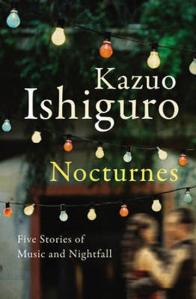
NocturnesNocturnes is a recently published short stories collection by Kazuo Ishiguro, the Booker Prize winning author.  Like a song cycle, the five stories are arranged with a common motif, alas, the loss of romance.  They take place mainly in Europe, in some romantic settings, like Venice.  The cycle begins and ends there.  Music is the essential backdrop.  It is the common thread linking the various ways the characters attempt to salvage lost love and revive relation stalemates.

Nocturnes is a light read.  The theme could be dealt with seriously, but Ishiguro apparently tries a very different rendition.  I had expected him to depict dreamscapes as he had done with his previous works, such as The Unconsoled, or While We Were Orphans, but I had not expected laugh-out-loud, hilarious scenes.  Unlike the serious tone of The Remains of the Day, we see Ishiguro in a comedic styling.  And, despite the meditative title, it’s not the classical music of Chopin that he has invoked, but Broadway, jazz, Irving Berlin, Ray Charles, Sarah Vaughan, and yes, ABBA, just to name a few.

The quintet is composed of ‘Crooner’, ‘Come Rain or Come Shine’, ‘Malvern Hills’, ‘Nocturne’, and ‘Cellists’.   They touch on a basic question:  Is a marriage finished with the loss of romance?  Is revival even possible after lovers have fallen out of love?

Kazuo Ishiguro

‘Crooner’ is poignant in depicting a once hot, now aging American singer trying to offer a last bit of love to his wife before the inevitable end.

‘Malvern Hills’ has a similar story line, but carries additional sadness in that the dispassion extends to the couple’s only son.

‘Nocturne’ offers an interesting perspective on Beverly Hills’ image-driven quest of the rich and famous, and the up-and-coming. It offers some real fun and sardonic humor.

And ‘Cellists’, well, I really don’t know what to make of it, a story about a cellist who is not a cellist…

The most hilarious scene is in ‘Come Rain or Come Shine’.  In the story, the main character has to cover up a mistake he’s made with the excuse that ‘the dog did it’. So, it’s canine method acting that he has to  take up instantly.  It is in such incredulous scenarios that the dreamscapes of Ishiguro emerge.  But this time it is more like merging reality with comedy romp.

Considering the motif of this literary quintet, Ishiguro’s humorous and sometimes farcical way of dealing could well have offered his readers a fresh perspective on the subject matter.  While Nocturnes may be a good pick for a beach read, I admit that I miss the poignant and pensive mood of The Remains of the Day.  I wish too that Ishiguro would re-visit his previous style in his future work, for his writing can be most subtle and incisive, heart-wrenching without commotion.  I missed such tonal expressions here, and the resonance they could have evoked.

Nocturnes: Five Stories of Music and Nightfall by Kazuo Ishiguro, published by Alfred A. Knopf Canada, 2009, 221 pages.

***

Photo credit: Jane Brown, www.list.co.uk/article/ 17435-kazuo-ishiguro/

More Great Finds!

Call me greedy.  I’ m happy to take the blame.  Since this is the last weekend of the gigantic used book sale at the Crossroad Market, I just had to go again for more treasure hunting.  If you take a look at my second loot list below, you’d have done the same.  As the lady said when I was squeezing my way in,

“It was a zoo yesterday.”

“You came here yesterday too?”  I asked.

“Yeah, sure!”   (Subtext:  What a dumb question… and, why didn’t you?)

So, again, these are all trade paperbacks in mint condition.  They are all a dollar each (Canadian).

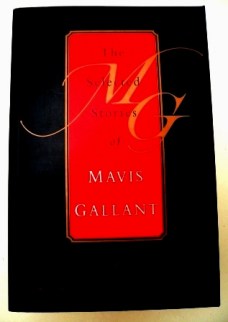
The Selected Stories of Mavis GallantThe Selected Stories of Mavis Gallant:   887 pages.  Having seen the video of Mavis Gallant reading in a Paris book shop and her conversation with Jhumpa Lahiri, thanks to fellow blogger oh introducing the Granta link, I was elated to find this volume.  It looked like it had not been opened, fresh, clean for the picking.

.

The Complete Short Stories of Thomas Wolfe

Short stories, the more the merrier.  I was delighted to find this volume:  The Complete Short Stories of Thomas Wolfe, 621 pages.  I’ve long wanted to read Wolfe, now’s a good time.


..

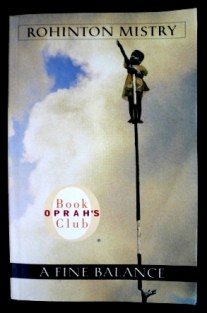
A Fine BalanceA lady held up a heavy box for me to take this one out underneath:  A Fine Balance by Canadian writer Rohinton Mistry.   “That’s a good pick,” she said.
“I’ve seen it many times, but think it’s too thick,”  I said.

“You wouldn’t want it to end,”  she said.    What higher recommendation can you get for a book?


                                        .

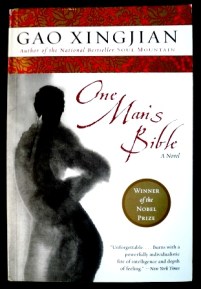
One Man's BibleOne Man’s Bible by Gao Xingjian, winner of the 2000 Nobel Prize for Literature, the first Chinese recipient of the Prize.  Born in China, Gao has been living in France since 1987.  The book is translated into English by Mabel Lee, associate professor of Chinese at the University of Sydney.  Interesting… although this one I can read the original,  the chance of me finding it in a farmers market here in Cowtown, Canada is not great.  I’ll settle for the translation.
.

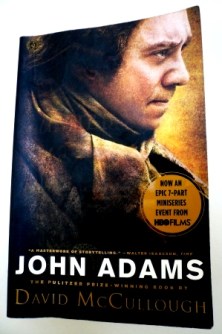
John AdamsI missed the Golden Globe winning TV miniseries.  So, grabbing the original material is just great.  David McCullough’s 721 pages John Adams won the 2002 Pulitzer Prize for biography.  This is a handsome movie-tie-in- cover edition with many color pictures.  What a find!


       .

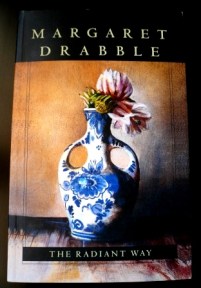
The Radiant WayTalking about wonderful covers.  How about this one:  Margaret Drabble’s The Radiant Way.  I’ve never seen this edition of Drabble’s book.  A pleasure just to look at.


The Devil Wears PradaAnd what’s summer reading without beach reads.  Here’s my copy of The Devil Wears Prada by Lauren Weisberger.  Again, seldom do I see a trade paperback of this title.


..

Here are the rest of  my 20 titles:

  • Digging to America by Anne Tyler
  • A Patchwork Planet byAnne Tyler
  • The Navigator of New York by Wayne Johnston (Giller and GG Finalist)
  • Larry’s Party by Carol Shields (Winner of 1998 Orange Prize and National Book Critics Circle Awards)
  • Fever Pitch by Nick Hornby (Saw the movie starring Colin Firth, quite liked it.)
  • The Book of Lost Things by John Connolly
  • The Reapers by John Connolly
  • The Lovely Bones by Alice Sebold (Just want to read it before the movie comes out.)
  • The Inheritance of Loss by Kiran Desai (Winner of the 2006 Man Booker Prize)
  • Durable Goods by Elizabeth Berg
  • The Gathering by Anne Enright (Winner of the 2007 Man Booker Prize)
  • Fall On Your Knees by Ann-Marie MacDonald
  • The Virgin Blue by Tracy Chevalier (Author of Girl With A Pearl Earring)
  • Bird by Bird:  Some Instructions on Writing and Life by Anne Lamott

It’s a tall order to read all the 40 books I hauled back these two weekends.  It’ll take me years.  But as any book lover can attest, it’s good to know they’re on my shelves.

***

Summer Reading 2009

When does ‘regular reading’ end and ‘summer reading” begin?  Well this year it’s easy.  The gigantic used book sale I went to over the weekend and the loot I brought back make it official:  Let summer reading 2009 begin.

The treasures I found were trade paperbacks in like-new condition.  And because I had twenty, they cost me just one dollar each.  Right, that’s Canadian dollar, even a better bargain.  How I found them was an ordeal.  They were painstakingly selected under smoldering heat at a farmers’ market.  For two hours, I elbowed my way in to grab hold of my targets which I had to eye from a distance over heads and shoulders.  But it’s all worth it.

Here’s a picture and a list of the titles I brought back:

Used Book Sale Loot 1

  • The Corrections by Jonathan Franzen
  • Anna Karenina by Leo Tolstoy
  • Simple Recipes by Madeleine Thien
  • Desperate Characters by Paula Fox
  • Bloodletting & Miraculous Cures by Vincent Lam (Giller Prize Winner)
  • The Sea by John Banville (Man Booker Prize Winner)
  • Saturday by Ian McEwan
  • Goodbye, Columbus by Philip Roth
  • Daisy Miller by Henry James
  • The Stories of Edith Wharton selected by Anita Brookner
  • The Mapmaker’s Opera by Béa Gonzalez
  • Always Now The Collected Poetry of Margaret Avison
  • Breathing Lessons by Anne Tyler (Pulitzer Author)
  • The English Patient by Michael Ondaatje (Booker Prize Winner)
  • Marginalia: A Cultural Reader by Mark Kingwell
  • Rebecca by Daphne Du Maurier
  • A Natural History of the Senses by Diane Ackerman
  • Lost Souls by Lisa Jackson
  • Moral Disorder by Margaret Atwood
  • Exit Music by Ian Rankin

Some of these titles I’ve long wanted to read, like Goodbye, Columbus and Rebecca.   Some are just well known titles or authors that I think I should read, like Tolstoy, Franzen and Tyler.   Some are winners of book prizes that I usually enjoy, the Booker, Giller, Pulitzer.   Some are fine Canadian authors and one of my favorite poets.   And some I’m just curious about like A Natural History of the Senses.  But one stands out.  This time, I’m literally judging a book by its cover:

Front Cover Mapmaker's Opera

Back Cover Mapmaker's Opera

The above are the front and back cover of the book.  There’s no title, only on the spine.  It’s enjoyable just looking at it.  But the title is appealing too:  The Mapmaker’s Opera.

Together with the books I’m already reading, plus my long TBR list, I think I’m topped up till next summer.

For More Great Finds, Click Here.

***

Girl With A Pearl Earring

The Painting (1665)

Girl With A Pearl Earring

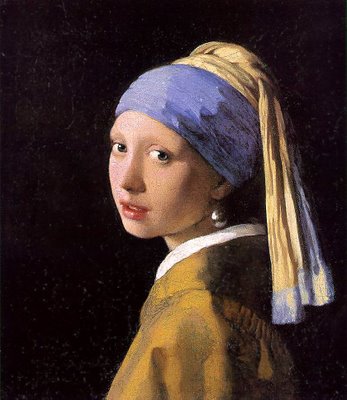
Not much is known about this girl looking back at the artist with her soulful glance.  The pearl earring, the focal point of the painting, is obviously incompatible with her humble attire.  Vermeer has captured a mystery open to anyone’s imagination.  But it takes a master storyteller to create a believable and poignant narrative that can move modern readers three hundred some years later.

**

The Novel (1999)

Vermeer taught me that Less Is More, and I have been practicing that aesthetic principle in my writing ever since.”     — Tracy Chevalier

You can see it coming… it’s almost like reflex that after seeing a Vermeer exhibition I’d go back to the book Girl With A Pearl Earring by Tracy Chevalier, and re-watch the DVD of the movie based on it.  Well, especially when I didn’t get the chance to see the painting itself in the exhibition.

GWAPE Book CoverIt was this book that first sparked curiosity in me about Vermeer and his works.  Tracy Chevalier has done a superb job in creating out of her imagination the story behind the girl with the pearl earring, within the realistic social and historical contexts.  She has brought to the surface layers of possible subtexts hidden in this seemingly simple portrait.

I’ve appreciated that she has chosen the social segregation and hierarchical class structure of 17th century Delft as the backdrop of her novel.  So, instead of a sweet little tale or melodramatic story,  Chevalier highlights the complex social reality of power relations between servant and master, artist and patron.  She has masterfully created a scenario whereby the social distance between the servant girl, Griet,  and her master Vermeer, is drawn closer by her quiet understanding and appreciation of aesthetics.  With the same sharpness and sensitivity,  Chevalier has also shown how a wealthy patron can exploit art with his despicable, self-serving lust.

Chevalier’s ingenuity tugs at our heartstrings as we see the innocent and powerless being played as pawns,  no more than flies caught in the web of the rich and powerful.  The struggle between survival and artistic freedom is poignantly painted as irreconcilable subjects on the canvas of financial reality.  And fate teases all.  Yet among all these, the natural light that comes from art and beauty silently seeps through, brushing us warmly with a tender glow.

Do try to get hold of the Deluxe Edition.  It includes 9 full-color Vermeer paintings, which are cleverly incorporated into the story by the author.

Girl With A Pearl Earring by Tracy Chevalier, Deluxe Edition, published by PLUME, Penguin Group, 2005, 233 pages.

~ ~ ~ 1/2 Ripples

**

The Movie (2003)

.

GirlWithPearEarring1

Watching the movie Girl With A Pearl Earring is the closest to actually seeing a Vermeer exhibition.  Every frame is like a Vermeer painting with its extensive use of natural light from windows, contrasting the shadows in the interior of the Delft household.  The film was nominated for three Oscars in 2004, Best Art Direction-Set Decoration, Best Cinematography, and Best Costume Design.  In other words, it’s a pleasure to watch… it has to be because dialogues are sparingly used throughout.  Herein lies the strength of acting and the effectiveness of sound and visual communication.

The restrained performance of Colin Firth as Vermeer and Scarlett Johansson as Griet brings out the reality of the social order of the day.  A servant is not supposed to speak unless spoken to.  And what does a master has to say to an uneducated maid, unless he sees in her the appreciation of art and the clear understanding of aesthetics, of light and shadows, of beauty in the mundane.

Vermeer’s asking Griet to be his assistant and ultimately putting her in one of his works, albeit reluctantly for both, sparks off repugnant reverberation in town, and of course, the fierce jealousy of the painter’s wife Catherine (Essie Davis).  But as flies caught in the web of patron Van Ruijven (Tom Wilkinson), with debts to pay and a full household of mouths to feed, the artist has to bow to reality, and the even lower-ranked servant has to yield to her fate.

The visuals and music are the key to revealing the internal.  Beautifully shot in Luxembourg to simulate 17th Century Delft, the movie is a work of art in itself.  Colin Firth’s usual reticent persona on film fits him perfectly this time.  His taciturn portrayal of the ambivalent artist betrays the struggles within.  Scarlett Johansson delivers a convincing performance as pure and innocent Griet, and her gradual growth on the path of experience, albeit the book, as usual, depicts the inner turmoil more effectively.

The special feature on the DVD is enjoyable as well, chronicling the making of the movie.  I hope though that a Blu-ray version will come out one of these days, for that will indeed do justice to the cinematography and to the original artist, the master painter Johannes Vermeer himself.

~~~ Ripples

CLICK on the following links to go to related posts on Ripple Effects:

Inspired By Vermeer

Books and the Gender Issue


**

The Proximidade: Celebrating Closeness

Arti of Ripple Effects is honored to receive The Proximidade Blogging Award from ds of  third-storey window.  A wonderful view she has over there.  Thanks again ds!

“The Proximidade Award believes in the Proximity – nearness in space, time and relationships. These blogs are exceedingly charming. These kind bloggers aim to find and be friends. They are not interested in prizes or self-aggrandizement! Our hope is that when the ribbons of these prizes are cut, even more friendships are propagated. Please give more attention to these writers! Deliver this award to eight bloggers who must choose eight more and include this clever-written text into the body of their award.”

proximade_award1

This is a while back now.  Although ds is very generous as to spare us the obligation to pass it on, I feel I should share this award by naming  some worthy recipients whose blog has closed the gap among us, in one way or another, narrowing our physical distances through common interests and other higher ideals.

It’s my pleasure to pass the Proximidade Award to the following Blogs, in alphabetical order:

Book Club Girl — for closing the gap between authors and readers by her own radio show ‘Authors on Air’.

Classy Music — for drawing us closer with news and views of classy musicians and their performance.  Take note, ye fans of Susan Boyle and Paul Potts.

FilmChat — Movie reviewer Peter Chattaway (no kidding) engages us with insightful and interesting dialogues between faith and film.

Jane Austen Today —  Great job Laurel Ann and Vic,  in connecting Janeites the world over by their excessively diverting blog.   (LA and V:  I’m still working at finding ‘classics’ blogs for the ED Award.)

Visual Dialogues — Blogging from Hong Kong, Molly Mavis closes the gap between East and West with her perceptive photography.

I trust you’ll find the above blogs informative and entertaining, well deserving the Proximidade Award.

The Poets’ Corner

poets-corner-book-cover

Just got this from the library, and it’s a gem.  The Poets’ Corner is subtitled The One-And-Only Poetry Book for the Whole Family, compiled by John Lithgow.  Yes, that’s John Lithgow of the ‘3rd Rock from the Sun’.  From Matthew Arnold to W. B. Yeats, Geoffrey Chaucer to Allen Ginsberg, it’s more like a high school curriculum than your light family reading.  However, the collection includes many favorite selections, ideal to share as literary heirloom.

Lithgow presents fifty poets whose work he had grown up with.  He has written a two-page introduction for each of them, a personal response to a piece of literary art.  In the introduction of the book, he explains how it all started.  Lithgow was invited to host a benefit for a non-profit organization.  The fund raiser was for the fostering of creative approaches to educating autistic children.  He was given a few poems to read out that night, poignant poetry that speaks to the heart of parents with autistic children.  That night, Lithgow saw the power of poems read out, the voice and the words striking a shared chord with deep resonance. Thus planted the seed for this book.

The central theme here is not autism, but the selections here speak to a general and wider audience, humanity at large.  The bonus is a CD featuring readings from Lithgow And Friends.  I believe that poetry read out loud offers a heightened enjoyment than just from silent reading.  I had heard recordings of Robert Frost and William Carlos Williams  reading their own work, leaving indelible resonance that I didn’t get from reading off the page.

Here in this CD, what we have are  professional performers, experienced and well-trained in the art of speech, dramatically performing these selections. And Lithgow’s ‘Friends’ include: Eileen Atkins, Kathy Bates, Glenn Close, Jodie Foster, Morgan Freeman, Helen Mirren, Lynn Redgrave, Susan Sarandon, Gary Sinise, and Sam Waterston… what a cast.

Here are  some of my favorites, too bad I can’t embed the sound track.  But do check it out from your local library, or even get a copy of your own.  It’s a keeper.

We Real Cool by Gwendolyn Brooks

(Read by Morgan Freeman)

The Pool Players.

Seven at the Golden Shovel.

We real cool. We

Left school. We

Lurk late. We

Strike straight. We

Sing sin. We

Thin gin. We

Jazz June. We

Die soon.

***

I Wandered Lonely As A Cloud by William Wordsworth

(Read by Helen Mirren)

I wandered lonely as a cloud

That floats on high o’er vales and hills,

When all at once I saw a crowd,

A host, of golden daffodils;

Beside the lake, beneath the trees,

Fluttering and dancing in the breeze.

*

Continuous as the stars that shine

And twinkle on the milky way,

They stretched in never-ending line

Along the margin of a bay:

Ten thousand saw I at a glance,

Tossing their heads in sprightly dance.

*

The waves beside them danced; but they

Out-did the sparkling waves in glee: A poet could not but be gay, In such a jocund company: I gazed—and gazed—but little thought

What wealth the show to me had brought:

*

For oft, when on my couch I lie

In vacant or in pensive mood,

They flash upon that inward eye

Which is the bliss of solitude;

And then my heart with pleasure fills,

And dances with the daffodils.

***

The Red Wheelbarrow

by William Carlos Williams

(Read by Jodie Foster)

so much depends

upon

a red wheel

barrow

glazed with rain

water

beside the white

chickens.

***

No Doctors Today, Thank You by Ogden Nash

(Read by John Lithgow… I LOL listening to him)

They tell me that euphoria is the feeling of feeling wonderful,

well, today I feel euphorian,

Today I have the agility of a Greek god and the appetitite of a Victorian.

Yes, today I may even go forth without my galoshes,

Today I am a swashbuckler, would anybody like me to buckle any swashes?

This is my euphorian day,

I will ring welkins and before anybody answers I will run away.

I will tame me a caribou

And bedeck it with marabou.

I will pen me my memoirs.

Ah youth, youth! What euphorian days them was!

I wasn’t much of a hand for the boudoirs,

I was generally to be found where the food was.

Does anybody want any flotsam?

I’ve gotsam.

Does anybody want any jetsam?

I can getsam.

I can play chopsticks on the Wurlitzer,

I can speak Portuguese like a Berlitzer.

I can don or doff my shoes without tying or untying the laces because

I am wearing moccasins,

And I practically know the difference between serums and antitoccasins.

Kind people, don’t think me purse-proud, don’t set me down as vainglorious,

I’m just a little euphorious.

**

Lithgow and friends have convinced me all the more that poetry is written to be heard.

Poets’ Corner:  The One-And-Only Poetry Book For The Whole Family, compiled by John Lithgow, Grand Central Publishing, 2007,  280 pages.