Homage to Flannery O’Connor: Looking for ‘Intrusions of Grace’ in Films

Today is the birthday of Flannery O’Connor. As a tribute, I’m re-posting a piece I wrote a few years ago entitled “Looking for ‘Intrusions of Grace’ in Films: Pickpocket and Drive”

**

Our age not only does not have a very sharp eye for the almost imperceptible intrusions of grace, it no longer has much feeling for the nature of the violence which precede and follow them.” — Flannery O’Connor (quoted in my post A Good Man Is Hard to Find and Other Stories)

Flannery O’Connor made this remark back in 1963. It was not only a sharp social commentary and prophetic, but to me, it also stands as one of the signs of a good film. Amidst the violence and ugliness a film may depict, the presence of grace, however small, or a mere spot of purity, could bring out a powerful contrast. Usually that is what’s needed to emit a redemptive spark, a glimpse of light pointing to the transcendent.

With this frame of grace among violence, I go back to the films I’ve watched and try to find some good examples. My task proves to be more difficult than I first thought. But after some deep searching through my mental archive, several films came to mind. I’ll just mention two for this post.

Pickpocket (1959)
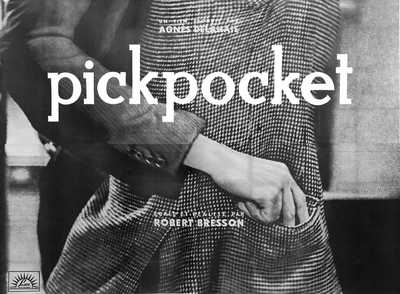
 

pickpocket movie poster

Robert Bresson’s modern version of Dostoevsky’s Crime and Punishment. Caught in his own desensitized internal world, our protagonist Michel commits acts of theft as a desperate measure to fill the void in his existence. He goes through his days in a haunting vacuum devoid of meaning and emotions. He is unfeeling even towards his own dying mother, reminds me of Meursault in Camus’s The Stranger. Although not an axe murderer like Raskolnikov in Crime and Punishment, Michel theorizes that those with superior talents and intelligence, the supermen in society, should be free to disobey laws in certain cases. He is numbed by his own hubris, and stifled by his cold and absurd worldview. Outright violence is not visible here, but we see the battle of wits he engages with the police inspector behind his trails, and we see him struggle in an amoral and meaningless existence.

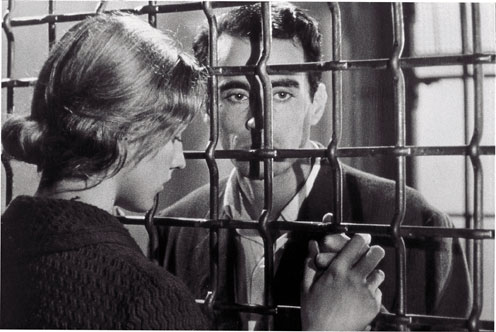
Grace comes as Jeanne, a neighbor and carer of Michel’s ailing mother. Jeanne lives on her own looking after her younger brother. Her father is a drunk and her mother has deserted them. But she continues to live and care. She accepts her circumstances calmly, and extends kindness to those unrelated to her, caring for Michel’s mother, a neighbor on another floor. She stands as a stark contrast to Michel’s aloofness. At the end of the film, Jeanne came to visit Michel in prison after he was arrested, the two separated by the cold iron bars. For the first time, Michel feels love and wants to reciprocate it. And thus the cathartic ending as he totally melts in the presence of pure love and grace, wrapping up the film with this last line:

“Oh, Jeanne, to reach you at last, what a strange path I had to take.”
 

Pickpocket


**

Drive (2011)

A current release that comes with high acclaims. The film was nominated for the Palme d’Or and Nicolas Winding Refn won Best Director at the Cannes Film Festival this year (2011). With slick and dashing camera work, the violence in “Drive” is visceral and graphic, a big contrast to the black and white, internal “Pickpocket”. However, I see some parallels between these two films made 50 years apart.

Ryan Gosling is “the Driver”. He does not even have a name. He is an expert stunt driver for movies and works at an autobody shop by day, drives a get-away car in the underworld of crimes by night. Like Michel in “Pickpocket”, he drifts in existence, numb and desensitized to the world around him. That is, until he meets Irene (Carey Mulligan), his neighbor.

Drive 1


Mulligan’s almost angelic presence in the film is most effective as a stark contrast to those around her. She lives alone looking after a child and works as a waitress in a diner. She appeals to the Driver by being herself, innocent, taking life as it is, responsible, caring for a child alone while his father is locked up in prison. Irene is a spot of purity in a rough environment. Her mere presence has transformed the Driver. From being aloof the Driver has become engaged emotionally, friendly and protective of both mother and son.

Drive

The plot thickens as Irene’s husband is released from prison and rejoins his family. The Driver is caught in an awkward situation. But he soon realizes that the husband’s resolve for a new start is genuine. The power of transformation is so thorough that the Driver is willing to go out on a limb to help the husband with one last heist in order to break the hold a gang has on the man, his wife and kid. While things go awry terribly and the ending is not as clean-cut as “Pickpocket”, we learn that the Driver remains a changed man from the ephemeral friendship he once had with Irene and her child.

Some might say Mulligan is a miscast, that she’s not “damaged enough”, and would prefer a ‘stronger’ character. I disagree. I feel that Mulligan has portrayed Irene’s innocent persona aptly, and yes, those ethereal dimples can just melt any heart. Hers is the perfect role for exactly the right reason. In the dark underworld of gangs, violence and crimes, she stands out as a tiny source of purity, a spark of grace. It all shows that what may look weak and vulnerable can have transformative power over the strong. A thought that may well be unpopular today.

***

Other related posts from Ripple Effects:

A Good Man Is Hard To Find and Other Stories by Flannery O’Connor

Bernini’s Corpus and Modern Movies

Notes on the Synthesis of Film, Art… Life?

***

More Downton Ripples

Two years ago, some time after Downton Abbey Season 2 had finished airing on PBS, I wrote my first “Downton Ripples” post. I subtitled it “How I Overcome Downton Abbey Withdrawal Syndrome”. In that post, I’d listed some books and movies/TV productions that relate to the setting similar to Downton Abbey, for I was fascinated by the Great War period after watching Downton.

Some of the authors I read included Robert Graves, Hemingway, Evelyn Waugh, and watched Brideshead Revisited, A Handful of Dust, Easy Virtue and discovered Lost Empires, the TV series with a young Colin Firth together with Laurence Olivier, amazing.

This time, after Season 4, the withdrawal syndrome seems to have numbed a bit, but the ripples continue to spread. Again, Downton has prodded me to seek out the literature around the time between WW1 and WW2 Europe. While there are many present day authors writing about that era, I’d like to hear more authentic voices. I went looking for writers actually living in that period of history to hear their stories.

The following is a list of titles I’ve gone through this time, some I have finished, some still on my ‘To be’ agenda:

Parade’s End (2012, BBC/HBO co-production)

Parade's End Blu-Ray Cover

This series complements Downton Abbey perfectly. While Downton is light and heart-warming, soapy in its feel, Parade’s End is cerebral and literary, its social commentary of the time harsher and more incisive. I think the difference is, Julian Fellowes creates as a contemporary screenwriter, and knowing what modern day viewers want, he caters to their desire. Yes, he has offered us charming entertainment, and for the stars and the show, opportunities for Emmy and Golden Globe noms and wins.

Parade’s End is another story. Playwright Tom Stoppard (Emmy and BAFTA nom for this) adapts from Ford Madox Ford, a writer during WWI period, contemporary of Hemingway, Fitzgerald, the Lost Generation after The Great War, and witness to the destruction of the old world order and individual lives. Sure social barriers were dismantled, but together with such collapse came the shattering of long-held values and beliefs. Through the protagonist Christopher Tietjens, we can feel the intense struggles and poignancy of a man caught in such desolation.

I first saw Parade’s End on HBO when there was a window of free viewing. After watching one episode, I knew I must subscribe to continue with the rest of the series, and so I did. Effective advertising indeed. That was last year, and I recently just finished re-watching Parade’s End on Blu-Ray.

Parade’s End is the first time I watch Benedict Cumberbatch in a leading role (Emmy nom), an impressive performance as Christopher Tietjens, one of the last remaining honourable men struggling to stay afloat in the drowning waves of social change and ideals. Rebecca Hall (BAFTA nom) is effective as the scheming and seductive wife Sylvia. The young, almost ethereal Adelaide Clemens as suffragette Valentine Wannop is perfect. She makes me think of Carey Mulligan. And what a wonderful connection — Mulligan will be the star of the new film Suffragette, which I highly anticipate.

Parade’s End by Ford Madox Ford

Parade's End BBC Book Cover copy

This will be my major challenge in TBR books this year. Image here is the BBC Book edition I bought in a book sale a few years back. It has 906 pages, and is made up of four novels — Some Do Not, No More Parades, A Man Could Stand Up, and The Last Post. A more recent edition is the reissue of Penguin Modern Classic, with a new introduction written by Booker Prize winner Julian Barnes (The Sense of an Ending). You can read the intro here.

Parade’s End by Tom Stoppard

Parade's End Script by Tom Stoppard

I enjoy reading the scripts of productions I like. It’s a kind of deconstruction, if you will, demythisizing of sort. I’m fascinated by the skills of a screenwriter who uses words to elicit images for the director to execute, translating the literary into the visual using words. To write for the screen almost sounds like an oxymoron. I’ve read Julian Fellowe’s Downton Abbey scripts and found it most interesting. I’d like to explore Tom Stoppard’s journey of adaptation. But first, I need to tackle Ford Madox Ford’s original texts.

T. S. EliotT. S. Eliot — After Downton and Parade’s End, I’m all geared up to explore deeper into the the psyche and spirituality of the time. Why, after all, what had lost in a generation was not just the physical bodies or social structures, but the internal, the destruction of a value and belief system. I’d like to read and reread Eliot’s works, delve into a time that prompted the poet to see hollow men, and women come and go, talking of Michelangelo. What’s underneath the façade of human progress?

The Europeans by Henry JamesThe Europeans by Henry James — A voice from the dawn of the 20th Century. I have finished listening to the amusing auidiobook of The Europeans. Yes, unlike many readers’ impression of James’ works, The Europeans is a delightful read (listen). It is like a medley of E. M. Forster and Jane Austen. Humorous depiction of the different POV’s between a pair of European sister/brother coming to visit their American cousins residing in the outskirt of Boston. With some LOL moments. My next James read is The Ambassadors.

The Collected Stories of Stefan ZweigStefan Zweig — While Lady Edith’s love Michael Gregson headed to Germany and mysteriously gone missing, the then famous (real life) writer Stefan Zweig in Austria was lamenting the spread of anti-semitism in the continent. It’s interesting that Downton has led me to connect, at least in historical timeline, with an author I’ve just recently discovered, thanks to Wes Anderson’s The Grand Budapest Hotel, to which he has credited the works of Stefan Zweig. I’ve recently read Zweig’s Chess Story, and now delving into his short stories.

***

86th Academy Awards Made History

Oscar Selfie

The following is a partial list of last night’s 86th Academy Awards winners. I’ve included Production Budget from Box Office Mojo, just for comparison:

Gravity: 7 Wins

Best Directing, Cinematography, Film Editing, Sound Mixing, Sound Editing, Visual Effects, Music (Original Score).

Production Budget: $100 Million

12 Years A Slave: 3 Wins

Best Picture, Supporting Actress, Adapted Screenplay

Production Budget: $20 Million

Dallas Buyers Club: 3 Wins

Best Actor, Supporting Actor, Make-up and Hairstyling

Production Budget: $5 Million

The Great Gatsby: 2 Wins

Best Costume Design, Production Design

Production Budget: $105 Million

Blue Jasmine: 1 Win

Best Actress

Production Budget: N/A

Her: 1 Win

Best Original Screenplay

Production Budget: $23 Million

12 Years A Slave Poster copy

The Oscars last night made history in two categories… and I don’t mean Ellen Degeneres’ star-studded group selfie setting retweeting record. First, there was Gravity’s director Alfonso Cuarón as the first Latin American to win the Best Directing Oscar. Gravity seemed to be the major winner last night with seven Oscars. Basically the 3D, sic-fi movie had snatched all technical wins, as predicted by many.

But in every Academy Awards, the top prize is Best Picture, here we see 12 Years A Slave make history with Steve McQueen becoming the first black director to garner the Best Picture Oscar honour. Lupita Lyong’o also came out victorious as this is her first feature film. I’m happy to see too that John Ridley win the Best Adapted Screenplay, the second black winner to fetch a writing Oscar, after Geoffrey Fletcher for Precious in 2009. Ridley has turned Solomon Northup’s poignant memoir into a script for an impressive visual testament. Because of the film, this eye-witness narrative of Solomon Northup hopefully will find its way into school curricula soon. This is the power of cinema in transforming society.

Cate Blanchet‘s win for her role in Blue Jasmine gives her a chance to counter a misconception: “… and perhaps, those of us in the industry who are still foolishly clinging to the idea that female films, with women at the centre, are niche experiences. They are not. Audiences want to see them, and in fact, they earn money.”

Hopefully after all the ‘history’ being made, one day we won’t have to identify the colour, ethnicity, or gender of winners in saying so-and-so is the first black, or hispanic, or woman to win this or do that.

**

The reason I’ve included the Production Budget in the above list is that I remember the ‘implosion’ of the movie industry‘ Steven Spielberg had predicted a year ago as he cited productions getting more and more costly, aiming at mega, iron-man effects to please the general public. While Gravity might fit that category with its 3D, high-tech, CGI-driven grandiosity and out-of-this-world spectacle, there are also worthy, smaller productions that cost only a fraction of a colossal budget, but still can move audiences and touch the human heart.

**

Related Posts on Ripple Effects:

History Made At The Oscars: Kathryn Bigelow Wins Best Director

Our Mega Culture

12 Years A Slave: Beauty and Sadness (Movie Review)

Narrative of Solomon Northup: A Voice that Must Be Heard (Book Review)

Nebraska: Color is Superfluous (Movie Review)

The Great Gatsby Movie Review

Blue Jasmine: Homage & Re-imagining

***

Books to Movie Adaptations Updates

Here are some updates that look promising, books that are in various stages of development into movies. For yourself or your book group, should make a good reading list:

East of Eden Book CoverEast of Eden — This just came out two days ago, Hunger Games director Gary Ross will write the screenplay of this new adaptation of John Steinbeck’s classic, with Jennifer Lawrence to star. For J. Law fans, this is good news. But for devotees of the original 1955 movie adaptation directed by the legendary Elia Kazan with the debut breakout role for James Dean, this modern version definitely is uncalled for, a rebel without a cause.

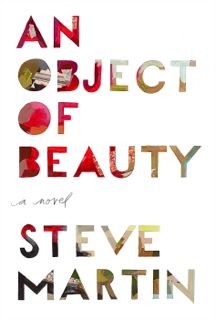
An Object of BeautyAn Object of Beauty — The movie version of Steve Martin’s novel about the NYC art gallery scene is now a project of Amy Adams’, with Ned Benson writing the screenplay. I have high expectation of this one, having seen Benson’s wonderful works The Disappearance of Eleanor Rigby: Him and Her last year at TIFF. The cast has not been announced but Amy Adams will be the producer and actor in her new project.

A Walk In the WoodsA Walk In The Woods — from the vast open sea in All Is Lost to the Appalachian Trail, Robert Redford will appear in this adaptation of the 1998 personal memoir by Bill Bryson, a walk on the Appalachian Trail to ‘rediscover America.’ Nick Nolte is also reported to be in the cast. Screenplay by Michael Arndt (Little Miss Sunshine, Toy Story 3, The Hunger Games), directed by Ken Kwapis (The Office). The movie is scheduled to come out in 2015. Enough time to read or reread, or even walk the Trail yourself. Who knows, you might see the film crew while there.

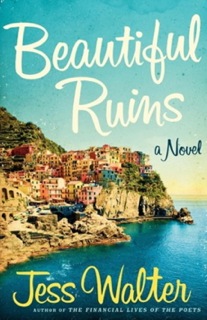
Beautiful RuinsBeautiful Ruins Author Jess Walter of this popular novel will co-write the screenplay with writer/director Todd Field. I’ve seen Field’s Oscar nominated adaptation of Little Children (2006 with Kate Winslet nom. for Best Actress), a haunting film. I trust his talents with Beautiful Ruins. Considering the Italian coastal setting of the book, the movie would likely offer some beautiful cinematography. Imogen Poots is on board, so far.

The Dinner The Dinner — Dutch author Herman Koch’s novel is like a dynamite. I’m half way through the lighted fuse as I type this post, so it’s not full-blown yet, but I’m totally engrossed in this book based on a real-life crime. The dinner menu in an elegant restaurant ingeniously parallels the plot development. I missed it at TIFF last year. And since, I’m not aware that it has made its presence on the big screens here in North America. But hopefully this year we will have the chance to see it. Even if it doesn’t show in your city, read the book still. (Update: to read my book review on Goodreads CLICK HERE.)

Hundred Foot JourneyThe Hundred-foot JourneyAnother culinary movie. This one is much lighter than the above, based on Richard C. Morais’s novel. Story is about a family from India moves to France, opening an Indian restaurant across from a Michelin-starred fine French restaurant. Cultural clashes, the reverse of The Best Exotic Marigold Hotel. The book is quite entertaining, the movie comes with some big names. Producers Steven Spielberg and Oprah Winfrey, Helen Mirren to star, and directed by the prolific Lasse Hallström (Chocolat, 2000; The Shipping News, 2001; Salmon Fishing In the Yemen, 2011)

The GiverThe Giver – The highly popular young adult book by Lois Lowry finally gets a movie appearance, over twenty years after its publication in 1993. Utopia turned bad, ideals and reality. With so many movies on a dystopia, will this still look fresh? Cast include Jeff Bridges as The Giver, and look here, Meryle Streep, Taylor Swift, Alexander Skarsgard, Philip Noyce directs. One of Noyce’s previous works is the adaptation of Graham Greene’s novel The Quiet American (2002). Many may have read this title in school. Time to reread.

The Little PrinceThe Little PrinceLots of talents are behind this newest animation based on the beloved story by French author and pilot Antoine de Saint-Exupéry. Those lending a voice include: Rachel McAdams, James Franco, Marion Cotillard, Jeff Bridges, Paul Giamatti. While I love the earlier musical version (1974, with Gene Wilder as The Fox), I welcome a new adaptation, for I know this will bring the book to the limelight for a new generation. Making a movie nowadays looks to be the most effective way to introduce literature to a younger generation (or whatever generations).

Secret ScriptureThe Secret Scripture — By the Booker Prize short-listed Irish author Sebastian Barry. The novel is an internal dialogue of a close to 100 years-old patient in a mental hospital, Roseanne McNulty, reminiscing her younger days. The older character will be played by the brilliant Vanessa Redgrave, her younger self by the talented Jessica Chastain. I last see them together in a film was in Ralph Fiennes’s directorial debut, the modern version of Shakespear’s Coriolanus. Don’t think these two ladies will appear in the same scene in The Secret Scripture since they are of different time periods, but good to know that the roles are being played by two wonderful actors.

***

Previous Books to Movies Lists:

2014 Book To Movie Adaptations

Upcoming Book to Movie Adaptations

Great Movies Expectations

Related Posts:

My book review of The Dinner posted on Goodreads

Book Review of The Hundred-Foot Journey by Richard C. Morais

Do We Need Another Rebecca Remake? Another Grapes of Wrath?

***

Downton Abbey Season 4 Episode 8: The London Season

This final two-hour ending reminds me of the beginning two-hour opener of Season 4, fast paced, short scenes, too busy to dwell deep. But here we have a plethora of characters and grander moments, the Prince of Wales with his parents King George V and Queen Mary joining the cast? A bit surreal I feel.

Rose meets King & Queen

Interesting too that despite the spectacular scenes, these final two hours are relatively uneventful, not many threads leading to new story ideas. Mary will keep on being pursued. Now that she has found out Charles Blake is a much more eligible bachelor than she first thought, will that make a difference to her? That heart-to-heart talk between Mary and Tony, with her hand gently placed on his arm, welcoming whatever future life might bring is one of my favourite moments.

And Rose, after her débutante ball, will pursue even more.

Bates’s status quo will remain the same too. He won’t be investigated further as far as Mary is concerned. Mrs. Hughes has already released him. Bates’ loyalty to The Crawley family has exchanged a pardon from Mary, whereby she burns the train ticket, evidence proving his presence in London on the day Green was accidentally killed. So far of course. All things are in the hands of the powerful Julian Fellowes, who BTW, has thrown us a case of debatable ethics.

Bates has proven himself to be more resourceful than we first thought. Why am I not surprised? Now… that makes me think of Michael Gregson winning back all the poker money from Sampson in one night. Sampson should have learned his lesson by now. The Crawley household is his nemesis, even their guests and servants .

Eight months after Edith has gone to Switzerland and come home more tired than ever, she begins to have second thoughts. Having given birth to a baby girl and weaning her, she has put her up for adoption in Geneva with the Schroeders upon the persuasion of Aunt Rosamund. Back home, Edith misses her daughter and revives her initial idea of asking the tenant farmer Mr. Drewe to raise the baby incognito, to which Drewe agrees. But why would he agree though, and to keep it a secret just between the two of them? Now this could be the beginning of a dramatic storyline in Season 5.

Michael Gregson is still nowhere to be found, although we know what has taken place before his disappearance. And that just makes me tip my hat and raise a little respect for him. Although in Rosamund’s eyes, he’s just plain stupid. Why, to ‘take exception’ to what some men are saying, men wearing ‘brown shirts’? If he had known they were, exactly, ‘The Brownshirts’ (Sturmabteilung), Nazi goons, would he have shown his opposition so readily? But I say, kudos to him. Another case of debatable ethics thrown to us by Julian Fellowes.

Sarah Bunting turns out to be much more annoying. Her insistence to visit the Crawley home in their absence and going upstairs is more than a little imprudent. She sure has made a huge leap from Elizabeth Bennet in terms of social courtesy. Remember how uncomfortable Lizzy is in visiting Pemberley in the absence of its host. I sure hope Tom can stand his ground with this gal. Her seemingly innocent and assertive demeanour just may hide a more malicious intent. After all, Downton represents the aristocracy that she loathes.

London Season

The main attraction of this finale is of course Martha Levinson and his son Harold sailing the ocean blue to Downton Abbey. I first had high expectations for Paul Giamatti. MacLaine we had seen her in Season 3, so she keeps the critical face towards the British aristocracy, that’s consistent. Hers and Violet’s harsh and honest exchanges against each other add colours to the gentility that has prevailed the night of the ball.  

But I must say, Giamatti’s constipated (can’t think of another word) performance is a surprise and disappointment. I had expected a much more animated screen presence. Even Daisy saying: ‘I’m never excited’ is funnier. BTW, that’s got to be one of my favourite lines in this episode. Back to Harold, he and his initial qualm with Madeleine Asslop is fine, having many fathers ‘shoving their daughters’ at him. But falling for her right after? Julian Fellowes is a master matchmaker, but we all hope to see compatibility, at least just in appearance.

Like, ah… Isobel and Lord Merton. Isobel is not interested, at this stage. When he asks her to dance and she says “I’m really not much of a dancer,” I like his prompt reply: “O all right. So we’re a perfect match.”

The most cinematic scene has to be the seaside relaxation for the staff. There are very few scenes in all Downton Seasons that are just composed of the downstairs characters alone in the great outdoor. Here by the seaside, mood changes. We love to see them enjoy themselves for a change, like Mrs. Patmore buying an ice cream cone, Molesley playing football, Anna and Bates finally taking a relaxing stroll (love their hats), and Baxter becoming brave. Daisy is sweet even when she turns down Levinson (ok, Ethan Slade); Ivy is excited to have the chance to go to America. But the final scene belongs to Mrs. Hughes and Mr. Carson:

“We can afford to live a little.”

At the seaside

Season 5: Something to look forward to. Just another year, that’s all.

***

Downton Abbey Season 4 Recaps:

Episode 7

Episode 6

Episode 5

Episode 4

Episode 3

Episode 2

Opening 2-hour Special

***

Saturday Snapshot February 22: Austen Doors and Windows

Continuing with the theme of doors and windows, let’s hop over to the UNESCO city of Bath. I was there twice. These are a few photos I took on those trips.

The beloved author Jane Austen lived there from 1801 – 1806 after her family moved from her birthplace Steventon when she was 26. Their first address was 4 Sydney Place:

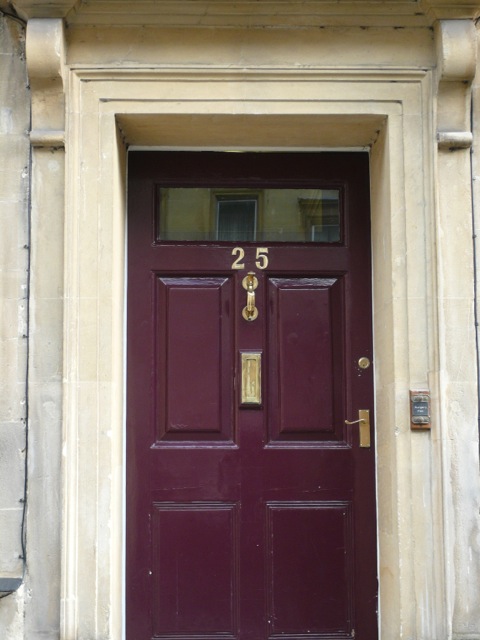
4 Sydney PlaceNo 4 Sydney PlaceIn their last year in Bath the family moved to 25 Gay Street:

25 Gay Street

25 Gay Street

Down the road to No. 40 is the Jane Austen Centre:

40 Gay Street Jane Austen Centre

The Great Pump Room was a social hub in Austen’s day. Her observations there must have inspired her satirical descriptions of high society in Northanger Abbey. Now an elegant restaurant:

The Pump Room Entrance

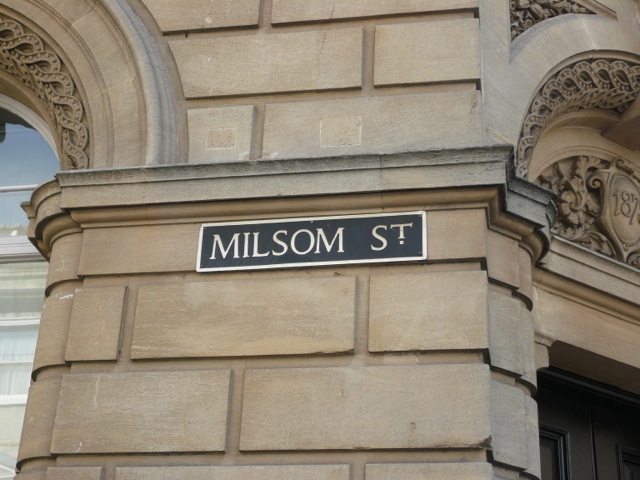
Austen used Bath as the setting for her novel Persuasion. Milsom Street was a vibrant commercial area of shops and businesses in those days as in now. The first time Anne Eliot saw Captain Wentworth again was when he passed by a shop on Milsom Street.

Milsom StreetMilsom Streetscape  Here’s a modern day shop window, Milsom & Son, a music store:

Milsom & Son

No, Jane would not have stepped in there to shop for CD’s or DVD’s. But she would likely have gone into this place, Sally Lunn Bun, the oldest building in Bath dating back to 1482 and a business that was present in Jane’s time. There’s a Kitchen Museum in the basement of the restaurant:

Sally Lunn's Bun

Sally Lunn Bun entrance

How can I resist showing you what’s inside the door and window:

Sally Lunn Bun

You might like to explore more of Bath in my other posts Jane Austen’s Bath and Bath’s Persuasion in which I recorded my walking tour using the novel Persuasion as a guidebook.

Saturday Snapshot is hosted by Melinda of West Metro Mommy Reads. Click Here to see what others have posted.

***

Downton Abbey Season 4: Episode 7 (PBS)

I’ve thoroughly enjoyed this captivating episode. All its conflicts seem to have derived from the notion of ‘truth’: truth telling, truth hiding, truth seeking. I’m beginning to sense that Julian Fellowes is telling us that, Happiness is … not having had to hide any secrets and having no reasons to. But then, where’s the drama?

But first, the race to Mary’s heart is clearly a tight one between two rivals, Tony Gillingham and Charles Blake, the pig expert. You can add in Napier, standing afar and looking aloof, only sending out helpless vibes. Bravo to Mary for being true to her feelings, at least for now, as she declares in no obscure terms: ‘I’m not on the market, Tony. I’m not free.’ And later to Charles with a similar message in the bazaar. Didn’t you hear, guys? Sure, but they are not the type to give up easily, ‘not without a fight’.

I like the changed man Molesley has become. He’s not afraid to show his fondness for Baxter, who remains aloof and full of secret past and present agendas. But Molesley is, well, Molesley, oblivious, self-deprecating, ‘felt fragile his whole life’, but true. In response to Baxter declining his offer of a cup of coffee, his reply is one of the lines that made me LOL in this episode:

“It’s just coffee. You won’t have to surrender any of your independence.”

Molesley could well pull Baxter out of Thomas’s grasp: “I wish you’d give us credits for making our own minds about you.” Well done.

Serendipity is the word for Tom and Sarah Bunting with their accidental encounters. So now he finds out she’s a school teacher, and, quite a progressive and opinionated woman too, definitely not a fan of the aristocracy. But Tom revealing his past life as a chauffeur and now fixing her stranded car on a country road add a lot of credits, a true spokesman for the Crawleys. And for a line like this one, you have to give the man extra kudos, speaking like a fine political candidate: ‘I don’t believe in types. I believe in people.’ Will they be a good match? That fully depends on matchmaker Julian Fellowes.

Rosamund is so supportive of Edith. Is this even within her nature? Going to Switzerland to learn French as a guise, bringing Edith with her for a few months so she can give the baby up for adoption after its birth. Violet is always on top of things. Even she has to agree with Rosamund this time, giving her approval after finding out the plan.

Julian Fellowes is busy with another prospective match-making, and that’s Isobel and Lord Merton. I’m most amused by Violet’s surprised glances back and forth following the fond conversations between the two. They take a stroll after the luncheon. Conversation goes well until Lord Merton asks about Matthew unaware. Now that only gives him opportunity to send flowers the next day to amend his ‘tactlessness’.

And then there’s the mirage of Rose and Ross, about to set an engagement date. Mary aptly steps in to stop a ‘guess-who’s-coming-to-dinner’ prank Rose has intended maliciously on her mother. So this is not so much about equality or free love, but using the race card for one’s private end. Jack Ross’s mother suspects her motive too. She apparently has raised a good son, who for consideration of Rose, decides to end the relationship. However, ‘in a better world’, the card Rose plays just might be a joker, with no face value… in a better world. Maybe it’s Rose who needs to go to Switzerland to learn French, or about herself, anything.

The Daisy-Ivy-Alfred conflict comes to a very moving conclusion. Kudos to Julian Fellowes. Alfred proposes to Ivy, who courteously declines. Daisy comes to realization upon the wise counsel of Mr. Mason, good man, and brings a basket of gift to Alfred to say goodbye and wish him well. They part as ‘friends forever’. One reason I’m drawn to Downton is that it seeks to portray something that might have slowly become archaic nowadays, but definitely needs to preserve: True friendship without romantic mash-up. Mrs. Hughes and Mr. Carson in a previous episode, and now Daisy and Alfred. I don’t know what the future holds, but for now, they are perfect as they are.

A touching reunion copy 1I love these Downton outdoor events, the tea party, cricket game, and now the bazaar. Cora can manage full well in Robert’s absence. It is a success and fun to watch. Important events take place, such as Robert and Thomas’ unannounced return, a huge surprise and delight, and a most touching reunion of Robert and Cora, thanks to the timely cue of the warm Downton music.

The most important twist is Tony Gillingham coming to the bazaar to tell Mary of the news that his valet Green has died in a traffic accident in Piccadilly, just one day after Mary asks him to sack Green. Accident? or Bates’s revenge? Again, we’re kept in the dark, knowing only that Bates has taken a day’s leave ‘to York’ while Anna goes to London with Mary. Can’t read any clue from his face either, unlike his stabbing look at Green in Episode 6. His answer to Anna’s query is both puzzling and chilling: ‘You know me, when I do a thing, I like to have a very good reason for doing it.’ Again, the suspense lies in the fact that we don’t know the truth, at least, not yet.

But that sharp stare from the last episode is replaced by three curious and fond gazes here in Episode 7. In the last scene, Isobel, Edith, and Rose together lean forward to watch Mary walk away with her two suitors Tony and Charles. Well synchronized, girls. What a fun closing shot.

As we come near to the end of another Season, I eagerly want to find out the final resolutions of the story lines, yet at the same time, I’m beginning to feel a parting sadness. You too?

***

PREVIOUSLY ON DOWNTON ABBEY Season 4:

Episode 6

Episode 5

Episode 4

Episode 3

Episode 2

Opening Special

***

Saturday Snapshot February 15: Windows & Doors

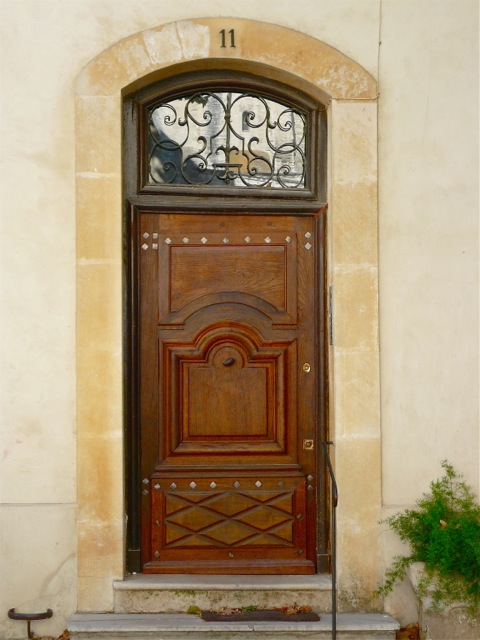
By now, I’m sure many of you are tired of looking at white and greyish stuff, be it snow, or its liquid form. Let me take you on my escapade to Provence, France, and continue to bask in some warm colours.

This time, we’re looking at windows and doors. Again, they are photos from my trip to Avignon and Arles in the summer of 2010.

Blue Windows in ArlesShop windowAvignonSix windows in ArlesPink window

A shop window

Yellow windows2 blue windows

Now here’s the trick: Choose a photo. Look intensely at it for one minute then close your eyes and let the image imprint in your mind. When you reopen your eyes, I’m sure you won’t see white. Let’s just dream a little dream of warm summer daze.

Saturday Snapshot is hosted by Melinda of West Metro Mommy Reads. CLICK HERE to see what others have posted.

***

ALL PHOTOS TAKEN BY ARTI OF RIPPLE EFFECTS.
DO NOT COPY OR REBLOG

12 Years A Slave, Narrative of Solomon Northup: A Voice That Must Be Heard

“Is everything right because the law allows it?” — Solomon Northup

This is one of those cases where after watching the movie, I knew I must read the original source material, especially that it was written by Solomon Northup himself. If the movie is an artistic, cinematic account of a dark page in history, Solomon’s narrative is the quintessential eyewitness report, a first-person, authentic voice that is both a victim and a legitimate accuser of an inhumane and unjust system.

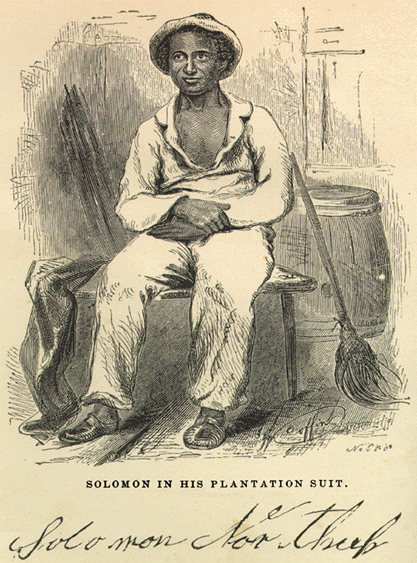
Solomon Northup copy

Born a free man in the State of New York, Solomon was happily living in Saratoga Springs, married to Anne and enjoying a loving family life as father to Elizabeth, 10, Margaret, 8, and Alonzo, 5. In March, 1841, his life was tragically altered when he was deceived by two men, Brown and Hamilton, and followed them to Washington, believing that he was to be hired to play the violin in a circus. Solomon was later drugged, kidnapped, chained and beaten. Together with other captured victims, he was smuggled to New Orleans and sold as a slave, his name changed to Platt, erasing any evidence of a previous life.

Having no free papers to prove his identity, transported and sold like a chattel to the Bayou in Louisiana, Solomon’s fate was sealed hundreds of miles away from home. His agony was heart-wrenching:

Were the events of the last few weeks realities indeed? — or was I passing only through the dismal phases of a long, protracted dream? It was no illusion. My cup of sorrow was full to overflowing … To the Almighty Father of us all — the freeman and the slave — I poured forth the supplications of a broken spirit, imploring strength from on high to bear up against the burden of my troubles, until the morning light aroused the slumberers, ushering in another day of bondage. (p. 77)

Solomon Northup’s eloquent writing immediately draws me in. It has a traditional and formal ring to the ear, but not archaic; it exudes clarity, finesse and grace. I’m struck by his stylish narrative even when he is describing depravity and injustice. After reading, I can see how the book had inspired director Steve McQueen’s beautifully rendered, artistic cinematic work on such an ugly subject matter. 

The movie follows the memoir closely, albeit leaving out a lot of details. Reading the source material after the movie can fill those in, making it so gratifying.

It was strictly forbidden of slaves to learn to read or write; pen and paper were prohibited. Any slave found to have even minimal education would be severely punished. Solomon had to feign ignorance all the years as a slave to survive. His memoir was written after he gained back his freedom in 1853.

I was most impressed that while Solomon yearned for deliverance and justice, he harboured no traces of personal vengeance against his tormenters. He had proven himself a man of integrity. Often he was sought after for his resourcefulness and his skills in playing the violin. He had entertained masters, and offered momentary relief to fellow slaves.

For two years Solomon was under the kind master William Ford, but had to be sold to the ‘slave breaker’ Edwin Epps to escape from Ford’s jealous and murderous slave driver Tibeats. The subsequent ten years with Epps became an extended living nightmare.

While the movie adaptation is an excellent production which I gave 4/4 Ripples, I find  Solomon Northup’s memoir even more engrossing. I’m particularly impressed by the fact that the book is not a self-absorbed account of sufferings, but as a careful memoirist, he records many details that are informative and even interesting, such as the natural vegetation of the Bayou environment, the cotton and sugar cane crops growing from seeding to harvesting, and the geography of the locales.

Like a perceptive ethnographer, he chronicles plantation life as a slave, the dwellings, diet, work load, daily chores, maltreatments. From his candid revealing, we are led into the subjective world of slavery, being sensitized to what it is like living in bondage and helplessness, constantly fearful of severe whipping and even death. Like a suspense writer, Solomon leads us to follow his risky attempts to seek help, and await in bated breath the day of his rescue. 

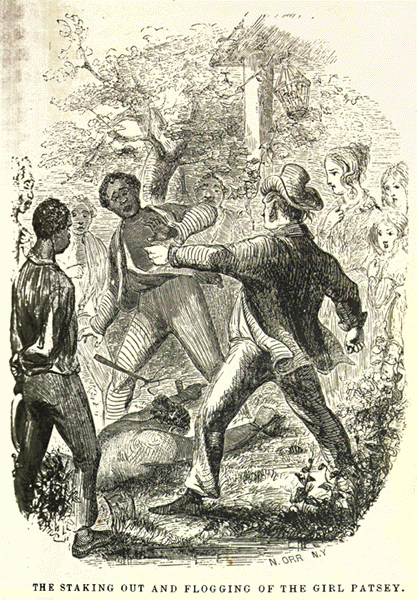
An incisive observer of human nature, Solomon sharply describes the psychological makeup of the alcoholic psychopath Epps, and the conflicting power relation binding Epps and his wife, complicated by his gratuitous fondness of the slave girl Patsey. We see in the movie Patsey suffers the brunt of her Mistress’ jealousy, and the maltreatment under her Master who tries to please his wife. The traumatic scene in the movie where Solomon is ordered by Epps to whip Patsey is described even more poignantly in the book. I’m surprised that the literary narrative has a more powerful hold on me than the visual rendition in this scene.

Flogging of Patsey copy

The memoir serves its purpose as a piece of personal narrative that’s poignant and deeply moving. The resilience and faith of Solomon Northup is crucial in his later being rescued. His longing for freedom and justice that is devoid of personal vengeance is most admirable and inspiring.

The rescue is a long and testing process, not so short as in the movie which I feel is a bit off balance. The adaptation should have given viewers a sense of the actual attempt especially in his home state of New York among those who try to find and rescue him. Thanks to the free-thinking, itinerant carpenter Bass from Canada who came to work for Epps for a short time, Solomon saw a crack opened for a chance to relay news back to the North by way of Bass.

Solomon had disappeared from the lives of his wife and three children for twelve years. Thankfully they were all well. When he reunited with them, he had the pleasure of seeing his newborn grandson, named after him by a devoted daughter. His youngest son Alonzo had the plan to make enough money to buy back his freedom if he could be located. It was indeed a moving scene as depicted in the following sketch from the book:

Family Reunion copy

After he had regained freedom, the slave trader Burch, ‘a speculator in human flesh’, was arrested and brought to trial in Washington, where he kidnapped and sold Solomon into slavery. However, Solomon was denied the right to be a witness against Burch for he was a black man. Burch was later found not guilty and discharged. Solomon wrote in his memoir:

A human tribunal has permitted him to escape, but there is another and a higher tribunal, where false testimony will not prevail, and where I am willing, so far at least as these statements are concerned, to be judged at last. (p. 319)

His faith in that ‘higher tribunal’ and an ultimate judge had carried Solomon Northup through the twelve years of slavery. His narrative not only is a voice that testifies against the injustice of man, but poignantly declares that freedom transcends physical bondage. Amidst inhumanity and despair, he had chosen to remain human, and to value integrity and faith. Solomon Northups’ ordeal is a glimmer of light in a dark page of history.

The Oscars dim by comparison.

~ ~ ~ ~ Ripples

CLICK HERE to read my movie review of 12 Years A Slave

***

Free Download:

Twelve Years A Slave, Narrative of Solomon Northup, NY, Miller, Orton & Mulligan, 1855, 336 pages, with appendix of legal documents and papers. You can download the PDF version of the original 1855 publication free here.

***

Downton Abbey Season 4 Episode 6 (PBS)

The opening reminds me of the very first scene of Season 1 Episode 1, where the Western Union telegraph machine rhythmically tapping, leading us into this whole new world called Downton Abbey, and the rest is history. That first telegram was news about the Titanic sinking. Now Lord Grantham sets off to America in response to a telegram from Cora’s mother Martha (we all remember Shirley MacLaine’s American entry into Downton) just to help her son look good in front of a Senate Committee.

Robert may well be doing this more for Cora’s bidding than Martha’s. A sweet farewell follows. Crossing the raging seas, leaving the comfort of Downton on such a short notice, Lord Grantham would have wished he could just do a video conferencing. That would be more futuristic than the science fiction of his time, considering the telephone was just introduced to the household not too long ago.

Come to think of it, going to America just to help out a brother-in-law? Or was it to take time off to shoot The Monuments Men? Or, a subtle promo of the next best thing, The Gilded Age Julian Fellowes will be writing for NBC after Downton? Just thinking…

Downton S4E6 Robert goes to America

So now the secret is out, to Mary at least, and to the suspicion of several others. They would want to find out why Thomas is going to America with Lord Grantham and not Mr. Bates. Baxter is commissioned to hand in a report on exactly that when Thomas returns.

The pig farming business is off to a blossoming start… romantically that is. Getting dirty to save the pigs looks quite contrived a scene. Blake has to do much more than getting his white shirt and tux muddy to win me over. I’m not as easy as Mary. Or, is she just trying to prove she’s not so aloof after all. So they both enjoy their ‘night of discovery’. Why, Mary Crawley can make scrambled eggs. How marvellous!

Tom also seems to have met a potential companion in a political lecture in Ripon. Will this revive an idealistic young heart he once possessed?

Violet falls ill and Isobel nurses her back to health. Even in her delirious state Violet still takes a swing at Isobel, this ‘mad woman’, have her replaced, for she ‘talks too much, like a drunken vicar.’ Whatever we can’t say out loud in our right mind can be said in our delirium. How convenient.

Alfred’s brief return rousing further animosity between Ivy and Daisy. Mrs. Hughes and Mrs. Patmore come up with the flu as a reason to keep him off, and Mr. Carson is willing to go along even to the point of paying for a hotel stay. That sounds a bit far-fetching. A little jealous bickering adds spice of life downstairs. No need to avoid that like the plague.

A storyline that has far greater consequence is Edith going to London to have an abortion. Her secret is out as she breaks down when Lady Rosamund mentions about Michael Gregson. Aunt Rosamund looks an unlikely sympathizer, reassuring her “I will support you whatever you decide, just as Cora will—and Robert.” Edith doubts her sincerity and says “That sounds like a speech from The Second Mrs. Tanqueray”, alluding to the 1893 play by Arthur Wing Pinero about ‘a woman with a past’. Rosamund shows her support by accompanying her to the clinic. At the last minute, Edith changes her mind and chooses to keep the baby. I’m glad to see that a humane storyline branching out from there.

While in London with Edith, Rose runs her errand. Yes, that means meeting up secretly with the Jazz singer Jack Ross. Rose just wants some temporal fun, while Ross looks a bit hesitant but is fast convinced by her enthusiasm.

The most gripping scene again belongs to Bates and Anna. Lord Gillingham is back (but why?) and with him comes his valet Green, a blow to Anna as she steps into the servants’ dining room and sees her attacker. She composes herself quickly, but not before the reporter Baxter notices. Mrs. Hughes doesn’t lose any time to give him a severe warning, “If you value your life, I should stop playing the joker and keep to the shadows.”

At the dining table Green is as sociable as ever, greeting everyone, talking naturally. Baxter mentions how much she admires Nellie Melba, the opera singer, obviously with an agenda. Green says he can’t stand the ‘screaming and screeching’. The Sherlock in Baxter then asks, “So what did you do?” Green takes the bait, “So I came down here for some peace and quiet.” The look Bates pins on Green after that should send chills up your spine. And there, the episode ends. Baxter has more than a report to write, that’s a lead into a juicy story, Stephen King style.

***

PREVIOUSLY ON DOWNTON ABBEY SEASON 4:

Episode 5

Episode 4

Episode 3

Episode 2

Opening Special

***

Downton Abbey Season 4 Episode 5 (PBS)

A relatively light-hearted episode, but the cheeriness depends on your point of view, quite like the Super Bowl, celebratory depends on which side you’re rooting for. But overall, a delightful and engrossing hour.

First off, a little surprise, Alfred is leaving. I thought the foursome is going to have some more entanglement. Alfred is accepted to the training course after all at the Ritz Hotel, London. That’s a significant leap from the servants’ hall in Downton, deserving celebration, but only depends on which side you’re on. Daisy is heartbroken. Eventually she’s sweet to make peace with Alfred and herself, wishing him luck as he leaves.

Violet and Isobel’s battles resume, evidence that Isobel has recovered from her mourning. She’s a social activist fighting for justice, and Violet, the established aristocracy, therefore legitimate target of her indignation. When Violet wrongly accuses and fires young Pegg for stealing her things, yes, things, Isobel rediscovers her calling. Things are what Violet cares about, so materialistic, so unjust. The ivory curio is soon found, misplaced.

Some interesting dialogues ensue…

Isobel: “Aren’t you going to say you’re sorry?”

Violet: “Certainly not.”

Isobel: “How you hate to be wrong.”

Violet: “I wouldn’t know. I’m not familiar with the sensation.”

The Sherlock in Isobel does some personal digging and recovers the valuable missing letter opener. What develops is like a parable. Isobel makes the same mistake of which she accuses Violet when she misjudges Pegg too soon and unwilling to face up to her wrongs, not knowing Violet after discovering her own mistake has already apologized to young Pegg, asked for his forgiveness, and rehired him back. Nobody monopolizes justice after all.

Napier and Blake turn out to be unwelcome guests. Not that I’m not sympathetic to farmers or food production, but these two men just prove they are the entitled ones, especially Blake, biting the hand that feeds him. Why, which guest would sit beside his host and call her “a sentimentalist who cannot face the truth.” Now where does that come from?

Rose has proven to be quite an event planner. Lord Grantham’s birthday party is a success, the secret is a big surprise, as she has intended. Jack Ross has done the unprecedented, bringing a night club jazz band into Downton, and he himself can go down history as the first black person to set foot in that aristocratic estate. Time has changed, or at least started to. Despite his shock, Mr. Carson is quick to point out that “we led the world in the fight against slavery,” but not before embarrassing himself by asking Ross: “Have you never thought of visiting Africa?”

While everyone is having some light-hearted turns, the heavy news or lack thereof falls like lead on Edith. She found out she’s pregnant, and Michael Gregson has “vanished into thin air.” At this stage, she doesn’t suspect anything except to worry about him. But this just may prove to be another dark chapter in her failed romantic narratives.

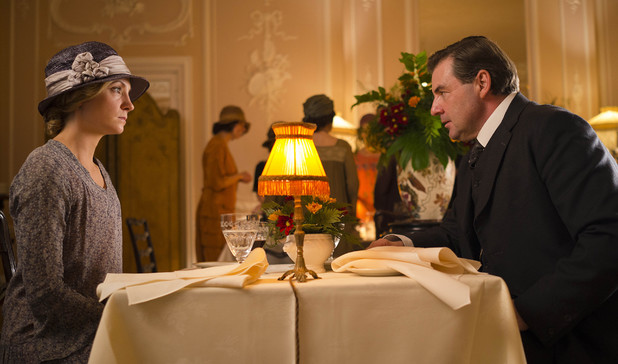
A date in the shadowBates and Anna’s seemingly reconciled relationship is another dark shadow in an otherwise bright episode. I like these contrasts as far as plot is concerned, light and shadow. The intriguing development is with Cora overhearing their conversation in the hotel dining room, and later, Baxter overhearing Cora talk with Mary about her concern. Even though she’s warned not to leak out what she has heard, Baxter has her assignment, the ‘condition’ as Thomas reminds her.

That hotel dining scene is oh so gratifying. Anna has phoned earlier to make a reservation. When actually there, the Maître d’ takes a top-to-bottom glance at their attire, decides there’s no reservation under the name of Bates. Julian Fellowes’ another social justice moment. Lady Grantham, Cora, comes to the rescue, ever so graciously. Isobel would have made a scene.

As for the Maître d’, a perfect casting would be Rowan Atkinson, aka Mr. Bean. Just a thought.

But my favourite scene is when Isobel, Mary, and Tom are in a room waiting to see the little ones being brought in by their nanny. These three are all widowed, survivors of tragedies when their loved ones were unexpectedly taken away from them. Mary is honest with her feelings: “I’m just not quite ready to be happy.” Then, Isobel starts sharing and reminisces on her engagement with her husband Reginald; Tom joins in with his love for Sybil; Mary recalls Matthew’s proposal to her while standing in the snow, not feeling a bit cold. Each recharged by the memory of love. Isobel cheerfully concludes at the end: “Well, aren’t we the lucky ones.”

Your favourite scene?

***

Previously on Downton Abbey Season 4:

Episode 4

Episode 3

Episode 2

2 Hour Opening Special

***

Saturday Snapshot February 1: Summer Breeze Makes Me Feel Fine

Blowin’ through the jasmine in my mind…

I caught myself singing it. Is it just me, succumbing to these Walter Mitty moments more and more this winter? Humour me, let’s take a minute to just zone out of this persistent cold. I’m sure the warm breeze will revitalize you.

Here are some photos I took last summer. Now, imagine seeing…

A Pelican scratching its itch:A Pelican scratch an itch?

A deer playing peekaboo with you:

Peekaboo

Mushrooms growing out of a tree:

Mushrooms growing out of a tree

A Chickadee take flight:

Chickadee in flight

A white spider on a yellow flower:

white spider on flower

Black butterflies on white flowers:

Black on white

An angler fishing at dusk:

Angler at dusk

It’s February already, can spring be far behind?

***

Saturday Snapshot is hosted by Melinda of West Metro Mommy Reads. CLICK HERE to see what others have posted.

ALL PHOTOS TAKEN BY ARTI OF RIPPLE EFFECTS.
DO NOT COPY OR REBLOG 

***