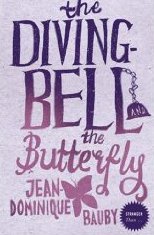
The Diving Bell and the Butterfly: The Memoir

diving-bell-and-the-butterfly-book-cover1

This is one book that should be read after watching the film.  Without visualizing what Jean-Dominique Bauby had gone through after his massive stroke, the reader simply could not empathize or appreciate enough of Bauby’s effort in ‘writing’ his memoir.

But in case you missed the theatre screening and are still waiting for the DVD to come out, you may like to read my review of the film by clicking here.

At age 43, Jean-Dominique Bauby, the editor-in-chief of France’s Elle magazine, was paralyzed after a massive stroke.  The only ability left in his whole body was the blinking of his left eye. With the help of his speech therapist, he learned to communicate with the outside world by blinking to the corresponding French alphabets held in front of him.

When the physical body fails us, what elements remain that can qualify us as a human being? Our beating heart?  Our brainwave?  Bauby’s memoir has so poignantly shown us the two essential functions that kept his soul alive:  memory and imagination.  Locked-in syndrome may have encased his physical body, the butterfly within escapes to the expanse of limitless skies.

The 140-page memoir expertly translated by Jeremy Leggatt comprises of 29 personal essays, ‘written’ one blink at a time, and published shortly before his death in 1997. What is trapped inside a totally debilitated body was a vivid memory and lively imagination, that despite being confined to a hospital bed, can set free a soul that yearns for love and intimacy, a soul that still basks in the humor and pleasures of life.

No words can speak more powerfully than Bauby’s own.  Here are some excerpts from his book.

Shortly before his stroke, he visited his 92 year-old father and helped him shave:

I complete my barber’s duties by splashing my father with his favorite aftershave lotion.  Then we say goodbye…We have not seen each other since.  I cannot quit my seaside confinement.  And he can no longer descend the magnificent staircase of his apartment building on his ninety-two-year-old legs.   We are both locked-in cases, each in his own way: myself in my carcass, my father in his fourth-floor apartment.  Now I am the one they shave every morning…

One would never know how potent memories and the imagination can be:

Once I was a master at recycling leftovers.  Now I cultivate the art of simmering memories.  If it’s a restaurant, no need to book.  If I do the cooking, it is always a success.  The bourguignon is tender, the boeuf en gelée translucent, the apricot pie possesses just the requisite tartness.  Depending on my mood I treat myself to a dozen snails, a plate of Alsatian sausage with sauerkraut, and a bottle of late-vintage golden Gewurztraminer, or else I savour a simple soft-boiled egg with fingers of toast and lightly salted butter.  What a banquet!

Or how poignant the little gestures of love and intimacy are:

While I have become something of a zombie father, Theophile and Celest are very much flesh and blood, energetic and noisy.  I will never tire of seeing them walk along side me, just walking, their confident expressions masking the unease weighing on their small shoulders.  As he walks, Theophile dabs with a Kleenex at the thread of saliva escaping my closed lips.  his movements are tentative, at once tender and fearful, as if he were dealing with an animal of unpredictable reactions.  As soon as we slow down, Celeste cradles my head in her bare arms, covers my forehead with noisy kisses and says over and over, “You’re my dad, you’re my dad,” as if in incantation.

As I finished the book, I could not help but ask myself:  Do I have enough ingredients to practice ‘the art of simmering memories’ if I ever needed to?

~ ~ ~ ½ Ripples


August Rush (2007)

Autust Rush

In a fairy tale, you could throw all the right ingredients up in the air, and everything will fall in place into a gourmet feast right in front of you eyes.  Of course, the table will be set in fancy, with candlelights and all that jazz (you know, just like the “Be my guest” scene in Beauty and the Beast).  But moving-making is no fairy tales, even when you’re shooting one. 

A modern version of Dickens’ Oliver Twist, August Rush is a contemporary fairy tale set right in the realistic and metropolitan New York City: great setting.  A boy growing up in a boys’ home heading out to search for his birth parents merely by following the music in his heart: good story line.  That music has the power to unite souls and connect lost relations: magical idea. And the title ‘August Rush’: how cool is that?

Well, August Rush has all the right ingredients… but it lacks the quintessential elements: a good recipe and a good cook.  Without a good script that delivers intelligent and engaging dialogues, and quality directing to bring it to fruition, the characters remain banal, the story and scenes contrived and the intended magic is simply a concoction in saccharine.  It might still please, but not gratify.

Mind you, I wanted to see the film work.  I’d appreciated the music.  I was enthralled by the ingenious scores juxtaposing classical orchestral work with jamming guitars and raucous rock bands.  I’m also a fan of Keri Russell, have thoroughly enjoyed her performance in The Upside of Anger (2005), in particular.  But her great effort here in August Rush just can’t compensate for her lack of chemistry with Jonathan Rhys Meyers, who, I’m afraid, may be a miscast. I also feel that Freddie Highmore’s character August Rush needs a bit more depth (and less smile), and the overacting of Robin Williams may have done more harm than good…but of course, we need a villain in a fairy tale, don’t we.

Keri Russell plays a young cellist Lyla who is rising to fame in NYC.  She gets pregnant by rock band lead singer Louis (Jonathan Rhys Meyers) in a one-night stand.  The next morning Lyla’s father abruptly stops their relationship before it can even get started.  Louis goes back to England, and both give up their musical career. Months later, Lyla gets in a car accident and gives birth to a son but is told by her father that the baby didn’t survive. The boy grows up in an orphanage.  Compelled by the music he has been hearing in his heart, he runs away to NYC to look for his birth parents. He soon befriended a young busker who leads him to the Wizard, a modern day Fagin (Robin Williams).  The Wizard manages a group of young street musicians, squatters in a shabby abandoned building. Seeing the potential gains from his new found talent, the Wizard takes the prodigy under his controlling wings, until the boy breaks free and follows his inner music that ultimately leads him to the end of his search.

I’m all for wholesome, uplifting and inspiring films, and strongly believe in the power of music, but all good intentions cannot catapult August Rush to reach its lofty goals. 

~ ~ ½ Ripples

Jane Making The List of Best Movies Ever Made

With January to April being Jane Austen Season on PBS where The Complete Jane Austen is being aired on Masterpiece, it’s just refreshing to know that three Austen movies made it to the list of 1,000 Best Movies mentioned in my last post. I’m sure Janeites do not need anybody’s approval, but it’s good to have it just the same.

Again, here’s the link to New York Times’ The Best 1,000 Movies Ever Made. It should be noted that the list is based on the second edition of the book The New York Times Guide to the Best 1,000 Movies Ever Made which was published in 2004. The New York Times on-line edition still have the icon and link for readers to click even as recent as March 3, 2008, apparently they have not updated the list since the publication of the book.

The following are the three Jane Austen movie adaptations that made the list.

Persuasion (1995)Persuasion (1995) with Amanda Root as Anne Elliot and Ciaran Hinds as Captain Wentworth. Here’s a little excerpt from the NY Times:

Of course, Austen’s protagonists are never dumb, but Anne, being somewhat older, is also a good deal wiser, and the characters around her accordingly take on greater dimension and subtlety. Naturally, this being an Austen story, all ends well, but the path is somewhat less straightforward than in other films adapted from her work.

*****

Pride and Prejudice 1940

Pride and Prejudice (1940) with Greer Garson as Elizabeth Bennet and Laurence Olivier as Mr. Darcy. The New York Times had this tidbit about the classic adaptation:

Though Austen’s novel was set in 1813, the year of its publication, the film version takes place in 1835, reportedly so as to take advantage of the more attractive costume designs of that period.

*****

Sense and Sensibility (1995)

Sense and Sensibility (1995) with Emma Thompson, Kate Winslet, Hugh Grant and Alan Rickman. New York Times critic Janet Maslin summed it up:

We need no further proof that this material is ageless.

                          ************

It’s interesting to note that a modern version of Emma also gets a nod from the critics. Thus begins the review of Clueless (1995) on the NY Times:

“Jane Austen might never have imagined that her 1816 novel Emma could be turned into a fresh and satirical look at ultra-rich teenagers in a Beverly Hills high school.”

              Clueless (1995)

Jane Austen’s novels are indeed timeless.

New York Times: Best 1,000 Movies Ever Made

Here’s the link to the list of 1,000 Best Movies Ever Made according to New York Times movie critics. The list is based on the book The New York Times Guide to the Best 1,000 Movies Ever Made, second edition, published 2004.

Do you find your favorites here? If not, which movies do you think should be on the list? Which should not be? A list of 1,000 movies spanning almost a century, you might think there should be a lot of choices, right?

My view:

  • I agree maybe Bambi (1942) should be there, but no Out of Africa (1985) or Shawshank Redemption (1994)?
  • Ok, so Bull Durham (1988 ) is in, but where are Field of Dreams (1989) and Dances With Wolves (1990)?
  • I regret to see The Last Temptation of Christ (1988 ) is on the list but not The Passion of the Christ (2004).
  • So they have The Pianist (2002) but ignore Sophie’s Choice (1982) and Life is Beautiful (1997).
  • I see that Chicken Run (2000) gets to rub shoulders with Ben-Hur (1959)….ookay….and, if Working Girl (1988 ) can get a nod, then where’s my Bridget Jones’ Diary?

… and so on and so forth…

Your view?

3:10 to Yuma (2007)

How many movies have inspired you to read the original book or story right after you’ve watched it? You might think of films like The Kite Runner, Atonement, or Away From Her. But a cowboy flick?

Yes, it sure did for me. And while I’m still looking for Elmore Leonard’s book Three-Ten to Yuma and other stories to read his short story, the source material for this film, I can’t wait to write the movie review. It’s also timely because of the recent release of the DVD.

This is one film that should have received a lot more attention at the Oscars. It got two nominations, one in Original Score, the other in Sound. Well it did get a nod from the Screen Actors Guild for an Outstanding Performance by a Cast in a Motion Picture nomination. It’s also a nominee for Best Picture and Best Supporting Actor (Ben Foster) Satellite Awards.  But if it’s being touted as the best Western since Unforgiven, then why aren’t there any more commotion? Anyway, I’m here to stir some ripples.

This is a modern remake of the highly acclaimed 1957 movie with Glenn Ford. I missed that one. This new version sees Russell Crowe, Christian Bale, Ben Foster and Peter Fonda join hands to create an action movie with a heart and mind. In a way, it’s one typical western, with gunslinging outlaws, headed by the notorious Ben Wade (Russell Crowe), aided by his despicable right-hand man Charlie Prince (Ben Foster), a defenceless cattleman (Christian Bale) and his family, and a few lawmen pathetically trying to enforce some sort of law and order.

I’m captivated by the riveting sequences and twists of the plot leading to the engrossing climax at the end. Anything typical is only a backdrop for the ultimate moral dilemma it sets up for its main characters. Basically it’s a duel of will and conscience for Crowe and Bale. 15 year-old Logan Lerman is right on a par with these two veteran actors.

The movie surprises me with the intense and deep depiction of psychological battles, internal conflicts, and moral choices one has to make in the face of life and death. Its fast action scenes, effective camera works and great acting from the whole cast mask the deeper issues the story is challenging us to ponder: What makes a man? What is the most important legacy a father can leave to a son? I say mask because you think you’re just watching, but actually you’re thinking. How we need this kind of movies these days. The poignant ending is what makes the film beautiful and rewarding.

From Jane Austen to Elmore Leonard…it’s all about life.

~ ~ ~ Ripples

Pride and Prejudice (Part 3): Ideals Universally Acknowledged

I have watched this miniseries countless times, but I still wanted to see it again last Sunday night, the finale of Pride and Prejudice (1995) on PBS’s Masterpiece. I knew I was partaking in a communal experience shared by kindred spirits across North America. Every time I watch it, I glean some new insights, and I cherish the story all over again.

This time, I look into the characters convinced that Jane Austen has depicted the ideal woman and the ideal man in Elizabeth Bennet and Fitzwilliam Darcy. Ideal, not perfect. While they have virtues of their own, they have character flaws that if remain unchecked and unaltered, could well lead to a downfall like a tragic hero. Elizabeth, biased by her confidence in her own judgment, initially found Darcy to be utterly despicable. And Darcy, acting according to his own hubris, only fuels the very prejudice held by the one he admires. In circumstances like this, the ideal scenario is for the characters to change, to transform themselves into a better person in order to earn requited love. And that is exactly what Austen has done, and I think it is one of the main reasons why we love her story. She has put together two flawed characters and placed them in an ideal scenario wherein they strive to improve themselves, and turned into a better person for the sake of the other…Well, maybe more on the part of Darcy, and we love him for that. I like the title Pride and Prejudice more than Jane’s original First Impressions. It gives a bit more depth and sets readers out searching for the universal shortfall in us all. Often our own prejudgment and overconfidence in our myopic view confine us squarely inside the box, unable to see the world beyond.

The portrayal of such transformation is vividly and sensitively acted in the miniseries. Colin Firth and Jennifer Ehle effectively help us envision such an ideal scenario, satisfying our quest for the good, the wholesome, universal ideal of love hidden in us all. Kudos to Andrew Davis. I think he has written an ideal screen adaptation of Austen’s novel. Because of its loyalty to the original and still keeping the integrity of the work even when Davis presents to us imagined visions arise from his own interpretation, I believe this miniseries is the definitive version of Pride and Prejudice on screen.

Again, I have several favorite scenes. Which heart will not melt by that burning gaze of Darcy ardently holding Elizabeth as she rescues his disturbed sister in Pemberley upon the malicious mention of the name Wickham by Ms. Bingley? (BTW, this is Andrew Davis’ favorite scene in all of his Austen adaptations!) Who will not rejoice in Elizabeth’s assertive and eloquent rebuttal against the diatribe of Lady Catherine de Bourgh, and her calm refusal to promise never to enter into any engagement with Darcy? Whose heart will not stir as a restrained yet passionate Darcy extends his second marriage proposal to Elizabeth?

Elizabeth has demonstrated time and again that she has the autonomy to make her own choices, yet Austen has also poignantly shown us that while Elizabeth can choose who to love, she cannot force the other to choose her, especially after her family’s reputation has been ruined by Lydia’s elopement. Darcy learns this lesson much earlier, in a most traumatic and humiliating manner, as he realizes that wealth and social standing, or even his own declaration of love cannot force another person to accept him. Here lies the paradox of love, one can choose who to love but cannot demand requited love. Choosing one’s love manifests the autonomy of self, but having to earn and wait for the other to choose you is a most humbling discipline. Maybe the ideal thing to do in such a circumstance is just to become a lovable person. That could well create the best chance of gaining love.

In the end, it is heart-warming to see both Darcy and Elizabeth, even having decided on each other, yet still quietly pines and waits for the other to declare his/her choice. A sense of uncertainty is what keeps us humble and instills in us the virtue of hope.

“It taught me to hope as I had scarcely ever allowed myself to hope before.”

Knowing our innermost yearning, Jane Austen brings her characters together in the most humbling circumstance, with their mutual admission of wrongs and weaknesses while esteeming the other higher than him/herself, fulfilling the ideal state of love.

“Do not repeat what I said then…I have long been most heartily ashamed of it.”

“As a child… I was given good principles, but left to follow them in pride and conceit… and such I might still have been but for you, dearest, loveliest Elizabeth!”

Through such mutual respect and admiration, our beloved author delivers the ideal ending to the love story of two imperfect persons…and sets us up for another round of watching and reading.

The Ideal Ending

********

Click to go back to Pride and Prejudice Part 1 and Part 2.

If you have enjoyed reading this article, you might like to click on “Jane Austen” in the category cloud on the side bar for more Austen articles here in Arti’s Ripple Effects.

Several of Arti’s articles have also been published in the Jane Austen Centre Online Magazine.  To read more about Jane and the Regency Period, just click on the link highlighted.

********

The Oscar Results 2008

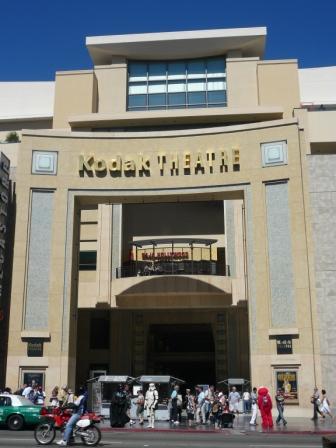
Kodak Theater L.A.

CLICK HERE for Oscar Results 2010

CLICK HERE for the 2009 Oscar Results.

Well I didn’t get to see my favorites winning an Oscar, as expected. But it was exciting seeing them walk down the red carpet and seated in the Kodak Theatre as nominees. For a full list of Oscar winners, you can go to the official Oscars website.

I’m glad to see Juno’s Diablo Cody getting the Best Original Screenplay, and Atonement receiving a nod for Best Original Score. As predicated by many, this year’s Oscars belong to those that portray the killer instinct, with No Country for Old Men grabbing the major ones: Best Picture, Best Director(s), Best Supporting Actor, and Best Adapted Screenplay. Daniel Day-Lewis winning the Best Actor Oscar for There Will Be Blood. The Bourne Ultimatum getting three golds, that’s a little surprise.

I’ve enjoyed the E Talk pre-Oscar show with Ben Mulroney interviewing stars on the red carpet. I just love 65 year-old Julie Christie’s answer to the question about the age disparity in her friendship with Sarah Polley, the 29 year old director of Away From Her: “She’s the old one, I’m the juvenile.” The lady sure has some wit.

What impress me most are the credits and tributes many of these Hollywood celebrities give to their mother and father for their achievement. My admiration goes out to them for that. Here are a few that I’m really fond of:

  • It’s heart-warming to see Javier Bardem honoring his mother and thanking her in Spanish during his acceptance speech.
  • Another one is Daniel Day-Lewis, acknowledging his grandfather, father, and his sons. How sweet is that?
  • While still on the red carpet, Jason Reitman, director of Juno, gives the ultimate credit to his mom and dad, acknowledging that everything he is today he owes it to his parents, and getting a kiss from dad Ivan Reitman for that.
  • And Diablo Cody, screenwriter for Juno, thanking her parents for accepting her the way she is…

These are just some examples I remember, and I’ll remember them for a while.

The Independent Spirit Awards

Some pleasant results from the Independent Spirit Awards held in Santa Monica today (Feb. 23). This is the dressed-down film awards ceremony honoring low-budget indie films, which takes place in a tent, and has gone green, completely environmental friendly according to host Rainn Wilson. For a full list of winners, click here. Some results I’m happy to see:

Cate Blanchett and Ellen Page

Juno: Winning Best Feature, Best Actress Ellen Page, and Best First Screenplay Diablo Cody. Ellen Page’s awestruck face and shaky voice as she gave the acceptance speech is the icing on the cake…sweet.

The Diving Bell and the Butterfly: Best Director Julian Schnabel, Best Cinematographer Janusz Kaminski.

Also, there are some very pleasant moments seeing:

  • A very pregnant Cate Blanchett winning Best Supporting Female for I’m Not There.
  • A still attractive Marisa Tomei, nominee for Best Supporting Female in Before the Devil Knows You’re Dead.
  • And last but not least, Darcy in jeans, yes, Colin Firth, the man himself, presenting the Best Screenplay Award.
Colin Firth

Great momentum, great spirit, all charged up for the grand movie award of the year, tomorrow’s Oscars Ceremony. And, Colin, we’re ready just the same to watch Pride and Prejudice after that, for the…ooh…I’ve lost count how many times.

(Photo Sources: Cate Blanchett and Ellen Page from Gossip Girls, Colin Firth from Wikimedia.)

The 80th Academy Awards

Just a few days to the Oscars and I still haven’t written my take on the grand event of the year. Let me catch up.

I’ve been asked about my view on the nominees. Having seen all of the movies in the Best Picture category, I’ve to admit my opinion may very well differ from other critics’. Case in point is No Country For Old Men, one of the two favorites to grab the Best Picture Oscar. I may well be ostracized for saying this, but I feel that the movie is way overrated. In this already dysfunctional and desensitized world of ours, why would we still need a 2-hour movie showing the dark and evil side of human by graphically depicting the deepest hell evil can raise through a psychotic killer let loose, introducing new ways of killing and getting away with it, on and on with no end in sight? I admit I haven’t read Cormac McCarthy’s book, maybe he’s more well-meaning than the film adaptation, having chosen William Butler Yeat’s line for his title.

Call me ‘traditional’ or ‘moralistic’, when I go to see a movie, I still look for something ‘wholesome’. Yes, I’ve long passed that stage when, as a child watching a movie, I would constantly be asking whether a character is ‘good’ or ‘bad’. But now as a meaning-seeking adult, I still yearn for the ‘point’ of the film. Despite the chaotic world we’re so used to nowadays, I believe there still remains in us a vacuum that can be filled only by ideals transcendent and relationships meaningful. And film, being a visual form of communication, can be a powerful medium to express this kind of human quest. And that is one of my main criteria of a worthwhile piece of entertainment.

Ok, so here’s Arti’s take on the major categories.  Who will win and who I’d like to see winning can be very different.

Best Picture: Even though No Country for Old Men and There Will Be Blood are the critics’ favorites, I prefer Atonement.

Best Actor: While I haven’t seen Johnny Depp’s performance in Sweeney Todd, I think Daniel Day-Lewis has done an impressive job in There Will Be Blood and may well get to take home the golden statuette.

Best Actress: I’d love to see Julie Christie win another Oscars. The last time was more than 40 years ago, which I didn’t get to see. I think she well deserves another one with her performance in Away From Her.

Best Director: Although the favorite is the Coen Brothers for NCFOM, I’d like to see Julian Schnabel receiving it for The Diving Bell and the Butterfly.

Best Adapted Screenplay: I have 3 favorites here, Atonement, The Diving Bell and the Butterfly, and Away From Her. If I must choose one, I’d just wish to see lovely Sarah Polley winning it for Away From Her.

As much as I’ve enjoyed the movie Atonement, I don’t think it’ll grab the hearts of the voting members of the Academy. I can see it winning a couple in the minor categories like Best Costume, Best Art Direction, Best Music (Score), and hopefully Best Cinematography.

And, with all the rave Canada is making about Juno, and I’m glad to see it receive 4 major nominations, Best Picture, Best Actress, Best Director, and Best Original Screenplay, I’ve a feeling that the ‘Little Miss Sunshine episode’ may not be repeated this year. And, if I’m right, let’s just say getting these 4 Oscar nods is already phenomenal for so young an ensemble.

Click on ‘Movies Reviewed’ above to read my reviews on some of this year’s Oscar Nominees.

And…let’s occupy ourselves with meaningful endeavors to pass these three long days of anticipation…

Pride and Prejudice (Part 2): My Favorite Scenes

Unexpected encounter with Mr. Darcy

The second installment of Pride and Prejudice aired on PBS carries some of my favorite scenes in the whole miniseries. The ‘wet shirt’ episode, the favorite of many, is naturally one of them. Thousands have already talked about it, but allow me to add one small voice here. I find the surprise and embarrassing encounter of Elizabeth with the dripping wet Darcy to be an ingenious creation by Andrew Davies, an imaginary addition easily forgiven by many Jane Austen purists, I suppose. My reason for adoring this scene can be summed up in one word: vulnerability.

Both are caught unprepared and their vulnerability makes them equal. The inhibition of Elizabeth’s fondness of the place and her bewilderment of Darcy’s character based on the housekeeper’s compliments are well matched by Darcy’s eagerness to make a good impression but alas, while being caught in the most uncouth manner. Both clumsily and comically try to regain composure and maintain some form of civility. In the spontaneity of the moment, pride is laid aside and prejudice banished. And Darcy, stripped of his usual formal attire, presents his dripping and humble self in the most unguarded manner. Colin Firth has so vividly shown us that genuine and dishevelled appearances can be utterly appealing.

Another favorite scene of mine comes shortly after this chance encounter. As Elizabeth is driven away in the open carriage, she looks back at Darcy in a distance, wearing the fulfilled and satisfied smile on her face, while the camera, from her point of view, captures the handsomely poised Darcy seeing her off, his tall and slender physique growing smaller and smaller in the distance as the carriage is being pulled slowly away…how much tenderness can a camera shot elicit?

But before this beautiful departure at Pemberley, there is the duel of words. The scene I like most in this Part 2 of Pride and Prejudice is probably the first marriage proposal in Hunsford parsonage. Darcy’s words have but achieved one function: confirming every single prejudice Elizabeth might have held towards him. Through Elizabeth, Jane Austen has eloquently delivered her social commentary on the female predicament of her time. While love can be the most attractive reason for marriage for idealistic Lizzy, her better, rational self challenges the form, the motive, and the consequence of love. Would she be satisfied with the kind of love that is condescending, unequally bestowed, that is based on feelings ‘despite of’ and not admiration ‘because of’? Austen has articulated her critique on marrying for financial gains, even for the common good of securing the future of one’s whole family. A condescending relationship, despite the appearance of fondness and love, does not warrant the sacrifice of one’s dignity and value. Elizabeth has demonstrated clearly she has a choice, and she exercises her freedom to reject despite of the lure of wealth, status, and security. Just this scene is reason enough for me to admire Jane Austen.

*******

Click here to go directly to The Finale, Pride and Prejudice Part 3.

Click here to go back to Part 1.

Arti’s three posts on Pride and Prejudice (1995) have been combined into one article and published on the Jane Austen Centre Online Magazine.  To read that and other interesting articles about Jane and the Regency Period, click here.

Memorable Movie Love Quotes

To celebrate Valentine’s Day, I’ve compiled a list of memorable quotes from movies, all on the theme of love. All come from movies I’ve seen, some I’ve reviewed on this Blog (click on title to my review). They represent dialogues that have stirred some ripples in one small heart. And love…being a many splendid thing, embraces all kinds of human relationships, and transcends cultures and boundaries.
.

Here’s Arti’s Collection of Memorable Movie Love Quotes:

  • Medicine, law, business, engineering, these are noble pursuits and necessary to sustain life. But poetry, beauty, romance, love, these are what we stay alive for. — Dead Poets Society
  • The greatest thing you’ll ever learn, is just to love and be loved in return. — Moulin Rouge
  • The things that people in love do to each other they remember, and if they stay together it’s not because they forget, it’s because they forgive. — Indecent Proposal
  • I like you very much. Just as you are. — Bridget Jones’s Diary
Bridget Jones' Diary
.
  • When the planes hit the twin towers, as far as I know none of the phone calls from the people on board were messages of hate or revenge — they were all messages of love. — Love Actually
  • Maybe it is our imperfections which make us so perfect for one another. — Emma
  • And now, I’m back…and I’ve lost her all over again. I’m so sad that I don’t have Kelly. But I’m so grateful that she was with me on that island. And I know what I have to do now. I gotta keep breathing. Because tomorrow the sun will rise. Who knows what the tide could bring? —Castaway
  • I don’t believe in quantum physics when it comes to matter of the heart. — Bull Durham
Kevin Costner in Bull Durham
.
.
  • Shoot me. There’s no greater glory than to die for love. — Love in the time of Cholera
  • I need to feel strongly, to love and to admire, just as desperately as I need to breathe. — The Diving Bell and the Butterfly
  • For you, a thousand times over. — The Kite Runner
  • Come back…Come back to me. — Atonement
  • Natalie:  Do you believe in love at first sight?
    John:  Yes I do. Saves a lot of time. — The Stickup
    .

.

While a few are lucky enough to save time and escape the torments of love by creating a lasting flame from the first spark, some have to go through tumultuous pining, even the arduous and humbling experience of transforming oneself to gain requited love. And who, other than the following, epitomizes such kind of yearning:

Love Quotes From Downton Abbey:

“I love you Mr. Bates. I know it’s not ladylike to say it, but I’m not a lady and I don’t pretend to be.”  — Anna, S1E5

“I’m not a romantic… But even I concede that the heart does not exist solely for the purpose of pumping blood.” Violet Crawley, S2E2

“I’d rather have the right man, than the right wedding.” — Anna, S2E5

***

You all are welcome to contribute to this list. Just submit your favorite movie love quotes in the comment box below…and have a memorable Valentine’s Day!


Pride and Prejudice (1995 TV)

Colin Firth and Jennifer EhleIs it coincidental that PBS has chosen, of all the six Jane Austen adaptations, to air Pride and Prejudice the Sunday before Valentine’s Day? I think they must have strategically placed it there, knowing that this novel is one of the most-loved books in literature, as the results in recent polls have shown. They must have known that Pride and Prejudice is ranked the third most reread books in Britain, and first in a poll on books that people in the British nation can’t live without.

Other surveys reveal similar results. In a 2003 BBC poll, Pride and Prejudice ranked second as UK’s favorite book. In 2007, it ranked first.

Only in Britain, you might say…but it seems like this is a phenomenon across countries.

In Australia, Austenmania and Janespotting are the common terms to describe this unprecedented occurrence since the mid 1990’s. The Pride and Prejudice miniseries (1995) broke TV ratings, books and sales records.

Jane Austen takes an international stance as it goes multicultural. In Bride and Prejudice (2004), the best-loved Austen novel received a dashing Bollywood makeover. Which country doesn’t have its own class system and prejudice? The movie has also put Aishwarya Rai (with Colin Firth in The Last Legion, 2007) on the world map.

Most recently, Venezuelan director Fina Torres is getting ready to film Sense and Sensibilidad, with screenplay by Mexican Luis Alfaro. Locations of filming will be in Mexico and East L.A., and to be released at the end of 2008. If Jane is around she would be much gratified and amused to see her books gaining such a multi-cultural following.

Just last Friday, the February 8th issue of the Taiwan-based (North American East Edition) Chinese Newspaper World Journal has a full-page coverage on Jane Austen and her many movie and television adaptations.

In the cyberworld, as recent as this past week, Project Gutenberg ranks Jane Austen as the third most downloaded author in the past 30 days after Mark Twain and Charles Dickens, while Pride and Prejudice is the most downloaded Austen books.

But of course, statistics are irrelevant when it comes to matter of the heart.

We who love Austen’s works and in particular, for me, Pride and Prejudice, will continue to reread the book and rewatch this TV miniseries regardless of what the polls show. Different people might find different reasons for its appeal. But I, for one, feel that Austen has created through Elizabeth Bennet and Fitzwilliam Darcy the ideal (note: not perfect) woman and the ideal man. I see in them the essential ingredients of relationships, with oneself, and with others: respect, compassion, kindness, generosity, hope, and grace, but above all, the willingness to change and be transformed for the better. I’m much grounded to expect perfection in the human world, but through Austen’s depiction I can cherish and admire the ideal.

With Valentine’s Day drawing near, and with our world unfolding as it is, cherishing the ideal could well be the key to help us build a more beautiful tomorrow.

*******

Click here to go directly to Pride and Prejudice: Part 2.

Click here to go to Part 3, The Finale of Pride and Prejudice (1995 TV).