Amazing Grace for Christmas

 Amazing Grace

This is one amazing film about an extraordinary man’s fight against slavery in 18th Century England.  The story chronicles Christian Parliamentarian and social reformer William Wilberforce’s mammoth battles in the British political arena to abolish the slave trade.

At that time, slaves were shipped from Africa to the West Indies in appalling conditions, many arriving dead.  They were chained to work on sugar plantations of British owners. Abolishing the slave trade meant a threat to the very economy of Great Britain.  William Wilberforce had given up twenty youthful years and his health to champion the anti-slavery cause.  Three days before his death, he saw his life-long advocacy triumphant as the abolition bill passed in the House of Commons, demolishing the institution of slavery in all of the British Empire.

The film is a display of superb artistry.  First of all, it benefits from a well-written screenplay by Steven Knight.  The award-winning Knight’s other film Eastern Promises (2007) has just garnered 3 Golden Globes nominations including Best Picture.

The exceptional cast is most satisfying to watch. Welsh actor Ioan Gruffudd is William Wilberforce, whose performance is intelligent and engaging.  He is effectively supported by a mass of extraordinary British actors, among them the veterans Albert Finney and Michael Gambon.

Albert Finney plays John Newton, the Pastor and mentor of Wilberforce.  It is from Newton that Wilberforce draws his inspiration and strength for his cause.  Newton himself used to be a slave trader.  His ephiphany came during a deadly storm while he was on a slave ship. The tempest he encountered reflected the torrents of guilt billowing in his own conscience.  Ultimately yielding to a merciful God, Newton was totally changed.  He abandoned the slave trade, his own livelihood, and became a Christian Pastor, spreading the message of God’s love and the freedom God had intended for all people. His writing of the tune and lyrics of Amazing Grace summed up the poignant conversion in his life.

The meticulously researched and designed period costumes and set, together with the fine cinematography bring out a beautiful and engaging film.  In many scenes, I feel like I’m looking through a portal of Rambrandt and Vemeer’s paintings in motion. 

The DVD is packed full of commentary and background information.  The music video of Chris Tomlin playing the piano and singing his contemporary version of Amazing Grace is both a visual and audio delight. 

One note of caution though, the film follows closely the British Parliamentary proceedings and political debates of the time.  Those anticipating a more romantic rendition may not have their expectation met.  However, I find the film very educational, informative, as well as inspiring.  What better gift to give this Christmas than the message inspired by the song Amazing Grace:

Chris Tomlin – Amazing Grace

(My Chains Are Gone)

Amazing grace
How sweet the sound
That saved a wretch like me
I once was lost, but now I’m found
Was blind, but now I see
‘Twas grace that taught my heart to fear
And grace my fears relieved
How precious did that grace appear
The hour I first believed
My chains are gone
I’ve been set free
My God, my Savior has ransomed me
And like a flood His mercy reigns
Unending love, Amazing grace

~ ~ ~ 3 Ripples

2008 Golden Globe Nominations

The list is out, and the winner is….

James Schamus, CEO of Focus Features, distributor of the film Atonement, which claimed 7 Golden Globe nominations. Schamus has been riding high on his winning streak with Lust Caution, which he co-wrote and executive produced. Director Ang Lee’s Lust Caution recently garnered 7 Golden Horse Awards in his native Taiwan, after snatching many other film awards including the Golden Lion at the Venice Film Festival earlier this year.  The movie also got the nod from the Golden Globe for a Best Foreign Film nomination.

That’s the glamour of winning (being nominated in 7 Golden Globe categories is already a win).   Such is the licence to bask in the recognition, the exposure, the praises, the esteem-boosting limelight and afterglow in the movie business, no wonder Schamus said, “I’m back from Taipei and I’m on such a high.” 

 And in another corner, I see another film quietly being recognized, receiving one acknowledgement.  Julie Christie is nominated for her role in Away From Her.  That’s the sole recognition of this Canadian film by the Hollywood Foreign Press Association at the Golden Globes.  I can see film director Sarah Polley quietly pleased, for I think she knows but is too modest to admit that it takes an inspiring and talented director to bring out the acting best from her actors.  That at 28, she could work well with the reclusive and iconic Julie Christie, and Canadian veteran actor Gordon Pinsent speaks volume to her maturity and skills.

Recently honored by the New York Critics Circle with their Best First Film Award, as well as the Los Angeles Film Critics Association’s New Generation Award, Sarah Polley once said during an interview:

“I don’t’ think that there’s any chance that I would get nominated. I mean I really hope that the actors have a shot at it …it would be such a dream come true if they were acknowledged…”

Such gracious words from a 28 year-old just serve to prove that it doesn’t need a Golden nod to have a golden future. Be prepared, Sarah, to see many dreams come true.

Lacock Village: Popular Film Location

From Bath, I took a 4-hour afternoon excursion out to the Stonehenge and Lacock Village on a Mad Max Tour. Stonehenge, I’ve always wanted to see, but Lacock is a serendipity. I joined a small group of 9 other visitors in a mini-bus parked across the Bath Abbey. As soon as he stepped into the bus, our guide and driver Charles clarified that he wasn’t Mad Max. The Bath family-run tour company was named after owner Maddy and her dog Max. On top of this piece of crucial local tidbit, Charles was most helpful in furnishing us with all sorts of information we ever wanted to know and ask about the Cotswold area and our destinations.

I’m debating whether I should post pictures up here because any picture of the Stonehenge would seem like a visual cliche, for it’s probably one of the most recognizable stone arrangements in the world. However, mine are different, I thought, not for artistic value, but mainly because they are taken by me personally, and not from any postcards, or downloads from the Internet. So here they are, Arti’s contribution to the photo world, two more pictures of the Stonehenge.

the-stonehenge.jpg

the-stonehenge-1.jpg

The ride out to the Stonehenge from Bath was about 60 minutes. The day was December 2, 2007. It was very, very windy and cold that day out in the open field where the Stonehenge was situated. Fortunately the rain let up a bit as we stepped out the mini-bus, giving me the chance to walk around the mysterious arrangements, in time to take about 20 pictures as I circumvented the site a couple of times. The audio guide was most helpful, but as I was confronted by the very sight, the sound seemed to fade into the background. I was busy taking my pictures, fighting against the fierce gale and the imminent threat of pouring rain. The what, the how, and the why of the Stonehenge remain a mystery to this day.

After an hour’s stay at the site, we hopped back onto the bus for our next destination: Lacock Village. Before the tour, I had not heard of this place. It was a serendipitous find…and a pleasant surprise indeed.

From Charles, we learned that Lacock, a National Trust medieval village preserved for its historical elements, is a popular spot for film productions. But before I give away all the films that has been made here, and actually, only a particualr one that I was most interested in, first here are a few shots of the Village. As we arrived, it was around 4 pm, but dusk had already set in. In the rain and cold wind, I was only able to take a few shots as I grabbed my umbrella under my arm. Looking at them now, they correspond closely to the time of day where the actual scene appears in the film. To enhance their visibility, I’ve lightened them a bit here.

Recognize these buildings? Imagine there were no cars and the road was not paved…

lacock-meryton.jpg

lacock-meryton-night-of-the-ball.jpg

the-red-lion-meryton-ball.jpg

Yes, they were shots of Meryton in the BBC (1995) made for TV miniseries Pride And Prejudice…the ‘wet shirt’ version with Colin Firth, as Charles expertly informed us. Yes I know the version, I told him, my favorite. The Red Lion in the third picture was used as the exterior shot of the assembly room where the Meryton Ball took place in the beginning of the movie. That was when Darcy, Bingley, his sisters and Mr. Hurst got off the carriage to attend the country Ball in the evening, eyeing haughtily at their surroundings (except Bingley of course).

Other than Pride And Prejudice, Lacock was also the film location for Emma (BBC 1996), the Harry Potter movies, and most recently the new Harry Potter production (2008 ) by Warner Bros. on another street. But the Village of Lacock probably won’t be easily recogized in that movie because the facade of the buildings there had been changed for the filming. The 1995 BBC Pride And Prejudice production used the authentic buildings as they appear in the above photos. I recognized them as soon as I turned into the street that late afternoon,…adding a serendipitous Austen touch to my Mad Max excursion.

The photos you see in this post are taken by Arti of www.rippleeffects.wordpress.com. December, 2007. All Rights Reserved.

If you see them and/or any parts of the texts in a site other than Ripple Effects, then you know they have been copied without permission. I thank my readers for alerting me in the past, and I continue to appreciate their watchful eyes in the future.

Miss Potter for Christmas

It’s not too early to make up a Christmas gift list, or actually start some Christmas shopping. I’ve a recommendation here for a DVD that you can safely watch with your children. But you’d also want to watch it by yourself too, because then you can savour in solitude the touching moments an adult can appreciate, and yes, shed a private tear, and let the movie work its magic freely in your heart.

Miss Potter (2006) is the story of Beatrix Potter, the creator of Peter Rabbit, one of the best loved children icons of all times. The film is a gem glittering with acting talents. As Beatrix, Renée Zellweger (Oscar for Cold Mountain 2003) brings to the screen a most delightful character, her genuine and innocent demeanor captures the audience’s heart the very moment she appears. She receives nominations this year for a Golden Globe and a Saturn Award for her role in Miss Potter, and well deserved.

Ewan McGregor (of Star Wars and Moulin Rouge fame, no relation to farmer McGregor) plays the slightly comical first-time publisher who has made history with his appreciation and confidence in the talents of Beatrix. The two naturally fall in love. Like a Jane Austen novel, such a relationship is frowned upon by Beatrix’s upper-middle class family and openly forbidden. But this time, a hundred years after Jane, Beatrix boldly confronts the inequitable and restrictive Victorian values and norms.

Emily Watson, herself an Oscar nominee for her role in Gosford Park, (and she is excellent in Angela’s Ashes), plays a lively supporting role as McGregor’s unmarried sister. The social issue of the unmarried female in a male-dominated society is freely explored through her outspoken character, but not without poignancy.

I must mention the song written for the movie, which has won the 2007 World Soundtrack Award for Best Original Song Written for Film. “When You Taught Me How To Dance” is sung by Ewan McGregor in the film during a mesmerizing and moving scene. As the credit rolls in the end, this touching tune is heard again, this time in its entirety performed by Katie Melua. Now, she’s another story to write about.

The captivating soundtrack matches the beautifiul scenery and period costume, together with the excellent script and the whimsical animation of Beatrix’s animal friends, make the movie utterly enjoyable and gratifying, but still delivering effectively the depth of sentiments and the dramatic twists and turns.

The DVD includes background on Beatrix Potter, commentary by director Chris Noonan and a making-of documentary with extensive interview with Renee Zellweger, plus a music video performed by Katie Melua singing “When You Taught Me How To Dance”. A valuable collection and I’m sure, a welcomed gift.

~ ~ ~ Ripples

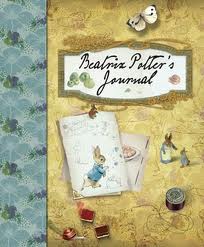
Beatrix Potter: A Journal (2006)

Beatrix Potter A Journal Book Cover

As a companion to the movie, and another great gift idea, is the book Beatrix Potter: A Journal which came out last year. A visual journal in the vein of Nick Bantock, the book is an imaginary scrapbook Beatrix would have made to chronicle her own life, with handwritten entries and notes, amusing drawings, little attached booklets, photo albums, and letters that can be taken out from envelopes. The book corresponds amazingly well with the movie, like a visual commentary.

Here are a couple sample pages from the journal:

webpage-beatrix-journal-3.jpg

webpage-beatrix-journal-4.jpg

~~~3 Ripples for both Movie and Book

Batman Sequel: The Dark Knight on Location in Hong Kong


From Beowulf to Batman, we are a people of hero seekers, real or imaginary.  Our incessant quest seems to be even more acute in recent years as Hollywood plays a major role in fanning the flame.  The latest frenzy is in Hong Kong, where the new Batman movie The Dark Knight is filming on location.

To be released in July, 2008, the Batman sequel will again feature Christian Bale as Bruce Wayne, Michael Caine as Alfred and Morgan Freeman, Lucius Fox.  Reportedly, Jack Nicholson was furious to find out that Heath Ledger will be replacing him as The Joker.  For the first time, Batman is going to venture out Gotham City, and the Metropolis of Hong Kong is the very location (plus Chicago and England) director Christopher Nolan finds most suitable for the superhero’s new crime fighting scenes to take place.

Thanks to my Hong Kong correspondent, I received these fresh photos, taken near the filming location in Hong Kong Central.  Crowds gathered to watch from a distance, many eagerly taking pictures of the filming.  The insatiable quest for the hero figure is indeed universal:

blog-batman-crowd.jpg

blog-batman-crowd-2.jpg

blog-batman-crowd-3.jpg

The International Finance Centre (IFC), where Batman reportedly will jump off:

hk-ifc-pic-5.jpg

Filming inside the famed Central-Mid-Level Escalator Walkway System:

blog-batman-filming.jpg

blog-batman-filming-2.jpg

Photos copyright:  IPTV, November, 2007.

Used by Permission.

Update Jan. 22, 2008: Heath Ledger was found dead in his Manhattan apartment today.  He was 28.

Lust, Caution: The Original, The Translation, The Movie

Let me jump on the bandwagon and join in the discussion of the latest Ang Lee (Crouching Tiger, Hidden Dragon, 2000; Brokeback Mountain, 2005) movie. Lust, Caution has garnered much praise and recently won the Golden Lion at the 64th Venice International Film Festival.  Before my review, I’d like to offer some background here relating to the original short story on which the film is based, as well as its translation.

THE ORIGINAL
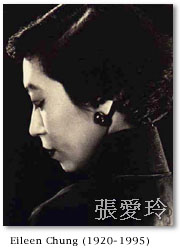
Eileen Chang 1920 - 1995“Lust, Caution” is a short story written by Eileen Chang (Zhang Ailing), a writer born 1920 in Shanghai. Chang attended the University of Hong Kong from 1939 to 1941, majoring in Literature.  As the Japanese invasion advanced to Hong Kong, Chang had to cut short her education there and return to the then Japanese occupied Shanghai in 1942, where she began her vigorous writing career.  In a few short years she had gained popularity as a novelist, short story writer and essayist.

Eileen Chang had been compared to Eudora Welty and Katherine Mansfield, and was considered one of the few eligible contemporary Chinese writers as a candidate for the Nobel Prize for Literature.  In 1952 she went back to Hong Kong and continued to publish, finally moving to the United States in 1955. A year later she married the scriptwriter Ferdinand Rehyer.  After Rehyer’s death in 1967, Chang continued to be prolific as a writer and translator of her own works, many of which had been turned into screenplays.  The more well known ones include Red Rose White Rose (1994), and Love in a Fallen City (1984), garnering numerous nominations and awards.  Apart from writing, Chang had also taught at Radcliffe College and UC Berkeley.  She lived reclusively in the latter part of her life and in 1995, died alone in her apartment in Los Angeles.

Chang’s style is crisp and explicit, her choice of words sharp and sensual, her subject matter contemporary.  Considered progressive in her days, Chang boldly dealt with the dichotomies of eastern and western cultures, tradition and modernity, and inevitably, male and female power relations, love and betrayal.  “Lust, Caution” the short story exemplifies her style and encompasses these subject matters.

In ‘Lust, Caution’, Chang has demonstrated that she is a master of story-telling.  Her talent lies in her succinct and incisive descriptions, the economy of words.  It is this feature that the 39-page short story is so compelling and memorable.  The story moves swiftly, effectively spilling the thrill and suspense, and bringing its reader to an intense and hard-hitting climax and ending.

Following the succinct style of Eileen Chang, here’s a synopsis of the story.  Wang Chia-chih, a university student, was recruited by a group of amateur student resistance to play a role in the assassination of Mr. Yee, the head of the secret police in the collaborative government in Japanese occupied Shanghai during the 1940’s.  Her mission was to seduce Mr. Yee and gain his trust, setting the stage for her fellow resistance members to strike.  Throughout the story, Chang intertwined the elements of love and lust, loyalty and betrayal, mass patriotism and individual desire to effectively move the story to an explosive climax.

lust-caution-chinese-book-cover-larger-size.jpg

The Special Limited Chinese Edition I have is some sort of a movie tie-in edition.  It includes the 39 page short story, printed pages of Chang’s orginal handwritten manuscript, an article written by herself in defence of her story against a critic, and another short story published posthumously.  It is published by Taiwan’s Crown Publication, just freshly out in September, 2007.  If you read Chinese, this is a valuable collector’s item.

THE TRANSLATION

Lust Caution English TranslationThis movie tie-in English edition (New York: Anchor Books, 2007) is aptly translated by Julia Lovell, professor of Chinese history and literature at the University of Cambridge.  True to the style of Chang, Lovell’s translation is succinct and incisive, moving the story swiftly and thus enhancing the suspense and intrigue.

I find her Forward particularly helpful in that she included her own insight on the characterization, furnishing her readers with the essential background to Chang’s own life, which paralleled the protagonist Wang Chia-chi.  Her discussion on Chang’s writing style and the political realities during the Japanese occupation of China in WWII is particularly useful for one to appreciate the story.

Lovell’s commentary is lucid: “…[the climax and ending] give the story its arresting originality, transforming a polished espionage narrative into a disturbing meditation on psychological fragility, self-deception, and amoral sexual possession.”

This little book includes as well an Afterword by director Ang Lee, and a provocative essay by screenwriter/producer James Shamus, who also teaches at Columbia University.  A good read on its own.  If you read English, this is a keeper.

THE MOVIE

Lust Caution

I must admit, I had read the story in its original Chinese version twice and the English translation once before I went to see the movie.  Whether this could have affected my opinion can well be a possibility.  I went into the theatre with high expectations after reading the numerous reviews and comments from LC fans.  I was also aware that a movie should be judged on its own merits as a different artistic genre from the literary work.  After all, I had written on this topic in my post Vision not Illustration.

As a Chinese film director, Ang Lee has the advantage of visualizing Eileen Chang’s story as an insider, one who is in touch with the language, and the sociocultural and historical background.  Armed with these qualifications, Lee has successfully created an appealing atmosphere of nostalgia and exotic visualization through cinematography and symbolism.  He has laid out for his viewers a delectable visual feast.

But maybe because of his very attempt at perfecting the mood and setting up in details the scaffold of the story, Lee (or should I say the screenwriters James Schamus and Hui-ling Wang) had taken a bit too much time in the process.  I feel the 158 minutes could be shortened to keep alive the element of suspense. Further, being an experienced and talented director as Ang Lee, I’m sure if he so chooses, he can think of different ways to portray passion and possession without explicitly telling so by mere graphic eroticism scene after scene.  Ironically, the raw erotic displays may have robbed the viewers of the very emotions the director has intended for them.  I long for the swiftness of Eileen Chang and the subtlety of Wong Kar Wai as he did with In the Mood for Love (2000, also with Tony Leung).  Especially when one considers the laconic and intense climax bursting out at the end, the earlier part of the movie seems to be disproportionately long and off-balance.

As far as the delectable feast goes, the period costumes and setting, the cinematography, as well as the performance by the highly skilled actors Tony Leung and Joan Chen are all laudable and must be given credits.  As a first time actor, Tang Wei is proficient in capturing the ambivalence of conflicting emotions and longings as Wang Chia-chih.  American born singer/actor Lee-Hom Wang is adequate as an amateur student resistance leader.  Ironically, just because of his lack of experience in acting fits well with his role, depicting the raw naivety of the young patriots of the time.

Despite the concerted efforts of the cast and crew and the well intentions of the director, the film is bogged down by a script that ought to have been shortened by at least a half hour to bring out the element of suspense, and keep the integrity of the spy-thriller genre.  In her defence of the brevity of description in her story, Eileen Chang wrote, “I never underestimate the critical thinking skill of my readers.”  If the screenwriters had marked her words, the film would have been much more effective and gratifying.

~~2 1/2 Ripples

Snow Cake: Autism and Beyond

Snow Cake

Snow Cake (2006)–For those who wait for a movie to come out on DVD before seeing it, here’s a recommendation. Snow Cake came out a few months ago on DVD but is still on the current release shelf. It opened the 2006 Berlin International Film Festival with a gala screening, and was shown at numerous film festivals last year including the TIFF.

Seems like a long wait, but well worth it. And for those who have already seen it in theatres, the DVD release could well be the second wind. Considering all the special features of interviews with director and cast, as well as the quality deleted scenes, you might want to keep this one.

Filmed in Wawa, northern Ontario, the Canadian and British collaboration is one of those gems that can be found quite readily in the indy batch. Welsh director Marc Evans has won several European film awards. On top of his sensitive handling of the story, the film benefits greatly from an amazing cast.

Alan Rickman is Alex Hughes. While driving through Ontario to Winnepeg,  he picked up a young hitchiker, Vivienne (Emily Hampshire, who was nominated for a Genie for this role).  During the trip they got into an accident and the girl was tragically killed.  Propelled by guilt and responsibility, Alex went to look for Vivienne’s mother Linda, played by Sigourney Weaver, in the town of Wawa.  Upon finding her, it did not take long for him to notice that she had received the news with a very different light. Linda was autistic. From his short stay with her, coming to invovle in Linda’s life and getting to know her mysterious neighbour Maggie (Carrie-Anne Moss), Alex drove on to his destination a few days later with a new perspective on himself and his ordeal.

Even though short-lived, Vivienne’s character is memorable. Her enthusiasm for life and acceptacne of those around her underscores the film.  The sound of Broken Social Scene adds a touch of lively, contemporary flare, like a tribute to the affable character of Vivienne. In contrast, Alan Rickman’s role as Alex is painfully affective. At times it is heartwrenching to watch as he deals with his internal torments as the story reveals itself.

Sigourney Weaver had spent a whole year researching on autism to ready herself for the role of Linda.  And for most parts, she has delivered a convincing performance. But it is the screenwriter Angela Pell that has so poignantly depicted the limitations but also the different views and insights an autistic person can offer those who are considered ‘normal’. Pell has mingled her characters, autistic or not, into a pool of humanity, revealing the indistinguishable, common thread joining them all.  Her script is at times very funny, and at times permeates with pathos. Through the words of Linda, the punchline is delivered ever so aptly at the end. Angela Pell has indeed written from her heart and her own experience.

She is mother to a nine-year-old autistic son.

~~~3 Ripples

Vision not Illustration

Read a post entitled “It’s All About the Story” on the Austenblog relating the controversial remarks the Welsh filmmaker Peter Greenaway made recently in an international film festival.  He criticised modern blockbusters like the Harry Potter and Lord of the Rings series, dismissing them as “not films but illustrated books”.  As for all the Austen movies sprouting up in recent years, Greenaway said:

Cinema is predicated on the 19th-century novel.  We’re still  illustrating Jane Austen novels—there are 41 films of Jane Austen   novels in the world.  What a waste of time.”

This is my response.  I recognize that not all attempts of turning books into films are successful, many far from being effective.  However, a good movie should be the portrayal of a vision, not mere illustration or graphic representation of the written words.  As I have commented in that post, let’s just say a film is the visualization of the novel, not mere illustration.

And there is a major difference between vision and illustration: the former is seeing through an interpretive lens, rather than simply transferring images from one medium to another like the latter.

That’s why we may like a certain adaptation over another of the same Austen novel, and that’s why there can be more than one movie on the same story… Just as Bach had created Theme and Variations, we can have Story and Adaptations. That’s the reason why we still go to the concert hall and listen to different masters playing the same pieces of music, infusing into their performance their own unique persona and interpretation.  As an art-house filmmaker, Mr. Greenaway should have grasped this very fundamental notion.

As for future endeavors to turn Austen novels into films, I say, “All the best!”

Field of Dreams: Baseball for the uninitiated?

Saw Field of Dreams (1989) on AMC last night, and this time, it hit me harder.  Watching the movie again has stirred up some ripples, deeply and belatedly.  To say that Field of Dreams is about baseball is like saying Cinderella Man is about boxing.  Movies like these speak to us not because we are necessarily sport enthusiasts, baseball or boxing fans, but that we, every one of us, belong to a family, or at least in memory, and that we are a part of the human race.

By heeding a voice telling him to build a baseball field in his cornfield, Ray Kinsella unknowingly began a journey of reconciliation.  Using baseball as a springboard, and through the characters and the ingenious twists in the story, the movie leads its viewers, who are as unknowing as Ray, to taste the almost mythical reality of dreams fulfilled, past yearnings realized, and lost relationships redeemed.  The film satisfies by simply portraying the very possibilities that these miracles can happen.

It is because of these universal themes that the film can reach far beyond nationalities and borders.  In fact, the original story is not written by an American.  The movie is based on the book Shoeless Joe, which is written by a Canadian author, W. P. Kinsella.  Born in Edmonton, Alberta, Kinsella used to teach English at the University of Calgary.  (I still remember listening and taping his interview on a CBC radio program…oh, those were the days.)  Among the numerous awards and nominations the movie has garnered including an Oscar Best Picture nomination, it won the 1991 “Best Foreign Film” category in the Awards of the Japanese Academy.

Critics who love to associate Kevin Costner only with Waterworld should at least remember that, he is the man who brought us such American modern classics as Field of Dreams and Dances with Wolves….all other failings are forgiven, easily.

~~~3 Ripples

Becoming Jane (2007)

I’ve delayed watching this movie till now.  I wanted to avoid all that hype about Jane Austen.  Even as a JA fan, I’ve hesitated jumping on the Austen bandwagon of what I suspect to be mere commercialism.  Well, after a few months waiting for the dust to settle, I went into a second-run movie theatre this crisp October day with very little expectation, and was pleasantly surprised…I thoroughly enjoyed the movie!

Becoming Jane

As I mentioned in my reply to a visitor who had left a comment on my WWAW post, like many of life’s simple pleasures, a movie does not have to be ‘deep’ to be enjoyable.  However, simplicity does not mean superficiality.  Becoming Jane is heart-felt story-telling.  It has many witty renderings especially carved out for Austen readers, like the mirror images reminiscent of Pride and Prejudice.  The first part of the movie moves along breezily with its humour; but it is the sombreness in the latter part that makes the story so poignant.

Based on the recorded short-lived courtship between Austen and a young lawyer named Tom Lefroy, the backdrop of the movie has its historical accuracy:  the Austen family, Jane’s close relationship with her sister Cassandra, the inequitable social environment wherein Jane as a female, had to write anonymously, and the torment that one had to face having to choose between marrying to survive and marrying for love, and suffer the social disgrace and financial ruins resulting from it.

Other than the basic background, the movie never intends to be a serious, historically grounded account.  It is pure fiction, and as one of the contemporaries of Jane Austen the Gothic writer Ann Radcliffe says in the movie,  it is the imagination, and not real-life experience, that gives rise to story-telling.  From this spirit evolves the beautiful story of Becoming Jane, purely imaginary, idealistic, noble, and yet painfully poignant.  The movie leads us ever so subtly to realize the bitter taste of love over the sweetness of romance.

The simple script will not work if not for the great acting, or understated acting rather, of all its cast members.  Anne Hathaway has once again robbed the Brits of a coveted role, yes, an American playing one of the best-loved British authors (The other one I’m thinking of is Renée Zellweger playing Bridget Jones). James McAvoy is comparable in his charm as Tom Lefroy.  The supporting roles are all played by excellent veterans like Maggie Smith, Julie Walters, Ian Richardson, and James Cromwell.  Anna Maxwell Martin as Cassandra provides immeasurable support to Hathaway.  I was deeply affected by her lead role as Esther Summerson in the BBC production of Bleak House (2005).  Here once again she has demonstrated that her acting is superb.

I have enjoyed the cinematography, the costume, the music, and yes, even the disheartened twist at the end.  I came out of the movie theatre contented.   So what if the story is pure speculation.  Sometimes it takes the imaginary to lead us to look more directly at love, life, and the choices we make.   Maybe that’s why we are always drawn to stories, fiction … and movies.

~~~3 Ripples

Hollywood loves Astoria


        Astoria, Oregon (1904)


After a nauseating night on rough sea sailing from Vancouver, I was relieved to plant my feet on solid ground the next day in historic Astoria, the oldest city in Oregon.  Lewis and Clark explored this area by the mouth of the Columbia River in 1805, and were impressed by the pristine river valley.  Six years later Fort Astoria was set up by the first American millionaire John Jacob Astor.  Since then, Astoria has been known for its rich fishery resources.  By the late 1800’s, it was basking in the fame of the “salmon-canning capital of the world”.  Today, this town of 10,000 lures tourists from land and sea to its serene setting, unique antiques and arts and crafts stores, character Victorian homes and rolling hills.

So, what does Asotria has to do with movies?  Lots.  Just as its link to the history of the Pacific Northwest and the Lewis and Clark Expedition, Astoria has a long history with Hollywood.  In 1908, the first movie made in Oregon, The Fisherman’s Bride, was shot in Astoria.  Well, that may not ring a bell, but since then, other more well known productions have also selected Asotria as location for filming.  These include: 

The Great Race (1965), The Black Stallion (1978), The Goonies (1984), Kindergarten Cop (1990), Free Willy (1992) & Free Willy II (1994), Teenage Mutant Ninja Turtles III (1992), Ring II (2004), and most recently, Into the Wild (2007)…just to name a few.

But what really caught my attention was the concert that I missed.  During a week in July of this year, there was the Astoria Festival of Music, held in the town’s Liberty Theater.  One of the highlights was the virtuoso violinist Elizabeth Pitcairn, performing John Corigliano’s Red Violin Chaconne, and yes, playing on her 1720 Mendelssohn Stradivarius, the very instrument that inspired the 1999 Academy Award winning film The Red Violin.  

Indeed, lots are happening in this small, serene town of 10,000.        


Pride and Prejudice on my BlackBerry

For a more updated post on eReading, CLICK HERE to go to “The Great Gatsby On My iPhone”.


pride and prejudice book cover

How do you keep in touch with the Classics in this techno-postmodern age?  Just like you can listen to Bach’s Goldberg Variations on your iPod, you can also read up on the Bennet vs. Darcy saga on your BlackBerry.  That’s what I’ve been doing this past month.  Everyday, I receive through my email in serial, one of the total 149 parts of Jane Austen’s Pride and Prejudice sent to me by Daily Lit, an on-line elibrary… So, wherever I may be, whenever I can grab a moment, I’m accessible to news from Longbourn and Pemberley just by pressing a couple of buttons on my cellphone…oh the conveniences of modern technology, making time-travel easy.

But of course, if you’re reading the book the first couple of times, I don’t recommend you do it this way.  Nothing can replace holding a real book in your hands, lying in the couch or in bed, turning the actual pages of an Austen classic as you savor every word Elizabeth has to say in response to Darcy’s marriage proposal.  But if it’s your fourth or fifth reading, there’s no harm getting it electronically just to touch base.  It’s pure convenience…no books to carry with me; actually, I’ve more than one book sent to me this way.  Daily Lit carries most of the well known classics, including works by Austen, Balzac, Conrad, Dostoyevsky, Eliot, Flaubert,…oh, you name it.

Exciting?  Just imagine reading a section of Moby Dick while waiting for your favorite sushi in a restaurant.  Or, catching up on War and Peace during half-time between the Oilers and the Flames (I’m writing from Alberta after all).  Or how about Taming of the Shrew while anticipating the bride to walk down the aisle in a wedding?  Wouldn’t it be a great use of your idling time in the frenzy of urban living?

…Oh yes, the other book I’m reading on my BlackBerry?  … The First Book of the Bible, Genesis.


CLICK HERE to go to my three-part review of Pride and Prejudice (1995, BBC Production).