The Personal History of David Copperfield: From Book to Film

In a previous post I reviewed The Goldfinch, one of two literary adaptations on my list to watch while I was at the Toronto International Film Festival (TIFF) in September. The Personal History of David Copperfield is the other one, which also had its world premiere at TIFF; it represents a totally different approach to bringing a literary work to the big screen.

If The Goldfinch is an example of a traditional way of adaptation, striving at loyalty to the literary source while overlooking cinematic elements, David Copperfield is a brave venture out wielding post-modern strokes, not that it is changed into a contemporary setting, but that it is adapted with a modern-day zeitgeist. Here’s director Armando Iannucci’s rationale during a TIFF interview: Just as Dickens wrote David Copperfield reflecting life and society of his time, as a filmmaker today, he directs the adaptation through a frame of our time. 

David Copperfield
Dev Patel as David Copperfield. Image Credit: Courtesy of TIFF19

What stands out in such post-modern filmmaking is the ‘colour-blind casting’ of the production. David Copperfield is played by Dev Patel, a young British actor of Indian descent. Known for his breakout role in Slumdog Millionaire (2008), Patel has established a popular screen presence with a charisma that whisked him through many subsequent successful features such as the two Best Exotic Marigold Hotel (2011, 2015) and Lion (2016). Other non-white actors taking up main roles include Benedict Wong (Avengers: Endgame, 2019) as Mr. Wickfield, Rosalind Eleazar (Howards End, 2017) as Agnes and Nikki Amuka-Bird (The Children Act, 2017) as Mrs. Steerforth. It is a bold statement Iannucci is making: skin colour is not an issue. These talents are first and foremost, actors.

Iannucci indicated that he’d always have Patel in mind ever since he watched Lion (2016), a true story about an Indian boy separated from his older brother in a Calcutta train station and later sent away for adoption in Australia. Twenty-five years later, after a long search, he finally located and reunited with his mother in an Indian village. Watching Patel in Lion, Iannucci thought, that’s David Copperfield for him. Indeed, Dickens’s character David Copperfield could well be a metaphor for those who had suffered much in childhood and yet against all odds, have survived and grown up to be resilient and compassionate human beings.

The adaptation exudes energy and humour. Iannucci has chosen his cinematic palette with bright colours and sprinkled with comedic sparks. Surely, Dickens’s Copperfield has a sad upbringing, orphaned after his beloved mother dies young, and mistreated by his stepfather Mr. Murdstone and his sister Jane Murdstone, later having had to fend for himself as a child labourer at the ripe age of 12. Yet Dickens’s humour never fades. His light-hearted depiction of Aunt Betsey Trotwood or Mr. Micawber offer some hilarious characterization. Later, David’s brave and arduous escape to seek the shelter of Aunt Betsey turns his life around. The autobiographical fiction could well represent Dickens’s view that, in the midst of misfortunes and human pathos, there still lies a deeper essence, and that’s the joy of life. Iannucci deftly capitalizes this inherent quality in the the author’s writing and adorns his film with humour and jollity.

Here’s a note on Wikipedia on Armando Iannucci that I find interesting: “Born in Glasgow to Italian parents, Iannucci studied at the University of Glasgow followed by the University of Oxford, leaving graduate work on a D.Phil about John Milton to pursue a career in comedy.” I’m sure the story about his academic pursuit and career change entail more than just this one line can say, but that’s enough to give us the background of who’s bringing David Copperfield to the screen now. Iannucci is the creator and writer of the award-winning TV series Veep (2012-2019), the Oscar nominated political satire In the Loop (2009), and the dark comedy The Death of Stalin (2017), for which he won Best Director and Best Writer at BAFTA.

To those wary about the lack of seriousness, the superb cast is poised to deflect such criticisms. Tilda Swinton (Oscar winner Michael Clayton, 2007) as Betsey Trotwood and Hugh Laurie (Golden Globe Best Actor The Night Manager, House) as Mr. Dick are the anchors that complement Patel’s spirited performance. They are pivotal in transferring Dickens’s moral insights onto screen. Aunt Betsey’s kindness towards Mr. Dick, who in today’s term would be one stricken with mental illness, is a lesson in example, influencing David’s mutual friendship with him. The same with David’s support and acceptance of Mr. Micawber (Peter Capaldi) and his family while they are in dire financial distress. If we need a villain, Ben Whishaw’s Uriah Heep is there to show vividly the face of hypocrisy and the consequence of jealousy and deceit.

Such a light handling of the classic novel has its weakness naturally. While the moral lesson of good over evil still stands, David’s growing insights about love, life, and faith which Dickens writes about so eloquently have not been transferred onto screen as successfully. It is unfortunate that the movie does not elaborate on the effects of David’s misplaced adulations of Steerforth (Aneurin Barnard, The Goldfinch, 2019) nor does it focus on his awakening to the fervency Agnes has for him. David’s blindspot and Agnes’s hidden love for him would have made a poignant storyline. Nevertheless, the two eventually do come together, but just as a coda, with Dora (Morfydd Clark, Love & Friendship, 2016) getting the inkling of a mismatch between herself and the emerging writer to gracefully step aside, sparing David the deathbed scene from the book.

Overall, the adaptation is a joy to watch, and one of those films that I’d like to rewatch. It has just been screened at London Film Festival in early October, release dates in North America unknown. The casting might pose an issue for some, but it just may be another object lesson for today.


~ ~ ~ Ripples


***

Related Reviews on Ripple Effects:

The Goldfinch

Lion

Love & Friendship


Literary Adaptations at TIFF19: The Goldfinch

Two book-to-film adaptations were on my watch list while I was at the Toronto International Film Festival (TIFF) this September: Donna Tartt’s Pulitzer Prize winning The Goldfinch and the Dickens classic The Personal History of David Copperfield, both had their world premiere at TIFF. The two make such interesting contrasts that it would be good to discuss them together in one post, but that would be a long one. As I covet your attention, I’ll split them into two reviews. 

I listened to the audiobook of The Goldfinch in 2014, a year after the novel was published. My impression was: this one’s written for the screen. There are Dickensian characters and storylines transposed into present day. 13-year-old Theo is visiting a NYC art museum with his mother when she is killed in a bombing. In the aftermath, stunned and traumatized, he follows a mysterious track to an antique shop where the owner Hobie takes him in. There he meets Pippa, a girl he finds affiliation as she’s looking at the same painting with him in the museum when the bomb goes off. Later Pippa moves away and Theo goes to live with a wealthy Park Avenue family, the Barbours, only to have his stable life interrupted by the sudden reappearance of his long-gone, alcoholic father claiming full guardianship and taking him to live in Nevada, where he becomes friends with Boris, another boy lost in the sandy void.

Later, fleeing from his abusive father, Theo returns to the antique shop in NYC. Under the mentorship of Hobie he learns the skills of the trade. Years later, by chance and fate, Boris shows up again in his life, pulling him into the underworld of art dealings that eventually leads to a violent end, but that’s where the closure begins. “The Goldfinch” is the painting Theo takes with him after the museum bombing and hides it for himself, for it is a physical reminder of his last memory with his mother. They were looking at it when disaster struck; it was his mother’s favorite painting.

The Goldfinch.jpg
Nicole Kidman and Ansel Elgort in The Goldfinch. Image Credit: Courtesy of TIFF

That’s the main book story in a nutshell, and it appears that screenwriter Peter Straughan is keen to remain as faithful to the source material as possible. When the task at hand is loyalty to the original 784 page novel, the 149 minute screen time can feel like a laborious effort to create a replica, thus losing its flavour as an art form of a different medium, breathing, living cinema. The characters and major plot points are there, but what’s missing are the emotional depth and sparks of life.

Tartt’s novel has its Dickensian characters, and I can’t help but see parallels between The Goldfinch and The Personal History of David Copperfield. Theo and Davy, Boris and Steerforth, Theo’s father Larry and Davy’s stepfather Mr. Murdstone, Pippa and Agnes. The two features, however, represent two ends of possible choices for film adaptations.

Director John Crowley, who helmed Brooklyn (2015), a beautiful adaptation of Colm Tóibín’s novel, has a good cast to work with for The Goldfinch. Oakes Fegley (Wonderstruck, 2017) gives us a mature performance as young Theo. Nicole Kidman plays Mrs. Barbour decades apart, two roles that don’t give her much to say. Luke Wilson as Theo’s volatile father Larry and Sarah Paulson as his girlfriend Xandra are the livelier contrasts to other characters. Maybe Crowley focuses too much on the theme of grief that the overtone is sombre throughout. Ansel Elgort as adult Theo may not be a miscast but is boxed in by the only emotion he can express, gloominess. I can’t remember he has flashed a hearty smile once. That goes for other characters as well. The Goldfinch is a story of grief and Crowley has painted the mood in stark realism.

Thanks to the venerable cinematographer Roger Deakins (2018 Oscar winner Blade Runner 2049), we get to see some sunlight and energy in the Nevada desert days of  friendship between young Theo and Boris (Finn Wolfhard, TV Stranger Things). For most of the film, however, the color is a greyish cyan of dolefulness. While the museum bombing scene is dramatic, watching it over and over again––as Theo is drawn into guilt-ridden memory––could diminish the effect. But then, this would be an editing issue. And like Theo, don’t we all want to see the face of his mother, whose death is the cause of the grief, but that only comes for a short moment towards the end.

In an early scene, antique shop owner Hobie (Jeffrey Wright) shows young Theo how to tell a piece of furniture by touch to feel its authenticity. Too smooth has to be fake. Furniture that has weathered years of usage would be rougher and uneven. The character of adult Theo could have been a wiser man, more seasoned and worldly, but he remains static and stiff. The poignancy of fate with its power over one’s life comes late in the film and exerts little effect on the emotional connection with viewers. Unfortunately, Hobie’s antique lesson for young Theo is a metaphor for the adaptation. Other than a visual representation of the major plot of the novel, the film is a reproduction that lacks authenticity and liveliness.


~ ~ 1/2 Ripples


***

Upcoming Book-to-Movie Adaptations: Good Summer Reading

Previously on Ripple, I’d posted lists of books-to-movies coming out soon here and here. If you’ve gone to the theatre lately, you’ve probably seen trailers for some of them: The GoldfinchWhere’d you go Bernadette? or Cats (like a horror movie for someone who has ailurophobia.)

Here are some updates. The following is a list of movie adaptations in development for the big screen or TV series. They are in various stages of production, just announced or in pre-production, release dates unknown or tentative. If you’re the well-prepped movie goer, here’s your list of summer reading:

Where the Crawdads sing.jpegWhere the Crawdads Sing by Delia Owens

Now 46 weeks on the NYT Bestsellers List and has sold more than 1.5 million copies, Owens’s debut novel about a young girl who has raised herself and survived alone in a coastal North Carolina marsh is a mix of nature writing, murder mystery, and coming-of-age story. Reese Witherspoon will be producing it with Fox 2000. Owens is a wildlife scientist and nature writer who had spent years in Africa.


Little Fires Everywhere (1)

Little Fires Everywhere by Celeste Ng

Another project by Witherspoon’s Hello Sunshine production company. Ng’s novel about families in a Cleveland suburb dealing with diversity, teenager angsts, and generational conflicts had been named Best Book of the Year (2017) by NPR, Amazon, Goodreads, The Guardian… just to name a few. It will be adapted into a TV series with the Hulu platform. 


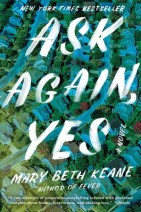
Ask Again, YesAsk Again, Yes by Mary Beth Keane

The producers of American Beauty (1999) which won 5 Oscars in 2000 have bought the movie and TV rights of the book. Another novel about suburban families is being described in Goodreads as “profoundly moving.” Author Keane was a 2015 Guggenheim Fellow in Fiction; her previous works had been a finalist for the PEN/Hemingway Award and garnered Best Book of the year acclaims.


The Silent PatientThe Silent Patient by Alex Michaelides

Screenwriter Michaelides’s debut novel is described by Entertainment Weekly as “a mix of Hitchcockian suspense, Agatha Christie plotting, and Greek tragedy.” A psychotherapist has to unlock the mystery of his patient who’d killed her husband six years earlier and then remained silent since. (Read an excerpt using the link) Meanwhile, Michaelides will write the screenplay, naturally. Brad Pitt’s Plan B and Annapurna Pictures producing.


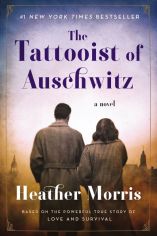
Tattoist of Auschwitz.jpgThe Tattooist of Auschwitz by Heather Morris

Hailed as the true story of Slovakian Jew, Lali Sokolov, who fell in love with a girl he was tattooing at the Auschwitz concentration camp during WWII, a powerful story of love and survival. British producer Synchronicity Films had secured the rights and a drama series is in development. Here’s the rub: the Auschwitz Memorial Research Centre had disputed the authenticity of the book according to The Guardian. A case of negative publicity is still good publicity?
The Underground Railroad

The Underground Railroad by Colson Whitehead

Colson Whitehead’s Pulitzer Prize for Fiction winner (2017) is adapted by director Barry Jenkins. Jenkins’s name had catapulted to stardom since his Oscar win for Moonlight (2016) and the subsequent If Beale Street Could Talk (2018). The story of the harrowing escape of two Southern slaves Cora and Caesar using the Underground Railroad is adapted into 11 episodes for Amazon Studio.


Washington Black (2)

Washington Black by Esi Edugyan

The book is Edugyan’s second consecutive win of Canada’s Scotiabank Giller’s Prize, also shortlisted for the 2018 Booker Prize. The journey of 11-year-old slave boy “Wash” born on a Barbados plantation is a fantastical story of adventure when he became the personal servant of Englishman Christopher Wilde, inventor, naturalist, explorer, and abolitionist. 20th Century Fox TV, after “an intense bidding war” , had secured the rights to the small screen.


***

‘Gemma Bovery’ to cool your summer day

This film by the French director Anne Fontaine could offer you a couple hours of  cool entertainment in a lazy, hazy summer afternoon.

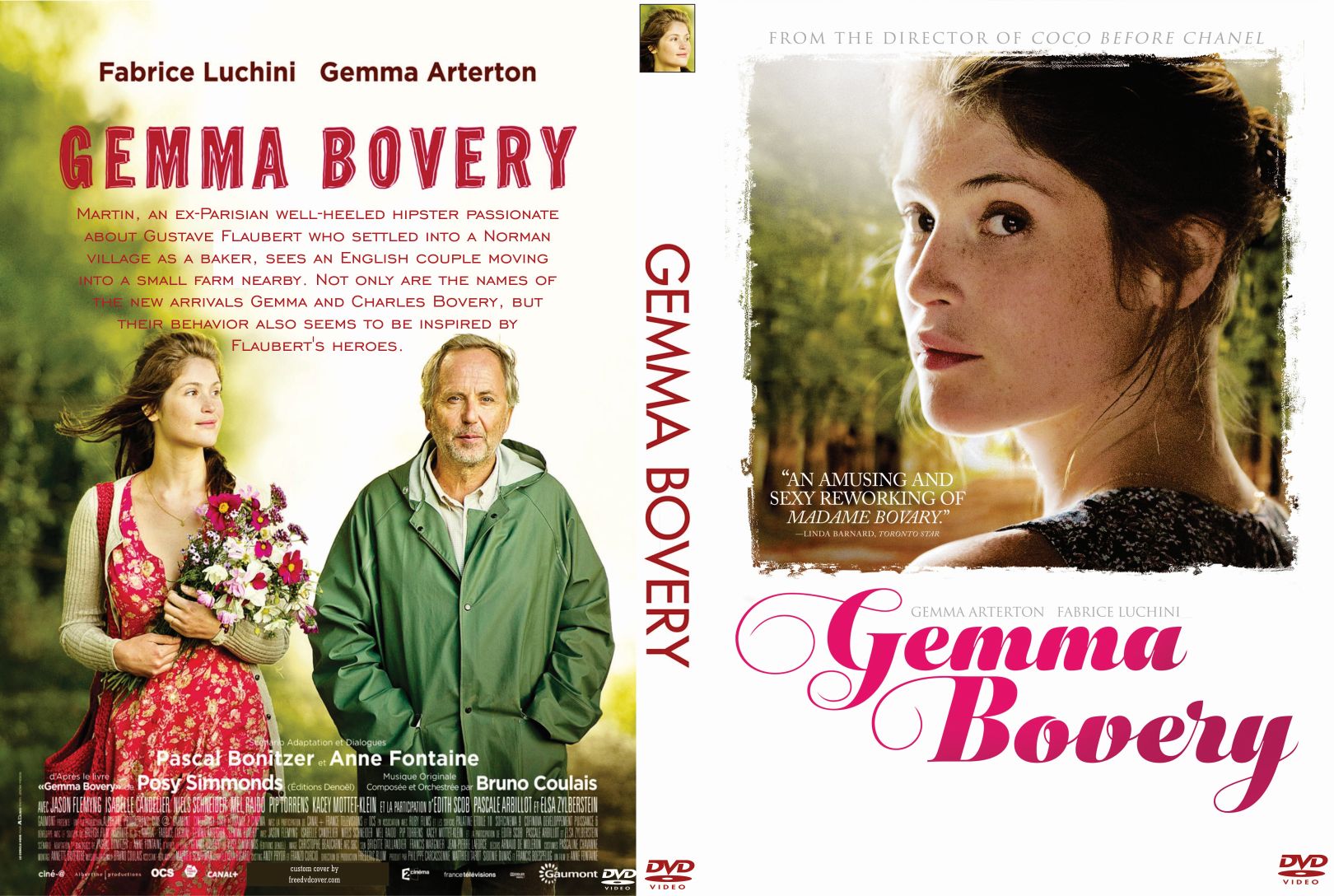
Gemma Bovery (2014)

Related image

Madame Bovary by Gustave Flaubert was published in 1856. There have been no less than half a dozen movie adaptations of this famous piece of literature, dating back as early as 1934 (dir. Jean Renoir). Only in 2014 did a female rendition emerge with Sophie Barthes in the helm and featured Mia Wasikowska as Emma Bovary. It’s a relatively conventional take on Flaubert’s literary classic.

Interestingly, in that same year, another movie version of Madame Bovary also came out. This one is by French director Anne Fontaine (born 1959). Under the helm of the versatile Fontaine, and in the spirit of Emma Bovary, this one looks like it’s a vignette from a parallel universe, defying traditional norms, laced with a deadpan, comical streak, and transported to modern day France.

Martin Joubert (Fabrice Luchini), a long-time academic publisher in Paris, moves back to Normandy to take over his father’s bakery, seeking for a peaceful and balanced life in the quiet region. A literature enthusiast, Martin’s antenna for the literary is sharp and sensitive. When a couple with the names of Charles and Gemma Bovery move into his adjacent house in the country, he quickly stands guard on the affairs of the young woman, as he knows the ending of the novel Madame Bovary by Flaubert. He uses all his male sense and sensibility to avoid a tragedy that could befall his new neighbours.

Director Fontaine’s title gives it away as a parody not to be taken too seriously. Gemma Arterton is a good choice as she appears to be a more convincing Gemma Bovery than Mia Wasikowska’s Emma Bovary. For those watchful for literary adaptations, Arterton was Tess of the D’Urbervilles (2008, TV miniseries) playing alongside Eddie Redmayne as Angel Claire. In a more recent year, Their Finest (2016) also saw her mastering her role poignantly.

Gemma is an interior decorator and Charles a furniture refurbisher. Parallel characters as in Flaubert’s novel appear in Gemma’s life after she moves into the Norman countryside, tempting her to fall into a similar track as Madame B.  Except, we don’t see her buying luxurious goods and remodelling her humble abode. Fontaine is bold to let her viewers see what Flaubert was describing with his words, albeit these scenes are short.

So, is Martin successful in avoiding a tragic end to his imagined literary heroine? No spoilers here. In a lazy, hazy summer afternoon, an ending short of crazy would not be worthwhile for a parody.


~ ~ 1/2 Ripples

**

Do you have a favourite French literature to movie adaptation?


Thanks to Tamara for hosting a 6th annual Paris in July event at Thyme for Tea.

PIJ2019 Tamara

‘A Sunday in the Country’ is an Impressionist Cinematic Painting

If the Impressionist painters were to make a movie, what would it be like? A Sunday in the Country (1984) could very well be an exemplar. French director Bertrand Tavernier used the camera as a paintbrush to tell his story, while the cast bring to life the human pathos that are deeper than a painting on the wall could convey. 

A Sunday in the Country - Un Dimanche à la Campagne (1984)

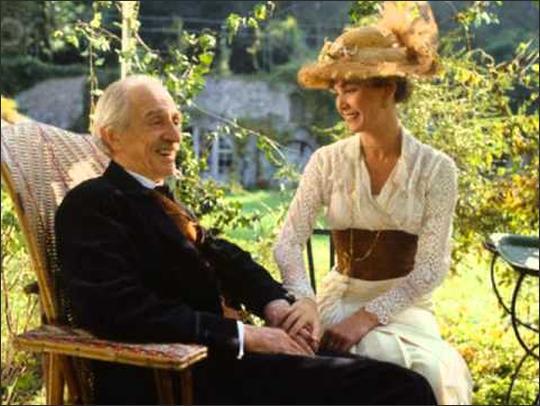
Monsieur Ladmiral is an elderly artist living in an idyllic country house on the outskirt of Paris. The setting is pre-WWI. M. Ladmiral is a widower, his daily routines assisted by a lived-in, indispensable housekeeper called Mercédès (Monique Chaumette). His home is cozy with classic charm, the adjacent studio, inspiring. The camera leads us to see every details of M. Ladmiral’s house and moves fluidly from far to close-in on the artist’s workplace, a quiet haven and a treasure trove of memories and life works. With his colours, Ladmiral attempts to capture traces of youth and life.

M. Ladmiral’s son Gonzague (Michel Aumont) and his wife Marie-Thérèse (Genevieve Mnich), together with their three children, come visit him from Paris every Sunday, but not frequent enough still. His two grandsons, Emile (Thomas Duvall) and Lucien (Quentin Ogler), add lively sparks to his serene environs, while little Mereille (Katia Wostrikoff) is simply adorable.

No matter how much Gonzague tries to give him, grandchildren and his family’s frequent visits, the son knows he’s a disappointment to his father. Deep in M. Ladmiral’s heart, he longs to see his daughter Irène (Sabine Azéma), who seldom visits. Irène is single, exuberant, fearlessly independent and cheerful, or at least, on the surface. She drives an automobile, a new invention. “Look at your sister Irene,” Ladmiral tells Gonzague. “She forges ahead.” Then after a beat, “you don’t.” Nice going, Dad.

The pace of the film is leisurely, taking its time for viewers to hear (or read the subtitle of) every single dialogue, capture every nuance, and observe every item in the mise en scène. Life is too precious to hurry by. As well, we get to appreciate the humour, but often as guise to underlying relational tensions.

Tavernier won Best Director at Cannes Film Festival in 1985 with A Sunday in the Country, as well as the César Award for his adapted screenplay. The film also saw Azéma who plays daughter Irene won the Best Actress César Award and Bruno de Keyzer for Best Cinematography.

The film is an adaptation from the French novel by Pierre Bost entitled “Monsieur Ladmiral va bientôt mourir”, translated in English: “Mr. Ladmiral will die soon”. Have to say, the movie title is much more appealing. One note though, be patient with the 1:40 min. of credits rolling at the beginning with just white words on black background without image. You’re looking into the mind of an old man. While the overall mood is warm and amusing, the undercurrents of  disappointment, mortality, and separation gently flow throughout the film.

On that Sunday as Gonzague and his family are visiting, Irene drops in unannounced in her automobile. Free-spirited Irene is a fresh breeze to the hot countryside, her automobile a progressive symbol for everyone to admire. She charms with her energetic presence and spontaneous delights. But as viewers, we are privy to her psyche and anxiety when she’s alone. Tavernier deals with the past and the present seamlessly, melding them as if showing us memories are natural extension of our present self, so’s our imagination. As she stands by the window looking out to the lawn, we see Irene’s flashback of her mother saying, “When will you stop asking so much of life, Irene?” 

Irene’s visit is short, albeit one that leaves a significant impact on her father. She takes him on a ride in her automobile to a guinguette for a drink and a dance, an episode that’s bound to be indelible in M. Ladmiral’s last memories. Guinguettes were open-air taverns in the outskirts of Paris where people would come on Sundays to have drinks and casual meals, listen to music, and dance. In the style of Renoir’s Bal du moulin de la GaletteTavernier paints a beautiful Impressionist movie moment in this scene:

hero_EB20030511REVIEWS08305110301AR

During the memorable father-daughter chat at the guinguette, M. Ladmiral talks about his own style, and admits that he’s a traditionalist unable to catch up with the changes other painters have brought about. Unable or unwilling, no matter, he’s at least honest to himself in painting the way he does, he tells Irene. In tearing eyes, daughter looks fondly at her father and asks him to dance with her.

Irene has to leave right after she drives her father home from the guinguette, upon receiving an upsetting telephone call. Later that evening, Gonzague and his family have to catch the late train back to Paris as well. After seeing them off, M. Ladmiral walks back home from the train station alone. For an old man, every goodbye could be the last.

But the final scene appears to turn the tide. M. Ladmiral goes into his studio, takes down the painting he’s been working on, a still-life subject he’s painted numerous times before and in a style he’s been following all his life. He replaces it with a blank canvas on the easel, sits down, and looks at it ponderously. Like his son’s, his life, too, has been a disappointment to himself. What M. Ladmiral is thinking staring into a blank canvas at that moment is up to anyone’s interpretation. What I see is a slight, nuanced smile on his face. Every blank canvas is a fresh start no matter how old you are.


~ ~ ~ ~ Ripples


***


This film review is a participation of the 6th Paris in July event at
Tamara’s Thyme for Tea. 

PIJ2019 Tamara

Related Posts on Ripple Effects:

Arles: In Search of Van Gogh

Séraphine and the wrought-iron chair

Inspired by Vermeer


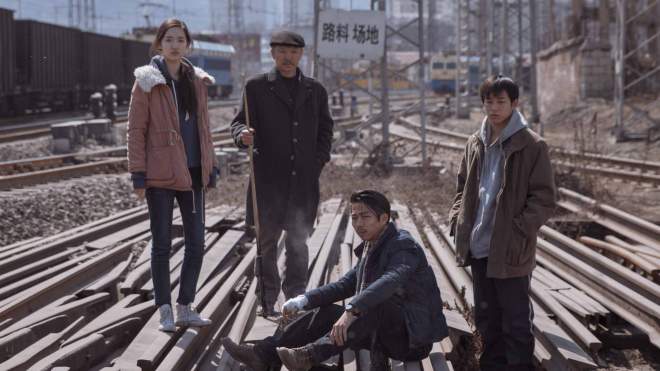
‘An Elephant Sitting Still’ is a last outcry of a young talent

ElephantSittingStill

I watched An Elephant Sitting Still while covering the Minneapolis St. Paul International Film Festival in April. It remains one of the most unforgettable films in my recent memory, the directorial debut of Hu Bo, a Chinese writer-turned-filmmaker. Hu’s incisive narratives of the human condition won Best First Feature and the FIPRESCI Prize at Berlin International Film Festival in 2018. Sadly, this is the young director’s first and last film, for his career trajectory ended abruptly in October, 2017. Hu took his own life during post-production. He was 29. The feature has since played in numerous international film festivals garnering accolades which Hu himself would never have known.

Hu Bo graduated from Beijing Film Academy majoring in directing. Later went to Taiwan to further his training and came under the mentorship of the venerable auteur Hou Hsiao-hsien (The Assassin, 2015) and subsequently the Hungarian art film director Béla Tarr (The Turin Horse, 2011). Other than making short films and writing screenplays, Hu had authored short stories and an award-winning novella. His debut feature An Elephant Sitting Still was adapted from his short story of the same name.

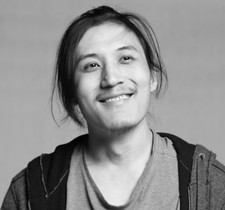
Hu BoAt the 55th Golden Horse Awards in Taiwan last November, An Elephant Sitting Still won Best Feature Film, Best Adapted Screenplay, and Audience Choice Award. The Best Film prize was presented to Hu’s mother by the Taiwanese American director Ang Lee (Life of Pi, 2012; Crouching Tiger, Hidden Dragon, 2000) who reached out to her with a poignant embrace.


An Elephant Sitting Still is a 230-minute cinematic allegory wrapped in haunting realism. In an unnamed town in Northern China, four characters struggle with their own personal predicament too messy to untangle, all in a day’s time. The four narratives intersect in Hu’s incisive screenplay.

A high school student, Wei Bu (Peng Yuchang), while defending a friend, accidentally pushes a school bully down the stairs leading to his death. Even more tragic, Wei later finds out he has been deceived by the very friend he tries to protect. Wei has to run away as the bully’s older brother Yu Cheng (Yu Zhang), a local gangster, is out looking for him. Yu himself is a man riddled with guilt as he has just witnessed his best friend dash out of the window to his death upon finding out Yu has been sleeping with his wife.

Meanwhile, Wei tries to persuade his unrequited crush, schoolmate Huang Ling (Wang Yuwen) to leave with him. Huang herself has to deal with her alcoholic single mother and is further troubled by the reverberation of her scandalous relationship with her school’s vice dean. The fourth character is a grandfather, Wang Jin (Li Congxi), who is pushed out of his son’s home as the young family needs to move to a smaller apartment in another place so to register their daughter for a better school. A dismal future awaits him away from his granddaughter.

Hu parallels the dilapidated urban environs with the inner world of his characters. Long takes and tracking shots place viewers right in the midst of relational conflicts. A Steadicam follows their uncertain footsteps; blueish-grey overtone transmits the bleakness of their situation. Hu takes time to let the camera linger on his characters’ faces, capturing their troubled psyche. Their seemingly emotionless appearance is reminiscence of Bresson’s ‘non-actors’. Often, their reticence conveys depths that words deem unnecessary.

There’s still another character which is mentioned but remains invisible, and that’s the Elephant. We’re told at the start of the film that it sits very still in a circus in the city of Manzhouli, a distance away. It’s indifferent to people’s taunting and objects thrown at it. The Elephant’s quiet composure exudes a mythical element these characters seem to yearn for. Here, realism is mixed with a touch of magic. As the four-hour film draws to an end, the sequence transcends rationale. Two young people, Wei and Ling, together with the grandfather Wang and his granddaughter depart on a journey to Manzhouli in search for the Elephant.

The ending shot is mesmerizing as the bus to Manzhouli stops temporarily in the night, the passengers get down for a stretch. From a distance, we see our protagonists stand in front of the beam from the bus and start playing hacky sack. The long stay of the camera on them is surreal but needed. The quest for the mythical being is motivational zeal for life, even just for a momentary pleasure. Then we hear off screen the sound of an elephant braying.

The Book Big Crack

Big Crack.jpgIn April I took a trip to Hong Kong and there in a bookstore I found the source material for the film, Big Crack*, written by Hu under his pen name Hu Qian. The book is a compilation of short stories, one of them being ‘An Elephant Sitting Still’, as well as Hu’s award-winning novella Big Crack’. I was eager to explore Hu’s worldview and compare his writing with his cinematic work.

‘An Elephant Sitting Still’ is a 15-page short story. Its protagonist is Yu in the movie, having slept with his best friend’s wife and struggling with guilt as he’s the reason for his friend’s suicide. Yu is drawn to search for the Elephant in Manzhouli, maybe for a redemptive reason. Towards the end, he finds the mythical beast, jumps into its cage and submits himself to let it deal a deadly blow to him, a fate he’s all too willing to accept, a soul that has been hinged on a meaningless existence. The other film materials are mostly philosophical concepts from the novella ‘Big Crack’

Hu’s writing is more direct and visceral than his cinematic creation. In the novella ‘Big Crack’, his characters are students in a bottom-tiered art college somewhere near a remote northern town. The term ‘waste land’ is used to refer to the campus and its adjacent town. The term is also used in the movie. In the book, the words ‘waste land’ are ubiquitous, together with Existential, nihilistic concepts like having no exit and nauseating stenches – as in the beginning of the film with Wei’s father’s furious complaint. In the novella, rampant violence is frequent among different dormitories of the school, often exploding in bloodshed. Violence is more restrained in the film, but often leading to tragic end.

I presume Hu’s use of the phrase ‘waste land’ is an allusion to T. S. Eliot’s epic poem. Eliot wrote ‘The Waste Land’ after WWI as the poet lamented the cultural and spiritual breakdown of Europe. Physical ruins could be rebuilt, but the collapse of moral and spiritual values was hard to replaced.

In what I think is a defying act in a country that monitors and censors Christianity in the public arena, Hu quoted the following verses from the Bible, words printed in bold:

“The Lord saw how great the wickedness of the human race had become on the earth, and that every inclination of the thoughts of the human heart was only evil all the time…. Now the earth was corrupt in God’s sight and was full of violence. God saw how corrupt the earth had become, for all the people on earth had corrupted their ways.”

The Invisible Elephant

Hu is piercing in his observation of the moral void and dry, cracked condition of the human soul; the meaninglessness of life as he saw it could have become too overwhelming for him. But what about the Elephant? Is there a sliver of light coming through that crack?

Some had interpreted the Elephant as a symbol of the government, but considering the way that the beast appeals and draws the protagonists to seek for it, almost like a pilgrimage, that parallel just isn’t probable. Some critics had attributed it to the endurance needed to forsake the world and confront troubles with passive resistance.

When I first came across the mention of the Elephant sitting still, the Beatles song “The Fool on the Hill” came to mind. The lyrics point to a similar quietude and peaceful being, some see the lyrics as a reference to God, “He was oppressed and He was afflicted, yet He did not open His mouth…” I incline to interpret as this, for evidence is overwhelming in Hu’s writing that he was troubled by the depravity of the world as he saw it and wanted to seek for what or who could have been the redemptive way.

As the closing credits roll to the end, we hear the mood has changed from the past three plus hours. We hear jubilant singing voices mixed with the theme music ‘Elephant’, sound of joy for the first time. And in the credits the following acknowledgement appears, ending the whole film:

“Original Acappella, Laomudeng Church Sunday Service Hymn”**

Before his death, a second feature was on the drawing board. Hu named it The Gate of Heaven. The spiritual yearning of this young talent is achingly apparent.


~ ~ ~ ~ Ripples

***


*It’s my understanding that the book comes in only its original Chinese edition. There has yet been an English translation.

** Upon online research, I found that the Laomudeng Christian Church is serenely situated on the top of a mountain in Yunan, famous for its secluded and peaceful environs. The high-pitched A Cappella singing of its congregants is well-known.

Photo Sources:

Film still from Ripple file originally from MSPIFF
Hu Bo photo from Festival Scope Pro
Big Crack book photo from Amazon.com


‘The Aftermath’ has all the right ingredients except…

From the beginning, all the ingredients seem to be in place for a satisfying period movie. Sumptuous set design, beautiful costume and makeup, even the rubbles and chaos are realistic. What more, three seasoned, popular actors under a helmer who had proven he could do war movies with his Testament of Youth (2014).

Director James Kent is all set to pull us into great expectations from the start. British military wife Rachel Morgan (Keira Knightley) arrives by train in Hamburg, Germany,  in the year 1946.  She is greeted warmly by her husband Lewis (Jason Clarke), a British Colonel stationed there to enforce order in the aftermath of the War.

The Morgans are staying in a mansion requisitioned from the Nazi’s. But due to Lewis’s benevolence, the former owner, handsome German widower Stephen Lubert (Alexander Skarsgård) and his troubled teenaged daughter Freda (Flora Thiemann) are allowed to stay until they are sent to the camp. Why the delay is not explained, an arrangement definitely isn’t going to be too comfortable. Just look here, Rachel, who has lost her young son in the war, refuses to even shake hands with the enemy, now cohabitant of the mansion.

The Aftermath movie still
Alexander Skarsgård, Jason Clarke and Keira Knightley in an early scene of ‘The Aftermath’. Photo: Fox Searchlight.

No sooner had they settled than Lewis needed to go away on military duties, leaving his wife behind. What ensues is predictable, but unfathomable: How a woman who still mourns her lost young son and holds animosity against the enemy, and a German widower who’d lost his wife during the war and with her memory still vivid in the house, can come together so quickly just days of living under the same roof. From refusing to shake hands to sleeping with the enemy in just a few scene changes, the unconvincing storyline abruptly stops any appreciation I’ve had of other cinematic elements up to that point. 

Adapted from the novel by Rhidian Brook, the screenwriters, Joe Shrapnel and Anna Waterhouse, must have thought celebrity actors have the power and charisma to jazz up a weak script. Fact is, even talented actors are bound by the writing, or, hampered by it. Just look at some other works by Knightley, for example, Atonement (2007) or her latest Colette (2018), comparing her performance in those films with her role here in The Aftermath seems like we’re watching the living in contrast to a pedestal decorative that can tear up on demand.

Alexander Skarsgård can release much intensity if the script allows, case in point is his role in Big Little Lies (2017), for which he won a Best Supporting Actor Golden Globe. Instead, his character as Stephen in The Aftermath is bland, driven by inexplicable motive, except maybe an act of violation to avenge. But no, he and Rachel, who are practically strangers, seriously mean love here. Whatever happened to his late wife’s memory at the piano? With Rachel playing her music still placed on the Steinway, even Debussy’s Clair de Lune can’t shine a light on the blurry motive.

Jason Clarke is repeating his demeanour as in Mudbound (2017), a husband oblivious of what’s going on with the affair of his wife. Here in The Aftermath, the underlying motivations of each character and backstory is just slightly touched on without much elaboration. Are the visuals in bed more important than the rational for modern viewers? I sure hope not.

Movies set during the World Wars work only if there are more to mull on rather than just the actions and the aesthetics. Complexity of characters and conflicts are what pull viewers in, eliciting empathy. Some thought-provoking or a bit challenging ideas and dialogues could help too. Several recent examples are Their Finest (2016) and Darkest Hour (2017), or director Kent’s own Testament of Youth (2014); the other end would be the emotionless The Monuments Men (2014).

I can’t help but think of a WWII classic. Why Casablanca (1942) works, among many factors, are the intelligent dialogues and a surprise ending, surprising to the character involved, but gratifying for the viewers, leaving them with much to mull on, values, priorities, and a lingering feeling for two star-crossed lovers. Unfortunately, that kind of  emotions, thoughts and admiration for the characters were not the aftermath as I left the theatre.

~ ~ 1/2 Ripples

***

Books into Movies: 2019 and Beyond

Feeling the post-Oscar blues? How about turning to books, before they in turn are morphed into a movie? The following are some upcoming books being adapted into movies in various stages of development. Some are coming out soon, some just announced.

The Aftermath by Rhidian Brook

The movie adaptation starring Keira Knightley, Alexander Skarsgärd and Jason Clarke is coming out March 19, directed by Testament of Youth (2014) helmer James Kent. In recent years, WWII historical fiction has enjoyed a sensational growth in popularity, The Aftermath is another one of this highly sought after genre. The transfer to movies, while not always as effective, lacks no enthused followers. The Aftermath is set in 1946 Hamburg, a British family and a German widower and his daughter had to live under the same roof during a de-Nazification operation.

Cats: The Musical 

Based on T. S. Eliot’s collection of poems Old Possum’s Book of Practical Cats, Andrew Lloyd Webber’s musical Cats is hailed as one of the biggest hits in theatrical history on their website. Director Tom Hooper has another musical-turned-movie under his belt: Les Misérables (2012) which won 3 Oscars. Attractive cast in Cats the movie: Rebel Wilson, Idris Elba, Jennifer Hudson, Judi Dench, Ian McKellen, James Corden, Taylor Swift.

Death on the Nile & Witness for the Prosecution by Agatha Christie

Kenneth Branagh will direct Wonder Woman Gal Gadot and Armie Hammer in Death on the Nile. Branagh will reprise his role of Hercule Poirot, after starring in and directing Murder on the Orient Express in 2017. Now over forty years after her death, Christie’s influence has not waned. A movie adaptation of Witness for the Prosecution has also been announced with Ben Affleck directing.

The Goldfinch by Donna Tartt

John Crowley is no stranger to literary adaptations; his previous feature, Colm Tóibín’s Brooklyn, was nominated for 3 Oscars. This time, Donna Tartt’s Pulitzer Prize winning The Goldfinch reads like it’s written readily for the camera, considering the eclectic characters and the explosive storylines. Sarah Paulson and Nicole Kidman star. Screenplay adapted by Peter Straughan, who was nominated for a Best Adapted Screenplay Oscar for co-writing the 2012 script for John Le Carré’s Tinker Tailor Soldier Spy (2012).

In the Garden of Beasts by Erik Larson

Larson’s 2011 non-fiction is a captivating look into the power and social structure of Berlin during the emergent years of Hitler’s rule. Focus is on the the true story of William Dodd, a mild-mannered Chicago professor who becomes America’s first ambassador to Hitler’s Germany. And this is relatively hot-off-the-press: English film director Joe Wright will helm the production (See also the last entry of this post). Tom Hanks was originally linked with the role of Dodd (and a good choice I think); whether he will carry it through or just remain as producer is to be seen. This is one movie I’ll definitely watch out for. Before then, the book is a great read to prep for it.

Little Women by Louisa May Alcott

Geared for a Christmas release, this new version of Alcott’s classic is written and directed by Greta Gerwig. Gerwig is acclaimed for her take on the contemporary young woman, her psyche and struggles in films like Frances Ha (2012) and Lady Bird (2017). How will she approach Alcott’s novel of a bygone era? And if you still have Susan Sarandon, Winona Ryder, Kursten Dunst and Christian Bale from the 1994 cast stamped in your mind, now try to imagine Florence Pugh, Saoirse Ronan, Timothée Chalamet, Emma Watson, Meryl Streep and Laura Dern taking their places. Actually, not a bad replacement.

The Personal History of David Copperfield by Charles Dickens

First off, I must say this is one of my all time favourite novels, but I’m no purist. While I welcome new representations and interpretation, I still hope the upcoming movie will be Dickens-approved. A most interesting (postmodern) cast: we have Dev Patel as Davie, Tilda Swinton as Betsey Trotwood, Hugh Laurie as Mr. Dick, Ben Whishaw as the ultimate villain Uriah Heep, Benedict Wong as Mr. Wickfield. Directed by Armando Iannucci (The Death of Stalin, 2017).

Rebecca by Daphne Du Maurier 

In this remake of Rebecca, Armie Hammer will play Maxim de Winter. And who will be Mrs.? None other than Lily James, ubiquitous after Downton Abbey (Lady Rose). Do you think she will make one successful Mrs. de Winter? What I’m most interested in, however, is the production design, headed by 6-time Oscar nominee Sarah Greenwood, whose filmography includes Darkest Hour (2017), Anna Karenina (2012), and Atonement (2007) among many other titles. I think Manderley is in good hands. But will the whole production beat the classic Alfred Hitchcock noir with Laurence Olivier and Joan Fontaine? And who can be more chilling than Judith Anderson as Mrs. Danvers?

The Woman in the Window by A. J. Finn

Another wildly popular genre in recent years along the line of Gone Girl and Woman on the Train etc. is the modern day thriller-cum-unreliable-narrator (and alas, they’re mostly women!) mystery novels. Finn’s (Now what’s with the writer whose real name is Daniel Mallory using a pseudonym close to Flynn, the Gone Girl author?) NYT bestseller is turned into a movie with a top-notch cast. (Aside: do writers nowadays write in preparation for a movie?) Directed by the much sought-after Joe Wright, who’d helmed Darkest Hour (2017), Anna Karenina (2012), Atonement (2007), and Pride and Prejudice (2005). Wright has a dream cast in his hands: Amy Adams, Gary Oldman, Juliane Moore. The movie adaptation is written by Pulitzer winner, playwright/screenwriter Tracy Letts, who gave us August: Osage County.

________________

Which one(s) of the above do you anticipate most? Others not on this list?


***

Top Ripples 2018

Here’s the other one of my perennial posts, a wrap for the year. Books I’ve read and film experience that top the year for me. Here are the lists, in no particular order:

MOVIES

I’m appreciating foreign language films more and more, for they offer some of the best examples of what cinematic arts can offer, not CGI sparked spectacles. In my Top 10 list, the first four are from non-English speaking countries. They are also short-listed for the coming Academy Awards Best Foreign Language Film category. Links are to my reviews.

Roma

Shoplifters

Capernaum

Burning

A Star Is Born

Wildlife

The Favourite

Free Solo

Shirkers

The Kominsky Method

I must mention two films that I’d highly anticipated but somehow didn’t connect as I’d wanted to. Maybe if I’ve the chance to watch them again I might change my mind: Cold War and First Reform.

Two movies from 2017 which I hadn’t watched until January this year that should be mentioned here:

Three Billboards Outside Ebbing, Missouri

The Shape of Water


BOOKS

These are not necessarily published in 2018, but the best books that I’ve read this year. I’m not a ‘quantity reader’, nevertheless, a look back at my Goodreads record, I can’t believe I ate all these (links are to my reviews):

The Guermantes Way by Marcel Proust (after 3 years, finally finished)

Middlemarch by George Eliot

The Portrait of a Lady by Henry James

Pachinko by Min Jin Lee

Crime and Punishment by Fyodor Dostoevsky

Of Human Bondage by Somerset Maugham

Not Quite, Note White: Losing and Finding Race in America by Sharmila Sen

David Copperfield by Charles Dickens

The World of Yesterday by Stefan Zweig

Hillbilly Elegy: A Memoir of a Family and Culture in Crisis by J. D. Vance

***

Selective Top Ripples from past years are listed on the side bar. Click on the pictures to my reviews.

Again, thanks for visiting the Pond and throwing in your two pebbles. I’ve enjoyed every single ripple. Hope you’d found a quiet respite here for thoughts and renewal.

And to all, may 2019 bring you more great books and movies to cherish.

HAPPY NEW YEAR!

***

Update: This post should be written on the last day of the year. Since I’d posted it, I saw another film today which I feel should be included here on the Top Ripples 2018 list, and that’s The Favourite (Just opens today in our City). I’m taking The Rider out to keep the list of 10. The Rider I found I’d already included it in my Top Ripples list last year.

‘Burning’: From Short Story to Big Screen

Burning is based on the short story “Barn Burning” by the popular Japanese writer Haruki Murakami, the translated English version first published in the November issue of The New Yorker in 1992. Acclaimed Korean director Lee Chang-dong has fleshed out the minimalist narrative of Murakami’s story and created an extended ending, turning Burning from mere rumination into a dramatic suspense thriller, shedding traces of a myriad of literary allusions. That is the appeal of the works by the Korean novelist-turned-filmmaker.

Winner of the FIPRESCI Prize and a nominee for the Palme d’Or at Cannes this year, Burning had its North American premiere on September 9 at the Toronto International Film Festival. As well, South Korea has announced that Burning will be its official entry to the Best Foreign Language Film race at the 91st Oscars in 2019. The acclaimed film will be released in November in selective cities.

More than fifty years before Murakami’s short piece appeared in The New Yorker, back in 1939, a short story of the same name, “Barn Burning”, was published in Harper’s Magazine. Its author was William Faulkner. It was a dramatic story of class discrepancy in the American South, the chasm between the rich and the poor and the hateful revenge of a tenant farmer burning down the properties of his land owner. Interesting to note that Murakami made no mention of Faulkner in his story, which can be seen as a modern-day version of the American author’s work.

Director Lee’s adaptation shares similar meaning-imbued elements as his last feature Poetry from eight years ago. While his previous work is a character study of a grandmother trying to seek out a way to renew her life, in Burning, Lee focuses on the young, specifically, the millennials, and contrasting the social chasm between the rich and the poor with two characters.

burning_01
Yoo Ah-in as Jongsu in ‘Burning’. Photo courtesy of TIFF.

Jongsu (Yoo Ah-in) graduated from university majoring in creative writing. At present he is doing menial jobs as a living while trying to write a novel. On a delivery one day he comes across an old schoolmate, Haemi—impressive performance by newcomer Jun Jong-seo—working as a raffle promoter on the street. She recognizes Jongsu as according to her, they used to live in the same community when they were children. That brief encounter sparks off a precarious relationship between the two.

Due to some legal entanglement of his father’s, Jongsu has to leave the city to return to his father’s impoverished farm to look after it. He sleeps in a run-down shack, drives a rusty truck and clears the waste of the only cow left. At the same time, Haemi is going on a trip to Africa, and has asked Jongsu to go to her small apartment to feed her cat while she is away. This he gladly obliges.

But when Haemi returns after some time, she brings with her another man, Ben (Steven Yeun of the TV series ‘The Walking Dead’), a third person to the intimate relationship Jongsu had wanted to establish with Haemi.  Ben is more than just a disruptor but an enigma. He lives in a high-end apartment, dresses stylishly, drives a Porsche and exudes sophisticated tastes. He does not hold a job nor seem to mind Jongsu’s presence, but invites him home and brings him into his circle of friends. “The Gatsby in Korea” as Jongsu figures him, Ben is a man with a mysterious past and unsearchable intention.

burning_steven-yeun_1 (1).jpg
Steven Yeun as Ben, ‘The Gatsby in Korea’.

Things become more intriguing and uncomfortable when one night, Ben confides in Jongsu that he burns greenhouses for his own pleasure. He would scout out his target and set fire to it while watching from afar. The next one he has in mind actually is quite close to where Jongsu is staying, near his father’s farm. Here we see Murakami’s interesting flip of Faulkner’s story. Instead of a hateful man from a lower economic class driven by jealousy and bitterness to commit arson, we have the resourceful rich burning down greenhouses, but for what reason?

Unlike Murakami, Lee alludes to Faulkner, but also takes up Murakami’s suggestion that it is not only poverty or revenge that drives one to commit incendiary acts, but ennui, self-indulgence, or mere emptiness can also prod one towards inexplicable behaviour.

Steven Yeun, the Korean-American actor known for the TV series “The Walking Dead”, takes up his first major role in a Korean film. Yeun’s portrayal of an amoral, metrosexual may well be a modern-day parallel of Camus’s L’Etranger, The Stranger.  His often expressionless, but not unpleasant, face could well have conveyed the inner psyche of a rootless and purposeless existence.

One time at a social gathering, Haemi imitates the African ‘hunger dance’ in front of Ben and his friends. First, she acts with small, silent gestures showing the ‘little hunger’ of the literal, physical pang then changing to the ‘great hunger’ with her arms reaching upward and swaying to signify the empty soul reaching out in search of fulfilment. Watching her, Ben’s response is a yawn and a slight smile. Then a quick cut to a loud, electrifying night club scene with Haemi dancing wildly in a smoky, hazy atmosphere. Lee’s cinematic storytelling is stark and to the point.

The director’s rendering of passion and the human psyche is enhanced by Hong Kyung-pyo’s mesmerizing cinematography and the engaging score by Mowg and other incidental music, presenting sequences that are at times dreamlike, and at times, sadly realistic. In a stirring scene, Haemi dances again, this time against the setting sun out in Jongsu’s farm, her silhouette captivating her audience of two subtle rivals, one genuine, the other, unsearchable.

The plot thickens towards the last section when Jongsu tries to connect with Haemi after some time but finds her missing. Her apartment has been vacated, her phone disconnected. The next time he sees Ben, Ben is with another woman and admitted no knowledge of Haemi’s whereabouts. The disappearance of Haemi ignites Jongsu’s suspicion and drives the tension towards an explosive denouement which Lee adds to Murakami’s short story. It is an ending that is a surprise and yet also natural in context. Lee brilliantly brings his viewers full circle back to Faulkner with his layered storytelling.

Just like his previous works Poetry (2010) and Secret Sunshine (2007), Lee has shown once again that he is not only a masterful director but an astute observer of human psyche and behaviour.

***

~ ~ ~ 1/2 Ripples

Note: My review above was originally published in Asian American Press on Sept. 12, 2018. I thank AAPress for permission to repost here.

***

Update Nov. 16: “Burning” just nominated for Best International Film (South Korea) at the Film Independent Spirit Awards.

Dano’s ‘Wildlife’ elicits showcase performance from Carey Mulligan

Wildlife is a detailed capture of the dissolution of a marriage, from the point of view of the couple’s only child. It is also a coming-of-age story as 14 year-old Joe comes to realize the elusiveness of permanence in his parents Jerry and Jeanette’s once loving relationship. If all these names sound too common, that just might be one implication of the film – a specific look into a general human condition.

Wildlife
Carey Mulligan and Jake Gyllenhaal as Jeanette and Jerry in ‘Wildlife’. Photo courtesy of TIFF.

The film adaptation of Richard Ford’s novel is a selection in the Special Presentations program at the 2018 Toronto International Film Festival, screened as a Canadian premiere. It is the directorial debut of actor Paul Dano, co-writing the screenplay with Zoe Kazan (The Big Sick, 2017).

To those unfamiliar with Dano, maybe these titles will help you locate where he’s coming from and appreciate the variety of works he’s been in. Remember Little Miss Sunshine (2006)? He’s Olive’s older brother Dwayne who reluctantly gets into the yellow VW Beetle van and takes a vow of silence, or the dubious preacher confronting Daniel Day-Lewis in There Will Be Blood (2007)as the harsh slave driver in 12 Years a Slave (2013), or in the 2016 TV mini-series War & Peace as Pierre. Not the handsome leading man but always the character actor.

The small family in Wildlife consists of Jerry Brinson (Jake Gyllenhaal), a golf pro who has just moved into the town of Great Falls, Montana, with his wife Jeanette (Carey Mulligan) and son Joe (Ed Oxenbould). Just as they thought they’re settling in Jerry is fired from his job as a golf instructor in a country club. After waiting for a while for her husband to absorb the loss of job and pride but with no solution in sight to the household finance, Jeannette decides to come out of the home to look for work, ultimately finding a position as a swimming instructor at the Y.

That just may not be the cause of the conflict. What begins the total meltdown is when Jerry, out of the blue, packs up and follows a group of men heading to the forests to fight a wild fire fiercely raging near Great Falls, not knowing when he will return or if he can get out of it unscathed. Feeling utterly alone and abandoned, Jeanette begins to react to her precarious situation by venting with some out-of-character behavior. The successful businessman Warren Miller (Bill Camp), Jeannette’s swim student at the Y, just happens to be a convenient escape route. All these familial changes and development are observed uncensored by their sensitive teenaged son Joe.

From this his first attempt at directing, viewers would be gratified to find Dano to be an actor’s director; especially with the excellent cast he has under his helm, this is doubly rewarding. Dano lets the camera rest on the close-up faces of his characters to elicit superb performance, taking his time to capture the nuances in restraints, outburst, or just about any sort of inner feelings to surface.

Carey Mulligan.jpg
Carey Mulligan in ‘Wildlife’. Photo courtesy of TIFF.

This is one of the best, if not the best, performance I’ve seen Carey Mulligan in, changing from the loving wife and devoted mother to the angry and desperate single mom with a son to raise, to totally losing it, testing the boundaries of norms and behavior, and finally to the determined woman striking out on her own yet still bound by unseverable, familial ties. Mulligan deserves an Oscar nom for her role as Jeannette.

Watching his mother get close to Miller, Joe is torn between devotion and incredulity.  Although a successful businessman, Miller is a limping, older man. Joe is utterly perturbed by his mother’s capricious turn. Dano creates some poignant scenes depicting the interactions between mother and son during dad’s absence from home. Often the passive observer, Joe is restrained with countless questions he cannot express in words.

Mulligan gets all the juicy lines. After Jerry is gone to fight the wild fire, Jeanette brings Joe along to Miller’s house for dinner, putting on heavy make-up and dressing in a seductive night gown. She dances with the man intimately in front of her son. In another occasion, she dons cowgirl attire and admires herself in front of the mirror, reminiscing her younger days. Jeanette answers her son’s dazed expression with this line:

“It’s good to know your parents were once not your parents.”

There is a former life in every parent that even the closest child would not have known or understood. There are many thought-provoking lines in the film, but this one is particularly poignant.

Dano takes the liberty to follow the spirit of the text and creates a cinematic ending. His visual wrapping up is clear and spot-on, especially the scene at the studio where Joe works part-time. The final frame of the three sitting down together for a studio shot with Joe between his parents speaks volumes. A wild fire may have been put out, but the smouldering lingers; and the one keeping it under control may well have been a teenaged firefighter.


***


Update Nov. 16:

3 Nominations for “Wildlife” at the Film Independent Spirit Awards – Best First Feature, Best Female Lead, and Best Cinematography.


Arti at TIFF and Ripple on Rotten Tomatoes

DSC_0718

Two major news. Yes, the above title says it all.

I’m in Toronto now, all geared up to watch the screenings of a dozen films I’ve selected at the Toronto International Film Festival Sept. 6 – 16. Will keep you posted on the sights and sounds here.

There are 342 films in TIFF’s various Programs, submitted by filmmakers from 84 countries. Among the selections, 254 are full feature films, 88 shorts. These are selected from 7,926 submissions from all over the world.

Following a Ripple tradition, presenting titles from book to screen, here are some of TIFF’s feature productions that are adaptations from published, written sources:

First Man, dir. by Damien Chazelle, Ryan Gosling as Neil Armstrong, based on the book First Man: The Life of Neil Armstrong by James R. Hansen

Beautiful Boy dir. by Felix Van Groeningen based on two memoirs, Beautiful Boy by father David Sheff and Tweak by son Nic. Steve Carell and Timothée Chalamet play father and son.

Burning dir. by Chang-dong Lee, based on the short story “Barn Burning” by Haruki Murakami, which (in my opinion) is in turn based on the short story of the same name by William Faulkner.

The Hate U Give dir. by George Tillman Jr., based on the book of the same name by Angie Thomas (2017 National Book Award longlist, Young People’s Literature)

If Beale Street Could Talk dir. by Barry Jenkins (2017 Oscar winner ‘Moonlight’), based on the book of the same name by James Baldwin.

The Front Runner dir. by Jason Reitman, based on the book All the Truth Is Out by Matt Bai. Hugh Jackman as the 1987 presidential candidate Gary Hart.

The Sisters Brothers dir. by Jacques Audiard, based on the book of the same name by Patrick Dewitt (shortlisted for the Booker Prize 2011)

Wildlife dir. by Paul Dano, based on the book of the same name by Richard Ford. Carey Mulligan and Jake Gyllenhaal star.

A Million Little Pieces dir. by Sam Taylor-Johnson, based on the (controversial) memoir by James Frey

**

The second piece of news actually is equally exciting. My movie reviews on Ripple Effects are now approved to be included in the Rotten Tomatoes® review aggregation website. That means, yes, my two pebbles will be counted in the Tomatometer® score for a movie which I’ve reviewed on Ripple and submitted to them. (This actually is a spin-off as they first approved me for my reviews on Asian American Press.)

Nothing’s changed. Just feeling good that the Ripples from the Pond can have far-reaching Effects.

***