Books Before Films 2016

There are several books on my shelf and in my TBR box that will be turning into films coming out in 2016. I must get to them soon. How time flies, one day’s gone already.

The Light Between Oceans by M. L. Stedman

The Light bet OceansOften it’s the cast of an upcoming movie that prods me to read a book. This one has been on the New York Times Bestseller List for years since its publication. No matter how popular it is, I’m motivated only now mainly because of the first rate cast: Alicia Vikander, Michael Fassbender, Rachel Weisz, directed by Derek Cianfrance. Instead of a place beyond the pines (his last work) we have an island off the Australian coast, with the story about a lighthouse keeper and his wife bringing up a baby they found in a boat washed up onshore.


Silence by Shûsaku Endô

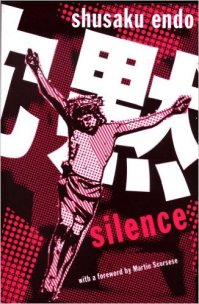
SilenceThis one is just the opposite. I want to read it regardless of whether it will be made into a film or not. But what a bonus it is to know the adaptation is a Martin Scorsese’s work with Liam Neeson, Adam Driver, Andrew Garfield, and Ciarán Hinds. I highly anticipate this film, albeit I expect the viewing experience won’t be pleasant. I’ve read it before but want to reread it before watching. The book is heart-wrenching as Endô describes the persecutions and tortures Christians and Jesuit missionaries suffered in 17th century Japan. How Scorsese, a Catholic himself, handles the subject matter – the choice between apostasy vs. martyrdom – and have these character actors interpret the internal and physical torments will be intriguing to see. Scorsese wrote the forward of this edition of the book (image here).


The Zookeeper’s Wife by Diane Ackerman

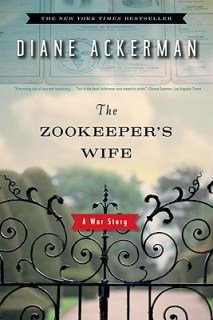
The Zookeeper's WifeThis is a worthy, true story to be made into film. Jan and Antonina Zabinski were keepers of the reputable Warsaw Zoo. During the Holocaust, Jan smuggled Jews out of the Warsaw Ghetto into their facility, saving hundreds. Antonina did the day-to-day chores of protecting them, hiding them in the cages, feeding them and keeping their spirits up. The parallel and irony of men and beasts are obvious. Acclaimed nature writer Diane Ackerman drew from Antonina’s diary to write her non-fiction work, a historical account of a heroic rescue mission. Screenplay by Angela Workerman, a scribe to note. Jessica Chastain and Daniel Brühl play the altruistic Zabinski couple.


Lady Susan by Jane Austen

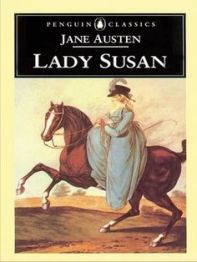
Lady Susan Book CoverThis has been in my iBooks for a long while, so long that I’d deleted it and now reloaded it again as the film adaptation is coming out. Entitled Love and Friendship, screenplay is based on Austen’s early novella Lady Susan, with Kate Beckinsale as Lady Susan Vernon. It will be interesting to see how the epistle form is translated onto screen. It will premiere at the Sundance Film Festival Jan. 23. Whether we will actually see it in our movie theatres is another matter. I hope it will be screened in the not too distant future.


Remainder by Tom McCarthy

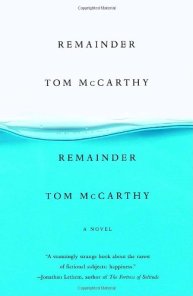
RemainderI bought this book at Harvard Book Store – the independent book store in Harvard Square since 1932 – during my New England Road Trip last fall. I’d read McCarthy’s 2015 Booker shortlisted Satin Island and knew Remainder had been adapted into film before I went on the trip. So it was a title I’d intended to get at that bookstore. Remainder is McCarthy’s debut work (2006). An unnamed Londoner is struck by a falling object and lapse into a coma. As he awakes, he has lost all memory and needs to re-enact his past to find his identity and authenticity of being. The Telegraph had called McCarthy “a Kafka for the Google Age”. Interesting to see how that translates onto screen. The film premiered at the BFI London Film Festival last October. Will screen at Berlin International Film Festival in February, 2016.


The Secret Scripture by Sebastian Barry

the_secret_scripture_bookcover The film adaptation of Booker short-listed and multiple award winning novel by Irish writer Sebastian Barry has already been completed, but has yet come up with a release date. So, I’ve plenty of time to read the book. The narrator is a 100 year-old mental hospital patient recalling her life. The old and the young are played by Vanessa Redgrave and Rooney Mara respectively. Directed by Jim Sheridan, the Oscar nominated director who introduced us to Daniel Day-Lewis in the excellent productions first in My Left Foot: The Story of Christy Brown and later In the Name of the Father.

***

Top Ripples 2015

Here are the books and movies, experiences and encounters that I’d rated 4 Ripples this year. Click on the links to read my reviews.

**

~ ~ ~ ~ Ripples 2015 Movies

The Assassin 

Brooklyn 

Clouds of Sils Maria

Ex Machina

Mustang (Review upcoming)

Spotlight

**

Worthy mentions  ~ ~ ~ 1/2 Ripples

Bridge of Spies

The End of the Tour

Jafar Panahi’s Taxi

Leviathan

The Martian

Room 

Suffragette

Testament of Youth

**

At the Cineplex, I’d also enjoyed four National Theatre Live performances on screen direct from the London stage. All of these are memorable. CLICK HERE to read my post on the first three, and HERE for Hamlet:

The Hard Problem by Tom Stoppard

The View from the Bridge by Arthur Miller

Man and Superman by Bernard Shaw

Hamlet by William Shakespeare (with Benedict Cumberbatch)

**

As in years past, the number of books I’ve read is only about half of the films I’ve seen, a stat that I’d like to improve in the future. Here are the Top Ripples in books I’ve read in 2015, not all published in this year obviously.

Nora Webster by Colm Tóibín

Brooklyn by Colm Tóibín

Satin Island by Tom McCarthy

The Age of Innocence by Edith Wharton

Beware of Pity by Stefan Zweig

The Post Office Girl by Stefan Zweig

Terrapin: Poems by Wendell Berry

Leavings by Wendell Berry

Slouching Towards Bethlehem: Essays by Joan Didion

**

Here, I must mention my 4 Ripple Experience: Fall Foliage Road Trip across four New England States two weeks in Sept/Oct., prompting me to write 10 blog posts when I came back. Starting here.

Kancamagus Hwy

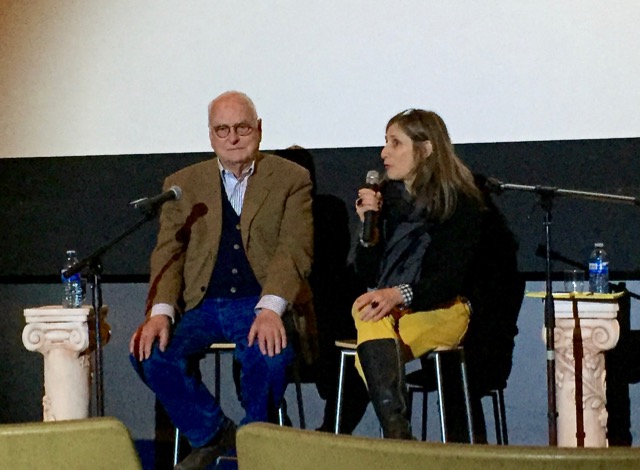
Another 4 Ripple Encounter is attending the Merchant Ivory Retrospective in December. I’d never thought I could actually see director James Ivory in person. And so I did. It was fascinating listening to the 87 year-old, legendary director who’d brought us A Room with a View (1985), Howards End (1992), The Remains of the Day (1993), and many other literary to film adaptations talk about the working dynamics of Ismael Merchant, writer Ruth Prawer Jhabvala and himself in the creative process.

Here’s a photo of the occasion, a Q & A session with film critic Katherine Monk after the screening of Heat and Dust, adaptation of the Man Booker winning novel (1983) by Ruth Prawer Jhabvala:

James Ivory1


And that’s a wrap for 2015.


***

Related posts you might like to read:

Howards End by E. M. Forster

The Merchant Ivory Dialogues 

Ruth Prawer Jhabvala: A Tribute to Rootlessness

Can a Movie Adaptation Ever be as Good as the Book

***


Brooklyn: From Book to Film

Director John Crowley’s movie adaptation of Brooklyn by Colm Tóibín has aptly answered my query (last post): what elements in the book make movie materials? Potentially, a lot. The trick is not to turn them into cliché moments on screen, for this isn’t an unusual story: a young woman leaving home and finding independence and love in a new land. While the film has its flaws, Crowley has crafted a beautiful and stylish transposition.

Author Nick Hornby has done it again following his Oscar nominated screenplay for An Education (2009) adapted from Lynn Barber’s memoir, a film that launched Carey Mulligan’s breakout role and Oscar nod, also a coming-of-age story.

Here in Brooklyn, Hornby tells his story by linking up succinct scenes that just about cover all key episodes in the book. They are short, to the point, and well-paced. The editing too is seamless, driving the film on without delay. After all, they only have about 120 minutes, and they’ve done a smooth job doing that.

Brooklyn Movie Poster

Tóibín’s seemingly simple narration of young Eilis Lacey’s journey of emigration from Ireland to America in the 1950’s is transposed onto film with sensitivity and nuance. The ‘mundaneness’ of daily living – working in a department store, dinner back at the boarding house, night class several days in the week – is transformed into vivid scenes by a lively cast of actors. To their credits, the already animated dinner table banters at Mrs. Kehoe’s (Julie Walters) rooming house as described by Tóibín have now come to life. Indeed, Julie Walters embodies Mrs. Kehoe, and Jim Broadbent as Father Flood is well cast.

Crowley, or is it Hornby, had softened Tóibín’s shrewd descriptions of some of his characters, presenting them in a sympathetic light, making them more likeable. The mood is less serious than the book but evoking empathy just the same. Although two weak spots I find. First is the glamorous and confident older sister Rose (Fiona Glascott) is not depicted as such, lessening the effect that is to come later. Secondly, Jim Farrell (Domhnall Gleeson) is absent at the beginning but appears only in the last part of the film, hence there is not much for character contrast or development.

While most of the supporting characters are well played, the film belongs to Saoirse Ronan, the young Irish actor who first drew notice from Joe Wright’s adaptation of Ian McEwan’s Atonement (2007). Her performance as 13 year-old Briony sent chills up my spine. With that role Ronan became one of the youngest Academy Awards nominees. In the most recent Wes Anderson’s The Grand Budapest Hotel (2014) she sends out very different vibes. As of now for Brooklyn, Ronan has a Golden Globe Best Actress nom. I anticipate she will go all the way to the Oscars.

Cinematographer Yves Bélanger is apt to let the camera linger on Ronan close-up many times, for she acts without speaking. Her facial expressions representing the spectrum of Eilis’s emotions and thoughts are spot on. It is a delight to watch her.

Another animated scene is dinner at Tony’s (Emory Cohen) Italian family home. Here, we see the characters jump out of the book, especially the kid brother, 8 year-old Frankie (James DiGiacomo), whose infamous line is “We don’t like Irish people.” But of course, the whole family welcomes Eilis and supports Tony, who has interpreted his literary version well: respectful, authentic and transparent, as Tóibín writes,”he was as he appeared to her; there was no other side to him.”

Domhnall Gleeson as Jim Farrell has a hard role to play for its very short appearance in the last part. He has not much material to work from but just hangs around with Nancy (Eileen O’Higgins) and George (Peter Campion) who try to set him up with Eilis. Not much to launch a lightning courtship.

Colours play a major role in the film, albeit I feel a pinch of contrivance; watching the colourful 1950’s costumes is like looking into the window of a candy shop with all kinds of macaroons. However, the colours may well set the mood and setting for the film: The overall greenish tone of the first part in Ireland, to the stark green coat Eilis wears as she leaves home on board the ocean liner to the cheery bright yellow cardigan after she has met Tony. Towards the last part, it’s back to the greenish hue of Enniscorthy, only the newly returned Irish/American gal wearing her bright colours. Too explicit a visual translation? Maybe, but I like macaroons, and I won’t hold a Ripple against the colour treatment.

Another visual imagery is at the beginning, right after Eilis has landed in America and gone past the immigration line, she opens the door to head out. We see her step out into an overwhelming brightness of white. Too heavenly? Or maybe just the right sign to boost the confidence of our seasick and insecure heroine?

How do you translate Tóibín’s quiet descriptions on screen? His signature depictions of a calm surface that hides tumultuous billows of emotions? Crowley gives us silence. Indeed, there are cinematic moments that are devoid of sound; the most memorable one is close to the ending when Eilis reveals her secret to her mother (Jane Brennan), sending shock waves and despondence on her face. Yet she restrained her emotions. Mother and daughter embrace in utter silence with tears flowing, saying possibly a last goodbye to each other in their lives and releasing a determined letting go for both.

Brooklyn is a beautiful adaptation worthy of its literary source, among one of the best films I’ve seen in 2015.

~ ~ ~ ~ Ripples 

***

Update Jan. 14, 2016:
3 Oscar Nominations – Best Picture, Best Actress, Best Adapted Screenplay

***

Related Review Posts:

Brooklyn by Colm Tóibín Book Review

Atonement: Book Into Film

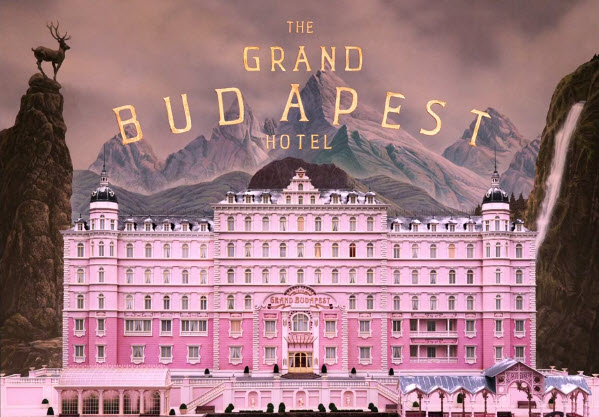
The Budapest Hotel: A Grand Escape

Ex Machina (2015) 

November Wrap: East Meets West at the Pond

November is an eclectic month of reading and viewing for me. I’ve watched films ranging from a Chinese wuxia legend from the Tang Dynasty, to the English suffrage movement, to the scandal in the Catholic Church in Boston… and read books from crime thrillers to Westerns to the Gilded Age to India before and after independence.

Arti is a hybrid after all, constantly navigating between cultures and languages. When it comes to books and films, dashing between genres, periods and styles only adds spice to life.

Here’s the list of my November books and films.

Films

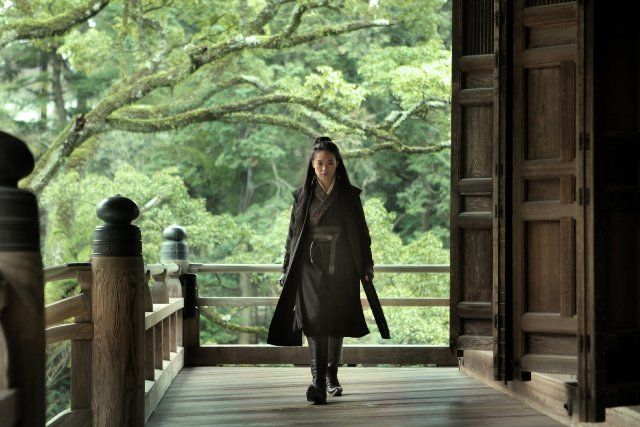
The Assassin

The Assassin

Acclaimed Taiwanese director Hou Hsiao-Hsien’s genre-defying wuxia epic earned him Best Director at Cannes this May. Hailed as the most beautiful film at the Festival, this adaptation of a 9th century Tang Dynasty Chinese legend may not be as easily grasped in terms of its storyline as its visual appeal. The film is recently voted #1 on the reputable Sight and Sound Magazine‘s Best Films of 2015 list, that’s the result of a poll gathering the views of 168 international film critics. It is a rare gem indeed. My full review at Asian American Press.  ~ ~ ~ ~ Ripples

(BTW, Hou’s last film? The Musée d’Orsay commissioned French feature on the Museum’s 20th anniversary: Flight of the Red Balloon.)

Room

A highly watchable adaptation of Emma Donoghue’s 2010 Booker Prize shortlisted novel. Kudos to the actors Brie Larson as Ma, Jacob Tremblay as 5 yr-old Jack, and yes, to Donoghue herself for writing the screenplay. One of those titles that I’ve enjoyed watching more than the literary source. My review on Ripple Effects.  ~ ~ ~ 1/2 Ripples
Update Jan. 14, 2016: 4 Oscar Nominations including Best Picture

Suffragette

Carey Mulligan has put forth a nuanced performance as the laundry gal turned suffragette in this Sarah Gavron (Brick Lane, 2007) directed historical drama. It’s worthwhile to watch the informative depiction of the actual events woven with fictional personal stories, especially Mulligan’s riveting portrayal of Maud, how her beginning naivety is forged into committed devotion to the suffrage movement. Prolific screenwriter Abi Morgan (Irony Lady, 2011, just to name one of her works) has laid out a fact-based drama with a heart-wrenching climatic scene. The sacrifice these voiceless, working women were willing to lay down is inspiring.
~ ~ ~ 1/2 Ripples

Secret in their Eyes

The Hollywood re-make of Argentine author Eduardo Sacheri’s crime thriller is a tall order, for its previous film adaptation is the Oscar winner of 2009 Best Foreign Language Film. My post on the book, original film, and Hollywood version is here. ~ ~ ~ Ripples

Spotlight

One of the best films I’ve seen this year, detailing the sequences of how the Boston Globe’s ‘Spotlight’ team of investigative journalists uncovered the systemic cover-up of child sexual abuse among Catholic priests. The Pulitzer winning reporting is presented in the film as painstaking procedurals in matter-of-fact dramatizing. For those who may be a bit worried about the subject matter, there is no sensationalized scenes of abuse, and on the part of the reporters, no portrayal of heroism. Such may well be the praise-worthy elements of this production. The cast’s performance is convincing, in particular, Liev Schreiber as the soft-spoken but motivating, no-nonsense editor Marty Baron. Come Awards time, I trust the production, its cast and crew, and director Tom McCarthy (The Visitor, 2007) will be duly recognized.    ~ ~ ~ ~ Ripples
Update Jan. 14, 2016: 6 Oscar Nominations including Best Picture

Fireflies in the Garden

My guess is, you haven’t heard of this 2008 movie. Neither have I until I saw it on TV a few days ago. The story about a father-son’s love-hate relationship from childhood to adulthood is realistically depicted. Caught in between the straining conflicts between the always angry and harsh father and a sensitive, vulnerable son, is the mother, always loving and protecting, something like the family dynamics in Terrence Malick’s The Tree of Life. It also echoes the Oscar winning Ordinary People (1981), the small-scaled, Bergman-esque chamber film of deep entanglement of unresolved parent-child conflicts. Another film just popped into mind and that’s Colin Firth, Jim Broadbent’s When Did You Last See your Father.

Fireflies has a well-selected cast with Ryan Reynolds, Willem Dafoe and Julia Roberts. I’m surprised to see the low rating the film received among critics. Disappointed really that it wasn’t well received. What’s that to me, and why am I  concerned? There’s a half-baked screenplay in my closet that’s something along that line. I know, more rewrites.  ~ ~ ~ Ripples

**

Books (Click on links to my Goodreads reviews)

It’s all a chain reaction started with …

The Burning Room by Michael Connelly (Audiobook)

I’ve not missed a single one of Connelly’s Detective Bosch novels. This time I listened to the audiobook and was much impressed by the voice of its narrator Titus Welliver.

Appaloosa by Robert B. Parker (Audio MP3)

So I checked about Welliver’s other audio works, and found Appaloosa by Robert B. Parker. I’d seen the 2008 film adaptation with Ed Harris and Viggo Mortensen and quite enjoyed it. So I jumped right in and found it to be a very well-written book, one of the few Westerns I’ve read.

And from this Robert B. Parker, I went on to explore more about him and learned that he was the ‘Dean of American Crime Fiction’. Here are two of his works crime stories I followed up with:

Promised Land  (Audio MP3)
The Godwulf Manuscript  (Audio MP3)

The Custom of the Country by Edith Wharton
From crime fiction to the Gilded Age. I bought this book at Edith Wharton’s home at The Mount during my New England road trip, during which I learned that Julian Fellowes was much influenced by Wharton and especially this title.

The Secret in their Eyes by Eduardo Sacheri (Audio MP3)

Plato and a Platypus Walk into a Bar: Understanding Philosophy through Jokes by Thomas Cathcart and Daniel Klein (eBook) – click on link to read my one-line review of this title on Goodreads.

The Boston Girl by Anita Diamant
Makes me think of Colm Tóibín’s Brooklyn which I’m rereading to prep for the upcoming film adaptation.

Heat and Dust by Ruth Prawer Jhabvala
Shifting between the English in India before independence and later the 70’s, a clash in cultures and the human toll of unfulfilled marriages. I reread this to prepare for the James Ivory Retrospective this coming weekend right here in my City, with the legendary director (now 87) attending. Yes, really looking forward to this event.

**

Currently Reading / Listening

In the Heart of the Sea by Nathaniel Philbrick (for the upcoming film)

Brooklyn by Colm Tóibín (reread for the upcoming film)

Parade’s End by Ford Madox Ford (Audiobook)

***

Related posts you may like:

Flight of the Red Balloon (2007)

The Tree of Life (2011) by Terrence Malick

When Did you Last See your Father?

Appaloosa (2008)

September Wrap

Here’s a post of lists, movies I’ve seen and books I’ve read or listened to, all in September, a list that hopefully can tide you over till my next post, which will be after a long-planned hiatus. You’re welcome to throw in your thoughts on any title on this list, or ripple out to other shores.

DSC_0319

***

MOVIES At Theatres:

Man from U.N.C.L.E.

Who are they kidding? Might as well just put in this disclaimer: Title taken at random. This is not the Man from U.N.C.L.E. with David McCallum (yeah) as Illya Kuryakin and Robert Vaughn (boo) as Napoleon Solo during my childhood days. I knew what the acronym stood for even as a grade schooler, and was mesmerized by a world wide net of spies and intrigues, despite watching a B/W TV set. This 2015 U.N.C.L.E. feature movie is just like any other lesser spy flicks, feels like haphazardly done, dated spywares that fail to send any positive nostalgic vibes, and featuring an accidental duo just happen to have the same names as those in the 60’s TV series. The third person, Alicia Vikander, makes it a bit more watchable. ~ ~ Ripples

Mistress America

A bit disappointed considering how much I’d enjoyed Frances Ha and the works of Noah Baumbach. Greta Gerwig is a mystery to me. In all her roles she looks ultra cheerful, even in difficult circumstances, but is that overacting or is that what her character is supposed to convey, optimism as fuel for life? Anyway, I wanted to give Mistress America a second chance. But as I checked the showtimes a couple of weeks later, it wasn’t there anymore.  ~ ~ 1/2 Ripples

A Walk in the Woods

A pleasant surprise! Is there life after 50, 60 … 70? Robert Redford and Nick Nolte is an odd pair to answer that from the jagged edge of a cliff. All the cliché shots of two old men hiking the Appalachian Trail are in the movie trailer; the film has more to offer. Emma Thompson is a welcome addition as the forbearing wife hoping for the best. I’ve seen several of this genre in recent years: WildTracksThe Way, to name a few, with A Walk in the Woods being the lightest but still quite relevant. Lesson learned? Forget about your age, and, giving up doesn’t make you a failure. It has been a long while since I read Bill Bryson’s book on which the film is based. Watching the adaptation brings laughs which I remember were absent while reading. An easy 2 hours of relaxation without taking one single step.  ~ ~ ~ Ripples

Learning to Drive

Just the opposite, I was not enthused about the trailer and my hesitations about the film were confirmed as I watched. Based on a non-fiction piece from Katha Pollitt’s Learning to Drive and other Life Stories, the movie turns political by changing the Filipino driving instructor into a Sikh, played by Ben Kingsley. No matter, he has that poise and dignity no matter what costume he puts on. It’s not surprising to see Patricia Clarkson’s Wendy character – a woman in her fifties learning to drive for the first time in her life – get some bonus lessons on cultural awareness on top of parallel parking.  ~ ~ 1/2 Ripples

The End of the Tour

One of the best films I’ve seen this year, and maybe for some time. Nothing looks ‘performed’, yes, even the nervous Jesse Eisenberg as writer David Lipsky is his natural self, unsure of himself and of his subject David Foster Wallace, as he follows his Infinite Jest book tour to write an article for the Rolling Stone Magazine. Based on Lipsky’s book Although Of Course You End Up Becoming Yourself: A Road Trip With David Foster Wallace, the film belongs to Jason Segel. A surprising cast and Segel has delivered with poignancy as Wallace. Framed in a sympathetic tone, the film is a moving tribute to and a revelation of an author whom some may choose to misread.
~ ~ ~ 1/2 Ripples

Pawn Sacrifice

The title says it all. A pawn is sacrificed in the heat of the cold war. Based on the true events that rocked the chess world and quickly inflamed the political landscape, American Bobby Fischer (Tobey Maguire) captured the world championship in 1972, taking the title away from Soviet Grandmaster Boris Spassky (Liev Schreiber). While the film in all its earnest intentions effectively brings out the intensity of the rivalry, the main issue I feel is the casting. Liev Schreiber is too famous a face to be Boris Spassky, even speaking in Russian doesn’t make him any more convincing; Maguire is even more famous a face to be Fischer. And may I go into this? They both need to slim down a bit to fit the profile of the cold war chess rivals, especially Schreiber. My choice for Fischer? Nicholas Hoult. Spassky? Andrew Garfield.  ~ ~ ~ Ripples

***

MOVIES on DVD’s:

The Jungle Book

It has been a long, long while since I watched it and now a refresher to prepare for the star-studded voicing in the remake. This 1967 Disney animation just shows how much has changed in animations then and now. Hand-drawn, slower paced, and nuanced facial expressions from the animal characters, albeit a bit flat when compared to the hyperactive animations we see today. The new version of The Jungle Book is coming out in 2016, utilizing ‘up to the minute technology’, and fusing a real life Mowgli with CGI generated animals and jungle environs all in 3D. As for the 1967 version, the music and the songs will stay as original as ever.

This is Where I Leave You

Another August: Osage County, which is influencing which, for these two are so alike? Or, maybe just speaks to the fact that the dysfunctional family is the norm. Under the direction of their mother, five estranged siblings have to come back home to sit shiva as their father passed. Staying under the same roof for seven days is an ordeal with the Altman family, for everyone carries baggage they’d rather bury together with the dead. Not as bad a film as critics say. Jane Fonda is a less overbearing mother as Meryle Streep is in Osage County, so not to overshadow the rest of the cast. Jason Bateman, Tina Fey, Adam Driver, Corey Stoll may not be the best of siblings, they make one good cast. Don’t you just love the title?

Greenberg

From the dysfunctional family to the dysfunctional individual. Roger Greenberg (Ben Stiller) comes back to LA from NYC to housesit for his brother as the family takes a vacation. As one who had received treatment in a mental hospital, Roger has many personal issues to deal with, and it’s a little heart-wrenching to see him struggle to relate, albeit at times he comes through more as annoying than deserving kindness; but maybe that’s the point. Greta Gerwig plays Florence, dog walker for the family. Stiller is in his usual mode, lost to himself and others; Gerwig is her usual self too, pleasant despite all. So it’s not hard to predict the outcome but the process makes one interesting take. The first time Gerwig in director Noah Baumbach’s work. Here began a beautiful and rewarding partnership.

Panic Room

Re-watch after learning this is the breakout film for Kristen Stewart, age 12. Didn’t realize she played Jodie Foster’s daughter there when I first saw the movie years back, and now seeing it again I find the two do have some resemblance, in appearance and demeanour. Locked in a panic room in a fancy NYC apartment they just moved in, mother and daughter try to stay safe as a gang of burglars break in. Although not thoroughly plausible, especially how Foster answers the door as two policeman come to check on them, which then leads to some even more implausible outcomes at the end. But, overall, a riveting, edge-of-your-seat kind of viewing. And when you think of it, of course, it’s David Fincher.

Olive Kitteridge

Binge-watched this HBO 4-hour mini-series after it won 7 Prime Time Emmys last Sunday. Writing, acting, editing, camera work, the whole production is captivating, and at times, very funny, no, not the Bill Murray section – he’s actually serious here. Frances McDormand and Richard Jenkins are deserving winners. In her acceptance speech for the Best Mini Series, McDormand emphasized that it all came from a book. Yay for books, the wellspring of inspiration. Olive Kitteridge is author Elizabeth Strout’s Pulitzer Prize winning work; writer Jane Anderson wins her Emmy for the adapted screenplay. However marvelous the visualization, it all started with words on a page.


A Touch of Sin

In preparation for Jia Zhangke’s 2015 festival film Mountains May DepartA Touch of Sin was nominated for the Palme d’Or at Cannes 2013 and won Jia a Best Screenplay award. Jia’s camera frames a perspective that’s bold and true in his home country China, a nation obsessed with modernization, economic growth, and wealth accumulation. The film reveals the human costs for such enterprises. Unfortunately, his countrymen didn’t have a chance to watch this one as it was banned. But with Mountains May Depart, officials had said they would allow it. I’m afraid it just might be much tamer and easier for the palate.

***

BOOKS

Summer by Edith Wharton

After The Age of Innocence, I continue to explore the writings of The Gilded Age, to prepare for my New England trip and yes, Julian Fellowes’ new American TV series.

The End of Your Life Book Club by Will Schwalbe

Not as chilling as the title sounds, heartwarming memoir of a son chronicling the extraordinary life of his mother, Mary Anne Schwalbe, albeit she would have likely said, “O, mine is just another life. There are many more deserving ones.” While accompanying his mother at her chemo therapy sessions in the hospital, son and mother share books and reading. The two-persons book club is therapeutic for both.

Circling The Sun by Paula McLain (Audiobook read by Katharine McEwan)

Not sure how much is true in this fact-based fiction about Beryle Markham, the award winning race horse trainer in Kenya and in 1936, the first woman to fly solo across the Atlantic from east to west. Markham flew from England to NYC, but crash landed in Nova Scotia after a 21 hour harrowing flight head-on against the prevailing winds. (I later learned that Amelia Earhart’s 1932 flight was from west to east, a much ‘easier’ feat with the tailwind, landed in Ireland after only 15 hours in flight.) McLain’s book tells many more stories, and gossips, than just this monumental event. Beryl had known the Out of Africa author Karen Blixen in the small social circle in Kenya. Why, Beryl is the other woman in Deny’s life, according to McLain. Not too sure about the book, but I was much impressed by the voice of the narrator Katharine McEwan.

Satin Island by Tom McCarthy

The only 2015 Booker Prize shortlisted book I’ve read, so far, and it’s brilliant. The book presents a most interesting story of a ‘corporate anthropologist’ collecting field data for an ethnographic study of the human society in this digital age. The ‘Great Report’ is needed to be written, same as this book: what have we become at this juncture of human history and civilization? Maybe we do need anthropologists to offer a narrative of our contemporary society, or even better, we should all be trained as anthropologists to see ourselves better.

Remainder by Tom McCarthy

I’ve enjoyed McCarthy’s style of postmodern incisions. Remainder is his debut work and soon to be made into a movie. Walking down the street our unnamed (of course) protagonist was hit by a falling object. After coming out of a coma, he needs to re-enact his past to regain memories, and to reconstruct an authentic existence. Who is he, what is he? With the huge sum of monetary compensations, he steps out to do exactly that. Still reading, a fascinating premise.

***

Books to Films at TIFF15

September kicks off Film Festival Season, a prequel to all the movie nominations coming up at the end of the year. First there’s Venice, Telluride, and Sept. 10 begins the 10-day celebration of films from over 70 countries at the Toronto International Film Festival.

The following are several of the premieres at TIFF15 that are adaptations from literary sources. Just to throw some more reading ideas out in case you’re not already overwhelmed with book suggestions.

***

The Dressmaker by Rosalie Ham

The Dressmaker Movie-tie-in CoverAustralian author Rosalie Ham’s debut novel (2000) is divided into four sections named after four different kinds of fabric: gingham, shantung, felt and brocade. The historical, gothic novel has received several nominations and shortlisted for the Book of the Year Award (2001) by the Australian Booksellers Association. The film adaptation stars Kate Winslet as the dressmaker Tilly Dunnage who returns to her hometown seeking revenge on her being expelled years before, with a sewing machine as her accomplice. Sounds interesting? What more, she is a Titanic survivor (of course she is) and the plot thickens with a hearing on the doomed maiden voyage. Australian director Jocelyn Moorhouse wrote the screenplay and shot the film in Victoria. Liam Hemsworth and Judy Davis also star.

High-Rise by J. G. Ballard

HighRise(1stEd)J. G. Ballard’s most well-known novel probably is Empire of the Sun (1984) thanks to Steven Spielberg’s movie adaptation. That is a semi-autobiographical account of Ballard’s childhood years in a Shanghai internment camp during the Japanese invasion of China. The production is one of the better WWII, Pacific War movies, splashed with some surreal styling. Now High-Rise (1975) looks like a totally imaginative work. An ultra-modern high-rise apartment (hopefully with some updated renos from its inception in 1975) with all its conveniences and amenities only lead to the isolation of its tenants, dividing them into different classes and eventually, to rivalry and extreme violence. The high-rise is a self-contained microcosm of our civilized society, perhaps Lord of the Flies of the concrete jungle. An acerbic satire of our human condition, the film is directed by Ben Wheatley and stars Tom Hiddleston and Jeremy Irons.

Into the Forest by Jean Hegland

Into the ForestThis is Hegland’s debut novel (1996), and had been translated into eleven languages. Set in Northern California in the near future when a massive continental power outage causes the total shutdown of technology, subsequently, the total collapse of human society. The apocalyptic scenario unfolds as two teenaged sisters – at first living in an idyllic, remote forest – now have to fend for themselves, find food at the brink of starvation, secure safety in the wild, and in the process, grow in their relationship with each other and learn more about their world. A coming-of-age story as well as an allegory of our technologically dependent society. The film is shot in British Columbia where, yes, there are beautiful forests. Canadian director Patricia Rozema writes the screenplay and helms the production. Rozema is the one who brought us Jane Austen’s Mansfield Park the movie in 1999. Popular Canadian actress Ellen Page joins hands with Evan Rachel Wood to play the roles of the sisters.

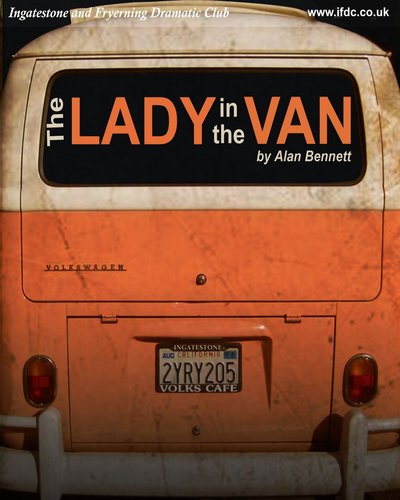
The Lady In the Van by Alan Bennett

The Lady in the VanThanks to the film adaptation, or I wouldn’t have known about this amazing story. Acclaimed English playwright Alan Bennett’s play is not fiction but a memoir. Bennett saw a transient woman living in a van on the street. Trying to help her out, he let her park on his own driveway for three weeks so she could sort things out and move on. Well, Miss Shepherd stayed for 15 years. Not surprisingly, she and the playwright form an unlikely bond of friendship. This ‘mostly true’, incredulous story needs to be told for its unique human scenario. From play to film is probably the best route to reach many more viewers. Who else other than Maggie Smith best fit the role as Miss Shepherd? And so she did, with Alex Jennings as Alan Bennett. Supporting cast includes Jim Broadbent, Dominic Cooper, and James Cordon. The is the third film wherein director Nicholas Hytner and playwright Alan Bennett team up. Their previous collaborations are The History Boys (2006) and The Madness of King George (1994).

The Martian by Andy Weir

The Martian movie tie in editionHere’s a Cinderella story that all bloggers can cheer for. In 2009, Andy Weir started posting on his personal blog as a post-by-post serial his well-researched sic-fi story about an astronaut stranded on Mars. Chapter by chapter he attracted numerous readers who, after the story was finished, suggested he publish it as an eBook so people could read it online as a whole. Weir did that and his eBook soon hit the top of Amazon’s best selling sic-fi list. Not long after, Random House stepped in and took it from there, from e to reality. Four days later, “Hollywood called for the movie rights,” Weir recalled. As I type, on this second week of September, Weir’s book is number one on the New York Times Best Sellers Trade Paperback Fiction list. And the movie? The legendary Ridley Scott takes the helm, with NASA consulting, Matt Damon stars, and an A-list supporting cast includes Jessica Chastain, Chiwetel Ejiofor, and Jeff Daniels. World premiere at TIFF before a general release later in October. And it all started with a blog post.

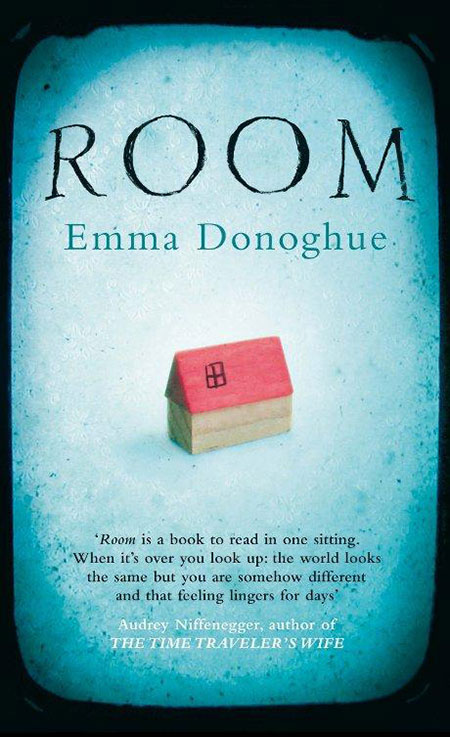
Room by Emma Donoghue

roomThe 2010 Booker-prize shortlisted novel by Irish-Canadian author Emma Donoghue reads like you’d want to see it visualized. Indeed, hearing constantly the voice of a 5 year-old could have that effect on you. So here we are. A movie adaptation. Locked in a room and made captive by a psychotic abuser, a young mother gives birth and for the next five years raises her child Jack in a shed. At 5, Jack has known no other worlds, but now begins to ask questions. Ma cannot contain the make-believe anymore so she tells Jack there’s a world out there, and starts to prepare him for a possible escape. The multiple-award winning novel is written from the child’s perspective. It depicts the power of love and the indomitable spirit of resilience and hope, but maybe not for the claustrophobic. The movie trailer is impressive; the 1.5 minute clip is powerful, consuming, and very moving. The film premiered at Telluride International Film Festival in early September and stunned the audience, drawing multiple standing ovations. Donoghue wrote the screenplay herself, that could well be a definite asset. Lenny Abrahamsson directs, with Brie Larson as Ma, Jacob Tremblay as Jack, Joan Allen and William H. Macy supporting.

UPDATE Sept. 20, 2015: ROOM has just won the Grolsch People’s Choice Award at TIFF15 tonight. FYI, a few of TIFF’s previous winners had gone on to win the Oscar Best Picture including 12 Years A Slave (2013), The King’s Speech (2010), Slumdog Millionaire (2008), American Beauty (1999).

***

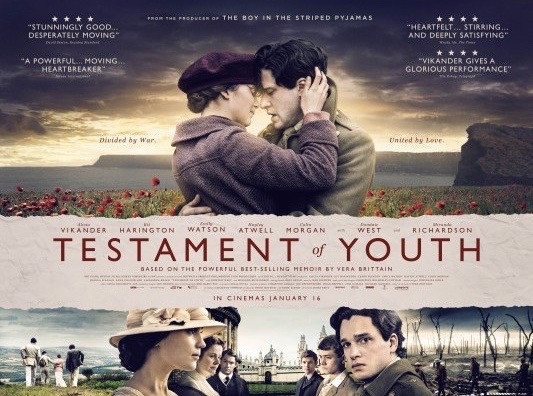
Testament of Youth

Premiered at the London Film Festival in October, 2014, Testament of Youth finally arrived to our city here in Western Canada in late August, and only for a week or so. It came quietly to our age-old indie theatre, nearly slipped by without my noticing it; if so, that would have been a loss for me.

I admit I haven’t read Vera Brittain’s acclaimed, 600 plus page memoir. I admit too that before watching Downton Abbey Seasons 1 and 2, the subject of WWI, its direct hits and collateral damages, had not piqued my interest that much. Now, even saying ‘piqued my interest’ trivializes the devastation – as this film has so poignantly shown us – the tragic loss of a generation of youth.

The beginning of the film, which is elegantly shot, shows us succinctly Vera Brittain’s (Alicia Vikander) well-to-do family. Vera and her brother Edward (Taron Egerton) are endearingly close. While their intention is good, their parents (Dominic West, Emily Watson) are protective and traditional: Edward has the chance to go to Oxford, Vera is meant for marriage. On this issue, Vera protests and argues with her father; eventually, her determination and intellectual vigour win through. A dream comes true when Vera enters the women’s Somerville College Oxford to study English Literature.

Testament of Youth Poster (1)

From her brother, Vera gets to know a few good Oxford men: Victor Richardson (Colin Morgan), Geoffrey Thurlow (Jonathan Bailey), and Roland Leighton (Kit Harington). Roland subsequently wins her heart with his sensitive, poetic inclination; the two soon are engaged. The winds of war blow callous and indiscriminate. As Britain is drawn into the fight, all these young men heed the call to enlist. Vera too decides to forsake her hard-earned Oxford education to join the Voluntary Aid Detachment as a nurse.

The saddest and most ironic notion about WWI is perhaps that it was first thought to be a fast and triumphal war. Surely, Britain came out a victor, but not before ringing up a horrific number of casualties and sending back home – for those fortunate enough – a permanently damaged generation. As the military struggle wained through four long years, Vera would ultimately lose all who are dearest to her: her brother Edward, her fiancé Roland, and their two close friends Victor and Geoffrey. After the war, Vera goes back to Oxford. Later, a disillusioned Vera becomes a vocal pacifist and an advocate of women’s rights.

This is British director James Kent’s full feature debut after years of helming TV productions. His effort is conscientious and serious, and for that, I’d much appreciated.  The film is beautifully shot and carefully crafted. The camera work, while giving us a traditional look, is agile and stylish; the editing succinct. I have not read the memoir so cannot offer comparison, but judging the film on its own, the screenplay is well written and the overall production, a captivating execution.

Kent has an excellent cast to work with, and that adds to the quality of the production. Vera Brittain is well portrayed by the nowadays ubiquitous, Swedish actress Alicia Vikander. She is in some very diverse roles, from Kitty in Anna Karenina (2012) to an AI robot in Ex Mechina (2015), to the witty British agent Gaby in The Man from U.N.C.L.E. (2015), and in several highly anticipated upcoming films.

Vikander is versatile, and her best quality is probably the intelligent and unsentimental mastery of her character. Here, she is a living testament to the devastation of war. For a witness to testify effectively, the most important element has to be clarity and not be overcome by emotions. She has delivered her message poignantly.

Other actors are just as competent in their roles, and a pleasure to watch, despite all their tragic end. Aaron Egerton as Edward, what a change from the street punk under Colin Firth’s mentoring in Kingsman: The Secret Service (2014). Kit Harington’s (Game of Throne fame) performance is effective, particularly in a scene where he comes home the first time from the trenches, a changed man. Veteran actors Dominic West and Emily Watson are excellent supports, especially West as the father torn by grief and ambivalence.

I have seen several WWI and II films in recent years: Sarah’s Key, The Book Thief, The Monuments Men, Suite Française, I have to place Testament of Youth above all of them. Visceral but not sentimental, the film communicates with painful clarity the devastation of war, the traumatic experiences in the trenches, and the cold, hard fact of a testimonial: the loss of a generation.

~ ~ ~ 1/2 Ripples

***

Other related Ripple Reviews:

Suite Française

The Book Thief

Sarah’s Key

Kingsman: The Secret Service

Ex Machina

Anna Karenina 

***


Suite Française Movie Adaptation

The film is the long anticipated adaptation of Irène Némirovsky’s final work in progress before her death in 1942. Born in Ukraine, Némirovsky had moved to live in France since 1919. Before the Nazi occupation, she was a prominent literary figure in her adopted country, having published nine novels and a biography of Chekhov. The Nazi takeover sent her fleeing Paris. She was writing Suite Française in the village of Issy-l’Evêque where she was living with her husband and two young daughters when the French police arrested her for her Jewish descent and sent her to her demise in Auschwitz.

Suite Française was intended to be a literary composition in musical terms. Like a musical suite, the author had planned to write five pieces, but had only finished the first draft of two upon her death. The whole set when completed could have been an impressive eyewitness paralleled fiction, a historic testament reflecting the larger picture from the microlevel, a family, or, a woman and a man from different sides of the war falling in love.

suite_francaise

Such is the story of “Dolce”, the second novella in her Suite on which the movie is based. Lucile Angellia (Michelle Williams) falls in love with a German officer staying in her house where she lives with her widowed mother-in-law (Kristin Scott Thomas), the most elegant estate in the village. Lucile’s own husband has been missing in war and now a likely prisoner. That makes falling in love with the enemy right in your own home even more conflicting. However, Williams fails to bring out such internal battles or even ambivalence; Schoenaerts fares better in expressing the conflicts.

The opening of the film captures vividly what Némirovsky described as the ‘German artillery thunders… its wailings fill the sky’. As viewers we see people carrying suitcases and personal belongings scurry or simply dive for cover and we hear the sudden, roaring thunders of bomb blasting the country road on which refugees from Paris flee like rats – and as the camera zooms away – insects. It’s this kind of cinematic moments that make films powerful. We read about the air raids in the book, we see and hear the actual effects in the theatre. With that regard, the voiceover narrative by Michelle Williams is redundant. Or, maybe it’s just a lazy way of storytelling.

With that dynamic start, the film falters in not sustaining such power, albeit it still has many beautiful shots; romance in its period setting, the movie is visually appealing. But the attractions between Lucile and the handsome German official, Lieutenant Bruno von Falk, played by the ubiquitous Matthias Schoenaerts, soon becomes the centrepiece.

Like his role as Gabriel Oak in Far From the Madding Crowd, here Schoenaerts portrays another man of few words. Compare the two roles, he is more convincing here with his German officer look, and yes, sitting at the piano, mesmerizing Lucile with his soft touch. No words needed when music lures.

If not interrupted by her feisty mother-in-law, Lucile would have dived into the pool of passion immediately. Thanks to Kristin Scott Thomas, who adds some realistic sparks into the dreamy world of wartime romance with the ‘wrong man’. Such episodes could make interesting exploration, but the film is overwhelmingly mellowdramatic and seems not intended to be deep or psychological.

When a farmer, Benoit Labarie (Sam Reily), kills a German officer, the plot thickens. And as a viewer, I’m thankful for that turn in the otherwise relatively uneventful story. Benoit’s wife Madeleine (Ruth Wilson) urged Lucile to help him out. And that she did, risking everyone in her household and ultimately leading to the moral dilemma of both herself and her enemy lover.

The prolific film composer Alexandre Desplat (The King’s Speech, 2010, among many other works) wrote the signature piece “Bruno’s Theme”. While romantic in its overall styling, it is punctuated with discords, could well be a reflection of Bruno’s inner state. The ending of the film shows us his resolve. When love and duty is in conflict, there can’t be any favourable resolve. But then again, the film does not go further into that.

Kristin Scott Thomas plays a pivotal role in balancing sense and passion in her household, and bringing out some worthwhile and lively performance for the production. My major objection regarding this talented veteran of cinema and the stage is that nearly all her movie roles in recent years present her in character twenty years older than she really is. Here, the first shot we see Madam Angellier is her white painted, over-made-up face as an old widow. That is one reason why her other work in 2014 My Old Lady is so refreshing, for we get to see her in a suitable age where she can still find love.

Regarding WWII Holocaust movies, it is unfortunate that films of this genre in recent years based on popular fiction or chronicling significant historical events are mere passable works, like The Monuments Men, or The Book Thief, Sarah’s Keyor the related film Woman in Gold. Seems like the epic war movie genre with its affective power to move has not re-emerged in the past decade, iconic films such as Spielberg’s Schindler’s List (1993), Benigni’s Life Is Beautiful (1997), and Polanski’s The Pianist (2002) have all but remain distant memories.

As for Suite Française the movie, it should not be seen as the adaptation of Némirovsky’s book called Suite Française, however unfinished. The movie is best taken as a rendition of a storyline in one of its pieces, and true to the title ‘Dolce’, sweetly laced with soft touches. Overall, despite its flaws, it is still a watchable film.

~ ~ 1/2 Ripples

This is my second entry to the Paris In July blogging event hosted by Tamara of Thyme for Tea.

Paris in July 2015 Icon

***

Other Related Reviews on Ripple Effects:

Sarah’s Key (2010): From Book into Movie

The Book Thief (2013): From Book to Film

Far From the Madding Crowd (2015)

My Old Lady (2014)

Woman In Gold: Then and Now (2015)

The King’s Speech (2010)

***

My Old Lady (2014) Movie Review

Among the dozen films I’d watched at the Toronto International Film Festival last September, two are apt selections for the annual Paris In July blogging event hosted by Tamara in Thyme for Tea, now in its sixth year. Recently I have re-watched both, one at an indie theatre, the other on Blu-ray. Here’s my first entry to Paris In July 2015.

Paris in July 2015 Icon

***

My Old Lady (2014)

Just when voices had been raised in recent months from female stars against the sexist domination in Hollywood, and lamenting the lack of significant female leading roles, another issue pops up. Well, the problem has been there all along, but who would speak for those who are…. getting old? The peril of Agism in the movie industry. And, if you’re female and aging, confronting Hollywood is a losing battle.

I’m glad there are filmmakers who consider film as an art form, and in its essence, conveys the meaningful and universal that make us human. Kudos to all who attempt to break the barrier. Here we have a directorial debut from 75 year-old Isaac Horowitz. As he had noted, which first-time film director would talk about his five grandchildren?

Horowitz is an author of more than 50 produced plays. Several of his works have been translated and performed in as many as 30 languages worldwide. This is his first time directing a film, adapting his own play onto the big screen. My Old Lady is a delightful debut. I’ve watched it three times, so far, and liked it more each time.

My Old Lady Poster

In an after screen talk, Horowitz shared that he had heeded one advice from the iconic director Sydney Lumet: “Cast the best actors in the world and then get out of their way.” In his debut movie, his cast is first-rate, and allow me to show their age when they made this movie, just to prove a point: Maggie Smith, 80, Kristin Scott Thomas, 54, and Kevin Kline, 67. How much the director had left them to their own I don’t know, but sure looks easy for these veteran actors to take on this one. Such natural ease comes from decades of experience, expertise honed as innate skills.

That’s the advantage of ageing. Let’s drink to that.

Kevin Kline plays Mathias Gold, a down-and-out, thrice divorced, alcohol dependent, penniless middle-aged American who is relieved to inherit from his late father an apartment in the Marais district of Paris. Going there to claim his rightful ownership and aiming at a quick sale, he learns a French lesson in property transfers instead: En Viager. When his father purchased the apartment 43 years ago – now worth over 10 million Euros – he was under the contracted stipulation of a Viager.

This is the issue Mathias faces: Instead of a lump sum payment made for a clear purchase, his father, the buyer, had contracted to put down a cheap amount and then pay the rest as viager, a monthly fee of 2,400 Euro to the vendor and occupant of the apartment, Mathilde Girard (Maggie Smith), until she dies. Now at 90, Mathilde is in good health, thanks to her daily sustenance of red wine and precise meal times. Not only that, Mathilde has a daughter living with her, headstrong and vocal to defend their property against any potential profit-driven redevelopment plans.

That’s the story. It is not hard to predict the ending, with Kline and Scott Thomas together, albeit fiery and combative to start with. But what is harder to foresee is the story within the story at the outset. Everyone has a past. This is one of the best performance I’ve seen with Kline, for he carries the whole film and delivers with just the right touch of humour and pathos. The first time the two were co-stars was in Life As A House (2001), interestingly, another story based on a domicile. Life as a house indeed.

Scott Thomas as always is a pleasure to watch. No matter what role she takes up, her communication is crisp and clear even without having had to say a word. The last scene is a prime example. But of course, you don’t have to wait till the last. As for Maggie Smith, at 80, she is as strong as ever, even when she is playing one who is ten years older.

When it comes to plays turned into films, one should expect the prolific dialogues. Not a perfect fit all the time, there are moments where I as a movie viewer expect better lines, and more than stage-like scenes. But overall, the three characters are a delight to watch.

The few external Parisian street scenes with their fine matching music score instil longing. Yes, this is the kind of films that work best to lure you to Paris, not to the hot tourist sites, but to the streets where Parisians actually live. Subliminal seduction registering in my mind that next time I must go to those districts which are less trodden by tourists but equally representative of the historic city. Maybe a B&B right there in the Marais instead of a boutique hotel.

My Old Lady is a light comedy with a heart, bringing out an issue that, alas, could not be fully resolved, for what’s done cannot be undone. Offsprings inherit from their parents not only the physical properties but often the emotional baggages and their consequences. As a dramedy, Horowitz has brought us not only the drama but the happy ending, the best case scenario that can come out of human failings. That could well be a reason why we go see movies.

~ ~ ~ Ripples

***

Related Posts on Ripple Effects:

The Second, Best Exotic Marigold Hotel

Tuffing It Out At TIFF14

For a list of Paris in July Posts from previous years, CLICK HERE.

Far From the Madding Crowd (2015)

Here’s the paradox of books to movies. The more you know about the book, the more critical you’ll be when watching the movie, and the less likely you’ll enjoy it. Here’s a case in point. If you want to enjoy this current version of Far From the Madding Crowd without hindrance, do not read or reread Hardy’s novel before you see it. For me, alas, I’ve read it twice in the last few months. So, who can I blame if I find the movie disappointing?

Now, I know exactly that I need to judge a movie on its own merits and not according to how ‘faithful’ it is to the source. I’ve written a post on this view. This current adaptation misses the mark not because it’s not ‘faithful’ but because it has been mishandled. The script, the direction, and for that matter, the casting. Now hear me out. far-form-the-madding-crowd I had high expectations for it. Here we have an Oscar nominated director, Thomas Vinterberg (The Hunt, 2012), offering a new version from John Schlesinger’s 1967 production which touted a high calibre cast of Julie Christie, Peter Finch, Alan Bates and Terrance Stamp. After almost fifty years, should one not hold a certain high level of excitement in welcoming a new version with a modern cast?

To start off, I must give credit where it’s due and that’s to the director of photography Charlotte Bruus Christensen (The Hunt) for bringing the beautiful Dorset country to the big screen so we can visualize Hardy’s ‘Wessex’. The camera captures the lush green fields and gentle rolling hills at dawn and dusk, the farming life, the harvesting under the golden sun. Reminds me of Terrence Malick’s Days of Heaven. The scenic and authentic location of the filming is an alluring backdrop to the story.

Now to the screenplay. David Nicholls is no stranger to simplified versions of classics. His last Hardy light Tess of the D’Urbervilles, a TV mini-series (2008), had four episodes to tell the story. But here as a full-length feature, this new Madding Crowd script could make CliffsNotes writers feel they are doing some heavy lifting. Actually, the movie is not far from the source material, almost all of the scenes and many of the dialogues come from the book, with some alterations, but this is understandable. One would think alterations should be for the purpose of dramatization; so it’s just mind boggling that certain scenes that are essentially dramatic in the novel have been left out, ones that could have enhanced the tension substantially. Two readily come to mind: First is the circus scene where Sergeant Troy was nearly recognized by Bathsheba, and the second is right at the climax of the story, Boldwood’s Christmas party, not omitted but with its tension substantially lessened.

Danish director Vinterberg’s previous work The Hunt – a 2014 Oscar Best Foreign Language Film nominee – was a riveting and psychological piece of work. He could have operated in that mode here. With the scenes sweeping by, and leaving out some pivotal cinematic moments, he has missed chances to engage the audience. The altered state of the climatic scene is regretful. Take that crucial act when Boldwood was driven by mad passion (I’m trying to avoid spoiler here in case you haven’t read the book) during that fateful Christmas party in his home. Instead of displaying the conflict and tension in full public view, Vinterberg has taken the action out into the dark of night. Without all the guests as witnesses, the gravity of the conflict and Boldwood’s ultimate action is effectually diminished; not only that, the handling is incredulously haphazard and swift. While Hardy’s Far From the Madding Crowd exudes a lighter mood compared to the cosmically burdened Tess of the U’Derbervilles – and I chuckled at many of his lines while reading – I don’t expect movie viewers would take this film as a comedy. But this was exactly the audience’s reaction in the theatre. When you hear loud laughter at the climax of the movie, you know the director has missed the mark.

The story is about the characters, more so here when you have one headstrong female being wooed by three vastly different men. What’s intriguing is the emotional ‘trilemma’ of our heroine. The effervescent Bathsheba Everdene, the independent, new mistress of the Weatherbury farm is, alas, misdirected. Carey Mulligan can be a convincing Bathsheba, but the strength of character is diminished by the breezy script and a director who fails to draw out her potential. From the “I shall astonish you all” first meeting with her farmhands to the “Please don’t desert me, Gabriel!” plea to Oak so he would come back to rescue her ailing flock, there are pages of Hardy descriptions. Surely, time is of the essence in a 120-minute movie, but at least show visually the gravity of her situation before she so readily rides horseback and race to Gabriel. As a transition, let the camera frame a wide angle shot of the field littered with sheep lying helpless, ready to expire, for she’s about to lose them all. But just showing a sheep in distress doesn’t warrant the quick change in character, from leading to pleading. It looks like Vinterberg has crafted a feeble and even exploitive Bathsheba who gets her way by her outward charm. In several scenes she could have been more intense; we see no Hardy’s expression of ‘nether lip quivered.’

Among the three suiters, the strongest performance comes from Michael Sheen as William Boldwood. His nuanced facial expressions speak louder than words. Whether intentioned by Vinterberg or not, Sheen has turned the truly, madly, deeply love-sick Boldwood into a comic character, more so than Hardy’s portrayal. Or, were the laughters not intended? No matter, Sheen’s performance compensates for the lack of in the other two men.

Gabriel Oak the resourceful shepherd is the strong and silent type. Not only is he a man of few words, the Belgium actor Matthias Schoenaerts has turned him into a man of few expressions as well. Schoenaerts is fine in action thrillers like The Drop (2014) but just not in a romantic lead, as in Rust and Bone (2012), and now Madding Crowd, for he fails to command the image of either a lead or a romantic. In several scenes, we as audience are left hanging, ungratified, for his lack of verbal response to Bathsheba’s sincere words. 

If Schoenaerts is expressionless, here is an equal rival, Tom Sturridge as Sergeant Troy. The George Wickham parallel who dazzles with his brass and scarlet, Sergeant Troy is a subdued character here who lures with his sword. Is it the director or the screenwriter, the few lines given him are mostly sparse and one-liners like “I don’t think I’ve ever seen a face as beautiful as yours.” Sure, that’s from Hardy, but in richer descriptive context. Or, another short line to explain (away) pages of happenings absent on screen.

I’m writing this not in disrespect but disappointment in that a good chance to do justice to Hardy’s illuminating work is missed. Yet, all is not lost; there still remains a synopsis of a Hardy story and Hardy country in full cinematic view. Further, we are confirmed, again, that Carey Mulligan can sing, in a particular folksy, soulful way. So far, I’ve heard her sing in three movies, and each time it enriches the storytelling. When Awards Season comes this fall, I look forward to a stronger performance from her in Suffragette. Simply by virtue of the release date, it is an award hopeful. Some are already predicting Oscar nods for her role in that production.

As for Madding Crowd, let’s just note that it’s a May-released movie.

~ ~ 1/2 Ripples 

________________

Other related review posts:

Tess of the d’Urbervilles (2008, TV)

The Great Gatsby (2013)

Never Let Me Go (2010)

An Education (2009)

Can a Movie Adaptation Ever be As Good As the Book?

Upcoming Movie Adaptations from Literary Sources: 2015 and Beyond

“Literary Sources”, that’s a highly debatable term. Here I just mean anything that’s written, with text, and had been published in real paper or digitally. Which means, Avengers: Age of Ultron is eligible, having been published as a comic book, with text accompanying graphics. Indeed, that’s one movie I’ll be watching. Main attraction: James Spader as Ultron.

Now, for the list. I admit that’s subjective because it’s my list. I include here some titles that pique my interest, ones that I feel would create some ripples. So here it is.

Far From The Madding Crowd (May 1, 2015)

FFTMC Movie still

I have talked about this in a previous post, and now the time has come. In just a few days – opening the same day as Avengers: Age of Ultron – is a new version of Thomas Hardy’s classic. What an assortment of delights in our entertainment smorgasbord. Almost fifty years have past since John Schlesinger’s 1967 production, the definitive version shall I say. Schlesinger was a director of high repute; two years after Madding Crowd he went on to win the Oscar best picture for Midnight Cowboy. His stars for the Hardy adaptation were all high caliber actors: Julie Christie, Peter Finch, Alan Bates. But watching it again a while ago I couldn’t help but feel it a bit dated. Now almost fifty years later, a 21st C. attempt is viable and anticipated. I should reserve my judgement until I’ve seen the movie of course, but from the trailers, it sure looks like a very contemporary take on 19th C. literature. Will the eversweet Carey Mulligan make a believable Bathsheba Everdene?

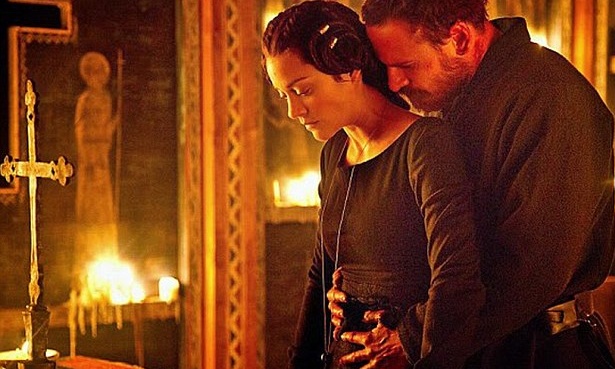
Macbeth (May 2015)

Macbeth 2015

Acclaimed Australian director Justin Kurzel’s Macbeth will premiere at this year’s Cannes Film Festival in May. Shakespeare’s works are probably the most adapted sources on screen. Just for Macbeth, we have 200 results if you go on IMDb. So why watch another one? For one reason, how many Macbeth’s have your actually seen on screen? I’m sure there are other good reasons too, like, watching Academy Awards best actress Marion Cotillard transform from Edith Piaff into Lady Macbeth should be interesting. What more, with high calibre character actor Michael Fassbender as Macbeth, the two should make a dynamic, murderous duo.

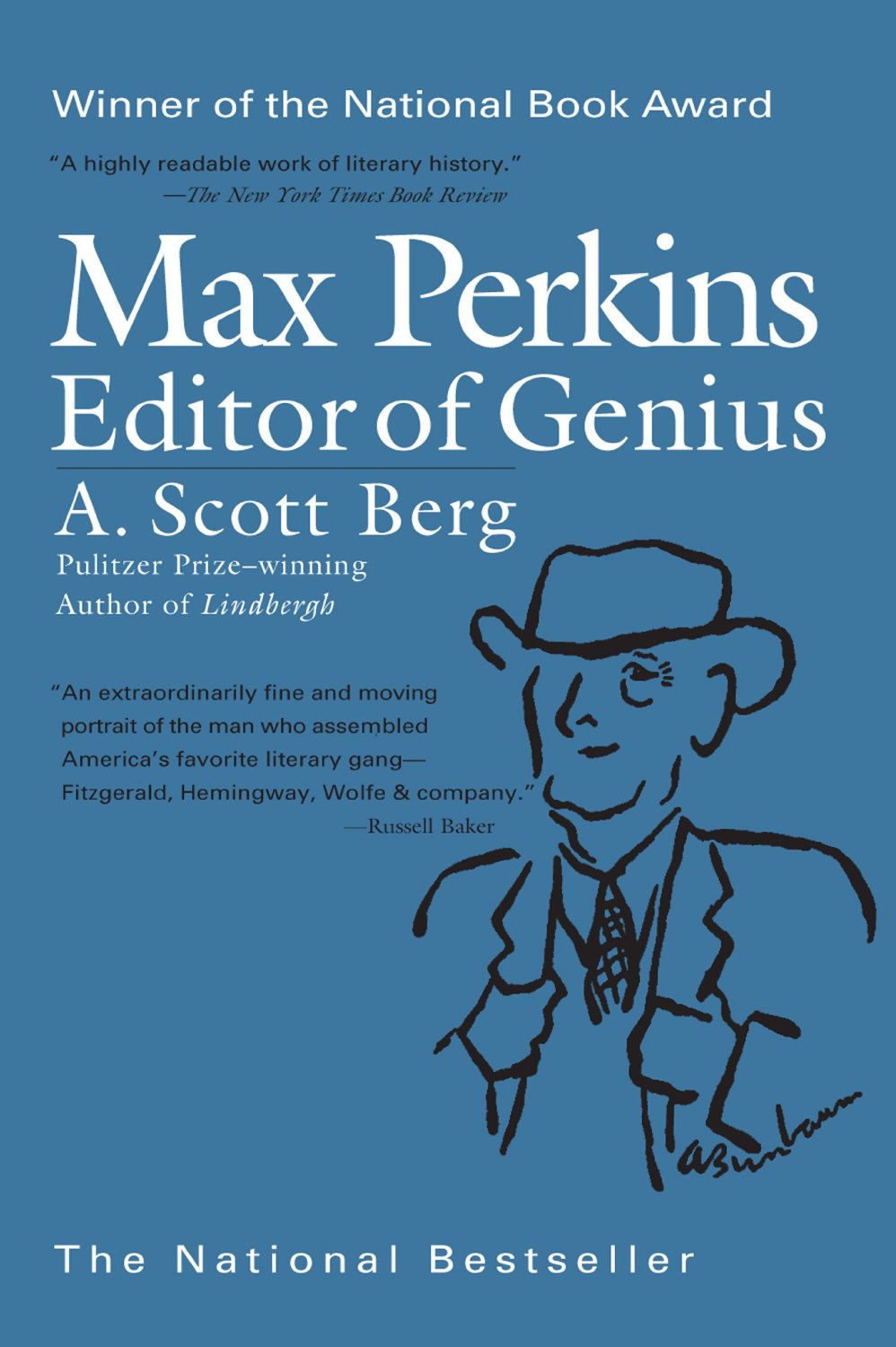
Genius (2015)

Max PerkinsBased on the National Book Award winning bio (1978) Max Perkins: Editor of Genius by A. Scott Berg. Perkins was editor at Scribner, a ‘genius’ because he brought to the world the works of Earnest Hemingway, F. Scott Fitzgerald, and Thomas Wolfe, among others. He was also the man who told Hemingway to “tone it down”. To these great writers, Perkins was also critic,  money-lender, psychoanalyst, and friend. What’s interesting is that the 500+ page bio is adapted into film with its director and most of the main cast all non-Americans. Acclaimed stage director Michael Grandage, cast includes Colin Firth, Jude Law, Dominic West, Guy Pearce, Nicole Kidman, Laura Linney. Screenplay by John Logan who wrote Skyfall (2012). Yup.


Blonde (2016)

BlondeJoyce Carol Oates’s imaginary account of Marilyn Monroe was a finalist of the National Book Award in 2000 and the Pulitzer in 2001. It just happened that recently I’ve re-watched My Week with Marilyn (2011, Michelle Williams as MM) and the superb doc Love, Marilyn (2012), both leaving me with a troubling sadness. I’ve not read Oates’s novel and know not how she approaches her subject, who I feel, despite her talent and popularity, was a victim of objectification as a sex symbol, exploited for her beauty and sexuality, despised for her inadequacy by her husband AM, drowned in fame, and eventually, lost her total self. I hope Oates’s perspective is internal and sympathetic. I love the choice for the role: Jessica Chastain.


Beauty and the Beast (2017)

Beauty and the Beast 2016

With the success of Cinderella (2015), looks like this is the trend: Animation turned into live-action feature. I do look forward to this one. I mean, even with such a worn-out, age-old tale like Cinderella can be revitalized and brought back to life with such vigour and sparks, I trust Disney’s Beatuy and the Beast can be adapted into an even more entertaining work. After all, that’s a story I love much more than Cinderella. Take a look at this human cast: Emma Watson as Belle, Dan Stevens as Beast (a long way from Matthew Crawley), Luke Evans as Gaston, Ewan McGregor as Lumiere, Ian McKellen as Cogsworth, Stanley Tucci as Cadenza, Emma Thompson as Mrs. Potts, Kevin Klein as Maurice, directed by the Oscar winning Bill Condon (Dreamgirls, Twilight). But can they all sing?

“Goodbye to All That” (Film rights optioned)

Joan Didion

This is not Robert Graves’s autobiography but Joan Didion’s essay in her collection Slouching Towards Bethlehem (1968). The film rights have just been optioned recently by Megan Carlson and Brian Sullivan as the first project of their production company. A feature film based on an essay is a most interesting idea. But this is no ordinary essay. Didion’s seminal piece in her iconic collection contains substantial materials as a springboard to a full length movie, and I believe it can be done. The essay is a summarized account of her years living in New York City working for Vogue, an essay prize she won while at UC Berkeley. At first thinking of staying in NYC for six months, eventually living there eight years until she married John Dunne and moved back to CA. I highly anticipate this movie adaptation. The producers are seeking for a female screenwriter and director for the feature. Who other than Didion herself should do the writing?

***

Back to the Source: From Movie to Book

Those who have come to the pond here for a while would know I’m a Book to Movie person. If I know a film adaptation is coming out, I’d want to read the book first, as I’m always intrigued by the adaptation process. Maybe it’s the transposition of one art form into another that so fascinates me. Yes, you can say it’s a kind of theme and variation type of work.

But there are also times when I’m so captivated by a movie that, after watching it, I want to read the book on which it’s based. Thanks to Wes Anderson, I’m now reading Stefan Zweig.

the-grand-budapest-hotel movie poster

Before watching The Grand Budapest Hotel last April, I had never heard of the Austrian novelist, playwright, journalist and biographer Stefan Zweig. During the 1920’s and 1930’s, Zweig was one of the most famous and translated writers. And yes, here I am living under a Rock(ies), have never heard of the name until Wes Anderson’s confessional interviews, wherein he raved about how his (now) Oscar winning Budapest Hotel was influenced by the writings of Stefan Zweig. Also in the movie, there is the acknowledgement of Zweig as the source of inspiration as the film’s end credits begin to roll.

Here’s what’s interesting: Instead of adapting from one single work, Anderson created his Budapest Hotel sparked by the oeuvre of Zweig’s after he read his writings only a few years before. After watching the film, I’ve since read several of Zweig’s short stories, and a couple of novellas The Post Office Girl and Chess Story, and now continue to delve into more of his captivating, often bittersweet, stories. Watch for my article coming out in the April (Spring) issue of Shiny New Books on how Z inspired A.

So The Budapest is the most recent example of how a movie influences my reading. Over the years, there have been other ones. Here are some more:

12 Years A Slave (2013) – Steve McQueen’s artistic rendering of slavery may seem like a paradox, but acclaimed British actor Chiwetel Ejiofor’s performance as Solomon Northup is what spurred me to read the original memoir. Both are excellent works.

3:10 to Yuma (2007) – Have you ever read a Western short story? Western as in uh… cowboy, gunslingers. This is one of the few Western work I’ve ever read. The intriguing moral dilemma the movie depicts and its poignant ending had driven me to look for the short story by Elmore Leonard as soon as I left the theatre.

Bleak House (2005) – The BBC TV mini-series with Gillian Anderson as Lady Dedlock, Anna Maxwell Martin as Esther Summerson sealed the deal for me. The series also introduced me to the talented Carey Mulligan, her first role I believe. I turned to the 1,000 plus pages Dickens novel soon after the series finished. Because I’ve seen it first, it was a breezy read, almost.

Howards Ends (1992)  A cast with Emma Thompson, Helena Bonham Carter and Vanessa Redgrave is not hard to move and entertain. And thanks to Merchant Ivory, the dynamic dual of producer/director, and their team writer Ruth Prawer Jhabvala, I devoured the humorous and equally entertaining E. M Forster novel after that.

Revolutionary Road (2008) – I was captivated by the movie at first. Kate Winslet and Leo DiCaprio had done a marvelous job in depicting the entrapment of suburban life. But only through reading Richard Yates’ book did I sense the even deeper psychological entanglement that I missed in the film.

The Diving Bell and the Butterfly (2007) – I wrote in my book review, “This is one book that should be read after watching the film. Without visualizing what Jean-Dominique Bauby had gone through after his massive stroke, the reader simply could not empathize or appreciate enough of Bauby’s effort in ‘writing’ his memoir.” How? One blink at a time.

When Did You Last See Your Father (2007) – I watched the film twice at TIFF a few years back, Colin Firth as British writer Blake Morrison and Jim Broadbent as his overbearing and critical father dying of cancer. The life-long yearning of a son seeking his father’s approval is so sensitively portrayed. Reading Morrison’s memoir after only made me appreciate the film more.

How about you? Are there movies that have motivated you to go back to the source and read the book?

***

(CLICK ON the links in the titles to read my reviews.)