Congratulations Julie Christie!

Julie Christie

Update Jan. 28: Julie Christie has just won the Screen Actors Guild Award for Best Actress for her role in Away From Her last night in L.A.  Congratulations again!  

Update Jan. 22: Julie Christie has just been nominated for a Best Actress Oscar for her role in Away From Her, and Sarah Polley for Best Adapted Screenplay.  Sarah:  Dreams do come true! For a full list of Oscar Nominees, click here.

A glamourless Globe for Best Actress (Drama) went to Julie Christie, how fitting!  A no-nonsense recognition for some no-nonsense acting for her role as Alzheimer sufferer Fiona in Sarah Polley’s Away From Her.

Once described by Al Pacino as “the most poetic of all actresses” Julie Christie’s movies have been cinematic icons of an era: Darling (1965), Doctor Zhivago (1966), Fahrenheit 451 (1966), Far from the Madding Crowd (1967), The Go-Between (1970)…Yet, at 66, she has downplayed her achievement and shunned the attraction of fame and celebrity.

Christie has long avoided the glitz and glamour of stardom, appearing in only a selectively few films, evading the limelight that could have been hers.  In an interview with the New York Times last year at the release of Away From Her, she was asked about her name as a legend. Christie responded:  “I have no connection with that person at all…that person has gone.”

The British actress could have it all, if she had embraced such a life, but she chose to devote her time and passion to social activism and political causes.  Living almost reclusively away from the public eye for the past decades, Julie Christie just might not show up at the Golden Globe ceremony even if there were one. 

…but then, she probably would though, for her young Canadian friend Sarah Polley.  Christie wouldn’t want to miss the chance of bringing honor to Polley’s directorial debut, having met her while filming No Such Thing (2000) together.

Polley wrote the screenplay Away From Her, based on Alice Munro’s short story “The Bear Came Over the Mountain”.  As she was writing, she had in mind Julie Christie and Canadian veteran actor Gordon Pinsent playing Fiona and Grant.  At first, expectedly, Christie turned her down. But finally, Polley’s persistence over the years paid off.  At 28, Polley was inspired enough to pull together two veterans in their 60’s and 70’s to make a film about old age, love, loss, and Alzheimer.


Sarah Polley 


Sarah Polley once said about Away From Her in an interview:

“I don’t’ think that there’s any chance that I would get nominated. I mean I really hope that the actors have a shot at it …it would be such a dream come true if they were acknowledged…”

In a recent interview with The Toronto Globe and Mail, Polley felt ‘strange’ and ‘surreal’ about the recognition the $4.5 million production has received.

Of course she was delighted with Christie’s win, she also added:

“If there’s any note of reluctance on my part – of not enjoying all of this fully – is that Gordon’s performance is also stunning … and I just don’t want his work in the film to be undervalued.”

Ooh…it’s satisfying seeing the humble exalted…To both Julie Christie and Sarah Polley, Congratulations! I hope to see more nominations and awards coming your way at the Oscars.  

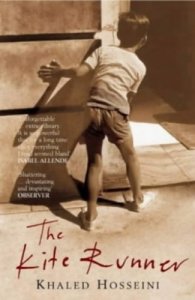
The Kite Runner: Book Into Film

The Book

Kite runner

I read The Kite Runner last summer, and it has remained one of my favorite books. It might as well be called Atonement, because that’s exactly what it’s about.  But this time, the character, Amir, has to deal with the sin of omission.  Just the same, failure to act can lead to devastating consequences, and Amir, just like Briony in Ian McEwan’s Atonement, has to live with his guilt throughout his life.  Unlike Briony, Amir has a chance to redeem himself.   As Amir’s mentor Rahim Khan says: ‘There’s a way to be good again’, despite the tragedies that have already taken place.
.
Highly acclaimed as the first Afghan novel written in English, The Kite Runner became an international bestseller, publishing in 40 countries.  Author Khaled Hosseini was born in Kabul, son of a diplomat. His family sought and received political asylum in the United States as the Soviet invaded Afghanistan, settling in California in 1980 when he was 15.  Hosseini later studied medicine and became an internist practicing until 2004, when he began to devote his time fully to writing.
.
The book is neatly divided into three sections, the first narrates the childhood of the socially privileged Amir growing up in Kabul.  His best friend is Hassan, the son of their servant Ali.  The two boys grow up together, freely roaming the streets of Kabul almost as brothers.  Hassan is totally dedicated to Amir.  He has been Amir’s kite runner, retrieving downed rival kites, and defended him from bullies.  During one horrific incident, Amir betrays Hassan.  Deeply troubled by guilt, Amir devises a plan to ultimately rid himself of the source of his torments, indirectly driving Ali and Hassan out of their household.
.
Upon the Soviet invasion of Afghanistan in 1979, Amir flees to America with his father.  The second part of the book chronicles Amir as an adult, his once fragile relationship with his father is forged stronger as the two strive for their new life in a distant land.  Before his father’s death from illness, Amir gets married and realizes his dream as a writer.  The third part of the book depicts Amir’s journey back to the now Taliban controlled Afghanistan to fulfill a mission that would ultimately lead to his personal redemption.
.
I was moved as I read the author’s poignant first-person narratives.  This is the power of words in the hand of a sensitive and talented writer, articulating the deepest feelings otherwise hidden beyond reach.  I enjoyed the first part the most.  Through vivid description and deceptively simple language Hosseini depicts poignantly the friendship of Amir and Hassan, the loyalty of Hassan and the betrayal by Amir, and ultimately the separation of the two childhood friends.
.
The political upheavals are used as a backdrop, adding texture to the story.  The book is not about the Soviets or the Taliban.  It’s about a father-son relationship, family, friendship, love, and loss.  Above all, it chronicles the life-long haunting consequences of one’s action or inaction, the atonement of wrong done, and the necessary journey in search of redemption.
.
And for the kite soaring high in the sky, it may well be a metaphor for freedom and victory, not just politically, but internally, being set free from burden, from guilt.  Despite a relatively weaker second section, overall The Kite Runner is beautifully written, an engrossing and satisfying read.

~ ~ ~ Ripples

The Movie

The Kite Runner Movie

Update Jan. 22:  The Kite Runner has just been nominated for an Oscar for Best Original Score.

First off, I must state that I’m evaluating the film according to its own genre, as a film.  And to be fair, the movie follows the story quite closely, almost dividing the script into three sections like the book, and telling the story adequately.  Ironically, such direct transfer does not fare well with the film medium.  The transition of scenes are sometimes quite abrupt and choppy.  The same dialogues are there, but the mood is missing. The eagerness of storytelling seems to have overshadowed the artistry of movie making. As a result, the film lacks the power to engage.

I must say though, there are merits that I should acknowledge.  Kudos to Ahmad Khan Mahmidzada for portraying young Hassan so movingly.  He’s probably the most affable and natural actor in the whole movie.  His presence is the appeal of the film, and he well deserves the Critics Choice Award nomination for Best Young Actor.  Unfortunately his role only appears in the first part.

Transferring the story to screen, director Marc Forster (Stranger Than Fiction, 2006) has taken advantage of the visual element, bringing to life the excitement of the sport of kite combat.  To North American audiences, such scenes may well be a spectacular eye-opener.  The original score by Alberto Iglesias (Volver, 2006, Constant Gardener, 2005) plays an essential part in the movie, imparting the intended effects where other film elements may be lacking. His composition earns him a nod from the Golden Globes for a Best Original Score nomination.

The movie attempts to present the cultural sights and sounds of Afghan life, albeit on a very small scale. My main disappointment though was to find out, as the end credits rolled, that the Afghan scenes were all shot in Xinjiang and Beijing, China.  Was I too naive to think that a movie about Afghanistan should be shot in Afghanistan?

As I was watching the movie I felt something was missing, but couldn’t pinpoint what.  I felt the acting by the main character, the adult Amir, played by Khalid Abdalla (United 93, 2006) and his wife Soraya (Atossa Leoni), to be distant and detached.  Maybe due to their lack of acting experience, their performance seem to be less intense and expressive than what the story demands.

Now that I’ve given it some thoughts, I think the lack of the intimacy which the book so successfully delivers can be compensated on screen by a narrative voice-over.  The personal narrative of the book is what makes the story poignant and moving.  The film could benefit from a first person narrative to draw viewers closer and to convey more effectively the hidden turmoils that can’t be expressed cinematically, or technically.  A well written narrative voice-over could impact the audience in a more haunting way as the book has achieved.

Overall, the movie is an adequate adaptation of the book, but it only offers a glimpse of what the book entails. As a nominee for the Best Foreign Language Film category at the Golden Globes this year, hopefully, it can draw viewers’ interest to dig deeper into the profound story by reading the source material first hand.

~ ~ 1/2 Ripples

Globe Without Glamour

So the Hollywood Foreign Press Association has officially cancelled the 65th annual Golden Globe Award ceremony on January 13.  Instead, there will be a press conference at the same time (6 pm pst) to announce the winners of the 2008 Golden Globes.  Click here for the official announcement from HFPA.

To maintain solidarity with striking Hollywood writers, the Screen Actors Guild indicated earlier that all the 72 nominees would not show up for the 65th Golden Globe Award. Click here for more details.

For a change, good movies and TV shows are announced without all the glitz and glamour, no fashion statements, no red carpet photo ops… just no-nonsense recognition of some no-nonsense movie making and TV production. 

With all due respect to the writers, and the HFPA’s financial loss in the cancellation, and all the nominees who deserve recognition, I say…a nice change.  

Atonement: Book Into Film


The Book

Imagine my surprise as I finished Austen’s Northanger Abbey and opened up Ian McEwan’s Atonement to find this epigraph in the beginning of the book:

“Dear Miss Morland, consider the dreadful nature of the suspicions you have entertained.  What have you been judging from?  Remember the country and the age in which we live.  Remember that we are English: that we are Christians.  Consult your own understanding, you own sense of the probable, your own observation of what is passing around you.  Does our education prepare us for such atrocities?  Do our laws connive at them?  Could they be perpetrated without being known in a country like this, where social and literary intercourse is on such a footing, where every man is surrounded by a neighbourhood of voluntary spies, and where roads, and newspapers lay everything open?  Dearest Miss Morland, what ideas have you been admitting?”

They had reached the end of the gallery; and with tears of shame she ran off to her own room.

Jane Austen, Northanger Abbey

Henry Tilney’s somber words to Catherine Morland in Northanger Abbey sets the stage for the story in Atonement.  Not only that, these words prove to be the most tragic irony as the plot unfolds, turning Austen’s satirical parody into heart wrenching reality.

The story starts off in the 1930’s, on a hot summer day in the idyllic country estate of the upper-class Tallis family.  The misinterpretation of a couple of incidents by imaginative 13 year-old Briony sets off the events that ultimately rip the whole family apart.  Later in the evening, Briony witnesses a crime but falsely accuses the wrong man, who happens to be her older sister Cecilia’s secret lover Robbie, the housekeeper’s son.  Is it merely the misunderstanding of a young girl that drives her to bear false witness? Or is it jealousy…or even revenge?  Maybe even Briony herself, as she recollects at 77, is baffled by her own motive. The heart is indeed an unsearchable deep to fathom.

Regardless of the cause, it is the consequences of her misdeed that has tormented her all her life: the breakdown of family relationships, the innocent sent to jail, and later to a horrific war zone, and a pair of lovers torn apart.  As she cannot undo the past, Briony re-creates in the sanctuary of her own novel writing an alternative ending to a tragic story. Fantasy or realism?  As she reaches old age and dementia sets in, the line between the two has also blurred, and yet her inner torments stay as sharp as ever.

Through Briony’s story, McEwan has poignantly shown that remaining unforgiven is probably the harshest punishment of sin.  No matter how hard one works to be redeemed, the act of forgiveness lies with the one who has been wronged.  In the latter part of the story, we see Briony’s painful strive for peace and atonement, and her realization that redemption comes only when sin is pardoned.  Without the forgiveness of sin, there is no end to guilt.

But the story is not only about Briony’s desparate attempt to come to terms with her past, it is also a love epic.  It is the heart-wrenching chronicle of the perseverance and loyalty between two lovers, Cecilia and Robbie, who, sustained by love, are able to withstand the searing pain of separation and atrocities. It is about the absurdity of war, that in the chaos of a war zone, everyone is guilty, and yet, everyone is a victim. It is also about the essence of a family and the fragility of relationships.  The multi-layered structure of the plot and characterization give rise to the complexity and depth of the story.

Booker Prize winner Ian McEwan has written 11 novels and won numerous literary awards.  The novel Atonement has garnered four since its publication in 2001.  McEwan has shown himself to be a master of descriptive and incisive writing.  His story is riveting.  At times I have to read slowly, going back to re-read a passage several times, in order to capture all the details and savour the intricacies of the description and characterization.  At times I read it quickly to capture the flow of the plot, eager to find out where it would lead me.  The author has my emotions in his grasp.  I have to admit, this is one of the rare occasions that I highlight as I read a novel.  Overall, a very engrossing and satisfying read.

~ ~ ~ Ripples

The Film

Atonement the movie

Update February 11:  Atonement just won Best Picture and Best Production Design at the BAFTA (British Academy for Film and Television Arts) Awards in London yesterday.

Update January 22:  Atonement is nominated for 7 Oscars at the 2008 Academy Awards, including Best Picture, Best Supporting Actress, Best Adapted Screenplay, Best Cinematography, Best Art Direction, Best Costume Design, and Best Original Score.

Update on January 14:  Atonement won the 2008 Golden Globe Best Picture (Drama) and Best Original Score Awards announced at the HFPA News Conference last night.

With such a masterpiece in their hands, the screenwriter, director, actors …the whole lot, have a tall order to fill in turning the book into film.  I must say they have done an extraordinary job in this adaptation.  The film is nominated for 7 Golden Globe, including Best Picture (Drama), Best Actress and Actor, Best Supporting Actress, Best Director, Best Screenplay, and Best Original Score.

Unlike many movies based on literary work, this is one of the rare ones that truly depicts the essence of the book and keeps the integrity of its plot.  Screenwriter Christopher Hampton (Oscar winner for his screenplay of Dangerous Liaison, 1988 ) has gleaned the pivotal episodes and remained loyal to the work, keeping the epic span intact; although the war section can be dealt with more details and depth as the novel has rendered.

Thanks to the great work in film editing, the audience can readily capture the flow of the story and benefit also from the seamless flashbacks to see the same event from another point of view, hence, understanding Briony’s misinterpretation. I’m sure even for those who haven’t read the novel, the storytelling is still clear and equally intense.

Director Joe Wright (Pride and Prejudice, 2005) uses the elements of film powerfully to bring to life an excellent script. The music and sound effects (who would imagine the typing sound on an old Corona can be used so effectively in a musical score), the cinematography and the visual flashbacks, the costumes and set all work together to create a masterpiece of cinema artistry worthy of McEwan’s work.  Kudos to Dario Marianelli (The Brave One, 2007; Pride and Prejudice, 2005), who has composed a most riveting score heightening the intensity and poignancy of the film.  I must also stress that, while the music is a powerful element in the movie, the silent moments are equally engrossing.

Young Briony, 13 year-old Irish actress Saoirse Ronan (I’ve read different versions of how her first name should be pronounced so I’m not including any suggestion here) well deserves the Golden Globe nod for a Best Supporting Actress nomination.  Veteran actress and Oscar winner Vanessa Redgrave is brilliant and her poignant summing up at the end is both needed and satisfying. I’m afraid to say the weak link is Briony at 18, played by Romola Garai (Amazing Grace, 2006), where she could be more intense and affective.

And for the lovers, Keira Knightley (Pirates of the Caribbean, 2007, 2006; Pride and Prejudice, 2005) and James McAvoy (Becoming Jane, 2007; The Last King of Scotland, 2006) as Cecilia and Robbie, may well go down in movie history as a memorable pair of star-crossed lovers. Their acting is superb and their chemistry, charismatic.  The passionate scene in the library just confirms that it doesn’t need nudity to convey love, desire, or sensuality.  I had in mind the movie Lust Caution (Ang Lee, 2007) as I was watching this scene.

Knightley and McAvoy are nominated for a Best Actress and Best Actor award at the Golden Globes.  For their very moving performance in Atonement, I’d like to see them continue the ride all the way to the Oscars, and I wish them well.

Overall, an excellent adaptation of an enthralling novel.  Don’t wait to read the book, go see the movie.  But I’m sure after that, you’ll want to get hold of the novel right away.  This is one of the rare examples of both book and film are worthy of complementing each other.

~ ~ ~ Ripples

Juno (2007)

Update Feb. 23:  Juno just won the Best Feature at the Independent Spirit Awards in Santa Monica today. Ellen Page won Best Actress and Diablo Cody the Best First Screenplay. 

Update Feb.11:  Diablo Cody just won the Best Original Screenplay for Juno at the BAFTA (British Academy for Film and Television Arts) Awards last night in London.

Update Jan. 22:  Juno has just been nominated for 4 Academy Awards including Best Picture, Best Director, Best Actress, and Best Original Screenplay. 

Just 13 days into the New Year and we’ll have the 65th Golden Globe Awards…so little time for so many movies to watch before then.  But, I’m glad I got a glimpse of a few of the nominees and I’ve to say, so far, my time well spent.

By now, Juno is no surprise.  This little indie film has been nominated for Best Picture (Comedy or Musical) by the Hollywood Foreign Press Association for a Golden Globe.  Not bad for the young cast led by Canadian actress Ellen Page from Halifax and Michael Cera of Arrested Development fame, to be up against Tom Hanks and Julia Roberts of Charlie Wilson’s War, or for first time screenwriter Diablo Cody getting the Best Screenplay nod.  That she has already won 6 awards for Juno could well lead her way into the Oscars.

The pleasant surprise about Juno is not just the stylish motion graphics in the opening title sequence, the hip music and witty dialogues, the affable characters, or the teenage culture it depicts, but the implicit message this film is getting across.  Director Jason Reitman (Thank You For Smoking, 2005) has again created another social commentary, but this time, making a more powerful and affective statement.

Juno is a 16 year-old high school girl, very forthcoming, very lively, very self-assuring, and…very pregnant. What she intends to do about her predicament and how her Dad and stepmom react form the backbone of the story.  And…what a fresh and welcoming perspective the plot brings to the screen in this day and age.  I’d say, a very brave movie indeed.  In the story, the young characters may not have their act together, at least they have the fundamental element to deal with their situation, their genuine humanity, and their respect for life.

In contrast, the character that Jason Reitman (Arrested Development, The Kingdom, 2007) plays shows that adults may still need to grow up, or, that the road to maturity is a life-long journey.  Let’s not judge so quickly…

A heart-warming and pleasant movie for the new year.  No, it’s not promoting teenage pregnancy, but a viable alternative and a very humane solution to the problem. In an imperfect world, a close to perfect scenario.

~ ~ ~ Ripples

The Message of Christmas

Hopefully by now, the dust has settled, and frantic frenzies can now be turned into some placid ponderings…

A Charlie Brown Christmas (1965 TV) remains my all time favorite Christmas special.  Charles Schulz has wittingly shrunk all humanity into his pint-sized Peanuts gang.  Aren’t we all but tiny specks in the vast universe, and yet our strives and questions are ever so close and immediate.

And for Charlie Brown, little did he know that by throwing up his arms and ranting his disappointment and frustration, had asked the existential question for us all:  “Isn’t there anyone who knows what Christmas is all about?”

And for Linus, little did he know that by answering this question, had delivered not only the Message of Christmas, but the crux of Christianity, pointed us all, the peanuts of the universe, to the way of reconciliation and redemption.

…Out of the mouth of babes (Psalm 8:2)…

A blessed Christmas to all!

Amazing Grace for Christmas

 Amazing Grace

This is one amazing film about an extraordinary man’s fight against slavery in 18th Century England.  The story chronicles Christian Parliamentarian and social reformer William Wilberforce’s mammoth battles in the British political arena to abolish the slave trade.

At that time, slaves were shipped from Africa to the West Indies in appalling conditions, many arriving dead.  They were chained to work on sugar plantations of British owners. Abolishing the slave trade meant a threat to the very economy of Great Britain.  William Wilberforce had given up twenty youthful years and his health to champion the anti-slavery cause.  Three days before his death, he saw his life-long advocacy triumphant as the abolition bill passed in the House of Commons, demolishing the institution of slavery in all of the British Empire.

The film is a display of superb artistry.  First of all, it benefits from a well-written screenplay by Steven Knight.  The award-winning Knight’s other film Eastern Promises (2007) has just garnered 3 Golden Globes nominations including Best Picture.

The exceptional cast is most satisfying to watch. Welsh actor Ioan Gruffudd is William Wilberforce, whose performance is intelligent and engaging.  He is effectively supported by a mass of extraordinary British actors, among them the veterans Albert Finney and Michael Gambon.

Albert Finney plays John Newton, the Pastor and mentor of Wilberforce.  It is from Newton that Wilberforce draws his inspiration and strength for his cause.  Newton himself used to be a slave trader.  His ephiphany came during a deadly storm while he was on a slave ship. The tempest he encountered reflected the torrents of guilt billowing in his own conscience.  Ultimately yielding to a merciful God, Newton was totally changed.  He abandoned the slave trade, his own livelihood, and became a Christian Pastor, spreading the message of God’s love and the freedom God had intended for all people. His writing of the tune and lyrics of Amazing Grace summed up the poignant conversion in his life.

The meticulously researched and designed period costumes and set, together with the fine cinematography bring out a beautiful and engaging film.  In many scenes, I feel like I’m looking through a portal of Rambrandt and Vemeer’s paintings in motion. 

The DVD is packed full of commentary and background information.  The music video of Chris Tomlin playing the piano and singing his contemporary version of Amazing Grace is both a visual and audio delight. 

One note of caution though, the film follows closely the British Parliamentary proceedings and political debates of the time.  Those anticipating a more romantic rendition may not have their expectation met.  However, I find the film very educational, informative, as well as inspiring.  What better gift to give this Christmas than the message inspired by the song Amazing Grace:

Chris Tomlin – Amazing Grace

(My Chains Are Gone)

Amazing grace
How sweet the sound
That saved a wretch like me
I once was lost, but now I’m found
Was blind, but now I see
‘Twas grace that taught my heart to fear
And grace my fears relieved
How precious did that grace appear
The hour I first believed
My chains are gone
I’ve been set free
My God, my Savior has ransomed me
And like a flood His mercy reigns
Unending love, Amazing grace

~ ~ ~ 3 Ripples

2008 Golden Globe Nominations

The list is out, and the winner is….

James Schamus, CEO of Focus Features, distributor of the film Atonement, which claimed 7 Golden Globe nominations. Schamus has been riding high on his winning streak with Lust Caution, which he co-wrote and executive produced. Director Ang Lee’s Lust Caution recently garnered 7 Golden Horse Awards in his native Taiwan, after snatching many other film awards including the Golden Lion at the Venice Film Festival earlier this year.  The movie also got the nod from the Golden Globe for a Best Foreign Film nomination.

That’s the glamour of winning (being nominated in 7 Golden Globe categories is already a win).   Such is the licence to bask in the recognition, the exposure, the praises, the esteem-boosting limelight and afterglow in the movie business, no wonder Schamus said, “I’m back from Taipei and I’m on such a high.” 

 And in another corner, I see another film quietly being recognized, receiving one acknowledgement.  Julie Christie is nominated for her role in Away From Her.  That’s the sole recognition of this Canadian film by the Hollywood Foreign Press Association at the Golden Globes.  I can see film director Sarah Polley quietly pleased, for I think she knows but is too modest to admit that it takes an inspiring and talented director to bring out the acting best from her actors.  That at 28, she could work well with the reclusive and iconic Julie Christie, and Canadian veteran actor Gordon Pinsent speaks volume to her maturity and skills.

Recently honored by the New York Critics Circle with their Best First Film Award, as well as the Los Angeles Film Critics Association’s New Generation Award, Sarah Polley once said during an interview:

“I don’t’ think that there’s any chance that I would get nominated. I mean I really hope that the actors have a shot at it …it would be such a dream come true if they were acknowledged…”

Such gracious words from a 28 year-old just serve to prove that it doesn’t need a Golden nod to have a golden future. Be prepared, Sarah, to see many dreams come true.

Miss Potter for Christmas

It’s not too early to make up a Christmas gift list, or actually start some Christmas shopping. I’ve a recommendation here for a DVD that you can safely watch with your children. But you’d also want to watch it by yourself too, because then you can savour in solitude the touching moments an adult can appreciate, and yes, shed a private tear, and let the movie work its magic freely in your heart.

Miss Potter (2006) is the story of Beatrix Potter, the creator of Peter Rabbit, one of the best loved children icons of all times. The film is a gem glittering with acting talents. As Beatrix, Renée Zellweger (Oscar for Cold Mountain 2003) brings to the screen a most delightful character, her genuine and innocent demeanor captures the audience’s heart the very moment she appears. She receives nominations this year for a Golden Globe and a Saturn Award for her role in Miss Potter, and well deserved.

Ewan McGregor (of Star Wars and Moulin Rouge fame, no relation to farmer McGregor) plays the slightly comical first-time publisher who has made history with his appreciation and confidence in the talents of Beatrix. The two naturally fall in love. Like a Jane Austen novel, such a relationship is frowned upon by Beatrix’s upper-middle class family and openly forbidden. But this time, a hundred years after Jane, Beatrix boldly confronts the inequitable and restrictive Victorian values and norms.

Emily Watson, herself an Oscar nominee for her role in Gosford Park, (and she is excellent in Angela’s Ashes), plays a lively supporting role as McGregor’s unmarried sister. The social issue of the unmarried female in a male-dominated society is freely explored through her outspoken character, but not without poignancy.

I must mention the song written for the movie, which has won the 2007 World Soundtrack Award for Best Original Song Written for Film. “When You Taught Me How To Dance” is sung by Ewan McGregor in the film during a mesmerizing and moving scene. As the credit rolls in the end, this touching tune is heard again, this time in its entirety performed by Katie Melua. Now, she’s another story to write about.

The captivating soundtrack matches the beautifiul scenery and period costume, together with the excellent script and the whimsical animation of Beatrix’s animal friends, make the movie utterly enjoyable and gratifying, but still delivering effectively the depth of sentiments and the dramatic twists and turns.

The DVD includes background on Beatrix Potter, commentary by director Chris Noonan and a making-of documentary with extensive interview with Renee Zellweger, plus a music video performed by Katie Melua singing “When You Taught Me How To Dance”. A valuable collection and I’m sure, a welcomed gift.

~ ~ ~ Ripples

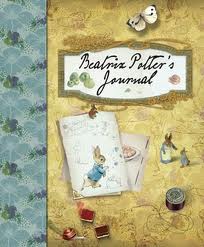
Beatrix Potter: A Journal (2006)

Beatrix Potter A Journal Book Cover

As a companion to the movie, and another great gift idea, is the book Beatrix Potter: A Journal which came out last year. A visual journal in the vein of Nick Bantock, the book is an imaginary scrapbook Beatrix would have made to chronicle her own life, with handwritten entries and notes, amusing drawings, little attached booklets, photo albums, and letters that can be taken out from envelopes. The book corresponds amazingly well with the movie, like a visual commentary.

Here are a couple sample pages from the journal:

webpage-beatrix-journal-3.jpg

webpage-beatrix-journal-4.jpg

~~~3 Ripples for both Movie and Book

Batman Sequel: The Dark Knight on Location in Hong Kong


From Beowulf to Batman, we are a people of hero seekers, real or imaginary.  Our incessant quest seems to be even more acute in recent years as Hollywood plays a major role in fanning the flame.  The latest frenzy is in Hong Kong, where the new Batman movie The Dark Knight is filming on location.

To be released in July, 2008, the Batman sequel will again feature Christian Bale as Bruce Wayne, Michael Caine as Alfred and Morgan Freeman, Lucius Fox.  Reportedly, Jack Nicholson was furious to find out that Heath Ledger will be replacing him as The Joker.  For the first time, Batman is going to venture out Gotham City, and the Metropolis of Hong Kong is the very location (plus Chicago and England) director Christopher Nolan finds most suitable for the superhero’s new crime fighting scenes to take place.

Thanks to my Hong Kong correspondent, I received these fresh photos, taken near the filming location in Hong Kong Central.  Crowds gathered to watch from a distance, many eagerly taking pictures of the filming.  The insatiable quest for the hero figure is indeed universal:

blog-batman-crowd.jpg

blog-batman-crowd-2.jpg

blog-batman-crowd-3.jpg

The International Finance Centre (IFC), where Batman reportedly will jump off:

hk-ifc-pic-5.jpg

Filming inside the famed Central-Mid-Level Escalator Walkway System:

blog-batman-filming.jpg

blog-batman-filming-2.jpg

Photos copyright:  IPTV, November, 2007.

Used by Permission.

Update Jan. 22, 2008: Heath Ledger was found dead in his Manhattan apartment today.  He was 28.

But is this Art?…But is this Prodigy?

The comments in my last post have spurred some insightful ideas on the whole notion of what Art is, and whether a child’s production can include such inherent elements as soulful expression, and purposeful creation driven by theoretical stance.

I think a more appropriate question is, “But is this Prodigy?”

In his review of the documentary My Kid Could Paint That, New York Times film critic A. O. Scott acknowledges that it is natural for parents to cherish their children’s work. Those doodlings and finger paintings posted on the fridge door are priceless. He goes on to say:

The untaught sense of color and composition that children seem naturally to possess sometimes yields extraordinary results, and the combination of instinct and accident that governs their creative activity can produce astonishing works of art.

Except that these magical finger-paint daubings and crayon scribblings aren’t really works of art in any coherent sense of the term, but rather the vital byproducts of play, part of the cognitive and sensory awakening that is the grand, universal vocation of childhood.

The influential abstract art critic Clement Greenberg had made the following controversial remark: 

In visual arts, prodigies don’t count. In music and literature, yes, but not in art.”

The statement reiterates his view that:

The making of superior art is arduous.”

I tend to agree with him. 

I have seen music prodigies, not having reached the ripe old age of 10 or 12, performing complex pieces of classical compositions.  In contrast to a child pouring paint and spreading it out intuitively with her fingers, I saw behind those performances the countless hours of excruciating practice, the intricate and sometimes impossible eye-hand coordination, the mastery of the theory and the appreciation of the structure of the work, to ultimately evoking the very spirit intended by the composer as they perform. 

Not only that, the best of them make it deceptively simple.  They make the audience feel that they are watching a natural, born with such ability and talent, rendering hard work an oxymoron.  I’m not doubting there’s intuition and instinct involved.  But in every superb playing I see intuitive musicality alchemized with extraordinary mastery of skills and discipline. 

As for literary prodigies?  Maybe because of my limited exposure, I have yet to read one.

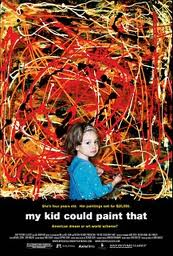
My Kid Could Paint That

If you type in “Marla Olmstead” in your Google search, 37 pages of information will come up. From these pages, you’ll know that she is a painter, born in Binghamton, New York. Her paintings have been compared to Wassily Kandinsky (the pioneer of modern art) and Jackson Pollock (the legendary drip artist). You’ll also learn that her works have been sold for tens of thousands of dollars. And soon enough, you’ll learn that Marla Olmstead is 7 years-old.

Nominated for a Grand Jury Prize at Sundance this year, My Kid Could Paint That is director Amir Bar-Lev’s quest to find out the true story behind this little girl who has been hailed as a “pint-size Picasso”. In the film, we see her using professional paintbrushes and other art accessories to work on canvases over 5 feet tall.

The first half of the documentary we see Marla Olmstead having her first showing in a NY Gallery, she was only 4 then. Her paintings sold like hot cakes, with a waiting list of more than 200 buyers, ready to snatch up anything she would produce. No need to worry about getting work for the next few years. As a 4 year-old, Marla had already earned more than $300,000, which her parents said had been put aside in a college fund. (Would she be going to college?)

Marla Olmstead Marla’s Burning Blue Ball

Then came the bombshell half way into the film. In a February, 2005, CBS’s 60 Minutes reporting, Marla and her parents were painted in a very different light. In the program, Charlie Rose interviewed Ellen Winner, a psychologist who has studied gifted children and specializes in visual arts. She saw a video tape taken by a hidden camera in the home of the Olmstead’s, unobtrusively recording Marla at work. What she suspected was a coach behind the child, someone prodding her on, even directing her moves. After the airing of the CBS program, a once beautiful art prodigy was overnight turned into an ordinary child with manipulative parents in the background steering her purposefully towards financial gain.

Sales began to drop, and warm praises turned into damning accusations. Loving parents are now seen as manipulative frauds. The Olmsteads have since made their own DVD to disprove the detrimental claims. You can see some of the clips showing Marla painting at home in the website http://www.marlaolmstead.com/

Director Amir Bar-Lev has successfully captured the emotional reactions Marla’s parents had in response to the 60 Minutes interview, and their attempt to defend their name in denying their invovlement in Marla’s artistic productions. Interestingly, the film does not take a stand. Rather, it has raised more questions than provided answers:

For those of us who are parents, what are our motives in raising our children? How can we decide what’s ‘best’ for them? How much influence should we or do we have over our children’s development? Where is the line between nature and nurture, pleasure and porfit? What’s more, what is art anyway? And the definition of modern art? Or, talent, for that matter? Does talent has to be associated with a monetary value or fame before it can be recognized?

Every one would have very different view of this story, and his/her own personal set of queries. I went to see this movie with a painter friend of mine. Not surprisingly, as we came out of the theatre, we had very different reactions to the film. Well one question I know I have, and it’s for my mom. Mom, if you’re reading…why wasn’t I given the big canvases and professional paintbrushes and those huge tubes of paints when I was a kid? How come I only got pencil crayons?

~~~3 Ripples