Books to Films at TIFF15

September kicks off Film Festival Season, a prequel to all the movie nominations coming up at the end of the year. First there’s Venice, Telluride, and Sept. 10 begins the 10-day celebration of films from over 70 countries at the Toronto International Film Festival.

The following are several of the premieres at TIFF15 that are adaptations from literary sources. Just to throw some more reading ideas out in case you’re not already overwhelmed with book suggestions.

***

The Dressmaker by Rosalie Ham

The Dressmaker Movie-tie-in CoverAustralian author Rosalie Ham’s debut novel (2000) is divided into four sections named after four different kinds of fabric: gingham, shantung, felt and brocade. The historical, gothic novel has received several nominations and shortlisted for the Book of the Year Award (2001) by the Australian Booksellers Association. The film adaptation stars Kate Winslet as the dressmaker Tilly Dunnage who returns to her hometown seeking revenge on her being expelled years before, with a sewing machine as her accomplice. Sounds interesting? What more, she is a Titanic survivor (of course she is) and the plot thickens with a hearing on the doomed maiden voyage. Australian director Jocelyn Moorhouse wrote the screenplay and shot the film in Victoria. Liam Hemsworth and Judy Davis also star.

High-Rise by J. G. Ballard

HighRise(1stEd)J. G. Ballard’s most well-known novel probably is Empire of the Sun (1984) thanks to Steven Spielberg’s movie adaptation. That is a semi-autobiographical account of Ballard’s childhood years in a Shanghai internment camp during the Japanese invasion of China. The production is one of the better WWII, Pacific War movies, splashed with some surreal styling. Now High-Rise (1975) looks like a totally imaginative work. An ultra-modern high-rise apartment (hopefully with some updated renos from its inception in 1975) with all its conveniences and amenities only lead to the isolation of its tenants, dividing them into different classes and eventually, to rivalry and extreme violence. The high-rise is a self-contained microcosm of our civilized society, perhaps Lord of the Flies of the concrete jungle. An acerbic satire of our human condition, the film is directed by Ben Wheatley and stars Tom Hiddleston and Jeremy Irons.

Into the Forest by Jean Hegland

Into the ForestThis is Hegland’s debut novel (1996), and had been translated into eleven languages. Set in Northern California in the near future when a massive continental power outage causes the total shutdown of technology, subsequently, the total collapse of human society. The apocalyptic scenario unfolds as two teenaged sisters – at first living in an idyllic, remote forest – now have to fend for themselves, find food at the brink of starvation, secure safety in the wild, and in the process, grow in their relationship with each other and learn more about their world. A coming-of-age story as well as an allegory of our technologically dependent society. The film is shot in British Columbia where, yes, there are beautiful forests. Canadian director Patricia Rozema writes the screenplay and helms the production. Rozema is the one who brought us Jane Austen’s Mansfield Park the movie in 1999. Popular Canadian actress Ellen Page joins hands with Evan Rachel Wood to play the roles of the sisters.

The Lady In the Van by Alan Bennett
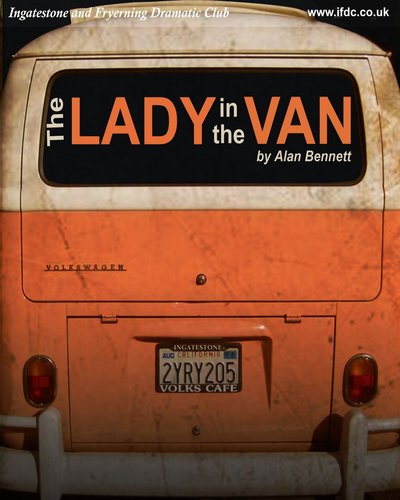
The Lady in the VanThanks to the film adaptation, or I wouldn’t have known about this amazing story. Acclaimed English playwright Alan Bennett’s play is not fiction but a memoir. Bennett saw a transient woman living in a van on the street. Trying to help her out, he let her park on his own driveway for three weeks so she could sort things out and move on. Well, Miss Shepherd stayed for 15 years. Not surprisingly, she and the playwright form an unlikely bond of friendship. This ‘mostly true’, incredulous story needs to be told for its unique human scenario. From play to film is probably the best route to reach many more viewers. Who else other than Maggie Smith best fit the role as Miss Shepherd? And so she did, with Alex Jennings as Alan Bennett. Supporting cast includes Jim Broadbent, Dominic Cooper, and James Cordon. The is the third film wherein director Nicholas Hytner and playwright Alan Bennett team up. Their previous collaborations are The History Boys (2006) and The Madness of King George (1994).

The Martian by Andy Weir

The Martian movie tie in editionHere’s a Cinderella story that all bloggers can cheer for. In 2009, Andy Weir started posting on his personal blog as a post-by-post serial his well-researched sic-fi story about an astronaut stranded on Mars. Chapter by chapter he attracted numerous readers who, after the story was finished, suggested he publish it as an eBook so people could read it online as a whole. Weir did that and his eBook soon hit the top of Amazon’s best selling sic-fi list. Not long after, Random House stepped in and took it from there, from e to reality. Four days later, “Hollywood called for the movie rights,” Weir recalled. As I type, on this second week of September, Weir’s book is number one on the New York Times Best Sellers Trade Paperback Fiction list. And the movie? The legendary Ridley Scott takes the helm, with NASA consulting, Matt Damon stars, and an A-list supporting cast includes Jessica Chastain, Chiwetel Ejiofor, and Jeff Daniels. World premiere at TIFF before a general release later in October. And it all started with a blog post.

Room by Emma Donoghue
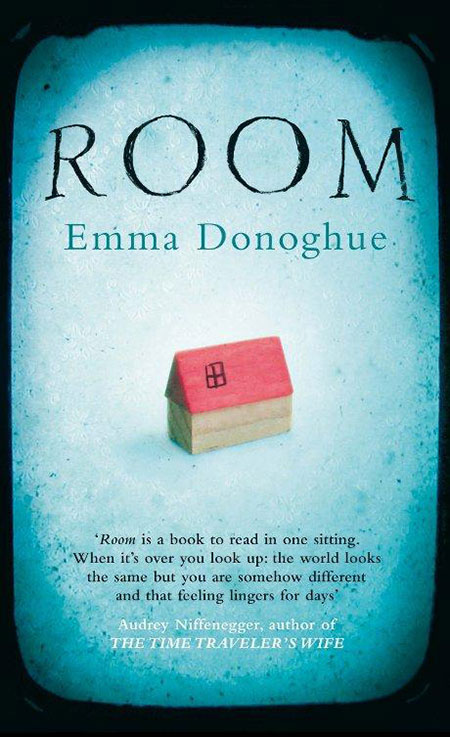
roomThe 2010 Booker-prize shortlisted novel by Irish-Canadian author Emma Donoghue reads like you’d want to see it visualized. Indeed, hearing constantly the voice of a 5 year-old could have that effect on you. So here we are. A movie adaptation. Locked in a room and made captive by a psychotic abuser, a young mother gives birth and for the next five years raises her child Jack in a shed. At 5, Jack has known no other worlds, but now begins to ask questions. Ma cannot contain the make-believe anymore so she tells Jack there’s a world out there, and starts to prepare him for a possible escape. The multiple-award winning novel is written from the child’s perspective. It depicts the power of love and the indomitable spirit of resilience and hope, but maybe not for the claustrophobic. The movie trailer is impressive; the 1.5 minute clip is powerful, consuming, and very moving. The film premiered at Telluride International Film Festival in early September and stunned the audience, drawing multiple standing ovations. Donoghue wrote the screenplay herself, that could well be a definite asset. Lenny Abrahamsson directs, with Brie Larson as Ma, Jacob Tremblay as Jack, Joan Allen and William H. Macy supporting.

UPDATE Sept. 20, 2015: ROOM has just won the Grolsch People’s Choice Award at TIFF15 tonight. FYI, a few of TIFF’s previous winners had gone on to win the Oscar Best Picture including 12 Years A Slave (2013), The King’s Speech (2010), Slumdog Millionaire (2008), American Beauty (1999).

***
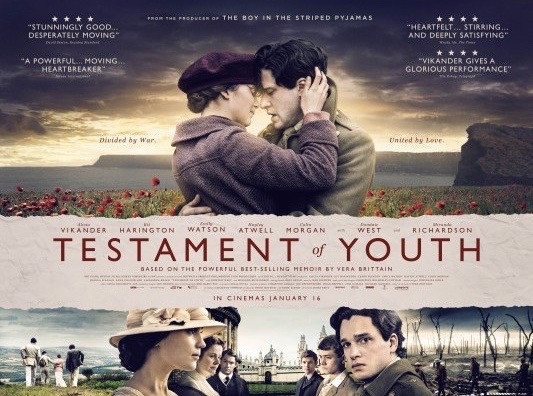
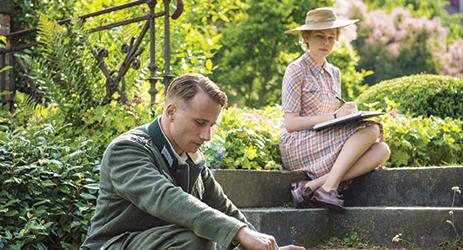
Testament of Youth

Premiered at the London Film Festival in October, 2014, Testament of Youth finally arrived to our city here in Western Canada in late August, and only for a week or so. It came quietly to our age-old indie theatre, nearly slipped by without my noticing it; if so, that would have been a loss for me.

I admit I haven’t read Vera Brittain’s acclaimed, 600 plus page memoir. I admit too that before watching Downton Abbey Seasons 1 and 2, the subject of WWI, its direct hits and collateral damages, had not piqued my interest that much. Now, even saying ‘piqued my interest’ trivializes the devastation – as this film has so poignantly shown us – the tragic loss of a generation of youth.

The beginning of the film, which is elegantly shot, shows us succinctly Vera Brittain’s (Alicia Vikander) well-to-do family. Vera and her brother Edward (Taron Egerton) are endearingly close. While their intention is good, their parents (Dominic West, Emily Watson) are protective and traditional: Edward has the chance to go to Oxford, Vera is meant for marriage. On this issue, Vera protests and argues with her father; eventually, her determination and intellectual vigour win through. A dream comes true when Vera enters the women’s Somerville College Oxford to study English Literature.

Testament of Youth Poster (1)

From her brother, Vera gets to know a few good Oxford men: Victor Richardson (Colin Morgan), Geoffrey Thurlow (Jonathan Bailey), and Roland Leighton (Kit Harington). Roland subsequently wins her heart with his sensitive, poetic inclination; the two soon are engaged. The winds of war blow callous and indiscriminate. As Britain is drawn into the fight, all these young men heed the call to enlist. Vera too decides to forsake her hard-earned Oxford education to join the Voluntary Aid Detachment as a nurse.

The saddest and most ironic notion about WWI is perhaps that it was first thought to be a fast and triumphal war. Surely, Britain came out a victor, but not before ringing up a horrific number of casualties and sending back home – for those fortunate enough – a permanently damaged generation. As the military struggle wained through four long years, Vera would ultimately lose all who are dearest to her: her brother Edward, her fiancé Roland, and their two close friends Victor and Geoffrey. After the war, Vera goes back to Oxford. Later, a disillusioned Vera becomes a vocal pacifist and an advocate of women’s rights.

This is British director James Kent’s full feature debut after years of helming TV productions. His effort is conscientious and serious, and for that, I’d much appreciated.  The film is beautifully shot and carefully crafted. The camera work, while giving us a traditional look, is agile and stylish; the editing succinct. I have not read the memoir so cannot offer comparison, but judging the film on its own, the screenplay is well written and the overall production, a captivating execution.

Kent has an excellent cast to work with, and that adds to the quality of the production. Vera Brittain is well portrayed by the nowadays ubiquitous, Swedish actress Alicia Vikander. She is in some very diverse roles, from Kitty in Anna Karenina (2012) to an AI robot in Ex Mechina (2015), to the witty British agent Gaby in The Man from U.N.C.L.E. (2015), and in several highly anticipated upcoming films.

Vikander is versatile, and her best quality is probably the intelligent and unsentimental mastery of her character. Here, she is a living testament to the devastation of war. For a witness to testify effectively, the most important element has to be clarity and not be overcome by emotions. She has delivered her message poignantly.

Other actors are just as competent in their roles, and a pleasure to watch, despite all their tragic end. Aaron Egerton as Edward, what a change from the street punk under Colin Firth’s mentoring in Kingsman: The Secret Service (2014). Kit Harington’s (Game of Throne fame) performance is effective, particularly in a scene where he comes home the first time from the trenches, a changed man. Veteran actors Dominic West and Emily Watson are excellent supports, especially West as the father torn by grief and ambivalence.

I have seen several WWI and II films in recent years: Sarah’s Key, The Book Thief, The Monuments Men, Suite Française, I have to place Testament of Youth above all of them. Visceral but not sentimental, the film communicates with painful clarity the devastation of war, the traumatic experiences in the trenches, and the cold, hard fact of a testimonial: the loss of a generation.

~ ~ ~ 1/2 Ripples

***

Other related Ripple Reviews:

Suite Française

The Book Thief

Sarah’s Key

Kingsman: The Secret Service

Ex Machina

Anna Karenina 

***


Irrational Man (2015): A Teaser for Sartre

Can a director who churns out a movie every year continuously over the past four decades bring us anything new at age 79?

Yes, and no. But here’s the thing with Woody Allen’s annual offering, a summer treat in recent years, the answer is… does it matter?

Before you read on, be warned that the following discussion contains, no, implies, Spoilers.

Unlike his recent films – Magic In the Moonlight, Blue Jasmine, To Rome With Love, and Midnight In Paris – Irrational Man is not a comedy. It is a semi-serious drama carrying some signature WA thematic materials. Those familiar with his Match Point (2005) and Crimes and Misdemeanors (1989) will find Irrational Man a variation on the same theme, but this time with a twist. So there you go, the old has become new.

Here again, the writer/director is toying with Dostoevsky’s Crime and Punishment, Raskolnikov’s idea of getting away with crime for those who are superior. What if one commits a crime out of a superior motive, purely altruistic and benevolent? If a crime is committed with the full intention to rescue someone from a miserable predicament, shouldn’t the criminal be thanked rather than punished?

Interesting premise, and when the idea is embodied in Joaquin Phoenix, the character actor who is beyond categorization, here’s the attraction. First time in a WA film, Phoenix has prepared well with the right physique – an obvious paunch – to show his method immersion. He plays a listless philosophy professor Abe, who has no life purpose, no drive even when starting a new position or finish writing his book, but just passing his summer teaching hours with easy chats on Kant, Kierkegaard, and Sartre, while still attracting students and colleagues alike.

Irrational Man's pivotal scene

One day in a coffee shop, upon overhearing a woman talk to her friends about her desperate child custody case, Abe is overcome with empathy. (Photo above: a pivotal scene.) He is ready to live out an existential choice: by taking actions in his owns hands in committing a crime to help the woman, he in turn discovers the purpose for his own existence. Did I say this is not a comedy? Well, let me qualify that. There’s no laughter in the theatre. However, Phoenix’s character and action is inherently an ironic jest; the story we see on screen works like an object lesson on the freedom of choice, and a teaser for Sartre.

I look forward to these annual WA productions, even when I hear dialogues that sound like I’ve heard them before. Why? Where else would one find nowadays philosophical chitchats on screen for our entertainment? Philosophical chitchats, the term itself is an oxymoron; here lies the fun of a WA film. Allen doesn’t take his characters seriously, so we have light characters engaged in serious talks.

The psuedo-intellectual screen talks are humour in themselves. Just because we can’t spot a Marshall McLuhan in a theatre line-up anymore to clarify his own ideas as in Annie Hall, let alone get Sartre to referee the on-screen discourses, so we can sit back leisurely and be amused at Allen’s characters delving in philosophical problems, while their life and fate collide in twists and turns.

The is Emma Stone’s second WA movie back-to-back with her Magic in the Moonlight in 2014. As a college student falling for her philosophy prof sounds more convincing a role for Stone than as a young medium with telepathic ability to contact the dead. What’s interesting about these annual WA productions are the interesting combinations of A-listers being cast in some wacky roles. Something new, something old… thought you’ve seen it before? Just wait till the end.

To kick off your Philosophy 101 class, Irrational Man could be a lively visual aid to hold your students’ interest. Breezy, entertaining, lines to discuss and dispel, with an ending that long-time WA watchers could well interpret as the director redeeming himself from creating those in Match Point and Crimes and Misdemeanors in his younger days. Turning 80 the end of this year, maybe Allen has finally decided to lean towards the side that says, yes, there’s poetic justice after all.

~ ~ ~ Ripples

Other Related Ripple Reviews:

Magic In The Moonlight (2014)

Blue Jasmine (2013)

To Rome With Love (2012)

Midnight In Paris (2011)

***

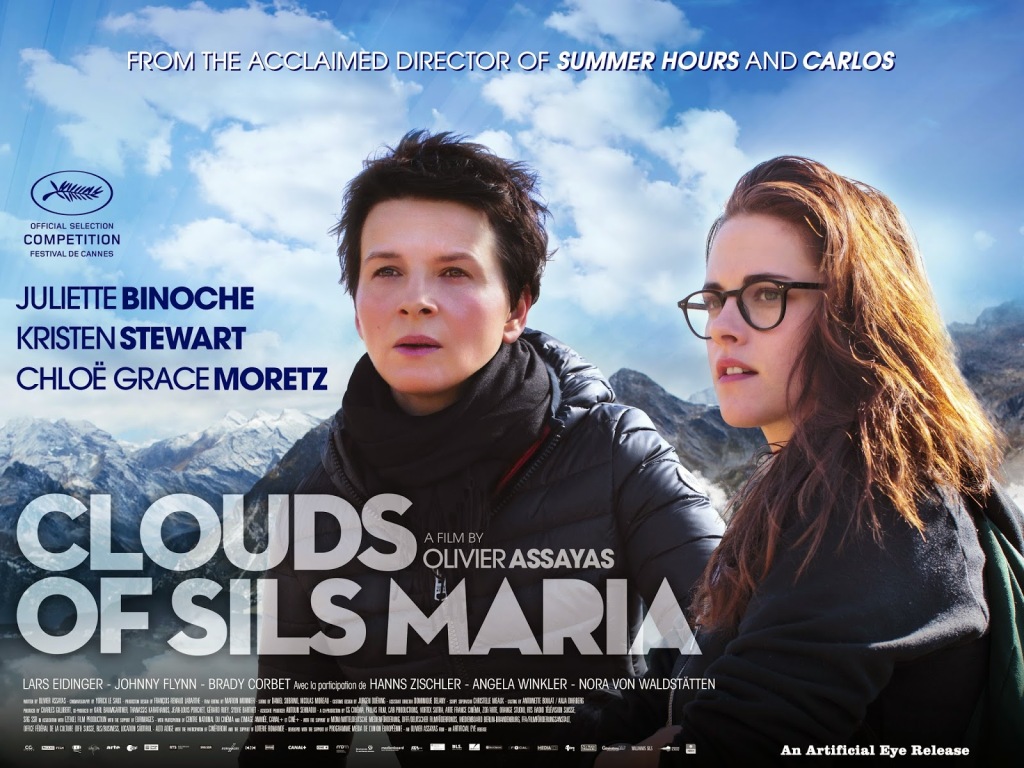
Clouds of Sils Maria Movie Review

Clouds of Sils Maria is an intricately conceived rumination on the passage of time, ageing, being female, being famous, and for that matter, being gradually becoming obsolete. The newest film from the prominent, Paris born, French director Olivier Assayas, it was nominated for numerous awards at film festivals, including the Palme d’Or at the Cannes Film Festival in 2014. I watched it at TIFF last September, and gladly again at the indie theatre when the film came to our city a few months ago.

Clouds of Sils Maria

A middle-aged celebrated screen and stage actress Maria Enders (Juliette Binoche) is on a train to Zurich with her personal assistant Valentine (Kristen Stewart) to attend a tribute to the playwright Wilhelm Melchior, who had cast her in her breakout role in one of his plays Maloja Snake some twenty years ago. At that time, Maria played a manipulative young office girl Sigrid who had an emotive relationship with her older office boss Helena, driving her to commit suicide.

While on the train to Zurich, Maria gets the news that Melchior has died, an apparent suicide due to a terminal illness. When arriving Switzerland, Melchior’s widow Rosa (Angela Winkler) lets Maria and Valentine stay in her idyllic house in the Swiss Alps, in the Sils Maria locale, while she tries to get away from the sad memories of her late husband. In that serene natural setting, Valentine helps Maria practice her lines for a revival of the play Maloja Snake, re-mounted as a tribute to the late playwright. But this time, Maria is to play the older character Helena, while a wildly popular, scandalous young star Jo-Ann Ellis (Chloë Grace Moretz, the rising star in real life) is to play Sigrid.

If you have the patience to read up to here, you likely can see the parallels: Maria and Valentine – Helena and Sigrid, as well you probably can guess the feelings Maria goes through in this role reversal, for now she is twenty plus years older, and the loss of Melchior could well be the foreshadow of an imminent path everyone has to trod, famous or not. The film is an intricately woven, multi-layered construct, with thought-provoking dialogues and incisive subtexts; the mirroring effect is brilliant especially the scenes when Valentine helps Maria practice her lines and accept the role reversal, from the young to the older.

If you appreciate the characterization and the superb performance of the actresses, you would not only bear with but savour the complexity of the dialogues and scenes. Instead of a litmus test for the viewer’s patience, the complications and layered meaning are a testament of some fine screenwriting and directing. Assayas’ signature realism and naturalistic style works marvellously well; in some scenes towards the end, the honesty is harsh and biting. 

Juliette Binoche always delivers. Here she is an ageing celebrity and star, her outward coolness masks tumultuous insecurities. She is totally natural in her role. Viewers may even feel she’s not acting at all.

But my highest praise has to go to Kristen Stewart. I admit I’m probably one of the few who have not watched, or read, any of the Twilight movies or books. So this is my first Stewart film, and I’m most impressed. She lives and breathes her character Valentine, assistant to Maria Enders. From juggling several smart phones while balancing herself on a moving train, to helping Maria practice her lines adjusting to the older role, Stewart has shown she has mastered the needed nuance, intelligence and sensitivity for her character. She has portrayed convincingly a complex female who, despite her efficiency and strength at her job as assistant to a famous but fast fading star, is herself vulnerable as a female with deep, inner yearnings and conflicts muffled only by her outward sensibility.

With her role as Valentine, Stewart went on to win the 2015 César Award for Best Supporting Actress this February in Paris, the first American actress to win the prestigious French acting award which is equivalent to the Oscar here.

Chloë Grace Moretz aptly plays the youthful, and bratty, rising star Jo-Ann Ellis. She embodies the young and famous, a celeb whom Valentine admires, but whom Maria can never understand as to how the young measures talent or shoots to the peak of popularity despite (or maybe because) of scandals. I’m sure what’s mind boggling to her could well be the thoughts in many a mind of the, alas, fading bunch of old school, superbly trained actors and iconic performers of our days.

The Largo from George Frideric Handel’s opera Serse is poignant, a solemn and grand diction of existential angst as Maria confronts the loss of her beloved and respected artistic mentor, and her own fading glory. Interestingly, the music reminds me of Kon Ichikawa’s The Makioka Sisters (1983), wherein this piece of music also appears, bringing out the poignancy of the passage of time, the erosion of the familiar, the end of an era, of traditions, and of treasured values.

This brings us to the very title of the film. The clouds of the Sils Maria mountain range in the Swiss Alps is famous for their sudden appearance like a snake curling and weaving around the mountains. Many have climbed the peaks only to be disappointed as the clouds may not appear while they are there. In the scene towards the end, just as Maria turns and walks away, the clouds come into view for us audience but not her, indeed, like a snake slithers silently in and in a few seconds, moves out of sight again. Ah… the ephemeral of it all. The ultimate mirroring of nature and life.

Probably the best film I’ve seen so far this year. A film that deserves – and requires – multiple viewings.

~ ~ ~ ~ Ripples

***

This is my last entry to Paris in July 2015 blogging event hosted by Tamara of Thyme for Tea.

Paris in July 2015 Icon***

Other Related Ripple Effects Posts:

Conversation with Juliette Binoche

Summer Hours by Olivier Assayas

My Old Lady 

Suite Française: From Book to Film

Flight of the Red Balloon 

Suite Française Movie Adaptation

The film is the long anticipated adaptation of Irène Némirovsky’s final work in progress before her death in 1942. Born in Ukraine, Némirovsky had moved to live in France since 1919. Before the Nazi occupation, she was a prominent literary figure in her adopted country, having published nine novels and a biography of Chekhov. The Nazi takeover sent her fleeing Paris. She was writing Suite Française in the village of Issy-l’Evêque where she was living with her husband and two young daughters when the French police arrested her for her Jewish descent and sent her to her demise in Auschwitz.

Suite Française was intended to be a literary composition in musical terms. Like a musical suite, the author had planned to write five pieces, but had only finished the first draft of two upon her death. The whole set when completed could have been an impressive eyewitness paralleled fiction, a historic testament reflecting the larger picture from the microlevel, a family, or, a woman and a man from different sides of the war falling in love.

suite_francaise

Such is the story of “Dolce”, the second novella in her Suite on which the movie is based. Lucile Angellia (Michelle Williams) falls in love with a German officer staying in her house where she lives with her widowed mother-in-law (Kristin Scott Thomas), the most elegant estate in the village. Lucile’s own husband has been missing in war and now a likely prisoner. That makes falling in love with the enemy right in your own home even more conflicting. However, Williams fails to bring out such internal battles or even ambivalence; Schoenaerts fares better in expressing the conflicts.

The opening of the film captures vividly what Némirovsky described as the ‘German artillery thunders… its wailings fill the sky’. As viewers we see people carrying suitcases and personal belongings scurry or simply dive for cover and we hear the sudden, roaring thunders of bomb blasting the country road on which refugees from Paris flee like rats – and as the camera zooms away – insects. It’s this kind of cinematic moments that make films powerful. We read about the air raids in the book, we see and hear the actual effects in the theatre. With that regard, the voiceover narrative by Michelle Williams is redundant. Or, maybe it’s just a lazy way of storytelling.

With that dynamic start, the film falters in not sustaining such power, albeit it still has many beautiful shots; romance in its period setting, the movie is visually appealing. But the attractions between Lucile and the handsome German official, Lieutenant Bruno von Falk, played by the ubiquitous Matthias Schoenaerts, soon becomes the centrepiece.

Like his role as Gabriel Oak in Far From the Madding Crowd, here Schoenaerts portrays another man of few words. Compare the two roles, he is more convincing here with his German officer look, and yes, sitting at the piano, mesmerizing Lucile with his soft touch. No words needed when music lures.

If not interrupted by her feisty mother-in-law, Lucile would have dived into the pool of passion immediately. Thanks to Kristin Scott Thomas, who adds some realistic sparks into the dreamy world of wartime romance with the ‘wrong man’. Such episodes could make interesting exploration, but the film is overwhelmingly mellowdramatic and seems not intended to be deep or psychological.

When a farmer, Benoit Labarie (Sam Reily), kills a German officer, the plot thickens. And as a viewer, I’m thankful for that turn in the otherwise relatively uneventful story. Benoit’s wife Madeleine (Ruth Wilson) urged Lucile to help him out. And that she did, risking everyone in her household and ultimately leading to the moral dilemma of both herself and her enemy lover.

The prolific film composer Alexandre Desplat (The King’s Speech, 2010, among many other works) wrote the signature piece “Bruno’s Theme”. While romantic in its overall styling, it is punctuated with discords, could well be a reflection of Bruno’s inner state. The ending of the film shows us his resolve. When love and duty is in conflict, there can’t be any favourable resolve. But then again, the film does not go further into that.

Kristin Scott Thomas plays a pivotal role in balancing sense and passion in her household, and bringing out some worthwhile and lively performance for the production. My major objection regarding this talented veteran of cinema and the stage is that nearly all her movie roles in recent years present her in character twenty years older than she really is. Here, the first shot we see Madam Angellier is her white painted, over-made-up face as an old widow. That is one reason why her other work in 2014 My Old Lady is so refreshing, for we get to see her in a suitable age where she can still find love.

Regarding WWII Holocaust movies, it is unfortunate that films of this genre in recent years based on popular fiction or chronicling significant historical events are mere passable works, like The Monuments Men, or The Book Thief, Sarah’s Keyor the related film Woman in Gold. Seems like the epic war movie genre with its affective power to move has not re-emerged in the past decade, iconic films such as Spielberg’s Schindler’s List (1993), Benigni’s Life Is Beautiful (1997), and Polanski’s The Pianist (2002) have all but remain distant memories.

As for Suite Française the movie, it should not be seen as the adaptation of Némirovsky’s book called Suite Française, however unfinished. The movie is best taken as a rendition of a storyline in one of its pieces, and true to the title ‘Dolce’, sweetly laced with soft touches. Overall, despite its flaws, it is still a watchable film.

~ ~ 1/2 Ripples

This is my second entry to the Paris In July blogging event hosted by Tamara of Thyme for Tea.

Paris in July 2015 Icon

***

Other Related Reviews on Ripple Effects:

Sarah’s Key (2010): From Book into Movie

The Book Thief (2013): From Book to Film

Far From the Madding Crowd (2015)

My Old Lady (2014)

Woman In Gold: Then and Now (2015)

The King’s Speech (2010)

***

Like Father, Like Son (2013)

In honour of Father’s Day tomorrow, I’m re-posting my review of the acclaimed Japanese film Like Father, Like Son. (Update: Director Hirokazu Koreeda’s most recent work Our Little Sister is a Palme d’Or nominee at Cannes 2015.)

***

I had wanted to see this Japanese film since it came out last year. Missed it at TIFF13 last September, its North American premiere after winning the Cannes Film Festival’s Jury Prize in May. Glad it has finally arrived on Netflix, reaching a much wider audience than just festival goers, deservedly.

Like Father Like Son

Director Hirokazu Koreeda wrote the screenplay based on a disturbing premise: what if after six years of raising your son, the hospital where he was born contacted you and told you that your child was switched at birth, and of course, they sent their apology.

The hospital officials do not take this lightly. DNA tests are done to confirm. They have a lawyer with them, arrange to have you meet the other parents, mediate and ease the proposed switch back, which they recommend with a six-month preparation period, preferably before the boys start grade one in school. They even find out who the nurse is that made the error; due to her own frustrations at the time she knowingly made the switch. Of course, she is deeply sorry for what she had done and duly prosecuted. Monetary compensations are arranged.

But all the above have absolutely nothing to do with easing the shock and alleviating the trauma afflicted upon the families. Formality and legality do not soothe the pain; apologies and money cannot compensate for the abrupt termination of relationships.

Director Kore-eda has treated the subject matter with much tenderness and charm. The cinematography is stylish, the children and adults are all captured in a realistic manner with splashes of endearing humour.

The two families come from very different social strata, and the two boys have been raised in opposite parenting styles. Interestingly, only one of the families seems to take this news much harder. Ryota Nonomiya (Masaharu Fukuyama) is a successful professional who spends most of his time in the glass towers of Tokyo busy at work. His son Keita (Keita Nonomiya), an only child, is raised in a protective environment. Mother Midori (Machiko Ono) is loving but also ambivalent about a husband who puts his career over his family.

The other family is a shop owner in a rural part of the country, their son Ryusei (Shôgen Hwang) is the eldest of three children. Father Yudai Saiki (Rirî Furankî) is every child’s dream. He spends his days playing with his children, fixes their toys, and exerts no rules, albeit Mom Yukari (Yoko Maki) might wish he could have spent more time working.

What makes a father? What makes a son? Fatherhood and bloodline tend to supersede all other factors in a patriarchal society like Japan. But the film reflects the point of view that not all families necessarily embrace such a value. Further, apparently there are different parenting styles even in a homogeneous Japanese society.

If there is ever a Japanese version of the movie Boyhood as we have seen from Richard Linklater, Hirokazu Kore-eda would be the ideal person to direct it. Like Father Like Son follows his previous work I Wish (2011) in its sensitive and incisive depiction of a boy’s heart and yearning. He can tear apart the facade of societal formality – but in a most tender way – and lay bare the hopes and needs, the essence of parents child relationships.

I must give credits to Johann Sebastian Bach, and the late Canadian pianist Glenn Gould. The beginning of Bach’s Goldberg Variations had been used in numerous films, but every time the soulful slow moving piano melody comes on, I am moved, no matter how many times I’ve heard it, and in so many different genres of films. Just from memory, I can think of The English Patient (1996), Hannibal (2001), Shame (2011)… It is so effective in augmenting cinematic moments without becoming clichéd.

Here, the Aria is well placed as director Kore-eda uses it as a motif to spur us into deeper thoughts. What makes a father; what makes a son? What is more important, blood or relationships? What is the role of a wife and mother in a patriarchal society? What is the purpose of giving birth and bringing up a child? What is fulfilling and meaningful to us as human beings? Indeed, a motif that can strike a universal chord of resonance that transcends cultures.

~ ~ ~ 1/2 Ripples

***

Ex Machina (2015)

I mentioned in a previous post that movies aiming for awards are usually released in the last few months of the year. I should also stress that some movies released earlier in the year could be award contenders too, albeit much fewer. Last year’s The Grand Budapest Hotel is one fine example. And this year, Ex Machina could be another one.

The title would instantly lead one to think of the literary device ‘deus ex machina‘ (Latin, direct translation: God out of a machine). Originated in Greek theatre, when the imminent disastrous ending is suddenly intervened by a god extended by mechanical means, saving the day. Without the word ‘deus‘ for God, what we have left is Ex Machina, out of a machine, and in this science fiction/suspense thriller, it’s the robotic Artificial Intelligence (AI). Leaving out the word ‘deus’ only intrigues us more: who is God now, the human creator, or the AI?

Ex Machina

I’m not a huge fan of science fiction, neither a CGI or special effects aficionado.  But I’m always drawn to those movies that, despite their genre, carry a meaningful thematic element. Ex Machina, Alex Garland’s directorial debut is one such production. Garland’s previous adaptation of Kazuo Ishiguro’s Never Let Me Go into screenplay had drawn my attention for the same reason. It’s the substance that makes it worthwhile.

In Ex Machina, viewers are gratified not only by the content, but the form as well. The set design is minimal but stylish, the music is ponderous and inviting, just like the natural environs we find the ‘research facility’ in the movie, home of Nathan Bateman (Oscar Isaac), the software genius and reclusive founder of the world’s most powerful search engine Bluebook. Nathan conducts a competition in his own company, and the winner is a young coder named Caleb (Domhnall Gleeson). The prize is to spend a week in Nathan’s estate nestled in a pristine, natural setting. Just imagine a Frank Lloyd Wright designed home like Fallingwater with a futuristic touch.

After being dropped off by helicopter onto the grounds of Nathan’s remote, well-hidden facility, Caleb soon finds out the purpose of his mission – if he’s willing to accept it and sign a non-disclosure agreement – to conduct a Turing Test on Nathan’s latest invention, an AI called Ava, hauntingly played by Alicia Vikander, the highly sought after Swedish actress today. To complete his task, Caleb has to test if Ava is on a par with human in terms of her intellectual, language, and emotional competence. The thematic element unfolds like that of Kubrick’s 2001: A Space Odyssey. To avoid spoilers, I’ll just leave it at that.

Another gratifying element is the cerebral components of the film. Here are some examples. Nathan got the name Bluebook from Wittgenstein’s Blue Notebook, which contains the philosopher’s rumination on language and thinking. Even the Jackson Pollock on the wall carries a deeper meaning. How is art made? By the rational mind or automatic impulses? Ultimately, the key questions are: What is the essence of being human? And what will become of the human race if we continue down the unchecked trajectory with our technology?

But the story is not just one-sided with man creates machine, man tests machine. It is utterly intriguing to see the interplay among the threesome. The psychological wrangling between Nathan, Caleb, and Ava is mind-boggling. The twists and turns are the juicy bits in the plot line as we try to figure out actually who is out-smarting who. The suspense engages even more than a Hitchcock movie. The visual designs and effects of the AI is haunting as an existential horror because it is right here on earth and not lightyears away in space; we can relate how possible a similar scenario could be reality one day. A cautionary tale, if you will, and a brilliant one.

A successful debut for first-time director Garland, albeit he is no novice in writing. Garland has been a prolific novelist and screenwriter; his crafting of Ex Machina is highly nuanced and intelligent, at the same time, very human.  I will not go into the twists and turns, and definitely not the denouement; the viewer must experience it first-hand.

What I can say is the engrossing performance from all three actors. Oscar Isaac, who from his minor role in Drive to his Oscar nominated Inside Llewyn Davis, to last year with Jessica Chastain in A Most Violent Year, has shown time and again his versatility as an actor. Very convincing as the mastermind Nathan, the chilling genius and yet a mysterious, macho figure, Isaac portrays quite a fusion of seemingly incompatible characteristics. He could get another chance for an awards nod.

Domhnall Gleeson had his breakout role in Harry Potter, but has grown into an actor suitable for a myriad of roles that is congruent with his innocent, boyish look. His character here in Ex Machina develops a mutual relationship with the AI Ava, a scenario similar to Her (2013), wherein Joaquin Phoenix falls in love with his OS Samantha, voiced by Scarlett Johansson.

Why do Gleeson and Vikander, the innocent coder and the robot have such unlikely on-screen chemistry? Maybe because they had worked together in another film as a loving couple. Remember Anna Karenina (2012), Joe Wright directing Tom Stoppard’s adaptation? Well, these two had much interaction there as Levin and Kitty. And watch for Vikander in two upcoming book to movie adaptations: Testament of Youth and The Light Between Oceans, and Gleeson in Colm Tóibín’s Brooklyn. 

Ex Machina is a film that fits all aspects of a well-crafted production, in its writing, directing, thematic elements, set designs, visual effects, choice of music, and overall gratification as a sic-fi suspense thriller. Hopefully by the time Awards Season comes at the end of the year, it will not be forgotten.

~ ~ ~ ~ Ripples

***

Update January 14: 

Oscar Nominations for Best Original Screenplay and Visual Effects

***

Other related Review posts on Ripple Effects:

Never Let Me Go: From Book to Movie

Inside Llewyn Davis: A Serious Man in Greenwich Village

Anna Karenina (2012)

About Time: The Use and Abuse of Super Power

Notes From The Dark

This post is a little different from my usual Saturday Snapshot.

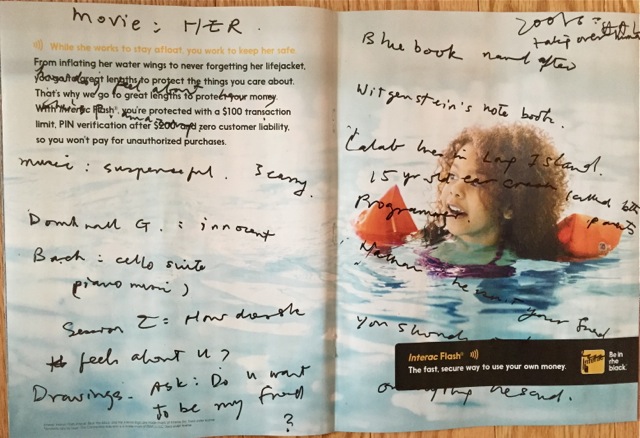
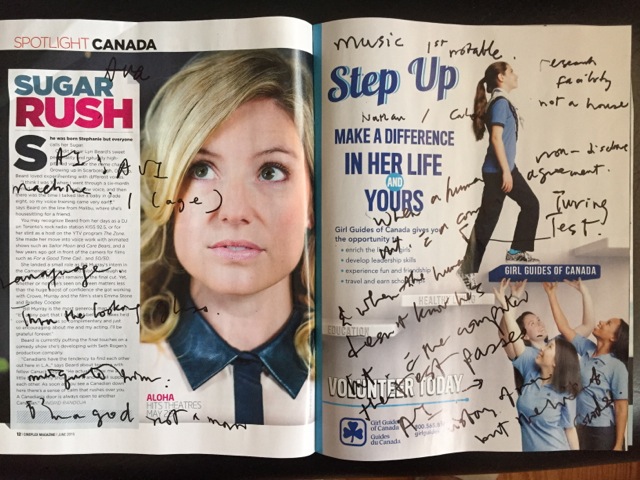
I’ve been asked how I remember so many details from a movie after just watching it once. Well, of course I can Google for some of the info, but to jot down lines and scenes that I don’t want to forget, I take notes.

How do you take notes inside a dark theatre? I used to bring along a small note book, fold the corner of the page to start with, and just use my pen to write whatever I could on the small pages… usually just a few words a page, for I didn’t want to overlap my writing. When I went home, I often had a hard time deciphering what I’d written.

But recently I found a perfect way. Instead of a small notebook, I take with me into the movie a copy of Cineplex magazine, lots of those in the stands at the theatre. Before the movie starts, I fold down the corner of the pages that have some blank or lighter space, take out a permanent black Sharpie marker pen, and I’m all set for note taking in the dark.

I don’t take my eyes off the screen when I write. So you can say it’s blind writing in the dark. Here are some of the pages of notes I’d taken recently. For interest’s sake, I’ve included the movie I was watching when making these notes. They make fun, altered book pages, don’t you think? And the effects of words on the page are all serendipitous too. And oh, if you suddenly remember some errands you forgot to do, you can jot that down too.

A View from the Bridge, National Theatre Live. I’ve a little drawing of the stage and seating here:

Dark Notes

View from the Bridge 1

**

Here are the pages from watching the movie Ex Machina (Review coming):

Ex Machina

Ex Machina 4

Ex Machina 1

Ex Machina 2

Ex Machina 3

When memory fails, mnemonic devices save the day all the time. Just need to channel a little creativity.

***

Saturday Snapshot is hosted by West Metro Mommy Reads. CLICK HERE to see what others have posted.

Flight of the Red Balloon (2007)

In honour of Taiwanese director Hou Hsiao-hsien winning the Best Director award last Sunday at the 2015 Cannes Film Festival, I’m re-posting a review I wrote a few years back on Hou’s Flight of the Red Balloon (2007).

***

flight-of-the-red-balloon

In celebration of its 20th anniversary, the Musée d’Orsay in Paris has commissioned four notable directors to create a series of commemorative films. One of them is Olivier Assayas with his Summer Hours (l’Heure d’été) which I have reviewed.  Another is the highly acclaimed Taiwanese auteur Hou Hsiao-hsien. Flight of the Red Balloon is a unique piece of film art gently crafted by Hou in homage to Albert Lamorisee’s Oscar winning short Le Ballon Rouge (1956). Hou has long been garnering awards in international film festivals throughout Europe and Asia since the 1980’s, albeit relatively unknown in North America. Flight of the Red Balloon is his first French language film.

The little boy in this 2007 rendition is Simon (Simon Iteanu), a child growing up in the hustle and bustle of Paris. With an absentee father somewhere in Montreal pursuing his writing, and a frantically busy mother Suzanne (Juliette Binoche), Simon is alone in an adult world. Overloaded with her work as a voice-over artist in a puppet production plus other personal matters, Suzanne hires Song (Fang Song), a film student from Beijing, to look after Simon for her.

Suzanne is the embodiment of urban frenzy. As a single mother, she has to shuttle between home and work, deal with the eviction of a bad tenant in her lower apartment, confront her non-committal husband on the phone to Montreal, and connect with her daughter in Brussel, all in a day’s work. Simon is most perplexed.  “Why are you so busy, Mama?”, he asks.

song-and-simon

Song, on the other hand, offers the tranquility that is needed to balance life in the midst of chaos. As a film student, she uses her hand-held camera to record Simon’s activities, and by her quiet demeanor and calm observing, she reflects pleasure in the mundane, everyday trivialities called life. This is reality show without sensationalism.  Hou has ingeniously conveyed his perspective of realism with artistic overtone. No doubt, there is a lack of plot, suspense, or climax, but there is character contrasts, cinematic offerings in sights and sounds, and realistic, natural performance. Juliette Binoche has once again assured me why she is one of my favorite actresses. And no, you are not watching paint dry, you are watching life unplugged.

The red balloon forms the focal point of Hou’s signature long take. The almost God-like omnipresence hovering over buildings in the Paris skyline is a joyful symbol of childhood. Its silent drifting is as elusive as the fleeting memories of happiness. Even little Simon achingly remembers the pleasant days he had shared with his much older sister, who is now living in Brussel. We are all trying to catch and hold on to fond memories and meaningful relationships. Yet as the busyness of urban living numb our senses, we ignore and shove away what we think is a hindrance to our time, just like the people rushing out of the subway station, shoving away the red balloon. Only a child would try to catch and befriend it.

Complementing the cinematic artistry is the equally mesmerizing piano music, meditative, serene and restoring, setting the mood and the preamble of the film.  Other musical numbers are equally soulful. Click here for the official IFC site where you can have a taste of the sights and sounds of the film.

felix-vallotton-le-ballon-1899I particularly enjoy the ending. As Simon goes on a school trip to the art gallery of the Musée d’Orsay, the children gather on the floor to talk about Félix Vallotton’s 1899 painting Le Ballon, he leans back, slightly removes himself from his school mates, and lays on his back. As he looks up to the glass canopy of the museum ceiling, he sees it again, the red balloon, that omnipresence, watching over him, removed yet engaged, far away, yet ever so near.

~ ~ ~ Ripples

***

Other Related Posts on Ripple Effects:

Conversation with Juliette Binoche

Tuffing it out at TIFF14

Summer Hours (l’Heure d’été) by Olivier Assayas

Yasujiro Ozu and the Art of Aloneness

***

While We’re Young: Wearing the Hat of Authenticity

The discussion that follows involves major plot points. Spoiler Alert. If you have watched the movie, you’re welcome to share your views in the comment section.

**

The film begins with an excerpt from Henrik Ibsen’s play The Master Builder. In the context of the play, Solness, the Master Builder, is fearful of the young, specifically, the draftsman he has taken under his wings, Ragnar. Solness’ anxiety lies in his apprehension that one day, soon, the young Ragnar would open shop on his own as a full-fledged builder, surpassing him and rendering his life work obsolete. He has the following exchange with a young lady friend Hilda:

Solness: … Wait and see, the young will come here, thundering at the door! Breaking in on me!
Hilda: Then I think you should go out and open your door to the young.
Solness: Open the door?
Hilda: Yes. Let them come in to you – as friends.

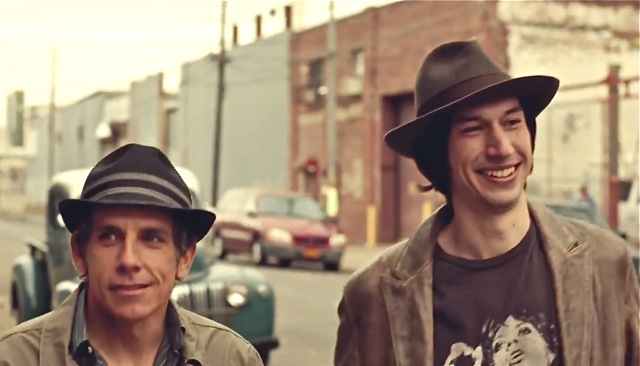
Writer/director Noah Baumbach sets the stage for a contemporary story with the parallel of Solness in his main character Josh Shrebnik, 44, aptly played by Ben Stiller. Josh is a documentary filmmaker who may have passed the peak of his career, his latest project dragging on for ten years without new grant money coming in. In the continued education class where he teaches documentary filmmaking, he meets a hipster couple in their 20’s, Jamie (Adam Driver) and Darby (Amanda Seyfried). Jamie expresses great admiration for Josh, feeding him what he needs. Soon, Josh and his wife Cornelia (Naomi Watts) become fast friends with them, and begin to drift away from their peers, new parents Marina (Maria Dizzia) and Fletcher (Adam Horrovitz).

In Frances Ha (2012), Baumbach brought us a positive profile of youth embodied in co-writer and star Greta Gerwig. Gerwig grasped the gist of youth beautifully by portraying an aspiring young dancer in NYC finding her way to a career and to her own true self. In Frances we see a delightful image of the young. Here in While We’re Young, Baumbach presents another view on youth. He does it by juxtaposing hipsters with the middle-aged, leading the audience through a revealing and interesting story. While the brunt of the laughs falls on the older pair Josh and Cornelia, the ultimate revealing is on the younger generation.

While We're Young

What makes the movie rich and intriguing is that what looks like a simple, single storyline embeds multi-layered thematic materials. On the surface, Baumbach lets us laugh at Josh and Cornelia, forty-something, childless, needing to come to terms with aging but not until one last attempt at rejuvenation. Hanging out with Jamie and Darby makes them feel young again. Josh dons a fedora hat, wears hipster shoes, rides a bike to keep up with Jamie. Cornelia goes with Darby to a hip hop dance class, and stressed herself out with the moves. For more flavour, both try the new experience of detoxing through a vomit inducing potion in a shaman party. Watts sure can keep up in her comedic act with Stiller, just right in juggling between depth of emotions and light-hearted fun. After St. Vincent, where she plays a small, funny role alongside Bill Murray, Watts has proven once again that she can wear the comic hat suitably.

On another level, we see Baumbach contrasting the ironic lifestyle choices in a sequence of fast cuts. We see the middle-aged couple using iPhone to Google once something comes up, while Jamie and Darby just try to remember and recall the info. Googling is too easy; they don’t want instant answers. If they can’t recall, they’re contented with not knowing. I can’t get enough of these subtly planted Baumbach jokes. As Josh listens to CD’s on his laptop, Jamie enjoys his wall to wall collection of vinyl records, played on a turntable. Jamie makes his own table, Darby makes ice cream from scratch. They ride a bike to get around. Their hipster lifestyle totally grabs Josh as genuine and cool; impressing him even more is their generous and open demeanour. A budding documentary filmmaker, Jamie invites Josh to co-direct his film. Josh is totally sold.

Ben Stiller is a natural when it comes to playing a clueless, de-valued character like this one. In Greenberg (2010), his previous collaboration with Baumbach, he plays a similar role, middle-aged and lost in the flow of life, also touched and changed by a youthful character (Greta Gerwig). It’s easy for us to laugh at Stiller, a greying forty-four-year-old hipster-wanna-be trying hands-free cycling following Jamie but only for a short two seconds before he twisted his back. The back will soon heal, but it’s “Arthritis” on the knees that the doctor is more concerned about. The joke there in the doctor’s office is just too good for me to include here. And, when did he last have his eyes checked?

As the story develops however, we begin to see Josh having second thoughts. Maybe Jamie’s work isn’t as authentic and spontaneous as it looks. Adam Driver is perfect in projecting a fused expression of innocence and mischief. His calculated moves startle Josh. Herein lies a crucial, contentious thematic element. There’s a fundamental breach of integrity. Is Jamie ignorant about ethics or is he simply amoral? Isn’t a documentary supposed to present truths? To what extent can it be staged or its ‘facts’ twisted? Nil, according to old-schooled Josh; such methods are fraudulent, crossing ethical boundaries, inexcusable. To Jamie, it’s no big deal, “it doesn’t matter that it’s fake.” To us the viewers, this third act is the juice in the meat. Josh’s indignation is justified.

But then, Baumbach pulls back, as if being too harsh on young Jamie. As I think about the notion of authenticity in the movie, I realize it comes in different forms, not only in documentary filmmaking, but with the actual life these characters are living. A love for retro and owning a collection of vinyl records don’t mean Jamie has real experience living in the 60’s. Or for Josh, imitating hipster fashion doesn’t make him young, as his friend Fletcher says: “You’re just an old man with a hat.” Taking an example from a recent real-life happening: when we see a veteran news anchor faking accounts to add glamour and self-importance to his reporting we know age is not the dividing line for authenticity. So maybe Baumbach has a point there by cutting Jamie some slack at the end. In the last scene, Josh, wiser now, utters: “He’s not evil; he’s just young.”

Let’s hope authenticity won’t become a dismissible fashion trend like a hat.

~ ~ ~ 1/2 Ripples

***

Other Ripple Reviews you may like to read:

The Secret Life of Walter Mitty (2013)

Force Majeure (2014)

The Grand Budapest Hotel (2014)

Inside Llewyn Davis (2014)

Upcoming Movie Adaptations from Literary Sources: 2015 and Beyond

“Literary Sources”, that’s a highly debatable term. Here I just mean anything that’s written, with text, and had been published in real paper or digitally. Which means, Avengers: Age of Ultron is eligible, having been published as a comic book, with text accompanying graphics. Indeed, that’s one movie I’ll be watching. Main attraction: James Spader as Ultron.

Now, for the list. I admit that’s subjective because it’s my list. I include here some titles that pique my interest, ones that I feel would create some ripples. So here it is.

Far From The Madding Crowd (May 1, 2015)

FFTMC Movie still

I have talked about this in a previous post, and now the time has come. In just a few days – opening the same day as Avengers: Age of Ultron – is a new version of Thomas Hardy’s classic. What an assortment of delights in our entertainment smorgasbord. Almost fifty years have past since John Schlesinger’s 1967 production, the definitive version shall I say. Schlesinger was a director of high repute; two years after Madding Crowd he went on to win the Oscar best picture for Midnight Cowboy. His stars for the Hardy adaptation were all high caliber actors: Julie Christie, Peter Finch, Alan Bates. But watching it again a while ago I couldn’t help but feel it a bit dated. Now almost fifty years later, a 21st C. attempt is viable and anticipated. I should reserve my judgement until I’ve seen the movie of course, but from the trailers, it sure looks like a very contemporary take on 19th C. literature. Will the eversweet Carey Mulligan make a believable Bathsheba Everdene?

Macbeth (May 2015)

Macbeth 2015

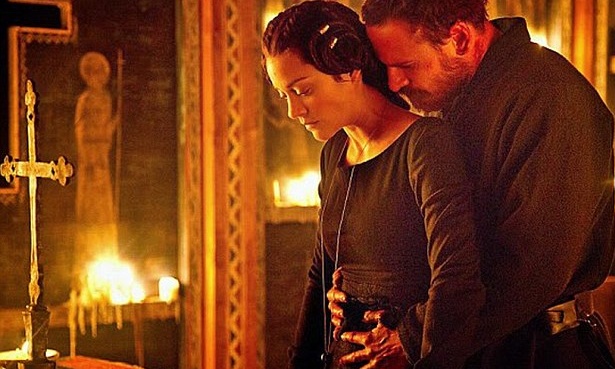
Acclaimed Australian director Justin Kurzel’s Macbeth will premiere at this year’s Cannes Film Festival in May. Shakespeare’s works are probably the most adapted sources on screen. Just for Macbeth, we have 200 results if you go on IMDb. So why watch another one? For one reason, how many Macbeth’s have your actually seen on screen? I’m sure there are other good reasons too, like, watching Academy Awards best actress Marion Cotillard transform from Edith Piaff into Lady Macbeth should be interesting. What more, with high calibre character actor Michael Fassbender as Macbeth, the two should make a dynamic, murderous duo.

Genius (2015)

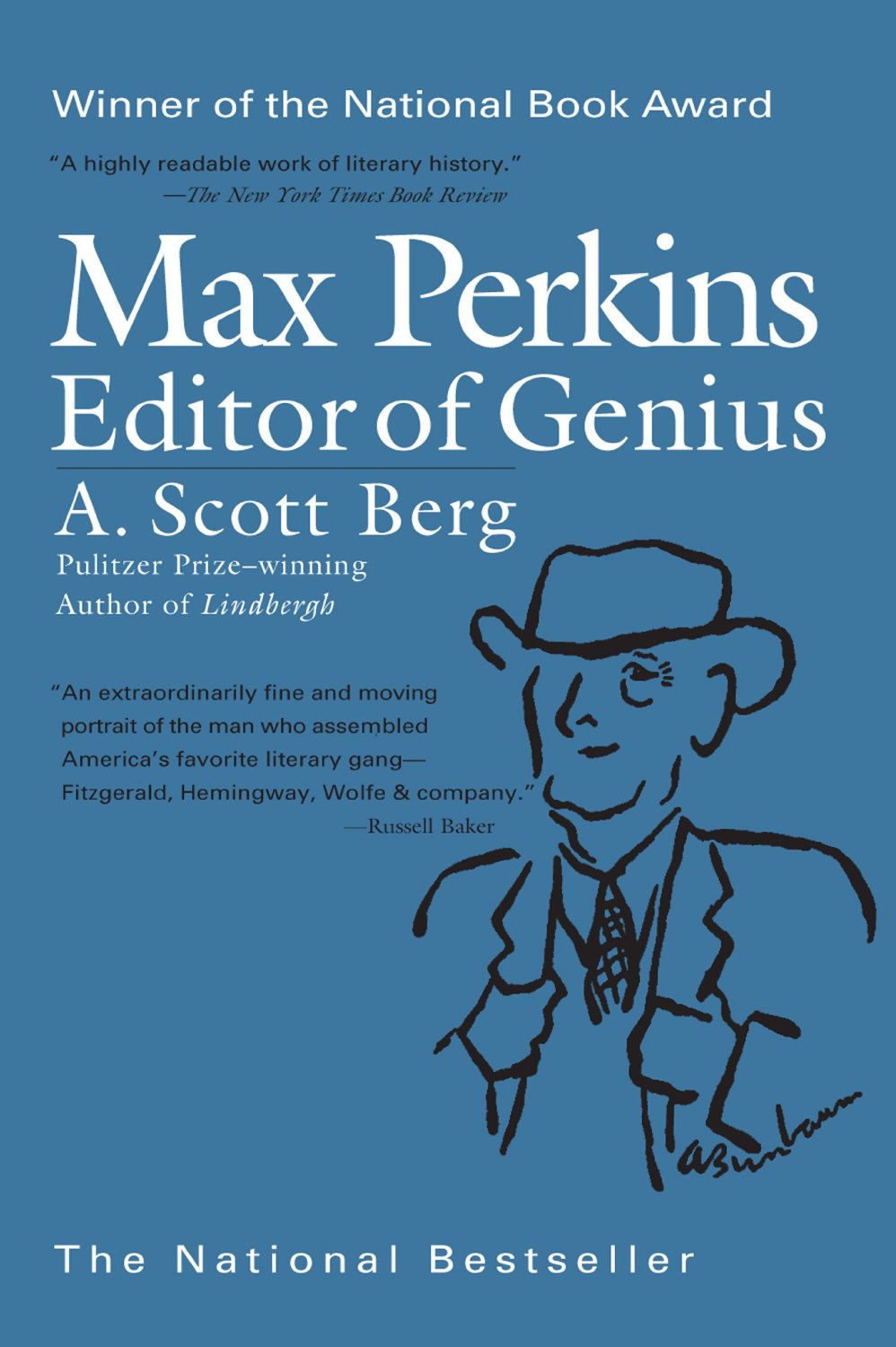
Max PerkinsBased on the National Book Award winning bio (1978) Max Perkins: Editor of Genius by A. Scott Berg. Perkins was editor at Scribner, a ‘genius’ because he brought to the world the works of Earnest Hemingway, F. Scott Fitzgerald, and Thomas Wolfe, among others. He was also the man who told Hemingway to “tone it down”. To these great writers, Perkins was also critic,  money-lender, psychoanalyst, and friend. What’s interesting is that the 500+ page bio is adapted into film with its director and most of the main cast all non-Americans. Acclaimed stage director Michael Grandage, cast includes Colin Firth, Jude Law, Dominic West, Guy Pearce, Nicole Kidman, Laura Linney. Screenplay by John Logan who wrote Skyfall (2012). Yup.


Blonde (2016)

BlondeJoyce Carol Oates’s imaginary account of Marilyn Monroe was a finalist of the National Book Award in 2000 and the Pulitzer in 2001. It just happened that recently I’ve re-watched My Week with Marilyn (2011, Michelle Williams as MM) and the superb doc Love, Marilyn (2012), both leaving me with a troubling sadness. I’ve not read Oates’s novel and know not how she approaches her subject, who I feel, despite her talent and popularity, was a victim of objectification as a sex symbol, exploited for her beauty and sexuality, despised for her inadequacy by her husband AM, drowned in fame, and eventually, lost her total self. I hope Oates’s perspective is internal and sympathetic. I love the choice for the role: Jessica Chastain.


Beauty and the Beast (2017)

Beauty and the Beast 2016

With the success of Cinderella (2015), looks like this is the trend: Animation turned into live-action feature. I do look forward to this one. I mean, even with such a worn-out, age-old tale like Cinderella can be revitalized and brought back to life with such vigour and sparks, I trust Disney’s Beatuy and the Beast can be adapted into an even more entertaining work. After all, that’s a story I love much more than Cinderella. Take a look at this human cast: Emma Watson as Belle, Dan Stevens as Beast (a long way from Matthew Crawley), Luke Evans as Gaston, Ewan McGregor as Lumiere, Ian McKellen as Cogsworth, Stanley Tucci as Cadenza, Emma Thompson as Mrs. Potts, Kevin Klein as Maurice, directed by the Oscar winning Bill Condon (Dreamgirls, Twilight). But can they all sing?

“Goodbye to All That” (Film rights optioned)

Joan Didion

This is not Robert Graves’s autobiography but Joan Didion’s essay in her collection Slouching Towards Bethlehem (1968). The film rights have just been optioned recently by Megan Carlson and Brian Sullivan as the first project of their production company. A feature film based on an essay is a most interesting idea. But this is no ordinary essay. Didion’s seminal piece in her iconic collection contains substantial materials as a springboard to a full length movie, and I believe it can be done. The essay is a summarized account of her years living in New York City working for Vogue, an essay prize she won while at UC Berkeley. At first thinking of staying in NYC for six months, eventually living there eight years until she married John Dunne and moved back to CA. I highly anticipate this movie adaptation. The producers are seeking for a female screenwriter and director for the feature. Who other than Didion herself should do the writing?

***

McFarland, USA (2015): A Worthy Winner

The reason I waited till now to see McFarland, USA is plainly because I thought it would be just another cliché movie on teacher inspiring students, and specifically here, a white teacher coming into a hispanic community, changing their youngsters to what they’re not, the white knight of condescension.

I’m glad that’s all a misconstrued perception. True, there’s a white teacher coming into the poorest town in the USA, McFarland, CA, where most of its population is hispanic, Mexican immigrants labouring in the open fields from morn till dusk picking produce. The hope of the parents’ – if there is any – is for their sons to continue picking produce so they can earn a living for themselves.

What’s best about this movie is that it’s a true story. The script is well-written and the production helmed by a competent director Niki Caro (North Country, 2005; Whale Rider, 2002). While its elements seem like the ingredients of a formulaic teacher changing students feel-good movie, it is surprisingly moving and exceeds my expectation.

Sure, the coach can’t be more white… a Mr. Jim White (Kevin Costner) from Idaho. You can’t find a whiter name. The school is McFarland High School, with low morales and expectations, students from blue-collar Mexican immigrant families. We see Mr. White come to McFarland after some unsuccessful employment at another school. Bringing his wife Cheryl (Maria Bello) and two daughters Julie (Morgan Saylor) and Jamie (Elsie Fisher) with him, White soon finds they are a misfit and maybe even unsafe in the town. Yet, he has no choice; this is his only job offer.

McFarland 1

Hired as a biology and gym teacher, White one day discovers some of his boys are fast long-distance runners. There are the Diaz boys, David (Rafael Martinez), Damacio (Michael Auguero), and Danny (Ramiro Rodriguez, well, maybe not all of them fast) who are waken up by their mother every morning before dawn to go work in the fields before they head to school. Their only way to get to school on time from the field is by running fast. And then there’s Carlos Valles (Carlos Pratts), whose athletic talent is marred by family and personal conflicts.

White sees the potentials in these boys. With no experience whatsoever, he asks for permission to set up a seven-member cross country running team and train the boys for competition. Being the newest team, they have to compete against well-trained and formidable upper-middle-class schools from areas such as Palo Alto. Physical endurance comes much easier than when the McFarland boys have to deal with low self-image and discouragement.

Kevin Costner is the key to the success of the movie. I can’t think of any other actor who is more suitable for the role. Costner is a natural, even without the chance of him pitching a baseball, even having him ride a girl’s Barbie bike (White’s daughter’s apparently) to keep up with the boys in their practice, as he’s just a bit over-the-hill to run with them. A charmer and very convincing here, Costner shows genuine concern for the welfare of his students, even going to the fields to pick produce with them to make up for the time when he takes them out for practice. He soon wins the hearts of the parents and their community.

The movie captures my attention from the very start, any resistance is soon melted by Costner’s performance, and the natural appearance of the students and their families. Most of them are first time actors, and some are residents of McFarland. One soon finds that it’s not a white knight rescuing the underprivileged, but life-changing for them all. The movie sheds no traces of racism or condescension, but paints a realistic picture of family, community and the humanity that binds.

If you want to avoid spoilers here we have the historical facts in the following:

The triumph comes in the final act of the movie when the McFarland Cross Country Team The Cougars won the California States championship in 1987, and subsequently, a total of nine wins over the next fourteen years. And to his credit, White turned down an offer from a Palo Alto high school to stay where he was, at McFarland.

What is most moving is the final text shown on screen telling how the boys had turned out in real life. All of them have no family member who had gone past a grade 9 education, but all seven of them in the cross country team graduated from college. Some of them had gone back to teach at McFarland High School, one became a police detective, one a writer for the L.A. Times. We see their faces as adults, the fruits of everyone’s labour at McFarland.

The triumph of the movie is in its authenticity and uplifting ending. Uplifting because it’s a true story. Of course, the filmmakers have to tweak and add in dramatic elements to turn it into a watchable movie, but the basic facts remain intact. I can’t remember being so moved by a Disney movie. Kudos to the McFarland community for the inspiration.

~ ~ ~ Ripples

***

CLICK HERE to watch a featured video of the movie.

Here’s a “History vs. Hollywood” comparison.