‘Materialists’ is a film Jane Austen would like

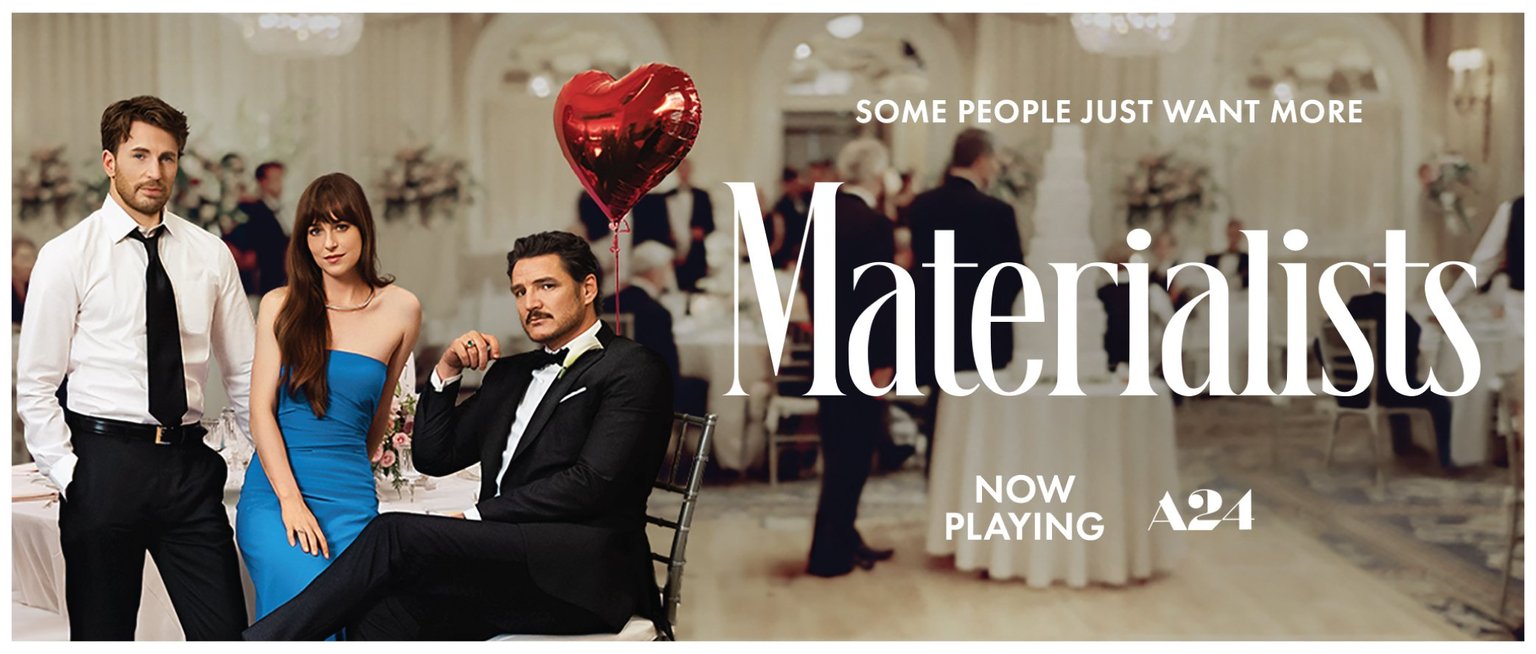
Marketed as a romantic comedy, Materialists, Celine Song’s (Past Lives, 2023) second film  defies categorization. Released by A24 just in time to greet summer viewers, the film isn’t quite like your traditional rom-coms. There are no LOL moments, but there’s humour throughout that elicits knowing chuckles. No slapstick acts, but movement made by the actors are often subtle but notable.  

The opening scene is a fitting prelude. A caveman courting his sweetheart, slipping onto her finger a ring made from the delicate stem of a tiny flower. Right after that, a stark change of scenery with a busy New York streetscape accompanied by the beat of Cat Power’s ‘Manhattan’, and the title credits begin to flash on screen. Tale as old as time… from prehistoric to modern day.

We see Lucy (Dakota Johnson) walk on in New York City with perky confidence, a successful matchmaker who has seen nine pairs of her clients tie the knot, so far. Lucy exudes such upbeat positivity that she can stop a man on the street and ask outright if he’s single, then hands him her business card. She possesses ‘an eagle eye for chemistry’, an expert in linking her clients by checking all the boxes for the right match: looks, age, height, weight, family background, education, income. Like transactions in the financial market, in Lucy’s business, people are the commodity, numbers on a spreadsheet. Materialistic measures reign supreme in a dating service. 
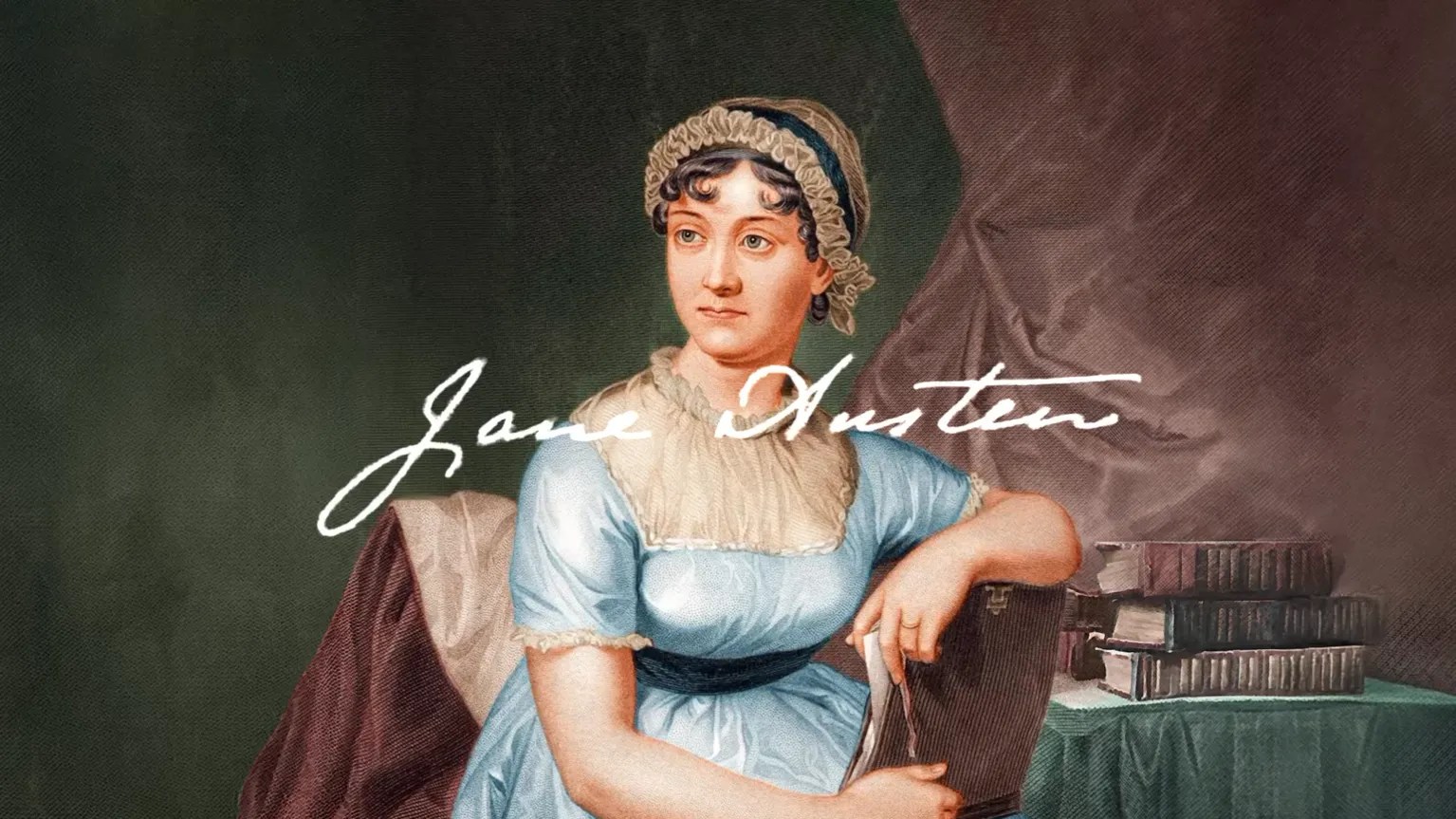
The satirical vibe is obvious. Isn’t that a modern-day parallel of Jane Austen’s time, where successful matrimony is dependent on financial compatibility. Pride and Prejudice (1813) is a prime example. Such is the view held by Mr. Darcy at first, and the reason why Lady Catherine de Bourgh is so furious when she sees an inferior nobody dares to compete with her own daughter. As for Mrs. Bennet, marrying up for money is what she dreams of for her five daughters. Only the heroic Elizabeth Bennet is brave enough to challenge the social norm and insists on her own criterion for marriage: love. 

Soon after the opening of Materialists, we come to the inciting incident. In her client’s wedding banquet Lucy meets Harry (Pedro Pascal), the brother of the groom. He checks every box: handsome, dripping rich, living in a $12 million Manhattan suite, 6 ft. tall, working in a family-owned private equity firm (is it still considered ‘work’?) a perfect 10 as a potential client. But Harry is not interested in Lucy as a matchmaker, but a date. 

As fate has it, in that same event, Lucy’s ex, John (Chris Evans), reappears in her life as a catering waiter. John is a struggling actor, trying to make ends meet, still sharing an apartment with roommates. Past memories flood back to them. Here we see a relational triangle similar to Song’s debut work, Past Lives. Thus kicks off the storyline, who does Lucy choose? A question as old as time. And for Lucy, the modern-day career woman who handles transactions that deal with external measures only, does love have a place? 

Song writes about what she knows, as Past Lives is autobiographical, Materialists is, interestingly, based on her stint as a matchmaker in NYC some years ago. As a director whose debut film was nominated for two Oscars, Best Picture and Best Original Screenplay, Song has proven herself to be a versatile filmmaker who can break out of the indie mode into the limelight of popular features.

The camera is a definite asset. Cinematographer Shabier Kirchner used 35mm film to shoot, bringing out cinematic aesthetics of old. Most notable is his camera work, many shots letting a still camera capture the nuances of two characters facing each other talking, maintaining a slower pace to allow the characters, and the viewers, to soak up the atmosphere and the deeper meaning of the conversations, an obvious digression from the breezy, traditional rom-coms. 

When viewers drop their own preconception of the actors’ previous roles, Evans as Captain America, Johnson her Fifty Shades sequences, and Pascal the apocalyptic survivor, the trio works well each in their own way. But the one that deserves mention is the supporting actress Zoe Winters who plays Sophie. The twists and turns of the storyline switch the second half of the movie to a different drive, one that feels like a suspense drama, and Winters delivers with heart-stirring effects.

My main issue with the movie, however, is probably related to Song being such a brilliant wordsmith in creating dialogues. In writing and especially now in a visual medium, the ‘show not tell’ axiom is all the more crucial. This is even more true when the subject matter is love. Other than hearing the word uttered, the film isn’t convincing enough to show the presence of that affective bond of passion which is so crucial in the ultimate outcome. ‘Love is a mystery,’ Song has said in her interviews. Such a mystery through the ages needs to be represented on screen by actions instead of just being mouthed in words.  

Nevertheless, overall, Song needs to be congratulated on transitioning from the indie to the mainstream arena with popular stars, and helming a production with her own style of cinematic artistry.

So what if Materialists doesn’t fit the mold of a rom-com? Why need to box it into a genre? As the opening credits state, and it’s a good description: ‘A Celine Song Film’. Let it be its own genre, the writer-director is in a class of her own. A very pleasant movie not just for the summer season, and one I’m sure Jane Austen herself would like to watch.

~ ~ ~ Ripples

***
Click here to read my Ripple Review of Past Lives

2025 is a Year of Anniversaries

250th Birth Anniversary of Jane Austen (December 16)

It’s a great loss that Jane died so young, at 41, from a painful illness. The legacy of her six completed novels continue to thrive today. Movie adaptations are still being made, most notable is the upcoming new version of Pride and Prejudice with Emma Corrin as Lizzy, Jack Lowden as Mr. Darcy, and Olivia Colman as Mrs. Bennet. But we will never forget that iconic wet shirt scene of Colin Firth diving into the pond way back in 1995, thirty years ago.

30th Anniversary* of Jane Austen Screen Adaptations:

Pride and Prejudice Austenmania was ignited with this six-part BBC TV series. Andrew Davis’ screenplay brings Colin Firth and Jennifer Ehle together as the pivotal pair. To many, myself included, the definitive version of all the adaptations; yes, my prejudice here. 

Sense and Sensibility That same year, 1995, we saw the breakout work of Taiwanese American director Ang Lee, proving his versatility, with Emma Thompson basking in the limelight receiving her Best Adapted Screenplay Oscar.

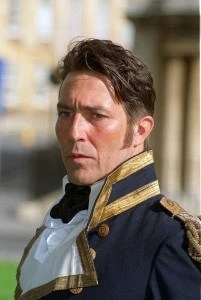
Persuasion While not as popular as Pride and Prejudice, a novel that shows a more mature writer showing her own sense of wisdom in handling love and life. Ciaran Hinds is an impressive Captain Wentworth. 

Clueless One of the first modern renditions of Austen novels. Here’s an American teenager playing Emma in her high school. What follows are numerous contemporary parallels of Austen’s works, like Bridget Jones’s Diary, and across cultures, Bride and Prejudice, From Prada to Nada. 

*Jane Austen’s House in Chawton is celebrating the 30th Anniversary of these adaptations with their own special AUSTENMANIA! events.

***

100th Anniversary of the publication of some modern classics, books and poems* Listing a few here:

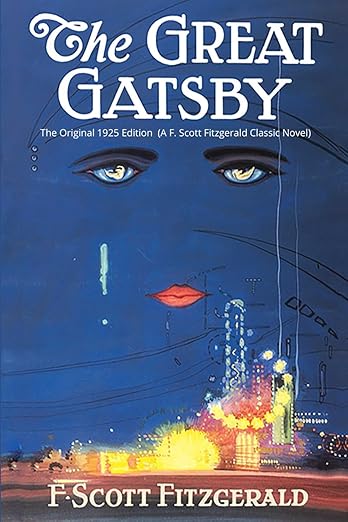
The Great Gatsby by F. Scott Fitzgerald

One of my all-time favourite books. Filmmaker Baz Luhrmann highlights all the zeitgeist of the jazz age, the wild parties, and the gaudy excess but fails to bring out the deep character of the man behind those façade, a romantic hanging on hope and seeing every obstacle as a green light. My Ripple Review here.

Mrs. Dalloway by Virginia Woolf

This is one example that the movie adaptation is as good as or even surpasses the book, for it shows more than words can tell. While I admire Woolf’s stream of consciousness, both in expression and withholding, director Steven Daldry’s multi-faceted depiction of Clarissa’s internal world projected into the psyche of two other women is exceptional. David Hare’s screenplay adapting Michael Cunningham’s The Hours is an exemplary transposition of literature onto the screen. And watching Meryl Streep, Nicole Kidman and Julianne Moore in one film is sure worth one’s ticket, or time. 

The Painted Veil by W. Somerset Maugham

Somerset Maugham is one of those writers who take you to places but still remain intact with his characters, the backdrop of foreign lands are merely that, backdrop, while the characters lead the story. I’ve seen the movie adaptation, and in my Ripple review I had written this: “Transforming great lines from a book into equally inspiring visual story-telling is an arduous task, and it’s something that mere beautiful cinematography cannot suffice.”

Carry On, Jeeves by P. G. Wodehouse

The third of Wodehouse’s 20 Jeeves and Wooster books. Jeeves is a marvellous invention, a character that reminds me of Mr. Carson of Downton Abbey. There are lots of LOL moments. He’s like a Swiss army knife, a tool of multiple usages. Wodehouse makes him more than utilitarian though. In the interactions between employer and butler, the joke always falls on the former. And that’s the fun of it. 

No More Parades by Ford Madox Ford

No More Parades is the second book in the Parade’s End tetralogy by Ford Madox Ford (1873-1939) Set in the time of WWI, where poetry was written in the trenches. In its core a love story movingly depicted in the BBC five-episode TV series (2012), one of the most understated and neglected productions. A young Benedict Cumberbatch and Rebecca Hall are the mismatched couple, but it’s the pristine Adelaide Clemens that shines as idealistic suffragette Valentine. 

The Hollow Men by T. S. Eliot

‘The Hollow Men’ is the title poem of this collection of poetry by Eliot, astute critic of his times. “We are the hollow men/we are the stuffed men/Leaning together/Headpiece filled with straw.” Alas, a look at our world today one would find how after one hundred years, Eliot’s critique of his society still stands.

*The popular ‘Year Reading Club’ on Kaggsy’s and Simon’s book blogs are featuring the 1925 Club reading event this October, where we read books published in 1925 and share our thoughts in our blogs.

***

50th Anniversary of some iconic movies:

Where were you in 1975? Watched any of these movies in the theatre?

Jaws dir. by Stephen Spielberg

One Flew Over the Cuckoo’s Nest dir. by Miles Forman

The Man Who Would be King dir. by John Houston

Monty Python and the Holy Grail dir. by Terry Gilliam and Terry Jones

Dog Day Afternoon dir. by Sidney Lumet

Barry Lyndon dir. by Stanley Kubrick

The Return of the Pink Panther dir. by Blake Edwards

Three Days of the Condor by Sydney Pollack

Farewell, My Lovely dir. by Dick Richards

Funny Lady dir. by Herbert Ross

***

Not born yet? How about 1985?

40th Anniversary of:

The Breakfast Club dir. by John Hughes

Back to the Future dir. by Robert Zemeckis

The Color Purple dir. by Stephen Spielberg

A Room with a View dir. by James Ivory

Out of Africa dir. by Sydney Pollack

The Purple Rose of Cairo dir. by Woody Allen

Vagabond dir. by Agnès Varda

Witness dir. by Peter Weir

***

Numerous posts on Jane Austen, as well as movies and books mentioned in the above lists are posted here at Ripple Effects. Seek them out using the Search feature on the top of the left sidebar.

Discovery and Revisit at Home

One day in the future when I have to account for how I spent my time in the months of March to May, 2020, I will come up short for a better answer than cook, eat, read, watch, sleep and then repeat day after day, lockdown except for weekly essential groceries. I admit though, I take to such reclusive, stay-home life quite naturally, albeit I did miss the Pond.

You wouldn’t want to know what I cooked and ate during those months, but I can tell you the discovery and revisit I’d made at home.

The Great Courses on KANOPY

Kanopy is wonderful if you’re not into trendy pop culture movies and TV shows. The streaming service offers classic titles and worthy contemporary films, international in scope, and is free with your local library card or an academic library account. They also carry The Great Courses, numerous subjects to choose from covering a huge variety of interests.

I took two courses, both exemplify the word ‘edutainment’, academically sound and informative. One is “Reading and Understanding Shakespeare” taught by Marc Connor (professor at Washington and Lee U), the other is “Screenwriting: Mastering the Art of Story” taught by Angus Fletcher (Ohio State U). Both comprise of 24 videos. In the Shakespeare course, I learned over 40 tools to decipher the Bard’s plays, and from the Screenwriting course, how to build a story world.

There are many pleasant discoveries but there’s one I find most gratifying. Come to think of it, I shouldn’t have been surprised at all: Both lecturers have cited Jane Austen’s Pride and Prejudice, noting how Austen had used Shakespearean elements in her storytelling, and in turn, how her work had influenced modern day screenwriting.

Pride and Prejudice

To illustrate the tone of the Ironic Narrator, an ancient literary device dating back to the Greek and Roman satires, an example professor Fletcher uses is the opening sentence of Pride and Prejudice:

It is a truth universally acknowledged, that a single man in possession of a good fortune, must be in want of a wife.

The larger things of the cosmos, ‘universal truth’, is juxtaposed with that which is much smaller and singular, albeit such triviality may well have made up the cosmos of those who are parochial. Examples of such an ironic tone can be found in The Big Short, The Princess Bride, Fargo, and CSI. ‘All of them employ the same basic what and how of Pride and Prejudice, with their own little twists and tweaks.’

Maybe you’ve noticed I used the words ‘most gratifying’ with the pleasant surprise when I hear Austen being mentioned. Yes, Jane would turn in her grave to read what I’m going to write: it feels good to find someone, particularly a male with credentials, to confirm the value of her writing such that her work isn’t being seen as ‘just women’s novels’ or ‘chick lit’. Ugh… saying this is so unnecessary, for Austen doesn’t need to prove her worth among the ignorant. However, in this day and age, it takes movements and hashtags to confirm things that should have been valued. Misconceptions ought to be corrected.

Pride and Prejudice Revisited
(Audiobook cover image above)

So, after these two courses, I was all set to revisit my favourite Jane Austen novel, Pride and Prejudice. This time, I downloaded the Blackstone audiobook (2011) narrated by Carolyn Seymour, and listened to it twice back to back; this time, I enjoyed it more. Here’s my ripple stirred by the Bard himself:

Ah ha! Fair is foul and foul is fair
Darcy and Wickham as foils repel
Appearance and sweet words can ensnare
At last! Lizzy learns her lesson well.

Further, the famous ‘block to young love’ conceit, not blocked by an older character as in the Bard’s plays –– surely Lady Catherine de Bourgh is old but she’s no match for Lizzy –– but by the lovers’ own internal flaw, be it pride, or prejudice, or both. How satisfying to see the protagonists mature in their self-knowledge as the story develops, first Darcy then later Elizabeth, gaining clarity of their own true self. Not to mention how gratifying to see that figure of grace, Darcy, as he saves the reputation of the Bennet family with his own silent, altruistic plan all for the one he loves.

Well, what’s a staycation for if not to savour one’s favourite reads over again, doing nothing all day but just dwell in the story world without feeling guilty about time spent. I’m thinking it’s a little like being stranded on a deserted island, like Tom Hanks in Cast Away, and feeling lucky you’ve got Wilson as a companion, even when there’s no one to actually play volleyball with you.


***


Related Posts on Ripple Effects

I’ve written many posts on Jane Austen during the early years of blogging. Just put her name in Search you’ll find them. Here are some of my personal favourites:

Art Imitates Life, or Life Imitates Art, or…

Why We Read Jane Austen

In Praise of Austen: Virginia Woolf’s A Room of One’s Own

Bath’s Persuasion

Here’s a link to my articles published in the Jane Austen Centre Online Magazine

Metropolitan (1990): Whit Stillman’s Homage to Jane Austen

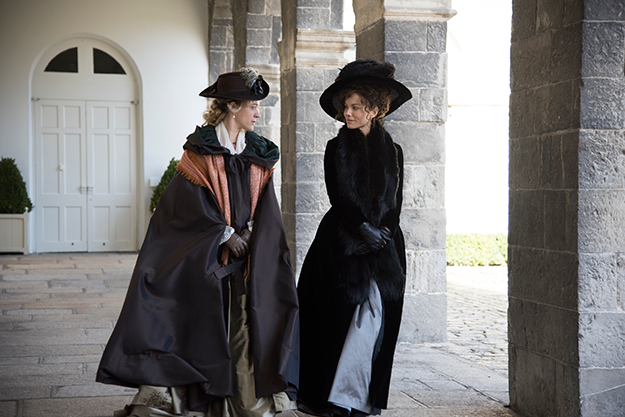
Thanks to New York born and raised director Whit Stillman, one of Jane Austen’s characters in her juvenilia, Lady Susan Vernon, had a field day last year. For those wondering how that came about, do seek out Stillman’s film Love & Friendship (2016), or his movie-tie-in book Love & Friendship: In Which Jane Austen’s Lady Susan Vernon Is Entirely Vindicated. 

But Janeites may not have noticed, back in 1990, five years before the pivotal year of wet shirt Darcy’s mortifying encounter with Lizzy Bennet, another Austen character was vindicated, Fanny Price of Mansfield Park. And they have Stillman to thank.

What does Jane Austen’s Mansfield Park, published in 1814 England, have in common with a bunch of upper class college freshmen/women in 1990 New York City, calling themselves UHB (Urban haute bourgeoisie), worrying about an ‘escort’ shortage for their debutante parties during their Christmas break?

Wait a minute, UHB? ‘Urban Haute Bourgeoisie‘? Isn’t that the kind of targets that would have interested Jane? Our astute Jane who loved to wield her pen, piercing through the façade of the rich and privileged, shaking the underlying status quo of society of her time? Jane would have loved Stillman’s film. She would be amused by the characters in this comedy of manners and their social commentaries. Debutante parties? Jane would be surprised to hear they still exist in the 20th century. If she were to write the screenplay, Jane would probably be less subtle.

Screen Shot 2017-07-17 at 10.03.38 PM

Stillman’s Metropolitan is not so much an acerbic satire but a gentle poke and  descriptive vignettes of the young UHB’s lifestyle and thinking. From his treatment of his characters, he is gentle and forbearing, albeit incisive, just enough to elicit some knowing chuckles.

In Mansfield Park, Jane presented a heroine that is a contrarian. Fanny Price is unadorned, impoverished, athletically challenged, a misfit and outsider when she enters the upper class home of Sir Thomas Bertram. But it’s her being principled and virtuous that make her stick out like a sore thumb. As Jane ends the book, Fanny gets the final praise, and an oblivious, but decent, Edmund as her ultimate reward.

Stillman’s Metropolitan is set in 1990 NYC. It has two characters that are a type of Fanny Price. First is Tom. He stands for everything that’s the opposite of the UHB. A self-professed socialist, Tom comes from the other side of the track. He wears a raincoat (albeit with a warm lining as he explains) in midwinter, and a ‘snob’ for public transit. Taxi? No, he’d rather walk.

Sure, his new found friends of the UHB know why. How many can afford to take the taxi as their usual means of transport and wears tux to parties? So, to their credit, despite knowing Tom might be from the opposite side of town, they receive him into their midst, especially as the girl Audrey likes him very much and wants him to help solve their, or her, ‘escort shortage’ to the debutante parties.

Audrey is a lover of books. She’s unpretentious, modest, and above all, a sensitive soul not unlike Fanny. In one scene, Audrey serves as a moral compass as the group gathers in the after party to a game that she disapproves of. That’s a Fanny incognito there. She insists on her stance despite everyone, Tom included, feels there’s nothing wrong with the game.

So there are the Austenesque parallels and types. You might be able to identify the Crawfords there too. The youthful characters are all serious in their viewpoints. One must give them credits. In their tux and gowns they discuss social theories. Therein lies Stillman’s gentle satire. While the sarcasm and humour is subtle, there are a few lines that are overt, lines I think Jane would have approved.

In this scene (above photo), Audrey and Tom discuss books. Audrey says Persuasion and Mansfield Park are her favorite Austen books, Tom is incredulous.

Tom:  Mansfield Park! You got to be kidding.

Audrey:  No.

Tom:  But it’s a notoriously bad book. Even Lionel Trilling – one of her
greatest admirers – thought that.

Audrey:  If Lionel Trilling thought that, he’s an idiot.

Jane probably would have thought, “Oh I wish I had written those lines.”

But wait, there’s more. Later in the party, Tom and Audrey continue to discuss Mansfield Park.

Audrey: You find Fanny Price unlikeable?

Tom: She sounds pretty unbearable, but I haven’t read the book.

Audrey: What?

Tom: You don’t have to have read a book to have an opinion on it. I
haven’t read the Bible either.

Audrey: What Jane Austen novels have you read?

Tom:  None. I don’t read novels. I prefer good literary criticism. That way
you get the novelist’s idea as well as the critic’s thinking. With
fiction I can never forget none of that has really happened. It’s all
made up by the author.

Oh I can see Jane ROFL.


~ ~ ~ 1/2 Ripples


***

Related Posts on Ripple Effects:

Stillman’s Love & Friendship: More than Book Illustration

Love & Friendship and Other Prospects

Mansfield Park: Jane Austen the Contrarian 


Memorable Movie Love Quotes

The following is my Valentine post back in 2008 and an update after Downton. Re-posting here today for reminiscence. For several years, this post held the highest view records on my blog. I’d received 60+ comments suggesting more quotes. I regret I don’t have the plugin to copy them all here. But I’m sure we can start anew and update with fresh ones.  You’re welcome to add your fave movie love quote in a comment.
 
                                                                                    
                                                       ****   
 
 
To celebrate Valentine’s Day, I’ve compiled a list of memorable quotes from movies, all on the theme of love. All come from movies I’ve seen, some I’ve reviewed on this Blog (click on title to my review). They represent dialogues that have stirred some ripples in one small heart. And love…being a many splendid thing, embraces all kinds of human relationships, and transcends cultures and boundaries.
.

Here’s Arti’s Collection of Memorable Movie Love Quotes:

  • Medicine, law, business, engineering, these are noble pursuits and necessary to sustain life. But poetry, beauty, romance, love, these are what we stay alive for. — Dead Poets Society
  • The greatest thing you’ll ever learn, is just to love and be loved in return. — Moulin Rouge
  • The things that people in love do to each other they remember, and if they stay together it’s not because they forget, it’s because they forgive. — Indecent Proposal
  • I like you very much. Just as you are. — Bridget Jones’s Diary
Bridget Jones' Diary
.
  • When the planes hit the twin towers, as far as I know none of the phone calls from the people on board were messages of hate or revenge — they were all messages of love. — Love Actually
  • Maybe it is our imperfections which make us so perfect for one another. — Emma
  • And now, I’m back…and I’ve lost her all over again. I’m so sad that I don’t have Kelly. But I’m so grateful that she was with me on that island. And I know what I have to do now. I gotta keep breathing. Because tomorrow the sun will rise. Who knows what the tide could bring? —Castaway
  • I don’t believe in quantum physics when it comes to matter of the heart. — Bull Durham
.
.
  • Shoot me. There’s no greater glory than to die for love. — Love in the Time of Cholera
  • I need to feel strongly, to love and to admire, just as desperately as I need to breathe. — The Diving Bell and the Butterfly
  • For you, a thousand times over. — The Kite Runner
  • Come back…Come back to me. — Atonement
  • Natalie:  Do you believe in love at first sight?
    John:  Yes I do. Saves a lot of time. — The Stickup

While a few are lucky enough to save time and escape the torments of love by creating a lasting flame from the first spark, some have to go through tumultuous pining, even the arduous and humbling experience of transforming oneself to gain requited love. And who, other than the following, epitomizes such kind of yearning:

Love Quotes From Downton Abbey:

“I love you Mr. Bates. I know it’s not ladylike to say it, but I’m not a lady and I don’t pretend to be.”  — Anna, S1E5

“I’m not a romantic… But even I concede that the heart does not exist solely for the purpose of pumping blood.” Violet Crawley, S2E2

“I’d rather have the right man, than the right wedding.” — Anna, S2E5

***

You all are welcome to contribute to this list. Just submit your favorite movie love quotes in the comment box below…and have a memorable Valentine’s Day!

 ***

Here’s the link to my original post where you can read all the comments.

Stillman’s Love & Friendship: More than Book Illustration

Back in 2007, the Welsh-born film director Peter Greenaway made the following stark comment:

“Cinema is predicated on the 19th-century novel. We’re still illustrating Jane Austen novels — there are 41 films of Jane Austen novels in the world — what a waste of time.”

I’m afraid since then, must be to Greenaway’s disdain, more Jane Austen movie adaptations had come out. As recent as early this year, Greenaway had reiterated his stance with an even starker comment: “all film writers should be shot.

Not that he’s anti-Austen, or holds a grudge against Tolkien or Rowling… I don’t think, but that he is pushing for a non-text-based, purely visual medium for movies.

Well, I’m glad his view remains just that, a personal opinion, and that writer/director Whit Stillman had not become a casualty of such an incendiary thought.

love-and-friendship-08.png

For thanks to Stillman, we have an intelligent, delightful and worthy adaptation of Jane Austen’s novella Lady Susan, a first for the author’s lesser known Juvenilia, apart from her famous six novels. The film is definitely not an illustrated book, but a worthy stand-alone cinematic production that Jane would approve.

As for dear Jane, I think she’d be pleased to know that her works are being cherished enough to be adapted into this modern invention called a movie two centuries later, and that in this post-modern era, we have a director by the name of Whit Stillman who’s enthused enough to turn her novella, written when she was still in her teenage years, into a movie production.

The epistolary novella “Lady Susan” was deemed unfinished and published posthumously. So this is a plus as Stillman could finished it for Jane, with an ending that’s aligned with the plot’s trajectory, and in a style that’s so well melded one would marvel at the perfect alchemy of Austenesque characters and language. Smartly borrowing the name of another of her novella “Love and Friendship”, Stillman toys with dear Jane’s uncontested approval.

While written in letters format, “Lady Susan” is highly entertaining. Austen’s talent is apparent on every page. How well she presents her characters merely through their written correspondences. Acerbic commentaries from an 18 year old? Hard to believe. But indeed, here are some lines describing Mr. Johnson (Stephen Fry), Lady Susan’s only friend Alicia’s (Chloë Sevigny) husband:

“My dear Alicia, of what a mistake were you guilty in marrying a man of his age! just old enough to be formal, ungovernable, and to have the gout; too old to be agreeable, too young to die.” (Letter 29, Lady Susan Vernon to Mrs. Johnson)

Interestingly, Stillman has toned down Lady Susan’s language and made her a more amicable heroine. The above lines were shortened and delivered by Kate Beckinsale in a casual manner. Yes, turning the letters into movie scenes are tricky, crafting mere letter writers into flesh and blood can be challenging, something I hope Greenaway can appreciate.

Stillman has taken Love & Friendship to 21st C. audience with fast paced, short scenes. The settings are elegant, the period costumes appealing, overall, a fine cinematic production. It is an apt visual presentation of Austen’s ingenuity. Writing “Lady Susan” while merely 18 or 19, she had seen through the marriage system of her country, understood human nature and foibles, depicting her characters and the main heroine, no, anti-heroine, with piercing sarcasm and generosity.

Having read the novella first could be an advantage as the viewer knows exactly who the characters are and the backstory as the film begins. With the literary source in mind, the viewer can also have a heightened appreciation of the cinematic rendering and alterations needed to make it work as a movie. The fusion of Austen / Stillman humour is most delightful, punctuated with some whimsical rendering on screen that I won’t mention here but leave for viewers to enjoy.

Kate Beckinsale portrays Lady Susan with deadpan astuteness. Deadpan or dead-on, no matter, for Beckinsale is a fine Lady Susan, newly widowed, not too young to be gullible and definitely not too old to flirt for her own gains. Don’t blame her, for she has a sixteen year-old daughter Frederica (Morfydd Clark) to mind, and so, two eligible candidates who need to wed.

If one were to find fault, blame it on the social system allowing the female population only one track to go for sustainability, i.e. to find a husband. The ultimate goal of the marriage contract is more for finance than romance. (Maybe that’s why we love Pride and Prejudice so much, for its triumph of true love.) Here in this story, it’s a social milieu where love is remote and friendship useful. Lady Susan Vernon ultimately finds her conquest, never one to boast, just a project accomplished, all bottom lines met.

Stillman has a wonderful cast to work with, and they look like they had a lot of fun making the film, the most lively being Sir James Martin (Tom Bennett). It must be a joy to be silly without restraint, yes, let it all out.

Alicia, Lady Susan’s only friend, is aptly played by Chloë Sevigny, who reunites with Kate Beckinsale from “The Last Days of Disco” (1998) where the two are the yuppie heroines under Stillman’s direction. Great to see the two friends in “Disco” have now emerged as allies yet again, this time in a comedy of manners with real Austen roots.

Stillman is a master of dialogues, and so’s Austen. In both the novella and the film, conversations make the characters. But mind you, Janeites know this, and it shows in Stillman’s film, Austen’s humour is not your roll on the floor laughing type of funny

rofl_1

but a clever kind of jokes that elicits a knowing chuckle or a smile, ones that exude insight into human nature, ones that you’d want to jot down:

images.jpg

And for those who have read the epistolary novella penned by a young female writer of the 18th century, one cannot help but marvel at her prodigious astuteness and now director Stillman’s revealing of her brilliant mind. A long time Austen ‘apologist’, Stillman’s previous work “Metropolitan” (1990) is unabashedly a “Mansfield Park” of the time. My favorite line in that movie is uttered by the Fanny Price parallel character Audrey Rouget (Carolyn Farina), when she is talking to Tom Townsend (Edward Clements) about one of her favorite Austen works, Mansfield Park. Tom has not read any Austen but feels qualified to criticize nonetheless:

Tom: But it’s a notoriously bad book. Even Lionel Trilling, one of her greatest admirer thought that.

Audrey: Well, if Lionel Trilling thought that, he’s an idiot.

(But of course, it was Tom who hasn’t read any Austen that has misread Trilling.)

That was Stillman’s debut film. Since “Metropolitan”, he had proven his mastery in the comedy of manners in our times… preppies, yuppies, and maybe someday I hope,  millennials. To say his oeuvre is a conglomeration of Woody Allen, Noah Baumbach, and Wes Anderson would be unfair, neglecting his own style of humour and social observations, although his works do leave traces of all the above.

When awards season comes, I anticipate the film to receive some nominations, specifically Adapted Screenplay, Set Design, Costumes and Hair, and perhaps directing.

Here’s my recommendation: read Jane’s novella Lady Susan first before watching the movie would probably reap the most enjoyment. Afterwards, there’s the bonus. Yes, Whit Stillman has wrapped it all up with the novel Love & Friendship: In Which Jane Austen’s Lady Susan Vernon Was Entirely Vindicated published by Little, Brown and Co. in May, 2016. Icing on the cake.

Jane Austen doesn’t need a defender, but I’m sure she wouldn’t mind getting acknowledgement for her lesser known Juvenilia, some works started when she was only twelve. “Love & Friendship” is a first attempt and a worthy homage to her ingenuity. I’m glad there are many prospects. Whit Stillman and Jane Austen make one fine match indeed.

~ ~ ~ 1/2 Ripples

***

Related posts on Ripple Effects:

Love & Friendship and Other Prospects

Too Much Jane?

Why We Read Jane Austen

Mansfield Park: Jane Austen the Contrarian


Love and Friendship and Other Prospects

Whit Stillman’s “Love & Friendship” (review coming soon on Ripples) opens up a whole new world of Jane Austen for modern day readers and viewers. All we’ve been familiar with are Austen’s six novels, with 60 plus adaptations of full features and TV series according to IMDb.

Based on Austen’s novella Lady Susan written likely when she was only 18 or 19, “Love & Friendship” is a first time movie adaptation of this lesser-known work. Director Stillman got the name from one of Austen’s short stories with one major alteration: &. The film was a big hit. It premiered at Sundance Film Festival this January to critical acclaims. Everywhere since, “Love & Friendship” has left audience fully entertained for 90 minutes. Surprising, or not, for it’s Whit Stillman’s work that’s a long time coming. A specialist in comedy of manners in our modern time, Stillman wrote the screenplay himself, even has it published as a new novel together with Austen’s original work, 2 in 1. Now that’s a must read. And as Stillman said in an interview :”I vastly prefer the kind of collaboration I had with Jane Austen to those living authors… She has no complaints! I can assure you she has no complaints. I know that for a fact.”

After the world was awakened to this relatively ‘unknown’ Austen work being brought to the big screen, now comes another one: “Sanditon”, Austen’s unfinished novel when she died in 1817. So much the better, with an unfinished novel, a screenwriter and director can have the freedom to use their creative flair to boundless possibilities.  (Note: in 1975, a ‘completed Sanditon’ was published, authored by ‘Another Lady’, a writer who chose to follow Jane’s step of anonymity.) This upcoming film adaptation, however, is written by a known name, British playwright / producer/ director Simon Reade, who has many titles adapted on the British stage. Of note is his adaptation of Pride and Prejudice, a sell out run at The Regents Park Open Air Theatre. Oscar nominated Charlotte Rampling will play dowager Lady Denham in a production helmed by Jim O’Hanlon, who directed the 2009 BBC TV version of Emma.

If Lady Susan and Sanditon can be adapted to the big screen, lots more can come. A treasure trove of unfilmed works await in Austen’s bibliography. The Watsons, short stories, even letters can be put into good use as movie ideas. Lots of prospects lining up:

Frederic and Elfrida
Jack and Alice
Edgar and Emma
Henry and Eliza
Love and Friendship
A History of England
The Three Sisters
Lesley Castle
Evelyn
Catherine, or the Bower
The Watsons

“Love & Friendship” could be kicking off a Jane Austen revival in the coming years.

***

Just posted a new list of Books to Movie Adaptations coming out this year or in development on Shiny New Books Issue #10. CLICK HERE to read.

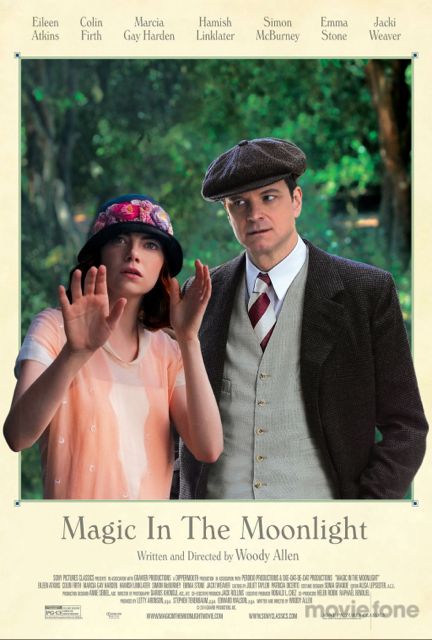
Magic In The Moonlight (2014) Enchants Despite Flaws

Let me guess. To see or not to see, that is the question on your mind. No? You’ve decided to skip it, heeding critics’ view that it is a ‘minor’ Woody Allen?

Magic In The Moonlight Poster 1

Well, here’s my take. To begin with, a director’s repertoire has to be large and significant enough to be categorized into ‘major’ and ‘minor’. I’ve enjoyed Allen’s previous ‘minor’ works like Match Point (2005), Crimes and Misdemeanors (1989), or his noir dealing with magic and the circus Shadows and Fog (1991). Or, is that a ‘major’?

For some reasons, even a ‘minor’ Allen work piques my interest. Further, a new Woody Allen movie is like the perennials shooting up in the summer garden. Going to see one has been on my summer to-do list in recent years.

This 47th directorial feature of Allen’s uses magic as the storyline, a reprise of his well-known preoccupation. Instead of casting himself as a magician like he did in Scoop (2006), Allen has Colin Firth play the role of the renowned Wei Ling-soo, master of illusions who specializes in disappearing and reappearing acts shrouded in oriental mystique. Just a reflection of the time, 1928 Berlin.

After a successful show, Stanley Crawford, Wei Ling-soo’s real-life persona, is recruited by his childhood friend and fellow magician Howard Burkan (Simon McBurney) to go with him to the Côte d’Azur in France to debunk a fake clairvoyant, played by Emma Stone.

Stanley is pleased to take up the challenge, for in his rational mind, the spirit world does not exist. He will be doing everyone a favour to expose the trickery of this young, self-proclaimed spiritualist Sophie Baker, whom he firmly believes to be a crook. Stanley tells Howard, ‘she can’t fool me’. In his mind, Sophie and her mother (Marcia Gay Harden) are out to hoodwink the heir of a rich family, Brice (Hamish Linklater) and his mother Grace (Jacki Weaver), a fraudulent scheme that must be thwarted.

You might have read about the mismatch of Firth and Stone starring together. If there is anything that seems incompatible, it is Stone playing a medium with the expertise of contacting the dead in a séance. No matter, Stone’s appearance can only substantiate the magic.

Sure enough, the ‘minor’ notion applies with the film’s simple, stretched-out, single plot line. A subplot could add more texture to the film, and giving some talented actors more story and character development. Further, there are moments and dialogues that look tedious and unnecessary. Thanks to the cast of fine actors, we can see their concerted effort in making the film more interesting than the simple plot can offer.

DSCF9550.RAF

And there are scenes we have seen before. The Gatsby-esque ball, the observatory moment as in Manhattan (1979), as well as reminiscence of other sources. But then again, are fairy tales not meant to be retold?

You might want to add in one more familiarity. France. This is the second time in four years Allen makes a movie in France. Following the successful Midnight In Paris (2011), cinematographer Darius Khondji reframes the country with idyllic French Riviera through a golden filter. I would not argue against that ‘repeat’.

And the music, how often we hear them in movies depicting the 1920’s, in particular, Allen’s own. From Cole Porter’s “You Do Something To Me” (opening credits, sets the mood right away) to Harry Carroll and Joseph McCarthy’s “I’m Always Chasing Rainbow” (Brice serenading Sophie), from Beethoven to Ravel, music only adds in the magic.

Stanley takes Sophie along for a ride to Provence to visit his Aunt Vanessa (Eileen Atkins). The veteran, low-keyed but always reliable Atkins as the wise and knowing Aunt Vanessa plays a pivotal role in the story. While Sophie has the chance to demonstrate her extraordinary gift by revealing Aunt Vanessa’s past, Aunt Vanessa has also shown that she knows her nephew Stanley much more than he knows himself.

And (possible) spoilers coming up...

One of my favourite scenes is in the third act, when the seemingly oblivious Aunt Vanessa while playing a card game of solitaire is subtly prodding her nephew to clearer self-understanding, to act upon his heart rather than relying only on his rationale. This one reminds me of a nuanced and endearing scene in another movie, exactly with these two actors, Atkins and Firth, playing mother and son and engaging in a similar kind of dialogue. Yes, the two of them are charming together in both. That movie? What A Girl Wants (2003).

But what’s interesting is Colin Firth here shines as a chatty Darcy. He plays the role with such an amusing familiarity as if he has just changed costume from an Austen set to the 1920’s. Stanley feels superior, thinks Sophie beneath him. He is arrogant and smug at the start, challenging and badgering Sophie at every turn, full of pride and prejudice. Why of course, Sophie, from small town America, has not heard of Nietzsche, or Bora Bora, can’t tell Dickens from Shakespeare. A ready target for Stanley’s jest.

And Stanley is such an expert in alienating people. Sophie’s mom Mrs. Baker could not have agreed more with Lizzy’s mom Mrs. Bennet, this guy is an obnoxious snob. From Darcy to Stanley, two sides of the same coin. Firth knows how to play this one by heart.

Quite like Darcy, Stanley is such a poor (first-time) marriage proposer. Take her under his wings? No rational reason for doing this? Against his better judgement? Haven’t we heard such a marriage proposal before when Darcy first messed up his in front of an incredulous and fuming Lizzy Bennet?

Not to aspire to his ‘major’ endeavours, Magic in the Moonlight is a lighter piece in Allen’s humungous directorial repertoire. He deals with it like bringing work on his vacation, emphasis on the vacation. Don’t we all need a break every now and then? And isn’t the French Riviera an ideal spot?

~ ~ ~ Ripples

 ***
I’m linking this review to Paulita’s Dreaming of France Monday Meme. CLICK HERE to see what others have posted.

***

Related Posts on Ripple Effects:

Midnight In Paris (2011)

Blue Jasmine (2013)

To Rome With Love (2012)

***


Saturday Snapshot February 22: Austen Doors and Windows

Continuing with the theme of doors and windows, let’s hop over to the UNESCO city of Bath. I was there twice. These are a few photos I took on those trips.

The beloved author Jane Austen lived there from 1801 – 1806 after her family moved from her birthplace Steventon when she was 26. Their first address was 4 Sydney Place:

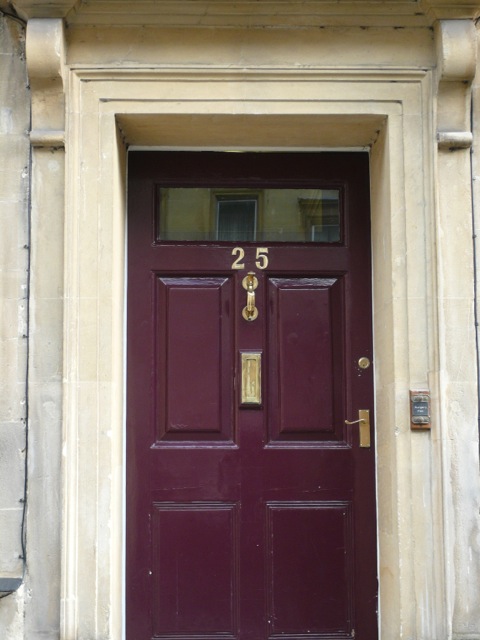
4 Sydney PlaceNo 4 Sydney PlaceIn their last year in Bath the family moved to 25 Gay Street:

25 Gay Street

25 Gay Street

Down the road to No. 40 is the Jane Austen Centre:

40 Gay Street Jane Austen Centre

The Great Pump Room was a social hub in Austen’s day. Her observations there must have inspired her satirical descriptions of high society in Northanger Abbey. Now an elegant restaurant:

The Pump Room Entrance

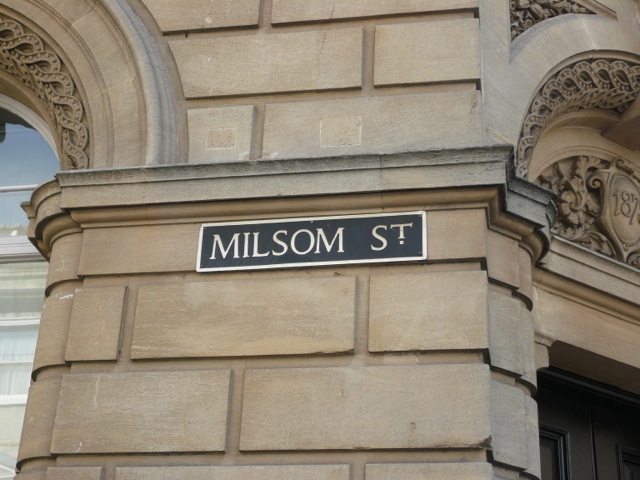
Austen used Bath as the setting for her novel Persuasion. Milsom Street was a vibrant commercial area of shops and businesses in those days as in now. The first time Anne Eliot saw Captain Wentworth again was when he passed by a shop on Milsom Street.

Milsom StreetMilsom Streetscape  Here’s a modern day shop window, Milsom & Son, a music store:

Milsom & Son

No, Jane would not have stepped in there to shop for CD’s or DVD’s. But she would likely have gone into this place, Sally Lunn Bun, the oldest building in Bath dating back to 1482 and a business that was present in Jane’s time. There’s a Kitchen Museum in the basement of the restaurant:

Sally Lunn's Bun

Sally Lunn Bun entrance

How can I resist showing you what’s inside the door and window:

Sally Lunn Bun

You might like to explore more of Bath in my other posts Jane Austen’s Bath and Bath’s Persuasion in which I recorded my walking tour using the novel Persuasion as a guidebook.

Saturday Snapshot is hosted by Melinda of West Metro Mommy Reads. Click Here to see what others have posted.

***

Half Way Through a Budding Grove

Half way through reading In Search of Lost Time, Vol. II, Within A Budding Grove, I’ve discovered a key to enjoying Proust. Just as it’s best to eat madeleines by dipping them in tea before putting the moistened petite cakes in your mouth, the most enjoyable way to read Proust is lying in bed with an unhindered mind. In this most relaxed state, I’m at ease to stroll leisurely through a budding grove, or the thickets of a genius’s mind.

Within A Budding Grove Modern Library

So far, I’ve gone passed the narrator Marcel’s painful struggles with adolescent, unrequited love for M. Swann’s daughter Gilberte. In contrast, his crush for Mme Swann has been appreciated and normalized. Unlike the cool and aloof Gilberte, Mme Swann welcomes Marcel into their home warmly, including him in their family outings, and their home gatherings with their friends, thus allowing him an opportunity to meet his literary hero, the writer Bergotte.

And here’s the passage I’m most impressed by, so far. The man Bergotte is very different from the writer Marcel has encountered in his ‘divine writing’. The man appears to be very common, inarticulate even, and devoid of eloquence, a man who spent his childhood in a ‘tasteless household’. Marcel is shocked by this discovery, and scrambles to come to terms with such dissonance. In a most ingenious analysis, the young Marcel comes to this conclusion:

But genius, and even great talent, springs less from seeds of intellect and social refinement superior to those of other people than from the faculty of transforming and transposing them… To mount the skies it is not necessary to have the most powerful of motors, one must have a motor which, instead of continuing to run along the earth’s surface… is capable of converting its speed into lifting power. (p. 175)

As I read these few pages, Jane Austen came to mind. A writer who had lived her short life mainly in a rural setting, her associations parochial and far from ‘high society’, and yet could transport herself and thus her readers to a different world from her mundane social environs. Her imagination soared as it took flight with her incisive observations of human nature.

… the men who produce works of genius are not those who live in the most delicate atmosphere, whose conversation is the most brilliant or their culture the most extensive, but those who have had the power, ceasing suddenly to live only for themselves, to transform their personality into a sort of mirror… genius consisting in reflecting power and not in the intrinsic quality of the scene reflected. (p. 175-176)

The adolescent Marcel’s disillusionment with the discrepancy between the man and writer Bergotte leads him to an uplifting insight:

The day on which the young Bergotte succeeded in showing to the world of his readers the tasteless household in which he had spent his childhood, and the not very amusing conversations between himself and his brothers, was the day on which he rose above the friends of his family, more intellectual and more distinguished than himself; they in their fine Rolls-Royces might return home expressing due contempt for the vulgarity of the Bergottes; but he, in his modest machine which had at last ‘taken off,’ soared above their heads. (p. 176)

Yes, more Proust’s words than mine on this post. Many other highlighted passages and surprising delights, but will have to wait till I’ve come out of the budding grove the end of November. If you’re interested, you’re welcome to join me in a read-along of In Search of Lost Time, Vol. II: Within A Budding Grove.

CLICK HERE to my wrap-up post: Out of the Budding Grove

***

Related Posts:

Proust Read-along Swann’s Way Part I: Combray (Featured in ‘Freshly Pressed’)

The Swann and Gatsby Foil

What Was Jane Austen Really Like? Reading Tomalin and Shields

In Praise of Austen: Virginia Woolf’s A Room of One’s Own

***

Bel Ami by Guy de Maupassant

Reading Maupassant reminds me why I love Jane Austen.

To be fair, I’ve only read one of the numerous short stories and one novel of Maupassant’s, but all of Austen’s six novels. So it just may not be apt for me to generalize the former. But focusing on just this book, Bel Ami, I can say here’s a protagonist whom I can never cheer for nor find amiable, to put it mildly…

Maupassant uses a scoundrel as the main character and have us follow his ascent, unscrupulous at every turn, as his ego and desires are being fed all the way to the end, and then some more. An antihero, the poster boy of realism in his depiction of late 19th C. Parisian high society?

Jane Austen has also written a protagonist she described as “A heroine whom no one but myself would like”. But comparing to Bel Ami‘s Georges Deroy, Emma Woodhouse is angelic. How do I even start to think of a parallel… imagine Wickham of Pride and Prejudice and Willoughby of Sense and Sensibility, combine them and magnify their nasty streak ten folds, then you’ll have Georges Deroy, nicknamed Bel Ami by the women in his life, ‘good friend’, a most pathetic irony.

The time is 1890’s Paris. Georges Duroy is a former soldier living in poverty. But call it luck or call it will, Duroy ends up a prominent figure in Parisian high society. This is how he does it.

Women. At one time, there are four significant females in Deroy’s life. These are upper crust, influential beauties. To Duroy, they are but rungs up the social ladder, each a conquest.

First is Madeleine Forestiers, the wife of his benefactor, editor friend whom he runs into coincidentally, and who saves him from poverty by bringing him in to work for the newspaper La Vie française.

The second one is Clotilde de Marelle, a married woman whom Duroy has made mistress. She aptly analyzes the Mars and Venus chasm of gender differences on that elusive notion called love. To Duroy, she says:

I know perfectly well that for you love is merely a sort of appetite whereas for me it would be more a sort of… communion of souls which doesn’t exist in a male religion. You understand the letter and I understand the spirit.

The third is the big boss of the newspaper Monsieur Walter’s wife Virgine, who has such a crush on Duroy that she loses her senses when he successfully schemes and manipulates her daughter Suzanne to elope with him.

George Wickham has plenty to learn from Georges Duroy because his subsequent wedding after the elopement is not a hush hush patch up, but a glamorous celeb nuptial, fully legit and the envy of all. By now, Duroy has climbed to be editor of La Vie française and made himself a Baron, changing his name to Du Roy for a more aristocratic sound. And we know full well that the conquest doesn’t stop there.

In one earlier incident, Duroy comes out of a gun duel unscathed, albeit a bit numbed. With his life spared, he could well have used such a near-death experience as a springboard to a new beginning and a turnaround of his ways. But his lucky escape has only fuelled his hubris and reaffirmed his self-importance. After the duel, he thinks himself invincible.

Is he immoral or amoral? I feel I have to choose the latter in order to find some amusement in following this unscrupulous character. Is it realism or sarcasm? I have to mix them both in order to seek some reading enjoyment. And with the English translation by the Cambridge scholar Douglas Parmée, there are the occasional descriptions that sounds… curt. But are they the original intent as realism dictates, or the collateral effects of translation? Can’t make up my mind on that one. Just an example:

The elder sister Rose was ugly, as flat as a pancake and insignificant, the sort of girl you never look at, speak to or talk about.

There, I find myself having to choose or debone or mix and stir in order to wash down better when reading Bel Ami. Under Maupassant’s pen of realism, Duroy is relentless all the way to the end. Just goes back to my love for Austen’s works… why, I can take in big gulps, devour and be totally satisfied. There are Wickham and Willoughby, but ultimately my yearning for some sort of poetic justice can be gratified. For my reading pleasure, I’ll take Jane’s idealism anytime.

***

Bel-Ami by Guy De Maupassant, translated by Douglas Parmée, Penguin Classics, movie tie-in edition, 2012, 394 pages.

As you can see from the book cover, Bel Ami has been adapted into film. To literature purists, I suggest you look for another edition. Whenever I read about Georges Duroy, which is on every page, Robert Pattinson’s face keeps haunting me, and images of Uma Thurman as Madeleine Forestier, Kristin Scott Thomas as Virginie keep conjuring up in my mind. Now I haven’t even watched the film… oh the suggestive power of a book cover.

This concludes my Paris in July entries for 2012. Thanks to Karen of BookBath and Tamara of Thyme for Tea for hosting.

To Paris again next year!

***

Cut! Costume and the Cinema: An Exhibit

This is the closest I could get to a movie set. The actual costume worn by prominent screen actors in period movies, that’s the current exhibit “Cut! Costume and the Cinema” at the Glenbow Museum in the centre of Cowtown. Some of the designs had garnered Academy Awards.

Since I could not take any photos inside, this outdoor poster is the only one that I could capture on my camera to give you a sense of what’s in the exhibit: 43 costumes from 25 blockbusters, worn by 30 stars. Mind you, just watching the clothes on headless mannequins is not the same as seeing them on real people with all the set and props you see on screen. So in a way, this is a deconstruction of the magic. However, to have such an exhibition come to Cowtown, I’m excited just the same.

All the items from the exhibition are from the renowned costume house Cosprop of London, England. I learn that for those representing a period before the sewing machine, they have to be hand sewn to reflect authenticity. And due to the cost and labor involved, costumes are usually altered from other existing costumes, seldom are they made from scratch.

Here’s a sample of what I saw, costumes worn by:

Kate Winslet as Marianne Dashwood in “Sense and Sensibility”

Renée Zellweger as Beatrix Potter in “Miss Potter

Emmy Rossum as Christine in “The Phantom of the Opera”

Maggie Smith as Constance Trentham in “Gosford Park”

Vanessa Redgrave as Ruth Wilcox in “Howards End”

Scarlett Johansson as Olivia Wenscombe in “The Prestige”

Colin Farrell as Captain Smith in “The New World”

Johnny Depp as Jack Sparrow in “Pirates of the Caribbean”

Robert Downey Jr. and Jude Law as Sherlock Holmes and Dr. Watson

Keira Knightly as Georgiana and Ralph Fiennes as the Duke in the Oscar winning costume design of “The Duchess”

… and some others.

But what resonated most with me was that deep turquoise long dress worn by Natasha Richardson as Countess Sofia Belinskya, matching with Ralph Fiennes’s dark green plaid suit jacket in his role as the blind Todd Jackson in “The White Countess.” Looking at the costumes brought back scenes from that movie… the quiet resilience of Sofia, the white countess from Russia, now a refugee in WWII Shanghai, turning a new page in her life with the wounded but passionate ex-diplomat Todd Jackson. Just sad to know she’s no longer with us.

***

CLICK HERE to an informative video on the exhibit by the Boca Raton Museum of Art in Florida. A 5 min. virtual tour with commentary by Cut! curator Nancy Lawson. 

You may also be interested in these previous posts on Ripple Effects:

Natasha Richardson: Nell and The White Countess

The Merchant Ivory Dialogues

Howards End by E. M. Forster

Miss Potter for Christmas

Austen-inspired Acceptance Speech