The Guernsey Literary and Potato Peel Pie Society

guernsey-literary-and-potato-peel-pie-society

“Reading good books ruins you for enjoying bad books.”

A novel in the form of letters?  I admit it wasn’t much of an appeal to me at first. After it has maintained its position on the New York Times Bestseller List for months, and now the trade paperback holding the first spot there, I just can’t resist anymore.

The book begins with a series of letters between a London writer Juliet Ashton and her friend and publisher Sydney Stark shortly after WWII.  Later, upon receiving a letter from Dawsey Adams, a resident of Guernsey of the Channel Islands, Juliet starts to correspond with the charming folks living there.

So how does the book title come about? Guernsey Island was occupied by the Germans during the war.   It happens that one night after a secret ‘pig out’, a few Guernsey residents are found breaking the curfew.  To find an excuse quickly when confronted by German soldiers, Elizabeth, our heroine, makes up the story that she and her fellow members have to leave a literary society meeting late as they’ve been so immersed in a German book.

This impromptu excuse soon takes shape in reality.  Thus begins the odyssey of reading, book discussions, and the members’ correspondences with Juliet Ashton.  Juliet is so immersed in their lives and moved by their situation that she later decides to go visit them, making the Guernsey Literary Society the subject of her next book.

Many of the letters are poignant descriptions of lives during the difficult war years.  The Guernsey residents have to suffer the searing pain of evacuating their own children to England for safety, seeing the young and healthy sent to war, finding others just disappear to concentration camps, and hearing eye witness accounts of heroic sacrifices for utter strangers. While all these years on the Island, they have to endure deprivation of food, basic necessities, and freedom. But the literary society meetings and the few reading materials in their possession remain their lifeline to humanity and dignified living.

“Everyone was sickly from so little nourishment and bleak from wondering if it would ever end.  We clung to books and to our friends; they reminded us that we had another part to us.”

Author Mary Ann Shaffer passed away in February 2008 and was succeeded by her niece Annie Barrows in finishing the novel.  In the Acknowledgment, Shaffer had written these words in December 2007:

“I hope, too, that my book will illuminate my belief that love of art — be it poetry, storytelling, painting, sculpture, or music — enables people to transcend any barrier man has yet devised.”

Despite the subject matter, readers will find the book witty and delightful.  Authors Shaffer and Barrows have depicted a myriad of lively characters, charmingly joined in their humanity by their strengths and weaknesses.  Yes, we can also visualize the madness of war. But we’re relieved to see too that people can weather hardship much better when they have a common bond, here, in the reading and sharing of fine literary works.  Mind you, these are not your academics and scholars.  The Guernsey residents are mainly pig farmers and vegetable growers.  As we read their letters, we soon see them as friends, Amelia, Dawsey, Isola, Eben, Eli, Elizabeth and little Kit…

And, am I such a Jane Austen fan that I’m seeing this:  Juliet Ashton (J.A.), Dawsey (Darcy), and Elizabeth, beloved heroine of all time.

What impresses me most is that the Guernsey Islanders are so willing to open their hearts and lives to writer Juliet, an absolute stranger, mainly because of their common love of the written words.  They find it an honor to be able to correspond with a real life writer, pouring their hearts out in respect and admiration, and quickly confiding in her.  A writer as a celebrity and friend?  It’s just fiction, you may say. But, why can’t it be real?

As for the art of letter writing, has it been lost as some have claimed, or has it merely been transformed into … yes, blogging, for example?  Because as I was reading the book, it flashed by me at times that I was reading some blog posts.  Are the writings that we post in the blogosphere a kind of open letter?  Our exchanges in the comment box our correspondences?  And, to push it a bit further, the telegram of old the early form of twitter?

The Guernsey Literary and Potato Peel Pie Society by Mary Ann Shaffer and Annie Barrows, Dial Press Trade Paperback Edition, 2009, 288 pages.

***

Click here to go to the Guernsey Literary and Potato Peel Pie Society website.  As for the potato peel pie recipe, yes, at the Jane Austen Society of North America website.

The Proximidade: Celebrating Closeness

Arti of Ripple Effects is honored to receive The Proximidade Blogging Award from ds of  third-storey window.  A wonderful view she has over there.  Thanks again ds!

“The Proximidade Award believes in the Proximity – nearness in space, time and relationships. These blogs are exceedingly charming. These kind bloggers aim to find and be friends. They are not interested in prizes or self-aggrandizement! Our hope is that when the ribbons of these prizes are cut, even more friendships are propagated. Please give more attention to these writers! Deliver this award to eight bloggers who must choose eight more and include this clever-written text into the body of their award.”

proximade_award1

This is a while back now.  Although ds is very generous as to spare us the obligation to pass it on, I feel I should share this award by naming  some worthy recipients whose blog has closed the gap among us, in one way or another, narrowing our physical distances through common interests and other higher ideals.

It’s my pleasure to pass the Proximidade Award to the following Blogs, in alphabetical order:

Book Club Girl — for closing the gap between authors and readers by her own radio show ‘Authors on Air’.

Classy Music — for drawing us closer with news and views of classy musicians and their performance.  Take note, ye fans of Susan Boyle and Paul Potts.

FilmChat — Movie reviewer Peter Chattaway (no kidding) engages us with insightful and interesting dialogues between faith and film.

Jane Austen Today —  Great job Laurel Ann and Vic,  in connecting Janeites the world over by their excessively diverting blog.   (LA and V:  I’m still working at finding ‘classics’ blogs for the ED Award.)

Visual Dialogues — Blogging from Hong Kong, Molly Mavis closes the gap between East and West with her perceptive photography.

I trust you’ll find the above blogs informative and entertaining, well deserving the Proximidade Award.

Too Much Jane?

davies460

Andrew Davis pondering

The Welsh filmmaker Peter Greenaway once made a controversial remark criticising film versions of literary work as mere “illustrated books”.  Regarding Jane Austen’s work, he said:

Cinema is predicated on the 19th century novel.  We’re still illustrating Jane Austen novels–there are 41 films of Jane Austen novels in the world.

What a waste of time.

Click here for the Wales news article containing the above quote.

To the discomfort of Mr. Greenaway, there have been more Austen adaptations made since he spoke.  As recent as just two weeks ago, BBC has announced that a four-episode production of Emma will be launched this fall.  The award-winning writer Sandy Welch (Jane Eyre, 2006, TV; Our Mutual Friend, 1998, TV) is working on the new script, with actors pending.

Why do we need another Austen adaptation?  Do we need another “illustrated book” as Greenaway has argued?

I was surprised to hear such remarks from Mr. Greenaway, himself an art house filmmaker.  He certainly doesn’t need to be reminded of the power of the visual.  I have expressed my stance against his argument in a previous post entitled ‘Vision not Illustration’.  But as more Austen adaptations appear, laying ratings and profits aside, I still believe there is an artistic merit in turning book into film.

The visual has an immense power in bringing out the essence of the literary.  An image can elicit deep and hidden thoughts, stir up emotions of past experiences, point to new insights, and unleash multiple responses in just a short lapse of time.  The cliché  “A picture speaks a thousand words” has its application in this visually driven generation.  Not that I do not treasure the classics, or the literary tradition.  Far from it.  I think a good film adaptation can, at best, enhance our enjoyment of the literary, and if it fails, can only help us appreciate the original genius even more.

If Bach, over 300 years ago, could invent Theme and Variations, why can’t we in this post-modern age, where multiple narratives are cherished, create adaptations to a recognized original?  Of course, the key is held by the filmmakers. It takes the insightful and  interpretive lens of a good writer, director, and cinematographer to craft a fresh perspective, one that can evoke a new vision and yet still remain true to the spirit of the original.

Kate Harwood of BBC explains why another adaptation of Emma is ensued:

In Emma, Austen has created an intriguing heroine, and our four-hour canvas allows us to explore this multi-faceted character in detail.  Emma was Austen’s last novel, written when she was at the height of her craft, and we are delighted that such an esteemed writer as Sandy Welch is bringing her vision to this appealing story.

How appropriate it is for Harwood to see film as a canvas for visual exploration, and the writer’s vision as a crucial element in the creative process.

I say, bring on more Austen adaptations.  Jane would be most pleased… belatedly.

*****

The above posted article has since been published in the Jane Austen Centre Online Magazine, where you can read more about Jane and her world.  Click here to go there.   

Click here to read my review of Part 1 and Part 2 of Sense and Sensibility, broadcast on PBS Masterpiece Classic Feb. 1 and 8.

Jane Austen: Sense Or Sensibility?

With PBS Masterpiece Classic broadcsting Sense and Sensibility (2008 ) again on Feb 1 and 8, it’s good time to muse on the question:  Which Austen heroine was Jane herself most like?  You can see the poll on my side bar, and the results so far. 

As you watch Sense and Sensibility once again, look closer at Elinor and Marianne.  Mind you, if you have a chance, watch the 1995 movie too, then you’d appreciate Emma Thompson and Kate Winslet in bringing out the differences between sense and sensibility even more clearly I think.

No doubt, we all like to perceive Jane herself as the very source that had inspired the creation of our all time heroine, Elizabeth Bennet of Pride and Prejudice, intelligent, witty, self-assured, sharp in her critique of social norms, and brave enough to challenge, and diverge.  She dominates our popular votes here with a 44% lead… so far.

But Anne Elliot of Persuasion is also a popular choice, mature, patient and wise.  The silent lover is a strong second with 23%.

magrittes-le-blanc-seing

After reading the biographies of Jane, knowing how she had loved the burlesque and to play a part in the family’s performances, how openly she had engaged in activities with her brothers and the student boarders in her home, how she had  written satires while still a youngster, how critical she could be, and above all, upon my reading Claire Tomalin’s incisive analysis of Jane’s relationship with her older sister Cassandra, I tend to lean toward a very unpopular choice. 

I think Jane by nature was more like Marianne Dashwood, passionate, spontaneous, expressive and bold.  It’s Cassandra, like Elinor, who reminded her to rein in her emotions, to keep her skepticism in check, and to help her fit into a world that was not ready for a female like her.  Have you wondered why Cassandra needed to burn so many of Jane’s letters to her after Jane’s death?

Is it sense and sensibility we’re talking about here, or rather nature and nurture? 

No matter.  It’s best that our favorite writer remains an enigma.  But, if you have to choose, thinking back to all the Austen heroines in her six novels, who do you think Jane resembled the most?

Cast your vote and let Janeites decide.

To read my review of Sense and Sensibility (2008, TV), Part 1, Click here.

Click here for Part 2.


*****  

81st Academy Awards Nominations (2009)

oscars

CLICK HERE to read The 2009 Oscar Results.

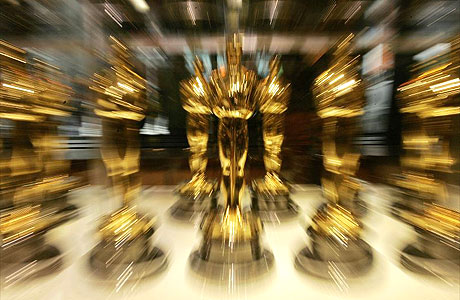
So, the news is out. For a complete list of the 2009 Oscar nominees, click here to go to the official Oscars website. For those who didn’t bother getting up at 5:30 am PT to watch the announcement live, here’s the video clip.

The clear front runner is The Curious Case of Benjamin Button, grabbing 13 nominations, just one short of the record shared by All About Eve (1950) and Titanic (1997).

Slumdog Millionaire is not far behind, a fantastic rags to riches exemplar in itself, garnering 10 nominations.

When I look at the Best Picture categories, I notice that four of the five nominees are produced from an adapted screenplay.  Here are the origin of these now famous movies, the source materials that first spark and channel the creative energy of screenwriters,  causing them to propel a much lesser known work into the orbit of box office profits:

  • The Curious Case of Benjamin Button:  Loosely based on a short story of the same name by F. Scott Fitzgerald.  The imdb site does not even mention this source material.  But for those of you who want to acknowledge the original writer’s work, click here to read the short story online.
  • Frost/Nixon:  Based on a play by Peter Morgan.  To read the NY Times review of this theatre production, click here.
  • The Reader:  Based on the novel by the German writer Bernhard Schlink.  To read the discussion of book into film at guardian.co.uk, click here.
  • Slumdog Millionaire:  Based on the novel Q & A by the Indian novelist Vikas Swarup.  To read his interview on guardian.co.uk, click here.

So I say, kudos to all the original writers out there, without getting as much notice, not in this part of the world anyway, until their work is chosen to be made over into a movie, or picked by Oprah (The Reader).  It says a lot about our consumer and celebrity driven culture, that a piece of writing gains recognition only when it is released in a movie tie-in edition, or favored by a TV icon.

Well,  the message of Wall-E is relevant here.  I’m glad to see it getting 6 Oscar nods including Best Original Screenplay.  The last time an animated feature received 6 nominations was Beauty and the Beast (1991), itself a case in point with the hype of commercialism boosting the literary form.

And then on another note, I read about the first edition of Emma that Jane Austen signed and gave to her friend Anne Sharp (thought to be the inspiration for the character of Mrs. Weston in Emma) was on sale at the Antiquarian Book Fair in Hong Kong last week, asking price HK$3.95 million (approx. US $500,000).  I wonder also how much all those movies profited from adapting her novels.  I lament Jane who died impoverished.

Photo Source: guardian.co.uk

*****


Lost in Austen Episode 4 (2008, TV): Lost and Found

After trudging through a slow and a tad too serious Episode 3, the production has redeemed itself by finishing up with a grand finale. Episode 4 has found its original pace with its fast sequences to wrap things up, offering unexpected and entertaining twists and turns.

One thing that screenwriter Guy Andrews remains consistent with is his attempt to mix things up as much as he can, like Lydia eloping with Bingley, Wickham turning wicked schemes into timely rescues, Mrs. Bennet coming to her senses and confronts Lady Catherine de Bourg, and ultimately, the big ultimate, Elizabeth Bennet swaps places with Amanda Price not for a moment, but for good. The laughs and fun derived from these “post-modern moments” are all based on juxtaposing time and mixing up of characters and story lines. The whole production is an effective deconstruction of an all-time classic and its adaptations.

gemma-arterton-as-elizabeth-bennet

The most fun of them all, of course, is Amanda coming back through the portal and see Elizabeth Bennet in 21st Century London, with a new pixie hairdo, working as a nanny, computer savvy, environmentally conscious, and fully liberated. What more, she enjoys modern, post-modern rather, life so much that she intends to stay for good. And once she sees Darcy, who follows Amanda to the modern world, Lizzy right away knows who he is, thanks, as we all do nowadays, to all the webpages about Colin Firth’s wet shirt scene.

Darcy on the other hand is totally lost in the future. Here the scene is almost a replication of the one from Kate and Leopold (2001), where Hugh Jackman portrays a late 19th Century English nobleman travelling through a time portal and lands in modern day NYC. Darcy is even wearing a similar long, blue coat like Leopold, mesmerized by the tele and the busy urban traffic. And the ending too, a similar twist as Meg Ryan’s ultimate choice at the end of the movie.

What would Jane Austen think? “Turns in her grave” as Amanda puts it? As a satirist and a fan of the burlesque, Jane might have a good laugh too I think. I’m sure she was confident and self-assured enough to know that parodies of her work, at best, remain only as they are, spin-offs and re-makes of something that is inimitable. No matter how you deconstruct Jane Austen, you would always come out admiring the ingenuity of the brilliant mind behind that original creation.

*****

Episode 1

Episode 2

Episode 3


Lost In Austen: Episode 3 (2008, TV)

Japanese man petitions to marry comic-book character“, thus says the headline. Taichi Takashita has launched an online petition to the Japanese government for the legalizing of marriages between human and cartoon characters. He’s aiming for a million signatures, as of the end of October, he’s got a thousand. In this day and age, I’ve more or less braced myself for any type of shocking news.

Now, back to fiction. I’m not surprised to see Amanda Price falling in love with a fictional character, especially one like Fitzwilliam Darcy, but I am quite unwilling to accept Darcy to be ardently in love with her. But of course, this is a parody, albeit in this episode, the humor has gone from LOL to subtle satire.

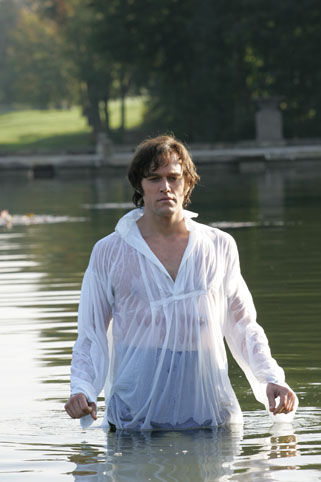
wet-shirt-scene-in-lost-in-austenI suppose the wet shirt scene in which Darcy heeding Amanda’s request to dip into the pool is meant to be the most notable moment, or maybe even the climax, of the whole production. This scene just confirms my view that Lost In Austen is more a parody on Pride and Prejudice adaptations, rather than the novel of Jane Austen’s. There never is a wet shirt scene in the book. The parody could well be on Andrew Davis’ imaginary take on wooing modern female viewers, or a satire on the cult following of Colin Firth’s role as Darcy since the 1995 BBC production.

The scene also offers another Firth moment when Amanda asks Darcy whether he loves her because of her change from the spikey and vulgar modern female to the simpering klutz trying to fit into the Regency mold. Well, truth be told, Darcy finds her character, both before and after, equally disagreeable, but he still loves her with all his heart. Isn’t that the Mark Darcy line to Bridget Jones, “I like you very much, just as you are.”

Anyway, there really isn’t much else to be excited about in this episode. The director seems to be indecisive as to where he wants to take us, and in what form. The lively and fresh beginning of Episode 1 has subsided and the production has turned into another TV drama, one that has taken itself a little too seriously.

So now, another week, another episode…oh, the ennui and the ambivalence.

Yet, I shall conquer this, I shall.

Episode 1

Episode 2

Episode 4

Lost in Austen: Episode 2 (2008, TV)

For all of us Canadian viewers, who have patiently and faithfully waited VIVA to show us one episode at a time of Lost In Austen two months after its premiere in the UK, we have been short-changed last night! I knew Amanda Price would have to face some musical challenge in this episode. But I purposely did not try to find out what it is by reading others’ reviews. I want to see it first hand. But I was not given that opportunity. Why would VIVA cut out the most hilarious part of this second installment?

For those who don’t know what they have missed last night, here is the clip from YouTube:

Darcy’s “All ladies can sing.” is such a funny parallel to his statement in P & P: “Every savage can dance.”

I’m afraid though, the above may well be the few funny parts in this episode. And with VIVA cutting it out, we’re left with not much commotion. I admit that my earlier excitement from last week has died down. Without the Petula-Clark-inspired parody, this episode seems to have lost some of the initial lustre. There are still funny moments, and humorous lines, but the overall appeal seems to have waned.

I hope I’m not experiencing another version of lost in Austen. I find in this episode the screenwriter has taken us as far away as possible from the original P & P story just for the sake of gratuitous divergence. I was looking froward to seeing more of the LOL parody it has set up in Episode 1, more wild rides from the free-wheeling imaginary scenario. I was a bit disappointed to see its freshness replaced by banality. The slapstick humor makes me wonder what’s left in the bag of creative antics.

One more thing: I was most perplexed as to why the dress with the lowest neckline was being worn by none other than Mrs. Bennet, the mother of five daughters. Lady de Bourg would definitely have exclaimed: “Is she still out?”

However, all is not lost. I’m still eager to see how Amanda can right the wrongs and get out of the mess from her intrusion into the Bennet family. And if nothing else, this episode has at least achieved in making me love the original even more, not just JA’s ingenious creation, but the 1995 BBC production as well, yes, even Mr. Collins there. Further, last night’s episode just confirmed my view that nobody can do Darcy better than Colin Firth.

Episode 1

Episode 3

Episode 4

Two Guys Read Jane Austen: Again, the Gender Issue

two-guys-read-jane-austen 

Some guys would rather have jaw surgery than to read JA.  Steve Chandler could well have been one of them.  As an English major in college, now a successful writer in his sixties, Steve has miraculously managed to avoid reading JA all his life, until now.  On the other hand, his co-author Terrence N. Hill, an award-winning playwright and author, has read Pride and Prejudice three times, good man.  Prompted by their wives, Steve and Terry embarked on this new project in their “Two Guys” series, taking the risk of treading no man’s land.  However, considering their previous “Two Guys” titles, Two Guys Read Moby Dick and Two Guys Read the Obituaries, they are well-primed for this venture.

Thanks to blog reader Julie for sending me a copy of this book,  I’ve been thoroughly entertained.  Attaining to true Austenesque style, the two lifelong friends read two JA novels and wrote letters to each other about their thoughts over a six-month period. I must admit I’m surprised (sorry guys) at the incisive look and the fresh perspective they bring to the forefront.  Their sharp observations, humorous takes on many issues, their LOL commentaries on popular culture, and intelligent analysis on various topics make this a most gratifying read for both men and women, Janeites or would be’s.

Many do not want to read JA because they think she was just a 19th Century rural spinster awashed in naiveté, who had never heard of Napoleon or the war he was raging, ignorant about the slave trade from which England was benefiting, or couldn’t tell the difference between a country and a continent.  The most they might think of her is the mother of all modern day chick lit or the romance novel.  Well, these myths are all dispelled by two guys that have experienced Jane Austen first-hand, and lived to tell their discovery.

Here are some of their insights and words of wisdom as they read Pride and Prejudice and Mansfield Park.  I’m quoting directly from their letters to each other:

  • Jane’s got more adoring female fans than Brad Pitt, and my guess is they’re more intelligent too.
  • JA (through Elizabeth) is a witty, rebellious voice for intelligence and passion in the face of those stuffy British strictures.  I love this.  I love a woman (or a man, for that matter) who has no need to win anyone over.
  • Wasn’t Elizabeth Bennet heroic because she was such a totally self-responsible, proudly independent person?  Wasn’t Darcy the same?
  • I really enjoy how much you like Jane Austen, that you cry when reading her books, and that you can still be a man… A man not afraid of the feminine principle becomes even more of a man.
  • …elegantly cerebral.  But once you acclimate yourself to the flow of the language, it is addictive.  JA’s writing becomes more captivating with each new chapter because of how many layers of psychological posturing she strips away.
  • Men are often accused of putting their wives on a pedestal. Women build a pedestal and then spend their time trying to create something worthy of going on it.
  • I don’t think Austen ever gets proper credit for her role in the development of the comic novel.
  • Jane never attended school after the age of 11.  After that she was entirely self-taught…  S&S, P&P, NA, three of the greatest novels of all time–all written by 25.  Thinking of myself at that age.  If I had had time on my hands I could well imagine having written three novels… What I can’t imagine is that they would have been any good.  Ah, but then I had the disadvantage of an education.
  • The true measure of her characters is their hearts and minds.  What the movies cannot get to – or do justice to – is the intelligence.
  • What has excited Henry Crawford the most is Fanny’s inner strength.  On the surface she is delicate and demure.  But underneath she is power itself.  That’s what makes JA so great and so endearing.
  • Jane is all about principle.  Living true to your highest ideals, your highest self… she shows us there is a beauty to morality… there’s beauty in integrity!

Need I say more?

Two Guys Read Jane Austen by Steve Chandler and Terrence N. Hill, Robert D. Reed Publishers, Bandon OR.  2008, 126 pages.

*****

This article has been published in the Jane Austen Centre Online Magazine, where you can read more about Jane and the Regency Period.

Lost in Austen: Episode 1 (TV, 2008)

lost-in-austen

What a delight it was for me to catch the Canadian premiere of Lost in Austen on the new VIVA channel last night, two months after its UK debut on ITV. No, I had not anticipated it with much eagerness, I admit, nor had I held any expectations before I watched it. But, what a pleasant surprise.

I was somewhat skeptical about another time-travel movie and yet another take on Pride and Prejudice. It seems we are doing Jane Austen a disservice to have so many different “versions” of her ingenious work, turning P & P into a modern day literary cliché. How many more original antics can screen writers squeeze out after all the adaptations and fan fiction spin-offs in recent decades? But this one is fresh and original. It is laugh-out-loud funny, entertaining, with intelligent dialogues and a new perspective. I’m afraid to say too, that there are moments with SNL type of parody on the story and its characters, especially Colin Firth’s role as Mr. Darcy.

But it’s all harmless fun. “No offense taken.” I’m sure Jane, with her sense of humor and satire, would have responded, or Colin, for that matter.

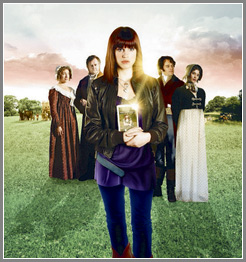
lost-in-austen-amanda-priceAmanda Price (Jemima Rooper, The Black Dahlia, 2006), a modern day working female living in Hammersmith, London, is a JA addict. Reading Pride and Prejudice has become her escape from her lacklustre life. She reminds me of Renée Zellweger’s Bridget Jones, although Amanda here manages to keep her weight under control and has a boyfriend that gets drunk on beer and proposes to her with a beer bottle tag as a wedding ring. So, it is a real fantasy for her to find Elizabeth Bennet (Gemma Arterton, Quantum of Solace, 2008 ) in her bathroom, showing her a portal that leads straight to the Bennet house. But understandably, Amanda is a bewildered and reluctant time-traveler, at least at this point.

The freshness of the story comes from all the twists that do not follow Jane Austen’s story. As with my usual reviews, I don’t like to give out spoilers. But I have to say, the key to these ingenious renderings is that Amanda Price swaps places with Elizabeth Bennet. With Lizzy out of the picture in P & P, the rest of the story is up to the screen writer Guy Andrews’ and director Dan Zeff’s own imagination.

In this first episode, most of the major characters are introduced. All of them deliver a lively performance, although I’m particularly fond of Amanda and Mr. Bingley (Tom Mison). The music reminds me of the 1995 BBC production, energetic and swift. In turn, the pacing is quick and effective. My main criticism though, is the set design of the interior of the Bennet house. It looks more like a modern day rather than an early 19th Century setting, quite incompatible with the exterior of the house.

Right from the start, I have resolved to not take this TV production too seriously, but just immerse myself in the wild and fanciful ride it freely takes me. After all, Jane herself had excelled in this very act, transporting us to meet all sorts of characters and situations through the imaginary worlds of her novels. I’m sure she would have a good laugh too tonight if she were watching with me… now that would be a fantasy indeed.

Just Click to read my review of the other episodes:

Episode 2

Episode 3

Episode 4

*****


Art Imitates Life, Life Imitates Art, or…

Neither. After reading Tomalin and Shields on the life of Jane Austen, I am inclined to draw that conclusion. The often sanguine outlook of Austen’s works is deceptive.  The seemingly jovial ending may lead some to assume they are reading the simplistic stories of a woman wrapped in romantic bliss all her life.

Reality is, that Austen could persevere, write and published is already an incredible achievement considering the confining social environment she was in. Instead of embracing the normative female role in comfort, she chose to trod the road less traveled to become a writer despite the gloomy prospect of poor spinsterhood,  enduring rejection even from her own mother. She wrote in secret and struggled in isolation. For a long period she battled depression. Upon her death, her beloved sister Cassandra could not attend her funeral because the presence of females at such events was not sanctioned, apparently for fear of any outbursts of emotion.

It is Austen’s imagination that empowers her to break free of her reality and to rise above her constraints. She has created her art from the palette of  the imaginary, as Tomalin has lucidly observed:

Hampshire is missing from the novels, and none of the Austens’ neighbours, exotic, wicked or merely amusing, makes recognizable appearance.  The world of her imagination was separate and distinct from the world she inhabited.

Austen’s contemporary, the renowned Gothic writer Ann Radcliffe, has attested that it is the imagination and not real-life experience which gives rise to story-telling. A scene in the movie Becoming Jane (2007) has vividly illustrated this point.

In the famous little book, The Educated Imagination, a must-read for any literature student, the late great Canadian literary critic Northrop Frye states that :

The world of literature is a world where there is no reality except that of the human imagination.

Austen has great proficiency in the language of imagination. In her novels, she has created a world that never was, but one that makes her readers yearn for. There is no Mr. Darcy in real life, or Elizabeth Bennet for that matter, but we could well use them as the ideal types to measure by, or, to strive for.

What about the satirist in Austen? How can the social critic be extracted from reality?  How can one write social commentaries devoid of real life input? Austen may have toiled in isolation for fear of social repercussion, she did not write in a vacuum.  While her art did not imitate her life, Austen had the chance to sharpen her observation from the very public sitting-room of her home and those of her relatives and friends, an opportunity that was conducive to her novel writing, as Virginia Woolf has pointed out.  Ever since her childhood, the Austen home was the hub of family readings and discussions.  Her brothers grew up to be men well versed in the fields of the military, clergy, and business.

In her ingenious way, by satirizing the things that ought not to be, Austen is bringing out the world that ought to be. In Frye’s words:

The fundamental job of the imagination in ordinary life, then, is to produce, out of the society we have to live in, a vision of the society we want to live in.

If art imitates life, it would be just a reproduction; if life imitates art, well… ours would be one very wacky world. But life could well be the reason for creating art, channeling our imagination to build a sublime vision of the ideal.

Visual: Starry Night by Vincent van Gogh

Update: This article has just been published in the Jane Austen Centre Online Magazine. Click here to go there for other interesting reads on Jane Austen and the Regency World.


*****


Reading, Writing, and the Gender Issue

With all these posts lately about Jane Austen on Ripple Effects, Arti feels there is a need for an erratum.  Before the comedy of errors gets to Austenesque proportion, and considering Arti’s minute talent in writing such that there being no aspiration to become a modern day George Eliot, a major confession is called for here:  Arti is A Lady.

At first when I started Ripple Effects, I thought that the name “Arti” is neutral enough like “Les”, “Chris”, or “Alex”.  I subscribe to the ideal that great literature and good writing is gender neutral, by this I mean their relevance and significance surpass the boundaries of gender to reach the universal, be it the work of Jane Austen or George Orwell.   And, laying aside the gender issue, good books deserve to be read.  The novels of Jane Austen come to mind.  The gender of a writer should not be an impediment if the writing speaks to all.  Arti proceeded to write all reviews and articles based on this premise, attempting to strive, albeit remotely, towards this ideal.

I hope the disclosure of Arti’s gender does not diminish readers’ enjoyment of Ripple Effects.  Definitely, Arti does not want to be accused of carrying a concealed weapon, or acting as an undercover agent when it comes to the battle of the sexes.  So here I am, coming out with both hands up in the air.

As readers can quickly observe, Ripple Effects encompasses not only Austen, or just books.  But because Arti is endowed with only 24 hours in a day,  wherein a few have to be allotted to that essential yet elusive activity called sleep, there is just not enough time to see all the many exciting worlds Arti would like to explore.  To alleviate this deficiency,  Arti visits other people’s blogs to quench the thirst.  I thank you all for transporting me to those worlds in this great blogosphere of ours.

In between visits,  Arti will continue to plow through neutral grounds to learn the art and craft of reading, writing, watching, and gleaning the worthy ones to review.

(Visual:  Le Blanc Seing by René Magritte)