Homage to Flannery O’Connor: Looking for ‘Intrusions of Grace’ in Films

Today is the birthday of Flannery O’Connor. As a tribute, I’m re-posting a piece I wrote a few years ago entitled “Looking for ‘Intrusions of Grace’ in Films: Pickpocket and Drive”

**

Our age not only does not have a very sharp eye for the almost imperceptible intrusions of grace, it no longer has much feeling for the nature of the violence which precede and follow them.” — Flannery O’Connor (quoted in my post A Good Man Is Hard to Find and Other Stories)

Flannery O’Connor made this remark back in 1963. It was not only a sharp social commentary and prophetic, but to me, it also stands as one of the signs of a good film. Amidst the violence and ugliness a film may depict, the presence of grace, however small, or a mere spot of purity, could bring out a powerful contrast. Usually that is what’s needed to emit a redemptive spark, a glimpse of light pointing to the transcendent.

With this frame of grace among violence, I go back to the films I’ve watched and try to find some good examples. My task proves to be more difficult than I first thought. But after some deep searching through my mental archive, several films came to mind. I’ll just mention two for this post.

Pickpocket (1959)
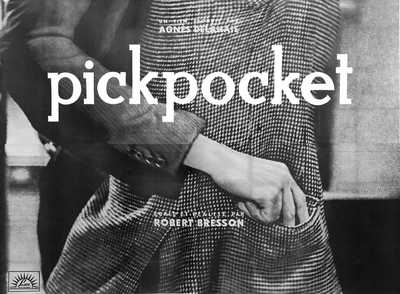
 

pickpocket movie poster

Robert Bresson’s modern version of Dostoevsky’s Crime and Punishment. Caught in his own desensitized internal world, our protagonist Michel commits acts of theft as a desperate measure to fill the void in his existence. He goes through his days in a haunting vacuum devoid of meaning and emotions. He is unfeeling even towards his own dying mother, reminds me of Meursault in Camus’s The Stranger. Although not an axe murderer like Raskolnikov in Crime and Punishment, Michel theorizes that those with superior talents and intelligence, the supermen in society, should be free to disobey laws in certain cases. He is numbed by his own hubris, and stifled by his cold and absurd worldview. Outright violence is not visible here, but we see the battle of wits he engages with the police inspector behind his trails, and we see him struggle in an amoral and meaningless existence.

Grace comes as Jeanne, a neighbor and carer of Michel’s ailing mother. Jeanne lives on her own looking after her younger brother. Her father is a drunk and her mother has deserted them. But she continues to live and care. She accepts her circumstances calmly, and extends kindness to those unrelated to her, caring for Michel’s mother, a neighbor on another floor. She stands as a stark contrast to Michel’s aloofness. At the end of the film, Jeanne came to visit Michel in prison after he was arrested, the two separated by the cold iron bars. For the first time, Michel feels love and wants to reciprocate it. And thus the cathartic ending as he totally melts in the presence of pure love and grace, wrapping up the film with this last line:

“Oh, Jeanne, to reach you at last, what a strange path I had to take.”
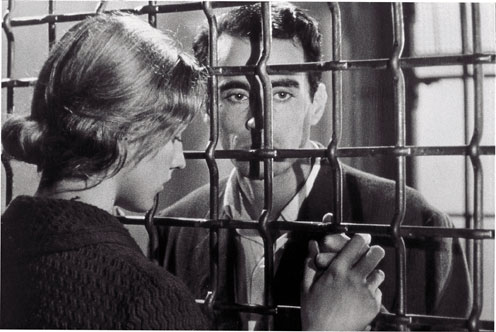
 

Pickpocket


**

Drive (2011)

A current release that comes with high acclaims. The film was nominated for the Palme d’Or and Nicolas Winding Refn won Best Director at the Cannes Film Festival this year (2011). With slick and dashing camera work, the violence in “Drive” is visceral and graphic, a big contrast to the black and white, internal “Pickpocket”. However, I see some parallels between these two films made 50 years apart.

Ryan Gosling is “the Driver”. He does not even have a name. He is an expert stunt driver for movies and works at an autobody shop by day, drives a get-away car in the underworld of crimes by night. Like Michel in “Pickpocket”, he drifts in existence, numb and desensitized to the world around him. That is, until he meets Irene (Carey Mulligan), his neighbor.

Drive 1


Mulligan’s almost angelic presence in the film is most effective as a stark contrast to those around her. She lives alone looking after a child and works as a waitress in a diner. She appeals to the Driver by being herself, innocent, taking life as it is, responsible, caring for a child alone while his father is locked up in prison. Irene is a spot of purity in a rough environment. Her mere presence has transformed the Driver. From being aloof the Driver has become engaged emotionally, friendly and protective of both mother and son.

Drive

The plot thickens as Irene’s husband is released from prison and rejoins his family. The Driver is caught in an awkward situation. But he soon realizes that the husband’s resolve for a new start is genuine. The power of transformation is so thorough that the Driver is willing to go out on a limb to help the husband with one last heist in order to break the hold a gang has on the man, his wife and kid. While things go awry terribly and the ending is not as clean-cut as “Pickpocket”, we learn that the Driver remains a changed man from the ephemeral friendship he once had with Irene and her child.

Some might say Mulligan is a miscast, that she’s not “damaged enough”, and would prefer a ‘stronger’ character. I disagree. I feel that Mulligan has portrayed Irene’s innocent persona aptly, and yes, those ethereal dimples can just melt any heart. Hers is the perfect role for exactly the right reason. In the dark underworld of gangs, violence and crimes, she stands out as a tiny source of purity, a spark of grace. It all shows that what may look weak and vulnerable can have transformative power over the strong. A thought that may well be unpopular today.

***

Other related posts from Ripple Effects:

A Good Man Is Hard To Find and Other Stories by Flannery O’Connor

Bernini’s Corpus and Modern Movies

Notes on the Synthesis of Film, Art… Life?

***

Saturday Snapshot January 25: Cabin Fever

It’s January 25, and we’re deep in winter. I don’t need any more photos to remind me of our seasonal deal, snow and ice. Saw the movie The Secret Life of Walter Mitty a couple of days ago. And Oh, how I need to unleash the Walter Mitty in me now, and let my mind zoom off to distant lands, warm, temperate, and colourful.

So here I am, travelling back to the summer of 2010, taking a road trip in Provence, France. A cure for cabin fever: I breath in the warm air, feast my eyes on colours and relive a most memorable family vacation.

We took a day trip from Avignon to Vaison la Romaine and Chateauneuf du Pape, passing through vineyards, stopping by markets.

A vineyard beside a 12th Century chapel in Vaison la Romaine:

Vineyard by 12th Century Chapel in Vaison

Grapes on vine

A street market. The colours … what a contrast to our wintry white and grey:

Street Market in Vaison

Colourful pots

Colours Colorful rolls

Motor carI like the kid here. What was he looking at?

The Kid

Or here, the yellow rose. Imagine opening your front door and be greeted by a cheerful, yellow rose:

The Yellow Rose

And the fan here. Just looking at it can cure cabin fever. Let your inner Walter Mitty take you for a ride:

The Fan

***

Saturday Snapshot is hosted by Melinda of West Metro Mommy Reads. CLICK HERE to see what others have posted.

ALL PHOTOS TAKEN BY ARTI OF RIPPLE EFFECTS. DO NOT COPY OR REBLOG.

***

Inside Llewyn Davis: A Serious Man in Greenwich Village

As preparation for the movie, I bought the CD soundtrack a few weeks before. This has proven to be a mistake, for I’d been listening to it so much that when I watched the film, I wasn’t surprised by the music at all. I consider that a loss. It would have been much better that I were mesmerized by that haunting voice of Llewyn Davis (Oscar Isaac) for the first time as I watched the movie.

Inside Llewyn Davis copy

Music is a major player in many Coen brothers movies, often used to comedic and acerbic effects. The whole odyssey in O Brothers Where Art Thou (2000) comes to mind readily, or Jefferson Airplane in A Serious Man (2009) where ‘Somebody to Love’ reinvents itself, or even in True Grit‘s (2010) ‘Leaning on the Everlasting Arms’ as we see the one-arm Mattie Ross riding into the sunset.

But in Inside Llewyn Davis, music is no laughing matter. Llewyn is the serious man here, a folksinger down on his luck. T. Bone Burnett has crafted an impressive music production. It should be noted too that Marcus Mumford, lead singer of Mumford and Sons and husband of Carey Mulligan, is also involved in the song arrangement and singing, in particular, the part of Llewyn’s duo partner Mike in ‘Fare Thee Well’.

The setting is New York City’s Greenwich Village, 1961. Llewyn is a folk music purist, an idealist. All he wants is a gig to kick off as a solo performer. The backstory is that his singing duo partner had committed suicide by jumping off the George Washington Bridge. The record he has produced as a soloist isn’t selling. It’s cold in NYC, Llewyn is homeless and coatless. Maybe it’s arrogance coming from being a music purist that makes him callous and abrasive, even to fellow folk singers, or maybe he needs to have that aloof hardness as an armour to sustain the slings and arrows life hurls his way.

O, if only Llewyn’s personality were as charismatic as his voice, he probably would have done better in life. Despite his musical talents, our protagonist, like a Shakespearean tragic hero, is trapped by his own character flaws and tripped by no small amount of fate, he slips slides into the wayside. Sadly, that’s exactly where he lands at the end of the movie.

He has friends and acquaintances, but there’s not much that they can do to help. He has already made the best use of their couches, and some of their wives. The latest to get pregnant is Jean, played against type by the sweet Carey Mulligan, all wrapped up in anger, understandably so, for her friend Llewyn is more concerned about a lost cat than her upcoming abortion. Jean has a very limited vocabulary to express herself except the overused expletive. Not a pleasant role to play I’m sure. Her character could have been written with a bit more depth.

Oscar Issac, Justin Timberlake, Carey Mulligan copy 2

Jean and her husband Jim (Justin Timberlake) are also folk singers but ‘careerists’ according to Llewyn. They would one day concede to life in the suburb, settle down and have kids. ‘Is that so bad?’ Jean asks Llewyn. The answer is obvious. Llewyn is definitely not going down that path.

Talented folk singers converge at the Gaslight Café in Greenwich Village during the 1960’s. Why some succeed and others don’t, the Coen brothers seem not so much to offer rational explanations than to depict the misfortunes of one. In that dim, brick-walled and smoke-filled Café, we hear some fantastic singing. We hear Jim, Jean and their friend Troy (Stark Sands) perform ‘Five Hundred Miles’, evoking Peter, Paul and Mary. At one point, to an oblivious Llewyn, we see the silhouette of what looks like Bob Dylan and hear his voice singing ‘Farewell’.

Cinematography (Bruno Delbonnel) sets the mood from the opening scene. In that basement Café, we see the place dimly lit with spotlight on Llewyn’s face, as his ‘Hang Me, O Hang Me’ captivates us right away. We follow him later as he steps outside to a pitch-dark alley where he meets his nemesis. Even during the day, we see him walk on wind-swept streets under dull, grey sky. The overall bleakness can be soothed only when Llewyn picks up his guitar and sing. His voice seems to be able to neutralize any outrageous fortune.

Llewyn takes a surreal road trip to Chicago to try his luck with a club owner Bud Grossman (F. Murray Abraham, a double for Bob Dylan’s manager Albert Grossman?) He is stuck in the car with the old and sardonic Roland Turner (John Goodman) who wraps up his opinion in one short line: “Folk singer? I thought you said you were a musician.” If the trip seems absurd, it could well be the exact impression the directors intend. We follow one week in the life of Llewyn Davis, a week of failed attempts, gloomy encounters, and bleak prospects. The only light is the voice.

~ ~ ~ 1/2 Ripples

***

Related Reviews on Ripple Effects:

A Serious Man (2009)

True Grit (2010)

***

And The Word Was Made Homeless

Awesome Sky

The House of Christmas

by G. K. Chesterton (1874–1936)

There fared a mother driven forth
Out of an inn to roam;
In the place where she was homeless
All men are at home.
The crazy stable close at hand,
With shaking timber and shifting sand,
Grew a stronger thing to abide and stand
Than the square stones of Rome.

For men are homesick in their homes,
And strangers under the sun,
And they lay on their heads in a foreign land
Whenever the day is done.
Here we have battle and blazing eyes,
And chance and honour and high surprise,
But our homes are under miraculous skies
Where the yule tale was begun.

A Child in a foul stable,
Where the beasts feed and foam;
Only where He was homeless
Are you and I at home;
We have hands that fashion and heads that know,
But our hearts we lost – how long ago!
In a place no chart nor ship can show
Under the sky’s dome.

This world is wild as an old wives’ tale,
And strange the plain things are,
The earth is enough and the air is enough
For our wonder and our war;
But our rest is as far as the fire-drake swings
And our peace is put in impossible things
Where clashed and thundered unthinkable wings
Round an incredible star.

To an open house in the evening
Home shall men come,
To an older place than Eden
And a taller town than Rome.
To the end of the way of the wandering star,
To the things that cannot be and that are,
To the place where God was homeless
And all men are at home.

*****

“And the Word was made flesh, and dwelt among us.” John 1:14

**

(Photo taken by Arti of Ripple Effects, Sept. 2010. All Rights Reserved.)

***

 MERRY CHRISTMAS EVERYONE!

 
***


Reading the Season: Poetry by Madeleine L’Engle

The brilliance of A Wrinkle in Time is that its author Madeleine L’Engle can convey scientific and spiritual concepts at the same time and in a way that young readers can enjoy. There’s no conflict between the cerebral and the spiritual; they co-exist comfortably in L’Engle’s work. Not only that, they fuse together and from that alchemy rises a whole new, inexplicable entity: Faith.

It’s that time of the year when I try to tune out distractions to dwell on the meaning of the Season, the reason why we have Christmas in the first place. I call these posts ‘Reading the Season’.

This time, I’ve selected four of Madeleine L’Engle’s poetry. ‘After Annunciation’ I have posted before. But I’d like to share it again here because the deceptively simple lines carry much depth and wisdom. Same with ‘The Risk of Birth, Christmas, 1973’. These two remain my favourite thoughts during Advent. 1973 or now? Ever timely. The poems are taken from The Ordering of Love: The New & Collected Poems of Madeleine L’Engle, published by Shaw Books, 2008.

The Ordering of Love

**

After Annunciation

This is the irrational season
When love blooms bright and wild.
Had Mary been filled with reason
There’d have been no room for the child.

**

Sonnet, Trinity 18

Peace is the centre of the atom, the core
Of quiet within the storm. It is not
A cessation, a nothingness; more
The lightning in reverse is what
Reveals the light. It is the law that binds
The atom’s structure, ordering the dance
Of proton and electron, and that finds
Within the midst of flame and wind, the glance
In the still eye of the vast hurricane.
Peace is not placidity: peace is
The power to endure the megatron of pain
With joy, the silent thunder of release,
The ordering of Love. Peace is the atom’s start,
The primal image: God within the heart.

**

Instruments (I)

The sky is strung with glory.
Light threads from star to star
from sun to sun
a liv­ing harp.
I rejoice, I sing, I leap upwards to play.
The music is in light.
My fin­gers pluck the vibrant strings;
the notes pulse, throb, in exul­tant harmony;
I beat my wings against the strands
that reach across the galaxies
I play

NO

It is not I who play
it is the music
the music plays itself
is played
plays me
small part of an innumerable
innum­ber­able
orches­tra.
I am flung from note to note
impaled on melody
my wings are caught on throb­bing fil­a­ments of light
the wild cords cut my pinions
my arms are outstretched
are bound by ropes of counterpoint
I am cross-eagled on the singing that is strung
from puls­ing star
to flam­ing sun
to

I burn in a blaze of song.

**

The Risk of Birth, Christmas, 1973

This is no time for a child to be born,
With the earth betrayed by war & hate
And a comet slashing the sky to warn
That time runs out & the sun burns late.
That was no time for a child to be born,
In a land in the crushing grip of Rome;
Honour & truth were trampled by scorn–
Yet here did the Saviour make his home.
When is the time for love to be born?
The inn is full on the planet earth,
And by a comet the sky is torn–
Yet Love still takes the risk of birth.

***

‘Reading The Season’ Posts over a Decade:

2020: Jack by Marilynne Robinson

2019: ‘A Hidden Life’ – A Film for the Season

2018: A Verse from Madeleine L’Engle’s The Irrational Season

2017: A Wrinkle in Time by Madeleine L’Engle

2016: Silence by Shusaku Endo

2015: The Book of Ruth

2014: Lila by Marilynne Robinson

2012: Surprised by Joy by C. S. Lewis

2011: Walking on Water by Madeleine L’Engle 

2010: A Widening Light by Luci Shaw

2009: The Irrational Season by Madeleine L’Engle

2008: The Bible and the New York Times by Fleming Rutledge 

2008: A Grief Observed by C. S. Lewis

***

Out of the Budding Grove

When I picked up Swann’s Way earlier in March, I had no idea that 2013 is the 100th Anniversary of its publication. Now in hindsight, I’m all the more excited with this serendipitous selection for a Read-Along. And what discoveries I’ve made reading Proust!

Six months later in September, I started Vol. II Within A Budding Grove, allowing myself and any fellow reader two months to finish this 730 page volume.

Within A Budding Grove Modern Library

I reiterate, I’ve encountered thickets blocking the way through the budding grove, but I must say, the enjoyment I’ve reaped from slashing and plowing through it is greater than my frustration. All in all, coming out of it feels like finding my way through a corn maze. Out I come dazed but gratified.

I’ve posted some thoughts on Part One of Within A Budding Grove here. This latter part is about Balbec, a seaside resort the adolescent narrator travels with his Grandmother to stay for the summer to recuperate his health. Like his memories of Combray, Proust’s description of Balbec is detailed and colourful. He relays to his reader his journey, the scenery, the Grand Hotel they stay in, its guests and their social hierarchical interactions, his new-formed friendship with the painter Elstir who introduces him to the band of girls the young narrator admires but is too shy to greet on his own, Albertine, Andrée, Rosemonde, Gisele…

The original title of this volume is In the Shadow of Young Girls in Flower (À l’ombre des jeunes filles en fleurs) which I think is spot on. But, the budding grove is an apt metaphor too for his adolescent self discoveries of love and passion. And in one hilarious scene with Albertine, Proust has shown he can be a writer for Saturday Night Live any time. Too long to quote here but well worth the read. (p. 700-701 in case you want to skip the first 699 pages.)

And young Marcel is ever in-touch with his own feelings for these girls, especially Albertine. Here is his honest analysis:

At the start of a new love as at its ending, we are not exclusively attached to the object of that love, but rather the desire to love from which it well presently arise (and, later on, the memory it leaves behind)… (p. 676)

Ahh… romancing a desire and a future memory.

What about Gilberte, Swann’s daughter, with whom the young narrator is so obsessed earlier? To his credit, young Marcel has a full grasp of his own psyche. Why? It’s all a matter of Habit, he reasons. Since Gilberte has snubbed him, he needs to forget her and let go of any form of Habit reminding him of his previous life in pursuing her. This trip to Balbec takes him away from the familiar and replaces his memories of Gilberte, and a static existence, with fresh experiences and revitalized senses. Getting out of his home in Paris and going away might just be the best medicine:

… one’s days being paralysed by a sedentary life, the best way to gain time is to change one’s place of residence. My journey to Balbec was like the first outing of a convalescent who needed only that to convince him that he was cured. (p. 301)

Even before he gets to Balbec, while on the train stopping at a station, the sensitive and observant narrator is already filled with delight as he sees a young milk-girl carrying a jar of milk walking to the train at the break of dawn:

She passed down the line of windows, offering coffee and milk to a few awakened passengers. Flushed with the glow of morning, her face was rosier than the sky. I felt on seeing her that desire to live which is reborn in us whenever we become conscious anew of beauty and of happiness. (P. 318)

My own memories of the changing hue on those Bohemian Waxwings come to mind. Proust has effectively conveyed the power of association, the linking of words on a page to the reader’s own memory and the joy it had once elicited.

**

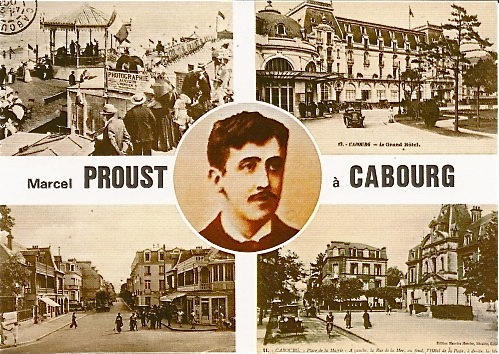
Proust in Cabourg copy 1
Photo Source: franceculture.fr

Proust insists that In Search of Lost Time is not autobiographical, but said “The pleasure that an artist gives us, is to introduce us to another universe.” No matter, his writing relates closely to his life experiences, parallel universe if you will.

Balbec is the fictitious reconstruction of Cabourg, a seaside resort town in the Basse-Normandie region of France where Proust frequented between 1907-1914. While Proust explores voluntary and involuntary memories in his long work, he could well be weaving memories with imagination, fusing fiction with real life experiences, creating an intricate tapestry.

Lydia Davis, translator of the most recent edition of Swann’s Way (The Way by Swann’s), offers this insight: “this novel is not autobiography wearing a thin disguise of fiction but . . . fiction in the guise of autobiography.”

Right.

Whichever way you slice it, it’s still as delicious as madeleines dipped in tea.

***

Some Relevant Links:

The TLS blog: French literary anniversaries, part 4 – Du côté de chez Swann

CLICK HERE to a webpage on Cabourg where you can see the video of The Grand Hotel, with Proust’s room still being kept there.

Proust in Cabourg

In The Shadow of Young Girls in Flowers, from The Modernism Lab at Yale University

Photo Source: franceculture.fr

***

Related Posts on Ripple Effects:

Half Way Through a Budding Grove

Swann’s Way Part I: Combray

Parts 2 & 3: Swann In Love

***

Saturday Snapshot Nov. 16: Magical Realism

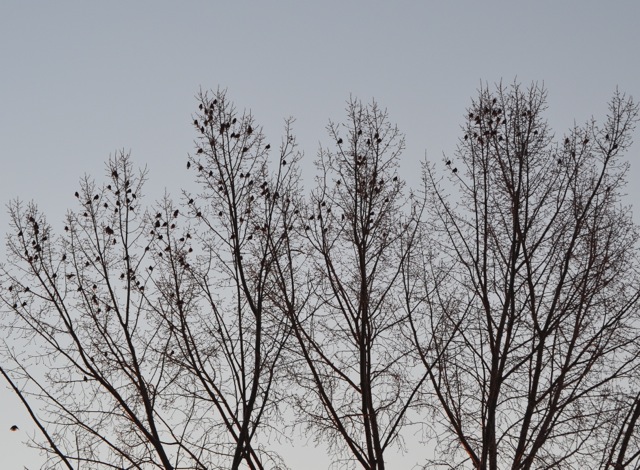
At first, what drew my attention were the birds on top of the distant trees, sillouetted against the predawn sky. What were they?

Before SunriseBefore Sunrise 1Must be the hardy European Starlings, I thought. My birding instinct prodded me to get out of the house to find out, at 7:30 am, in -13C temperature.

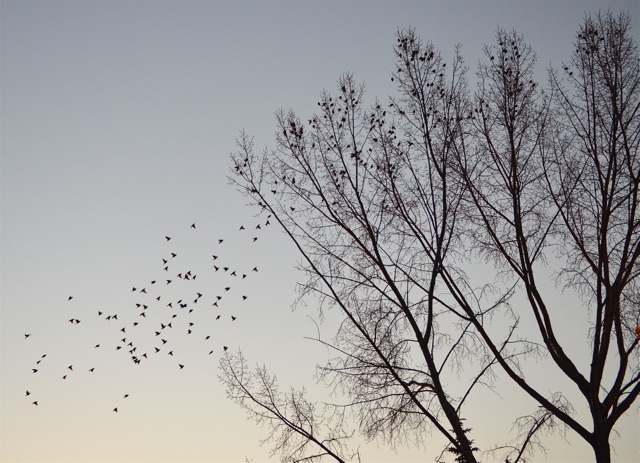
As I got closer, their buzzing sound reminded me that I’d heard them before, in flocks, making sounds almost like cicadas, but lighter, more metallic and electric. By then, morning had broken. Indeed, they were not Starlings but Waxwings.

Morning has brokenThe sun shed its glorious light and I was much gratified to see that all those plump bellies were not Cedar Waxwings which I’d seen in the summer. From their grey pot belly, I could tell they were Bohemian Waxwings. Of course, they will be spending their winter here. The Cedar Waxwings had all gone south.

Bohemian WaxwingsWhat attracted them to our neighborhood? My stalking skill led me to find out. Ah… berries:

Frozen berriesIt was a delight watching them feast on these frozen fruits for breakfast:

Bohemian WaxwingsGot it!

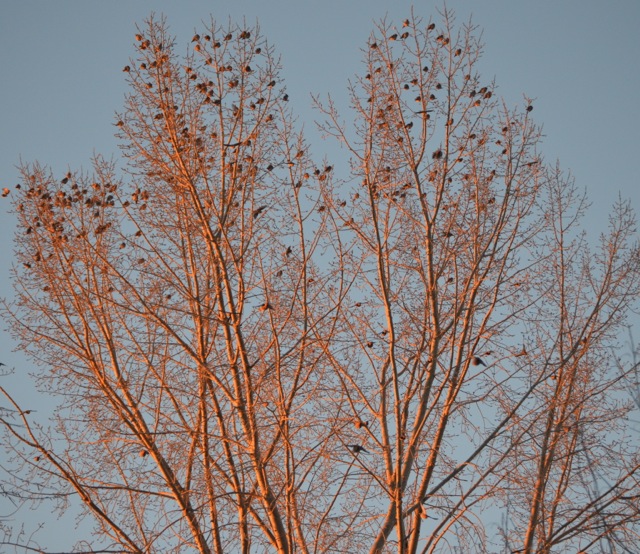
Got itAnother oneSoon, washed by the glowing sunrise, their greyish plumage began to change into a magnificent color. No CGI (computer-generated images) here:

No CGIJust pure magical realism:

Washed by the morning sun

Magical Realism

Bohemian Sunrise

***

Saturday Snapshot is hosted by Melinda of West Metro Mommy Reads. CLICK HERE to see what others have posted.

ALL PHOTOS IN THIS POST TAKEN BY ARTI OF RIPPLE EFFECTS, NOVEMBER, 2013. PLEASE DO NOT COPY OR REBLOG.

***

All Is Lost (2013)

If Life of Pi (2012) is magical realism, then All Is Lost is absolute realism. Some say it’s a modern version of Hemingway’s The Old Man and the Sea. I tend to see it as the flip side of Life of Pi. It is the magical, the supernatural that we pant for while watching the man in the film silently struggle to stay alive in the middle of the Indian Ocean. Without a miracle, this is what it is.

At the back of my mind was this query… In our age driven by visual spectacles and mega sights and sounds, why would someone take up a project of this nature, a 106 minute feature film with just one character and no dialogue, except for a few words from voice over in the opening when the man utters what seems to be his last words to his loved ones.

I admire the courage and talent of writer/director J. C. Chandor, who writes a 32 page script (according to IMDb) and directs it as a minimalist production in a time when the movie industry has gone ultra mega and high tech. All Is Lost is only Chandor’s second feature film. His directorial debut which he also wrote? Margin Call (2011), about the tempest in the tumultuous ocean of investment banking. Versatility is the mark of talent indeed.

But the film belongs to Robert Redford. No longer The Sundance Kid (1969) here but a 77 year-old actor playing a man dangling over the edge of survival. Redford just might have put forth the definitive performance in his long career. He has taken on the role with grace and gentleness, a paradox to his predicament in such a physical drama. He carries the whole film by engaging our empathy. His screen presence is the replacement of fancy plot lines, setting and dialogues. He plays a character with no name. Only when the end credits roll do we find out that he is called ‘Our Man’. 

Robert Redford in All is Lost

Unlike Tom Hanks in Cast Away (2000), who speaks and yells his mind, and socializes with a volley ball, Our Man is the epitome of restraint. He is the strong and silent type of veteran sailors on a solo voyage, who encounters the misfortune of being stranded in the vast ocean. At the beginning of the film we see Our Man wake up to find his sailboat has been hit by a loose cargo container floating by. The sailboat is taking on water through a hole in the hull. The radio and equipments are damaged. Our Man deals with the situation resourcefully. He uses a repair kit to mend the damage, pump water out, dry out his boat. We see him eat and shave. 

Just as he has made some headway to restore safety, an impending storm blows his way. Our Man is no match for nature’s callous ferocity. He ends up having to escape a sinking boat and jump into a life raft, bringing with him a meager supply of food and water. He learns to use a sextant, and carefully charts his drift. His only hope is to be seen if his raft drifts into the course of cargo ships. He utters no words except for a futile S.O.S. call while in his sinking boat, and one expletive out of total frustration in the raft after a few days of bare survival.

One man, one raft, one sea. The wide-screen cinema is probably the best medium to depict such an existential predicament. We don’t need special effects, for this is all that we have. And the nameless ‘Our Man’ shows how universal he is. And what of him? A patient and courageous man trying with all that he has and all that he is to stay alive, waiting to be found, hoping to be saved.

Do we need to know the name on that cargo container that hit his boat? It really is immaterial considering all that Our Man has gone through and all the efforts he has put forth to be saved. But just for information, we see the name in English, ‘Ho Won’, an obvious translation from the two Chinese words below: “Good Luck”. A jest too harsh.

Spoiler Alert. If you have not seen the film, you might want to skip the next paragraph, just that one. If you have seen the film, you’re most welcome to share your thoughts on the ending.

Like Life of Pi, the ending is open to your own interpretation. Two lines of thoughts conjured up as I watched the open-ended final scene: Only when one has lost all would one be saved. Or, go into that good night with gentleness, for brightness awaits. I can see both these scenarios to be applicable here. Again, this is one of those films that leaves the viewer to draw the conclusion, a type of ending which may not be very popular but one that conveys the multiplicity of reality.

As the credits roll, we hear the song for the film. I first thought singer songwriter Alex Ebert was calling ‘Our Man’ throughout his song. As I later found in the credits, it was ‘Amen’ (with the ‘Ah’ sound). Yes, ‘Amen’ is the title of the song.

A fine movie to watch with a quiet mind and patient disposition. A necessary offering in our present day of excess among some numbing and mindless entertainment. It’s like holding your breath in your hectic course of life for 106 minutes, and survive.

~ ~ ~ Ripples

***

Click here to listen to Alex Ebert’s song ‘Amen’ and watch the trailer of the movie All Is Lost.

***

Saturday Snapshot Nov. 2: Cool Blue

Blue is the most cool color for a photo background. Note: not the ‘coolest’ like in temperature, but just real cool as in awesome. We in southern Alberta are blessed with a clear, blue sky most of the time. Here are some photos I’ve taken in the past weeks. No color alteration have been done on them.

On a clear day, you can see the Rockies… like a mirage:

On a clear day you can see...Different shades of blue:

ShorebirdsThe sparrows on the roof enjoy the cloudless blue too:Sparrows nesting on roofCrab apples look more colorful:

CrabapplesSo’s the Northern Flicker:

Northern Flickerand the Pelican, more startling white:

Pelican overheadWe can even live with the snow when the sky is so blue:

God Is LoveWords on the frame of front door: “gud er kaerlighed” (Danish)… “God is Love”.

Which blue is most cool for you?

***

Saturday Snapshot is hosted by Melinda of West Metro Mommy Reads. CLICK HERE to see what others have posted.

All photos on this post taken by Arti of Ripple Effects, 2013. Please do not copy or reblog.

***

Saturday Snapshot Oct. 26: The Woods in the Fall

We don’t have the colorful foliage which many of you are privileged to behold, but Beauty dwells within our woods too:

The Woods

Especially in the evening sun:

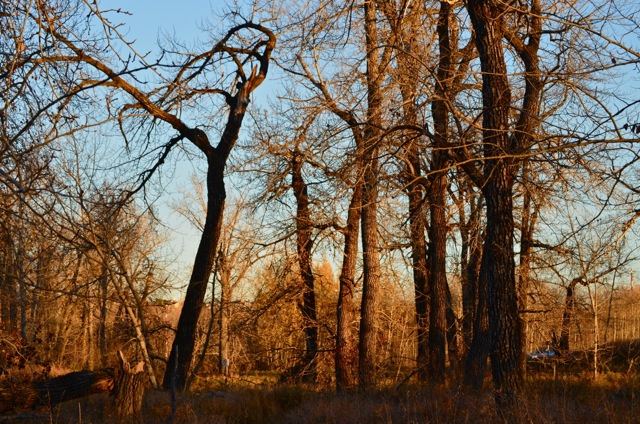
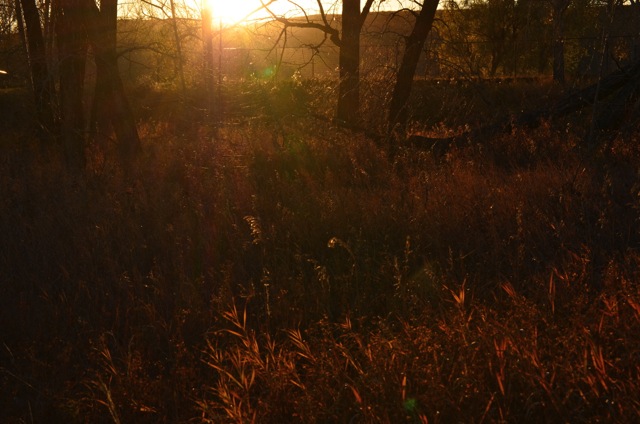
Trees in the duskTrees reaching for the evening skyTrees in the setting sunThe woods are lovely, dark and deep:

Dark and deepBut for these inhabitants, it’s time to eat:

Squirrel

WoodpeckerDinner timeAnd for some others, miles to go before they sleep:

Canada Geeseand miles to go before they sleep:

Miles to go*

Saturday Snapshot is hosted by Melinda at West Metro Mommy Reads. CLICK HERE to see what others have posted.

*

All photos in this post taken by Arti of Ripple Effects, Fall 2013.
Please do not copy or reblog

***

Saturday Snapshot: Wabi-Sabi (1)

To put in very simple terms, the Japanese concept of Wabi-Sabi refers to finding beauty in the withered, aging, destroyed, juxtaposing beauty and sadness.

This notion came to me in the past few days as I surveyed the ruins of the devastating flood now almost two months later. Landscapes had been altered, what once were the healthy homes of birds now destroyed. And yet, from the fallen, a sense of beauty arose.

Here are some photos I took yesterday of the area where I once saw the Merganser family. Remember those baby Mergansers wearing masks heading to the masquerade party?

This is the exact spot where I spotted them before the flood:

Where have all the Mergansers gone?

Wooded area now flattened:

Down & flooded out 1Altered landscape:

Altered landscapeDebris wrapped around tree like an armour of quiet resilience:

Debris wrapped around tree trunk

Wounded spirit:

Wounded SpiritWithered, but with colour:

WitheredBroken, but with character:

Broken, with characterMost important of all… life shooting out from the ruins:

Flowers shooting out of the ruins

Robin out in the sunDowny Woodpecker

Flicker flying out***

More Wabi-sabi’s to come in upcoming Saturday Snapshot, hosted by West Metro Mommy Reads. Click to see what others have posted.

***

All photos taken by Arti of Ripple Effects, please do not copy or reblog.

***

Before Midnight (2013): Reality Check

Spoiler Alert: It’s impossible to discuss this film meaningfully without giving out the storyline, same with the two prequels.

***

We are gleaners of memories. An interesting parallel applies to the two characters Celine and Jesse as well as ourselves as audience. But if you haven’t seen Before Sunrise and Before Sunset, it would enhance your viewing pleasure to watch them first.

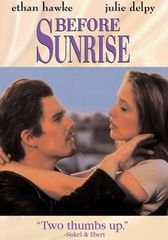
Flashback: Before Sunrise (1995)

Before SunriseTwo young people, Parisian Celine (Julie Delpy) and American Jesse (Ethan Hawkes) meet on a train passing through Europe. They strike up a conversation and become so in-tuned with each other that when the train arrives Jesse’s stop in Vienna, he convinces Celine to get off with him even though her destination is Paris. There for just one night until sunrise, they walk around the city and talk about life, death, love, religion, relationships, and being transients… for they know this may well be their only encounter with each other in both of their lives. The next morning Jesse has to fly back to the U.S. As they part, they promise to meet again in six month at the same hour, on the same train platform. Throughout the film, we feel fate, or whatever you call it, has a strong presence in their short few hours together. We feel their sincerity in capturing those precious  moments, as we hear Celine’s words ring true:

“If there’s any kind of magic in this world… it must be in the attempt of understanding someone sharing something.”

Flashback: Before Sunset (2004)

Before SunsetNine years after that chance meeting, Jesse is in Paris on the last leg of a book tour. He has written a book based on that memorable encounter nine years ago. At the Shakespeare and Company bookstore, Celine shows up. They now meet for a second time, again for a short few hours before Jesse has to leave on a plane to fly back to the U.S. Their conversation reveals that, alas, their well intended reunion six months after their first chance meeting has turned into a star-crossed, missed opportunity. After that, fate has led them down separate paths. Jesse is now married and has a son. Celine, still on her own, yearns for that first romance to develop but now seems even more elusive.

To the present: Before Midnight (2013)

Before Midnight

So we have been following Jesse and Celine like a longitudinal study, albeit meeting them just twice within this eighteen year period. In the first two films, director Richard Linklater has us follow Jesse and Celine in real time through long takes, walking along with them in Vienna and Paris, listening in on their conversations and see them pour their hearts out, just to be heard, to be known. Those were romantic moments. This time is summer in Greece; this time is reality check.

We see Jesse and Celine now married. What happens in between those nine years is that Jesse has divorced his wife in Chicago, come over to Paris, married Celine and together they have two lovely twin daughters. But things aren’t so idyllic, for Jesse is troubled by not being around for his now young teenaged son Hank from his previous marriage and whom he can only see in the summer. The film begins with Jesse seeing his son off at the airport.

For the next 15 minutes and in one stationary take through the front windshield of the car, we see a happy couple Jesse and Celine driving from the airport to a Greek country house, with their twin daughters sleeping in the backseat. We hear them talk, yes, they love to talk to each other, just as we’ve seen in the past.

In the setting of an idyllic seaside residence, Jesse and Celine join a small gathering of writers. we see them prepare and eat healthy Greek salads and discuss equally idyllic topics such as writing, love, knowing each other, virtual reality (yes, for the contemporary effect), and being transients in life. Again, that first train encounter comes to mind. In conclusion they drink to ‘passing through’.

The next act is reminiscence of previous Before films… Jesse and Celine walk to a hotel paid for by their writer friends, who have also taken up the duty of babysitting their twins so the two of them can fully enjoy each other for the night. For twenty minutes the camera follows them in real time strolling through some scenic rural town toward their country hotel, exchanging thoughts like before. But no, not totally like before, for now they are eighteen years older, 41, and each with emotional undercurrents running deep.

Five minutes in the hotel room, discordant riptides begin to surface. Talk turns into quarrel. Why, this is just too real. In the past, we see them only in romantic mode. Now as they expose their underlying thoughts and suspicions, tempers flare, words turn callous. We would silently say ‘ouch!’ occasionally.

The beginning scene of the first film, Before Sunrise, has become a stark foreshadowing… sitting near Jesse and Celine on that train, two middle-aged couple argue fiercely in German. Seeing their temper flare but not understanding what they were arguing about, Jesse and Celine ponder on the question of how two people can grow old together in harmony.

Now here in what is supposed to be an ideal get-away, for twenty minutes we are the invisible witnesses of a marital conflict, and we would want to stay in there to see what happens next, not because of the schadenfreude effect, but because this is just too real.

Romance is holiday, marriage is work.

Hawke and Delpy own these scenes depicting realistically what marriage could entail. Other films readily come to mind… Ingmar Bergman’s Scenes From A Marriage (1973) and Woody Allen’s Husbands and Wives (1992). Before Midnight is a contemporary version, with a highly watchable backdrop and natural performance. Unlike Bergman and Allen, Linklater is commendable in crafting a more positive ending. It’s refreshing to see a glimmer of hope at the end of nasty quarrels.

In the final act, Jesse attempts to woo his wife back. How he does it is most endearing. Every moment in the present is an opportunity to create a fond memory to look back to in the future. This complicated package called love is a piece of work. Director Linklater and his two stars, who co-wrote the screenplay with him, might well have passed to us the secret of marital success… Before too late, glean fond memories from the past to sustain the relationship at present; before too late, create more loving memories to carry it into the future.

One line from Celine in Before Sunset is most apt here: “Memory is a wonderful thing if we don’t have to deal with the past.” Jesse might have known this too well, not to leave the present a mess for future to deal with, but leave it as a pleasant memory to cherish in the days ahead.

With a trilogy of films beginning with the word ‘Before’ in the title, we should know that time is of the essence. Time to make the present a memorable past for the future, before too late.

That line still lingers as the film ends… ‘To passing through.’

~ ~ ~ 1/2 Ripples for all three films

***