Thoughts on Terrence Malick’s Knight of Cups

In the beginning was The Tree of Life.

That was the first work of divergence in the enigmatic director Terrence Malick’s body of work. His first four films spanned three decades–Badlands (1973), Days of Heaven (1978), The Thin Red Line (1998), The New World (2005)–productions that adhered to a relatively conventional storytelling approach, albeit still marching to the beat of his own drum. Then came six years of silence.

In 2011, we saw a new cinematic form come out. The Tree of Life emerged like a new life after a long metamorphosis. It was genre defying, with real and imaginary visuals replacing narrative plots, voiceover replacing dialogues. Dually cosmic and realistic, it boldly explored subjects that spanned eternity, from the Creation to the Afterlife. The story focused on a small Texan family during the 1950’s. The latent conflicts and tensions in the family’s relationships, father, mother, husband, wife, sons, brothers, brought forth a series of existential questions. Whispers of inner anguish, doubts, faith, and the search for redemption fill the movie theatre.

I was stunned by Malick’s audacity. This wouldn’t sit well with critics or viewers alike.

Apparently the thought of rejection didn’t bother the auteur, for the next year saw a repeat of the style. For those who thought The Tree of Life was only a one-time experiment were met with the confirmation that yes, this is Malick’s new cinematic style. To the Wonder is another film seemingly devoid of plot, a visual poetry of love, loss, and the human soul. We see again more voiceovers replacing dialogues, characters drifting through dreamscapes. The Tree of Life was only the beginning. Malick has created a new form of cinematic storytelling.

Then came Knight of Cups in 2015. The director that had taken thirty-two years to make his first four films gives us a trilogy of thought-provoking, genre-defying features in just four years. Knight of Cups is slowly trickling into limited screens this spring, but only an ephemeral appearance. In selective cities, it came quickly and was gone. The movie industry is big business, and box office sales is the bottom line, a fact that doesn’t seem to be a concern for Malick.

Knight of Cups.jpg

Knight of Cups starts off with a parable. A knight sent by his father, the King of the East, went into Egypt to find a pearl from the depths of the sea. But when the prince arrived the people poured him a cup that took away his memory. He soon forgets his identity and his mission to look for the pearl.

The allusion to Pilgrim’s Progress is also invoked. From that, we know the tale of one man’s escape from the City of Destruction and his quest to search for the Celestial City.

Visually on screen, an earthquake shakes up a sleeping man. We later learn that he is Rick (Christian Bale), a successful screenwriter in L.A., well networked with the rich and famous of Hollywood. Rick is roused up from the quake, tiptoes barefoot through shattered glass to get out into the street, an apt metaphor of his life, fragmented, broken like the debris on the ground.

Thus sets the stage as we follow Rick into the high life of Hollywood: parties, night clubs, Gatsby-esque wildness of L.A. and Las Vegas. The film cast interestingly is made up of well-known names from Hollywood (bravo at the parallel). Through all these, Rick appears aloof, a stranger in his own land.

Ummm, not unlike Camus’s outsider.

His agent tells him: “I want to make you rich. All you need to do is say yes. Who do you want to meet? I can arrange.”

Almost as close as another such luring promise… “all this I will give you, if you bow down and worship me.”

 But the outsider is a tormented soul desperately seeking meaning, not riches or fame. Ambivalent relationships with a skid row brother and a father (Brian Dennehy) who is in turmoil living through the suicide of another son are the slings and arrows hurled at Rick. “I died a different way, “ we hear him say.

Women? Six of them, at one time or another. Played by Cate Blanchett, Natalie Portman, Freda Pinto, Imogen Poots, Teresa Palmer, Isabel Lucas. They appear as vignettes, drifting in and out of his life; not all in waste, each has something to offer. One of them has uttered:

“We’re pilgrims on this earth. We’re not leading the life we’re meant for. We’re meant for something else.”

Or take his ex-wife Nancy (Cate Blanchett), a benevolent doctor who works with the poor. She could have been an inspiring figure, but they had to part. “I just want to be loved,” she says.

Of course, Rick can’t give what he doesn’t have. He too is searching for that powerful love that can complete him.

“Redeem my life… Justify me,” we hear Rick’s voiceover, a thirst which no human can quench.

He must rouse up from his sleep. Remember who you are and your mission. Remember the pearl? Go look for it. “How do I reach you? How do I find my way there?”

I’m glad from the fragments of internal dialogues, I can hear some positive words: “God shows His love through suffering… He leads you through. Regard them as gifts… more precious than happiness… Be thankful for suffering.”

Who would have thought? The reverse of common sense? But then again, how true. 

“You gave me peace, mercy, love, joy. You gave me what the world can’t give.”

Accompanying all these voiceovers is the captivating cinematography. It is interesting to see how three consecutive Oscar-winning cinematographer Emmanuel Lubezki (The Revenant 2015, Birdman 2014, Gravity 2013) converts soulful anguish onto the screen with lyrical, visual metaphors and well-paced changes of scenes. Faster paced for the ephemeral hedonism, slower for the meditative and transcendent.

The transporting effects are made complete by the musical score. Yes, that’s one of the main reasons I’m so mesmerized by Malick’s recent films. Knight of Cups has a long and expansive playlist with over 50 titles. Among them are these stirring pieces that capture my full attention, Wojciech Kilar ‘s “Exodus”, Arvo Pärt’s “Symphony No. 4 Los Angeles” and the film composer for Malick’s previous two works, the New Zealand born Hanan Townshend’s musical creations.

But one melody stands out and with the scenery on screen stirred me the deepest.

Now what’s the name of that piece? The music overwhelms me with a kind of existential longing, pathos, and deep resonance. 

Yes, got it. I later found out from the movie soundtrack, it was Solveig’s Song from Grieg’s “Peer Gynt”. I made a quick purchase and downloaded the tune and have been listening to it ever since. Like the effect of Smetana’s “The Moldau” in The Tree of Life, I know it will remain in my mind for some time to come.

That’s the reason I still go to the cinema. In that pitch-dark and relatively empty (what do you expect) theatre, I can sit quietly, watch, listen, and think.

~ ~ ~ 1/2 Ripples

***

Related Posts on Ripple Effects:

The Tree of Life Movie Review

Days of Heaven


Upcoming Books into Movies 2016 and Beyond

The following is a list of upcoming movies based on books. Their productions are at various stages of completion. Some are already screening at Film Festivals. I hope that they will be released to a larger audience.  Some titles have just been announced, or the director, screenwriter, and / or cast just been named. I’ve selected the ones I’m interested in and want to see.

A Wrinkle In Time by Madeleine L’Engle

The fantasy/science fiction classic by Madeleine L’Engle is not for children only. This 1963 Newbery Medal-winning YA fiction is a wonderful concoction of space adventure toying with interesting concepts such as “tesseract”, a fifth dimension traveling log mixed well with faith and love. And the movie adaptation? Disney’s got the rights for some time now. Latest news is Selma director Ava du Vernay will direct. The screenplay will be written by Oscar-winning Frozen writer and co-director Jennifer Lee.

The Glass Castle by Jeanette Walls

The 2005 memoir by Jeanette Walls, more than seven years on the NYT Bestsellers List (according to Barnes and Noble) has also been on the back (or front) of filmmakers’ mind, with Jennifer Lawrence linked to the possible production. But now, we have a fresher Oscar winner replacing J. Law to star in this extraordinary memoir: Brie Larson. The 2016 Oscar Best Actress of Room will do justice to J. Walls’ unique story of growing up a nomad in America. Larson will re-unite with her Short Term 12 director Destin Cretton. Woody Harrelson also stars, so he must be the dreamer Dad of Walls’. It has been a long decade since the book came out. Let’s hope this adaptation would become a reality.

Love and Friendship by Jane Austen

This is the first time Jane Austen’s epistolary novella Lady Susan is adapted to the big screen. Published posthumously, the work had long been thought as ‘unfinished’, maybe due to its hasty ending. Would that pose a challenge to director Whit Stillman? Apparently not. The film premiered at Sundance FF this January to high acclaims. Kate Beckinsale is young widow Lady Susan Vernon (later Martin). Austen’s Emma Woodhouse is nowhere near Lady Susan on the scale of being despicable, if you ask me. Her manipulation isn’t limited to others but for her own ends in securing a husband and one for her daughter, might as well. The film is described as ‘supremely elegant’ by Variety. Now that’s a definite appeal as we’re all suffering from Downton withdrawal.

Certain Women by Maile Meloy

Thanks to the film Certain Women, now I’m aware of the writer Maile Meloy. Ripples from a fine movie production often lead me to the source material. Based on the short stories of Meloy’s, the adaptation tells the story of three women and boasts a high calibre cast with Kristen Stewart, Michelle Williams, and Laura Dern. It is helmed by Kelly Reichardt who had directed Michelle Williams in Wendy and Lucy (2008) to critical acclaims. This leads me to a keen interest in exploring Meloy’s works, which had garnered multiple literary awards including the PEN/Malamud Award, the Rosenthal Foundation Award from the American Academy of Arts and Letters, shortlisted for the Orange Prize and included in the New York Times Notable Books. The film adaptation drew my attention in that it’s not based on one book but multiple short stories. It premiered at Sundance this January to critical acclaims.

The Dinner by Herman Koch

The book is Dutch writer Herman Koch’s sixth novel. It has sold over a million copies and translated into twenty-one languages.The setting takes place in an upscale restaurant with the story just over the course of a fancy dinner. But what is revealed by the conversations between two brothers and their wives could send chills down one’s spine and we soon find the background story and hidden thoughts unappetizing. The veneer of social grace can only last through the appetizer as we are led to the raw revealing by the main course and lashing out by dessert. Koch’s novel had been adapted into films in the past few years, first a Dutch and later an Italian production screened at TIFF.  I’m glad to see the cast for the English adaptation, recently announced, is quite an appetizing mix with Richard Gere, Rebecca Hall, Steve Coogan, and Laura Linney.

The Custom of the Country by Edith Wharton

Movie stars are crossing the once thought to be a great divide, from the big screen to TV. In recent years, the line has been porous. Many have moved into TV productions to even more success, Kevin Spacey, Robin Wright, Kate Winslet, James Spader, Matthew McConaughey, Kirsten Dunst; now Scarlett Johansson is diving in. Edith Wharton’s classic The Custom of the Country had inspire Julian Fellowes to write his successful screenplays. It has been announced that Wharton’s 1913 novel is to be turned into an 8-episode TV mini series, with Johansson in the staring role as the spoiled, flirting and ruthless Undine Spragg. Looks like it’s going to be one compatible match.


***

Related Posts on Ripple Effects

The Glass Castle Book Review

The Dinner by Herman Koch: A Timely Read for Lent?

A Visit to The Mount: Edith Wharton’s Summer Home

Downton Abbey rings in the New Year one last time

What will we do without Downton in 2017? Will our biological clock even recognize it’s a new year?

But at the moment, let’s just celebrate this monumental achievement for one last time. If Sunday’s Episode 1 of this last Season signifies anything, it’s: tis the Season to be jolly.

This intro Episode has well prepared us for some neatly resolved, long due conclusions, and rightly so. For how can we live with an unsettled ending for any of its characters? They all deserve a good life, don’t they, including Mr. Barrow, the in-house villain? Well yes, but maybe not for a thief and blackmailer like Ms. Bevan.

Thanks to Ms. Bevan though, Mary’s secret is finally made known to Robert. Charlie Sheen had thought of it first: if the secret is out, no one can blackmail you anymore. Simple. But of course, Mary has her point. Tony Gilliangham is just not good enough for her. And the best line of the Episode belongs to our inimitable heroine:

“I’d rather be alone than with the wrong man.”

With that line, Robert knows his daughter can run the kingdom, let alone Downton Abbey.

Talking about good lines, looks like our scribe Julian Fellowes wants to leave us with more indelible ones just as parting mementos.

With this episode, we finally see that Mrs. Patmore has talents other than the culinary. Why, acting as a go-between to sort out marriage expectations sounds as nasty a mission as Ethan Hunt of the Impossible Missions Force would choose to accept. Well, what are friends for. And we applaud her (ugh… awkward) effort.

Yes, Mr. Carson will take Mrs. Hughes, wrinkles, warts and all, with the lights turned off or on. A gratifying, redeeming scenario in an alternate universe far from Ishiguro’s The Remains of the Days.

DA S6 E1

And at long last, Mr. and Mrs. Bates are proven to be innocent of any and all crimes. Mr. Green apparently had more enemies than anyone would have thought. But while the Bates escape the miscarriage of the law, will Anna be safe from the literal, biological kind? Of course we all wish them well in giving Downton some more little ones, upstairs or down, since little Sybil will move to America with her Daddy and Marigold to London with her Mommy, and especially when they have an in-house piggy backer with Mr. Barrow.

Speaking of moving away from the aristocratic nest, I’m glad to see Edith find a place in London that she can be both a mother and a career woman. Although she soon finds being a woman boss is more challenging. But I’m sure she won’t be complaining much as she enjoys the benefits of mixing with the Bloomsbury group and meeting Virginia Woolf.

“I feel I have been given one little bit of happiness and that will have to do,” Edith’s line of self-sufficiency, one that can match her indomitable sister’s willingness to be alone than with the wrong man.

Looks like Downton embracing modernity is the theme this Season and I’m sure Daisy will one day make one devoted and effective Suffragette. Too bad the film has been made or else she’d be one fine comrade fighting shoulder-to-shoulder with Carey Mulligan.

Embracing or being enveloped by modernity, Isobel and Violet represent the two camps, the ready and the reluctant. Again, here sparks fly regarding the control of the village hospital. Violet will hold on to her principle, in whatever aspects of life: “Sometimes it’s good to rule by fear.” While Isobel does not flinch, it’s definitely effective for her servants, especially Miss Denker.

Last but not least, Robert brings Cora down to the kitchen, takes cold chicken out from the refrigerator all by himself, and eats a drumstick with his fingers? Do we need any more obvious signs of embracing modernity?

I trust Season 6 will be a delicious treat.

***

What are your favourite scenes?

Books Before Films 2016

There are several books on my shelf and in my TBR box that will be turning into films coming out in 2016. I must get to them soon. How time flies, one day’s gone already.

The Light Between Oceans by M. L. Stedman

The Light bet OceansOften it’s the cast of an upcoming movie that prods me to read a book. This one has been on the New York Times Bestseller List for years since its publication. No matter how popular it is, I’m motivated only now mainly because of the first rate cast: Alicia Vikander, Michael Fassbender, Rachel Weisz, directed by Derek Cianfrance. Instead of a place beyond the pines (his last work) we have an island off the Australian coast, with the story about a lighthouse keeper and his wife bringing up a baby they found in a boat washed up onshore.
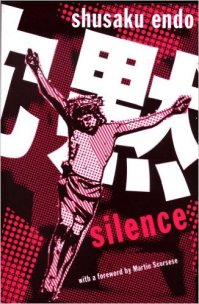
 

Silence by Shûsaku Endô

SilenceThis one is just the opposite. I want to read it regardless of whether it will be made into a film or not. But what a bonus it is to know the adaptation is a Martin Scorsese’s work with Liam Neeson, Adam Driver, Andrew Garfield, and Ciarán Hinds. I highly anticipate this film, albeit I expect the viewing experience won’t be pleasant. I’ve read it before but want to reread it before watching. The book is heart-wrenching as Endô describes the persecutions and tortures Christians and Jesuit missionaries suffered in 17th century Japan. How Scorsese, a Catholic himself, handles the subject matter – the choice between apostasy vs. martyrdom – and have these character actors interpret the internal and physical torments will be intriguing to see. Scorsese wrote the forward of this edition of the book (image here).
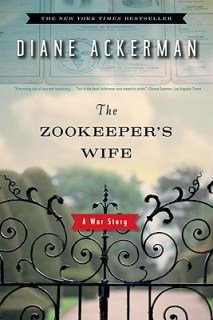
 

The Zookeeper’s Wife by Diane Ackerman

The Zookeeper's WifeThis is a worthy, true story to be made into film. Jan and Antonina Zabinski were keepers of the reputable Warsaw Zoo. During the Holocaust, Jan smuggled Jews out of the Warsaw Ghetto into their facility, saving hundreds. Antonina did the day-to-day chores of protecting them, hiding them in the cages, feeding them and keeping their spirits up. The parallel and irony of men and beasts are obvious. Acclaimed nature writer Diane Ackerman drew from Antonina’s diary to write her non-fiction work, a historical account of a heroic rescue mission. Screenplay by Angela Workerman, a scribe to note. Jessica Chastain and Daniel Brühl play the altruistic Zabinski couple.
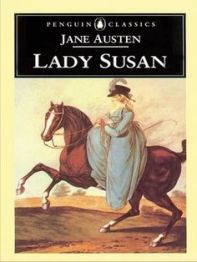
 

Lady Susan by Jane Austen

Lady Susan Book CoverThis has been in my iBooks for a long while, so long that I’d deleted it and now reloaded it again as the film adaptation is coming out. Entitled Love and Friendship, screenplay is based on Austen’s early novella Lady Susan, with Kate Beckinsale as Lady Susan Vernon. It will be interesting to see how the epistle form is translated onto screen. It will premiere at the Sundance Film Festival Jan. 23. Whether we will actually see it in our movie theatres is another matter. I hope it will be screened in the not too distant future.
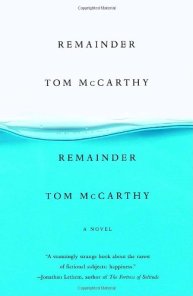
 

Remainder by Tom McCarthy

RemainderI bought this book at Harvard Book Store – the independent book store in Harvard Square since 1932 – during my New England Road Trip last fall. I’d read McCarthy’s 2015 Booker shortlisted Satin Island and knew Remainder had been adapted into film before I went on the trip. So it was a title I’d intended to get at that bookstore. Remainder is McCarthy’s debut work (2006). An unnamed Londoner is struck by a falling object and lapse into a coma. As he awakes, he has lost all memory and needs to re-enact his past to find his identity and authenticity of being. The Telegraph had called McCarthy “a Kafka for the Google Age”. Interesting to see how that translates onto screen. The film premiered at the BFI London Film Festival last October. Will screen at Berlin International Film Festival in February, 2016.


The Secret Scripture by Sebastian Barry

the_secret_scripture_bookcover The film adaptation of Booker short-listed and multiple award winning novel by Irish writer Sebastian Barry has already been completed, but has yet come up with a release date. So, I’ve plenty of time to read the book. The narrator is a 100 year-old mental hospital patient recalling her life. The old and the young are played by Vanessa Redgrave and Rooney Mara respectively. Directed by Jim Sheridan, the Oscar nominated director who introduced us to Daniel Day-Lewis in the excellent productions first in My Left Foot: The Story of Christy Brown and later In the Name of the Father.
***

Top Ripples 2015

Here are the books and movies, experiences and encounters that I’d rated 4 Ripples this year. Click on the links to read my reviews.

**

~ ~ ~ ~ Ripples 2015 Movies

The Assassin 

Brooklyn 

Clouds of Sils Maria

Ex Machina

Mustang (Review upcoming)

Spotlight

**

Worthy mentions  ~ ~ ~ 1/2 Ripples

Bridge of Spies

The End of the Tour

Jafar Panahi’s Taxi

Leviathan

The Martian

Room 

Suffragette

Testament of Youth

**

At the Cineplex, I’d also enjoyed four National Theatre Live performances on screen direct from the London stage. All of these are memorable. CLICK HERE to read my post on the first three, and HERE for Hamlet:

The Hard Problem by Tom Stoppard

The View from the Bridge by Arthur Miller

Man and Superman by Bernard Shaw

Hamlet by William Shakespeare (with Benedict Cumberbatch)

**

As in years past, the number of books I’ve read is only about half of the films I’ve seen, a stat that I’d like to improve in the future. Here are the Top Ripples in books I’ve read in 2015, not all published in this year obviously.

Nora Webster by Colm Tóibín

Brooklyn by Colm Tóibín

Satin Island by Tom McCarthy

The Age of Innocence by Edith Wharton

Beware of Pity by Stefan Zweig

The Post Office Girl by Stefan Zweig

Terrapin: Poems by Wendell Berry

Leavings by Wendell Berry

Slouching Towards Bethlehem: Essays by Joan Didion

**

Here, I must mention my 4 Ripple Experience: Fall Foliage Road Trip across four New England States two weeks in Sept/Oct., prompting me to write 10 blog posts when I came back. Starting here.

Kancamagus Hwy

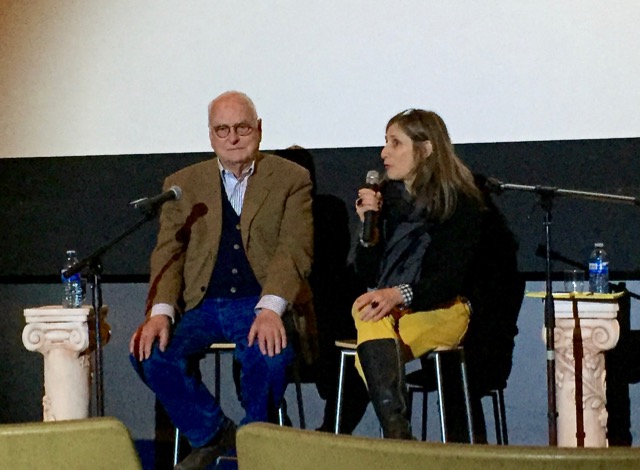
Another 4 Ripple Encounter is attending the Merchant Ivory Retrospective in December. I’d never thought I could actually see director James Ivory in person. And so I did. It was fascinating listening to the 87 year-old, legendary director who’d brought us A Room with a View (1985), Howards End (1992), The Remains of the Day (1993), and many other literary to film adaptations talk about the working dynamics of Ismael Merchant, writer Ruth Prawer Jhabvala and himself in the creative process.

Here’s a photo of the occasion, a Q & A session with film critic Katherine Monk after the screening of Heat and Dust, adaptation of the Man Booker winning novel (1983) by Ruth Prawer Jhabvala:

James Ivory1


And that’s a wrap for 2015.


***

Related posts you might like to read:

Howards End by E. M. Forster

The Merchant Ivory Dialogues 

Ruth Prawer Jhabvala: A Tribute to Rootlessness

Can a Movie Adaptation Ever be as Good as the Book

***


Brooklyn: From Book to Film

Director John Crowley’s movie adaptation of Brooklyn by Colm Tóibín has aptly answered my query (last post): what elements in the book make movie materials? Potentially, a lot. The trick is not to turn them into cliché moments on screen, for this isn’t an unusual story: a young woman leaving home and finding independence and love in a new land. While the film has its flaws, Crowley has crafted a beautiful and stylish transposition.

Author Nick Hornby has done it again following his Oscar nominated screenplay for An Education (2009) adapted from Lynn Barber’s memoir, a film that launched Carey Mulligan’s breakout role and Oscar nod, also a coming-of-age story.

Here in Brooklyn, Hornby tells his story by linking up succinct scenes that just about cover all key episodes in the book. They are short, to the point, and well-paced. The editing too is seamless, driving the film on without delay. After all, they only have about 120 minutes, and they’ve done a smooth job doing that.

Brooklyn Movie Poster

Tóibín’s seemingly simple narration of young Eilis Lacey’s journey of emigration from Ireland to America in the 1950’s is transposed onto film with sensitivity and nuance. The ‘mundaneness’ of daily living – working in a department store, dinner back at the boarding house, night class several days in the week – is transformed into vivid scenes by a lively cast of actors. To their credits, the already animated dinner table banters at Mrs. Kehoe’s (Julie Walters) rooming house as described by Tóibín have now come to life. Indeed, Julie Walters embodies Mrs. Kehoe, and Jim Broadbent as Father Flood is well cast.

Crowley, or is it Hornby, had softened Tóibín’s shrewd descriptions of some of his characters, presenting them in a sympathetic light, making them more likeable. The mood is less serious than the book but evoking empathy just the same. Although two weak spots I find. First is the glamorous and confident older sister Rose (Fiona Glascott) is not depicted as such, lessening the effect that is to come later. Secondly, Jim Farrell (Domhnall Gleeson) is absent at the beginning but appears only in the last part of the film, hence there is not much for character contrast or development.

While most of the supporting characters are well played, the film belongs to Saoirse Ronan, the young Irish actor who first drew notice from Joe Wright’s adaptation of Ian McEwan’s Atonement (2007). Her performance as 13 year-old Briony sent chills up my spine. With that role Ronan became one of the youngest Academy Awards nominees. In the most recent Wes Anderson’s The Grand Budapest Hotel (2014) she sends out very different vibes. As of now for Brooklyn, Ronan has a Golden Globe Best Actress nom. I anticipate she will go all the way to the Oscars.

Cinematographer Yves Bélanger is apt to let the camera linger on Ronan close-up many times, for she acts without speaking. Her facial expressions representing the spectrum of Eilis’s emotions and thoughts are spot on. It is a delight to watch her.

Another animated scene is dinner at Tony’s (Emory Cohen) Italian family home. Here, we see the characters jump out of the book, especially the kid brother, 8 year-old Frankie (James DiGiacomo), whose infamous line is “We don’t like Irish people.” But of course, the whole family welcomes Eilis and supports Tony, who has interpreted his literary version well: respectful, authentic and transparent, as Tóibín writes,”he was as he appeared to her; there was no other side to him.”

Domhnall Gleeson as Jim Farrell has a hard role to play for its very short appearance in the last part. He has not much material to work from but just hangs around with Nancy (Eileen O’Higgins) and George (Peter Campion) who try to set him up with Eilis. Not much to launch a lightning courtship.

Colours play a major role in the film, albeit I feel a pinch of contrivance; watching the colourful 1950’s costumes is like looking into the window of a candy shop with all kinds of macaroons. However, the colours may well set the mood and setting for the film: The overall greenish tone of the first part in Ireland, to the stark green coat Eilis wears as she leaves home on board the ocean liner to the cheery bright yellow cardigan after she has met Tony. Towards the last part, it’s back to the greenish hue of Enniscorthy, only the newly returned Irish/American gal wearing her bright colours. Too explicit a visual translation? Maybe, but I like macaroons, and I won’t hold a Ripple against the colour treatment.

Another visual imagery is at the beginning, right after Eilis has landed in America and gone past the immigration line, she opens the door to head out. We see her step out into an overwhelming brightness of white. Too heavenly? Or maybe just the right sign to boost the confidence of our seasick and insecure heroine?

How do you translate Tóibín’s quiet descriptions on screen? His signature depictions of a calm surface that hides tumultuous billows of emotions? Crowley gives us silence. Indeed, there are cinematic moments that are devoid of sound; the most memorable one is close to the ending when Eilis reveals her secret to her mother (Jane Brennan), sending shock waves and despondence on her face. Yet she restrained her emotions. Mother and daughter embrace in utter silence with tears flowing, saying possibly a last goodbye to each other in their lives and releasing a determined letting go for both.

Brooklyn is a beautiful adaptation worthy of its literary source, among one of the best films I’ve seen in 2015.

~ ~ ~ ~ Ripples 

***

Update Jan. 14, 2016:
3 Oscar Nominations – Best Picture, Best Actress, Best Adapted Screenplay

***

Related Review Posts:

Brooklyn by Colm Tóibín Book Review

Atonement: Book Into Film

The Budapest Hotel: A Grand Escape

Ex Machina (2015) 

November Wrap: East Meets West at the Pond

November is an eclectic month of reading and viewing for me. I’ve watched films ranging from a Chinese wuxia legend from the Tang Dynasty, to the English suffrage movement, to the scandal in the Catholic Church in Boston… and read books from crime thrillers to Westerns to the Gilded Age to India before and after independence.

Arti is a hybrid after all, constantly navigating between cultures and languages. When it comes to books and films, dashing between genres, periods and styles only adds spice to life.

Here’s the list of my November books and films.

Films

The Assassin

The Assassin

Acclaimed Taiwanese director Hou Hsiao-Hsien’s genre-defying wuxia epic earned him Best Director at Cannes this May. Hailed as the most beautiful film at the Festival, this adaptation of a 9th century Tang Dynasty Chinese legend may not be as easily grasped in terms of its storyline as its visual appeal. The film is recently voted #1 on the reputable Sight and Sound Magazine‘s Best Films of 2015 list, that’s the result of a poll gathering the views of 168 international film critics. It is a rare gem indeed. My full review at Asian American Press.  ~ ~ ~ ~ Ripples

(BTW, Hou’s last film? The Musée d’Orsay commissioned French feature on the Museum’s 20th anniversary: Flight of the Red Balloon.)

Room

A highly watchable adaptation of Emma Donoghue’s 2010 Booker Prize shortlisted novel. Kudos to the actors Brie Larson as Ma, Jacob Tremblay as 5 yr-old Jack, and yes, to Donoghue herself for writing the screenplay. One of those titles that I’ve enjoyed watching more than the literary source. My review on Ripple Effects.  ~ ~ ~ 1/2 Ripples
Update Jan. 14, 2016: 4 Oscar Nominations including Best Picture

Suffragette

Carey Mulligan has put forth a nuanced performance as the laundry gal turned suffragette in this Sarah Gavron (Brick Lane, 2007) directed historical drama. It’s worthwhile to watch the informative depiction of the actual events woven with fictional personal stories, especially Mulligan’s riveting portrayal of Maud, how her beginning naivety is forged into committed devotion to the suffrage movement. Prolific screenwriter Abi Morgan (Irony Lady, 2011, just to name one of her works) has laid out a fact-based drama with a heart-wrenching climatic scene. The sacrifice these voiceless, working women were willing to lay down is inspiring.
~ ~ ~ 1/2 Ripples

Secret in their Eyes

The Hollywood re-make of Argentine author Eduardo Sacheri’s crime thriller is a tall order, for its previous film adaptation is the Oscar winner of 2009 Best Foreign Language Film. My post on the book, original film, and Hollywood version is here. ~ ~ ~ Ripples

Spotlight

One of the best films I’ve seen this year, detailing the sequences of how the Boston Globe’s ‘Spotlight’ team of investigative journalists uncovered the systemic cover-up of child sexual abuse among Catholic priests. The Pulitzer winning reporting is presented in the film as painstaking procedurals in matter-of-fact dramatizing. For those who may be a bit worried about the subject matter, there is no sensationalized scenes of abuse, and on the part of the reporters, no portrayal of heroism. Such may well be the praise-worthy elements of this production. The cast’s performance is convincing, in particular, Liev Schreiber as the soft-spoken but motivating, no-nonsense editor Marty Baron. Come Awards time, I trust the production, its cast and crew, and director Tom McCarthy (The Visitor, 2007) will be duly recognized.    ~ ~ ~ ~ Ripples
Update Jan. 14, 2016: 6 Oscar Nominations including Best Picture

Fireflies in the Garden

My guess is, you haven’t heard of this 2008 movie. Neither have I until I saw it on TV a few days ago. The story about a father-son’s love-hate relationship from childhood to adulthood is realistically depicted. Caught in between the straining conflicts between the always angry and harsh father and a sensitive, vulnerable son, is the mother, always loving and protecting, something like the family dynamics in Terrence Malick’s The Tree of Life. It also echoes the Oscar winning Ordinary People (1981), the small-scaled, Bergman-esque chamber film of deep entanglement of unresolved parent-child conflicts. Another film just popped into mind and that’s Colin Firth, Jim Broadbent’s When Did You Last See your Father.

Fireflies has a well-selected cast with Ryan Reynolds, Willem Dafoe and Julia Roberts. I’m surprised to see the low rating the film received among critics. Disappointed really that it wasn’t well received. What’s that to me, and why am I  concerned? There’s a half-baked screenplay in my closet that’s something along that line. I know, more rewrites.  ~ ~ ~ Ripples

**

Books (Click on links to my Goodreads reviews)

It’s all a chain reaction started with …

The Burning Room by Michael Connelly (Audiobook)

I’ve not missed a single one of Connelly’s Detective Bosch novels. This time I listened to the audiobook and was much impressed by the voice of its narrator Titus Welliver.

Appaloosa by Robert B. Parker (Audio MP3)

So I checked about Welliver’s other audio works, and found Appaloosa by Robert B. Parker. I’d seen the 2008 film adaptation with Ed Harris and Viggo Mortensen and quite enjoyed it. So I jumped right in and found it to be a very well-written book, one of the few Westerns I’ve read.

And from this Robert B. Parker, I went on to explore more about him and learned that he was the ‘Dean of American Crime Fiction’. Here are two of his works crime stories I followed up with:

Promised Land  (Audio MP3)
The Godwulf Manuscript  (Audio MP3)

The Custom of the Country by Edith Wharton
From crime fiction to the Gilded Age. I bought this book at Edith Wharton’s home at The Mount during my New England road trip, during which I learned that Julian Fellowes was much influenced by Wharton and especially this title.

The Secret in their Eyes by Eduardo Sacheri (Audio MP3)

Plato and a Platypus Walk into a Bar: Understanding Philosophy through Jokes by Thomas Cathcart and Daniel Klein (eBook) – click on link to read my one-line review of this title on Goodreads.

The Boston Girl by Anita Diamant
Makes me think of Colm Tóibín’s Brooklyn which I’m rereading to prep for the upcoming film adaptation.

Heat and Dust by Ruth Prawer Jhabvala
Shifting between the English in India before independence and later the 70’s, a clash in cultures and the human toll of unfulfilled marriages. I reread this to prepare for the James Ivory Retrospective this coming weekend right here in my City, with the legendary director (now 87) attending. Yes, really looking forward to this event.

**

Currently Reading / Listening

In the Heart of the Sea by Nathaniel Philbrick (for the upcoming film)

Brooklyn by Colm Tóibín (reread for the upcoming film)

Parade’s End by Ford Madox Ford (Audiobook)

***

Related posts you may like:

Flight of the Red Balloon (2007)

The Tree of Life (2011) by Terrence Malick

When Did you Last See your Father?

Appaloosa (2008)

Room: From Book to Film

Spoiler Alert: This review involves spoilers.

Is the book always better than its movie adaptation? Again I’d say, they are two different kinds of medium and art form, hence, hard to compare. But some just want a simple answer. So here it is, no. The book is not always better, and Room is a case in point.

Room Movie Poster (1)

Not that I’m putting down this 2010 Booker Prize shortlisted novel by Emma Donoghue, or that I lack the empathy to appreciate the scenario: A teenager kidnapped and locked in a garden shed, visited by her captor on a regular basis for his pleasure, two years later resulting in the birth of a baby boy whom she raised right there in the room until he is five years old. A sad and tormenting premise, albeit not totally implausible when there was a similar real life case just discovered not long before Donoghue wrote her book, and sadly, new ones coming out after as well.

I read the book upon its publication in 2010. Maybe it was my own intuitive reaction against the hype around it, I found reading three hundred some pages of juvenile talk, all from the point of view of a 5 year-old was a bit testing, at times even annoying. But the movie has offered me an alternative frame of looking at the story, and its author.

There are many positive ingredients in this affective and powerful adaptation. First is Donoghue. Writing the screenplay herself, the author expands our view from 5-year-old Jack (Jacob Tremblay) to include his Ma (Brie Larson), by so doing, raising our empathy for the captive, who has to appease her captor (Sean Bridgers) whom they call Old Nick, in order to stay alive and protect her young son.

A torturous line to tread, but Ma (her real name is Joy) has done it by turning the whole ordeal into a pleasant environment, giving Jack as normal a childhood as possible under such restraints. Old Nick brings them supplies when he comes in at night. That’s when Jack has to hide in the closet until Old Nick leaves. During daytime, Jack plays, exercises, and reads, even bakes a cake together with Ma for his birthday. The calm, playful scenario reminds me of the Holocaust movie Life Is Beautiful (1997) where the father turns a Nazi concentration camp ordeal into a game for his young son to shield him from the horrors of reality.

What is real, what is not? What is captivity, what is freedom? Jack learns that he and Ma are real, people in the TV are not. Room is all there is. The concept of himself being a captive has never enters his mind. Jack accepts all these until one day Ma knows that she cannot keep him in the shed anymore. Keeping her son safe from Old Nick’s hands becomes the prime motive for her to think of an escape plan.

I much appreciate director Lenny Abrahamson’s handling of the story: he chose not to exploit the crimes of Old Nick’s but to exalt the bond between Jack and Ma. The love between a mother and her child deflects all horrors of human depravity. Further, Ma’s nurturing helps Jack interpret his world and find beauty in it, from a confining shed to the outside world in the second part of the movie.

To counteract the argument that a movie leaves nothing to the imagination as it shows the visualized image of the literary, again, it depends on the handling by the director. Here in Room, some key issues are left to the audience’s own private thoughts. So if you are concerned about the movie being too graphic in its dealing with the crimes mentioned in the book, fear not, albeit I must say there are tense sequences for dramatic effects.

Donoghue has also structured the movie well, the first hour in the room, the next in the wider world, for we all need the balance; we all want to see Jack and Ma free. The contrast of the two worlds is mesmerizing to Jack. To Ma, however, the situation is much more complicated. The readjustment, the ‘what-if’s’, the ‘why didn’t you…” callously posed by the media are the slings and arrows hurled at her when she is interviewed, prompting her, and us the audience to ponder “What makes a parent? A good parent?”

Joy’s own mother Nancy is played by Joan Allen, in one of her most affable roles. Her acceptance and warm welcome helps Jack feel he belongs. In contrast, William Macy, her ex-husband Robert, sees only the criminal when he looks at the child. Leo (Tom McCamus), who lives with Nancy, observes from the sideline and helps in his own subtle way.

Another element I must mention is the music. I have not seen the films which Irish composer Stephen Rennicks had scored previous to Room. So for this first time hearing his work, I was deeply moved. The music augments the suspense and cues in the warmth, an essential ingredient to bring out the cinematic effects. As the film ends, I welcome it like a cathartic wash sweeping away the ugliness, leading Ma and Jack to embrace a fresh new beginning.

Shot in Toronto, the movie had captured the hearts of audiences in various film festivals and is the winner of Grolsch People’s Choice Award at TIFF15. Come this Awards Season, my prediction (and hope) is that it will gather nominations for screenplay, directing, music, actress, and for 8 year-old Jacob Tremblay.

~ ~ ~ 1/2 Ripples

***

Update January 14:
4 Oscar Nominations
– Best Picture, Best Actress, Best Director, Best Adapted Screenplay

Update January 10: Brie Larson won Best Actress Golden Globe

Update Dec. 10:
3 Golden Globe noms for Best Motion Picture-Drama, Best Actress and Best Screenplay. Now 9-year-old Jacob Tremblay got a SAG nom.for Best Supporting Actor. These are just a few mentions among other noms. for the film.

Related Post:

Books to Films at TIFF15

Can a Movie Adaptation ever be as good as the Book?

October’s Abundant Harvest

October is harvesting month for me. The first week I was still cruising on some small country roads in Northeast U.S. gathering visual delights. As soon as I came back home, I sent off a travel article to an online newspaper. Visitors to my pond at Ripple Effects get the details in ten blog posts beginning here.

Funny thing is, In my almost two weeks’ road trip, I’d rarely seen birds and have not watched one single movie. So as soon as I got back home, I quickly sought to quench the dry spell. Sad to say, my avian friends have migrated without saying goodbye. But there are always movies.

Here are the movies I’ve watched in October after coming home. Most are current releases, a few catch-ups. I’m a detailed list-maker of unnecessary facts, so the titles are in chronological order of my viewing:

The Intern with Robert De Niro as the overqualified senior (in age) intern

A new genre has evolved in recent years to capture the baby-boomer cinema goers – A Walk In The Woods, The Best Exotic Marigold Hotel, Quartet, My Old Lady – just to name a few. The Intern is pleasant enough, with an interesting proposal: make the best use of the resources seniors can offer in a business, here a startup created and operated by Jules (Ann Hathaway). The hipster way of running a company is explicitly, time and again, contrasted with the De Niro old school of management, etiquette and people skills, like Ben Stiller and Adam Driver in While We Were Young. But The Intern lacks a dramatic story arc to hold viewers’ (well, mine at least) interest and attention. I’ve been waiting for a twist somewhere but it never came, and Anders Holm who plays Jules’ husband Matt could well be a miscast.  ~ ~ 1/2 Ripples

Hamlet with Benedict Cumberbatch as the brooding Prince of Denmark

I bought the ticket to this National Theatre Live one-night screening months ago and am excited to report that I was one of 250,000 viewers worldwide to watch it. The date to remember: 10/15/15. It was a record for NTL for one single showing of a broadcast; Shakespeare would be ecstatic. I was squished in the last row corner seat in a full Cineplex auditorium, awestruck by the enthusiasm Benedict Cumberbatch had raised. There were young people in droves streaming into the theatre instead of the usually grey-haired audience at most NTL screenings.

Basically two things I’d like to say about this production at the Barbican in London via NTL’s camera work. First, the sound and lighting need to improve so we don’t have to strain our ears to hear that most famous soliloquy of all time delivered by Benedict Cumberbatch. Second, the performance was a bit uneven. While Cumberbatch had put on an energetic and affective act, and Ciaran Hinds as Claudius was very convincing and appealing even, there were roles that need to be pumped up to match.
~ ~ ~ Ripples

The Martian with Matt Damon as the best botanist on the Planet Mars

Well, science seems to be the saviour bringing Matt Damon back to Earth from Mars but director Ridley Scott knows the underlying secret. An evacuation of his teammates after a dust storm has left astronaut Mark Watney all alone on the Red Planet. To survive, he has to science his way out. Director Ridley Scott knows too well that he is working with flesh and blood, and science without the human touch will best be a fine documentary but won’t capture hearts and can’t triumph at the box office. Thanks to all his teammates in the space capsule coming back for him and all the smart people in NASA and elsewhere calculating to the dot of how this could take place, we get a captivating and entertaining human interest story. Look at the cast, it’s not rocket science that the film has fine materials to build on: Other than Damon, there’s Jessica Chastain, Kristen Wiig, Chiwetel Ejiofor, Jeff Daniels, Sean Bean…

A blogging success, Andy Weir first published his story as blog posts, followed by eBook, sold movie rights, movie production, and now the phenom. But what was I most impressed? That the film doesn’t use CGI to imitate the Red Planet but was shot on location in the magnificent Wadi Rum, southern Jordan. Previous films with Mars as setting had used the location as it’s probably one of the most Mars-like places on Earth. I had the experience of getting to about seventy miles north of Wadi Rum in Petra many years ago, beholding the city carved out of the red mountains. It was indeed out of this world.  ~ ~ ~ 1/2 Ripples
(
Update Jan. 14, 2016: 7 Oscar Nominations including Best Picture)

Bridge of Spies with Tom Hanks as the reluctant hero

Steven Spielberg knows what audience wants too, and that the formula of the “hero’s journey” works. Not to say this film is formulaic but it is predictable even when I didn’t know anything about our reluctant hero, insurance lawyer James Donovan (Tom Hanks) who later turned master negotiator. Bridge of Spies is set in the Cold War era, Donovan is asked to do the nasty task of defending an arrested Russian spy Rudolf Abel (Mark Rylance). As a result, Donovan has suddenly become public enemy no. 1 together with his defendant. As the real life events begin to take their course, Donovan is pulled into the journey with real gusto. He saves Abel from a certain death sentence, keeping him for more useful ends, you know, some sort of like insurance for the future. And rainy days finally come.

This is a highly watchable film, despite the fact that many might have known about this part of American history, the character Donovan and his ultimate endeavour to exchange Abel for American U2 pilot Gary Powers shot down from Soviet airspace. As with Ridley Scott’s The Martian, Spielberg knows it’s not the dry, actual negotiations that will interest the audience, but the added suspense and the human bond between Donovan and Abel that would appeal more. And so he threw in those elements; Spielberg is good at that. It’s the humanity behind his characters that capture his audience. And what’s more, shot like a Cold War era film, we get some thrilling noir type of camera work and the reminiscence of the denser and tenser spy films of the 60’s, like Le Carré’s The Spy Who Came in from the Cold. But of course, in this day, audience would welcome more Spielberg’s offer of lighter entertainment. ~ ~ ~ 1/2 Ripples
(Update Jan. 14, 2016: 6 Oscar Nominations including Best Picture)

Jafar Panahi’s TAXI where the banned Iranian director creates video selfies 

Banned from making films for twenty years for his outspoken stance against the government, Iranian director Jafar Panaji uses creative and bold ways to make his ‘non-films’. Here he is in the driver’s seat in a yellow cab, picking up his fares on the streets of Tehran with a camera mounted on his dashboard. We get a slice of what it’s like to live under an authoritarian power. Rather than a gloomy view, this 2015 Berlin International Film Festival winner brings us a light-hearted, human display of life in Tehran, however limited the crack is opened for us to look in from the outside. My full review here.  ~ ~ ~ 1/2 Ripples

This is Not A Film where banned director searches for new ways to speak out

This is Jafar Panahi’s 2011 work after he was given a 20-year ban by the Iranian court from filmmaking, screenwriting, giving interviews, and leaving the country. This is not a film, but a video selfie made in his home by friend and documentary filmmaker Mojtaba Mirtahmasb who was later arrested. We see a somber, stoic, but at times frustrated Panahi up and about in his home with his daily chores, and ‘telling’ a banned screenplay. He is also shown using his own iPhone to record a young man coming to his door to collect garbage, a film student helping his sister out for that night. The depth of human interest and the desires and aspirations of people in constraints depicted in this ‘non-film’ is poignant.  ~ ~ ~ Ripples

Remember where Christopher Plummer is a 90 year-old revenger with dementia

So what if the plot is implausible as long as we have a talented director (Atom Egoyan) conducting a fine orchestrated production with the riveting performance of Christopher Plummer. I mean, there are lots of implausible storylines in our movies nowadays, think Gone Girl, Before I Go to Sleep, ok, throw in The Martian even. The charismatic performance here in Remember by Plummer makes it believable and absorbing. Why, he has grasped and portrayed a dementia patient to the dot, forgetting who you are, where you are, and the essential why for your actions. A Holocaust survivor seeking revenge on the German officer responsible for his family’s death in Auschwitz is the premise. But Canadian director Atom Egoyan had led us into a thrilling story of suspense and unfolding. No, this is not ‘another Holocaust movie’ but a riveting thriller. Plummer has effectively led us to see the fragility of our mind and the nature of the memories we hold.  ~ ~ ~ Ripples

Meet The Patels where Ravi Patel shows us the Indian version of Meet the Parents

But with one major difference: This is a lively documentary. That makes it all the more fun and realistic. The Indian parents of their American born, and almost 30 year-old son Ravi Patel lend a helping hand to find him a wife by distributing his ‘bio dates’ resumé to friends and family and practically to the whole Patel clan. This is not incest but expanding the target market of about 50 miles radius of where the Patels come from in India. Ravi himself had gone through the ‘biodating system’, online matrimonial websites, and Patel Matrimonial Convention. But before all these, he’d had an American girlfriend whom he had kept as a secret from his parents and with whom he had just broken up. Ahh, that adds to the complication in this vividly told multi-visual doc.  Most gratifying is the conclusion… regardless of culture and traditions, loving parents just want their children to be happy. I can’t agree more.   ~ ~ ~ Ripples  My full review here.

The Past where Director Asghar Farhadi elicited some amazing performance

My third film from Iranian directors in just two weeks. Asghar Farhadi’s first French language film shot in Paris. I was much impressed by his previous work A Separation, which won the Academy Award for Best Foreign Language Film in 2012. The Past came a year later. So this is a catch-up for me; I’d long wanted to see it. Saw it on BluRay just a few days ago and again I must say, don’t let them just stream movies online, for the special features are just as good. Here we have Farhadi sharing with us the creative process in the making of The Past at a Directors Guild interview. This is too good a film to just write a couple of paragraphs on. A full review coming. But I can tell you, it’s going to be ~ ~ ~ ~ Ripples.

***

Lobster, Lobster

In pouring rain I drove north from Wayland, MA on Interstate 95 to Portland, Maine, about 120 miles. As I came close to the city, anxiously looking for exits with the car wipers at the fastest speed, I saw a sign in a distance with a digital message. I strained to check out what it was saying, could be crucial information. Soon I got close enough to read this alert: “Rain Pounding on Road” Thanks. That was helpful.

A bit later after I exited and entering Portland, I was met with another warning sign: “Flash flooding in some intersections”. Thanks again. Which ones?

After a few tense moments, we found our way to an Arabica Café, calmed down with a latté and regrouped. In this weather, no sight-seeing around town was possible, so might as well drive to our next destination, a must-see, pounding rain or not. That’s New Harbor in the eastern tip of Maine, about 70 miles from where we were. What’s the bait? Lobster of course… and, Kevin Costner.

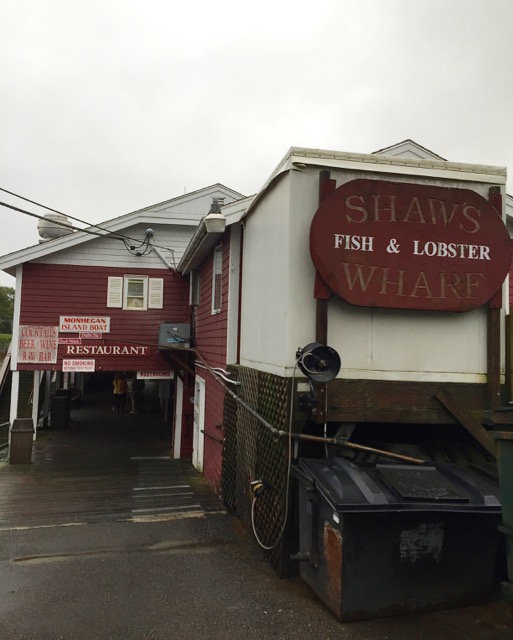
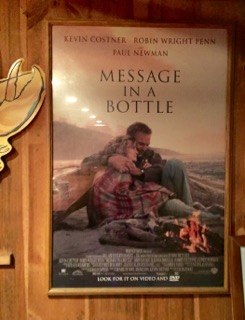
Earlier on I came across the website epicurious (love the name), Shaw’s Fish and Lobster Wharf in New Harbor was listed as one of their 7 favorite lobster shacks in Maine, and the tidbit that it’s one of the filming locations of the movie Message In A Bottle. So obviously, the motivation to get me driving all that 70+ miles in the rain under a dark grey sky was not just the lobster but Kevin Costner… oh, throw in Paul Newman as well.

Here’s the place at the end of a long and winding road along coastal Maine in fading daylight:

Shaw's Fish & Lobster WharfA view from the dock:

Costner New HarborInside the bar, a movie poster:

Movie PosterProduction Photosand some production photos (See Paul Newman in the middle?)

Since it was getting late, we decided to take out instead of eat there. And so we did, heading out to our rental car with two cooked live lobsters (oxymoron?), drawn butter, paper plates, and a lobster cracker kindly thrown in for us, all for $30. Not a bad deal.

Just as we congratulated ourselves on our triumphal exit with lobsters and Costner poster photo, we saw the iPhone on which we’d so depended for its GPS to be not in service. Now we had to find our way out of this remote place before darkness totally engulfed us. It’s not as easy as you might think. It felt like forever for us to find our way back to the main road and headed north for another 40 miles to our motel in Rockport. It seemed a much longer drive when you had two cooked live lobsters in the back seat.

**

Another seafood restaurant I can whole-heartedly recommend is Archer’s on the Pier in Rockland, ‘the lobster capital of the world’. Just a 12-minute drive south of our motel in Rockport, Archer’s lobster is one of the best I’ve tasted for as long as I can remember. Of course a bit pricier than Costner’s place, but well worth it with all the extras, corn cob, coleslaw…

ArchersArcher's Livethe location and the view:

Archer's deck

A tasty catch

Archer's view

I haven’t seen much fall foliage yet but that’s ok. It’s been a delicious journey so far.

***

Follow my New England series:

Books to Films at TIFF15

September kicks off Film Festival Season, a prequel to all the movie nominations coming up at the end of the year. First there’s Venice, Telluride, and Sept. 10 begins the 10-day celebration of films from over 70 countries at the Toronto International Film Festival.

The following are several of the premieres at TIFF15 that are adaptations from literary sources. Just to throw some more reading ideas out in case you’re not already overwhelmed with book suggestions.

***

The Dressmaker by Rosalie Ham

The Dressmaker Movie-tie-in CoverAustralian author Rosalie Ham’s debut novel (2000) is divided into four sections named after four different kinds of fabric: gingham, shantung, felt and brocade. The historical, gothic novel has received several nominations and shortlisted for the Book of the Year Award (2001) by the Australian Booksellers Association. The film adaptation stars Kate Winslet as the dressmaker Tilly Dunnage who returns to her hometown seeking revenge on her being expelled years before, with a sewing machine as her accomplice. Sounds interesting? What more, she is a Titanic survivor (of course she is) and the plot thickens with a hearing on the doomed maiden voyage. Australian director Jocelyn Moorhouse wrote the screenplay and shot the film in Victoria. Liam Hemsworth and Judy Davis also star.

High-Rise by J. G. Ballard

HighRise(1stEd)J. G. Ballard’s most well-known novel probably is Empire of the Sun (1984) thanks to Steven Spielberg’s movie adaptation. That is a semi-autobiographical account of Ballard’s childhood years in a Shanghai internment camp during the Japanese invasion of China. The production is one of the better WWII, Pacific War movies, splashed with some surreal styling. Now High-Rise (1975) looks like a totally imaginative work. An ultra-modern high-rise apartment (hopefully with some updated renos from its inception in 1975) with all its conveniences and amenities only lead to the isolation of its tenants, dividing them into different classes and eventually, to rivalry and extreme violence. The high-rise is a self-contained microcosm of our civilized society, perhaps Lord of the Flies of the concrete jungle. An acerbic satire of our human condition, the film is directed by Ben Wheatley and stars Tom Hiddleston and Jeremy Irons.

Into the Forest by Jean Hegland

Into the ForestThis is Hegland’s debut novel (1996), and had been translated into eleven languages. Set in Northern California in the near future when a massive continental power outage causes the total shutdown of technology, subsequently, the total collapse of human society. The apocalyptic scenario unfolds as two teenaged sisters – at first living in an idyllic, remote forest – now have to fend for themselves, find food at the brink of starvation, secure safety in the wild, and in the process, grow in their relationship with each other and learn more about their world. A coming-of-age story as well as an allegory of our technologically dependent society. The film is shot in British Columbia where, yes, there are beautiful forests. Canadian director Patricia Rozema writes the screenplay and helms the production. Rozema is the one who brought us Jane Austen’s Mansfield Park the movie in 1999. Popular Canadian actress Ellen Page joins hands with Evan Rachel Wood to play the roles of the sisters.

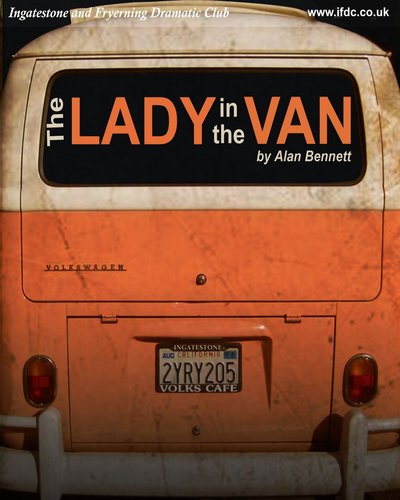
The Lady In the Van by Alan Bennett

The Lady in the VanThanks to the film adaptation, or I wouldn’t have known about this amazing story. Acclaimed English playwright Alan Bennett’s play is not fiction but a memoir. Bennett saw a transient woman living in a van on the street. Trying to help her out, he let her park on his own driveway for three weeks so she could sort things out and move on. Well, Miss Shepherd stayed for 15 years. Not surprisingly, she and the playwright form an unlikely bond of friendship. This ‘mostly true’, incredulous story needs to be told for its unique human scenario. From play to film is probably the best route to reach many more viewers. Who else other than Maggie Smith best fit the role as Miss Shepherd? And so she did, with Alex Jennings as Alan Bennett. Supporting cast includes Jim Broadbent, Dominic Cooper, and James Cordon. The is the third film wherein director Nicholas Hytner and playwright Alan Bennett team up. Their previous collaborations are The History Boys (2006) and The Madness of King George (1994).

The Martian by Andy Weir

The Martian movie tie in editionHere’s a Cinderella story that all bloggers can cheer for. In 2009, Andy Weir started posting on his personal blog as a post-by-post serial his well-researched sic-fi story about an astronaut stranded on Mars. Chapter by chapter he attracted numerous readers who, after the story was finished, suggested he publish it as an eBook so people could read it online as a whole. Weir did that and his eBook soon hit the top of Amazon’s best selling sic-fi list. Not long after, Random House stepped in and took it from there, from e to reality. Four days later, “Hollywood called for the movie rights,” Weir recalled. As I type, on this second week of September, Weir’s book is number one on the New York Times Best Sellers Trade Paperback Fiction list. And the movie? The legendary Ridley Scott takes the helm, with NASA consulting, Matt Damon stars, and an A-list supporting cast includes Jessica Chastain, Chiwetel Ejiofor, and Jeff Daniels. World premiere at TIFF before a general release later in October. And it all started with a blog post.

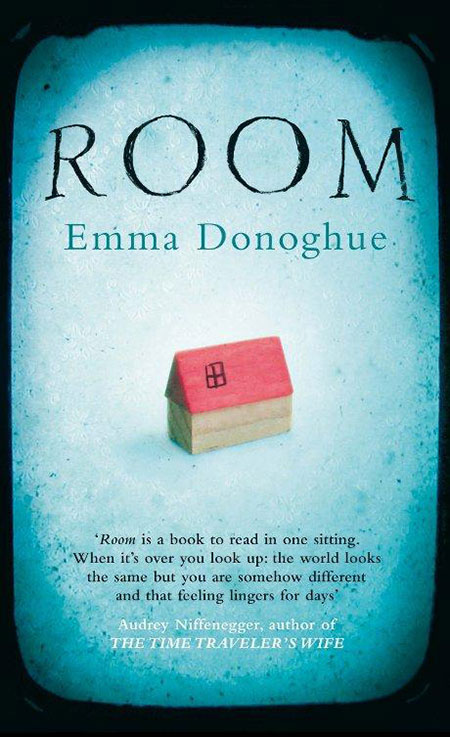
Room by Emma Donoghue

roomThe 2010 Booker-prize shortlisted novel by Irish-Canadian author Emma Donoghue reads like you’d want to see it visualized. Indeed, hearing constantly the voice of a 5 year-old could have that effect on you. So here we are. A movie adaptation. Locked in a room and made captive by a psychotic abuser, a young mother gives birth and for the next five years raises her child Jack in a shed. At 5, Jack has known no other worlds, but now begins to ask questions. Ma cannot contain the make-believe anymore so she tells Jack there’s a world out there, and starts to prepare him for a possible escape. The multiple-award winning novel is written from the child’s perspective. It depicts the power of love and the indomitable spirit of resilience and hope, but maybe not for the claustrophobic. The movie trailer is impressive; the 1.5 minute clip is powerful, consuming, and very moving. The film premiered at Telluride International Film Festival in early September and stunned the audience, drawing multiple standing ovations. Donoghue wrote the screenplay herself, that could well be a definite asset. Lenny Abrahamsson directs, with Brie Larson as Ma, Jacob Tremblay as Jack, Joan Allen and William H. Macy supporting.

UPDATE Sept. 20, 2015: ROOM has just won the Grolsch People’s Choice Award at TIFF15 tonight. FYI, a few of TIFF’s previous winners had gone on to win the Oscar Best Picture including 12 Years A Slave (2013), The King’s Speech (2010), Slumdog Millionaire (2008), American Beauty (1999).

***

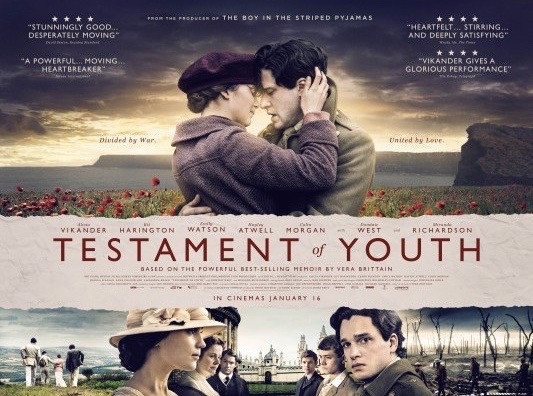
Testament of Youth

Premiered at the London Film Festival in October, 2014, Testament of Youth finally arrived to our city here in Western Canada in late August, and only for a week or so. It came quietly to our age-old indie theatre, nearly slipped by without my noticing it; if so, that would have been a loss for me.

I admit I haven’t read Vera Brittain’s acclaimed, 600 plus page memoir. I admit too that before watching Downton Abbey Seasons 1 and 2, the subject of WWI, its direct hits and collateral damages, had not piqued my interest that much. Now, even saying ‘piqued my interest’ trivializes the devastation – as this film has so poignantly shown us – the tragic loss of a generation of youth.

The beginning of the film, which is elegantly shot, shows us succinctly Vera Brittain’s (Alicia Vikander) well-to-do family. Vera and her brother Edward (Taron Egerton) are endearingly close. While their intention is good, their parents (Dominic West, Emily Watson) are protective and traditional: Edward has the chance to go to Oxford, Vera is meant for marriage. On this issue, Vera protests and argues with her father; eventually, her determination and intellectual vigour win through. A dream comes true when Vera enters the women’s Somerville College Oxford to study English Literature.

Testament of Youth Poster (1)

From her brother, Vera gets to know a few good Oxford men: Victor Richardson (Colin Morgan), Geoffrey Thurlow (Jonathan Bailey), and Roland Leighton (Kit Harington). Roland subsequently wins her heart with his sensitive, poetic inclination; the two soon are engaged. The winds of war blow callous and indiscriminate. As Britain is drawn into the fight, all these young men heed the call to enlist. Vera too decides to forsake her hard-earned Oxford education to join the Voluntary Aid Detachment as a nurse.

The saddest and most ironic notion about WWI is perhaps that it was first thought to be a fast and triumphal war. Surely, Britain came out a victor, but not before ringing up a horrific number of casualties and sending back home – for those fortunate enough – a permanently damaged generation. As the military struggle wained through four long years, Vera would ultimately lose all who are dearest to her: her brother Edward, her fiancé Roland, and their two close friends Victor and Geoffrey. After the war, Vera goes back to Oxford. Later, a disillusioned Vera becomes a vocal pacifist and an advocate of women’s rights.

This is British director James Kent’s full feature debut after years of helming TV productions. His effort is conscientious and serious, and for that, I’d much appreciated.  The film is beautifully shot and carefully crafted. The camera work, while giving us a traditional look, is agile and stylish; the editing succinct. I have not read the memoir so cannot offer comparison, but judging the film on its own, the screenplay is well written and the overall production, a captivating execution.

Kent has an excellent cast to work with, and that adds to the quality of the production. Vera Brittain is well portrayed by the nowadays ubiquitous, Swedish actress Alicia Vikander. She is in some very diverse roles, from Kitty in Anna Karenina (2012) to an AI robot in Ex Mechina (2015), to the witty British agent Gaby in The Man from U.N.C.L.E. (2015), and in several highly anticipated upcoming films.

Vikander is versatile, and her best quality is probably the intelligent and unsentimental mastery of her character. Here, she is a living testament to the devastation of war. For a witness to testify effectively, the most important element has to be clarity and not be overcome by emotions. She has delivered her message poignantly.

Other actors are just as competent in their roles, and a pleasure to watch, despite all their tragic end. Aaron Egerton as Edward, what a change from the street punk under Colin Firth’s mentoring in Kingsman: The Secret Service (2014). Kit Harington’s (Game of Throne fame) performance is effective, particularly in a scene where he comes home the first time from the trenches, a changed man. Veteran actors Dominic West and Emily Watson are excellent supports, especially West as the father torn by grief and ambivalence.

I have seen several WWI and II films in recent years: Sarah’s Key, The Book Thief, The Monuments Men, Suite Française, I have to place Testament of Youth above all of them. Visceral but not sentimental, the film communicates with painful clarity the devastation of war, the traumatic experiences in the trenches, and the cold, hard fact of a testimonial: the loss of a generation.

~ ~ ~ 1/2 Ripples

***

Other related Ripple Reviews:

Suite Française

The Book Thief

Sarah’s Key

Kingsman: The Secret Service

Ex Machina

Anna Karenina 

***