Go Set A Watchman: Sequel or Prequel?


Go Set A Watchman Book Cover


Background

Go Set A Watchman is Harper Lee’s first draft of a novel (See links at the end of the post). In 1957, Lee’s agent submitted it to Tay Hohoff, an editor at the now defunct publishing house J. B. Lippincott. Hohoff did not see it adequate to be published; however, she did see promising elements in it, “the spark of the true writer flashed in every line,” she later recounted.

The draft’s protagonist, 26 year-old Jean Louise Finch, Scout, now a New Yorker, goes back to visit her childhood home in fictional Maycomb County, Alabama, and finds discrepancies about her father Atticus now from the man she thought she had known all the years growing up. To her alarm and disillusionment, Atticus, while a good father and a good man to all the rest in Maycomb, holds racist views and is firmly a segregationist.

Hohoff advised Lee to rewrite the draft but this time, instead of writing Jean Louise Finch as an adult, focus on her reminiscence of her childhood growing up in Maycomb with her brother Jem, living under the roof of her father Atticus, and summer days spent with a boy next door called Dill. After more than two years of editing and rewriting, To Kill A Mockingbird was born. And the rest is history.

So here’s the query I have: If your novel, after two years of editing and re-inventing, had developed into a final form and published in 1960, some 50 plus years ago, had gained high acclaims, won the Pulitzer, become a beloved American classic, been adapted into an Oscar winning movie, and achieved international recognition, why would you want your very first draft as a novice be published to the world now?

At 89 years old, Harper Lee now lives in a nursing home, a stroke survivor who has lost most of her hearing and eyesight, and just months after her sister Alice Lee – guardian of her privacy and legal advisor – had passed, and suddenly a ‘newly discovered’ Harper Lee novel appeared.

In a recent New York Times Op Ed article entitled “The Harper Lee ‘Go Set A Watchman’ Fraud”, columnist Joe Nocera vehemently argues that the Rupert Murdoch-owned HarperCollins had “manufactured a phoney literary event.” The publishing house had sold more than 1.1 million copies of the book in a week, the ‘fastest-selling book in company history’ according to the publisher, to which Nocera decries “Go Set A Watchman constitutes one of the epic money grabs in the modern history of American publishing.”

The above is the major challenge surrounding this phenomenal ‘literary event’. So how should one read the book? Controversy aside, what can we reap from reading Go Set A Watchman?

Definitely not as a sequel and not a prequel either, but take it as it is: A first draft of To Kill A Mockingbird.

Only when comparing the two books as a ‘Before and After’ transformation can we see how the writing process had taken place. By reading Watchman as a first draft, we come to appreciate how a seasoned editor had helped a novice and an aspiring writer to achieve her goal to become a respectable, published author. And this we know Hohoff had done most successfully.

To Kill A Mockingbird Book Cover

***

Reading Go Set A Watchman

First off, to all readers, a major reminder: Harper Lee is a real person, and Atticus Finch is a fictional character. In Lee’s first draft, Go Set A Watchman, Atticus is a good father, but a racist. Yes, he had successfully defended Tom Robinson and gained him an acquittal, that was a court appointed case. This is anecdotally mentioned in Watchman. But Atticus is a self-professed Jeffersonian Democrat, one who subscribes to Jefferson’s view that: “A man couldn’t vote simply because he was a man… He had to be a responsible man.”

Lee spends a climatic chapter towards the end describing the arguments between father and daughter on the issue of race. While both are polar extremes, and I don’t want to quote the words from Atticus pouring forth his arguments about how “white is white and black’s black”, I must point out that it is Scout who loses her cool during the debate. She is the one who blows right out, foul-mouthed and accusing her father with hurtful, derogatory terms. Throughout the verbal confrontation, Atticus remains a gentleman. “I’m seventy-two years old, but I’m still open to suggestions.”

And I’m quite impressed by the next episode, and that’s when Scout cools down and goes back to her father, seeking reconciliation. It’s not just a simple case of ‘agree to disagree’, but somewhat laying out a more complex relationship with the ambivalent stance of ‘I can’t beat you, I can’t join you,’ but love can still triumph over all. That is the spark of an inspiring writer I can see in the conclusion of Lee’s Watchman. As Scout apologizes for her foul-mouthed diatribe aimed at her father the day before, this line from Atticus will remain with me: “I can take anything anybody calls me as long as it’s not true.”

Hohoff might just have seen this character trait in Atticus that she advised Lee to expand on in her rewrite. I see this admirable element as I read. Let the fictional character Atticus be created as an ideal type of a man, open to others’ opinions, upholding his ground with firmness but with no malicious hostility. And yes, we can all appreciate this change of heart in Lee’s rewriting in Mockingbird. Let Atticus be the ideal father and friend, a deserving, honourable man.

Further, in Watchman, the racist turn in Atticus has not been well accounted for. Since Jean Louise has come back to Maycomb annually to see her father, why the sudden discovery of his racist stance? And why had she not known about his views considering her close relationship with her father all her growing years and only in recent years in her adult life had she moved to NYC. But most important point of all Lee had not explained in Watchman, why had Atticus changed his view? These could be flaws in the plot line that Hohoff had Lee re-think.

As recounted, Lee based her Atticus character on her own father, the lawyer Amasa Coleman Lee who had actually defended two black men but failed to have them acquitted. According to reports, the elder Lee had been a segregationist but later changed his views to support integration. The real life parallel is obvious. The details we could only speculate, was it the man that had influenced the change in the book, or maybe vice versa?

In the rewriting process, there is the elimination of two significant characters in Watchman, Hank, Jean Louise’s suitor, and Uncle Jack, holder of family secrets. Once a clear storyline is established, with the equally moving minor plot of Boo Radley, a parallel Mockingbird theme with Tom Robinson as both being vulnerable victims, Hank and Uncle Jack would not be needed to uphold the story lines. So, no matter how much a writer had invested in a character, cuts and alterations could be the outcome, quite like the deleted scenes we see on DVDs, the rational choices we have to make in the long creative process. On the other hand, a character that exists only in memory, Jem, who had died in Watchman, is revived to his lively self, and we are all grateful for that revision.

One of the main reasons Hohoff had rejected the first draft was that it was episodic, lacking a unified story arc as a novel. Readers of Watchman will find this so, especially when Jean Louise switches back and forth from the present to the past. As I read, the past holds much more attractions as Scout describes her growing up days in Maycomb. We see the children in a different perspective, something like a ‘behind the scene’, a ‘making-of’ featurette. Thanks to Hohoff, such episodes are restrung into the gem of a book called To Kill A Mockingbird. Indeed, Hohoff had grasped the social psyche well, there was a need for a noble, heroic character in her time then, and maybe even more so in our time now.


***


LA Times (With video)

The Telegraph

New Republic

The New York Times (Jonathan Mahler)

The New York Times (Serge F. Kovaleski and

The Wall Street Journal

The Washington Post

The Washington Free Beacon

Wikipedia


Far From the Madding Crowd (2015)

Here’s the paradox of books to movies. The more you know about the book, the more critical you’ll be when watching the movie, and the less likely you’ll enjoy it. Here’s a case in point. If you want to enjoy this current version of Far From the Madding Crowd without hindrance, do not read or reread Hardy’s novel before you see it. For me, alas, I’ve read it twice in the last few months. So, who can I blame if I find the movie disappointing?

Now, I know exactly that I need to judge a movie on its own merits and not according to how ‘faithful’ it is to the source. I’ve written a post on this view. This current adaptation misses the mark not because it’s not ‘faithful’ but because it has been mishandled. The script, the direction, and for that matter, the casting. Now hear me out. far-form-the-madding-crowd I had high expectations for it. Here we have an Oscar nominated director, Thomas Vinterberg (The Hunt, 2012), offering a new version from John Schlesinger’s 1967 production which touted a high calibre cast of Julie Christie, Peter Finch, Alan Bates and Terrance Stamp. After almost fifty years, should one not hold a certain high level of excitement in welcoming a new version with a modern cast?

To start off, I must give credit where it’s due and that’s to the director of photography Charlotte Bruus Christensen (The Hunt) for bringing the beautiful Dorset country to the big screen so we can visualize Hardy’s ‘Wessex’. The camera captures the lush green fields and gentle rolling hills at dawn and dusk, the farming life, the harvesting under the golden sun. Reminds me of Terrence Malick’s Days of Heaven. The scenic and authentic location of the filming is an alluring backdrop to the story.

Now to the screenplay. David Nicholls is no stranger to simplified versions of classics. His last Hardy light Tess of the D’Urbervilles, a TV mini-series (2008), had four episodes to tell the story. But here as a full-length feature, this new Madding Crowd script could make CliffsNotes writers feel they are doing some heavy lifting. Actually, the movie is not far from the source material, almost all of the scenes and many of the dialogues come from the book, with some alterations, but this is understandable. One would think alterations should be for the purpose of dramatization; so it’s just mind boggling that certain scenes that are essentially dramatic in the novel have been left out, ones that could have enhanced the tension substantially. Two readily come to mind: First is the circus scene where Sergeant Troy was nearly recognized by Bathsheba, and the second is right at the climax of the story, Boldwood’s Christmas party, not omitted but with its tension substantially lessened.

Danish director Vinterberg’s previous work The Hunt – a 2014 Oscar Best Foreign Language Film nominee – was a riveting and psychological piece of work. He could have operated in that mode here. With the scenes sweeping by, and leaving out some pivotal cinematic moments, he has missed chances to engage the audience. The altered state of the climatic scene is regretful. Take that crucial act when Boldwood was driven by mad passion (I’m trying to avoid spoiler here in case you haven’t read the book) during that fateful Christmas party in his home. Instead of displaying the conflict and tension in full public view, Vinterberg has taken the action out into the dark of night. Without all the guests as witnesses, the gravity of the conflict and Boldwood’s ultimate action is effectually diminished; not only that, the handling is incredulously haphazard and swift. While Hardy’s Far From the Madding Crowd exudes a lighter mood compared to the cosmically burdened Tess of the U’Derbervilles – and I chuckled at many of his lines while reading – I don’t expect movie viewers would take this film as a comedy. But this was exactly the audience’s reaction in the theatre. When you hear loud laughter at the climax of the movie, you know the director has missed the mark.

The story is about the characters, more so here when you have one headstrong female being wooed by three vastly different men. What’s intriguing is the emotional ‘trilemma’ of our heroine. The effervescent Bathsheba Everdene, the independent, new mistress of the Weatherbury farm is, alas, misdirected. Carey Mulligan can be a convincing Bathsheba, but the strength of character is diminished by the breezy script and a director who fails to draw out her potential. From the “I shall astonish you all” first meeting with her farmhands to the “Please don’t desert me, Gabriel!” plea to Oak so he would come back to rescue her ailing flock, there are pages of Hardy descriptions. Surely, time is of the essence in a 120-minute movie, but at least show visually the gravity of her situation before she so readily rides horseback and race to Gabriel. As a transition, let the camera frame a wide angle shot of the field littered with sheep lying helpless, ready to expire, for she’s about to lose them all. But just showing a sheep in distress doesn’t warrant the quick change in character, from leading to pleading. It looks like Vinterberg has crafted a feeble and even exploitive Bathsheba who gets her way by her outward charm. In several scenes she could have been more intense; we see no Hardy’s expression of ‘nether lip quivered.’

Among the three suiters, the strongest performance comes from Michael Sheen as William Boldwood. His nuanced facial expressions speak louder than words. Whether intentioned by Vinterberg or not, Sheen has turned the truly, madly, deeply love-sick Boldwood into a comic character, more so than Hardy’s portrayal. Or, were the laughters not intended? No matter, Sheen’s performance compensates for the lack of in the other two men.

Gabriel Oak the resourceful shepherd is the strong and silent type. Not only is he a man of few words, the Belgium actor Matthias Schoenaerts has turned him into a man of few expressions as well. Schoenaerts is fine in action thrillers like The Drop (2014) but just not in a romantic lead, as in Rust and Bone (2012), and now Madding Crowd, for he fails to command the image of either a lead or a romantic. In several scenes, we as audience are left hanging, ungratified, for his lack of verbal response to Bathsheba’s sincere words. 

If Schoenaerts is expressionless, here is an equal rival, Tom Sturridge as Sergeant Troy. The George Wickham parallel who dazzles with his brass and scarlet, Sergeant Troy is a subdued character here who lures with his sword. Is it the director or the screenwriter, the few lines given him are mostly sparse and one-liners like “I don’t think I’ve ever seen a face as beautiful as yours.” Sure, that’s from Hardy, but in richer descriptive context. Or, another short line to explain (away) pages of happenings absent on screen.

I’m writing this not in disrespect but disappointment in that a good chance to do justice to Hardy’s illuminating work is missed. Yet, all is not lost; there still remains a synopsis of a Hardy story and Hardy country in full cinematic view. Further, we are confirmed, again, that Carey Mulligan can sing, in a particular folksy, soulful way. So far, I’ve heard her sing in three movies, and each time it enriches the storytelling. When Awards Season comes this fall, I look forward to a stronger performance from her in Suffragette. Simply by virtue of the release date, it is an award hopeful. Some are already predicting Oscar nods for her role in that production.

As for Madding Crowd, let’s just note that it’s a May-released movie.

~ ~ 1/2 Ripples 

________________

Other related review posts:

Tess of the d’Urbervilles (2008, TV)

The Great Gatsby (2013)

Never Let Me Go (2010)

An Education (2009)

Can a Movie Adaptation Ever be As Good As the Book?

Voice of the Poet: Things Fall Apart

April is National Poetry Month, and three quarters of the days are already gone. Still not too late for me to offer a poetry post. At present, I’m reading Joan Didion’s essay collection Slouching Towards Bethlehem (more about that in a later post). To start off her book, Didion uses W. B. Yeats’ poem “The Second Coming”, from which her book title originates.

Yeats wrote the poem in 1919, shortly after WWI; it was published in 1920. Didion used it like an epigraph for her book published in 1968, about fifty years later, apparently finding it speaks to her collection of essays on her experiences in 1960’s America.

Now almost another fifty years later, the poem still has not lost its relevance. Yeats’ mythical references aside, and just listen to the clearer and more direct words, I can hear the Poet’s voice speak hauntingly to our present world.

**

The Second Coming 
by William Butler Yeats (1865-1939)

Turning and turning in the widening gyre
The falcon cannot hear the falconer;
Things fall apart; the centre cannot hold;
Mere anarchy is loosed upon the world,
The blood-dimmed tide is loosed, and everywhere
The ceremony of innocence is drowned.
The best lack all conviction, while the worst
Are full of passionate intensity.

Surely some revelation is at hand;
Surely the Second Coming is at hand.
The Second Coming! Hardly are those words out
When a vast image out of Spiritus Mundi
Troubles my sight: somewhere in sands of the desert
A shape with lion body and the head of a man,
A gaze blank and pitiless as the sun,
Is moving its slow thighs, while all about it
Reel shadows of the indignant desert birds.
The darkness drops again; but now I know
That twenty centuries of stony sleep
Were vexed to nightmare by a rocking cradle,
And what rough beast, its hour come round at last,
Slouches towards Bethlehem to be born?

**

Especially the first stanza… hear what I mean?

Back to the Source: From Movie to Book

Those who have come to the pond here for a while would know I’m a Book to Movie person. If I know a film adaptation is coming out, I’d want to read the book first, as I’m always intrigued by the adaptation process. Maybe it’s the transposition of one art form into another that so fascinates me. Yes, you can say it’s a kind of theme and variation type of work.

But there are also times when I’m so captivated by a movie that, after watching it, I want to read the book on which it’s based. Thanks to Wes Anderson, I’m now reading Stefan Zweig.

the-grand-budapest-hotel movie poster

Before watching The Grand Budapest Hotel last April, I had never heard of the Austrian novelist, playwright, journalist and biographer Stefan Zweig. During the 1920’s and 1930’s, Zweig was one of the most famous and translated writers. And yes, here I am living under a Rock(ies), have never heard of the name until Wes Anderson’s confessional interviews, wherein he raved about how his (now) Oscar winning Budapest Hotel was influenced by the writings of Stefan Zweig. Also in the movie, there is the acknowledgement of Zweig as the source of inspiration as the film’s end credits begin to roll.

Here’s what’s interesting: Instead of adapting from one single work, Anderson created his Budapest Hotel sparked by the oeuvre of Zweig’s after he read his writings only a few years before. After watching the film, I’ve since read several of Zweig’s short stories, and a couple of novellas The Post Office Girl and Chess Story, and now continue to delve into more of his captivating, often bittersweet, stories. Watch for my article coming out in the April (Spring) issue of Shiny New Books on how Z inspired A.

So The Budapest is the most recent example of how a movie influences my reading. Over the years, there have been other ones. Here are some more:

12 Years A Slave (2013) – Steve McQueen’s artistic rendering of slavery may seem like a paradox, but acclaimed British actor Chiwetel Ejiofor’s performance as Solomon Northup is what spurred me to read the original memoir. Both are excellent works.

3:10 to Yuma (2007) – Have you ever read a Western short story? Western as in uh… cowboy, gunslingers. This is one of the few Western work I’ve ever read. The intriguing moral dilemma the movie depicts and its poignant ending had driven me to look for the short story by Elmore Leonard as soon as I left the theatre.

Bleak House (2005) – The BBC TV mini-series with Gillian Anderson as Lady Dedlock, Anna Maxwell Martin as Esther Summerson sealed the deal for me. The series also introduced me to the talented Carey Mulligan, her first role I believe. I turned to the 1,000 plus pages Dickens novel soon after the series finished. Because I’ve seen it first, it was a breezy read, almost.

Howards Ends (1992)  A cast with Emma Thompson, Helena Bonham Carter and Vanessa Redgrave is not hard to move and entertain. And thanks to Merchant Ivory, the dynamic dual of producer/director, and their team writer Ruth Prawer Jhabvala, I devoured the humorous and equally entertaining E. M Forster novel after that.

Revolutionary Road (2008) – I was captivated by the movie at first. Kate Winslet and Leo DiCaprio had done a marvelous job in depicting the entrapment of suburban life. But only through reading Richard Yates’ book did I sense the even deeper psychological entanglement that I missed in the film.

The Diving Bell and the Butterfly (2007) – I wrote in my book review, “This is one book that should be read after watching the film. Without visualizing what Jean-Dominique Bauby had gone through after his massive stroke, the reader simply could not empathize or appreciate enough of Bauby’s effort in ‘writing’ his memoir.” How? One blink at a time.

When Did You Last See Your Father (2007) – I watched the film twice at TIFF a few years back, Colin Firth as British writer Blake Morrison and Jim Broadbent as his overbearing and critical father dying of cancer. The life-long yearning of a son seeking his father’s approval is so sensitively portrayed. Reading Morrison’s memoir after only made me appreciate the film more.

How about you? Are there movies that have motivated you to go back to the source and read the book?

***

(CLICK ON the links in the titles to read my reviews.)

Reading The Season: Lila by Marilynne Robinson

Every year before Christmas, I read something that can draw me closer to the meaning of the Season. Amidst the busyness of the festivities, I try to carve out a piece of quiet. I name these annual posts Reading The Season. You can click on the links at the bottom for previous entries, dating back to 2008. This year, the publication of Marilynne Robinson’s third Gilead book, Lila, is a most timely read.

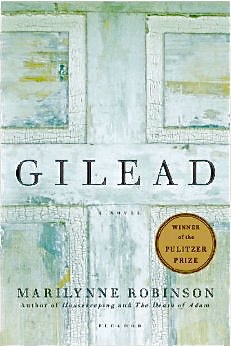
GileadGilead (2004) – Marilynne Robinson’s Pulitzer Prize and National Book Critic Circle Award winning novel introduces us to the fictional town of Gilead, Iowa. We hear the gentle voice of the narrator, the ageing Rev. John Ames, as he writes a letter to his seven-year-old son Robby, leaving a legacy of family heritage, love, forgiveness, and serenity.

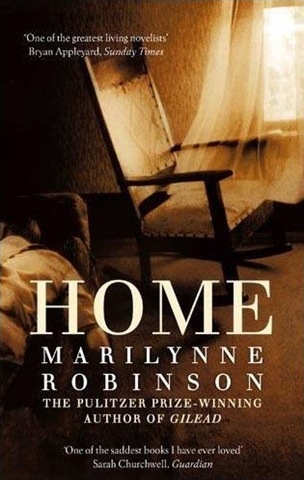
HomeHome (2008) – Based on the same Gilead characters, but from a different point of view allowing us privy to the household of the Rev. Robert Boughton, John Ames’s life long-friend. Glory, Boughton’s daughter, comes home to take care of her ailing father. She is there when her brother Jack returns after an absence of twenty years. The black sheep of the family, Jack’s estranged self yearns for reconciliation like a prodigal. The book, in all its complexities and depiction of alienation, escape, return and lost yet again, suggests home may not be a solace as sweet as one hopes.

Lila

Lila (2014) – Robinson’s newest, and 2014 National Book Award finalist. It is the third novel based on the characters in the town of Gilead, offering yet another point of view. But one can just read it on its own, albeit best to have read Gilead first, then the kind face of John Ames can be conjured up more readily. In this book, the perspective is from Ames’s much younger wife Lila, at first lonely and desolate, slowly drifting into place.

**

Lila Dahl

At the outset, we see Lila as an unwanted child, “cold”, ‘all cried out’. She is rescued by Doll, a destitute woman herself yet still has room in her heart for an abandoned little girl. Doll wraps Lila into her shawl and decides to bring her up. “Lila was the loneliest child, and there they were, the two of them together, keeping each other warm in the rain.” Lila later takes up Doll’s name as Dahl.

The two joins a small group of itinerant field workers led by Doane, living in camps out in the open. But the Depression breaks up the cohesive work party. Lila is later left on her own and for a little while, works in a brothel in St. Louis. Knowing she can’t stay there for long, she slips out one night, escaping from a blackhole of hopelessness.

After that she finds herself a cleaning job at a hotel, from which she has to escape again after seeing her nemesis whom she first encounters while in the brothel. She packs her bag and leaves town, taking rides from strangers going to wherever they drop her. Ultimately, Lila drifts to the outskirt of Gilead, finds an abandoned shack and takes shelter there. She cleans up the shack for a place to sleep, having no plans except to find odd jobs in the town yonder, earn enough money, then moves on, maybe to Sioux City.

Lila lives a life of poverty, loneliness and fear, mistrusting everyone. Doll may have been like a mother to her but she too has her own rough life and struggles. Doll knifes and kills a man who might be Lila’s own father, could well be out of protecting Lila. She is later jailed, leaving the knife in Lila’s possession. Lila keeps it with her all the years as a memento, a murder weapon, yes, but also a symbol of Doll’s loving protection and Lila’s own desolate past.

One day walking into Gilead Lila stumbles into a church to escape the rain, that is the turning point of her life. She sees the old man at the pulpit, the Rev. John Ames, and, he sees her.

John Ames

We know a lot about Ames from Robinson’s first book of Gilead, set in the 1950’s. A Congregationalist pastor in the town, Ames is sixty-seven years old when he first meets Lila, “a big, silvery old man”. Coming from a family tradition of ministers, John Ames is a man with a pastor’s heart.

Ames has had his share of personal grief. He had to bear the death of his beloved wife of his youth and his newborn son as she died in childbirth. Such unspeakable pain he had shared with his best friend Robert Boughton, pastor of the Presbyterian church in Gilead.

Ames and Boughton have been life long friends. They share pastoring advice, discuss foreign policies, debate theological problems, and bear the burden of each other’s family woes. Boughton has his in his son Jack, who takes John Ames’s namesake.

After seeing Lila at the church as she comes in from the rain, Ames keeps her in his heart. Residents of Gilead befriend Lila, giving her jobs, welcoming her in their midst, but Lila is aloof and skeptical, an outsider still. Ames personally engages her to talk and to know her more. One day, he goes to seek her out at the shack. She sees him coming as she walks towards Gilead. There on the path he reaches out to her and promises marriage. An inexplicable love story takes shape.

Sunset

Ames and Lila

“… the old man kept on courting her, like a boy, when she was hard and wary…”

After they are married, however incompatible it looks in Ames’s home, Lila still keeps Doll’s knife with her as a memento and as a symbol of her own tumultuous past, a part of herself. Ames is unperturbed. He lets her keep it, and he even uses it, taking it as a normal tool around the house. Total acceptance.

If condescension is present in the relationship, it is Ames who wants to learn from Lila. His utter humility is what moves her. Barely literate, Lila yearns to know about the Bible, study it and grasp its richness and meaning. They talk about the difficult books of Ezekiel and Job. Ames shares his thoughts about this elusive notion called existence, and listens attentively Lila’s perspective and experiences. Total respect.

Lila has questions rooted in her bitter past, the why’s of misfortunes, cruelty, and the hardships in life. She asks Ames with an inquiring heart. Ames, a pastor of many years, can find no easy answers. He ponders Lila’s queries, and readily and honestly admits his own limitations in knowing, while loving her all the more. Total humility.

Even after they are married, Lila sometimes still conjures up thoughts of leaving. Ames  knows this and gives her the freedom:

… if you ever change your mind, I want you to leave by daylight. I want you to have a train ticket in your hand that will take you right where you want to go, and I want you to take your ring and anything else I have given you. You might want to sell it. That would be all right. It’s yours, not mine… ” He cleared this throat. “You’re my wife,” he said. “I want to take care of you, even if that means someday seeing you to the train.” He leaned forward and looked into her face, almost sternly, so she would know he meant want he said.

She chooses to stay, a genuine response to his love.

When I read the book, I see a tender love story between two utterly incompatible beings, like an allegory and a parallel of the Christmas story, how the Creator God reaches out to take our hand, initiating an unfathomable relationship. Love for the reason of pure love. An unlikely and inexplicable union.

The Christmas Story

I first felt a little uncomfortable about the obvious incongruous pairing of Ames and Lila, yet, their love relation comes to fruition, albeit looking tentative at first. The gap between Ames and Lila is just a crack in the pavement when compared to the abyss separating Creator God and His creation. I see Ames and Lila’s story as an allegory, if you will, a parallel, however meagre, illustrating the joining of two utterly disparate sides.

The essence of the Season is in the reaching out to bridge that huge chasm. As Ames and Lila’s newborn son at the end of the book is an evidence of their love, we too receives a child, born in a manger that day in Bethlehem, a sign of ultimate mending. Total reconciliation.

***

Other Reading the Season Posts:

2020: Jack by Marilynne Robinson

2019: A Hidden Life, a film by Terrence Malick

2018: Madeleine L’Engle’s Poem The Irrational Season

2017: A Wrinkle In Time by Madeleine L’Engle

2016:  Silence by Shusaku Endo

2015: The Book of Ruth

2014: Lila by Marilynne Robinson

2013 Poetry by Madeleine L’Engle

2012: Surprised by Joy, C. S. Lewis

2011: Walking on Water, Madeleine L’Engle 

2010: A Widening Light, Poetry by Luci Shaw

2009: The Irrational Season, Madeleine L’Engle 

2008: The Bible and the New York Times, Fleming Rutledge 

2008: A Grief Observed, C. S. Lewis

 ***

How Proust Can Change Your Life by Alain De Botton

Here’s my second instalment for the blogging event Paris in July 2014.

Paris In July 2014

***

You must have heard of this book by a Swiss-born Brit writing about a French novelist called Proust. You probably have read it, and let me guess, were surprised when reading the first chapters? Well, I was. For before reading this book, my knowledge of Alain de Botton, the popular British writer and media personality, mainly came from an art critic’s thoughtful posts on her blog.

How Proust Can Change Your Life

Is Botton joking? This book reads like a parody.

First we are introduced to Dr. Proust, Marcel’s father, who was a renowned physician and prolific writer. His thirty-four books had helped the French people from defences against the plague to the correct postures and exercises for the ladies. Botton being an image-driven person does not hesitate to include some of Dr. Proust’s instructional illustrations for his female readers such as how to jump off walls, or balance on one foot.

Not your definition of parody? How about this chapter on ‘How to Suffer Successfully’. Proust is well known for his physical ailments, having had to lie in bed most of the time when he wrote the longest novel ever written, In Search of Lost Time. Botton exhaustively lists down the various trials Proust had to live with throughout his life:

  • The Problem of a Jewish Mother
  • Awkward Desires
  • Dating Problems
  • A Lack of Career in the Theatre
  • The Incomprehension of Friends
  • At 31, His Own Assessment
  • Asthma
  • Diet
  • Digestion
  • Underpants
  • Sensitive Skin
  • Mice
  • Cold
  • Coughing
  • Noise from Neighbours

… Should I go on? And oh, he does include Death.

I know, that’s what Botton does, bring the extraordinary into the ordinary realm of common readers, and by so doing, explaining Proust to us lowly creatures. And of course, it would help if you have at least read the first two volumes of In Search of Lost Time, for many of his examples are taken from there, so you would feel a resonance, or disagree with Botton’s interpretation, when he talks about Francoise, Swann, Albertine, Combray, or Balbec.

Do I get anything out of it? Plenty. I’ve lots of highlighted passages and my own handwritten notes on the margins. When Botton gets serious between the lines, he leaves me with some useful tips:

So if speaking in clichés is problematic, it is because the world itself contains a far broader range of rainfalls, moons, sunshines, and emotions than stock expressions either capture or teach us to expect. (p.106)

For one thing, express your own feelings and ideas instead of saying ‘nice’, or describing the setting sun as ‘a ball of fire’. I love this little passage Botton quotes from Proust about the novelist’s description of his ‘lunar experience’:

Sometimes in the afternoon sky a white moon would creep up like a little cloud, furtive, stout display, suggesting an actress who does not have to ‘come on’ for a while, and so goes ‘in front’ in her ordinary clothes to watch the rest of the company for a moment, but keeps in the background, not wishing to attract attention to herself. (p.98 of Botton’s, but no mention of where this is from Proust’s)

The key of course is not so much of trying to use a new language to describe a common scene or object, but to be able to look at them from a distinctively new perspective to begin with. How can we invent new lenses to see the world? Towards this end, Botton has failed to go further. So we’re told to avoid clichés, but not how. If you sense my ambivalence, you’re right.

In order to avoid clichés himself, Botton has resorted to hyperboles. The title of the book is a ready example. The 200 page book comprises of nine short chapters, each can be a book in itself. So you can expect the oversimplification of the ideas. Further, with no citing of sources for the Proust quotes, the critical reader could be left unsatisfied; it feels like Botton has jumped to generalizations and found expressions of his own thoughts from one or two excerpts of Proust’s. Makes one feel that Proust could just be a selling point.

However, this is an entertaining read, like a self-help manual with instructional tidbits and amusing images. The book is a mixed bag of common-sense wisdom, with a ‘moral’ at the end of each chapter. Throughout, it is obvious that Botton could well find it not as easy as he tells his readers to do… to be original and not say what others have said before. Here are some of his main points:

  • Live life today
  • Read books to form your own ideas
  • Suffering makes you strong
  • Find art and beauty in the ordinary
  • Avoid clichés like the plague
  • A time to pick up a book, a time to put it down
  • Win friends by your praises
  • but pour your honest criticisms of them into a work of fiction (now that’s a novel idea).

Is there anything new under the sun?

Speaking of the sun, take this to the beach. It would make one breezy read.

Lastly, following Botton’s (actually Proust’s) advice on reading:

We should read other people’s books in order to learn what we feel, it is our own thoughts we should be developing even if it is another writer’s thoughts which help us do so. (P. 195) Reading… is only an incitement…


So I’d say the moral is: read Proust yourself. Don’t let Botton tell you what Proust can do for you.

That’s just the prodding I need to press on to In Search of Lost Time, Vol. III.

***

Paris in July 2014 on Ripple Effects:

Haute Cuisine Movie Review

CLICK HERE, HERE and HERE to see what others have posted.

***

Related (Proust) Posts on Ripple Effects:

Proust Read-Along: Swann’s Way Part 1, Combray

The Swann and Gatsby Foil

Half Way Through a Budding Grove

Out of the Budding Grove

***

Book Sale 2014: A Very Restrained Purchase

It’s that time of the year again… no, I don’t mean nesting habit of birds. I’m referring to The Crossroads Market Annual Book Sale. A diversion from my usual avian pics for Saturday Snapshot, here’s a photo of my very restrained purchase this year.

Readers familiar with my previous annual book loot will know how I’d hauled back home dozens of like-new or even unopened books at $2 each. All for the good cause of supporting Servants Anonymous Society.

Due to the boxes of still unread inventory from previous years, I’d decided to refrain from gratifying my hoarding instinct this time. The result is this minimal bagging of just four books, which I’d spent hours hand picking. Again, $2 each, all in mint condition:

Book Sale 2014


The reasons for these selections? Three had sold film rights and two of them are already in development for a movie adaptation. The fourth  one isn’t going to be a movie, but no less dramatic.

An Object of Beauty by Steve Martin 

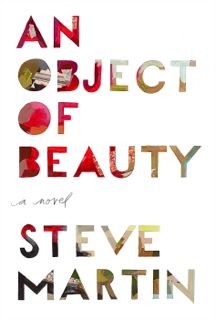
Other than being known as the Father of the Bride, Steven Martin is also a talented banjo player. I’ve heard his banjo playing, but as for his books, quite a few of them actually, I still haven’t had the pleasure to enjoy. So here it is, a Steve Marin novel with 22 full-colour art reproductions inside. Story is set in the demanding art world of Manhattan, about Sotheby’s up-and-coming and very ambitious Lacey Yeager who has set her mind on climbing high on the career ladder. Amy Adams had bought the film rights, aiming at producing and starring in it. Who is writing the screenplay? Ned Benson, who wrote and directed The Disappearance of Eleanor Rigby Him and Her, which had me mesmerized at TIFF last year.

The Secret Scripture by Sebastian Barry

The novel won the prestigious James Tait Black Memorial Prize in the UK and the Costa Awards in 2008, Irish Book Awards’ Novel of the Year, and short-listed for the Man Booker Prize. Roseanne McNulty has lived in a mental asylum for fifty plus years. Now at the ripe old age of one hundred, she decides to write her life story. Fascinating. So the book chapters transport the character and her readers between the present and the past. I look forward to the movie adaptation, just take a look at this perfect casting: the legendary Vanessa Redgrave as the older Roseanne McNulty and the talented Jessica Chastain as the younger. Producer is Noel Pearson, the Irish theatre and film producer who brought us the Oscar winning My Left Foot (1989, Daniel Day-Lewis). The Secret Scripture film adaptation has great potentials. Shooting is reported to be starting in June this year.

The Sisters Brothers by Patrick DeWitt

Here in Canada, this is a multiple award winner: 2011 Governor General’s Literary Award, 2011 Rogers Writers’ Trust Fiction Prize, 2011 Scotiabank Giller Prize Finalist, 2011 Man Booker Prize Finalist, and selected as Amazon #1 Best Book of 2011. Film rights have been purchased by John C. Reilly’s production company… yes, the actor John C. Reilly, to turn this Western, yes, cowboy novel in the style of Elmore Leonard and True Grit into film. Should be an interesting read and movie. I don’t know about John C. Reilly, but, would he be willing to collaborate with the Coen brothers for the project?

The Film Club by David Gilmour

This is not the David Gilmour of Pink Floyd fame. Again, despite being an award-winning Canadian author, one time TV personality and CBC film critic, university lecturer, people outside of Canada upon hearing the name would likely think of someone more famous, at least Google does. Due to his recent incendiary remarks on his preferences re. writers and literature, this Canadian Gilmour just may have raised some awareness, adding notoriety to his name.

However, for me it’s not about him but about this audacious parenting experiment he conducted. At the time, his son was a 16 year-old who had an incurable avoidance of school. Watching him loiter at the edge of the cliff of boredom and aimlessness, what is a father to do? Well, Gilmour let his son drop out of school, but on two conditions: watch three movies with him every week, and, no drugs. Not a bad offer. A father and son film club instead of school… only in Canada, eh? Which titles were in his syllabus? As a film buff, I’m totally intrigued by his unorthodox parenting method, already half way through the book. Will definitely share with you eager parents when I’m done.

***

You might want to see what others have posted for their Saturday Snapshot. CLICK HERE to Melinda of West Metro Mommy Reads.

The Railway Man by Eric Lomax: Book Review

This is an important book in that it chronicles the real-life experience of a prisoner of war in the hands of the Japanese army after the British surrendered in Singapore during WWII. The Pacific War is a part of WWII history that has often been ignored, other than the Pearl Harbour chapter. The British Empire in the Far East was dealt a deadly blow by Japanese invasions, and, British POW’s suffered not a bit less than those in Hitler’s death camps.

Japanese atrocities and war crimes have often been muffled in this our North American society. I don’t want to speculate why but yes, I do have an inkling which I will not discuss here. But as someone who had grown up in Hong Kong and came to Canada as a teenager, I can tell the difference in knowledge and perceptions when I compare the generally uninformed public of the West and those who themselves or their elders’ generation had lived through in Asia during the war.

Because of the general lack of knowledge on the Far East during WWII, Eric Lomax’s first person narrative as a POW in a Japanese labour camp and later military prison is all the more valuable. The memoir starts off with his love for the railways in childhood and how it turned into a youthful passion for engineering and radios that later led him to the Royal Signals Corp of the British army during the war in Singapore. As the colony fell to Japanese hands, Lomax’s life was torturously demented in subsequent decades until the very end.

The Railway Man Book Cover

Eric Lomax was a young 22 year-old when he was captured and moved with tens of thousands of POW’s to Kanchanaburi, Thailand, to build the notorious ‘Death Railway’ in 1943. It was a passage way for military transport from Thailand to Burma, and the route of a possible Japanese invasion of India. The conditions of forced labour were horrendous. Many POW’s died building the railway. This part of the world was the subject of the famous movie Bridge on the River Kwai, an unrealistic (even farcical now that I’ve read Lomax’s memoir) depiction of British POW’s inside Japanese military camps.

With his skills, Lomax and several others built a radio secretly to get news of the war. The radio was later discovered, together with a map Lomax had carefully drawn up of the railway line. Six of them were interrogated and savagely beaten by The Kempetai, or goon squad, as Lomax described them. Both his arms, wrist, several ribs, teeth, and his hip were broken. Two died from the beatings. While Lomax survived, more tortures and horrendous treatments followed in the days after. The experiences had left him permanently damaged psychologically for the rest of his life. Decades after the war, Lomax was still being tortured by terrifying flashbacks. The nightmares continued until he met his tormentor and forgiveness replaced hatred and vengeance.

So all in all, a significant story to tell. But while the book’s description is straight forward and clear, it leaves me ungratified as to its writing style and lack of deeper exploration, with all due respect to the author and his horrific, nightmares of ordeals. Yes, he had done a detailed job in reporting his personal journey from childhood to the war, the tortures and his suffering, other victims and their fate. As well, he recorded the aftermath of his horrific experiences as he re-entered ‘normal’ society, and sadly still, to a family that he no longer knew. His mother had died of a broken heart and his father had remarried. I was particularly engrossed with the after war effects in the last chapters.

However, the internal change of heart for the reconciliation with the Japanese interpreter had not been explored. After the bulk of the book describing his painful ordeals, the very last chapter of a happy ending looks off-balanced. It all started with the Japanese officer and interpreter, Takashi Nagase, who was present at Lomax’s torture, publishing his autobiography in his seventies. In there, he even mentioned the torture of Lomax, but due to his remorse, he felt he had been ‘forgiven’. Lomax’s second wife Patti, upon reading the English translation of the book, decided to write to Nagase regarding her husband. Patti’s letter opened up a chance for the later meeting between the tormentor and the victim.

Nagase had shown deep remorse, and dedicated his life after the war to help the Allies locate graves of POW’s, to ‘make-up’ for the wrongs the Japanese army had done. In his meeting with Lomax fifty years later, both in their seventies, near the bridge on the River Kwai, Nagase offered his visibly acute and sincere regrets for what the Japanese army had done to the British soldiers. A forgiving spirit suddenly took hold of Lomax and the two became friends. However, Lomax did not go deep into how his ingrained hatred and vengeance were alleviated, except noting that Nagase was a changed man now.

Further, the book had not answered a question I’ve always pondered. No, I understand it was never intended to delve into that issue as it is a personal memoir and not a political or philosophical treatise. But this question has been unsettling for me. What if the tormentor had no remorse, could reconciliation be possible? Other than Nagase, we know that many in Japan today still worship their dead WWII soldiers including war criminals as national heroes, unlike Germany’s denunciation of the Nazi regime. History textbooks had even been changed to tone down Japan’s aggression in the war. Even as recent as January 2014, Japanese Prime Minister Shinzo Abe visited and paid his pilgrimage at the Yasukuni Shrine in Tokyo. The controversial Shrine is a clear symbol of, in Lomax’s words, “an unashamed celebration of militarism”. In the book, we also read that Nagase had taken the unpopular and even dangerous stance of denouncing this war monument. To victims and their descendants of Japanese wartime atrocities, the chapter has not ended; in international politics, the issue remains.

It is always a triumph to see true remorse and subsequent reconciliation. Lomax’s personal story is extraordinary for both himself and Nagase. In that sense, readers are gratified with a light at the end of a long, dark chapter of one life, a bright stroke on the large canvas of WWII history.

***

The Railway Man by Eric Lomax, first published in Great Britain, 1995 by Jonathan Cape. Movie tie-in edition by Vintage Books, London, 2014, 322 pages.

** Movie Adaptation: I saw The Railway Man the movie at the Toronto International Film Festival in 2013. So far, there has not been a general, major release of the film here in North America. As much as I’d like to share my view on the film, with Colin Firth as Eric Lomax, Nicole Kidman as his wife Patti, and Jeremy Irvine as young Lomax, I intend to wait till there is a public release of the film before I post my review. Let’s hope I don’t have to wait much longer.

Related Links:

Pride and Pain of Patti Lomax

Railway Man’s Forgotten Family

What Japanese History Lessons leave out by Mariko Oi 

Listening for Lent

In the old days, say, six years ago, reading for me was, simply, reading. Holding a book in my hands, read through the printed words, turned the pages manually, feeling the paper at my fingertips. But today, I have several ways to ‘experience’ a book. I can still read in the old traditional way, or download the eBook to my iPad using the app ‘OverDrive’, or, listen to an audiobook, on CD’s or MP3.

As a slow reader, I find listening to audiobooks a time-saving way, albeit I still prefer to hold a book in my hands and see prints on paper. But in this day of multi-tasking, I sometimes listen to audiobooks while driving as I can fit in my reading time. I confess, I could be distracted by the story, or the traffic. But overall, listening to audiobooks while driving is a perfect alternative for me, in lieu of time and space for ‘actual’ reading.

Recently I read an article by T. M. Luhrmann in the New York Times entitled Audiobooks and the Return of Storytelling. This insightful piece introduced me to a different reason for listening to audiobooks.

First off, Luhrmann takes down the generally accepted view that reading with our eyes as ‘more serious, more highbrow’ than listening to a story being told orally. She points to the early childhood experience when way before we could read, we were introduced to stories through listening to them. So maybe such a notion extends to our adult life making us feel that listening to stories is a childlike activity than reading the text on our own.

Many great books were actually oral legends, Luhrmann points out, “… for most of human history literature has been spoken out loud. The Iliad and the Odyssey were sung.” Noted. Can’t say listening to audiobooks is child’s play.

Luhrmann then comes to the crux of her idea. While we listen to an audiobook, we can do something else with our eyes and hands. That’s just obvious, isn’t it? Exactly what I said at the beginning of this post, the benefit of multitasking. But I was too rash to have thought I knew it so. What I read after this was nothing short of an epiphany for me.

No, not while driving, but when Luhrmann is gardening, she listens. Often, she would listen to the Bible. I love what she has to say next (emphasis mine):

Listening to a book is a different sensory experience than reading it. The inner imagining of the story becomes commingled with the outer senses — my hands on the trowel, the scent of tansy in the breeze. The creation of this sensory richness was in fact an explicit goal of the oral reading of the Bible in the medieval European cloister, so that daily tasks would be infused with Scripture, and Scripture would be remembered through ordinary tasks.

Whenever she looks at the “50 polypodium californicas and 50 festuca idahoensis in the dappled light beneath [her] oaks” she would think of “Gatsby’s extraordinary gift for hope.” Why, Luhrmann was listening to Fitzgerald’s novel while planting those the year before. Now looking at the plants would flash upon that inward eye what she had heard.

Of course, that sounds so simple and natural, a kind of classical conditioning, if you will. We fuse our senses and experience. All the more that we should listen to good books or we’ll have bad memories looking at the tasks we’d performed.

And what a wonderful idea Luhrmann had left me with: Scripture-infused daily tasks. That can’t be more apt for Lent.

***

Tanya Marie Luhrmann teaches Anthropology at Stanford.

Related Posts on Ripple Effects:

No Texting for Lent and the End of Solitude

The Dinner by Herman Koch: A Timely Read, for Lent?

Dances With Words

What Makes a Good Audiobook Narrator?

***

More Downton Ripples

Two years ago, some time after Downton Abbey Season 2 had finished airing on PBS, I wrote my first “Downton Ripples” post. I subtitled it “How I Overcome Downton Abbey Withdrawal Syndrome”. In that post, I’d listed some books and movies/TV productions that relate to the setting similar to Downton Abbey, for I was fascinated by the Great War period after watching Downton.

Some of the authors I read included Robert Graves, Hemingway, Evelyn Waugh, and watched Brideshead Revisited, A Handful of Dust, Easy Virtue and discovered Lost Empires, the TV series with a young Colin Firth together with Laurence Olivier, amazing.

This time, after Season 4, the withdrawal syndrome seems to have numbed a bit, but the ripples continue to spread. Again, Downton has prodded me to seek out the literature around the time between WW1 and WW2 Europe. While there are many present day authors writing about that era, I’d like to hear more authentic voices. I went looking for writers actually living in that period of history to hear their stories.

The following is a list of titles I’ve gone through this time, some I have finished, some still on my ‘To be’ agenda:

Parade’s End (2012, BBC/HBO co-production)

Parade's End Blu-Ray Cover

This series complements Downton Abbey perfectly. While Downton is light and heart-warming, soapy in its feel, Parade’s End is cerebral and literary, its social commentary of the time harsher and more incisive. I think the difference is, Julian Fellowes creates as a contemporary screenwriter, and knowing what modern day viewers want, he caters to their desire. Yes, he has offered us charming entertainment, and for the stars and the show, opportunities for Emmy and Golden Globe noms and wins.

Parade’s End is another story. Playwright Tom Stoppard (Emmy and BAFTA nom for this) adapts from Ford Madox Ford, a writer during WWI period, contemporary of Hemingway, Fitzgerald, the Lost Generation after The Great War, and witness to the destruction of the old world order and individual lives. Sure social barriers were dismantled, but together with such collapse came the shattering of long-held values and beliefs. Through the protagonist Christopher Tietjens, we can feel the intense struggles and poignancy of a man caught in such desolation.

I first saw Parade’s End on HBO when there was a window of free viewing. After watching one episode, I knew I must subscribe to continue with the rest of the series, and so I did. Effective advertising indeed. That was last year, and I recently just finished re-watching Parade’s End on Blu-Ray.

Parade’s End is the first time I watch Benedict Cumberbatch in a leading role (Emmy nom), an impressive performance as Christopher Tietjens, one of the last remaining honourable men struggling to stay afloat in the drowning waves of social change and ideals. Rebecca Hall (BAFTA nom) is effective as the scheming and seductive wife Sylvia. The young, almost ethereal Adelaide Clemens as suffragette Valentine Wannop is perfect. She makes me think of Carey Mulligan. And what a wonderful connection — Mulligan will be the star of the new film Suffragette, which I highly anticipate.

Parade’s End by Ford Madox Ford

Parade's End BBC Book Cover copy

This will be my major challenge in TBR books this year. Image here is the BBC Book edition I bought in a book sale a few years back. It has 906 pages, and is made up of four novels — Some Do Not, No More Parades, A Man Could Stand Up, and The Last Post. A more recent edition is the reissue of Penguin Modern Classic, with a new introduction written by Booker Prize winner Julian Barnes (The Sense of an Ending). You can read the intro here.

Parade’s End by Tom Stoppard

Parade's End Script by Tom Stoppard

I enjoy reading the scripts of productions I like. It’s a kind of deconstruction, if you will, demythisizing of sort. I’m fascinated by the skills of a screenwriter who uses words to elicit images for the director to execute, translating the literary into the visual using words. To write for the screen almost sounds like an oxymoron. I’ve read Julian Fellowe’s Downton Abbey scripts and found it most interesting. I’d like to explore Tom Stoppard’s journey of adaptation. But first, I need to tackle Ford Madox Ford’s original texts.

T. S. EliotT. S. Eliot — After Downton and Parade’s End, I’m all geared up to explore deeper into the the psyche and spirituality of the time. Why, after all, what had lost in a generation was not just the physical bodies or social structures, but the internal, the destruction of a value and belief system. I’d like to read and reread Eliot’s works, delve into a time that prompted the poet to see hollow men, and women come and go, talking of Michelangelo. What’s underneath the façade of human progress?

The Europeans by Henry JamesThe Europeans by Henry James — A voice from the dawn of the 20th Century. I have finished listening to the amusing auidiobook of The Europeans. Yes, unlike many readers’ impression of James’ works, The Europeans is a delightful read (listen). It is like a medley of E. M. Forster and Jane Austen. Humorous depiction of the different POV’s between a pair of European sister/brother coming to visit their American cousins residing in the outskirt of Boston. With some LOL moments. My next James read is The Ambassadors.

The Collected Stories of Stefan ZweigStefan Zweig — While Lady Edith’s love Michael Gregson headed to Germany and mysteriously gone missing, the then famous (real life) writer Stefan Zweig in Austria was lamenting the spread of anti-semitism in the continent. It’s interesting that Downton has led me to connect, at least in historical timeline, with an author I’ve just recently discovered, thanks to Wes Anderson’s The Grand Budapest Hotel, to which he has credited the works of Stefan Zweig. I’ve recently read Zweig’s Chess Story, and now delving into his short stories.

***

The Dinner by Herman Koch: A Timely Read, for Lent?

Why is this book compared to Gone Girl? It’s nothing like it. The Dinner belongs to a totally different calibre. If I have to compare it to something, then I’d say, reading it conjures up Dostoevsky’s Crime and Punishment. Are there really some in our society who think themselves so superior that they ought to be above the law? The law, after all, is a human construct. Can we not bend it to serve our own interest, when the interest is out of love for our son, or wife, or husband?

The Dinner

The Dinner is Dutch writer Herman Koch’s sixth novel. It has sold over a million copies and translated into twenty-one languages. The book deals with subjects that are soul-searching: The dichotomy between nature and nurture; how much of our being and psyche is hereditary? What portions of our actions are a result of our own waywardness as lost souls? As I was reading, the movie “We Need to Talk About Kevin” (2011) came to mind. However, what is not present at least in the Kevin movie is the accessory after the fact component.

The Dinner starts off with quite an original concept. The author parallels the story development with a gourmet dinner two couples are having in an upscale restaurant. The Apéritif and the Appetizer are the foretaste of what we will get for the Main Course. What appears to be petty, disgruntled complaints and personal biases of the narrator’s in the early chapters turn out to be only a light appetizer, for the main course is when a horrific crime is revealed. The ‘horror’, though, isn’t limited to the crime per se, for it is chilling to read how everyone involved deals with the aftermath.

The main course is a gripping thriller based on a real-life crime. After reading the novel, I googled and did find the report on it. Koch tells the story effectively with his straight-forward descriptions written with journalistic detachment, and incisive observation as the notes of a perceptive psychoanalyst. Further, he informs us with the detailed thought process of his narrator. Here is a disturbing look at someone who is capable to love his wife and son deeply but hates everyone else that crosses his path. This is more than a thriller though, for the moral dilemma or rather, its characters’ lack of sensitivity to it, is what makes the book provocative.

I don’t think we are expected to ‘like’ or even ‘identify’ with any of the characters. The book is effective in that we are left as observers. And with that, hopefully, we just might think a little deeper into issues concerning our humanity, and in the next generation of humans we bring up. How much are our children a result of our parenting and examples, how much are they a result of their own choosing and decisions? Can nature or nurture excuse us from our errors? If Freud were around today, The Dinner just might be on his reading list. But, would he be able to offer a remedy to save us from ourselves?

The ending shares a similar thought with the Woody Allen movie Crimes and Misdemeanours (1989). Now, as soon as I said this, some of you familiar with the movie might think I’ve dropped a spoiler in here. So, that’s the farthest I’ll go in describing the plot and details of The Dinner. The aftertaste may be haunting, but it is something that we should face as a human society.

Today is the beginning of Lent. I always feel such is an opportune time not so much about refraining from pleasure like abstaining from going to fancy restaurants for gourmet dinners, but in dwelling on the meaning of Easter. The Dinner may just have, inadvertently, reinforced the notion that we as individuals in a human society do need some form of saving grace after all.

~ ~ ~ ~ Ripples

The Dinner by Herman Koch, translated by Sam Garrett, published by Hogarth, 2012, 320 pages.

Books to Movie Adaptations Updates

Here are some updates that look promising, books that are in various stages of development into movies. For yourself or your book group, should make a good reading list:

East of Eden Book CoverEast of Eden — This just came out two days ago, Hunger Games director Gary Ross will write the screenplay of this new adaptation of John Steinbeck’s classic, with Jennifer Lawrence to star. For J. Law fans, this is good news. But for devotees of the original 1955 movie adaptation directed by the legendary Elia Kazan with the debut breakout role for James Dean, this modern version definitely is uncalled for, a rebel without a cause.

An Object of BeautyAn Object of Beauty — The movie version of Steve Martin’s novel about the NYC art gallery scene is now a project of Amy Adams’, with Ned Benson writing the screenplay. I have high expectation of this one, having seen Benson’s wonderful works The Disappearance of Eleanor Rigby: Him and Her last year at TIFF. The cast has not been announced but Amy Adams will be the producer and actor in her new project.

A Walk In the WoodsA Walk In The Woods — from the vast open sea in All Is Lost to the Appalachian Trail, Robert Redford will appear in this adaptation of the 1998 personal memoir by Bill Bryson, a walk on the Appalachian Trail to ‘rediscover America.’ Nick Nolte is also reported to be in the cast. Screenplay by Michael Arndt (Little Miss Sunshine, Toy Story 3, The Hunger Games), directed by Ken Kwapis (The Office). The movie is scheduled to come out in 2015. Enough time to read or reread, or even walk the Trail yourself. Who knows, you might see the film crew while there.

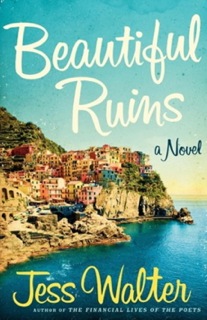
Beautiful RuinsBeautiful Ruins Author Jess Walter of this popular novel will co-write the screenplay with writer/director Todd Field. I’ve seen Field’s Oscar nominated adaptation of Little Children (2006 with Kate Winslet nom. for Best Actress), a haunting film. I trust his talents with Beautiful Ruins. Considering the Italian coastal setting of the book, the movie would likely offer some beautiful cinematography. Imogen Poots is on board, so far.

The Dinner The Dinner — Dutch author Herman Koch’s novel is like a dynamite. I’m half way through the lighted fuse as I type this post, so it’s not full-blown yet, but I’m totally engrossed in this book based on a real-life crime. The dinner menu in an elegant restaurant ingeniously parallels the plot development. I missed it at TIFF last year. And since, I’m not aware that it has made its presence on the big screens here in North America. But hopefully this year we will have the chance to see it. Even if it doesn’t show in your city, read the book still. (Update: to read my book review on Goodreads CLICK HERE.)

Hundred Foot JourneyThe Hundred-foot JourneyAnother culinary movie. This one is much lighter than the above, based on Richard C. Morais’s novel. Story is about a family from India moves to France, opening an Indian restaurant across from a Michelin-starred fine French restaurant. Cultural clashes, the reverse of The Best Exotic Marigold Hotel. The book is quite entertaining, the movie comes with some big names. Producers Steven Spielberg and Oprah Winfrey, Helen Mirren to star, and directed by the prolific Lasse Hallström (Chocolat, 2000; The Shipping News, 2001; Salmon Fishing In the Yemen, 2011)

The GiverThe Giver – The highly popular young adult book by Lois Lowry finally gets a movie appearance, over twenty years after its publication in 1993. Utopia turned bad, ideals and reality. With so many movies on a dystopia, will this still look fresh? Cast include Jeff Bridges as The Giver, and look here, Meryle Streep, Taylor Swift, Alexander Skarsgard, Philip Noyce directs. One of Noyce’s previous works is the adaptation of Graham Greene’s novel The Quiet American (2002). Many may have read this title in school. Time to reread.

The Little PrinceThe Little PrinceLots of talents are behind this newest animation based on the beloved story by French author and pilot Antoine de Saint-Exupéry. Those lending a voice include: Rachel McAdams, James Franco, Marion Cotillard, Jeff Bridges, Paul Giamatti. While I love the earlier musical version (1974, with Gene Wilder as The Fox), I welcome a new adaptation, for I know this will bring the book to the limelight for a new generation. Making a movie nowadays looks to be the most effective way to introduce literature to a younger generation (or whatever generations).

Secret ScriptureThe Secret Scripture — By the Booker Prize short-listed Irish author Sebastian Barry. The novel is an internal dialogue of a close to 100 years-old patient in a mental hospital, Roseanne McNulty, reminiscing her younger days. The older character will be played by the brilliant Vanessa Redgrave, her younger self by the talented Jessica Chastain. I last see them together in a film was in Ralph Fiennes’s directorial debut, the modern version of Shakespear’s Coriolanus. Don’t think these two ladies will appear in the same scene in The Secret Scripture since they are of different time periods, but good to know that the roles are being played by two wonderful actors.

***

Previous Books to Movies Lists:

2014 Book To Movie Adaptations

Upcoming Book to Movie Adaptations

Great Movies Expectations

Related Posts:

My book review of The Dinner posted on Goodreads

Book Review of The Hundred-Foot Journey by Richard C. Morais

Do We Need Another Rebecca Remake? Another Grapes of Wrath?

***