Pride and Prejudice (Part 2): My Favorite Scenes

Unexpected encounter with Mr. Darcy

The second installment of Pride and Prejudice aired on PBS carries some of my favorite scenes in the whole miniseries. The ‘wet shirt’ episode, the favorite of many, is naturally one of them. Thousands have already talked about it, but allow me to add one small voice here. I find the surprise and embarrassing encounter of Elizabeth with the dripping wet Darcy to be an ingenious creation by Andrew Davies, an imaginary addition easily forgiven by many Jane Austen purists, I suppose. My reason for adoring this scene can be summed up in one word: vulnerability.

Both are caught unprepared and their vulnerability makes them equal. The inhibition of Elizabeth’s fondness of the place and her bewilderment of Darcy’s character based on the housekeeper’s compliments are well matched by Darcy’s eagerness to make a good impression but alas, while being caught in the most uncouth manner. Both clumsily and comically try to regain composure and maintain some form of civility. In the spontaneity of the moment, pride is laid aside and prejudice banished. And Darcy, stripped of his usual formal attire, presents his dripping and humble self in the most unguarded manner. Colin Firth has so vividly shown us that genuine and dishevelled appearances can be utterly appealing.

Another favorite scene of mine comes shortly after this chance encounter. As Elizabeth is driven away in the open carriage, she looks back at Darcy in a distance, wearing the fulfilled and satisfied smile on her face, while the camera, from her point of view, captures the handsomely poised Darcy seeing her off, his tall and slender physique growing smaller and smaller in the distance as the carriage is being pulled slowly away…how much tenderness can a camera shot elicit?

But before this beautiful departure at Pemberley, there is the duel of words. The scene I like most in this Part 2 of Pride and Prejudice is probably the first marriage proposal in Hunsford parsonage. Darcy’s words have but achieved one function: confirming every single prejudice Elizabeth might have held towards him. Through Elizabeth, Jane Austen has eloquently delivered her social commentary on the female predicament of her time. While love can be the most attractive reason for marriage for idealistic Lizzy, her better, rational self challenges the form, the motive, and the consequence of love. Would she be satisfied with the kind of love that is condescending, unequally bestowed, that is based on feelings ‘despite of’ and not admiration ‘because of’? Austen has articulated her critique on marrying for financial gains, even for the common good of securing the future of one’s whole family. A condescending relationship, despite the appearance of fondness and love, does not warrant the sacrifice of one’s dignity and value. Elizabeth has demonstrated clearly she has a choice, and she exercises her freedom to reject despite of the lure of wealth, status, and security. Just this scene is reason enough for me to admire Jane Austen.

*******

Click here to go directly to The Finale, Pride and Prejudice Part 3.

Click here to go back to Part 1.

Arti’s three posts on Pride and Prejudice (1995) have been combined into one article and published on the Jane Austen Centre Online Magazine.  To read that and other interesting articles about Jane and the Regency Period, click here.

Austen Regrets Becoming Jane?

After watching last night’s Masterpiece Theatre’s “Miss Austen Regrets”, the fourth installment of The Complete Jane Austen, I feel that something is missing in the title:  a question mark. It should be “Miss Austen Regrets?”  Making it like a statement as it is, the movie rests on the presumption that Jane indeed has regrets before her untimely death at age 41. What would she have regretted?

Would Jane have regretted not marrying for money?  Would she have regretted not trading for a life of comfort in a loveless marriage as Mrs. Bigg-Wither?  Would she have regretted not being a vicar’s wife living with Rev. Bridges and not seeing herself strive to become the writer that she is now? Would Elizabeth Bennet have married Mr. Darcy if he had not gained her total respect and requited love, even though she could have been Mistress of beautiful Pemberley?  Fanny Knight would have regretted not getting married for marriage’s sake, as Jane had so incisively seen through her, but Jane herself?

While the movie Becoming Jane is a fantasy, where the imagination takes flight and the director can have a free hand, more or less, to bring to the screen a creative narrative of ‘what if’,  “Miss Austen Regrets”, on the other hand, is supposed to be a biopic based on facts, from Jane’s correspondences with her niece Fanny.  It is to present an interpretation of Jane’s unmarried predicament derived from what she says in these documents. I have not read these letters. For those who have, is the movie an accurate portrayal of Jane’s internal world?

Even towards the end of the movie, and her life, suffering illness and facing her mother’s scornful accusation, Jane adamantly replies she wouldn’t have sold her soul for wealth. What she has gained she succinctly answered Cassandra in one word, “Freedom”. If she has had any regrets, it would be a life too short to continue the little success she has achieved as a writer, of not earning enough money to support her mother and sister with her writing. In summing up, she feels she has walked the path that God has intended for her.

The title and premise of the film has painted the work with a dark and somber overtone, and Gillian Anderson’s introduction looks like a ghastly announcement of death toll. But the funny thing is: I totally enjoyed it last night!  I was drawn to the movie’s engrossing scenes and intelligent dialogues, its beautiful cinematography and capricious camera work, the fast-paced story and the excellent editing embellished with a powerful score.

Olivia Williams and Imogen Poots as Aunt Jane and niece Fanny make an interesting pair, great contrast in character, and aptly playing out the embedded irony: the idealistic, unmarried Aunt giving practical advice on courtship to her young niece. The blurring of sarcasm and realism also makes the script ever more lively and intriguing.  There may be a miscast in Cassandra, depicting her more like a mother than a sister two years older, but overall the cast is effective in telling the story with depth.

All in all, the movie has succeeded in portraying the complexity of characters and choices Jane has encountered in her short life. It may have come to a different conclusion as some viewers would like to see, but it has presented an aesthetically pleasing and enjoyable work.

And for me, Jane has chosen the road less travelled, and that has made all the difference…


~ ~ ~ Ripples

********

For a comprehensive review of “Miss Austen Regrets” written by Laurel Ann of Austenprose, go to PBS site “Remotely Connected”.

Ms. Place has also posted an interesting review, with lots of pics from the movie, at Jane Austen’s World.

Away From Her Movie Review

Update March 4: Away From Her won 7 Genie Awards last night in Toronto, Canada.  Among them are Best Picture, Best Director, Best Actor, Best Actress, Best Supporting Actress, and Best Adapted Screenplay.

In light of all the awards Julie Christie is garnering in this Awards Season, first winning the Best Actress Golden Globe, then getting an Oscar nod, and just now winning the Screen Actors Guild’s Best Actress Award all for her role in Away From Her, plus director Sarah Polley’s Oscar nomination for Best Adapted Screenplay, I’m re-posting here my review of the movie I wrote 8 months ago in May, 2007.  For those who missed the movie released in theatres last year, it’s timely to read the review and watch the DVD of this beautiful Canadian film, in preparation for the Oscars coming up February 24, 2008.

Away From Her

Away From Her (2006)–How can you turn a good short story onto the screen without compromising its quality? … By turning it into a screenplay written by an equally sensitive and passionate writer, and then, through her own talented, interpretive eye, re-creates it into a visual narrative. Along the way, throw in a few veteran actors who are so passionate about what the script is trying to convey that they themselves embody the message. Such ‘coincidents’ are all happening in the movie Away From Her.

Sarah Polley has made her directorial debut with a most impressive and memorable feat that I’m sure things will go even better down her career path. What she has composed on screen speaks much more poignantly than words on a page, calling forth sentiments that we didn’t even know we had. As Alzheimer’s begins to take control over Fiona, what can a loving husband do? Julie Christie and Gordon Pinsent stir up thoughts in us that we’d rather bury: how much are we willing to give up for love, or, how would we face the imminence of our loved ones’ and our own mental and physical demise.

Based on the story by Alice Munro, ‘The Bear Came Over the Mountain’, Polley brings out the theme of unconditional love not with your typical Hollywood’s hot, young, and sexy on screen, but aging actors in their 60’s and 70’s. It may not be as pleasurable to watch wrinkled faces hugging and kissing, or a man and a woman in bed, bearing age spots and all, but such scenes effectively beg the question: why feel uncomfortable?

Why does love has to be synonymous with youth, beauty, and romance? It is even more agonizing to watch how far Grant is willing to go solely for love of Fiona. Lucky for us, both writers spare us the truly painful at the end. It is through persistent, selfless giving that one ultimately receives; and however meager and fleeting that reward may seem, it is permanence in the eyes of love. And it is through the lucid vision of a youthful 27-year-old writer/director that such ageless love is vividly portrayed….Oh, the paradoxes in life.

~ ~ ~ Ripples

***

The Diving Bell And The Butterfly (2007)

DivingBellAndTheButterfly

Update Feb. 23: Julian Schnabel just won the Best Director Trophy and Janusz Kaminski the Best Cinematographer at the Independent Spirit Awards in Santa Monica today.

Update Feb. 11: Ronald Harwood just won the Best Adapted Screenplay at the BAFTA (British Academy for Film and Television Arts) Awards in London last night.

Director Julian Schnabel is an established New York artist/painter. Adhering to the ‘neo-expressionist’ style, his work has been exhibited at galleries around the world.  In The Diving Bell And The Butterfly,  Schnabel has turned into a master of realism as he vividly captures the traumatic experience of Jean-Dominique Bauby, not with a paintbrush, but with the potent use of the camera.

Jean-Do Bauby was the Editor-In-Chief of Elle magazine in France. At the age of 43 he suffered a stroke. His whole body was paralyzed except his left eye. He became a sufferer of a rare condition of “locked-in syndrome”: while he was able to comprehend what others were saying to him, he could not communicate with them. As if trapped inside a diving bell deep in the ocean tethered to life by a single chord, he was encased in his own body, completely isolated from the outside world.

With the help of his speech therapist Henriette in the hospital, Bauby learned to use what was left in his ability: the blinking of his left eye. With this minimal movement, he opened up a portal of his inner world. By painstakingly blinking to select the letters of the alphabet, Bauby was able to dictate to his therapist his memoir, completed a few days before his death. This film is the visualization of the book.  To read my review and excerpts of the book, click here.

Imagine watching a movie with blurry camera work, frames cutting off the full head of people, and sometimes camera angle so close-up to a face you feel suffocated, …blurry shots, indefinitive dialogues…This is the realism of Julian Schnabel, the film director. He wants the viewer to look out from the left eye of Jean-Do Bauby.

Fortunately viewers are spared lengthy display of such realism, because in the memory of Bauby’s past experiences and in his imagination, we are able to see sharply focused and beautiful scenes… reality may be blurry and shaky, memories and dreams are clear as crystal.

From the artist eye of Julian Schnabel, to the blinking eye movement of Jean-Do Bauby, the film captures the poignant struggle of a human striving to live every single minute of everyday. It depicts the power of the mind and spirit, the humor that sustains, the painful yearning for love and intimacy, the daily human condition magnified a thousand times due to debilitation, the whole physical being tethered on the blinking of an eye and the inner searching of a soul alive.

Mathieu Amalric has a demanding role to play as the paralyzed Bauby, for his whole acting is confined to his one left eye. I must say he has done a remarkably engrossing and convincing feat.

Marie-Josée Croze (Best Actress at Cannes for The Barbarian Invasions, 2003), by taking up the role as therapist Henriette Durand, has the equally demanding task of looking into the camera and reciting the French alphabets numerous times, and each time, with passion, pathos, and persistence, each time transmitting a new beginning, a new hope.

Max von Sydow (with film credits too numerous to mention), the veteran actor playing the role of Bauby’s 92 year-old father, equally shut-in, yet ever alive in spirit, the only character seeping sentiments, however restrained. It is exactly because of such restraints that pathos gets through.

And Emmanuelle Seigner, the ex-wife of Bauby, the mother of his three children, the keeper of memory, creator of new experiences, and the butterfly for the soul trapped in the diving bell. A marvellous character.

Very poignant acting, a very dynamic and powerful movie, and, despite its subject matter, an uplifting film for every living, breathing, and feeling soul.

The Diving Bell and the Butterfly is nominated for 4 Oscars: Best Cinematography, Best Directing, Best Editing, and Best Adapted Screenplay. For the full list of Oscar Nominees, click here.

~ ~ ~ ½ Ripples

The Kite Runner: Book Into Film

The Book

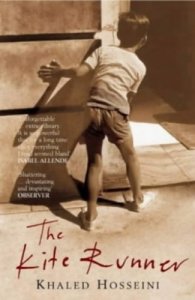
Kite runner

I read The Kite Runner last summer, and it has remained one of my favorite books. It might as well be called Atonement, because that’s exactly what it’s about.  But this time, the character, Amir, has to deal with the sin of omission.  Just the same, failure to act can lead to devastating consequences, and Amir, just like Briony in Ian McEwan’s Atonement, has to live with his guilt throughout his life.  Unlike Briony, Amir has a chance to redeem himself.   As Amir’s mentor Rahim Khan says: ‘There’s a way to be good again’, despite the tragedies that have already taken place.
.
Highly acclaimed as the first Afghan novel written in English, The Kite Runner became an international bestseller, publishing in 40 countries.  Author Khaled Hosseini was born in Kabul, son of a diplomat. His family sought and received political asylum in the United States as the Soviet invaded Afghanistan, settling in California in 1980 when he was 15.  Hosseini later studied medicine and became an internist practicing until 2004, when he began to devote his time fully to writing.
.
The book is neatly divided into three sections, the first narrates the childhood of the socially privileged Amir growing up in Kabul.  His best friend is Hassan, the son of their servant Ali.  The two boys grow up together, freely roaming the streets of Kabul almost as brothers.  Hassan is totally dedicated to Amir.  He has been Amir’s kite runner, retrieving downed rival kites, and defended him from bullies.  During one horrific incident, Amir betrays Hassan.  Deeply troubled by guilt, Amir devises a plan to ultimately rid himself of the source of his torments, indirectly driving Ali and Hassan out of their household.
.
Upon the Soviet invasion of Afghanistan in 1979, Amir flees to America with his father.  The second part of the book chronicles Amir as an adult, his once fragile relationship with his father is forged stronger as the two strive for their new life in a distant land.  Before his father’s death from illness, Amir gets married and realizes his dream as a writer.  The third part of the book depicts Amir’s journey back to the now Taliban controlled Afghanistan to fulfill a mission that would ultimately lead to his personal redemption.
.
I was moved as I read the author’s poignant first-person narratives.  This is the power of words in the hand of a sensitive and talented writer, articulating the deepest feelings otherwise hidden beyond reach.  I enjoyed the first part the most.  Through vivid description and deceptively simple language Hosseini depicts poignantly the friendship of Amir and Hassan, the loyalty of Hassan and the betrayal by Amir, and ultimately the separation of the two childhood friends.
.
The political upheavals are used as a backdrop, adding texture to the story.  The book is not about the Soviets or the Taliban.  It’s about a father-son relationship, family, friendship, love, and loss.  Above all, it chronicles the life-long haunting consequences of one’s action or inaction, the atonement of wrong done, and the necessary journey in search of redemption.
.
And for the kite soaring high in the sky, it may well be a metaphor for freedom and victory, not just politically, but internally, being set free from burden, from guilt.  Despite a relatively weaker second section, overall The Kite Runner is beautifully written, an engrossing and satisfying read.

~ ~ ~ Ripples

The Movie

The Kite Runner Movie

Update Jan. 22:  The Kite Runner has just been nominated for an Oscar for Best Original Score.

First off, I must state that I’m evaluating the film according to its own genre, as a film.  And to be fair, the movie follows the story quite closely, almost dividing the script into three sections like the book, and telling the story adequately.  Ironically, such direct transfer does not fare well with the film medium.  The transition of scenes are sometimes quite abrupt and choppy.  The same dialogues are there, but the mood is missing. The eagerness of storytelling seems to have overshadowed the artistry of movie making. As a result, the film lacks the power to engage.

I must say though, there are merits that I should acknowledge.  Kudos to Ahmad Khan Mahmidzada for portraying young Hassan so movingly.  He’s probably the most affable and natural actor in the whole movie.  His presence is the appeal of the film, and he well deserves the Critics Choice Award nomination for Best Young Actor.  Unfortunately his role only appears in the first part.

Transferring the story to screen, director Marc Forster (Stranger Than Fiction, 2006) has taken advantage of the visual element, bringing to life the excitement of the sport of kite combat.  To North American audiences, such scenes may well be a spectacular eye-opener.  The original score by Alberto Iglesias (Volver, 2006, Constant Gardener, 2005) plays an essential part in the movie, imparting the intended effects where other film elements may be lacking. His composition earns him a nod from the Golden Globes for a Best Original Score nomination.

The movie attempts to present the cultural sights and sounds of Afghan life, albeit on a very small scale. My main disappointment though was to find out, as the end credits rolled, that the Afghan scenes were all shot in Xinjiang and Beijing, China.  Was I too naive to think that a movie about Afghanistan should be shot in Afghanistan?

As I was watching the movie I felt something was missing, but couldn’t pinpoint what.  I felt the acting by the main character, the adult Amir, played by Khalid Abdalla (United 93, 2006) and his wife Soraya (Atossa Leoni), to be distant and detached.  Maybe due to their lack of acting experience, their performance seem to be less intense and expressive than what the story demands.

Now that I’ve given it some thoughts, I think the lack of the intimacy which the book so successfully delivers can be compensated on screen by a narrative voice-over.  The personal narrative of the book is what makes the story poignant and moving.  The film could benefit from a first person narrative to draw viewers closer and to convey more effectively the hidden turmoils that can’t be expressed cinematically, or technically.  A well written narrative voice-over could impact the audience in a more haunting way as the book has achieved.

Overall, the movie is an adequate adaptation of the book, but it only offers a glimpse of what the book entails. As a nominee for the Best Foreign Language Film category at the Golden Globes this year, hopefully, it can draw viewers’ interest to dig deeper into the profound story by reading the source material first hand.

~ ~ 1/2 Ripples

Atonement: Book Into Film


The Book

Imagine my surprise as I finished Austen’s Northanger Abbey and opened up Ian McEwan’s Atonement to find this epigraph in the beginning of the book:

“Dear Miss Morland, consider the dreadful nature of the suspicions you have entertained.  What have you been judging from?  Remember the country and the age in which we live.  Remember that we are English: that we are Christians.  Consult your own understanding, you own sense of the probable, your own observation of what is passing around you.  Does our education prepare us for such atrocities?  Do our laws connive at them?  Could they be perpetrated without being known in a country like this, where social and literary intercourse is on such a footing, where every man is surrounded by a neighbourhood of voluntary spies, and where roads, and newspapers lay everything open?  Dearest Miss Morland, what ideas have you been admitting?”

They had reached the end of the gallery; and with tears of shame she ran off to her own room.

Jane Austen, Northanger Abbey

Henry Tilney’s somber words to Catherine Morland in Northanger Abbey sets the stage for the story in Atonement.  Not only that, these words prove to be the most tragic irony as the plot unfolds, turning Austen’s satirical parody into heart wrenching reality.

The story starts off in the 1930’s, on a hot summer day in the idyllic country estate of the upper-class Tallis family.  The misinterpretation of a couple of incidents by imaginative 13 year-old Briony sets off the events that ultimately rip the whole family apart.  Later in the evening, Briony witnesses a crime but falsely accuses the wrong man, who happens to be her older sister Cecilia’s secret lover Robbie, the housekeeper’s son.  Is it merely the misunderstanding of a young girl that drives her to bear false witness? Or is it jealousy…or even revenge?  Maybe even Briony herself, as she recollects at 77, is baffled by her own motive. The heart is indeed an unsearchable deep to fathom.

Regardless of the cause, it is the consequences of her misdeed that has tormented her all her life: the breakdown of family relationships, the innocent sent to jail, and later to a horrific war zone, and a pair of lovers torn apart.  As she cannot undo the past, Briony re-creates in the sanctuary of her own novel writing an alternative ending to a tragic story. Fantasy or realism?  As she reaches old age and dementia sets in, the line between the two has also blurred, and yet her inner torments stay as sharp as ever.

Through Briony’s story, McEwan has poignantly shown that remaining unforgiven is probably the harshest punishment of sin.  No matter how hard one works to be redeemed, the act of forgiveness lies with the one who has been wronged.  In the latter part of the story, we see Briony’s painful strive for peace and atonement, and her realization that redemption comes only when sin is pardoned.  Without the forgiveness of sin, there is no end to guilt.

But the story is not only about Briony’s desparate attempt to come to terms with her past, it is also a love epic.  It is the heart-wrenching chronicle of the perseverance and loyalty between two lovers, Cecilia and Robbie, who, sustained by love, are able to withstand the searing pain of separation and atrocities. It is about the absurdity of war, that in the chaos of a war zone, everyone is guilty, and yet, everyone is a victim. It is also about the essence of a family and the fragility of relationships.  The multi-layered structure of the plot and characterization give rise to the complexity and depth of the story.

Booker Prize winner Ian McEwan has written 11 novels and won numerous literary awards.  The novel Atonement has garnered four since its publication in 2001.  McEwan has shown himself to be a master of descriptive and incisive writing.  His story is riveting.  At times I have to read slowly, going back to re-read a passage several times, in order to capture all the details and savour the intricacies of the description and characterization.  At times I read it quickly to capture the flow of the plot, eager to find out where it would lead me.  The author has my emotions in his grasp.  I have to admit, this is one of the rare occasions that I highlight as I read a novel.  Overall, a very engrossing and satisfying read.

~ ~ ~ Ripples

The Film

Atonement the movie

Update February 11:  Atonement just won Best Picture and Best Production Design at the BAFTA (British Academy for Film and Television Arts) Awards in London yesterday.

Update January 22:  Atonement is nominated for 7 Oscars at the 2008 Academy Awards, including Best Picture, Best Supporting Actress, Best Adapted Screenplay, Best Cinematography, Best Art Direction, Best Costume Design, and Best Original Score.

Update on January 14:  Atonement won the 2008 Golden Globe Best Picture (Drama) and Best Original Score Awards announced at the HFPA News Conference last night.

With such a masterpiece in their hands, the screenwriter, director, actors …the whole lot, have a tall order to fill in turning the book into film.  I must say they have done an extraordinary job in this adaptation.  The film is nominated for 7 Golden Globe, including Best Picture (Drama), Best Actress and Actor, Best Supporting Actress, Best Director, Best Screenplay, and Best Original Score.

Unlike many movies based on literary work, this is one of the rare ones that truly depicts the essence of the book and keeps the integrity of its plot.  Screenwriter Christopher Hampton (Oscar winner for his screenplay of Dangerous Liaison, 1988 ) has gleaned the pivotal episodes and remained loyal to the work, keeping the epic span intact; although the war section can be dealt with more details and depth as the novel has rendered.

Thanks to the great work in film editing, the audience can readily capture the flow of the story and benefit also from the seamless flashbacks to see the same event from another point of view, hence, understanding Briony’s misinterpretation. I’m sure even for those who haven’t read the novel, the storytelling is still clear and equally intense.

Director Joe Wright (Pride and Prejudice, 2005) uses the elements of film powerfully to bring to life an excellent script. The music and sound effects (who would imagine the typing sound on an old Corona can be used so effectively in a musical score), the cinematography and the visual flashbacks, the costumes and set all work together to create a masterpiece of cinema artistry worthy of McEwan’s work.  Kudos to Dario Marianelli (The Brave One, 2007; Pride and Prejudice, 2005), who has composed a most riveting score heightening the intensity and poignancy of the film.  I must also stress that, while the music is a powerful element in the movie, the silent moments are equally engrossing.

Young Briony, 13 year-old Irish actress Saoirse Ronan (I’ve read different versions of how her first name should be pronounced so I’m not including any suggestion here) well deserves the Golden Globe nod for a Best Supporting Actress nomination.  Veteran actress and Oscar winner Vanessa Redgrave is brilliant and her poignant summing up at the end is both needed and satisfying. I’m afraid to say the weak link is Briony at 18, played by Romola Garai (Amazing Grace, 2006), where she could be more intense and affective.

And for the lovers, Keira Knightley (Pirates of the Caribbean, 2007, 2006; Pride and Prejudice, 2005) and James McAvoy (Becoming Jane, 2007; The Last King of Scotland, 2006) as Cecilia and Robbie, may well go down in movie history as a memorable pair of star-crossed lovers. Their acting is superb and their chemistry, charismatic.  The passionate scene in the library just confirms that it doesn’t need nudity to convey love, desire, or sensuality.  I had in mind the movie Lust Caution (Ang Lee, 2007) as I was watching this scene.

Knightley and McAvoy are nominated for a Best Actress and Best Actor award at the Golden Globes.  For their very moving performance in Atonement, I’d like to see them continue the ride all the way to the Oscars, and I wish them well.

Overall, an excellent adaptation of an enthralling novel.  Don’t wait to read the book, go see the movie.  But I’m sure after that, you’ll want to get hold of the novel right away.  This is one of the rare examples of both book and film are worthy of complementing each other.

~ ~ ~ Ripples

Juno (2007)

Update Feb. 23:  Juno just won the Best Feature at the Independent Spirit Awards in Santa Monica today. Ellen Page won Best Actress and Diablo Cody the Best First Screenplay. 

Update Feb.11:  Diablo Cody just won the Best Original Screenplay for Juno at the BAFTA (British Academy for Film and Television Arts) Awards last night in London.

Update Jan. 22:  Juno has just been nominated for 4 Academy Awards including Best Picture, Best Director, Best Actress, and Best Original Screenplay. 

Just 13 days into the New Year and we’ll have the 65th Golden Globe Awards…so little time for so many movies to watch before then.  But, I’m glad I got a glimpse of a few of the nominees and I’ve to say, so far, my time well spent.

By now, Juno is no surprise.  This little indie film has been nominated for Best Picture (Comedy or Musical) by the Hollywood Foreign Press Association for a Golden Globe.  Not bad for the young cast led by Canadian actress Ellen Page from Halifax and Michael Cera of Arrested Development fame, to be up against Tom Hanks and Julia Roberts of Charlie Wilson’s War, or for first time screenwriter Diablo Cody getting the Best Screenplay nod.  That she has already won 6 awards for Juno could well lead her way into the Oscars.

The pleasant surprise about Juno is not just the stylish motion graphics in the opening title sequence, the hip music and witty dialogues, the affable characters, or the teenage culture it depicts, but the implicit message this film is getting across.  Director Jason Reitman (Thank You For Smoking, 2005) has again created another social commentary, but this time, making a more powerful and affective statement.

Juno is a 16 year-old high school girl, very forthcoming, very lively, very self-assuring, and…very pregnant. What she intends to do about her predicament and how her Dad and stepmom react form the backbone of the story.  And…what a fresh and welcoming perspective the plot brings to the screen in this day and age.  I’d say, a very brave movie indeed.  In the story, the young characters may not have their act together, at least they have the fundamental element to deal with their situation, their genuine humanity, and their respect for life.

In contrast, the character that Jason Reitman (Arrested Development, The Kingdom, 2007) plays shows that adults may still need to grow up, or, that the road to maturity is a life-long journey.  Let’s not judge so quickly…

A heart-warming and pleasant movie for the new year.  No, it’s not promoting teenage pregnancy, but a viable alternative and a very humane solution to the problem. In an imperfect world, a close to perfect scenario.

~ ~ ~ Ripples

Last Minute Gift Ideas

Music CD’s, easy to pick up, easy to wrap, and light-weight enough to carry when you’re in the midst of Christmas shopping frenzy.  But what I’m recommending here are not your current top releases of the season, like Josh Groban’s Noel, selling 2.1 million copies so far this Christmas.  (UPDATE: Josh Groban’s Noel has just climbed to the no. 1 spot as the best selling CD of 2007 in the US, close to 2.8 million copies sold.)  Nonetheless, the following selections are equally enjoyable, and will likely make a pleasant surprise for your recipient.  

I’d give them all  ~ ~ ~ Ripples out of 4.   Actually, any CD from these artists is worthy of giving, although the following titles are my favorites.

CARLY SIMON — Into White

A collection of some familiar tunes, in Carly Simon style, making the new arrangements sound soulful and at times…even better.  Simon’s signature deep alto voice makes titles as simple as Oh! Susanna sound like a folksy classic.  Other numbers include the Beatles’ Blackbird, and familiar tunes like You Are My Sunshine, Scarborough Fair, Over The Rainbow, all offering a much more serene and moving rendition.  I particularly enjoy Devoted To You medly with All I Have To Do Is Dream…oh the wonderful Everly Brothers, re-interpreted by Carly Simon. You Can Close Your Eyes is particularly poignant, with Ben and Sally Taylor, Simon’s children with ex-husband James Taylor. The album also includes two new tunes, Simon’s own Love Of My Life and Ben Taylor and David Saw’s I’ll Just Remember You, which, in Simon’s own words, “…the most beautiful and simple song I’ve ever heard.”  All in all, this CD is one true gem, serenity in audio mode.


EVA CASSIDY — Songbird

Like so many artists before her, such as Van Gogh and Jane Austen, to name a few, Eva Cassidy received her honor and recognition posthumously.  1996 marked her untimely death from melanoma.  Since then, Cassidy’s Songbird album received Gold in 2000 and Platinum in 2001.  Her soulful soprano voice transcends the genres of folk, jazz, and country into a sublimation of a unique vocal style.  Fields of Gold starts off this album.  Just for this song, it’s worthwhile to get the CD.  I find Cassidy’s rendition much more soulful and poignant than the original Sting version.  Other songs include Autumn Leaves, Songbird (in Love Actually, 2003), Time Is A Healer, I Know You By Heart.  Yes, there’s also her own interpretation of the classic Over The Rainbow, bringing into it her signature fine vocal and acousitic guitar playing.  A valuable collection.


JOHN COLTRANE — Coltrane for Lovers

If you’re a jazz lover, this is a must-have (you probably own it already).  If you’re not a jazz lover, this is a must-have.  It’ll introduce you to what jazz can do to your whole psyche.  A compilation of Coltrane’s tenor sax playing some soulful and quiet romantic tunes.  You don’t need to be a jazz lover to be attracted to these soothing and sensitive renditions.  I find it particularly relaxing listening to this CD while driving alone at night…quite a listening, and driving experience.  Selections include numbers with Duke Ellington on the paino, and Jimmy Garrison on bass.  A most enjoyable title for any lover, music or romance.
Amazing Grace for Christmas

 Amazing Grace

This is one amazing film about an extraordinary man’s fight against slavery in 18th Century England.  The story chronicles Christian Parliamentarian and social reformer William Wilberforce’s mammoth battles in the British political arena to abolish the slave trade.

At that time, slaves were shipped from Africa to the West Indies in appalling conditions, many arriving dead.  They were chained to work on sugar plantations of British owners. Abolishing the slave trade meant a threat to the very economy of Great Britain.  William Wilberforce had given up twenty youthful years and his health to champion the anti-slavery cause.  Three days before his death, he saw his life-long advocacy triumphant as the abolition bill passed in the House of Commons, demolishing the institution of slavery in all of the British Empire.

The film is a display of superb artistry.  First of all, it benefits from a well-written screenplay by Steven Knight.  The award-winning Knight’s other film Eastern Promises (2007) has just garnered 3 Golden Globes nominations including Best Picture.

The exceptional cast is most satisfying to watch. Welsh actor Ioan Gruffudd is William Wilberforce, whose performance is intelligent and engaging.  He is effectively supported by a mass of extraordinary British actors, among them the veterans Albert Finney and Michael Gambon.

Albert Finney plays John Newton, the Pastor and mentor of Wilberforce.  It is from Newton that Wilberforce draws his inspiration and strength for his cause.  Newton himself used to be a slave trader.  His ephiphany came during a deadly storm while he was on a slave ship. The tempest he encountered reflected the torrents of guilt billowing in his own conscience.  Ultimately yielding to a merciful God, Newton was totally changed.  He abandoned the slave trade, his own livelihood, and became a Christian Pastor, spreading the message of God’s love and the freedom God had intended for all people. His writing of the tune and lyrics of Amazing Grace summed up the poignant conversion in his life.

The meticulously researched and designed period costumes and set, together with the fine cinematography bring out a beautiful and engaging film.  In many scenes, I feel like I’m looking through a portal of Rambrandt and Vemeer’s paintings in motion. 

The DVD is packed full of commentary and background information.  The music video of Chris Tomlin playing the piano and singing his contemporary version of Amazing Grace is both a visual and audio delight. 

One note of caution though, the film follows closely the British Parliamentary proceedings and political debates of the time.  Those anticipating a more romantic rendition may not have their expectation met.  However, I find the film very educational, informative, as well as inspiring.  What better gift to give this Christmas than the message inspired by the song Amazing Grace:

Chris Tomlin – Amazing Grace

(My Chains Are Gone)

Amazing grace
How sweet the sound
That saved a wretch like me
I once was lost, but now I’m found
Was blind, but now I see
‘Twas grace that taught my heart to fear
And grace my fears relieved
How precious did that grace appear
The hour I first believed
My chains are gone
I’ve been set free
My God, my Savior has ransomed me
And like a flood His mercy reigns
Unending love, Amazing grace

~ ~ ~ 3 Ripples

2008 Golden Globe Nominations

The list is out, and the winner is….

James Schamus, CEO of Focus Features, distributor of the film Atonement, which claimed 7 Golden Globe nominations. Schamus has been riding high on his winning streak with Lust Caution, which he co-wrote and executive produced. Director Ang Lee’s Lust Caution recently garnered 7 Golden Horse Awards in his native Taiwan, after snatching many other film awards including the Golden Lion at the Venice Film Festival earlier this year.  The movie also got the nod from the Golden Globe for a Best Foreign Film nomination.

That’s the glamour of winning (being nominated in 7 Golden Globe categories is already a win).   Such is the licence to bask in the recognition, the exposure, the praises, the esteem-boosting limelight and afterglow in the movie business, no wonder Schamus said, “I’m back from Taipei and I’m on such a high.” 

 And in another corner, I see another film quietly being recognized, receiving one acknowledgement.  Julie Christie is nominated for her role in Away From Her.  That’s the sole recognition of this Canadian film by the Hollywood Foreign Press Association at the Golden Globes.  I can see film director Sarah Polley quietly pleased, for I think she knows but is too modest to admit that it takes an inspiring and talented director to bring out the acting best from her actors.  That at 28, she could work well with the reclusive and iconic Julie Christie, and Canadian veteran actor Gordon Pinsent speaks volume to her maturity and skills.

Recently honored by the New York Critics Circle with their Best First Film Award, as well as the Los Angeles Film Critics Association’s New Generation Award, Sarah Polley once said during an interview:

“I don’t’ think that there’s any chance that I would get nominated. I mean I really hope that the actors have a shot at it …it would be such a dream come true if they were acknowledged…”

Such gracious words from a 28 year-old just serve to prove that it doesn’t need a Golden nod to have a golden future. Be prepared, Sarah, to see many dreams come true.

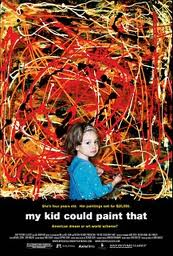
My Kid Could Paint That

If you type in “Marla Olmstead” in your Google search, 37 pages of information will come up. From these pages, you’ll know that she is a painter, born in Binghamton, New York. Her paintings have been compared to Wassily Kandinsky (the pioneer of modern art) and Jackson Pollock (the legendary drip artist). You’ll also learn that her works have been sold for tens of thousands of dollars. And soon enough, you’ll learn that Marla Olmstead is 7 years-old.

Nominated for a Grand Jury Prize at Sundance this year, My Kid Could Paint That is director Amir Bar-Lev’s quest to find out the true story behind this little girl who has been hailed as a “pint-size Picasso”. In the film, we see her using professional paintbrushes and other art accessories to work on canvases over 5 feet tall.

The first half of the documentary we see Marla Olmstead having her first showing in a NY Gallery, she was only 4 then. Her paintings sold like hot cakes, with a waiting list of more than 200 buyers, ready to snatch up anything she would produce. No need to worry about getting work for the next few years. As a 4 year-old, Marla had already earned more than $300,000, which her parents said had been put aside in a college fund. (Would she be going to college?)

Marla Olmstead Marla’s Burning Blue Ball

Then came the bombshell half way into the film. In a February, 2005, CBS’s 60 Minutes reporting, Marla and her parents were painted in a very different light. In the program, Charlie Rose interviewed Ellen Winner, a psychologist who has studied gifted children and specializes in visual arts. She saw a video tape taken by a hidden camera in the home of the Olmstead’s, unobtrusively recording Marla at work. What she suspected was a coach behind the child, someone prodding her on, even directing her moves. After the airing of the CBS program, a once beautiful art prodigy was overnight turned into an ordinary child with manipulative parents in the background steering her purposefully towards financial gain.

Sales began to drop, and warm praises turned into damning accusations. Loving parents are now seen as manipulative frauds. The Olmsteads have since made their own DVD to disprove the detrimental claims. You can see some of the clips showing Marla painting at home in the website http://www.marlaolmstead.com/

Director Amir Bar-Lev has successfully captured the emotional reactions Marla’s parents had in response to the 60 Minutes interview, and their attempt to defend their name in denying their invovlement in Marla’s artistic productions. Interestingly, the film does not take a stand. Rather, it has raised more questions than provided answers:

For those of us who are parents, what are our motives in raising our children? How can we decide what’s ‘best’ for them? How much influence should we or do we have over our children’s development? Where is the line between nature and nurture, pleasure and porfit? What’s more, what is art anyway? And the definition of modern art? Or, talent, for that matter? Does talent has to be associated with a monetary value or fame before it can be recognized?

Every one would have very different view of this story, and his/her own personal set of queries. I went to see this movie with a painter friend of mine. Not surprisingly, as we came out of the theatre, we had very different reactions to the film. Well one question I know I have, and it’s for my mom. Mom, if you’re reading…why wasn’t I given the big canvases and professional paintbrushes and those huge tubes of paints when I was a kid? How come I only got pencil crayons?

~~~3 Ripples

Snow Cake: Autism and Beyond

Snow Cake

Snow Cake (2006)–For those who wait for a movie to come out on DVD before seeing it, here’s a recommendation. Snow Cake came out a few months ago on DVD but is still on the current release shelf. It opened the 2006 Berlin International Film Festival with a gala screening, and was shown at numerous film festivals last year including the TIFF.

Seems like a long wait, but well worth it. And for those who have already seen it in theatres, the DVD release could well be the second wind. Considering all the special features of interviews with director and cast, as well as the quality deleted scenes, you might want to keep this one.

Filmed in Wawa, northern Ontario, the Canadian and British collaboration is one of those gems that can be found quite readily in the indy batch. Welsh director Marc Evans has won several European film awards. On top of his sensitive handling of the story, the film benefits greatly from an amazing cast.

Alan Rickman is Alex Hughes. While driving through Ontario to Winnepeg,  he picked up a young hitchiker, Vivienne (Emily Hampshire, who was nominated for a Genie for this role).  During the trip they got into an accident and the girl was tragically killed.  Propelled by guilt and responsibility, Alex went to look for Vivienne’s mother Linda, played by Sigourney Weaver, in the town of Wawa.  Upon finding her, it did not take long for him to notice that she had received the news with a very different light. Linda was autistic. From his short stay with her, coming to invovle in Linda’s life and getting to know her mysterious neighbour Maggie (Carrie-Anne Moss), Alex drove on to his destination a few days later with a new perspective on himself and his ordeal.

Even though short-lived, Vivienne’s character is memorable. Her enthusiasm for life and acceptacne of those around her underscores the film.  The sound of Broken Social Scene adds a touch of lively, contemporary flare, like a tribute to the affable character of Vivienne. In contrast, Alan Rickman’s role as Alex is painfully affective. At times it is heartwrenching to watch as he deals with his internal torments as the story reveals itself.

Sigourney Weaver had spent a whole year researching on autism to ready herself for the role of Linda.  And for most parts, she has delivered a convincing performance. But it is the screenwriter Angela Pell that has so poignantly depicted the limitations but also the different views and insights an autistic person can offer those who are considered ‘normal’. Pell has mingled her characters, autistic or not, into a pool of humanity, revealing the indistinguishable, common thread joining them all.  Her script is at times very funny, and at times permeates with pathos. Through the words of Linda, the punchline is delivered ever so aptly at the end. Angela Pell has indeed written from her heart and her own experience.

She is mother to a nine-year-old autistic son.

~~~3 Ripples