Writing from Memory and Imagination

P1010393

Upon a request from her friend and Granta Magazine editor to submit a birdwatching article, journalist Lynn Barber instead sent in a piece of memoir.   Well it was published just the same, in the 2003 Spring Issue of Granta… good to have friends in the right places.  But why not, it was an entertaining piece, albeit the name of the article might be a bit of a surprise to the editor:  ‘An Education’.  And who would have known that six years later, the short memoir would evolve into a full length, award-winning film.

In her recent article in Granta, Lynn Barber reminisced on the creative process and the adaptation from print to screen.  I find the article both amusing and enlightening.  Here are some tidbits.

Soon after her memoir was published in Granta, Barber was contacted by film producer Amanda Posey about turning it into film.  (Now that’s quick! But no… don’t think I’ll start writing a memoir, not just yet.)  But Barber was too preoccupied with other personal matters at that time to take it seriously.  Nevertheless she said okay to the proposal.  Months passed, and a contract ‘the size of a phone directory’ arrived.  Then she realized it wasn’t just talk after all.

Now to the screenwriting process.  Barber declined to write the screenplay herself, to the delight of film producer Posey, who had someone in mind already.  That was her then boyfriend and now husband the writer Nick Hornby.  Hornby’s books include About A Boy, Fever Pitch, and High Fidelity, all turned into well-received movies.  But what caught my attention is Barber’s comment:

I found it odd (still find it odd) that this pre-eminently ‘boy’ writer should so completely understand what it felt like to be a sixteen-year-old schoolgirl who was on the one hand very bright but on the other very ignorant about the world but, miraculously, he did. He even seemed to understand my parents, which is more than I could ever say myself.

Do writers always understand their own gender better?  Are they necessarily less equipped to write about their opposite sex?  Barber’s comment mentioned Hornby had grasped an understanding of her parents just as well.  Maybe it’s not so much a gender issue but one of sensitivity, empathy, and observational skills:  A good writer is a good reader of people, regardless of their gender, or age, for that matter.

It took years for the screenplay to evolve, after eight drafts to be exact.  The last one is quite a divergence from the very first.  Herein lies another interesting point.  The first draft is close to the memoir, while the last has taken a life of its own, reality has been altered to fit the screenplay genre.  The ending has also been tailored to elicit intended effects.  It speaks to the creative writing process:  Memories may be the initial springboard, but imagination is the fuel that propels the work to a visual realm.

The adaptation from memoir to screen has been a long process.  Barber notes:

Years passed, draft screenplays came and went, possible backers came and went. I would have given up by year two, but Nick and Amanda and their partner Finola Dwyer persisted and eventually, last year, the film went into production.

Apart from creativity and talent, persistence and diligence could well be the key ingredients in all sorts of production.

And finally, it boils down to memories again.  When asked about her thoughts upon seeing her sixteen-year-old self being portrayed on-screen, Barber, now at sixty-five, has no immediate answer.  She is lost in memory, again.  What exactly was her feeling at sixteen?  Or, for that matter, what had happened at twenty, or thirty?

Poignantly she asks:  Who owns memories after all?

Do memories belong to one’s subjective self?  Or to those around you who had shared your experience?  Is it merely age that has blurred the boundaries between memories and imagination, or is it our creative mind?

Or, does it even matter anyway… as long as you don’t call it non-fiction.

***

To read my review of the movie An Education, CLICK HERE.

To read Lynn Barber’s personal essay on her memoir, CLICK HERE.

Photo:  Banff, Alberta.  Taken by Arti of Ripple Effects, August, 09.  All Rights Reserved.
An Education (2009)

2725416803.JPG

UPDATE Feb. 21:  Carey Mulligan just won Best Actress at the BAFTA (British Academy of Films and Television Arts) Awards. CLICK HERE to read more. 

UPDATE Feb. 2, 2010 OSCAR NOMINATIONS: An Education receives a nomination for Best Picture in the coming 82nd Academy Awards.  Carey Mulligan gets a nod in the Best Actress category, and Nick Hornby gets a nom for Best Adapted Screenplay.

Update Jan. 23, 2010:  Carey Mulligan is a Best Actress nominee and a presenter at the Screen Actors Guild Award tonight.

Update Dec. 16:  Carey Mulligan has been nominated for a Golden Globe Best Actress Award.

Now is the time of the year that’s most gratifying. The awards season is coming up in just a few months. So this is when possible contenders are released, albeit some with just limited screening, and they aren’t likely to be your Hollywood blockbusters that might stay on for a while. That’s why I opted for ‘An Education’ over the weekend. ‘A Christmas Carol’ can wait.

An Education is the little British film that comes with high acclaim. The coming-of-age story is based on the memoir by British journalist Lynn Barber.  It first appeared in Granta magazine, later published by Penguin. The screenplay is written by Nick Hornby, the popular writer who gave us About A Boy, Fever Pitch, and High Fidelity, all turned into movies.

An Education won the Audience and Cinematography Awards at Sundance earlier this year.  And it might well propel Carey Mulligan to an Oscar nomination, which she so deserves. She has been noted as the young, modern Audrey Hepburn. But my impression of her is one fresh acting talent, sweet and extremely amiable. I’ve enjoyed her role in the BBC TV drama Bleak House as Ada Carstone. She’s Kitty Bennet in the 2005 version of Pride and Prejudice, and has a small role in the memorable When Did You Last See Your Father (2007). An Education is her first major role in a feature film.

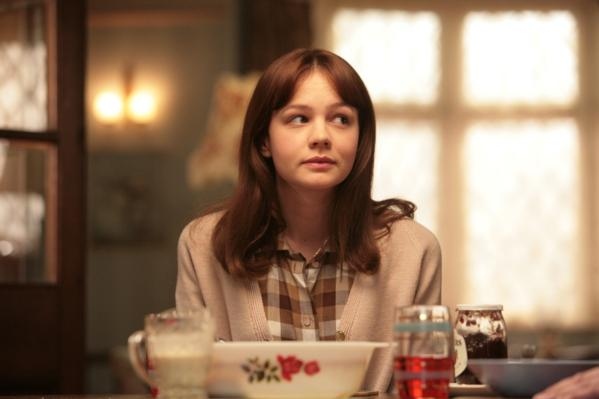
Carey Mulligan plays 16 year-old Jenny convincingly. Jenny is a top high school student aiming for Oxford as she graduates in a few months, an aspiration directed by her protective yet gullible father (Alfred Molina). Oxford is certainly within reach. Jenny is smart, talented, and self-assured. She has all the potentials needed to excel academically and to launch a successful future in life. She loves art, foreign films, classical music, and French pop culture.  The city of her dream is, naturally, Paris.

1-500x332

In the cloister of 1961 Twickenham, a suburb of London, all a girl needs is just a little door opened for her and she’ll leap right out. This door to the adult world and high culture seems to have swung wide open as she meets David (Peter Sarsgaard), a man in his 30’s who offers her a ride home from school in the rain one day. That fateful afternoon marks the beginning of a dramatic turn in her life.

David brings her to art auctions, concerts, fancy restaurants and ultimately, Paris. Yet he remains secretive regarding his work. No, he did not go to Oxford, but he has graduated with flying colors from the University of Life. Thinking her new-found friend is their daughter’s ticket to higher society, Jenny’s parents gladly give their consent to their friendship, but not without some suave persuasion from David.

David also introduces Jenny to his friend and business partner Danny (Dominic Cooper, Mamma Mia!, 2008; Sense and Sensibility 2008) and his girlfriend Helen (Rosamund Pike, Jane Bennet in Pride & Prejudice, 2005)  They are to Jenny the mesmerizing and glamorous circle of adult sophistication.

Cheered on by her peers, Jenny is only frowned upon by two people, her hard-nosed headmistress (effectively played by Emma Thompson) and her English teacher Miss Stubbs (Olivia Williams, who plays Jane Austen in Miss Austen Regrets, 2008), whose devotion to her student turns out to be extremely valuable. And then there’s her school mate Graham (Matthew Beard, When Did You Last See Your Father, 2007) who has a crush on her but is no match in front of towering David.

An Education is a film of revealing. Danish director Lone Scherfig takes her time in telling the story, leading the audience through passages of beautiful cinematography and fine acting, suspenseful scenes and memorable interludes. David does not at all appear to be the nasty predator. And Jenny, on her part, also attempts to test the limit. She’s not vain, but honestly dazzled and bewildered. The consent of her naive parents passes the ball back to her court, she must learn to make choices for herself.

And so the story leads the audience through twists and turns to a gratifying end. After the ordeal, Jenny said: “I feel old, but not very wise.”  It could well be the sign of maturity itself.  There’s no short cut to adulthood after all. Great cast, impressive performance, entertaining story, enjoyable education.

~ ~ ~ 1/2 Ripples

***

CLICK HERE to read Lynn Barber’s essay in Granta magazine, chronicling the process of writing from memory, and transporting print onto screen.

AFTER you’ve watched the movie, you might like to CLICK HERE to read an excerpt of Lynn Barber’s memoir.  I urge you NOT to read it if you don’t want SPOILERS before watching the movie.


A Thousand Responses

In the postmodern scheme of things, the old saying ‘A picture is worth a thousand words’ takes on a whole new meaning.  It is not so much what those thousand words are that the picture intends to convey, but rather what the thousand responses it evokes.  Be it a painting, a film, or a literary work, all have the potential to elicit a myriad of responses, reactions as varied as each individual life lived.

Some ready examples can be found in Ripple Effects’ comment sections.  On a post about a movie I highly recommended, a reader responded that she had fallen asleep while watching it.  Or, take the Edward Hopper paintings.  While I found the phrase ‘existential loneliness’ to be an apt description for his works Nighthawk and Automat, a commenter expressed a sense of coziness and quiet content as her response to these paintings. Conversely, while I perceive Cape Cod Morning as anticipatory with positive excitement, the commenter sees “a woman trapped, caught in frustration or even despair, longing to move into the world but still constrained inside the structures of her life.”

magritte01

There had been readers’ responses in the past long before the computer age. But what we have now is nothing short of phenomenal.  The Internet has enabled us to share and exchange our very personal reaction to a single source material simultaneously, allowing multiple voices to resound instantaneously from all corners of the world.  Every voice has the potential to call forth attention, every subjectivity can be equally amplified.  Reader’s response is thus given a heightened significance.

From this perspective then, the reality of a piece of writing, or artwork, seems to have shifted from the author to the reader, or the artist to the viewer, for it is the recipient now that speaks to the work, giving it meaning and application.

Should we still be concerned with the original intent of the piece?  Is it mere speculation to discuss about it, while in the mean time, it is more real and substantial to talk about what our response is, our own personal engagement with it?  Further, instead of focusing on one intended interpretation, should we explore rather the multiplicity of interpretations elicited from readers’ own perspectives and experiences?

Writing before the rise of the Internet, the French literary critic Roland Barthes put it most starkly in his essay “The Death of the Author”:

“… a text is made of multiple writings, drawn from many cultures and entering into mutual relations of dialogue, parody, contestation, but there  is one place where this multiplicity is focused and that place is the reader, not, as was hitherto said, the author.  The reader is the space on which all the quotations that make up a writing are inscribed without any of them being lost; a text’s unity lies not in its origin but in its destination…”

and a warning here, the language used in the following excerpt may be objectionable to some:

“Classic criticism has never paid any attention to the reader; for it, the writer is the only person in literature.  We are now beginning to let ourselves be fooled no longer by the arrogant antiphrastical recriminations of good society in favor of the very thing it sets aside, ignores, smothers or destroys; we know that to give writing its future, it is necessary to overthrow the myth:  the birth of the reader must be at the cost of the death of the Author.”

The postmodern theorist Michel Foucault wraps it up succinctly:

“What difference does it make who is speaking?”

The listener seems to have taken up a much more significant role these days.

Our postmodern literary theorists have thus spoken: The author is dead, long live the reader, and the words.

This idea may not sound so radical, for similar notions have been expressed. Instead of an all-knowing authority, the author is more like a recorder of a tale, the scribe writing down the oracle.  The Canadian writer Michael Ondaatje’s words come to mind.  Even as an author, it seems his creative process is one that awaits the revealing of his story, capturing it in words as it unfolds itself:

“I don’t know what would happen… I don’t want to know.”

Further, Ondaatje welcomes the multiplicity of interpretations.  In his discussion with film editor Walter Murch, he addresses this issue in a positive light:

“We are not held hostage by just one certain story, or if we are, we know it is just one opinion: there are clear hints of other versions.”   — The Conversations, p. 160.

Multiplicity enhances and enriches a scene.  That is the amiable way of putting it, while Barthes is more matter-of-fact in pointing out where meaning and significance lie:

“… it is language which speaks, not the author.”

In a way, such a perspective could be a much-needed humbling reminder in our too crazed, celebrity-driven culture.

But for those of us who strive with all earnestness and honesty to instill meaning in our writing, who have been meticulous and intentional in our craft and guarding its integrity as we create, when we speak, don’t we wish someone out there would receive our message accurately, as it is intended?

Why do we write, or create anyway?  Do we want our readers to know about us or just to hear the words we happen to utter?  Further, shouldn’t we be concerned that what we elicit could well be interpretations far from what we have intended to get across?  How do we balance author’s intent with readers’ response?

Simple questions, but ones which I’m sure can elicit a thousand responses.

***

To read Roland Barthes’s essay ‘The Death of the Author’,  Click Here.

To read Michel Foucault’s essay ‘What Is an Author’,  Click Here.

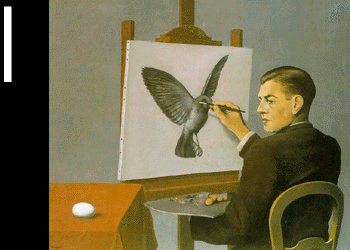
Visual: ‘Self Portrait’ by René Magritte, 1936.

Screenwriting: The Visual and the Word

My screenwriting course is wrapping up soon.  For the past six months, I’ve been learning a new language, the language of the visual.  It’s not as easy as it looks.  I’ve to un-learn a lot of ingrained principles of prose writing to re-learn a whole new genre.  And it has been an ego-shattering process.

Take this for example.  A comment on one of my assignments:

“… I’d also like to see you snip away at excess verbiage in both dialogue and action paragraphs.”

Ouch!  That hurts!  Honestly, it took me a few weeks to get over that one.

‘Verbiage’.  When the word is not used by yourself as a self-deprecating joke, now that’s tough to hear.   The reason for such a judgment?  Simply because I used complete sentences in my descriptions.  The language of the screenplay, I’ve learned, is condensed language, not unlike poetry.  It should be spot on, visually driven, and clear.

Readability is the key.  I’ve been learning to write a ‘good read’.   Reality is, my script will first be sent to the ‘gatekeepers’ of the film industry, and many of them may not be readers (that, I was told).  So, nobody wants to see a bunch of words crowding the page.  White spaces are what keep them interested.   So, make it swift, succinct, use minimum number of words to convey maximum information.  Yup, just like that, easy.

Right… so, here are some notes to myself, gleaning from the books I’ve read on the subject of screenwriting, to personalized feedbacks:

  • Sentence fragments, though frowned upon by English teachers, are welcome in scripts.
  • Action speaks louder than words: Whatever that can be conveyed by actions, no need for dialogues.
  • Enter a scene as late as you can and get out before it finishes.
  • Think minimalist and evocative.
  • Layers, layers, layers
  • Avoid clichés like the plague, both visuals and words.
  • Avoid ‘On The Nose’ dialogues: stating directly what the writer needs to convey, instead of the more realistic everyday mundane, allusive, cut-off, inarticulate, real life conversations.
  • As with all literature, learn to write subtexts, the undercurrents of emotions and contexts that are meant to be hidden, but only revealed by actions and dialogues.
  • Do the above with razor-sharp clarity.
  • The central dramatic question should be clear and simple, but not simplistic.
  • Have the proper proportion of words and pictures to create a synchronicity of content and poetry.
  • Don’t insult your actors by writing down specific reactions, or telling them their tone of voice…etc.
  • Write organically: If a writer knows what is going to happen before writing, then the scene will often feel contrived because it will fail to surprise the writer, therefore the audience.

Now, come to think of these points, aren’t they useful for writing in other genres as well?  Except the sentence fragments recommendation, that is, if you’re writing prose.  And, the last point exactly echoes what I’ve heard Michael Ondaatje say:

“I don’t know what would happen, I don’t want to know”

Let the scene breath on its own, take its shape and grow.

Or the advice given by Anne Lamott reinforcing succinct writing:

“You listen to how people really talk, and then learn little by little to take someone’s five-minute speech and make it one sentence, without losing anything.”

And… the wonders of paradox:  ‘Expressing the visual in words’,  ‘Be clear in conveying subtext’,   ‘The minimalist creating layers of complexity’, ‘Write organically within the structure’…

Oh… the bittersweet experience of screenwriting.

****

Edward Hopper, William Safire: The Visual and the Word

If you could say it in words, there would be no reason to paint.

In general it can be said that a nation’s art is greatest when it most reflects the character of its people.

—- Edward Hopper (1882 – 1967)

Edward Hopper’s words point to the power of the visual.  I always find Hopper’s realist paintings hauntingly retrospective, convey indescribable feelings, a sense of loneliness, a touch of alienation, yet, it’s hard to say exactly what it is.

Some use the phrase ‘urban loneliness’ to pinpoint the sentiment, as most readily expressed in his famous painting Nighthawks.  But others find the term too parochial even, opting for the more universal description of the human condition, ‘existential loneliness’.

In this visually-driven age, where pictures are instantly produced by a click, eliminating the wait for film processing, and where digitally created images can elicit unimaginable possibilities, has the value of words diminished, both in function and significance? In a time when ‘reading skills’ refer not only to the comprehension of the written language but the deciphering of graphics and visual symbols, has the power of words been eroded?

Does the recent passing of William Safire, called ‘the oracle of language’ by the NY Times, represent the passing of an era?  How many are left to champion the traditional form of communication, to point out word origin, to extol proper grammar usage?  While these gatekeepers are frowning on the split infinitive, the rest of the world has already jumped on board the newer vessel to boldly go where no person has gone before. The reign of literal communication has gradually (or quickly, or___ you fill in the blank) been replaced by the more accessible instant imaging, flickring, youtubing…

Let’s hope too that the traditional art form of painting will not be soon replaced by iPhone sketching.  If the New Yorker’s cover artist is using an iPhone app to touch-produce its cover pages, will the demise of oils and paints be far away?

Of course, I come to praise Hopper, not to bury words, or paints. Rather than saying his paintings defy literal descriptions, let’s just take up this bemusing challenge and do a role reversal:  What words conjure up in your mind when you look at these Hopper paintings? Let’s celebrate words, and paints, while we still have them.

Of all the subjects in his works, I particularly like the solitary figure, or the non-figure, like the room devoid of human presence.  Here are some of them:

Automat (1927):  Layered with subtext, what are the stories behind this lone female customer at the automat in such hour?  What is a good description of her predicament?

Automat 1927

.

New York Movie (1939): Here’s the reason why I love Hopper’s works.  The contrast, the darker side, the quiet undercurrent beneath the glamorous, the sombre reminder of complexity.

eh_new_york_movie

.

Rooms by the Sea (1951):  A touch of Magritte I feel.  An example of what I call the non-figure.  The philosophical quest of knowing: If nobody’s around to see it, does it still exist?

Edward - Hopper - rooms_by_the_sea

.

Cape Cod Morning (1950):  Unlike his other works, this solitary female figure is positive, eager,  enthused, and achingly expectant.  Is she a symbol of the optimism of a new age, or will she be disillusioned as reality sets in? 1950 or 2009, is there so much difference anyway?

Cape Cod Morning Hopper (1950)

.

Gas (1940):  I’m sure it’s not all about gas… does it allude to the lone traveling salesman like Willy Loman, or the gas station owner like George Wilson in The Great Gatsby?

gas_by_edward_hopper

.

Nighthawks (1942):  Perhaps the most famous of Hopper’s paintings.  As some call it, the depiction of ‘existential loneliness’.  Is that Sartre sitting there all alone at 2:00 am, contemplating in a diner with no exit?

nighthawk-by-edward-hopper

****

Click here to go to a related post ‘Inspired by Vermeer’ with another Edward Hopper painting, Morning Sun.


bird by bird

bird-by-bird

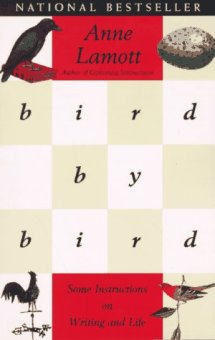
No, not another Twitter post… It’s the book by Anne Lamott.  Here’s what it’s all about:

“Thirty years ago my older brother, who was ten years old at the time, was trying to get a report on birds written that he’d had three months to write.  [It] was due the next day.  We were out at our family cabin in Bolinas, and he was at the kitchen table close to tears, surrounded by binder paper and pencils and unopened books on birds, immobilized by the hugeness of the task ahead.  Then my father sat down beside him, put his arm around my brother’s shoulder, and said, ‘Bird by bird, buddy.  Just take it bird by bird.’ ”

Bird by Bird: Some Instructions on Writing and Life by Anne Lamott

Bird by bird… three simple words from a writer father.  Lamott carries these words of wisdom with her as she makes her long journey of writing and life.  A past recipient of a Guggenheim, now a national bestselling author and writing instructor, Lamott in turn passes on practical advice to her readers and students.  In a writer’s symposium, it’s mentioned that The Modern Library calls her book Operating Instructions one of the most significant non-fiction work of the century.  Click here for the full hour interview.

Bird by bird is a book full of down-to-earth advice on writing and life from one who has gone through tough times.  Coming from the hippie culture, Lamott had to overcome years of drug addiction, alcoholism, and deal with eating disorder and the challenges of single parenthood.  I admire her resilience and perseverance.  Further, her ultimately finding redemption and had her life turned around was one amazing story.

I’ve enjoyed Lamott’s humour and her sensible instructions, although I admit I couldn’t fully embrace her style of word-use and the occasional trite statements. But the authenticity shines through.  You’re reading a writer who has gone through all these hurdles, not just in writing but in life, and speaking to you with genuine openness.  Her directions give you a kind of ‘eureka’ feeling: The sudden revealing of something that you thought you’ve found it for the first time.  But on second thought, it’s just that she has put it into words for you, you must have known it before, so common sense, so simple.

P1010143

Since I’ve been dwelling on quotes lately, I’ll just leave you with some of Lamott’s own words from her book.  They don’t all fit into a tweet, but just to point out that sometimes great thoughts take more than 140 characters to convey…. that’s why we have books.  But of course, you’ve known this all along.

Getting started:

The very first thing I tell my new students on the first day of a workshop is that good writing is about telling the truth.

Flannery O’Connor said that anyone who survived childhood has enough material to write for the rest of his or her life.

The problem that comes up over and over again is that these people want to be published.  They kind of want to write, but they really want to be published… Writing can give you what having a baby can give you: it can get you to start paying attention, can help you soften, can wake you up.  But publishing won’t do any of those things.

Short assignment:

E. L. Doctorow once said that “writing a novel is like driving a car at night.  You can see only as far as your headlights, but you can make the whole trip that way.”  … You just have to see two or three feet ahead of you.  This is right up there with the best advice about writing, or life, I have ever heard.

Character:

… a person’s faults are largely what make him or her likable… They shouldn’t be too perfect; perfect means shallow and unreal and fatally uninteresting.

Plot:

Plot grows out of character…. I say don’t worry about plot.  Worry about the characters.  Let what they say or do reveal who they are… The development of relationship creates plot.

Dialogue:

You listen to how people really talk, and then learn little by little to take someone’s five-minute speech and make it one sentence, without losing anything.

The Moral Point of View:

The word moral has such bad associations: with fundamentalism, stiff-necked preachers, priggishness.  We have to get past that… We like certain characters because they are good or decent–they internalize some decency in the world that makes them able to take a risk or make a sacrifice for someone else.  They let us see that there is in fact some sort of moral compass still at work here, and that we, too, could travel by this compass if we so choose.

A moral position is a passionate caring inside you… Some of us are interested in any light you might be able to shed on this, and we will pay a great deal extra if you can make us laugh about it.  For some of us, good books and beautiful writing are the ultimate solace, even more comforting than exquisite food.

Now here are some quotes you can send, tweet by tweet:

“If you’re not enough before the gold medal, you won’t be enough with it.” [quoting from the movie Cool Running]

Lighthouses don’t go running all over an island looking for boats to save; they just stand there shining.

Writing and reading decrease our sense of isolation. They deepen, widen, and expand our sense of life: they feed the soul.

*****

Bird by Bird: Some Instructions on Writing and Life by Anne Lamott, Anchor Books, NY, 1995, 238 pages.

If I Must Tweet

Don’t look for me on Facebook, I’m not there.  No Twitter account either.  But don’t mistake me for a Luddite, I have my iPhone as my defence… and the Apps for all the social networking sites ready to install.
Truth is, I have no need to lure a million followers.  If there isn’t such a phrase, let me coin it now: ‘Cyber Crowd Phobia’.  I think I have that… or ‘Cyber Agoraphobia’ will work too.  Why would I want to announce to the world what I have for breakfast?  No, I will not fall into the trap of offering free advertising for cereal companies.  Really, who’d care that I’m still having indigestion from last night’s chow mein?

Further, with the limit of just 140 characters to tweet, the message I send must be of prime importance, no verbiage whatsoever.  I can’t think of any such occasions where I need to reveal my predicament publicly except maybe in emergency situations like:

“Having a heart attack! Safeway check-out 5. Call 911!”

or this:

“AAAAARH! Chased by #zombie chickens! @oh dear, oh! Thanks!!”

Less than 60 characters, so I can call out twice.

Ok, seriously,  if I must tweet, I’d probably be tweeting quotes.

Quotes are one-liners, pearls of wisdom.  I know, I know… not all are pearls, but, gems can still be found.  And they fit right in the endurance level of Twitter.  Dense, sharp and swift, ideal for people on-the-go.

Thanks to Shoreacres, I’ve been thinking about quotable quotes after she left an ingenious one in her comment on my last post.  It speaks to those who fondly reminisce the good old days every time they watch the News on TV.  Here’s the line to ponder:

“Nostalgia is like a grammar lesson: you find the present tense, but the past perfect.”

Now, that gets me thinking about the future… simple quotes to tweet for all my followers.  A good quote for every hour of the day.

Let’s say, you’re struggling to get up in the morning, almost losing the battle.  Still lying in bed, you grab your iPhone and check your feeds. I have the best tweet for you, thanks to our modern sage, Woody Allen:

“80% of success is showing up.”

Hey, not bad for just 28 characters.  Showing up needs getting up… that’ll start your day.

Now you’re at the office, you just have a heated argument with your colleague.  As always, he’s wrong, and you’re  gravely mistreated.  But just at that moment, you stop and check your stream of tweets.  How timely,  there’s this piece of sound advice, yes, urging you in earnest from none other than Oscar Wilde himself:

“Always forgive your enemies, nothing annoys them so much.”

Ha… you win again.

Suddenly you hear your boss calling you.  Shucks!  You forgot all about the performance evaluation he wanted to discuss with you.  You start to panic, cold sweat, shortness of breath.  You instinctively get out your phone and check your tweets… Voila!  You’re in luck.  Here’s one just for you, from G.K. Chesterton, … no matter if you haven’t heard of him, just read this instant message:

“I believe in getting into hot water, it keeps you clean.”

Wonderful!  You’re all sweaty anyway.  Quotes on Twitter saves the day… again.

You get my idea… a timely tweet for every moment of your life.

I know how people love quotes.  The most viewed post on Ripple Effects is “Memorable Movie Love Quotes“.  That was for Valentine’s Day last year, now gathering more than 20,000 hits.  I still receive new ones every now and then from readers contributing to the list.

So this is my appeal to you all.  Send me your quotable quotes, 140 characters or less, so I can send them out should I open a Twitter account in the future.  Believe me, this could well be the most meaningful thing you do today, passing on words of wisdom.  And the world will thank you… some day.

2nd Blogaversary and Nostalgic Musing

August 29th slipped by quietly.  Just like the first day I started, inconspicuously.  Upon a casual suggestion from my son, I set up a blog and posted my first mini movie review, oblivious to what I was venturing into, not knowing what a widget was, or how to embed a link.

Now two years and 176 posts later, I am a happy sojourner in the blogosphere.  Still, I have no idea where this will lead, but I’m not too concerned, because through these past blogging days, I’ve been enriched and gratified.

My thanks to all who have taken the time to stop by Ripple Effects.  I know a few might have just stumbled upon, your visit is just as valued.  While some bloggers might tell you they live on comments, and I don’t deny the life-sustaining power of comments, I must express my appreciation for my silent readers. A click on the readership map on the sidebar can tell where they are.  To all of you out there from all corners of the world, I want to assure you that you’re more than a red dot on the map.

These two years have seen some unexpected ripples, like a screenwriter leaving her comment in my review of her movie, or, a writer suggesting a differing opinion to a book I reviewed and pointing me to his own work. The most encouraging would be a private email from a reader who told me she had sent my post link to someone whom she thought could be comforted from a personal tragedy. The blogosphere is a virtual world of human experiences and pathos, a reality no less poignant and alive than our everyday encounters.

I’m glad to see as well that Ripple Effects has evolved into some sort of a mini forum where ideas are exchanged and experiences shared.  I’ll be all the more gratified if the trend continues, where people would come for the comments as well as the posts, or even instead of … just the same.  You are all contributors.

I’m inspired too that we can explore together the universals among us all, sentiments that connect rather than segregate, and to seek beauty in the mundane, the transcendence in the temporal.  My thanks to all of you who regularly leave thought-provoking comments to make Ripple Effects a worthwhile stop in the hustle and bustle of life.  I’d be happy if it can be a restful way station along the journey.

P1010249_2_2

I’ve been a book and movie lover since childhood.  As a young reader, I would rate the stories I’d read, putting a check mark or two by each title in the table of contents.  I remember also, for my own pleasure, I would write up chapter summaries of a book that I loved, illustrating the content with pencil crayons.

As for movies, I practically grew up with them,  both on TV and in theaters, during the pre-VCR days. I was a good re-teller of stories too, recounting in details the plot of movies that had touched me, to whomever that had patience enough to listen to a child.

Two people came to my mind as I write this.  During my childhood days growing up in Hong Kong, our family had had live-in maids helping with cooking and housekeeping.  One of them had been with us since my infancy.  I had watched her many times, peeping into her spartan sleeping quarter in her after work hours, and found her reading in bed.  She read classical Chinese literature, now that’s like reading Shakespeare without Coles Notes, or even Beowulf without translation.  Who says Renée the concierge in the Hedgehog isn’t a realistic character?

Another came at a later stage, looking after our meals. She was always the one who had patience enough to listen to me retelling stories from movies.  I would go into the kitchen and follow her around, describing to her in details the exact plot and even dialogues from movies I had seen.

I remember one time, I was especially moved by a film entitled ‘Misunderstood’, (Incompreso, Golden Palm Prize, Cannes Film Festival, 1966).  It was about a child whose mother had died.  The only memento of her was a tape recording of her voice, which he listened to frequently, until one day he accidentally erased it.  As I was telling her the story, I saw tears well up in her eyes, and she begged me for more.  That was one of the most gratified moments for me as a child… I had been heard.

I think blogging opens for us this powerful access and offers us unimaginable possibilities… every single voice can be heard, every view readily expressed and acknowledged.  Even if the feedback is an opposing opinion, it just means that the ripples have reached far or near, spurring resonance deep enough to rebound. In this world ruled by technology and bytes, blogging might well be one of the most human of modern inventions.  A voice can still be heard by those who have patience enough to hear.

***

A Midsummer Day’s Dream

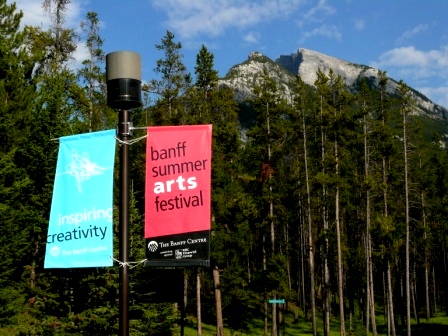
It was pure serendipity.  Finding out there would be an interview with Michael Ondaatje at the Banff Summer Arts Festival was a wonderful surprise.  Hours later I was on my way to Banff National Park.  The 90-minutes drive through the Rockies listening to the soundtrack of The English Patient was surreal.  And the destination was just as picturesque and dreamlike:

Banff Summer Arts Festival

The Banff Centre

In the event entitled ‘Literary Primetime’, Michael Ondaatje, the Sri Lanka born Canadian poet, novelist, filmmaker, winner of the Booker Prize for The English Patient, was interviewed by Marni Jackson, the Chair of the Literary Journalism Program at The Banff Centre, an acclaimed writer in her own right.

Ondaatje’s impressive body of work includes novels, memoir and a dozen books of poetry, editorial work and documentary filmmaking.  But perhaps the most famous is The English Patient, which was adapted into film by the late Anthony Minghella.  The movie was awarded nine Academy Awards in 1996.

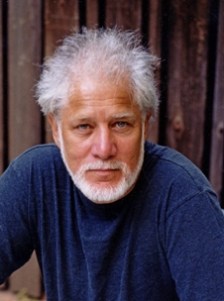
ondaatjeThe literary event started off with Ondaatje reading several passages from Divisadero, a book that brought him the fifth Governor General Literary Award.  I sat in the huge dining hall with an audience of a couple hundreds, entranced.  From afar I held my gaze at the silver haired writer framed by the large picture windows, the evening sun seeping through majestic evergreens, and silence shrouded the place except for one man’s gentle voice.  It was simply mesmerizing.
But it was the interview that made the dreamlike experience most rewarding.  The conversation explored the creative mind behind the writing process.  I jotted down some helpful tidbits:

Curiosity goes a long way.  It sparks off the research process, generating and sustaining the creative energy for the work.

Listen to the rhythm of the sentences.   “He would” or “he’d” could elicit very different effects.  Sound advice from a poet.

I was excited to hear Ondaatje address questions stemming from his book The Conversations: Walter Murch and the Art of Editing Film, which coincidentally, I am currently reading.  Murch was the film editor of The English Patient, one of my all time favorite movies.  The serendipity is most gratifying.  The art of film editing parallels that of writing… the essence is knowing what to cut, and when to move on.

While Minghella was writing the screenplay, Ondaatje was involved in the drafts.  The story had to be taken apart and rewritten to be adapted into film.  When you see your work being dismantled and reconstructed into another form, I imagine it takes courage, trust, and humility to accept that.  Ondaatje appreciates the art form of film and respects others’ expertise, entrusting his work in their hands.  This team effort, this alchemy of talents is most prominent in the making of the movie.

In the Interview, Ondaatje was asked about one excerpt from The Conversations. The writer and the film editor shares a common appreciation for the Chinese auteur Wong Kar Wai and his film In The Mood For Love.  The layering of sounds suggests the multiplicity of going-ons, events happening off-screen.  Such an effect can also be found in The English Patient.  The thickness of the actual and imaginary scenes adds complexity and depth, weaving a much more interesting tapestry.  Again, the parallel can be drawn with novel writing.  It’s the multiple offerings and the possibilities of interpretations that make a piece of writing intriguing:

“We are not held hostage by just one certain story, or if we are, we know it is just one opinion: there are clear hints of other versions.” (The Conversations, p. 160)

There were a couple of ideas I was a bit surprised to find.

First there is the ubiquitous self-doubt throughout the writer’s creative process.  Strange, and yet comforting, to find talented minds share this same psyche.  It is a humble sign to admit self-doubt.  The architect Frank Gehry and the late filmmaker Sydney Pollack came to mind.

“Her only virtue is self-doubt.” (Divisadero).

Second, and perhaps the most precious gem I collected from the event was reflected by Odaajte’s own words on the creation of a story: “I don’t know what would happen… I don’t want to know.”  The excitement of writing is that the story reveals itself as if it has a life of its own.  The writing process is an exploratory experience.  How gratifying to know we don’t need to follow a predetermined structure to plug in the story elements.  The creative mind is not bound by structure.  Let the story lead, and, enjoy the ride.

At the end of the Interview, Ondaatje was asked about a skills and job match questionnaire he once did when he was a young man.  The results showed that he could make one good customs officer.  Aren’t we all glad he had chosen to march to a different drummer and diverged in his career plan.

***


The Guernsey Literary and Potato Peel Pie Society

guernsey-literary-and-potato-peel-pie-society

“Reading good books ruins you for enjoying bad books.”

A novel in the form of letters?  I admit it wasn’t much of an appeal to me at first. After it has maintained its position on the New York Times Bestseller List for months, and now the trade paperback holding the first spot there, I just can’t resist anymore.

The book begins with a series of letters between a London writer Juliet Ashton and her friend and publisher Sydney Stark shortly after WWII.  Later, upon receiving a letter from Dawsey Adams, a resident of Guernsey of the Channel Islands, Juliet starts to correspond with the charming folks living there.

So how does the book title come about? Guernsey Island was occupied by the Germans during the war.   It happens that one night after a secret ‘pig out’, a few Guernsey residents are found breaking the curfew.  To find an excuse quickly when confronted by German soldiers, Elizabeth, our heroine, makes up the story that she and her fellow members have to leave a literary society meeting late as they’ve been so immersed in a German book.

This impromptu excuse soon takes shape in reality.  Thus begins the odyssey of reading, book discussions, and the members’ correspondences with Juliet Ashton.  Juliet is so immersed in their lives and moved by their situation that she later decides to go visit them, making the Guernsey Literary Society the subject of her next book.

Many of the letters are poignant descriptions of lives during the difficult war years.  The Guernsey residents have to suffer the searing pain of evacuating their own children to England for safety, seeing the young and healthy sent to war, finding others just disappear to concentration camps, and hearing eye witness accounts of heroic sacrifices for utter strangers. While all these years on the Island, they have to endure deprivation of food, basic necessities, and freedom. But the literary society meetings and the few reading materials in their possession remain their lifeline to humanity and dignified living.

“Everyone was sickly from so little nourishment and bleak from wondering if it would ever end.  We clung to books and to our friends; they reminded us that we had another part to us.”

Author Mary Ann Shaffer passed away in February 2008 and was succeeded by her niece Annie Barrows in finishing the novel.  In the Acknowledgment, Shaffer had written these words in December 2007:

“I hope, too, that my book will illuminate my belief that love of art — be it poetry, storytelling, painting, sculpture, or music — enables people to transcend any barrier man has yet devised.”

Despite the subject matter, readers will find the book witty and delightful.  Authors Shaffer and Barrows have depicted a myriad of lively characters, charmingly joined in their humanity by their strengths and weaknesses.  Yes, we can also visualize the madness of war. But we’re relieved to see too that people can weather hardship much better when they have a common bond, here, in the reading and sharing of fine literary works.  Mind you, these are not your academics and scholars.  The Guernsey residents are mainly pig farmers and vegetable growers.  As we read their letters, we soon see them as friends, Amelia, Dawsey, Isola, Eben, Eli, Elizabeth and little Kit…

And, am I such a Jane Austen fan that I’m seeing this:  Juliet Ashton (J.A.), Dawsey (Darcy), and Elizabeth, beloved heroine of all time.

What impresses me most is that the Guernsey Islanders are so willing to open their hearts and lives to writer Juliet, an absolute stranger, mainly because of their common love of the written words.  They find it an honor to be able to correspond with a real life writer, pouring their hearts out in respect and admiration, and quickly confiding in her.  A writer as a celebrity and friend?  It’s just fiction, you may say. But, why can’t it be real?

As for the art of letter writing, has it been lost as some have claimed, or has it merely been transformed into … yes, blogging, for example?  Because as I was reading the book, it flashed by me at times that I was reading some blog posts.  Are the writings that we post in the blogosphere a kind of open letter?  Our exchanges in the comment box our correspondences?  And, to push it a bit further, the telegram of old the early form of twitter?

The Guernsey Literary and Potato Peel Pie Society by Mary Ann Shaffer and Annie Barrows, Dial Press Trade Paperback Edition, 2009, 288 pages.

***

Click here to go to the Guernsey Literary and Potato Peel Pie Society website.  As for the potato peel pie recipe, yes, at the Jane Austen Society of North America website.

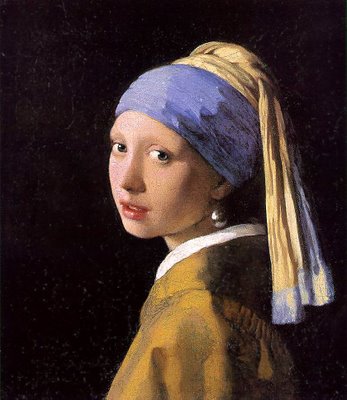
Girl With A Pearl Earring

The Painting (1665)

Girl With A Pearl Earring

Not much is known about this girl looking back at the artist with her soulful glance.  The pearl earring, the focal point of the painting, is obviously incompatible with her humble attire.  Vermeer has captured a mystery open to anyone’s imagination.  But it takes a master storyteller to create a believable and poignant narrative that can move modern readers three hundred some years later.

**

The Novel (1999)

Vermeer taught me that Less Is More, and I have been practicing that aesthetic principle in my writing ever since.”     — Tracy Chevalier

You can see it coming… it’s almost like reflex that after seeing a Vermeer exhibition I’d go back to the book Girl With A Pearl Earring by Tracy Chevalier, and re-watch the DVD of the movie based on it.  Well, especially when I didn’t get the chance to see the painting itself in the exhibition.

GWAPE Book CoverIt was this book that first sparked curiosity in me about Vermeer and his works.  Tracy Chevalier has done a superb job in creating out of her imagination the story behind the girl with the pearl earring, within the realistic social and historical contexts.  She has brought to the surface layers of possible subtexts hidden in this seemingly simple portrait.

I’ve appreciated that she has chosen the social segregation and hierarchical class structure of 17th century Delft as the backdrop of her novel.  So, instead of a sweet little tale or melodramatic story,  Chevalier highlights the complex social reality of power relations between servant and master, artist and patron.  She has masterfully created a scenario whereby the social distance between the servant girl, Griet,  and her master Vermeer, is drawn closer by her quiet understanding and appreciation of aesthetics.  With the same sharpness and sensitivity,  Chevalier has also shown how a wealthy patron can exploit art with his despicable, self-serving lust.

Chevalier’s ingenuity tugs at our heartstrings as we see the innocent and powerless being played as pawns,  no more than flies caught in the web of the rich and powerful.  The struggle between survival and artistic freedom is poignantly painted as irreconcilable subjects on the canvas of financial reality.  And fate teases all.  Yet among all these, the natural light that comes from art and beauty silently seeps through, brushing us warmly with a tender glow.

Do try to get hold of the Deluxe Edition.  It includes 9 full-color Vermeer paintings, which are cleverly incorporated into the story by the author.

Girl With A Pearl Earring by Tracy Chevalier, Deluxe Edition, published by PLUME, Penguin Group, 2005, 233 pages.

~ ~ ~ 1/2 Ripples

**

The Movie (2003)

.

GirlWithPearEarring1

Watching the movie Girl With A Pearl Earring is the closest to actually seeing a Vermeer exhibition.  Every frame is like a Vermeer painting with its extensive use of natural light from windows, contrasting the shadows in the interior of the Delft household.  The film was nominated for three Oscars in 2004, Best Art Direction-Set Decoration, Best Cinematography, and Best Costume Design.  In other words, it’s a pleasure to watch… it has to be because dialogues are sparingly used throughout.  Herein lies the strength of acting and the effectiveness of sound and visual communication.

The restrained performance of Colin Firth as Vermeer and Scarlett Johansson as Griet brings out the reality of the social order of the day.  A servant is not supposed to speak unless spoken to.  And what does a master has to say to an uneducated maid, unless he sees in her the appreciation of art and the clear understanding of aesthetics, of light and shadows, of beauty in the mundane.

Vermeer’s asking Griet to be his assistant and ultimately putting her in one of his works, albeit reluctantly for both, sparks off repugnant reverberation in town, and of course, the fierce jealousy of the painter’s wife Catherine (Essie Davis).  But as flies caught in the web of patron Van Ruijven (Tom Wilkinson), with debts to pay and a full household of mouths to feed, the artist has to bow to reality, and the even lower-ranked servant has to yield to her fate.

The visuals and music are the key to revealing the internal.  Beautifully shot in Luxembourg to simulate 17th Century Delft, the movie is a work of art in itself.  Colin Firth’s usual reticent persona on film fits him perfectly this time.  His taciturn portrayal of the ambivalent artist betrays the struggles within.  Scarlett Johansson delivers a convincing performance as pure and innocent Griet, and her gradual growth on the path of experience, albeit the book, as usual, depicts the inner turmoil more effectively.

The special feature on the DVD is enjoyable as well, chronicling the making of the movie.  I hope though that a Blu-ray version will come out one of these days, for that will indeed do justice to the cinematography and to the original artist, the master painter Johannes Vermeer himself.

~~~ Ripples

CLICK on the following links to go to related posts on Ripple Effects:

Inspired By Vermeer

Books and the Gender Issue


**

Vermeer in Vancouver: Noticing the Obvious

For more Vermeer, Click Here to go to my post “Inspired By Vermeer”.

Vancouver Art Gallery’s premier summer kick-off is the impressive exhibition: Vermeer, Rembrandt and the Golden Age of Dutch Art. The exclusive show of masterpieces from Amsterdam’s renowned Rijksmuseum includes paintings, drawings, and decorative arts from 17th century Holland. After five hours at the Gallery, I left hungry for more Vermeer. Overall it was gratifying, but I was expecting just a few more glimpses of the great master.

Of all the 128 pieces of art work, there’s just one Vermeer painting. Placed at the end of the exhibit, apparently the highlight and climax of the show, is Vermeer’s Love Letter (1669). From his signature point of view, peeking through a partial opening of pulled-back curtain, we look into another room and see a maid just handed her mistress a letter. By the exchange of their glances, it seems they’re sharing a secret understanding. This is another one of Vermeer’s works that’s full of potential stories and rich in subtexts. Actually anyone of them is a novel to be written, not less dramatic as Girl With A Pearl Earring.

Vermeer's The Love Letter

Love Letter by Vermeer (1669-70)

~~

17th century Holland was a new Republic that had just gained independence from Spanish rule. The beginning of the exhibits sets the stage depicting a young nation with great maritime power. Domestically, it was a country marked by a vibrant economy and a rising middle class, as well as the flowering of arts and science, architecture and urban planning.

In the midst of such affluence and fresh hope, some of the artists spoke with their brushes as prophets of their time. Among paintings of naval glory and conquests, as well as glimpses of domestic life of the rich, there are also the quiet displays of still life. I must have seen them before. Why have I not noticed their significance previously?

They are paintings of withered blossoms, burnt out candles, hourglasses, books and musical instruments, and most prominently, skulls, eerie arrays of them, decaying bones and teeth. Why all these objects? The audio commentary confirms that they are Vanitas still life, the term rooted in Ecclesiastes, “Vanity of vanities.” And obviously, they are symbols of the fleeting nature of life, the callous passage of time, the transience of knowledge and human achievements:

Pieter Claesz Vanitas Still Life

Pieter Claesz: Vanitas Still Life (1628)

~

Skulls on a Table

Aelbert Jansz van der Schoor: Skulls on a Table (1660)

~

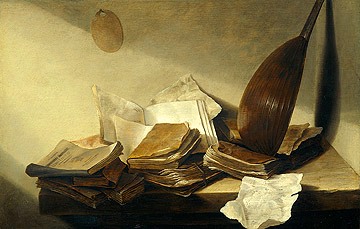
On the piece of writing crumpled up is one last word, Finis, The End:

Still Life with Books Jan de Heem

Jan Davidsz de Heem, Still Life with Books (1625-29)

It’s commendable that the rich and powerful were willing to be reminded thus, considering these were once paintings adorning the walls of their affluent homes, a nagging presence they could not ignore. And they must have paid to have them painted.

~~

One of my favorites in the exhibition is Nicolaes Maes’ Old Woman in Prayer. Maes, a student of Rembrandt, had captured the simple piety of the old woman of lowly means: her earnest concentration, wrinkled face and hardened hands, the earthen wares and simple meal, and above all, her meager possessions on the ledge, an open Bible, a lamp, an hourglass and a prayer book. The warm light on her face almost makes her look divine. Maes did not forget to include a comic relief, her cat at the lower right bottom must have known what’s for dinner:

Nicolaes Maes Old Woman in Prayer

Nicolaes Maes: Old Woman in Prayer (1650-60)

~~

Sources: Skulls on a Table from Vancouver Sun. All other paintings in this post: Rijkmuseum, Amsterdam.