Alaska!

Arti disappeared from Cowtown for a few days and reappeared in Ketchikan, Alaska.  That’s the cause for the delay in replying some of your comments from the last post.  I decided to rid myself of all internet and phone access so I could make these short few days a real getaway.

But herein lies the nagging dilemma:  Is there a better way to access nature other than the commercial route?  Arti had to follow the crowd and board a cruise ship, not her choice of transport, but … what are the options?

So here it is, a visual account of my journey at sea to Ketchikan, the south-western tip of Alaska, north of Vancouver, British Columbia, Canada.

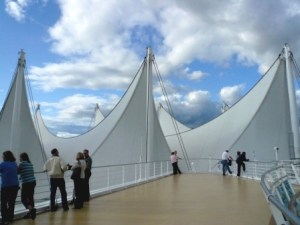
We set sail at the Canada Place Terminal.  On deck looking out, Port Vancouver’s famous architectural sails look slightly surreal, a virtual outdoor gallery of sculptures larger than life:

Canada Place View from Deck

Leaving Port Vancouver:

Leaving Port of Vancouver

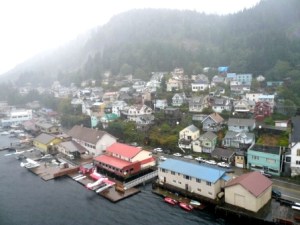
After a couple of days at sea, we arrived at Ketchikan, Alaska.  Among  other things like being the salmon capital of the world, Ketchikan is famous for its rain, measuring its precipitation in feet, not inches.

Here’s Ketchikan under overcast sky:

Ketchikan under overcast sky

A little  more cheery scene:

Ketchikan, Alaska

Ketchikan is also home to The Tongass Rain Forest, the largest national forest in the United States.  It is part of the Pacific Temperate Rain Forest Region, which is second in size to the world’s largest Amazon Tropical Rain Forest.

Moss on treesArti ventured into this area with a naturalist. Together with 15 others in our group, we trod the trails of the Alaska Rain Forest Sanctuary.  Here are the sights I’ve sailed all the way for:

.

.

.

.

.

Berries UndergrowthColorful undergrowth

.

.

.

MushroomOne of the many species of mushrooms, some giant ones grow on trees.

.

.

Devil's Paw Food for the BearsDevil’s Paw, food for the bears.  Underneath are poisonous hooks, but the bears deftly eat off the stems of the plant.

.

.

Ferns and mossFerns and moss: Even tree branches are covered with moss.  As the branches grow heavier, they will break off the tree, fulfilling a natural pruning process.

.

.

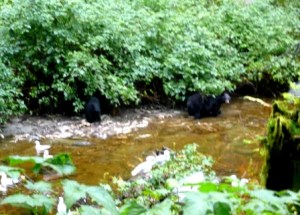
Momentarily, we came to a creek.  Yes, salmon swam up here: Right in the middle of a rain forest we saw gulls gathering, competing with the bears for the salmon in the water.  We were fortunate to see a mother bear with two cubs.  Here in this fuzzy (sorry, Arti was too excited) photo, you can see, even though ‘bearly’, the mother and one of her cubs on the left:

Bears having lunch

And this next one is out of this world.  Gulls flying all around above the creek, a magical, even mythical sight to behold:

Rainforest Gulls

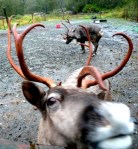
Reindeer

We next visited a reindeer farm.  I’ve seen elks and deers in my neck of the woods in Alberta, but this is the first time I saw reindeers.  Here’s a curious fella:

When we left Ketchikan, it was pouring rain:

Leaving Ketchikan in the rain

On our way back to Vancouver, we cruised through the Inside Passage.  It offered one of the most beautiful sights in the whole journey:

Sailing through the Inside Passage

.

Of course, it’s Arti’s nature to find ripples everywhere:

Ripples

.

Ripples 3

.

.

.

.

The Inside Passage at dusk, the silence punctuated only by the calls of gulls and frolicking dolphins splashing in and out of the quiet water.  Yes, I saw the synchronized dances of two dolphins jumping out of the water and diving back in, but it was just too impromptu to capture by my camera.

The Inside Passage at Dusk

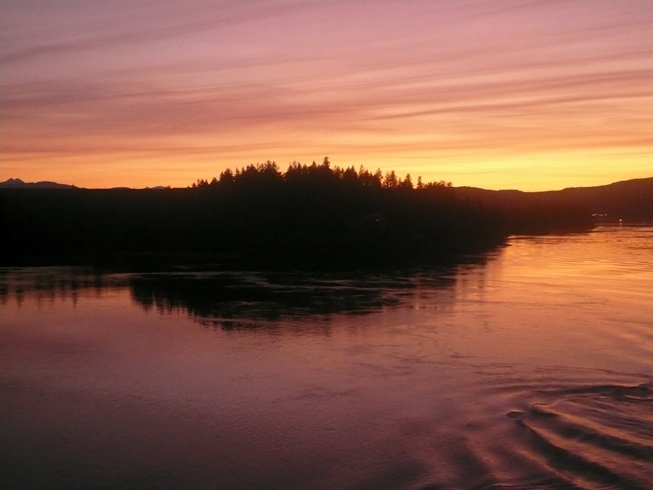
This is my best memory, sunset along the Inside Passage:

Sunset in the Inside Passage

*****

Photos taken by Arti of Ripple Effects, September, 09.  All Rights Reserved.

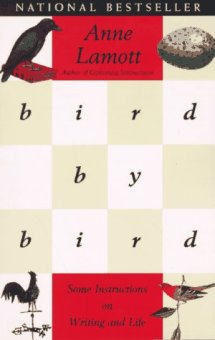
bird by bird

bird-by-bird

No, not another Twitter post… It’s the book by Anne Lamott.  Here’s what it’s all about:

“Thirty years ago my older brother, who was ten years old at the time, was trying to get a report on birds written that he’d had three months to write.  [It] was due the next day.  We were out at our family cabin in Bolinas, and he was at the kitchen table close to tears, surrounded by binder paper and pencils and unopened books on birds, immobilized by the hugeness of the task ahead.  Then my father sat down beside him, put his arm around my brother’s shoulder, and said, ‘Bird by bird, buddy.  Just take it bird by bird.’ ”

Bird by Bird: Some Instructions on Writing and Life by Anne Lamott

Bird by bird… three simple words from a writer father.  Lamott carries these words of wisdom with her as she makes her long journey of writing and life.  A past recipient of a Guggenheim, now a national bestselling author and writing instructor, Lamott in turn passes on practical advice to her readers and students.  In a writer’s symposium, it’s mentioned that The Modern Library calls her book Operating Instructions one of the most significant non-fiction work of the century.  Click here for the full hour interview.

Bird by bird is a book full of down-to-earth advice on writing and life from one who has gone through tough times.  Coming from the hippie culture, Lamott had to overcome years of drug addiction, alcoholism, and deal with eating disorder and the challenges of single parenthood.  I admire her resilience and perseverance.  Further, her ultimately finding redemption and had her life turned around was one amazing story.

I’ve enjoyed Lamott’s humour and her sensible instructions, although I admit I couldn’t fully embrace her style of word-use and the occasional trite statements. But the authenticity shines through.  You’re reading a writer who has gone through all these hurdles, not just in writing but in life, and speaking to you with genuine openness.  Her directions give you a kind of ‘eureka’ feeling: The sudden revealing of something that you thought you’ve found it for the first time.  But on second thought, it’s just that she has put it into words for you, you must have known it before, so common sense, so simple.

P1010143

Since I’ve been dwelling on quotes lately, I’ll just leave you with some of Lamott’s own words from her book.  They don’t all fit into a tweet, but just to point out that sometimes great thoughts take more than 140 characters to convey…. that’s why we have books.  But of course, you’ve known this all along.

Getting started:

The very first thing I tell my new students on the first day of a workshop is that good writing is about telling the truth.

Flannery O’Connor said that anyone who survived childhood has enough material to write for the rest of his or her life.

The problem that comes up over and over again is that these people want to be published.  They kind of want to write, but they really want to be published… Writing can give you what having a baby can give you: it can get you to start paying attention, can help you soften, can wake you up.  But publishing won’t do any of those things.

Short assignment:

E. L. Doctorow once said that “writing a novel is like driving a car at night.  You can see only as far as your headlights, but you can make the whole trip that way.”  … You just have to see two or three feet ahead of you.  This is right up there with the best advice about writing, or life, I have ever heard.

Character:

… a person’s faults are largely what make him or her likable… They shouldn’t be too perfect; perfect means shallow and unreal and fatally uninteresting.

Plot:

Plot grows out of character…. I say don’t worry about plot.  Worry about the characters.  Let what they say or do reveal who they are… The development of relationship creates plot.

Dialogue:

You listen to how people really talk, and then learn little by little to take someone’s five-minute speech and make it one sentence, without losing anything.

The Moral Point of View:

The word moral has such bad associations: with fundamentalism, stiff-necked preachers, priggishness.  We have to get past that… We like certain characters because they are good or decent–they internalize some decency in the world that makes them able to take a risk or make a sacrifice for someone else.  They let us see that there is in fact some sort of moral compass still at work here, and that we, too, could travel by this compass if we so choose.

A moral position is a passionate caring inside you… Some of us are interested in any light you might be able to shed on this, and we will pay a great deal extra if you can make us laugh about it.  For some of us, good books and beautiful writing are the ultimate solace, even more comforting than exquisite food.

Now here are some quotes you can send, tweet by tweet:

“If you’re not enough before the gold medal, you won’t be enough with it.” [quoting from the movie Cool Running]

Lighthouses don’t go running all over an island looking for boats to save; they just stand there shining.

Writing and reading decrease our sense of isolation. They deepen, widen, and expand our sense of life: they feed the soul.

*****

Bird by Bird: Some Instructions on Writing and Life by Anne Lamott, Anchor Books, NY, 1995, 238 pages.

If I Must Tweet

Don’t look for me on Facebook, I’m not there.  No Twitter account either.  But don’t mistake me for a Luddite, I have my iPhone as my defence… and the Apps for all the social networking sites ready to install.

Truth is, I have no need to lure a million followers.  If there isn’t such a phrase, let me coin it now: ‘Cyber Crowd Phobia’.  I think I have that… or ‘Cyber Agoraphobia’ will work too.  Why would I want to announce to the world what I have for breakfast?  No, I will not fall into the trap of offering free advertising for cereal companies.  Really, who’d care that I’m still having indigestion from last night’s chow mein?

Further, with the limit of just 140 characters to tweet, the message I send must be of prime importance, no verbiage whatsoever.  I can’t think of any such occasions where I need to reveal my predicament publicly except maybe in emergency situations like:

“Having a heart attack! Safeway check-out 5. Call 911!”

or this:

“AAAAARH! Chased by #zombie chickens! @oh dear, oh! Thanks!!”

Less than 60 characters, so I can call out twice.

Ok, seriously,  if I must tweet, I’d probably be tweeting quotes.

Quotes are one-liners, pearls of wisdom.  I know, I know… not all are pearls, but, gems can still be found.  And they fit right in the endurance level of Twitter.  Dense, sharp and swift, ideal for people on-the-go.

Thanks to Shoreacres, I’ve been thinking about quotable quotes after she left an ingenious one in her comment on my last post.  It speaks to those who fondly reminisce the good old days every time they watch the News on TV.  Here’s the line to ponder:

“Nostalgia is like a grammar lesson: you find the present tense, but the past perfect.”

Now, that gets me thinking about the future… simple quotes to tweet for all my followers.  A good quote for every hour of the day.

Let’s say, you’re struggling to get up in the morning, almost losing the battle.  Still lying in bed, you grab your iPhone and check your feeds. I have the best tweet for you, thanks to our modern sage, Woody Allen:

“80% of success is showing up.”

Hey, not bad for just 28 characters.  Showing up needs getting up… that’ll start your day.

Now you’re at the office, you just have a heated argument with your colleague.  As always, he’s wrong, and you’re  gravely mistreated.  But just at that moment, you stop and check your stream of tweets.  How timely,  there’s this piece of sound advice, yes, urging you in earnest from none other than Oscar Wilde himself:

“Always forgive your enemies, nothing annoys them so much.”

Ha… you win again.

Suddenly you hear your boss calling you.  Shucks!  You forgot all about the performance evaluation he wanted to discuss with you.  You start to panic, cold sweat, shortness of breath.  You instinctively get out your phone and check your tweets… Voila!  You’re in luck.  Here’s one just for you, from G.K. Chesterton, … no matter if you haven’t heard of him, just read this instant message:

“I believe in getting into hot water, it keeps you clean.”

Wonderful!  You’re all sweaty anyway.  Quotes on Twitter saves the day… again.

You get my idea… a timely tweet for every moment of your life.

I know how people love quotes.  The most viewed post on Ripple Effects is “Memorable Movie Love Quotes“.  That was for Valentine’s Day last year, now gathering more than 20,000 hits.  I still receive new ones every now and then from readers contributing to the list.

So this is my appeal to you all.  Send me your quotable quotes, 140 characters or less, so I can send them out should I open a Twitter account in the future.  Believe me, this could well be the most meaningful thing you do today, passing on words of wisdom.  And the world will thank you… some day.

The Humanities as an Endangered Species

While there are those who sense that the appreciation of literature and the humanities are slowly fading in our instant-messaging generation, here are some facts.  In an article entitled “The Decline of the English Department” in the current issue of The American Scholar, William M. Chace presents the following data from the academic years between 1970/71 to 2003/04, showing the change in college majors:

English: from 7.6 percent of the majors to 3.9 percent
Foreign languages and literatures: from 2.5 percent to 1.3 percent
Philosophy and religious studies: from 0.9 percent to 0.7 percent
History: from 18.5 percent to 10.7 percent
Business: from 13.7 percent to 21.9 percent

The little bio at the bottom of the article tells me that William M. Chace has taught at Berkeley, Stanford, Wesleyan, and Emory, and served as president of the last two.  So the figures here do carry some weight and urgency.

These numbers are indeed distressing.  If such a trend continues, chances are college English departments would disappear from the face of this earth faster than beluga whales, and philosophy and religious studies as an academic discipline could soon fall off like leaves in autumn.

P1010375

Chace points out that there was once a time when majoring in English literature represented an idyllic pursuit.   It used to reflect the appreciation of a historical tradition and literary culture.  It was a declaration, even a defiance, showing that education was not at all about getting a job.  It was a decision made with much self-reflection, innocence, and yes, an idealistic fervor.  Here’s his own reminiscence, an English major in the 50’s and 60’s :

With the books in front of us, we were taught the skills of interpretation. Our tasks were difficult, the books (Emerson’s essays, David Copperfield, Shaw’s Major Barbara, the poetry of Emily Dickinson, and a dozen other works) were masterly, and our teacher possessed an authority it would have been “bootless” (his word) to question.

Studying English taught us how to write and think better, and to make articulate many of the inchoate impulses and confusions of our post-adolescent minds. We began to see, as we had not before, how such books could shape and refine our thinking. We began to understand why generations of people coming before us had kept them in libraries and bookstores and in classes such as ours.

Alexander W. Astin, director of the Higher Education Research Institute at UCLA, reports that in the mid 60’s, more than 80% of college freshmen rated nothing was more important than “developing a meaningful philosophy of life”.  Less than 45% of them felt “being very well off financially’ was a priority.

The trend saw its reversal by 1977, when financial goals had surged past philosophical ones.  By 2001, more than 70% of undergraduates rated financial success as a much more important pursuit, leaving behind 40% clinging to the search for meaning as their prime objective in college.

But my concern is very simple, and it needs no statistics to sound the alarm:  Who is reading all the ‘great books’?  If the English departments are fighting for their raison d’etre, can Literature survive?

Or, can we still hold on to the idealistic view that Literature has intrinsic value of its own, that in great books, we can still find glimpses of how we should live?  Further, in the face of strangling economic reality, can we still bask in the goodness of beauty and not become a laughing stock if we insist on the pursuit of meaning?

***

To read the article ‘The Decline of the English Department’ in The American Scholar, CLICK HERE.

2nd Blogaversary and Nostalgic Musing

August 29th slipped by quietly.  Just like the first day I started, inconspicuously.  Upon a casual suggestion from my son, I set up a blog and posted my first mini movie review, oblivious to what I was venturing into, not knowing what a widget was, or how to embed a link.

Now two years and 176 posts later, I am a happy sojourner in the blogosphere.  Still, I have no idea where this will lead, but I’m not too concerned, because through these past blogging days, I’ve been enriched and gratified.

My thanks to all who have taken the time to stop by Ripple Effects.  I know a few might have just stumbled upon, your visit is just as valued.  While some bloggers might tell you they live on comments, and I don’t deny the life-sustaining power of comments, I must express my appreciation for my silent readers. A click on the readership map on the sidebar can tell where they are.  To all of you out there from all corners of the world, I want to assure you that you’re more than a red dot on the map.

These two years have seen some unexpected ripples, like a screenwriter leaving her comment in my review of her movie, or, a writer suggesting a differing opinion to a book I reviewed and pointing me to his own work. The most encouraging would be a private email from a reader who told me she had sent my post link to someone whom she thought could be comforted from a personal tragedy. The blogosphere is a virtual world of human experiences and pathos, a reality no less poignant and alive than our everyday encounters.

I’m glad to see as well that Ripple Effects has evolved into some sort of a mini forum where ideas are exchanged and experiences shared.  I’ll be all the more gratified if the trend continues, where people would come for the comments as well as the posts, or even instead of … just the same.  You are all contributors.

I’m inspired too that we can explore together the universals among us all, sentiments that connect rather than segregate, and to seek beauty in the mundane, the transcendence in the temporal.  My thanks to all of you who regularly leave thought-provoking comments to make Ripple Effects a worthwhile stop in the hustle and bustle of life.  I’d be happy if it can be a restful way station along the journey.

P1010249_2_2

I’ve been a book and movie lover since childhood.  As a young reader, I would rate the stories I’d read, putting a check mark or two by each title in the table of contents.  I remember also, for my own pleasure, I would write up chapter summaries of a book that I loved, illustrating the content with pencil crayons.

As for movies, I practically grew up with them,  both on TV and in theaters, during the pre-VCR days. I was a good re-teller of stories too, recounting in details the plot of movies that had touched me, to whomever that had patience enough to listen to a child.

Two people came to my mind as I write this.  During my childhood days growing up in Hong Kong, our family had had live-in maids helping with cooking and housekeeping.  One of them had been with us since my infancy.  I had watched her many times, peeping into her spartan sleeping quarter in her after work hours, and found her reading in bed.  She read classical Chinese literature, now that’s like reading Shakespeare without Coles Notes, or even Beowulf without translation.  Who says Renée the concierge in the Hedgehog isn’t a realistic character?

Another came at a later stage, looking after our meals. She was always the one who had patience enough to listen to me retelling stories from movies.  I would go into the kitchen and follow her around, describing to her in details the exact plot and even dialogues from movies I had seen.

I remember one time, I was especially moved by a film entitled ‘Misunderstood’, (Incompreso, Golden Palm Prize, Cannes Film Festival, 1966).  It was about a child whose mother had died.  The only memento of her was a tape recording of her voice, which he listened to frequently, until one day he accidentally erased it.  As I was telling her the story, I saw tears well up in her eyes, and she begged me for more.  That was one of the most gratified moments for me as a child… I had been heard.

I think blogging opens for us this powerful access and offers us unimaginable possibilities… every single voice can be heard, every view readily expressed and acknowledged.  Even if the feedback is an opposing opinion, it just means that the ripples have reached far or near, spurring resonance deep enough to rebound. In this world ruled by technology and bytes, blogging might well be one of the most human of modern inventions.  A voice can still be heard by those who have patience enough to hear.

***

The Elegance of the Hedgehog

To read my Movie Review of The Hedgehog (Le Hérisson, 2009), CLICK HERE.

It’s all about seeing and being seen.
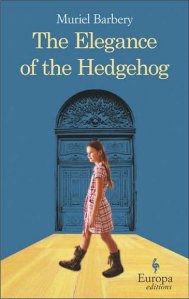
the-elegance-of-the-hedgehog

Hailed as the French publishing phenomenon in recent years, The Elegance of the Hedgehog has maintained 102 weeks straight on France’s best seller lists since its publication in 2006, and sold over 1 million hardback copies in 2007.

Author Muriel Barbery has created an intellectual delicacy for us to savor.   She is a former philosophy teacher in France and is now living in Japan.   Only in France you may say, where philosophy is still a compulsory subject in schools.  But no, it’s an international sensation reaching as far as South Korea, translated into half a dozen languages, sold its film rights, and garnered several literary awards.  The ripples finally reached North America last September… why so late?

This modern tale takes place in a luxury apartment at 7 rue de Grenelle, a prestigious address in Paris.  Its eight exclusive units are home to the upper echelon of French society, the elite in politics, finance, lifestyle and education.

Renée Michel knows too well what this is like… she lives here, in the quarter especially meant for her, the concierge.   For twenty-seven years she has served the residents well.   She knows how to keep her job.  Although in her mind, she thinks of them as  “a class that reproduces itself solely by means of virtuous and proper hiccups”, she keeps her thoughts very private, sharing only with her friend Manuela, the cleaning maid.

Renée’s self description may say just about what other people see on the outside, if they even care to look at her:

I am fifty-four years old… I am a widow, I am short, ugly, and plump, I have bunions on my feet and… I have always been poor, discreet, and insignificant.  I live alone with my cat…

For some reasons, these words attracted me to buy and read this book in the first place.  Herein lies the excitement.   The reader soon discovers that Renée is an autodidact.  A devoted library user, she studies on her own, philosophy, literature, history, art, semantics,  Japanese culture…  She avidly reads Kant, Proust, and Husserl after work,  contemplates phenomenology during work, and considers it not worth her while at either.  She names her cat Leo after her favorite writer Tolstoy.  On top of her eclectic reading, she listens to Mozart, Mahler, and Eminem.  She is a fan of the Japanese director Yasujiro Ozu whose works formed the classics of Japanese cinema.  And she loves Vermeer.

To survive in the social pecking order, Renée has learned to be clandestine.

Cut to Paloma Josse who lives on the fifth floor.  She is the 12 year-old daughter of a parliamentarian and his wife, who holds a Ph. D in literature.  Paloma’s older sister is a graduate student of philosophy.   But within this cocoon of sheltered upper-class family, Paloma might well be the most lucid of them all.   Her preoccupation is with the search beyond the status quo, the quest for meaning in this whole idea called life.  Among her many profound thoughts is this one:

People aim for the stars, and they end up like goldfish in a bowl.

Alas, she concludes in her 12 year-old mind, albeit being a precocious savant, that there isn’t much for her to stay on.  To escape her fate in the fish bowl, she is contemplating committing suicide on her 13th birthday coming up in a few months.

The book alternates between the ruminations of Renée and Paloma. Their sharp commentaries present some incisive, and at times, hilarious social satires.  Their personal reflections are perceptive and poignant.

Within the confines of the luxury abode, all seems to be mundane, routine, and hierarchical.  Until one day, a new tenant moves in.  He is Kakuro Ozu.  His presence at 7 rue de Grenelle changes the lives of both Renée and Paloma in a most extraordinary way.  For the first time in their lives, they have been seen, and appreciated.

Kakuro Ozu is a Japanese gentleman in his 60’s.  From his first contact with Renée, the moment she lets the first line of Anna Karenina slip out of her tongue, Kakuro knows he has discovered a hidden treasure.  This is more than a concierge he is looking at.  No, he does not respect her more for the books she has read, but for the lucidity of her insights.

It’s all about seeking beauty in the mundane.

… like viewing a Vermeer in the hustle and bustle of the city, or listening to Bach in the subway, or watching films that evoke flashes of transcendence…. yes, we’ve all experienced those moments.

Kakuro shares with Renée the ability to notice Art in the most ordinary of life.  What does she see in Ozu’s film The Munekata Sisters?  The camellia on the moss.

True novelty is that which does not grow old, despite the passage of time.”

The camellia against the moss of the temple, the violet hues of the Kyoto mountains, a blue procelain cup — this sudden flowering of pure beauty at the heart of ephemeral passion: is this not something we all aspire to?

It’s all about beholding eternity in the temporal.

And what beauty, what fate, it is to find someone who has named his cats Kitty and Levin, from Anna Karenina, while yours is Leo, someone who appreciates the meaning behind 17th C. Dutch still-life, someone who seeks the authentic human face behind the façade of social norms… someone whose toilet, even, exuberates with Mozart’s Confutati?

And oh… what an experience in that bathroom at Kakuro’s suite.  Kudos to Alison Anderson, I’ve totally forgotten that I’m reading a translation.  Just one of the rare cases that shows humor can be translated.  And that night, how gratifying for Renée to find so much inspiration in a Dutch painting, a sliding door, a bowl of ramen noodles…

What congruence links a Claesz, a Raphael, a Rubens, and a Hopper?

Are there universals?

And 12 year-old Paloma, with her quest for meaning and authenticity, is soon confronted with something much more engrossing than she had started out to seek…

At times LOL funny, at times, absorbingly heart-breaking.  This is one of the rare occasions where I had tears welled up in my eyes as I came to the end, an ending so powerful it propelled me to start from the beginning again.

~ ~ ~½ Ripples

The Elegance of the Hedgehog by Muriel Barbery, translated by Alison Anderson, translation published by Europa Editions, 2008, 325 pages.

***

Endnote:

If there are no universals, why would we experience such delight when someone else shares our joy in discovering that same beauty?  Why would we seek beauty in the first place?

“… He has set eternity in their heart…”  — Ecclesiastes 3: 11

***

To read my review of Muriel Barbery’s Gourmet Rhapsody, CLICK HERE.
Julie and Julia (2009): Movie Review

julie-and-julia1

UPDATE Feb. 2, 2010: Meryl Streep is nominated for a Best Actress Oscar in the coming 82nd Academy Awards.

UPDATE Jan. 17, 2010:  Meryl Streep has just won the Best Actress Award (Comedy or Musical) at the Golden Globes.

Update Dec. 16, 2009: Julie and Julia has been nominated for a Golden Globe Best Motion Picture Award (Musical or Comedy).

Meryl Streep has been nominated for a Golden Globe Best Actress Award (Musical or Comedy).

For someone who would rather lie on the couch and watch the Food Channel than work in the kitchen, what better way to entertain herself than to watch a full feature movie on the legendary Julia Child and her modern day follower scrambling to keep pace.  But still, I had my doubt.

123 minutes of cooking, even though I don’t need to lift a finger, could still make me feel stuffed and exhausted. And, watching a novice attempt an almost impossible feat of cooking through Child’s 524 French recipes in 365 days in a cramped apartment could mean unlimited servings of predictable, clichéd kitchen mishaps.

So, it was with little expectation that I entered the theater.  But I was pleasantly surprised and much gratified.  For first of all,  the movie is not just about food and cooking.  Rather, it describes a journey of writing, publishing, and yes, blogging.  Now that really piqued my appetite.  As for the klutzy culinary mishaps, despite their banality, they are turned into laughable moments that we can all relate to, kudos to Amy Adams (Julie) and Meryl Streep (Julia).

Writer/director Nora Ephron has done a wonderful job weaving together two different books to create the screenplay:  Julia Child’s My Life in France (co-authored by Alex Prud’homme) and Julie Powell’s Julie and Julia:  My Year of Cooking Dangerously.  The two stories, which take place 50 years apart, are intertwined so seamlessly that the audience is given the impression that the two are acting side by side.  Now here’s a spoiler alert, skip to the next paragraph right now if you don’t want to know…  The parallel story lines remained so, Julie and Julia never met. And oh how much more the plot could have thickened if they did.  I was a bit let down by this, after being set up with the ‘Guess Who’s Coming to Dinner’ cue.

The beginning of the movie sets the stage for some visually pleasing sequences.  The retro design of Julia’s 50’s France is a scrumptious delight.  A revelation: Julia Child was not born knowing how to cook.  After following her diplomat husband Paul (the ever reliable Stanley Tucci, The Devil Wears Prada, 2006; Shall We Dance, 2004) to France, she began exploring her interests.  She had to start from scratch by going to culinary school, the Cordon Bleu.  A late bloomer she was, and what an inspiration… never too late to follow your heart.  Streep has done a marvelous job delivering the personality, speech and nuances of the legendary Julia Child.  I must say though, her performance in this movie seems like a prolonged bed bouncing scene from Mamma Mia!

julie-and-julia

And fast forward to the present, the cinematic effect makes a run down, one-bedroom apartment in Queens look cozy and even inspiring, which is justly so.  Julie Powell (Amy Adams, Doubt, 2008; Enchanted, 2007) is a struggling writer, emotionally drained by her day job answering the phone at the Lower Manhattan Development Corp in the wake of 911.  Following Child’s Mastering The Art of French Cooking at home after work saves her sanity and invigorates her desire to write.  Through blogging daily about her culinary experiment, Julie ultimately realizes her dream.

It is Amy Adams that has won my heart.  She is such a natural.  Her performance is pleasingly understated, just a touch to bring out the taste.  It is after all a thankless role, a novice following the cooking guru to the dot in her cramped kitchen.  A tad bit more spicy would spoil her portrayal as merely slapstick and banal.  Her down-to-earth demeanor, like her attempt to explain to her mother what blogging is, makes it sound like a conversation taken out of our own home.  And above all, it’s her relationship with her husband Eric (Chris Messina, Made of Honor 2008) that makes the story grounded and realistic.

And finally, bravo to the two husbands who are always supportive, encouraging, eat and praise whatever their wives cook.  And all the more for Julie’s Eric, who has to silently pop Tums before bed, and, even after running away to escape the nightly ordeal, would faithfully come back ready to reconcile.  Can these men be real?  Like Ephron’s other works, let’s just treat this one as another fantasy.  For it is she who created the screenplays for Sleepless in Seattle (1993), You’ve Got Mail (1998), and yes, When Harry Met Sally (1989).  But wait, Julia Child’s My Life In France is autobiographical.  And so’s Julie Powell’s account.  The tag line does not fail to inform us so: Based on two true stories. It’s good to know.

~ ~ ~ Ripples


Joshua Bell in the Subway

I watched Joshua Bell play the Mendelssohn Violin Concerto last night on PBS Live at Lincoln Center.  It’s the Mostly Mozart Festival in NYC.

This is one of my favorite pieces of classical music.  The melodious theme comes right out in the opening bars, not needing any intro from the orchestra as in conventional concertos.  I like it that way, swift, cut to the chase.  And here’s the sign of greatness:  the audacity to break new grounds.  Last night I saw the violinist’s audacity matching that of Mendelssohn’s: Bell re-wrote the cadenza for himself.  He has not only given an engaging performance, but has left his watermark in the piece as well.

If you want to see what a born winner is like, just briefly look at his bio.  At 10, he was a tennis champion.  Four years later, he made his professional debut as a violinist and became the youngest person to play with the Philadelphia Orchestra.  And the rest is history.

Bell has recorded more than 30 CD’s, won 4 Grammys, indirectly an Oscar as he performed the winning soundtrack for Best Original Score in ‘The Red Violin’, and garnered accolades too numerous to mention.  His achievements culminated in the prestigious Avery Fisher Prize in 2007, the highest honor for a musician in America.  That puts him in rank with previous prize winners Yo-Yo Ma, Emanuel Ax, and Andre Watts.  But beyond his musical career, he continues with sports and pursues other pastimes.  How about a video games world championship for versatility? Yup, he got that too, in 1996.

Well ok, so far so good… until he was asked by Washington Post writer Gene Weingarten to busk in a Washington DC subway station during morning rush hour.  At 7:51 am on January 12, 2007, a few months before he won the Avery Fisher Prize, Joshua Bell stood in a DC subway station in jeans and a long-sleeve T.  He opened up his case, and started playing his 1713 Stradivarius.

That was probably the first time he had been ignored or even given the cold shoulder:

He got $32.17 for his 43 minutes playing, not counting the woman who recognized him and gave him a twenty.  And yes, there were a few pennies in his case.  More than a thousand people passed by.  In the hustle and bustle of morning rush, few had even stopped to look at him, despite hearing the music.

The commuters were oblivious to the treat that would have cost them a hefty $100 in a concert hall, if they could find a ticket that is.  And for Weingarten,  he got a Pulitzer Prize for Feature Writing for his Washington Post cover story ‘Pearls Before Breakfast’.  To read this fascinating article, CLICK HERE.

Meant to be a philosophical musing on ‘Art and Contexts’, the experiment aims at exploring the epistemology of beauty.  Will we know what beauty is once it’s taken out of context?  Are there preconditions for us to appreciate the arts?  Do we have to recognize a musician before we can admire the music he plays?  If art is taken out of its frame, is it still art?

But… maybe it’s more a sociological study of urban life, or one of economics.  Even if people recognize beauty, is it worthwhile to stop and sacrifice a few precious minutes?   Weighing the economic cost of being late for work, and the enjoyment of music, the bottom line is quite obvious.  What place does beauty have in the pragmatics of our daily routines?  Where do music and the arts rank in life’s competing priorities?

Pearls before breakfast… What breakfast?  Gotta run…

***

From Banff to Jasper

My cousin and her husband came to visit from Ohio.  They wanted to see ‘the most beautiful highway in the world’.  Not that I’m touting my own horn, but if they didn’t mention it I wouldn’t have known of such a claim.  That’s the stretch of roadway from Banff north to Jasper National Park here in Alberta.  Since I considered that part of the country my neck of the woods (relatively speaking), I was glad to take to the road with them as a guide.  Yes, I admit beauty may be subjective, but I’m sure you’ll agree these are some of the most extraordinary sights one can behold.

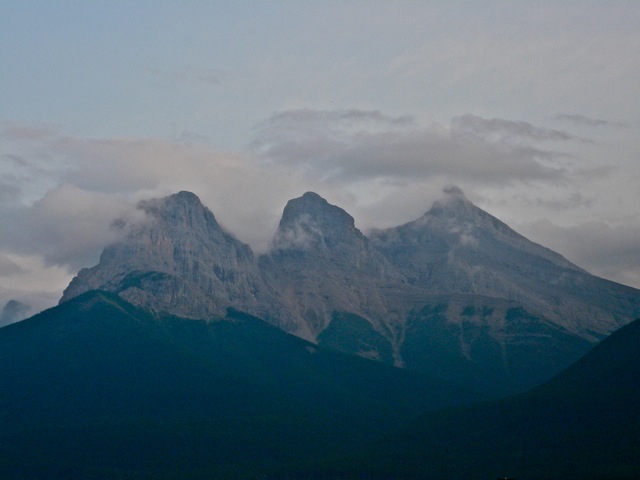
Canmore, Alberta, is the gateway to Banff National Park.  This little town hosted some of the ’88 Winter Olympics events at its Nordic Centre.  Here’s a view of the nearby Three Sisters Mountain at dusk when we arrived:

P1010421_2

From Canmore we headed to Banff National Park the next morning.  Despite the commercialized Banff Avenue, we could still get close to the wild near the Bow River. Elkie was so busy munching his lunch that he seemed oblivious to his human intruders:

P1010403_2

P1010414_3

From Banff, we continued on the Trans Canada Highway to Lake Louise and Moraine Lake. If you happen to have an old Canadian twenty-dollar bill, take a look at the back of it.  Here’s the real thing, Moraine Lake:

P1010472_2

From Moraine Lake, we headed north on highway 93, the Icefields Parkway, towards Jasper National Park. This stretch of the road offered some of the most beautiful sceneries in the world.

Bow Lake at the bottom of glaciated mountains.  The beautiful emerald color is the result of rock flour, moraines grounded to fine powder suspended in the water:

P1010465_2

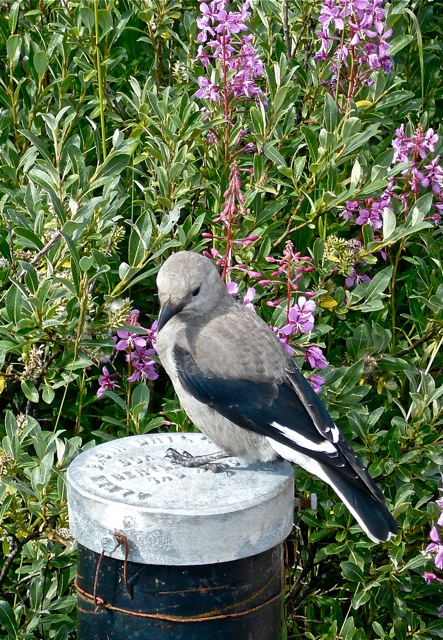
The Clark’s Nutcracker is a common bird in the area, among wildflowers by the glacier water:

P1010468_2_2

P1010457_2

.

.

The serene Waterfowl Lake:

P1010454

After a couple of hours drive, we entered Jasper National Park.  The major attraction as soon as we entered was the Columbia Icefields, the largest body of ice in the Rocky Mountains.  It spans 325 sq. km (130 sq. miles),  with an estimated depth of 365 m. (1,200 ft.)  Elevation averages 3,000 m. (10,000 ft.)

Mount Andromeda:

P1010430_3

The Athabasca Glacier spans an area of 6 sq. km (2.5 sq. mi), with a depth of 90 – 300 m. (270 – 1000 ft.) Its elevation about 2700 m (8900 ft).  Yes, there we were, in the middle of August in our summer clothes, thousands of feet above sea level, walking on the remnant of the last ice age over 10,000 years ago.  Here’s the magnificent view:

P1010445_2

That was only the entrance of Jasper National Park, but more than we could fathom for our short excursion.

**

Header Picture:  Bow Lake, Banff National Park, Alberta, Canada.

All photos taken by Arti of Ripple Effects https://rippleeffects.wordpress.com August, 2009.  ALL RIGHTS RESERVED.

Top 100 Books & Summer Reading Lists

Summers come and summers go,  reading lists for students tend to remain a constant, or… no?

According to The Boston Globe, the following are a few titles from high school summer reading lists over the years:

1915-1916 (long list of choices for regular year and summer)

  • Walden by Henry David Thoreau
  • Gulliver’s Travels by Jonathan Swift
  • Mill on the Floss by George Eliot
  • Works by Stevenson, Twain, and Dickens

1984 (requirements by grade and academic level)

  • The Grapes of Wrath by John Steinbeck
  • Jane Eyre by Charlotte Bronte
  • The Woman Warrior by Maxine Hong Kingston

2009 (recommendations, not requirements)

  • Twilight by Stephenie Meyer
  • Into the Wild by Jon Krakauer
  • Angels and Demons by Dan Brown
  • Pride and Prejudice and Zombies by Seth Grahame-Smith

ah…  the times they are a-changin.

Instead of (or, hopefully, on top of) reading the original Pride and Prejudice, students today are offered the zombies version… optional, of course.  The current view is, students should be enticed to read, not forced to.  Reading is supposed to be fun, after all, it’s summer.  

Summer

Around the same time, Newsweek published The Meta-List of Top 100 Books of all time.  The List is a compilation of 10 top book lists, including Modern Library, the New York Public Library, St. John’s College reading list, The Telegraph, The Guardian, Oprah’s, and others.  The Meta-List… the mother of all lists.

Here are the top 30,  just for a taste of the selections.  For the complete list, click on the above link.

  1. War and Peace by Leo Tolstoy (1869)
  2. 1984 by George Orwell (1949)
  3. Ulysses by James Joyce (1922)
  4. Lolita by Vladimir Nabokov (1955)
  5. The Sound and the Fury by William Faulkner (1929)
  6. Invisible Man by Ralph Ellison (1952)
  7. To the Lighthouse by Virginia Woolf (1927)
  8. The Illiad and The Odyssey by Homer (8th Century B.C.)
  9. Pride and Prejudice by Jane Austen (1813)
  10. Divine Comedy by Dante Alighieri (1321)
  11. Canterbury Tales by Geoffrey Chaucer (15th Century)
  12. Gulliver’s Travels by Jonathan Swift (1726)
  13. Middlemarch by George Eliot (1874)
  14. Things Fall Apart by Chinua Achebe (1958)
  15. The Catcher in the Rye by J. D. Salinger (1951)
  16. Gone with the Wind by Margaret Mitchell (1936)
  17. One Hundred Years of Solitude by Gabriel Garcia Marquez (1967)
  18.  The Great Gatsby by F. Scott Fitzgerald (1925)
  19. Catch-22 by Joseph Heller (1961)
  20. Beloved by Toni Morrison (1987)
  21. The Grapes of Wrath by John Steinbeck (1939)
  22. Midnight’s Children by Salman Rushdie (1981)
  23. Brave New World by Aldous Huxley (1932)
  24. Mrs. Dalloway by Virginia Woolf  (1925)
  25. Native Son by Richard Wright (1940)
  26. Democracy in America by Alexis de Tocqueville (1835)
  27. On The Origin of Species by Charles Darwin (1859)
  28. The Histories by Herodotus (440 B.C.)
  29. The Social Contract by Jean-Jacques Rousseau (1762)
  30. Das Kapital by Karl Marx (1867)

… and so on and so forth.  You get the idea.  Nothing on the top 100 list is later than 1987 (Beloved by Morrison) except Pullman (no. 84), and quite a few dating back to Centuries B.C. 

Now, is this literary elitism that has not caught up with the times?  Or, has our younger generation been short changed by not being taught to appreciate some valuable cultural legacy?  How do we reconcile the discrepancy between what’s recommended to our students and what experts think are the best books ever written?  Or, reading tastes vary, people are free to read whatever they like… Any list produced is therefore prescriptive and hegemonic?

Of course, one  could argue summer reading lists are not academic syllabi, give our students a break.  They’ll have the chance to read these great books at school… or, will they ever?

Still another debate would be the all too familiar struggle  even among book lovers: Literary or Popular Fiction, old or contemporary classics?   How do we choose?   Reading widely or reading deeply?  

 And, the very practical question:  How can I extend my 24 hours? 

***

A Midsummer Day’s Dream

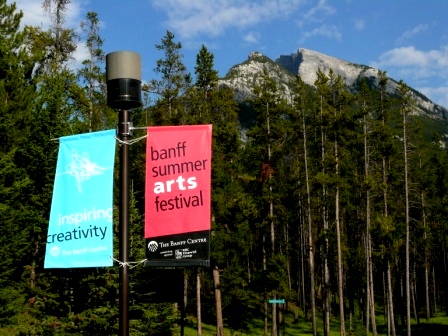
It was pure serendipity.  Finding out there would be an interview with Michael Ondaatje at the Banff Summer Arts Festival was a wonderful surprise.  Hours later I was on my way to Banff National Park.  The 90-minutes drive through the Rockies listening to the soundtrack of The English Patient was surreal.  And the destination was just as picturesque and dreamlike:

Banff Summer Arts Festival

The Banff Centre

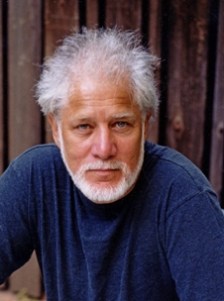
In the event entitled ‘Literary Primetime’, Michael Ondaatje, the Sri Lanka born Canadian poet, novelist, filmmaker, winner of the Booker Prize for The English Patient, was interviewed by Marni Jackson, the Chair of the Literary Journalism Program at The Banff Centre, an acclaimed writer in her own right.

Ondaatje’s impressive body of work includes novels, memoir and a dozen books of poetry, editorial work and documentary filmmaking.  But perhaps the most famous is The English Patient, which was adapted into film by the late Anthony Minghella.  The movie was awarded nine Academy Awards in 1996.

ondaatjeThe literary event started off with Ondaatje reading several passages from Divisadero, a book that brought him the fifth Governor General Literary Award.  I sat in the huge dining hall with an audience of a couple hundreds, entranced.  From afar I held my gaze at the silver haired writer framed by the large picture windows, the evening sun seeping through majestic evergreens, and silence shrouded the place except for one man’s gentle voice.  It was simply mesmerizing.

But it was the interview that made the dreamlike experience most rewarding.  The conversation explored the creative mind behind the writing process.  I jotted down some helpful tidbits:

Curiosity goes a long way.  It sparks off the research process, generating and sustaining the creative energy for the work.

Listen to the rhythm of the sentences.   “He would” or “he’d” could elicit very different effects.  Sound advice from a poet.

I was excited to hear Ondaatje address questions stemming from his book The Conversations: Walter Murch and the Art of Editing Film, which coincidentally, I am currently reading.  Murch was the film editor of The English Patient, one of my all time favorite movies.  The serendipity is most gratifying.  The art of film editing parallels that of writing… the essence is knowing what to cut, and when to move on.

While Minghella was writing the screenplay, Ondaatje was involved in the drafts.  The story had to be taken apart and rewritten to be adapted into film.  When you see your work being dismantled and reconstructed into another form, I imagine it takes courage, trust, and humility to accept that.  Ondaatje appreciates the art form of film and respects others’ expertise, entrusting his work in their hands.  This team effort, this alchemy of talents is most prominent in the making of the movie.

In the Interview, Ondaatje was asked about one excerpt from The Conversations. The writer and the film editor shares a common appreciation for the Chinese auteur Wong Kar Wai and his film In The Mood For Love.  The layering of sounds suggests the multiplicity of going-ons, events happening off-screen.  Such an effect can also be found in The English Patient.  The thickness of the actual and imaginary scenes adds complexity and depth, weaving a much more interesting tapestry.  Again, the parallel can be drawn with novel writing.  It’s the multiple offerings and the possibilities of interpretations that make a piece of writing intriguing:

“We are not held hostage by just one certain story, or if we are, we know it is just one opinion: there are clear hints of other versions.” (The Conversations, p. 160)

There were a couple of ideas I was a bit surprised to find.

First there is the ubiquitous self-doubt throughout the writer’s creative process.  Strange, and yet comforting, to find talented minds share this same psyche.  It is a humble sign to admit self-doubt.  The architect Frank Gehry and the late filmmaker Sydney Pollack came to mind.

“Her only virtue is self-doubt.” (Divisadero).

Second, and perhaps the most precious gem I collected from the event was reflected by Odaajte’s own words on the creation of a story: “I don’t know what would happen… I don’t want to know.”  The excitement of writing is that the story reveals itself as if it has a life of its own.  The writing process is an exploratory experience.  How gratifying to know we don’t need to follow a predetermined structure to plug in the story elements.  The creative mind is not bound by structure.  Let the story lead, and, enjoy the ride.

At the end of the Interview, Ondaatje was asked about a skills and job match questionnaire he once did when he was a young man.  The results showed that he could make one good customs officer.  Aren’t we all glad he had chosen to march to a different drummer and diverged in his career plan.

***


Personality Meme

Thanks to Dorothy of Of Books and Bicycles, I was tagged for this meme.  I’m to write seven personality traits to describe myself, then pick seven other bloggers to do the same.  And I get the chance to put this little emblem on my post:

award1premio_meme_award

Now, this is risky business.  But, all for the sake of pure summer fun, I’m going to plunge in.  So, after some thinking through, here are several bold strokes of Arti’s self-portrait:

1.  As my blog name and subheading suggest, I thrive on delayed resonance and hindsight.  I’ve written a post on this before: I’m a slow blogger.  That means I like to mull things over, chew and digest before I write down anything.  And I edit myself, over and over again.  Good food takes time to prepare, I take that to heart.

2.  Hey, but I’m no dawdler.  I’m not slow in say, movement.  I’m always punctual, or even early for appointments.  I’d rather be waiting than being waited for or on.  I know… my husband probably would not agree.  But then again, who knows me more than me, right?

3.  I’m a thinker more than a doer.  Don’t be mistaken that I’m being idle if you see me doing nothing.  I’m thinking… and that’s hard work.  I admit, that may not be very fruitful.  If you don’t actually plant, you won’t get the fruit.  Like, I think about exercising a lot, rather than doing it.  And what do I reap?  Some unwanted results… now that’s ironic.  What did I do to earn them?

4.  But if I have to engage in physical activities, I’d rather be shoveling snow than vacuuming the floor.  Love the outdoors.  And, I’d rather be walking than running, running than swimming.  Love to plant my feet on solid ground.  So, that means I’d rather be hiking on a mountain than sailing in the open sea.  That’s what decades of living in the foothills of the Rockies do to you.

5.  But, as a thinker, I do that best sitting or lying down.  The best thoughts I get usually come when I just wake up in the morning.  Alpha state, I think.  So, that just leads to a shortcoming of mine:  I can’t think on my feet that well.  That makes me a planner.  I have to plan my moves, what to say, how to say it… etc.  But I admit there are times that I do blurt out in the most inappropriate moments, but those are times I act out of character.  Oops, I’ve got more than one point here… just shows how organized I am.

6.  I’m observant, I’ve been told.  And I agree.  But I like to be called perceptive more.  I like to look beyond the surface and research on things, and people.  On a personality and career match survey, they might put me in for the job of ‘Profiling with the FBI’.  But maybe this is what all those decades of TV and movie watching do to you.

7.  You’ve heard of the phrase ‘iron fist in a velvet glove’.  Well, I wish I were like that… that will be the ticket to getting things done for you.  I’m afraid I’m just the opposite.  I’m more like ‘velvet face behind the iron mask’.  I may look stubborn on the surface, but I’m too easily swayed in heart.  Alas, that’s Arti’s major flaw.

Now, to pass on this great privilege of honing some self-knowledge and sharing with people who are always supportive, here’s my list of the seven recipients of this Personality Meme.  This is purely for mid-summer fun, like chatting around a virtual campfire.  No obligations, no pressure.  I know some of you are tied up around this time, so… feel free to pass, you won’t be asked to sing.

In alphabetical order:

Ellen of The Happy Wonderer

ds of third-storey window

Linda of The Task at Hand

Molly Mavis of Visual Dialogue

oh of OH! BOOKS…PAPER…REAL LIFE…

Ruth of synch-ro-ni-zing

Shari of Shari Green