November Wrap: East Meets West at the Pond

November is an eclectic month of reading and viewing for me. I’ve watched films ranging from a Chinese wuxia legend from the Tang Dynasty, to the English suffrage movement, to the scandal in the Catholic Church in Boston… and read books from crime thrillers to Westerns to the Gilded Age to India before and after independence.

Arti is a hybrid after all, constantly navigating between cultures and languages. When it comes to books and films, dashing between genres, periods and styles only adds spice to life.

Here’s the list of my November books and films.

Films

The Assassin

The Assassin

Acclaimed Taiwanese director Hou Hsiao-Hsien’s genre-defying wuxia epic earned him Best Director at Cannes this May. Hailed as the most beautiful film at the Festival, this adaptation of a 9th century Tang Dynasty Chinese legend may not be as easily grasped in terms of its storyline as its visual appeal. The film is recently voted #1 on the reputable Sight and Sound Magazine‘s Best Films of 2015 list, that’s the result of a poll gathering the views of 168 international film critics. It is a rare gem indeed. My full review at Asian American Press.  ~ ~ ~ ~ Ripples

(BTW, Hou’s last film? The Musée d’Orsay commissioned French feature on the Museum’s 20th anniversary: Flight of the Red Balloon.)

Room

A highly watchable adaptation of Emma Donoghue’s 2010 Booker Prize shortlisted novel. Kudos to the actors Brie Larson as Ma, Jacob Tremblay as 5 yr-old Jack, and yes, to Donoghue herself for writing the screenplay. One of those titles that I’ve enjoyed watching more than the literary source. My review on Ripple Effects.  ~ ~ ~ 1/2 Ripples
Update Jan. 14, 2016: 4 Oscar Nominations including Best Picture

Suffragette

Carey Mulligan has put forth a nuanced performance as the laundry gal turned suffragette in this Sarah Gavron (Brick Lane, 2007) directed historical drama. It’s worthwhile to watch the informative depiction of the actual events woven with fictional personal stories, especially Mulligan’s riveting portrayal of Maud, how her beginning naivety is forged into committed devotion to the suffrage movement. Prolific screenwriter Abi Morgan (Irony Lady, 2011, just to name one of her works) has laid out a fact-based drama with a heart-wrenching climatic scene. The sacrifice these voiceless, working women were willing to lay down is inspiring.
~ ~ ~ 1/2 Ripples

Secret in their Eyes

The Hollywood re-make of Argentine author Eduardo Sacheri’s crime thriller is a tall order, for its previous film adaptation is the Oscar winner of 2009 Best Foreign Language Film. My post on the book, original film, and Hollywood version is here. ~ ~ ~ Ripples

Spotlight

One of the best films I’ve seen this year, detailing the sequences of how the Boston Globe’s ‘Spotlight’ team of investigative journalists uncovered the systemic cover-up of child sexual abuse among Catholic priests. The Pulitzer winning reporting is presented in the film as painstaking procedurals in matter-of-fact dramatizing. For those who may be a bit worried about the subject matter, there is no sensationalized scenes of abuse, and on the part of the reporters, no portrayal of heroism. Such may well be the praise-worthy elements of this production. The cast’s performance is convincing, in particular, Liev Schreiber as the soft-spoken but motivating, no-nonsense editor Marty Baron. Come Awards time, I trust the production, its cast and crew, and director Tom McCarthy (The Visitor, 2007) will be duly recognized.    ~ ~ ~ ~ Ripples
Update Jan. 14, 2016: 6 Oscar Nominations including Best Picture

Fireflies in the Garden

My guess is, you haven’t heard of this 2008 movie. Neither have I until I saw it on TV a few days ago. The story about a father-son’s love-hate relationship from childhood to adulthood is realistically depicted. Caught in between the straining conflicts between the always angry and harsh father and a sensitive, vulnerable son, is the mother, always loving and protecting, something like the family dynamics in Terrence Malick’s The Tree of Life. It also echoes the Oscar winning Ordinary People (1981), the small-scaled, Bergman-esque chamber film of deep entanglement of unresolved parent-child conflicts. Another film just popped into mind and that’s Colin Firth, Jim Broadbent’s When Did You Last See your Father.

Fireflies has a well-selected cast with Ryan Reynolds, Willem Dafoe and Julia Roberts. I’m surprised to see the low rating the film received among critics. Disappointed really that it wasn’t well received. What’s that to me, and why am I  concerned? There’s a half-baked screenplay in my closet that’s something along that line. I know, more rewrites.  ~ ~ ~ Ripples

**

Books (Click on links to my Goodreads reviews)

It’s all a chain reaction started with …

The Burning Room by Michael Connelly (Audiobook)

I’ve not missed a single one of Connelly’s Detective Bosch novels. This time I listened to the audiobook and was much impressed by the voice of its narrator Titus Welliver.

Appaloosa by Robert B. Parker (Audio MP3)

So I checked about Welliver’s other audio works, and found Appaloosa by Robert B. Parker. I’d seen the 2008 film adaptation with Ed Harris and Viggo Mortensen and quite enjoyed it. So I jumped right in and found it to be a very well-written book, one of the few Westerns I’ve read.

And from this Robert B. Parker, I went on to explore more about him and learned that he was the ‘Dean of American Crime Fiction’. Here are two of his works crime stories I followed up with:

Promised Land  (Audio MP3)
The Godwulf Manuscript  (Audio MP3)

The Custom of the Country by Edith Wharton
From crime fiction to the Gilded Age. I bought this book at Edith Wharton’s home at The Mount during my New England road trip, during which I learned that Julian Fellowes was much influenced by Wharton and especially this title.

The Secret in their Eyes by Eduardo Sacheri (Audio MP3)

Plato and a Platypus Walk into a Bar: Understanding Philosophy through Jokes by Thomas Cathcart and Daniel Klein (eBook) – click on link to read my one-line review of this title on Goodreads.

The Boston Girl by Anita Diamant
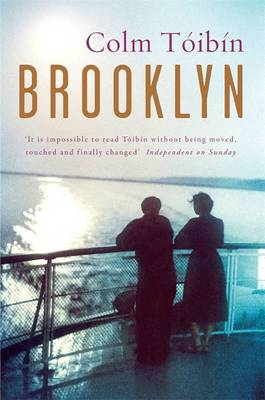
Makes me think of Colm Tóibín’s Brooklyn which I’m rereading to prep for the upcoming film adaptation.

Heat and Dust by Ruth Prawer Jhabvala
Shifting between the English in India before independence and later the 70’s, a clash in cultures and the human toll of unfulfilled marriages. I reread this to prepare for the James Ivory Retrospective this coming weekend right here in my City, with the legendary director (now 87) attending. Yes, really looking forward to this event.

**

Currently Reading / Listening

In the Heart of the Sea by Nathaniel Philbrick (for the upcoming film)

Brooklyn by Colm Tóibín (reread for the upcoming film)

Parade’s End by Ford Madox Ford (Audiobook)

***

Related posts you may like:

Flight of the Red Balloon (2007)

The Tree of Life (2011) by Terrence Malick

When Did you Last See your Father?

Appaloosa (2008)

September Wrap

Here’s a post of lists, movies I’ve seen and books I’ve read or listened to, all in September, a list that hopefully can tide you over till my next post, which will be after a long-planned hiatus. You’re welcome to throw in your thoughts on any title on this list, or ripple out to other shores.

DSC_0319

***

MOVIES At Theatres:

Man from U.N.C.L.E.

Who are they kidding? Might as well just put in this disclaimer: Title taken at random. This is not the Man from U.N.C.L.E. with David McCallum (yeah) as Illya Kuryakin and Robert Vaughn (boo) as Napoleon Solo during my childhood days. I knew what the acronym stood for even as a grade schooler, and was mesmerized by a world wide net of spies and intrigues, despite watching a B/W TV set. This 2015 U.N.C.L.E. feature movie is just like any other lesser spy flicks, feels like haphazardly done, dated spywares that fail to send any positive nostalgic vibes, and featuring an accidental duo just happen to have the same names as those in the 60’s TV series. The third person, Alicia Vikander, makes it a bit more watchable. ~ ~ Ripples

Mistress America

A bit disappointed considering how much I’d enjoyed Frances Ha and the works of Noah Baumbach. Greta Gerwig is a mystery to me. In all her roles she looks ultra cheerful, even in difficult circumstances, but is that overacting or is that what her character is supposed to convey, optimism as fuel for life? Anyway, I wanted to give Mistress America a second chance. But as I checked the showtimes a couple of weeks later, it wasn’t there anymore.  ~ ~ 1/2 Ripples

A Walk in the Woods

A pleasant surprise! Is there life after 50, 60 … 70? Robert Redford and Nick Nolte is an odd pair to answer that from the jagged edge of a cliff. All the cliché shots of two old men hiking the Appalachian Trail are in the movie trailer; the film has more to offer. Emma Thompson is a welcome addition as the forbearing wife hoping for the best. I’ve seen several of this genre in recent years: WildTracksThe Way, to name a few, with A Walk in the Woods being the lightest but still quite relevant. Lesson learned? Forget about your age, and, giving up doesn’t make you a failure. It has been a long while since I read Bill Bryson’s book on which the film is based. Watching the adaptation brings laughs which I remember were absent while reading. An easy 2 hours of relaxation without taking one single step.  ~ ~ ~ Ripples

Learning to Drive

Just the opposite, I was not enthused about the trailer and my hesitations about the film were confirmed as I watched. Based on a non-fiction piece from Katha Pollitt’s Learning to Drive and other Life Stories, the movie turns political by changing the Filipino driving instructor into a Sikh, played by Ben Kingsley. No matter, he has that poise and dignity no matter what costume he puts on. It’s not surprising to see Patricia Clarkson’s Wendy character – a woman in her fifties learning to drive for the first time in her life – get some bonus lessons on cultural awareness on top of parallel parking.  ~ ~ 1/2 Ripples

The End of the Tour

One of the best films I’ve seen this year, and maybe for some time. Nothing looks ‘performed’, yes, even the nervous Jesse Eisenberg as writer David Lipsky is his natural self, unsure of himself and of his subject David Foster Wallace, as he follows his Infinite Jest book tour to write an article for the Rolling Stone Magazine. Based on Lipsky’s book Although Of Course You End Up Becoming Yourself: A Road Trip With David Foster Wallace, the film belongs to Jason Segel. A surprising cast and Segel has delivered with poignancy as Wallace. Framed in a sympathetic tone, the film is a moving tribute to and a revelation of an author whom some may choose to misread.
~ ~ ~ 1/2 Ripples

Pawn Sacrifice

The title says it all. A pawn is sacrificed in the heat of the cold war. Based on the true events that rocked the chess world and quickly inflamed the political landscape, American Bobby Fischer (Tobey Maguire) captured the world championship in 1972, taking the title away from Soviet Grandmaster Boris Spassky (Liev Schreiber). While the film in all its earnest intentions effectively brings out the intensity of the rivalry, the main issue I feel is the casting. Liev Schreiber is too famous a face to be Boris Spassky, even speaking in Russian doesn’t make him any more convincing; Maguire is even more famous a face to be Fischer. And may I go into this? They both need to slim down a bit to fit the profile of the cold war chess rivals, especially Schreiber. My choice for Fischer? Nicholas Hoult. Spassky? Andrew Garfield.  ~ ~ ~ Ripples

***

MOVIES on DVD’s:

The Jungle Book

It has been a long, long while since I watched it and now a refresher to prepare for the star-studded voicing in the remake. This 1967 Disney animation just shows how much has changed in animations then and now. Hand-drawn, slower paced, and nuanced facial expressions from the animal characters, albeit a bit flat when compared to the hyperactive animations we see today. The new version of The Jungle Book is coming out in 2016, utilizing ‘up to the minute technology’, and fusing a real life Mowgli with CGI generated animals and jungle environs all in 3D. As for the 1967 version, the music and the songs will stay as original as ever.

This is Where I Leave You

Another August: Osage County, which is influencing which, for these two are so alike? Or, maybe just speaks to the fact that the dysfunctional family is the norm. Under the direction of their mother, five estranged siblings have to come back home to sit shiva as their father passed. Staying under the same roof for seven days is an ordeal with the Altman family, for everyone carries baggage they’d rather bury together with the dead. Not as bad a film as critics say. Jane Fonda is a less overbearing mother as Meryle Streep is in Osage County, so not to overshadow the rest of the cast. Jason Bateman, Tina Fey, Adam Driver, Corey Stoll may not be the best of siblings, they make one good cast. Don’t you just love the title?

Greenberg

From the dysfunctional family to the dysfunctional individual. Roger Greenberg (Ben Stiller) comes back to LA from NYC to housesit for his brother as the family takes a vacation. As one who had received treatment in a mental hospital, Roger has many personal issues to deal with, and it’s a little heart-wrenching to see him struggle to relate, albeit at times he comes through more as annoying than deserving kindness; but maybe that’s the point. Greta Gerwig plays Florence, dog walker for the family. Stiller is in his usual mode, lost to himself and others; Gerwig is her usual self too, pleasant despite all. So it’s not hard to predict the outcome but the process makes one interesting take. The first time Gerwig in director Noah Baumbach’s work. Here began a beautiful and rewarding partnership.

Panic Room

Re-watch after learning this is the breakout film for Kristen Stewart, age 12. Didn’t realize she played Jodie Foster’s daughter there when I first saw the movie years back, and now seeing it again I find the two do have some resemblance, in appearance and demeanour. Locked in a panic room in a fancy NYC apartment they just moved in, mother and daughter try to stay safe as a gang of burglars break in. Although not thoroughly plausible, especially how Foster answers the door as two policeman come to check on them, which then leads to some even more implausible outcomes at the end. But, overall, a riveting, edge-of-your-seat kind of viewing. And when you think of it, of course, it’s David Fincher.

Olive Kitteridge

Binge-watched this HBO 4-hour mini-series after it won 7 Prime Time Emmys last Sunday. Writing, acting, editing, camera work, the whole production is captivating, and at times, very funny, no, not the Bill Murray section – he’s actually serious here. Frances McDormand and Richard Jenkins are deserving winners. In her acceptance speech for the Best Mini Series, McDormand emphasized that it all came from a book. Yay for books, the wellspring of inspiration. Olive Kitteridge is author Elizabeth Strout’s Pulitzer Prize winning work; writer Jane Anderson wins her Emmy for the adapted screenplay. However marvelous the visualization, it all started with words on a page.


A Touch of Sin

In preparation for Jia Zhangke’s 2015 festival film Mountains May DepartA Touch of Sin was nominated for the Palme d’Or at Cannes 2013 and won Jia a Best Screenplay award. Jia’s camera frames a perspective that’s bold and true in his home country China, a nation obsessed with modernization, economic growth, and wealth accumulation. The film reveals the human costs for such enterprises. Unfortunately, his countrymen didn’t have a chance to watch this one as it was banned. But with Mountains May Depart, officials had said they would allow it. I’m afraid it just might be much tamer and easier for the palate.

***

BOOKS

Summer by Edith Wharton

After The Age of Innocence, I continue to explore the writings of The Gilded Age, to prepare for my New England trip and yes, Julian Fellowes’ new American TV series.

The End of Your Life Book Club by Will Schwalbe

Not as chilling as the title sounds, heartwarming memoir of a son chronicling the extraordinary life of his mother, Mary Anne Schwalbe, albeit she would have likely said, “O, mine is just another life. There are many more deserving ones.” While accompanying his mother at her chemo therapy sessions in the hospital, son and mother share books and reading. The two-persons book club is therapeutic for both.

Circling The Sun by Paula McLain (Audiobook read by Katharine McEwan)

Not sure how much is true in this fact-based fiction about Beryle Markham, the award winning race horse trainer in Kenya and in 1936, the first woman to fly solo across the Atlantic from east to west. Markham flew from England to NYC, but crash landed in Nova Scotia after a 21 hour harrowing flight head-on against the prevailing winds. (I later learned that Amelia Earhart’s 1932 flight was from west to east, a much ‘easier’ feat with the tailwind, landed in Ireland after only 15 hours in flight.) McLain’s book tells many more stories, and gossips, than just this monumental event. Beryl had known the Out of Africa author Karen Blixen in the small social circle in Kenya. Why, Beryl is the other woman in Deny’s life, according to McLain. Not too sure about the book, but I was much impressed by the voice of the narrator Katharine McEwan.

Satin Island by Tom McCarthy

The only 2015 Booker Prize shortlisted book I’ve read, so far, and it’s brilliant. The book presents a most interesting story of a ‘corporate anthropologist’ collecting field data for an ethnographic study of the human society in this digital age. The ‘Great Report’ is needed to be written, same as this book: what have we become at this juncture of human history and civilization? Maybe we do need anthropologists to offer a narrative of our contemporary society, or even better, we should all be trained as anthropologists to see ourselves better.

Remainder by Tom McCarthy

I’ve enjoyed McCarthy’s style of postmodern incisions. Remainder is his debut work and soon to be made into a movie. Walking down the street our unnamed (of course) protagonist was hit by a falling object. After coming out of a coma, he needs to re-enact his past to regain memories, and to reconstruct an authentic existence. Who is he, what is he? With the huge sum of monetary compensations, he steps out to do exactly that. Still reading, a fascinating premise.

***

Books to Films at TIFF15

September kicks off Film Festival Season, a prequel to all the movie nominations coming up at the end of the year. First there’s Venice, Telluride, and Sept. 10 begins the 10-day celebration of films from over 70 countries at the Toronto International Film Festival.

The following are several of the premieres at TIFF15 that are adaptations from literary sources. Just to throw some more reading ideas out in case you’re not already overwhelmed with book suggestions.

***

The Dressmaker by Rosalie Ham

The Dressmaker Movie-tie-in CoverAustralian author Rosalie Ham’s debut novel (2000) is divided into four sections named after four different kinds of fabric: gingham, shantung, felt and brocade. The historical, gothic novel has received several nominations and shortlisted for the Book of the Year Award (2001) by the Australian Booksellers Association. The film adaptation stars Kate Winslet as the dressmaker Tilly Dunnage who returns to her hometown seeking revenge on her being expelled years before, with a sewing machine as her accomplice. Sounds interesting? What more, she is a Titanic survivor (of course she is) and the plot thickens with a hearing on the doomed maiden voyage. Australian director Jocelyn Moorhouse wrote the screenplay and shot the film in Victoria. Liam Hemsworth and Judy Davis also star.

High-Rise by J. G. Ballard

HighRise(1stEd)J. G. Ballard’s most well-known novel probably is Empire of the Sun (1984) thanks to Steven Spielberg’s movie adaptation. That is a semi-autobiographical account of Ballard’s childhood years in a Shanghai internment camp during the Japanese invasion of China. The production is one of the better WWII, Pacific War movies, splashed with some surreal styling. Now High-Rise (1975) looks like a totally imaginative work. An ultra-modern high-rise apartment (hopefully with some updated renos from its inception in 1975) with all its conveniences and amenities only lead to the isolation of its tenants, dividing them into different classes and eventually, to rivalry and extreme violence. The high-rise is a self-contained microcosm of our civilized society, perhaps Lord of the Flies of the concrete jungle. An acerbic satire of our human condition, the film is directed by Ben Wheatley and stars Tom Hiddleston and Jeremy Irons.

Into the Forest by Jean Hegland

Into the ForestThis is Hegland’s debut novel (1996), and had been translated into eleven languages. Set in Northern California in the near future when a massive continental power outage causes the total shutdown of technology, subsequently, the total collapse of human society. The apocalyptic scenario unfolds as two teenaged sisters – at first living in an idyllic, remote forest – now have to fend for themselves, find food at the brink of starvation, secure safety in the wild, and in the process, grow in their relationship with each other and learn more about their world. A coming-of-age story as well as an allegory of our technologically dependent society. The film is shot in British Columbia where, yes, there are beautiful forests. Canadian director Patricia Rozema writes the screenplay and helms the production. Rozema is the one who brought us Jane Austen’s Mansfield Park the movie in 1999. Popular Canadian actress Ellen Page joins hands with Evan Rachel Wood to play the roles of the sisters.

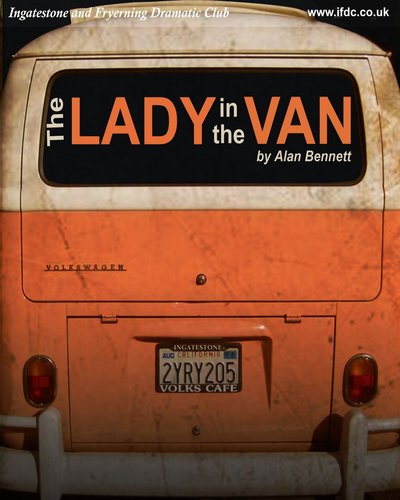
The Lady In the Van by Alan Bennett

The Lady in the VanThanks to the film adaptation, or I wouldn’t have known about this amazing story. Acclaimed English playwright Alan Bennett’s play is not fiction but a memoir. Bennett saw a transient woman living in a van on the street. Trying to help her out, he let her park on his own driveway for three weeks so she could sort things out and move on. Well, Miss Shepherd stayed for 15 years. Not surprisingly, she and the playwright form an unlikely bond of friendship. This ‘mostly true’, incredulous story needs to be told for its unique human scenario. From play to film is probably the best route to reach many more viewers. Who else other than Maggie Smith best fit the role as Miss Shepherd? And so she did, with Alex Jennings as Alan Bennett. Supporting cast includes Jim Broadbent, Dominic Cooper, and James Cordon. The is the third film wherein director Nicholas Hytner and playwright Alan Bennett team up. Their previous collaborations are The History Boys (2006) and The Madness of King George (1994).

The Martian by Andy Weir

The Martian movie tie in editionHere’s a Cinderella story that all bloggers can cheer for. In 2009, Andy Weir started posting on his personal blog as a post-by-post serial his well-researched sic-fi story about an astronaut stranded on Mars. Chapter by chapter he attracted numerous readers who, after the story was finished, suggested he publish it as an eBook so people could read it online as a whole. Weir did that and his eBook soon hit the top of Amazon’s best selling sic-fi list. Not long after, Random House stepped in and took it from there, from e to reality. Four days later, “Hollywood called for the movie rights,” Weir recalled. As I type, on this second week of September, Weir’s book is number one on the New York Times Best Sellers Trade Paperback Fiction list. And the movie? The legendary Ridley Scott takes the helm, with NASA consulting, Matt Damon stars, and an A-list supporting cast includes Jessica Chastain, Chiwetel Ejiofor, and Jeff Daniels. World premiere at TIFF before a general release later in October. And it all started with a blog post.

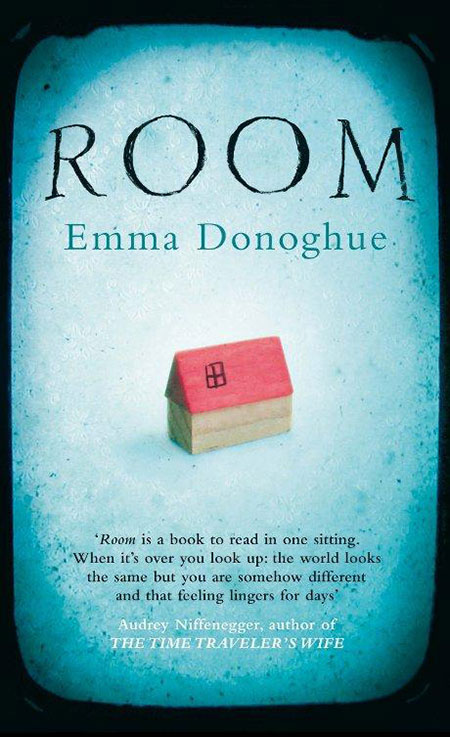
Room by Emma Donoghue

roomThe 2010 Booker-prize shortlisted novel by Irish-Canadian author Emma Donoghue reads like you’d want to see it visualized. Indeed, hearing constantly the voice of a 5 year-old could have that effect on you. So here we are. A movie adaptation. Locked in a room and made captive by a psychotic abuser, a young mother gives birth and for the next five years raises her child Jack in a shed. At 5, Jack has known no other worlds, but now begins to ask questions. Ma cannot contain the make-believe anymore so she tells Jack there’s a world out there, and starts to prepare him for a possible escape. The multiple-award winning novel is written from the child’s perspective. It depicts the power of love and the indomitable spirit of resilience and hope, but maybe not for the claustrophobic. The movie trailer is impressive; the 1.5 minute clip is powerful, consuming, and very moving. The film premiered at Telluride International Film Festival in early September and stunned the audience, drawing multiple standing ovations. Donoghue wrote the screenplay herself, that could well be a definite asset. Lenny Abrahamsson directs, with Brie Larson as Ma, Jacob Tremblay as Jack, Joan Allen and William H. Macy supporting.

UPDATE Sept. 20, 2015: ROOM has just won the Grolsch People’s Choice Award at TIFF15 tonight. FYI, a few of TIFF’s previous winners had gone on to win the Oscar Best Picture including 12 Years A Slave (2013), The King’s Speech (2010), Slumdog Millionaire (2008), American Beauty (1999).

***

Go Set A Watchman: Sequel or Prequel?


Go Set A Watchman Book Cover


Background

Go Set A Watchman is Harper Lee’s first draft of a novel (See links at the end of the post). In 1957, Lee’s agent submitted it to Tay Hohoff, an editor at the now defunct publishing house J. B. Lippincott. Hohoff did not see it adequate to be published; however, she did see promising elements in it, “the spark of the true writer flashed in every line,” she later recounted.

The draft’s protagonist, 26 year-old Jean Louise Finch, Scout, now a New Yorker, goes back to visit her childhood home in fictional Maycomb County, Alabama, and finds discrepancies about her father Atticus now from the man she thought she had known all the years growing up. To her alarm and disillusionment, Atticus, while a good father and a good man to all the rest in Maycomb, holds racist views and is firmly a segregationist.

Hohoff advised Lee to rewrite the draft but this time, instead of writing Jean Louise Finch as an adult, focus on her reminiscence of her childhood growing up in Maycomb with her brother Jem, living under the roof of her father Atticus, and summer days spent with a boy next door called Dill. After more than two years of editing and rewriting, To Kill A Mockingbird was born. And the rest is history.

So here’s the query I have: If your novel, after two years of editing and re-inventing, had developed into a final form and published in 1960, some 50 plus years ago, had gained high acclaims, won the Pulitzer, become a beloved American classic, been adapted into an Oscar winning movie, and achieved international recognition, why would you want your very first draft as a novice be published to the world now?

At 89 years old, Harper Lee now lives in a nursing home, a stroke survivor who has lost most of her hearing and eyesight, and just months after her sister Alice Lee – guardian of her privacy and legal advisor – had passed, and suddenly a ‘newly discovered’ Harper Lee novel appeared.

In a recent New York Times Op Ed article entitled “The Harper Lee ‘Go Set A Watchman’ Fraud”, columnist Joe Nocera vehemently argues that the Rupert Murdoch-owned HarperCollins had “manufactured a phoney literary event.” The publishing house had sold more than 1.1 million copies of the book in a week, the ‘fastest-selling book in company history’ according to the publisher, to which Nocera decries “Go Set A Watchman constitutes one of the epic money grabs in the modern history of American publishing.”

The above is the major challenge surrounding this phenomenal ‘literary event’. So how should one read the book? Controversy aside, what can we reap from reading Go Set A Watchman?

Definitely not as a sequel and not a prequel either, but take it as it is: A first draft of To Kill A Mockingbird.

Only when comparing the two books as a ‘Before and After’ transformation can we see how the writing process had taken place. By reading Watchman as a first draft, we come to appreciate how a seasoned editor had helped a novice and an aspiring writer to achieve her goal to become a respectable, published author. And this we know Hohoff had done most successfully.

To Kill A Mockingbird Book Cover

***

Reading Go Set A Watchman

First off, to all readers, a major reminder: Harper Lee is a real person, and Atticus Finch is a fictional character. In Lee’s first draft, Go Set A Watchman, Atticus is a good father, but a racist. Yes, he had successfully defended Tom Robinson and gained him an acquittal, that was a court appointed case. This is anecdotally mentioned in Watchman. But Atticus is a self-professed Jeffersonian Democrat, one who subscribes to Jefferson’s view that: “A man couldn’t vote simply because he was a man… He had to be a responsible man.”

Lee spends a climatic chapter towards the end describing the arguments between father and daughter on the issue of race. While both are polar extremes, and I don’t want to quote the words from Atticus pouring forth his arguments about how “white is white and black’s black”, I must point out that it is Scout who loses her cool during the debate. She is the one who blows right out, foul-mouthed and accusing her father with hurtful, derogatory terms. Throughout the verbal confrontation, Atticus remains a gentleman. “I’m seventy-two years old, but I’m still open to suggestions.”

And I’m quite impressed by the next episode, and that’s when Scout cools down and goes back to her father, seeking reconciliation. It’s not just a simple case of ‘agree to disagree’, but somewhat laying out a more complex relationship with the ambivalent stance of ‘I can’t beat you, I can’t join you,’ but love can still triumph over all. That is the spark of an inspiring writer I can see in the conclusion of Lee’s Watchman. As Scout apologizes for her foul-mouthed diatribe aimed at her father the day before, this line from Atticus will remain with me: “I can take anything anybody calls me as long as it’s not true.”

Hohoff might just have seen this character trait in Atticus that she advised Lee to expand on in her rewrite. I see this admirable element as I read. Let the fictional character Atticus be created as an ideal type of a man, open to others’ opinions, upholding his ground with firmness but with no malicious hostility. And yes, we can all appreciate this change of heart in Lee’s rewriting in Mockingbird. Let Atticus be the ideal father and friend, a deserving, honourable man.

Further, in Watchman, the racist turn in Atticus has not been well accounted for. Since Jean Louise has come back to Maycomb annually to see her father, why the sudden discovery of his racist stance? And why had she not known about his views considering her close relationship with her father all her growing years and only in recent years in her adult life had she moved to NYC. But most important point of all Lee had not explained in Watchman, why had Atticus changed his view? These could be flaws in the plot line that Hohoff had Lee re-think.

As recounted, Lee based her Atticus character on her own father, the lawyer Amasa Coleman Lee who had actually defended two black men but failed to have them acquitted. According to reports, the elder Lee had been a segregationist but later changed his views to support integration. The real life parallel is obvious. The details we could only speculate, was it the man that had influenced the change in the book, or maybe vice versa?

In the rewriting process, there is the elimination of two significant characters in Watchman, Hank, Jean Louise’s suitor, and Uncle Jack, holder of family secrets. Once a clear storyline is established, with the equally moving minor plot of Boo Radley, a parallel Mockingbird theme with Tom Robinson as both being vulnerable victims, Hank and Uncle Jack would not be needed to uphold the story lines. So, no matter how much a writer had invested in a character, cuts and alterations could be the outcome, quite like the deleted scenes we see on DVDs, the rational choices we have to make in the long creative process. On the other hand, a character that exists only in memory, Jem, who had died in Watchman, is revived to his lively self, and we are all grateful for that revision.

One of the main reasons Hohoff had rejected the first draft was that it was episodic, lacking a unified story arc as a novel. Readers of Watchman will find this so, especially when Jean Louise switches back and forth from the present to the past. As I read, the past holds much more attractions as Scout describes her growing up days in Maycomb. We see the children in a different perspective, something like a ‘behind the scene’, a ‘making-of’ featurette. Thanks to Hohoff, such episodes are restrung into the gem of a book called To Kill A Mockingbird. Indeed, Hohoff had grasped the social psyche well, there was a need for a noble, heroic character in her time then, and maybe even more so in our time now.


***


LA Times (With video)

The Telegraph

New Republic

The New York Times (Jonathan Mahler)

The New York Times (Serge F. Kovaleski and

The Wall Street Journal

The Washington Post

The Washington Free Beacon

Wikipedia


From Z to A: How Zweig Inspired Anderson’s Grand Budapest Hotel

The following is the first part of my article in the new Spring Issue of the online review magazine Shiny New Books. In the article, I introduce the Austrian writer Stefan Zweig, whom director Wes Anderson acknowledged as the source of inspiration for his Oscar winning production. To read the whole piece, CLICK HERE. I’m sure you’ll find the SNB site informative and a valuable resource of books and authors.

***

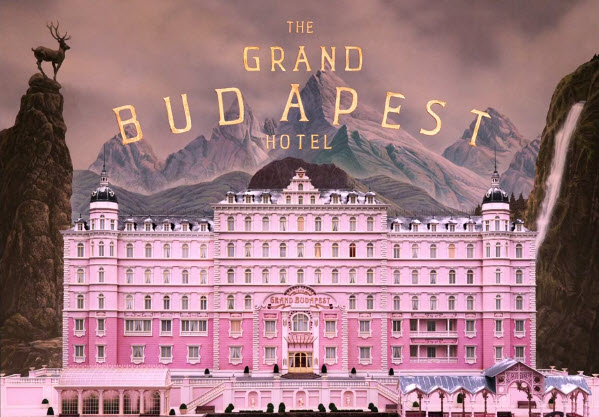
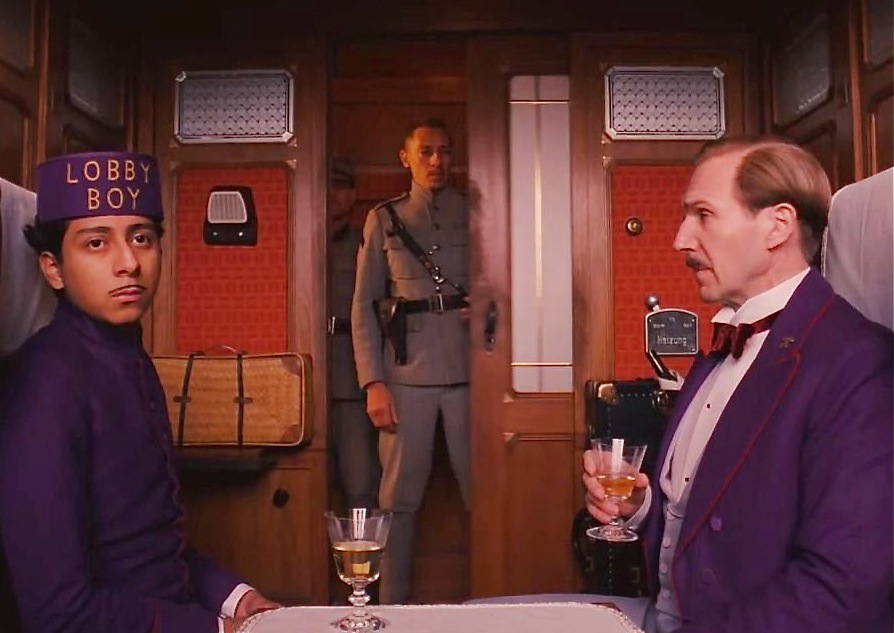
The Grand Budapest Hotel won four Oscars at the 87th Academy Awards this February. In the end of the film leading the credits is the acknowledgement of Stefan Zweig (1881-1942), whose writings had inspired the production. During interviews, director Wes Anderson had joked that he ‘stole’ from the Austrian writer: ‘It’s basically plagiarism,” he said. Anderson is all modesty when making such a remark, for the film has his own signature style. Unlike Zweig’s more serious and darker hue, Anderson has created a colourful fantasy. Rather than an imitation, the film should be regarded as a worthy homage to an author who had been noted as one of the most translated German-language writers during the 1930’s.

the-grand-budapest-hotel movie poster

Anderson came across Zweig by chance when he purchased his 1939 novel Beware of Pity in a Paris bookstore. After two pages, he knew he had discovered a new favorite author. Twenty pages later, he wanted to adapt it into film. Then he read some more Zweig and liked them all. So he made a peculiar endeavour, he transposed the author’s oeuvre, his life and spirit into his own re-imagining, creating a film that eventually would catapult him to the zenith of acclamation.

The Grand Budapest Hotel was nominated for nine Oscars at the 2015 Academy Awards, including Best Picture, Best Directing, and Best Original Screenplay for Anderson himself. Albeit not having won these major categories, the film did capture four wins in Original Score, Production Design, Costume Design, Makeup and Hairstyling. The triumph is shared by the late Zweig, for he has now been introduced to many more readers, especially those of us in North America. New York Review Books has seen Zweig’s popularity rise after the movie, but it is UK’s Pushkin Press that holds the banner of a ‘Zweig revival’ by republishing many of his works in English translation.

Zweig was born 1881 in Vienna to a Jewish family who circulated freely in the upper crust of Austro-Hungarian society. He was versatile and prolific as a poet, translator, biographer, essayist, lyricist, short story writer and novelist. His literary achievement was prodigious. At nineteen, Zweig saw his first publication, a collection of poetry by the respectable publisher Schuster & Löffler. Upon this debut on the literary stage, Zweig was ecstatic to receive a gift from his idol, Rilke, who had read the youngster’s work and sent him a special edition of his own poetry with the inscription addressed to Zweig: “with thanks.” Later, still at the tender age of nineteen, Zweig saw his essays published in the feuilleton, literary supplement, of Vienna’s prestigious newspaper the Neue Freie Presse, sharing the pages with such formidable literary figures as Ibsen, Zola, Strindberg and Shaw.

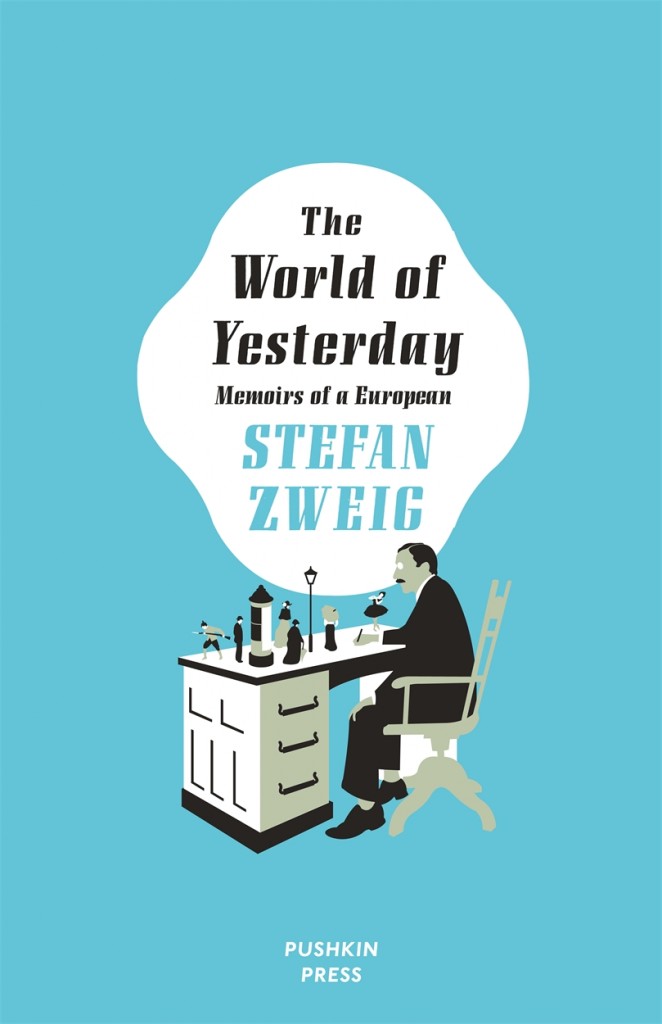
The World of Yesterday ZweigReaders can find his excitement in recalling these unexpected early successes in his autobiography The World of Yesterday. It was not so much about fame but identity. The glorious world of yesterday included not only the fulfilled dream of a young man, but that of the Jewish people in finding a homeland, free and secure in Vienna. At long last, they could taste the reality of belonging. Jews in Vienna had become respectable, contributing members of society, particularly in the realms of the arts and culture.

As we can see from history, such a triumph would soon be obliterated. In August 1914, Zweig saw the world order and security that he so cherished and thrived on crumble as WWI broke out. If that was the beginning of the end, Nazism in the 1930’s rang in the death toll. Zweig had to escape to England, later the United States, finally landed in Brazil. Exiled and alienated, the Austrian writer was overwhelmed by despair as he saw his homeland and Europe devoured by Hitler. The German language he was born into and had so aptly used in his literary success he now had to apologize for. Such devastation and emptiness was too much to bear. In 1942, just a few days after He sent off his last book Chess Story to his American publisher, Zweig and his second wife committed suicide together in Petrópolis, Brazil.

Wes Anderson recreated Zweig’s pre-war world in his fictional Republic of Zubrowka, with The Grand Budapest Hotel itself as a metaphor of that secure microcosm, everything runs smoothly under the supervision of the concierge M. Gustave (Ralph Fiennes), at least in the first half of the film. The boxy Academy Ratio we see on screen evokes the idea of looking into an old photo album in all its nostalgic charm. The exile life of a genocide survivor we can find in Zero the lobby boy (Tony Revolori young, F. Murray Abraham older).

Passport CheckRichard Brody in his New Yorker article “Stefan Zweig, Wes Anderson, And a Longing for the Past” writes that Zweig himself had experienced the ‘practical difficulties’ and ‘psychological trauma’ of having lost his passport while on the run. The passport, Brody notes, “wasn’t even a commonplace document before the First World War.” Without it, one instantly was turned into an outlaw. Zero has M. Gustave to thank for standing up for him twice while travelling on the train without transit papers. The first time, officer Henckels (Edward Norton) recognizes M. Gustave, his parents’ friend, and remembers his kindness to him when he was a boy; human relations win over and Zero is spared. Unfortunately, luck runs out for M. Gustave in the second time, all because of the change in military control, a symbolic reference to the iron fist of the Nazi regime. No societal ties or achievements could save Zweig or the Jews in Europe during the Holocaust.

The following are two titles to which Anderson had made specific reference – Zweig’s only novel Beware of Pity and his novella The Post-Office Girl. The third is Anderson’s own selections, an excellent sampler of Zweig’s works, The Society of the Crossed Keys.

To continue reading my short reviews of these books, CLICK HERE to Shiny New Books. Or, just click anyway to see what an array of book reviews, author interviews and their own articles, book news and tidbits await you.

***

2015 Books to Movies

First off, I’m excited that two movies I reviewed months ago last year and which I’d given top ripples both won the Golden Globe Best Motion Picture Award last night: The Grand Budapest Hotel (Musical or Comedy) and Boyhood (Drama). The Golden Globe Awards marks the new year with excitement and glamour, an apt recognition of fine films made in the previous year, as we eagerly await the ultimate, the Academy Awards. That will be a final wrap for 2014 movies. So what is in-store for us in 2015? For those familiar with Ripple Effects, one of my focus is on books being turned into movies. The Books Into Films posts are some of the most popular on this blog. I’m particularly interested in the adaptation process, how one art form is transposed into another medium. What works, what doesn’t? And above all, how to appreciate each on its own terms. Here is my first list of books to read (or reread) before you go and watch the movie, all scheduled to be released in 2015, some with known dates, some more tentative. A second list will appear in the online review magazine Shiny New Books come January 29.

 ***

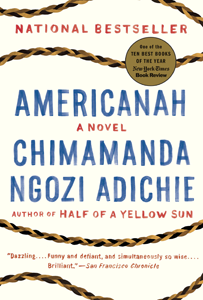
Americanah by Chimamanda Ngozi Adichie americanah The acclaimed novel by the award-winning author of Half of the Yellow Sun, Americanah tells a story that crosses three continents in the countries of Nigeria, US, and England, linking two lovers through the expanse of time and space, and exploring the evermore relevant issues of race, identity, drifting and belonging. Adichie’s novel is the winner of the 2013 National Book Critics Circle Award for Fiction among other accolades. It is now adapted into film starring Lupita Nyong’o, on the heels of her 2013 Oscar win as Patsey in 12 Years A Slave, and David Oyelowo, 2015 Golden Globe nominee for his role as Martin Luther King Jr. in Selma.   Brooklyn by Colm Tóibín Brooklyn_Colm_Toibin Once again the story of migrating and shifting ground, this time from Dublin to Brooklyn. Colm Tóibín’s 2009 Costa Novel Award winner and longlisted novel on the Booker Prize that year tells the story of Ellis Lacey moving to America from Ireland in the 1950’s, as many did, for new life and opportunities. But her story did not end there. The movie adaptation will premiere at Sundance Film Festival January 26, 2015. Saoirse Ronan plays Ellis. She has come a long way in her career with her first breakout role as young Briony in Ian McEwan’s Atonement. Cast includes Domhnall Gleeson, Jim Broadbent and Julie Walters.   Far from the Madding Crowd by Thomas Hardy far-from-the-madding-crowd A highly anticipated film adaptation of Hardy’s classic. That Carey Mulligan is playing Bethsheba Everdene increases my curiosity even more, especially as I hear her sing the folksy tune in the movie trailer. Those who hold onto the Julie Christie’s 1967 portrayal as the definitive version should see this for comparison. Screenplay by David Nicholls, who is no stranger to classics on screen, having previously adapted Tess of the D’urbervilles (TV, 2008), and more recently Great Expectations (2012). What makes this newest Hardy adaptation sound promising is its Danish director Thomas Vinterberg, whose film The Hunt was nominated for a 2014 Best Foreign Language Film Oscar. Matthias Schoenaerts plays Gabriel Oak. Note the name, he will appear in another book to film production.   In The Heart of the Sea by Nathaniel Philbrick in-the-heart-of-the-sea-book-cover The book records the true story of the tragic loss of the American whaleship The Essex from Nantucket when it was capsized by a sperm whale in the Pacific Ocean in November 1820. A real life Moby Dick, In The Heart of the Sea was the winner of the 2000 National Book Award for Nonfiction. The crews were stranded at sea for months. The book chronicles the tragedy and the horrific experience by a few survivors. Oscar winning director Ron Howard (A Beautiful Mind, 2001) cast the star of his acclaimed production Rush (2013), Chris Hemsworth, in this adaptation. Also notable is Ben Whishaw playing Herman Melville. A versatile actor, Whishaw had played the poet John Keats, the new Q in James Bond, and is now the voice of Paddington Bear, replacing Colin Firth.   Kingsman: The Secret Service by Dave Gibbons and Mark Millar secret-service-kingsman So what’s Colin Firth been busy doing? One of his new movies coming out in 2015 is the adaptation of a comic book, The Secret Service, created by Dave Gibbons and Mark Millar, definitely not something Firth or his fans could have expected when Mr. Darcy dove into that pond at Pemberley. A comic book? You gasp. That’s right, a totally legit read nowadays, when you have the graphic novel of Proust’s In Search of Lost Time on the same shelf in the library. Firth plays Harry Hart training up a young recruit for the Secret Service, with Taron Egerton, Mark Strong, Michael Caine, Samuel L. Jackson, directed by Matthew Vaughn who had all warmed up with Kick-Ass and X-Men. From the trailer, it sure looks like a visual delight, action-filled, slick and clever. The Secret In Their Eyes by Eduardo Sacheri The Secret in Their Eyes This originally Argentine crime thriller was first adapted into a Spanish movie that won the Best Foreign Language Film Oscar in 2010. As soon as I finished watching the film, I downloaded the music soundtrack; it was deeply moving. This is no ordinary crime thriller, but a poignant, psychological exploration of human experience and memories. The new English version of the film has an appealing cast starring Chiwetel Ejiofor (nominated for an Oscar for his role in 12 Years A Slave), Julia Roberts and Nicole Kidman, helmed by Hunger Games and Captain Phillips director Billy Ray. Ray also wrote the screenplay. I highly anticipate this English version, albeit I admit the original language version is usually the more affective and authentic rendition. Silence by Shûsaku Endô Silence  Shûsaku Endô’s historical fiction (1966) on the plight of the Catholic Jesuit missionaries to Japan in the 17th Century is a deep and disturbing novel. It touches on multiple levels of the human spirit and psyche, issues that are not easily labelled by the term ‘religion’, dealing with the problem of faith in a God that appears to be silent in the midst of suffering and persecutions of His followers. In a culture that is xenophobic at the time, Endô, a Catholic himself, confronts the issue of doubt and the power of evil head-on. The book reads like a page turner, and I expect the film adaptation to be cinematically gratifying in the hands of an auteur of the Catholic tradition, Martin Scorsese. The new edition of the book includes Scorsese’s preface. The film is shot in Taiwan instead of Japan, with a perfect cast: Liam Neeson, Andrew Garfield and Adam Driver, screenplay by Jay Cock, screenwriter of The Age of Innocence.

***

More to come… On January 29, go to Shiny New Books the online review magazine for my second list of 2015 Books into Films.

Top Ripples 2014

This year, I’ve watched over 100 films and in a much smaller proportion, read forty some books. Been to the Toronto International Film Festival, and attended a memorable session ‘Conversation with Juliette Binoche.’ That would be one of the Top Ripples for me.

The following list represents the most resonance I’ve had with the films that come out this year. As a stringent marker, I’ve only given one movie 4 Ripples, and that’s Boyhood back in August when I first saw the film. All the others earn at least 3.5 Ripples.

I’d not written a review for every film I’d seen, obviously. But even for those I did not post, I ensure you if you find them on this list, they are at least 3.5 to 4 Ripples in my mind, like Calvary, and Citizenfour. Of course, there are those that I’m still waiting to come out in the next two weeks. (Click on the links in the following titles to read my review.)

As you can see, other than films and books, I’ve also included some other memorable 2014 experiences.

Films

Boyhood

The Grand Budapest Hotel

Calvary

Citizenfour

Clouds of Sils Maria

Foreign Language Films

Ida

Force Majeure

Books – Fiction

Lila by Marilynne Robinson
(2014 National Book Award Finalist, Fiction)

The Goldfinch by Donna Tartt
(2014 Pulitzer Prize for Fiction Winner)

Books – Nonfiction

Age of Ambition: Chasing Fortune, Truth, & Faith in the New China by Evan Osnos
(2014 National Book Awards Winner for Nonfiction)

Birding with Yeats: A Memoir by Lynn Thomson

Gallery Visits

Alex Colville and the Movies (AGO)

Nature Sightings: (rare or first time sighting for me):

The Monarch Butterfly

The Barred Owl

Porky and Wess

Best Search Engine Terms to come to Ripple Effects:

Is Downton Abbey fiction?

**

There are also books and films from previous years that I’ve had the pleasure to experience in 2014. Here are the Top Ripples:

Books:

12 Years A Slave by Solomon Northup (1853)

Joseph Anton by Salman Rushdie (2012)

A House In The Sky by Amanda Lindhout (2013)

Silence by Shûsaku Endô (1966)

The Dinner by Herman Koch (2013)

Films: 

The Lunchbox (2013)

Like Father, Like Son (2013)

Charade (1963)

I Confess (1953)

Shadow of a Doubt (1943)

**

Reading The Season: Lila by Marilynne Robinson

Every year before Christmas, I read something that can draw me closer to the meaning of the Season. Amidst the busyness of the festivities, I try to carve out a piece of quiet. I name these annual posts Reading The Season. You can click on the links at the bottom for previous entries, dating back to 2008. This year, the publication of Marilynne Robinson’s third Gilead book, Lila, is a most timely read.

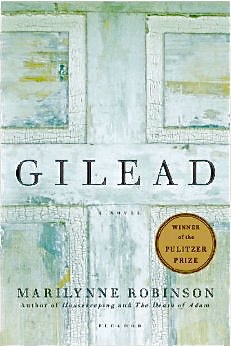
GileadGilead (2004) – Marilynne Robinson’s Pulitzer Prize and National Book Critic Circle Award winning novel introduces us to the fictional town of Gilead, Iowa. We hear the gentle voice of the narrator, the ageing Rev. John Ames, as he writes a letter to his seven-year-old son Robby, leaving a legacy of family heritage, love, forgiveness, and serenity.

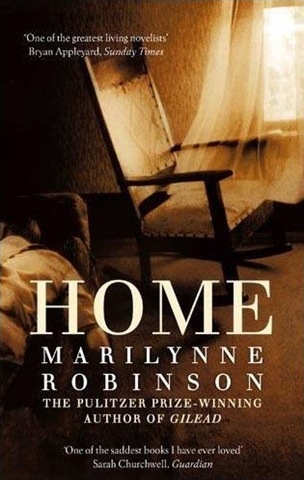
HomeHome (2008) – Based on the same Gilead characters, but from a different point of view allowing us privy to the household of the Rev. Robert Boughton, John Ames’s life long-friend. Glory, Boughton’s daughter, comes home to take care of her ailing father. She is there when her brother Jack returns after an absence of twenty years. The black sheep of the family, Jack’s estranged self yearns for reconciliation like a prodigal. The book, in all its complexities and depiction of alienation, escape, return and lost yet again, suggests home may not be a solace as sweet as one hopes.

Lila

Lila (2014) – Robinson’s newest, and 2014 National Book Award finalist. It is the third novel based on the characters in the town of Gilead, offering yet another point of view. But one can just read it on its own, albeit best to have read Gilead first, then the kind face of John Ames can be conjured up more readily. In this book, the perspective is from Ames’s much younger wife Lila, at first lonely and desolate, slowly drifting into place.

**

Lila Dahl

At the outset, we see Lila as an unwanted child, “cold”, ‘all cried out’. She is rescued by Doll, a destitute woman herself yet still has room in her heart for an abandoned little girl. Doll wraps Lila into her shawl and decides to bring her up. “Lila was the loneliest child, and there they were, the two of them together, keeping each other warm in the rain.” Lila later takes up Doll’s name as Dahl.

The two joins a small group of itinerant field workers led by Doane, living in camps out in the open. But the Depression breaks up the cohesive work party. Lila is later left on her own and for a little while, works in a brothel in St. Louis. Knowing she can’t stay there for long, she slips out one night, escaping from a blackhole of hopelessness.

After that she finds herself a cleaning job at a hotel, from which she has to escape again after seeing her nemesis whom she first encounters while in the brothel. She packs her bag and leaves town, taking rides from strangers going to wherever they drop her. Ultimately, Lila drifts to the outskirt of Gilead, finds an abandoned shack and takes shelter there. She cleans up the shack for a place to sleep, having no plans except to find odd jobs in the town yonder, earn enough money, then moves on, maybe to Sioux City.

Lila lives a life of poverty, loneliness and fear, mistrusting everyone. Doll may have been like a mother to her but she too has her own rough life and struggles. Doll knifes and kills a man who might be Lila’s own father, could well be out of protecting Lila. She is later jailed, leaving the knife in Lila’s possession. Lila keeps it with her all the years as a memento, a murder weapon, yes, but also a symbol of Doll’s loving protection and Lila’s own desolate past.

One day walking into Gilead Lila stumbles into a church to escape the rain, that is the turning point of her life. She sees the old man at the pulpit, the Rev. John Ames, and, he sees her.

John Ames

We know a lot about Ames from Robinson’s first book of Gilead, set in the 1950’s. A Congregationalist pastor in the town, Ames is sixty-seven years old when he first meets Lila, “a big, silvery old man”. Coming from a family tradition of ministers, John Ames is a man with a pastor’s heart.

Ames has had his share of personal grief. He had to bear the death of his beloved wife of his youth and his newborn son as she died in childbirth. Such unspeakable pain he had shared with his best friend Robert Boughton, pastor of the Presbyterian church in Gilead.

Ames and Boughton have been life long friends. They share pastoring advice, discuss foreign policies, debate theological problems, and bear the burden of each other’s family woes. Boughton has his in his son Jack, who takes John Ames’s namesake.

After seeing Lila at the church as she comes in from the rain, Ames keeps her in his heart. Residents of Gilead befriend Lila, giving her jobs, welcoming her in their midst, but Lila is aloof and skeptical, an outsider still. Ames personally engages her to talk and to know her more. One day, he goes to seek her out at the shack. She sees him coming as she walks towards Gilead. There on the path he reaches out to her and promises marriage. An inexplicable love story takes shape.

Sunset

Ames and Lila

“… the old man kept on courting her, like a boy, when she was hard and wary…”

After they are married, however incompatible it looks in Ames’s home, Lila still keeps Doll’s knife with her as a memento and as a symbol of her own tumultuous past, a part of herself. Ames is unperturbed. He lets her keep it, and he even uses it, taking it as a normal tool around the house. Total acceptance.

If condescension is present in the relationship, it is Ames who wants to learn from Lila. His utter humility is what moves her. Barely literate, Lila yearns to know about the Bible, study it and grasp its richness and meaning. They talk about the difficult books of Ezekiel and Job. Ames shares his thoughts about this elusive notion called existence, and listens attentively Lila’s perspective and experiences. Total respect.

Lila has questions rooted in her bitter past, the why’s of misfortunes, cruelty, and the hardships in life. She asks Ames with an inquiring heart. Ames, a pastor of many years, can find no easy answers. He ponders Lila’s queries, and readily and honestly admits his own limitations in knowing, while loving her all the more. Total humility.

Even after they are married, Lila sometimes still conjures up thoughts of leaving. Ames  knows this and gives her the freedom:

… if you ever change your mind, I want you to leave by daylight. I want you to have a train ticket in your hand that will take you right where you want to go, and I want you to take your ring and anything else I have given you. You might want to sell it. That would be all right. It’s yours, not mine… ” He cleared this throat. “You’re my wife,” he said. “I want to take care of you, even if that means someday seeing you to the train.” He leaned forward and looked into her face, almost sternly, so she would know he meant want he said.

She chooses to stay, a genuine response to his love.

When I read the book, I see a tender love story between two utterly incompatible beings, like an allegory and a parallel of the Christmas story, how the Creator God reaches out to take our hand, initiating an unfathomable relationship. Love for the reason of pure love. An unlikely and inexplicable union.

The Christmas Story

I first felt a little uncomfortable about the obvious incongruous pairing of Ames and Lila, yet, their love relation comes to fruition, albeit looking tentative at first. The gap between Ames and Lila is just a crack in the pavement when compared to the abyss separating Creator God and His creation. I see Ames and Lila’s story as an allegory, if you will, a parallel, however meagre, illustrating the joining of two utterly disparate sides.

The essence of the Season is in the reaching out to bridge that huge chasm. As Ames and Lila’s newborn son at the end of the book is an evidence of their love, we too receives a child, born in a manger that day in Bethlehem, a sign of ultimate mending. Total reconciliation.

***

Other Reading the Season Posts:

2020: Jack by Marilynne Robinson

2019: A Hidden Life, a film by Terrence Malick
2018: Madeleine L’Engle’s Poem The Irrational Season

2017: A Wrinkle In Time by Madeleine L’Engle

2016:  Silence by Shusaku Endo

2015: The Book of Ruth

2014: Lila by Marilynne Robinson

2013 Poetry by Madeleine L’Engle

2012: Surprised by Joy, C. S. Lewis

2011: Walking on Water, Madeleine L’Engle 

2010: A Widening Light, Poetry by Luci Shaw

2009: The Irrational Season, Madeleine L’Engle 

2008: The Bible and the New York Times, Fleming Rutledge 

2008: A Grief Observed, C. S. Lewis

 ***

Spoilers as Pointers

Last week, I wrote a review of Gone Girl, the movie adaptation of Gillian Flynn’s wildly popular book, and I caught myself tiptoeing around the story trying not to drop any spoilers. Now as I think back to it, that episode leads me to a minor revelation.

Why do I have to be so extra careful? The answer is obvious enough. If I just hint at what the major twist is, I’d be giving away the story, largely diminishing the viewer’s enjoyment, eliminating the element of surprise. In reply to some comments, I’d even suggested to people not to read the book first if they are going to see the movie.

Here’s the question I’ve been mulling over this past week, and I can’t help but be a bit amused. I don’t think I’ve ever written a post in this state of mind before. The word used by a commenter was ‘restraint’. I felt more like ‘silenced’.

Did I put a “Spoiler Alert” at the beginning of my review of say, Anna Karenina (2012)? Since its publication as a serial in the 1870’s, the trajectory of this extra-marital affair is well-known; critics are not muffled from discussing the tragic end of that gone girl. Revealing the storyline has not dampened people’s interest from reading the book or watching its movie adaptations, ten of them so far, as full features or TV series.

Or take The Great Gatsby, that fateful yellow car ride ultimately leads to the end of Gatsby. Ooops, there goes the spoiler. With this, have I killed the movie for would-be viewers? I don’t think so. Why? Simply because that green light blinking across the shore is so powerful a lure, driving a man to dream the impossible dream. And we want to see the elaborate efforts this enigmatic character exerts to strive for that unreachable goal.

Or, let’s say, 12 Years A Slave (2013) based on Solomon Northup’s memoir. Here, the title is the spoiler. The slave had to survive the twelve years in order to write his own memoir. But of course, we want to know how he survived, his resilience, and what he has to say about the slavery system, about human nature.

Or take a contemporary novel, Life of Pi (2012). After a shipwreck, a 16 year-old boy adrift on the Pacific Ocean for 227 days on a life raft is finally rescued and lives to tell his tale. Now that’s giving away the whole story. Does that spoil the fun of watching the movie? Not at all. Why? Because we see spectacular scenes of the boy pitted against nature, persevering over perils that could shatter or enhance his faith, dealing with personal loss, recapturing memories and reality … we are hooked because there are rich layers of meaning packed inside a simple storyline.

So, for stories that explore more than the plot can tell, even though we may know the ‘what’, we want to see the ‘how’. We want to get on the ride and enjoy the scenery, for there are interesting and intriguing sights along the way.

To spoil or not to spoil… depends if the book is just only about the plot, manipulating the twists and turns to shock and surprise, yes, a clever page turner, then a spoiler would definitely diminish the enjoyment, robbing the viewer of the element of surprise and entertainment.

But if the kind of reading or viewing offers a deeper exploration of characters and the human condition, or framing from a historical or social backdrop to confront issues, or depicting scenes of a shared humanity, or unpacking subtext and meaning… then, dropping a spoiler may not be so disastrous.

I know, there are exceptions and I’m not trying to generalize, but, could the acceptability of spoilers be the pointers to the difference between literature and pulp fiction?

***

Related Movie Reviews on Ripple Effects:

Gone Girl (2014)

12 Years A Slave (2013)

Anna Karenina (2012)

The Great Gatsby (2013)

Life of Pi (2012)

***


Books Into Movies at Upcoming Film Festivals

One consolation of seeing leaves turn yellow (yes, I’m seeing it already) is the kick-off of fall Film Festivals. This year at TIFF and NYFF, there are several movie adaptations of books and stage plays. The following are some titles announced so far. (Images below are book covers. For film images click on links.)

Toronto International Film Festival (TIFF Sept. 4 – 14)


hector and the search for happinessHector And the Search for Happiness by François Lelord

I don’t like to compare, but for this one, the film version may just be better than the book which I found disappointing considering the appealing title. With a globe-trotting storyline, what better way to experience it than to see the sights and hear the sounds on the big screen. But of course, how it’s adapted is crucial. Considering the cast, I hope the film can bring at least a couple hours of happiness: Simon Pegg, Rosamund Pike, Toni Collette, Stellan Skarsgård, Christopher Plummer.


The HumblingThe Humbling by Philip Roth

In this adaptation of Roth’s 30th book (published 2009), Al Pacino plays the older man attempting to experience a total rejuvenation via an affair with a much younger woman, played by Greta Gerwig. Directed by Barry Levinson (Oscar Best Director for Rain Man, 1988). I’d read several of Roth’s previous books and learned not to be shocked by what he described. However, would I be interested to explore what’s in store in The Humbling? TIFF has about 300 films screening, I think I’ll let the diehard Roth or Pacino fans rush in for this one, albeit I’m quite fond of Greta Gerwig. BTW, a film adaptation of his Pulitzer Prize (1998) winning American Pastoral had been announced.


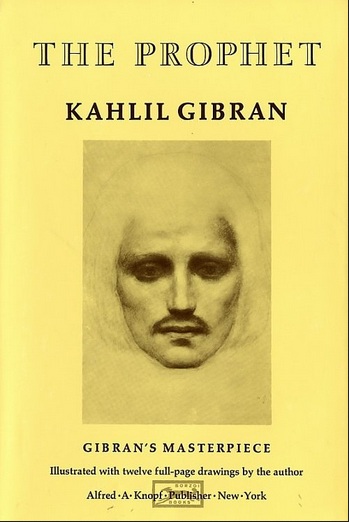
The Prophet

Kahlil Gibran’s The Prophet

If Proust’s Remembrance of Things Past can be turned into graphic novels, Kahlil Gibran’s The Prophet can be visualized in an animated film. Animations are not my usual movie choice in recent years but this time at TIFF I’d like to catch this one. The adaptation is a collaboration of international animation artists, voiced by Beasts of the Southern Wild‘s child star Quvenzhané Wallis, with Liam Neeson voicing the poet. Directed by Roger Allers, who is the writer and/or director of some memorable Disney collection such as The Little Matchgirl (2006), The Lion King (1994), Aladdin (1992), Beauty and the Beast (1991).


Plays of StrindbergMiss Julie (Play) by August Strindberg

Newest film version of the 1888 play by Swedish playwright August Strindberg. Adapted and directed by Liv Ullmann, the famous Ingmar Bergman actress; maybe relevant here is her role in Persona (1966). Apparently, or maybe not so, Strindberg was exploring the psychological make-up of ‘womanhood’ and the complex interplay of nature, nurture, and circumstance. I finished reading the play with an apprehensive sigh… will this be a good role for Jessica Chastain? This is not a sympathetic character, Miss Julie, a confused, flirtatious mistress seducing her valet. A film that would rest mainly on character and acting. So maybe Chastain is a good choice. The valet? Colin Farrell, not too sure about that one. Samantha Morton’s the cook, thus forms the triangle of power play.


My Old LadyMy Old Lady (Play) by Israel Horowitz

American playwright Israel Horowitz adapted his own 1996 stage play onto screen and directed it, with three prominent actors performing. This one is on my must-see list at TIFF. An American inherited from his late father a Paris apartment which to his surprise, is occupied by an old lady who, according to the legal arrangement, has the right to live there till she dies. Her daughter forms the invincible alliance. This entangled threesome: Two-time Oscar winner Maggie Smith (The Prime of Miss Jean Brodie, California Suite), who will turn 80 later this year, her equally formidable daughter, Kristin Scott Thomas (Oscar nom for The English Patient), and the unlucky (or maybe not) American, Kevin Kline (Oscar winner for A Fish Called Wanda). Whether a stage play or film, these three would make a dream cast.


Still Alice

Still Alice by Lisa Genova

Julianne Moore plays an accomplished academic, Columbia (Harvard in book) University professor battling early onset Alzheimer’s disease, based on the novel by neuroscientist turned writer Lisa Genova. Genova first self-published her book, later Simon and Schuster picked it up and the rest is history. It’s now selling in 30 countries and translated into more than 20 languages. Genova, a Ph.D in neuroscience, gives much credibility to her book. How will the film pan out? Julianne Moore would be one who can deliver a nuanced performance. Cast includes Kristen Stewart and Alec Baldwin.


WildWild by Cheryl Strayed 

On the heels of his Oscar nominated Dallas Buyers Club last year, Canadian director Jean-Marc Vallée brings out a totally different kind of production. Wild is based on the NYT #1 Bestseller memoir by Cheryl Strayed. Screenplay by the reliable Nick Hornby (Oscar Best Adapted Screenplay nom for An Education, 2009). Following the death of her mother, Strayed, then 26, divorced, devastated, drugged, went on a long-distance hike, 1,100 miles on the Pacific Crest Trail through California and Oregon. ‘Wild’ has a double inference here: the nature trail and the character walking on it. The journey could well be redemptive and perilous at the same time. The books in Strayed’s backpack included Faulkner and Flannery O’Connor. Reese Witherspoon and Gaby Hoffmann star.


**


NEW YORK FILM FESTIVAL (NYFF Sept. 26 – Oct. 2)


Gone GirlGone Girl by Gillian Flynn
To open NYFF is the premiere of this highly anticipated film adaptation of Gillian Flynn’s popular suspense novel. Two-time Oscar Best Director nominee David Fincher (The Social Network, 2010; The Curious Case of Benjamin Button, 2009) helms. Yes, the buzz is also due to Ben Affleck (Oscar winner, Argo, 2012) playing the husband who finds his wife missing one day and thus begins the extraordinary sequence of events down the rabbit hole. Rosamund Pike plays the mysteriously gone girl. Yes, I’ve read the book. And just because of that, knowing the twists and ending, will I still be interested in watching this ‘suspense thriller’?


Inherent ViceInherent Vice by Thomas Pynchon
Five-time Academy Award nominee, writer/director Paul Thomas Anderson’s works include The Master (2012) and There Will Be Blood (2007) for which Daniel Day-Lewis won one of his three Best Actor Oscars. But the film I like best is his Punch-Drunk Love (2002). Author Pynchon’s most famous book probably is Gravity’s Rainbow, which I’ve only heard of but not read. Actually, I haven’t read any of Pynchon’s noir detective novels. Pot seems to be the motif. Anderson directs Joaquin Phoenix again after The Master, cast includes Reese Witherspoon, Josh Brolin, Owen Wilson, Jena Malone.


***

Two Fine French Films

For this week in the blogging events Paris in July 2014 and Dreaming of France, I’m sharing with you two fine, French Films. They are not new movies, but probably you had missed them when they first screened a few years ago, or they might not have screened in your area. I came across them only recently. Interestingly, they make a fine pair for they both touch on very similar themes.

My Afternoons with Margueritte (“La tête en friche”, 2010)

This comedy based on the book by French author Marie-Sabine Roger stars the famous French actor Gérard Depardieu as an uncouth, middle-aged construction worker, Germain Chazes. His lack of literacy skill is benign when compared to the low self-image he suffers as a result of the constant taunting from his teachers and classmates when he was young, and the life-long scolding from a harsh and overbearing mother (Claire Maurier). To his misfortune, Germain still has to live near her and take care of her, a woman now has senility to add to her abusive outbursts.

Germain’s life comes to a turning point when he meets Margueritte (Gisèle Casadesus, who just turned 100 in June this year!) one afternoon on a park bench. Margueritte is an elderly lady living in a retirement home, and spends her afternoons in the park. She soon engages Germain to open up. Thus begins an unlikely friendship between the two.

My Afternoons with Margueritte

More importantly, Margueritte leads Germain to a whole new world of books and literature. She reads to him The Plague by Albert Camus, going through it in ten afternoons. He listens and is totally entranced by the language and the imagery.

When she reads to him Promise At Dawn, the memoir by Romain Gary, he is absorbed by the author’s description of his late mother’s love for him, and especially moved by the imagery of Gary “howling at her grave like an abandoned dog.” He begins to see his own predicament with the lens from the books Margueritte reads to him.

Who says literature belongs to the academics, or those in the ivory tower of the intellectual and sophisticated. Why is it so incongruent to hear a construction worker quoting Camus, or his seeing the world in literary imageries, or being tender and caring for a change. Germain’s friends tease him, they want the old Germain back. But Germain knows too well that he has crossed the point of no return, and that his transformation is empowering.

Soon, with the help of his girl friend Annette (Sophie Guillemin), Germain learns to read on his own. Further, he has learned to give back to Margueritte in an endearing way. As far as the story trajectory goes, Germain could well write a book entitled How Camus Can Change Your Life (that’s mine, not in the film).

Charming performances and great screen chemistry between Depardieu and Casadesus. A heart-warming story with sprinkles of humour for added appeal. A delightful and worthwhile film to watch.

~ ~ ~ Ripples


Queen to Play (“Joueuse”, 2009)

Along the same thematic line is this quiet and stylish production set in the beautiful French island Corsica just off the mainland. From Depardieu’s construction worker we now have a middle-aged chambermaid, Hélène (Sandrine Bonnaire), who works in a seaside hotel. Hélène goes through an inner transformation even more dramatic than Germain’s. It is interesting to watch the game where the Queen is the most powerful piece is freed from its male dominance for a change.

Originally titled “Joueuse” (The Player), the film is based on the novel by French author Bertina Henrichs. Director Caroline Bottaro has  displayed an inviting game board for us viewers to interact with, for watching the film makes us witnesses to a game change.

Sandrine Bonnaire’s portrayal of Hélène is sensitive and nuanced. The turning point of her life comes one day while cleaning a room. Through the translucent curtain swayed by the soft wind, she sees the hotel guests, a couple (Jennifer Beals, Dominic Gould), playing chess out in the balcony. She is fully mesmerized. The game board, the pieces they touch, their mutual affection bonded by the game not only send out vibes of sensuality but of intellectual stimulation. (She beats him, BTW) From then on, Hélène is obsessed with chess.

She gives her husband Ange (Francis Renaud) an electronic chess set for his birthday. While he is unappreciative of the gift, many a nights Hélène would slip out of bed quietly and learn to play on her own. She now sees every piece of crumb, every salt and pepper set on the table a movable chess piece, any checkered surface a chessboard on which she can prance to her imagery delight.

Queen to play

Other than her hotel job, Hélène does cleaning for a mysterious widower, Dr. Kröger, played by Kevin Kline, his first French-speaking role. Hélène finds a chess set on his bookshelf and asks him to teach her the game. Skeptical and annoyed at first, Dr. Kröger agrees when she offers to clean his place for free in exchange for chess lessons. He soon discovers that Hélène is not only serious but gifted. After a few lessons, she begins to win repeatedly.

But Hélène keeps her pursuit secret, afraid of reverberations, and misunderstanding from her husband. Why does she need to be so sneaky? Can’t a woman desire matters of the mind? Can’t a chambermaid be absorbed by the game of chess, set foot on a male-dominated, intellectual territory? Would Hollywood make a movie like this?

Hélène’s teenaged daughter is her supporter at home when her husband finds out. He too later yields to her passion as Hélène enters her first tournament upon Dr. Kröger’s recommendation.

Oh I love these French films, for they unabashedly praise the arts, literature, and intellectual pursuits; their protagonists quietly shattering social norms and barriers to personal fulfillment. Queen to Play reminds me of Muriel Barbery’s novel The Elegance of the Hedgehog.

Do you need to know how to play chess to enjoy the film? No. Actually, the camera seldom focuses on the chessboard. Instead, we see the faces of the chess players, that is where we read all the emotions.

Intriguing as chess moves, beautiful as the crafted pieces, the film is a joy to watch, a satisfying winner.

~ ~ ~ 1/2 Ripples

Paris In July 2014Dreaming of France Meme Eiffel***

Related Posts on Ripple Effects:

The Elegance of the Hedgehog Book Review

Séraphine and the Wrought-Iron Chair: Review of the film Séraphine

Haute Cuisine Movie Review

How Proust Can Change Your Life by Alain De Botton

Here’s my second instalment for the blogging event Paris in July 2014.

Paris In July 2014

***

You must have heard of this book by a Swiss-born Brit writing about a French novelist called Proust. You probably have read it, and let me guess, were surprised when reading the first chapters? Well, I was. For before reading this book, my knowledge of Alain de Botton, the popular British writer and media personality, mainly came from an art critic’s thoughtful posts on her blog.

How Proust Can Change Your Life

Is Botton joking? This book reads like a parody.

First we are introduced to Dr. Proust, Marcel’s father, who was a renowned physician and prolific writer. His thirty-four books had helped the French people from defences against the plague to the correct postures and exercises for the ladies. Botton being an image-driven person does not hesitate to include some of Dr. Proust’s instructional illustrations for his female readers such as how to jump off walls, or balance on one foot.

Not your definition of parody? How about this chapter on ‘How to Suffer Successfully’. Proust is well known for his physical ailments, having had to lie in bed most of the time when he wrote the longest novel ever written, In Search of Lost Time. Botton exhaustively lists down the various trials Proust had to live with throughout his life:

  • The Problem of a Jewish Mother
  • Awkward Desires
  • Dating Problems
  • A Lack of Career in the Theatre
  • The Incomprehension of Friends
  • At 31, His Own Assessment
  • Asthma
  • Diet
  • Digestion
  • Underpants
  • Sensitive Skin
  • Mice
  • Cold
  • Coughing
  • Noise from Neighbours

… Should I go on? And oh, he does include Death.

I know, that’s what Botton does, bring the extraordinary into the ordinary realm of common readers, and by so doing, explaining Proust to us lowly creatures. And of course, it would help if you have at least read the first two volumes of In Search of Lost Time, for many of his examples are taken from there, so you would feel a resonance, or disagree with Botton’s interpretation, when he talks about Francoise, Swann, Albertine, Combray, or Balbec.

Do I get anything out of it? Plenty. I’ve lots of highlighted passages and my own handwritten notes on the margins. When Botton gets serious between the lines, he leaves me with some useful tips:

So if speaking in clichés is problematic, it is because the world itself contains a far broader range of rainfalls, moons, sunshines, and emotions than stock expressions either capture or teach us to expect. (p.106)

For one thing, express your own feelings and ideas instead of saying ‘nice’, or describing the setting sun as ‘a ball of fire’. I love this little passage Botton quotes from Proust about the novelist’s description of his ‘lunar experience’:

Sometimes in the afternoon sky a white moon would creep up like a little cloud, furtive, stout display, suggesting an actress who does not have to ‘come on’ for a while, and so goes ‘in front’ in her ordinary clothes to watch the rest of the company for a moment, but keeps in the background, not wishing to attract attention to herself. (p.98 of Botton’s, but no mention of where this is from Proust’s)

The key of course is not so much of trying to use a new language to describe a common scene or object, but to be able to look at them from a distinctively new perspective to begin with. How can we invent new lenses to see the world? Towards this end, Botton has failed to go further. So we’re told to avoid clichés, but not how. If you sense my ambivalence, you’re right.

In order to avoid clichés himself, Botton has resorted to hyperboles. The title of the book is a ready example. The 200 page book comprises of nine short chapters, each can be a book in itself. So you can expect the oversimplification of the ideas. Further, with no citing of sources for the Proust quotes, the critical reader could be left unsatisfied; it feels like Botton has jumped to generalizations and found expressions of his own thoughts from one or two excerpts of Proust’s. Makes one feel that Proust could just be a selling point.

However, this is an entertaining read, like a self-help manual with instructional tidbits and amusing images. The book is a mixed bag of common-sense wisdom, with a ‘moral’ at the end of each chapter. Throughout, it is obvious that Botton could well find it not as easy as he tells his readers to do… to be original and not say what others have said before. Here are some of his main points:

  • Live life today
  • Read books to form your own ideas
  • Suffering makes you strong
  • Find art and beauty in the ordinary
  • Avoid clichés like the plague
  • A time to pick up a book, a time to put it down
  • Win friends by your praises
  • but pour your honest criticisms of them into a work of fiction (now that’s a novel idea).

Is there anything new under the sun?

Speaking of the sun, take this to the beach. It would make one breezy read.

Lastly, following Botton’s (actually Proust’s) advice on reading:

We should read other people’s books in order to learn what we feel, it is our own thoughts we should be developing even if it is another writer’s thoughts which help us do so. (P. 195) Reading… is only an incitement…


So I’d say the moral is: read Proust yourself. Don’t let Botton tell you what Proust can do for you.

That’s just the prodding I need to press on to In Search of Lost Time, Vol. III.

***

Paris in July 2014 on Ripple Effects:

Haute Cuisine Movie Review

CLICK HERE, HERE and HERE to see what others have posted.

***

Related (Proust) Posts on Ripple Effects:

Proust Read-Along: Swann’s Way Part 1, Combray

The Swann and Gatsby Foil

Half Way Through a Budding Grove

Out of the Budding Grove

***