TIFF19 Review: Military Wives delivers a soothing tune

If being called a ‘feel good movie’ would right away make you think of a thoughtless and syrupy offering aiming just to please, Military Wives would shatter that myth. The reason for the ‘feel good’ effect in this case is largely because it is based on inspiring, real-life events. The spouses and partners of a British military base band together for mutual support and socializing when their loved ones are deployed to Afghanistan on a 6-month tour. At first just for coffee and a sip of wine, later they discover the joy of singing together as a choir. The subsequent events lead them to the Festival of Remembrance at Royal Albert Hall, deep friendship, and healing beyond their expectations.

Military Wives
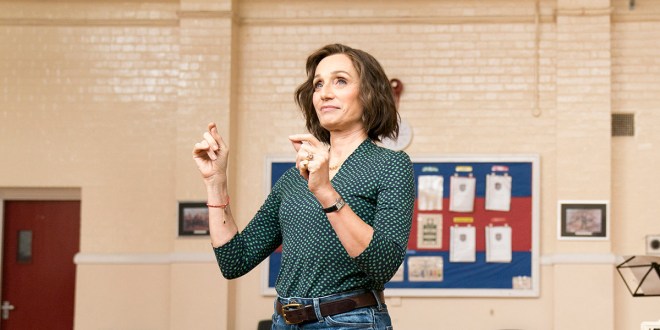
Kristin Scott Thomas in Military Wives. Image Credit: Courtesy of TIFF.

The Military Wives Choir phenomenon had inspired the development of the BBC TV series The Choir. And now its movie version Military Wives has just world premiered at the 44th Toronto International Film Festival. According to their website: There are over 2,000 women with a military connection in 74 choirs based across the UK and in British military bases abroad, including Cyprus, Belgium, Germany and the Netherlands. As well, other countries’ military wives have followed suit, organizing their own choirs. Those with no prior knowledge of this global movement would find this a fresh and interesting subject to put on screen.

Directed by Peter Cattaneo (The Full Monty, 1997) and written by Rosanne Flynn and Rachel Tunnard, Military Wives touts an effective cast to augment their singing. Kristin Scott Thomas is perfect as Kate, the Chair of the social committee on the fictional Flitcroft military base. As the wife of a Colonel, she comes with certain prescribed authority but her bossy personality denies her genuine friendship. Kate has to work together with the leader of the women’s social group, the casual and congenial Lisa (Sharon Horgan). During a brainstorming session, the idea of a choir comes up, something which neither of them has the expertise, or that the group is particularly well-tuned for the task. But living in an isolated military base, the two leaders have to take up the challenge on their own.

Scott Thomas and Horgan are lively foils playing off each other with spot-on comedic timing, both trying to lead the choir in their own way at the same time. Kate is formal and traditional; Lisa is spontaneous and contemporary. While hymns are Kate’s choice for their repertoire, Lisa has no trouble getting the group to belt out pop songs and spark up camaraderie.

Their story however, is deeper than just the catchy tunes. Kate’s son was killed in a previous deployment. Despite her gung-ho and cheery surface, deep down she is still grappling with her loss, and now her husband has gone off to a war zone yet again. Scott Thomas has no trouble bringing out the complexity of her character.

While Kate has to deal with personal loss, Lisa has to raise a rebellious teenaged daughter at the brink of endangering herself. Clashes between Kate and Lisa are inevitable. But instead of telling a mundane, formulaic story, Military Wives succeeds in eliciting genuine emotions and poignancy. These words from a young wife well express their precarious daily life: “every time the phone rings and the doorbell goes, I feel sick.” So, when one of them does meet such a tragic fate, the story gets especially real and poignant.

The ‘feel good’ element is how the women deal with their own personal issue and accept each others’ foibles to work together in harmony, reaping mutual support and deep friendship. The motto of the Military Wives Choir is ‘Stronger Together’. The movie brings out this credo movingly.


~ ~ ~ Ripples


***


Read my other TIFF19 Reviews:

Coming Home Again directed by Wayne Wang

Interview with director Wayne Wang

Parasite directed by Bong Joon-ho

A Girl Missing directed by Kôji Fukada


With Bernadette missing, time to revisit Linklater’s ‘Before’ trilogy

Watching Where’d you go, Bernadette has prompted me to reminisce on Linklater’s dialogue-filled trilogy. Re-posting my review of Before Midnight in the following.

**

We are gleaners of memories. An interesting parallel applies to the two characters Celine and Jesse as well as ourselves as audience. But if you haven’t seen Before Sunrise and Before Sunset, it would enhance your viewing pleasure to watch them first.

Flashback: Before Sunrise (1995)

Before SunriseTwo young people, Parisian Celine (Julie Delpy) and American Jesse (Ethan Hawkes) meet on a train passing through Europe. They strike up a conversation and become so in-tuned with each other that when the train arrives Jesse’s stop in Vienna, he convinces Celine to get off with him even though her destination is Paris. There for just one night until sunrise, they walk around the city and talk about life, death, love, religion, relationships, and being transients… for they know this may well be their only encounter with each other in both of their lives. The next morning Jesse has to fly back to the U.S. As they part, they promise to meet again in six month at the same hour, on the same train platform. Throughout the film, we feel fate, or whatever you call it, has a strong presence in their short few hours together. We feel their sincerity in capturing those precious  moments, as we hear Celine’s words ring true:

“If there’s any kind of magic in this world… it must be in the attempt of understanding someone sharing something.”

Flashback: Before Sunset (2004)

Before SunsetNine years after that chance meeting, Jesse is in Paris on the last leg of a book tour. He has written a book based on that memorable encounter nine years ago. At the Shakespeare and Company bookstore, Celine shows up. They now meet for a second time, again for a short few hours before Jesse has to leave on a plane to fly back to the U.S. Their conversation reveals that, alas, their well intended reunion six months after their first chance meeting has turned into a star-crossed, missed opportunity. After that, fate has led them down separate paths. Jesse is now married and has a son. Celine, still on her own, yearns for that first romance to develop but now seems even more elusive.

To the present: Before Midnight (2013)

Before Midnight

So we have been following Jesse and Celine like a longitudinal study, albeit meeting them just twice within this eighteen year period. In the first two films, director Richard Linklater has us follow Jesse and Celine in real time through long takes, walking along with them in Vienna and Paris, listening in on their conversations and see them pour their hearts out, just to be heard, to be known. Those were romantic moments. This time is summer in Greece; this time is reality check.

We see Jesse and Celine now married. What happens in between those nine years is that Jesse has divorced his wife in Chicago, come over to Paris, married Celine and together they have two lovely twin daughters. But things aren’t so idyllic, for Jesse is troubled by not being around for his now young teenaged son Hank from his previous marriage and whom he can only see in the summer. The film begins with Jesse seeing his son off at the airport.

For the next 15 minutes and in one stationary take through the front windshield of the car, we see a happy couple Jesse and Celine driving from the airport to a Greek country house, with their twin daughters sleeping in the backseat. We hear them talk, yes, they love to talk to each other, just as we’ve seen in the past.

In the setting of an idyllic seaside residence, Jesse and Celine join a small gathering of writers. we see them prepare and eat healthy Greek salads and discuss equally idyllic topics such as writing, love, knowing each other, virtual reality (yes, for the contemporary effect), and being transients in life. Again, that first train encounter comes to mind. In conclusion they drink to ‘passing through’.

The next act is reminiscence of previous Before films… Jesse and Celine walk to a hotel paid for by their writer friends, who have also taken up the duty of babysitting their twins so the two of them can fully enjoy each other for the night. For twenty minutes the camera follows them in real time strolling through some scenic rural town toward their country hotel, exchanging thoughts like before. But no, not totally like before, for now they are eighteen years older, 41, and each with emotional undercurrents running deep.

Five minutes in the hotel room, discordant riptides begin to surface. Talk turns into quarrel. Why, this is just too real. In the past, we see them only in romantic mode. Now as they expose their underlying thoughts and suspicions, tempers flare, words turn callous. We would silently say ‘ouch!’ occasionally.

The beginning scene of the first film, Before Sunrise, has become a stark foreshadowing… sitting near Jesse and Celine on that train, two middle-aged couple argue fiercely in German. Seeing their temper flare but not understanding what they were arguing about, Jesse and Celine ponder on the question of how two people can grow old together in harmony.

Now here in what is supposed to be an ideal get-away, for twenty minutes we are the invisible witnesses of a marital conflict, and we would want to stay in there to see what happens next, not because of the schadenfreude effect, but because this is just too real.

Romance is holiday, marriage is work.

Hawke and Delpy own these scenes depicting realistically what marriage could entail. Other films readily come to mind… Ingmar Bergman’s Scenes From A Marriage (1973) and Woody Allen’s Husbands and Wives (1992). Before Midnight is a contemporary version, with a highly watchable backdrop and natural performance. Unlike Bergman and Allen, Linklater is commendable in crafting a more positive ending. It’s refreshing to see a glimmer of hope at the end of nasty quarrels.

In the final act, Jesse attempts to woo his wife back. How he does it is most endearing. Every moment in the present is an opportunity to create a fond memory to look back to in the future. This complicated package called love is a piece of work. Director Linklater and his two stars, who co-wrote the screenplay with him, might well have passed to us the secret of marital success… Before too late, glean fond memories from the past to sustain the relationship at present; before too late, create more loving memories to carry it into the future.

One line from Celine in Before Sunset is most apt here: “Memory is a wonderful thing if we don’t have to deal with the past.” Jesse might have known this too well, not to leave the present a mess for future to deal with, but leave it as a pleasant memory to cherish in the days ahead.

With a trilogy of films beginning with the word ‘Before’ in the title, we should know that time is of the essence. Time to make the present a memorable past for the future, before too late.

That line still lingers as the film ends… ‘To passing through.’

~ ~ ~ 1/2 Ripples for all three films

***

Related Posts on Ripple:

Where’d You Go Bernadette: from book to screen

Boyhood: The Moment Seizes Us

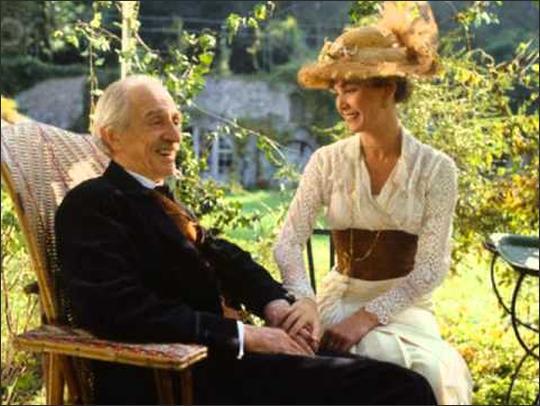
‘A Sunday in the Country’ is an Impressionist Cinematic Painting

If the Impressionist painters were to make a movie, what would it be like? A Sunday in the Country (1984) could very well be an exemplar. French director Bertrand Tavernier used the camera as a paintbrush to tell his story, while the cast bring to life the human pathos that are deeper than a painting on the wall could convey. 

A Sunday in the Country - Un Dimanche à la Campagne (1984)

Monsieur Ladmiral is an elderly artist living in an idyllic country house on the outskirt of Paris. The setting is pre-WWI. M. Ladmiral is a widower, his daily routines assisted by a lived-in, indispensable housekeeper called Mercédès (Monique Chaumette). His home is cozy with classic charm, the adjacent studio, inspiring. The camera leads us to see every details of M. Ladmiral’s house and moves fluidly from far to close-in on the artist’s workplace, a quiet haven and a treasure trove of memories and life works. With his colours, Ladmiral attempts to capture traces of youth and life.

M. Ladmiral’s son Gonzague (Michel Aumont) and his wife Marie-Thérèse (Genevieve Mnich), together with their three children, come visit him from Paris every Sunday, but not frequent enough still. His two grandsons, Emile (Thomas Duvall) and Lucien (Quentin Ogler), add lively sparks to his serene environs, while little Mereille (Katia Wostrikoff) is simply adorable.

No matter how much Gonzague tries to give him, grandchildren and his family’s frequent visits, the son knows he’s a disappointment to his father. Deep in M. Ladmiral’s heart, he longs to see his daughter Irène (Sabine Azéma), who seldom visits. Irène is single, exuberant, fearlessly independent and cheerful, or at least, on the surface. She drives an automobile, a new invention. “Look at your sister Irene,” Ladmiral tells Gonzague. “She forges ahead.” Then after a beat, “you don’t.” Nice going, Dad.

The pace of the film is leisurely, taking its time for viewers to hear (or read the subtitle of) every single dialogue, capture every nuance, and observe every item in the mise en scène. Life is too precious to hurry by. As well, we get to appreciate the humour, but often as guise to underlying relational tensions.

Tavernier won Best Director at Cannes Film Festival in 1985 with A Sunday in the Country, as well as the César Award for his adapted screenplay. The film also saw Azéma who plays daughter Irene won the Best Actress César Award and Bruno de Keyzer for Best Cinematography.

The film is an adaptation from the French novel by Pierre Bost entitled “Monsieur Ladmiral va bientôt mourir”, translated in English: “Mr. Ladmiral will die soon”. Have to say, the movie title is much more appealing. One note though, be patient with the 1:40 min. of credits rolling at the beginning with just white words on black background without image. You’re looking into the mind of an old man. While the overall mood is warm and amusing, the undercurrents of  disappointment, mortality, and separation gently flow throughout the film.

On that Sunday as Gonzague and his family are visiting, Irene drops in unannounced in her automobile. Free-spirited Irene is a fresh breeze to the hot countryside, her automobile a progressive symbol for everyone to admire. She charms with her energetic presence and spontaneous delights. But as viewers, we are privy to her psyche and anxiety when she’s alone. Tavernier deals with the past and the present seamlessly, melding them as if showing us memories are natural extension of our present self, so’s our imagination. As she stands by the window looking out to the lawn, we see Irene’s flashback of her mother saying, “When will you stop asking so much of life, Irene?” 

Irene’s visit is short, albeit one that leaves a significant impact on her father. She takes him on a ride in her automobile to a guinguette for a drink and a dance, an episode that’s bound to be indelible in M. Ladmiral’s last memories. Guinguettes were open-air taverns in the outskirts of Paris where people would come on Sundays to have drinks and casual meals, listen to music, and dance. In the style of Renoir’s Bal du moulin de la GaletteTavernier paints a beautiful Impressionist movie moment in this scene:

hero_EB20030511REVIEWS08305110301AR

During the memorable father-daughter chat at the guinguette, M. Ladmiral talks about his own style, and admits that he’s a traditionalist unable to catch up with the changes other painters have brought about. Unable or unwilling, no matter, he’s at least honest to himself in painting the way he does, he tells Irene. In tearing eyes, daughter looks fondly at her father and asks him to dance with her.

Irene has to leave right after she drives her father home from the guinguette, upon receiving an upsetting telephone call. Later that evening, Gonzague and his family have to catch the late train back to Paris as well. After seeing them off, M. Ladmiral walks back home from the train station alone. For an old man, every goodbye could be the last.

But the final scene appears to turn the tide. M. Ladmiral goes into his studio, takes down the painting he’s been working on, a still-life subject he’s painted numerous times before and in a style he’s been following all his life. He replaces it with a blank canvas on the easel, sits down, and looks at it ponderously. Like his son’s, his life, too, has been a disappointment to himself. What M. Ladmiral is thinking staring into a blank canvas at that moment is up to anyone’s interpretation. What I see is a slight, nuanced smile on his face. Every blank canvas is a fresh start no matter how old you are.


~ ~ ~ ~ Ripples


***


This film review is a participation of the 6th Paris in July event at
Tamara’s Thyme for Tea. 

PIJ2019 Tamara

Related Posts on Ripple Effects:

Arles: In Search of Van Gogh

Séraphine and the wrought-iron chair

Inspired by Vermeer


‘An Elephant Sitting Still’ is a last outcry of a young talent

ElephantSittingStill

I watched An Elephant Sitting Still while covering the Minneapolis St. Paul International Film Festival in April. It remains one of the most unforgettable films in my recent memory, the directorial debut of Hu Bo, a Chinese writer-turned-filmmaker. Hu’s incisive narratives of the human condition won Best First Feature and the FIPRESCI Prize at Berlin International Film Festival in 2018. Sadly, this is the young director’s first and last film, for his career trajectory ended abruptly in October, 2017. Hu took his own life during post-production. He was 29. The feature has since played in numerous international film festivals garnering accolades which Hu himself would never have known.

Hu Bo graduated from Beijing Film Academy majoring in directing. Later went to Taiwan to further his training and came under the mentorship of the venerable auteur Hou Hsiao-hsien (The Assassin, 2015) and subsequently the Hungarian art film director Béla Tarr (The Turin Horse, 2011). Other than making short films and writing screenplays, Hu had authored short stories and an award-winning novella. His debut feature An Elephant Sitting Still was adapted from his short story of the same name.
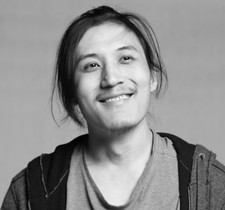
Hu BoAt the 55th Golden Horse Awards in Taiwan last November, An Elephant Sitting Still won Best Feature Film, Best Adapted Screenplay, and Audience Choice Award. The Best Film prize was presented to Hu’s mother by the Taiwanese American director Ang Lee (Life of Pi, 2012; Crouching Tiger, Hidden Dragon, 2000) who reached out to her with a poignant embrace.


An Elephant Sitting Still is a 230-minute cinematic allegory wrapped in haunting realism. In an unnamed town in Northern China, four characters struggle with their own personal predicament too messy to untangle, all in a day’s time. The four narratives intersect in Hu’s incisive screenplay.

A high school student, Wei Bu (Peng Yuchang), while defending a friend, accidentally pushes a school bully down the stairs leading to his death. Even more tragic, Wei later finds out he has been deceived by the very friend he tries to protect. Wei has to run away as the bully’s older brother Yu Cheng (Yu Zhang), a local gangster, is out looking for him. Yu himself is a man riddled with guilt as he has just witnessed his best friend dash out of the window to his death upon finding out Yu has been sleeping with his wife.

Meanwhile, Wei tries to persuade his unrequited crush, schoolmate Huang Ling (Wang Yuwen) to leave with him. Huang herself has to deal with her alcoholic single mother and is further troubled by the reverberation of her scandalous relationship with her school’s vice dean. The fourth character is a grandfather, Wang Jin (Li Congxi), who is pushed out of his son’s home as the young family needs to move to a smaller apartment in another place so to register their daughter for a better school. A dismal future awaits him away from his granddaughter.

Hu parallels the dilapidated urban environs with the inner world of his characters. Long takes and tracking shots place viewers right in the midst of relational conflicts. A Steadicam follows their uncertain footsteps; blueish-grey overtone transmits the bleakness of their situation. Hu takes time to let the camera linger on his characters’ faces, capturing their troubled psyche. Their seemingly emotionless appearance is reminiscence of Bresson’s ‘non-actors’. Often, their reticence conveys depths that words deem unnecessary.

There’s still another character which is mentioned but remains invisible, and that’s the Elephant. We’re told at the start of the film that it sits very still in a circus in the city of Manzhouli, a distance away. It’s indifferent to people’s taunting and objects thrown at it. The Elephant’s quiet composure exudes a mythical element these characters seem to yearn for. Here, realism is mixed with a touch of magic. As the four-hour film draws to an end, the sequence transcends rationale. Two young people, Wei and Ling, together with the grandfather Wang and his granddaughter depart on a journey to Manzhouli in search for the Elephant.

The ending shot is mesmerizing as the bus to Manzhouli stops temporarily in the night, the passengers get down for a stretch. From a distance, we see our protagonists stand in front of the beam from the bus and start playing hacky sack. The long stay of the camera on them is surreal but needed. The quest for the mythical being is motivational zeal for life, even just for a momentary pleasure. Then we hear off screen the sound of an elephant braying.

The Book Big Crack

Big Crack.jpgIn April I took a trip to Hong Kong and there in a bookstore I found the source material for the film, Big Crack*, written by Hu under his pen name Hu Qian. The book is a compilation of short stories, one of them being ‘An Elephant Sitting Still’, as well as Hu’s award-winning novella Big Crack’. I was eager to explore Hu’s worldview and compare his writing with his cinematic work.

‘An Elephant Sitting Still’ is a 15-page short story. Its protagonist is Yu in the movie, having slept with his best friend’s wife and struggling with guilt as he’s the reason for his friend’s suicide. Yu is drawn to search for the Elephant in Manzhouli, maybe for a redemptive reason. Towards the end, he finds the mythical beast, jumps into its cage and submits himself to let it deal a deadly blow to him, a fate he’s all too willing to accept, a soul that has been hinged on a meaningless existence. The other film materials are mostly philosophical concepts from the novella ‘Big Crack’

Hu’s writing is more direct and visceral than his cinematic creation. In the novella ‘Big Crack’, his characters are students in a bottom-tiered art college somewhere near a remote northern town. The term ‘waste land’ is used to refer to the campus and its adjacent town. The term is also used in the movie. In the book, the words ‘waste land’ are ubiquitous, together with Existential, nihilistic concepts like having no exit and nauseating stenches – as in the beginning of the film with Wei’s father’s furious complaint. In the novella, rampant violence is frequent among different dormitories of the school, often exploding in bloodshed. Violence is more restrained in the film, but often leading to tragic end.

I presume Hu’s use of the phrase ‘waste land’ is an allusion to T. S. Eliot’s epic poem. Eliot wrote ‘The Waste Land’ after WWI as the poet lamented the cultural and spiritual breakdown of Europe. Physical ruins could be rebuilt, but the collapse of moral and spiritual values was hard to replaced.

In what I think is a defying act in a country that monitors and censors Christianity in the public arena, Hu quoted the following verses from the Bible, words printed in bold:

“The Lord saw how great the wickedness of the human race had become on the earth, and that every inclination of the thoughts of the human heart was only evil all the time…. Now the earth was corrupt in God’s sight and was full of violence. God saw how corrupt the earth had become, for all the people on earth had corrupted their ways.”

The Invisible Elephant

Hu is piercing in his observation of the moral void and dry, cracked condition of the human soul; the meaninglessness of life as he saw it could have become too overwhelming for him. But what about the Elephant? Is there a sliver of light coming through that crack?

Some had interpreted the Elephant as a symbol of the government, but considering the way that the beast appeals and draws the protagonists to seek for it, almost like a pilgrimage, that parallel just isn’t probable. Some critics had attributed it to the endurance needed to forsake the world and confront troubles with passive resistance.

When I first came across the mention of the Elephant sitting still, the Beatles song “The Fool on the Hill” came to mind. The lyrics point to a similar quietude and peaceful being, some see the lyrics as a reference to God, “He was oppressed and He was afflicted, yet He did not open His mouth…” I incline to interpret as this, for evidence is overwhelming in Hu’s writing that he was troubled by the depravity of the world as he saw it and wanted to seek for what or who could have been the redemptive way.

As the closing credits roll to the end, we hear the mood has changed from the past three plus hours. We hear jubilant singing voices mixed with the theme music ‘Elephant’, sound of joy for the first time. And in the credits the following acknowledgement appears, ending the whole film:

“Original Acappella, Laomudeng Church Sunday Service Hymn”**

Before his death, a second feature was on the drawing board. Hu named it The Gate of Heaven. The spiritual yearning of this young talent is achingly apparent.


~ ~ ~ ~ Ripples

***


*It’s my understanding that the book comes in only its original Chinese edition. There has yet been an English translation.

** Upon online research, I found that the Laomudeng Christian Church is serenely situated on the top of a mountain in Yunan, famous for its secluded and peaceful environs. The high-pitched A Cappella singing of its congregants is well-known.

Photo Sources:

Film still from Ripple file originally from MSPIFF
Hu Bo photo from Festival Scope Pro
Big Crack book photo from Amazon.com
 

‘Working Woman’ is yet another voice of the #MeToo Movement

Israeli director Michal Aviad’s “Working Woman” is a good reminder that even though the momentum of the #MeToo Movement might seem to have quieted down, there are still voices that need to be heard. Screened at international film festivals since last fall, the feature is now being released in selective theatres.

At the start of the movie, the roving camera follows Orna (Liron Ben-Shlush) as she walks briskly to a car her husband is waiting in. She has just come out of a job interview, exciting to be offered an opportunity to assist a real estate developer, Benny (Menashe Noy). There will be attractive financial rewards and career opportunities ahead.

As the husband parks the car on the road and we get to see the couple in their apartment in the next scene, a stationary camera captures all that is important, an establishing shot if you will. In one frame, we see the husband cooking, Orna clearing the table beside him, and not too far away but still within the frame, their children playing at a computer. We soon learn that the computer isn’t working properly, the kids want a new one, and Orna telling them not until the fridge has been paid off. Husband and wife then go on to talk about this new job she really wants to take, he not too sure about the irregular working hours.

In less than five minutes from the opening, we see Orna’s situation. A mother with young children to care for, a husband who is starting a new restaurant and a household that is cash-scrapped. Aviad’s camera work and succinct dialogues prime us with expectations.

Orna starts working as a personal assistant to real estate developer Benny on his flagship project, a skyscraper apartment by the seaside. He needs someone to organize his meetings, see the project through to completion and sell the luxury units. Being Benny’s protégé includes following him around, even waiting while he has a haircut. Orna has no experience in real estate but is a quick study; she has a knack for gaining trust from potential customers and the instinct for a fresh approach to getting things done.

A scene from WORKING WOMAN. A film by Michal Aviad. A Zeigeist Films release in association with Kino Lorber. Photo courtesy Zeigeist Films. 

Benny finds the ideal assistant in Orna. He soon promotes her to sales manager, noting her resourcefulness and creative thinking. His project by the seaside is now in good hands. But reaching that position and gaining her boss’s trust isn’t as smooth as Orna had first thought; it is becoming obvious that Benny appreciates not just her work skills but eyes her as a woman.

It first starts with commenting about her hair and telling her what to wear, then a kiss, for which he apologies. Other kinds of harassment follow, much like juvenile pranks. But a trip to Paris escalates his advances into a sexual assault. Orna’s pushback and outright ‘no’ means nothing to Benny. Aviad’s camera captures the scene matter-of-factly. The realism is disturbing to watch, not that Benny is violent but that it is obvious that the act is not consensual, his brute force the only means to subdue her in gratifying himself.

After coming back home from Paris, Orna is a different person. She is traumatized naturally, but when her suspecting mother asks what happened in Paris, she replies, “I made a mistake.”

That is a crucial statement. Such a mentality could well explain why she isn’t forthright with her husband, fearing his speculation on her part in the event, or maybe fearing his avenging Benny, making the matter worse. But we as viewers are witnesses to the scene. The ‘mistake’ definitely is not hers to shoulder.

Aviad’s storytelling is realistic and engrossing. Her handheld camera follows Orna like a shadow, the slightly roving movement accentuating the tension. Ben-Shlush’s acting is sensitive and nuanced. The screenplay spare and succinct. The 93-minute narrative feature is an effective and clear voice in stating a case of sexual harassment in the workplace, a powerful boss getting his way and taking advantage of a subordinate who needs her job for financial reason.

Fortunately, Aviad leads us towards a positive ending. We get to see Orna rise up from her challenging situation as she gains new strength to open for herself a way out.

Exclusive engagement of “Working Woman” will be screened at Landmark Lagoon Theatre in Minneapolis St. Paul beginning Friday, May 10th, 2019. Hebrew with English subtitles, 93 mins.

~ ~ ~ Ripples

***

Urban Progress, The Wasteland and An Easter Thought

Many contemporary films from China showcased at Film Festivals in recent years tend to use the country’s fast-paced urban development as backdrop. This new wave of filmmakers situate their characters and tell their stories amidst dilapidated buildings marked for demolition, sometimes the whole community torn down to make way for new projects. In the name of progress, many are uprooted and displaced.

In Life After Life (2017), we see a village abandoned as its former residents have all moved to the city. In Dead Pigs (2018) we see the feisty owner of the last house in an urban community standing alone, refusing to sell to the developer. The acclaimed auteur Jia Zhangke’s Cannes winning A Touch of Sin (2013) follows desperate individuals wrestled down by the strong arms of economic progress and capitalistic greed. His latest “Ash is Purest White” (2018) may be of a crime genre but we see the protagonist being swept along the tumultuous torrents of technological change and urban development, seeking whatever humanness that remains.

The most haunting has to be the 2018 film by the talented, young director Hu Bo, An Elephant Sitting Still. Hu parallels the desolation of the urban environs with the inner world of his characters: Despondent youths in a school bound for demolition, not that they have bright futures even if the school remains; aimless adults desperately seeking connection but ending in betrayal and loss; a grandfather facing gloomy days ahead as he’s cut off from his son’s family… Hu’s accusation of his society was astute and unsparing.

At one point in the film, The Wasteland is alluded to, certainly not only referring to the physical environs. That it is mentioned as a deadpan jest to make fun only exposes the indifference of the speaker to its meaning. Tragically life imitates art, Hu took his own life during the film’s post-production. He was 29.

Eliot wrote The Wasteland in the aftermath of WWI, lamenting the desolation and that dry, cracked piece of soil deep in the human soul, derelict and barren in the midst of post-war development and the loss of spirituality.

“What are the roots that clutch, what branches grow
Out of this stony rubbish? Son of man,
You cannot say, or guess, for you know only
A heap of broken images, where the sun beats,
And the dead tree gives no shelter, the cricket no relief,
And the dry stone no sound of water. Only
There is shadow under this red rock,
(Come in under the shadow of this red rock),
And I will show you something different from either
Your shadow at morning striding behind you
Or your shadow at evening rising to meet you;
I will show you fear in a handful of dust.”

….

Cut to Easter. I’ve been pondering these seemingly unrelated ripples from films during this Easter weekend, at a place thousands of miles from home. Then came this Easter thought. When that stone was rolled away at the grave, the Son of God reversed the trajectory of the human race. With that ultimate miracle of the resurrection, He’d blown life into the dry stone that is the human heart, turned wasteland into fertile soil, opening up the way to save us from ourselves.

Herein lies hope.

***

San Francisco International Film Festival offers an eclectic selection

The San Francisco International Film Festival (SFFILM) will take place April 10-23, 2019. The longest running Film Festival in the United States, this is the 62nd edition of their annual celebration of films from all over the world.

SFFILM 2019 will showcase 163 works of various forms, from narrative features to documentaries, shorts to family-friendly animations, including 12 world premieres and 5 North American premieres. 52 countries are represented in 36 languages. Among SFFILM 2019 selections are 72 works directed or co-directed by women. This year’s Special Tribute will honor Laura Dern, Laura Linney, Claire Denis, and John C. Reilly.

The Special Interests Categories range from arts, design and architecture to social, legal, and environmental issues, to food, philosophy, crime, and science … just to name a few. Click Here to view their various Sections and Spotlights.

Here are two features I have previewed and highly recommend:

Toni Morrison: The Pieces I Am directed by Timothy Greenfield-Sanders (Marquee Presentations)

Toni-Morrison-2
Toni Morrison, subject of Timothy Greenfield-Sanders’s TONI MORRISON: THE PIECES I AM, playing at the 2019 San Francisco International Film Festival, April 10-23, 2019. Courtesy of SFFILM.

An inspiring biopic piecing together a multi-faceted life brimming with fearless convictions. At 87, Toni Morrison’s voice is intimate, her words far-reaching. Photos and footages tell not just the life story of a writer but that of America. She writes for all, transcending racial barriers, impacting readers globally. Angela Davis, Hilton Als, Fran Lebowitz, Oprah Winfrey and others lend their voices to present a portrait of the Nobel laureate with a gentle, personal touch.

**

Ramen Shop directed by Eric Khoo (Global Visions Program)


Ramen-Shop-Still 1
A scene from Eric Khoo’s RAMEN SHOP, playing at the 2019 San Francisco International Film Festival, April 10-23, 2019. Courtesy of SFFILM.


Acclaimed Singaporean director Eric Khoo’s latest feature is not your ordinary foodie flick. A young Japanese ramen chef goes on a root-searching journey to Singapore to find his mother’s family and seek reconciliation with his grandmother who has long estranged him. Painful WWII memory lodged indelibly in the older generation for Grandfather died in Japanese hands. A fusion of Japanese ramen and Singapore’s signature pork rib soup is the melting agent in Khoo’s moving concoction.


***

Toni Morrison: The Pieces I Am will be screened April 14th and 20th, Ramen Shop April 12th and 14th. For details of SFFILM 2019 programs, CLICK HERE .

38th Minneapolis St. Paul International Film Festival (MSPIFF)

The Film Society of Minneapolis St. Paul will be presenting the 38th annual MSPIFF April 4 – 20. Every year, MSPIFF showcases more than 250 film works of various forms coming from as many as 70 countries.

On their ‘About’ page, the MSP Society states:

“We promote the art of film as a medium that fosters cross-cultural understanding, education, entertainment, and exploration.”

The more I watch films from international film festivals, the more I appreciate this  statement. It’s unfortunate that nowadays the term ‘foreign’ carries an unfavorable stigma. This I’ve found from watching foreign films: listening to languages I don’t know means I need to adapt to reading subtitles, which in itself is a conscious act of trying to understand. Just that simple act of attempting to listen is of value. Of course, many works are from English-speaking countries, so it’s not all strenuous workout all the time. I can’t think of a better way to be transported to another place and time by a story, as my empathy is honed (subliminally) while I sit back and munch on popcorn.

Back to MSPIFF. Here are a few selections from the various programs with my succinct, capsule review:

The Accountant of Auschwitz by Matthew Shoychet (World Cinema Program)

mspiff38-accountant-of-auschwitz-still-1_thumb
‘The Accountant of Auschwitz’ Photo courtesy of MSPIFF

Canadian director Shoychet sets up an informative background leading to the trial and sentencing of German SS Officer Oskar Gröning, the man who tallied all the properties confiscated from the prisoners as they entered the Auschwitz death camp. Holocaust survivors recall their experiences, seeking justice and closure. However, bringing those responsible to account for the atrocity remains an elusive task. Only 49 Third Reich officials out of 6,500 had been brought to trial. Many got away with just 3 years in prison during the post-war period. Currently, time is running out for the victims. Major obstacles for the prosecution: the old age of those accused, continued evasion, and proof of complicity. Shoychet’s documentary is a poignant reminder that a tragic chapter in human history still remains unresolved.


An Elephant Sitting Still by Hu Bo (Asian Frontiers Program)

ElephantSittingStill
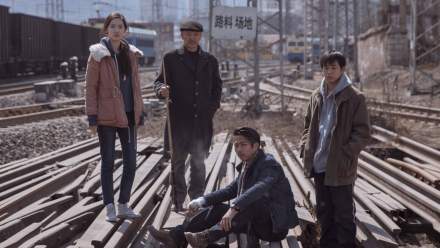
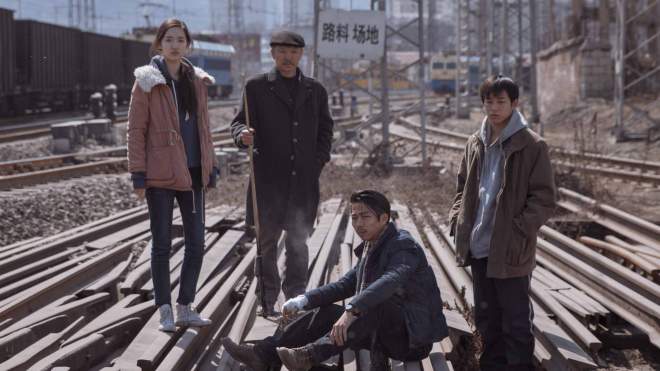
‘An Elephant Sitting Still’ Cast. Photo courtesy of MSPIFF

The 230-minute feature is an incisive depiction of the human desolation in an unnamed, northern Chinese city. Director Hu Bo’s cinematic capture of the inner void of his characters is intense and nuanced. Eliot’s “The Waste Land” is alluded to, that piece of cracked soil deep in the human soul. Hu’s tracking shots place viewers in the midst of relational conflicts, from bored high school students to aimless adults to the despondent elderly. Random strangers somehow connected casually in Hu’s astute screenplay. And the elephant among their midst remains invisible, sitting as a metaphor for the resignation of life as well as a fantasy of hope. This debut feature sadly speaks as a last testament of a lost talent: Hu took his own life during post-production of the film. He was 29.

The Third Wife by Ash Mayfair (Women & Film Program)

the-third-wife_gallery-2 (2)
‘The Third Wife’ Photo courtesy of MSPIFF

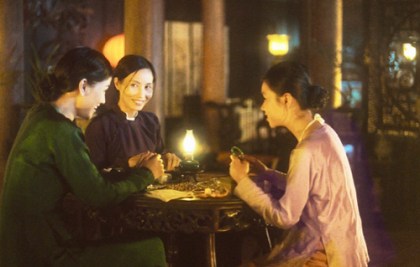
Inspired by true events in 19th century Vietnam, 14 year-old May is married into a rich landowner family. She is the third wife of the patriarch’s son. Her sole purpose is to produce a male descendent for him, as the first two wives have only daughters. A film with minimal dialogues, The Third Wife is a visual story. Its aesthetics and sensual, dream-like sequences wrap a harsh reality: the plight of women in a patriarchal society. Mayfair was born and raised in Vietnam, an Oxford and NYU Tisch School of the Arts graduate. This her debut feature is a quiet and potent voice in the #MeToo awakening.

***

For the full program of the 38th MSPIFF, CLICK HERE to their website.


Ripple Effects Turns a New Page in 2019

Ripple Effects has reached a new milestone. After almost twelve years in the blogosphere, Arti has finally fought off procrastination and taken up an upgraded version. From now on, there will be no ads even if you’re not a WordPress blogger visiting (let me know if you still see them). What more, there’s a new URL address to the Pond, aptly:

rippleeffects.reviews


But if you type in the old, longer one it will redirect you to the right place here at the Pond as well.

While birding is still my passion, I’ll be posting mostly film and book reviews on Ripple Effects. My avian friends will probably fly by during intermission.

Your two pebbles are welcome as before. Throw them in, stir up some ripples. As always, I hope you’ll find here a respite for quiet thoughts and prompting to some interesting viewing and reading. I await your visits.

***

Have you ever seen so many people lining up to go into a public library? It happened right here in my city, Calgary, Alberta, on November 1, 2018, when our New Central Library opened. 50,000 visitors in the first four days. Yes, there will be talks of books and movies here on Ripple Effects.

New Central Public Library, Calgary.jpg

The Calgary Central Library was one of Architectural Digest’s 12 most anticipated buildings opening in 2018. Check it out here.

***


TIFF-launched foreign language films shooting for Oscars 2019

Watching foreign language films could be an acquired taste for some, not unlike eating sushi. Once you’ve gotten over the seemingly counter-intuitive idea of eating fish raw and allow the soft texture to melt in your mouth, you’ll be pleasantly surprised by the cold freshness and welcome the brain-stirring sting of the wasabi, as well, appreciate the sweet taste when lightly dipped in soya sauce, balanced by the blandness of the vinegared rice morsel. A delightful exploration.

Film festivals are the best venues for one to have a taste of these international, cinematic delicacies. And as usual, the 43rd Toronto International Film Festival (TIFF) this September was a launching pad for films from all over the world, several were subsequently announced as their country’s official entry to the upcoming Oscars Best Foreign Language Film race.

shoplifters_06

“Shoplifters”, this year’s Palme d’Or winner and Japan’s official entry to the
91st Oscar Best Foreign Language Film race.  Photo courtesy of TIFF

The following is the list of TIFF selections that made it to represent their country at the 91st Oscars. Posted also are their premiere status at TIFF. Some of these I’d seen at the Festival and since reviewed (just click on the links). More reviews are forthcoming. The Oscar nominations will be announced Tuesday, Jan. 22, 2019.

**

El Angel, Argentina, dir. by Luis Ortega, North American (NA) Premiere

Hidden Man, China, dir. by Jiang Wen, International Premiere

Birds of Passage, Columbia, dir. by Cristina Gallego & Ciro Guerra, Canadian (CA) Premiere

Sergio and Sergei, Cuba, dir. by Ernesto Daranas, NA Premiere

Winter Flies, Czech Republic, dir. by Olmo Omerzu, International Premiere

Never Look Away, Germany, dir. by Florian Henckel von Donnersmarck, NA Premiere

Sunset, Hungary, dir. by László Nemes, NA Premiere

The Cakemaker, Israel, dir. by Ofir Raul Graizer

Dogman, Italy, dir. by Matteo Garrone, CA Premiere

Shoplifters, Japan, dir. by Hirokazu Kore-eda, CA Premiere

Capernaum, Lebanon, dir. by Nadine Labaki, NA Premiere

Roma, Mexico, dir. by Alfonso Cuarón, CA Premiere (Review forthcoming)

Cold War, Poland, dir. by Pawel Pawlikowski, (Review forthcoming)

Burning, South Korea, dir. by Lee Chang-dong, NA Premiere

Border, Sweden, dir. by Ali Abbasi, NA Premiere

The Wild Pear Tree, Turkey, dir. by Nuri Bilge Ceylan (Review forthcoming)

**

The 91st Academy Awards ceremony will take place Sunday, February 24, 2019.


Diversity Wins at TIFF 2018

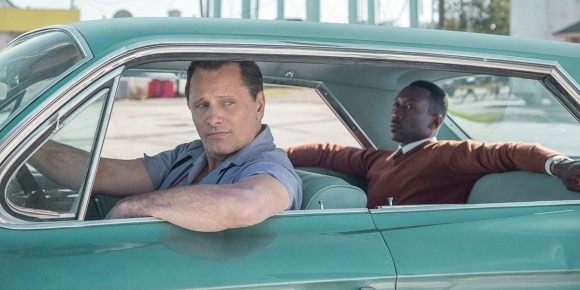
It’s a wrap for the 43rd Toronto International Film Festival as the awards were handed out on Sunday, September 16, 2018, at the TIFF Bell Lightbox Theatre 1. The top prize, the Grolsch People’s Choice Award went to Green Book, a world premiere at TIFF18. Directed by Peter Farrelly, the comedy-drama stars Mahershala Ali as classical pianist Don Shirley and Viggo Mortensen as a working-class Italian-American bouncer getting the job to drive Ali on the road in the American South during the 1960’s. Ali won an Oscar for his role in Moonlight (2016), Mortensen is a two-time Oscar nominee. Looks like the film has just got a huge boost with this win and will travel far in the upcoming Awards Season.

greenbook
Viggo Mortsensen driving Mahershala Ali in “Green Book”. Photo courtesy of TIFF.

If Beale Street Could Talk, a world premiere at TIFF18 and director Barry Jenkins’ follow-up to Moonlight (2016) was the People’s Choice Award First Runner-Up. Based on the novel by James Baldwin, the film tells the love story of a young African American woman trying to prove her imprisoned lover’s innocence. In the TIFF webpage, the film is described as a ‘gorgeous tone poem on love and justice.’

ifbealestreetcouldtalk_01
KiKi Layne and Stephan James in “If Beale Street Could Talk”. Photo courtesy of TIFF.

Alfonso Cuarón’s Roma (my review) came third in the People’s Choice Award. A Canadian Premiere at TIFF18, it is an artistic rendering of a young maid’s experience in a middle-class home in Mexico City during the 1970’s. Of note is the black-and-white film is regarded as a semi-autobiographical account of Mexican director Cuarón, the first Hispanic and Mexican to win the Academy Awards for Best Director with his sci-fi work Gravity (2013).

ROMA.jpg
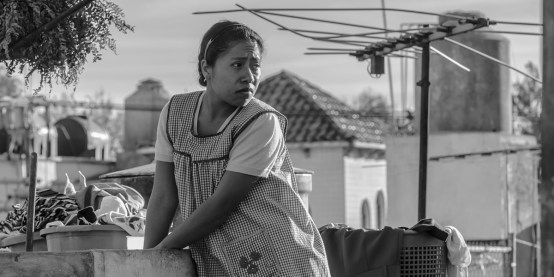
Yalitza Aparicio as Cleo in Alfonso Cuarón’s “Roma”. Photo courtesy of TIFF.

The high-profile contenders First Man directed by Damien Chazelle with Ryan Gosling as astronaut Neil Armstrong, and Bradley Cooper and Lady Gaga’s A Star is Born did not place.

TIFF’s People’s Choice Award winner is often regarded as a predictor of the next Oscar Best Picture. Past winners that went on to capture the Oscar include Slumdog Millionaire, The King’s Speech, and 12 Years A Slave.

Capturing the People’s Choice Documentary Award is Free Solo, International premiere at TIFF18, directed by E. Chai Vasarhelyi and Chinese-American mountaineer/photographer Jimmy Chin. The duo chronicled the renowned rock climber Alex Honnold’s scaling free solo — without safety ropes — up the 3,000-foot cliff of El Capitan in California’s Yosemite National Park.

People’s Choice Award from the Midnight Madness program went to the The Man Who Feels No Pain, World Premiere at TIFF18, directed by Vasan Bala, one of the young, new wave filmmakers in India. This is a cinematic fusion throwing in Hong Kong martial arts comedy Stephen Chow styling, the agility of Jacky Chan, the Bollywood sensation, the American Superhero momentum, and the inspiration of Buster Keaton. Fits right in the Midnight Madness program of introducing new works by a new generation of filmmakers.

Platform Prize went to Cities of Last Things, directed by Ho Wi Ding. This world premiere at TIFF18 is a collaboration of filmmakers from Taiwan, China, USA, and France. From TIFF’s webpage, “a seamless blending of genres, from sci-fi to noir to romance, the Malaysian-born Ho commandingly employs cinematic language as a tool to discuss the root of our collective sadness, which is perhaps the very thing that makes us human.”

NETPAC Award for the world premiere of international and Asian film went to The Third Wife from female writer-director Ash Mayfair of Vietnam. A film about a 14-year-old girl’s struggles after she becomes the third wife of a wealthy landowner, set in 19th century rural Vietnam.


***


Dano’s ‘Wildlife’ elicits showcase performance from Carey Mulligan

Wildlife is a detailed capture of the dissolution of a marriage, from the point of view of the couple’s only child. It is also a coming-of-age story as 14 year-old Joe comes to realize the elusiveness of permanence in his parents Jerry and Jeanette’s once loving relationship. If all these names sound too common, that just might be one implication of the film – a specific look into a general human condition.

Wildlife
Carey Mulligan and Jake Gyllenhaal as Jeanette and Jerry in ‘Wildlife’. Photo courtesy of TIFF.

The film adaptation of Richard Ford’s novel is a selection in the Special Presentations program at the 2018 Toronto International Film Festival, screened as a Canadian premiere. It is the directorial debut of actor Paul Dano, co-writing the screenplay with Zoe Kazan (The Big Sick, 2017).

To those unfamiliar with Dano, maybe these titles will help you locate where he’s coming from and appreciate the variety of works he’s been in. Remember Little Miss Sunshine (2006)? He’s Olive’s older brother Dwayne who reluctantly gets into the yellow VW Beetle van and takes a vow of silence, or the dubious preacher confronting Daniel Day-Lewis in There Will Be Blood (2007)as the harsh slave driver in 12 Years a Slave (2013), or in the 2016 TV mini-series War & Peace as Pierre. Not the handsome leading man but always the character actor.

The small family in Wildlife consists of Jerry Brinson (Jake Gyllenhaal), a golf pro who has just moved into the town of Great Falls, Montana, with his wife Jeanette (Carey Mulligan) and son Joe (Ed Oxenbould). Just as they thought they’re settling in Jerry is fired from his job as a golf instructor in a country club. After waiting for a while for her husband to absorb the loss of job and pride but with no solution in sight to the household finance, Jeannette decides to come out of the home to look for work, ultimately finding a position as a swimming instructor at the Y.

That just may not be the cause of the conflict. What begins the total meltdown is when Jerry, out of the blue, packs up and follows a group of men heading to the forests to fight a wild fire fiercely raging near Great Falls, not knowing when he will return or if he can get out of it unscathed. Feeling utterly alone and abandoned, Jeanette begins to react to her precarious situation by venting with some out-of-character behavior. The successful businessman Warren Miller (Bill Camp), Jeannette’s swim student at the Y, just happens to be a convenient escape route. All these familial changes and development are observed uncensored by their sensitive teenaged son Joe.

From this his first attempt at directing, viewers would be gratified to find Dano to be an actor’s director; especially with the excellent cast he has under his helm, this is doubly rewarding. Dano lets the camera rest on the close-up faces of his characters to elicit superb performance, taking his time to capture the nuances in restraints, outburst, or just about any sort of inner feelings to surface.

Carey Mulligan.jpg
Carey Mulligan in ‘Wildlife’. Photo courtesy of TIFF.

This is one of the best, if not the best, performance I’ve seen Carey Mulligan in, changing from the loving wife and devoted mother to the angry and desperate single mom with a son to raise, to totally losing it, testing the boundaries of norms and behavior, and finally to the determined woman striking out on her own yet still bound by unseverable, familial ties. Mulligan deserves an Oscar nom for her role as Jeannette.

Watching his mother get close to Miller, Joe is torn between devotion and incredulity.  Although a successful businessman, Miller is a limping, older man. Joe is utterly perturbed by his mother’s capricious turn. Dano creates some poignant scenes depicting the interactions between mother and son during dad’s absence from home. Often the passive observer, Joe is restrained with countless questions he cannot express in words.

Mulligan gets all the juicy lines. After Jerry is gone to fight the wild fire, Jeanette brings Joe along to Miller’s house for dinner, putting on heavy make-up and dressing in a seductive night gown. She dances with the man intimately in front of her son. In another occasion, she dons cowgirl attire and admires herself in front of the mirror, reminiscing her younger days. Jeanette answers her son’s dazed expression with this line:

“It’s good to know your parents were once not your parents.”

There is a former life in every parent that even the closest child would not have known or understood. There are many thought-provoking lines in the film, but this one is particularly poignant.

Dano takes the liberty to follow the spirit of the text and creates a cinematic ending. His visual wrapping up is clear and spot-on, especially the scene at the studio where Joe works part-time. The final frame of the three sitting down together for a studio shot with Joe between his parents speaks volumes. A wild fire may have been put out, but the smouldering lingers; and the one keeping it under control may well have been a teenaged firefighter.


***


Update Nov. 16:

3 Nominations for “Wildlife” at the Film Independent Spirit Awards – Best First Feature, Best Female Lead, and Best Cinematography.