October’s Abundant Harvest

October is harvesting month for me. The first week I was still cruising on some small country roads in Northeast U.S. gathering visual delights. As soon as I came back home, I sent off a travel article to an online newspaper. Visitors to my pond at Ripple Effects get the details in ten blog posts beginning here.

Funny thing is, In my almost two weeks’ road trip, I’d rarely seen birds and have not watched one single movie. So as soon as I got back home, I quickly sought to quench the dry spell. Sad to say, my avian friends have migrated without saying goodbye. But there are always movies.

Here are the movies I’ve watched in October after coming home. Most are current releases, a few catch-ups. I’m a detailed list-maker of unnecessary facts, so the titles are in chronological order of my viewing:

The Intern with Robert De Niro as the overqualified senior (in age) intern

A new genre has evolved in recent years to capture the baby-boomer cinema goers – A Walk In The Woods, The Best Exotic Marigold Hotel, Quartet, My Old Lady – just to name a few. The Intern is pleasant enough, with an interesting proposal: make the best use of the resources seniors can offer in a business, here a startup created and operated by Jules (Ann Hathaway). The hipster way of running a company is explicitly, time and again, contrasted with the De Niro old school of management, etiquette and people skills, like Ben Stiller and Adam Driver in While We Were Young. But The Intern lacks a dramatic story arc to hold viewers’ (well, mine at least) interest and attention. I’ve been waiting for a twist somewhere but it never came, and Anders Holm who plays Jules’ husband Matt could well be a miscast.  ~ ~ 1/2 Ripples

Hamlet with Benedict Cumberbatch as the brooding Prince of Denmark

I bought the ticket to this National Theatre Live one-night screening months ago and am excited to report that I was one of 250,000 viewers worldwide to watch it. The date to remember: 10/15/15. It was a record for NTL for one single showing of a broadcast; Shakespeare would be ecstatic. I was squished in the last row corner seat in a full Cineplex auditorium, awestruck by the enthusiasm Benedict Cumberbatch had raised. There were young people in droves streaming into the theatre instead of the usually grey-haired audience at most NTL screenings.

Basically two things I’d like to say about this production at the Barbican in London via NTL’s camera work. First, the sound and lighting need to improve so we don’t have to strain our ears to hear that most famous soliloquy of all time delivered by Benedict Cumberbatch. Second, the performance was a bit uneven. While Cumberbatch had put on an energetic and affective act, and Ciaran Hinds as Claudius was very convincing and appealing even, there were roles that need to be pumped up to match.
~ ~ ~ Ripples

The Martian with Matt Damon as the best botanist on the Planet Mars

Well, science seems to be the saviour bringing Matt Damon back to Earth from Mars but director Ridley Scott knows the underlying secret. An evacuation of his teammates after a dust storm has left astronaut Mark Watney all alone on the Red Planet. To survive, he has to science his way out. Director Ridley Scott knows too well that he is working with flesh and blood, and science without the human touch will best be a fine documentary but won’t capture hearts and can’t triumph at the box office. Thanks to all his teammates in the space capsule coming back for him and all the smart people in NASA and elsewhere calculating to the dot of how this could take place, we get a captivating and entertaining human interest story. Look at the cast, it’s not rocket science that the film has fine materials to build on: Other than Damon, there’s Jessica Chastain, Kristen Wiig, Chiwetel Ejiofor, Jeff Daniels, Sean Bean…

A blogging success, Andy Weir first published his story as blog posts, followed by eBook, sold movie rights, movie production, and now the phenom. But what was I most impressed? That the film doesn’t use CGI to imitate the Red Planet but was shot on location in the magnificent Wadi Rum, southern Jordan. Previous films with Mars as setting had used the location as it’s probably one of the most Mars-like places on Earth. I had the experience of getting to about seventy miles north of Wadi Rum in Petra many years ago, beholding the city carved out of the red mountains. It was indeed out of this world.  ~ ~ ~ 1/2 Ripples
(
Update Jan. 14, 2016: 7 Oscar Nominations including Best Picture)

Bridge of Spies with Tom Hanks as the reluctant hero

Steven Spielberg knows what audience wants too, and that the formula of the “hero’s journey” works. Not to say this film is formulaic but it is predictable even when I didn’t know anything about our reluctant hero, insurance lawyer James Donovan (Tom Hanks) who later turned master negotiator. Bridge of Spies is set in the Cold War era, Donovan is asked to do the nasty task of defending an arrested Russian spy Rudolf Abel (Mark Rylance). As a result, Donovan has suddenly become public enemy no. 1 together with his defendant. As the real life events begin to take their course, Donovan is pulled into the journey with real gusto. He saves Abel from a certain death sentence, keeping him for more useful ends, you know, some sort of like insurance for the future. And rainy days finally come.

This is a highly watchable film, despite the fact that many might have known about this part of American history, the character Donovan and his ultimate endeavour to exchange Abel for American U2 pilot Gary Powers shot down from Soviet airspace. As with Ridley Scott’s The Martian, Spielberg knows it’s not the dry, actual negotiations that will interest the audience, but the added suspense and the human bond between Donovan and Abel that would appeal more. And so he threw in those elements; Spielberg is good at that. It’s the humanity behind his characters that capture his audience. And what’s more, shot like a Cold War era film, we get some thrilling noir type of camera work and the reminiscence of the denser and tenser spy films of the 60’s, like Le Carré’s The Spy Who Came in from the Cold. But of course, in this day, audience would welcome more Spielberg’s offer of lighter entertainment. ~ ~ ~ 1/2 Ripples
(Update Jan. 14, 2016: 6 Oscar Nominations including Best Picture)

Jafar Panahi’s TAXI where the banned Iranian director creates video selfies 

Banned from making films for twenty years for his outspoken stance against the government, Iranian director Jafar Panaji uses creative and bold ways to make his ‘non-films’. Here he is in the driver’s seat in a yellow cab, picking up his fares on the streets of Tehran with a camera mounted on his dashboard. We get a slice of what it’s like to live under an authoritarian power. Rather than a gloomy view, this 2015 Berlin International Film Festival winner brings us a light-hearted, human display of life in Tehran, however limited the crack is opened for us to look in from the outside. My full review here.  ~ ~ ~ 1/2 Ripples

This is Not A Film where banned director searches for new ways to speak out

This is Jafar Panahi’s 2011 work after he was given a 20-year ban by the Iranian court from filmmaking, screenwriting, giving interviews, and leaving the country. This is not a film, but a video selfie made in his home by friend and documentary filmmaker Mojtaba Mirtahmasb who was later arrested. We see a somber, stoic, but at times frustrated Panahi up and about in his home with his daily chores, and ‘telling’ a banned screenplay. He is also shown using his own iPhone to record a young man coming to his door to collect garbage, a film student helping his sister out for that night. The depth of human interest and the desires and aspirations of people in constraints depicted in this ‘non-film’ is poignant.  ~ ~ ~ Ripples

Remember where Christopher Plummer is a 90 year-old revenger with dementia

So what if the plot is implausible as long as we have a talented director (Atom Egoyan) conducting a fine orchestrated production with the riveting performance of Christopher Plummer. I mean, there are lots of implausible storylines in our movies nowadays, think Gone Girl, Before I Go to Sleep, ok, throw in The Martian even. The charismatic performance here in Remember by Plummer makes it believable and absorbing. Why, he has grasped and portrayed a dementia patient to the dot, forgetting who you are, where you are, and the essential why for your actions. A Holocaust survivor seeking revenge on the German officer responsible for his family’s death in Auschwitz is the premise. But Canadian director Atom Egoyan had led us into a thrilling story of suspense and unfolding. No, this is not ‘another Holocaust movie’ but a riveting thriller. Plummer has effectively led us to see the fragility of our mind and the nature of the memories we hold.  ~ ~ ~ Ripples

Meet The Patels where Ravi Patel shows us the Indian version of Meet the Parents

But with one major difference: This is a lively documentary. That makes it all the more fun and realistic. The Indian parents of their American born, and almost 30 year-old son Ravi Patel lend a helping hand to find him a wife by distributing his ‘bio dates’ resumé to friends and family and practically to the whole Patel clan. This is not incest but expanding the target market of about 50 miles radius of where the Patels come from in India. Ravi himself had gone through the ‘biodating system’, online matrimonial websites, and Patel Matrimonial Convention. But before all these, he’d had an American girlfriend whom he had kept as a secret from his parents and with whom he had just broken up. Ahh, that adds to the complication in this vividly told multi-visual doc.  Most gratifying is the conclusion… regardless of culture and traditions, loving parents just want their children to be happy. I can’t agree more.   ~ ~ ~ Ripples  My full review here.

The Past where Director Asghar Farhadi elicited some amazing performance

My third film from Iranian directors in just two weeks. Asghar Farhadi’s first French language film shot in Paris. I was much impressed by his previous work A Separation, which won the Academy Award for Best Foreign Language Film in 2012. The Past came a year later. So this is a catch-up for me; I’d long wanted to see it. Saw it on BluRay just a few days ago and again I must say, don’t let them just stream movies online, for the special features are just as good. Here we have Farhadi sharing with us the creative process in the making of The Past at a Directors Guild interview. This is too good a film to just write a couple of paragraphs on. A full review coming. But I can tell you, it’s going to be ~ ~ ~ ~ Ripples.

***

Books to Films at TIFF15

September kicks off Film Festival Season, a prequel to all the movie nominations coming up at the end of the year. First there’s Venice, Telluride, and Sept. 10 begins the 10-day celebration of films from over 70 countries at the Toronto International Film Festival.

The following are several of the premieres at TIFF15 that are adaptations from literary sources. Just to throw some more reading ideas out in case you’re not already overwhelmed with book suggestions.

***

The Dressmaker by Rosalie Ham

The Dressmaker Movie-tie-in CoverAustralian author Rosalie Ham’s debut novel (2000) is divided into four sections named after four different kinds of fabric: gingham, shantung, felt and brocade. The historical, gothic novel has received several nominations and shortlisted for the Book of the Year Award (2001) by the Australian Booksellers Association. The film adaptation stars Kate Winslet as the dressmaker Tilly Dunnage who returns to her hometown seeking revenge on her being expelled years before, with a sewing machine as her accomplice. Sounds interesting? What more, she is a Titanic survivor (of course she is) and the plot thickens with a hearing on the doomed maiden voyage. Australian director Jocelyn Moorhouse wrote the screenplay and shot the film in Victoria. Liam Hemsworth and Judy Davis also star.

High-Rise by J. G. Ballard

HighRise(1stEd)J. G. Ballard’s most well-known novel probably is Empire of the Sun (1984) thanks to Steven Spielberg’s movie adaptation. That is a semi-autobiographical account of Ballard’s childhood years in a Shanghai internment camp during the Japanese invasion of China. The production is one of the better WWII, Pacific War movies, splashed with some surreal styling. Now High-Rise (1975) looks like a totally imaginative work. An ultra-modern high-rise apartment (hopefully with some updated renos from its inception in 1975) with all its conveniences and amenities only lead to the isolation of its tenants, dividing them into different classes and eventually, to rivalry and extreme violence. The high-rise is a self-contained microcosm of our civilized society, perhaps Lord of the Flies of the concrete jungle. An acerbic satire of our human condition, the film is directed by Ben Wheatley and stars Tom Hiddleston and Jeremy Irons.

Into the Forest by Jean Hegland

Into the ForestThis is Hegland’s debut novel (1996), and had been translated into eleven languages. Set in Northern California in the near future when a massive continental power outage causes the total shutdown of technology, subsequently, the total collapse of human society. The apocalyptic scenario unfolds as two teenaged sisters – at first living in an idyllic, remote forest – now have to fend for themselves, find food at the brink of starvation, secure safety in the wild, and in the process, grow in their relationship with each other and learn more about their world. A coming-of-age story as well as an allegory of our technologically dependent society. The film is shot in British Columbia where, yes, there are beautiful forests. Canadian director Patricia Rozema writes the screenplay and helms the production. Rozema is the one who brought us Jane Austen’s Mansfield Park the movie in 1999. Popular Canadian actress Ellen Page joins hands with Evan Rachel Wood to play the roles of the sisters.

The Lady In the Van by Alan Bennett

The Lady in the VanThanks to the film adaptation, or I wouldn’t have known about this amazing story. Acclaimed English playwright Alan Bennett’s play is not fiction but a memoir. Bennett saw a transient woman living in a van on the street. Trying to help her out, he let her park on his own driveway for three weeks so she could sort things out and move on. Well, Miss Shepherd stayed for 15 years. Not surprisingly, she and the playwright form an unlikely bond of friendship. This ‘mostly true’, incredulous story needs to be told for its unique human scenario. From play to film is probably the best route to reach many more viewers. Who else other than Maggie Smith best fit the role as Miss Shepherd? And so she did, with Alex Jennings as Alan Bennett. Supporting cast includes Jim Broadbent, Dominic Cooper, and James Cordon. The is the third film wherein director Nicholas Hytner and playwright Alan Bennett team up. Their previous collaborations are The History Boys (2006) and The Madness of King George (1994).

The Martian by Andy Weir

The Martian movie tie in editionHere’s a Cinderella story that all bloggers can cheer for. In 2009, Andy Weir started posting on his personal blog as a post-by-post serial his well-researched sic-fi story about an astronaut stranded on Mars. Chapter by chapter he attracted numerous readers who, after the story was finished, suggested he publish it as an eBook so people could read it online as a whole. Weir did that and his eBook soon hit the top of Amazon’s best selling sic-fi list. Not long after, Random House stepped in and took it from there, from e to reality. Four days later, “Hollywood called for the movie rights,” Weir recalled. As I type, on this second week of September, Weir’s book is number one on the New York Times Best Sellers Trade Paperback Fiction list. And the movie? The legendary Ridley Scott takes the helm, with NASA consulting, Matt Damon stars, and an A-list supporting cast includes Jessica Chastain, Chiwetel Ejiofor, and Jeff Daniels. World premiere at TIFF before a general release later in October. And it all started with a blog post.

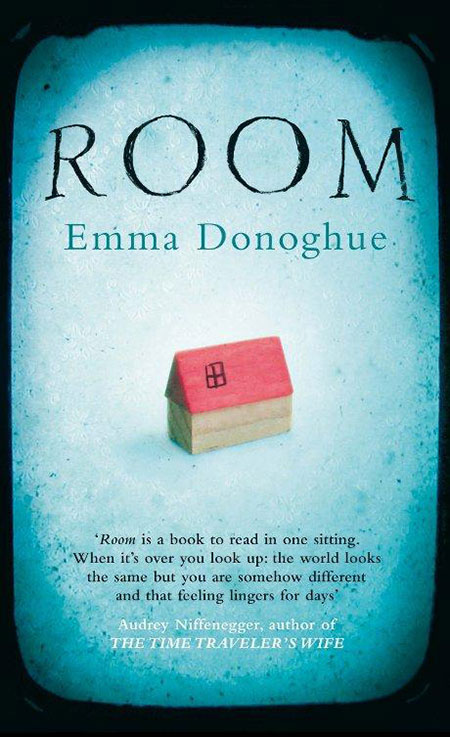
Room by Emma Donoghue

roomThe 2010 Booker-prize shortlisted novel by Irish-Canadian author Emma Donoghue reads like you’d want to see it visualized. Indeed, hearing constantly the voice of a 5 year-old could have that effect on you. So here we are. A movie adaptation. Locked in a room and made captive by a psychotic abuser, a young mother gives birth and for the next five years raises her child Jack in a shed. At 5, Jack has known no other worlds, but now begins to ask questions. Ma cannot contain the make-believe anymore so she tells Jack there’s a world out there, and starts to prepare him for a possible escape. The multiple-award winning novel is written from the child’s perspective. It depicts the power of love and the indomitable spirit of resilience and hope, but maybe not for the claustrophobic. The movie trailer is impressive; the 1.5 minute clip is powerful, consuming, and very moving. The film premiered at Telluride International Film Festival in early September and stunned the audience, drawing multiple standing ovations. Donoghue wrote the screenplay herself, that could well be a definite asset. Lenny Abrahamsson directs, with Brie Larson as Ma, Jacob Tremblay as Jack, Joan Allen and William H. Macy supporting.

UPDATE Sept. 20, 2015: ROOM has just won the Grolsch People’s Choice Award at TIFF15 tonight. FYI, a few of TIFF’s previous winners had gone on to win the Oscar Best Picture including 12 Years A Slave (2013), The King’s Speech (2010), Slumdog Millionaire (2008), American Beauty (1999).

***

Irrational Man (2015): A Teaser for Sartre

Can a director who churns out a movie every year continuously over the past four decades bring us anything new at age 79?

Yes, and no. But here’s the thing with Woody Allen’s annual offering, a summer treat in recent years, the answer is… does it matter?

Before you read on, be warned that the following discussion contains, no, implies, Spoilers.

Unlike his recent films – Magic In the Moonlight, Blue Jasmine, To Rome With Love, and Midnight In Paris – Irrational Man is not a comedy. It is a semi-serious drama carrying some signature WA thematic materials. Those familiar with his Match Point (2005) and Crimes and Misdemeanors (1989) will find Irrational Man a variation on the same theme, but this time with a twist. So there you go, the old has become new.

Here again, the writer/director is toying with Dostoevsky’s Crime and Punishment, Raskolnikov’s idea of getting away with crime for those who are superior. What if one commits a crime out of a superior motive, purely altruistic and benevolent? If a crime is committed with the full intention to rescue someone from a miserable predicament, shouldn’t the criminal be thanked rather than punished?

Interesting premise, and when the idea is embodied in Joaquin Phoenix, the character actor who is beyond categorization, here’s the attraction. First time in a WA film, Phoenix has prepared well with the right physique – an obvious paunch – to show his method immersion. He plays a listless philosophy professor Abe, who has no life purpose, no drive even when starting a new position or finish writing his book, but just passing his summer teaching hours with easy chats on Kant, Kierkegaard, and Sartre, while still attracting students and colleagues alike.

Irrational Man's pivotal scene

One day in a coffee shop, upon overhearing a woman talk to her friends about her desperate child custody case, Abe is overcome with empathy. (Photo above: a pivotal scene.) He is ready to live out an existential choice: by taking actions in his owns hands in committing a crime to help the woman, he in turn discovers the purpose for his own existence. Did I say this is not a comedy? Well, let me qualify that. There’s no laughter in the theatre. However, Phoenix’s character and action is inherently an ironic jest; the story we see on screen works like an object lesson on the freedom of choice, and a teaser for Sartre.

I look forward to these annual WA productions, even when I hear dialogues that sound like I’ve heard them before. Why? Where else would one find nowadays philosophical chitchats on screen for our entertainment? Philosophical chitchats, the term itself is an oxymoron; here lies the fun of a WA film. Allen doesn’t take his characters seriously, so we have light characters engaged in serious talks.

The psuedo-intellectual screen talks are humour in themselves. Just because we can’t spot a Marshall McLuhan in a theatre line-up anymore to clarify his own ideas as in Annie Hall, let alone get Sartre to referee the on-screen discourses, so we can sit back leisurely and be amused at Allen’s characters delving in philosophical problems, while their life and fate collide in twists and turns.

The is Emma Stone’s second WA movie back-to-back with her Magic in the Moonlight in 2014. As a college student falling for her philosophy prof sounds more convincing a role for Stone than as a young medium with telepathic ability to contact the dead. What’s interesting about these annual WA productions are the interesting combinations of A-listers being cast in some wacky roles. Something new, something old… thought you’ve seen it before? Just wait till the end.

To kick off your Philosophy 101 class, Irrational Man could be a lively visual aid to hold your students’ interest. Breezy, entertaining, lines to discuss and dispel, with an ending that long-time WA watchers could well interpret as the director redeeming himself from creating those in Match Point and Crimes and Misdemeanors in his younger days. Turning 80 the end of this year, maybe Allen has finally decided to lean towards the side that says, yes, there’s poetic justice after all.

~ ~ ~ Ripples

Other Related Ripple Reviews:

Magic In The Moonlight (2014)

Blue Jasmine (2013)

To Rome With Love (2012)

Midnight In Paris (2011)

***

My Old Lady (2014) Movie Review

Among the dozen films I’d watched at the Toronto International Film Festival last September, two are apt selections for the annual Paris In July blogging event hosted by Tamara in Thyme for Tea, now in its sixth year. Recently I have re-watched both, one at an indie theatre, the other on Blu-ray. Here’s my first entry to Paris In July 2015.

Paris in July 2015 Icon

***

My Old Lady (2014)

Just when voices had been raised in recent months from female stars against the sexist domination in Hollywood, and lamenting the lack of significant female leading roles, another issue pops up. Well, the problem has been there all along, but who would speak for those who are…. getting old? The peril of Agism in the movie industry. And, if you’re female and aging, confronting Hollywood is a losing battle.

I’m glad there are filmmakers who consider film as an art form, and in its essence, conveys the meaningful and universal that make us human. Kudos to all who attempt to break the barrier. Here we have a directorial debut from 75 year-old Isaac Horowitz. As he had noted, which first-time film director would talk about his five grandchildren?

Horowitz is an author of more than 50 produced plays. Several of his works have been translated and performed in as many as 30 languages worldwide. This is his first time directing a film, adapting his own play onto the big screen. My Old Lady is a delightful debut. I’ve watched it three times, so far, and liked it more each time.

My Old Lady Poster

In an after screen talk, Horowitz shared that he had heeded one advice from the iconic director Sydney Lumet: “Cast the best actors in the world and then get out of their way.” In his debut movie, his cast is first-rate, and allow me to show their age when they made this movie, just to prove a point: Maggie Smith, 80, Kristin Scott Thomas, 54, and Kevin Kline, 67. How much the director had left them to their own I don’t know, but sure looks easy for these veteran actors to take on this one. Such natural ease comes from decades of experience, expertise honed as innate skills.

That’s the advantage of ageing. Let’s drink to that.

Kevin Kline plays Mathias Gold, a down-and-out, thrice divorced, alcohol dependent, penniless middle-aged American who is relieved to inherit from his late father an apartment in the Marais district of Paris. Going there to claim his rightful ownership and aiming at a quick sale, he learns a French lesson in property transfers instead: En Viager. When his father purchased the apartment 43 years ago – now worth over 10 million Euros – he was under the contracted stipulation of a Viager.

This is the issue Mathias faces: Instead of a lump sum payment made for a clear purchase, his father, the buyer, had contracted to put down a cheap amount and then pay the rest as viager, a monthly fee of 2,400 Euro to the vendor and occupant of the apartment, Mathilde Girard (Maggie Smith), until she dies. Now at 90, Mathilde is in good health, thanks to her daily sustenance of red wine and precise meal times. Not only that, Mathilde has a daughter living with her, headstrong and vocal to defend their property against any potential profit-driven redevelopment plans.

That’s the story. It is not hard to predict the ending, with Kline and Scott Thomas together, albeit fiery and combative to start with. But what is harder to foresee is the story within the story at the outset. Everyone has a past. This is one of the best performance I’ve seen with Kline, for he carries the whole film and delivers with just the right touch of humour and pathos. The first time the two were co-stars was in Life As A House (2001), interestingly, another story based on a domicile. Life as a house indeed.

Scott Thomas as always is a pleasure to watch. No matter what role she takes up, her communication is crisp and clear even without having had to say a word. The last scene is a prime example. But of course, you don’t have to wait till the last. As for Maggie Smith, at 80, she is as strong as ever, even when she is playing one who is ten years older.

When it comes to plays turned into films, one should expect the prolific dialogues. Not a perfect fit all the time, there are moments where I as a movie viewer expect better lines, and more than stage-like scenes. But overall, the three characters are a delight to watch.

The few external Parisian street scenes with their fine matching music score instil longing. Yes, this is the kind of films that work best to lure you to Paris, not to the hot tourist sites, but to the streets where Parisians actually live. Subliminal seduction registering in my mind that next time I must go to those districts which are less trodden by tourists but equally representative of the historic city. Maybe a B&B right there in the Marais instead of a boutique hotel.

My Old Lady is a light comedy with a heart, bringing out an issue that, alas, could not be fully resolved, for what’s done cannot be undone. Offsprings inherit from their parents not only the physical properties but often the emotional baggages and their consequences. As a dramedy, Horowitz has brought us not only the drama but the happy ending, the best case scenario that can come out of human failings. That could well be a reason why we go see movies.

~ ~ ~ Ripples

***

Related Posts on Ripple Effects:

The Second, Best Exotic Marigold Hotel

Tuffing It Out At TIFF14

For a list of Paris in July Posts from previous years, CLICK HERE.

Flight of the Red Balloon (2007)

In honour of Taiwanese director Hou Hsiao-hsien winning the Best Director award last Sunday at the 2015 Cannes Film Festival, I’m re-posting a review I wrote a few years back on Hou’s Flight of the Red Balloon (2007).

***

flight-of-the-red-balloon

In celebration of its 20th anniversary, the Musée d’Orsay in Paris has commissioned four notable directors to create a series of commemorative films. One of them is Olivier Assayas with his Summer Hours (l’Heure d’été) which I have reviewed.  Another is the highly acclaimed Taiwanese auteur Hou Hsiao-hsien. Flight of the Red Balloon is a unique piece of film art gently crafted by Hou in homage to Albert Lamorisee’s Oscar winning short Le Ballon Rouge (1956). Hou has long been garnering awards in international film festivals throughout Europe and Asia since the 1980’s, albeit relatively unknown in North America. Flight of the Red Balloon is his first French language film.

The little boy in this 2007 rendition is Simon (Simon Iteanu), a child growing up in the hustle and bustle of Paris. With an absentee father somewhere in Montreal pursuing his writing, and a frantically busy mother Suzanne (Juliette Binoche), Simon is alone in an adult world. Overloaded with her work as a voice-over artist in a puppet production plus other personal matters, Suzanne hires Song (Fang Song), a film student from Beijing, to look after Simon for her.

Suzanne is the embodiment of urban frenzy. As a single mother, she has to shuttle between home and work, deal with the eviction of a bad tenant in her lower apartment, confront her non-committal husband on the phone to Montreal, and connect with her daughter in Brussel, all in a day’s work. Simon is most perplexed.  “Why are you so busy, Mama?”, he asks.

song-and-simon

Song, on the other hand, offers the tranquility that is needed to balance life in the midst of chaos. As a film student, she uses her hand-held camera to record Simon’s activities, and by her quiet demeanor and calm observing, she reflects pleasure in the mundane, everyday trivialities called life. This is reality show without sensationalism.  Hou has ingeniously conveyed his perspective of realism with artistic overtone. No doubt, there is a lack of plot, suspense, or climax, but there is character contrasts, cinematic offerings in sights and sounds, and realistic, natural performance. Juliette Binoche has once again assured me why she is one of my favorite actresses. And no, you are not watching paint dry, you are watching life unplugged.

The red balloon forms the focal point of Hou’s signature long take. The almost God-like omnipresence hovering over buildings in the Paris skyline is a joyful symbol of childhood. Its silent drifting is as elusive as the fleeting memories of happiness. Even little Simon achingly remembers the pleasant days he had shared with his much older sister, who is now living in Brussel. We are all trying to catch and hold on to fond memories and meaningful relationships. Yet as the busyness of urban living numb our senses, we ignore and shove away what we think is a hindrance to our time, just like the people rushing out of the subway station, shoving away the red balloon. Only a child would try to catch and befriend it.

Complementing the cinematic artistry is the equally mesmerizing piano music, meditative, serene and restoring, setting the mood and the preamble of the film.  Other musical numbers are equally soulful. Click here for the official IFC site where you can have a taste of the sights and sounds of the film.

felix-vallotton-le-ballon-1899I particularly enjoy the ending. As Simon goes on a school trip to the art gallery of the Musée d’Orsay, the children gather on the floor to talk about Félix Vallotton’s 1899 painting Le Ballon, he leans back, slightly removes himself from his school mates, and lays on his back. As he looks up to the glass canopy of the museum ceiling, he sees it again, the red balloon, that omnipresence, watching over him, removed yet engaged, far away, yet ever so near.

~ ~ ~ Ripples

***

Other Related Posts on Ripple Effects:

Conversation with Juliette Binoche

Tuffing it out at TIFF14

Summer Hours (l’Heure d’été) by Olivier Assayas

Yasujiro Ozu and the Art of Aloneness

***

While We’re Young: Wearing the Hat of Authenticity

The discussion that follows involves major plot points. Spoiler Alert. If you have watched the movie, you’re welcome to share your views in the comment section.

**

The film begins with an excerpt from Henrik Ibsen’s play The Master Builder. In the context of the play, Solness, the Master Builder, is fearful of the young, specifically, the draftsman he has taken under his wings, Ragnar. Solness’ anxiety lies in his apprehension that one day, soon, the young Ragnar would open shop on his own as a full-fledged builder, surpassing him and rendering his life work obsolete. He has the following exchange with a young lady friend Hilda:

Solness: … Wait and see, the young will come here, thundering at the door! Breaking in on me!
Hilda: Then I think you should go out and open your door to the young.
Solness: Open the door?
Hilda: Yes. Let them come in to you – as friends.

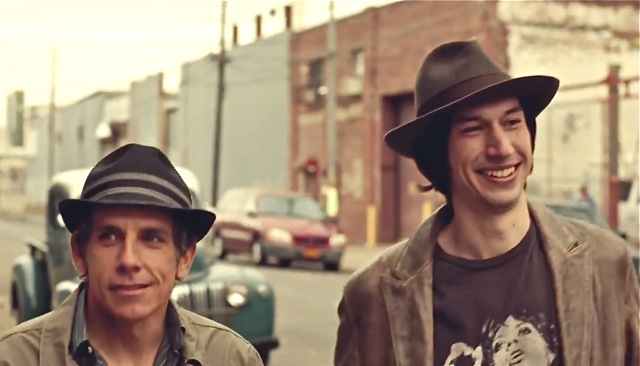
Writer/director Noah Baumbach sets the stage for a contemporary story with the parallel of Solness in his main character Josh Shrebnik, 44, aptly played by Ben Stiller. Josh is a documentary filmmaker who may have passed the peak of his career, his latest project dragging on for ten years without new grant money coming in. In the continued education class where he teaches documentary filmmaking, he meets a hipster couple in their 20’s, Jamie (Adam Driver) and Darby (Amanda Seyfried). Jamie expresses great admiration for Josh, feeding him what he needs. Soon, Josh and his wife Cornelia (Naomi Watts) become fast friends with them, and begin to drift away from their peers, new parents Marina (Maria Dizzia) and Fletcher (Adam Horrovitz).

In Frances Ha (2012), Baumbach brought us a positive profile of youth embodied in co-writer and star Greta Gerwig. Gerwig grasped the gist of youth beautifully by portraying an aspiring young dancer in NYC finding her way to a career and to her own true self. In Frances we see a delightful image of the young. Here in While We’re Young, Baumbach presents another view on youth. He does it by juxtaposing hipsters with the middle-aged, leading the audience through a revealing and interesting story. While the brunt of the laughs falls on the older pair Josh and Cornelia, the ultimate revealing is on the younger generation.

While We're Young

What makes the movie rich and intriguing is that what looks like a simple, single storyline embeds multi-layered thematic materials. On the surface, Baumbach lets us laugh at Josh and Cornelia, forty-something, childless, needing to come to terms with aging but not until one last attempt at rejuvenation. Hanging out with Jamie and Darby makes them feel young again. Josh dons a fedora hat, wears hipster shoes, rides a bike to keep up with Jamie. Cornelia goes with Darby to a hip hop dance class, and stressed herself out with the moves. For more flavour, both try the new experience of detoxing through a vomit inducing potion in a shaman party. Watts sure can keep up in her comedic act with Stiller, just right in juggling between depth of emotions and light-hearted fun. After St. Vincent, where she plays a small, funny role alongside Bill Murray, Watts has proven once again that she can wear the comic hat suitably.

On another level, we see Baumbach contrasting the ironic lifestyle choices in a sequence of fast cuts. We see the middle-aged couple using iPhone to Google once something comes up, while Jamie and Darby just try to remember and recall the info. Googling is too easy; they don’t want instant answers. If they can’t recall, they’re contented with not knowing. I can’t get enough of these subtly planted Baumbach jokes. As Josh listens to CD’s on his laptop, Jamie enjoys his wall to wall collection of vinyl records, played on a turntable. Jamie makes his own table, Darby makes ice cream from scratch. They ride a bike to get around. Their hipster lifestyle totally grabs Josh as genuine and cool; impressing him even more is their generous and open demeanour. A budding documentary filmmaker, Jamie invites Josh to co-direct his film. Josh is totally sold.

Ben Stiller is a natural when it comes to playing a clueless, de-valued character like this one. In Greenberg (2010), his previous collaboration with Baumbach, he plays a similar role, middle-aged and lost in the flow of life, also touched and changed by a youthful character (Greta Gerwig). It’s easy for us to laugh at Stiller, a greying forty-four-year-old hipster-wanna-be trying hands-free cycling following Jamie but only for a short two seconds before he twisted his back. The back will soon heal, but it’s “Arthritis” on the knees that the doctor is more concerned about. The joke there in the doctor’s office is just too good for me to include here. And, when did he last have his eyes checked?

As the story develops however, we begin to see Josh having second thoughts. Maybe Jamie’s work isn’t as authentic and spontaneous as it looks. Adam Driver is perfect in projecting a fused expression of innocence and mischief. His calculated moves startle Josh. Herein lies a crucial, contentious thematic element. There’s a fundamental breach of integrity. Is Jamie ignorant about ethics or is he simply amoral? Isn’t a documentary supposed to present truths? To what extent can it be staged or its ‘facts’ twisted? Nil, according to old-schooled Josh; such methods are fraudulent, crossing ethical boundaries, inexcusable. To Jamie, it’s no big deal, “it doesn’t matter that it’s fake.” To us the viewers, this third act is the juice in the meat. Josh’s indignation is justified.

But then, Baumbach pulls back, as if being too harsh on young Jamie. As I think about the notion of authenticity in the movie, I realize it comes in different forms, not only in documentary filmmaking, but with the actual life these characters are living. A love for retro and owning a collection of vinyl records don’t mean Jamie has real experience living in the 60’s. Or for Josh, imitating hipster fashion doesn’t make him young, as his friend Fletcher says: “You’re just an old man with a hat.” Taking an example from a recent real-life happening: when we see a veteran news anchor faking accounts to add glamour and self-importance to his reporting we know age is not the dividing line for authenticity. So maybe Baumbach has a point there by cutting Jamie some slack at the end. In the last scene, Josh, wiser now, utters: “He’s not evil; he’s just young.”

Let’s hope authenticity won’t become a dismissible fashion trend like a hat.

~ ~ ~ 1/2 Ripples

***

Other Ripple Reviews you may like to read:

The Secret Life of Walter Mitty (2013)

Force Majeure (2014)

The Grand Budapest Hotel (2014)

Inside Llewyn Davis (2014)

The Second, Best Exotic Marigold Hotel (2015)

The comma is not a typo. If you pause there before you say the rest, you’re clear in announcing the sequel, and not ‘The Second Best…’ for it’s not.

I’d say, it’s a little better maybe, funnier and more lively than the first. I can hear some protests. But in my case, kudos to the Bollywood dancers entertaining us before the movie began – two pairs of youthful and energetic Indian dancers giving us a taste of Bollywood – we were all warmed up and ready to embrace the show.

banner-the-second-best-exotic-marigold-hotel-film
Who will speak up against Ageism in the movie industry? What better spokespersons than the stars themselves? Let their charisma and performance speak.

The Second Best Exotic Marigold Hotel is all about checking into new beginnings. In the last chapter, life can be beautiful and fulfilling, and one is never too late to enjoy it, even if they are merely ephemeral, fleeting moments. With the latent energy of the Marigold residents, they intend to make those precious moments last for the rest of their lives.

Director John Madden, who helmed Shakespeare in Love (1998) and saw it go on to win seven Oscars, brings us the sequel to his unexpected box office success of the first Marigold Hotel. This is no Shakespeare In Love, of course, but from the digital ink of screenwriter Ol Parker, we have some fine dialogues despite a lack of substantial plot lines; from the mouths of the seasoned and weathered come some refreshing viewpoints.

Even if you’re not starstruck, you have to tip your hat to this cast of talents, veteran actors whose average age works out to be 70; yes, I looked them up and did the math. Two-time Oscar winner Maggie Smith, Judi Dench (also Oscar winner and exactly 19 days older than Maggie in real life, as she said in the movie), Bill Nighy, Penelope Wilton, Ronald Pickup, Celia Imrie, Diana Hardcastle, and this time around, the newly-aged and still handsome Richard Gere, with David Strathairn also playing a small role.

The young proprietor of the retirement hotel in Jaipur, India, Sonny Kapoor, is eagerly planning for an expansion of his business venture, a second Marigold Hotel. Performed with much animation by Dev Patel of Slumdog Millionaire fame, Sonny is basically the foil, not just in his youthfulness and agile Bollywood dance skills, but in his overacting. My query: why is his Indian accent thicker than his mother’s (Lillete Dubey)? Nevertheless, watching the threesome, the soon-to-be-married Sonny and Sunaina (Tina Desai) plus the odd addition of Kushal (Shazad Latif), is energizing and mood altering. In the last act, having the Marigold residents join in the Bollywood dance at the wedding party is a treat, an acquired taste for some viewers I admit.

Under the direction of DP Ben Smithard, we see some colourful street scenes and beautiful sights. Following the constant panning camera between pillars and doorways, we become silent observers of the lives of these Marigold residents.

Throughout the movie, I’ve jotted down a few fine lines which, if spoken by the inexperienced, could well become platitudes. But here delivered by these professionals of film and stage, the one-liners are spot-on and memorable. Everyone has a story and there are a few notable dialogues, like this between the eldest pair swept by clashing undercurrents:

Muriel (Maggie Smith): You’re just nineteen days older than I am.
Evelyn (Judi Dench): Nineteen days is the life span of a wasp.

Exactly, time is relative. Fact is, time is what these Marigold residents don’t have. That’s what makes each of their story so pressing. At 79, Evelyn is faced with the choice of accepting or declining a new career as well as a genuine but shy suitor, Douglas (Bill Nighy). Her feeling in a nutshell:

“Sometimes it seems the difference between what we want and what we fear is the width of an eyelash.”

Good that she realizes just in time, and it’s clever how she conveys her message to Douglas at Sonny’s wedding. So, her new insight after much pondering:

“I thought, how many new lives can we have? Then I thought, as many as we like.”

And for Norman (Ronald Pickup) and Carol (Diana Hardcastle), it’s never too late to change as we see love turn them from promiscuity to monogamy. Well, even a faint attempt is encouraging.

As for Madge (Celia Imrie), she finally decides which direction she should take, left, right, or straight ahead, probably for the first time in her life.

Who can laugh at the old but themselves? Here when Jean (Penelope Wilton) suddenly reappears at the Marigold, I can associate her role as the sharp-tongued Isobel Crawley in Downton Abbey:

“I couldn’t resist the opportunity to come out and visit the old ruins, and see how the hotel was doing too.”

As a self-appointed tour guide in Jaipur, Douglas knows it’s never too old to step out into uncharted territory. Some good laughs there with his little helper in the background feeding him info or he’ll be just as lost as his tourist clients. As well, he is experiencing love like an insecure young chap. This is my favourite line, not only for the words but the way Nighy says them can make your heart ache:

“The great and terrible thing about life is there’s just so much bloody potential.” The subtext is brilliantly conveyed by his obvious frustration and agitated demeanour.

Ah… “There is no present like the time” [sic, exactly]

Time is a gift and a torment when you’re only given a limited portion under the low-hanging clouds of mortality. Here’s the poignant scene at the end. It belongs to Muriel (Maggie Smith), could well be foreshadowing what we will see in Season 6 of Downton Abbey. Her voiceover is full of pathos:

“There is no such thing as an ending; just a place where you leave the story.”

Of course there are flaws in the movie. But just like wrinkles, you’ve come to overlook them while admiring the person. Call it an escape or a two-hour vacation, The Second, Best Exotic Hotel offers a fun and gratifying ride.

 ~ ~ ~ Ripples

*** 

Related Posts on Ripple Effects:

The Best Exotic Marigold Hotel (2012)

The Lunchbox (2013): A Meal that Binds

Downton Abbey Season 5 Finale

Slumdog Millionaire (2008)

87th Academy Awards Winners (2015)

Inconsistencies marked the awards show last night. The opening number was so fascinating that it had set a standard and expectation that could not be met for the rest of the evening, from Neil Patrick Harris’s jokes to the incredulous performance by Lady Gaga singing a medley from The Sound of Music. Was that just to open for Julie Andrew to come out to present the Best Original Score? As for NPH’s Birdman imitation game, the naked escapade was a little too desperate an attempt to shock. But his guessing game was mind boggling I must admit.

There were notable high points though, most memorable being the performance of the Oscar winning song ‘Glory’ by John Legend, Common, and a massive group of backup singers re-enacting a Selma scene. Tears rolled down the face of David Oyelowo’s who played Martin Luther King Jr. in the movie, and Chris Pine’s, who played… uh… Captain Kirk.

Speeches were heartfelt and imbued with family value. J. K. Simmons had set it off with a passionate plea for all to thank their parents, mothers, spouse, and children. Patricia Arquette brought the house down with her cry for equal work, equal pay for the females in the movie industry. Is she now considered a whistleblower? Meryl Streep and Jennifer Lopez almost jumped out of their seats with approval. Ironic to think that some of those applauding were the gatekeepers of the system.

Major winner was Birdman, grabbing all the most coveted prizes, albeit a let down for Michael Keaton. The Grand Budapest Hotel tied with Birdman in the number of Oscars won, the exact categories predicted in my review written in April last year. Just sayin’.

Boyhood only got one nod, a gem of a film that is the epitome of innovation, perseverance, and risk-taking. The fact that it has travelled so far all the way to Oscar night, thirteen years by now, is already an admirable success for the filmmakers and all involved, albeit I’d like to see them win a few more, especially for director Richard Linklater.

Excited to see Ida honoured as the Best Foreign Language Film of the year, and to hear director Pawel Pawlikowski’s take on the occasion: Ida was intended to be a quiet film of contemplation about withdrawing from the world, “and here we are at the epicenter of noise and attention. It’s fantastic. Life is full of surprises.”

CitizenFour won Best Documentary, deservedly. Director Laura Poitras had done an extraordinary job capturing (no pun intended; better than NPH’s ‘treason’) Edward Snowdon’s initial coming out with all the classified materials, filming his meeting with journalist Glenn Greenwald in a Hong Kong hotel room. Considering how the events unfolded later, these footage are now invaluable. The film is on my Top Ripples 2014 list.

Here are the major Oscar 2015 winners:

Birdman (4) – Best Picture, Directing, Original Screenplay, Cinematography.

The Grand Budapest Hotel (4) – Best Makeup, Costume Design, Production Design, Original Score.

Whiplash (3) – Best Supporting Actor J. K. Simmons, Film Editing, Sound Mixing

Boyhood (1) –  Best Supporting Actress Patricia Arquette.

The Imitation Game (1) – Best Adapted Screenplay

The Theory of Everything (1) – Best Actor Eddie Redmayne

Still Alice (1) – Best Actress Julianne Moore

American Snipper (1) – Best Sound Editing

Selma (1) – Best Original Song ‘Glory’

Ida – Best Foreign Language Film

CitizenFour – Best Documentary

Interstellar – Visual Effects

For a complete list, CLICK HERE.

***

Click on the links to my reviews of Oscar Movies:

The Budapest Hotel: A Grand Escape

Whiplash: What Price Perfection?

Boyhood: The Moment Seizes Us

Ida’s Choice

Interstellar and Ida: The Sound and Silence of Exploration

Leviathan: The Beast Within Us


Leviathan: The Beast Within Us

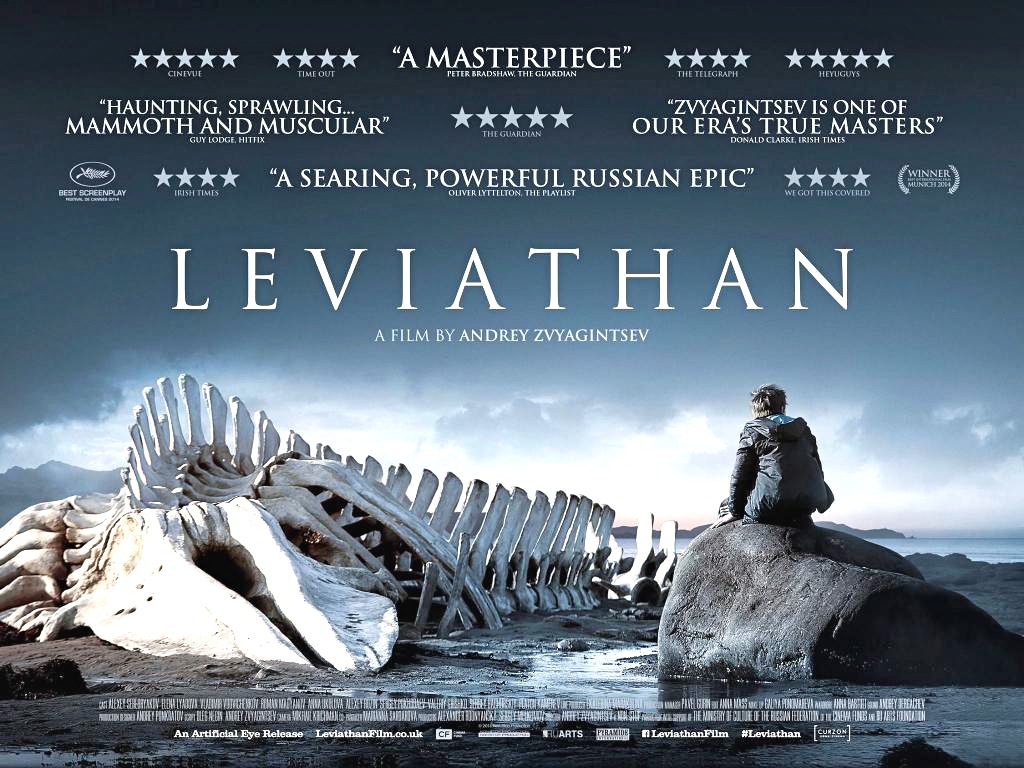
The Chinese have a saying – while we’re at foreign language films – ‘A tyrannical government is more ferocious than the tiger’. That Leviathan is selected as the official entry from Russia to the Oscar race baffles me. But I can also see those in power there just may not be bothered by small town corruptions which the film depicts, for they must be more focused on the larger picture that carries greater magnitude, the scenery in Crimea.

Leviathan, that monstrous beast the priest in the film quotes to the main character Kolya is from the book of Job in the Bible. While the context in the Biblical passage is about the Creator’s might over the huge creature, it is a metaphor with layered meaning in writer/director Andrey Zvyagintsev’s film: A citizen against a powerful mayor vying for his home property, and the monstrous beast inside the characters with which they all have to wrestle.

Leviathan Movie Poster

Kolya (Aleksey Serebryakov) is an apt parallel of a modern day Job in the sense of the misfortunes he encounters. The little guy is no match for a greedy and powerful mayor and a corrupt system when it comes to holding on to what he legally owns, his home on a piece of  land by the shoreline in the coastal town of Pribrezhny. Even his lawyer friend Dimitry (Vladimir Vdovichenkov), who has come all the way from Moscow to advocate for him, falls victim to the small town mayor Vadim (Roman Madyanov).

The seemingly idyllic setting of Kolya’s coastal home is apparently an illusion. The cinematography is stunning and probing at the same time, for apart from the scenic serenity, there are also broken and derelict boats discarded on the shore, as well as carcasses of sea creatures, in particular, a whale-like skeleton that we the audience would gasp upon seeing but that the local residents don’t even take a second look. Their lives are intertwined with the Leviathan, however skeletal its remains.

But Kolya is not Job. He is hotheaded and impulsive. Apart from fighting the external beast of the mayoral hostile take-over of his home property, Kolya has to keep his wife Lilya (Elena Lyadova) at bay from his lawyer friend Dimitry, as well as bring up teenaged son Roman (Sergey Pokhodaev) on a path he himself is at a loss in finding. The worst is yet to come though. We empathize with Kolya, a man so trapped, he is unable to find a way out other than drowning his misery in alcohol. The church is not helping either, why, its most powerful congregation member is the mayor himself.

Too far and remote a film to identify? The setting maybe, but not the story. Leviathan resonates with the human condition it depicts, the Leviathans within us that we have to wrestle wherever we may be. Not just Kolya, but every character is crying for a redemptive way out of his or her predicament, unless blind as the mayor who basks in his own schemes. With the nuanced performance of the cast, we have the pleasure to appreciate a production superbly crafted, and that’s what gratifies when watching a film well made, despite the subject matter.

Leviathan has won 2014 Cannes Film Festival’s Best Screenplay Award, and last month the Golden Globe’s Best Foreign Language Film. This Sunday at the Oscars, Leviathan has a good chance of grabbing the coveted prize in its category, Best Foreign Language Film of the Year.

My pick? Still rooting for Ida, for its positive choice at the end.

~ ~ ~ 1/2 Ripples

***

My Reviews of 2015 Oscar Nominated Films:

Ida

Boyhood

The Grand Budapest Hotel

Whiplash

Gone Girl 

Interstellar and Ida

Paddington: The Marmalade to Spread on Your Day

What can a little bear from ‘Darkest Peru’ do to ease one’s tension, uplift a depressed mood, or simply elicit laughs out loud? Plenty. Paddington can do plenty of good for all of the above. I’d chosen the right film to come out of a stressful month.

Clever, fast-paced, passionate, and very funny, Paddington the movie is 95 minutes of pure delight. Although Michael Bond’s stories first came out in 1958, director and screenwriter Paul King has brought out some relevant, contemporary issues in his adaptation such as migrating to a new land, finding a home, striving to belong, accepting diversity, and basically the universal search for ways we can all live together despite differences.

Paddington

The movie begins with a black-and-white old news reel. I like that already. An English explorer, Montgomery Clyde (Time Downie), heads over to ‘Darkest Peru’ and discovers a talking bear family. As he leaves, he urges them to visit London. After an earthquake that killed his Uncle Pastuzo (Michael Gambon, voice), the little bear (charmingly voiced by Ben Whishaw) is sent out by Aunt Lucy (voice of Imelda Staunton) to head for a new life in this believed-to-be-friendly London. To send him off, Aunt Lucy hangs a little sign with a string around his neck that says: “Please look after this bear. Thank you.”

And so the little stowaway with a suitcase full of marmalade hides on board a cargo ship and is transported to a foreign land where the Brown family finds him at Paddington Station. Thus his new name.

Despite the chaos that ensues in the Brown household, and the initial reluctance of Mr. Brown (Hugh Bonneville, who is like a Papa bear himself), and daughter Judy (Madeleine Harris, “So embarrassing!”), Paddington’s inept charm readily wins the heart of the enthusiastic Mrs. Brown (the always enthusiastic Sally Hawkins) and very friendly young son Jonathan (Samuel Joslin). Later, Paddington finally gains even the public’s favour with his serendipitous heroism on the streets of London.

Here is no place to argue against stock characters. Of course we need a villain; we have the parallel of Cruella De Vil of 101 Dalmatians in the form of Millicent, played by Nicole Kidman. I’m sure she enjoys doing that too. Driving a van that says Taxi when the sliding door is opened, she soon reveals herself a taxidermist when the door is closed. Good to see stars letting loose in non-typecast roles. Julie Walters and Jim Broadbent also present for you to discover. And if you know what the Paddington Bear author Michael Bond looks like, you can find him in cameo too.

Very well integrated are the effects of real-life, human actors interfacing with the animated bear and other cartoonish scenarios. Do we need to know how the technical genius behind the screen worked, how they used around 600 shots with bears, which required 350 people across two countries working on the visual effects for three years… to enjoy the film? Definitely not, maybe best we don’t go into the complexities of CGI’s, simulations, and yes, how to deal with fur. The final results are all what the technical team had striven for, delivering what they would like us to see. I can fully appreciate the effects. Kudos to them all.

It is definitely a snub Paddington doesn’t get an Oscar nomination, in any category. While in the land of its origin (England, not Peru), Paddington is nominated for two 2015 BAFTA Awards (The ‘British Oscars’): Best Adapted Screenplay and Best British Film. So I do hope the box office here can redeem the slight on this side of the Atlantic. Go see how the little bear and his new-found family can dispel your winter blues. Noms or no noms, this is a winner in my book.

As for that sign Aunt Lucy hangs around Paddington’s neck, we may need to heed it even more in this conflict-ridden world of ours:

“Please look after this bear. Thank you.”

~ ~ ~ 1/2 Ripples

***

Click on the link to the fascinating article in The Telegraph, Paddington: The technology behind the small bear from Darkest Peru.


2015 Books to Movies

First off, I’m excited that two movies I reviewed months ago last year and which I’d given top ripples both won the Golden Globe Best Motion Picture Award last night: The Grand Budapest Hotel (Musical or Comedy) and Boyhood (Drama). The Golden Globe Awards marks the new year with excitement and glamour, an apt recognition of fine films made in the previous year, as we eagerly await the ultimate, the Academy Awards. That will be a final wrap for 2014 movies. So what is in-store for us in 2015? For those familiar with Ripple Effects, one of my focus is on books being turned into movies. The Books Into Films posts are some of the most popular on this blog. I’m particularly interested in the adaptation process, how one art form is transposed into another medium. What works, what doesn’t? And above all, how to appreciate each on its own terms. Here is my first list of books to read (or reread) before you go and watch the movie, all scheduled to be released in 2015, some with known dates, some more tentative. A second list will appear in the online review magazine Shiny New Books come January 29.

 ***

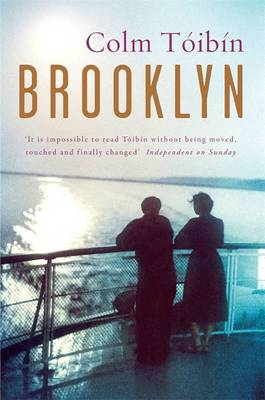
Americanah by Chimamanda Ngozi Adichie americanah The acclaimed novel by the award-winning author of Half of the Yellow Sun, Americanah tells a story that crosses three continents in the countries of Nigeria, US, and England, linking two lovers through the expanse of time and space, and exploring the evermore relevant issues of race, identity, drifting and belonging. Adichie’s novel is the winner of the 2013 National Book Critics Circle Award for Fiction among other accolades. It is now adapted into film starring Lupita Nyong’o, on the heels of her 2013 Oscar win as Patsey in 12 Years A Slave, and David Oyelowo, 2015 Golden Globe nominee for his role as Martin Luther King Jr. in Selma.   Brooklyn by Colm Tóibín Brooklyn_Colm_Toibin Once again the story of migrating and shifting ground, this time from Dublin to Brooklyn. Colm Tóibín’s 2009 Costa Novel Award winner and longlisted novel on the Booker Prize that year tells the story of Ellis Lacey moving to America from Ireland in the 1950’s, as many did, for new life and opportunities. But her story did not end there. The movie adaptation will premiere at Sundance Film Festival January 26, 2015. Saoirse Ronan plays Ellis. She has come a long way in her career with her first breakout role as young Briony in Ian McEwan’s Atonement. Cast includes Domhnall Gleeson, Jim Broadbent and Julie Walters.   Far from the Madding Crowd by Thomas Hardy far-from-the-madding-crowd A highly anticipated film adaptation of Hardy’s classic. That Carey Mulligan is playing Bethsheba Everdene increases my curiosity even more, especially as I hear her sing the folksy tune in the movie trailer. Those who hold onto the Julie Christie’s 1967 portrayal as the definitive version should see this for comparison. Screenplay by David Nicholls, who is no stranger to classics on screen, having previously adapted Tess of the D’urbervilles (TV, 2008), and more recently Great Expectations (2012). What makes this newest Hardy adaptation sound promising is its Danish director Thomas Vinterberg, whose film The Hunt was nominated for a 2014 Best Foreign Language Film Oscar. Matthias Schoenaerts plays Gabriel Oak. Note the name, he will appear in another book to film production.   In The Heart of the Sea by Nathaniel Philbrick in-the-heart-of-the-sea-book-cover The book records the true story of the tragic loss of the American whaleship The Essex from Nantucket when it was capsized by a sperm whale in the Pacific Ocean in November 1820. A real life Moby Dick, In The Heart of the Sea was the winner of the 2000 National Book Award for Nonfiction. The crews were stranded at sea for months. The book chronicles the tragedy and the horrific experience by a few survivors. Oscar winning director Ron Howard (A Beautiful Mind, 2001) cast the star of his acclaimed production Rush (2013), Chris Hemsworth, in this adaptation. Also notable is Ben Whishaw playing Herman Melville. A versatile actor, Whishaw had played the poet John Keats, the new Q in James Bond, and is now the voice of Paddington Bear, replacing Colin Firth.   Kingsman: The Secret Service by Dave Gibbons and Mark Millar secret-service-kingsman So what’s Colin Firth been busy doing? One of his new movies coming out in 2015 is the adaptation of a comic book, The Secret Service, created by Dave Gibbons and Mark Millar, definitely not something Firth or his fans could have expected when Mr. Darcy dove into that pond at Pemberley. A comic book? You gasp. That’s right, a totally legit read nowadays, when you have the graphic novel of Proust’s In Search of Lost Time on the same shelf in the library. Firth plays Harry Hart training up a young recruit for the Secret Service, with Taron Egerton, Mark Strong, Michael Caine, Samuel L. Jackson, directed by Matthew Vaughn who had all warmed up with Kick-Ass and X-Men. From the trailer, it sure looks like a visual delight, action-filled, slick and clever. The Secret In Their Eyes by Eduardo Sacheri The Secret in Their Eyes This originally Argentine crime thriller was first adapted into a Spanish movie that won the Best Foreign Language Film Oscar in 2010. As soon as I finished watching the film, I downloaded the music soundtrack; it was deeply moving. This is no ordinary crime thriller, but a poignant, psychological exploration of human experience and memories. The new English version of the film has an appealing cast starring Chiwetel Ejiofor (nominated for an Oscar for his role in 12 Years A Slave), Julia Roberts and Nicole Kidman, helmed by Hunger Games and Captain Phillips director Billy Ray. Ray also wrote the screenplay. I highly anticipate this English version, albeit I admit the original language version is usually the more affective and authentic rendition. Silence by Shûsaku Endô Silence  Shûsaku Endô’s historical fiction (1966) on the plight of the Catholic Jesuit missionaries to Japan in the 17th Century is a deep and disturbing novel. It touches on multiple levels of the human spirit and psyche, issues that are not easily labelled by the term ‘religion’, dealing with the problem of faith in a God that appears to be silent in the midst of suffering and persecutions of His followers. In a culture that is xenophobic at the time, Endô, a Catholic himself, confronts the issue of doubt and the power of evil head-on. The book reads like a page turner, and I expect the film adaptation to be cinematically gratifying in the hands of an auteur of the Catholic tradition, Martin Scorsese. The new edition of the book includes Scorsese’s preface. The film is shot in Taiwan instead of Japan, with a perfect cast: Liam Neeson, Andrew Garfield and Adam Driver, screenplay by Jay Cock, screenwriter of The Age of Innocence.

***

More to come… On January 29, go to Shiny New Books the online review magazine for my second list of 2015 Books into Films.

Force Majeure (2014): Act of God or Act of Human

As I’m writing, this just popped up: Force Majerure (Sweden) is now one of nine films shortlisted for the Oscars Foreign Language Film category, advanced from the initial round with features from eighty-three countries. Soon, this list will be further shortened to make up the five nominees for the 87th Academy Awards. Nominations will be announced at 5:00 a.m. PT, January 15, 2015.

Force Majeure

I watched Force Majeure at TIFF in September, a second time again this week as it comes to our local theatre. Please note, it is impossible to discuss this film in an intelligent manner without mentioning the storyline. Therefore, consider yourself warned. Spoiler Alert. But let me assure you, this won’t lessen your enjoyment of the movie; rather, it could prepare you for a more purposeful viewing.

‘Force majeure’ in translation means ‘an overwhelming and irresistible force’. Director Ruben Östlund tells his visual story based on this notion. A young family goes on a week of skiing holiday in the French Alps, a much needed family time as the husband has been busy at work. What is intended to be a fun family vacation is turned into something totally unthought of, making this one of the most original film ideas I’ve come across in years.

The slick and stylish camerawork begins with a close-knit family. Mom and Dad Ebba (Lisa Loven Kongsli) and Tomas (Johannes Kuhnke) look like a well-matched couple; their pair of school-aged children Vera (Clara Wettergren) and Harry (Vincent Wettergren) are smart and charming. All four of them sleep together on one King-sized bed in the resort hotel, wear the same style of underwear, brush their teeth in one accord, do everything together, until one split-second their view of each other is shaken to the core.

Family photo

The ski resort conducts controlled avalanches to maintain the ski slopes. At lunch on the second day, the family sits at a table in the outside terrace, taking in the spectacular scenery. Suddenly a controlled avalanche is launched. At first, everyone is curious and excited, marvelling at the sight. But soon the avalanche appears too close for comfort. Panic begins to send people scattering away from their tables.

Ebba grabs her children, but with two of them, she looks for Tomas to help. Tomas in the mean time is nowhere to be found, for he is the first one to run away from their table. Sounds hilarious? The scenario can be quite comical actually, but that only sets the stage for a critical look at a marriage relationship, and with that, the duties, roles, and expectations of a husband and a father.

Director Östlund aptly presents to us a situation worthy of discussion. What deserves praise is the way he does it: with deadpan humour, slick editing, stylish cinematography and clever dialogues. The music motif captures the mood perfectly with excerpt from Vivaldi’s Four Season, where the intensifying summer storm brewing, and soon wreaks havoc on what could have been a perfect family holiday.

As Ebba relays the embarrassing episode to friends Mats and Fanny, superbly played by supporting actors Kristofer Hivju and Fanni Metelius, the scenario soon divides the two couples along gender lines, and divergent and conflicting views regarding male and female roles and dispositions ensue. Suppressed chuckles in the theatre could well be the intended effects by the director, but I couldn’t help but LOL at certain shots.

Tomas’s earlier denial is later dissolved into concession as he declares himself ‘a victim of his own instincts’. What an intriguing claim. Are we autonomous agents fully responsible for our own actions, or victims of our personality? I first thought the term Force Majuere refers to the avalanche, but as the story unfolds, I begin to see it as the force within, our innate nature, as Tomas puts it, the impulse that drives him to act a certain way. The term ‘controlled avalanche’ is perhaps the most intriguing oxymoron inferring to the nature of our behaviour.

The final act may look a little incompatible with the rest of the film. However, I feel it is a sensitive and nuanced depiction of this thing we can call ‘humanness.’ What’s joining us all is our frailty. A quote from another movie suddenly comes to mind: “The things that people in love do to each other they remember, and if they stay together it’s not because they forget, it’s because they forgive.”

An interesting scenario presented in a visually captivating and delightful cinematic offering. I hope Force Majeure will make it to the final cut in the Oscar race. And, my instinct tells me it just might.

~ ~ ~ 1/2 Ripples

***

Other Related Posts on Ripple Effects:

Ida’s Choice: Thoughts on Pawlikowski’s Ida

Tuffing it out at TIFF14

Top Ripples 2014