Two Fine French Films

For this week in the blogging events Paris in July 2014 and Dreaming of France, I’m sharing with you two fine, French Films. They are not new movies, but probably you had missed them when they first screened a few years ago, or they might not have screened in your area. I came across them only recently. Interestingly, they make a fine pair for they both touch on very similar themes.

My Afternoons with Margueritte (“La tête en friche”, 2010)

This comedy based on the book by French author Marie-Sabine Roger stars the famous French actor Gérard Depardieu as an uncouth, middle-aged construction worker, Germain Chazes. His lack of literacy skill is benign when compared to the low self-image he suffers as a result of the constant taunting from his teachers and classmates when he was young, and the life-long scolding from a harsh and overbearing mother (Claire Maurier). To his misfortune, Germain still has to live near her and take care of her, a woman now has senility to add to her abusive outbursts.

Germain’s life comes to a turning point when he meets Margueritte (Gisèle Casadesus, who just turned 100 in June this year!) one afternoon on a park bench. Margueritte is an elderly lady living in a retirement home, and spends her afternoons in the park. She soon engages Germain to open up. Thus begins an unlikely friendship between the two.

My Afternoons with Margueritte

More importantly, Margueritte leads Germain to a whole new world of books and literature. She reads to him The Plague by Albert Camus, going through it in ten afternoons. He listens and is totally entranced by the language and the imagery.

When she reads to him Promise At Dawn, the memoir by Romain Gary, he is absorbed by the author’s description of his late mother’s love for him, and especially moved by the imagery of Gary “howling at her grave like an abandoned dog.” He begins to see his own predicament with the lens from the books Margueritte reads to him.

Who says literature belongs to the academics, or those in the ivory tower of the intellectual and sophisticated. Why is it so incongruent to hear a construction worker quoting Camus, or his seeing the world in literary imageries, or being tender and caring for a change. Germain’s friends tease him, they want the old Germain back. But Germain knows too well that he has crossed the point of no return, and that his transformation is empowering.

Soon, with the help of his girl friend Annette (Sophie Guillemin), Germain learns to read on his own. Further, he has learned to give back to Margueritte in an endearing way. As far as the story trajectory goes, Germain could well write a book entitled How Camus Can Change Your Life (that’s mine, not in the film).

Charming performances and great screen chemistry between Depardieu and Casadesus. A heart-warming story with sprinkles of humour for added appeal. A delightful and worthwhile film to watch.

~ ~ ~ Ripples


Queen to Play (“Joueuse”, 2009)

Along the same thematic line is this quiet and stylish production set in the beautiful French island Corsica just off the mainland. From Depardieu’s construction worker we now have a middle-aged chambermaid, Hélène (Sandrine Bonnaire), who works in a seaside hotel. Hélène goes through an inner transformation even more dramatic than Germain’s. It is interesting to watch the game where the Queen is the most powerful piece is freed from its male dominance for a change.

Originally titled “Joueuse” (The Player), the film is based on the novel by French author Bertina Henrichs. Director Caroline Bottaro has  displayed an inviting game board for us viewers to interact with, for watching the film makes us witnesses to a game change.

Sandrine Bonnaire’s portrayal of Hélène is sensitive and nuanced. The turning point of her life comes one day while cleaning a room. Through the translucent curtain swayed by the soft wind, she sees the hotel guests, a couple (Jennifer Beals, Dominic Gould), playing chess out in the balcony. She is fully mesmerized. The game board, the pieces they touch, their mutual affection bonded by the game not only send out vibes of sensuality but of intellectual stimulation. (She beats him, BTW) From then on, Hélène is obsessed with chess.

She gives her husband Ange (Francis Renaud) an electronic chess set for his birthday. While he is unappreciative of the gift, many a nights Hélène would slip out of bed quietly and learn to play on her own. She now sees every piece of crumb, every salt and pepper set on the table a movable chess piece, any checkered surface a chessboard on which she can prance to her imagery delight.

Queen to play

Other than her hotel job, Hélène does cleaning for a mysterious widower, Dr. Kröger, played by Kevin Kline, his first French-speaking role. Hélène finds a chess set on his bookshelf and asks him to teach her the game. Skeptical and annoyed at first, Dr. Kröger agrees when she offers to clean his place for free in exchange for chess lessons. He soon discovers that Hélène is not only serious but gifted. After a few lessons, she begins to win repeatedly.

But Hélène keeps her pursuit secret, afraid of reverberations, and misunderstanding from her husband. Why does she need to be so sneaky? Can’t a woman desire matters of the mind? Can’t a chambermaid be absorbed by the game of chess, set foot on a male-dominated, intellectual territory? Would Hollywood make a movie like this?

Hélène’s teenaged daughter is her supporter at home when her husband finds out. He too later yields to her passion as Hélène enters her first tournament upon Dr. Kröger’s recommendation.

Oh I love these French films, for they unabashedly praise the arts, literature, and intellectual pursuits; their protagonists quietly shattering social norms and barriers to personal fulfillment. Queen to Play reminds me of Muriel Barbery’s novel The Elegance of the Hedgehog.

Do you need to know how to play chess to enjoy the film? No. Actually, the camera seldom focuses on the chessboard. Instead, we see the faces of the chess players, that is where we read all the emotions.

Intriguing as chess moves, beautiful as the crafted pieces, the film is a joy to watch, a satisfying winner.

~ ~ ~ 1/2 Ripples

Paris In July 2014Dreaming of France Meme Eiffel***

Related Posts on Ripple Effects:

The Elegance of the Hedgehog Book Review

Séraphine and the Wrought-Iron Chair: Review of the film Séraphine

Haute Cuisine Movie Review

Haute Cuisine Movie Review

My first entry for the Paris In July 2014 blogging event is a review of the 2012 French film Haute Cuisine (original name Les Saveurs du Palais, which can be translated as ‘The Taste of the Palace’ or ‘The Taste of the Palate’)


***

Haute Cuisine Movie Poster


The film begins with scenes on the remote Crozet Island in Antarctica, at the Alfred Faure Scientific Base. The cook, Hortense Laborie (Catherine Frot), is preparing dinner for the dozens of workers there. It’s a special occasion, her own farewell dinner. This is the menu she has prepared:

  • Thai clear soup with fresh foie gras
  • Sweet and sour duck with Sarlat potatoes
  • Saint-Honoré cake

Not your ordinary cafeteria food for workers in Antarctica, but then, Hortense Laborie is no ordinary cook. If her one year gig working on the Crozet island sounds extraordinary, it is yet not as remarkable when compared to her previous job. Hortense was the personal chef of the French president (Jean d’Ormesson) for two years before she quit and sought a change in venue for her talents. Her kitchen used to be in the Élysée Palace in Paris, the official residence of the French President.

Haute Cuisine is a movie based on the real-life story of Danièle Delpeuch, a Périgord farmer and renowned country cook appointed by the Palace Élysée to be the personal chef for French President François Mitterrand in 1988. She was responsible for preparing home-made, simple cooking for the President’s own private meals and his personal guests.

In the movie, as soon as she stepped into the Palace’s Main Kitchen Hortense knows what she is up against: a macho army of 24 all-male chefs who guard their territory like a castle. They serve 70,000 meals in a year, using some of the copper pots and pans dating back to Louis-Phillippe’s days. Hortense does not work right in that kitchen, but that is her source of supplies and ingredients (initially), and the battlefield for territory and sphere of culinary power and influence. The battle begins as soon as she steps on this holy ground.

The Battleground 1

Hortense works in a small, homely kitchen joined by a tunnel with the Main Kitchen. Her helper is a young pastry chef Nicholas Bauvois (Arthur Dupont). The two form an unlikely alliance and share an endearing camaraderie. Frot’s portrayal of Hortense is most amiable. She is not a harsh boss over Nicholas, but she can stand her ground and be assertive in front of the Main Kitchen chefs, and even with the President’s staff. Hortense is an iron fist inside an elegant, velvet glove.

So from the kitchen in Antarctica to Paris, the film goes back and forth to tell the story of Hortense, how she gets the Palace job and why she quits two years later. The shifting between the two time frames are smooth and seamless. With the two drastically different settings juxtaposed against each other, viewers can savour the irony: That the exquisite culinary skills and fine art of Hortense’ cooking are more appreciated by the Crozet Island workers than the Palace Élysée.

A delightful movie not just for foodies, Haute Cuisine is like a layer cake, blending multiple tastes together by tackling various issues of contention… the battle between the sexes in the work place (the kitchen is probably the most volatile), efficiency in meal preparation vs. passion for cooking, and, the dilemma of all food lovers: gratification or health (no sauces, fats, or cheeses? How can that be in French cuisine?)

A well crafted film that moves as efficiently as an experienced server, removing your empty plate as soon as the food is consumed, quietly slips in the next item for you to enjoy without a break. Yes, it’s relatively fast-paced, lean and fat-free with no wastage; to top it all off, the delightful, well-timed and orchestrated music composed by the prolific Gabriel Yared is like the light cream on the Saint-Honoré cake.

The President deeply appreciates Hortense’s home-grown culinary offerings. Her ingredients are locally grown right from the Palace garden,or nearby markets, or from her own farm, yes, truffles too. The tastes remind him of home when he was growing up as a boy. He has found a foodie soul-mate in Hortense. Here’s her first meal for him and his five guests (with two hours’ notice as to the number of guests):

Stuffed Cabbage

  • Brouillade with ceps and chervil
  • Stuffed cabbage with Scottish Salmon and Loire carrots (“I like things to come from somewhere”)
  • Saint-Honoré (her Granny’s recipe)

But I personally like this one the best:

Beef fillet pastry wrapped


  • Cream of asparagus soup with chervil
  • Fillet of beef (pastry wrapped) with Chanterelle Fricassee
  • Cream tart with fruit of the forest and pistachio nougatines

A virtual meal, so delicious and satisfying… and best of all, fat-free.

~ ~ ~ Ripples 


***


Paris In July 2014

This is my first post for the blogging event Paris in July, 2014.

This year the hosting team has expanded to four. From the original creators Karen and Tamara, we now have Adria and Bellezza. Thanks to their time and dedication, we can travel to France on a virtual flight, no need for tickets, no baggages to drag along.

Also discovered another similar blogging event and that’s a Monday Meme Dreaming of France from Paulita’s An Accidental Blog. The more the merrier I’d say.

Dreaming of France Meme Eiffel

 ***

Click Here to the New York Times’s profile of Danièle Delpeuch, the real-life personality on whom the movie is based.

Other Food Related Posts on Ripple Effects, coincidentally, all Paris-related:

Gourmet Rhapsody by Muriel Barbery

The Hundred-Foot Journey by Richard C. Morais (movie adaptation coming out in August, 2014)

***

The Lunchbox (2013): A Meal that Binds

The Lunchbox premiered at Cannes last year. Since then, it had appeared in many other international film festivals, nabbing nominations and wins. I missed it at TIFF last September, so am glad I’ve the chance to watch it in the theatre recently. Here’s my review published in the May 18 issue of Asian American Press, a weekly newspaper based in Minneapolis, MN. That’s right, folks, it’s globalization.

***


The Lunchbox Movie Poster

The lunchbox, dabba, is a stackable unit of four or five round metal cans fastened by straps on the side that flip up to attach to a handle on top. Every day in Mumbai, India, five thousand dabbawallahs, or lunchbox deliverymen, would fetch the dabbas from homes after housewives have filled them with hot food and deliver the tiffin to their husbands in their offices. After lunch, they would return the empty dabbas back to each home.

In Mumbai alone, there are five thousands dabbawallahs, many of them illiterate. For one hundred and twenty years, they carry dozens of dabbas on their bicycles, negotiate the mass of humanity and impossible street traffic and railways to bring office workers a hot meal from home, or from dabba preparation outlets. Harvard University had studied their inexplicable coding and delivery system. Their finding: only one in a million of these dabbas would ever get lost.

dabbawallah

If you think the title is too mundane for a movie, then just focus on that one-in-a million lost lunchbox. It is picked up from a young housewife, Ila (Nimrat Kaur), and delivered to the wrong recipient, Saajan Fernandes (Irrfan Khan, Life of Pi, 2012), a retiring office worker who has been on the job for thirty-five years. Thus begins the exchange of short notes then letters placed inside these tiffin cans, two strangers who are socially worlds apart, but joined together by a savory meal.

The veteran actor Irrfan Khan won Best Actor at the 8th Asian Film Awards in March this year for his role in The Lunchbox, adding to his several other wins for the film. His subtle and nuanced performance requires no dialogues. Indeed, both Saajan and Ila have not shared a frame together in the movie. I would not so much call this a romantic comedy as their relationship is purely platonic. The romance could well be the ideals and dreams they stir up in each other’s mind through the exchange of written notes. If there is anything comedic it comes as finding a listening ear, a slight relief from the mundane and inescapable in life.

It is interesting to watch how writer/director Ritesh Batra reveals to us the dabba as a metaphor. Like the stackable cans, the story is multi-layered. It touches on marriage, human connections, memories, and dreams. From the mass of humanity, we focus on two individuals striving to find meaning in their daily existence. Like the fastener that strap tight the cans of the dabba, Ila is caught in a loveless marriage with her husband Rajeev (Nakul Vaid), and the aging Saajan is bound by memories of his late wife.

Ila prepares lunch

The film begins with Ila’s attempt to make a delicious meal for her husband Rajeev to win back his heart through his stomach, an advice from an upstairs neighbor Ila calls Auntie (Bharati Achrekar). Ila communicates with Auntie by talking out of her kitchen window. Herein lies the subtle humor of the movie. We do not see Auntie, except just hear her voice. She is like an invisible adviser to Ila’s love life. Poignantly, Auntie herself has been taking care of her own husband, Uncle, who is bedridden and in a comatose state for fifteen years. If life is a bondage like the dabba, Auntie doesn’t show it a bit from her cheerful voice.

Ila’s delicious meals soon get through to the heart of Saajan, the mistaken recipient. Saajan lives alone, and seems to be heading straight to even more meaningless days in his retirement. The note exchanges gradually break through his isolation. Further, albeit reluctantly, he has to train his replacement at work, the young and enthusiastic Shaikh (Nawazuddin Siddiqui). Now this is one lively character that not only offers a humorous foil to the withdrawn Saajan, but like Auntie, Shaikh is optimistic about life, even though he has grown up an orphan. Soon, Shaikh has broken down the barrier with Saajan and the two establish a kind of father/son relationship.

Saajan & Shaikh

With The Lunchbox, his debut feature, Batra has won several screenplay and directing awards. He is definitely one promising filmmaker to watch. His approach here is naturalistic. Shooting on location in Mumbai, the camera captures realistic, ethnographic street scenes and the mass on public transits, telling this Mumbai story in situ. Through the handwritten notes hidden in the mundane dabba, delivered by a traditional human service, the film vividly shows us that even in our day of emails and instant messaging, the route to connect is still through the human heart.

~ ~ ~ 1/2 Ripples 

***

Related Movie Reviews on Ripple Effects:

Life of Pi (2012): The Magical 3D Experience

English Vinglish (2012)

Slumdog Millionaire (2008)

The Namesake (2006): Movie Review

***

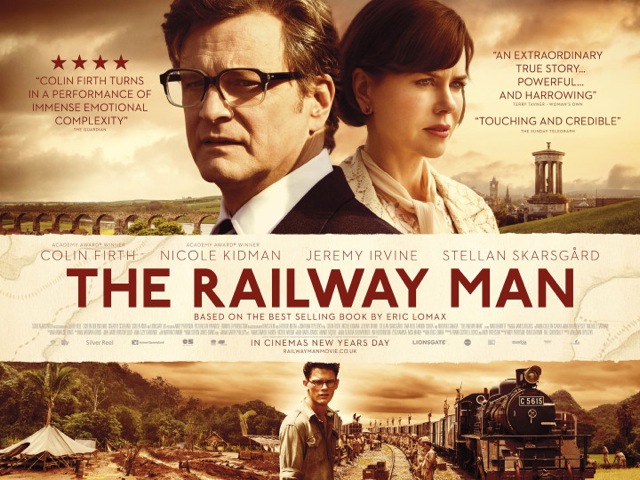
The Railway Man (2013) Movie Review

Premiered at the Toronto International Film Festival last September, ‘The Railway Man’ has only recently made its way into North American theatres, a slow train considering the story dates back to a chapter in World War II history that has generally been ignored. It had taken Eric Lomax decades to open up and tell his story as a Japanese prisoner of war. His autobiography The Railway Man was published in 1995, half a century after his ordeal.

The Railway Man


Noting the demographics of the audience in the theatre I was in, it is likely that the passing of a generation could mean the eventual silencing of eyewitnesses and victims, or those who have heard from them first-hand. While a movie adaptation of Eric Lomax’s autobiography is important for raising awareness of the events in the Pacific theatre during the War, the real difficulty is to attract younger viewers today to go into a movie theatre to watch it.

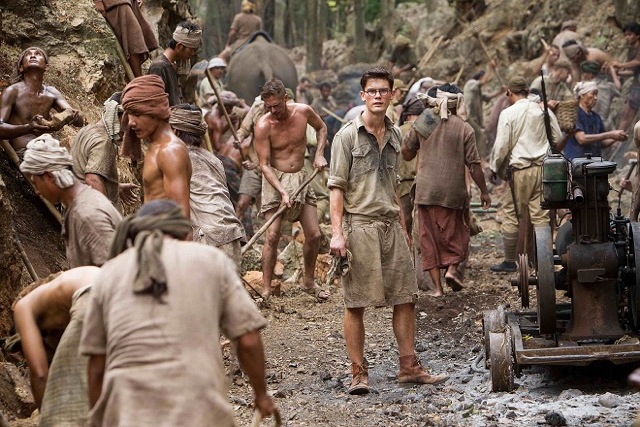
Of the numerous full-length features on WWII, only David Lean’s 1957 “The Bridge on the River Kwai” comes to mind for a movie that deals with this chapter in history. Eric Lomax was a young signals officer in Singapore when the British surrendered to the Imperial Japanese Army in 1942. He and other British soldiers were transported to Thailand to work on the Thailand-Burma Railway as slave laborers. Notoriously known as The Death Railway, the conditions there were horrendous. Many POW’s died and others were tortured. Lomax was one of them.

Having read his memoir, I find ‘The Railway Man’ a more realistic depiction of the POW’s conditions. Lean’s film where the men are portrayed in top physical shape marching to the famous whistling tune looks like a summer camp when compared to the atrocities Lomax and others had suffered. The war ended in 1945, but not the psychological torments of former POW’s.

‘The Railway Man’ begins with Lomax (Colin Firth) in 1980, a middle-aged veteran, still a railway enthusiast, encountering Patti Wallace (Nicole Kidman) while travelling on a train. This first part of the movie is the most enjoyable in that we see Colin Firth in his most natural and easiest demeanor, romantic yet reserved, with a dash of quirkiness. Nicole Kidman, with minimal make-up, gives an admirable understated performance. The two make good screen chemistry. Viewers will have more of their partnership in some upcoming productions.

Colin Firth & Nicole Kidman

As they chat on the train, David Lean’s ‘Brief Encounter’ is mentioned, a life imitating art experience thus ensues except this one leads to a long-term relationship. Eric and Patti soon get married. On their honeymoon, the nightmares of Lomax’s traumatic past begin to expose. He drops on the floor wrenching from fearful flashbacks.

Observing in anguish, Patti seeks to find out more from Lomax’s fellow veteran Finlay (Stellan Skarsgård) who cautions her of the scars of war and the never-ending torments. Thus leads to the second act where we see flashbacks into Lomax’s horrific POW experiences.

Jeremy Irvine puts forth an impressive effort in his portrayal of a courageous and decent young Lomax. After the radio he has made and his hand-drawn map of the railway line are discovered by his Japanese captors, the young Lomax bravely steps out to admit his involvement in order to spare his fellow soldiers the punishment. He is beaten, interrogated as a spy, and repeatedly tortured. Throughout, the young Japanese officer Nagase (Tanroh Ishida) is in full command.

Jeremy IrvineThe film goes back and forth in time during the bulk of the story, not roughly, but in an unbalanced way. The WWII sequences are intense, but the present day scenes exude a lethargic sense of inaction. While the talents of both Firth and Kidman can readily be tapped, the screenplay allows no further development other than the close-ups of a repressed and traumatically disturbed Lomax and a loving but exasperated Patti watching from the sideline. Here is a time when you would wish the director (Jonathan Teplitzky) and screenwriters (Frank Cottrell Boyce and Andy Paterson) had exerted more artistic freedom and creative energy into the film.

The plot turns a new direction as Finlay finds out that the Japanese officer Nagase (now played by Hiroyuki Sanada) who was involved in Lomax’s torture is still alive. Adding to Lomax’s burden, Finlay has pressured him to take revenge. Indeed, it is with a vengeful resolve that Lomax seeks Nagase out in a war museum in Thailand, where Nagase is a tour guide by the River Kwai, showing visitors the same prison camp wherein Lomax was once a captive.

As the torturer and the victim confront, tension rises. In the most critical moment, the murderous vengeance that Lomax has harbored is snapped. Nagase expresses genuine remorse and offers his apology to Lomax. Vengeance is thus dissolved into forgiveness.

This third act is supposedly the most moving section. Unfortunately it drags on too long, losing the power of the cathartic punch. While Firth’s performance is riveting as he enters the torture room and relives the past, the verbal exchanges between the adversaries and their ultimate reconciliation look contrived. As in the book, which leaves readers little explanation as to Lomax’s change of heart, I assume therein lies the difficulty for the screenwriters to invent a realistic and dramatic scenario.

Nonetheless, stories like this ought to be told for the understanding of historic truths and of the human heart. It just may sound like an over-simplification, but maybe the long road to reconciliation does start with a word of apology.

~ ~ ~ Ripples

CLICK HERE To read my book review of The Railway Man by Eric Lomax.

***

This movie review was published in the May 10 issue of Asian American Press.

The Secret Life of Walter Mitty (2013): The Love Hate Gap

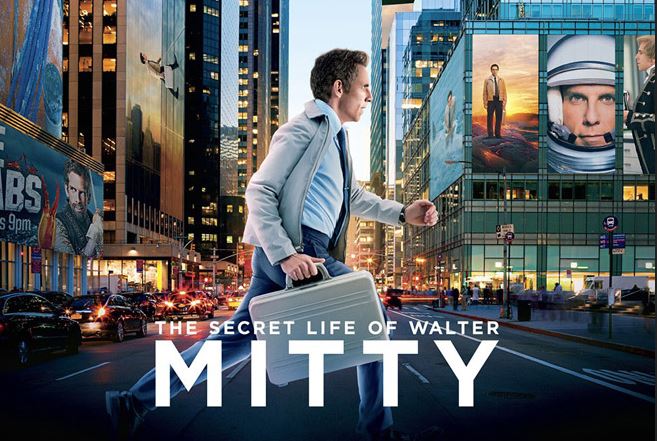
This new adaptation loosely based on James Thurber’s 1939 short story was a highly anticipated year-end movie, possibly aiming for a spot in the coming awards season. It was released on Christmas Day, 2013, only to meet with disappointing critical reviews.

The-Secret-Life-of-Walter-Mitty

Any movie version derived from James Thurber’s short story first published in the March 18, 1939, issue of The New Yorker is allowed plenty of room for reinvention, since the original story is only about 2,000 words in length. If you’re interested to read or reread it, here’s the link. The story saw its first movie adaptation in 1947, starring Danny Kaye as Walter Mitty.

In Thurber’s story, Walter Mitty is a man living with an overbearing wife. He intersperses his meagre existence with heroic daydreaming. Behind the wheel of his car driving his wife to the hair salon, he would zone-out and imagine himself a fighter pilot piercing through a storm. At another time he would cast himself as a world-renowned surgeon saving a dying patient on the operation table, or as an expert shooter, or a war hero.

Over the years, Thurber’s Walter Mitty seems to have turned from a fictional character into a concept. The daydreamer has gathered mass appeal. Walter Mitty the character unleashes the escapist in us. It takes us out of our mundane, ordinary life and catapults us to brave, new worlds. It empowers and makes a hero out of Everyman.

This recent movie version has taken up such a challenge with fine colours. Walter Mitty (Ben Stiller) works for LIFE magazine which has just been acquired, and a major downsizing ensues. The upcoming issue will be the last of its print edition. As the ‘Negative Assets Manager’, Walter Mitty is responsible for the cover. ‘Negative assets’ means, literally, the negatives of photo collection. And here’s the rub, the slide that is meant for this last cover is missing. Feeling responsible, Walter Mitty takes up the challenge to seek out its reclusive photographer Sean O’Connell (Sean Penn), who leaves his tracks in the remotest parts of the world.

Not quite a dramatic story arc, not quite a believable motive either, considering the digital age of the setting, seems an unrealistic task to conduct a real-life globetrotting search for a missing slide. But out of curiosity, I let the story lead and enjoy what comes next.

The arduous journey to find the mystical photographer offers me an array of visually stunning and surreal Walter Mitty-esques sequences. The initiation is when Walter Mitty jumps onto a moving helicopter in Greenland, upon imagining his love interest Cheryl (Kristen Wiig) singing ‘Ground Control to Major Tom’, urging him to take flight. Other breathtaking scenes that follow include longboarding by an erupting volcano in Iceland (my favourite), scaling the mountains in Afghanistan, and playing soccer with Himalayan dwellers against the setting sun.

Soccer match in the setting sun

In the office, Walter Mitty is the target of bullying from the hatchet man of the acquisition Ted (Adam Scott). Walter is also the secret admirer of coworker Cheryl. Too timid to declare his love, he hides behind eHarmony to hopefully connect with her anonymously. After Walter’s adventurous journey to find the mystic photographer, he is transformed into a braver man; ultimately, his true colours shine through, fantasy fulfilled.

Shirley MacLaine plays Walter Mitty’s supportive mother, an endearing role. Together with Kathryn Hahn as Walter’s sister, they bring some normality into our protagonist’s life. The three offer a few heart-warming moments.

Now, mind the gap. From the reviews and audience feedbacks, it looks like this is one of those ‘love-it’ or hate-it’ movies. Here are the stats of approval on Rotten Tomatoes: critics 48%, audience:76% On Metacritics it is similar: critics 54% and viewers 76%.

Why the discrepancy? I must stress that there are critics who love it, and, audience who don’t. Not that this is purely a ‘critics vs. viewers’ kind of showdown. But we do see the obvious gap between the two groups. What accounts for the gap? Here’s my analysis and speculation:

Those who hate the movie, see Ben Stiller. They see this as a self-serving project of the A-list Hollywood star directing himself in a role that sends him to all the improbable heroic scenarios. They see the production as a self-absorbed ego trip. Unrealistic storyline, much ado about nothing.

Those who love the movie, or find it entertaining and enjoyable, see Walter Mitty. They see the daydreamer, the self-defeating underdog going on a series of life-transforming adventures. They see the Wlater Mitty of today, a tiny screw in the humungous economic machine, dispensable, unappreciated, the tireless worker saving the day. They see love requited; they see dreams fulfilled.

What if… What if this whole production is Ben Stiller’s Walter Mitty fantasy realized? Why should we mind? Anyone too high on the A-list to have no need for a Walter Mitty moment?

~ ~ ~ Ripples

Related Links: 

CLICK HERE To read the short story by James Thurber, ‘The Secret Life of Walter Mitty’, published in The New Yorker, March 18, 1939.

CLICK HERE to read an article detailing the LIFE magazine covers in the movie: “Walter Mitty and the Life Magazine Covers that Never Were”. 

***

Nebraska (2013): Color is Superfluous

When a director decides to shoot his film in black-and-white, he must have certain confidence in the story, characters and aesthetics that he feels color may just be a distraction or even superfluous. Alexander Payne’s Nebraska is exactly that.

I have thoroughly enjoyed this slow-paced, thoughtful, aesthetically gratifying, and deadpan funny movie. To take a break from the cacophony of festivities, the hustle and bustle of Christmas shopping, dinner planning and party hopping, Nebraska is a surprisingly fitting film to watch.

By no means is this a ‘holiday movie’, but if the season is about family, giving, and love, this is an apt offering on the big screen. There are strong thematic undercurrents that carry the quiet story from beginning to end. And I was gratified to see, once again, that visuals speak louder than words when it comes to the cinematic medium.

Nebraska - Woody & David

Woody Grant (Bruce Dern) is an old man of few words. Maybe the onset of dementia has driven him even more delusional and isolated, and alcohol doesn’t help either. Dern’s performance is spot on and totally engaging. From a marketing promo in the mail, Woody is convinced that he has won a magazine sweepstakes of one million dollars. He needs to get to Lincoln, Nebraska, to claim his prize. We see him at the beginning of the movie heading to Nebraska from Billings, Montana, on foot. He is too old to drive but not to walk.

Woody’s brash and critical wife Kate (June Squibb) calls their estranged sons David (Will Forte) and Ross (Bob Odenkirk) for help but all fail to dissuade him. Soften by the old man’s total absorption, and too kind to douse his dream, David takes a few days off work to drive his father to Nebraska. Thus begins an unlikely bonding road trip for father and son.

To quench his delusion, Kate and Ross will converge in Hawthorn, Nebraska, a town where Woody was born and spent most of his energetic years. There in Hawthorn, a fictitious town for the movie, they will meet up with Woody’s older brother Ray’s family for an impromptu reunion, hopefully to get Woody’s mind off Lincoln and the prize, and then they will return home to Montana after.

Hawthorn is the home of a younger Woody, a past that he rarely mentions, a place where his son David will come to discover a father he had never known. At Ray’s home, David meets his not-so-friendly cousins Randy (Kevin Kunkel) and Cole (Devin Ratray, remember the bad burglar from the first two Home Alone movies?) While the town folks are all congratulatory on his million-dollar win, Woody’s old auto business partner Ed Pegram (Stacy Keach) suddenly reminds him of outstanding debts.

A character whom I find the most endearing is Woody’s girl friend of his youthful past, the long time editor of the town’s newspaper Peg Nagy (Angela McEwan). She wants to run an interview with Woody about his alleged win. David meets up with her at the newspaper to clear up the misunderstanding. There we see a gentle and kind old lady who seems to have much admiration for his father, knowing him in the past as a sturdy, young man. Though now a widow, Peg is a happy and fulfilled grandmother. This is probably the most poignant scene of the movie. Through David’s learning of his Dad as a promising young man and this quiet, pleasant lady Peg, the haunting thought seeps into our mind: ‘What if things turned out differently?’ The black-and-white medium could well be the message itself. We are reminded of a past which we cannot relive. At the same time, we are provoked to think of the alternative scenarios of what could have been.

Director Payne had won two Oscars both for Best Adapted Screenplay for his previous acclaimed movies Sideways (2004) and The Descendants (2011). Nebraska is a totally different work, and one which I like the most among the three. A common thread that runs through all of them is the prominence of specific locales, the California wine country in Sideways, Hawaiian islands in The Descendants, and here the scenery flanking the long stretch of highways from Montana to Nebraska. In stirring and soulful black-and-white, the passing wide landscape of rolling hills and boundless prairies convey the existential passage of time, lost youth, and whatever memories that one accumulates or tries to forget, all immaterial as old age takes over, a soulful touch from the director of the new retiree played by Jack Nicholson in About Schmidt (2002).

But this is a comedy, and there are lots that I have responded with spontaneous chuckles and laughs. The humor is totally enjoyable, and so is the overall atmosphere. We see a change in the mood as the son begins to appreciate more about his father. The ending is affective and gratifying. A check on IMDb leads me to the tidbit that director Payne was born in Omaha, Nebraska. Ah… the river runs deep.

If I have a say, Nebraska would appear in the upcoming Oscar nominations for Best Picture, Best Director, Best Actor (Bruce Dern), Best Cinematography (Phedon Papamichael), and Best Screenplay (Bob Nelson). However, considering the black and white styling, and the quiet, low-tech and slow-paced storytelling, it just may not attract those who are spectacle-driven. But that would be their loss.

~ ~ ~ ~ Ripples

***

Other Awards Season Reviews on Ripple Effects:

12 Years A Slave: Beauty and Sadness

All Is Lost

Lee Daniel’s The Butler: The Trouble with Famous Faces

The Book Thief: From Book To Film

***

The Book Thief (2013): From Book to Film

It’s been a week since I watched The Book Thief, but the face of Geoffrey Rush still creeps into my mind every now and then. We were talking about famous faces on a previous post. A good actor draws you right into his character without distractions from his previous roles, and here’s a good example. Regardless of Rush’s successful roles in the past, here in The Book Thief, I only see Hans, the nondescript yet loving step-father to Liesel.

The Book Thief

The movie is an adaptation of the popular 2005 YA novel of the same name by Markus Zusak. The book had appeared on the New York Times Bestseller list for 375 weeks. It had since been translated into more than forty languages. Congruent with the age target of the book, this is an appropriate adaptation. It is a PG movie, so we won’t see the violence and horror as intense and explicit as in Schindler’s List.

Before anyone jumps to shoot it down as a ‘sanitized’ version of the Holocaust, let me just say it pertains to the spirit of the novel in quietly depicting life in a small German town under the pressure of Nazi warmongering. It shows a side of the usual WWII movies we seldom see, the ordinary German folks. Zooming in on a street in a small town, it shows the effects of a fierce political regime have on its grass-root citizens: husbands and wives, children, friends, neighbors and acquaintances like the neighborhood tailor or accountant, some of whom suddenly taken away and labelled as the Enemy: Jews.

The focus of the story is on the humanity. No doubt, the majority of the town folks are swayed by and immersed in Nazi ideology, yet there are still a few who stand silently against the ferocious regime, but can do nothing. Even a feeble voice of dissent will send them to conscription regardless of age. That’s what happens to Hans.

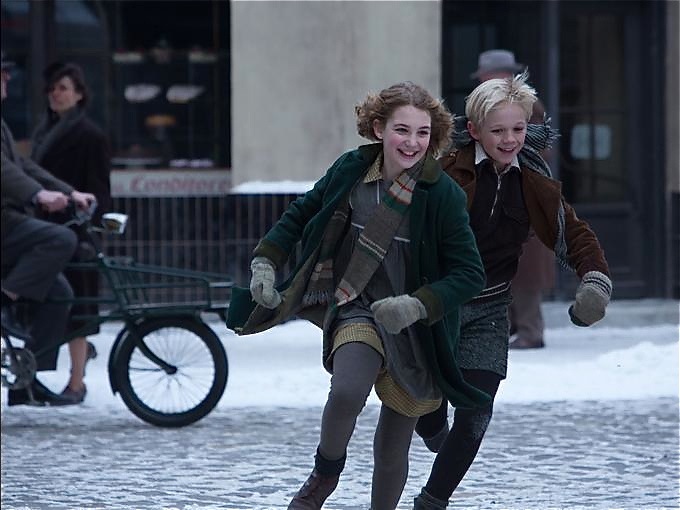
As in the book, we have Death as the voice-over narrator, quietly looming over the fictional town Molching, busy at work. Liesel (Sophie Nélisse) arriving at her new home to her adopted parents on Heaven Street. Yes, ironic, since her little brother has died during the trip. The girl soon finds her new home a comfort, and makes a new friend with Rudy (Nico Liersch) next door. Her step-mother is Rosa, played by Emily Watson who reprises her role as in The War Horse as the seemingly tough and bossy wife and overseer of the home. Her husband is Hans, played by Geoffrey Rush with affective charisma, who shows himself from the beginning that he is the emotion powerhouse, the engine that runs the movie.

Directed by Brian Percival (who helms episodes of Downton Abbey), the movie is unabashedly explicit in its emotional channeling. By that, I don’t mean it’s overtly sentimental and melodramatic. The fine line that separates the two may be the word ‘restraint’. Rush and Watson have depicted this quality memorably. He may look oblivious in appearance, but is ever wise and compassionate in spirit; she conversely holds a feisty facade only to hide a tender and caring heart. It is a delight watching them relate to each other.

Liesel and Rudy 1

For a YA novel turned into film, the spotlight has to be on the young protagonist Liesel. Sophie Nélisse is a precocious rising star who has won a Genie in the acclaimed French Canadian film Monsieur Lazhar (2011). She has already won a Spotlight Award at the Hollywood Film Festival for The Book Thief. Nico Liersch playing Rudy looks to be a few years too young, but being a good actor, the two loyal friends ultimately shine through as the movie picks up its momentum.

The plot line of hiding the Jewish young man Max, son of Han’s wartime comrade to whom he owes his life, adds texture to the story. Max inspires Liesel to love words even more, igniting that spark in her later to write down her story. To Max, the hiding place is more than a shelter from the storm. It is his connection to the decency and dignity of being human. The snowball fight in his hideout in the basement is one of my favorite scenes.

As for books, reading, and words, looks like they just work as a cover, in both the book and the movie. That Liesel comes as an illiterate ten year-old in Germany may not be quite plausible. The few episodes where she steals a book are incidental, lacking potent effects. The movie nevertheless is persuasive in its subtle way by turning mere book characters into flesh and blood human beings. The Book Thief is about humans. It shows their ugly face that haunts even Death, and their triumphant side that makes Death envious, the power to love, to hope, and to live despite tragedy and loss.

This is not a great film, but one that quietly touches, and subversively moves one to tears. It will not make any major award list, and would likely be dismissed by some critics. But this is the kind of films that, years later, one would discover serendipitously and exclaim, “Why have I missed this little gem?”

~ ~ ~ Ripples

12 Years A Slave (2013): Beauty and Sadness

UPDATE Feb. 16: 12 Years A Slave just won BAFTA 2014 Best Film and Chiwetel Ejiofor, Best Actor. 

UPDATE: 12 Years A Slave is nominated for 9 Academy Awards including Best Picture, Best Director, Best Actor, Best Supporting Actor, Best Supporting Actress, Best Adapted Screenplay, Best Costume Design, Best Production Design, Best Film Editing.

Movies this season seem to come in pairs in terms of subject matter, which makes interesting viewing. Gravity and All Is Lost is a pair. Lee Daniel’s The Butler and 12 Years A Slave another. I watched them purposely back to back.

12 Years A Slave is powerful in many ways, most readily is the aesthetics and styling, both visual and audio. Before he turned to directing, Steve McQueen was a visual artist trained in fine art in London and New York, and it shows. His cinematic work is a testament to the fact that film is a mixed-media art form. More importantly, it shows that film art does not have to be esoteric, or be appreciated only by an ‘artsy’ few. 12 Years A Slave is an exemplar. It carries no elitism but speaks to all. What more, the subject matter may be ugly, but the medium depicting it can be artistically gratifying, thus, conveying the message with even greater potency and inspiration.

12 Years A Slave Poster copy

The film is an adaptation of the 1855 memoir written by Solomon Northup, a free black man, known for his skills in playing the violin. He was living happily with his wife and two children in Saratoga, New York. One day, two men came to offer him a gig to play the fiddle at a circus. Solomon was deceived, drugged, and later smuggled to Louisiana to be sold as a slave. There for twelve years, he endured insufferable hardships until he miraculously met a Canadian carpenter named Bass who stood against slavery. With his help Solomon found freedom and rejoined his family.

I disagree with some critics who assert that the film is too artfully directed, pristine and sanitized to convey the ugliness of the subject matter. One of the qualms they have is with a scene at the beginning of the movie wherein a beating is being shot with artful camera work and lighting. After he is drugged and chained in a dark holding cell, Solomon is fiercely beaten until the torturing paddle breaks in two. Amidst the total darkness in that filthy cell, we see him cower in pain, yet his white shirt literally shines. I noticed that scene too and appreciated how well it was shot. For me, I saw the glowing white garment as a powerful symbol of purity and innocence amidst utter depravity. I’m glad there’s an artist/director to helm this film. We are seeing how the cinematic medium can be sculpted to its full potential. I don’t see anything ‘art’-ificial about it or sense any contrivance.

The issue here is the paradox of conveying ugliness in a well-crafted and artful frame. I have no qualms with that. Should art capture beauty only? Or, should ugliness be depicted by casual and shoddy work in order to be ‘realistic’? The answer is elementary. A quality medium can only enhance the poignancy of the message.

On another level, the film shows us that amidst evil, beauty can still be found. It exists in the persevering spirit of Solomon Northup. Herein lies the inspiration of the story. I found this quote from an excellent interview article with director Steve McQueen. It speaks to the fact that, in the midst of utter sadness, the human spirit can still glean what’s positive and beautiful. From the memoir of Solomon Northup we read these words:

There are few sights more pleasant to the eye, than a wide cotton field when it is in the bloom. It presents an appearance of purity, like an immaculate expanse of light, new-fallen snow.

Acclaimed British actor Chiwetel Ejiofor’s performance as Solomon Northup is inspiration itself. His nuanced expressions portray clearly some very mixed and intense emotions under the most desperate of circumstances, like consoling a female slave lying next to him at night and yet keeping his integrity, or being forced by the sadistic Epps to whip another slave. Even at the point of despair, Solomon maintains his self-respect, remains upright and kind, and upholds a human spirit that no whips can break. The actor is also heading straight to the Oscars according to consensual predictions.

Glimpse of hopeThe excellent supporting cast also renders beauty to the overall production, some of whom might garner recognition of their own come Awards time. Newcomer Lupita Nyong’o is impressive as fellow slave Patsey, a desperate soul dangled on the edge of survival and despair. Paul Giamatti (who won a Golden Globe as John Adams in 2009) plays a mercenary slave trader. The excellent character actor Michael Fassbender (in both of McQueen’s previous films Hunger, 2008 and Shame, 2011) as slave breaker Epps embodies the wickedness of the system and a soul derailed. Paul Dano (There Will Be Blood, 2007; Prisoners, 2013) is within type as the murderous slave driver Tibeats. Again the paradox appears. We’re glad to see actors giving superb performance playing villainous roles.

Then there’s the versatile Benedict Cumberbatch, picking up a Southern drawl to portray the kind slave owner Ford. His scenes with Solomon offer some needed relief. Unfortunately, those better days are short-lived. The man who helps Solomon to freedom is Canadian Samuel Bass, very short screen appearance by Brad Pitt. He is an itinerant carpenter working on Epps’ land. This chance encounter makes Solomon aware of Bass’s anti-slavery stance. For the first time in all those years of captivity, he confides his true identity in someone trustworthy and pleads for Bass to contact help in his home state up north.

The music and sound, or the lack of it, are equally effective. Composer Hans Zimmer’s soundtrack ‘Solomon’ is epic and heroic. The spirituals sung by the slaves on the plantation express their deep yearnings for release and freedom. In one scene towards the end, we see other slaves singing their heart out the spiritual ‘Roll Jordan Roll’. At first Solomon listens as a bystander. After a while he can’t help but pour his soul out and join in. That’s the point he totally identifies with the others in their hopeless condition, calling out to God for deliverance.

What follows is memorable. Sometimes silence speaks louder than sound. That moment of silence marks the change of fate for Solomon. I was captivated by the lack of sound, and the camera static, closing up on Solomon’s face of apprehension and despair for a long minute. Often it is the slow, silent space a director allows us to absorb and wait that I appreciate most.

As I stepped out of the theatre, I breathed out a sigh of satisfaction. True there was much sadness in Solomon’s story, but I was relieved to see ultimately his perseverance pay off. I was gratified too that this story of the human spirit triumphant is well told in a meditative pace, sculpted artfully, and delivered by poignant performance. This is the beauty of film art.

~ ~ ~ ~ Ripples

***

Related Links:

My Review of 12 Years A Slave the memoir by Solomon Northup

Download 12 Years A Slave the book

Solomon Northup from Wikipedia

The Underground Railroad

***

About Time (2013): The Use and Abuse of Superpower

Time travel can be tricky. The idea has been used so many times that it has almost turned into a cliché. While it can bring about interesting cinematic moments, offering some creative, postmodern juxtapositions, it is hard to navigate that overused capsule of storytelling to new height.

This is a movie I’d anticipated. Not that I’m a fan of Richard Curtis, but I do find a couple of his works delightful. He is the prolific writer/director/producer of many popular romantic comedies. His works in any of the above-mentioned capacities include Four Weddings and a Funeral (1994), Notting Hill (1999), Bridget Jones’s Diary and its sequel (2001, 2004), Love Actually (2003), The Girl in the Café (2005), and the not so romantic comedies of Mr. Bean (1992-2007), among many other titles. About Time is his third movie as director.

While I’m indifferent to the travel back in time story idea, I do have fond memories of a few movies which now have found a place in my mental playlist, tagged time travel. They include Somewhere In Time (1980), Kate and Leopold (2001), and the more recent, Midnight In Paris (2011). As for About Time, despite my high anticipation, I’m afraid it will slip away in no time.

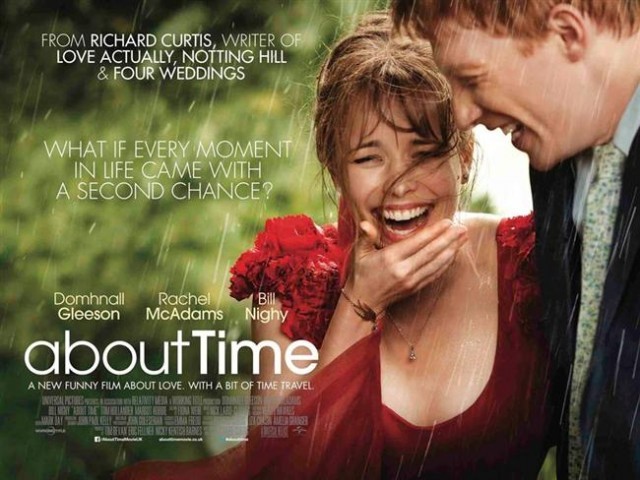
About Time

The year Tim (Domhnall Gleeson) turns 21, his Dad (Bill Nighy) tells him a secret: all the men in his family have the power to travel back in time. Fine. What you will use this extraordinary power for is totally up to you. Dandy. Tim knows exactly what to do with it: find a girl to love. Not a hard decision, for Tim tends to be a novice in relationships and unsure of himself. He soon sets his eyes on Mary (Rachel McAdams).

Tim has the time of his life trying out his new-found power. He uses it to redo the mistakes he has made, erase the speech bubbles he has messed up, reappear as more savvy than he really is. To his advantage, he hits on Mary and repeats his romancing act with her multiple times, she oblivious of being played. This being the brunt of a joke is highly problematic. That it is a comical episode does not mask the fact that this is an obvious abuse of superpower.

But of course, the film is made up of many more episodes. We see Tim and Mary get married and have children of their own. There are accidents and mishaps, and Tim soon finds out that even though he can go back in time, he cannot avoid consequences of actions, his and others. The last part of the movie seems a shift from earlier segments in delivering lines that get a bit too sentimental and preachy, utterances of platitudes.

Director Curtis has a fine cast in his hands. However, maybe because of the romcom genre, they give the impression of an overacting bunch. If Domhnall Gleeson does not ring a bell you might want to travel back to Harry Potter movies, True Grit, and last year’s Anna Karenina where he played Levin in the adaptation of Tolstoy’s classic. I definitely enjoyed his Levin role more. Rachel McAdams, interestingly, has been in several time travel movies, including Midnight in Paris. Again, her act there is more convincing. Well, to quote Mr. Darcy, the epitome of aloof coolness, they ‘smile too much.’

So that’s when I doubly appreciate Bill Nighy. You don’t have to smile in order to be funny. Actually, you should refrain from doing just that. He is the veteran here and I feel he saves the show. Nighy’s performance turns sentimental episodes into moving moments, especially with the father-son relationship.

A lightweight, sugar-coated romcom, definitely an item on the dessert menu, that is, if you don’t much care for the main dish.

~ ~ 1/2 Ripples

***

Other related reviews on Ripple Effects:

Midnight In Paris (2011)

The Girl In The Café (2005): The Hunger for Connection

Anna Karenina (2012)

True Grit: A Cool Summer Read and Movie

***

Blue Jasmine (2013): Homage and Re-Imagining

Sometimes when we see different versions of an original piece of art we tend to dismiss them as cheesy imitations, turning art into a cliche, like, the many faces and parodies of the Mona Lisa.

And sometimes, when we see a work that we know is a new version of an older masterpiece and yet we appreciate it, all because it brings us a breath of fresh air, a different perspective, new insights, a re-imagining, or offers us some new pleasures.

Here are a few examples. Robert Bresson’s Pickpocket (1959) is the auteur’s version of Dostoevsky’s Crime and Punishment, and movingly crafted. West Side Story (1961), we appreciate it as a different styling of Romeo and Juliet. Kurosawa’s Ran (1985), we know it to be a Japanese rendition of King Lear, and we marvel at the director’s handling of a Shakespearean classic from a different culture. A bit later, the younger generation in the 1990’s enjoyed Clueless (1995) even though they may not have noticed the resemblance to Jane Austen’s Emma. With Disturbia (2007), we see Alfred Hitchcock’s Rear Window making its way into the minds of teenaged viewers, and who cares that they didn’t even know it.

Woody Allen has done that many a times in his over four decade career as a director, creating different versions of the works from those he had expressed deep admiration. Call it homage, if you will, or borrowing, but we never have the impression that he’s ‘copying’. Copying is mindless triviality. But a look at Allen’s Interiors, we’ll see the deep shadow of Ingmar Bergman’s Cries and Whispers, the intense yet intimate styling of a chamber drama. Or Hannah and Her Sisters, an apt parallel with Bergman’s Fanny and Alexander. Crimes and Misdemeanors and Match Point, we see him deal with the issue of Dostoevsky’s Crime and Punishment, or rather, crime and the absence of punishment. I’m sure you can think of some more examples.

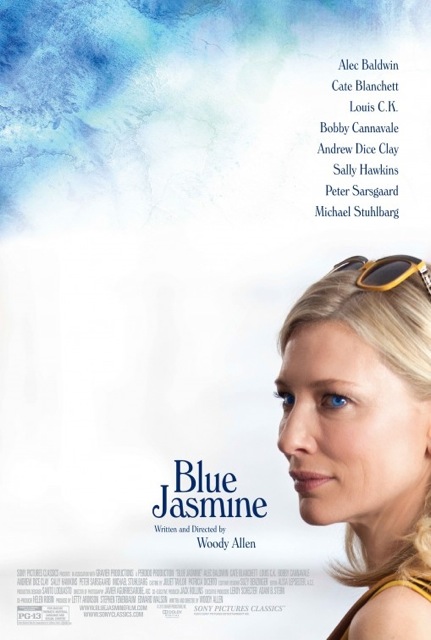
Blue Jasmine Movie Poster

So here with Allen’s 48th feature Blue Jasmine, does it matter that its structure and characterization parallel Tennessee Williams’ A Streetcar Named Desire, the Elia Kazan 1951 classic movie? Especially when we see such a finely crafted, enjoyable, and impressively performed modern version, we can only admire Allen’s imagination and creativity. I have a feeling that he (or his casting staff) gets Cate Blanchett to star as Jasmine because of her on-stage mastery of Blanche Du Bois in Tennessee Williams’ A Streetcar Named Desire performed not too long ago.

With Blue Jasmine, the 77 year-old director seems to have hit his stride yet again. Two years ago, Midnight in Paris brought him the highest opening box office gross in his career, now Blue Jasmine has surpassed that. Blue Jasmine will also be the widest screened Woody Allen movie, so far. It reaffirms the director’s talent in how he can bring out the best from his actors.

Cate Blanchett turns from blanche to blue, but just the same as she steps down the social ladder in a fragile mental state, dependent on a cocktail of alcohol and anti-depressants. She is Jasmine, a New York socialite who has to go stay with her working class sister Ginger (Sally Hawkins) in San Francisco after her husband Hal (Alec Baldwin) meets the full legal consequence of his fraudulent business dealings, a definite change of course from Allen’s earlier movies Crimes and Misdemeanors and Match Point.

The real and imaginary in Jasmine’s mind is smoothly shifted as we see her delusional self living in the present and the past at the same time. Allen handles it very well. The non-lineal storytelling is seamless. Blanchett is superb in her lucid performance, portraying convincingly a whole spectrum of emotions and mental states, while tugging at our heartstrings as we see her try desperately to stand on her own two feet for the first time in her life. This is where Allen is best, piercing sad human situations with light and gentle humor.

Allen has plenty of materials to poke fun at and chances to deliver his social commentaries. Yes folks, there is a class system in democratic America, and the humor in the film is at the expense of both the upper class and maybe more, the menial workers. Mind the gap, for it is unbridgeable. Fact is, the fun of the film, I’m afraid, is at the expense of depicting some of the characters a bit like caricatures. Having said that, I must applaud the wonderful acting from the supporting cast. They look like they are convinced first of their character’s idiosyncrasy, making their portrayals so unabashedly natural.

Further, Allen seems to redeem himself in presenting a moralistic stance. True love can be found right there in Ginger’s circle with her devoted boyfriend Chilli (Bobby Cannavale), whom Jasmine calls a ‘loser’; the deceivers are from the upper crust, Hal (Alec Baldwin) being the prominent figure. Others who may look like a step up for Ginger could well be a mirage. The wonderful supporting cast includes Andrew Dice Clay as Ginger’s ex-husband Augie, Louie C. K. the seemingly hopeful sound engineer, Michael Stuhlbarg, the serious man turned desperate dentist, and Peter Sarsgaard as Dwight, no doubt the parallel of Mitch (Karl Malden) in A Streetcar Named Desire (1951).

Blanchett’s Jasmine performance has already sent out Oscar buzz, and it’s only August. She carries the film through brilliantly. An Oscar nomination should be well deserved. We are glad to find too that Allen has not missed a beat after his success with Midnight in Paris, still churning out enjoyable films on an annual basis, while sometimes a superb actor can much enhance our appreciation, as it is the case here. 

~ ~ ~ Ripples

Other related posts:

Midnight In Paris

A Serious Man (Michael Stuhlbarg)

An Education (Peter Sarsgaard)

Do we need a Rebecca Remake? Another Grapes of Wrath?

Art and Cliché

***

Before Midnight (2013): Reality Check

Spoiler Alert: It’s impossible to discuss this film meaningfully without giving out the storyline, same with the two prequels.

***

We are gleaners of memories. An interesting parallel applies to the two characters Celine and Jesse as well as ourselves as audience. But if you haven’t seen Before Sunrise and Before Sunset, it would enhance your viewing pleasure to watch them first.

Flashback: Before Sunrise (1995)

Before SunriseTwo young people, Parisian Celine (Julie Delpy) and American Jesse (Ethan Hawkes) meet on a train passing through Europe. They strike up a conversation and become so in-tuned with each other that when the train arrives Jesse’s stop in Vienna, he convinces Celine to get off with him even though her destination is Paris. There for just one night until sunrise, they walk around the city and talk about life, death, love, religion, relationships, and being transients… for they know this may well be their only encounter with each other in both of their lives. The next morning Jesse has to fly back to the U.S. As they part, they promise to meet again in six month at the same hour, on the same train platform. Throughout the film, we feel fate, or whatever you call it, has a strong presence in their short few hours together. We feel their sincerity in capturing those precious  moments, as we hear Celine’s words ring true:

“If there’s any kind of magic in this world… it must be in the attempt of understanding someone sharing something.”

Flashback: Before Sunset (2004)

Before SunsetNine years after that chance meeting, Jesse is in Paris on the last leg of a book tour. He has written a book based on that memorable encounter nine years ago. At the Shakespeare and Company bookstore, Celine shows up. They now meet for a second time, again for a short few hours before Jesse has to leave on a plane to fly back to the U.S. Their conversation reveals that, alas, their well intended reunion six months after their first chance meeting has turned into a star-crossed, missed opportunity. After that, fate has led them down separate paths. Jesse is now married and has a son. Celine, still on her own, yearns for that first romance to develop but now seems even more elusive.

To the present: Before Midnight (2013)

Before Midnight

So we have been following Jesse and Celine like a longitudinal study, albeit meeting them just twice within this eighteen year period. In the first two films, director Richard Linklater has us follow Jesse and Celine in real time through long takes, walking along with them in Vienna and Paris, listening in on their conversations and see them pour their hearts out, just to be heard, to be known. Those were romantic moments. This time is summer in Greece; this time is reality check.

We see Jesse and Celine now married. What happens in between those nine years is that Jesse has divorced his wife in Chicago, come over to Paris, married Celine and together they have two lovely twin daughters. But things aren’t so idyllic, for Jesse is troubled by not being around for his now young teenaged son Hank from his previous marriage and whom he can only see in the summer. The film begins with Jesse seeing his son off at the airport.

For the next 15 minutes and in one stationary take through the front windshield of the car, we see a happy couple Jesse and Celine driving from the airport to a Greek country house, with their twin daughters sleeping in the backseat. We hear them talk, yes, they love to talk to each other, just as we’ve seen in the past.

In the setting of an idyllic seaside residence, Jesse and Celine join a small gathering of writers. we see them prepare and eat healthy Greek salads and discuss equally idyllic topics such as writing, love, knowing each other, virtual reality (yes, for the contemporary effect), and being transients in life. Again, that first train encounter comes to mind. In conclusion they drink to ‘passing through’.

The next act is reminiscence of previous Before films… Jesse and Celine walk to a hotel paid for by their writer friends, who have also taken up the duty of babysitting their twins so the two of them can fully enjoy each other for the night. For twenty minutes the camera follows them in real time strolling through some scenic rural town toward their country hotel, exchanging thoughts like before. But no, not totally like before, for now they are eighteen years older, 41, and each with emotional undercurrents running deep.

Five minutes in the hotel room, discordant riptides begin to surface. Talk turns into quarrel. Why, this is just too real. In the past, we see them only in romantic mode. Now as they expose their underlying thoughts and suspicions, tempers flare, words turn callous. We would silently say ‘ouch!’ occasionally.

The beginning scene of the first film, Before Sunrise, has become a stark foreshadowing… sitting near Jesse and Celine on that train, two middle-aged couple argue fiercely in German. Seeing their temper flare but not understanding what they were arguing about, Jesse and Celine ponder on the question of how two people can grow old together in harmony.

Now here in what is supposed to be an ideal get-away, for twenty minutes we are the invisible witnesses of a marital conflict, and we would want to stay in there to see what happens next, not because of the schadenfreude effect, but because this is just too real.

Romance is holiday, marriage is work.

Hawke and Delpy own these scenes depicting realistically what marriage could entail. Other films readily come to mind… Ingmar Bergman’s Scenes From A Marriage (1973) and Woody Allen’s Husbands and Wives (1992). Before Midnight is a contemporary version, with a highly watchable backdrop and natural performance. Unlike Bergman and Allen, Linklater is commendable in crafting a more positive ending. It’s refreshing to see a glimmer of hope at the end of nasty quarrels.

In the final act, Jesse attempts to woo his wife back. How he does it is most endearing. Every moment in the present is an opportunity to create a fond memory to look back to in the future. This complicated package called love is a piece of work. Director Linklater and his two stars, who co-wrote the screenplay with him, might well have passed to us the secret of marital success… Before too late, glean fond memories from the past to sustain the relationship at present; before too late, create more loving memories to carry it into the future.

One line from Celine in Before Sunset is most apt here: “Memory is a wonderful thing if we don’t have to deal with the past.” Jesse might have known this too well, not to leave the present a mess for future to deal with, but leave it as a pleasant memory to cherish in the days ahead.

With a trilogy of films beginning with the word ‘Before’ in the title, we should know that time is of the essence. Time to make the present a memorable past for the future, before too late.

That line still lingers as the film ends… ‘To passing through.’

~ ~ ~ 1/2 Ripples for all three films

***

The Great Gatsby (2013): Movie Review

In just 172 pages, F. Scott Fitzgerald has captured the zeitgeist of the Jazz Age, and told the stirring story of love and loss. In this new adaptation of the book, director Baz Luhrmann has used an estimated $127 million, glamorizing with 3D and over the top cinematic effects.

Here is a prime example of ‘the medium is the message.’ Instead of depicting extravagance and excess, the production has become that.

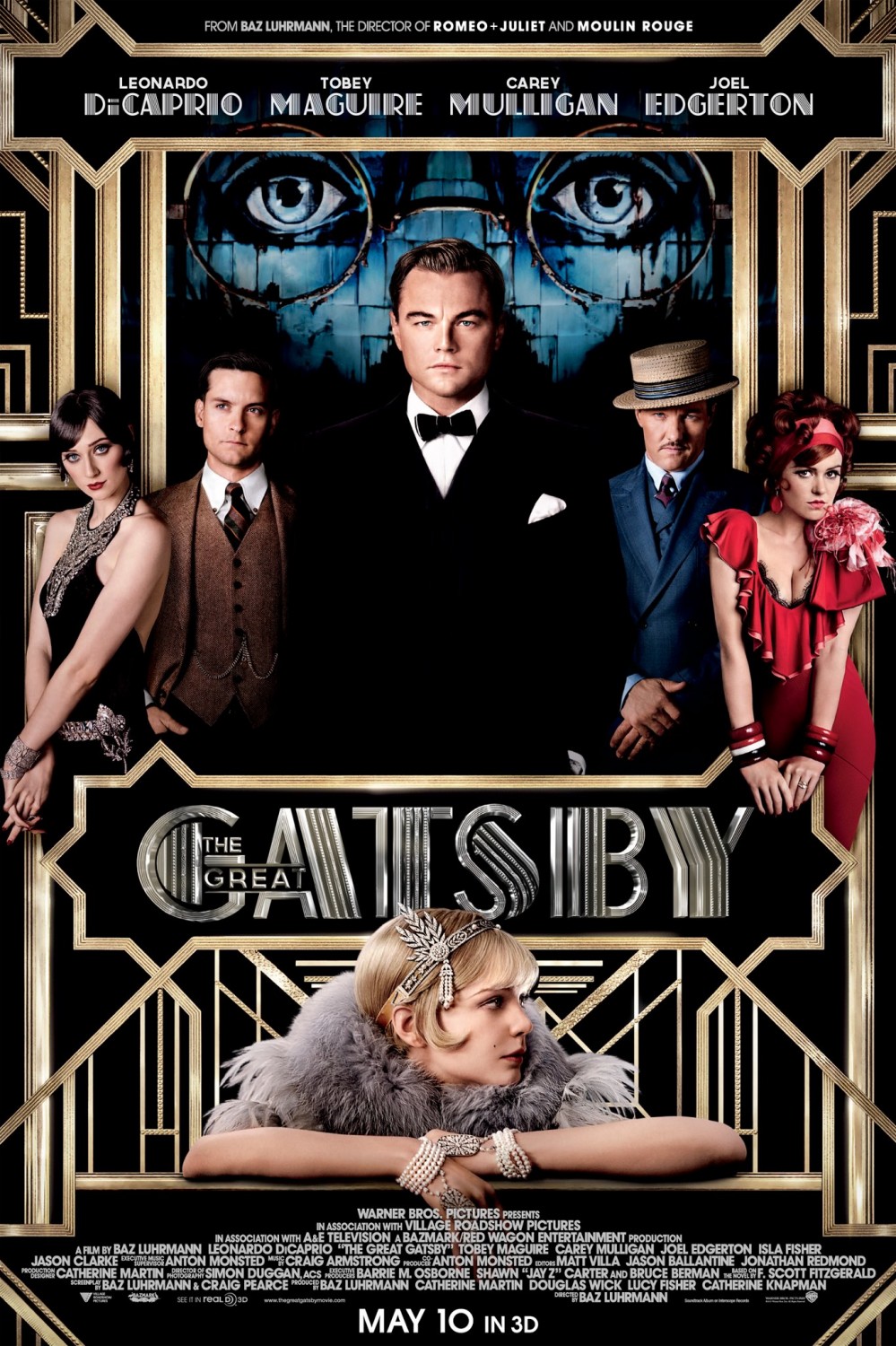
the-great-gatsby-poster1

I went in with an open mind. After all, I had expected a mashed-up, postmodern fusion Luhrmann style. So, even the Jay-Z curated hip hop selections a la Gershwin cacophony was fine with me. After all, it was the unruly Jazz Age, so be it. Gatsby’s creamy yellow roadster speeding towards Manhattan, zigzagging its way through busy streets, Fast and Furious 1920’s version is still acceptable. By the way, the movie was shot in Australia. So, all the Manhattan scenes are visual remixes.

But the main issue for me is the 3D. Not much to be gained there but hindrances. The effects make me feel like I’m looking into a View-Master, artificial and gratuitous. For Gatsby, the extravaganzas in his mansion are only means to an end, to attract his love, Daisy; in Luhrmann’s hands, they are an end in themselves. The flamboyant and ostentatious parties, like their uninvited guests, overstay their welcome in the first part of the almost 2.5 hour production.

If Luhrmann had only used more of his wealth of resources: the rich and talented cast, to explore the story more and go deeper into characterization, and less partying, the movie would have been a wonder.

After all the glitz and glam in the first act, my enjoyment begins when Gatsby meets Daisy in Nick’s humble abode, a set up masterminded by Gatsby. It has taken him five years to this very moment. It is this scene that draws me in from being just an aloof onlooker. From without to within, it is the story and the characters that engage me more than the visual spectaculars.

Leonardo DiCaprio is a fine Gatsby, convincing and comical at times. Carey Mulligan may not be the Daisy I had conjured up from reading the book, but she has mastered her role well on her own terms. She’s a much sweeter, less careless Daisy than I had in mind. Elizabeth Debicki is an apt Jordan Baker. Joel Edgerton as sneaky and snobbish Tom Buchanan needs to smile more, and Tobey Maguire as Nick Carraway less. The veteran actor Amitabh Bachchan is a good choice for Meyer Wolfsheim. Isla Fisher as Myrtle Wilson, what a change from a shopaholic, and Jason Clarke too much a hunk to be wimpy Wilson.

One major alteration that I’ve appreciated is Nick writing out the story as a therapy recommended by his doctor, apparently a psychiatrist. The story of Jay Gatsby is also Nick’s own story as a writer. By articulating his experience in words he pays tribute to an unforgettable character, a dreamer who always sees the green light. Without giving out a spoiler, let me just say, the little twist at the end is a nice touch to this new adaptation of The Great Gatsby.

Does it worth a watch? I’d say yes, even in the 3D version. Curiosity is insatiable. And hopefully, the visual spectaculars can draw the viewer back once again to the literary offering Fitzgerald had first created. That’s one positive effect a movie adaptation can generate.

~ ~ 1/2 Ripples

***

A related Post I wrote 3 years ago at the announcement of this new adaptation. My open letter to Baz Luhrmann:

The Great Gatsby: A New Version

***