2015 Books to Movies

First off, I’m excited that two movies I reviewed months ago last year and which I’d given top ripples both won the Golden Globe Best Motion Picture Award last night: The Grand Budapest Hotel (Musical or Comedy) and Boyhood (Drama). The Golden Globe Awards marks the new year with excitement and glamour, an apt recognition of fine films made in the previous year, as we eagerly await the ultimate, the Academy Awards. That will be a final wrap for 2014 movies. So what is in-store for us in 2015? For those familiar with Ripple Effects, one of my focus is on books being turned into movies. The Books Into Films posts are some of the most popular on this blog. I’m particularly interested in the adaptation process, how one art form is transposed into another medium. What works, what doesn’t? And above all, how to appreciate each on its own terms. Here is my first list of books to read (or reread) before you go and watch the movie, all scheduled to be released in 2015, some with known dates, some more tentative. A second list will appear in the online review magazine Shiny New Books come January 29.

 ***

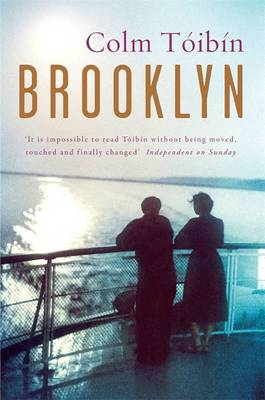
Americanah by Chimamanda Ngozi Adichie americanah The acclaimed novel by the award-winning author of Half of the Yellow Sun, Americanah tells a story that crosses three continents in the countries of Nigeria, US, and England, linking two lovers through the expanse of time and space, and exploring the evermore relevant issues of race, identity, drifting and belonging. Adichie’s novel is the winner of the 2013 National Book Critics Circle Award for Fiction among other accolades. It is now adapted into film starring Lupita Nyong’o, on the heels of her 2013 Oscar win as Patsey in 12 Years A Slave, and David Oyelowo, 2015 Golden Globe nominee for his role as Martin Luther King Jr. in Selma.   Brooklyn by Colm Tóibín Brooklyn_Colm_Toibin Once again the story of migrating and shifting ground, this time from Dublin to Brooklyn. Colm Tóibín’s 2009 Costa Novel Award winner and longlisted novel on the Booker Prize that year tells the story of Ellis Lacey moving to America from Ireland in the 1950’s, as many did, for new life and opportunities. But her story did not end there. The movie adaptation will premiere at Sundance Film Festival January 26, 2015. Saoirse Ronan plays Ellis. She has come a long way in her career with her first breakout role as young Briony in Ian McEwan’s Atonement. Cast includes Domhnall Gleeson, Jim Broadbent and Julie Walters.   Far from the Madding Crowd by Thomas Hardy far-from-the-madding-crowd A highly anticipated film adaptation of Hardy’s classic. That Carey Mulligan is playing Bethsheba Everdene increases my curiosity even more, especially as I hear her sing the folksy tune in the movie trailer. Those who hold onto the Julie Christie’s 1967 portrayal as the definitive version should see this for comparison. Screenplay by David Nicholls, who is no stranger to classics on screen, having previously adapted Tess of the D’urbervilles (TV, 2008), and more recently Great Expectations (2012). What makes this newest Hardy adaptation sound promising is its Danish director Thomas Vinterberg, whose film The Hunt was nominated for a 2014 Best Foreign Language Film Oscar. Matthias Schoenaerts plays Gabriel Oak. Note the name, he will appear in another book to film production.   In The Heart of the Sea by Nathaniel Philbrick in-the-heart-of-the-sea-book-cover The book records the true story of the tragic loss of the American whaleship The Essex from Nantucket when it was capsized by a sperm whale in the Pacific Ocean in November 1820. A real life Moby Dick, In The Heart of the Sea was the winner of the 2000 National Book Award for Nonfiction. The crews were stranded at sea for months. The book chronicles the tragedy and the horrific experience by a few survivors. Oscar winning director Ron Howard (A Beautiful Mind, 2001) cast the star of his acclaimed production Rush (2013), Chris Hemsworth, in this adaptation. Also notable is Ben Whishaw playing Herman Melville. A versatile actor, Whishaw had played the poet John Keats, the new Q in James Bond, and is now the voice of Paddington Bear, replacing Colin Firth.   Kingsman: The Secret Service by Dave Gibbons and Mark Millar secret-service-kingsman So what’s Colin Firth been busy doing? One of his new movies coming out in 2015 is the adaptation of a comic book, The Secret Service, created by Dave Gibbons and Mark Millar, definitely not something Firth or his fans could have expected when Mr. Darcy dove into that pond at Pemberley. A comic book? You gasp. That’s right, a totally legit read nowadays, when you have the graphic novel of Proust’s In Search of Lost Time on the same shelf in the library. Firth plays Harry Hart training up a young recruit for the Secret Service, with Taron Egerton, Mark Strong, Michael Caine, Samuel L. Jackson, directed by Matthew Vaughn who had all warmed up with Kick-Ass and X-Men. From the trailer, it sure looks like a visual delight, action-filled, slick and clever. The Secret In Their Eyes by Eduardo Sacheri The Secret in Their Eyes This originally Argentine crime thriller was first adapted into a Spanish movie that won the Best Foreign Language Film Oscar in 2010. As soon as I finished watching the film, I downloaded the music soundtrack; it was deeply moving. This is no ordinary crime thriller, but a poignant, psychological exploration of human experience and memories. The new English version of the film has an appealing cast starring Chiwetel Ejiofor (nominated for an Oscar for his role in 12 Years A Slave), Julia Roberts and Nicole Kidman, helmed by Hunger Games and Captain Phillips director Billy Ray. Ray also wrote the screenplay. I highly anticipate this English version, albeit I admit the original language version is usually the more affective and authentic rendition. Silence by Shûsaku Endô Silence  Shûsaku Endô’s historical fiction (1966) on the plight of the Catholic Jesuit missionaries to Japan in the 17th Century is a deep and disturbing novel. It touches on multiple levels of the human spirit and psyche, issues that are not easily labelled by the term ‘religion’, dealing with the problem of faith in a God that appears to be silent in the midst of suffering and persecutions of His followers. In a culture that is xenophobic at the time, Endô, a Catholic himself, confronts the issue of doubt and the power of evil head-on. The book reads like a page turner, and I expect the film adaptation to be cinematically gratifying in the hands of an auteur of the Catholic tradition, Martin Scorsese. The new edition of the book includes Scorsese’s preface. The film is shot in Taiwan instead of Japan, with a perfect cast: Liam Neeson, Andrew Garfield and Adam Driver, screenplay by Jay Cock, screenwriter of The Age of Innocence.

***

More to come… On January 29, go to Shiny New Books the online review magazine for my second list of 2015 Books into Films.

Force Majeure (2014): Act of God or Act of Human

As I’m writing, this just popped up: Force Majerure (Sweden) is now one of nine films shortlisted for the Oscars Foreign Language Film category, advanced from the initial round with features from eighty-three countries. Soon, this list will be further shortened to make up the five nominees for the 87th Academy Awards. Nominations will be announced at 5:00 a.m. PT, January 15, 2015.

Force Majeure

I watched Force Majeure at TIFF in September, a second time again this week as it comes to our local theatre. Please note, it is impossible to discuss this film in an intelligent manner without mentioning the storyline. Therefore, consider yourself warned. Spoiler Alert. But let me assure you, this won’t lessen your enjoyment of the movie; rather, it could prepare you for a more purposeful viewing.

‘Force majeure’ in translation means ‘an overwhelming and irresistible force’. Director Ruben Östlund tells his visual story based on this notion. A young family goes on a week of skiing holiday in the French Alps, a much needed family time as the husband has been busy at work. What is intended to be a fun family vacation is turned into something totally unthought of, making this one of the most original film ideas I’ve come across in years.

The slick and stylish camerawork begins with a close-knit family. Mom and Dad Ebba (Lisa Loven Kongsli) and Tomas (Johannes Kuhnke) look like a well-matched couple; their pair of school-aged children Vera (Clara Wettergren) and Harry (Vincent Wettergren) are smart and charming. All four of them sleep together on one King-sized bed in the resort hotel, wear the same style of underwear, brush their teeth in one accord, do everything together, until one split-second their view of each other is shaken to the core.

Family photo

The ski resort conducts controlled avalanches to maintain the ski slopes. At lunch on the second day, the family sits at a table in the outside terrace, taking in the spectacular scenery. Suddenly a controlled avalanche is launched. At first, everyone is curious and excited, marvelling at the sight. But soon the avalanche appears too close for comfort. Panic begins to send people scattering away from their tables.

Ebba grabs her children, but with two of them, she looks for Tomas to help. Tomas in the mean time is nowhere to be found, for he is the first one to run away from their table. Sounds hilarious? The scenario can be quite comical actually, but that only sets the stage for a critical look at a marriage relationship, and with that, the duties, roles, and expectations of a husband and a father.

Director Östlund aptly presents to us a situation worthy of discussion. What deserves praise is the way he does it: with deadpan humour, slick editing, stylish cinematography and clever dialogues. The music motif captures the mood perfectly with excerpt from Vivaldi’s Four Season, where the intensifying summer storm brewing, and soon wreaks havoc on what could have been a perfect family holiday.

As Ebba relays the embarrassing episode to friends Mats and Fanny, superbly played by supporting actors Kristofer Hivju and Fanni Metelius, the scenario soon divides the two couples along gender lines, and divergent and conflicting views regarding male and female roles and dispositions ensue. Suppressed chuckles in the theatre could well be the intended effects by the director, but I couldn’t help but LOL at certain shots.

Tomas’s earlier denial is later dissolved into concession as he declares himself ‘a victim of his own instincts’. What an intriguing claim. Are we autonomous agents fully responsible for our own actions, or victims of our personality? I first thought the term Force Majuere refers to the avalanche, but as the story unfolds, I begin to see it as the force within, our innate nature, as Tomas puts it, the impulse that drives him to act a certain way. The term ‘controlled avalanche’ is perhaps the most intriguing oxymoron inferring to the nature of our behaviour.

The final act may look a little incompatible with the rest of the film. However, I feel it is a sensitive and nuanced depiction of this thing we can call ‘humanness.’ What’s joining us all is our frailty. A quote from another movie suddenly comes to mind: “The things that people in love do to each other they remember, and if they stay together it’s not because they forget, it’s because they forgive.”

An interesting scenario presented in a visually captivating and delightful cinematic offering. I hope Force Majeure will make it to the final cut in the Oscar race. And, my instinct tells me it just might.

~ ~ ~ 1/2 Ripples

***

Other Related Posts on Ripple Effects:

Ida’s Choice: Thoughts on Pawlikowski’s Ida

Tuffing it out at TIFF14

Top Ripples 2014

Top Ripples 2014

This year, I’ve watched over 100 films and in a much smaller proportion, read forty some books. Been to the Toronto International Film Festival, and attended a memorable session ‘Conversation with Juliette Binoche.’ That would be one of the Top Ripples for me.

The following list represents the most resonance I’ve had with the films that come out this year. As a stringent marker, I’ve only given one movie 4 Ripples, and that’s Boyhood back in August when I first saw the film. All the others earn at least 3.5 Ripples.

I’d not written a review for every film I’d seen, obviously. But even for those I did not post, I ensure you if you find them on this list, they are at least 3.5 to 4 Ripples in my mind, like Calvary, and Citizenfour. Of course, there are those that I’m still waiting to come out in the next two weeks. (Click on the links in the following titles to read my review.)

As you can see, other than films and books, I’ve also included some other memorable 2014 experiences.

Films

Boyhood

The Grand Budapest Hotel

Calvary

Citizenfour

Clouds of Sils Maria

Foreign Language Films

Ida

Force Majeure

Books – Fiction

Lila by Marilynne Robinson
(2014 National Book Award Finalist, Fiction)

The Goldfinch by Donna Tartt
(2014 Pulitzer Prize for Fiction Winner)

Books – Nonfiction

Age of Ambition: Chasing Fortune, Truth, & Faith in the New China by Evan Osnos
(2014 National Book Awards Winner for Nonfiction)

Birding with Yeats: A Memoir by Lynn Thomson

Gallery Visits

Alex Colville and the Movies (AGO)

Nature Sightings: (rare or first time sighting for me):

The Monarch Butterfly

The Barred Owl

Porky and Wess

Best Search Engine Terms to come to Ripple Effects:

Is Downton Abbey fiction?

**

There are also books and films from previous years that I’ve had the pleasure to experience in 2014. Here are the Top Ripples:

Books:

12 Years A Slave by Solomon Northup (1853)

Joseph Anton by Salman Rushdie (2012)

A House In The Sky by Amanda Lindhout (2013)

Silence by Shûsaku Endô (1966)

The Dinner by Herman Koch (2013)

Films: 

The Lunchbox (2013)

Like Father, Like Son (2013)

Charade (1963)

I Confess (1953)

Shadow of a Doubt (1943)

**

Whiplash (2014): What Price Perfection?

This is one movie Tiger Mom can wholeheartedly approve. There’s a line spoken by the critical-to-the-point-of-sadistic music teacher Mr. Fletcher:

“There are no two words in the English language more harmful than ‘good job.'”

In a sense, Whiplash can be taken as the dramatization of that Tiger Mom philosophy.

Whiplash Movie Still

The 2014 Sundance winner is writer/director Damien Chazelle’s second feature. In Whiplash, which he also wrote, Chazelle tells a very original story, the training of a music student and the intense, ambivalent relationship between a mentor and his trainee. How far can a teacher go before crossing the line into abuse, however well the teacher’s intention to draw out the best from the student?

We see the tortuous journey a promising jazz drummer, Andrew (Miles Teller), has to embark on as he freshly enters the fictional Shaffer Conservatory of Music in NYC. I’m not in the position to say whether it indirectly reflects upon which music school, so I better not dwell on this further. But one thing I do agree is that, yes, the Western way is too full of praise. The pursuit of excellence is often replaced by that of fun, and complacency and self-satisfaction (to protect self-esteem) the stumbling block to improvement. Tiger Mom can attest to that too.

Andrew has all intentions to learn and master top notch drumming skills under the demanding tutelage of Fletcher. He doesn’t want to be just a good drummer, he wants to be great, and he is willing to pay the price to get there. Being selected to play in Fletcher’s studio jazz band is a coveted privilege, staying in there requires nothing short of the physical and mental endurance as required in a war zone.

Like the drill sergeant in Kubrick’s Full Metal Jacket (1987), yelling insults and putdowns at the young recruits, shattering egos and self-confidence, Fletcher keeps his players in shipshape form by ruthless coercion and intimidation. He demands perfection. J. K. Simmons is most impressive in his role as Fletcher. What a transformation to Mr. Hyde from the kind and loving Dad in Juno (2007). It is likely that he will have a place in the award nominations come the next two months.

Miles Teller as Andrew is equally tenacious. Thus we see a dynamic duo in contention, excellent acting from both. Teller may have lots of competition when it comes to a Best Actor nom, but he is still young and has fuel for miles to come. His drumming skills are impressive too, or is it the excellent camera and editing work?

The agile camera is effective in depicting the intensity of the relationship between Andrew and Fletcher, capturing the dramatic effects like a thriller, with manic drumming in impossibly fast tempo and the exasperating face of Andrew’s that exudes both anguish and determination. Seamless editing, gripping cinematography and sound are prominent elements that will likely be acknowledged at award noms.

What price perfection? What does a student have to do to gain acceptance and respect from his teacher, the one whose approval that matters most in his training?

What started off as realistic storytelling a la suspenseful drama in the first two acts begins to transform into a totally different genre more like magical realism in the final scenes. Like Gone Girl is a dramatic exaggeration of a marriage gone wrong, Whiplash is a hyperbole of a troubled teacher/student relationship taken to the extreme.

How to get to Carnegie Hall is not only by way of practice, practice, practice, but also entails plenty of blood, sweat, and tears. We see the free flow of all the above in the movie.

Despite my reluctance to fully embrace the ending sequences, I have thoroughly enjoyed the movie. A very original story idea well executed as a suspense thriller, add in some fine jazz music and mood setting technical effects, Whiplash is an impressive production from a young writer/director with great potential. I can’t help but wonder if there’s any real life similarity between him and his protagonist.

~ ~ ~ Ripples

 Awards Update:

Feb. 22, 2015: J. K. Simmons wins Best Supporting Actor Oscar. Also wins Oscar in Sound Mixing, Editing.

Feb. 21, 2015: J. K. Simmons wins Best Supporting Actor at the Independent Spirit Awards.

Feb. 8, 2015: 3 BAFTA wins for Best Supporting Actor, Editing, Sound.

Jan. 15, 2015: 5 Oscar noms for Best Picture, Best Supporting Actor, Best Original Screenplay, Best Editing, Best Sound Mixing.

Jan. 11: J. K. Simmons wins Golden Globe

Dec. 11: J. K. Simmons gets Golden Globe nom for Best Supporting Actor

Dec. 10: J. K. Simmons gets SAG nom for Best Supporting Actor

Dec. 7: J. K. Simmons wins Best Supporting Actor at the L.A. Film Critics Awards

Dec. 1: J. K. Simmons wins Best Supporting Actor from the New York Film Critics Circle

Whiplash has received 4 Film Independent Spirit Award nominations including Best Feature, Best Director, Best Supporting Actor (J. K. Simmons), and Best Editing.

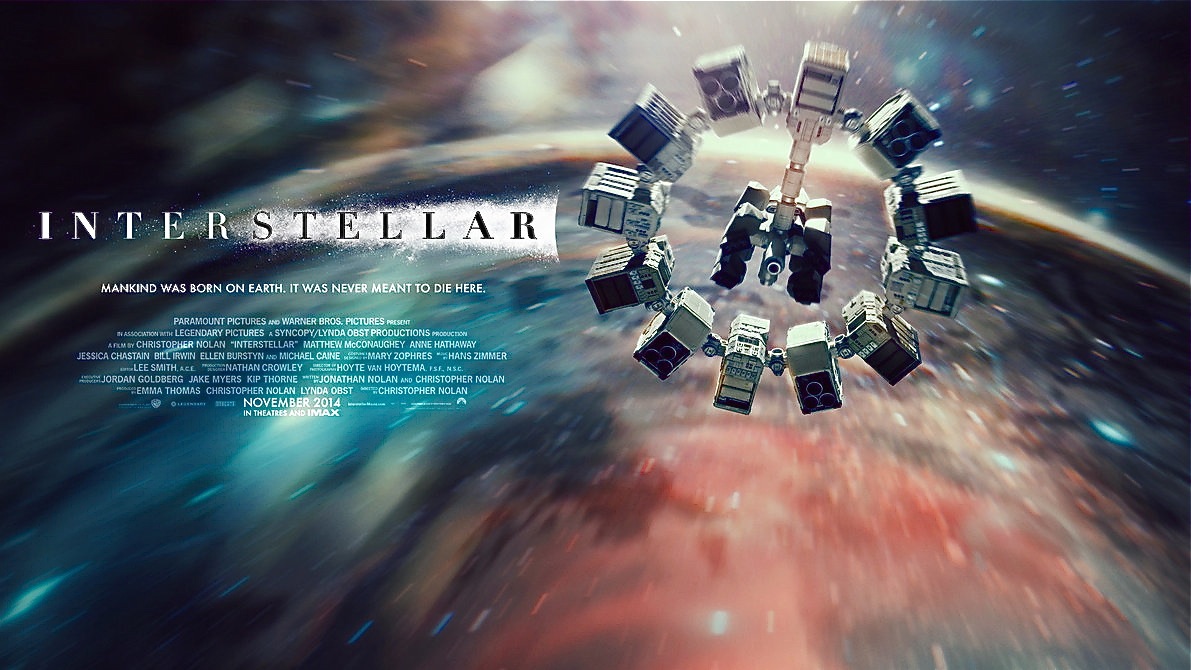
Interstellar and Ida: The Sound and Silence of Exploration

Two movies this year represent the opposite ends of a cinematic spectrum. One is on the cutting edge of technology in IMAX, with huge visual and sound effects, taking the audience far out into space. The other is a black-and-white film shot in boxy Academy ratio, a quiet focus on one individual.

Interestingly, both deal with the similar theme of exploration, albeit from contrasting perspectives. Interstellar leads us to outer space; Ida brings us inward to explore the inner space of the self.

This is not a full review of Interstellar but just some ripples from my viewing experience. Nevertheless, the following discussion may contain spoilers, so consider this a caution. I did write a review of Ida, you can read it here.

First it’s the buzz, then it’s a bang. Christopher Nolan’s Interstellar has landed with a weekend opening of $50 million in box office sales; interestingly, still second to Disney’s Big Hero 6‘s $56 million. Nolan is no stranger to mind-boggling productions, Memento (2000), The Prestige (2006), and Inception (2010); and then there are the legendary Batman/Dark Knight series, but Interstellar is his most grandiose… and loudest.

Interstellar

Some time in the future, we see Earth barely habitable. Gravitational abnormalities have offset the functioning of this meagre planet, which has deteriorated into an uninhabitable dust bowl. Space exploration is prohibited, for the mere survival on Earth has become the priority. The younger generation is encouraged to be farmers, growing corn mainly as it seems to be the hardiest of crops.

Even NASA has gone underground, yes, an alarming irony. Farmer Cooper (Matthew McConaughey), a former pilot and astronaut, stumbles upon it and is quickly persuaded by Professor Brand (Michael Caine) to come out again to pilot the space craft ‘Endurance’ to seek out new lands, for the sake of his children, as they could be the last generation on Earth. Further, Brand’s ambition echoes Cooper’s ideals that humans are explorers and pioneers, not caretakers of this dusty land.

To accompany the exploratory spirit, we hear the ear-piercing blastoff of ‘Endurance’ into space. I was in a ‘regular’ theatre, not IMAX, and not the UltraAVX (Audio Visual Experience), so it was bearable for me. For realistic depiction, I can totally understand why such volume is needed. But I did find there were moments where the sound had drowned out the dialogues at the most critical points.

Regardless of such mishaps, the music is commendable. Noland’s music collaborator in the past, film composer Hans Zimmer’s soundtrack exudes more than realism. His score involves an ensemble combining 34 strings, 24 woodwinds, 4 pianos, and a 60 voice choir. But the major, humungous sound comes from a 90 year-old pipe organ in London’s 12th Century Temple Church.

I’m glad the pipe organ is the instrument of choice and not, say, electronic heavy metal band with guitars and drums, because loudness is not a self-serving end. The huge, stunning sound of the pipe organ evokes sacred, cathedral music, and here, the cathedral of space. Into the vast and lofty universe, human exploration is more than mere colonization. Space travel is the vehicle by which infinitesimal human searches for the ultimate or to attempt comprehending minutely the grand design. The huge sound of the organ literally vibrated under my feet, aptly depicting our awe-inspiring universe. I must stress too that there were quieter moments as well, I especially enjoyed the flowing strings sending the spacecraft towards Saturn like a cosmic ballet.

In their collaboration process, Zimmer and Nolan may had been fascinated by the intricate machinery that is the construction of the organ, or the pipes that look like rocket burners, or its loudness best to depict the grandiose human venture of space exploration, or as Zimmer puts it, to “celebrate science”. But maybe unbeknownst to them, that deep human quest in search of the Infinite could well be the hidden inspiration that sparks the sounds in Interstellar, just like in the movie, unbeknownst to Murph (Mackenzie Foy/Jessica Chastain), Cooper’s scientifically-minded daughter, a well-intended ‘ghost’ tries to communicate with her by leaving hints in codes, guiding her onto a purposeful path.

Coincidentally (or not) the recent groundbreaking Rosetta’s Philae probe landing on Comet 67P/Churyumov-Gerasimenko has ignited jubilation not just because of man’s achievement, but also, as a news announcer said, the probe could bring answers to questions such as ‘how did we get here?’, ‘are we alone?’ or even solve the enigma of ‘life itself.’

Throughout the movie, we hear Cooper mention ‘They’ many times. ‘They’ have led him to discover the underground NASA site; ‘They’ had constructed the several dimensions, the time/space reality… His daughter Murph has asked him, “Who are ‘They’?” Cooper might have the inkling of who ‘They’ are at the end of the movie: ‘We brought ourselves here,’ he says. He might be the agent, but there still remains the question of the a priori Initiator: who had constructed the different dimensions to start with, the time/space continuum, the planets, the stars, galaxies, wormholes, or, gravity?

I feel the organ music is just right for the ultimate exploration.

**

In contrast to the sound of Interstellar, Ida is a film that offers silence.

Anna has been raised as an orphan in a Catholic convent in post-war Poland. At eighteen, on the verge of her vow to become a nun, Mother Superior tells Anna to seek out her only, closest relative, her Aunt Wanda. The film follows Anna’s trip to the city. In her uniting with her Aunt, she also discovers her past, and a totally different identity. Her parents were Jewish, killed in the Holocaust; her birth name is Ida Lebenstein.

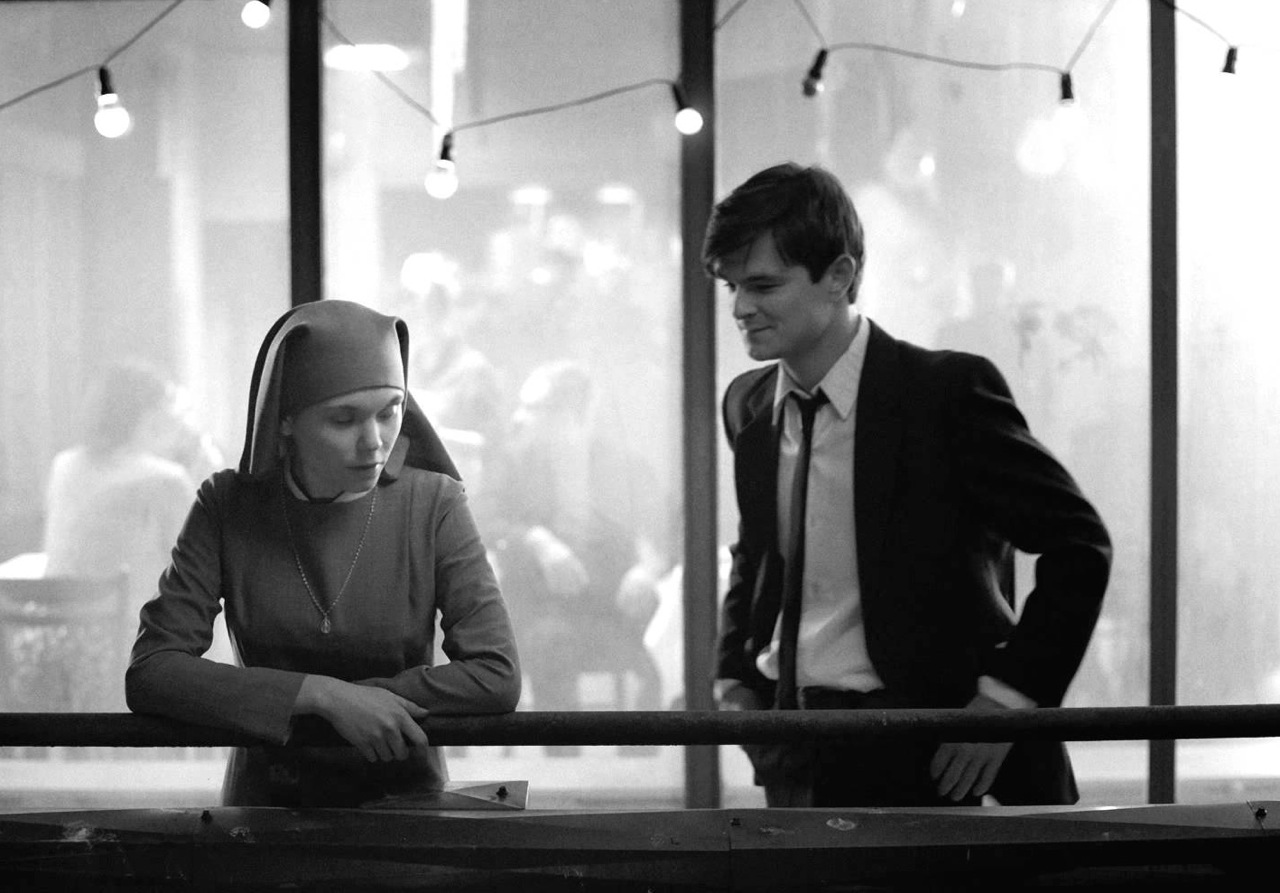
With her Aunt Wanda, Ida goes on a road trip to seek out those who might know her family’s past. On the way, they pick up a hitchhiker, a jazz musician called Lis, who exposes Ida to a new tune, and a different set of pursuits. Her cynical, life weary Aunt also reveals to her what other lives are like. With the opening up of possibilities comes the burden of choice.

Ida and Lis

The film is shot in black and white, boxy Academy ratio like early films. It carries minimal sound, no score, sparse dialogues, but the images speak with deep poignancy. In the flow of human history, what is one individual anyway? But what responsibilities one has to bear for one’s decisions. What leads Aunt Wanda to jump out the window? Or Lis to go on travelling, playing the saxophone gig after gig? Ida or Anna, what does each name hold in terms of meaning and purpose?

Director Pawel Pawlikowski had done post-graduate work in philosophy and literature at Oxford. His background might have led him to explore with a contemplative mind. He must have known too that the self is a vast space for exploration, as unknown and inexplicable as outer space, yet no less a subject of intrigue.

And personal identity, another realm to decipher. Is identity determined by birth, race and ethnicity, or something else? Does one have a choice? How does one define oneself? Is there anything worthwhile to pursue that transcends traditions or even religion? Maybe the best way to explore that inner space is through silence and a meditative mind. You don’t want to let the irrelevant sound drown out the relevant. Truth may just be hidden in a still, small voice.

**

Awards Update:

Feb. 22, 2015: Ida wins Best Foreign Language Film Oscar, Interstellar wins Visual Effects Oscar.

Feb. 21, 2015: Ida wins Best Foreign Language Film at Indie Spirit Awards.

Jan. 15, 2015: 5 Oscar noms, Best Production Design, Best Original Score, Sound Mixing, Sound Editing, Visual Effects

Dec. 11: Hans Zimmer gets a Golden Globe nom for Best Original Score
Ida gets a Golden Globe nom for Best Foreign Language Film

Dec. 7: Ida wins Best Foreign Language Film and Agata Kulesza Best Supporting Actress at the L.A. Film Critics Awards

Dec. 1: Ida wins Best Foreign Language Film from the New York Film Critics Circle

Related Post on Ripple Effects:

Ida’s Choice: Thoughts on Pawlikowski’s Ida

The Tree of Life by Terrence Malik

Notes on the Synthesis of Films, Art… Life?

Before I Go To Sleep (2014): Movie or Book?

Spoiler Alert: This post may contain information that one could deem spoilers, and, not just for this movie but for the other one, yes, you guessed it, Gone Girl

Before I Go To Sleep

If as some say Gone Girl is misogynist, then Before I Go to Sleep is the counter argument. Why of course, there’s a 50/50 chance that the villain is the female or the male character, and in some cases, both. And if it’s both, does that make the movie misanthropic?

So much about our humanity, which is what these crime suspense thrillers are all depicting, albeit in a more exaggerated way. Here is the movie adaptation of the very popular debut novel written by British writer S. J. Watson. Again, allow me to answer a question up front, book or movie first?

I know, there’s a likely chance that you have no intention to touch either, but here’s just an interesting thought, especially with the Gone Girl phenom still rippling. For this one, I’d say read the book first, mainly because if one goes to the movie unprepared, one would likely find the premise preposterous. A woman waking up every morning with no memory? But actually there are real-life cases which the author mentions in the epilogue of the book.

On the last page Watson notes that his novel, though totally fictitious, is inspired by actual medical cases, particularly that of Clive Wearing‘s, the British musicologist, conductor and BBC music producer, who has the same amnesiac condition, albeit his is an even shorter memory span, just a short minute or so.

Before I Go To Sleep is about a woman Christine (Nicole Kidman) who wakes up every morning with a total blank, forgetting who or where she is, and not knowing the person lying beside her in bed. He happens to be her husband Ben (Colin Firth), who has to explain to her every morning and reminds her who she is, and that an accident occurred fifteen years ago when she was 25 had left her in a state of amnesia with just a day’s memory span, but no matter, he tells her that he loves her.

Actually quite an interesting premise for a suspense thriller, the amnesiac as a vulnerable, ready victim. To add to the mystery, Christine receives a phone call from a Dr. Nasch (Mark Strong) every morning after Ben leaves the house for work. He tells her he has been helping her and gets her to look for a camera in a shoe box hidden inside her closet. In there she can replay what she has recorded the night before, bits and pieces of her memories.

The movie is a graphic and more suspenseful enactment of the novel, directed by Rowan Joffe, who had written the screenplay and directed Graham Greene’s Brighton Rock (2010). But I had found impressive his screenplay for The American (2010) which, under the direction of Anton Corbijn (A Most Wanted Man, 2014), is one of the rare spy thriller that is soulful. Come to think of it, I can’t help but think such a collaboration, Joffe screenplay, Corbijn directs could have made Before I Go To Sleep a better movie.

As I had mentioned in my review of the novel Before I Go To Sleep, the major flaw of the book is that the author forgets that it’s his character who has amnesia, not his readers. So every chapter starts off with her reading more or less the same journal entry she wrote the night before is a bit too tedious.

Such a condition has been improved in the movie by Joffe, and with the convincing performance by Kidman, we are made sympathetic observers instead of being bored by the repetition. A video camera to jot her memory is also a better way to capture visual anguish than reading from a journal. Making the film more interesting than the novel are the flashbacks Christine has, the bits and pieces that she remembers. But then again, are those real memories or fragments of her imagination?

Colin Firth has shattered his Mr. Darcy persona for good. It is still a pleasure to watch him, albeit Darcy devotees and purists may find some scenes uncomfortable, faced with the revelation that O, Colin Firth is an actor, an impressive one yes, but not the real Mr. Darcy they love to keep in their memory.

This is a second partnership between Firth and Kidman, shortly after The Railway Man (2013). Their next collaboration will be the upcoming film Genius (2015), another book to movie adaptation to watch for.

Mark Strong is probably one of the most underrated actors today. He has been in so many movies, delivering strong performance… Zero Dark Thirty (2012), Tinker Tailor Soldier Spy (2011), plus many others and dating back to 1997, with Colin Firth in the first Fever Pitch (1997). Further, he’s my favourite Mr. Knightley in Emma (TV, 1996). His upcoming work is on my must-see list: The Imitation Game (2014).

Book to movie, here’s one that I have to say, I’ve enjoyed the movie more than the book, albeit it’s nothing more than leading and misleading, and slow revealing until the climatic end. Again I note, as with others of the crime and suspense genre, it’s not for everyone. But like Gone Girl, it has shoved to the forefront, domestic violence or violence of any sort involving the betrayal of trust, manipulation and self-gratification in dominance. Fortunately, this movie has a happier ending.

~ ~ 1/2 Ripples

***

Related Reviews on Ripple Effects:

Before I Go To Sleep by S. J. Watson Book Review

Gone Girl The Movie (2014)

The Railway Man Movie Review (2013)

The Railway Man Book Review 

The Gone Girl Ripples: Binge-Watching Hitchcock

Caution: This post may contain SPOILERS, depending on how your imagination works.

**

“If you want to analyze everything in terms of plausibility then you end up doing a documentary.” – Alfred Hitchcock

Alfred Hitchcock is the best person to defend any outrageous act in a movie, and I’m thinking here about the one in the last section of Gone Girl, the altered scene that is different from Gillian Flynn’s book.

After watching the movie, something drove me back to Hitchcock. So in the past week, I’ve binge-watched all the Hitchcock thrillers that I could find, over half a dozen. Three of them I will discuss here, for they are like prototypes of Gone Girl. I’m sure both Flynn and Fincher have had the master’s influence silently creeping up their spine.

Surprisingly, the most obvious element common in these Hitchcock films is light-hearted humour, which I didn’t find in Gone Girl. Some dialogues are LOL funny.  Crime and suspense can happen side by side with laughter; good and evil indwells at the same time. It is like Hitchcock is asking how can we separate these two sides of human nature?

And a common setting of these stories? Right within a marriage and the family.

Suspicion (1941)

This is the film that’s closest to Gone Girl‘s first part. Joan Fontaine won the Best Actress Oscar with her role as the naive but devoted Lina as she falls for the suave and charming Johnnie played by Cary Grant. They get married shortly after they meet. As the film progresses, Lina suspects her husband more and more. Hitchcock tells the story from Lina’s point of view, dropping clues so we are as suspicious as Lina. Despite his outward charm, Johnnie could just be a scoundrel after her rich father’s money.

Cary-Grant-in-SuspicionWith this suspicion in mind, a glass of milk can be seen as poison. Here is an unforgettable shot as we see Johnnie walks up the long flight of stairs holding the healthy drink on a platter, now perceived (by us, as directed by Hitchcock) as poison.

Without spilling any spoilers, I read that Hitchcock’s own preferred ending is different from what the audience see in the eventual cut released on screen. Who can mess with Cary Grant’s good guy image? Not even the master himself.

~ ~ ~ Ripples

**

Strangers On A Train (1951)

Two people unknown to each other meet on a train. One is a tennis star Guy Haines (Farley Granger) and the other a psychotic misanthrope Bruno Anthony (Robert Walker), who suggests they crisscross two murder schemes: he kills Guy’s wife so the tennis pro can marry his lover, and Guy kills Bruno’s father whom the son loathes. At his stop, Guy gets off the train taking the conversation with this stranger as a joke, and forgetting his initial-inscribed lighter on the compartment table.

So the one who takes this plan seriously goes ahead and follows through, while the other is drawn into a crime being the prime suspect. When Guy refuses to carry out his part, Bruno goes back to the crime scene so he can plant the lighter there to incriminate Guy. Here we can see Hitchcock’s signature style in extending his suspense in the most mundane act. As he is heading over there, Bruno drops Guy’s lighter through the grills of a street sewage hole. The camera closes up on a frantic hand stretching as far into the hole as possible to retrieve the lighter lodged in there. This is the kind of shots that could lodge in our memory even after we forget the whole storyline.

No matter how suspenseful and wicked the plot, Hitchcock’s movies are fun to watch. The key person to suspect something is wrong is usually a minor character, a younger sister with thick glasses, brainy, observant. We find her here as Guy’s lover Ann’s younger sister Barbara, played by the director’s own daughter Patricia Hitchcock.

The noir writer Raymond Chandler adapted Patricia Highsmith’s first novel of the same name. Those who think black-and-white movies dating back sixty years could not possibly be as entertaining as what we have today must see this one.

~ ~ ~ 1/2 Ripples

**

Shadow of a Doubt (1943)

Still earlier, seventy years ago, the Pulitzer winning playwright and novelist Thornton Wilder was one of three co-writers of the screenplay based on a short work by Gordon McDonell, who won the Best Writing Oscar for his original story.

http://trueclassics.files.wordpress.com/2010/10/family-shadow-of-a-doubt.jpg

Again, the setting is quiet small town America, Santa Rosa, where nothing happens much. That’s the ironic setting at the beginning of the film when Young Charlie (Teresa Wright), the eldest girl in a ‘typical’ family, lying on her bed, lamenting the boredom of suburban living. She suddenly thinks of an idea that would make her day.

So Young Charlie springs up and heads to the telegram office to send a message to her favorite relative Uncle Charlie (her namesake, played by the ubiquitous Joseph Cotton), her mother’s younger brother, a charmer living in NYC, urging him to come visit them. While there, Mrs. Henderson hands her a telegram from her Uncle Charlie that says he’s coming to visit them in a couple of days.

Young Charlie is elated. Here’s the following conversation she has with Mrs. Henderson:

Young Charlie:  Mrs. Henderson,  do you believe in telepathy?

Mrs. Henderson:  Well, I ought to. That’s my business.

Young Charlie:  Oh, not telegraphy. mental telepathy. Like… well, suppose you have a thought, and suppose the thought’s about someone you’re in tune with. Then across miles, that person knows what you’re thinking and answers you. And it’s all mental.

Mrs. Henderson:  I don’t know what you’re talking about. I only send telegrams the normal way.

It’s this kind of unexpected pleasantries that make Hitchcock films so enjoyable, even in the midst of crime and suspense. As we would soon see, young Charlie has a crush on her Uncle Charlie. But that’s just the beginning of the film, and we soon find Uncle Charlie just may not be what he seems to be.

Young Charlie: … we’re not just an uncle and a niece. It’s something else. I know you. I know that you don’t tell people a lot of things. I don’t either. I have a feeling that inside you somewhere, there’s something nobody knows about.

Uncle Charlie:  Something… nobody knows?

Young Charlie:  Something secret and wonderful and… I’ll find it out.

Uncle Charlie:  It’s not good to find out too much, Charlie.

Young Charlie: But we’re sort of like twins. Don’t you see?

These dialogues sum up the premise of the movie Gone Girl 70 years later. How much do we know about another person, even if that person is one of our family. How can one get inside the head of another and read the mind? There can be dark secrets within the mind that knowing them may endanger the one who discovers them.

The setting is similar too, a sleepy, innocent American small town and a newcomer from NYC. Good and evil are like twins, they lie obliviously beside each other.

Hitchcock is such a brilliant creator of suspense. Even just with young Charlie rushing through busy streets to get to the library before it closes at 9 pm keeps me on the edge of my seat, for I want to know if she makes it before it closes since she needs to find the missing newspaper page her Uncle Charlie is trying to throw away. What’s on there that he needs to hide it from her family?

Exactly, you have to run to the library to find yesterday’s paper to read on a piece of news story. That’s filmmaking dating back 70 years, but no less suspenseful and thrilling. Well, the library just closed as she gets there, but after knocking on the door, the librarian lets her in, scolds her a little then gives her three minutes to find what she needs.

As the camera zooms in, we finally see the news on the page: the nationwide search for the Merry Widow Murderer.

~ ~ ~ ~ Ripples

**

Filmmaking techniques have advanced unimaginably since Hitchcock’s time, yet after changes and changes, we are more or less the same, and films remain one of the most agile means to expose and entertain all in one shot.

To Read my review of Gone Girl the movie, CLICK HERE.

**

Like Father, Like Son (2013): Parent and Child Reunion

I had wanted to see this Japanese film since it came out last year. Missed it at TIFF13 last September, its North American premiere after winning the Cannes Film Festival’s Jury Prize in May. Glad it has finally arrived on Netflix, reaching a much wider audience than just festival goers, deservedly.

Like Father Like Son

Director Hirokazu Kore-eda wrote the screenplay based on a disturbing premise: what if after six years of raising your son, the hospital where he was born contacted you and told you that your child was switched at birth, and of course, they sent their apology.

The hospital officials do not take this lightly. DNA tests are done to confirm. They have a lawyer with them, arrange to have you meet the other parents, mediate and ease the proposed switch back, which they recommend with a six-month preparation period, preferably before the boys start grade one in school. They even find out who the nurse is that made the error; due to her own frustrations at the time she knowingly made the switch. Of course, she is deeply sorry for what she had done and duly prosecuted. Monetary compensations are arranged.

But all the above have absolutely nothing to do with easing the shock and alleviating the trauma afflicted upon the families. Formality and legality do not soothe the pain; apologies and money cannot compensate for the abrupt termination of relationships.

Director Kore-eda has treated the subject matter with much tenderness and charm. The cinematography is stylish, the children and adults are all captured in a realistic manner with splashes of endearing humour.

The two families come from very different social strata, and the two boys have been raised in opposite parenting styles. Interestingly, only one of the families seems to take this news much harder. Ryota Nonomiya (Masaharu Fukuyama) is a successful professional who spends most of his time in the glass towers of Tokyo busy at work. His son Keita (Keita Nonomiya), an only child, is raised in a protective environment. Mother Midori (Machiko Ono) is loving but also ambivalent about a husband who puts his career over his family.

The other family is a shop owner in a rural part of the country, their son Ryusei (Shôgen Hwang) is the eldest of three children. Father Yudai Saiki (Rirî Furankî) is every child’s dream. He spends his days playing with his children, fixes their toys, and exerts no rules, albeit Mom Yukari (Yoko Maki) might wish he could have spent more time working.

What makes a father? What makes a son? Fatherhood and bloodline tend to supersede all other factors in a patriarchal society like Japan. But the film reflects the point of view that not all families necessarily embrace such a value. Further, apparently there are different parenting styles even in a homogeneous Japanese society.

If there is ever a Japanese version of the movie Boyhood as we have seen here from Richard Linklater, Hirokazu Kore-eda would be the ideal person to direct it. Like Father Like Son follows his previous work I Wish (2011) in its sensitive and incisive depiction of a boy’s heart and yearning. He can tear apart the facade of societal formality–but in a most tender way–and lay bare the hopes and needs, the essence of parents child relationships.

I must give credits to Johann Sebastian Bach, and the late Canadian pianist Glenn Gould. The beginning of Bach’s Goldberg Variations has been used in numerous films, but every time the soulful slow moving piano melody comes out, I am moved, no matter how many times I’ve heard it, and in so many different genres of films. Just from memory, I can think of The English Patient (1996), Hannibal (2001), Shame (2011). It is so effective in augmenting cinematic moments without becoming clichéd.

Here, the Aria is well placed as director Kore-eda uses it as a motif to spur us into deeper thoughts. What makes a father, a son? What is more important, blood or relationships? What is the role of a wife and mother in a patriarchal society? What is the purpose of giving birth and bringing up a child? What is fulfilling and meaningful to us as human beings? Indeed, a motif that can strike a universal chord of resonance that transcends cultures.

~ ~ ~ 1/2 Ripples

The Gone Girl Phenom: A Reality Show in the Making?

NOTE: It is my full intention to drop NO SPOILERS in this post. Can one write a review but save the spoilers? Yes, but difficult. I’ll try to do that. What’s more, take this as an ‘op-ed’ on a book-to-film phenom, and a small commentary on our contemporary media-driven culture.

**

Let me cut to the chase. To answer the question that a lot of you may have, no need to crack open my head: If you have already read the book, will that hinder you from fully enjoying the film?

The answer is yes. For a film that predicates on the twists and turns in the plot line, where suspense is built on keeping the audience in the dark, a person having read the book before seeing the movie has to be amnesic to be surprised. As in my case, my suspense is more like “will Gillian Flynn throw us a curve ball here?” That’s why by the time the third act comes, with its slightly altered storyline, it then began to pique my curiosity more.

However, and this is a big However, Gone Girl is many things. Above all, it is pure Fincher entertainment. Following his Social Network (2010) and Girl with the Dragon Tattoo (2011), Gone Girl is stylish, slick, absorbing and contemporary. It depicts adults behaving badly like a Hitchcock thriller. It is a modern film noir where, albeit not in black and white, the mostly dim, sepia tone, together with the numbing electronic pulses of the music combine to elicit mystery and suspense. A hyperbole of a marriage gone wrong, it is about the knowable and unknowable of ourselves and others, even those close to us. It is about violence in our thoughts and actions, and the fronts we put up to cover the deviance.

But then, don’t read too much into it. This is not a philosophical quest in finding who we are, albeit the question has been asked in the film, nor is it a diatribe on our social condition, the marriage institution, or domestic violence. This movie is simply as it is, pure entertainment.

For me, the most crucial issue it touches on has to do with our mass, popular culture, our media-driven, insatiable thirst for sensational headlines, or hashtags for that matter, and our crowd-sourcing way in forming opinion. Like a satire, it points to the influence of our TV personalities, the link between popularity and credibility, the follower and fan-based momentum.

A former Entertainment Weekly writer, Gillian Flynn’s third novel Gone Girl debuted in the New York Times Bestseller list in 2012 and has been there for 91 weeks. The two weeks before the film premieres, its sales has doubled.

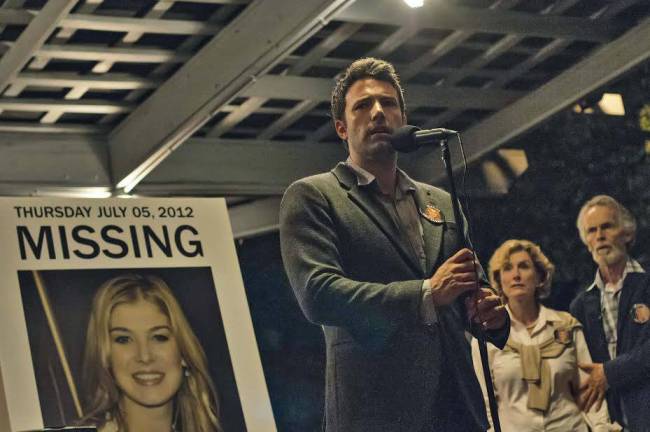
Gone Girl Movie Still

The story seems straight forward enough. Amy Dunn, a New Yorker transplanted in Missouri after she follows her husband Nick to move back to his hometown as his mother is diagnosed with cancer. On their fifth anniversary, Amy is gone missing. Nick soon becomes the prime suspect in the case. Although a body has not been found, murder is on everyone’s mind. With this premise the story unfolds, and we are off to a ride of twists and turns all the way to the end.

Ben Affleck and Rosamund Pike are convincing as the troubled couple. Affleck, who is not known as a superb character actor, is above his previous level here. Although I must say, having read the book could affect how we judge his performance. As for Rosamund Pike, I have no doubt this is her breakout role. Glad to see she finally get this golden opportunity after her supporting parts in An Education (2009), and in Pride and Prejudice (2005) playing Jane, the eldest Bennet sisters, overshadowed by Keira Knightly’s Lizzy.

However for me, I’m most impressed by Kim Dickens in her portrayal of the thinking detective Rhonda Boney perfectly, a role that usually falls upon a male star, like Columbo, or the doubting, persistent detective that looks at evidence and not dwell on prejudice. Her character is the one I like the best in the movie.

The production also benefits from supporting roles from Carrie Coon playing Nick’s twin sister Margo, Neil Patrick Harris as Amy’s former boyfriend Desi Colling, Tyler Perry as defence lawyer Tanner Bolt, although more screen time and story could have been written for him.

If you have read the book, what’s in it for you in the movie? Several things. First off, watch for how the savvy former Entertainment Weekly writer Gillian Flynn transforms her novel into a screenplay, and how a talented director in turn crafts a stylish and absorbing film out of Flynn’s script, from mere words on the page. While you’re at it, watch how a cast of actors interpret their roles (with many cues from the director I’m sure) and make the characters come to life. How do they compare with your imagination while reading the book?

The director of photography plays a dominant role in styling the visual, the light and shadow, the overall tone. Together with the suspenseful, numbing and electrifying music and the smooth editing, the 149 minutes feel like 90. Likely awards nominations for several categories, in particular adapted screenplay, editing, and acting categories. But Best Picture? I have major reservations about that.

Treat this as a modern day Hitchkock movie, a contemporary Film Noir that’s slick and teasing. Fincher’s Girl With A Dragon Tattoo may be the warm-up task, a borrowed source. But here is an authentic American book-to-movie success story. The trend from this day on could well be authors writing more ‘ready-for-movie’ novels.

Now, to the media frenzy. The surge in Gone Girl sales and all the hype pushed the movie in this past opening weekend to the number one spot in box office sales, an impressive $38 million, doubled that of Ben Affleck’s own Best Picture Oscar Argo (2012).

The product may be good, but still a movie needs a strong marketing end. So, all the buzz are the generated effects from a successful marketing campaign, and a large fan base sure is a major asset. All indications point to the Gone Girl phenom could well send the movie to hit targets in profits and Oscar noms.

According to Variety, Chris Aronson, president of domestic distribution at Fox, had said, “we did an excellent job of marketing the movie and making it a cultural event where people had to see it in order to be part of the conversation.”

“That’s a testament to the film becoming a zeitgeisty film,” he said.

Exactly. Nowadays, looks like there’s a more acute pressure for one to be part of the conversation at parties or the Friday social, and especially, on social media. And zeitgeist is just the right word to describe a phenom. I’ll be harsh to say it’s a ploy, but the fan-based momentum is just the right fuel to ignite a trend like a wildfire. But amidst the rave, judge for yourself the worth of the movie and decide if you want to be in this reality show or not.

This may be the very issue satirized in the film. View the production for what it’s worth, seek the evidence, and think for yourself how many ripples you’ll give it. Then decide if you ‘like’ it or not.

~ ~ ~ Ripples

Your comment is most welcome. By all means, share your opinion on the movie, the book, or my post. But while you’re at it, for the pleasure of those who have not read the book or seen the movie, please observe the NO SPOILER intention here.

***

Awards Update:

Jan. 15, 2015: Rosamund Pike nominated for an Oscar for Best Actress

Dec. 11: 4 Golden Globes noms: Best Director David Fincher, Best Actress (Drama) Rosamund Pike, Best Screenplay Gillian Flynn, Trent Reznor, Atticus Ross for Best Original Score

Dec. 10: Rosamund Pike gets SAG nom for Best Female Actor

Conversation with Juliette Binoche

The highlight of my TIFF14 experience is attending the Mavericks Conversation with Juliette Binoche.

Conversations with Juliette Binoche

Director of TIFF Piers Handling structured the conversation in three sections preceded by showing excerpts of Binoche’s filmography in chronological order. Thanks to these visual gems, the audience got the sense of the actor’s wide repertoire. At fifty, Binoche has had more than thirty years of acting experience, and 50 feature films under her belt.

Juggling with my iPhone for photos, a pen and a small notebook, keeping my eyes on the maverick on stage, looking through photographers and audience sticking their hands out into the aisle and midair to take photos, I managed to jot down some sketchy notes.

Juliette Binoche knew she wanted to act at age 15 when her mother brought her to Paris to see a stage play. After she had made up her mind, “I was unstoppable.” She went to drama school in Paris, from the stage she soon landed film roles, and the rest is history.

Binoche had worked with numerous legendary directors who are cinematic icons themselves. Here are some samples:

The first director she worked with was Jean Luc Godard in Hail Mary (1985), later André Téchiné in Rendez-vous (1985), Krzysztof Kieslowski in Three Colours: Blue, White, Red (1993-94), Hou Hsiao-Hsien in Flight of the Red Balloon (2007), Abbas Kiarostami in Certified Copy (2010), Olivier Assayas in Summer Hours (2008), and now Clouds of Sils Maria at TIFF14, just to name a few.

But she has also said no to others. Stephen Spielberg came to her three times to no avail. “I don’t want to be in any system. Hollywood is a system. Not even in French system.”

Director she likes to work with: Michael Haneke (Amour, 2012; The White Ribbon, 2009) Binoche worked with him in Hidden (2005) and Code Unknown (2000).

Juliette Binoche

North American audience might have known some of her more popular works like her Oscar winning The English Patient (1996), or Chocolat (2000), but I was gratified to see clips from her lesser known works like:

The Unbearable Likeness of Being (1988, adaptation of Milan Kundera’s novel, with Daniel Day-Lewis), or Three Colours: Blue (1993, Krzysztof Kieslowski directs, the first of the Trilogy)

But the stage is still very much on her mind. “I love the theatre.” She was in August Strindberg’s Mademoiselle Julie, Harold Pinter’s Betrayal, and soon a new production of Sophocles’s Antigone on the London stage.

**

Some more sketchy notes:

On long takes: “fantastic, close to life, liberation, freedom, trust, thrilling.”

On aging: “It’s truth”

On the relationship between the director, the actor, and the script:

“The actor and director are one in the film. Nothing about me. It’s the director bringing out [the script] through me. Words are written on the page then you live it, like an incarnation. You live it, bring the script to life.”

“Trust is what makes the miracle… trust between actor and director.”

On actors:

“We are incarnated philosophers.”

On genres:

“I never divide. You cannot divide things. The comic side of life and the tragic side come together… connected. I never divide into genres.”

When asked about “failure”:

“What does ‘failure’ mean? You learn about yourself through extremes, over obstacles. How you see success depends on your point of view. To me it’s a journey… taking risks, facing the unknown. That’s the joy of it.”

**

Of all the film clips, one struck deep in me with inexplicable resonance. And that’s from Binoche’s Oscar winning role as the WWII nurse Hana in The English Patient (1996). For me, that was one of the most memorable movie moments of all time.

Here’s that tender scene when Hana is led by candles on the path to Kip, who then takes her to the Medieval Chapel. He harnesses and raises her up to look at the frescoe paintings on the walls. Holding a flare for light, she dangles from the ceiling, immersed in pure delight. And the music, composer Gabriel Yared’s Bach-like melody has remained in my mind ever since:

On her role playing Hana:

“She has to start from scratch. I like people who have to start over again.”

On director Anthony Minghella: “friendly and loving.”

And Michael Ondaatje’s reaction to that mesmerizing cinematic moment: “I wish I had written this scene in my book.”

 **

The conversations were just a little over an hour. The standing in line waiting for 90 minutes in front of CBC’s Glenn Gould Studio to get in (for a good seat to take my photos, but as you can see, still not close enough) was worth it. I likely won’t have another chance to see and hear Juliette Binoche in person again.

***


Alex Colville and the Movies

“It’s the ordinary things that seem important to me.” — Alex Colville Whenever I go to Toronto, The Art Gallery of Ontario (AGO) is always a must. As if to correspond with The Toronto International Film Festival, the current exhibition of more than 100 pieces of works by Canadian artist Alex Colville is a timely offering. Before my visit to AGO I’d looked up some info on Toronto born Alex Colville (1920-2013) who later moved to Nova Scotia and became an icon of Canadian art. His “Man on Verandah” (1953) set the record as the highest auctioned price recorded for a living Canadian artist in 2010. He was then 90 years old. The realism of Colville’s paintings at first reminded me of the American painter Edward Hopper. But a closer look at his meticulous renderings and precise details, I had the feeling that I was looking at a photograph, but the dramatic depictions made them look more like movie stills. As I walked through the exhibits, my inkling was confirmed. The quote on this banner may well set the tone as one enters the exhibition hall: EnteringAs soon as I stepped into the gallery, I saw this familiar work but only then did I find out its title: “To Prince Edward Island” (1965):

Alex Colville

Adjacent to the painting is a movie clip projected on the wall, showing Colville’s influence on the director Wes Anderson. Of course, that’s Suzy from Moonrise Kingdom (2012). The ever watchful female gaze through the binoculars. Both works exude mystery and nostalgia:

Moonrise KingdomApparently Colville’s influence can be found in several other filmmakers. In the exhibitions I was led to view samples of some close associations.

Artists influence each other. Colville’s “Target Pistol and Man” (1980) could be the inspiration for the Coen brother’s imagery of the psychotic and sinister character Anton Chigurh in No Country for Old Men (2007). But of course, one could argue that the movie was based on Cormac McCarthy’s book (2005). So it could be McCarthy being first spooked by Colville’s depiction of this cold, hard, and unpredictable character in the painting:

Pistol and Man

Further down the exhibits, I was confronted with a set of four Colville paintings in the scenes of Stanley Kubrick’s famous horror film The Shining (1980), adaptation of Stephen King’s novel. Too ‘in-your-face’? Some critics think so. No matter, I’m not posting them here to avoid sensationalism.

However, as I walked through the exhibits without any explicit prompting, I could indeed draw connections between some of them and the movies I’ve seen. Here are a few more examples:

Just when you think you’re going to have a good time taking the children on an outing, maybe a swim or a picnic, and then you see the rainstorm approaching.

Family and Rainstorm (1955):

Family & RainstormJust like the ending scene of A Serious Man (2009) by the Coen brothers, impending storm in the school yard. The unpredictable and precariousness in everyday life.

Or, how about this, which movie does this painting “Seven Crows” (1980) lead you to think of:

Seven CrowsOr this one, “Soldier and Girl at Station” (1953):

Soldier and Girl at Station“Anxiety is the normality of our age,” Colville had said. I could totally feel it while looking at his works.

**

To correspond with my weekly photo meme, I’m linking this post to Saturday Snapshot Sept. 27 hosted by West Metro Mommy Reads. CLICK HERE to see what others have posted.

***

Some related post on Ripple Effects:

Art Gallery of Ontario

AGO Exhibition: Terror and Beauty

Bernini’s Corpus and Mordern Movies

Edward Hopper, William Safire: The Visual and the Word

***

Tuffing it out at TIFF14

Attending TIFF is always a memorable experience. The tough part, I’ve to admit, is the constant waiting in line to enter the theatre even when you have a ticket. It’s all for your advantage of course, with the general seating, the earlier in line the better seat you can find. Hundreds of ticket holders queuing up around the block is a typical TIFF sighting in downtown Toronto every September.

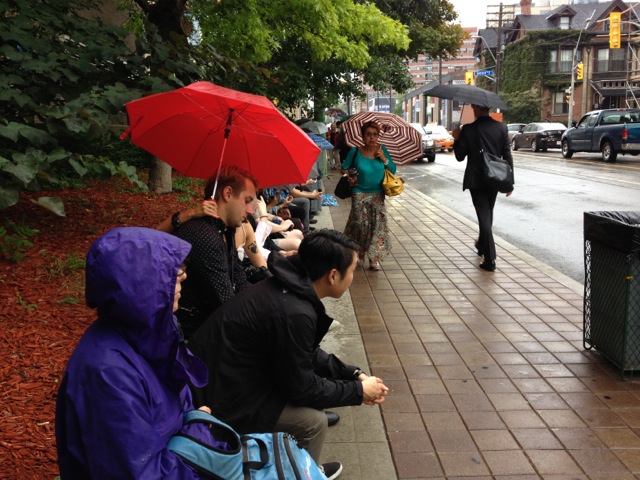
But waiting in line for over an hour to see a 70 minute film? That was for the screening of Jean-Luc Godard’s newest work Goodbye to Language 3D. Was it worth it? Let’s just say, it’s an existential experience. And we even had the privilege of sitting down, albeit in the rain, Waiting for Godard:

Waiting for Godard

As expected, Godard himself didn’t show. But I got to experience his latest work wearing 3D glasses. Never imagined the legendary French New Wave auteur whose first works date back to the 1950’s, and who had made such iconic films like Breathless (1960) and Vivre Sa Vie (1962), now at 83, would be stirring up a newer wave of postmodern, visual fragments in 3D. The concept of ‘film’ just might need to be redefined with his Goodbye To Language 3D.

I’d seen twelve films over the ten-day film festival, purposely skipping those which I think would likely be released in our theatres in the next few months. So no, I didn’t watch the Grolsch People’s Choice Award Winner, The Imitation Game, starring Benedict Cumberbatch. All the buzz surrounding it points to the repeat of previous People’s Choice winners like 12 Years A Slave (2013), Silver Linings Playbook (2012), The King’s Speech (2010), Slumdog Millionaire (2008), with a trajectory towards the Oscars.

Nor have I seen other more popular productions like Black and White, Mr Turner, The Judge, The Theory of Everything, While We Were Young, Whiplash, Wild, Hector and the Pursuit of Happiness, which I just might have the chance for a free promo ticket coming up in our city soon.

The highlight for me has to be the Mavericks Conversation with Juliette Binoche. The 1.5 hour standing in line outside CBC’s Glenn Gould Studio was worth it. Juliette Binoche is one of my all time favourite actors. So this 90 mins. of conversations, retrospective film clips of her works, Q & A is one of the gem of TIFF14 for me. A more detailed post will come later.

In chronological order over ten days, here’s the annotated list of my viewing, for now. Detailed reviews might follow:

Clouds of Sils Maria — Clouds appear like a slithering snake at the top of the Swiss Alps. They silently creep in, wrap the mountains and disappear just as you begin to marvel. Apt metaphor for aging, fame, and the ephemeral. While Juliette Binoche always delivers, it’s Kristen Stewart that had my full attention and respect. Kudos to acclaimed French director Olivier Assayas.

Winter Sleep — Winner of this year’s Palme d’Or at the Cannes Film Festival, three hours of incisive and meditative exploration into the human soul. According to IMDb, Turkish director Nuri Bilge Ceylan has won 62 times. But this my first taste of his work and yes, that’s the kind of films I look for in a film festival.

Force Majeure — A loving married couple bringing their two young children on a ski vacation is confronted with a most unexpected and testing scenario. Should the husband’s spontaneous response to a near accident be the gauge of his love for and loyalty to his wife and family? A stylish and at times very funny, well crafted film.

High Society — Not all festival films are created equal. Here’s one that, alas, is a waste of my time standing in line and sitting through. The topic is interesting enough, albeit has been dealt with countless times: a love (or lust?) affair shattered by class and social differences. Well intentioned, but just another cliché riddled with flaws.

Still Alice — Julianne Moore is very effective in portraying a Columbia U. linguistic prof afflicted with early onset Alzeimer’s, adapted from the popular book by Lisa Genova. This might just be Moore’s chance for another Oscar nom. Can a film be too loyal to the book? Yes, I think it is here. While the movie is well executed, I think the director could have taken a little more liberty in using the medium for more cinematic moments.

Maps to the Stars — Nom for the Palme d’Or, and Julianne Moore winning Best Actress at Cannes this year, Canadian director David Cronenberg’s newest feature is a bold, dark, and wild satire of the celeb life of Hollywood’s rich and famous. Problem is, maybe it’s the public who’d like to see Hollywood glamourized. They want to follow the maps to the stars. So, would they want to see a film that shatter their fantasy? And, would Hollywood insiders like to be depicted as thus?

Goodbye to Language 3D — See my opening paragraphs

Seymour: An Introduction — Ethan Hawke’s documentary on the once prominent concert pianist turned inspiring piano prof at NYU. Quiet, gentle and full of wisdom, Seymour Bernstein imparts not only musical knowledge and skills to his students, but changing their perspectives on life as well. The film also explores the interface between talent and craft. A classical music lover’s film. Pure joy.

Miss Julie — Jessica Chastain is Miss Julie in this newest film adaptation of August Strindberg’s play. Screenplay written and directed by the legendary Bergman actress Liv Ullmann. Beautiful set design and cinematography. The opening leads me to reminiscence of Fanny and Alexander. Chastain offers an exquisite portrayal of the messed up and very lonely Miss Julie; Colin Farrell is surprisingly good, while Samantha Morton has a strong supportive role.

Kahlil Gibran’s The Prophet — An international collaboration of animators crafted this beautifully rendered story embedding sayings from Kahlil Gibran’s classic The Prophet. Liam Neeson is the voice of the Poet. Beast of the Southern Wild‘s child star Quvenzhané Wallis is Almitra. The end credits lead me to a surprise finding: With thanks to the government of Alberta and B.C. Now I’m intrigued.

My Old Lady — Playwright Israel Horovitz wrote the screenplay from his stage play, came on stage to introduce the film. Mentioned Maggie Smith was willing to be part of it because she didn’t die at the end; Kevin Kline took up the role because “this could be my last chance to get the girl.” The girl? The ever beautiful Kristin Scott Thomas. A charming film.

Time Out of Mind — If there’s any major disappointment at TIFF for me it’s this one. If as some say, The Secret Life of Walter Mitty is Ben Stiller’s vanity project, then Time Out Of Mind is Richard Gere’s. First off, spending some time on the street digging inside garbage bins, sleeping on park benches, or not shaving for a few days don’t make one a homeless man. A homeless man lives a homeless life, and that’s the essence of the being. A Hollywood celeb’s portrayal by Gere is putting on make-up to look like one, pretentious, exposing the inauthenticity. Even his gait gives him away. The camera work and sounds are showy and contrived; trying to be naturalistic, they present a flashy and artificial rendition. To capture a day in the life of the homeless, go do a documentary. Yes, I’m afraid I totally disagree with the critics on this one.