38th Minneapolis St. Paul International Film Festival (MSPIFF)

The Film Society of Minneapolis St. Paul will be presenting the 38th annual MSPIFF April 4 – 20. Every year, MSPIFF showcases more than 250 film works of various forms coming from as many as 70 countries.

On their ‘About’ page, the MSP Society states:

“We promote the art of film as a medium that fosters cross-cultural understanding, education, entertainment, and exploration.”

The more I watch films from international film festivals, the more I appreciate this  statement. It’s unfortunate that nowadays the term ‘foreign’ carries an unfavorable stigma. This I’ve found from watching foreign films: listening to languages I don’t know means I need to adapt to reading subtitles, which in itself is a conscious act of trying to understand. Just that simple act of attempting to listen is of value. Of course, many works are from English-speaking countries, so it’s not all strenuous workout all the time. I can’t think of a better way to be transported to another place and time by a story, as my empathy is honed (subliminally) while I sit back and munch on popcorn.

Back to MSPIFF. Here are a few selections from the various programs with my succinct, capsule review:

The Accountant of Auschwitz by Matthew Shoychet (World Cinema Program)

mspiff38-accountant-of-auschwitz-still-1_thumb
‘The Accountant of Auschwitz’ Photo courtesy of MSPIFF

Canadian director Shoychet sets up an informative background leading to the trial and sentencing of German SS Officer Oskar Gröning, the man who tallied all the properties confiscated from the prisoners as they entered the Auschwitz death camp. Holocaust survivors recall their experiences, seeking justice and closure. However, bringing those responsible to account for the atrocity remains an elusive task. Only 49 Third Reich officials out of 6,500 had been brought to trial. Many got away with just 3 years in prison during the post-war period. Currently, time is running out for the victims. Major obstacles for the prosecution: the old age of those accused, continued evasion, and proof of complicity. Shoychet’s documentary is a poignant reminder that a tragic chapter in human history still remains unresolved.


An Elephant Sitting Still by Hu Bo (Asian Frontiers Program)

ElephantSittingStill
‘An Elephant Sitting Still’ Cast. Photo courtesy of MSPIFF

The 230-minute feature is an incisive depiction of the human desolation in an unnamed, northern Chinese city. Director Hu Bo’s cinematic capture of the inner void of his characters is intense and nuanced. Eliot’s “The Waste Land” is alluded to, that piece of cracked soil deep in the human soul. Hu’s tracking shots place viewers in the midst of relational conflicts, from bored high school students to aimless adults to the despondent elderly. Random strangers somehow connected casually in Hu’s astute screenplay. And the elephant among their midst remains invisible, sitting as a metaphor for the resignation of life as well as a fantasy of hope. This debut feature sadly speaks as a last testament of a lost talent: Hu took his own life during post-production of the film. He was 29.

The Third Wife by Ash Mayfair (Women & Film Program)

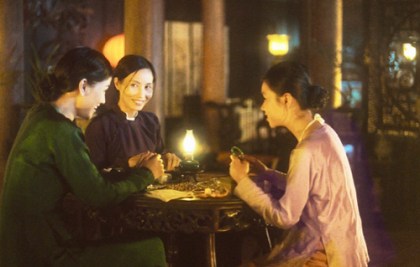
the-third-wife_gallery-2 (2)
‘The Third Wife’ Photo courtesy of MSPIFF

Inspired by true events in 19th century Vietnam, 14 year-old May is married into a rich landowner family. She is the third wife of the patriarch’s son. Her sole purpose is to produce a male descendent for him, as the first two wives have only daughters. A film with minimal dialogues, The Third Wife is a visual story. Its aesthetics and sensual, dream-like sequences wrap a harsh reality: the plight of women in a patriarchal society. Mayfair was born and raised in Vietnam, an Oxford and NYU Tisch School of the Arts graduate. This her debut feature is a quiet and potent voice in the #MeToo awakening.

***

For the full program of the 38th MSPIFF, CLICK HERE to their website.


What ‘Greta’ could have been

Greta Poster

Greta has all the ingredients to be a much more elevated film. The stalker and prey duo played by veteran French actress Isabelle Huppert and the popular young star Chloë Grace Moretz make a perfect match, director Neil Jordan has top talents in his helm.

At first, looking at the cast and the director’s filmography, I was expecting a psychological thriller. Jordan had won an Oscar for writing the original screenplay of The Crying Game (1992) which he also directed. Later he brought us The End of the Affair (1999), a memorable adaptation of Graham Greene’s novel, again as writer/director. Greta is the Irish director’s most recent feature.

With the older woman stalking a young, innocent prey storyline, Greta could have developed into a deeper, character-focused movie, with more backstory, maybe even a poignant depiction of loss, loneliness, and obsession. Actually it would have been Huppert’s forte to do just that. As Greta Hideg, a widow living by herself in NYC with only her piano music as companion, the role sheds a little reminiscence of Huppert’s Cannes winning character in The Piano Teacher (2001) directed by Michael Haneke. But here she is simply a violent psychopath.

A young, new transplant to NYC, Frances (Moretz) finds the handbag that Greta has left in the subway train. With good intention and much naiveté, she locates Greta’s address and brings it all the way to her home. The rest of the story unfolds with expected development but unexpected, sudden loud sounds aim to scare and shock. Thanks to the ‘chemistry’ between the two stars and their engaging performance, the movie holds up for the first hour. A third character, the free-wheeling roommate Erica (Maika Monroe) is a balm to a distressed Frances, and I admit, to us viewers as well.

The first 60 minutes of the movie was well grounded for some deeper development of story and characterization. However, writer/director Jordan chose the path of the horror genre and its wares, lapsing the second part into unconvincing maneuvers. Huppert as a revenger in Elle is psychologically thrilling; Huppert as a psychopath goes bonkers in Greta is ludicrous. When you hear laughter in the dark theatre during a horror movie, you can almost gauge the effectiveness of the intention.

As for the prominent leitmotif, Franz Liszt’s Liebestraum (Love Dream), it just serves to stir up yearnings for something deeper and artistically satisfying, instead of, alas, leaving us with an illusive dream.

~ ~ Ripples

**


Other Isabelle Huppert’s films reviewed on Ripple Effects:

Things to Come

Claire’s Camera


***


Books into Movies: 2019 and Beyond

Feeling the post-Oscar blues? How about turning to books, before they in turn are morphed into a movie? The following are some upcoming books being adapted into movies in various stages of development. Some are coming out soon, some just announced.

The Aftermath by Rhidian Brook

The movie adaptation starring Keira Knightley, Alexander Skarsgärd and Jason Clarke is coming out March 19, directed by Testament of Youth (2014) helmer James Kent. In recent years, WWII historical fiction has enjoyed a sensational growth in popularity, The Aftermath is another one of this highly sought after genre. The transfer to movies, while not always as effective, lacks no enthused followers. The Aftermath is set in 1946 Hamburg, a British family and a German widower and his daughter had to live under the same roof during a de-Nazification operation.

Cats: The Musical 

Based on T. S. Eliot’s collection of poems Old Possum’s Book of Practical Cats, Andrew Lloyd Webber’s musical Cats is hailed as one of the biggest hits in theatrical history on their website. Director Tom Hooper has another musical-turned-movie under his belt: Les Misérables (2012) which won 3 Oscars. Attractive cast in Cats the movie: Rebel Wilson, Idris Elba, Jennifer Hudson, Judi Dench, Ian McKellen, James Corden, Taylor Swift.

Death on the Nile & Witness for the Prosecution by Agatha Christie

Kenneth Branagh will direct Wonder Woman Gal Gadot and Armie Hammer in Death on the Nile. Branagh will reprise his role of Hercule Poirot, after starring in and directing Murder on the Orient Express in 2017. Now over forty years after her death, Christie’s influence has not waned. A movie adaptation of Witness for the Prosecution has also been announced with Ben Affleck directing.

The Goldfinch by Donna Tartt

John Crowley is no stranger to literary adaptations; his previous feature, Colm Tóibín’s Brooklyn, was nominated for 3 Oscars. This time, Donna Tartt’s Pulitzer Prize winning The Goldfinch reads like it’s written readily for the camera, considering the eclectic characters and the explosive storylines. Sarah Paulson and Nicole Kidman star. Screenplay adapted by Peter Straughan, who was nominated for a Best Adapted Screenplay Oscar for co-writing the 2012 script for John Le Carré’s Tinker Tailor Soldier Spy (2012).

In the Garden of Beasts by Erik Larson

Larson’s 2011 non-fiction is a captivating look into the power and social structure of Berlin during the emergent years of Hitler’s rule. Focus is on the the true story of William Dodd, a mild-mannered Chicago professor who becomes America’s first ambassador to Hitler’s Germany. And this is relatively hot-off-the-press: English film director Joe Wright will helm the production (See also the last entry of this post). Tom Hanks was originally linked with the role of Dodd (and a good choice I think); whether he will carry it through or just remain as producer is to be seen. This is one movie I’ll definitely watch out for. Before then, the book is a great read to prep for it.

Little Women by Louisa May Alcott

Geared for a Christmas release, this new version of Alcott’s classic is written and directed by Greta Gerwig. Gerwig is acclaimed for her take on the contemporary young woman, her psyche and struggles in films like Frances Ha (2012) and Lady Bird (2017). How will she approach Alcott’s novel of a bygone era? And if you still have Susan Sarandon, Winona Ryder, Kursten Dunst and Christian Bale from the 1994 cast stamped in your mind, now try to imagine Florence Pugh, Saoirse Ronan, Timothée Chalamet, Emma Watson, Meryl Streep and Laura Dern taking their places. Actually, not a bad replacement.

The Personal History of David Copperfield by Charles Dickens

First off, I must say this is one of my all time favourite novels, but I’m no purist. While I welcome new representations and interpretation, I still hope the upcoming movie will be Dickens-approved. A most interesting (postmodern) cast: we have Dev Patel as Davie, Tilda Swinton as Betsey Trotwood, Hugh Laurie as Mr. Dick, Ben Whishaw as the ultimate villain Uriah Heep, Benedict Wong as Mr. Wickfield. Directed by Armando Iannucci (The Death of Stalin, 2017).

Rebecca by Daphne Du Maurier 

In this remake of Rebecca, Armie Hammer will play Maxim de Winter. And who will be Mrs.? None other than Lily James, ubiquitous after Downton Abbey (Lady Rose). Do you think she will make one successful Mrs. de Winter? What I’m most interested in, however, is the production design, headed by 6-time Oscar nominee Sarah Greenwood, whose filmography includes Darkest Hour (2017), Anna Karenina (2012), and Atonement (2007) among many other titles. I think Manderley is in good hands. But will the whole production beat the classic Alfred Hitchcock noir with Laurence Olivier and Joan Fontaine? And who can be more chilling than Judith Anderson as Mrs. Danvers?

The Woman in the Window by A. J. Finn

Another wildly popular genre in recent years along the line of Gone Girl and Woman on the Train etc. is the modern day thriller-cum-unreliable-narrator (and alas, they’re mostly women!) mystery novels. Finn’s (Now what’s with the writer whose real name is Daniel Mallory using a pseudonym close to Flynn, the Gone Girl author?) NYT bestseller is turned into a movie with a top-notch cast. (Aside: do writers nowadays write in preparation for a movie?) Directed by the much sought-after Joe Wright, who’d helmed Darkest Hour (2017), Anna Karenina (2012), Atonement (2007), and Pride and Prejudice (2005). Wright has a dream cast in his hands: Amy Adams, Gary Oldman, Juliane Moore. The movie adaptation is written by Pulitzer winner, playwright/screenwriter Tracy Letts, who gave us August: Osage County.

________________

Which one(s) of the above do you anticipate most? Others not on this list?


***

The Favourite: How important is Historical Accuracy in a Period Movie?

Yorgos Lanthimos’ The Favourite is on my Top Ripples 2018 list. I added it in after I’d already posted my annual wrap. I judged it mainly on the basis of its aesthetics, film as an art form, the acting, cinematography, and overall styling.

I went into the theatre with no prior knowledge of the historical details. So, with no a priori burden as a fact-checker, I just let my curiosity lead me, and soon I was transported to a very different world in a very different time. The Favourite shows us Queen Anne’s court in early 18th C. England, where the Whigs fight against the Tories, where men wear wigs and stay indoor cheering on ducks racing or hurling fruits at a naked, good-humoured and heavy-set man (easy target) who finally slips on the fruity and juicy floor, while women play with guns and shoot pigeons outdoor, and pretty good aims they are too, both with the pigeons and in narrowly missing the human target, just as a warning.

the favourite

The film is all about the relational triangle between three women. The trio of actors are undoubtedly the distinguished assets of the production: Olivia Colman as Queen Anne, Rachel Weisz her intimate confidante Lady Sarah Churchill, and Emma Stone as Abigail, Sarah’s cousin and novice chambermaid, soon the new favourite of the Queen’s. Abigail is a quick study; in no time they are all drawn into a three-way tug-of-war. Although initially coerced by the leader of the Tories, Robert Harley (A wigged and made up Nicholas Hoult, long way from About A Boy, 2002), to spy on Anne and Sarah, who sides with the Whigs, Abigail later learns to use Harley’s influence as leverage to her advantage.

Against the historic backdrop of the war with France, the film is an intriguing look into a royal court and partisan politics, but the most meaty story is the power struggles among the three women, and how conflicting dynamics, sexual politics, emotional manipulation, jealousy, and treachery will ultimately consume all. If you’re on an existential quest for meaning, look elsewhere. This film is pure entertainment, irreverent, surreal, sumptuous in set design, costumes, make-up, and spot-on in editing and acting; but it’s not for the serious meaning seeker.

The Cinematography effectively augments the overall aesthetics. Director of photography (DP) Robbie Ryan used a fisheye lens and a roving camera to sweep wide-angled shots, giving us a lively, larger but distorted view, like looking into a fishbowl, which is totally compatible with the genre, for to say The Favourite is a comedy is an understatement. The film is more a farce, and at times outrageous to the point of gratuitous sensationalism. The effect is acerbic sarcasm.

But there are plenty pleasing things to look at as the camera captures the sumptuous set design. The fluid, almost 360º camerawork pans like an all knowing eye. That in itself is ironic, for hidden agendas are ubiquitous among the characters. Shot in 35 mm film, Ryan utilizes natural lighting, and in the dark, a single candle light, all work to serve up a classy, Rembrandt-like impression.

The music too, plays a prominent role in establishing the overall classical tone, Vivaldi, Bach, Handel… yet with a splash of contemporary touch as well, like, Elton John’s “Skyline Pigeon” on harpsichord, and piano. Incidentally, in a few scenes, a long-lasting single note or two – which I’m sure even Philip Glass would find too minimal – will repeat and repeat to pull the string of tension, keeping viewers edgy and uncomfortable. Considering Lanthimos’ previous Cannes winning films The Killing of a Sacred Deer (2017) and The Lobster (2013), The Favourite is relatively conventional in style as a period movie.

I have no favourite among the trio, all three deliver spot-on performance, lively in restraints or outbursts. Colman’s gout-stricken Queen Anne is ludicrous and simple minded, but only in appearance. In a candid moment in front of Abigail, she pours out her inner hurts, so much tragedy in her life: 17 pregnancies, none survived. The 17 rabbits she keeps in her bedchamber are symbols representing each one of her loss, twelve miscarriages and stillborn, five dead children. Doting on them is Anne’s way of dealing with her loss.

And kudos to Abigail who at one point has indeed shown genuine sympathy for the Queen’s plight. Anne is perceptive of this too, a point well earned in Abigail’s favour. Stone is well cast in her role, her initial naiveté shines through. She soon learns that is her best weaponry, and uses it well as she turns into a master of manipulation behind the youthful and innocent mask.

Weisz’s Sarah is cool, scheming, head-strong and controlling. She is the voice and brain of Queen Anne, and yet we can see too that there is a strain of care underlying the strong front. Love speaks the truth, she tells Anne at one point, and the Queen seems to accept Sarah’s opinion with docility – including comment such as “you look like a badger”, citing the smeared eyeshadow on her face – that is, until Abigail shows up.

A palace is a decadent place where power reigns supreme for whoever that happens to grab it for the moment. A mud bath for two could easily shift the dynamics of power balance. It’s intriguing and hard to discern if Anne’s fondness of lesbian pleasures is not so much a result of her innate senses but an intentional bait to control. Ultimately all three fall prey to uncensured misery. The closing shot shows there’s no winner, only the mashed up image of the two remaining in the Queen’s chamber, blurring and overlapping with the propagation of rabbits. And what are they, these rabbits, but symbols of death and remembrance of loss? Surely not a comedic ending.


~ ~ ~ Ripples

________________


After watching the film I went online to learn more about Queen Anne and the historic background of the movie. Here are some of my findings (Warning: Spoilers):

There were no rabbits – They are but director Lanthimos’ own creation. But does it matter that the real-life Queen Anne didn’t have a soft spot for bunnies? I feel they are quite effective here in the film, contrasting Anne’s soft heart and Abigail’s callous, sadistic dealing with those around her, notable is the scene where she steps on one almost crushing the poor creature flat on the floor. Quite like a movie adaptation of a book, a film is a totally different entity and art form for expression.

Abigail did not poison Sarah Churchill – I can understand, to advance the plot and consistent with Abigail’s callous scheming to get rid of obstacles in her way. However, maybe a slight apology to the real Abigail Hill in history for portraying her like a Lady Macbeth?

Queen Anne had a husband – Queen Anne married Prince George of Denmark in 1683.  She had been married for 19 years before she came to the throne and reigned for 12 years, 1702–1714. Prince George died six years into her reign in 1708. According to some historic records, their marriage was strong and she was devastated by his demise. Abigail arrived in Anne’s palace in 1704, married Samuel Masham in 1707, Sarah stripped from her royal position in 1711. There’s an overlap of several years with Anne’s husband still alive when Abigail came into Anne’s court.

There is no mention at all in the film about Anne’s husband Prince George. Anne was portrayed as a single woman with a lesbian lover, Sarah Churchill, then later shifted her favourite to Abigail. The main thrust of the film is built on a lesbian love triangle. Is that also within the creative license held by the filmmaker?

Sarah and Anne’s real relationship remains unclear – Historic records show Anne and Sarah were inseparable since childhood, thus fostering a long-time mutual devotion to each other. The two had exchanged letters with passionate descriptions. As for the new favourite, Abigail, there was rumour that a song was circulated by the Whigs suggested that Anne committed “dark deeds at night” with a “dirty chambermaid.”

Letters from Anne to Sarah still exist and it’s clear there was a deep love between them – until Anne shifted to a new favourite, and in the movie, all due to Abigail’s scheming.

In a BBC News article, Queen Anne biographer Anne Somerset and playwright Helen Edmundson, who wrote the 2015 play on the relationship between Anne and Sarah performed by the Royal Shakespeare Company, both agreed that “no one can now be entirely sure of the nature of the relationship between Anne and Sarah.” Further, “we should be wary of assuming that attitudes to sex, friendship and romance were the same as they are today.”

Such an ambiguity may just be too enticing a bait to pass by for a film director to tailor it for today’s audience. Does a period movie based on history need to be ‘faithful’ to it, or, the artist holds the creative license to imagine and create. Many period films do have discrepancies with historic facts. Perhaps, like adaptations from books, filmmakers can be revisionists as well?

***

Some links to historical background:

The woman behind Queen Anne’s reign, BBC News

Anne (1665 – 1714), BBC History

The True Story Behind The Favourite, TIME

Was Queen Anne Really Caught in a Lesbian Love Triangle? Fact Checking The Favourite, People

***

Related Post:

The King’s Speech: Fact and Fiction

Ripple Effects Turns a New Page in 2019

Ripple Effects has reached a new milestone. After almost twelve years in the blogosphere, Arti has finally fought off procrastination and taken up an upgraded version. From now on, there will be no ads even if you’re not a WordPress blogger visiting (let me know if you still see them). What more, there’s a new URL address to the Pond, aptly:

rippleeffects.reviews


But if you type in the old, longer one it will redirect you to the right place here at the Pond as well.

While birding is still my passion, I’ll be posting mostly film and book reviews on Ripple Effects. My avian friends will probably fly by during intermission.

Your two pebbles are welcome as before. Throw them in, stir up some ripples. As always, I hope you’ll find here a respite for quiet thoughts and prompting to some interesting viewing and reading. I await your visits.

***

Have you ever seen so many people lining up to go into a public library? It happened right here in my city, Calgary, Alberta, on November 1, 2018, when our New Central Library opened. 50,000 visitors in the first four days. Yes, there will be talks of books and movies here on Ripple Effects.

New Central Public Library, Calgary.jpg

The Calgary Central Library was one of Architectural Digest’s 12 most anticipated buildings opening in 2018. Check it out here.

***


Top Ripples 2018

Here’s the other one of my perennial posts, a wrap for the year. Books I’ve read and film experience that top the year for me. Here are the lists, in no particular order:

MOVIES

I’m appreciating foreign language films more and more, for they offer some of the best examples of what cinematic arts can offer, not CGI sparked spectacles. In my Top 10 list, the first four are from non-English speaking countries. They are also short-listed for the coming Academy Awards Best Foreign Language Film category. Links are to my reviews.

Roma

Shoplifters

Capernaum

Burning

A Star Is Born

Wildlife

The Favourite

Free Solo

Shirkers

The Kominsky Method

I must mention two films that I’d highly anticipated but somehow didn’t connect as I’d wanted to. Maybe if I’ve the chance to watch them again I might change my mind: Cold War and First Reform.

Two movies from 2017 which I hadn’t watched until January this year that should be mentioned here:

Three Billboards Outside Ebbing, Missouri

The Shape of Water


BOOKS

These are not necessarily published in 2018, but the best books that I’ve read this year. I’m not a ‘quantity reader’, nevertheless, a look back at my Goodreads record, I can’t believe I ate all these (links are to my reviews):

The Guermantes Way by Marcel Proust (after 3 years, finally finished)

Middlemarch by George Eliot

The Portrait of a Lady by Henry James

Pachinko by Min Jin Lee

Crime and Punishment by Fyodor Dostoevsky

Of Human Bondage by Somerset Maugham

Not Quite, Note White: Losing and Finding Race in America by Sharmila Sen

David Copperfield by Charles Dickens

The World of Yesterday by Stefan Zweig

Hillbilly Elegy: A Memoir of a Family and Culture in Crisis by J. D. Vance

***

Selective Top Ripples from past years are listed on the side bar. Click on the pictures to my reviews.

Again, thanks for visiting the Pond and throwing in your two pebbles. I’ve enjoyed every single ripple. Hope you’d found a quiet respite here for thoughts and renewal.

And to all, may 2019 bring you more great books and movies to cherish.

HAPPY NEW YEAR!

***

Update: This post should be written on the last day of the year. Since I’d posted it, I saw another film today which I feel should be included here on the Top Ripples 2018 list, and that’s The Favourite (Just opens today in our City). I’m taking The Rider out to keep the list of 10. The Rider I found I’d already included it in my Top Ripples list last year.

‘Roma’ and the Power of Childhood Memories

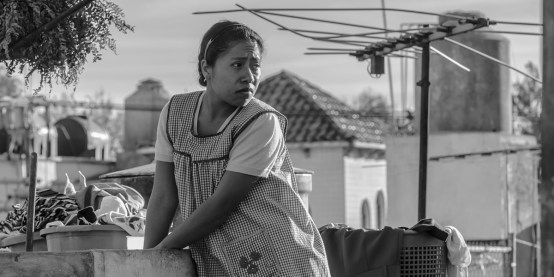
This awards season, a black-and-white film stands out. Many have noted its cinematography and director Alfonso Cuarón’s versatility, from his multiple Oscar-winning space drifting Gravity (2013) and adaptation of P. D. James’s dystopian thriller Children of Men (2006) to the current Roma, a semi-autobiographical work. Surely I agree to all these, but it’s the personal resonance that the film evokes that makes it so memorable for me.

ROMA.jpg
Yalitza Aparicio as Cleo in Alfonso Cuarón’s Roma. Photo courtesy of TIFF.

I first saw Roma at the 2018 Toronto International Film Festival in September. The large screen effects are enfolding. Cinematography is thoughtful and the state-of-the-art Dolby Atmos sound mixing–especially the climatic ocean scene towards the end of the film–was totally engulfing, as if I was alone in the raging sea, despite sitting in a fully packed theatre.

Watching it again this time on my laptop streaming from Netflix is another experience. The intimacy and allowance for repeat viewing and listening to specific dialogues (re-reading the subtitles) are the obvious benefits. Especially with our local theatres not screening the film, the streaming service has a definite role to play in bringing the worthy feature to more viewers. Certainly if Roma plays in your local theatre, do watch it on the big screen as the production was meant to be seen.

What’s most moving is the director’s gentle rendering of his maid and nanny Cleo (first-time performance by Yalitza Aparicio) in his childhood home in Roma, an upper-middle class neighbourhood in Mexico during the years 1970-71. Cuarón juxtaposes Cleo’s personal ordeal with the political backdrop of the time, and weaving an unassuming life of a maid with episodes of an earthquake, a fire and a threatening ocean climatic scene. Other than these, the everyday work of a maid are deceptively mundane, for underlying are the emotive elements of human relationships.

Cleo is an essential member of the household, cleaning, cooking, serving, and taking care of the four children and their parents. She’s the one who puts the younger ones to bed and wakes them up in the morning. From the nuanced, naturalistic framing and some deeply affective moments, Roma is an ode to those who care for children not just out of duty but genuine love.

The reciprocal sentiments from the children, mom Sofia (Marina de Tavira) and grandma Teresa (Verónica García) make the glue that hold the family together at a critical time when the father (Fernando Grediaga) disappears, supposedly on an academic trip to Quebec but coincidentally is seen on the street with another woman. Here the role played by Cleo, a maid, is delicate and precarious. “No matter what they tell you, we women are always alone,” wife Sofia says to Cleo one night returning home by herself half drunk. Cleo shares her pain.

The film belongs to Yalitza Aparicio who plays Cleo with unadorned naturalness. Before this first time acting, she was a preschool teacher. This could well explain her instinctive fondness for the children under her care in the film. Cleo has her personal sad experience with a young man with a different agenda, and it is the family and the children that rekindle her zeal after a personal tragedy, a remarkable exchange of mutual support and kindness.

As the cinematographer himself, Cuarón’s planning of shots is meticulous and masterful. The camera captivates from the opening credits. We see the close-up frame of what looks like clay tiles of the ground, yes, they are, as water is splashed on them and sounds of sweeping and cleaning are heard. As the story unfolds we learn that it is Cleo cleaning dog wastes in the family porch. But don’t lose sight of this seemingly mundane scene. Once water is splashed on the flat, dirty tiles they reflect an open sky above with an airplane flying across from afar. That is the exact ending shot of the film. From waste-filled clay tiles on the ground to the open sky, water is the agent of reflection, a cleansing element, and towards the end, water marks a confirming love and new zest for life.

Last week, I made a long distance phone call to the maid and nanny of my family when I was growing up in Hong Kong. She is 97 years old now and living on her own, still goes to the market to buy fresh ingredients to cook for herself. I was able to chat with her and send well wishes. Childhood memories are powerful markers of identity and experiences; thanks to Roma for evoking such while one is unaware, as it works magic in creating new imagery to sustain them.


~ ~ ~ ~ Ripples


***

A Star is Born and the Dilemma of Success

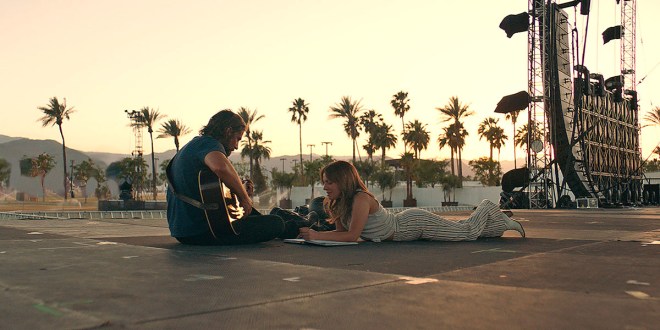
Bradley Cooper and Lady Gaga walked the red carpet at the Toronto International Film Festival (TIFF) this September for the North American premiere of their movie “A Star is Born”, a Gala presentation at TIFF. Now the movie reaches the general public as it is released in theatres worldwide.

A_STAR_IS_BORN
Bradley Cooper as Jack and Lady Gaga as Ally in “A Star is Born”. Photo courtesy of TIFF.

This is a bold and spectacular debut for both of them, Cooper as first time director, and the superstar singer her first leading movie role. The two manifest great chemistry on screen, casual and heartfelt. Cooper plays a famous singer Jackson Maine discovering the sensational voice and talent of a struggling singer/songwriter, restaurant worker Ally, a stripped-down, no (or minimal?) make-up Lady Gaga. It’s also a sad story as one star rises just as fast as the other falls like a meteor, self-destruct by alcoholism.

The love story begins with Maine searches for a drink after a performance one night as he has emptied the bottle in his car. His driver roams the streets for any bar that’s still open. They find one and Maine stumbles in just in time to hear Ally begin her gig. The song that she performs hooks and wows him. It’s “La Vie en Rose“, the iconic number by the legendary French singer Edith Piaf. That’s the inciting incident of the movie.

After the song he goes backstage, needing no introduction; he is Jackson Maine. He sits beside her and watches her take off her make-up, then with her permission, helps her peel off the Edith Piaf thin-lined eye brow. It’s just pasted on, not real. But what’s authentic is her voice, which Jack already knows, and he’ll soon discover, her heart as well.

That night, the two sit in the parking lot outside a grocery mart and chat into the night. Why doesn’t she write songs and sing her own work? People like her songs alright, but not her looks, she tells him. She’s self-conscious about her nose. He traces her facial features tenderly with his finger and tells her she’s beautiful. When his driver drops her off, as she’s walking up to her front door, he calls out from the car window: “Hey”. She looks back, he says: “I just wanted to take another look at you.” This line will later become the ominous turn into a heartbreaking end.

It’s Cooper’s directorial debut, and from this feature, we can see he’s a meticulous, sensitive and conscientious helmer. He catches and releases the right amount of tension and emotion with expert timing. His love lines are nuanced, casual yet touching. His singing is seasoned, a bit raspy and therefore quite moving. A Star is Born is remarkable achievement considering he’s the director, co-writer, actor, singer, and co-songwriter, with Lady Gaga and Lukas Nelson (son of Willie) of the 17 original songs in the production.

Kudos to Lady Gaga, other than a mesmerizing voice, her acting looks to be another talent that’s authentic; indeed, a star is born with this movie debut. But maybe that shouldn’t be surprising. She’s been a bold and versatile performer for a long while. It’s the unplugged looks and demeanour in the movie that’s a pleasant surprise. In reality, she’s already a supernova, so where will this further catapult her career? How will movie success affect other aspects of her life?

In the film, the change of Ally from a plain-looking, struggling artist to a performing star with dyed hair, showy costumes and vibrant dance steps stir Jack to remind her to go deep into her soul. Nothing’s perfect. Success comes with a price. Ally handles it relatively well. What is authentic? Surely not the appearance, the stage persona. At least, she still knows her heart. It looks like Jack has a harder time dealing with Ally’s success than the crumbling of his own. That still may be the easier part when compared to conquering the demon of alcoholism.

The very story of A Star is Born is itself a cautionary tale. Interestingly, Hollywood loves this story. The Cooper and Gaga version is the fourth time the tale is told. The very first A Star is Born back in 1937, its screenplay by Dorothy Parker, was based on a 1932 movie What Price Hollywood? directed by George Cukor. Imagine someone back in 1932 was already mulling on this question.

Cukor later directed Judy Garland and James Mason in the 1954 remake. Fast forward to 1976, Barbra Streisand and Kris Kristofferson starred in another version, this time Joan Didion and her husband John Gregory Dunn co-wrote the screenplay, turning the limelight to the musical stage from the movie industry. The 2018 Cooper-Gaga reprise gives credit to Didion and Dunn’s script.

In a perfect world, artistic success can find an ideal integration and balance with popularism and consumerism, while addictions are absent, superficiality and shallowness all but banished. A perfect scenario, but not in the real world. In the real world, we have stories, some repeated and same old but in different versions. No matter how many times they’ve been told, we still embrace them. All because they are real.

***

TIFF-launched foreign language films shooting for Oscars 2019

Watching foreign language films could be an acquired taste for some, not unlike eating sushi. Once you’ve gotten over the seemingly counter-intuitive idea of eating fish raw and allow the soft texture to melt in your mouth, you’ll be pleasantly surprised by the cold freshness and welcome the brain-stirring sting of the wasabi, as well, appreciate the sweet taste when lightly dipped in soya sauce, balanced by the blandness of the vinegared rice morsel. A delightful exploration.

Film festivals are the best venues for one to have a taste of these international, cinematic delicacies. And as usual, the 43rd Toronto International Film Festival (TIFF) this September was a launching pad for films from all over the world, several were subsequently announced as their country’s official entry to the upcoming Oscars Best Foreign Language Film race.

shoplifters_06

“Shoplifters”, this year’s Palme d’Or winner and Japan’s official entry to the
91st Oscar Best Foreign Language Film race.  Photo courtesy of TIFF

The following is the list of TIFF selections that made it to represent their country at the 91st Oscars. Posted also are their premiere status at TIFF. Some of these I’d seen at the Festival and since reviewed (just click on the links). More reviews are forthcoming. The Oscar nominations will be announced Tuesday, Jan. 22, 2019.

**

El Angel, Argentina, dir. by Luis Ortega, North American (NA) Premiere

Hidden Man, China, dir. by Jiang Wen, International Premiere

Birds of Passage, Columbia, dir. by Cristina Gallego & Ciro Guerra, Canadian (CA) Premiere

Sergio and Sergei, Cuba, dir. by Ernesto Daranas, NA Premiere

Winter Flies, Czech Republic, dir. by Olmo Omerzu, International Premiere

Never Look Away, Germany, dir. by Florian Henckel von Donnersmarck, NA Premiere

Sunset, Hungary, dir. by László Nemes, NA Premiere

The Cakemaker, Israel, dir. by Ofir Raul Graizer

Dogman, Italy, dir. by Matteo Garrone, CA Premiere

Shoplifters, Japan, dir. by Hirokazu Kore-eda, CA Premiere

Capernaum, Lebanon, dir. by Nadine Labaki, NA Premiere

Roma, Mexico, dir. by Alfonso Cuarón, CA Premiere (Review forthcoming)

Cold War, Poland, dir. by Pawel Pawlikowski, (Review forthcoming)

Burning, South Korea, dir. by Lee Chang-dong, NA Premiere

Border, Sweden, dir. by Ali Abbasi, NA Premiere

The Wild Pear Tree, Turkey, dir. by Nuri Bilge Ceylan (Review forthcoming)

**

The 91st Academy Awards ceremony will take place Sunday, February 24, 2019.


‘Hotel Mumbai’ captures both terror and resilience in the tragic attack

On November 26, 2008, the City of Mumbai, India, was under siege by terrorists in a co-ordinated shooting and bombing attack that lasted four days. For long hours until security forces arrived from outside of the City, twelve sites in Mumbai were attacked and civilians were gunned down defenceless or taken hostage.

An Australian production, Hotel Mumbai had its world premiere at the 43rd Toronto International Film Festival in September, 2018. Director Anthony Maras in this his debut feature captures the horrific attack ten years ago with a pace that is intense and sweeping, leaving viewers breathless as they watch terror unfold on screen, acts after acts of senseless violence. But don’t let this drive you away.

The setting of the thriller Hotel Mumbai is the luxury heritage Hotel Taj Mahal Palace, or the Taj, where many foreign, renowned personalities had frequented. It was one of the twelve targets of the terror attacks, for obvious reason. Gunmen armed with AK-47 assault rifle and hand grenades took foreigners hostage at the five-star hotel and shot point-blank many others. In the aftermath, 31 in the hotel were killed, almost half were staff refusing to escape but stayed to defend and assist the trapped hotel guests.

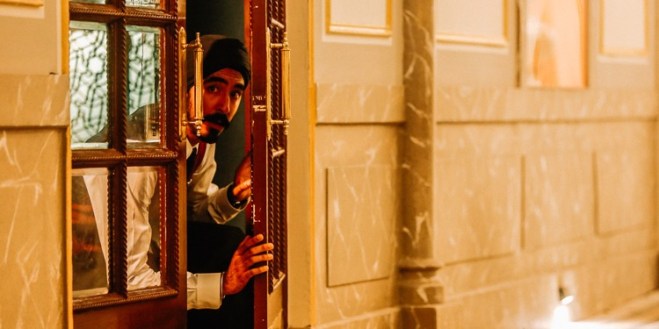
Hotel_Mumbai_0HERO (1)
Dev Patel as Arjun in “Hotel Mumbai”. Photo courtesy of TIFF.

The storylines following several guests in the hotel are particularly gripping, like Sally (Tilda Cobham-Hervey) hiding in a closet caring for a baby who wouldn’t stop crying as the baby’s parents David (Armie Hammer) and Zahra (Nazanin Boniadi) are trapped somewhere else in the hotel, trying to get to their infant son.

Dev Patel plays staff server Arjun. The turban he wears makes one of the guests fearful. A crisis situation could tip either way, as an opportunity for understanding and the breakdown of barrier, or an incendiary fuse leading to deeper hatred and animosity. In a volatile situation as the hotel is besieged, complications could be deadly. But Arjun exudes ample dignity and generosity. That turban will later become a symbol of selfless grace.

The consoling breathers and the meaningful elements in the film then were these acts of kindness and courage. Maras captures the human foibles in the face of dangers, as well the strength of the hotel staff in protecting their guests. Their sacrificial, heroic acts render the film not merely a record of atrocity, but a gratifying chronicle of resilience and bravery.

The bullet-riddled and fire damaged five-star hotel was fully reopened after only twenty-one months. A special commemoration was held and a monument set up to honor those who died.


TIFF Hotel Mumbai Press Conference (1)
“Hotel Mumbai” Press Conference at TIFF. From left: Director Anthony Maras, actors Dev Patel, Tilda Cobham-Hervey, Nazanin Boniadi, Anupam Kher, Jason Isaacs, and Armie Hammer (back). Photo by Diana Cheng

There was a good representation of main cast members at the press conference of the film, moderated by Richard Crouse of CTV. Present were director Anthony Maras and actors Dev Patel, Armie Hammer, Nazanin Boniadi, Jason Isaacs, Tilda Cobham-Hervey, and Anupam Kher. They all commended the hotel staff for their extraordinary courage, some they had met in person who were survivors of the attack.

Upon talking with hotel staff and understanding the actual events, the actors were impressed that small acts of kindness were the essence of resistance. There were staff who had escaped but went back to save hotel guests. Some in the kitchen would put cookie sheet inside their clothes as shield to protect themselves in order to cover guests as they escape. One particular poignant observation they all felt was the breakdown of barriers as both staff and guests were all victims of the horrific act of violence. All racial and financial barriers came down in the face of crisis.

The cast also stressed the point that the perpetrators were all misguided and brainwashed young men. Nine of the ten gunmen were killed. But the mastermind, called “the Bull” in the film—who was in constant contact, directing the attackers throughout by means of their cell phones—was never caught.


***


Diversity Wins at TIFF 2018

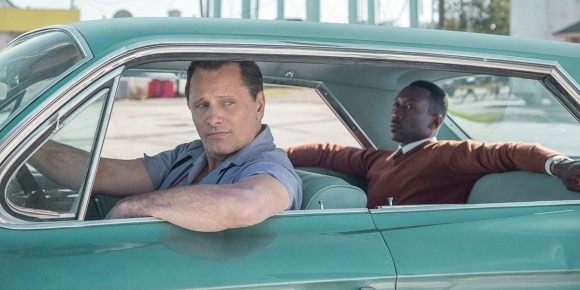
It’s a wrap for the 43rd Toronto International Film Festival as the awards were handed out on Sunday, September 16, 2018, at the TIFF Bell Lightbox Theatre 1. The top prize, the Grolsch People’s Choice Award went to Green Book, a world premiere at TIFF18. Directed by Peter Farrelly, the comedy-drama stars Mahershala Ali as classical pianist Don Shirley and Viggo Mortensen as a working-class Italian-American bouncer getting the job to drive Ali on the road in the American South during the 1960’s. Ali won an Oscar for his role in Moonlight (2016), Mortensen is a two-time Oscar nominee. Looks like the film has just got a huge boost with this win and will travel far in the upcoming Awards Season.

greenbook
Viggo Mortsensen driving Mahershala Ali in “Green Book”. Photo courtesy of TIFF.

If Beale Street Could Talk, a world premiere at TIFF18 and director Barry Jenkins’ follow-up to Moonlight (2016) was the People’s Choice Award First Runner-Up. Based on the novel by James Baldwin, the film tells the love story of a young African American woman trying to prove her imprisoned lover’s innocence. In the TIFF webpage, the film is described as a ‘gorgeous tone poem on love and justice.’

ifbealestreetcouldtalk_01
KiKi Layne and Stephan James in “If Beale Street Could Talk”. Photo courtesy of TIFF.

Alfonso Cuarón’s Roma (my review) came third in the People’s Choice Award. A Canadian Premiere at TIFF18, it is an artistic rendering of a young maid’s experience in a middle-class home in Mexico City during the 1970’s. Of note is the black-and-white film is regarded as a semi-autobiographical account of Mexican director Cuarón, the first Hispanic and Mexican to win the Academy Awards for Best Director with his sci-fi work Gravity (2013).

ROMA.jpg
Yalitza Aparicio as Cleo in Alfonso Cuarón’s “Roma”. Photo courtesy of TIFF.

The high-profile contenders First Man directed by Damien Chazelle with Ryan Gosling as astronaut Neil Armstrong, and Bradley Cooper and Lady Gaga’s A Star is Born did not place.

TIFF’s People’s Choice Award winner is often regarded as a predictor of the next Oscar Best Picture. Past winners that went on to capture the Oscar include Slumdog Millionaire, The King’s Speech, and 12 Years A Slave.

Capturing the People’s Choice Documentary Award is Free Solo, International premiere at TIFF18, directed by E. Chai Vasarhelyi and Chinese-American mountaineer/photographer Jimmy Chin. The duo chronicled the renowned rock climber Alex Honnold’s scaling free solo — without safety ropes — up the 3,000-foot cliff of El Capitan in California’s Yosemite National Park.

People’s Choice Award from the Midnight Madness program went to the The Man Who Feels No Pain, World Premiere at TIFF18, directed by Vasan Bala, one of the young, new wave filmmakers in India. This is a cinematic fusion throwing in Hong Kong martial arts comedy Stephen Chow styling, the agility of Jacky Chan, the Bollywood sensation, the American Superhero momentum, and the inspiration of Buster Keaton. Fits right in the Midnight Madness program of introducing new works by a new generation of filmmakers.

Platform Prize went to Cities of Last Things, directed by Ho Wi Ding. This world premiere at TIFF18 is a collaboration of filmmakers from Taiwan, China, USA, and France. From TIFF’s webpage, “a seamless blending of genres, from sci-fi to noir to romance, the Malaysian-born Ho commandingly employs cinematic language as a tool to discuss the root of our collective sadness, which is perhaps the very thing that makes us human.”

NETPAC Award for the world premiere of international and Asian film went to The Third Wife from female writer-director Ash Mayfair of Vietnam. A film about a 14-year-old girl’s struggles after she becomes the third wife of a wealthy landowner, set in 19th century rural Vietnam.


***


Dano’s ‘Wildlife’ elicits showcase performance from Carey Mulligan

Wildlife is a detailed capture of the dissolution of a marriage, from the point of view of the couple’s only child. It is also a coming-of-age story as 14 year-old Joe comes to realize the elusiveness of permanence in his parents Jerry and Jeanette’s once loving relationship. If all these names sound too common, that just might be one implication of the film – a specific look into a general human condition.

Wildlife
Carey Mulligan and Jake Gyllenhaal as Jeanette and Jerry in ‘Wildlife’. Photo courtesy of TIFF.

The film adaptation of Richard Ford’s novel is a selection in the Special Presentations program at the 2018 Toronto International Film Festival, screened as a Canadian premiere. It is the directorial debut of actor Paul Dano, co-writing the screenplay with Zoe Kazan (The Big Sick, 2017).

To those unfamiliar with Dano, maybe these titles will help you locate where he’s coming from and appreciate the variety of works he’s been in. Remember Little Miss Sunshine (2006)? He’s Olive’s older brother Dwayne who reluctantly gets into the yellow VW Beetle van and takes a vow of silence, or the dubious preacher confronting Daniel Day-Lewis in There Will Be Blood (2007)as the harsh slave driver in 12 Years a Slave (2013), or in the 2016 TV mini-series War & Peace as Pierre. Not the handsome leading man but always the character actor.

The small family in Wildlife consists of Jerry Brinson (Jake Gyllenhaal), a golf pro who has just moved into the town of Great Falls, Montana, with his wife Jeanette (Carey Mulligan) and son Joe (Ed Oxenbould). Just as they thought they’re settling in Jerry is fired from his job as a golf instructor in a country club. After waiting for a while for her husband to absorb the loss of job and pride but with no solution in sight to the household finance, Jeannette decides to come out of the home to look for work, ultimately finding a position as a swimming instructor at the Y.

That just may not be the cause of the conflict. What begins the total meltdown is when Jerry, out of the blue, packs up and follows a group of men heading to the forests to fight a wild fire fiercely raging near Great Falls, not knowing when he will return or if he can get out of it unscathed. Feeling utterly alone and abandoned, Jeanette begins to react to her precarious situation by venting with some out-of-character behavior. The successful businessman Warren Miller (Bill Camp), Jeannette’s swim student at the Y, just happens to be a convenient escape route. All these familial changes and development are observed uncensored by their sensitive teenaged son Joe.

From this his first attempt at directing, viewers would be gratified to find Dano to be an actor’s director; especially with the excellent cast he has under his helm, this is doubly rewarding. Dano lets the camera rest on the close-up faces of his characters to elicit superb performance, taking his time to capture the nuances in restraints, outburst, or just about any sort of inner feelings to surface.

Carey Mulligan.jpg
Carey Mulligan in ‘Wildlife’. Photo courtesy of TIFF.

This is one of the best, if not the best, performance I’ve seen Carey Mulligan in, changing from the loving wife and devoted mother to the angry and desperate single mom with a son to raise, to totally losing it, testing the boundaries of norms and behavior, and finally to the determined woman striking out on her own yet still bound by unseverable, familial ties. Mulligan deserves an Oscar nom for her role as Jeannette.

Watching his mother get close to Miller, Joe is torn between devotion and incredulity.  Although a successful businessman, Miller is a limping, older man. Joe is utterly perturbed by his mother’s capricious turn. Dano creates some poignant scenes depicting the interactions between mother and son during dad’s absence from home. Often the passive observer, Joe is restrained with countless questions he cannot express in words.

Mulligan gets all the juicy lines. After Jerry is gone to fight the wild fire, Jeanette brings Joe along to Miller’s house for dinner, putting on heavy make-up and dressing in a seductive night gown. She dances with the man intimately in front of her son. In another occasion, she dons cowgirl attire and admires herself in front of the mirror, reminiscing her younger days. Jeanette answers her son’s dazed expression with this line:

“It’s good to know your parents were once not your parents.”

There is a former life in every parent that even the closest child would not have known or understood. There are many thought-provoking lines in the film, but this one is particularly poignant.

Dano takes the liberty to follow the spirit of the text and creates a cinematic ending. His visual wrapping up is clear and spot-on, especially the scene at the studio where Joe works part-time. The final frame of the three sitting down together for a studio shot with Joe between his parents speaks volumes. A wild fire may have been put out, but the smouldering lingers; and the one keeping it under control may well have been a teenaged firefighter.


***


Update Nov. 16:

3 Nominations for “Wildlife” at the Film Independent Spirit Awards – Best First Feature, Best Female Lead, and Best Cinematography.