Silence the Movie Arrives in the Most Unwelcome Time


Why is La La Land being embraced so readily and Silence shunned? Evidence from box office sales and nominations during this Awards Season clearly show the difference between the two. Just now, the Oscar Nominations are in. La La Land: 14  Silence: 1

Allow me to speculate.

One in glamorous primary colours, the other shrouded in misty shades of gloom. One a fantasy, romance in song and dance, the other realism of suffering, persecution, death. One is layback, relaxing entertainment, the other is 2.5 hours of intense engagement. One charms, the other disturbs. When offered at the end of a tumultuous year, and as we step into a new one when hopes and fears are renewed, the choice is easy. La La Land is an amiable feature (although I won’t get into the overrated debate here), but Silence sure doesn’t deserve the disregard it’s getting.

It’s just that Silence arrives in the most unwelcome time. But then again, there’s no suitable time for a feature like it. Isn’t it revelatory and even prophetic that this film, probably director Martin Scorsese’s most important in his oeuvre, seems to be a total outcast, a lost cause? Exactly, that’s just as it would have ended up.

It would be ironic, wouldn’t it, for a film about spirituality, other-worldly and intangible values, and challenges of faith in the face of persecution to be celebrated by this power and fame-obsessed, material world? For it to receive praise and honor would be the ultimate irony indeed.

In a society which aims at being great, where ratings, numbers, wealth and social media status define success, where loudness rules and silence shunned, it is only expected that a film entitled “Silence” will not be cheered on. It runs against the grains of popularism, for it’s a film about failure.

I have posted a book review of Silence back in December, 2016. In it is a historical note. To summarize, Christianity was introduced to Japan by Francis Xavier in 1549. It was well received then, and by 1600, there were 300,000 Christians in Japan. But the Edo Period beginning in 1603 changed everything. Ruler Tokugawa Ieyasu ordered expulsion of foreign influences and Christianity had to survive underground. Torture was used to drive Christians to disavow their faith. Stepping on the fumie, a brass plague engraved with a Christ figure, is the convenient way to show one’s apostasy, leading to instant release. During this time, the Catholic Church received the news that the stalwart leader of the Jesuits mission in Japan, Father Christovao Ferreira had disavowed his faith and became an apostate. He had since lost contact with the Church.

The film doesn’t need many words to explain these historical events, for its visuals are self-explanatory. It starts off with father Ferreira’s apostasy, apparently under duress as he sees his flock being tortured to death. Liam Neeson’s gaunt and horrified expressions speak all. That’s the power of cinema.
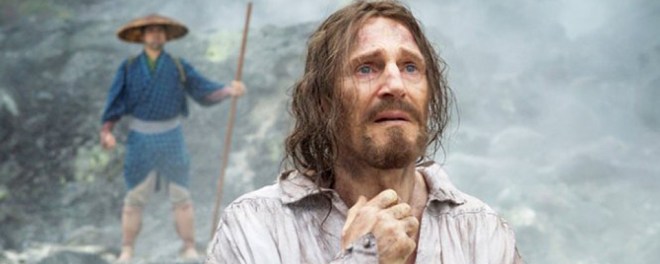
ln-in-silence

Back in Portugal, two young priests, Father Sebastian Rodrigues (Andrew Garfield) and Father Garupe (Adam Driver) appeal to their superior Father Valignano (Ciarán Hinds) to allow them to go to Japan to look for Ferreira and to seek the truth of the situation. Thus begins the story.

I’ve long learned not to judge a movie adaptation according to how loyal it is to the book, for the two are different art forms and a direct transposition may not be possible. But here is one exception. I’m glad that Scorsese’s Silence, co-written with screenwriter Jay Cock (Gangs of New York, 2002), is surprisingly faithful to Shusaku Endo’s historical novel, and that ‘faithfulness’ is both desirable and most admirable here.

By following Endo’s storyline to the dot, extracting pertinent text from the book as dialogues and voiceover, and spending time to cover the all important Epilogue, the director shows his desire to honour the author’s work, a wish that had long hidden in his heart. Indeed, it has been twenty-five years since Scorsese first read Endo’s masterpiece and was so deeply moved that he knew he needed to film it one day.

Another way we see Scorsese’s regard for Endo is his restraint when portraying the tortures of Japanese Christians. What we have, surely, is visual, graphic scenes which, while reading the book are left to the author’s descriptions and our imagination, but on screen are left to the director’s discretion. Kudos to Scorsese, those scenes are done with much restraints. This was a welcome surprise to me. I went into the theatre braced for his treatment like the ending scene of Taxi Driver (1976), or the bloody mayhem in Gangs of New York (2002). I need not have worried. But what I was hit with I had not expected.

Scorsese can definitely unleash more gore in Silence. But he chose not to. The scenes in the film are done with the utmost respect and dignity for the persecuted. Here’s a confession, I’m not one who easily succumbs to emotions, never need a Kleenex while watching a movie in the theatre. Here in Silence, as I watched the three Japanese Christians hanging on the makeshift crosses at the seashore swallowed up by the rising waves, tears slowly streamed down my face. What more, the guy sitting behind me was sniffing away, uncontrollably.


The main actors are powerful in taking hold of our emotions. Liam Neeson’s painful expressions both at the beginning and the end are very moving. Adam Driver lost 50 pounds for his role. His skeletal form is almost painful to watch. The Japanese actor Yôsuke Kubozuka is effective as Kichijiro, the ‘Judas character’.

The emotion of the whole film, however, is driven by two actors: Andrew Garfield as young father Rodrigues and the calculated, ruthless inquisitor Inoue played by Issei Ogata. The two form a stark foil: the hot-blooded idealist slaughtered slowly by the cold, harsh ruler. A tidbit for those who had watched Taiwanese director Edward Yang’s Yi Yi (2000), Ogata is Mr. Ota in there.

Garfield is effective in leading us to feel for Father Rodrigues’ sad and tragic journey. Martyrdom is the path to glory, and an easy way out. But no, Rodrigues isn’t given that luxury. Rather, he is faced with a most precarious test, tearing his soul and conscience, that is to apostatize or see his flock die by torture. It is unfortunate that the film has not been well received. Garfield deserves a nomination for Silence.

While it may be about the hidden church that runs underground to avoid annihilation, Silence is more about one man’s struggle with faith and doubt, and ultimately, making his choice and living with it for the rest of his life.

Here’s the rub. In this ‘either or’ society we live in, Rodrigues’s predicament is particularly distressing for us. It is often convenient and tempting to oversimplify issues and splitting them into clean-cut opposing sides, either B or W, L or R, D or R. In Silence, we’re confronted with yet another dichotomy: Devout or Apostate. What Scorsese reveals to us with his last scene is that, the line separating the two is blurry and permeable.
silence-and-beauty-free-chapter-mako-fujimura-1

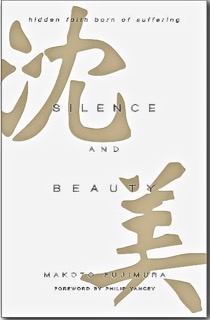
In his compendium book to the movie, Silence and Beauty: Hidden Faith Born of Suffering, Japanese-American artist Makoto Fujimura, who is special adviser to the film, discusses the necessary existence of a ‘hidden’ identity to those practising Christianity in that historical era in Japan. For 250 years during the anti-foreign, ironclad Shogunate rule of the Edo Period (1603-1868), the only way to survive as Christians was to become hidden, Kakure Kirishitans as they were called in Japan. Stepping on the fumie, as the officials say, could well be only a formality, for it likely did not represent the heart. It is unfortunate that the persecuted Kakure Kirishitans had to succumb to this double life. As outsiders looking in, should we be so easy to judge them? Silence challenged us with that question. Unlike the bold declaration of Western Christianity, the Kakure Kirishitans held on to an inner faith that on the outside was wrapped with weakness and failure, total submission to the ruling authority. A painful, paradoxical existence.

The crucial, final scene in the film, which is the Epilogue of Endo’s book, holds the key to the question. I appreciate Scorsese’s closure. That is also how Fujimura explains Endo’s viewpoint. No spoiler here. Cinematically, the production is an artistic and powerful work worthy of Endo’s masterpiece. Scorsese’s quarter-century quest had not been in vain. Being recognized or not in the Awards Ceremonies just may not be as important an issue.

Of course, there’s always the bottom line. After investing so much resources, time and talents in the production, it is only natural to wish for a positive return. Could the voice that speaks to Rodrigues at that most crucial fumie moment speaks also to Scorsese as well regarding his film Silence?

“Trample! Trample! It was to be trampled on by men that I was born into this world…”


~ ~ ~ ~ Ripples


***

CLICK HERE to read my review of the book Silence by Shusaku Endo

Lion: From Personal Memoir to the Big Screen

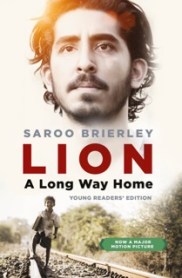
The memoir A Long Way Home by Saroo Brierley, first published in 2014, has officially changed its name to Lion. This may well be a metaphor for its author. Only a change in the name, but everything inside remains intact. From a child lost on the streets in Calcutta, India, to a man grown up in Hobart, Tasmania, Saroo remains who he is. He writes in his memoir: “I now have two families, not two identities. I am Saroo Brierley.”

lion-movie-tie-in-edition

Lion (previously titled A Long Way Home) the memoir by Saroo Brierley

5 year-old Saroo was lost in a Calcutta (now Kolkata) train station, almost a thousand miles away from his home in a small village, Ganesh Talai. With no language (a different dialect), not clear of the name of the place he calls home (mispronounced by him as “Ginestlay”) or even his own last name, Saroo is utterly alone and helpless. Living dangerously on the streets of Calcutta for some weeks, he was picked up and sent to a youth detention centre, which was only a tiny bit safer from the streets. Subsequently Saroo was sent to an orphanage, Nava Jeevan (“new life”), run by the benevolent Mrs. Sood. There she arranged for his adoption by a loving Australian couple, John and Sue Brierley.

That could have been the happy ending of a tumultuous experience for Saroo, as he grew up in calm and beautiful Hobart, Tasmania, well adjusted and dearly loved by his adoptive parents. But for twenty-five years, Saroo has not forgotten his first home. As he grew, he was all the more tormented by the memory of his birth mother, and the brothers and sisters who had shared the first five years of his life. An important message he has always wanted to convey to them is that he’s ok, and that they need not worry about him. For years he has been haunted by the thoughts that his mother and older brother Guddu must have been devastated with losing him without a trace, as it was Guddu who had left him alone on a bench at the train station near his home, telling him to stay put as Saroo was too sleepy to tag along on that fateful night.

With the help of Google Earth twenty years later, and vague memories of the physical features of his home surrounding, Saroo finally located his village and flew back to India to search for his mother. They reunited a few doors down from his old home, as his mother had persisted all these years to not move away but stay there to wait for him, hoping against hope that her son would come back to her. The photo inserts in the book add even more poignancy as we see the Brierleys meet Saroo’s birth mother Kamla in India.

Utterly moving, authentic, genuine and real. While Slumdog Millionaire may be entertaining and eye-opening for those of us who are not familiar with Indian’s millions of children living on the streets, Lion is a true portrayal of one lost child, determined to find his way back home twenty-five years later across the oceans.

**

Lion the Movie

Is the movie any good? For those who think it’s always the book that’s better, here’s my answer: Yes, very good. Premiered at TIFF16 last September, Lion has since garnered awards and nominations, including young Sunny Pawar, his debut performance as an actor. Kudos to all those involved in transporting this story from a personal memoir onto the big screen for international viewers. If not for the movie, even though it has been reported in India and Australia, I for one in North America would not have known about this real life miracle.

So, hats off to Australian director Garth Davis, screenwriter, the acclaimed Australian  poet/writer Luke Davies, and the cast, Sunny Pawar as young Saroo, Dev Patel (Slumdog Millionaire, 2008) as the adult, Nicole Kidman and David Wenham the adoptive parents, Rooney Mara the girlfriend, and the cast of Saroo’s Indian family. They have delivered an authentic and moving real-life story.

Basically structured into three parts, the first focuses on five year-old Saroo, living in poverty but is loved by his mother and siblings. One night he pleads with his older brother Guddu to go with him to his night work, salvaging garbage left on trains. After reaching the closest station from his home village, Saroo is too tired, so he stays behind sleeping on a bench to wait for Guddu. He wakes up in the middle of the night to find himself all alone. He gets on one of the parked train to look for Guddu but falls asleep again in there. He wakes to his horror as he finds he is being transported in the speeding train further and further away from his home.

Cinematographer Greig Fraser (Zero Dark Thirty, 2012; Bright Star, 2009) uses his camera effectively showing some haunting images, a horrified 5 year-old, alone on a train speeding to the unknown. Throughout the film as well, he tells the story poignantly with his camera. Scores composed by Volker Bertelmann and Dustin O’Halloran add power in eliciting emotions, taking us closely with Saroo on his incredulous life journey.

Second part we see Saroo grown up in Australia, having a good relationship with his adopting parents but troubled nonetheless by his past. The frustration of having only vague memories of the physical features of the train station near his home makes it an impossible task to search for an unknown town in the vast land of India. Thanks to Google Earth and his unyielding perseverance, the adult Saroo was rewarded with a dream come true.

While the physical locales might be distant and vague, memories of his childhood experiences are lucid and close. In the second part, the director and screenwriter have deftly inserted Saroo’s memories of his childhood days in India, enriching the screen story of his intimate relationships with his family. These inclusions add to the texture and are placed aptly to enhance the continuity of the child and the man. Very effective.

I welcome the quiet and slower pace in Part Two, and appreciate Patel’s portrayal of inner turmoils. Kidman has done an amiable job as the adoptive mother trying to hold the family together, with two Indian boys, now grown men, both deeply troubled by their past in different ways. If Part One is about the outward dangers of a lost child, Part Two illustrates the internal turmoils one still wages into adulthood.

Part three is that triumphant and exhilarating reunion. How we want to see a happy ending by then. Although we know that is forthcoming, it is still exciting and gratifying to embrace the uplifting end. Lion is a story well told cinematically, and worth every minute of a viewer’s attention. Do wait till the very end before you leave the theatre, the photos at the closing credits make a beautiful wrap. And why the title Lion? That’s for you to find out.

~ ~ ~ ~ Ripples 

for both Book and Movie

***

Related Reviews on Ripple Effects:

Slumdog Millionaire

The Best Exotic Marigold Hotel

The Second Best Exotic Marigold Hotel

The Lunchbox

Books before Films 2017

The first movie I watched in 2017 is Alfred Hitchcock’s Vertigo. This time around, I noticed that it was based on a book (1954 French crime novel by Boileau & Narcejac). Just reinforced a fact that’s so interesting, and mind-bloggling for me, that a major portion of movies are adapted from books and printed sources. Not that I mind at all.

Here are some more for 2017 and beyond, on big and small screens. Some have set dates of release, some still in development. No harm reading ahead (as if you need more to stack higher that TBR pile), or rereading.

***

a-man-called-oveA Man Called Ove by Fredrik Backman

Grumpy old man, Swedish style. Through Ove, writer Backman shows us not so much about getting old but becoming human. Never too late to change. A thoughtful and poignant story as we follow grumpy Ove, the strict enforcer of by-laws for his condo association. Backman is clever in leading us to discover slowly why Ove behaves as he does. For me as a reader, it’s a lesson on empathy and understanding. The film adaptation is Sweden’s official entry to the coming Oscars, now one of nine remaining in the Best Foreign Language Film category. Nominations announcement on Jan. 24, 2017. (Update: A Man Called Ove is now an Oscar nominee for Best Foreign Language Film.)


b-bBeauty and the Beast

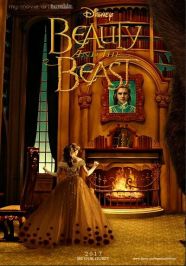
Yes, from a book. La Belle et la Bête is the fairy tale written by French novelist Gabrielle-Suzanne Barbot de Villeneuve, published in 1740. Classics, by definition, appeal despite the passage of time, in this case, a few centuries. This newest adaptation, which I highly anticipate, has a cast that I’m eager to see in a musical: Dan Stevens (Beast), Emma Watson (Belle), Ewan McGregor (Lumiere), Emma Thompson (Mrs. Potts), Ian McKellen (Cogsworth), Kevin Klein (Maurice)… Can they sing?To be released in March, 2017.


the-children-act

The Children Act by Ian McEwan

Richard Eyre (Notes on a Scandal, 2006) to direct Emma Thompson playing the role of Judge Fiona Maye who has to rule on a case in which a 17 year-old leukaemia patient refuses potentially life-saving blood transfusion as it’s against his religious belief. And as life would have it, Maye has her own marital issues to deal with at this trying point of her life. McEwan’s 2014 novel is on my TBR pile, and I look forward to Thompson’s major role in years. Film now in development.


handmaids-taleThe Handmaid’s Tale by Margaret Atwood

Atwood’s renowned story of a dystopia ruled by theocratic dictatorship will be adapted into a 10 episodes TV series. Interesting concept from book to longer TV programming, which would definitely be quite different from its previous adaptation in 1990, a 109 min. movie with screenplay by Harold Pinter and cast of Natasha Richardson, Faye Dunaway, Elizabeth McGovern, Robert Duvall. This time, a new generation of actors and a very different socio-political milieu. Will it be even more relevant?


lion-1Lion by Saroo Brierley  (Memoir originally titled A Long Way Home)

Now showing in theatres. Never mind Slumdog Millionaire, this is for real and utterly moving, with the same Dev Patel. At age 5, Saroo was lost in a Calcutter train station almost a thousand miles from his home village. Alone and drifting on the streets, he was picked up and sent to an orphanage where an Australian couple later adopted him. Twenty-five years in Tasmania had not diminished his desire to see his mother’s face again. Thanks to Google Earth, he finally found his way home. I’ve just seen the film and is now reading the book. A must-see.


nightingaleThe Nightingale by Kristin Hannah

Goodreads Choice Awards Best Historical Fiction 2015, Hannah’s WWII novel lends itself to ready cinematic rendition. Game of Thrones director Michelle MacLaren to helm the project. MacLaren has been noted to be able to tell stories that are ‘epic and intimate’. So this may just fit her really well. Two sisters’ coming of age experience during the Nazi occupation in France, with Ann Peacock (Narnia, 2005, Nights in Rodanthe, 2008) writing the screenplay. The book has sold more than 2 million copies in the U.S. and been published in 39 languages. The cast still to be determined. Your choice?


zookeepers-wifeThe Zookeeper’s Wife by Diane Ackerman

This is a worthy, true story to be made into film. Jan and Antonina Zabinski were keepers of the reputable Warsaw Zoo. During the Holocaust, their premises is the hiding place for hundreds of Jews. Antonina did the day-to-day chores of protecting them in the cages, feeding them and keeping their spirits up. The parallel and irony of human and beasts are obvious. Acclaimed nature writer Diane Ackerman drew from Antonina’s diary to write her account of a heroic rescue mission. Acclaimed New Zealand director Niki Caro (McFarland, 2015, North Country, 2005) helms. Screenplay by Angela Workerman, a scribe to note. Jessica Chastain and Daniel Brühl play the Zabinski couple. Trailer is out and looks good. To be released in March, 2017.


***