Paterson: Of Pug and Poetry

Some movies are like the roaring ocean, waves mounting upon waves rousing up excitement, eliciting continuous, sensational reactions. Some are like a bubbling brook, smaller but still boisterous, teeming with life and sounds. The film Paterson is a quiet stream, water gently flows along, seemingly uneventful, and yet, you can sit there by its side and just watch its quiet swirling.

Paterson has been screened at many film festivals this year. I missed it at TIFF, glad I could catch it when I came home to CIFF. For a film about poetry and a loving couple (not dysfunctional, for a change) with a British bulldog named Marvin, a character in his own right, and helmed by a Palm d’Or winning director, it’s got to be a unique experience.

Director Jim Jarmusch has been garnering accolades at the Cannes Film Festival since 1984, with his early feature Stranger Than Paradise. His most commercially known work probably is Broken Flowers (Cannes Grand Prize of the Jury, 2005) with Bill Murray and Julie Delpy. This year, Paterson has once again brought the director to Cannes as a nominee for the prestigious Palme d’Or. 

Jarmusch ought to be applauded for making a film on poetry, for who in this day of mega explosive, blockbuster productions would think of turning Williams Carlos Williams’ poetic notion into a movie. Yes, WCW himself was a resident of Paterson, New Jersey, and his 5-volume epic poem Paterson must have been the source inspiration for Jarmusch.

paterson

The movie Paterson is about an admirer of WCW and an aspiring poet whose occupation may be furthest from the creative process. But that’s exactly the point. Where do we get inspirations and ideas? What kickstarts our creative process? Do we need to climb to the top of the mountain, soak up a magnificent sunrise to unleash our creativity? Apparently not.

We see in the film that the most mundane of everyday objects, like, a box of matches, can spark off a new poem. Jarmusch has his own style of cinematic poetry making: the deadpan, casual expressions of his main character, thus, embedding humour in the serious. Adam Driver (While We Were Young, 2014) is probably the best person to star in this film, not only in name, but in his demeanour. He is Paterson, a bus driver with a daily route of driving bus route no.23 around the small town of Paterson, New Jersey.

We follow Paterson for a week. He gets up at the same time, around 6:20 am, plus or minus 5 minutes, eats his breakfast cereal, carries his lunch box and goes to work. He drives his no. 23 route around town, overhearing passengers’ small talks, brewing in his mind thoughts and ideas, writing down lines in a note book when he has a chance, has his lunch sitting on a bench overlooking the Great Falls of the Passaic River, then back to work. After work he goes home, has dinner with his loving wife Laura (Golshifteh Farahani), walks the pug Marvin, ties him outside the bar, goes in and have his beer, chats with bartender Doc (Barry Shabaka Henley), meets the regulars Everett (William Jackson Harper) and Marie (Chasten Harmon) and listens to their stories, then walks Marvin back home and sleep.

As viewers we see this seven times over. Reminds me of Groundhog Day (1993). But Jarmusch is clever in sprinkling subtle humour and surprises, quite like life. Paterson is a contented soul, driving a bus may be as fulfilling as writing poetry. Wife Laura is more experimental, and takes charge of her creative expressions more explicitly, like learning the guitar to reach her dream of being a country singer, like interior decorating her home according to her obsession with black and white, or baking cupcakes in her own signature style as a step to opening her own cupcake store. Whatever, the two are a loving, contented couple. Creativity manifests in various ways.

Marvin.jpg

And then there’s Marvin, who may be the best pug in pictures. He has a role to play too in this mundane plot. His story line is, again, life as well.

That’s about all I’ll reveal about the movie without giving out the spoiler, yes, even for this seemingly uneventful film. But as I write, I’m thinking of another matter. This film is probably screened only at very limited cities, at arthouse, independent cinemas. So, why am I writing about a film that not many of you will actually be able to see? What exactly is the relevance of writing something that few may relate to? Or… is the review a piece of writing that readers can respond to despite not experiencing the film itself?

If you have some thoughts on this, I’d appreciate your input. Throw your two pebbles into the Pond and create some ripples so I’d have an idea.

Having poured out this puzzling thought that has been troubling me for some time, I’m reminded of Paterson’s poetry writing in the basement of his home, his notebook filled with his private thoughts and lines, which nobody has ever or will ever read. What’s his purpose then?

~ ~ ~ 1/2 Ripples

***

Other Related Reviews on Ripple Effects:

Silence the Movie Arrives in the Most Unwelcome Time

While We Were Young: Wearing the Hat of Authenticity 

A Quiet Passion (2016) at TIFF16

TIFF16 Review: After The Storm

“After the Storm” was screened at TIFF in September. Next week, it will be at BFI London FF and after that, the Chicago IFF. My review was first published on Asian American Press. I thank the editor for allowing me to post my review here on Ripple Effects.

***

Japanese auteur Koreeda Hirokazu graced the Toronto International Film Festival once again this year with his new feature, “After the Storm”. Since 1995, with his multiple award-winning feature “Maborosi”, Koreeda has been a staple at TIFF, which has screened every one of his feature films. His recent works are still fresh in many viewers’ minds, “Still Walking” (2008), “Like Father, Like Son” (2013), and “Our Little Sister” (2015).

With all the avant garde and experimental, new waves of filmmaking bursting out at film festivals every year, Koreeda’s traditional style of storytelling offers a fine balance and an affirming voice. His films focus on the contemporary Japanese family, bringing out themes arising from the individual and extending to the universal. Humanity is what Koreeda is interested in, and his treatment of human foibles and failures is kind and forgiving. “After the Storm” is no exception.

Ryota (Abe Hiroshi) used to be an award-winning author. But for years he has not produced any more works. Divorced from his wife Kyoko (Maki Yoko) and sorely missing his 9 year-old son Shingo (Yoshizawa Taiyo), Ryota is at the bottom of his life. Months behind in his child support payments, he is laden with debt, entrapped by a gambling habit that’s hard to kick. It runs in the family it seems, for his late father had also been a gambler. With his work at a detective agency, Ryota would try all means to squeeze extra cash out of his clients, including deception and even extortion.

Koreeda’s dealing of Ryota is gentle and sympathetic. While he may look unkempt, the six-foot-two actor Abe Hiroshi has his charm and charisma. We see the nasty side of Ryota as he slips into his mother’s cramped unit in a housing project, looking for anything of value he could lay his hands on for pawning. A moment later, Koreeda lets us have a glimpse too of the other side of Ryota, that of a son to an ageing mother Yoshiko (Kiki Kilin). The mother-son portrait is witty and tactful, punctuated with heartwarming humour. It is a reunion of the two actors, also as mother and son, from Koreeda’s 2008 feature film “Still Walking”.

Mother knows best, even when your son doesn’t live with you any more. Deep in her heart, Yoshiko wishes to see her son reunite with her daughter-in-law Kyoko whom she is very fond of. She also treasures the affectionate bonding with grandson Shingo. If only they could get back together as a family, that would be a big relief and comfort, growing old can then be much bearable.

One evening, a passing storm keeps them together in Yoshiko’s home for the night. The impromptu reunion, though awkward, is probably gratifying for every one of them. Koreeda is, alas, a realist. Life is full of disappointments. However close they have come to bonding once again, the moment is short-lived. But the reminiscence and dynamics of the small family’s once intimate relationship regurgitates enough to spark off a renewal for Ryota. While they may continue on with their own separate ways, a new perspective has subtly wiggled in. Perhaps, there’s hope after all. The young, green grass covered with raindrops the morning after the storm is a refreshing metaphor.

koreeda

The film was shot in the housing project where Koreeda had spent his youthful years. That was where his mother lived after his father had passed away. In the Q & A session, Koreeda admitted that certain incidents in the film did happen in the director’s own family. When writing the script though, once he has created his characters, Koreeda would let them run free and so they would develop themselves. Their stories just came out naturally.

Answering questions in Japanese with a translator beside him, Koreeda humbly thanked his Toronto audience, whom he had in mind when he made his films, as TIFF had screened every one of his features. He noted that as we grew older, we had to deal with disappointments, for life often didn’t turn out to be what we’d like to see. “After the Storm” shows us that Koreeda has dealt with his characters’ life disappointments with a forbearing spirit. As for viewers of his films, Koreeda does not disappoint.

~ ~ ~ 1/2 Ripples

***

Other reviews of Koreeda films on Ripple Effects:

Our Little Sister: A Respite from Summer Superhero Movies

Like Father, Like Son: Parent and Child Reunion 

Saturday Snapshot September 24: Cootes Paradise Marsh

So this is what a film buff and birder did at TIFF… she took a day off from films and headed out to Nature.

The Cootes Paradise Marsh Nature Sanctuary in Burlington’s Royal Botanical Gardens is about a 45-minute drive southwest of Toronto. Hiking the trails there was total relief from pounding the pavement between TIFF venues. I immersed in the silence of the Nature Sanctuary, with bird calls and sounds of crickets replacing the hustle and bustle of downtown traffic.

First off, there were many birds, but mostly Chickadees. The Bluejay I see often in Alberta, but not among maple leaves:

bluejay-in-maple-leaves


Indeed, the leaves are so different from what I’m used to seeing. Like these here. Never seen leaves wearing sunglasses before:

Leaves wearing sunglasses.jpg

Seldom see frogs on my path either. Nearly stepped on this little guy:

Frog on my path.jpg

Or a mushroom this fancy:

mushroom-1

I just love how well planned these trails are, so considerate in their design:

dsc_0777


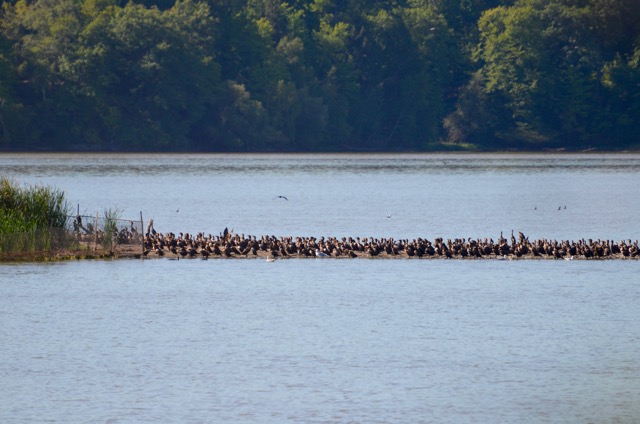
See the upper left corner of the above picture… A colony of cormorants:

cormorants

As I came close to the edge of the water, I felt like I’d gone inside a corn maze:

Maze.jpg

rbg-marshwalk-observation-tower

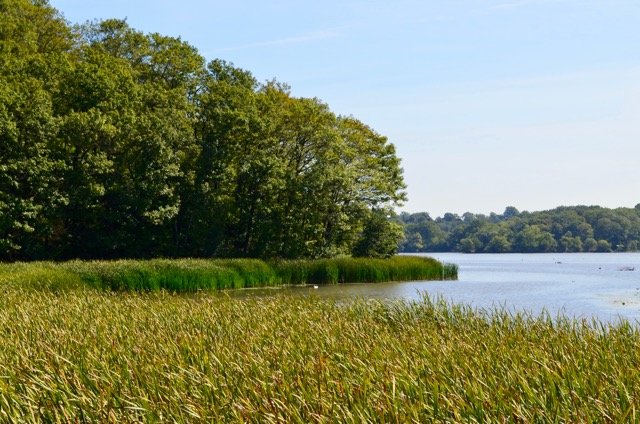
The observation tower at the end offered a panoramic view of the marsh, but not my camera though. So here they are in different frames:

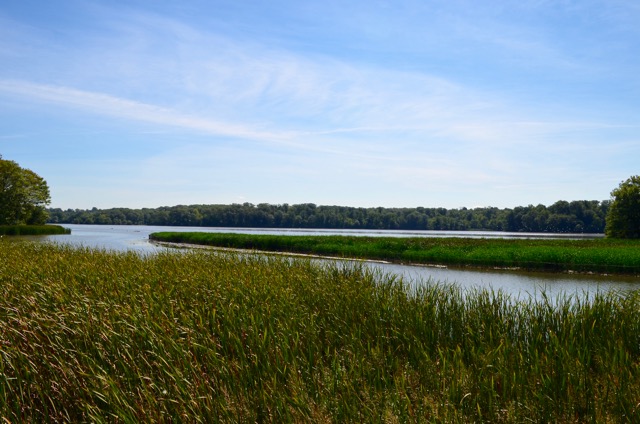
marsh-2

Marsh.jpg

It’s here that I had my first sighting of the Great Egret:

egret-on-the-move

And a Mute Swan with her young, which were brownish but almost as large as the adult:

mute-swan-juveniles

As I made my way back I walked through fields of goldenrods, that was quite a sight:

goldenrods


***

Saturday Snapshot is hosted by West Metro Mommy Reads. CLICK HERE to see what others have posted.

A Quiet Passion at TIFF16

“A Quiet Passion” is a biopic of the reclusive 19th century American poet Emily Dickinson. It is written and directed by the esteemed English auteur Terence Davies, who brought us the adaptation of Edith Wharton’s novel “The House of Mirth” in 2000, “The Deep Blue Sea” based on Terence Rattigan’s play in 2011, and last year’s “Sunset Song”, a beautiful cinematic rendition of Scottish writer Lewis Grassic Gibbon’s work.

Literary filmmaking is Davies’ repertoire. If a movie is about a poet, under his helm, it is only natural that it would be crafted like poetry. In this sense, “A Quiet Passion” is a fine example. Every frame is meticulously composed and lit, the atmosphere dense with meaning. We also hear lines from Dickinson’s poems read out as voiceover. We experience poetry in sight and sound.

However, not all poetry is of the Romantics, roaming vales and hills, dancing with the daffodils. Davies’s Emily Dickinson (Cynthia Nixon) is confined in her father Edward’s (Keith Carradine) Amherst house. Her main human interactions are with her immediate family, a stern father, a depressed mother (Emily Norcross), an attorney brother Austin (Duncan Duff), and her younger sister (Jennifer Ehle). If she ever felt claustrophobic, there’s her sister-in-law Susan Gilbert (Jodhi May) and her close friend Vryling Buffam (Catherine Bailey). Too narrow a social circle? Not really, for they are all responsible for sharpening her views and words. And they make a wonderful cast.


a-quiet-passion
Terence Davies, Cynthia Nixon, Jennifer Ehle, Jodhi May, Catherine Bailey
Under the direction of Davies, Cynthia Nixon (of ‘Sex and the City’ fame) portrays Emily Dickinson with an austere persona restrained by social mores and troubled by unrequited romantic pursuit. She might have been a rebel with a just cause in confronting restrictive societal norms, but I was surprised to see Dickinson here as a verbal combatant, a bitter and belligerent soul. Somehow from my limited reading of her poetry, that image has not set in my mind.

“A Quiet Passion” is a mixed bag of oxymoron. In an austere setting, characters deliver ornate speeches like you only hear in a stage play. Shrouded in a confining milieu, you hear comedic exchanges and humorous, deadpan facial expressions, even LOL moments. While the cinematography is meditative and calm (as in Davies’ last work “Sunset Song”), the feeling evoked is unsettling anticipation.

Emily’s supportive and devoted sister Lavinia (Vinnie), well played by Jennifer Ehle (of Elizabeth Bennet fame), gives me a breath of fresh air, for often she is the quiet passion supporting the poet, a gentle strength and a moral compass. Vinnie is the pragmatic and rational voice, like reminding Emily that Rev. Wadsworth—on whom Emily has a romantic crush—is a married man. But she is ever so sweet and pleasant as Jennifer Ehle is, even when admonishing.

The sisterhood between Nixon’s Emily and Ehle’s Vinnie makes me think of another literary sisterhood, that of Jane and Cassandra Austen. But what a difference. I long for Jane’s joie de vivre, something that’s missing here in this relatively harsh portrayal of Emily Dickinson. Further, I couldn’t help but compare this film with another that’s also about a poet: Jane Campion’s “Bright Star” (2009), a beautiful cinematic rendering of the English Romantic poet John Keats (Ben Whishaw) and his muse Fanny Brawne (Abbie Cornish).

The last scenes are as severe as they are heart breaking. Death may be a frequent motif in Dickinson’s poetry, as Emily had experienced the passing of her parents, but the constant pounding of her own illness makes me think of another oxymoron: superfluous suffering. The repeated scenes of seizures Emily goes through in the last section of the film may be a bit too much to watch for some, although Nixon has certainly given us a true-to-life performance. I can’t imagine all the takes she had to repeat, acting out those excruciating seizures on her bed.

When asked about the seizures in the Q & A after, Nixon replied that she had not done any research or specifically prepared; she just went ahead and did it. All the research had been done by Davies. He had read up on volumes of Dickinson’s biographies for the film.

What “A Quiet Passion” has done for me is stirring up my curiosity in finding out what Emily Dickinson the person was really like, and, I want to delve into more of her poetry. I have to remind myself though that the cinematic portrayal here is only Davies’ own interpretation and personal response to her poetry. I just like to explore on my own.

~ ~ ~ Ripples


Establishing Shot

What is a film buff, avid birder, and nature lover going to do in Toronto during TIFF, torn between so many attractions?

Well, one has to stay grounded first. So here’s the establishing shot. Indeed, it’s Toronto. And a memorable date it was when I took this photo of the early morning cityscape. My computer told me it was Sept. 11, 2016, at 6:38 am:

9-11-638

I was fortunate to be able to shoot these pics from a high-rise building with magnificent views. Here let me call this one Urban Canadian Sunrise. Yes, see the flag in the foreground? Can’t say it’s just another city:

urban-canadian-sunrise

And from the balcony above looking down, my birding instinct was gratified as I made my first sighting of a Mute Swan taking in the early morning air:

mute-swan

A stone-throw away was a park where I made this other first-time encounter. I had no clue what it was until I looked it up in a bird book after I’d come back home:

Juvenile Black Crowned Night Heron

Know what it is? A Juvenile Black-crowned Night Heron.

Several other first time sightings awaited me as I went on the ‘Marshwalk’ at the Royal Botanical Gardens in Burlington, 57 km (35 mi) southwest of Toronto a few days later. The Great Egret and some juvenile (brownish colour) mute swans:

great-egret

egret-swans

Yes, TIFF16 was a cinephile fantasy. And the people there were overflowing with enthusiasm to make your visit memorable:

tiff

More posts coming up on that main event.

Literary TIFF

The Toronto International Film Festival (Sept. 8 – 18) is just a week away. While many movie fans will be charging up their cell phones to catch some pics or selfies with the stars on the red carpet, Arti here at the Pond is interested in spotting the film adaptations of books, or those with literary interest.

This is a photo of the Toronto skyline from Lake Ontario on a hazy morning. Arti took the pic during TIFF14 two years ago. Yes, she’s heading there soon for TIFF16. So stay tuned for future posts.

Hazy Toronto Morning

Here’s a list of some literary titles at TIFF16:

A Quiet Passion 

Not based on a book but no short of literary interest. This is a cinematic biopic of the American poet Emily Dickinson. What’s more, it’s a new film written and directed by the venerable English auteur Terence Davis, who brought us such acclaimed works as Sunset Song (2015), The Deep Blue Sea (2011), and The House of Mirth (2000). Cynthia Nixon plays Emily Dickinson, with Jennifer Ehle as her sister Vinnie. Yes, that Jennifer Ehle. Love to see her in another period role but I know, hard to be rid of the Lizzy Bennet image.

American Pastoral 

Philip Roth actually has two movie adaptations of his books coming out this fall. One is Indignation (2008). The other is American Pastoral (1997), which won him a Pulitzer and was considered a seminal work in his oeuvre. Roth later won the Man Booker International Prize in 2011. The prolific author has long been regarded as the astute depicter of the 20th C. Northeastern Jewish-American psyche. Interesting fact of this adaptation is that it’s the directorial debut of Scottish actor Ewan McGregor, who will also take up the role of Roth’s famous character Seymour ‘Swede’ Levov. How well can he pull it off? Dakota Fanning and Jennifer Connelly co-star.

Julieta 

Based on three short stories by Alice Munro, Canada’s first Nobel Laureate in Literature (2013). Juliet is the protagonist of “Chance”, “Soon”, and “Silence”,  from Munro’s 2004 volume Runaway. So why the name Julieta? Well, these stories are being transported from a Canadian setting into Spain. The film is helmed by director Pedro Almodóvar, who is described as “the most internationally acclaimed Spanish filmmaker since Luis Buñuel” (IMDb). Almodóvar won an Oscar for his writing/original screenplay with “Talk To Her” (2002). Hopefully this adaptation is worthy of Munro’s source material. I’m curious to see how a totally Canadian story is transplanted into a Euro-Spanish milieu.


Certain Women

Another film adaptation based on short stories, this one by author Maile Meloy, from her book Both Ways is the Only Way I Want It (2009). The adaptation tells the story of three women and boasts a high calibre cast with Kristen Stewart, Michelle Williams, and Laura Dern. It is helmed by Kelly Reichardt who had directed Michelle Williams in Wendy and Lucy (2008) to critical acclaims. Last I read is that some elements of the stories had been altered to appeal to a contemporary audience.


Paterson

This 2016 Cannes Film Festival Palme d’Or nominee explores an interesting concept: A bus driver by day, a poet by night in Paterson, New Jersey. Can’t find a better named actor than Adam Driver to take up this unique dual occupational role. Writer/director Jim Jarmusch takes the helm. No stranger to Cannes, Jarmusch’s Broken Flowers (2005, remember Bill Murray?) won the Cannes Grand Prize of the Jury in 2005. The director’s versatility has brought us very different kinds of works throughout his career.


The Salesman

Since the 1990’s, several Iranian film directors have gained high praises internationally for their cinematic works. The recent death of Abbas Kiarostami is a loss on a grand scale for film art. Another distinctive figure is his younger friend and compatriot Asghar Farhadi, whose A Separation is the first Iranian film to win an Oscar (Best Foreign Language Film, 2012). After that Farhadi crafted another multiple-award-winner The Past (2013). This year he brings us The Salesman. The name is a big hint of its literary affiliation. The story is about the disintegration of a marriage as a couple perform Arthur Miller’s play Death of a Salesman as Willy and Linda Loman. Life imitates art, or vice versa? Farhadi is a master of probing conflicts in domestic relationships. At Cannes earlier this year, The Salesman won Farhadi the Best Screenplay and Shahab Hosseini the Best Actor award.

The Secret Scripture 

After a long wait, and a change in the cast, the film adaptation of Irish writer Sebastian Barry’s Booker shortlisted work is finally completed. In the book, the narrator is a 100 year-old mental hospital patient recalling her life. The old and her younger self are played by Vanessa Redgrave and Rooney Mara respectively. The director is Jim Sheridan, the six-times Oscar nominee who introduced us to Daniel Day-Lewis with the excellent productions of My Left Foot: The Story of Christy Brown (1989) and later In the Name of the Father (1993).


Unless

Born in Oak Park, Illinois in 1935 and after her marriage became a Canadian citizen in 1971, Carol Shields received honours from both countries and internationally as well. The Stone Diaries won the Pulitzer in 1993, among many other accolades, while Unless (2002) was shortlisted for the Booker Prize. Here’s the intriguing tale of Unless: a mother one day finds her runaway daughter living on the street and mute. Oscar nominated Catherine Keener plays the mother Reta Winter. Downton Abbey fans should note, Mr. Bates Brendan Coyle also stars.


***


Saturday Snapshot Aug. 27: Synchronized Swimming, Team Pelican

I don’t have to wait four years for another Olympics. A couple of days ago I caught sight of these Nature’s Athletes. From afar I could tell they were members of Team Pelican.

The Pelicans are a gregarious lot, their talents innate, every move graceful. They display their elegant team work in Nature’s open arena, effortless, in sync with each other. Here they are, full of bubbly camaraderie:

Comaraderie (2)

Remember a previous post where I saw them in the air, like squadrons of fighter jets; in the water, they form a tight-knit configuration as well. With that formation, they cooperate to surround fish in the water, scooping them into their pouches:

Inate talents (1)

What a beautiful idea: communal feeding. What you see here are snapshots. What I remember is a long video. I must have been there watching and snapping away for over a half hour:

Let's eat together (1)

Elegant synchronized swimmers in perfect harmony. Kudos to their Coach.

Synchronized Swimming (2)

Look at their sheer size in comparison to the gull behind them.

Sync Swim (1)

Sometimes you can get tangled up with minor mishaps. Wait up, guys, I’m a little stuck here:

Wait up 2

No worries. We’re Team Pelican. All for one and one for all; our bills as swords to pledge.

Bills as swords


***

Saturday Snapshot is hosted by West Metro Mommy Reads. CLICK HERE to see what others have posted.


100 Greatest Films of the 21st Century

The editors of BBC Culture had commissioned film critics all over the world to arrive at this list, polling “every continent except Antarctica.”  They received responses from 177 film critics. The list was published yesterday.

Sounds like a formidable task, albeit in actuality, the critics only had to look at 17 years of cinematic works (including the year 2000). Nevertheless, the titles are self evident of the positive effects of globalization, for the critics’ choices are markedly diverse.

You can check out the whole list here. I’ll just excerpt the top 50. Here, you can find directors from Africa, Asia, Australia, the Middle East, Europe, North America, South America. What a fantastic representation. I’ve no apology for using the #2 film image here instead of the top one; with Wong Kar-wai’s “In The Mood for Love”, I’m totally partial and very glad it reached this spot.

in-the-mood-for-love

No matter how you look at it, don’t get blown away by blockbuster mega productions. The independent cinema still remains the imaginary window to look into ourselves as well as out to the world, expanding our point of view with old tales to current issues.

50. The Assassin (Hou Hsiao-hsien, 2015)
49. Goodbye to Language (Jean-Luc Godard, 2014)
48. Brooklyn (John Crowley, 2015)
47. Leviathan (Andrey Zvyagintsev, 2014)
46. Certified Copy (Abbas Kiarostami, 2010)
45. Blue Is the Warmest Color (Abdellatif Kechiche, 2013)
44. 12 Years a Slave (Steve McQueen, 2013)
43. Melancholia (Lars von Trier, 2011)
42. Amour (Michael Haneke, 2012)
41. Inside Out (Pete Docter, 2015)
40. Brokeback Mountain (Ang Lee, 2005)
39. The New World (Terrence Malick, 2005)
38. City of God (Fernando Meirelles and Kátia Lund, 2002)
37. Uncle Boonmee Who Can Recall His Past Lives (Apichatpong Weerasethakul, 2010)
36. Timbuktu (Abderrahmane Sissako, 2014)
35. Crouching Tiger, Hidden Dragon (Ang Lee, 2000)
34. Son of Saul (László Nemes, 2015)
33. The Dark Knight (Christopher Nolan, 2008)
32. The Lives of Others (Florian Henckel von Donnersmarck, 2006)
31. Margaret (Kenneth Lonergan, 2011)
30. Oldboy (Park Chan-wook, 2003)
29. WALL-E (Andrew Stanton, 2008)
28. Talk to Her (Pedro Almodóvar, 2002)
27. The Social Network (David Fincher, 2010)
26. 25th Hour (Spike Lee, 2002)
25. Memento (Christopher Nolan, 2000)
24. The Master (Paul Thomas Anderson, 2012)
23. Caché (Michael Haneke, 2005)
22. Lost in Translation (Sofia Coppola, 2003)
21. The Grand Budapest Hotel (Wes Anderson, 2014)
20. Synecdoche, New York (Charlie Kaufman, 2008)
19. Mad Max: Fury Road (George Miller, 2015)
18. The White Ribbon (Michael Haneke, 2009)
17. Pan’s Labyrinth (Guillermo Del Toro, 2006)
16. Holy Motors (Leos Carax, 2012)
15. 4 Months, 3 Weeks and 2 Days (Cristian Mungiu, 2007)
14. The Act of Killing (Joshua Oppenheimer, 2012)
13. Children of Men (Alfonso Cuarón, 2006)
12. Zodiac (David Fincher, 2007)
11. Inside Llewyn Davis (Joel and Ethan Coen, 2013)
10. No Country for Old Men (Joel and Ethan Coen, 2007)
9. A Separation (Asghar Farhadi, 2011)
8. Yi Yi: A One and a Two (Edward Yang, 2000)
7. The Tree of Life (Terrence Malick, 2011)
6. Eternal Sunshine of the Spotless Mind (Michel Gondry, 2004)
5. Boyhood (Richard Linklater, 2014)
4. Spirited Away (Hayao Miyazaki, 2001)
3. There Will Be Blood (Paul Thomas Anderson, 2007)
2. In the Mood for Love (Wong Kar-wai, 2000)
1. Mulholland Drive (David Lynch, 2001)

Which ones have you seen? What do you think of the list? Mulholland Drive #1? You might ask.

***

Click on the link in the title to read Arti’s review.

‘Our Little Sister’: A Respite from Summer Superhero Movies

The following is my review of the film “Our Little Sister” by the acclaimed Japanese director Hirokazu Kore-eda, published in Asian American Press. I thank aapress.com for allowing me to post it here on my blog.

For those who might think a Japanese film would never make it to your local cinema, check this list of U.S. screenings:

http://sonyclassics.com/ourlittlesister/dates.html

***

our-little-sister

Premiering last year at Cannes, and later screened at other international film festivals the world over, Hirokazu Kore-eda’s “Our Little Sister” finally trickles into the local theatres of North American cities, which is timely. In a world rocked by tumultuous strife and unrests, this latest from Kore-eda makes a quiet solace, offering a taste of the ideal in human relationships and harmony despite brokenness.

“Our Little Sister” is Kore-eda’s most recent work after his 2013 Cannes Jury Prize winning “Like Father Like Son”. Following his usual subject of relationships in various family situations, “Our Little Sister” sees Kore-eda at the helm as director, writer, and editor of this production based on the popular Japanese graphic novel “Umimachi Diary” by Yoshida Akimi.

The three Koda sisters have not seen their estranged father for fifteen years. Sachi (Haruka Ayase), Yoshino (Masami Nagasawa) and Chika (Kaho) are now adults, living in the family’s traditional home his father had long deserted in the seaside town of Kamakura. His recent death sends the sisters to his funeral, awkwardly, meeting the woman who had stolen their father’s heart. But it is an inciting incident that changes all their lives. They meet their half sister, 15 year-old Suzu (Suzu Hirose). Herein lies the turning point for the four sisters. Moved by her little step-sister’s mature and quiet demeanor, or maybe stirred by her own older-sister instinct, Sachi invites Suzu to come away and live with them in Kamakura. Suzu gladly agrees.

The new Koda household now is a haven of happy sisterhood. Living under one roof, we see minimal conflicts and constant congeniality. Viewers from a different culture may find the saccharine relationships unrealistic. Are there not any conflicts at all? Of course there are. Kore-eda deftly leads us to some slow revealing. After three quarters of the 120-minute film, we begin to see inner turmoil rise to the surface.

Suzu had to take care of her father in his illness and seeing him to his last breath due to the incompetence of her mother; here is a young teenager bearing the burden of an adult. Now living with three older sisters, Suzu can finally enjoy the childhood she has missed. She quickly captures the attention of other students in her new school with her soccer skills, congeniality and maturity.

In the Koda household, Suzu is the angel of harmony, stirring up love and life. Kore-eda may have spent too much time on the leisurely-paced, day-to-day living such that viewers might feel the lack of conflicts to move the story along. I credit the style to Kore-eda’s realism and a candid camera focusing on the subtleties of nuanced interplay among the characters. Like his previous films “I Wish” (2011), the yearning for family connections of a young boy is shown by his actions and not so much by words, or in “Like Father Like Son” (2013), wherein conflicts are portrayed by contrasts and parallels. Here, while still nursing a deep resentment towards her father for deserting them years ago, Sachi struggles with the moral parallel now as she carries on a relationship with a married doctor at the hospital where she works.

Moral dilemmas, what to choose, how to live, and the search for identity are the issues Kore-eda’s characters have to deal with, but in a way that is quiet and gentle. He introduces us to other endearing characters in the town, adding numerous episodes to build up a human mosaic of harmony in the presence of brokenness and even death.

The scenic seaside town of Kamakura provides a beautiful backdrop for cinematographer Mikiya Takimoto (“Like Father, Like Son”) to shoot the film, reflective of the idyllic life that can be had, even in an imperfect world. The arching branches of the cherry blossoms, landscapes and seascapes mark the healing power of nature. But also like the petals of the cherry blossoms, which third sister Chika likes to pick up and gather in her palm, life is ephemeral.

Reminiscent of Ozu’s films, the passing train is a visual metaphor for the passage of time, changes, and the transience of life. To enrich the visuals, Yoko Kanno’s original score sweeps us through with warmth and tenderness, as a supporting voice telling the story. “Our Little Sister” is a heartwarming film for the unhurried heart to savor.


~ ~ ~ Ripples

***

Related Posts on Ripple Effects:

‘Like Father Like Son’: A Parent and Child Reunion

Yasujiro Ozu and the Art of Aloneness

Words Without Music by Philip Glass

“For me music has always been about lineage. The past is reinvented and becomes the future. But the lineage is everything.”    — Philip Glass

This 400 plus page memoir by Philip Glass (1937 -), with 14 pages of photos and 20 pages of index, is nothing short of epic. Glass has not only told us the story of his life so far, but chronicling a generation of American arts and music from an insider’s perspective. The zeitgeist of the Beat Generation and the preoccupation of Eastern philosophy with its search for transcendental experiences make the memoir an interesting and informative read.

Pertaining to Glass’s innovative musical style, I’ve experienced the book in several ways: reading the first half in hardcopy, listening to the latter part in audiobook format via hoopla, superbly performed by narrator Lloyd Jones, and listening to Glass’s works available on hoopla. Hoopla, btw, is wonderful.

Words Without Music Cover

Born 1937 to a secular Jewish family in Baltimore, Glass’s father Ben was a record store owner, mother Ida a librarian. The flute and the violin were his first instruments. Bursting with potentials ready to be unleashed, he left home to attend The University of Chicago at merely 15 years of age majoring in philosophy and mathematics. At Chicago, he’d decided what he wanted to do after graduation, to pursue a career in music, albeit the realization of which was still a blurry vision.

As a young college grad, Glass worked at a steel mill to save enough money to head to NYC for Juilliard, a decision that was against the wish of his mother: “If you go to New York City to study music, you’ll end up like your Uncle Henry, spending your life traveling from city to city and living in hotels.” His uncles also frowned on such an idea. They wanted him to take over the family’s building supplies business.

But the teenaged Glass was determined, only to face a closed door upon audition at Juilliard. No, he wasn’t qualified as a flute player, but, he was given the chance at the extension program to learn composition. Only a detour. Once he’d become a full-fledged student in Juilliard, he devoured all opportunities to learn. You’d think such a talent would become a young success soon after? Well, that wouldn’t have been as interesting a story as real life.

Philip Glass is classified as a ‘minimalist’, a label which he frowns upon. Reading the memoir, I can only say what’s minimal is the material means, money, while all else, passion, intellect, talents, cultural milieu, internal space, and the prolific output of works have been abundant throughout his life journey.

It would be decades later that Glass could earn enough to make a living by only composing. Along the way, he was contented with his day jobs in NYC, including being a furniture mover, plumber, and taxi driver. He nearly got killed driving a cab in NYC, albeit he does recall more pleasant excitement like the time he picked up Salvador Dali from 57th Street to the St. Regis Hotel. During that short trip, he was, alas, tongue-tied. Yes, the word is “contented”, for no matter what he had to do to earn a living—at first just for himself, later a family of four—he seemed happy to be on the right course striving for the ultimate goal. That in itself is inspiring. The tone of the book reflects a quiet and humble soul, reflective and personal.

Glass’s contact list is a who’s who of the Beat Generation and cultural icons in the following decades. He was a contemporary with Jack Kerouac, Jackson Pollack, John Cage, friend with Alan Ginsberg, Doris Lessing, Richard Serra, collaborator with Ravi Shankar, Leonard Cohen, wrote music for the works by Jean Cocteau, Samuel Beckett, composed for Martin Scorsese, Steven Daldry, Woody Allen, studied with Nadia Boulanger as an American in Paris, journeyed to the East to find enlightenment in New Delhi, Katmandu, Darjeeling, explored and created global music with musicians from India, Himalaya, Chinese, Australia, Africa, and South America. Just a few names. The 20 page index is a definite asset.

“I have come to understand that all music, without exception, is ethnic music.”

As for his own music, people always say it’s like “the needle is stuck in the groove.” To understand this, of course, you’ll have to know the operation of a vinyl record. To counteract the general public impression of repetition to no end of his music, he explains in details the Glass music theory. That I let you to explore for yourself.

But here are some passages that I’ve particularly noted with low tech stickies on the side of the page:

About John Cage’s famous piece 4′ 33″, wherein the pianist sits at the piano for four minutes and thirty-three seconds without touching any keys, whatever sound the audience hears during that time lapse becomes the piece, Glass writes:

“… a work of art has no independent existence… What Cage was saying is that there is no such thing as an independent existence. The music exists between you—the listener—and the object that you’re listening to. The transaction of it coming into being happens through the effort you make in the presence of that work. The cognitive activity is the content of the work.” (p. 95)

What goes on internally in the listener is what the piece is about. Makes me think of Roland Barthes’s “The Death of the Author” notion.

So do we have “the death of the composer” now?  Wait, actually, no. You see, Glass has this brilliant point. The composer still lives in that the performer interacts with and interprets his works, thus becoming a co-creator:

“… the performer has a unique function in terms of what I call this transactional reality which comes from being in the presence of the work: that the interpreter/player of the music becomes part of that. Until then, I had really thought of the interpreter as a secondary creative person. I never thought he was on the same level with Beethoven or Bach. But after I had spent some time thinking about all that and began playing myself, I saw that the activity of playing was itself a creative activity… ” (p. 96)

And how should the performer play the music? By listening intently and purposefully:

“The ideal way of performing, to my way of thinking, would be when the performer allows the activity of playing to be shaped by the activity of listening, and perhaps even by the activity of imagining listening.” (p. 97)

In 1957, Jack Kerouac’s On the Road had just been published and “everybody had read it”. With the $750 prize money he received from Juilliard at the end of his third academic year, he bought a motorcycle, probably an unintended item on which the music school would like to see the scholarship spent. Off he went on a cross-country road trip. But what’s the difference between he and his friends and the Kerouac’s clan? Glass writes:

“His [Kerouac’s] book is full of interesting characters, but that’s not what happened for us. We weren’t interested in having those kinds of experiences, we were out and abroad in America, consuming the country visually and experientially by driving through it…. (p. 102)

The renowned sitar virtuoso Ravi Shankar, or Raviji as he was known to friends and colleagues, at that time started collaborating with George Harrison. Glass notes that “The casual drug use by young people particularly upset him. Sometimes he would lecture me about drugs, and I had to remind him that I was drug-free.” Ummm, wonder if Raviji had lectured George Harrison on same.

In 1964, with a Fulbright Scholarship, Glass went to Paris to study with the eminent music guru Nadia Boulanger. For two years, she inspired and led Glass to higher grounds of musical epiphanies. One of the crucial lessons he took away after two years with Boulanger was the route to innovation. First, learn the conventional theoretical foundation, then you diverge and create your own:

“… an authentic personal style cannot be achieved without a solid technique at its base. That in a nutshell is what Madame Boulanger was teaching.” (p. 145)

His mother Ida went by train from Baltimore to NYC for her son’s first concert at Queens College on April 13, 1968. There were only six people in the audience including herself. As Glass drove her back to the train station after the concert, the only comment she made was that his hair was too long.

The second time Ida attended her son’s concert was eight years later in November 1976. This time, she was in the full house audience of four thousand people at the Metropolitan Opera for the performance of his first opera, Einstein on the Beach.

Glass movingly recalls his conversation with his mother at her death bed. She was in and out of a coma. She whispered two last words to him: “The copyrights”. Mother and son came to a perfect understanding. He reassured her, “It’s all taken care of, Mom. I’ve registered them all.”

He’d better.

Glass has composed more than twenty operas, eight symphonies, two piano concertos and concertos for violin, piano, timpani, and saxophone quartet and orchestra, soundtracks to films, 125 credits on IMDb for all sorts: full features, doc, shorts, TV. And more to come.

***


Summer Reading

The remaining summer month isn’t going to be long enough for a slow reader like me to finish all the books I’ve started. There are 7 titles on Goodreads that I’m ‘currently reading’, one of them has been there since the Jurassic Period. Ok, maybe not that long, but I haven’t given up The Guermantes Way just yet, so I won’t delete it. I’m sure Proust understands, for there are more pressing matters.

First off, the horrific terror attack and mass murder in Nice sparked off an urge in me to, somehow, in whatever way, connect with France. It’s a bit late to participate in the blog event ‘Paris in July’. But since Nice, I’d started two France related books. And then there’s Germany, and now a priest inside a church while conducting mass…

Here are two titles I’m reading with European connection:

The Angel of the Left Bank: The Secrets of Delacroix’s Parisian Masterpiece by Jean-Paul Kauffmann

Angel of the Left BankThis enticingly thin paperback has been sitting on the shelf quietly for years. I’ve long wanted to read it although I’d no idea what it was about, one of the hand-me-downs from my son’s college reads. Now that I’ve started it, I know this one’s going to be a slow cook. Even though just 217 pages, I know I can’t rush it. Exactly as the title denotes, the book is about one painting, Eugène Delacroix’s (1798-1863) ‘Jacob Wrestling with the Angel’, a wall mural in the Chapel of the Holy Angels inside The Church of Saint Sulpice in Paris. Why did Kauffmann write about this particular painting? Why did Delacroix choose to paint this enigmatic episode of the Bible? Who is the ‘Angel’? I want to find out the hidden story behind the creation of this masterpiece. Apparently there are secrets to be told.  I’m most curious to see the epiphany that both the painter and the writer must have experienced relating to it. Simply put, for us who feel there are days wrestling means nothing close to a TV pseudo sports program, maybe this book could be an enlightenment.
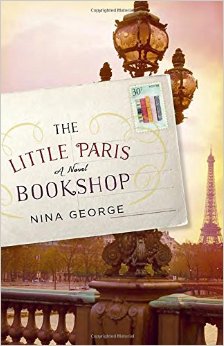
 

The Little Paris Bookshop by Nina George

Paris bookshopFirst published in Germany, now an international bestseller, The Little Paris Bookshop is a barge floating on the Seine River in Paris. Monsieur Perdu, the ‘Literary Apothecary’, is the owner. Now this is an interesting concept. M. Perdu prescribes books for any ailment his customers happen to be afflicted with. Bibliotherapy if you will. Not a bad idea. He has a book suggestion for everyone he encounters, so a clever way for German author Nina George to weave in her views on various literary works, her salutation to literature and reading. But of course, George isn’t just leading a book club discussion but telling a story. So she deftly brings us to learn more about M. Perdu’s past. While well-versed in bibliotherapy, M. Perdu has a wound that’s deep and sore, for he’s a victim of a lost love. Can the Apothecary heal himself? All signs point to a heartening, summer read.


Here’s one that I think I’ll finish first:

Words Without Music by Philip Glass

words-without-music-a-memoirThis one beats all my current reads in capturing my attention and interest. The contemporary composer Philip Glass (born 1937) is renowned as a ‘minimalist’ in his musical style, a label he frowns upon. Now about a quarter into Glass’s memoir, so mainly about his early life and the start of a career, I find what’s minimal is only the physical materials of life, the lack of money to pursue his dream. As for passion and talents, Glass is endowed with abundance, and the artistic milieu in which he immersed himself is astoundingly rich and fertile. Above all, the Bohemian living during his early days is idyllic. That’s why I’m mesmerized by his story, the pursuit of a dream driven by pure passion and inner drive.

Born in Baltimore to a middle-class, secular Jewish family, Glass left home at just 15 to enter the University of Chicago, majoring in philosophy and mathematics. After that, he knew he wanted a career, no, a life, in music, against the wishes of his mother and uncles, who ran a family building supplies business in his hometown and wanted him to take over some day. But Glass was determined to march to a different drummer. After Chicago, he went to NYC mainly to get into Juilliard, not knowing he wasn’t even qualified. So he started with an extension course to work his way in. Later as a full-fledged Juilliard student, he devoured every learning opportunity. He had earned his living doing all sorts of jobs, laborer, steel mill worker, taxi driver. Later to Paris, India, Glass shows us a life journey full of gratifying struggles and interesting encounters. What more, the memoir is a social history of the Beat Generation. Deeply immersed in the zeitgeist of the time, Glass’s personal connections with other musicians, artists, poets, writers, theatre actors and producers, and filmmakers make a fascinating insider’s story. His contact list a who’s who of the Beat Generation. Lots of ripples stirred up in me and definitely a future post coming.


This one patiently waits:

The Moviegoer by Walker Percy

The MoviegoerI had listened to the audio book a few years back, and wanted to reread it right away, but didn’t. After that, I forgot about it. By chance I saw it in the Bookstore at Regent College on UBC campus a couple months ago, I quickly took that single copy out from the shelf. There are few books I buy at regular price, this is one of them. I want to revisit it; with my own copy, I can write on the margin, and I know I will with this one. Despite the title, it has nothing to do with the glamour of Hollywood movies, or the pop entertainment culture of the day. Rather, this National Book Award winner (1961) is internal, reminiscent of European writers like Camus or today’s Tom McCarthy.
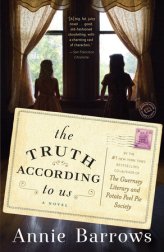
 

These two will take a while to get to:

The Truth According to Us by Annie Barrows

The Truth According to UsBarrows’ previous book is the wildly popular The Guernsey Literary and Potato Peel Pie Society published eight years ago. I’d enjoyed the lively characters in Guernsey amidst the troublesome setting of WWII, with the island occupied by German soldiers. Just curious to read children’s author Barrows’ first solo publication for adults. The Truth brings Barrows back to the home state of her aunt and primary writer of Guernsey, Mary Ann Shaffer, who died before completing the book. Family saga in small town West Virginia in 1938. If you’ve read this one, how is it compared with Guernsey? Should I even start it?
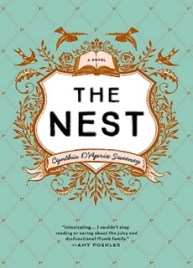


The Nest by Cynthia D’Aprix Sweeney

The+Nest+-+book+coverIf I want a breezy summer beach read, maybe I should start with this one. But this too can wait. I got it mainly because of the future film adaptation. Sweeney’s debut work reportedly fetched a 7-figure advance from Ecco; not surprisingly, film rights were snatched up soon after. What should be noted is: by whom? Well, as evidence of the booming book/movie enterprise, Amazon Film it is, and Jill Soloway (Transparent) will direct. Note also, just saying, here’s a book with Amy Poehler’s endorsement on the cover. Have you read it? Are you looking forward to its movie adaptation?
 

***

Related Review Posts on Ripple Effects:

Inside Llewyn Davis: A Serious Man in Greenwich Village

The Guernsey Literary and Potato Peel Pie Society

The Elegance of the Hedgehog

August: Osage County


Saturday Snapshot July 23: Traffic Jam

I know my Air B&B (note the purposely altered name) is popular, with free meals, a pool, and all the natural amenities, but I’d never expected an aerial traffic jam with everyone arriving at the same time.

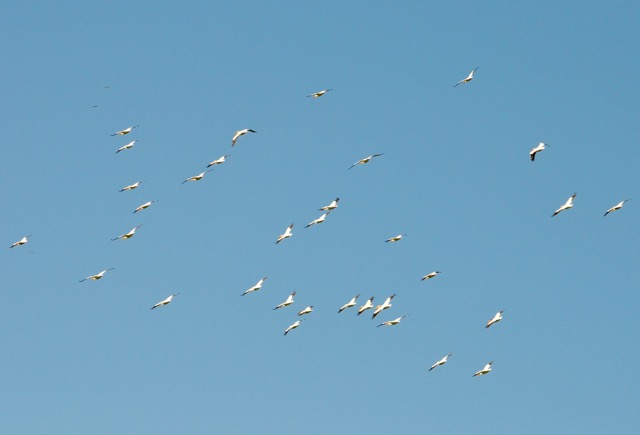
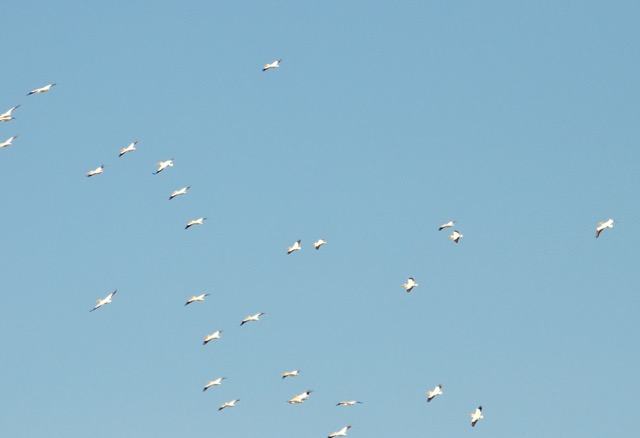
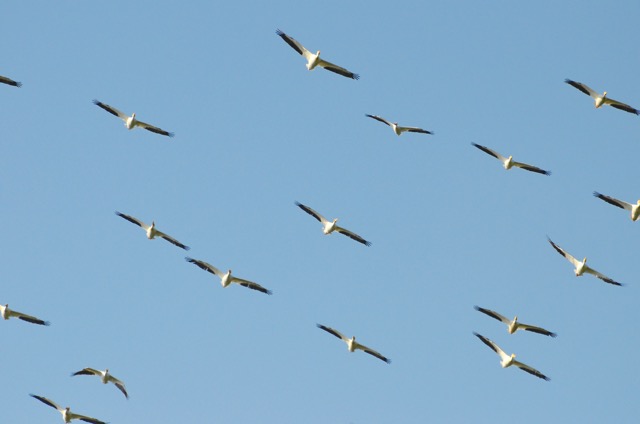
At first they looked like confetti in the sky from afar. Without a wide-angle lens I could only capture a section. Just imagine multiples of these:

confetti

confetti2

With no reservations, I wasn’t expecting them or knew who they were. But I could tell they weren’t gulls. As they came closer, they turned into squadrons of fighter planes:

Pelicans 2

By now, I could see clearly – American White Pelicans, interestingly, converging from opposite directions:

Closer still

No reservations? No problem. Welcome you all!

Welcome

Just make sure you leave a good review. And please make reservation next time.

***

Saturday Snapshot is hosted by West Metro Mommy Reads. CLICK HERE to see what others have posted.