The Secret Life of Walter Mitty (2013): The Love Hate Gap

This new adaptation loosely based on James Thurber’s 1939 short story was a highly anticipated year-end movie, possibly aiming for a spot in the coming awards season. It was released on Christmas Day, 2013, only to meet with disappointing critical reviews.
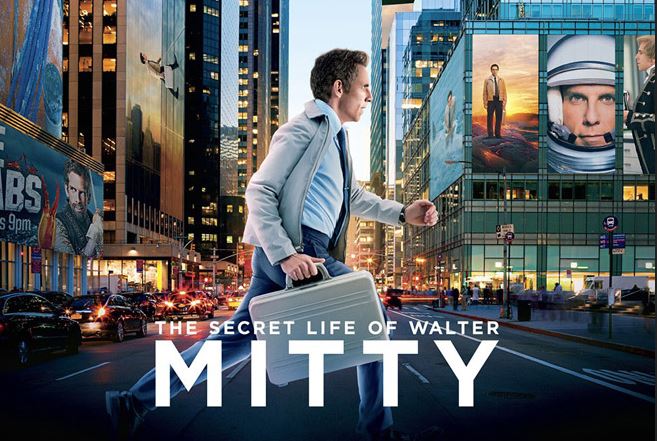
The-Secret-Life-of-Walter-Mitty

Any movie version derived from James Thurber’s short story first published in the March 18, 1939, issue of The New Yorker is allowed plenty of room for reinvention, since the original story is only about 2,000 words in length. If you’re interested to read or reread it, here’s the link. The story saw its first movie adaptation in 1947, starring Danny Kaye as Walter Mitty.

In Thurber’s story, Walter Mitty is a man living with an overbearing wife. He intersperses his meagre existence with heroic daydreaming. Behind the wheel of his car driving his wife to the hair salon, he would zone-out and imagine himself a fighter pilot piercing through a storm. At another time he would cast himself as a world-renowned surgeon saving a dying patient on the operation table, or as an expert shooter, or a war hero.

Over the years, Thurber’s Walter Mitty seems to have turned from a fictional character into a concept. The daydreamer has gathered mass appeal. Walter Mitty the character unleashes the escapist in us. It takes us out of our mundane, ordinary life and catapults us to brave, new worlds. It empowers and makes a hero out of Everyman.

This recent movie version has taken up such a challenge with fine colours. Walter Mitty (Ben Stiller) works for LIFE magazine which has just been acquired, and a major downsizing ensues. The upcoming issue will be the last of its print edition. As the ‘Negative Assets Manager’, Walter Mitty is responsible for the cover. ‘Negative assets’ means, literally, the negatives of photo collection. And here’s the rub, the slide that is meant for this last cover is missing. Feeling responsible, Walter Mitty takes up the challenge to seek out its reclusive photographer Sean O’Connell (Sean Penn), who leaves his tracks in the remotest parts of the world.

Not quite a dramatic story arc, not quite a believable motive either, considering the digital age of the setting, seems an unrealistic task to conduct a real-life globetrotting search for a missing slide. But out of curiosity, I let the story lead and enjoy what comes next.

The arduous journey to find the mystical photographer offers me an array of visually stunning and surreal Walter Mitty-esques sequences. The initiation is when Walter Mitty jumps onto a moving helicopter in Greenland, upon imagining his love interest Cheryl (Kristen Wiig) singing ‘Ground Control to Major Tom’, urging him to take flight. Other breathtaking scenes that follow include longboarding by an erupting volcano in Iceland (my favourite), scaling the mountains in Afghanistan, and playing soccer with Himalayan dwellers against the setting sun.

Soccer match in the setting sun

In the office, Walter Mitty is the target of bullying from the hatchet man of the acquisition Ted (Adam Scott). Walter is also the secret admirer of coworker Cheryl. Too timid to declare his love, he hides behind eHarmony to hopefully connect with her anonymously. After Walter’s adventurous journey to find the mystic photographer, he is transformed into a braver man; ultimately, his true colours shine through, fantasy fulfilled.

Shirley MacLaine plays Walter Mitty’s supportive mother, an endearing role. Together with Kathryn Hahn as Walter’s sister, they bring some normality into our protagonist’s life. The three offer a few heart-warming moments.

Now, mind the gap. From the reviews and audience feedbacks, it looks like this is one of those ‘love-it’ or hate-it’ movies. Here are the stats of approval on Rotten Tomatoes: critics 48%, audience:76% On Metacritics it is similar: critics 54% and viewers 76%.

Why the discrepancy? I must stress that there are critics who love it, and, audience who don’t. Not that this is purely a ‘critics vs. viewers’ kind of showdown. But we do see the obvious gap between the two groups. What accounts for the gap? Here’s my analysis and speculation:

Those who hate the movie, see Ben Stiller. They see this as a self-serving project of the A-list Hollywood star directing himself in a role that sends him to all the improbable heroic scenarios. They see the production as a self-absorbed ego trip. Unrealistic storyline, much ado about nothing.

Those who love the movie, or find it entertaining and enjoyable, see Walter Mitty. They see the daydreamer, the self-defeating underdog going on a series of life-transforming adventures. They see the Wlater Mitty of today, a tiny screw in the humungous economic machine, dispensable, unappreciated, the tireless worker saving the day. They see love requited; they see dreams fulfilled.

What if… What if this whole production is Ben Stiller’s Walter Mitty fantasy realized? Why should we mind? Anyone too high on the A-list to have no need for a Walter Mitty moment?

~ ~ ~ Ripples

Related Links: 

CLICK HERE To read the short story by James Thurber, ‘The Secret Life of Walter Mitty’, published in The New Yorker, March 18, 1939.

CLICK HERE to read an article detailing the LIFE magazine covers in the movie: “Walter Mitty and the Life Magazine Covers that Never Were”. 

***

Downton Abbey Season 4: Episode 4 (PBS)

What a gripping episode. But before the most important storyline comes to a resolve, there are some interesting development.

Who’s this Baxter, new lady’s maid to Cora Grantham? Nothing is explained how she’s friends with Thomas. When Bates asks Anna’s opinion of her, and what Baxter sees in Thomas, Anna replies:

“You know the old saying: there’s nowt so queer as folk”

Layered with meaning. First for Baxter, her inexplicable (so far) relationship with Thomas; then for Anna’s own situation, the tragic and most unwanted event had turned her into a totally different person to her husband. It could also refer to Green, her attacker, although I would not venture to use that saying on him. Just too kind a comment for such an evil man.

“The world moves on and we must move with it.” Wisely says Mary. I’m glad she has finally come out of her loss and mourning and immerses in new responsibilities. But who knows moving on involves a dilemma: the tension between legal and moral rights, the rational and the heart. The Crawleys have all the legal rights to foreclose on the son of an estate where an elderly tenant just passed away, leaving debts unpaid. Robert shows his colours in letting Tim Drewe stay and farm the land. Tom waves his socialist flag and stands on the side of the farmer, leaving Mary, surprised, on her own. But she is not difficult to win over when it’s kindness that dominates.

In the mean time, upon Mr. Clarkson’s urging, Isobel tries to find a position for a village young man John Pegg. She corrects him when he calls her ‘your ladyship’, just ‘Mrs. Crawley,’ she says. Julian Fellowes can always find her the right words:

“He’s going to be so disappointed to find out how ordinary I really am.”

Edith waits in vain for news from Michael Gregson. At the mean time, she goes to London and visits a Dr. Goldman. Again, I haven’t seen any future episodes, but this doesn’t look good. I mean, we still remember Sir Anthony Strallan.

Napier is back, on business passing by. Now, why is Mary so excited to see him? She literally glows. And why does Napier look so reserved and serious? Why does he come anyway?

Iron Chef Downton version does not go well with Alfred, albeit the preparation work looks delicious. Now Daisy is grinning from ear to ear. Alfred is not going to the Ritz Hotel in London any time soon.

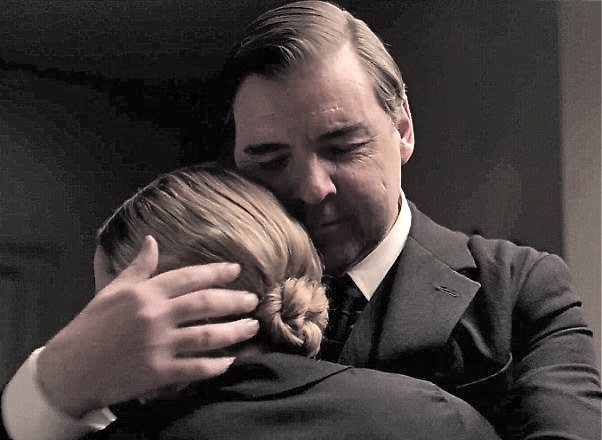
Bates and Anna embrace

But the pivotal story belongs to Bates and Anna. Bates goes to Mrs. Hughes after overhearing her talk with Anna. Threatening resignation, he gets the truth, but not the whole truth. Mrs. Hughes swears on her mother’s grave that the attacker is an outsider and not Green.

The scene belongs to Bates. We have seen Anna’s tragic attack in Episode 2, we now see a belated, yet vicarious reaction from Bates, just as heart-wrenching. We see him leave Mrs. Hughes’ room, stunned, holding his rage with much restraint, but soon, break down in tears.

And yet we are gratified to see, finally, the secret is out and a cathartic end to Bates and Anna’s silent ordeal. There’s no shame, he assures her:

“You are not spoiled. You’re made higher to me and holier because of the suffering you’ve been put through. You are my wife and I could never be prouder or love you more than I do at this moment.”

This will likely go down as one of the all time love quotes.

But not too soon, Bates’s last words send chills up Mrs. Hughes’s spine. You can see her nuanced reaction as she hears him utter, also with much restraint:

“Nothing is over and done with, Mrs. Hughes… Be aware, nothing is over, and nothing is done with.”

Here ignites a new storyline: The Revenge of Bates.

***

Season 4 Episode 3

Season 4 Episode 2

Season 4 Opening Special

***

Saturday Snapshot January 25: Cabin Fever

It’s January 25, and we’re deep in winter. I don’t need any more photos to remind me of our seasonal deal, snow and ice. Saw the movie The Secret Life of Walter Mitty a couple of days ago. And Oh, how I need to unleash the Walter Mitty in me now, and let my mind zoom off to distant lands, warm, temperate, and colourful.

So here I am, travelling back to the summer of 2010, taking a road trip in Provence, France. A cure for cabin fever: I breath in the warm air, feast my eyes on colours and relive a most memorable family vacation.

We took a day trip from Avignon to Vaison la Romaine and Chateauneuf du Pape, passing through vineyards, stopping by markets.

A vineyard beside a 12th Century chapel in Vaison la Romaine:

Vineyard by 12th Century Chapel in Vaison

Grapes on vine

A street market. The colours … what a contrast to our wintry white and grey:

Street Market in Vaison

Colourful pots

Colours Colorful rolls

Motor carI like the kid here. What was he looking at?

The Kid

Or here, the yellow rose. Imagine opening your front door and be greeted by a cheerful, yellow rose:

The Yellow Rose

And the fan here. Just looking at it can cure cabin fever. Let your inner Walter Mitty take you for a ride:

The Fan

***

Saturday Snapshot is hosted by Melinda of West Metro Mommy Reads. CLICK HERE to see what others have posted.

ALL PHOTOS TAKEN BY ARTI OF RIPPLE EFFECTS. DO NOT COPY OR REBLOG.

***

August: Osage County (2013), Ad-Lib in the Literal Sense

Tolstoy writes at the beginning of Anna Karenina this famous line: “All happy families are alike; each unhappy family is unhappy in its own way.”

That explains why we see more movies about dysfunctional families than happy ones, because there are just too many more unhappy stories to tell and countless ways to tell them.

August Osage County

Tracy Letts’s play August: Osage County was the 2008 Pulitzer Prize winner for drama. The stage production was well received as a hilarious satire and biting commentary of the contemporary, declining family. Surely, it’s ironic that we find humour in something that we ought to lament. However, it’s also true that the most accessible way for a writer to communicate is probably by means of drama, satire, humour, and entertainment.

The movie version evokes very different reactions. Reviews are mixed, and there are some harsh criticisms. One thing I find though, many of the critics admit to not having seen the stage performance. Well, I haven’t either, but I’ve at least done my due diligence, also to guard myself from A-list stars influencing my interpretation, I read the play before I went to see the movie.

First the reading experience. I’d thoroughly enjoyed it. The long quote like an epigraph at the beginning of the play prepares me for the content following. It describes parent/child relationships, from All The King’s Men by Robert Penn Warren. Let me just quote the last lines:

And the good old family reunion, with picnic dinner under the maples, is very much like diving into the octopus tank at the aquarium.

Three Weston daughters, Barbara, Ivy and Karen reunite in their childhood house outside Pawhuska, Oklahoma, in a family crisis. Their father Beverly had been missing, later found drowned, an apparent suicide. Beverly was a one-time award winning poet who in later life drenched his misery in alcohol. The matriarch is the foul-mouthed Violet Weston, a destructive roadside bomb that explodes upon the slightest human contact. What makes her even more bitter is what could well be her nemesis, mouth cancer. She is often high on prescription drugs, while she prides herself that nothing slips by her without her noticing. She’s not demeaning, just ‘truth-telling’.

There are dark secrets in that old house unknown to the daughters, exposed during this present crisis. The twists and turns in the plot only accentuate the decayed skeleton of a family. But Letts’s lines are thought-provoking, albeit well mashed-up with curses and abrasive language. But there are LOL dialogues and humorous moments, and overall, an entertaining, well crafted play. It starts off with this line: “Life is very long… T. S. Eliot”, and before the final Blackout it finishes with: “This is the way the world ends, this is the way the world ends, this is the way the world ends…” Hollow men in their precarious condition.

Intelligent lines, a far-fetched character, but not impossible situations, and yes, some nasty verbal and literal combats. I must say, having read the play helps me appreciate the movie more despite its faults.

So, here we go round the prickly pear…

Streep and Roberts in August Osage County

THE MOVIE

If you haven’t read the play or seen the stage production, you just might be in for some rude awakening. Director John Wells is known more for his TV series than his one full length feature The Company Men (2010). I’m glad though that Tracy Letts writes the screenplay himself. He keeps many of the lines intact, and adds some scenes for dramatic and cinematic effects.

While exuding fearful authority to everyone who crosses her path, Meryle Streep is fearless in adopting a vocabulary of expletives and curses playing Violet Weston. Her daughter Barabara (Julia Roberts) is more restrained and obviously exasperated to find herself slipping into similar form in relating to her recently divorced husband Bill (Ewan McGregor) and teenaged daughter Jean (Abigail Breslin).

Ivy lives close to Violet but no more as she has her exit plan. However, we know what best-laid plans often do. Youngest sister Karen changes men like wardrobes; oblivious (or maybe not) to her, her present fiancé Steve (Dermot Mulroney) looks like another disappointment. Mattie Fae (Margo Martindale) is a supportive sister to Violet, but she too has to nurse her own unspeakable past. Her husband Charlie (Chris Cooper) is probably of the soundest mind in this family. He has spoken a few admirable lines as he confronts his wife’s maltreatment of her own son, Little Charles (Benedict Cumberbatch). But of course, Mattie fae has her own Gordian knot to deal with.

The person that silently offers practical help whenever there are crashes and especially so in the last scene is the aboriginal maid hired by Beverly a few days before he disappears. Johnna (Misty Upham) cooks, serves, observes, and raises moral protest with a shovel. She is the one at the end of Letts’s play softly reciting T. S. Eliot’s lines, “This is the way the world ends…” while Violet utters: “and then you’re gone, and then you’re gone, and then you’re gone…” In the movie we hear Clapton’s ‘Lay Down Sally’: “But won’t you make yourself at home and stay with me? Don’t you ever leave…” Less literary and more obvious.

The key to enjoying the movie is to find entertainment in its dark comedy, taking misbehaviour and maltreatments as satire, overly dramatic scenes as farce, exaggerated gestures and facial expressions as comedic spasms. But of course, there are scenes that are serious, thus sending the mixed messages of an incongruent  genre. For entertainment purposes here, I think it is fine to feel poignancy through the chaos.  

Yet the movie has its faults, and it’s not hard to pick out. Inconsistency in blocking of characters is an example. One obvious scene is when Bill is driving Barbara to identify her father’s body. We see Barbara sit in the back seat with daughter Jean, delivering her ‘die after me ” plea. As the car stops, the camera points to the front of the car and we see Barbara (or her stand-in) steps out from the front passenger seat.

But overall, as a play turned movie, it is less claustrophobic than the one-room setting of Carnage (2011). And the entertainment value can be found in the acting of most of the characters, in particular, Streep and Roberts. If there are faults, they are not in over-acting. Roberts’s restrained performance is a good counter-balance to Streep’s overbearing character.  Watching the movie, I have the feeling that Wells is following Letts’s written description in the literal sense. Why, in the play, the floor wrestling between Violet and Barbara is written with these words: “ad-lib“.

~ ~ ~ Ripples

***

Downton Abbey Season 4: Episode 3 (PBS)

Here’s a Downton episode that shows why it keeps gathering fans. That’s when every plot is captivating, and every other line uttered by the characters is a quotable quote, plus, two strong female characters saving the day: Violet Crawley upstairs, and Mrs. Hughes downstairs. Thanks to them, the good regain their zest for life (Mary and Isobel), and the bad are banished (Edna Braithwaite).

The most important storyline of course is Anna and Bates. And Mrs. Hughes is the only one to know about the rape. I have been successful so far to block out spoilers for future episodes but I hope Mrs. Hughes is wise and strong enough to make sure the right steps are taken in this heart wrenching case. After the most controversial tragedy befalls a faultless character, we’re all eager to see the aftermath.

Anna is thrice victimized. First raped, then silenced, and ultimately guilt-laden. I’m sure such a scenario is real even for today. “I must have made it happen. I feel dirty. I can’t let him touch me because I’m soiled.” A gap has developed so quickly like the ground has parted suddenly between a once loving couple. Now Anna and Bates are standing on opposite sides of a deep chasm. Mrs. Hughes urges her to go to the police to report, and tell Bates about the assault. She can see how hurtful it is for him to suffer from not knowing. But Anna sees the possible reality for Bates. “Better a broken heart than a broken neck.”

Several people have noticed Anna’s recent silence. Who wouldn’t? But not many would ask Bates directly except of course Lord Grantham himself. Julian Fellowes has written him some good lines. I just want to quote the whole thing here:

“There is no such thing as a marriage between two intelligent people that does not sometimes have to negotiate thin ice. I know. You must wait until things become clear. And they will. The damage cannot be irreparable when a man and a woman love each other as much as you do.”

But as always, the punchline comes after a pause:

“My goodness that was strong talk for an Englishman.”

Downton Abbey S4E3

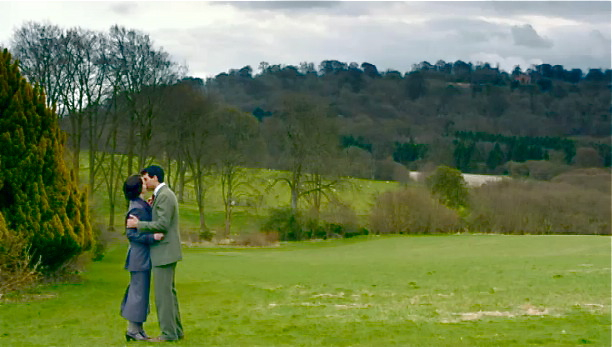
On a slightly more pleasant note, Lady Mary’s dilemma regarding Lord Gillingham and his lightning speed of a marriage proposal. Michelle Dockery has put forth some very fine acting in this episode, especially the scene when they are walking on the green grounds of Downton, when Gillingham asks her a very short question: “Will you marry me?” The setting is romantic, the cinematography gorgeous, but this is what I’m most gratified to hear from Lady Mary:

“I can’t. I’m not free of him. Yesterday, you said I fill your brain. Well, Matthew fills mine. Still. And I don’t want to be without him, not yet.”

After all, it’s only about seven months after Matthew’s death. Further, if Tony Gillingham can discard a previously engaged relationship so readily, what kind of a lover will he be to Mary? Again, I don’t know about any future story development, but in my heart, I wish Mary would wait a while longer. But, she gives him a warm kiss though. What a conflicting heart. Did she say later that she’d done something she might regret?

Same with Edith. Have you seen anyone signing away a document without giving it even just a skim over? Julian Fellowes knows exactly where to grab our attention… when the character is least attentive. This is a document prepared by her very sincere-looking love interest, the man admittedly had had a ‘dubious, misspent youth’, and who had won back everyone’s poker losses from a crook within the same night. Oh but love conquers all fears for Edith. Lady Rosamund reminds her she’s “gambling with her future”. So Gregson leaves for Munich the next day. Interesting.

While in London, we’re introduced to the first black character in Downton Abbey, the jazz singer Jack Ross, who leaves a fine impression on Lady Rose, launching another interesting plot line.

And don’t you just love Mrs. Hughes even more, a bulwark of discernment and authority? Tom is wise enough to come downstairs to seek her advice as Edna blackmails him to marry her for a fake, just-in-case kind of pregnancy. Even Thomas (it’s Mr. Barrows now) the schemer isn’t a bit sympathetic.

And it’s Mrs. Hughes again who is so kind, and sweet, to restore a loving memory for Mr. Carson, framing up his once, young love. Can you imagine Mrs. Hughes taking time off Downton to go to town to shop for a nice picture frame? Anyway, it’s good to know these characters have heart, and are not afraid to show it. Very well done here. And no, I don’t particularly wish that Mrs. Hughes and Mr. Carson would become late romantics. They are just fine now. It’s much rarer to see genuine friendship than romantic love.

Mr. Carson gets the best quote here in Season 4 Episode 3:

“The business of life is the acquisition of memories. In the end that’s all there is.”

***

Season 4 Episode 2

Season 4 Opening Special

***

2014 Book to Movie Adaptations

I’m sure without any more suggestions, you have plenty to read already. But just in case you’re one of those who likes to read the book before watching its movie adaptation, here’s a list to add to your 2014 reading:

A Most Wated ManA Most Wanted Man by John Le Carré

The most recent John Le Carré novel to be adapted into a movie. He has eight so far. Philip Seymour Hoffman, Rachel McAdam, Robin Wright, Daniel Brühl star. Directed by Anton Corbijn whose last film was the thoughtful The American (2010), a film adaptation I found to be much better than the book. A Most Wanted Man is to be premiered at Sundance Film Festival, Jan. 16-26, 2014, in Park City, Utah.

The DoubleThe Double by Fyodor Dostoyevsky 

A government clerk after seeing his own double–but a completely opposite personality from his introverted and unsure self–ultimately goes down a path of madness. Should be one captivating psychological thriller, but interestingly according to IMDb, it’s a comedy. Jesse Eisenberg stars (I can see the casting is spot on). At TIFF last year. To be screened at Sundance this January.

EVERY-SECRET-THING-199x300Every Secret Thing by Laura Lippman

Acclaimed psychological thriller about missing children and their abductors now turned into suspense drama by director Amy Berg, known for her riveting documentary West of Memphis (2012) about the ‘West Memphis Three’. Adapted screenplay by Nicole Holofcener, who wrote and directed the recent, award winning indie film Enough Said (2013). Dakota Fanning, Diane Lane.

.

Far from the Madding Crowd

Far From the Madding Crowd by Thomas Hardy

Carey Mulligan stars as Bathsheba Everdene, screenplay adaptation by David Nicholls, who has written other classics adaptations such as Great Expectations (2012), Tess of the D’Urberville (2008). But my personal favourite of his works is the gem When Did You Last See Your Father? (2007) And if you’ve seen the intense Danish film The Hunt (just nom for an Oscar), you’d be curious to see its director Thomas Vinterberg at the helm of this latest Hardy adaptation.

gone-girl

Gone Girl by Gillian Flynn

A woman mysteriously disappears on the day of her wedding anniversary. A NYT bestseller, the thriller will be directed by David Fincher, two-time Oscar nominee for The Social Network (2010) and The Curious Case of Benjamin Button (2008). Ben Affleck, Roasmund Pike, and Neil Patrick Harris star.

.

Hector and teh Search for HappinessHector and the Search For Happiness by François Lelord

Psychiatrist turned writer Lelord’s internationally popular book about a psychiatrist’s globe-trotting search for happiness. Sounds like a delightful read and an original movie idea. Intriguing cast includes Rosamund Pike, Toni Collette, Christopher Plummer, Simon Pegg, Stellan Skarsgård. If I’m attracted by the cover to read the book, it will be this one.

Labor-DayLabour Day by Joyce Maynard

From the POV of a 13 year-old boy, how his labour day weekend changes his life as an escaped convict (Josh Brolin) asks him and his mother (Kate Winslet) for a temporarily shelter. Mother and son soon find that he could well be the husband and father they respectively need. But of course, there are twists and turns. Jason Reitman (Up In The Air, 2009) writes the screenplay and directs. Winslet got a Golden Globe nom for Best Actress for her role.

Life Itself A Memoir Book CoverLife Itself by Roger Ebert

Ebert’s memoir is adapted into a documentary by Steve James, whose film ‘Hoop Dreams’ was greatly supported by Ebert twenty years ago. Life Itself the book is an eyewitness history of film criticism in America, on top of a moving personal memoir. The doc will premiere in Sundance beginning today Jan. 16 – 26. Click here to read my personal encounter with the legend.

Madame BovaryMadame Bovary by Gustave Flaubert

A quick jump for Mia Wasikowska from Jane Eyre to Emma Bovary. Of course, she’s also Alice in Wonderland, and a sequel of that will be coming out in 2016. Paul Giamatti co-stars. I’m delighted to see all these classics being adapted into modern movies, raising awareness for a new generation of readers. Let’s just hope the film does justice to the literary source.

.

The Monuments MenThe Monuments Men by Robert Edsel

I’ve mentioned this before. The true but untold story of how a group of rescuers called ‘The Monuments Men’ in war-torn Europe saved art and artifacts from the Nazi’s. In the introduction of the book, the author writes: “Hitler and the Nazis pulled off the ‘greatest theft in history’, seizing and transporting more than five million cultural objects to the Third Reich.” Star George Clooney, Matt Damon, Cate Blanchett, Jean Dujardin (The Artist), Hugh Bonneville (so Lord Grantham finally gets the chance to go into the battlefield).

The BibleNoah

Read the Bible. This epic adaptation is based on the Biblical account of Noah and the Great Flood. Helmed by Darren Aronofsky, Oscar nominee for Best Director for Black Swan (2010). Russell Crowe is Noah, and Anthony Hopkins is … uh… Methuselah. Others include Emma Watson, Logan Lerman (as Ham), Douglas Booth (Shem), Nick Nolte (?) Interesting postmodern interpretation I suspect.

Winter's TaleWinter’s Tale by Mark Helprin

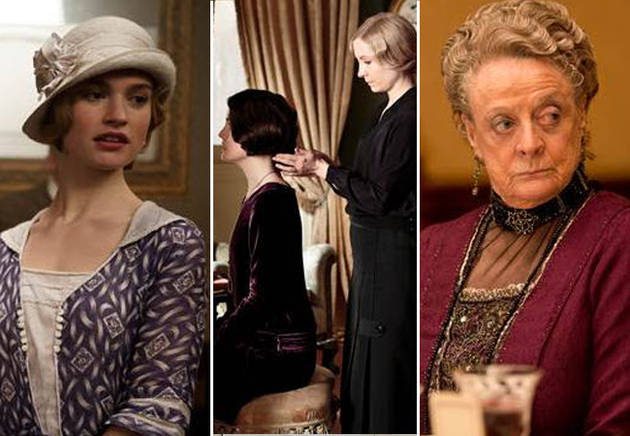
All ye Downton Abbey and Lady Sybil fans, this is the first movie Jessica Brown Findlay made after Downton, with co-stars Colin Farrell, Jennifer Connelly, Will Smth. Directed by Akiva Goldsman, Oscar winner of Best Adapted Screenplay for A Beautiful Mind (2001). The setting is interesting as it depicts the story from both the beginning and the end of the 20th C. Another time warp fantasy. Click here to the book’s webpage.

***

More titles mentioned by commenters (A sequel list will come at a later date):

Serena by Ron Rash (Jennifer Lawrence, Bradley Cooper)

Suite Français by Irène Némirovsky (Michelle Williams, Kristin Scott Thomas)

Son of God based on The Bible

***

Downton Abbey Season 4 Episode 2 (PBS)

CLICK HERE to Season 4 Episode 3 (Jan. 19, PBS)

After an uneventful two-hour opener last week, Downton has gone Gosford Park on us here in Episode 2 (E2 on PBS. In UK aired Sept, 2013 this is E3). Don’t forget, Julian Fellowes wrote the Oscar winning screenplay of that Altman directed movie Gosford Park. And so we’re warned from the start. ‘Viewers Discretion Advised’, as scenes may not be bearable for everyone.

Before we move on to discuss that tragic scene, I think there are several good things in this episode. First is, good for plot development, Mary finally has stepped out of mourning. She reconnects with her childhood acquaintance Anthony Gillingham at a weekend house party in Downton. That’s seven months after Mathew’s death, too early? Isobel Crawley may think so. While this is the first time Tom hears Mary laugh, Isobel sadly replies, ‘I find it hard to join in the merry-making.’ Lord Gillingham seems like a decent prospect, but here’s the rub: he’s engaged. Of course, under the pen of Julian Fellowes, that isn’t too big an obstacle.

During that party, Tom feels absolutely out of place. Edna is quick to console. Troubles brewing.

Kiri te Kanawa in Downton

A moving scene is Dame Kiri Te Kanawa, the real-life diva herself, appearing as a guest star in this Episode as the real-life Australian opera singer Dame Nellie Melba upon the invitation from Cora. She sings several arias to entertain the guests. One of them is her favourite, O mio babbino caro, which she dedicates to love and lovers. Kiri Te Kanawa’s mesmerizing voice singing this Puccini aria has made an indelible mark in my movie memory from the Merchant Ivory adaptation of E. M. Forster’s A Room With A View (1985). Maggie Smith (Violet Crawley) must have felt an affiliation with this piece since she herself had starred in that legendary film. (Click here to listen and view a short clip.)

Edith has brought Gregson to the party but Robert avoids talking to him, until money is involved. Gregson has done some heroic poker playing to gain back lost ground for Robert who thanks him for ‘saving his bacon.’ Gregson winning back ‘fair and square’ from the dubious poker player Terence Sampson just might have revealed a bit of his past, schemes he learned in his ‘misspent youth’. This person remains a mystery still. Should Edith be more cautious?

As Dame Nellie Melba sings the love aria upstairs, good-natured Anna encounters evil embodied in Gillingham’s butler Green downstairs. I’m afraid from this point on, she will be a changed person. Green strikes Anna hard on the face and drags her into a room. The subsequent rape is hidden from our sight, thankfully, but we can see the aftermath. The charming voice of a diva singing a love aria upstairs is juxtaposed with the unheeded screams from Anna downstairs makes a powerful and ironic dramatic device. Anna has been the bulwark, a pillar of quiet strength and principle in the Series up to now, I can understand the outcries from fans.

Is this too harsh a dealing from Julian Fellowes? I don’t feel this scene is gratuitous or sensationalized. Why, Mr. Bates has been imprisoned for a crime he did not commit, William dies from a war wound, Lavinia a casualty of scarlet fever, Ethel has to resort to prostitution and give up her son, Sybil meets her end after childbirth, Matthew crashes out, it’s not the first time tragedy happens to Downton characters. No, I wouldn’t want to see Anna suffer either. But if that is the twist in the plot, I’m eager to see what will happen next. This drastic turn will bring some tension between Anna and Bates as she tries to hide the fact of her wounds, worrying that if Bates knows about it, he will likely do something to Green that will send him back to prison or even hanged. Further, the social stigma of being a rape victim would lead to even more detrimental consequences.

Julian Fellowes has just reminded us that Downton Abbey is more than fashion and parties, etiquettes and zeitgeist of the roaring twenties. It is foremost a world inhabited by humans, with all their tragedies and ugliness.

I’m adding this note in. Some of you have provided stats on sexual assaults and a link to an interview with Joanne Froggatt, all point to the unfortunate social reality that crimes against women are still happening today, and, tragically, the stigma of being a rape victim is just as acute as in the past, while reporting only threatens them even more. Like Anna, they are twice victimized; first being raped, and after, silenced.

Yes, Mr. Carson, this is a topsy turvy world you’ve come to.

***

Fresh off the press: Season 4 Episode 3 (Jan. 19 PBS)

Downton Abbey Season 4 Opening 2 hour Special

Saturday Snapshot January 11: Inspired by Llewyn Davis

The movie Inside Llewyn Davis strikes me with its overall atmospheric tone colour. The almost black-and-white, cyan greyness that shroud the scenes convey a pervasive sense of melancholy. While I was seized by the gloominess, I also saw the beauty in the cinematography.

And the snow. During his trip to Chicago, Llewyn has to tread through snow on the streets, without a winter coat, without proper shoes. His socks are soaked through.

I took these two snow photos just recently. At first I wasn’t pleased with their lack of colour. But after watching the movie, I’ve come to appreciate them more. These are all colour photos, not black and white:

Snowflakes

Snowflakes 2

Without any green, trees can still be beautiful.

Tree

Trees

O the beauty of greyness.

***

Saturday Snapshot is hosted by Melinda of West Metro Mommy Reads. CLICK HERE to see what others have posted.

Photos in this post taken by Arti of Ripple Effects. Do Not Copy or Reblog.

***

CLICK HERE to read my review of the movie Inside Llewyn Davis.

Inside Llewyn Davis: A Serious Man in Greenwich Village

As preparation for the movie, I bought the CD soundtrack a few weeks before. This has proven to be a mistake, for I’d been listening to it so much that when I watched the film, I wasn’t surprised by the music at all. I consider that a loss. It would have been much better that I were mesmerized by that haunting voice of Llewyn Davis (Oscar Isaac) for the first time as I watched the movie.

Inside Llewyn Davis copy

Music is a major player in many Coen brothers movies, often used to comedic and acerbic effects. The whole odyssey in O Brothers Where Art Thou (2000) comes to mind readily, or Jefferson Airplane in A Serious Man (2009) where ‘Somebody to Love’ reinvents itself, or even in True Grit‘s (2010) ‘Leaning on the Everlasting Arms’ as we see the one-arm Mattie Ross riding into the sunset.

But in Inside Llewyn Davis, music is no laughing matter. Llewyn is the serious man here, a folksinger down on his luck. T. Bone Burnett has crafted an impressive music production. It should be noted too that Marcus Mumford, lead singer of Mumford and Sons and husband of Carey Mulligan, is also involved in the song arrangement and singing, in particular, the part of Llewyn’s duo partner Mike in ‘Fare Thee Well’.

The setting is New York City’s Greenwich Village, 1961. Llewyn is a folk music purist, an idealist. All he wants is a gig to kick off as a solo performer. The backstory is that his singing duo partner had committed suicide by jumping off the George Washington Bridge. The record he has produced as a soloist isn’t selling. It’s cold in NYC, Llewyn is homeless and coatless. Maybe it’s arrogance coming from being a music purist that makes him callous and abrasive, even to fellow folk singers, or maybe he needs to have that aloof hardness as an armour to sustain the slings and arrows life hurls his way.

O, if only Llewyn’s personality were as charismatic as his voice, he probably would have done better in life. Despite his musical talents, our protagonist, like a Shakespearean tragic hero, is trapped by his own character flaws and tripped by no small amount of fate, he slips slides into the wayside. Sadly, that’s exactly where he lands at the end of the movie.

He has friends and acquaintances, but there’s not much that they can do to help. He has already made the best use of their couches, and some of their wives. The latest to get pregnant is Jean, played against type by the sweet Carey Mulligan, all wrapped up in anger, understandably so, for her friend Llewyn is more concerned about a lost cat than her upcoming abortion. Jean has a very limited vocabulary to express herself except the overused expletive. Not a pleasant role to play I’m sure. Her character could have been written with a bit more depth.

Oscar Issac, Justin Timberlake, Carey Mulligan copy 2

Jean and her husband Jim (Justin Timberlake) are also folk singers but ‘careerists’ according to Llewyn. They would one day concede to life in the suburb, settle down and have kids. ‘Is that so bad?’ Jean asks Llewyn. The answer is obvious. Llewyn is definitely not going down that path.

Talented folk singers converge at the Gaslight Café in Greenwich Village during the 1960’s. Why some succeed and others don’t, the Coen brothers seem not so much to offer rational explanations than to depict the misfortunes of one. In that dim, brick-walled and smoke-filled Café, we hear some fantastic singing. We hear Jim, Jean and their friend Troy (Stark Sands) perform ‘Five Hundred Miles’, evoking Peter, Paul and Mary. At one point, to an oblivious Llewyn, we see the silhouette of what looks like Bob Dylan and hear his voice singing ‘Farewell’.

Cinematography (Bruno Delbonnel) sets the mood from the opening scene. In that basement Café, we see the place dimly lit with spotlight on Llewyn’s face, as his ‘Hang Me, O Hang Me’ captivates us right away. We follow him later as he steps outside to a pitch-dark alley where he meets his nemesis. Even during the day, we see him walk on wind-swept streets under dull, grey sky. The overall bleakness can be soothed only when Llewyn picks up his guitar and sing. His voice seems to be able to neutralize any outrageous fortune.

Llewyn takes a surreal road trip to Chicago to try his luck with a club owner Bud Grossman (F. Murray Abraham, a double for Bob Dylan’s manager Albert Grossman?) He is stuck in the car with the old and sardonic Roland Turner (John Goodman) who wraps up his opinion in one short line: “Folk singer? I thought you said you were a musician.” If the trip seems absurd, it could well be the exact impression the directors intend. We follow one week in the life of Llewyn Davis, a week of failed attempts, gloomy encounters, and bleak prospects. The only light is the voice.

~ ~ ~ 1/2 Ripples

***

Related Reviews on Ripple Effects:

A Serious Man (2009)

True Grit (2010)

***

Downton Abbey Season 4 Opening Special

That we use a TV series to mark the beginning of a new year speaks volumes about our contemporary life. However, we are products of our time and culture, and our annual waiting has run its course of patience training. So, let the games begin.

There are so many characters to reintroduce to us that I can understand Julian Fellowes has to write a fast-paced opening. In the first hour, almost all the scenes are like vignettes, spanning 30, 60, or 90 seconds. That means, if you don’t much care for one plot line, like Mrs. Patmore’s ambivalent encounter with an electric mixer, you can just count a few more seconds, you’ll see another character with another dilemma.

Downton Abbey S4  copy

Is it an apt opening? I must say, as with that of Season 3, I am a bit underwhelmed. But I’m sure, as the episodes roll out, I’ll get warmed up real soon. After all, there are so many characters and plot lines, there must be one that I like.

Season 4 opens six months after Matthew Crawley’s very untimely death, 50 years too early according to his widow. Mary’s sorrow has shrouded the first hour of this two-hour special, subtitled ‘House of the Walking Dead.’ So we just hope that Mary will soon take her grandmother’s advice, choose life over death. Violet Crawley remains one of my favourite characters, she beseeches effectively at the right moment, and despite her old age, is more lucid than her son.

We see Robert Crawley’s less than amiable self once again, trying to take charge of grandson George’s share of Downton by sidestepping Mary, all in the cover of protecting her fragile emotions. No malicious intent there but merely convenience over principle. Violet Crawley has once again shown that mother knows best. This has got to be my favourite line of the whole episode, an eighty-something Violet Crawley talking to her sixty-something son Lord Grantham:

When you talk like that I’m tempted to ring for Nanny and have you put to bed with no supper.

So it is a rewarding scene as we see Mary finally decides to come out of the land of the dead, crying over the shoulder of not her parents’ but Mr. Carson’s, who has seen her grow up and always has a soft spot for her. That’s one of the few moving scenes in this special.

Mary could have gotten closer to her mother-in-law Isobel Crawley who on her own has to deal with the loss of an only son. Mrs. Hughes has done a kind act, drawing her out of mourning by appealing to her benevolent spirit, while at the same time helping Charles Grigg, Mr. Carson’s former showbiz partner, to get back on his feet. To kill two birds with one stone, or invasion of privacy? Depends on who you ask. Nevertheless, I’m sure at the end of the day, Mr. Carson would thank Mrs. Hughes for intruding into his past so he can find some reconciliation with Grigg.

A character that seems to have turned into a lively spark of the household, hoisting the flag of modernism, other than the obvious, ever bubbly Rose, is Lady Edith. She has taken hold of her life, venturing out to seek her own fortune, or misfortune, in career and in love, disregarding her father’s safe standards. In the London social scenes we see some fresh, Gatsby-eques fashion and set designs. Her love interest, Michael Gregson, is willing to take up German citizenship in order that he can divorce his lunatic wife and marry Edith. There in the 1920’s turning to Germany? I can expect the plot to thicken quite a bit later.

O’Brien’s midnight move is an efficient way to handle actors not renewing their contracts. Now this one is easier to swallow than killing them off. With no obvious villain left to be his partner or rival, Tom Barrow has to shoulder the whole realm of evil plotting against the innocents. But with Nanny West, he just hits it by luck. So now he’s in favour with Cora Crawley. Who’s going to be his next victim?

Mr. Bates has been quiet, while Anna has some adventure as chaperone of Lady Rose to a working-class dance hall. I have not watched any of the upcoming episodes, but I feel Bates and Anna can be given more story and screen time. Let’s say, their strong relationship can withstand some slings and arrows Julian Fellowes wishes to hurl their way.

So what do you think of Downton Abbey S4 E1? Favourite scene and characters? Quotable quotes?

***

Related Posts:

Downton Abbey Season 4: Episode 2

Downton Abbey Season 3

Quotable Quotes from Downton Abbey Seasons 1 & 2

Quotable Quotes from Downton Abbey Season 3

***

Top Ripples of 2013

It’s not easy to rate a whole year’s experience by Ripples, unlike a two-hour movie. However, here are some stats I’ve compiled for my own records.

Ripple Effects is all about books and movies. For me, watching a movie definitely is a much easier activity than finishing a book. So far this year, my movie number is around 100, almost three times as many as books I’ve read. They include movies I’ve watched on the big screen in theatres, at TIFF, and on DVD and Blu-ray formats at home. But I’m sure there are still a few I’d forgotten to jot down.

I’ve written 16 movie reviews on Ripple Effects this year, and they are not all 2013 releases. This number represents only a dearth of my film experience. From this small collection, there are two that I’ve given 4/4 Ripples (I’m sure I’ll add some more in this Award Season):

Nebraska 
12 Years A Slave

These two came close, with 3½ Ripples:

Before Midnight
The Disappearance of Eleanor Rigby: Her (TIFF 13)

And several more with 3 Ripples. Click here to my review list.

For my trip to Toronto to attend TIFF in September, definitely a 4-Ripple experience.

Many of the movies I watched this year are “catch-up’s”. They are cinema classics I’d missed over the past decades. These are films that I’d long wanted to see but had not the time or the chance to. Yes, this ‘catching-up’ activity is a most enjoyable time for me. They don’t make movies like these anymore. No CGI, no colours even, yet we can see a kaleidoscope of characters, fantastic scenes and poignant human conditions. So, Top Ripples go to:

Federico Fellini’s I Vitelloni (1953), La Dolce Vita (1960), 8½ (1963)
Victorio De Sica’s Bicycle Thieves (1948)
Robert Bresson’s Au Hasard Balthazar (1966)
Akira Kurosawa’s Ikiru (1952), Rashomon (1950)
Sidney Lumet’s 12 Angry Men (1957)

Some others are book-related. Before the newest remakes come into being, I’d like to experience the original version, like:

Hitchcock’s Rebecca (1940)
Elia Kazan’s East of Eden (1955)
John Ford’s The Grapes of Wrath (1940)

Still other films I watched and/or rewatched to prepare for or just to go together with what looks like is their latest version, or homage, if you will, like the following to coincide with Before Midnight (2013):

Ingmar Bergman’s Scenes from a Marriage (1973)
Woody Allen’s Husbands and Wives (1992)

Or Elia Kazan’s A Streetcar Named Desire (1951) to go with Woody Allen’s Blue Jasmine (2013)

Along the way during this rewarding movie-watching year, I’ve discovered some foreign language films, two in particular stand out: Korean director Chang-dong Lee’s Poetry (2010) and Secret Sunshine (2007)

As a freelance reviewer, I continue to be a contributor to Asian American Press as their film and arts guest columnist. Further, and this I’m really excited about, my feature article on the Canadian-Korean playwright/actor Ins Choi was published on the December 4th issue of Curator Magazine.

**

Even though I’ve only read a small number of books compared to movies watched, I’m glad I’d completed a major challenge, and that’s reading Proust. It’s definitely a 4-Ripple experience for me, despite having had to slash my way through thickets and at times, find my way out of a literary labyrinth. My post on this first taste of Proust was featured on WordPress’s ‘Freshly Pressed’. Now that’s the bonus madeleines on top of an already savory meal.

Another book I hold high esteem is Eric Metaxas’s Bonhoeffer, a Read-Along I hosted earlier in 2013. I’d enjoyed the camaraderie of reading the same book with others, and the discussion of ideas. Finishing a book or not is not as important as taking part in the journey, even for a little while, as we share our thoughts. 4 Ripples.

For old acquaintances and new friends I’ve made in the blogging world this year, I must give another 4 Ripples. This is the major reward of blogging. To all the new blogs and sites I’ve discovered, I’ve thoroughly enjoyed our mutual visits.

**

As for posts, looks like my “Quotable Quotes from Downton Abbey” has taken over “Memorable Movie Love Quotes” as the most popular these days. And I can understand why. Let’s get ready for Downton Season 4, coming up in just a few days.

And for my adventures as a nature paparazzo and bird-stalker, I give them nothing less than Top Ripples.

To 2014, I have a few ideas. This may involve a bit more individual studies, and researching into topics that have interested me for some time. Yes, films and their influence in our postmodern culture, into that topic I will continue to delve. So there you have it, more books and movies to share with you all. As always, I invite you to come by the pond and throw in your two pebbles. I cling on to my motto: “Serenity is golden, but sometimes a few ripples are needed as proof of life.”

To All, a Four-Ripple 2014!

***

And The Word Was Made Homeless

Awesome Sky

The House of Christmas

by G. K. Chesterton (1874–1936)

There fared a mother driven forth
Out of an inn to roam;
In the place where she was homeless
All men are at home.
The crazy stable close at hand,
With shaking timber and shifting sand,
Grew a stronger thing to abide and stand
Than the square stones of Rome.

For men are homesick in their homes,
And strangers under the sun,
And they lay on their heads in a foreign land
Whenever the day is done.
Here we have battle and blazing eyes,
And chance and honour and high surprise,
But our homes are under miraculous skies
Where the yule tale was begun.

A Child in a foul stable,
Where the beasts feed and foam;
Only where He was homeless
Are you and I at home;
We have hands that fashion and heads that know,
But our hearts we lost – how long ago!
In a place no chart nor ship can show
Under the sky’s dome.

This world is wild as an old wives’ tale,
And strange the plain things are,
The earth is enough and the air is enough
For our wonder and our war;
But our rest is as far as the fire-drake swings
And our peace is put in impossible things
Where clashed and thundered unthinkable wings
Round an incredible star.

To an open house in the evening
Home shall men come,
To an older place than Eden
And a taller town than Rome.
To the end of the way of the wandering star,
To the things that cannot be and that are,
To the place where God was homeless
And all men are at home.

*****

“And the Word was made flesh, and dwelt among us.” John 1:14

**

(Photo taken by Arti of Ripple Effects, Sept. 2010. All Rights Reserved.)

***

 MERRY CHRISTMAS EVERYONE!

 
***