Books to Movie Adaptations Updates

Here are some updates that look promising, books that are in various stages of development into movies. For yourself or your book group, should make a good reading list:

East of Eden Book CoverEast of Eden — This just came out two days ago, Hunger Games director Gary Ross will write the screenplay of this new adaptation of John Steinbeck’s classic, with Jennifer Lawrence to star. For J. Law fans, this is good news. But for devotees of the original 1955 movie adaptation directed by the legendary Elia Kazan with the debut breakout role for James Dean, this modern version definitely is uncalled for, a rebel without a cause.
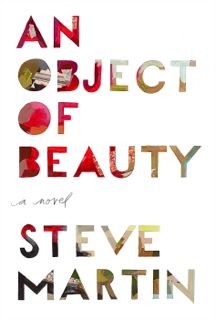
An Object of BeautyAn Object of Beauty — The movie version of Steve Martin’s novel about the NYC art gallery scene is now a project of Amy Adams’, with Ned Benson writing the screenplay. I have high expectation of this one, having seen Benson’s wonderful works The Disappearance of Eleanor Rigby: Him and Her last year at TIFF. The cast has not been announced but Amy Adams will be the producer and actor in her new project.

A Walk In the WoodsA Walk In The Woods — from the vast open sea in All Is Lost to the Appalachian Trail, Robert Redford will appear in this adaptation of the 1998 personal memoir by Bill Bryson, a walk on the Appalachian Trail to ‘rediscover America.’ Nick Nolte is also reported to be in the cast. Screenplay by Michael Arndt (Little Miss Sunshine, Toy Story 3, The Hunger Games), directed by Ken Kwapis (The Office). The movie is scheduled to come out in 2015. Enough time to read or reread, or even walk the Trail yourself. Who knows, you might see the film crew while there.
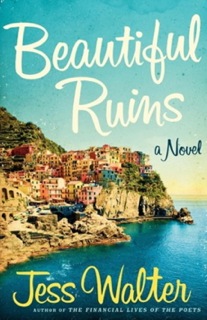
Beautiful RuinsBeautiful Ruins Author Jess Walter of this popular novel will co-write the screenplay with writer/director Todd Field. I’ve seen Field’s Oscar nominated adaptation of Little Children (2006 with Kate Winslet nom. for Best Actress), a haunting film. I trust his talents with Beautiful Ruins. Considering the Italian coastal setting of the book, the movie would likely offer some beautiful cinematography. Imogen Poots is on board, so far.

The Dinner The Dinner — Dutch author Herman Koch’s novel is like a dynamite. I’m half way through the lighted fuse as I type this post, so it’s not full-blown yet, but I’m totally engrossed in this book based on a real-life crime. The dinner menu in an elegant restaurant ingeniously parallels the plot development. I missed it at TIFF last year. And since, I’m not aware that it has made its presence on the big screens here in North America. But hopefully this year we will have the chance to see it. Even if it doesn’t show in your city, read the book still. (Update: to read my book review on Goodreads CLICK HERE.)

Hundred Foot JourneyThe Hundred-foot JourneyAnother culinary movie. This one is much lighter than the above, based on Richard C. Morais’s novel. Story is about a family from India moves to France, opening an Indian restaurant across from a Michelin-starred fine French restaurant. Cultural clashes, the reverse of The Best Exotic Marigold Hotel. The book is quite entertaining, the movie comes with some big names. Producers Steven Spielberg and Oprah Winfrey, Helen Mirren to star, and directed by the prolific Lasse Hallström (Chocolat, 2000; The Shipping News, 2001; Salmon Fishing In the Yemen, 2011)

The GiverThe Giver – The highly popular young adult book by Lois Lowry finally gets a movie appearance, over twenty years after its publication in 1993. Utopia turned bad, ideals and reality. With so many movies on a dystopia, will this still look fresh? Cast include Jeff Bridges as The Giver, and look here, Meryle Streep, Taylor Swift, Alexander Skarsgard, Philip Noyce directs. One of Noyce’s previous works is the adaptation of Graham Greene’s novel The Quiet American (2002). Many may have read this title in school. Time to reread.

The Little PrinceThe Little PrinceLots of talents are behind this newest animation based on the beloved story by French author and pilot Antoine de Saint-Exupéry. Those lending a voice include: Rachel McAdams, James Franco, Marion Cotillard, Jeff Bridges, Paul Giamatti. While I love the earlier musical version (1974, with Gene Wilder as The Fox), I welcome a new adaptation, for I know this will bring the book to the limelight for a new generation. Making a movie nowadays looks to be the most effective way to introduce literature to a younger generation (or whatever generations).

Secret ScriptureThe Secret Scripture — By the Booker Prize short-listed Irish author Sebastian Barry. The novel is an internal dialogue of a close to 100 years-old patient in a mental hospital, Roseanne McNulty, reminiscing her younger days. The older character will be played by the brilliant Vanessa Redgrave, her younger self by the talented Jessica Chastain. I last see them together in a film was in Ralph Fiennes’s directorial debut, the modern version of Shakespear’s Coriolanus. Don’t think these two ladies will appear in the same scene in The Secret Scripture since they are of different time periods, but good to know that the roles are being played by two wonderful actors.

***

Previous Books to Movies Lists:

2014 Book To Movie Adaptations

Upcoming Book to Movie Adaptations

Great Movies Expectations

Related Posts:

My book review of The Dinner posted on Goodreads

Book Review of The Hundred-Foot Journey by Richard C. Morais

Do We Need Another Rebecca Remake? Another Grapes of Wrath?

***
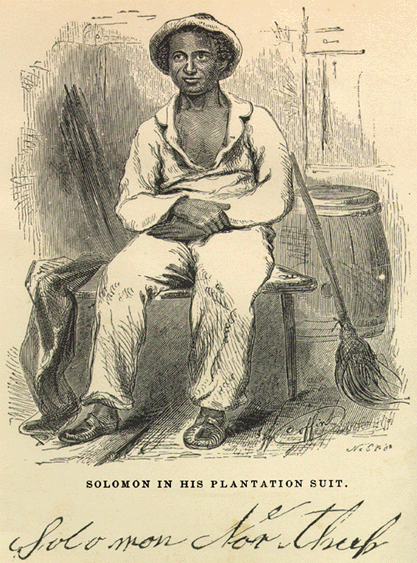
12 Years A Slave, Narrative of Solomon Northup: A Voice That Must Be Heard

“Is everything right because the law allows it?” — Solomon Northup

This is one of those cases where after watching the movie, I knew I must read the original source material, especially that it was written by Solomon Northup himself. If the movie is an artistic, cinematic account of a dark page in history, Solomon’s narrative is the quintessential eyewitness report, a first-person, authentic voice that is both a victim and a legitimate accuser of an inhumane and unjust system.

Solomon Northup copy

Born a free man in the State of New York, Solomon was happily living in Saratoga Springs, married to Anne and enjoying a loving family life as father to Elizabeth, 10, Margaret, 8, and Alonzo, 5. In March, 1841, his life was tragically altered when he was deceived by two men, Brown and Hamilton, and followed them to Washington, believing that he was to be hired to play the violin in a circus. Solomon was later drugged, kidnapped, chained and beaten. Together with other captured victims, he was smuggled to New Orleans and sold as a slave, his name changed to Platt, erasing any evidence of a previous life.

Having no free papers to prove his identity, transported and sold like a chattel to the Bayou in Louisiana, Solomon’s fate was sealed hundreds of miles away from home. His agony was heart-wrenching:

Were the events of the last few weeks realities indeed? — or was I passing only through the dismal phases of a long, protracted dream? It was no illusion. My cup of sorrow was full to overflowing … To the Almighty Father of us all — the freeman and the slave — I poured forth the supplications of a broken spirit, imploring strength from on high to bear up against the burden of my troubles, until the morning light aroused the slumberers, ushering in another day of bondage. (p. 77)

Solomon Northup’s eloquent writing immediately draws me in. It has a traditional and formal ring to the ear, but not archaic; it exudes clarity, finesse and grace. I’m struck by his stylish narrative even when he is describing depravity and injustice. After reading, I can see how the book had inspired director Steve McQueen’s beautifully rendered, artistic cinematic work on such an ugly subject matter. 

The movie follows the memoir closely, albeit leaving out a lot of details. Reading the source material after the movie can fill those in, making it so gratifying.

It was strictly forbidden of slaves to learn to read or write; pen and paper were prohibited. Any slave found to have even minimal education would be severely punished. Solomon had to feign ignorance all the years as a slave to survive. His memoir was written after he gained back his freedom in 1853.

I was most impressed that while Solomon yearned for deliverance and justice, he harboured no traces of personal vengeance against his tormenters. He had proven himself a man of integrity. Often he was sought after for his resourcefulness and his skills in playing the violin. He had entertained masters, and offered momentary relief to fellow slaves.

For two years Solomon was under the kind master William Ford, but had to be sold to the ‘slave breaker’ Edwin Epps to escape from Ford’s jealous and murderous slave driver Tibeats. The subsequent ten years with Epps became an extended living nightmare.

While the movie adaptation is an excellent production which I gave 4/4 Ripples, I find  Solomon Northup’s memoir even more engrossing. I’m particularly impressed by the fact that the book is not a self-absorbed account of sufferings, but as a careful memoirist, he records many details that are informative and even interesting, such as the natural vegetation of the Bayou environment, the cotton and sugar cane crops growing from seeding to harvesting, and the geography of the locales.

Like a perceptive ethnographer, he chronicles plantation life as a slave, the dwellings, diet, work load, daily chores, maltreatments. From his candid revealing, we are led into the subjective world of slavery, being sensitized to what it is like living in bondage and helplessness, constantly fearful of severe whipping and even death. Like a suspense writer, Solomon leads us to follow his risky attempts to seek help, and await in bated breath the day of his rescue. 

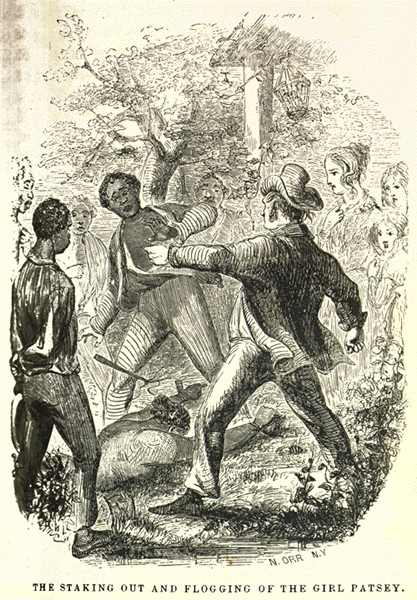
An incisive observer of human nature, Solomon sharply describes the psychological makeup of the alcoholic psychopath Epps, and the conflicting power relation binding Epps and his wife, complicated by his gratuitous fondness of the slave girl Patsey. We see in the movie Patsey suffers the brunt of her Mistress’ jealousy, and the maltreatment under her Master who tries to please his wife. The traumatic scene in the movie where Solomon is ordered by Epps to whip Patsey is described even more poignantly in the book. I’m surprised that the literary narrative has a more powerful hold on me than the visual rendition in this scene.

Flogging of Patsey copy

The memoir serves its purpose as a piece of personal narrative that’s poignant and deeply moving. The resilience and faith of Solomon Northup is crucial in his later being rescued. His longing for freedom and justice that is devoid of personal vengeance is most admirable and inspiring.

The rescue is a long and testing process, not so short as in the movie which I feel is a bit off balance. The adaptation should have given viewers a sense of the actual attempt especially in his home state of New York among those who try to find and rescue him. Thanks to the free-thinking, itinerant carpenter Bass from Canada who came to work for Epps for a short time, Solomon saw a crack opened for a chance to relay news back to the North by way of Bass.

Solomon had disappeared from the lives of his wife and three children for twelve years. Thankfully they were all well. When he reunited with them, he had the pleasure of seeing his newborn grandson, named after him by a devoted daughter. His youngest son Alonzo had the plan to make enough money to buy back his freedom if he could be located. It was indeed a moving scene as depicted in the following sketch from the book:

Family Reunion copy

After he had regained freedom, the slave trader Burch, ‘a speculator in human flesh’, was arrested and brought to trial in Washington, where he kidnapped and sold Solomon into slavery. However, Solomon was denied the right to be a witness against Burch for he was a black man. Burch was later found not guilty and discharged. Solomon wrote in his memoir:

A human tribunal has permitted him to escape, but there is another and a higher tribunal, where false testimony will not prevail, and where I am willing, so far at least as these statements are concerned, to be judged at last. (p. 319)

His faith in that ‘higher tribunal’ and an ultimate judge had carried Solomon Northup through the twelve years of slavery. His narrative not only is a voice that testifies against the injustice of man, but poignantly declares that freedom transcends physical bondage. Amidst inhumanity and despair, he had chosen to remain human, and to value integrity and faith. Solomon Northups’ ordeal is a glimmer of light in a dark page of history.

The Oscars dim by comparison.

~ ~ ~ ~ Ripples

CLICK HERE to read my movie review of 12 Years A Slave

***

Free Download:

Twelve Years A Slave, Narrative of Solomon Northup, NY, Miller, Orton & Mulligan, 1855, 336 pages, with appendix of legal documents and papers. You can download the PDF version of the original 1855 publication free here.

***

2014 Book to Movie Adaptations

I’m sure without any more suggestions, you have plenty to read already. But just in case you’re one of those who likes to read the book before watching its movie adaptation, here’s a list to add to your 2014 reading:

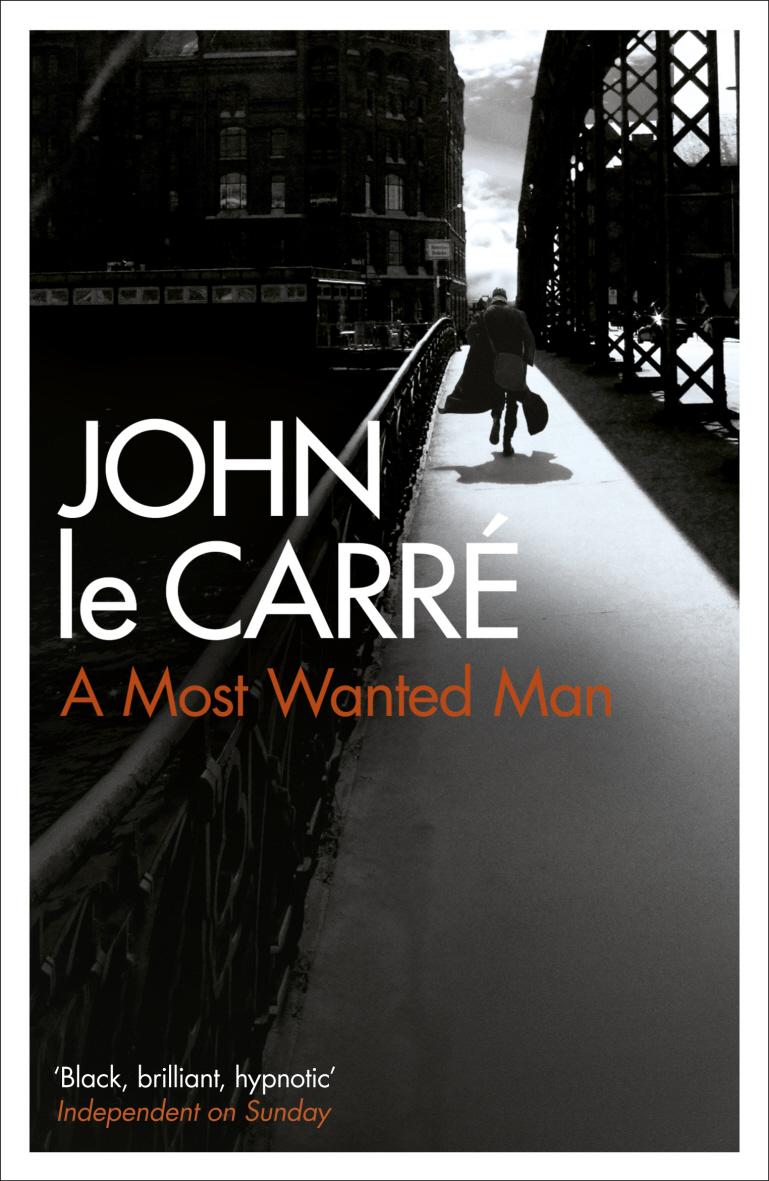
A Most Wated ManA Most Wanted Man by John Le Carré

The most recent John Le Carré novel to be adapted into a movie. He has eight so far. Philip Seymour Hoffman, Rachel McAdam, Robin Wright, Daniel Brühl star. Directed by Anton Corbijn whose last film was the thoughtful The American (2010), a film adaptation I found to be much better than the book. A Most Wanted Man is to be premiered at Sundance Film Festival, Jan. 16-26, 2014, in Park City, Utah.

The DoubleThe Double by Fyodor Dostoyevsky 

A government clerk after seeing his own double–but a completely opposite personality from his introverted and unsure self–ultimately goes down a path of madness. Should be one captivating psychological thriller, but interestingly according to IMDb, it’s a comedy. Jesse Eisenberg stars (I can see the casting is spot on). At TIFF last year. To be screened at Sundance this January.

EVERY-SECRET-THING-199x300Every Secret Thing by Laura Lippman

Acclaimed psychological thriller about missing children and their abductors now turned into suspense drama by director Amy Berg, known for her riveting documentary West of Memphis (2012) about the ‘West Memphis Three’. Adapted screenplay by Nicole Holofcener, who wrote and directed the recent, award winning indie film Enough Said (2013). Dakota Fanning, Diane Lane.

.

Far from the Madding Crowd

Far From the Madding Crowd by Thomas Hardy

Carey Mulligan stars as Bathsheba Everdene, screenplay adaptation by David Nicholls, who has written other classics adaptations such as Great Expectations (2012), Tess of the D’Urberville (2008). But my personal favourite of his works is the gem When Did You Last See Your Father? (2007) And if you’ve seen the intense Danish film The Hunt (just nom for an Oscar), you’d be curious to see its director Thomas Vinterberg at the helm of this latest Hardy adaptation.

gone-girl

Gone Girl by Gillian Flynn

A woman mysteriously disappears on the day of her wedding anniversary. A NYT bestseller, the thriller will be directed by David Fincher, two-time Oscar nominee for The Social Network (2010) and The Curious Case of Benjamin Button (2008). Ben Affleck, Roasmund Pike, and Neil Patrick Harris star.

.

Hector and teh Search for HappinessHector and the Search For Happiness by François Lelord

Psychiatrist turned writer Lelord’s internationally popular book about a psychiatrist’s globe-trotting search for happiness. Sounds like a delightful read and an original movie idea. Intriguing cast includes Rosamund Pike, Toni Collette, Christopher Plummer, Simon Pegg, Stellan Skarsgård. If I’m attracted by the cover to read the book, it will be this one.

Labor-DayLabour Day by Joyce Maynard

From the POV of a 13 year-old boy, how his labour day weekend changes his life as an escaped convict (Josh Brolin) asks him and his mother (Kate Winslet) for a temporarily shelter. Mother and son soon find that he could well be the husband and father they respectively need. But of course, there are twists and turns. Jason Reitman (Up In The Air, 2009) writes the screenplay and directs. Winslet got a Golden Globe nom for Best Actress for her role.

Life Itself A Memoir Book CoverLife Itself by Roger Ebert

Ebert’s memoir is adapted into a documentary by Steve James, whose film ‘Hoop Dreams’ was greatly supported by Ebert twenty years ago. Life Itself the book is an eyewitness history of film criticism in America, on top of a moving personal memoir. The doc will premiere in Sundance beginning today Jan. 16 – 26. Click here to read my personal encounter with the legend.

Madame BovaryMadame Bovary by Gustave Flaubert

A quick jump for Mia Wasikowska from Jane Eyre to Emma Bovary. Of course, she’s also Alice in Wonderland, and a sequel of that will be coming out in 2016. Paul Giamatti co-stars. I’m delighted to see all these classics being adapted into modern movies, raising awareness for a new generation of readers. Let’s just hope the film does justice to the literary source.

.

The Monuments MenThe Monuments Men by Robert Edsel

I’ve mentioned this before. The true but untold story of how a group of rescuers called ‘The Monuments Men’ in war-torn Europe saved art and artifacts from the Nazi’s. In the introduction of the book, the author writes: “Hitler and the Nazis pulled off the ‘greatest theft in history’, seizing and transporting more than five million cultural objects to the Third Reich.” Star George Clooney, Matt Damon, Cate Blanchett, Jean Dujardin (The Artist), Hugh Bonneville (so Lord Grantham finally gets the chance to go into the battlefield).

The BibleNoah

Read the Bible. This epic adaptation is based on the Biblical account of Noah and the Great Flood. Helmed by Darren Aronofsky, Oscar nominee for Best Director for Black Swan (2010). Russell Crowe is Noah, and Anthony Hopkins is … uh… Methuselah. Others include Emma Watson, Logan Lerman (as Ham), Douglas Booth (Shem), Nick Nolte (?) Interesting postmodern interpretation I suspect.

Winter's TaleWinter’s Tale by Mark Helprin

All ye Downton Abbey and Lady Sybil fans, this is the first movie Jessica Brown Findlay made after Downton, with co-stars Colin Farrell, Jennifer Connelly, Will Smth. Directed by Akiva Goldsman, Oscar winner of Best Adapted Screenplay for A Beautiful Mind (2001). The setting is interesting as it depicts the story from both the beginning and the end of the 20th C. Another time warp fantasy. Click here to the book’s webpage.

***

More titles mentioned by commenters (A sequel list will come at a later date):

Serena by Ron Rash (Jennifer Lawrence, Bradley Cooper)

Suite Français by Irène Némirovsky (Michelle Williams, Kristin Scott Thomas)

Son of God based on The Bible

***

The Book Thief (2013): From Book to Film

It’s been a week since I watched The Book Thief, but the face of Geoffrey Rush still creeps into my mind every now and then. We were talking about famous faces on a previous post. A good actor draws you right into his character without distractions from his previous roles, and here’s a good example. Regardless of Rush’s successful roles in the past, here in The Book Thief, I only see Hans, the nondescript yet loving step-father to Liesel.

The Book Thief

The movie is an adaptation of the popular 2005 YA novel of the same name by Markus Zusak. The book had appeared on the New York Times Bestseller list for 375 weeks. It had since been translated into more than forty languages. Congruent with the age target of the book, this is an appropriate adaptation. It is a PG movie, so we won’t see the violence and horror as intense and explicit as in Schindler’s List.

Before anyone jumps to shoot it down as a ‘sanitized’ version of the Holocaust, let me just say it pertains to the spirit of the novel in quietly depicting life in a small German town under the pressure of Nazi warmongering. It shows a side of the usual WWII movies we seldom see, the ordinary German folks. Zooming in on a street in a small town, it shows the effects of a fierce political regime have on its grass-root citizens: husbands and wives, children, friends, neighbors and acquaintances like the neighborhood tailor or accountant, some of whom suddenly taken away and labelled as the Enemy: Jews.

The focus of the story is on the humanity. No doubt, the majority of the town folks are swayed by and immersed in Nazi ideology, yet there are still a few who stand silently against the ferocious regime, but can do nothing. Even a feeble voice of dissent will send them to conscription regardless of age. That’s what happens to Hans.

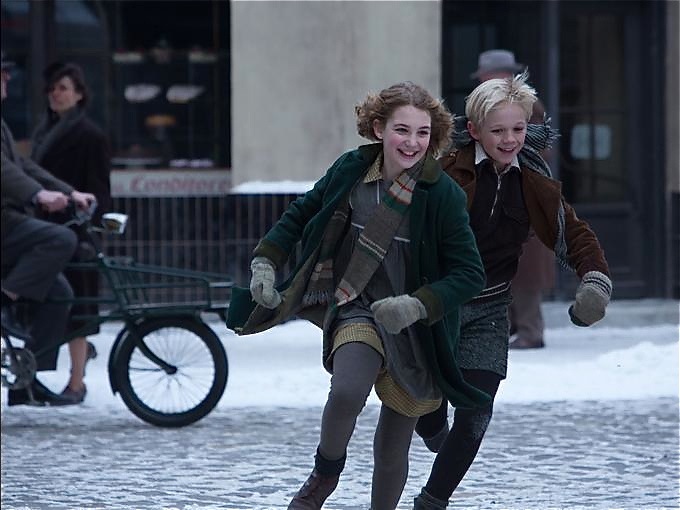
As in the book, we have Death as the voice-over narrator, quietly looming over the fictional town Molching, busy at work. Liesel (Sophie Nélisse) arriving at her new home to her adopted parents on Heaven Street. Yes, ironic, since her little brother has died during the trip. The girl soon finds her new home a comfort, and makes a new friend with Rudy (Nico Liersch) next door. Her step-mother is Rosa, played by Emily Watson who reprises her role as in The War Horse as the seemingly tough and bossy wife and overseer of the home. Her husband is Hans, played by Geoffrey Rush with affective charisma, who shows himself from the beginning that he is the emotion powerhouse, the engine that runs the movie.

Directed by Brian Percival (who helms episodes of Downton Abbey), the movie is unabashedly explicit in its emotional channeling. By that, I don’t mean it’s overtly sentimental and melodramatic. The fine line that separates the two may be the word ‘restraint’. Rush and Watson have depicted this quality memorably. He may look oblivious in appearance, but is ever wise and compassionate in spirit; she conversely holds a feisty facade only to hide a tender and caring heart. It is a delight watching them relate to each other.

Liesel and Rudy 1

For a YA novel turned into film, the spotlight has to be on the young protagonist Liesel. Sophie Nélisse is a precocious rising star who has won a Genie in the acclaimed French Canadian film Monsieur Lazhar (2011). She has already won a Spotlight Award at the Hollywood Film Festival for The Book Thief. Nico Liersch playing Rudy looks to be a few years too young, but being a good actor, the two loyal friends ultimately shine through as the movie picks up its momentum.

The plot line of hiding the Jewish young man Max, son of Han’s wartime comrade to whom he owes his life, adds texture to the story. Max inspires Liesel to love words even more, igniting that spark in her later to write down her story. To Max, the hiding place is more than a shelter from the storm. It is his connection to the decency and dignity of being human. The snowball fight in his hideout in the basement is one of my favorite scenes.

As for books, reading, and words, looks like they just work as a cover, in both the book and the movie. That Liesel comes as an illiterate ten year-old in Germany may not be quite plausible. The few episodes where she steals a book are incidental, lacking potent effects. The movie nevertheless is persuasive in its subtle way by turning mere book characters into flesh and blood human beings. The Book Thief is about humans. It shows their ugly face that haunts even Death, and their triumphant side that makes Death envious, the power to love, to hope, and to live despite tragedy and loss.

This is not a great film, but one that quietly touches, and subversively moves one to tears. It will not make any major award list, and would likely be dismissed by some critics. But this is the kind of films that, years later, one would discover serendipitously and exclaim, “Why have I missed this little gem?”

~ ~ ~ Ripples

Read Some Possible Oscar Contenders

Emphasis on the ‘possible’. At this point of the race, some films have not been released other than screened in Film Festivals. The frontrunner so far is 12 Years A Slave. And then there are the rest, some long shots, some longer. But I’d like to include them on this list because I want to draw your attention to the books which inspire these film adaptations.

How come Gravity isn’t here? You ask. It’s a frontrunner too. Yes. But, ah… find me the book first. No book? Maybe because it’s much easier to pass you the 3D glasses.

Here’s a list of fall/winter reading to gear up for the upcoming Awards Season.

12 Years A Slave by Solomon Northup

12 Years a Slave copyThe movie adaptation directed by Steve McQueen is TIFF13 People’s Choice Award winner. From past years, this accolade is a good predictor of Oscar wins. Based on the real life story of Solomon Northup, a free black man in Upstate New York who was kidnapped into slavery in Louisiana. For twelve years he suffered in the hands of several masters. First published in 1853, the book is Northup’s first-person accounts of slavery in 19th C. America, noteworthy for its historical value and poignancy. The actor Chiwetel Ejiofor a likely Oscar Best Actor nom for his role as Solomon Northup. You can download the whole book in its original form here.

August: Osage County by Tracy Letts

August Osage CountyThe play won the 2008 Pulitzer Prize for Drama. Members of a dysfunctional family inevitably come together after tragedy strikes. The stage production was described by the NYT as ‘a fraught, densely plotted saga of an Oklahoma clan in a state of near-apocalyptic meltdown’. Before you see how the A-list cast interpret their roles on screen, maybe reading the play is rewarding since you get to experience the story first hand before being influenced by Meryl Streep, Julia Roberts, Benedict Cumberbatch, Ewan McGregor…

The Monuments Men by Robert Edsel

The Monuments MenI’ve mentioned this title in a previous post. Now I’ve got the book in my hands. The true but untold story of how a group of rescuers called the Monuments Men in war-torn Europe saved  art and artifacts from the Nazi’s. In the introduction of the book, the author writes: “Hitler and the Nazis pulled off the ‘greatest theft in history’, seizing and transporting more than five million cultural objects to the Third Reich.” George Clooney, Matt Damon, Cate Blanchett, Jean Dujardin (The Artist), Hugh Bonneville (so Lord Grantham finally gets the chance to go into the battlefield).

A Captain’s Duty: Somali Pirates, Navy SEALS, and Dangerous Days at Sea by Richard Philips

A Captain's Duty..Another likely contender that has been getting a lot of buzz is this thriller starring Tom Hanks, based on Captain Richard Phillips’ real life ordeal in the hands of Somali pirates. A lawsuit will begin in a few weeks filed by the crew of the ship Maersk Alabama against the shipping company for sending them to pirate-infested waters unprepared. They also claim the Captain was at fault in the case. Their attorneys had set up a Webpage to clarify the truths from the fiction. A turbulent epilogue to the real life adventure on high seas.

The Lost Child of Philomena Lee by Martin Sixsmith

The Lost Child of Philomena Lee copyJudi Dench could get a possible Best Actress Oscar nomination with her role as Philomena Lee. In her youth as an unwed mother, Philomena was sent to the convent of Roscrea, Limerick, her baby taken away and ‘sold’ to America for adoption. As she became an adult, Philomena was determined to search for her lost child. I missed this at TIFF13. Maybe an Oscar nomination for Dench could raise the prospect of it being screened in our theatres.

.

‘Hateship, Friendship, Courtship, Loveship, Marriage’ by Alice Munro

Hateship-Friendship-Courtship-Loveship-Marriage-book-cover copyWith Alice Munro garnering the newest top honor as Nobel Laureate, hopefully the film adaption of this short story with a shorter title Hateship, Loveship will receive a wider release. It has been a long while since Away From Her (2006). The film receives positive feedbacks at TIFF13. A good cast with Kristen Wiig (Best Actress and Best Original Screenwriting Oscar noms for Bridesmaids), Guy Pearce (The King’s Speech), Hailee Seinfeld (True Grit), Nick Nolte (too many to name).

The Secret Life of Walter Mitty by James Thurber (Click on link to read the story online.)

The Secret Life of Walter MittyInteresting to see another film adaptation of a short story. This one I have a feeling that it’s very loosely based on Thurber’s character Walter Mitty, considering it’s a Ben Stiller movie. I’m sure many have read this story in school, time to reread just to get the Walter Mitty psyche, then go and check out the Ben Stiller ride. Other than Stiller, there are Kristen Wiig (again, in two short story film adaptations the same year), Sean Penn (can you imagine?), Shirley MacLaine.

The Wolf of Wall Street by Jordan Belfort

The Wolf of Wall Street copyCoincidence that Leonardo DiCaprio jumps from being Jay Gatsby to Jordan Belfort, the real life fraud on Wall Street, notorious for his highflying lifestyle and his operating a boiler room brokerage firm Stratton Oakmont. A multimillionaire at 26, he was later indicted in 1998 for securities fraud and money laundering but only served 22 months in federal prison. The Wolf of Wall Street is his unabashedly candid memoir. Martin Scorsese directs with DiCaprio touted as a likely contender in the Best Actor Oscar category.

The Book Thief by Markus Zusak

The Book Thief copyNo Oscar buzz around this one, but a look at the movie trailer, I know I want to see it. Yes, mainly because of Geoffrey Rush I admit. And also, Brian Percival… ring a bell? Director of Downton Abbey. The film will be released in November, a time slot where contenders are placed. So, you can say it’s a long, long shot for, who knows, maybe Geoffrey Rush, or Emily Watson? I admit I still haven’t read this very popular YA title. I’d like to do that before watching the film. Is this one on your movie viewing radar?

***
Munro and Movies

Thanks to the Swedish Academy, Alice Munro doesn’t need a blockbuster movie to raise awareness of her works. Described by The New York Times as ‘Master of the Intricacies of the Human Heart’, and with her story settings mostly in rural counties and small towns, the 82 year-old writer must have known how the small and intimate can have far-reaching effects.

The short story as a literary form too must have gained importance and legitimation overnight now that Munro is honored as Nobel Laureate. The novel isn’t the only peak of the mountain of literary pursuits. Readers too, can now be totally comfortable with reading ‘just a short story’.

Back to movies, with our contemporary mega, blockbuster culture, it sure looks like the general public need to see a movie before knowing about a literary work. While I don’t like the idea, I’ve to admit that could well be the case nowadays. But for Munro, can anyone name a full feature movie that’s based on her short stories?

Right. Actually there are four. Edge of Madness (2002) is relatively unknown. Another one interestingly is an Iranian film, Canaan, which won the Audience Awards–Best Film at the Fajr International Film Festival in 2008. A better known adaptation is Away From Her (2006). It remains one of my all time favorite films. The most recent completed production is Hateship Loveship which premiered at TIFF13. I regret missing it when I was there in September. A film based on her story ‘Runaway’ is currently in development.

With Munro winning the Nobel, hopefully we’ll have the chance to see a general release of Hateship Loveship. So there you go, Munro could well be helping to reverse the trend: the writer promoting the film.

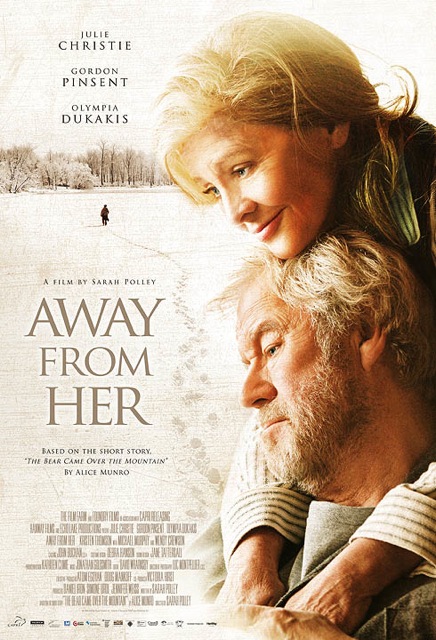
To celebrate Munro’s Nobel win, I’d like to repost in the following a review of Away From Her which I wrote in 2008. The film was directed by the young and talented Canadian actor/director Sarah Polley, who was nominated for an Oscar for her adapted screenplay based on Munro’s short story ‘The Bear Came Over the Mountain’. Julie Christie received an Oscar nomination for her role as Alzheimer’s afflicted Fiona.

You can read Munro’s story ‘The Bear Came Over the Mountain’ now online, thanks to a timely reprint by The New Yorker.

**

Capri_AwayFromHer_PosterB

AWAY FROM HER: A Short Review

How can you turn a good short story into a full length movie without compromising its quality? By turning it into a screenplay written by an equally sensitive and passionate writer, and then, through her own talented, interpretive eye, re-creates it into a visual narrative. Along the way, throw in a few veteran actors who are so passionate about what the script is trying to convey that they themselves embody the message.

Sarah Polley has made her directorial debut with a most impressive and memorable feat that I’m sure things will go even better down her career path. What she has composed on screen speaks much more poignantly than words on a page, calling forth sentiments that we didn’t even know we had. As Alzheimer’s begins to take control over Fiona, what can a loving husband do? Julie Christie and Gordon Pinsent stir up thoughts in us that we’d rather bury: how much are we willing to give up for love? Or, how would we face the imminence of our loved ones’ and our own mental and physical demise?

Based on the story by Alice Munro, ‘The Bear Came Over the Mountain’, Polley brings out the theme of unconditional love not with your typical Hollywood’s hot, young, and sexy on screen, but aging actors in their 60’s and 70’s. It may not be as pleasurable to watch wrinkled faces hugging and kissing, or a man and a woman in bed, bearing age spots and all, but such scenes effectively beg the question: why feel uncomfortable?

Why does love has to be synonymous with youth, beauty, and romance? It is even more agonizing to watch how far Grant is willing to go solely for love of Fiona. Lucky for us, both writers spare us the truly painful at the end. It is through persistent, selfless giving that one ultimately receives; however meager and fleeting that reward may seem, it is permanence in the eyes of love. And it is through the lucid vision of a youthful 28-year-old writer/director that such ageless love is vividly portrayed…. Oh, the paradoxes in life.

~ ~ ~ Ripples

***

TIFF 2013: Books into Films

Have been in Toronto all week for the Toronto International Film Festival. Taken a lot of photos but these few I’m going to share with you first for Saturday Snapshot Sept. 14, for they are what Ripple Effects is all about: Books and Films.

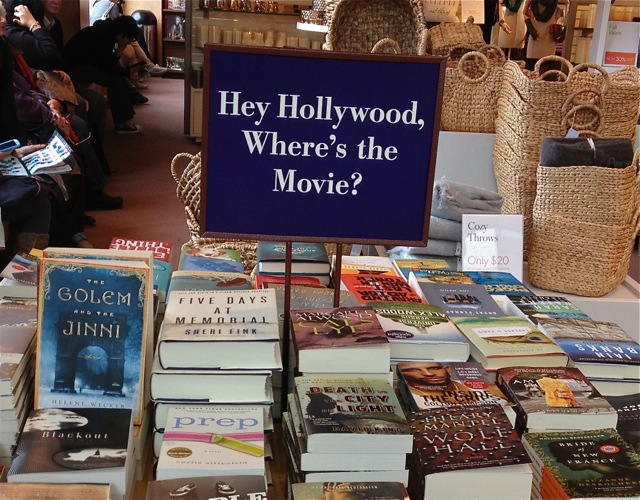
Saw this sign in a major bookstore beside a TIFF screening venue:

Hey Hollywood

The movie is in the book.

Indeed, many of this year’s TIFF selections are based on literary sources.

Film Adaptations at TIFF 2013

Books to filmsFrom biographies to biopics:

Biographies into BiopicsIf you or your book group are starting a new season of reading, you may find some interesting titles in the following list of films screened at TIFF this year (click on link to the film adaptation):

12 Years a Slave by Solomon Northup

August: Osage County by Tracy Letts (Pulitzer Prize-winning play)

Child of God by Cormac McCarthy

The Dinner by Herman Koch

The Double by Fyodor Dostoevsky

The Double by Nobel Prize-winning author José Saramago (Film: Enemy)

Half of a Yellow Sun by Chimamanda Ngozi Adichie

Hateship, Friendship, Courtship, Loveship, Marriage by Alice Munro (Film: Hateship, Friendship)

Horns by Joe Hill

How I Live Now by Meg Rosoff

The Invisible Woman by Claire Tomalin

Known and Unknown by Donald Rumsfeld (Film: The Unknown Known)

Labor Day by Joyce Maynard

Long Walk to Freedom by Nelson Mandela

Mary Queen of Scotland by Stefan Zweig (Film: Mary Queen of Scots)

The Railway Man by Eric Lomax

Salinger by David Shields and Shane Salemo

The Sea by John Banville

The Switch by Elmore Leonard (Film: Life of Crime)

Under the Skin by Michel Faber

***

Saturday Snapshot is hosted by Melinda of West Metro Mommy Reads. Click here to see what others have posted.

***

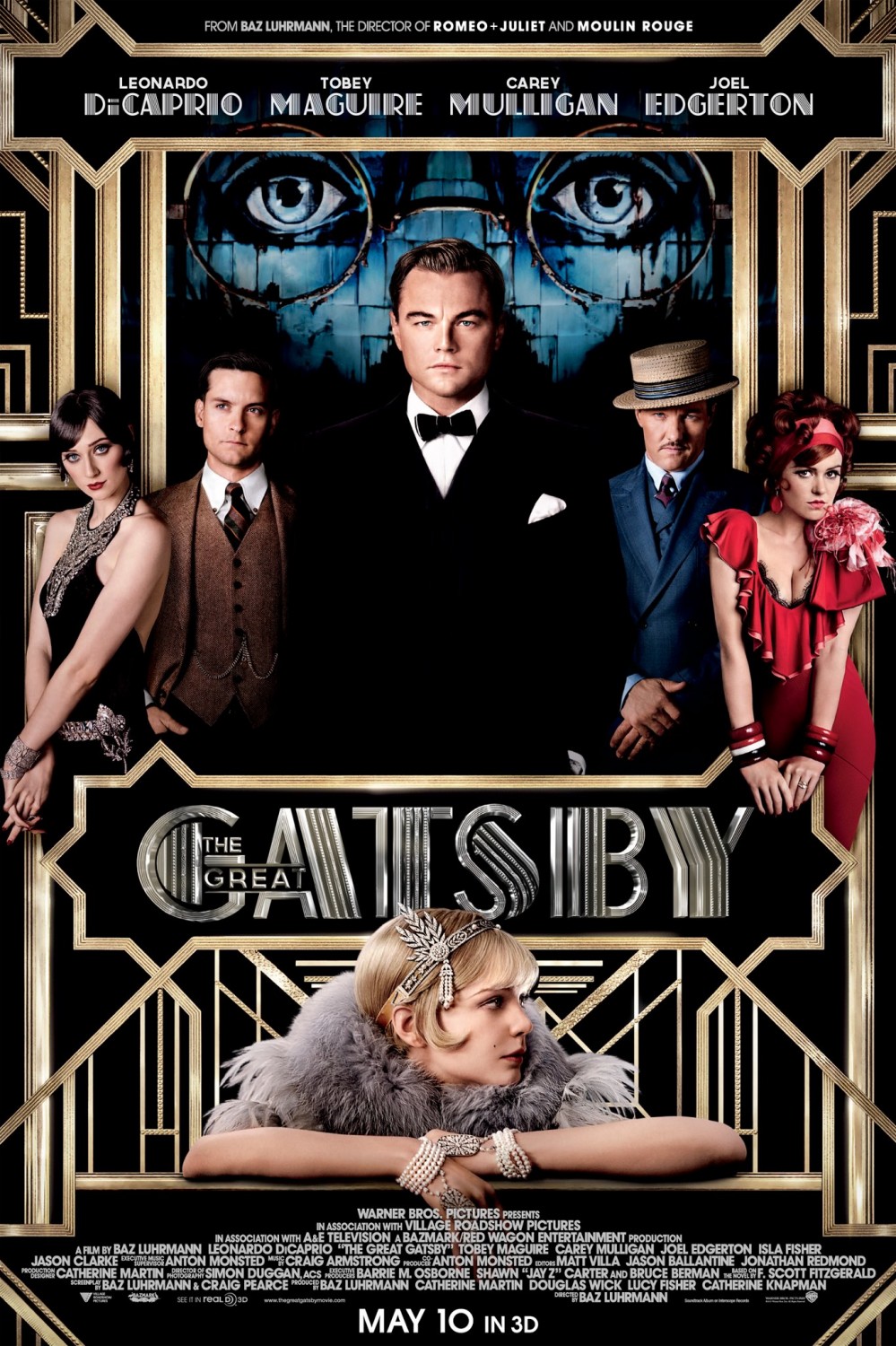
The Great Gatsby (2013): Movie Review

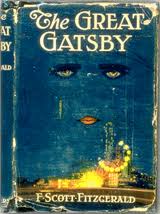
In just 172 pages, F. Scott Fitzgerald has captured the zeitgeist of the Jazz Age, and told the stirring story of love and loss. In this new adaptation of the book, director Baz Luhrmann has used an estimated $127 million, glamorizing with 3D and over the top cinematic effects.

Here is a prime example of ‘the medium is the message.’ Instead of depicting extravagance and excess, the production has become that.

the-great-gatsby-poster1

I went in with an open mind. After all, I had expected a mashed-up, postmodern fusion Luhrmann style. So, even the Jay-Z curated hip hop selections a la Gershwin cacophony was fine with me. After all, it was the unruly Jazz Age, so be it. Gatsby’s creamy yellow roadster speeding towards Manhattan, zigzagging its way through busy streets, Fast and Furious 1920’s version is still acceptable. By the way, the movie was shot in Australia. So, all the Manhattan scenes are visual remixes.

But the main issue for me is the 3D. Not much to be gained there but hindrances. The effects make me feel like I’m looking into a View-Master, artificial and gratuitous. For Gatsby, the extravaganzas in his mansion are only means to an end, to attract his love, Daisy; in Luhrmann’s hands, they are an end in themselves. The flamboyant and ostentatious parties, like their uninvited guests, overstay their welcome in the first part of the almost 2.5 hour production.

If Luhrmann had only used more of his wealth of resources: the rich and talented cast, to explore the story more and go deeper into characterization, and less partying, the movie would have been a wonder.

After all the glitz and glam in the first act, my enjoyment begins when Gatsby meets Daisy in Nick’s humble abode, a set up masterminded by Gatsby. It has taken him five years to this very moment. It is this scene that draws me in from being just an aloof onlooker. From without to within, it is the story and the characters that engage me more than the visual spectaculars.

Leonardo DiCaprio is a fine Gatsby, convincing and comical at times. Carey Mulligan may not be the Daisy I had conjured up from reading the book, but she has mastered her role well on her own terms. She’s a much sweeter, less careless Daisy than I had in mind. Elizabeth Debicki is an apt Jordan Baker. Joel Edgerton as sneaky and snobbish Tom Buchanan needs to smile more, and Tobey Maguire as Nick Carraway less. The veteran actor Amitabh Bachchan is a good choice for Meyer Wolfsheim. Isla Fisher as Myrtle Wilson, what a change from a shopaholic, and Jason Clarke too much a hunk to be wimpy Wilson.

One major alteration that I’ve appreciated is Nick writing out the story as a therapy recommended by his doctor, apparently a psychiatrist. The story of Jay Gatsby is also Nick’s own story as a writer. By articulating his experience in words he pays tribute to an unforgettable character, a dreamer who always sees the green light. Without giving out a spoiler, let me just say, the little twist at the end is a nice touch to this new adaptation of The Great Gatsby.

Does it worth a watch? I’d say yes, even in the 3D version. Curiosity is insatiable. And hopefully, the visual spectaculars can draw the viewer back once again to the literary offering Fitzgerald had first created. That’s one positive effect a movie adaptation can generate.

~ ~ 1/2 Ripples

***

A related Post I wrote 3 years ago at the announcement of this new adaptation. My open letter to Baz Luhrmann:

The Great Gatsby: A New Version

***

Ruth Prawer Jhabvala: A Tribute to Rootlessness

On April 3, one day before Roger Ebert died, Ruth Prawer Jhabvala passed away from illness at the age of 85. Her death seemed to have been overshadowed in the next few days by Ebert’s. I feel here’s a life that ought to be noted as well, but maybe for a special reason.

ruth-prawer-jhabvala

Ruth Prawer Jhabvala was best known for her Oscar winning adaptations of E. M. Forster’s A Room With A View and Howards End. Her other screenplays include Kazuo Ishiguro’s The Remains of the Day, Henry James’s The Golden Bowl and The Bostonians, among a total of twenty-six.

But for Ruth (to discard formality and to focus on the person, allow me to call her Ruth), adapting screenplays was only a hobby. Her main calling was to be a writer of her own stories. She had heeded that call with fervour since childhood. Guardian’s obituary mentions Ruth once said about her writing time as “the only three hours in the day I’m really alive.”

There are thirty titles by Ruth Prawer Jhabvala on Goodreads, including novels, short story collections, and her works in anthologies. Among her accolades, most well known is the 1975 Booker Prize for her novel Heat and Dust, about the meeting of East and West in India. Her short stories had been published in The New Yorker since 1957, thirty-nine of them. Her latest appeared just one month before her death. She is the only person who had ever won both the Booker and the Oscar. Two Oscars, to be exact.

Reading her obituaries from several sources, I’m more intrigued by this matter of laying down roots, or rather, of rootlessness in the landscape of our life.

**

Ruth was born in Cologne in 1927 to a Polish father and a German mother. Her family was assimilated Jews in Nazi Germany. Her grandfather was the cantor in Cologne’s biggest synagogue. Her father Marcus was a lawyer. Assimilated or not, Ruth and her brother had to flee with her parents in the nick of time in 1939 to England. She was 12.

For the next twelve years, she grew up in London, learned a new language, adopted a new identity, and later graduated in English literature from Queen Mary College, London University. In 1948, upon finding out all members of his family were killed in the Holocaust, more than forty of them, Ruth’s father took his own life.

In 1951, when she was 24, Ruth married the architect Cyrus Jhabvala in London and followed him back to his native country India. Another uproot and transplant, this time, to a whole new continent. They settled in Delhi. For the next 25 years, Ruth immersed herself in her adopted country as a wife, mother, and writer. Colonial and post-colonial Indian life, East-West relationship and caste conflicts became her subject. Despite her effort in total immersion, she had not taken roots in India.

Finally, In 1976, a third continent, as Ruth and her husband moved to New York City. There, she found a place closest to a notion of home, paradoxically, because of “many people like herself: refugees, outsiders, interesting American discontents,” wrote the remaining Merchant-Ivory-Jhabvala collaborators, director James Ivory, in Time magazine’s tribute.

**

While still in India, Ruth had already collaborated with Merchant and Ivory on several movies. Now in New York, she lived in an apartment on the same block as they. The proximity of actual geographical location fostered a prolific period of their lives. Together, they had joined hands in more than twenty productions. Their forty years of collaboration remains the longest in movie history.

Ivory Jhabvala Merchant
Ivory, Jhabvala, Merchant

How did rootlessness affect her perspective? In Guardian’s obituary, I found this inspiring excerpt:

I stand before you as a writer without any ground of being out of which to write: really blown about from country to country, culture to culture, till I feel—till I am—nothing.” And yet, she said, this was one of her strengths. Many of her stories are about a kind of inner travel: feeling rootless, her protagonists find new ways to feel at home in the worlds they happen to inhabit.

Perhaps, in the vast landscape of literature, such rootlessness is essential for the imagination to take flight. Rootlessness allows flexibility and fluidity of navigation, the freedom to roam. Rootlessness can more readily unlock the wayfaring spirit within, and embrace change.

One result of being rootless could well be the hybrid identity. Amusingly the Merchant-Ivory-Jhabvala team itself is a good example. Producer Ishmael Merchant was a Muslim from Bombay who had settled in America; director James Ivory is the son of a French-Irish American; Ruth Prawer Jhabvala was a Polish-German-Jew from Cologne, Delhi, London, and New York City.

Perhaps as Nick Carraways, the narrator in The Great Gatsby, observes, only by being “within and without” can we see “the inexhaustible variety of life.”

***

Related posts and links:

Obituaries and tributes from The Guardian, The Telegraph, The Paris Review, Time Magazine, The New York Times.

Since 1957, The New Yorker had been publishing Ruth Prawer Jhabvala’s short stories, a total of 39, her last appeared only one month before her death. Thanks to The New Yorker, we can now read Ruth Prawer Jhabvala’s short stories online.

My book review of Howards End, my post on the Merchant Ivory production of Howards End, my review of A Room With A View (TV, 2007)

***

Photo Sources:

First photo from The Paris Review; Second photo from The Telegraph

Diary of a Country Priest: An Easter Meditation

Last year around this time, I wrote about the book The Diary of A Country Priest by French author Georges Bernanos, (Journal d’un curé de campagne, 1936). I’d like to repost my review this week, for every time I read it, I find the essence of Easter.

***

The Diary of a Country Priest Book Cover

A young priest comes to his first parish, the rural town of Ambricourt, filled with humble hopes. All he wants is to serve the people, to give of himself, to bring God’s love. But as soon as he sets foot in the village, he is engulfed by hatred and rejection. There are dark secrets too sinister to be exposed. The young priest is an unwelcome alien. In a town afflicted by hypocrisy, pride, anger and bitterness, he is despised, taunted and ridiculed. His own innocence is no match even for the children in his catechism class, especially the precocious Seraphitas, a girl ‘with a hardness far beyond her years.’

Ambricourt is a world afflicted by the ‘leprosy of boredom’, a microcosm of the human condition. Bernanos uses diseases to illustrate his point well. The young priest himself is being slowly consumed by terminal illness. The pain in his stomach ultimately defeats his body, cancer. His diet consists mainly of bread dipped in wine which he makes for himself, and some potato soup. Poverty of means, but also frailty of body to take in solid food. Many a times we see him in the Garden of Gethsemane, pleading for strength in anguish. But he faithfully presses on, using his diary to confide his deepest thoughts, a means to commune with his God.

On the outskirt of Ambricourt is the Château of the powerful M. le Comte. The Count needs no priest to know about his adulterous affairs, this time, with the governess Mlle Louise. His wife Mme la Comtesse is totally absorbed by her long-held bitterness and grief from the loss of her young son. And his daughter Mlle Chantal is a deeply disturbed girl eaten up by anger and jealousy. Soon, she will be sent away to England, a most convenient plan devised by her father.

It is with this deep mess of a family that the young priest finds himself entangled. The most intense scene of the whole book, the climatic moment, comes when the priest goes to the Château to meet with Mme la Comtesse. She lost her beloved son when he was only eighteen months old, a child hated by his jealous older sister Chantal.

On his last day they went out for a walk together. When they came back my boy was dead.

Mme la Comtesse is fully engulfed by hatred for her daughter, grief for her lost son, and bitterness towards God.

Hearing her speak, a tear flows down the face of the young priest. “Hell is not to love any more, madame.” The young priest responds. And with miraculous strength, he delivers the following words.

… But you know that our God came to be among us. Shake your fist at Him, spit in His face, scourge Him, and finally crucify Him: what does it matter? It’s already been done to Him.

Towards the end of some soul piercing exchanges, Mme la Comtesse kneels down, releases her pain, and receives blessings from the young priest. Afterwards, she writes to him in a letter:

… I have lived in the most horrible solitude, alone with the desperate memory of a child. And it seems to me that another child has brought me to life again…

And this young child, a priest, consumed by illness, wreaked by frailty of spirit, can only marvel at the power through weakness:

Oh miracle — thus to be able to give what we ourselves do not possess, sweet miracle of our empty hands!

Not long after this, he succumbs to his illness. A life too short, a mission seems unaccomplished. But his last words faintly uttered on his deathbed are as powerful as the God who sends him:

Does it matter? Grace is everywhere…

And in the film, these three words leave me with one of the most impressive endings of all the films that I’ve seen:

“All is grace.”

 ***

~ ~ ~ ~ Ripples

CLICK HERE to read my film review of The Diary of a Country Priest.

The Diary of a Country Priest by Georges Bernanos, translated by Pamela Morris, Perseus Books Group, Philadelphia, PA, 1965, 298 pages.

Journal d’un curé de campagne, 1936, was winner of the Grand prix du roman de l’Académie française.

Upcoming Book to Movie Adaptations

2012 has been a great year for movie adaptations based on or loosely tied to books. Argo, Beast of the Southern Wild, Les Misérables, Anna Karenina, Life of Pi, Lincoln, Silver Linings Playbook are all from adapted screenplays.

Now that the Award Season is behind us, time to move forward to see what some of the upcoming movie adaptations are in the works. The following is a list of films in various stages of development, with some scheduled to be released in 2013. Time to read or reread the books before your see the movies.

**

A Most Wanted Man 

A Most Wated Man

Philip Seymour Hoffman stars in John le Carré’s thriller (2008) with a contemporary theme of international war on terror. Hopefully it will reprise the depth of the star-studded Tinker Tailor Soldier Spy. Robert Wright, Rachel McAdams, and Willem Dafoe are in.

A Wrinkle In Time

A Wrinkle in Time

After the success of LOTRNarnia, The Hobbit, some think it’s time to remake Madeleine L’Engle’s YA Sci-Fi classic A Wrinkle In Time. Disney it is, together with Bedrock with Jeff Stockwell (A Bridge to Terabithia, 2007) writing the script. Let’s hope it’s a production worthy of its literary source.

Before I Go To Sleep 

Before I Go to Sleep

Adapted from S. J. Watson’s popular and intriguing novel about a woman having bouts of amnesia every morning she wakes up. If your memory or enthusiasm needs a little prodding, here’s this cast: Nicole Kidman, Colin Firth, and Mark Strong. Nobody can forget Colin Firth as Mr. Darcy (TV 1995), but do you remember Mark Strong as Mr. Knightley in Emma (TV 1996)? Both were in Tinker Tailor Soldier Spy (2011) and Mark Strong in the recent Zero Dark Thirty (2012). I can’t wait for this one. Will have to read the book first.

The Book Thief

The Book Thief

The popular and acclaimed YA book by Markus Zusak with setting in WWII Nazi Germany. YA or not, it’s been on the NYT Bestseller List for over 4 years. Interesting fact is, Downton Abbey director Brian Percival will helm the production, which will star Geoffrey Rush (The King’s Speech, 2010) and Emily Watson (Anna Karenina, 2012). The young Canadian actress Sophie Nélisse who’s brilliant in the Oscar nominated Monsieur Lazhar (Canadian entry for Best Foreign Language Film, 2011) will play young Liesel.

Devil’s Knot

Devil's Knot

Based on Mara Leveritt’s book Devil’s Knot: The True Story of the West Memphis Threethe true case of the wrongful conviction and imprisonment of three teenaged boys for eighteen years for the murder of three children in West Memphis, Arkansas. Colin Firth and Reese Witherspoon star. Acclaimed Canadian director Atom Egoyan helms, with music score by the recent Oscar winning Canadian composer for Life of Pi Mychael Danna. Yes, sounds like an international joint effort. The film has a 2013 release date in the U.S.

The Great Gatsby

The Great Gatsby

Completed in 2012, but delayed its release until May 2013. Just as well, considering all the mighty rivals of last year’s movies. The trailer looks unsettling, and in 3D, I’m afraid the Baz Luhrmann version may focus on the loud and glitzy but ignore the true colours of Jay Gatsby. Of course, innocent until proven guilty. My eyes are peeled. Leo DiCaprio is Jay, Carey Mulligan Daisy, Isla Fisher Myrtle, Tobey Maguire Nick. Quite a cast.

The Invisible Woman

The Invisible Woman

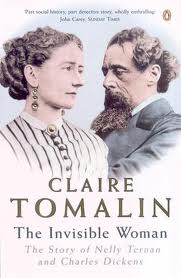
Claire Tomalin’s account of Charles Dickens’ affair with the young writer Nelly Ternan will be brought to screen with script from Abi Morgan (Shame, The Iron Lady) to be directed by Ralph Fiennes, who will play Dickens himself. To add to the rave, Kristin Scott Thomas is also on board. Felicity Jones will be playing Nelly Ternan. Fiennes never ceases to amaze us with his versatility, after directing Shakespeare’s Coriolanus in postmodern style, now comes Dickens.

The Piano Tuner

The Piano Tuner

It has been reported that the iconic German director Werner Herzog (Cave of Forgotten Dreams, 2010) is directing the movie adaptation of this 2002 book by Daniel Mason. Set in 1890’s Burma where the British Empire was having its glorious era, the chords of harmony and dissonance ring. Not a lot of info on it, but as I read a few book reviews, which are all careful not to reveal any spoilers, I can see this can be a colourful and thought-provoking cinematic offering in the hands of an auteur whose career has spanned half a century.

Romeo and Juliet

Romeo and Juliet

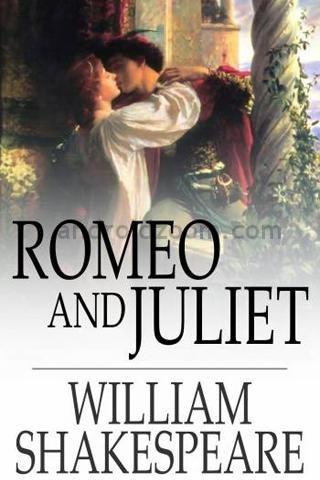
Don’t rant about Jane Austen’s novels being turned into just too many movies. Shakespeare probably holds the record. This time, a 21st C. version of Romeo and Juliet will be written by none other than Julian Fellowes, who has brought us the wildly and globally popular Downton Abbey, something Shakespeare just might approve. The new pair of star-crossed lovers? Douglas Booth (Great Expectations, TV 2011) and Hailee Steinfeld (True Grit, 2010), with a cast of prominent US and British actors.

The Sea

The Sea

Irish writer John Banville adapts his own Booker-winning novel (2005) of the same title. Ciaran Hind (Persuasion, 1995) stars. Banville has also written the screenplay of the Oscar nominated movie Albert Kobbs with Glenn Close. I was planning to read The Sea last year for the Ireland Reading Challenge but later made another choice. Now knowing there will be a movie, I should get back to it.

Suite Française

Suite Française

The heart-wrenching novel by Irène Némirovsky with setting in German occupied WWII Paris. Kristin Scott Thomas (I’ve Loved You So Long, 2008) and Michelle Williams star with Rust and Bone actor Matthias Schoenaerts. Glad to know screen adaptation is written by the Oscar winning screenwriter Ronald Harwood, who has given us such memorable films like The Browning Version (1994), The Pianist (Oscar win 2002), Being Julia (2004), The Diving Bell and the Butterfly (Oscar nom, 2007), and the recent Dustin Hoffman directorial debut Quartet (2012). I’m reading this book together with the Bonhoeffer bio. Can’t wait to see the film.

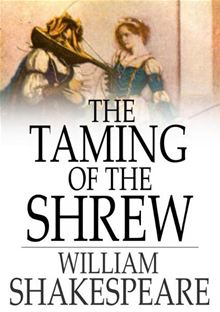
The Taming of the Shrew

Taming of the Shrew

Yes, another Shakespeare’s play in the works. This one will be adapted by the screenwriter who has brought us The Iron Lady (2011), the movie Meryle Streep won an Oscar for playing Magaret Thatcher. Coincident? This time, the iron lady is Katharina, and she’ll be played by recent Oscar winner Anne Hathaway. From Fantine to the Shrew? She’ll need a lot of method acting and we’ll need a lot of forgetting to see her in that new role. As for Petruchio? Let me know who you think should be the one. No, I’m not the casting director, but I’ll put in a good word for you.

***

Do you know of any other literary titles to be adapted into films in the coming year? Let me know in a comment.

Thanks for your input, here are the titles some of you have added to my list:

Serena

Broken

Mr. Morgan’s Last Love

August: Osage County

Much Ado About Nothing

***

Top Ripples of 2012

The Ripple Rating System began when I started the blog Ripple Effects five years ago. I’ve been asked why I give three ripples so often, and how come there aren’t any one ripple. A look at how the rating works you’ll see why:

~ Ripple: Stay away, I did

~~ Ripples: Manage your time better

~~ 1/2 Ripples: Average, so-so

~~~ Ripples: Good, worth seeing

~~~1/2 Ripples: Superior, make time for it

~~~~ Ripples: Almost Perfect, must-see

You see, I’ve done the screening for you, just to save your time. But of course, the disclaimer here is, like Roger Ebert says, all reviews are subjective. But then too, here at the pond, ripples are the result of much thought.

**

In 2012, there are several movies I have given 3.5 or 4 Ripples. Two of them I have yet written a review. Here they are:

Life of Pi Book and Movie

Lincoln

Les Misérables

Birders: The Central Park Effect

Argo

Moonrise Kingdom

I’m still eagerly waiting for some to screen here, so I’ve yet to see them, like Zero Dark Thirty, Quartet.

**

There are reading experiences that I would give 4 Ripples, they are Read-Alongs:

Midnight’s Children by Salman Rushdie

Anna Karenina by Leo Tolstoy

A first for me, reading with others in a virtual reading group. Two brilliant books, some delightful camaraderie.

**

And then there are real life experiences that I’d gladly give 4 Ripples in my heart.

Bird Watching: See my photos on Saturday Snapshot Posts

Also my visit to:

The Salk Institute

The Grand Canyon

Rating with 4 Ripples is an understatement or maybe even an insult to the Creator of the Grand Canyon. But just an expression, I think He understands.

**

Thanks to WordPress, I receive a concise annual report on my blog. Top posts for 2012 are:

Memorable Movie Love Quotes (My Valentine post for 2008, Over 73,000 views since then). 2012 views: 15,237

The Glass Castle: Book Review (Since Aug. 2008, over 47,000 views). 2012: 8,334 views.

Quotable Quotes from Downton Abbey: Over 7,400 views since March, 2012

The Best Exotic Marigold Hotel: Now this is a surprise. Since I posted it in May this year, there have been over 6,200 views.

**

And now, my favorite, the Search Engine Terms, words people type in to come to Ripple Effects. These are some that not only bring a smile, but boost the spirit as well (I’ll leave them in their lower case as found in WordPress Stats):

heaven

grace in nature

oldest human frozen

colin firth chocolate

canada lost in austen

keep calm and act like kate middleton

e.m. forster can’t tell a good story

alien captured alive

studebaker truck girl

did red dog go to japan

the blogger arti  [Arti here: just love to know people actually Google about me!]

arti film life of pi

arti never let me go

the best exotic marigold hotel post modernism

nowhere

paleolithic hunting

does meryl streep have affairs

how many languages does colin firth have

yann martel lonely

joshua bell modest

why was ulysses poem chosen for skyfall

most memorable tv seduction quotes

anna karenina psychoanalysis

**

To everyone who has stopped by the pond and thrown in a pebble or two, thanks for the ripples. There are some new regular visitors and followers this year, I’m so glad to know you all. You’ve made me feel we’ve known each other for much longer. I’ve enjoyed our mutual visits. Thanks for the enrichment.

And to All

A Happy New Year!

***