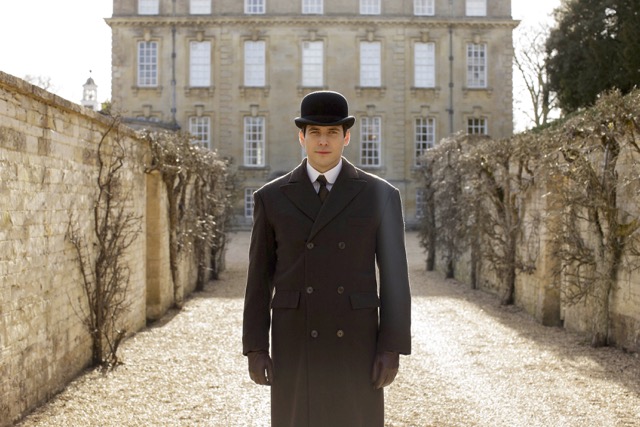
Downton Abbey S6 Episode 6

An episode of romantic linking and midlife career changes. First the pairing of some main characters: Mary and Henry Talbot, Edith and Bertie Pelham, Isobel and Lord Merton, (again), Mrs. Patmore and Mr. Mason (now, what’s with Daisy spoiling the fun?) And Baxter and Coyle? Not a reunion I hope.

Midlife career changes are thrusted upon other characters. The most important one is Cora, a job that she has never dreamed of, or dared to think about. Crossing Violet? Definitely not her own choosing. On second thought, after a career of bringing up three daughters, now she’s ready for another challenge. Being the President of the merger of the village hospital with York’s, she’s ushered into a brave new world. Now, that sounds like a much easier task than her previous job.

As for Molesley, his midlife career change is something he hasn’t dared to entertain before, beyond his wildest dream. Need to pass an exam first, but still very exciting. It’s interesting to see that his open tuition to help Daisy is so well received and respected by everyone, while Barrow’s secret tutorial offered to Andy is met with suspicion. But kudos to him for keeping Andy’s problem confidential. O Mr. Barrow, can you ever redeem yourself?

So Barrow is now the in-house piggy backer. The position of under butler is soon to be obsolete. Looks like Mr. Carson has a clearer view of occupational trends than Barrow: “In twenty years time I doubt there’s one footman working at Downton.” Or a lady’s maid, for that matter. Nothing personal, just the end of the aristocratic era. So when Season 6 ends, we’re saying goodbye to all that.

Mr. Carson, you won’t be long either, I’m afraid. The butler too will soon become “a post that is fragrant with memories of a lost world…” Eloquent with words strung up like that can sure open doors for you if it’s your time to leave. Prepare for the day when you’ll have no one to polish your cutlery or fold that bedsheet into sharp corners. Poor Mrs. Hughes, I knew her decision to have the wedding reception at the local school would be her last autonomous say. Would the real Mrs. Hughes please stand up? I sure miss you.

Downton Open House

The main attraction of the episode is the Downton Open House for the local hospital, a charity event. Wait a minute, charging people to come look at your living quarters? Who would want to pay? Yes, as Isobel Crawley says, “even Elizabeth Bennet wanted to see what Pemberley was like inside.” But that’s different though. For one thing, she didn’t have to pay; further, she got a bonus seeing Darcy in a wet shirt. Now, Barrow, since you’ve already warmed up with odd jobs like offering piggyback rides to the kids, get ready to jump into the pond.

No worries, people line up to pay to get in. Good idea! Tom’s business mind quickly turns and comes out with a wonderful idea. Wouldn’t that be a fine source of revenue to help maintain the huge mansion? Sounds like a version of reality. Isn’t Scribe Julian describing Highclere Castle where Downton is filmed?

But still, the question remains in some of their visitors’ mind I’m sure. Why, the pint-size philosopher who pops into Lord Grantham’s bedroom has posed a legit question: why not buy somewhere comfy instead of living in such a big house? Well son, it’s a long story. Never mind that. But one thing we can agree upon, it’s our mothers. They get terribly wrought up about things.

In this episode, we get to see another side of Lord Grantham. He looks like a totally bored little boy trying to entertain himself with all sorts of funnies while sick in bed. Mary in the bath? O my, wait till Mommy hears that.

To London again, Mary brings Anna to see Dr. Ryder, and thank God it’s just normal pregnancy discomfort. But what a great opportunity to do some side shows like… surprise! Henry Talbot must feel like he’s lured by a racing trophy. What a catch, Mary Crawley. Here’s the funny thing, looks like Mary is encouraging Henry Talbot, but when he does get close, she rejects him somehow.

Certainly, she has her bad memory. Matthew died in a car crash. But is that all that’s holding her back with Henry Talbot? Or is it the idea of marrying down? Or too fast too soon? Don’t forget, Mary, Henry’s a race car driver. Time is of the essence. Speed is the thrill. Occupational hazards, no, skill sets.

And romantic characters have the rain to thank, for usually what happens when sudden rain befalls, somehow that would lead to a private escape resulting in the first kiss. It happens in Woody Allen movies and it can happen right here in Downton Abbey.

In contrast, Edith and Bertie are enjoying some smooth sailing, despite Mary’s skepticism. Mary, you need to know, any man willing to take Edith plus a child must be genuinely in love with her. So, Marigold could well be the tester of true intention.

Your take on this episode?

***

With this recap, Arti is taking a hiatus from the pond. There are 600+ posts on Ripple, you’re welcome to spend your time lingering still and throw in your two pebbles. Hope they can hold your interest until Arti’s return.

***

Previously on Downton Abbey Season 6:

Episode 1

Episode 2

Episode 3

Episode 4

Episode 5

Downton Abbey S6 Episode 5

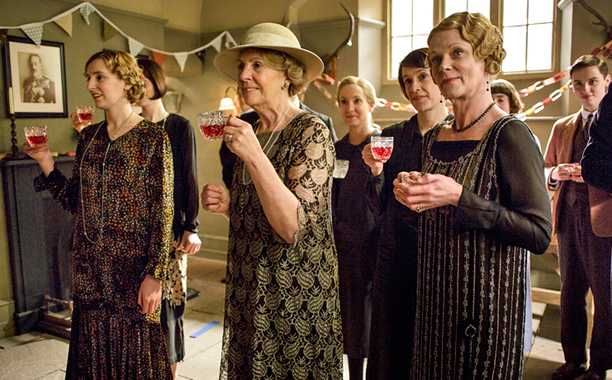
First off, congrats to the whole Downton cast for winning the 2016 Screen Actors Guild’s Award for Outstanding Performance by an Ensemble in a Drama Series last Saturday night (Jan. 30).  What a wonderful farewell gift. They’ve won this category four times in the past five years. A nice wrap indeed.

Now, to Sunday’s Downton episode. Scribe Julian of this mild and pleasant final Season has dropped a shock bomb so sudden that the surprise element is no less than Matthew’s car accident at the end of Season 3.  This time it’s even more graphic. You haven’t seen so much blood gushing out of a person, not even in the WWI battle scenes in Season 2.

That’s what happens if your ulcer bursts. Among the horror and chaos, kudos to Robert that he can utter the endearing last words to Cora, “if this is it, just know that I’ve loved you very, very much,” which Cora firmly repudiated, “This isn’t it, darling.”

So we take her words for it and not worry too much. Just a ploy our scribe Julian uses to make sure we haven’t fallen asleep in this mild and uneventful episode. I mean, what we’ve been looking at, so far, is Mr. Mason moving into Yew Tree Farm, Mrs. Patmore preparing food baskets, Mary watching her first car racing, Edith going on a date, and yes, Neville Chamberlain, yes, that Neville Chamberlain, brought into the battle of the local hospital and then the shocking scene happens.

Neville Chamberlain

Let me just recap these mundane events of the evening, albeit I must say, I love the change of scenery for them all. First to Yew Tree Farm. So the Landlord Duo Mary and Tom come to inspect and declare Mr. Mason too old for pig farming. Good Andy comes to the rescue. He’s not only willing to help out but wants to change his career path to become a pig farmer. Daisy is looking at what her future will be like with this ambitious young man and the aging Mr. Mason. Looks like Yew Tree Farm will be handed over to the young soon. But of course, Andy has to start learning to read and write in order to raise pigs. So Mr. Barrow steps in. Is it a good thing I wonder.

Mary Crawley and Henry Talbot, those two are quite incompatible, aren’t they? One craves cars and racing; one loves pigs and property management. One ignores social gaps, why of course, the race track is on pretty level ground; the other esteems her higher position and ‘won’t marry down.’

In contrast, Edith and Bertie, ‘evenly matched’ and ‘balanced’, relating as equals. Those are all Tom’s words reminiscing on his own courtship with Lady Sybil. “Real love means giving someone the power to hurt you.” Tom tells Mary.

And now Edith. Two exemplars for Mary to emulate, or, is she too high up on the horse to see clearly. I’m sure Henry Talbot has his ways. Why, the motor car is the perfect vehicle invented for modern romance, seating two side by side. Look, he’s much more relaxed now than in previous episodes.

So glad to see Edith finally enjoying herself and being genuinely happy. A cozy and elegant London apartment she has, mostly Michael Greyson’s taste. No matter, it’s a place she can call her own now that Downton is Queen Mary’s dominion. A new editor found to manage the magazine, everything under control… except her secret about Marigold. Would Mary her dear sister sabotage that hard-to-come-by peace in her life?

Miss Baxter’s brave move of coming out to be the witness for the prosecution reaps great results as the accused changes his plea upon hearing her name on the witness list. No trial is needed, what a relief. Don’t we hate to go through another Downton trial to see justice done, or undone? Wait a minute, maybe yes, there should be a trial, this time for Miss Denker for defamation and uttering threats.

What I like about this episode is the variation of sceneries and setting. The park where Edith and Bertie take a stroll, the race track, the Yew Tree Farm, and the new home of the Carsons. Yes, even the messing up of the elegant dining table and everyone’s formal attire with splattered blood. Some alternatives for the eyes.

Your take on this episode?

***

Previously on Downton Abbey Season 6:
Episode 1

Episode 2

Episode 3

Episode 4


Downton Abbey S6 Episode 4

Downton S6 E4.jpg

Scribe Julian sure knows viewers’ heart. In the farewell Season, what better way to end than throwing in some pleasant surprises of reunion. Last week we had Tom and Sybbie back for good. This week, albeit just for a visit, a long forgotten figure, former housemaid Gwen is reintroduced. Nobody recognizes her except her former roommate Anna, and of course, Mr. Barrow, green with jealousy. Indeed, Gwen has reinvented herself. Now Mrs. John Harding and an advocate for women’s education. Isobel Crawley has aptly put it, “a 20th Century story.”

Gwen is an important symbol whose path Daisy would love to follow, leaving service to pursue other opportunities. It all started with Lady Sybil of course, as she’d taken the initiative to open doors for her housemaid. The grateful beneficiary’s dining table reminiscence of Lady Sybil is very moving, a tribute so powerful that even Mary feels ‘chastened’.

Just as Mary allows herself to some much needed self-reflection, she gets a chance to redeem herself right away. As I said in previous recaps, this is a Season of instant conflict resolutions. So to London she brings Anna for Dr. Ryder to hopefully stop another miscarriage. Tom the family driver is always there to help, before as it is now. What would we do if you’d stayed in Boston, Tom? While in London, scribe Julian delivers another quick fix. Now we can all be cautiously optimistic about Anna’s pregnancy.

Gwen’s reappearance not only brings existential reflection to Mary but to our in-house villain Thomas. Now he is mulling over his own raison d’être. This ego trip of being the butler of Downton while Mr. Carson is on honeymoon doesn’t pan out to be much fun after all. What’s the reason for living if you’re constantly in a bowl of cherry pits? But of course, it’s all a way of looking. Robert’s advice to Barrow is: Be kind. You just might see things differently. Now, find another employment.

Miss Baxter has to face some internal conflicts too as she prepares to deal with the devil of her past, not metaphorically, but actually going to trial as a witness for the prosecution regarding Peter Coyle, the man who’d brought numerous young women to their ruins. Now I can see it’s going to be a tortuous ordeal. But with Mr. Molesley’s support, I’m sure she can handle it.

And honesty, going back to the source of all these reflective mulling: Gwen Harding (née: Dawson); can Daisy ever tread her path? Seems like Daisy needs to take an anger management course alongside her academic upgrading. Pounding her potatoes into pulp may be a good way to transfer her anger which originates from her own misconception that Cora promising Yew Tree Farm to her father-in-law Mr. Mason. So now we do see Mr. Mason can actually lease the place, finding a resting ground looking ahead, and Daisy’s dedication to him ever strengthening, the Yew Tree Farm may just be a natural next step for her if she ever decides to let the potatoes go.

So the Dowager Countess Violet has recruited an ally in her friend Lady Shackleton to help her fight to keep control of the village hospital. At the dinner table discussing the issue, we see how each deal with the task at hand:

Lady Shackleton: How can I present myself as an expert when I don’t know the facts?

Violet: It’s never stopped me!

But that’s only the side show. The main attraction is this mystery nephew Lady Shackleton brings along. And I thought it was Ernest, who maybe had just come in from the cold of Antartica. But no, it’s Henry Talbot, the aloof but alluring race car enthusiast, a Goode choice to cast. He’d stopped by Downton once at the end of Season 5 with his fine motor. Mary brightens up and exclaims “Golly!” One word says it all.

Mary, O you’re such a country girl. Allow Henry to take you out on the town. Don’t worry about your shabby attire. Aunt Rosamund’s dress will do. For once, don’t act as the centre of attraction but just lose yourself in this mesmerizing surrounding, The Royal Automobile Club. Yes, there are many places you’ve never been before.

And the happy newlyweds are to be called Mr. Carson and Mrs. Hughes, saving the day for many. Really? Is it so hard to change the name calling her Mrs. Carson? Anyway, what’s in a name. After all, whatever name she takes up now is immaterial. I’m afraid she’s not going to be that Mrs. Hughes again as she herself had predicted when she was planning for her wedding reception.

So the welcome back party for the newlyweds is going to be held in the kitchen. People, just kindly make your way downstairs to join in the celebration.

One small step for one woman, one giant leap for the times. As we hear this my favourite quip of the night:

Violet: I haven’t been into the kitchens for, O, at least twenty years.

Isobel: Have you got your passport?

Keep your passport with you at all times, Violet. This is the 20th Century.

***

Previously on Downton Abbey:

Season 6 Episode 3 

Season 6 Episode 2

Season 6 Episode 1

***

Downton Abbey S6 Episode 3

The language of leave-taking is always gentle, pleasant, accommodating. Looks like this whole season is an extended farewell. While it is what we all want to see, characters we’ve befriended over five years are now coming together for one last time to happy resolutions, it is also sad to see this is their last efforts to entertain us.

And entertained we are, however placidly here in S6 E3. A long awaited middle-aged wedding finally takes place and I’m glad the reception is held in a school house as the bride desires and not in the grandeur of the great hall at Downton. No, I don’t think Cora is being a snob. Mary is unreasonable to accuse her mother as such only to further her own plan to have Mr. Carson and Mrs. Hughes hold their reception right there in the grand mansion. If Cora is being snobbish, then Mary is downright patronizing.

What’s the greatest farewell gift for us all? Here’s the foreshadowing: “Last night I dreamt I went to Downton again…” Julian Fellowes’s version of Rebecca, equally moving in Tom Branson’s letter.

A pleasant surprise indeed. Tom realizes where home really is, even though he has to go all the way to Boston to find out. The best scenario is always to have someone leave for a short while so that he can come back for good willingly. What more can a viewer ask? Sadly, even the great scribe Julian can’t bring back Sybil and Matthew; he can at least do us this favour with Tom and little Sybbie. Look at how George welcomes his little cousin back, embracing her and softly uttering this endearing word, “Sybbie.” Awww… Even Marigold gives a rare, spontaneous smile.

Next, Rose? I doubt it, since she’s almost everywhere lately, busy living her multiple personas as Cinderella, Natasha in War and Peace, and soon Elizabeth Bennet confronting zombies.

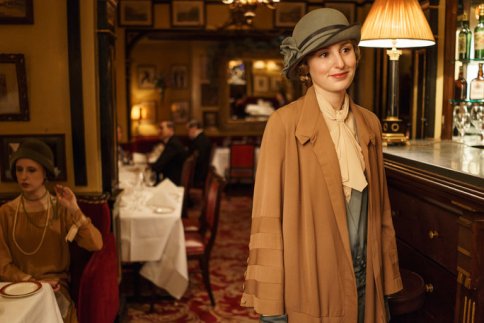
Another gratifying storyline is Edith’s. She’s the Anna upstairs. Something good is finally coming her way that warrants our congrats: Living on her own in London when she’s in town, firing the obnoxious editor Skinner, taking his place and beating the deadline to get a new issue out with some incredible teamwork from Bertie Pelham. Of course, Mary can smell that team miles away, but so what. Edith, go for it, both magazine and team, and the new you.

Edith in S6.jpg

In the slightly darker side, Miss Denker has a major role to play as the necessary nuisance to stir up some ripples in the calm waters of Downton’s final Season. Denke is a more animated stand-in for Mrs. O’Brien, still remember her? But she’s not the leave-in-the middle-of-the-night kind; looks like she’s going to hang on as long as Violet wants her. Violet seems to be fine with her own in-house Punch and Judy sideshow with Spratt and Denker.

After all, Violet Crawley is just too preoccupied with her own Punch and Judy show with Isobel. Now the line-ups are Isobel, Cora, Lord Merton, with Dr. Clarkson shifting ground. How can Violet step down gracefully without losing face, I wonder. Hope this is not as violent a show as Punch and Judy.

And Cora, never thought she can be so angry, scolding a bride on the night before her wedding? Definitely out of character. But the resolution is quick, again, now that’s more like Cora; since we don’t have much time left, so… apology accepted. Mrs. Hughes deserves not just a fancy piece of clothing but her total respect.

Finally, Anna has some good news. But hush, we won’t say more. Having been dealt bad cards all her married life, can this be a real, winning hand? It’s the farewell Season. I trust the handling will continue to be gentle and pleasant.

***

Previously on Downton Abbey Season 6:
Episode 1

Episode 2

Downton Abbey S6 Episode 2

A relatively uneventful episode after the convivial Season opening.

But the few storylines are so apt in exposing the characters we thought we’ve known. First off, Mary is a math whiz, her own sister comments that:

“As usual, you add two and two and make fifty-three.”

No need to decode, just Mary in her most inquisitive and intuitive state. Rose may well be pregnant. The more the merrier.

This episode seems to belong to Mary, for she’s everywhere and uh… yes, Agent of all things great and small, from pigs to pregnancy.

And Lord Grantham, heed your mother’s chiding, “if you can’t say anything helpful Robert, please be silent.”

Why, decorate the Servants’ Hall for Mr. Carson and Mrs. Hughes’ wedding reception? I was shocked to hear him say that, same as his daughters. And I thought Robert has turned egalitarian, at least a little bit, as modernity creeps into Downton.

But a butler’s a butler, loyal, honourable, and ever respectful, so Mr. Carson is all gung ho to take up the offer of Downton’s Great Hall. And with Mary’s stepping in to make sure their wedding reception a Downton event, I jump on Mrs. Hughes’s side with no hesitation. A wedding belongs to the bride, no matter how old she is; it’s her day and she ought to be able to choose her own place and plan it in her own way:

“I just don’t want to be a servant on my wedding day.” Of course not.

After all, Mrs. Hughes continues, “we’ll be doing it your way for the next 30 years,” to which Mr. Carson gives no words in reply. What would be the outcome? I wonder. But I can wait, no spoilers please.

Edith’s role as a woman boss isn’t an easy job to tackle, and dealing with an editor like Mr. Skinner sounds like a nightmare. A hint for you, Edith, just imagine: What would Mary do?

So, Mary would enter the Downton pigs in the Fat Stock Show, and will drop by the Drewes’ farm to see the fat piggies. Little George’s first lines “Can we come?” seal the fate of the Drewe family.

Here lies the best storyline of the episode. Mary brings George and Marigold to the Drewes farm to see the pigs while Edith goes to London, and of course, who will be there but Mrs. Drewes? The dramatic effect is much needed for too placid an episode.

And on the day of the Fat Stock Show, Mrs. Drewes’ impulsive act of child snatching is understandable. The only, and too short, tense moment of the hour is finished in five minutes. Too swift a resolution in vacating a family who had farmed there since before Waterloo. An easy case that the wise King Solomon would envy; his was a much harder case of baby sharing.

Talking about the wisdom of King Solomon, his opinion just might be helpful for the prospect of the village hospital and in resolving the family feud. Maybe Violet would listen to his counsel?


Thomas Barrow (1)

All those country fairs are best to discover new talents and skills. If job hunting plans don’t pan out for Mr. Barrow, he could alway open up a bowling alley. He could well be an adroit operator.

But why did I think of a Magritte painting when I looked at Thomas Barrow in that scene? Hopefully something realistic and not too absurd will cross his path.

As for the Bates, we don’t want to see any more miscarriages, either in the legal or biological realm. And here we have Mary to thank for being so helpful. Bringing Anna to see Dr. Ryder in London’s Harley Street may well be the most effective act of kindness she can offer her maid, more a friend by now.

And what do you know, one year later in 1926 a Lionel Logue opened his speech therapy practice there on that same Harley Street and proved to be a fateful move for the future King of the Empire. (My extra note, not in the Episode)

Of course, Anna glows after the doctor’s appointment. Don’t we all wish Mr. and Mrs. Bates can live happily hereafter?

***

CLICK on the links to read my other Downton Posts for Season 6:

Downton Abbey rings in the New Year one last time

Type in the Search words to read my other Downton Posts


Downton Abbey rings in the New Year one last time

What will we do without Downton in 2017? Will our biological clock even recognize it’s a new year?

But at the moment, let’s just celebrate this monumental achievement for one last time. If Sunday’s Episode 1 of this last Season signifies anything, it’s: tis the Season to be jolly.

This intro Episode has well prepared us for some neatly resolved, long due conclusions, and rightly so. For how can we live with an unsettled ending for any of its characters? They all deserve a good life, don’t they, including Mr. Barrow, the in-house villain? Well yes, but maybe not for a thief and blackmailer like Ms. Bevan.

Thanks to Ms. Bevan though, Mary’s secret is finally made known to Robert. Charlie Sheen had thought of it first: if the secret is out, no one can blackmail you anymore. Simple. But of course, Mary has her point. Tony Gilliangham is just not good enough for her. And the best line of the Episode belongs to our inimitable heroine:

“I’d rather be alone than with the wrong man.”

With that line, Robert knows his daughter can run the kingdom, let alone Downton Abbey.

Talking about good lines, looks like our scribe Julian Fellowes wants to leave us with more indelible ones just as parting mementos.

With this episode, we finally see that Mrs. Patmore has talents other than the culinary. Why, acting as a go-between to sort out marriage expectations sounds as nasty a mission as Ethan Hunt of the Impossible Missions Force would choose to accept. Well, what are friends for. And we applaud her (ugh… awkward) effort.

Yes, Mr. Carson will take Mrs. Hughes, wrinkles, warts and all, with the lights turned off or on. A gratifying, redeeming scenario in an alternate universe far from Ishiguro’s The Remains of the Days.

DA S6 E1

And at long last, Mr. and Mrs. Bates are proven to be innocent of any and all crimes. Mr. Green apparently had more enemies than anyone would have thought. But while the Bates escape the miscarriage of the law, will Anna be safe from the literal, biological kind? Of course we all wish them well in giving Downton some more little ones, upstairs or down, since little Sybil will move to America with her Daddy and Marigold to London with her Mommy, and especially when they have an in-house piggy backer with Mr. Barrow.

Speaking of moving away from the aristocratic nest, I’m glad to see Edith find a place in London that she can be both a mother and a career woman. Although she soon finds being a woman boss is more challenging. But I’m sure she won’t be complaining much as she enjoys the benefits of mixing with the Bloomsbury group and meeting Virginia Woolf.

“I feel I have been given one little bit of happiness and that will have to do,” Edith’s line of self-sufficiency, one that can match her indomitable sister’s willingness to be alone than with the wrong man.

Looks like Downton embracing modernity is the theme this Season and I’m sure Daisy will one day make one devoted and effective Suffragette. Too bad the film has been made or else she’d be one fine comrade fighting shoulder-to-shoulder with Carey Mulligan.

Embracing or being enveloped by modernity, Isobel and Violet represent the two camps, the ready and the reluctant. Again, here sparks fly regarding the control of the village hospital. Violet will hold on to her principle, in whatever aspects of life: “Sometimes it’s good to rule by fear.” While Isobel does not flinch, it’s definitely effective for her servants, especially Miss Denker.

Last but not least, Robert brings Cora down to the kitchen, takes cold chicken out from the refrigerator all by himself, and eats a drumstick with his fingers? Do we need any more obvious signs of embracing modernity?

I trust Season 6 will be a delicious treat.

***

What are your favourite scenes?

Books Before Films 2016

There are several books on my shelf and in my TBR box that will be turning into films coming out in 2016. I must get to them soon. How time flies, one day’s gone already.

The Light Between Oceans by M. L. Stedman

The Light bet OceansOften it’s the cast of an upcoming movie that prods me to read a book. This one has been on the New York Times Bestseller List for years since its publication. No matter how popular it is, I’m motivated only now mainly because of the first rate cast: Alicia Vikander, Michael Fassbender, Rachel Weisz, directed by Derek Cianfrance. Instead of a place beyond the pines (his last work) we have an island off the Australian coast, with the story about a lighthouse keeper and his wife bringing up a baby they found in a boat washed up onshore.
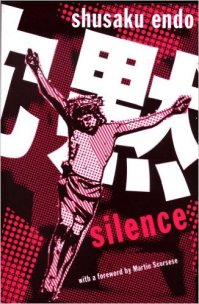
 

Silence by Shûsaku Endô

SilenceThis one is just the opposite. I want to read it regardless of whether it will be made into a film or not. But what a bonus it is to know the adaptation is a Martin Scorsese’s work with Liam Neeson, Adam Driver, Andrew Garfield, and Ciarán Hinds. I highly anticipate this film, albeit I expect the viewing experience won’t be pleasant. I’ve read it before but want to reread it before watching. The book is heart-wrenching as Endô describes the persecutions and tortures Christians and Jesuit missionaries suffered in 17th century Japan. How Scorsese, a Catholic himself, handles the subject matter – the choice between apostasy vs. martyrdom – and have these character actors interpret the internal and physical torments will be intriguing to see. Scorsese wrote the forward of this edition of the book (image here).
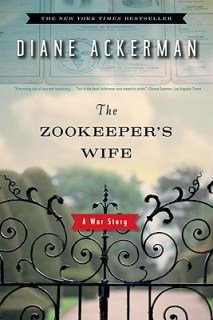
 

The Zookeeper’s Wife by Diane Ackerman

The Zookeeper's WifeThis is a worthy, true story to be made into film. Jan and Antonina Zabinski were keepers of the reputable Warsaw Zoo. During the Holocaust, Jan smuggled Jews out of the Warsaw Ghetto into their facility, saving hundreds. Antonina did the day-to-day chores of protecting them, hiding them in the cages, feeding them and keeping their spirits up. The parallel and irony of men and beasts are obvious. Acclaimed nature writer Diane Ackerman drew from Antonina’s diary to write her non-fiction work, a historical account of a heroic rescue mission. Screenplay by Angela Workerman, a scribe to note. Jessica Chastain and Daniel Brühl play the altruistic Zabinski couple.
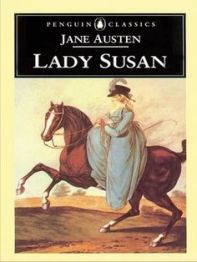
 

Lady Susan by Jane Austen

Lady Susan Book CoverThis has been in my iBooks for a long while, so long that I’d deleted it and now reloaded it again as the film adaptation is coming out. Entitled Love and Friendship, screenplay is based on Austen’s early novella Lady Susan, with Kate Beckinsale as Lady Susan Vernon. It will be interesting to see how the epistle form is translated onto screen. It will premiere at the Sundance Film Festival Jan. 23. Whether we will actually see it in our movie theatres is another matter. I hope it will be screened in the not too distant future.
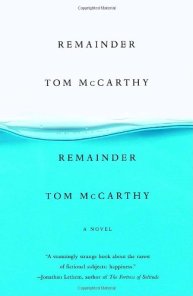
 

Remainder by Tom McCarthy

RemainderI bought this book at Harvard Book Store – the independent book store in Harvard Square since 1932 – during my New England Road Trip last fall. I’d read McCarthy’s 2015 Booker shortlisted Satin Island and knew Remainder had been adapted into film before I went on the trip. So it was a title I’d intended to get at that bookstore. Remainder is McCarthy’s debut work (2006). An unnamed Londoner is struck by a falling object and lapse into a coma. As he awakes, he has lost all memory and needs to re-enact his past to find his identity and authenticity of being. The Telegraph had called McCarthy “a Kafka for the Google Age”. Interesting to see how that translates onto screen. The film premiered at the BFI London Film Festival last October. Will screen at Berlin International Film Festival in February, 2016.


The Secret Scripture by Sebastian Barry

the_secret_scripture_bookcover The film adaptation of Booker short-listed and multiple award winning novel by Irish writer Sebastian Barry has already been completed, but has yet come up with a release date. So, I’ve plenty of time to read the book. The narrator is a 100 year-old mental hospital patient recalling her life. The old and the young are played by Vanessa Redgrave and Rooney Mara respectively. Directed by Jim Sheridan, the Oscar nominated director who introduced us to Daniel Day-Lewis in the excellent productions first in My Left Foot: The Story of Christy Brown and later In the Name of the Father.
***

Top Ripples 2015

Here are the books and movies, experiences and encounters that I’d rated 4 Ripples this year. Click on the links to read my reviews.

**

~ ~ ~ ~ Ripples 2015 Movies

The Assassin 

Brooklyn 

Clouds of Sils Maria

Ex Machina

Mustang (Review upcoming)

Spotlight

**

Worthy mentions  ~ ~ ~ 1/2 Ripples

Bridge of Spies

The End of the Tour

Jafar Panahi’s Taxi

Leviathan

The Martian

Room 

Suffragette

Testament of Youth

**

At the Cineplex, I’d also enjoyed four National Theatre Live performances on screen direct from the London stage. All of these are memorable. CLICK HERE to read my post on the first three, and HERE for Hamlet:

The Hard Problem by Tom Stoppard

The View from the Bridge by Arthur Miller

Man and Superman by Bernard Shaw

Hamlet by William Shakespeare (with Benedict Cumberbatch)

**

As in years past, the number of books I’ve read is only about half of the films I’ve seen, a stat that I’d like to improve in the future. Here are the Top Ripples in books I’ve read in 2015, not all published in this year obviously.

Nora Webster by Colm Tóibín

Brooklyn by Colm Tóibín

Satin Island by Tom McCarthy

The Age of Innocence by Edith Wharton

Beware of Pity by Stefan Zweig

The Post Office Girl by Stefan Zweig

Terrapin: Poems by Wendell Berry

Leavings by Wendell Berry

Slouching Towards Bethlehem: Essays by Joan Didion

**

Here, I must mention my 4 Ripple Experience: Fall Foliage Road Trip across four New England States two weeks in Sept/Oct., prompting me to write 10 blog posts when I came back. Starting here.

Kancamagus Hwy

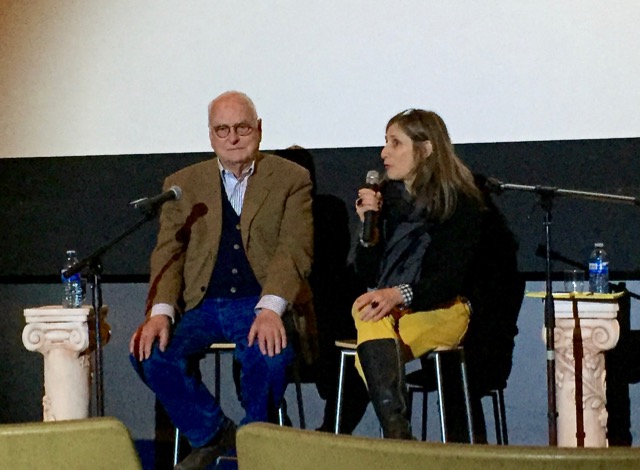
Another 4 Ripple Encounter is attending the Merchant Ivory Retrospective in December. I’d never thought I could actually see director James Ivory in person. And so I did. It was fascinating listening to the 87 year-old, legendary director who’d brought us A Room with a View (1985), Howards End (1992), The Remains of the Day (1993), and many other literary to film adaptations talk about the working dynamics of Ismael Merchant, writer Ruth Prawer Jhabvala and himself in the creative process.

Here’s a photo of the occasion, a Q & A session with film critic Katherine Monk after the screening of Heat and Dust, adaptation of the Man Booker winning novel (1983) by Ruth Prawer Jhabvala:

James Ivory1


And that’s a wrap for 2015.


***

Related posts you might like to read:

Howards End by E. M. Forster

The Merchant Ivory Dialogues 

Ruth Prawer Jhabvala: A Tribute to Rootlessness

Can a Movie Adaptation Ever be as Good as the Book

***


Merry Christmas!

To all, a Merry Christmas!

Merry Christmas

Sharing with you a song for the Season, sung by the a cappella group Pentatonix.


Mary, did you know
that your Baby Boy would one day walk on water?

Mary, did you know
that your Baby Boy would save our sons and daughters?

Did you know
that your Baby Boy has come to make you new?
This Child that you delivered will soon deliver you.

Mary, did you know
that your Baby Boy will give sight to a blind man?

Mary, did you know
that your baby boy will calm the storm with His hand?

Did you know
that your Baby Boy has walked where angels trod?
When you kiss your little Baby you kissed the face of God?

Mary did you know.. Mary did you know

The blind will see.
The deaf will hear.
The dead will live again.
The lame will leap.
The dumb will speak
The praises of The Lamb.

Mary, did you know
that your Baby Boy is Lord of all creation?

Mary, did you know
that your Baby Boy would one day rule the nations?

Did you know
that your Baby Boy is heaven’s perfect Lamb?
The sleeping Child you’re holding is the Great, I Am.

***

Brooklyn: From Book to Film

Director John Crowley’s movie adaptation of Brooklyn by Colm Tóibín has aptly answered my query (last post): what elements in the book make movie materials? Potentially, a lot. The trick is not to turn them into cliché moments on screen, for this isn’t an unusual story: a young woman leaving home and finding independence and love in a new land. While the film has its flaws, Crowley has crafted a beautiful and stylish transposition.

Author Nick Hornby has done it again following his Oscar nominated screenplay for An Education (2009) adapted from Lynn Barber’s memoir, a film that launched Carey Mulligan’s breakout role and Oscar nod, also a coming-of-age story.

Here in Brooklyn, Hornby tells his story by linking up succinct scenes that just about cover all key episodes in the book. They are short, to the point, and well-paced. The editing too is seamless, driving the film on without delay. After all, they only have about 120 minutes, and they’ve done a smooth job doing that.

Brooklyn Movie Poster

Tóibín’s seemingly simple narration of young Eilis Lacey’s journey of emigration from Ireland to America in the 1950’s is transposed onto film with sensitivity and nuance. The ‘mundaneness’ of daily living – working in a department store, dinner back at the boarding house, night class several days in the week – is transformed into vivid scenes by a lively cast of actors. To their credits, the already animated dinner table banters at Mrs. Kehoe’s (Julie Walters) rooming house as described by Tóibín have now come to life. Indeed, Julie Walters embodies Mrs. Kehoe, and Jim Broadbent as Father Flood is well cast.

Crowley, or is it Hornby, had softened Tóibín’s shrewd descriptions of some of his characters, presenting them in a sympathetic light, making them more likeable. The mood is less serious than the book but evoking empathy just the same. Although two weak spots I find. First is the glamorous and confident older sister Rose (Fiona Glascott) is not depicted as such, lessening the effect that is to come later. Secondly, Jim Farrell (Domhnall Gleeson) is absent at the beginning but appears only in the last part of the film, hence there is not much for character contrast or development.

While most of the supporting characters are well played, the film belongs to Saoirse Ronan, the young Irish actor who first drew notice from Joe Wright’s adaptation of Ian McEwan’s Atonement (2007). Her performance as 13 year-old Briony sent chills up my spine. With that role Ronan became one of the youngest Academy Awards nominees. In the most recent Wes Anderson’s The Grand Budapest Hotel (2014) she sends out very different vibes. As of now for Brooklyn, Ronan has a Golden Globe Best Actress nom. I anticipate she will go all the way to the Oscars.

Cinematographer Yves Bélanger is apt to let the camera linger on Ronan close-up many times, for she acts without speaking. Her facial expressions representing the spectrum of Eilis’s emotions and thoughts are spot on. It is a delight to watch her.

Another animated scene is dinner at Tony’s (Emory Cohen) Italian family home. Here, we see the characters jump out of the book, especially the kid brother, 8 year-old Frankie (James DiGiacomo), whose infamous line is “We don’t like Irish people.” But of course, the whole family welcomes Eilis and supports Tony, who has interpreted his literary version well: respectful, authentic and transparent, as Tóibín writes,”he was as he appeared to her; there was no other side to him.”

Domhnall Gleeson as Jim Farrell has a hard role to play for its very short appearance in the last part. He has not much material to work from but just hangs around with Nancy (Eileen O’Higgins) and George (Peter Campion) who try to set him up with Eilis. Not much to launch a lightning courtship.

Colours play a major role in the film, albeit I feel a pinch of contrivance; watching the colourful 1950’s costumes is like looking into the window of a candy shop with all kinds of macaroons. However, the colours may well set the mood and setting for the film: The overall greenish tone of the first part in Ireland, to the stark green coat Eilis wears as she leaves home on board the ocean liner to the cheery bright yellow cardigan after she has met Tony. Towards the last part, it’s back to the greenish hue of Enniscorthy, only the newly returned Irish/American gal wearing her bright colours. Too explicit a visual translation? Maybe, but I like macaroons, and I won’t hold a Ripple against the colour treatment.

Another visual imagery is at the beginning, right after Eilis has landed in America and gone past the immigration line, she opens the door to head out. We see her step out into an overwhelming brightness of white. Too heavenly? Or maybe just the right sign to boost the confidence of our seasick and insecure heroine?

How do you translate Tóibín’s quiet descriptions on screen? His signature depictions of a calm surface that hides tumultuous billows of emotions? Crowley gives us silence. Indeed, there are cinematic moments that are devoid of sound; the most memorable one is close to the ending when Eilis reveals her secret to her mother (Jane Brennan), sending shock waves and despondence on her face. Yet she restrained her emotions. Mother and daughter embrace in utter silence with tears flowing, saying possibly a last goodbye to each other in their lives and releasing a determined letting go for both.

Brooklyn is a beautiful adaptation worthy of its literary source, among one of the best films I’ve seen in 2015.

~ ~ ~ ~ Ripples 

***

Update Jan. 14, 2016:
3 Oscar Nominations – Best Picture, Best Actress, Best Adapted Screenplay

***

Related Review Posts:

Brooklyn by Colm Tóibín Book Review

Atonement: Book Into Film

The Budapest Hotel: A Grand Escape

Ex Machina (2015) 

November Wrap: East Meets West at the Pond

November is an eclectic month of reading and viewing for me. I’ve watched films ranging from a Chinese wuxia legend from the Tang Dynasty, to the English suffrage movement, to the scandal in the Catholic Church in Boston… and read books from crime thrillers to Westerns to the Gilded Age to India before and after independence.

Arti is a hybrid after all, constantly navigating between cultures and languages. When it comes to books and films, dashing between genres, periods and styles only adds spice to life.

Here’s the list of my November books and films.

Films

The Assassin

The Assassin

Acclaimed Taiwanese director Hou Hsiao-Hsien’s genre-defying wuxia epic earned him Best Director at Cannes this May. Hailed as the most beautiful film at the Festival, this adaptation of a 9th century Tang Dynasty Chinese legend may not be as easily grasped in terms of its storyline as its visual appeal. The film is recently voted #1 on the reputable Sight and Sound Magazine‘s Best Films of 2015 list, that’s the result of a poll gathering the views of 168 international film critics. It is a rare gem indeed. My full review at Asian American Press.  ~ ~ ~ ~ Ripples

(BTW, Hou’s last film? The Musée d’Orsay commissioned French feature on the Museum’s 20th anniversary: Flight of the Red Balloon.)

Room

A highly watchable adaptation of Emma Donoghue’s 2010 Booker Prize shortlisted novel. Kudos to the actors Brie Larson as Ma, Jacob Tremblay as 5 yr-old Jack, and yes, to Donoghue herself for writing the screenplay. One of those titles that I’ve enjoyed watching more than the literary source. My review on Ripple Effects.  ~ ~ ~ 1/2 Ripples
Update Jan. 14, 2016: 4 Oscar Nominations including Best Picture

Suffragette

Carey Mulligan has put forth a nuanced performance as the laundry gal turned suffragette in this Sarah Gavron (Brick Lane, 2007) directed historical drama. It’s worthwhile to watch the informative depiction of the actual events woven with fictional personal stories, especially Mulligan’s riveting portrayal of Maud, how her beginning naivety is forged into committed devotion to the suffrage movement. Prolific screenwriter Abi Morgan (Irony Lady, 2011, just to name one of her works) has laid out a fact-based drama with a heart-wrenching climatic scene. The sacrifice these voiceless, working women were willing to lay down is inspiring.
~ ~ ~ 1/2 Ripples

Secret in their Eyes

The Hollywood re-make of Argentine author Eduardo Sacheri’s crime thriller is a tall order, for its previous film adaptation is the Oscar winner of 2009 Best Foreign Language Film. My post on the book, original film, and Hollywood version is here. ~ ~ ~ Ripples

Spotlight

One of the best films I’ve seen this year, detailing the sequences of how the Boston Globe’s ‘Spotlight’ team of investigative journalists uncovered the systemic cover-up of child sexual abuse among Catholic priests. The Pulitzer winning reporting is presented in the film as painstaking procedurals in matter-of-fact dramatizing. For those who may be a bit worried about the subject matter, there is no sensationalized scenes of abuse, and on the part of the reporters, no portrayal of heroism. Such may well be the praise-worthy elements of this production. The cast’s performance is convincing, in particular, Liev Schreiber as the soft-spoken but motivating, no-nonsense editor Marty Baron. Come Awards time, I trust the production, its cast and crew, and director Tom McCarthy (The Visitor, 2007) will be duly recognized.    ~ ~ ~ ~ Ripples
Update Jan. 14, 2016: 6 Oscar Nominations including Best Picture

Fireflies in the Garden

My guess is, you haven’t heard of this 2008 movie. Neither have I until I saw it on TV a few days ago. The story about a father-son’s love-hate relationship from childhood to adulthood is realistically depicted. Caught in between the straining conflicts between the always angry and harsh father and a sensitive, vulnerable son, is the mother, always loving and protecting, something like the family dynamics in Terrence Malick’s The Tree of Life. It also echoes the Oscar winning Ordinary People (1981), the small-scaled, Bergman-esque chamber film of deep entanglement of unresolved parent-child conflicts. Another film just popped into mind and that’s Colin Firth, Jim Broadbent’s When Did You Last See your Father.

Fireflies has a well-selected cast with Ryan Reynolds, Willem Dafoe and Julia Roberts. I’m surprised to see the low rating the film received among critics. Disappointed really that it wasn’t well received. What’s that to me, and why am I  concerned? There’s a half-baked screenplay in my closet that’s something along that line. I know, more rewrites.  ~ ~ ~ Ripples

**

Books (Click on links to my Goodreads reviews)

It’s all a chain reaction started with …

The Burning Room by Michael Connelly (Audiobook)

I’ve not missed a single one of Connelly’s Detective Bosch novels. This time I listened to the audiobook and was much impressed by the voice of its narrator Titus Welliver.

Appaloosa by Robert B. Parker (Audio MP3)

So I checked about Welliver’s other audio works, and found Appaloosa by Robert B. Parker. I’d seen the 2008 film adaptation with Ed Harris and Viggo Mortensen and quite enjoyed it. So I jumped right in and found it to be a very well-written book, one of the few Westerns I’ve read.

And from this Robert B. Parker, I went on to explore more about him and learned that he was the ‘Dean of American Crime Fiction’. Here are two of his works crime stories I followed up with:

Promised Land  (Audio MP3)
The Godwulf Manuscript  (Audio MP3)

The Custom of the Country by Edith Wharton
From crime fiction to the Gilded Age. I bought this book at Edith Wharton’s home at The Mount during my New England road trip, during which I learned that Julian Fellowes was much influenced by Wharton and especially this title.

The Secret in their Eyes by Eduardo Sacheri (Audio MP3)

Plato and a Platypus Walk into a Bar: Understanding Philosophy through Jokes by Thomas Cathcart and Daniel Klein (eBook) – click on link to read my one-line review of this title on Goodreads.

The Boston Girl by Anita Diamant
Makes me think of Colm Tóibín’s Brooklyn which I’m rereading to prep for the upcoming film adaptation.

Heat and Dust by Ruth Prawer Jhabvala
Shifting between the English in India before independence and later the 70’s, a clash in cultures and the human toll of unfulfilled marriages. I reread this to prepare for the James Ivory Retrospective this coming weekend right here in my City, with the legendary director (now 87) attending. Yes, really looking forward to this event.

**

Currently Reading / Listening

In the Heart of the Sea by Nathaniel Philbrick (for the upcoming film)

Brooklyn by Colm Tóibín (reread for the upcoming film)

Parade’s End by Ford Madox Ford (Audiobook)

***

Related posts you may like:

Flight of the Red Balloon (2007)

The Tree of Life (2011) by Terrence Malick

When Did you Last See your Father?

Appaloosa (2008)

Room: From Book to Film

Spoiler Alert: This review involves spoilers.

Is the book always better than its movie adaptation? Again I’d say, they are two different kinds of medium and art form, hence, hard to compare. But some just want a simple answer. So here it is, no. The book is not always better, and Room is a case in point.

Room Movie Poster (1)

Not that I’m putting down this 2010 Booker Prize shortlisted novel by Emma Donoghue, or that I lack the empathy to appreciate the scenario: A teenager kidnapped and locked in a garden shed, visited by her captor on a regular basis for his pleasure, two years later resulting in the birth of a baby boy whom she raised right there in the room until he is five years old. A sad and tormenting premise, albeit not totally implausible when there was a similar real life case just discovered not long before Donoghue wrote her book, and sadly, new ones coming out after as well.

I read the book upon its publication in 2010. Maybe it was my own intuitive reaction against the hype around it, I found reading three hundred some pages of juvenile talk, all from the point of view of a 5 year-old was a bit testing, at times even annoying. But the movie has offered me an alternative frame of looking at the story, and its author.

There are many positive ingredients in this affective and powerful adaptation. First is Donoghue. Writing the screenplay herself, the author expands our view from 5-year-old Jack (Jacob Tremblay) to include his Ma (Brie Larson), by so doing, raising our empathy for the captive, who has to appease her captor (Sean Bridgers) whom they call Old Nick, in order to stay alive and protect her young son.

A torturous line to tread, but Ma (her real name is Joy) has done it by turning the whole ordeal into a pleasant environment, giving Jack as normal a childhood as possible under such restraints. Old Nick brings them supplies when he comes in at night. That’s when Jack has to hide in the closet until Old Nick leaves. During daytime, Jack plays, exercises, and reads, even bakes a cake together with Ma for his birthday. The calm, playful scenario reminds me of the Holocaust movie Life Is Beautiful (1997) where the father turns a Nazi concentration camp ordeal into a game for his young son to shield him from the horrors of reality.

What is real, what is not? What is captivity, what is freedom? Jack learns that he and Ma are real, people in the TV are not. Room is all there is. The concept of himself being a captive has never enters his mind. Jack accepts all these until one day Ma knows that she cannot keep him in the shed anymore. Keeping her son safe from Old Nick’s hands becomes the prime motive for her to think of an escape plan.

I much appreciate director Lenny Abrahamson’s handling of the story: he chose not to exploit the crimes of Old Nick’s but to exalt the bond between Jack and Ma. The love between a mother and her child deflects all horrors of human depravity. Further, Ma’s nurturing helps Jack interpret his world and find beauty in it, from a confining shed to the outside world in the second part of the movie.

To counteract the argument that a movie leaves nothing to the imagination as it shows the visualized image of the literary, again, it depends on the handling by the director. Here in Room, some key issues are left to the audience’s own private thoughts. So if you are concerned about the movie being too graphic in its dealing with the crimes mentioned in the book, fear not, albeit I must say there are tense sequences for dramatic effects.

Donoghue has also structured the movie well, the first hour in the room, the next in the wider world, for we all need the balance; we all want to see Jack and Ma free. The contrast of the two worlds is mesmerizing to Jack. To Ma, however, the situation is much more complicated. The readjustment, the ‘what-if’s’, the ‘why didn’t you…” callously posed by the media are the slings and arrows hurled at her when she is interviewed, prompting her, and us the audience to ponder “What makes a parent? A good parent?”

Joy’s own mother Nancy is played by Joan Allen, in one of her most affable roles. Her acceptance and warm welcome helps Jack feel he belongs. In contrast, William Macy, her ex-husband Robert, sees only the criminal when he looks at the child. Leo (Tom McCamus), who lives with Nancy, observes from the sideline and helps in his own subtle way.

Another element I must mention is the music. I have not seen the films which Irish composer Stephen Rennicks had scored previous to Room. So for this first time hearing his work, I was deeply moved. The music augments the suspense and cues in the warmth, an essential ingredient to bring out the cinematic effects. As the film ends, I welcome it like a cathartic wash sweeping away the ugliness, leading Ma and Jack to embrace a fresh new beginning.

Shot in Toronto, the movie had captured the hearts of audiences in various film festivals and is the winner of Grolsch People’s Choice Award at TIFF15. Come this Awards Season, my prediction (and hope) is that it will gather nominations for screenplay, directing, music, actress, and for 8 year-old Jacob Tremblay.

~ ~ ~ 1/2 Ripples

***

Update January 14:
4 Oscar Nominations
– Best Picture, Best Actress, Best Director, Best Adapted Screenplay

Update January 10: Brie Larson won Best Actress Golden Globe

Update Dec. 10:
3 Golden Globe noms for Best Motion Picture-Drama, Best Actress and Best Screenplay. Now 9-year-old Jacob Tremblay got a SAG nom.for Best Supporting Actor. These are just a few mentions among other noms. for the film.

Related Post:

Books to Films at TIFF15

Can a Movie Adaptation ever be as good as the Book?