National Theatre Live

National Theatre Live launched in June, 2009. Cameras are placed in strategic locations in the theatre to capture the stage performance live and broadcast to various venues the world over. According to the NTL website, over 3.5 million people have experienced this remote viewing of plays from London stages, with over 1,100 venues around the world, 550 in the UK alone. For the price of a movie ticket, I can be transported to the front row of these performances.

I ‘discovered’ this treasure too late, well, too late to see Skylight, with two of my faves Carey Mulligan and Bill Nighy. Skylight received 7 nominations for the Tony Awards coming this Sunday, June 7, including acting noms for Mulligan and Nighy, direction for Stephen Daldry, and overall Best Revival of a Play.

NTL’s Skylight had been shown in our Cineplex already, and I missed it. But, all is not lost. In the past two months since I knew about this treasure, I’ve watched three plays and have bought ticket to the October debut of Hamlet with Benedict Cumberbatch. Looking forward to that.

Here are the three shows I’d watched in the past few weeks. Click on the link to the NTL website for full descriptions. The following is just a summary of my thoughts.

The Hard Problem by Tom Stoppard

The Hard Problem

My full admiration to Tom Stoppard for writing a play to explore this hard problem, one that’s not very popular nowadays when science and technology reign supreme, when Dawkins speaks like the indisputable authority: Is evolutionary biology the all-encompassing codebook answering every human question? Hillary, a psychology research fellow at the Krohl Institute for Brain Science prays to God every night, simply madness to her fellow researcher. Her concerns: Can neuroscience explain consciousness, or beauty, or morality, faith, longings? And, sometimes one does need a miracle or two when dealing with personal regrets. The play is an intellectual odyssey with lively and energetic exchanges of amusing dialogues, humour that teases me with lines reminiscent of Rosencrantz and Guildenstern are Dead.

This is Stoppard’s new play in nine years. Mentored by Samuel Beckett, friend of Harold Pinter, writing for both stage and screen, Stoppard, at 77, remains one of my most respected writers. I’d loved Rosencrantz and Guildenstern are Dead, but his works on screen have been equally impressive with the Oscar winning Shakespeare In Love (1998), Parade’s End (2012, one of my fave TV mini-series), the Oscar nominated Anna Karenina (2012), and Empire of the Sun (1987, a unique and haunting chronicle of childhood).

And for this play, nobody is preaching anything here, there’s no need to, just raising the hard problem, that’s all. We hear that line in Hamlet ring out loud and clear: “There are more things in heaven and earth, Horatio, than are dreamt of in your philosophy.”

**

The View from the Bridge by Arthur Miller

A View from the Bridge performed at Wyndham's Theatre Richard Hansell as Louis, Nicola Walker as Beatrice, Mark Strong as Eddie, Michael Gould as Alfieri, Emun Elliott as Marco ©Alastair Muir 16.02.15

Mark Strong is explosive as Eddie Carbone, the longshoreman who accommodates in his home two of his wife’s cousins, brothers and illegal immigrants just arrived from Sicily. Eddie’s possessive care and love for his niece Catherine who has been living with him all the years, turns to malicious jealousy as she falls for the younger of the brothers. Miller’s play is about the American Dream gone sour.

What an eye-opener of a stage play. Mounted at London’s Young Vic Theatre, the stage design is stylishly minimal. With audience viewing from three sides, it lays bare the human soul and its inexplicable and unbridled emotions. I have not seen anything like it. First off, can you imagine two men taking a shower on stage at the beginning of the play… with real water, and towards the end, that water turns into blood showering down, covering all the characters for the stunning, tragic ending.

**

Man and Superman by Bernard Shaw

Man and Superman

This one, I must say hats off to Ralph Fiennes for his extraordinary energy. Playing Jack Tanner, a radical thinker of his days, and the reluctant guardian and later romantic resolve for a beautiful heiress, Fiennes leads us on a wild ride from reality to fantasy, from earth to hell and back again. Well, no superhero in our CGI saturated movies nowadays can rival. Blurting out lines after lines non-stop for over three hours, in one take, dialogues covering all the brilliance of Shaw’s philosophical, social, and political views, with spot-on timing and great fun. Which comedian can beat that? And of course, what he and Shaw had shown us is that words and the intellect can be more powerful and entertaining than on screen action sequences and technical wizardry.

***

~ ~ ~ ~ Ripples to all of the above 

Flight of the Red Balloon (2007)

In honour of Taiwanese director Hou Hsiao-hsien winning the Best Director award last Sunday at the 2015 Cannes Film Festival, I’m re-posting a review I wrote a few years back on Hou’s Flight of the Red Balloon (2007).

***

flight-of-the-red-balloon

In celebration of its 20th anniversary, the Musée d’Orsay in Paris has commissioned four notable directors to create a series of commemorative films. One of them is Olivier Assayas with his Summer Hours (l’Heure d’été) which I have reviewed.  Another is the highly acclaimed Taiwanese auteur Hou Hsiao-hsien. Flight of the Red Balloon is a unique piece of film art gently crafted by Hou in homage to Albert Lamorisee’s Oscar winning short Le Ballon Rouge (1956). Hou has long been garnering awards in international film festivals throughout Europe and Asia since the 1980’s, albeit relatively unknown in North America. Flight of the Red Balloon is his first French language film.

The little boy in this 2007 rendition is Simon (Simon Iteanu), a child growing up in the hustle and bustle of Paris. With an absentee father somewhere in Montreal pursuing his writing, and a frantically busy mother Suzanne (Juliette Binoche), Simon is alone in an adult world. Overloaded with her work as a voice-over artist in a puppet production plus other personal matters, Suzanne hires Song (Fang Song), a film student from Beijing, to look after Simon for her.

Suzanne is the embodiment of urban frenzy. As a single mother, she has to shuttle between home and work, deal with the eviction of a bad tenant in her lower apartment, confront her non-committal husband on the phone to Montreal, and connect with her daughter in Brussel, all in a day’s work. Simon is most perplexed.  “Why are you so busy, Mama?”, he asks.

song-and-simon

Song, on the other hand, offers the tranquility that is needed to balance life in the midst of chaos. As a film student, she uses her hand-held camera to record Simon’s activities, and by her quiet demeanor and calm observing, she reflects pleasure in the mundane, everyday trivialities called life. This is reality show without sensationalism.  Hou has ingeniously conveyed his perspective of realism with artistic overtone. No doubt, there is a lack of plot, suspense, or climax, but there is character contrasts, cinematic offerings in sights and sounds, and realistic, natural performance. Juliette Binoche has once again assured me why she is one of my favorite actresses. And no, you are not watching paint dry, you are watching life unplugged.

The red balloon forms the focal point of Hou’s signature long take. The almost God-like omnipresence hovering over buildings in the Paris skyline is a joyful symbol of childhood. Its silent drifting is as elusive as the fleeting memories of happiness. Even little Simon achingly remembers the pleasant days he had shared with his much older sister, who is now living in Brussel. We are all trying to catch and hold on to fond memories and meaningful relationships. Yet as the busyness of urban living numb our senses, we ignore and shove away what we think is a hindrance to our time, just like the people rushing out of the subway station, shoving away the red balloon. Only a child would try to catch and befriend it.

Complementing the cinematic artistry is the equally mesmerizing piano music, meditative, serene and restoring, setting the mood and the preamble of the film.  Other musical numbers are equally soulful. Click here for the official IFC site where you can have a taste of the sights and sounds of the film.

felix-vallotton-le-ballon-1899I particularly enjoy the ending. As Simon goes on a school trip to the art gallery of the Musée d’Orsay, the children gather on the floor to talk about Félix Vallotton’s 1899 painting Le Ballon, he leans back, slightly removes himself from his school mates, and lays on his back. As he looks up to the glass canopy of the museum ceiling, he sees it again, the red balloon, that omnipresence, watching over him, removed yet engaged, far away, yet ever so near.

~ ~ ~ Ripples

***

Other Related Posts on Ripple Effects:

Conversation with Juliette Binoche

Tuffing it out at TIFF14

Summer Hours (l’Heure d’été) by Olivier Assayas

Yasujiro Ozu and the Art of Aloneness

***

Far From the Madding Crowd (2015)

Here’s the paradox of books to movies. The more you know about the book, the more critical you’ll be when watching the movie, and the less likely you’ll enjoy it. Here’s a case in point. If you want to enjoy this current version of Far From the Madding Crowd without hindrance, do not read or reread Hardy’s novel before you see it. For me, alas, I’ve read it twice in the last few months. So, who can I blame if I find the movie disappointing?

Now, I know exactly that I need to judge a movie on its own merits and not according to how ‘faithful’ it is to the source. I’ve written a post on this view. This current adaptation misses the mark not because it’s not ‘faithful’ but because it has been mishandled. The script, the direction, and for that matter, the casting. Now hear me out. far-form-the-madding-crowd I had high expectations for it. Here we have an Oscar nominated director, Thomas Vinterberg (The Hunt, 2012), offering a new version from John Schlesinger’s 1967 production which touted a high calibre cast of Julie Christie, Peter Finch, Alan Bates and Terrance Stamp. After almost fifty years, should one not hold a certain high level of excitement in welcoming a new version with a modern cast?

To start off, I must give credit where it’s due and that’s to the director of photography Charlotte Bruus Christensen (The Hunt) for bringing the beautiful Dorset country to the big screen so we can visualize Hardy’s ‘Wessex’. The camera captures the lush green fields and gentle rolling hills at dawn and dusk, the farming life, the harvesting under the golden sun. Reminds me of Terrence Malick’s Days of Heaven. The scenic and authentic location of the filming is an alluring backdrop to the story.

Now to the screenplay. David Nicholls is no stranger to simplified versions of classics. His last Hardy light Tess of the D’Urbervilles, a TV mini-series (2008), had four episodes to tell the story. But here as a full-length feature, this new Madding Crowd script could make CliffsNotes writers feel they are doing some heavy lifting. Actually, the movie is not far from the source material, almost all of the scenes and many of the dialogues come from the book, with some alterations, but this is understandable. One would think alterations should be for the purpose of dramatization; so it’s just mind boggling that certain scenes that are essentially dramatic in the novel have been left out, ones that could have enhanced the tension substantially. Two readily come to mind: First is the circus scene where Sergeant Troy was nearly recognized by Bathsheba, and the second is right at the climax of the story, Boldwood’s Christmas party, not omitted but with its tension substantially lessened.

Danish director Vinterberg’s previous work The Hunt – a 2014 Oscar Best Foreign Language Film nominee – was a riveting and psychological piece of work. He could have operated in that mode here. With the scenes sweeping by, and leaving out some pivotal cinematic moments, he has missed chances to engage the audience. The altered state of the climatic scene is regretful. Take that crucial act when Boldwood was driven by mad passion (I’m trying to avoid spoiler here in case you haven’t read the book) during that fateful Christmas party in his home. Instead of displaying the conflict and tension in full public view, Vinterberg has taken the action out into the dark of night. Without all the guests as witnesses, the gravity of the conflict and Boldwood’s ultimate action is effectually diminished; not only that, the handling is incredulously haphazard and swift. While Hardy’s Far From the Madding Crowd exudes a lighter mood compared to the cosmically burdened Tess of the U’Derbervilles – and I chuckled at many of his lines while reading – I don’t expect movie viewers would take this film as a comedy. But this was exactly the audience’s reaction in the theatre. When you hear loud laughter at the climax of the movie, you know the director has missed the mark.

The story is about the characters, more so here when you have one headstrong female being wooed by three vastly different men. What’s intriguing is the emotional ‘trilemma’ of our heroine. The effervescent Bathsheba Everdene, the independent, new mistress of the Weatherbury farm is, alas, misdirected. Carey Mulligan can be a convincing Bathsheba, but the strength of character is diminished by the breezy script and a director who fails to draw out her potential. From the “I shall astonish you all” first meeting with her farmhands to the “Please don’t desert me, Gabriel!” plea to Oak so he would come back to rescue her ailing flock, there are pages of Hardy descriptions. Surely, time is of the essence in a 120-minute movie, but at least show visually the gravity of her situation before she so readily rides horseback and race to Gabriel. As a transition, let the camera frame a wide angle shot of the field littered with sheep lying helpless, ready to expire, for she’s about to lose them all. But just showing a sheep in distress doesn’t warrant the quick change in character, from leading to pleading. It looks like Vinterberg has crafted a feeble and even exploitive Bathsheba who gets her way by her outward charm. In several scenes she could have been more intense; we see no Hardy’s expression of ‘nether lip quivered.’

Among the three suiters, the strongest performance comes from Michael Sheen as William Boldwood. His nuanced facial expressions speak louder than words. Whether intentioned by Vinterberg or not, Sheen has turned the truly, madly, deeply love-sick Boldwood into a comic character, more so than Hardy’s portrayal. Or, were the laughters not intended? No matter, Sheen’s performance compensates for the lack of in the other two men.

Gabriel Oak the resourceful shepherd is the strong and silent type. Not only is he a man of few words, the Belgium actor Matthias Schoenaerts has turned him into a man of few expressions as well. Schoenaerts is fine in action thrillers like The Drop (2014) but just not in a romantic lead, as in Rust and Bone (2012), and now Madding Crowd, for he fails to command the image of either a lead or a romantic. In several scenes, we as audience are left hanging, ungratified, for his lack of verbal response to Bathsheba’s sincere words. 

If Schoenaerts is expressionless, here is an equal rival, Tom Sturridge as Sergeant Troy. The George Wickham parallel who dazzles with his brass and scarlet, Sergeant Troy is a subdued character here who lures with his sword. Is it the director or the screenwriter, the few lines given him are mostly sparse and one-liners like “I don’t think I’ve ever seen a face as beautiful as yours.” Sure, that’s from Hardy, but in richer descriptive context. Or, another short line to explain (away) pages of happenings absent on screen.

I’m writing this not in disrespect but disappointment in that a good chance to do justice to Hardy’s illuminating work is missed. Yet, all is not lost; there still remains a synopsis of a Hardy story and Hardy country in full cinematic view. Further, we are confirmed, again, that Carey Mulligan can sing, in a particular folksy, soulful way. So far, I’ve heard her sing in three movies, and each time it enriches the storytelling. When Awards Season comes this fall, I look forward to a stronger performance from her in Suffragette. Simply by virtue of the release date, it is an award hopeful. Some are already predicting Oscar nods for her role in that production.

As for Madding Crowd, let’s just note that it’s a May-released movie.

~ ~ 1/2 Ripples 

________________

Other related review posts:

Tess of the d’Urbervilles (2008, TV)

The Great Gatsby (2013)

Never Let Me Go (2010)

An Education (2009)

Can a Movie Adaptation Ever be As Good As the Book?

While We’re Young: Wearing the Hat of Authenticity

The discussion that follows involves major plot points. Spoiler Alert. If you have watched the movie, you’re welcome to share your views in the comment section.

**

The film begins with an excerpt from Henrik Ibsen’s play The Master Builder. In the context of the play, Solness, the Master Builder, is fearful of the young, specifically, the draftsman he has taken under his wings, Ragnar. Solness’ anxiety lies in his apprehension that one day, soon, the young Ragnar would open shop on his own as a full-fledged builder, surpassing him and rendering his life work obsolete. He has the following exchange with a young lady friend Hilda:

Solness: … Wait and see, the young will come here, thundering at the door! Breaking in on me!
Hilda: Then I think you should go out and open your door to the young.
Solness: Open the door?
Hilda: Yes. Let them come in to you – as friends.

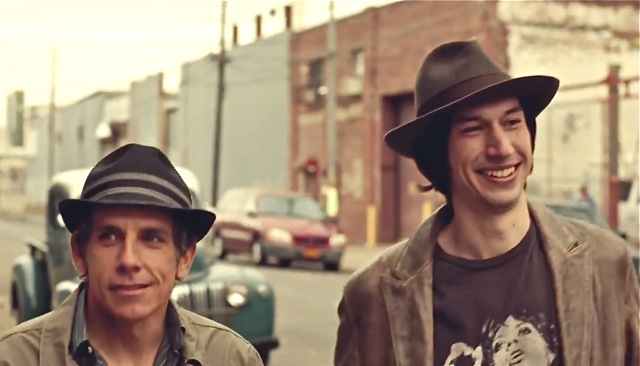
Writer/director Noah Baumbach sets the stage for a contemporary story with the parallel of Solness in his main character Josh Shrebnik, 44, aptly played by Ben Stiller. Josh is a documentary filmmaker who may have passed the peak of his career, his latest project dragging on for ten years without new grant money coming in. In the continued education class where he teaches documentary filmmaking, he meets a hipster couple in their 20’s, Jamie (Adam Driver) and Darby (Amanda Seyfried). Jamie expresses great admiration for Josh, feeding him what he needs. Soon, Josh and his wife Cornelia (Naomi Watts) become fast friends with them, and begin to drift away from their peers, new parents Marina (Maria Dizzia) and Fletcher (Adam Horrovitz).

In Frances Ha (2012), Baumbach brought us a positive profile of youth embodied in co-writer and star Greta Gerwig. Gerwig grasped the gist of youth beautifully by portraying an aspiring young dancer in NYC finding her way to a career and to her own true self. In Frances we see a delightful image of the young. Here in While We’re Young, Baumbach presents another view on youth. He does it by juxtaposing hipsters with the middle-aged, leading the audience through a revealing and interesting story. While the brunt of the laughs falls on the older pair Josh and Cornelia, the ultimate revealing is on the younger generation.

While We're Young

What makes the movie rich and intriguing is that what looks like a simple, single storyline embeds multi-layered thematic materials. On the surface, Baumbach lets us laugh at Josh and Cornelia, forty-something, childless, needing to come to terms with aging but not until one last attempt at rejuvenation. Hanging out with Jamie and Darby makes them feel young again. Josh dons a fedora hat, wears hipster shoes, rides a bike to keep up with Jamie. Cornelia goes with Darby to a hip hop dance class, and stressed herself out with the moves. For more flavour, both try the new experience of detoxing through a vomit inducing potion in a shaman party. Watts sure can keep up in her comedic act with Stiller, just right in juggling between depth of emotions and light-hearted fun. After St. Vincent, where she plays a small, funny role alongside Bill Murray, Watts has proven once again that she can wear the comic hat suitably.

On another level, we see Baumbach contrasting the ironic lifestyle choices in a sequence of fast cuts. We see the middle-aged couple using iPhone to Google once something comes up, while Jamie and Darby just try to remember and recall the info. Googling is too easy; they don’t want instant answers. If they can’t recall, they’re contented with not knowing. I can’t get enough of these subtly planted Baumbach jokes. As Josh listens to CD’s on his laptop, Jamie enjoys his wall to wall collection of vinyl records, played on a turntable. Jamie makes his own table, Darby makes ice cream from scratch. They ride a bike to get around. Their hipster lifestyle totally grabs Josh as genuine and cool; impressing him even more is their generous and open demeanour. A budding documentary filmmaker, Jamie invites Josh to co-direct his film. Josh is totally sold.

Ben Stiller is a natural when it comes to playing a clueless, de-valued character like this one. In Greenberg (2010), his previous collaboration with Baumbach, he plays a similar role, middle-aged and lost in the flow of life, also touched and changed by a youthful character (Greta Gerwig). It’s easy for us to laugh at Stiller, a greying forty-four-year-old hipster-wanna-be trying hands-free cycling following Jamie but only for a short two seconds before he twisted his back. The back will soon heal, but it’s “Arthritis” on the knees that the doctor is more concerned about. The joke there in the doctor’s office is just too good for me to include here. And, when did he last have his eyes checked?

As the story develops however, we begin to see Josh having second thoughts. Maybe Jamie’s work isn’t as authentic and spontaneous as it looks. Adam Driver is perfect in projecting a fused expression of innocence and mischief. His calculated moves startle Josh. Herein lies a crucial, contentious thematic element. There’s a fundamental breach of integrity. Is Jamie ignorant about ethics or is he simply amoral? Isn’t a documentary supposed to present truths? To what extent can it be staged or its ‘facts’ twisted? Nil, according to old-schooled Josh; such methods are fraudulent, crossing ethical boundaries, inexcusable. To Jamie, it’s no big deal, “it doesn’t matter that it’s fake.” To us the viewers, this third act is the juice in the meat. Josh’s indignation is justified.

But then, Baumbach pulls back, as if being too harsh on young Jamie. As I think about the notion of authenticity in the movie, I realize it comes in different forms, not only in documentary filmmaking, but with the actual life these characters are living. A love for retro and owning a collection of vinyl records don’t mean Jamie has real experience living in the 60’s. Or for Josh, imitating hipster fashion doesn’t make him young, as his friend Fletcher says: “You’re just an old man with a hat.” Taking an example from a recent real-life happening: when we see a veteran news anchor faking accounts to add glamour and self-importance to his reporting we know age is not the dividing line for authenticity. So maybe Baumbach has a point there by cutting Jamie some slack at the end. In the last scene, Josh, wiser now, utters: “He’s not evil; he’s just young.”

Let’s hope authenticity won’t become a dismissible fashion trend like a hat.

~ ~ ~ 1/2 Ripples

***

Other Ripple Reviews you may like to read:

The Secret Life of Walter Mitty (2013)

Force Majeure (2014)

The Grand Budapest Hotel (2014)

Inside Llewyn Davis (2014)

Upcoming Movie Adaptations from Literary Sources: 2015 and Beyond

“Literary Sources”, that’s a highly debatable term. Here I just mean anything that’s written, with text, and had been published in real paper or digitally. Which means, Avengers: Age of Ultron is eligible, having been published as a comic book, with text accompanying graphics. Indeed, that’s one movie I’ll be watching. Main attraction: James Spader as Ultron.

Now, for the list. I admit that’s subjective because it’s my list. I include here some titles that pique my interest, ones that I feel would create some ripples. So here it is.

Far From The Madding Crowd (May 1, 2015)

FFTMC Movie still

I have talked about this in a previous post, and now the time has come. In just a few days – opening the same day as Avengers: Age of Ultron – is a new version of Thomas Hardy’s classic. What an assortment of delights in our entertainment smorgasbord. Almost fifty years have past since John Schlesinger’s 1967 production, the definitive version shall I say. Schlesinger was a director of high repute; two years after Madding Crowd he went on to win the Oscar best picture for Midnight Cowboy. His stars for the Hardy adaptation were all high caliber actors: Julie Christie, Peter Finch, Alan Bates. But watching it again a while ago I couldn’t help but feel it a bit dated. Now almost fifty years later, a 21st C. attempt is viable and anticipated. I should reserve my judgement until I’ve seen the movie of course, but from the trailers, it sure looks like a very contemporary take on 19th C. literature. Will the eversweet Carey Mulligan make a believable Bathsheba Everdene?

Macbeth (May 2015)

Macbeth 2015

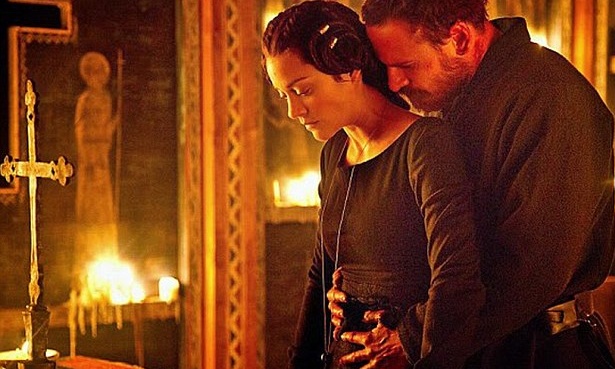
Acclaimed Australian director Justin Kurzel’s Macbeth will premiere at this year’s Cannes Film Festival in May. Shakespeare’s works are probably the most adapted sources on screen. Just for Macbeth, we have 200 results if you go on IMDb. So why watch another one? For one reason, how many Macbeth’s have your actually seen on screen? I’m sure there are other good reasons too, like, watching Academy Awards best actress Marion Cotillard transform from Edith Piaff into Lady Macbeth should be interesting. What more, with high calibre character actor Michael Fassbender as Macbeth, the two should make a dynamic, murderous duo.

Genius (2015)

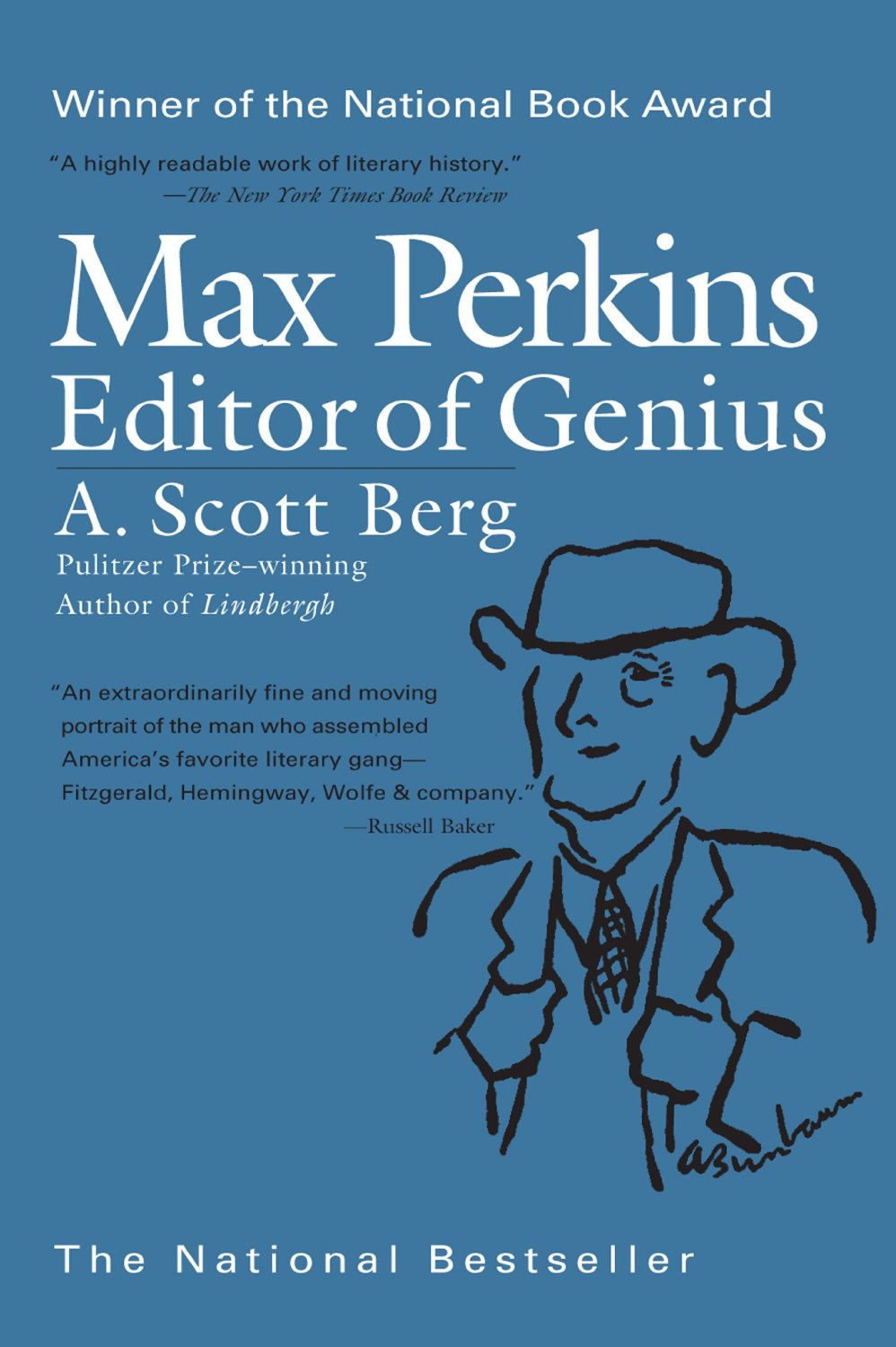
Max PerkinsBased on the National Book Award winning bio (1978) Max Perkins: Editor of Genius by A. Scott Berg. Perkins was editor at Scribner, a ‘genius’ because he brought to the world the works of Earnest Hemingway, F. Scott Fitzgerald, and Thomas Wolfe, among others. He was also the man who told Hemingway to “tone it down”. To these great writers, Perkins was also critic,  money-lender, psychoanalyst, and friend. What’s interesting is that the 500+ page bio is adapted into film with its director and most of the main cast all non-Americans. Acclaimed stage director Michael Grandage, cast includes Colin Firth, Jude Law, Dominic West, Guy Pearce, Nicole Kidman, Laura Linney. Screenplay by John Logan who wrote Skyfall (2012). Yup.


Blonde (2016)

BlondeJoyce Carol Oates’s imaginary account of Marilyn Monroe was a finalist of the National Book Award in 2000 and the Pulitzer in 2001. It just happened that recently I’ve re-watched My Week with Marilyn (2011, Michelle Williams as MM) and the superb doc Love, Marilyn (2012), both leaving me with a troubling sadness. I’ve not read Oates’s novel and know not how she approaches her subject, who I feel, despite her talent and popularity, was a victim of objectification as a sex symbol, exploited for her beauty and sexuality, despised for her inadequacy by her husband AM, drowned in fame, and eventually, lost her total self. I hope Oates’s perspective is internal and sympathetic. I love the choice for the role: Jessica Chastain.


Beauty and the Beast (2017)

Beauty and the Beast 2016

With the success of Cinderella (2015), looks like this is the trend: Animation turned into live-action feature. I do look forward to this one. I mean, even with such a worn-out, age-old tale like Cinderella can be revitalized and brought back to life with such vigour and sparks, I trust Disney’s Beatuy and the Beast can be adapted into an even more entertaining work. After all, that’s a story I love much more than Cinderella. Take a look at this human cast: Emma Watson as Belle, Dan Stevens as Beast (a long way from Matthew Crawley), Luke Evans as Gaston, Ewan McGregor as Lumiere, Ian McKellen as Cogsworth, Stanley Tucci as Cadenza, Emma Thompson as Mrs. Potts, Kevin Klein as Maurice, directed by the Oscar winning Bill Condon (Dreamgirls, Twilight). But can they all sing?

“Goodbye to All That” (Film rights optioned)

Joan Didion

This is not Robert Graves’s autobiography but Joan Didion’s essay in her collection Slouching Towards Bethlehem (1968). The film rights have just been optioned recently by Megan Carlson and Brian Sullivan as the first project of their production company. A feature film based on an essay is a most interesting idea. But this is no ordinary essay. Didion’s seminal piece in her iconic collection contains substantial materials as a springboard to a full length movie, and I believe it can be done. The essay is a summarized account of her years living in New York City working for Vogue, an essay prize she won while at UC Berkeley. At first thinking of staying in NYC for six months, eventually living there eight years until she married John Dunne and moved back to CA. I highly anticipate this movie adaptation. The producers are seeking for a female screenwriter and director for the feature. Who other than Didion herself should do the writing?

***

McFarland, USA (2015): A Worthy Winner

The reason I waited till now to see McFarland, USA is plainly because I thought it would be just another cliché movie on teacher inspiring students, and specifically here, a white teacher coming into a hispanic community, changing their youngsters to what they’re not, the white knight of condescension.

I’m glad that’s all a misconstrued perception. True, there’s a white teacher coming into the poorest town in the USA, McFarland, CA, where most of its population is hispanic, Mexican immigrants labouring in the open fields from morn till dusk picking produce. The hope of the parents’ – if there is any – is for their sons to continue picking produce so they can earn a living for themselves.

What’s best about this movie is that it’s a true story. The script is well-written and the production helmed by a competent director Niki Caro (North Country, 2005; Whale Rider, 2002). While its elements seem like the ingredients of a formulaic teacher changing students feel-good movie, it is surprisingly moving and exceeds my expectation.

Sure, the coach can’t be more white… a Mr. Jim White (Kevin Costner) from Idaho. You can’t find a whiter name. The school is McFarland High School, with low morales and expectations, students from blue-collar Mexican immigrant families. We see Mr. White come to McFarland after some unsuccessful employment at another school. Bringing his wife Cheryl (Maria Bello) and two daughters Julie (Morgan Saylor) and Jamie (Elsie Fisher) with him, White soon finds they are a misfit and maybe even unsafe in the town. Yet, he has no choice; this is his only job offer.

McFarland 1

Hired as a biology and gym teacher, White one day discovers some of his boys are fast long-distance runners. There are the Diaz boys, David (Rafael Martinez), Damacio (Michael Auguero), and Danny (Ramiro Rodriguez, well, maybe not all of them fast) who are waken up by their mother every morning before dawn to go work in the fields before they head to school. Their only way to get to school on time from the field is by running fast. And then there’s Carlos Valles (Carlos Pratts), whose athletic talent is marred by family and personal conflicts.

White sees the potentials in these boys. With no experience whatsoever, he asks for permission to set up a seven-member cross country running team and train the boys for competition. Being the newest team, they have to compete against well-trained and formidable upper-middle-class schools from areas such as Palo Alto. Physical endurance comes much easier than when the McFarland boys have to deal with low self-image and discouragement.

Kevin Costner is the key to the success of the movie. I can’t think of any other actor who is more suitable for the role. Costner is a natural, even without the chance of him pitching a baseball, even having him ride a girl’s Barbie bike (White’s daughter’s apparently) to keep up with the boys in their practice, as he’s just a bit over-the-hill to run with them. A charmer and very convincing here, Costner shows genuine concern for the welfare of his students, even going to the fields to pick produce with them to make up for the time when he takes them out for practice. He soon wins the hearts of the parents and their community.

The movie captures my attention from the very start, any resistance is soon melted by Costner’s performance, and the natural appearance of the students and their families. Most of them are first time actors, and some are residents of McFarland. One soon finds that it’s not a white knight rescuing the underprivileged, but life-changing for them all. The movie sheds no traces of racism or condescension, but paints a realistic picture of family, community and the humanity that binds.

If you want to avoid spoilers here we have the historical facts in the following:

The triumph comes in the final act of the movie when the McFarland Cross Country Team The Cougars won the California States championship in 1987, and subsequently, a total of nine wins over the next fourteen years. And to his credit, White turned down an offer from a Palo Alto high school to stay where he was, at McFarland.

What is most moving is the final text shown on screen telling how the boys had turned out in real life. All of them have no family member who had gone past a grade 9 education, but all seven of them in the cross country team graduated from college. Some of them had gone back to teach at McFarland High School, one became a police detective, one a writer for the L.A. Times. We see their faces as adults, the fruits of everyone’s labour at McFarland.

The triumph of the movie is in its authenticity and uplifting ending. Uplifting because it’s a true story. Of course, the filmmakers have to tweak and add in dramatic elements to turn it into a watchable movie, but the basic facts remain intact. I can’t remember being so moved by a Disney movie. Kudos to the McFarland community for the inspiration.

~ ~ ~ Ripples

***

CLICK HERE to watch a featured video of the movie.

Here’s a “History vs. Hollywood” comparison.

Woman in Gold (2015): Then and Now

Gustav Klimt (1862 – 1918) was an Austrian Symbolist painter and one of the most prominent members of the Vienna Art Nouveau (Vienna Secession) movement. His major works include paintings, murals, sketches, and other art objects, but the most recognizable piece probably is the painting “Portrait of Adele Bloch-Bauer I” (1907), commonly known as “The Woman in Gold”.

The painting measures 54″ x 54″, oil, silver and gold on canvas, a highly embellished work reflecting the elegant lady active in the Viennese art circle, patron and muse of Klimt’s, Adele Bloch-Bauer. Adele was married to Ferdinand Bloch-Bauer, an Austrian Jewish industrialist who commissioned Klimt to do the two portraits of his wife. It had been hanging in his home until seized by the Nazis.

Portrait of Adele Bloch-Bauer I
Source: Wikipedia

After the war, the famous painting had been hanging in Austria’s federal art museum, the Galerie Belvedere, as a national treasure, until a near eight-year legal battle finally decided its restitution back to the hands of Adele and Ferdinand’s niece, Maria Altmann, who had escaped to the United States before the War broke out. The long legal fight to gain back the painting’s rightful ownership is the focus of this movie.

Arts looted by the Nazis have their screen time twice in the past year, first The Monuments Men, and now Woman in gold. Important subject but unfortunately both films fall short of cinematic rendering. Director Simon Curtis’s handling in Woman in Gold emits less glimmer than his previous My Week with Marilyn.

Helen Mirren delivers a fine performance as the determined yet conflicting Altmann, who, on the one hand, wants to see justice done in the restitution of her family heirloom but reluctant to re-open a traumatic chapter of her life and return to Austria for the case. She remembers her Aunt Adele well, with some endearing and awestruck moments beholding her beauty. The film handles the shifting between the past and present quite well. It is heart wrenching for a daughter to have to make a hasty escape from her home, leaving her parents behind as the Nazis take over the country.

The David and Goliath legal battle is handled by a young and inexperienced Los Angeles attorney E. Randol Schoenberg. Yes, that’s the grandson of the Austrian composer Arnold Schoenberg, who had escaped to the U.S. in time to avoid the Holocaust, just like Altmann. In 2004, the young lawyer argues his case Republic of Austria v. Altmann in the U.S. Supreme Court, and in January, 2006, heads over to Austria to present his arguments in front of a panel for a binding arbitration. An emotional Altmann sits beside Schoenberg as they hear the decision announced by the panel of three Austrian judges ruling in their favour.

The choice of Ryan Reynolds as Randol Schoenberg looks like a miscast. Something’s missing… But then again, it could be the screenplay, maybe infusing more cinematic moments, or cutting some banal scenes and dialogues would help. Katie Holmes who plays Randol’s wife and Daniel Brühl (excellent in Rush, 2013) as a helpful journalist are incidentals. I can understand condensing the almost decade-long legal story into 109 minutes with an ending that is already known is itself a difficult feat. So all the more we need a more effective screenplay.

However, for someone who did not know about the details of this piece of art history, the movie still captured my attention. I watched it like a documentary. Not knowing the details of this legal case, I found the movie informative in taking me through the obstacles, albeit in synopsis format and simplification.

The beginning is probably one of the most appealing sequence of the whole movie, and that’s a close up on the technique the painter Klimt uses on his painting, meticulously forming a gold leaf and pasting it on his work in progress. Unfortunately, the scene is way too short to allow us to savour. This may well be the only artistic spot a viewer will get.

In a post-script text, we learn that Altmann sold “The Woman in Gold” to Ronald Lauder for $135 million in 2006, at the time the highest purchase price on record for a painting. Those living in or visiting New York City now have a chance to see the current exhibition at the Neue Galerie – opened by Lauder in 2001 – “Gustav Klimt and Adele Bloch-Bauer: The Woman in Gold”, April 2 – Sept. 7, 2015.

In August last year, Lauder, as President of the World Jewish Congress, wrote a moving op-ed for the NYT about the persecution of Christians in the Middle East and Africa. He ends with this: “The Jewish people understand all too well what can happen when the world is silent. This campaign of death must be stopped.”

It’s all about speaking out. That’s what makes this movie important. I can’t help but imagine though: what if it were Klimt who made it…

~ ~ 1/2 Ripples

***

From Z to A: How Zweig Inspired Anderson’s Grand Budapest Hotel

The following is the first part of my article in the new Spring Issue of the online review magazine Shiny New Books. In the article, I introduce the Austrian writer Stefan Zweig, whom director Wes Anderson acknowledged as the source of inspiration for his Oscar winning production. To read the whole piece, CLICK HERE. I’m sure you’ll find the SNB site informative and a valuable resource of books and authors.

***

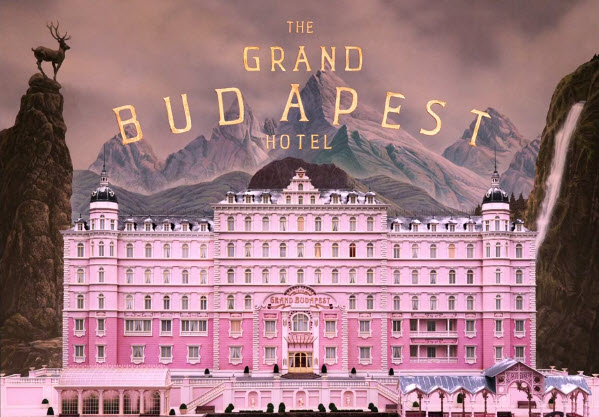
The Grand Budapest Hotel won four Oscars at the 87th Academy Awards this February. In the end of the film leading the credits is the acknowledgement of Stefan Zweig (1881-1942), whose writings had inspired the production. During interviews, director Wes Anderson had joked that he ‘stole’ from the Austrian writer: ‘It’s basically plagiarism,” he said. Anderson is all modesty when making such a remark, for the film has his own signature style. Unlike Zweig’s more serious and darker hue, Anderson has created a colourful fantasy. Rather than an imitation, the film should be regarded as a worthy homage to an author who had been noted as one of the most translated German-language writers during the 1930’s.

the-grand-budapest-hotel movie poster

Anderson came across Zweig by chance when he purchased his 1939 novel Beware of Pity in a Paris bookstore. After two pages, he knew he had discovered a new favorite author. Twenty pages later, he wanted to adapt it into film. Then he read some more Zweig and liked them all. So he made a peculiar endeavour, he transposed the author’s oeuvre, his life and spirit into his own re-imagining, creating a film that eventually would catapult him to the zenith of acclamation.

The Grand Budapest Hotel was nominated for nine Oscars at the 2015 Academy Awards, including Best Picture, Best Directing, and Best Original Screenplay for Anderson himself. Albeit not having won these major categories, the film did capture four wins in Original Score, Production Design, Costume Design, Makeup and Hairstyling. The triumph is shared by the late Zweig, for he has now been introduced to many more readers, especially those of us in North America. New York Review Books has seen Zweig’s popularity rise after the movie, but it is UK’s Pushkin Press that holds the banner of a ‘Zweig revival’ by republishing many of his works in English translation.

Zweig was born 1881 in Vienna to a Jewish family who circulated freely in the upper crust of Austro-Hungarian society. He was versatile and prolific as a poet, translator, biographer, essayist, lyricist, short story writer and novelist. His literary achievement was prodigious. At nineteen, Zweig saw his first publication, a collection of poetry by the respectable publisher Schuster & Löffler. Upon this debut on the literary stage, Zweig was ecstatic to receive a gift from his idol, Rilke, who had read the youngster’s work and sent him a special edition of his own poetry with the inscription addressed to Zweig: “with thanks.” Later, still at the tender age of nineteen, Zweig saw his essays published in the feuilleton, literary supplement, of Vienna’s prestigious newspaper the Neue Freie Presse, sharing the pages with such formidable literary figures as Ibsen, Zola, Strindberg and Shaw.

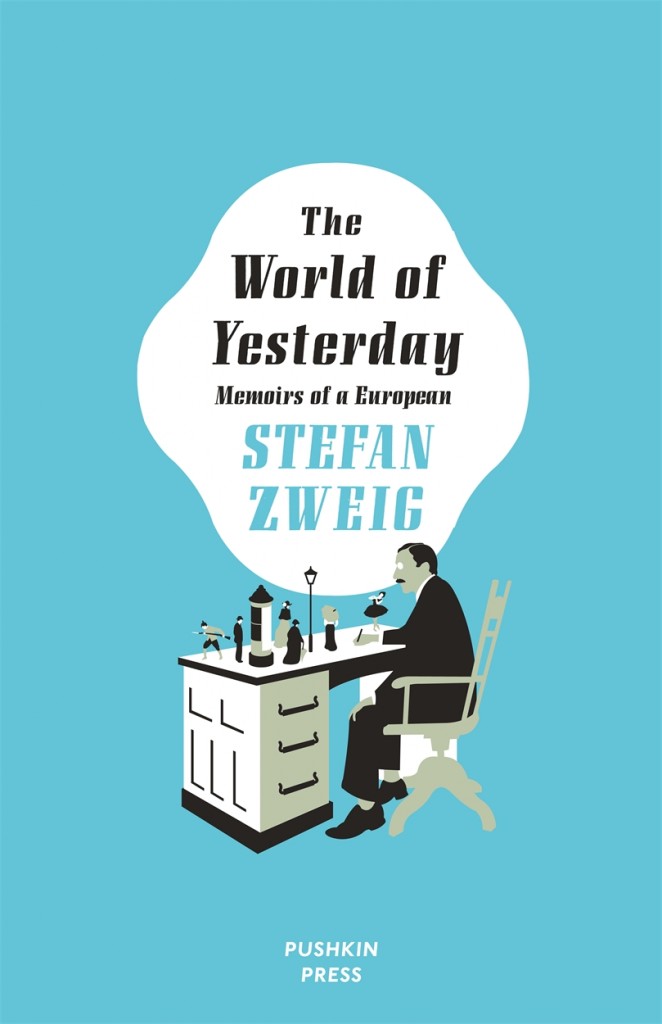
The World of Yesterday ZweigReaders can find his excitement in recalling these unexpected early successes in his autobiography The World of Yesterday. It was not so much about fame but identity. The glorious world of yesterday included not only the fulfilled dream of a young man, but that of the Jewish people in finding a homeland, free and secure in Vienna. At long last, they could taste the reality of belonging. Jews in Vienna had become respectable, contributing members of society, particularly in the realms of the arts and culture.

As we can see from history, such a triumph would soon be obliterated. In August 1914, Zweig saw the world order and security that he so cherished and thrived on crumble as WWI broke out. If that was the beginning of the end, Nazism in the 1930’s rang in the death toll. Zweig had to escape to England, later the United States, finally landed in Brazil. Exiled and alienated, the Austrian writer was overwhelmed by despair as he saw his homeland and Europe devoured by Hitler. The German language he was born into and had so aptly used in his literary success he now had to apologize for. Such devastation and emptiness was too much to bear. In 1942, just a few days after He sent off his last book Chess Story to his American publisher, Zweig and his second wife committed suicide together in Petrópolis, Brazil.

Wes Anderson recreated Zweig’s pre-war world in his fictional Republic of Zubrowka, with The Grand Budapest Hotel itself as a metaphor of that secure microcosm, everything runs smoothly under the supervision of the concierge M. Gustave (Ralph Fiennes), at least in the first half of the film. The boxy Academy Ratio we see on screen evokes the idea of looking into an old photo album in all its nostalgic charm. The exile life of a genocide survivor we can find in Zero the lobby boy (Tony Revolori young, F. Murray Abraham older).

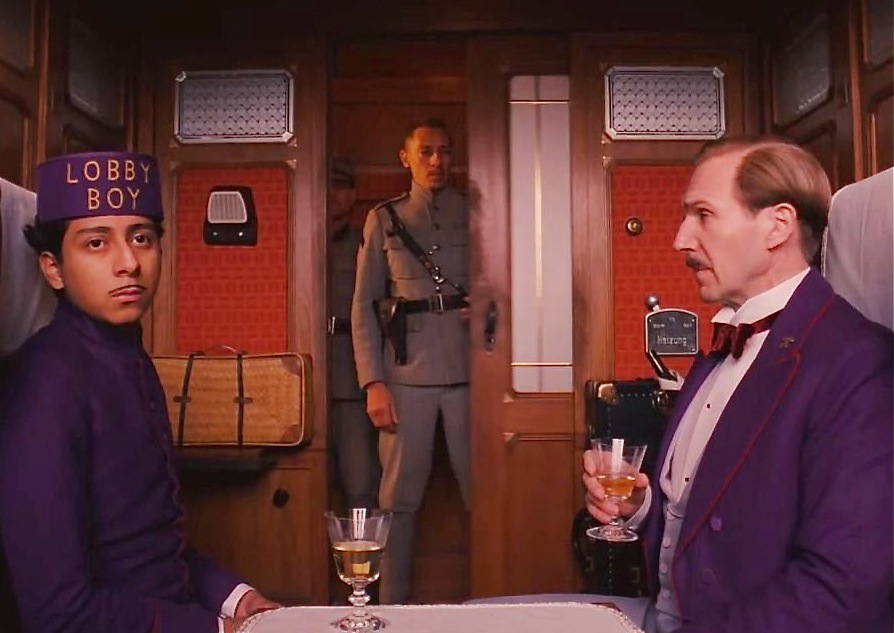
Passport CheckRichard Brody in his New Yorker article “Stefan Zweig, Wes Anderson, And a Longing for the Past” writes that Zweig himself had experienced the ‘practical difficulties’ and ‘psychological trauma’ of having lost his passport while on the run. The passport, Brody notes, “wasn’t even a commonplace document before the First World War.” Without it, one instantly was turned into an outlaw. Zero has M. Gustave to thank for standing up for him twice while travelling on the train without transit papers. The first time, officer Henckels (Edward Norton) recognizes M. Gustave, his parents’ friend, and remembers his kindness to him when he was a boy; human relations win over and Zero is spared. Unfortunately, luck runs out for M. Gustave in the second time, all because of the change in military control, a symbolic reference to the iron fist of the Nazi regime. No societal ties or achievements could save Zweig or the Jews in Europe during the Holocaust.

The following are two titles to which Anderson had made specific reference – Zweig’s only novel Beware of Pity and his novella The Post-Office Girl. The third is Anderson’s own selections, an excellent sampler of Zweig’s works, The Society of the Crossed Keys.

To continue reading my short reviews of these books, CLICK HERE to Shiny New Books. Or, just click anyway to see what an array of book reviews, author interviews and their own articles, book news and tidbits await you.

***

The Second, Best Exotic Marigold Hotel (2015)

The comma is not a typo. If you pause there before you say the rest, you’re clear in announcing the sequel, and not ‘The Second Best…’ for it’s not.

I’d say, it’s a little better maybe, funnier and more lively than the first. I can hear some protests. But in my case, kudos to the Bollywood dancers entertaining us before the movie began – two pairs of youthful and energetic Indian dancers giving us a taste of Bollywood – we were all warmed up and ready to embrace the show.

banner-the-second-best-exotic-marigold-hotel-film
Who will speak up against Ageism in the movie industry? What better spokespersons than the stars themselves? Let their charisma and performance speak.

The Second Best Exotic Marigold Hotel is all about checking into new beginnings. In the last chapter, life can be beautiful and fulfilling, and one is never too late to enjoy it, even if they are merely ephemeral, fleeting moments. With the latent energy of the Marigold residents, they intend to make those precious moments last for the rest of their lives.

Director John Madden, who helmed Shakespeare in Love (1998) and saw it go on to win seven Oscars, brings us the sequel to his unexpected box office success of the first Marigold Hotel. This is no Shakespeare In Love, of course, but from the digital ink of screenwriter Ol Parker, we have some fine dialogues despite a lack of substantial plot lines; from the mouths of the seasoned and weathered come some refreshing viewpoints.

Even if you’re not starstruck, you have to tip your hat to this cast of talents, veteran actors whose average age works out to be 70; yes, I looked them up and did the math. Two-time Oscar winner Maggie Smith, Judi Dench (also Oscar winner and exactly 19 days older than Maggie in real life, as she said in the movie), Bill Nighy, Penelope Wilton, Ronald Pickup, Celia Imrie, Diana Hardcastle, and this time around, the newly-aged and still handsome Richard Gere, with David Strathairn also playing a small role.

The young proprietor of the retirement hotel in Jaipur, India, Sonny Kapoor, is eagerly planning for an expansion of his business venture, a second Marigold Hotel. Performed with much animation by Dev Patel of Slumdog Millionaire fame, Sonny is basically the foil, not just in his youthfulness and agile Bollywood dance skills, but in his overacting. My query: why is his Indian accent thicker than his mother’s (Lillete Dubey)? Nevertheless, watching the threesome, the soon-to-be-married Sonny and Sunaina (Tina Desai) plus the odd addition of Kushal (Shazad Latif), is energizing and mood altering. In the last act, having the Marigold residents join in the Bollywood dance at the wedding party is a treat, an acquired taste for some viewers I admit.

Under the direction of DP Ben Smithard, we see some colourful street scenes and beautiful sights. Following the constant panning camera between pillars and doorways, we become silent observers of the lives of these Marigold residents.

Throughout the movie, I’ve jotted down a few fine lines which, if spoken by the inexperienced, could well become platitudes. But here delivered by these professionals of film and stage, the one-liners are spot-on and memorable. Everyone has a story and there are a few notable dialogues, like this between the eldest pair swept by clashing undercurrents:

Muriel (Maggie Smith): You’re just nineteen days older than I am.
Evelyn (Judi Dench): Nineteen days is the life span of a wasp.

Exactly, time is relative. Fact is, time is what these Marigold residents don’t have. That’s what makes each of their story so pressing. At 79, Evelyn is faced with the choice of accepting or declining a new career as well as a genuine but shy suitor, Douglas (Bill Nighy). Her feeling in a nutshell:

“Sometimes it seems the difference between what we want and what we fear is the width of an eyelash.”

Good that she realizes just in time, and it’s clever how she conveys her message to Douglas at Sonny’s wedding. So, her new insight after much pondering:

“I thought, how many new lives can we have? Then I thought, as many as we like.”

And for Norman (Ronald Pickup) and Carol (Diana Hardcastle), it’s never too late to change as we see love turn them from promiscuity to monogamy. Well, even a faint attempt is encouraging.

As for Madge (Celia Imrie), she finally decides which direction she should take, left, right, or straight ahead, probably for the first time in her life.

Who can laugh at the old but themselves? Here when Jean (Penelope Wilton) suddenly reappears at the Marigold, I can associate her role as the sharp-tongued Isobel Crawley in Downton Abbey:

“I couldn’t resist the opportunity to come out and visit the old ruins, and see how the hotel was doing too.”

As a self-appointed tour guide in Jaipur, Douglas knows it’s never too old to step out into uncharted territory. Some good laughs there with his little helper in the background feeding him info or he’ll be just as lost as his tourist clients. As well, he is experiencing love like an insecure young chap. This is my favourite line, not only for the words but the way Nighy says them can make your heart ache:

“The great and terrible thing about life is there’s just so much bloody potential.” The subtext is brilliantly conveyed by his obvious frustration and agitated demeanour.

Ah… “There is no present like the time” [sic, exactly]

Time is a gift and a torment when you’re only given a limited portion under the low-hanging clouds of mortality. Here’s the poignant scene at the end. It belongs to Muriel (Maggie Smith), could well be foreshadowing what we will see in Season 6 of Downton Abbey. Her voiceover is full of pathos:

“There is no such thing as an ending; just a place where you leave the story.”

Of course there are flaws in the movie. But just like wrinkles, you’ve come to overlook them while admiring the person. Call it an escape or a two-hour vacation, The Second, Best Exotic Hotel offers a fun and gratifying ride.

 ~ ~ ~ Ripples

*** 

Related Posts on Ripple Effects:

The Best Exotic Marigold Hotel (2012)

The Lunchbox (2013): A Meal that Binds

Downton Abbey Season 5 Finale

Slumdog Millionaire (2008)

Back to the Source: From Movie to Book

Those who have come to the pond here for a while would know I’m a Book to Movie person. If I know a film adaptation is coming out, I’d want to read the book first, as I’m always intrigued by the adaptation process. Maybe it’s the transposition of one art form into another that so fascinates me. Yes, you can say it’s a kind of theme and variation type of work.

But there are also times when I’m so captivated by a movie that, after watching it, I want to read the book on which it’s based. Thanks to Wes Anderson, I’m now reading Stefan Zweig.

the-grand-budapest-hotel movie poster

Before watching The Grand Budapest Hotel last April, I had never heard of the Austrian novelist, playwright, journalist and biographer Stefan Zweig. During the 1920’s and 1930’s, Zweig was one of the most famous and translated writers. And yes, here I am living under a Rock(ies), have never heard of the name until Wes Anderson’s confessional interviews, wherein he raved about how his (now) Oscar winning Budapest Hotel was influenced by the writings of Stefan Zweig. Also in the movie, there is the acknowledgement of Zweig as the source of inspiration as the film’s end credits begin to roll.

Here’s what’s interesting: Instead of adapting from one single work, Anderson created his Budapest Hotel sparked by the oeuvre of Zweig’s after he read his writings only a few years before. After watching the film, I’ve since read several of Zweig’s short stories, and a couple of novellas The Post Office Girl and Chess Story, and now continue to delve into more of his captivating, often bittersweet, stories. Watch for my article coming out in the April (Spring) issue of Shiny New Books on how Z inspired A.

So The Budapest is the most recent example of how a movie influences my reading. Over the years, there have been other ones. Here are some more:

12 Years A Slave (2013) – Steve McQueen’s artistic rendering of slavery may seem like a paradox, but acclaimed British actor Chiwetel Ejiofor’s performance as Solomon Northup is what spurred me to read the original memoir. Both are excellent works.

3:10 to Yuma (2007) – Have you ever read a Western short story? Western as in uh… cowboy, gunslingers. This is one of the few Western work I’ve ever read. The intriguing moral dilemma the movie depicts and its poignant ending had driven me to look for the short story by Elmore Leonard as soon as I left the theatre.

Bleak House (2005) – The BBC TV mini-series with Gillian Anderson as Lady Dedlock, Anna Maxwell Martin as Esther Summerson sealed the deal for me. The series also introduced me to the talented Carey Mulligan, her first role I believe. I turned to the 1,000 plus pages Dickens novel soon after the series finished. Because I’ve seen it first, it was a breezy read, almost.

Howards Ends (1992)  A cast with Emma Thompson, Helena Bonham Carter and Vanessa Redgrave is not hard to move and entertain. And thanks to Merchant Ivory, the dynamic dual of producer/director, and their team writer Ruth Prawer Jhabvala, I devoured the humorous and equally entertaining E. M Forster novel after that.

Revolutionary Road (2008) – I was captivated by the movie at first. Kate Winslet and Leo DiCaprio had done a marvelous job in depicting the entrapment of suburban life. But only through reading Richard Yates’ book did I sense the even deeper psychological entanglement that I missed in the film.

The Diving Bell and the Butterfly (2007) – I wrote in my book review, “This is one book that should be read after watching the film. Without visualizing what Jean-Dominique Bauby had gone through after his massive stroke, the reader simply could not empathize or appreciate enough of Bauby’s effort in ‘writing’ his memoir.” How? One blink at a time.

When Did You Last See Your Father (2007) – I watched the film twice at TIFF a few years back, Colin Firth as British writer Blake Morrison and Jim Broadbent as his overbearing and critical father dying of cancer. The life-long yearning of a son seeking his father’s approval is so sensitively portrayed. Reading Morrison’s memoir after only made me appreciate the film more.

How about you? Are there movies that have motivated you to go back to the source and read the book?

***

(CLICK ON the links in the titles to read my reviews.)

The Rite of Spring: Goldeneyes Courting

From afar, I could only see their amusing act through my camera lens. The male Common Goldeneye would let out a sharp call, stretch his neck straight up, drawing attention, then quickly bend his head far backwards, touching his rump, then snap right back, overcompensating by kicking his orange feet out of the water.

Pardon the inadequate description above. Actually looking at them is hilarious, like watching a bunch of class clowns trying desperately to impress. Here’s the sequence.

A sharp call to draw attention:

Sharp call

Stretch neck straight up:

Neck straight up

Bend over backwards:

Bend over backwards

Snap out of it:

Kick orange feet up

Male synchronized swimming – courting en masse:

Everybody together now

As for the females, looks like they are not easily moved, or maybe just feigning indifference:

Females paying no attention

No matter. Spring is at hand.

***

Saturday Snapshot is hosted by West Metro Mommy Reads. CLICK HERE to see what others have posted.

***

ALL PHOTOS TAKEN BY ARTI OF RIPPLE EFFECTS
DO NOT COPY OR REBLOG

Another Year, Another Downton: Season 5 Finale

For the past five years, Downton Abbey kicks off the new year for us North American viewers. For nine Sunday evenings in January and February, I’ve been prodded to get back home in time, or simply stay home so not to miss a Downton episode. Now that I can record the series on my HDTV, I can freely watch The Oscars without dilemma.

Last night’s Finale “A Moorland Holiday” has finally picked up rhythm and grabbed my attention for a too short 1.5 hours.

The time is Autumn of 1924. Rose’s father-in-law, Lord Sinderby, has rented the beautiful Brancaster Castle in Northumberland and invited the Crawley family to a grouse shooting party, a marvellous setting to end the Season. But why would the grumpy and disagreeable in-law want to do that? Probably because every Finale ends with an outing, the best setting for turns in the road, and we’re treated to an exciting ride. It is also the annual Christmas episode for the UK viewers, so we can see how that blessed Festival can join hearts in the Finale.

Last night’s extended Episode has once again confirmed why this annual major TV event is worth all the wait and staying in on Sunday evenings. Why don’t I just buy the DVD’s so not be constrained? No, watching Downton one week at a time together with all the millions of PBS viewers makes this Finale all the more gratifying.

This Episode has redeemed itself from a relatively uneventful Season, which begs the question, why didn’t Mr. Fellowes unleash his ingenuity more often instead of having us wait eight weeks to arrive at this gratifying end? No matter, we are a patient lot. Let’s face it, the Finale is well worth the wait; it rewards us with justifiable twists and turns, ties up all loose ends and gives us a major surprise. It has once again recharged my enthusiasm for the show and even moved me to tears at the rare spot.

If every episode this Season was as rich and juicy as the Finale, Downton could have easily doubled its weekly viewers.

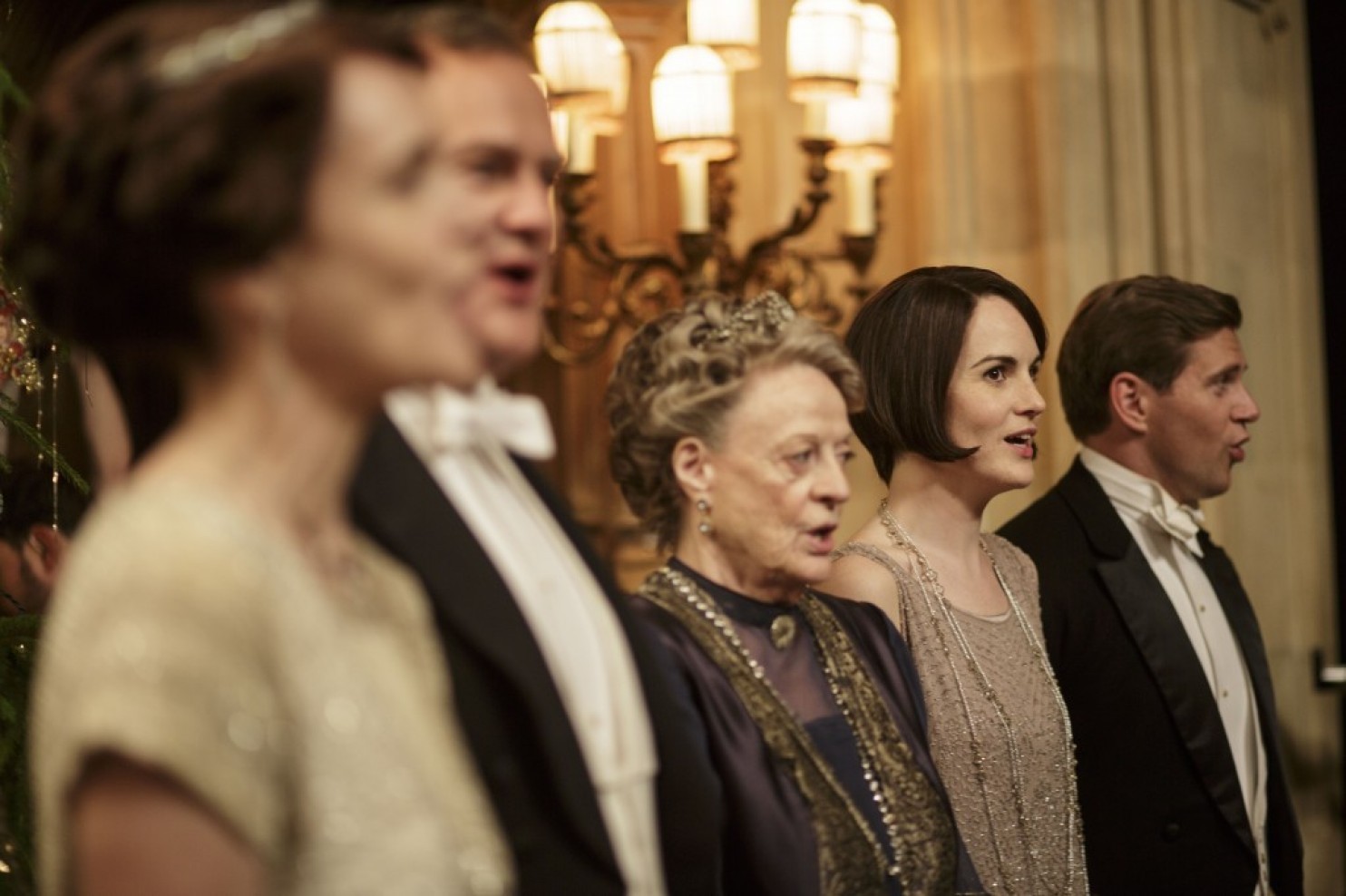
Downton S5 Finale

Kudos to director Minkie Spiro who has brought to life Julian Fellowes’ dense and captivating script. She has woven multiple story lines simultaneously, delivered the tensions, characters and conflicts at a flowing pace seamlessly without missing a beat. Both Fellowes and Spiro understand so well our collective psyche, that we in our hearts yearn for poetic justice: embarrassing the nasty, rewarding the good, reconciling the distant, and uniting the lovers… and I’m not just saying Rose and Atticus.

The father-daughter heart-to-heart in which Robert acknowledges Marigold, Edith’s child out of wedlock with Michael Gregson, is most endearing. How often do you hear a father utter these words: “I’m sure I need your forgiveness as much as you need mine.” And yes, he does have his secret of which even Cora is unaware.

Fellowes also ingeniously puts the skills and instincts of Downton’s trademark schemer, their very own Thomas Barrows to good use by letting him meet his equal in Stowell, and let them loose to wrestle and butt heads and finally to have Barrows come up on top, scoring for the visitors. The satisfying gesture is that he is winning the game for his employers and for Tom Branson, a worthy gentleman indeed, giving him his long due respect. Fellowes once again has proven that he is a master of tension at the formal dining table.

As for Anna and Bates, how many more trials and tribulations can a couple go through without having their marriage totally ruined? Fellowes knows when to stop; he is the ultimate puppeteer in the fates of the wrongly accused, but we thank him for leading them through thick and thin and bringing them out unharmed. And we enjoy the vicarious ride.

Rose too has redeemed herself. Looking back to her manipulative scheme in her earlier days, the fling on the town with jazz singer Jack Ross in Season 4 just to spite her mother, to Season 5 helping out the Russian refugees to finding and giving true love. We have seen Rose mature and proven herself considerate, trustworthy and resourceful, gaining favour from a very harsh father-in-law Lord Sinderby. BTW, recognize the man? He’s Uncle Geoffrey in Bridget Jones’s Diary.

And Atticus, don’t you just love that name? He is a good match with the totally transformed Rose. But with their move to America, we are sending them off with this Finale.

The ultimate union though belongs to Carson and Mrs. Hughes, Julian Fellowes once again knows what his viewers want and generously give them what their hearts desire. And Mrs. Hughes, being utterly surprised and most kind to demand Carson do it properly as Matthew and Atticus had done, kneel down and propose. Now that would have been a total shocker.

What falls short is the courtship between Isobel Crawley and Lord Merton, and that’s a shame, for they’d make a lovely pair. Violet Crawley can rest assure that her companion is still around to sharpen the iron in her, for it is not easy to find an equal like Isobel who is ever so ready to counteract her views. The reappearance of Prince Kuragin in her life turns out to be just a fleeting romantic interlude, gratifying still for an octogenarian.

Matthew Goode as Henry Talbot is an excellent prospect for Mary Crawley, why, they get to know each other by confrontations, however mildly put, not unlike Mary’s first encounters with Matthew. Hopefully this introduction would usher in Goode’s full-time presence in the upcoming Season, for here’s one that can make a worthy suitor for Mary. But what’s uncanny is, he’s into cars. And we all know what that passion can lead a man to, as Matthew’s tragic end is still vivid in our collective memory. I’m sure in Mary’s as well.

The heartbreaking event of course is Tom moving from Downton and England with young Sybbie to Massachusetts to help his brother with his auto-business. Again, the automobile seems to be the invention that brings mixed blessings. The most moving scene is the joining of hands of Tom, Mary, and finally Edith, to remember Sybil for a short moment, and Tom soaking in his last presence, storing memory of the room, or is it Fellowes’ way to let us do that, imprinting Allen Leech in our collective memory.

“We’re the three who should have grown old with her… and who knows when we’ll be together again.” I admit, this really hit me, the value of growing up and growing old together, the treasure of one’s peers. I’m not one who easily succumb to emotion, but this scene did it, not just for missing Tom in the future Season, but for all the family to miss seeing little Sybbie grow up.

Tom and Sibey

And now, another year’s wait… You know, Julian, we don’t mind waiting. Let’s have a few more.

***