The Girl In the Cafe (2005): The Hunger for Connection

February is the month that raves about love. It’s also Awards Season, culminating with the Oscars. With all the competing productions on the big screen, are you getting a bit overwhelmed by now? Or maybe a little indigestion even?

Here’s a little gem of a film, like lemon sorbet, simple and fresh, just to clear the palette. It’s only recently that I come across this DVD dated a few years back. O what a find! I took it out from the public library, have watched it three times, and maybe more before I ultimately return it.

Directed by David Yates (State of Play, TV) and written by the screenwriter who has brought us Bridget Jones’s Diary, Notting Hill, Four Weddings and a Funeral, Love Actually… Richard Curtis, The Girl in the Cafe is a reason why we should not dismiss TV movies or those that go directly from production to DVD.

The Girl in the Cafe

The story begins with a chance encounter. Lawrence (Bill Nighy, The Best Exotic Marigold Hotel) is an aging civil servant, a senior-level analyst working for the British Chancellor (Ken Stott). During one coffee break Lawrence, single, well no, married to his job, shares a table with a girl Gina (Kelly Macdonald, Dolly in Anna Karenina) in a crowded cafe. Thus sparks a genuine connection between the two. On a whim, Lawrence asks Gina to accompany him to attend the G8 Summit in Reykjavík, Iceland, the following week.

What’s that? Gina asks. Right, a most incompatible relationship. But just because of that, the drama, and conflict, sparks off. Lawrence’s shy demeanour fits perfectly with Gina’s quiet composure. But for both actors, their restrained and understated performance form the very essence of this charming and thought-provoking film.

Once there in Reykjavík, Gina is appalled by the facts she learns about world poverty from Lawrence, like, one child dying in every three seconds. She takes a very personal stance on the success of the Millenium Development Goals to fight extreme poverty. While heavy police force keeps protesters out of the Conference venue, Gina becomes one small voice that speaks out from inside, genuine and innocent among seasoned politicians, albeit bringing Lawrence unexpected ambivalence. Some may find it uncomfortable to watch this scenario, but I feel it is one that deserves to be played out, and definitely to be heard.

What grabs me right away as the movie begins is the soul stirring song ‘Cold Water’ as the images of Lawrence going by his daily routine all alone. At coffee break, he steps into the crowded cafe, and finds another soul also alone. It’s gratifying and a pleasure to watch them connect and warm up to each other in a most genuine and tender manner.

As the film ends, ‘Cold Water’ reprises, but by now I see the parallel. Not only do Lawrence and Gina reach out for human connectedness and love, the millions of dying children in extreme poverty are also uttering these words of the lyrics:

“Cold water surrounds me now.
And all I’ve got is your hand.
Lord can you hear me now?
Or am I lost?”

Don’t we all need a helping hand for the different kinds of hunger we experience as human? The song and the music in the film augment its impact in a quiet and haunting way.

Bill Nighy owns the role of Lawrence. His self-deprecating and gentle manner fits in perfectly with Kelly Macdonald’s authentic and genuine Gina. The two have such connectedness in their performance that they earned Golden Globes nomination for Best Actor and Actress the following year.

The DVD came with special features which include director and screenwriter’s commentary. That is definitely a bonus after viewing the film. From there I found out Nighy and Macdonald were in the British TV series State of Play before doing The Girl in the Cafe. So that’s exactly what I did… went to the library to borrow the DVD’s of the TV series, and binged-watched all six episodes, which I highly recommend as well.

~ ~ ~ Ripples

***

Watch on YouTube Damien Rice’s ‘Cold Water’ with lyrics.

***

Read my other reviews on films about love:

I’ve Loved You So Long

Away From Her

Never Let Me Go 

Downton Abbey Season 3: Episodes 2 & 3

Posts like this should go without saying: Spoilers Alert!

After a shaky start in E1, slowly picks up in E2, Downton Abbey is back on track and full steam ahead in E3. What a relief! I want to see it go on and on, season after season. But I would not wish to see it just ride on its popularity. I want the Downton feel back, that appeal which first captivated me from Seasons 1 and 2. I can feel it again in last night’s E3.

Previously in E2, the main event is the Runaway Groom: Sir Anthony Strallan gets cold feet and jilts Edith at the altar. Dramatic? Yes. Contrived? No. It takes courage for him to run away like that. Of course, he should have done that long ago and not wait till everyone is all dressed up. But I know, he isn’t sure before. I give him credits though for stopping the new career of Edith right there at the altar. And he needs to get out of there quick, before he changes his mind again.

I trust Sir Anthony is altruistic, thinking only of Edith. It’s not right for her to give up her life for an old man even though she sees him as her life work. Violet Crawley is quick to step in, contradicting Robert, with the three words that show who is still in charge: “Let him go.” With this dramatic scene, all else in E2 seems to fade by comparison.

The fancy wedding cuisine goes to the servants downstairs, and to the poor. But if they don’t want it, Violet Crawley wants them doggie bagged.

Gourmet wedding cuisine for downstairs

And oh yes, a letter suddenly appears, from Lavinia’s dead father, its content releases Matthew of his guilt for inheriting the large sum. So he is now free to chip in to save Downton Abbey from appearing on the real estate page in the paper. Does this deus ex machina device qualify the show as melodrama, or just sloppy screenwriting? Oh, who cares, the Crawleys don’t have to move, and that’s what’s important. A big hassle, downsizing. You can ask the Dashwoods of Sense and Sensibility, no fun moving from a big mansion to a little cottage.

Good news for Mrs. Hughes, it’s benign something something, not cancer. The relief is equally shared by Mr. Carson. Good man, the news sends him back to his former showbiz days, singing his heart out. But the kind words from Cora Crawley should not go unchecked. I’m sure Mrs. Hughes will be forever grateful: “You will stay here, and we will look after you.” Even though not getting cancer is still better.

**

With that we move on to E3, that’s where the drama begins, and the plot thickens.

Watching E3, I’m captivated once again as in previous Seasons. There are witty LOL lines, mostly from Violet Crawley as always; there are some not so LOL lines that are equally well said by others.

First off, I’m glad that Edith is no Ms. Havisham. Life is too good to be bogged down, even when you’re being jilted at the altar. And, as her mother says, testing can only make you stronger. That turns her from a jilted bride to women’s suffrage advocate. Take that, Ms. Havisham. So Edith has shifted her life purpose from taking care of an old man donning an arm sling to writing letters to the editor.

But the main event here in E3 involves Tom Branson, the former Downton chauffer turned Downton son-in-law turned Irish revolutionary. Woa, what drama. He escapes from Dublin police and slips back into Downton, leaving Sybil to run for her life. Oh, it’s all planned. But still, herein lies the dilemma. He wants to go back to Dublin but he’ll be arrested as soon as he sets foot there. Sybil wants to give birth in Downton, peaceful and safe, two words that are not in her husband’s dictionary.

Some memorable lines come from Tom’s confrontation with his father-in-law Robert Crawley, patriarch of Downton, who seldom wears anything else other than a tux, choice of wardrobe being black or white ties, with clout in high places, albeit still a good man he is.

Robert:  What a harsh world you live in.

Tom: We all live in a harsh world, but at least I know I do.

Something Robert would not have understood.

Ethel saying goodbye

Ethel the former maid turned prostitute can surely understand. It is a harsh world she lives in, having to raise a child with little means. Of course it’s heart wrenching to have to give up her son, handing him back to his grandparents, out of her own choice this time, knowing the child will have the best opportunities with them; with her, he has no chance. She had fought to keep him, tried to raise him on her own, but it didn’t work. That’s what makes it sad. It is poignant to see her wave goodbye as the coach moves away, with Mrs. Hughes and Isobel Crawley standing behind her, supportive yet each holding a different opinion about her choice.

New footman Jimmy is the main attraction downstairs, a timed bomb I can tell. And Mrs. Patmore finally gets a new kitchen maid to lighten up Daisy’s work load. But with this new gal, I’m sure Daisy regrets having started labor grievances. Alfred wants to make the new kitchen maid feel at home in no time. Be careful what you wish for, Daisy, you just may get it, nemesis in disguise.

I haven’t mentioned Bates and Anna you may have noticed. I know, Bates legal team is working day and night on Twitter, and free John Bates signs in the real world. But for dramatic effects, and a change of scenery from the lofty and elegant Downton Abbey, we see Bates debased in a prison cell. Here’s another person to agree with Tom. It’s a harsh world outside Downton. But then as Cora Crawley has said, testing would only make you stronger. Bates and Anna are exemplary in living out this motto. That Julian fellow sure knows how to lead and tease. With Bates and Anna madly reading each other’s letters after weeks of non-communication, Episode 3 ends, leaving us wishing the week would just fly by.

***

Other Related Posts:

Downton Abbey Season 3, Episode 1

Season 3, Episodes 4 & 5

Season 3, Episodes 6 & 7 Finale

Quotable Quotes from Downton Abbey

Lady Almina and the Real Downton Abbey: Facts that Give Rise to Fiction

***

Saturday Snapshot January 19

Winter in snow country. Here are some photos I took while trying out my new camera, a Nikon D5100. No editing has been done here, not even cropping.

I admit these are the more successful ones. There are lots that I’m not satisfied, with capturing light and focusing. Still figuring out how to use it, especially for birds. If you’re familiar with this camera, do let me know what’s the best settings for flying objects, identified or not.

Fences

Sunset at 4

Black-capped Chickadee

Squirrel

Saturday Snapshot is hosted by Alyce of At Home With Books. CLICK HERE to see what others have posted.

***

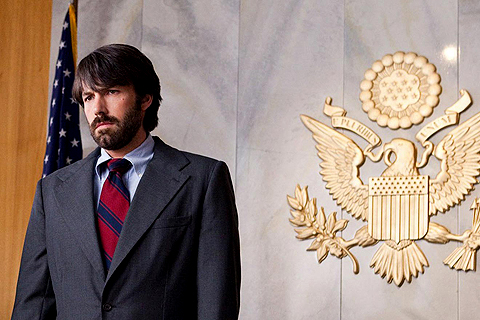
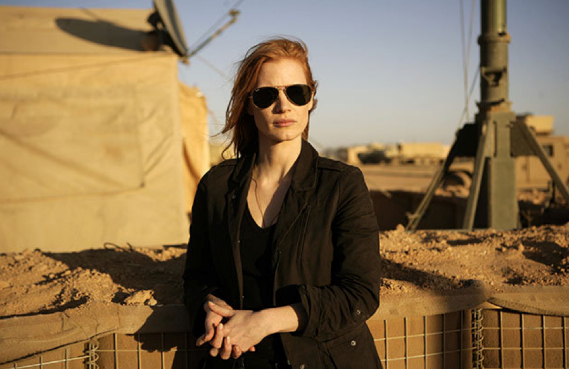
Zero Dark Thirty and Argo

There are several reasons I link these two films together. Both are acclaimed productions which have already garnered awards. While both films have been nominated for Best Picture in the 2013 Academy Awards, both directors, Kathryn Bigelow and Ben Affleck have been snubbed in the Best Director category. The reason I do not want to speculate. But for one of them, I have a hunch.

These are very American films, depicting Americans in crisis and its aftermath. Argo is about getting Americans out of Iran during the 1979-80 hostage crisis in Tehran, Zero Dark Thirty (ZD30) about hunting and getting into Pakistan to take down Osama bin Laden. Both involve the intricate work of the CIA.

And, both have driven me to the edge of my seat, despite the fact that I know the ending of the event they portray. This is the power of visual storytelling. But for me, the similarities may well end here.

Ben Affleck

Argo rests on one man, Tony Mendez, a CIA officer who masterminded the rescue mission, information declassified only in recent years. Played by director Ben Affleck, Mendez is decorated with CIA’s Intelligence Star and received other accolades after that.

ZD30 rests on one woman, known only as Maya in the film. A young CIA officer who for ten years, dedicated her life to the searching for Osama bin Laden. She is relentless in her pursuit, fighting not only outward threats of physical dangers but bureaucracy within an alpha male work environment. Her identity remains hidden.

Jessica Chastain has once again shown how versatile an actor she is. I have seen her in some very different roles: The Debt, The Tree of Life, Take Shelter, The Help. Here in ZD30, she has convincingly portrayed a strong leading female character with finesse. Her performance not only carries the film but our emotion as well.

Jessica Chastain

And not only Maya, ZD30 has shown us there are other female CIA officers performing perilous duties. Her friend and colleague Jessica is one of them. Now, as I watched this Jessica on screen, I kept thinking she looked so familiar. Only when I watched the credits roll at the end did I find out, lo, that’s Jennifer Ehle, Elizabeth Bennet (Pride and Prejudice, 1995) or a bit closer, Myrtle Logue in The King’s Speech (2010).

Director Kathryn Bigelow has done an exceptional job in turning Mark Boal’s original screenplay into a tight and engrossing film. Both won Oscars for The Hurt Locker (2008), Bigelow being the first woman to win the Best Director award. At the beginning of the film, we are told it is based on firsthand accounts of actual events. Despite knowing the ending, I was still captivated every step of the way, following the intelligence gathering process, the narrowing down of leads and locations, the red tape. The film is an alchemy of facts and fiction, a creative fusion. But for the audience, there is no way to distinguish which is which.

That leads to the controversial issue, one that some in Washington and now the Academy have condemned, the issue of torture. And here’s my take. Isn’t it a bit simplistic to argue that since the film depicts scenes of torture of detainees to get leads and information, it means that the filmmakers condone or even promote torture?

While the U.S. Administration had denied using any torture tactics in the final capture of bin Laden does not mean the total absence of them over the ten year post 9/11 period, both known or later discovered. The photos from Abu Ghraib prison are still vivid in my mind. None of the scenes in the film can compare to those real life photos. Or, come to think of it, could Abu Ghraib have informed the screenwriting? This being not a documentary, but a dramatized fusion, can one separate facts and fiction so clearly?

Or take Argo, how much is true about the rescue mission? How much is dramatized? What proportion should we give credits to the mastermind Mendez and the CIA, and how much should we credit the Canadian ambassador Ken Taylor (Victor Garber) for hiding the six American embassy staff in his home at his own risk? The same kind of simplistic accusation ZD30 is getting could also apply here: Does the fact that they all escaped Iran using false identity mean the filmmakers, or the Canadian government for that matter, promote deception and the forging of Canadian passports?

Unlike Argo, the ending is not celebratory in ZD30. Things are not as clean cut as planned. The final mission of assassination is messy, a helicopter is down and has to be destroyed on site. There are collateral damages. But the target is hit, mission accomplished. Nevertheless, there is no applause or celebration. The tone is sombre, which I think is most apt. The final scene with Maya alone on the large transport plane leaving Pakistan is the epitome of ambivalence. Jessica Chastain leaves us with a poignant expression. Is it justice, national security, or rather, personal vendetta that has been accomplished? The last line delivered by the pilot echoed in my mind after I’d left the theatre, dazed… Where do we want to go from here?

Zero Dark Thirty ~~~~ Ripples

Argo ~~~1/2 Ripples

***

CLICK HERE to read Kathryn Bigelow’s article on L.A.Times addressing the controversy of torture in the film Zero Dark Thirty. 

Golden Globes, Jan. 13, 2013: Argo won Best Picture, Drama, and Ben Affleck Best Director. Jessica Chastain won Best Actress, Drama, for Zero Dark Thirty.

Related posts on Ripple Effects:

History Made At The Oscars

The Hurt Locker 

***

Downton Abbey Season 3: Episode 1

CLICK HERE to Season 3: Episodes 2 & 3

When the pre-show outshines the main feature, I’m beginning to have a little concern.

The episode “The Secrets of Highclere Castle” is a fantastic one-hour focus on the history and present day Highclere Castle, the setting of Downton’s Crawley mansion. The information is largely collected in the book written by Countess Fiona Carnarvon, Lady Almina and the Real Downton Abbey: The Lost Legacy of Highclere Castle. Read my review of the book here. And you can watch the whole one hour feature here.

Lady and Lord Carnarvon
Lady Fiona and Lord George Herbert Carnarvon

I have high praise for Downton Abbey S1 and S2. That’s why since last February, there have been quite a few ripples sent out from the pond here. Like numerous others, I’m following the countdown to S3, this cultural phenomenon of using Downton Abbey to measure the passing of a year. So it was with much anticipation that I watched S3 premiered in North America on PBS last night.

It begins shakily (metaphorically and literally… maybe some shots with a hand-held camera?) telling the recent development of how everyone is doing. So many stories, so little time. So what we get is a montage, vignettes by the seconds. That is fine too, but somehow, the people seem different now.

It takes a while for me to get into the act, to get back that captivating feel as in S1 and S2. Such moments are sparse and far between, I’m afraid to say. Ok… before you fans of Downton throw pebbles at me instead of into the pond, there are a few ‘movie moments’.

My favorite is when Robert reveals to Cora he has lost all her money in a failed railroad company (Canadian? Sorry). He sheds tears for the loss while she is so forgiving and loving. What a moving scene. Cora Crawley is now my favourite Downton character.

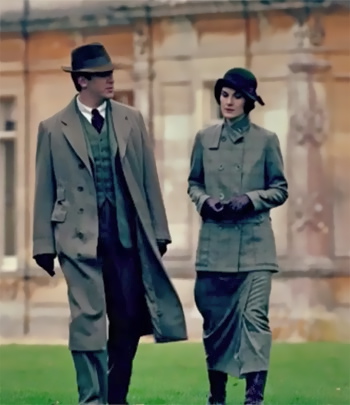
Matthew and Mary
Matthew and Mary

Another sweet moment gives me back the feeling of why I love DA in the first place, is the Matthew and Mary blind kiss the night before the wedding, a wedding that is almost called off. But here in S3 E1, it seems Mary has gone back to her old, old self where practical matters and Downton heritage surpasses love and honor. In this case, I’m all for Matthew, who is unwilling to take the large sum he inherits from Lavinia’s father. Again, here’s the guy with some backbone when it comes to moral dilemmas.

Shirley MaClaine as Martha Levinson
Grandmama from America

Shirley MacLaine as Martha Levinson, the Grandmama from America, is the highly anticipated new twist. And she doesn’t disappoint. We need someone to turn the table, tip the balance, add some spice of life to the stiff traditions of Downton, if that means setting a buffet table, guests choose their own food, be it cold cuts and what not, sit anywhere they like, and joining in an after dinner singing of ‘Let Me Call You Sweetheart’. Violet Crawley, take that.

The prison scenes with Bates and Anna are heartwarming, another reminder of why I love DA in the first place. Some nice shots. I particularly like the one he slowly limps down the long flight of stairs. While for justice’s sake he should be out of there. But for cinematic variety, I think Bates in prison offers a nice human touch of pathos, which again is why I like DA in the first place.

Other plot lines seem quite weak. Daisy goes on strike? She should first join a union. The too tall footman/valet Alfred’s troubles with Thomas, recycled from previous episodes of Bates’. And Mrs. Hughes, I feel so sorry for her. But Mrs. Patmore proves to be a solid and lively character. Edith has grown more beautiful while Sybil turns lacklustre.

I hope the rest of the episodes deliver what I’ve so highly anticipated. The 20’s is a stylish backdrop for a costume drama. They’re all dressed up, and I wish they have somewhere to go, and bring me there with them.

***

Other Related Posts:

Season 3: Episodes 2 & 3

Season 3: Episodes 4 & 5

Season 3: Episodes 6 & 7 Finale

Quotable Quotes from Downton Abbey

The Downton Ripples

Lady Almina and the Real Downton Abbey: Facts that give rise to Fiction

***

2013 Read-Along Begins: Bonhoeffer

Here we are already the third day into the new year. How fast time flies! To kick things off, here’s the first Read-Along. Allow me to just reiterate from my open invite on Dec. 12, 2012:

Bonhoeffer: Pastor, Martyr, Prophet, Spy by Eric Metaxas 

bonhoefer book cover

In the top ten of Barnes and Noble’s Best non-fiction books of 2010, and on New York Times Best-Seller list, this Dietrich Bonhoeffer biography intrigues me greatly. Author Metaxas’s title makes me want to know more about this legendary figure whose books I had read in my youth, but now think I don’t know him enough to fully appreciate his daring life, a man of faith and anti-Nazi in wartime Germany.

This slow reading plan gives you plenty of time so you can still pursue other books on your plate. I’ve roughly divided the biography in two parts, posting twice:

Chapters 1 – 18 (277 pages): to post on February 15

Chapters 19 – 31 (264 pages): to post on March 15

 **

With Arti, it’s always a slow read. You still have time now to order your book if you haven’t got it. And for others, dust it off the shelf. We’re reading the first part, Chapters 1 – 18 in Jan/Feb and posting our thoughts on these chapters on Feb. 15

Some of you may not be bloggers, you’re most welcome to join in the reading. Come to any of our posts on Feb. 15 and share your thoughts with us in the comment section. As I always say, the pond is open for all to throw in a pebble or two, make some ripples.

**

As of today, those who are joining in this read-along are:

Shoreacres of The Task At Hand (and cousin 🙂 )

Shari Green

Alison of Chino House

And those who have shown interest and still deciding, hope they will hop on soon:

nikkipolani

Jeanie of The Marmelade Gypsy

Hedda of Hedda’s Place

Ellen of The Happy Wonderer (reading already, hope she’ll join in the discussion)

If you’d like to read along with us, or join in any time later, just let me know in a comment and leave a link so I can add you on the list.

**

Before Feb. 15, you can always tweet me @Arti_Ripples or anyone of us who speaks in 140 characters.

Happy Reading!

***

COMING UP in March to May: Proust Read-Along

Top Ripples of 2012

The Ripple Rating System began when I started the blog Ripple Effects five years ago. I’ve been asked why I give three ripples so often, and how come there aren’t any one ripple. A look at how the rating works you’ll see why:

~ Ripple: Stay away, I did

~~ Ripples: Manage your time better

~~ 1/2 Ripples: Average, so-so

~~~ Ripples: Good, worth seeing

~~~1/2 Ripples: Superior, make time for it

~~~~ Ripples: Almost Perfect, must-see

You see, I’ve done the screening for you, just to save your time. But of course, the disclaimer here is, like Roger Ebert says, all reviews are subjective. But then too, here at the pond, ripples are the result of much thought.

**

In 2012, there are several movies I have given 3.5 or 4 Ripples. Two of them I have yet written a review. Here they are:

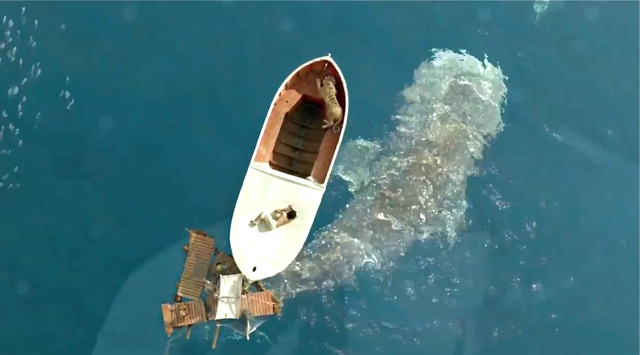
Life of Pi Book and Movie

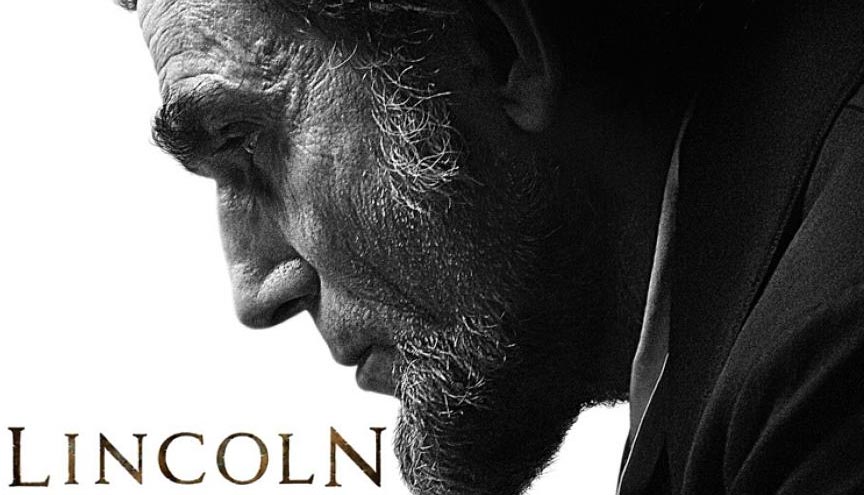
Lincoln

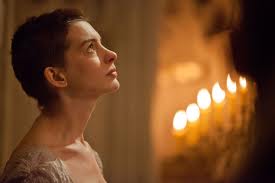
Les Misérables

Birders: The Central Park Effect

Argo

Moonrise Kingdom

I’m still eagerly waiting for some to screen here, so I’ve yet to see them, like Zero Dark Thirty, Quartet.

**

There are reading experiences that I would give 4 Ripples, they are Read-Alongs:

Midnight’s Children by Salman Rushdie

Anna Karenina by Leo Tolstoy

A first for me, reading with others in a virtual reading group. Two brilliant books, some delightful camaraderie.

**

And then there are real life experiences that I’d gladly give 4 Ripples in my heart.

Bird Watching: See my photos on Saturday Snapshot Posts

Also my visit to:

The Salk Institute

The Grand Canyon

Rating with 4 Ripples is an understatement or maybe even an insult to the Creator of the Grand Canyon. But just an expression, I think He understands.

**

Thanks to WordPress, I receive a concise annual report on my blog. Top posts for 2012 are:

Memorable Movie Love Quotes (My Valentine post for 2008, Over 73,000 views since then). 2012 views: 15,237

The Glass Castle: Book Review (Since Aug. 2008, over 47,000 views). 2012: 8,334 views.

Quotable Quotes from Downton Abbey: Over 7,400 views since March, 2012

The Best Exotic Marigold Hotel: Now this is a surprise. Since I posted it in May this year, there have been over 6,200 views.

**

And now, my favorite, the Search Engine Terms, words people type in to come to Ripple Effects. These are some that not only bring a smile, but boost the spirit as well (I’ll leave them in their lower case as found in WordPress Stats):

heaven

grace in nature

oldest human frozen

colin firth chocolate

canada lost in austen

keep calm and act like kate middleton

e.m. forster can’t tell a good story

alien captured alive

studebaker truck girl

did red dog go to japan

the blogger arti  [Arti here: just love to know people actually Google about me!]

arti film life of pi

arti never let me go

the best exotic marigold hotel post modernism

nowhere

paleolithic hunting

does meryl streep have affairs

how many languages does colin firth have

yann martel lonely

joshua bell modest

why was ulysses poem chosen for skyfall

most memorable tv seduction quotes

anna karenina psychoanalysis

**

To everyone who has stopped by the pond and thrown in a pebble or two, thanks for the ripples. There are some new regular visitors and followers this year, I’m so glad to know you all. You’ve made me feel we’ve known each other for much longer. I’ve enjoyed our mutual visits. Thanks for the enrichment.

And to All

A Happy New Year!

***

Les Miserables (2012)

These last months of 2012 see a bumper crop of film adaptations from literary sources. We have an eclectic array from the minimalist rendition of Yann Martel’s Life of Pi, to this long awaited maximalist Les Misérables, adapted from Alain Boublil and Claude-Michel Schönberg’s 1980 stage musical based on Victor Hugo’s 1862 novel. From Ang Lee to Tom Hooper, we are gratified on both ends of the spectrum.

It is a shift too for Hooper, fresh from his much smaller scale, Oscar winning The King’s Speech (2010), to turn and adapt a successful stage musical into a huge cinematic production. Yes, maximalist could well be the word to describe Tom Hooper’s Les Misérables.

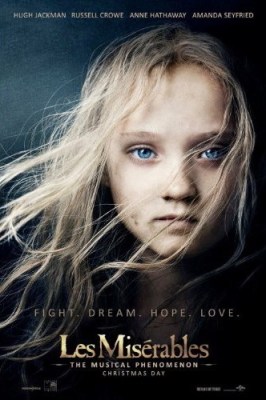
Les Miserables Movie Poster

I sat in a Cineplex theatre that offered Ultra AVX, Audio Visual Experience: wall to wall screen, big sound, huge images. Now of course, I would have seen it on a regular screen and with smaller head shots. For me, the AVX extravagance might even be a distraction. For as I watched the movie, it was in the small moments of torn sentiments, the minute scale of personal transformation, and the internal moral dilemmas so well acted out that I found Hugo a brilliant writer of the human soul. I don’t need big boom sound and maximized frames to sensitize me.

The epic scale is effective, and the cast is admirable in delivering a heartfelt performance. I can fully imagine the difficulty of casting, finding good film actors who can sing well. But overall, they are well chosen.

Hugh Jackman as Jean Valjean is impressive. No stranger to musicals, Jackman is a Tony Award winner himself, and here he is perfect for the role in every aspects, physiques, singing and acting. I’m glad to see he get a Golden Globe nomination for Best Actor (Comedy or Musical) in the coming Award Season.

Colm Wilkenson, a Broadway star dating back to Jesus Christ, Superstar and as Jean Valjean in the original musical of Les Miserables has a brief appearance as the Bishop, whose forgiveness of Valjean’s theft when he put him up for the night transforms the bitter soul of the hardened ex-con. His singing of course is impeccable.

Also glad to find out Eddie Redmayne can sing so well too. Like Jackman, he is a Tony Award winner, more recent and a much younger one. He plays Marius, among a group of young revolutionaries who set up the Barricade to defy the French militia. He is the young man who falls in love with Cosette (Amanda Seyfried) at first sight. Compared to his A Week With Marilyn, his performance here could well catapult him into more prominent roles in the future.

While many of the other main cast are not Broadway singers, their skills are laudable. Anne Hathaway singing ‘I Dreamed A Dream’ is probably one of the most successful trailers made. And here in the film, her affective appearance as Fantine only makes me wish she can stay a while longer. Good to see she gets a Golden Globe nomination for Best Supporting Actress (Comedy or Musical).

Anne Hathaway

Russell Crowe’s singing experience could have come mainly from his rock band, but his voice is fine here as Javert, the prison guard and later policeman on the trail looking for Valjean through the years. Yet it is not the singing, but the acting that I expected more. I know he is supposed to be cold and harsh, yet it is the internal fervor and depth that I find lacking. I think Geoffrey Rush is a more convincing Javert in the 1998 film adaptation… and I suppose he can sing too.

A marvellous duo that serve as a much needed comic relief is Sacha Baron Cohen’s Thénardier, ‘Master of the House’ and his Madame played by and Helena Bonham Carter. What a contrast with her role as Queen Elizabeth in The King’s Speech. The Thénardiers make one apt comic duo with their lively screen presence, great comic timing, and wonderful singing from both.

I must mention the two young actors. Daniel Huttlestone shines in his role as Gavroche, the boy at the Barricade. He has delivered a mature and poignant performance. I hope to see him appear in more films in the future.

The other is in the movie poster, an icon taken from the Musical. It is the image of little Cosette, here in the film movingly played by Isabelle Allen. The look-alike of the two images leads me to this thought:

I’m surprised to find the film adaptation follow the musical to the dot in terms of the song sequence. I think every one of them is performed, plus one more, ‘Suddenly’, written by Schönberg for the film. I was expecting a bit more creative cinematic treatment on screen. Further, the whole movie is connected by one song after another with almost no dialogues. For the film medium, editing could be better used here for pacing and avoiding redundancy. I feel the 157 minute production could be much tighter. With Schönberg directly involved in the adaptation, I’m sure he must have wanted every song preserved. Cutting the length must have been a delicate matter.

Overall, Hooper’s bold attempt to have the actors sing live instead of record the songs in a studio pays off. A first in recent decades, singing while they are acting creates and captures the emotions of the moment. With the title Les Misérables, we see a lot of heartfelt tears, and pathos of the human condition laid bare and raw. But Hugo’s universal theme also flows out as ready as the tears, that the power of forgiveness surpasses all wrongs, and grace triumphs over law. An apt offering for the Christmas season.

~ ~ ~ 1/2 Ripples

***

Life of Pi (2012): The Magical 3D Experience

Movies this fall is a bumper crop of film adaptations from literary sources. Two belong to the same genre of magic realism. While Midnight’s Children is more akin to realism, Life of Pi is pure magic.

Ang Lee has done it, filming what is considered the ‘unfilmable’. Canadian author Yann Martel’s Booker Prize winning novel Life of Pi is an existential fantasy, a story that challenges the limitations of human reasoning and opens the door to the imaginary and the quest for the Transcendent. What Martel has succeeded in literary form, Lee has realized in this visually stunning cinematic offering. While I know book and film are two very different art forms, I am glad that screenwriter David Magee has stayed true to the spirit of the novel, which I think is crucial in this case. Cinematographer Claudio Miranda’s creative camera work is also essential in turning Martel’s imaginary world into mesmerizing visuals on screen.

The difficulties are not just transposing the philosophical ruminations from book to screen, but to keep the audience’s attention and interest for two hours when the bulk of the story is about a 16 year-old boy adrift at sea for 227 days in a lifeboat with a Bengal tiger. Kudos to Lee for taking up this daunting task, a project of which several other directors had bowed out, including Jean-Pierre Jeunet (Amélie), M. Night Shyamalan (The Sixth Sense), and Alfonso Cuaron (Harry Potter and the Prisoner of Azkaban).

The production has taken Lee years to complete. He had to build the world’s largest self-generating water tank of its kind in Taiwan to shoot his film, utilize 3D technology and CGI to overcome many obstacles, do extensive research, and above all, find an actor who is capable to be Pi.

Ultimately Lee found 17 year-old Suraj Sharma in Delhi, India, from 3,000 candidates. Fate has it that Sharma was just accompanying his younger brother to the audition. The next set of challenges for Lee soon follows: directing Sharma who has never acted before, and, coaching him to imagine there is a fierce tiger present at the scenes, for Richard Parker is a virtual reality.

As I watched the film, I could see Lee’s own tenacity reflected in the character of Pi. In fact, the whole process of the production parallels the thematic significance of the story: the essence of reality, the nature of storytelling, the role of the imagination and faith in survival and in life.

**

The film begins with Pi as a boy (Gautam Belur at 5, Ayush Tandom at 12) growing up in Pondicherry, India. His father (Adil Hussain, English Vinglish) owns the Pondicherry Zoo. The most impressionable lesson he learns from his father is, the tiger is not his friend.

Pi has a loving mother (Tabu, The Namesake), and an older brother Ravi (Ayan Khan 7, Mohd Abbas Khaleeli 14, Vibish Sivakumar 19), a typical older sibling who teases and dares. This first act of family life is a delight, and the 3D effect in the opening sequence is wonderful to watch. The original score composed by Mychael Danna matches well with the exotic context.

We soon realize the story we are watching actually is the adult Pi (Irrfan Khan, Slumdog Millionaire) telling what had happened to him as a boy to a Canadian writer (Rafe Spall, A Room With A View), a story, Pi claims, that will make him believe in God.

Pi is short for Piscine. After the boy is constantly teased by his schoolmates with the pun of the name, he begins to introduce himself as Pi. He just might not have known how prophetic his name is. Precocious and earnest by nature, Pi embraces Hinduism, Christianity and Islam in his search for the divine. The value of Pi, the mathematical symbol, is 3.14, a number that goes on to infinity, which aptly reflects the boy’s heart for the Eternal.

**

When he is 16 (Suraj Sharma), Pi’s family emigrates to Canada. They set sail on the Japanese cargo ship Tsimtsum, bringing on board the zoo animals. One stormy night, tragedy strikes. A shipwreck sends Tsimtsum to the bottom of the Pacific Ocean. Pi alone is saved as some sailors throw him overboard onto a lifeboat. Thus begins the magical journey of life in an open boat. Pi soon finds out he is not alone, for there in the boat is a hyena, a zebra, an orangutan called Orange Juice, and Richard Parker, a Bengal tiger. Soon there remain only two survivors, a 16 year-old Indian boy and a hungry tiger.

Lee demonstrates his technical and directorial prowess in this major second act of the film. He has aptly chosen to use the 3D camera. I’m not a fan of 3D, nor animal movies, but Lee’s usage of it makes what could have been an uneventful drifting at sea into an extraordinary movie experience.

What I read in the book jump out alive in magnificent visuals: the squall of flying fish, the gigantic whale shooting up from the ocean deep, the cosmic showcase of thunder and lightning, and the island overrun by meerkats. Magical realism in 3D, pure cinematic fantasy.

Lee’s style is minimalist: a life boat, a makeshift raft, a boy, a tiger, the open sea. Its simplicity exudes immense beauty; its stillness evokes quiet ruminations. This is not just a castaway, survival story. It depicts a close encounter of a soul experiencing nature and its maker. It also portrays an unlikely companionship between a boy and a tiger. Despite the loss of his family and the perils thrown at him, Pi clings to life with bare faith and the companionship he finds in Richard Parker.

The last part comes as a twist. Two employees of the ship’s insurance company interview the sole survivor of the shipwreck after Pi is rescued. Upon hearing Pi tell his ordeal, their rationale overrides any acceptance of the improbable. Here we see the thematic elements of fantasy versus reality, faith versus plausibility cleverly laid out. Like Martel’s novel, it poses a question that is open-ended, more for the viewer to resolve than for Pi to prove. A most thought-provoking end to a magical journey.

~ ~ ~ ~ Ripples

This review has been published in the Asian American Press print version, Nov. 30, 2012 issue. Online edition here. (Hint: There you’ll find Arti morphing from virtual reality into real life… take whatever is real for you.)

**

CLICK HERE to read my Book Review of Life of Pi by Yann Martel.

**

Photos posted here are stills from movie trailer.

A NOTE ABOUT MOVIE PHOTOS: These images are used according to the Fair Use guidelines for criticism, comment and educational purposes. CLICK HERE for more information. CLICK HERE to read the Report of the Ad Hoc Committee of the Society For Cinema Studies, “Fair Usage Publication of Film Stills” by Kristin Thompson.

***

Anna Karenina (2012)

It is a good sequence, Anna Karenina read-along then the movie after. Screenwriter Tom Stoppard wrote as if his viewers already knew the story well, or have seen other film versions, for here, we are watching a highly stylized adaptation of Tolstoy’s epic novel, and it seems that it is a case of style over story.

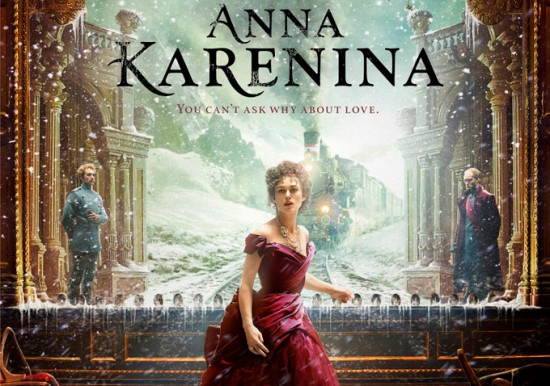
Anna Karenina Poster

Joe Wright’s (Atonement, Pride and Prejudice) version is a bold and therefore risky direction. Instead of a realistic rendering of Tolstoy’s epic, Wright offers us a new portal into the story of Anna Karenina. All the world’s a stage, and if anything, the highly reverberated gossip of Petersburg, the adulterous affair of Anna, wife of the respected government official Alexei Karenin with Count Vronsky is aptly rendered a spectacle. Wright’s innovative concept is an interesting take, weaving his characters between the front and the backstage and into the ‘real’ set.

The idea is brilliant, the permeability of actors in and out of limelight, mingling between their own realities, and the idea that all the world’s a stage, one is both an actor and a spectator.

However, the major premise of the cinema is make-believe. It is the ‘realness’, the believability of the characters and their predicaments that arouse our empathy. That happens when we emotionally immerse into the film. As a result, we care for the characters, even though we may not identify with them.

But here while watching this film, I experience a kind of cognitive dissonance. With its setting in the theatre, at the front and backstage, it is like a kind of deconstruction if you will, for we see that these are merely actors acting, and not ‘real’. So as a viewer, I’m just like a fly on the wall, observing how a theatrical production is done. As a result, I find myself detached and aloof.

A consequence of the highly stylized gestures and movements is that they lead to overacting. And with that, believability is compromised. Now, by genre this is not a musical, so, when seeing characters walk like they’re dancing or their actions performed in unison, like the public servants rubber-stamping paper works, the effect is comical. Well, it might be the intended effect, but one that sticks out in a contrived way. The harvesting scene with the workers swinging their scythe at the same time (do they actually do that in real life, for morale?) is another example, makes me think of how natural the harvesting scenes are in Terrence Malick’s Days of Heaven.

For some reasons, far from Anna Karenina, I have Stanley Kubrick’s A Clockwork Orange in my mind as an example of a successful stylized and yet captivating film.

Nevertheless, there are many admirable elements in the film. First the sumptuous set design and costumes. The continuous camera work from scene to scene is interesting to watch. But after a while, I feel like I need a breather. Thanks to the external shots, albeit few and far between, I can get a gulp of fresh air.

And I must mention a couple of impressive scenes. First is at the beginning, the opening ball where Kitty sees Anna dancing with Vronsky. That scene is well done in its dramatic effects. I can see the actors’ inner turmoils exposed believably, and for a rare moment, Anna’s conscience at work.

Another one is the horse race. It is interesting to see a horse race in a theatrical setting, like an indoor corral. Putting the horse race in a theatre does not seem to work for me at first, but Wright has handled it effectively… Vronsky’s falling, Anna’s outburst, the shooting of the back-broken horse is one of the few captivating moments in the film.

Aaron Taylor-Johnson

As for the casting, I’m afraid it looks like there is a bit of a miscast for one. Aaron Taylor-Johnson is believable as a young John Lennon in Nowhere Boy, but here in his blond curls and starched white uniform, he looks more like a truant school boy than the military rising star Vronsky.

Keira Knightly’s poise and costume give an apt portrayal of Anna. But sometimes her facial expressions make her look like a rebellious teenager, fighting house rules and ennui.

The one role I enjoy most is Matthew MacFadyen’s Oblonsky. My opinion might differ with many. I think he is a much more convincing Oblonsky here than Mr. Darcy in Pride and Prejudice (2005), another Wright’s production. Jude Law’s character is also well-portrayed as Anna’s restrained husband Karenin the government bureaucrat.

Good to see two of Downton Abbey’s actors in the film, Michelle Dockery (Mary Crawley) as Princess Myagkaya and for a brief minute Thomas Howes (Footman William) as Yashvin.

While the love affair between Anna and Vronsky leaves me quite detached, I do see love in others. I see it in Levin’s (Domhnall Gleeson) quiet yearning for Kitty (Alicia Vikander). I see it too in Kitty’s selfless caring for Levin’s ailing brother Nikolai (David Wilmot), and at the end I see it in Anna’s son Serhoza’s (Oskar McNamara) endearing concern for his toddler half-sister, and I see it in his father Karenin’s slight contented smile looking at his son care for Anna’s child with Vronsky.

And with that scene the film ends. All in all, the production is a brave new look at an old story. It can well lead to more readers trying to discover all the left-out conversations and story lines. And so be it, a worthy attempt to turn viewers back to the book.

~ ~ ~ Ripples

***

CLICK HERE to read my posts of Anna Karenina read-along.

Lincoln (2012): Some Alternative Views

What more can I say that has not been said about this movie? I don’t want to repeat that it’s a strong contender for the Oscar race, or that Daniel Day-Lewis will likely taste his third Best Actor win as Lincoln, or that Tommy Lee Jones should get a nom in Best Supporting Actor for his role as Thaddeus Stevens, or Tony Kushner’s fine dialogues and captivating screenplay…

Here are some other thoughts that came to me as I watched the film, and later brewed in my mind.

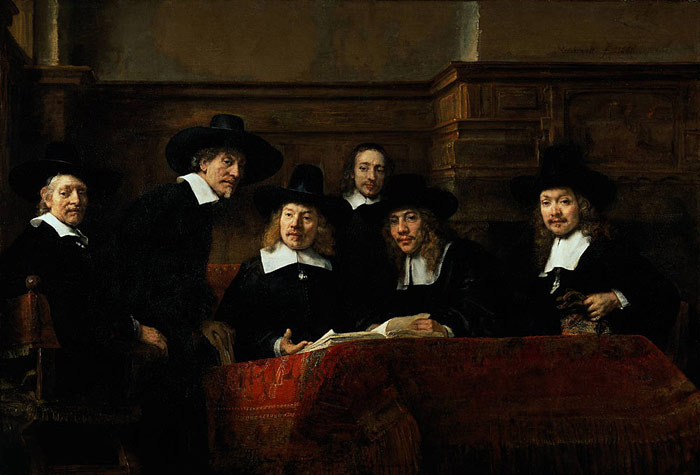
The Rembrandt impression. Watching the film is like seeing Rembrandt’s paintings come to life… especially all the indoor scenes with men gathering, in black, blue, and brown overtone throughout. Yes, the diffusing light from the windows may suggest Vermeer, but the predominantly men in most scenes dressed in black remind me more of Rembrandt. Like this one:

I can’t say much about the Dutch Masters in the above painting, they look pretty tame. But in the film Lincoln, the scenes wherein men congregate to discuss national affairs show the fierce power brokering and politicking of the time. We all know it was men who conferenced, talked about serious issues, made and won decisions, with whatever means avail to them, insults, intimidations, bickering, and persistent lobbying just to name a few.

And the women… The limited screen time Sally Field as Mary Todd Lincoln gets in the film could well indicate their position. Heaven forbid they get suffrage, and a voice. Truly, what can a wife do behind, in Mary’s own words, the most loved and powerful man in the country? How far we’ve come… but, does suffrage guarantee voices being heard? Just wondering.

As Mary Todd Lincoln, Field could well get an Oscar nom for her supporting role. She has done a fine job portraying the private grief behind the public face. Her son Willie died of high fever the night they had to entertain guests in a reception three years ago. A poignant scene occurs when the Lincolns as husband and wife quarrel over their past loss and now the possibility of losing another as their eldest son Robert (Joseph Gordon-Levitt) determines to enlist in the army, against his parents’ wish, or, is it only his mother’s?

From the photos above, we can tell how the casting, make-up and costume bring out the historic Mary Todd Lincoln. I remember Sally Field on Jay Leno said that she had to gain 25 pounds in 6 months to play the role, and later had to shed them all.

As an outsider, i.e., a non-American, I can’t say much about the accuracy of the content. I’m most interested to know which are Lincoln’s own words and in what context, and which are the scriptwriter’s. Even the British actor Daniel Day-Lewis himself had reportedly turned down the role at first as he felt he knew too little about the 16th U.S. President to portray him. As an outsider, I find it intriguing how an immensely influential historical figure is interpreted and portrayed. And apparently, there’s more than one angle.

Some time ago I watched PBS’s Looking For Lincoln, a documentary presented and written by Harvard professor Henry Louis Gates, Jr. It brings out a very different Lincoln, a complex, morally conflicting figure who had not initially tied the notions of freedom for the slaves with equality of the races. Gates went through extensive archival documents, Lincoln’s own notebooks, writings and debates, and interviews with scholars and academics to discover a Lincoln who had to lay aside prejudicial views and take on gradual personal changes as the Civil War bled on.

Interestingly, Gates interviews Doris Kearns Goodwin, the Pulitzer Prize winning biographer whose book Team of Rivals was what Spielberg based his film in parts on. It has been noted that even before she wrote it Spielberg was willing to secure the film rights. In Gates’ documentary, Goodwin admits that there is a need to demythologize the man Lincoln. While generations revere his greatness, he is very much human with strengths and weaknesses.

Spielberg’s interpretation is the popular frame and presents a singularly, saintly and benevolent emancipator instead of a complex and pragmatic politician, a 19th century white man who was very much a product of his times.

No matter, whatever angle Spielberg has chosen to interpret and present Lincoln, he has done it convincingly. Credits are due to Daniel Day-Lewis’s superb performance. He has salvaged any shortfalls with great charisma.

However, I do feel there are two weak sections in the film… the opening and later at the end. Seems like Spielberg is trying a tad bit too hard right at the start, for the opening scene sounds contrived as four young Union soldiers, two from each race, stand in awe in front of Lincoln in an army camp and recite back to him the Gettysburg Address.

The other is the assassination. With the whole movie resting on careful detailing of the passage of the 13th Amendment, I was surprised to find Spielberg’s treatment of Lincoln’s assassination in such a hasty manner, albeit the young son Tad’s reaction is moving. This is a scene that deserves much greater intensity and depth, not only for dramatic effects but for the balance of the whole story and expectation from the audience. Now this is the director who gave us the chilling sequences of Jaws, building the suspense of impending danger through the thumping of music and the ironic oblivion of the crowds.

Nevertheless, the second Inaugural Address ends the film on a poignant note. With malice toward none, with charity for all… Spielberg leaves us with Day-Lewis’s charismatic persona of Lincoln exhorting the crowd. With that, he has crafted another epic which will long be remembered, but in the short term, a sure contender come Oscars 2013.

~ ~ ~ ~ Ripples

***

CLICK HERE to watch PBS’s ‘Looking For Lincoln’. It is presented in titled segments. You can click on any of them to watch. But I highly recommend that you go through the whole documentary, just for some alternative views.

PHOTO SOURCES: Mary Todd Lincoln and Sally Field from Vanity Fair. Others are stills from movie trailer. 

Skyfall (2012)

And now for something totally different…

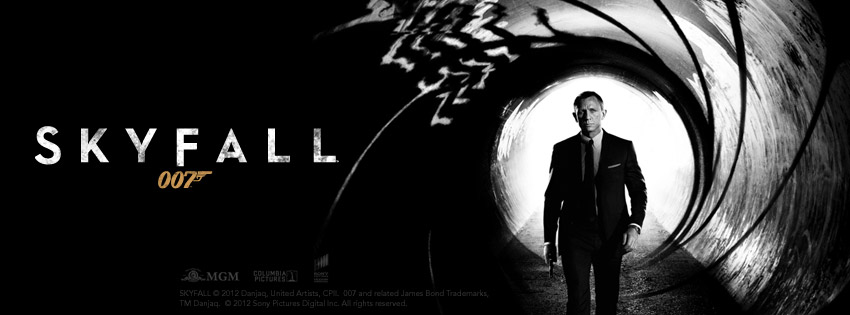
After 50 years, this 23rd instalment of the James Bond film franchise has just raised the bar and anchored its place in the 21st century spy action genre. Ian Fleming has long passed, but his iconic character lives on, portrayed and later resurrected by different suave British actors beginning with, and still my man, Sean Connery, to now Daniel Craig.

Resurrection is the word. You’ll hear it, and see its effect, for with Skyfall, looks like the franchise has just been resuscitated to a brand new life, just like the hero in the film. Kudos to Sam Mendes, the Oscar winning director who helmed such human drama as American Beauty and Revolutionary Road, working with cinematographer Roger Deakins, whose talent has enhanced some of my favorite films like Shawshank Redemption, Fargo, A Serious Man, True Grit

So what we have is a slick and stylish action thriller but not just in form. Sure, Daniel Craig in his Tom Ford suit, always standing straight and legs apart is all about style, isn’t it? Well, yes and no. Here, we see some internal tapping into the Bond character, just enough to tie over to the next action sequence. And we see too Bond shedding a few tears, for a good reason.

The villain is Javier Bardem. The cold-blooded psychotic killer in No Country for Old Men is just as ruthless and haunting here, but with a change in hair-do. He is Raoul Silva, a vengeful ex-MI6 agent who has gotten hold of a list of all the identities of MI6 agents embedded in terrorist organizations. His pleasure is to kill them down the list. Bardem’s image of Silva reminds me of Hannibal Lecter in The Silence of the Lambs, especially the scene with that transparent cylindrical cage… just gives away what would be coming next.

And our beloved Judie Dench, who’s so versatile that one minute you see her in The Best Exotic Marigold Hotel and the next transported into MI6 headquarters as M. Of course, she’s long been M before Marigold. In Skyfall, Dench deservedly gets more significant screen time than in previous Bond movies. In a later part of the film, M is called to a public hearing to justify her actions and even the existence of MI6. She has some powerful lines which make the scene so gratifying. Her voice-over juxtaposes with the urgent sequence in which we see the villain Silva leaving a trail of violence heading over to get her. Here are the poignant lines she delivers, from Tennyson’s poem ‘Ulysses’:

Though much is taken, much abides; and though
We are not now that strength which in old days
Moved earth and heaven; that which we are, we are;
One equal temper of heroic hearts,
Made weak by time and fate, but strong in will
To strive, to seek, to find, and not to yield.

Can you sense a bit how this is quite a different Bond film?

A fine cast is always the major asset. Another veteran is Albert Finney, who appears almost incognito (to me that is) but a good match with Dench.

With the new life comes two new faces. Both are excellent choices. One is Ralph Fiennes, and he definitely suits the part. Another is Ben Whishaw. Can’t imagine his transformation from John Keats in Bright Star to the digitally savvy young Q. Playing alongside Craig, Whishaw makes an interesting contrast, the gun-wielding old-timer in the field and the young computer geek in the office, taking control of situations with his fingertips.

Further, there are the exotic locations, Istanbul and other places in Turkey, Shanghai, Macau and… Scotland, which not for its exoticism but atmosphere. Cinematographer Deakins has crafted some very stylish scenes that distinguish Skyfall from just any other action flick… aesthetically appealing, moody and atmospheric, a mixed bag of nostalgic noir and contemporary, and in the last part, even a dash of gothic. If not for that iconic Aston Martin DB5 from Goldfinger parked outside the old stone mansion by the moor, you’d think it’s right out of Wuthering Heights.

Adele also joins the league. She co-wrote the Skyfall theme song and sings it in a way that echoes previous Bond numbers, most obviously, ‘Diamonds Are Forever’.

Skyfall has propelled the Bond film to a new era and up a notch. I’ve appreciated the internal character exploration but of course, there are still the spectacular explosions and car chases, the over-the-top mayhem and implausible escapes. We need those to ensure the audience that our hero is alive and well, after given a new lease on life. He’s still the same old Bond, James Bond.

~ ~ ~ Ripples

***