If you could say it in words, there would be no reason to paint.
In general it can be said that a nation’s art is greatest when it most reflects the character of its people.
—- Edward Hopper (1882 – 1967)
Edward Hopper’s words point to the power of the visual. I always find Hopper’s realist paintings hauntingly retrospective, convey indescribable feelings, a sense of loneliness, a touch of alienation, yet, it’s hard to say exactly what it is.
Some use the phrase ‘urban loneliness’ to pinpoint the sentiment, as most readily expressed in his famous painting Nighthawks. But others find the term too parochial even, opting for the more universal description of the human condition, ‘existential loneliness’.
In this visually-driven age, where pictures are instantly produced by a click, eliminating the wait for film processing, and where digitally created images can elicit unimaginable possibilities, has the value of words diminished, both in function and significance? In a time when ‘reading skills’ refer not only to the comprehension of the written language but the deciphering of graphics and visual symbols, has the power of words been eroded?
Does the recent passing of William Safire, called ‘the oracle of language’ by the NY Times, represent the passing of an era? How many are left to champion the traditional form of communication, to point out word origin, to extol proper grammar usage? While these gatekeepers are frowning on the split infinitive, the rest of the world has already jumped on board the newer vessel to boldly go where no person has gone before. The reign of literal communication has gradually (or quickly, or___ you fill in the blank) been replaced by the more accessible instant imaging, flickring, youtubing…
Let’s hope too that the traditional art form of painting will not be soon replaced by iPhone sketching. If the New Yorker’s cover artist is using an iPhone app to touch-produce its cover pages, will the demise of oils and paints be far away?
Of course, I come to praise Hopper, not to bury words, or paints. Rather than saying his paintings defy literal descriptions, let’s just take up this bemusing challenge and do a role reversal: What words conjure up in your mind when you look at these Hopper paintings? Let’s celebrate words, and paints, while we still have them.
Of all the subjects in his works, I particularly like the solitary figure, or the non-figure, like the room devoid of human presence. Here are some of them:
Automat (1927): Layered with subtext, what are the stories behind this lone female customer at the automat in such hour? What is a good description of her predicament?

.
New York Movie (1939): Here’s the reason why I love Hopper’s works. The contrast, the darker side, the quiet undercurrent beneath the glamorous, the sombre reminder of complexity.

.
Rooms by the Sea (1951): A touch of Magritte I feel. An example of what I call the non-figure. The philosophical quest of knowing: If nobody’s around to see it, does it still exist?

.
Cape Cod Morning (1950): Unlike his other works, this solitary female figure is positive, eager, enthused, and achingly expectant. Is she a symbol of the optimism of a new age, or will she be disillusioned as reality sets in? 1950 or 2009, is there so much difference anyway?

.
Gas (1940): I’m sure it’s not all about gas… does it allude to the lone traveling salesman like Willy Loman, or the gas station owner like George Wilson in The Great Gatsby?

.
Nighthawks (1942): Perhaps the most famous of Hopper’s paintings. As some call it, the depiction of ‘existential loneliness’. Is that Sartre sitting there all alone at 2:00 am, contemplating in a diner with no exit?

****
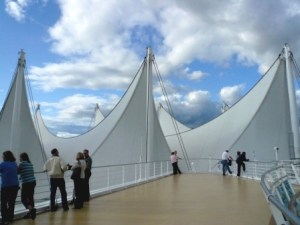
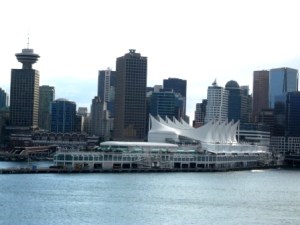

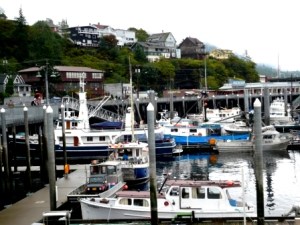
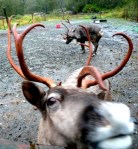
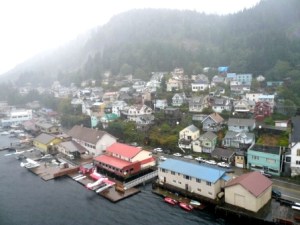
 Arti ventured into this area with a naturalist. Together with 15 others in our group, we trod the trails of the Alaska Rain Forest Sanctuary. Here are the sights I’ve sailed all the way for:
 Colorful undergrowth
 One of the many species of mushrooms, some giant ones grow on trees.
 Devil’s Paw, food for the bears. Underneath are poisonous hooks, but the bears deftly eat off the stems of the plant.
 Ferns and moss: Even tree branches are covered with moss. As the branches grow heavier, they will break off the tree, fulfilling a natural pruning process.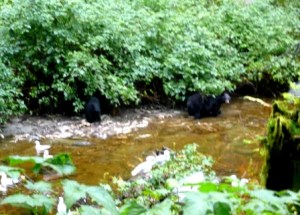




 Don’t look for me on Facebook, I’m not there. No Twitter account either. But don’t mistake me for a Luddite, I have my iPhone as my defence… and the Apps for all the social networking sites ready to install.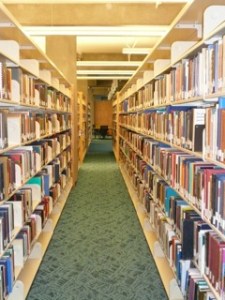





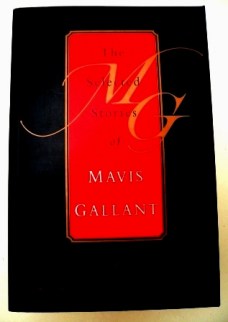 The Selected Stories of Mavis Gallant: 887 pages. Having seen the video of Mavis Gallant reading in a Paris book shop and her conversation with Jhumpa Lahiri, thanks to
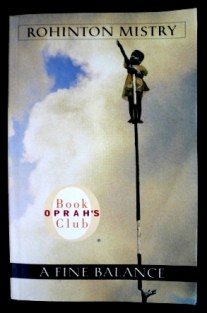 A lady held up a heavy box for me to take this one out underneath: A Fine Balance by Canadian writer Rohinton Mistry. “That’s a good pick,” she said.
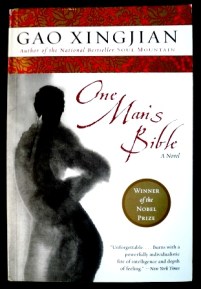 One Man’s Bible by Gao Xingjian, winner of the 2000 Nobel Prize for Literature, the first Chinese recipient of the Prize. Born in China, Gao has been living in France since 1987. The book is translated into English by Mabel Lee, associate professor of Chinese at the University of Sydney. Interesting… although this one I can read the original, the chance of me finding it in a farmers market here in Cowtown, Canada is not great. I’ll settle for the translation.
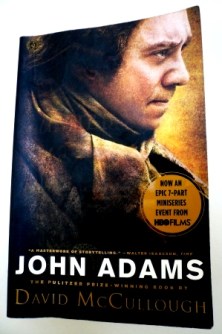 I missed the Golden Globe winning TV miniseries. So, grabbing the original material is just great. David McCullough’s 721 pages John Adams won the 2002 Pulitzer Prize for biography. This is a handsome movie-tie-in- cover edition with many color pictures. What a find!
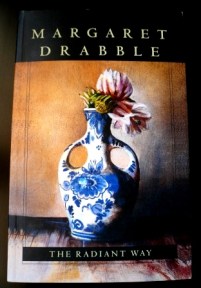 Talking about wonderful covers. How about this one: Margaret Drabble’s The Radiant Way. I’ve never seen this edition of Drabble’s book. A pleasure just to look at.
 And what’s summer reading without beach reads. Here’s my copy of The Devil Wears Prada by Lauren Weisberger. Again, seldom do I see a trade paperback of this title.
 Ripple Effects