Top 100 Books & Summer Reading Lists

Summers come and summers go,  reading lists for students tend to remain a constant, or… no?

According to The Boston Globe, the following are a few titles from high school summer reading lists over the years:

1915-1916 (long list of choices for regular year and summer)

  • Walden by Henry David Thoreau
  • Gulliver’s Travels by Jonathan Swift
  • Mill on the Floss by George Eliot
  • Works by Stevenson, Twain, and Dickens

1984 (requirements by grade and academic level)

  • The Grapes of Wrath by John Steinbeck
  • Jane Eyre by Charlotte Bronte
  • The Woman Warrior by Maxine Hong Kingston

2009 (recommendations, not requirements)

  • Twilight by Stephenie Meyer
  • Into the Wild by Jon Krakauer
  • Angels and Demons by Dan Brown
  • Pride and Prejudice and Zombies by Seth Grahame-Smith

ah…  the times they are a-changin.

Instead of (or, hopefully, on top of) reading the original Pride and Prejudice, students today are offered the zombies version… optional, of course.  The current view is, students should be enticed to read, not forced to.  Reading is supposed to be fun, after all, it’s summer.  

Summer

Around the same time, Newsweek published The Meta-List of Top 100 Books of all time.  The List is a compilation of 10 top book lists, including Modern Library, the New York Public Library, St. John’s College reading list, The Telegraph, The Guardian, Oprah’s, and others.  The Meta-List… the mother of all lists.

Here are the top 30,  just for a taste of the selections.  For the complete list, click on the above link.

  1. War and Peace by Leo Tolstoy (1869)
  2. 1984 by George Orwell (1949)
  3. Ulysses by James Joyce (1922)
  4. Lolita by Vladimir Nabokov (1955)
  5. The Sound and the Fury by William Faulkner (1929)
  6. Invisible Man by Ralph Ellison (1952)
  7. To the Lighthouse by Virginia Woolf (1927)
  8. The Illiad and The Odyssey by Homer (8th Century B.C.)
  9. Pride and Prejudice by Jane Austen (1813)
  10. Divine Comedy by Dante Alighieri (1321)
  11. Canterbury Tales by Geoffrey Chaucer (15th Century)
  12. Gulliver’s Travels by Jonathan Swift (1726)
  13. Middlemarch by George Eliot (1874)
  14. Things Fall Apart by Chinua Achebe (1958)
  15. The Catcher in the Rye by J. D. Salinger (1951)
  16. Gone with the Wind by Margaret Mitchell (1936)
  17. One Hundred Years of Solitude by Gabriel Garcia Marquez (1967)
  18.  The Great Gatsby by F. Scott Fitzgerald (1925)
  19. Catch-22 by Joseph Heller (1961)
  20. Beloved by Toni Morrison (1987)
  21. The Grapes of Wrath by John Steinbeck (1939)
  22. Midnight’s Children by Salman Rushdie (1981)
  23. Brave New World by Aldous Huxley (1932)
  24. Mrs. Dalloway by Virginia Woolf  (1925)
  25. Native Son by Richard Wright (1940)
  26. Democracy in America by Alexis de Tocqueville (1835)
  27. On The Origin of Species by Charles Darwin (1859)
  28. The Histories by Herodotus (440 B.C.)
  29. The Social Contract by Jean-Jacques Rousseau (1762)
  30. Das Kapital by Karl Marx (1867)

… and so on and so forth.  You get the idea.  Nothing on the top 100 list is later than 1987 (Beloved by Morrison) except Pullman (no. 84), and quite a few dating back to Centuries B.C. 

Now, is this literary elitism that has not caught up with the times?  Or, has our younger generation been short changed by not being taught to appreciate some valuable cultural legacy?  How do we reconcile the discrepancy between what’s recommended to our students and what experts think are the best books ever written?  Or, reading tastes vary, people are free to read whatever they like… Any list produced is therefore prescriptive and hegemonic?

Of course, one  could argue summer reading lists are not academic syllabi, give our students a break.  They’ll have the chance to read these great books at school… or, will they ever?

Still another debate would be the all too familiar struggle  even among book lovers: Literary or Popular Fiction, old or contemporary classics?   How do we choose?   Reading widely or reading deeply?  

 And, the very practical question:  How can I extend my 24 hours? 

***

A Midsummer Day’s Dream

It was pure serendipity.  Finding out there would be an interview with Michael Ondaatje at the Banff Summer Arts Festival was a wonderful surprise.  Hours later I was on my way to Banff National Park.  The 90-minutes drive through the Rockies listening to the soundtrack of The English Patient was surreal.  And the destination was just as picturesque and dreamlike:

Banff Summer Arts Festival

The Banff Centre

In the event entitled ‘Literary Primetime’, Michael Ondaatje, the Sri Lanka born Canadian poet, novelist, filmmaker, winner of the Booker Prize for The English Patient, was interviewed by Marni Jackson, the Chair of the Literary Journalism Program at The Banff Centre, an acclaimed writer in her own right.

Ondaatje’s impressive body of work includes novels, memoir and a dozen books of poetry, editorial work and documentary filmmaking.  But perhaps the most famous is The English Patient, which was adapted into film by the late Anthony Minghella.  The movie was awarded nine Academy Awards in 1996.

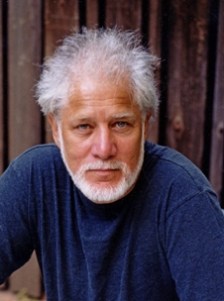
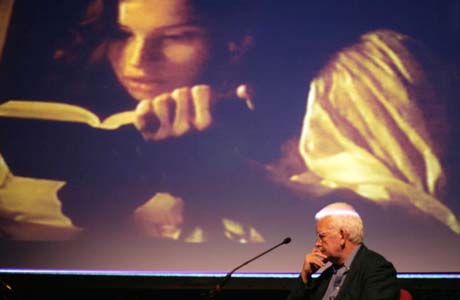
ondaatjeThe literary event started off with Ondaatje reading several passages from Divisadero, a book that brought him the fifth Governor General Literary Award.  I sat in the huge dining hall with an audience of a couple hundreds, entranced.  From afar I held my gaze at the silver haired writer framed by the large picture windows, the evening sun seeping through majestic evergreens, and silence shrouded the place except for one man’s gentle voice.  It was simply mesmerizing.
But it was the interview that made the dreamlike experience most rewarding.  The conversation explored the creative mind behind the writing process.  I jotted down some helpful tidbits:

Curiosity goes a long way.  It sparks off the research process, generating and sustaining the creative energy for the work.

Listen to the rhythm of the sentences.   “He would” or “he’d” could elicit very different effects.  Sound advice from a poet.

I was excited to hear Ondaatje address questions stemming from his book The Conversations: Walter Murch and the Art of Editing Film, which coincidentally, I am currently reading.  Murch was the film editor of The English Patient, one of my all time favorite movies.  The serendipity is most gratifying.  The art of film editing parallels that of writing… the essence is knowing what to cut, and when to move on.

While Minghella was writing the screenplay, Ondaatje was involved in the drafts.  The story had to be taken apart and rewritten to be adapted into film.  When you see your work being dismantled and reconstructed into another form, I imagine it takes courage, trust, and humility to accept that.  Ondaatje appreciates the art form of film and respects others’ expertise, entrusting his work in their hands.  This team effort, this alchemy of talents is most prominent in the making of the movie.

In the Interview, Ondaatje was asked about one excerpt from The Conversations. The writer and the film editor shares a common appreciation for the Chinese auteur Wong Kar Wai and his film In The Mood For Love.  The layering of sounds suggests the multiplicity of going-ons, events happening off-screen.  Such an effect can also be found in The English Patient.  The thickness of the actual and imaginary scenes adds complexity and depth, weaving a much more interesting tapestry.  Again, the parallel can be drawn with novel writing.  It’s the multiple offerings and the possibilities of interpretations that make a piece of writing intriguing:

“We are not held hostage by just one certain story, or if we are, we know it is just one opinion: there are clear hints of other versions.” (The Conversations, p. 160)

There were a couple of ideas I was a bit surprised to find.

First there is the ubiquitous self-doubt throughout the writer’s creative process.  Strange, and yet comforting, to find talented minds share this same psyche.  It is a humble sign to admit self-doubt.  The architect Frank Gehry and the late filmmaker Sydney Pollack came to mind.

“Her only virtue is self-doubt.” (Divisadero).

Second, and perhaps the most precious gem I collected from the event was reflected by Odaajte’s own words on the creation of a story: “I don’t know what would happen… I don’t want to know.”  The excitement of writing is that the story reveals itself as if it has a life of its own.  The writing process is an exploratory experience.  How gratifying to know we don’t need to follow a predetermined structure to plug in the story elements.  The creative mind is not bound by structure.  Let the story lead, and, enjoy the ride.

At the end of the Interview, Ondaatje was asked about a skills and job match questionnaire he once did when he was a young man.  The results showed that he could make one good customs officer.  Aren’t we all glad he had chosen to march to a different drummer and diverged in his career plan.

***


The Guernsey Literary and Potato Peel Pie Society

guernsey-literary-and-potato-peel-pie-society

“Reading good books ruins you for enjoying bad books.”

A novel in the form of letters?  I admit it wasn’t much of an appeal to me at first. After it has maintained its position on the New York Times Bestseller List for months, and now the trade paperback holding the first spot there, I just can’t resist anymore.

The book begins with a series of letters between a London writer Juliet Ashton and her friend and publisher Sydney Stark shortly after WWII.  Later, upon receiving a letter from Dawsey Adams, a resident of Guernsey of the Channel Islands, Juliet starts to correspond with the charming folks living there.

So how does the book title come about? Guernsey Island was occupied by the Germans during the war.   It happens that one night after a secret ‘pig out’, a few Guernsey residents are found breaking the curfew.  To find an excuse quickly when confronted by German soldiers, Elizabeth, our heroine, makes up the story that she and her fellow members have to leave a literary society meeting late as they’ve been so immersed in a German book.

This impromptu excuse soon takes shape in reality.  Thus begins the odyssey of reading, book discussions, and the members’ correspondences with Juliet Ashton.  Juliet is so immersed in their lives and moved by their situation that she later decides to go visit them, making the Guernsey Literary Society the subject of her next book.

Many of the letters are poignant descriptions of lives during the difficult war years.  The Guernsey residents have to suffer the searing pain of evacuating their own children to England for safety, seeing the young and healthy sent to war, finding others just disappear to concentration camps, and hearing eye witness accounts of heroic sacrifices for utter strangers. While all these years on the Island, they have to endure deprivation of food, basic necessities, and freedom. But the literary society meetings and the few reading materials in their possession remain their lifeline to humanity and dignified living.

“Everyone was sickly from so little nourishment and bleak from wondering if it would ever end.  We clung to books and to our friends; they reminded us that we had another part to us.”

Author Mary Ann Shaffer passed away in February 2008 and was succeeded by her niece Annie Barrows in finishing the novel.  In the Acknowledgment, Shaffer had written these words in December 2007:

“I hope, too, that my book will illuminate my belief that love of art — be it poetry, storytelling, painting, sculpture, or music — enables people to transcend any barrier man has yet devised.”

Despite the subject matter, readers will find the book witty and delightful.  Authors Shaffer and Barrows have depicted a myriad of lively characters, charmingly joined in their humanity by their strengths and weaknesses.  Yes, we can also visualize the madness of war. But we’re relieved to see too that people can weather hardship much better when they have a common bond, here, in the reading and sharing of fine literary works.  Mind you, these are not your academics and scholars.  The Guernsey residents are mainly pig farmers and vegetable growers.  As we read their letters, we soon see them as friends, Amelia, Dawsey, Isola, Eben, Eli, Elizabeth and little Kit…

And, am I such a Jane Austen fan that I’m seeing this:  Juliet Ashton (J.A.), Dawsey (Darcy), and Elizabeth, beloved heroine of all time.

What impresses me most is that the Guernsey Islanders are so willing to open their hearts and lives to writer Juliet, an absolute stranger, mainly because of their common love of the written words.  They find it an honor to be able to correspond with a real life writer, pouring their hearts out in respect and admiration, and quickly confiding in her.  A writer as a celebrity and friend?  It’s just fiction, you may say. But, why can’t it be real?

As for the art of letter writing, has it been lost as some have claimed, or has it merely been transformed into … yes, blogging, for example?  Because as I was reading the book, it flashed by me at times that I was reading some blog posts.  Are the writings that we post in the blogosphere a kind of open letter?  Our exchanges in the comment box our correspondences?  And, to push it a bit further, the telegram of old the early form of twitter?

The Guernsey Literary and Potato Peel Pie Society by Mary Ann Shaffer and Annie Barrows, Dial Press Trade Paperback Edition, 2009, 288 pages.

***

Click here to go to the Guernsey Literary and Potato Peel Pie Society website.  As for the potato peel pie recipe, yes, at the Jane Austen Society of North America website.

Nocturnes: Five Stories of Music and Nightfall

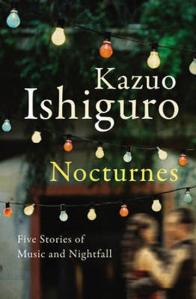
NocturnesNocturnes is a recently published short stories collection by Kazuo Ishiguro, the Booker Prize winning author.  Like a song cycle, the five stories are arranged with a common motif, alas, the loss of romance.  They take place mainly in Europe, in some romantic settings, like Venice.  The cycle begins and ends there.  Music is the essential backdrop.  It is the common thread linking the various ways the characters attempt to salvage lost love and revive relation stalemates.
Nocturnes is a light read.  The theme could be dealt with seriously, but Ishiguro apparently tries a very different rendition.  I had expected him to depict dreamscapes as he had done with his previous works, such as The Unconsoled, or While We Were Orphans, but I had not expected laugh-out-loud, hilarious scenes.  Unlike the serious tone of The Remains of the Day, we see Ishiguro in a comedic styling.  And, despite the meditative title, it’s not the classical music of Chopin that he has invoked, but Broadway, jazz, Irving Berlin, Ray Charles, Sarah Vaughan, and yes, ABBA, just to name a few.

The quintet is composed of ‘Crooner’, ‘Come Rain or Come Shine’, ‘Malvern Hills’, ‘Nocturne’, and ‘Cellists’.   They touch on a basic question:  Is a marriage finished with the loss of romance?  Is revival even possible after lovers have fallen out of love?

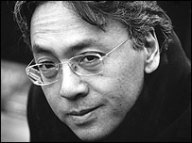
Kazuo Ishiguro

‘Crooner’ is poignant in depicting a once hot, now aging American singer trying to offer a last bit of love to his wife before the inevitable end.

‘Malvern Hills’ has a similar story line, but carries additional sadness in that the dispassion extends to the couple’s only son.

‘Nocturne’ offers an interesting perspective on Beverly Hills’ image-driven quest of the rich and famous, and the up-and-coming. It offers some real fun and sardonic humor.

And ‘Cellists’, well, I really don’t know what to make of it, a story about a cellist who is not a cellist…

The most hilarious scene is in ‘Come Rain or Come Shine’.  In the story, the main character has to cover up a mistake he’s made with the excuse that ‘the dog did it’. So, it’s canine method acting that he has to  take up instantly.  It is in such incredulous scenarios that the dreamscapes of Ishiguro emerge.  But this time it is more like merging reality with comedy romp.

Considering the motif of this literary quintet, Ishiguro’s humorous and sometimes farcical way of dealing could well have offered his readers a fresh perspective on the subject matter.  While Nocturnes may be a good pick for a beach read, I admit that I miss the poignant and pensive mood of The Remains of the Day.  I wish too that Ishiguro would re-visit his previous style in his future work, for his writing can be most subtle and incisive, heart-wrenching without commotion.  I missed such tonal expressions here, and the resonance they could have evoked.

Nocturnes: Five Stories of Music and Nightfall by Kazuo Ishiguro, published by Alfred A. Knopf Canada, 2009, 221 pages.

***

Photo credit: Jane Brown, www.list.co.uk/article/ 17435-kazuo-ishiguro/

More Great Finds!

Call me greedy.  I’ m happy to take the blame.  Since this is the last weekend of the gigantic used book sale at the Crossroad Market, I just had to go again for more treasure hunting.  If you take a look at my second loot list below, you’d have done the same.  As the lady said when I was squeezing my way in,

“It was a zoo yesterday.”

“You came here yesterday too?”  I asked.

“Yeah, sure!”   (Subtext:  What a dumb question… and, why didn’t you?)

So, again, these are all trade paperbacks in mint condition.  They are all a dollar each (Canadian).

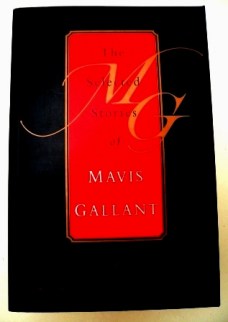
The Selected Stories of Mavis GallantThe Selected Stories of Mavis Gallant:   887 pages.  Having seen the video of Mavis Gallant reading in a Paris book shop and her conversation with Jhumpa Lahiri, thanks to fellow blogger oh introducing the Granta link, I was elated to find this volume.  It looked like it had not been opened, fresh, clean for the picking.

.

The Complete Short Stories of Thomas Wolfe

Short stories, the more the merrier.  I was delighted to find this volume:  The Complete Short Stories of Thomas Wolfe, 621 pages.  I’ve long wanted to read Wolfe, now’s a good time.


..

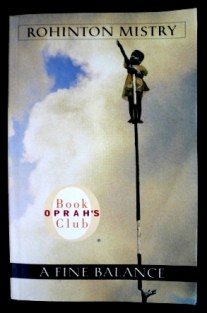
A Fine BalanceA lady held up a heavy box for me to take this one out underneath:  A Fine Balance by Canadian writer Rohinton Mistry.   “That’s a good pick,” she said.
“I’ve seen it many times, but think it’s too thick,”  I said.

“You wouldn’t want it to end,”  she said.    What higher recommendation can you get for a book?


                                        .

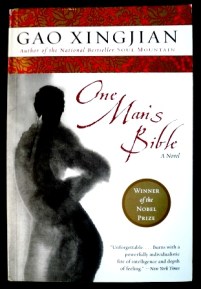
One Man's BibleOne Man’s Bible by Gao Xingjian, winner of the 2000 Nobel Prize for Literature, the first Chinese recipient of the Prize.  Born in China, Gao has been living in France since 1987.  The book is translated into English by Mabel Lee, associate professor of Chinese at the University of Sydney.  Interesting… although this one I can read the original,  the chance of me finding it in a farmers market here in Cowtown, Canada is not great.  I’ll settle for the translation.
.

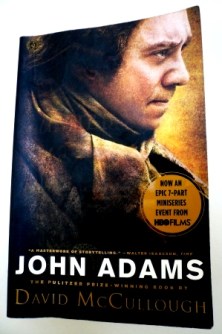
John AdamsI missed the Golden Globe winning TV miniseries.  So, grabbing the original material is just great.  David McCullough’s 721 pages John Adams won the 2002 Pulitzer Prize for biography.  This is a handsome movie-tie-in- cover edition with many color pictures.  What a find!


       .

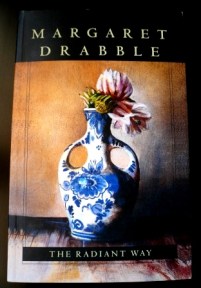
The Radiant WayTalking about wonderful covers.  How about this one:  Margaret Drabble’s The Radiant Way.  I’ve never seen this edition of Drabble’s book.  A pleasure just to look at.


The Devil Wears PradaAnd what’s summer reading without beach reads.  Here’s my copy of The Devil Wears Prada by Lauren Weisberger.  Again, seldom do I see a trade paperback of this title.


..

Here are the rest of  my 20 titles:

  • Digging to America by Anne Tyler
  • A Patchwork Planet byAnne Tyler
  • The Navigator of New York by Wayne Johnston (Giller and GG Finalist)
  • Larry’s Party by Carol Shields (Winner of 1998 Orange Prize and National Book Critics Circle Awards)
  • Fever Pitch by Nick Hornby (Saw the movie starring Colin Firth, quite liked it.)
  • The Book of Lost Things by John Connolly
  • The Reapers by John Connolly
  • The Lovely Bones by Alice Sebold (Just want to read it before the movie comes out.)
  • The Inheritance of Loss by Kiran Desai (Winner of the 2006 Man Booker Prize)
  • Durable Goods by Elizabeth Berg
  • The Gathering by Anne Enright (Winner of the 2007 Man Booker Prize)
  • Fall On Your Knees by Ann-Marie MacDonald
  • The Virgin Blue by Tracy Chevalier (Author of Girl With A Pearl Earring)
  • Bird by Bird:  Some Instructions on Writing and Life by Anne Lamott

It’s a tall order to read all the 40 books I hauled back these two weekends.  It’ll take me years.  But as any book lover can attest, it’s good to know they’re on my shelves.

***

Summer Reading 2009

When does ‘regular reading’ end and ‘summer reading” begin?  Well this year it’s easy.  The gigantic used book sale I went to over the weekend and the loot I brought back make it official:  Let summer reading 2009 begin.

The treasures I found were trade paperbacks in like-new condition.  And because I had twenty, they cost me just one dollar each.  Right, that’s Canadian dollar, even a better bargain.  How I found them was an ordeal.  They were painstakingly selected under smoldering heat at a farmers’ market.  For two hours, I elbowed my way in to grab hold of my targets which I had to eye from a distance over heads and shoulders.  But it’s all worth it.

Here’s a picture and a list of the titles I brought back:

Used Book Sale Loot 1

  • The Corrections by Jonathan Franzen
  • Anna Karenina by Leo Tolstoy
  • Simple Recipes by Madeleine Thien
  • Desperate Characters by Paula Fox
  • Bloodletting & Miraculous Cures by Vincent Lam (Giller Prize Winner)
  • The Sea by John Banville (Man Booker Prize Winner)
  • Saturday by Ian McEwan
  • Goodbye, Columbus by Philip Roth
  • Daisy Miller by Henry James
  • The Stories of Edith Wharton selected by Anita Brookner
  • The Mapmaker’s Opera by Béa Gonzalez
  • Always Now The Collected Poetry of Margaret Avison
  • Breathing Lessons by Anne Tyler (Pulitzer Author)
  • The English Patient by Michael Ondaatje (Booker Prize Winner)
  • Marginalia: A Cultural Reader by Mark Kingwell
  • Rebecca by Daphne Du Maurier
  • A Natural History of the Senses by Diane Ackerman
  • Lost Souls by Lisa Jackson
  • Moral Disorder by Margaret Atwood
  • Exit Music by Ian Rankin

Some of these titles I’ve long wanted to read, like Goodbye, Columbus and Rebecca.   Some are just well known titles or authors that I think I should read, like Tolstoy, Franzen and Tyler.   Some are winners of book prizes that I usually enjoy, the Booker, Giller, Pulitzer.   Some are fine Canadian authors and one of my favorite poets.   And some I’m just curious about like A Natural History of the Senses.  But one stands out.  This time, I’m literally judging a book by its cover:

Front Cover Mapmaker's Opera

Back Cover Mapmaker's Opera

The above are the front and back cover of the book.  There’s no title, only on the spine.  It’s enjoyable just looking at it.  But the title is appealing too:  The Mapmaker’s Opera.

Together with the books I’m already reading, plus my long TBR list, I think I’m topped up till next summer.

For More Great Finds, Click Here.

***

The Poets’ Corner

poets-corner-book-cover

Just got this from the library, and it’s a gem.  The Poets’ Corner is subtitled The One-And-Only Poetry Book for the Whole Family, compiled by John Lithgow.  Yes, that’s John Lithgow of the ‘3rd Rock from the Sun’.  From Matthew Arnold to W. B. Yeats, Geoffrey Chaucer to Allen Ginsberg, it’s more like a high school curriculum than your light family reading.  However, the collection includes many favorite selections, ideal to share as literary heirloom.

Lithgow presents fifty poets whose work he had grown up with.  He has written a two-page introduction for each of them, a personal response to a piece of literary art.  In the introduction of the book, he explains how it all started.  Lithgow was invited to host a benefit for a non-profit organization.  The fund raiser was for the fostering of creative approaches to educating autistic children.  He was given a few poems to read out that night, poignant poetry that speaks to the heart of parents with autistic children.  That night, Lithgow saw the power of poems read out, the voice and the words striking a shared chord with deep resonance. Thus planted the seed for this book.

The central theme here is not autism, but the selections here speak to a general and wider audience, humanity at large.  The bonus is a CD featuring readings from Lithgow And Friends.  I believe that poetry read out loud offers a heightened enjoyment than just from silent reading.  I had heard recordings of Robert Frost and William Carlos Williams  reading their own work, leaving indelible resonance that I didn’t get from reading off the page.

Here in this CD, what we have are  professional performers, experienced and well-trained in the art of speech, dramatically performing these selections. And Lithgow’s ‘Friends’ include: Eileen Atkins, Kathy Bates, Glenn Close, Jodie Foster, Morgan Freeman, Helen Mirren, Lynn Redgrave, Susan Sarandon, Gary Sinise, and Sam Waterston… what a cast.

Here are  some of my favorites, too bad I can’t embed the sound track.  But do check it out from your local library, or even get a copy of your own.  It’s a keeper.

We Real Cool by Gwendolyn Brooks

(Read by Morgan Freeman)

The Pool Players.

Seven at the Golden Shovel.

We real cool. We

Left school. We

Lurk late. We

Strike straight. We

Sing sin. We

Thin gin. We

Jazz June. We

Die soon.

***

I Wandered Lonely As A Cloud by William Wordsworth

(Read by Helen Mirren)

I wandered lonely as a cloud

That floats on high o’er vales and hills,

When all at once I saw a crowd,

A host, of golden daffodils;

Beside the lake, beneath the trees,

Fluttering and dancing in the breeze.

*

Continuous as the stars that shine

And twinkle on the milky way,

They stretched in never-ending line

Along the margin of a bay:

Ten thousand saw I at a glance,

Tossing their heads in sprightly dance.

*

The waves beside them danced; but they

Out-did the sparkling waves in glee: A poet could not but be gay, In such a jocund company: I gazed—and gazed—but little thought

What wealth the show to me had brought:

*

For oft, when on my couch I lie

In vacant or in pensive mood,

They flash upon that inward eye

Which is the bliss of solitude;

And then my heart with pleasure fills,

And dances with the daffodils.

***

The Red Wheelbarrow

by William Carlos Williams

(Read by Jodie Foster)

so much depends

upon

a red wheel

barrow

glazed with rain

water

beside the white

chickens.

***

No Doctors Today, Thank You by Ogden Nash

(Read by John Lithgow… I LOL listening to him)

They tell me that euphoria is the feeling of feeling wonderful,

well, today I feel euphorian,

Today I have the agility of a Greek god and the appetitite of a Victorian.

Yes, today I may even go forth without my galoshes,

Today I am a swashbuckler, would anybody like me to buckle any swashes?

This is my euphorian day,

I will ring welkins and before anybody answers I will run away.

I will tame me a caribou

And bedeck it with marabou.

I will pen me my memoirs.

Ah youth, youth! What euphorian days them was!

I wasn’t much of a hand for the boudoirs,

I was generally to be found where the food was.

Does anybody want any flotsam?

I’ve gotsam.

Does anybody want any jetsam?

I can getsam.

I can play chopsticks on the Wurlitzer,

I can speak Portuguese like a Berlitzer.

I can don or doff my shoes without tying or untying the laces because

I am wearing moccasins,

And I practically know the difference between serums and antitoccasins.

Kind people, don’t think me purse-proud, don’t set me down as vainglorious,

I’m just a little euphorious.

**

Lithgow and friends have convinced me all the more that poetry is written to be heard.

Poets’ Corner:  The One-And-Only Poetry Book For The Whole Family, compiled by John Lithgow, Grand Central Publishing, 2007,  280 pages.

National Poetry Month

April is National Poetry Month.  I’m glad we still celebrate poetry in this day of ephemeral twittering.  W. H. Auden once described poetry as “memorable speech”.  As millions upon millions join in on-line chats, exchanging the most trivial of their everyday life unreservedly, and even addictively all day long, how we need poetry all the more, to create lines that strive for some memorable quality worthy of keeping.

The late Canadian communication guru Marshall McLuhan was right, the medium is the message.   And such is the message of our time.  Mind you, I’m no Luddite, my iPhone is evidence.  I’ve gone through this before, so I’m not going to dwell on it here again.  It’s just that the rash and temporal nature of our medium, and mode, for that matter,  make me long for quality and permanence.

After posting an excerpt of  T.S. Eliot’s poetry in my last entry, I just didn’t have enough.  I re-read and explored more of his work and was amazed at how prophetic his vision was.  To celebrate National Poetry Month, here’s Arti’s selections of  lines from the work of T.S. Eliot, just for our post-modern, Facebook and Twitter generation.

nighthawk-by-edward-hopper

Twit twit twit

Jug jug “>jug jug jug jug jug

So rudely forc’d.

— The Waste Land (1922)


Teach us to care and not to care
Teach us to sit still.

— Ash Wednesday (1930)


There will be time, there will be time
To prepare a face to meet the faces that you meet;

….

Do I dare
Disturb the universe?
In a minute there is time
For decisions and revisions which a minute will reverse.

For I have known them all already, known them all: —
Have known the evenings, mornings, afternoons,
I have measured out my life with coffee spoons;

….

In the room the women come and go
Talking of Michelangelo.

— The Love Song of J. Alfred Prufrock (1915)


The endless cycle of idea and action,
Endless invention, endless experiment,
Brings knowledge of motion, but not of stillness;
Knowledge of speech, but not of silence;
Knowledge of words, and ignorance of The Word.

All our knowledge brings us nearer to our ignorance,
All our ignorance brings us nearer to death,
But nearness to death no nearer to God.
Where is the Life we have lost in living?
Where is the wisdom we have lost in knowledge?
Where is the knowledge we have lost in information?
The cycles of Heaven in twenty centuries
Brings us farther from God and nearer to the Dust.

— Choruses from The Rock (1934)


****

Visual: Nighthawks (1942) by Edward Hopper.  CLICK HERE FOR MORE EDWARD HOPPER.

The Merchant Ivory Dialogues

Re-watching The White Countess (2005) has prompted me to savor other Merchant Ivory films .  I love their sumptuous period set design, stunning cinematography and exceptional acting.  Some of them have garnered Oscar accolades, and since become classics, creating a genre of their own.

Long before Bollywood and Slumdog Millionaire, there was Ismail Merchant, born in Mumbai (formerly Bombay), India, in 1936.  He later went to New York to further his education, and started making movies in 1960.  On his way to the Cannes Film Festival in 1961 representing the U.S. with his nominated short, he met American director James Ivory.  The two formed a production company that same year, and the rest is history.

Before producer Ismail Merchant passed away in 2005, the Merchant Ivory Productions had created timeless masterpieces, most notably, adaptations from the work of E. M. Forster, Henry James, and Kazuo Ishiguro.  Together with German/Polish screenwriter Ruth Prawer Jhabvala, they have turned literary satires and portrayal of class-conscious Edwardian and Victorian English society into accessible popular movies, interpreting the humor and wit with a mark of their own.  Ironically, none of the three are English.  Maybe it does take an outsider to see clearly.   A short list of their impressive productions includes  A Room With A View (1985),  Howards End (1992),  The Remains of the Day (1993),  and The Golden Bowl (2000).

james-ruth-and-ismail


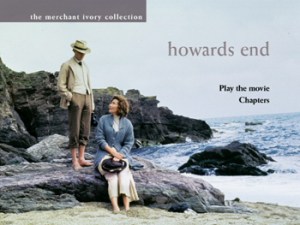
But here in this post, I must present to you The Merchant Ivory Dialogues.  Oh that’s not how it’s titled.  But Arti just named it so.  In the 2005 Criterion Merchant Ivory Collection DVD of Howards End (1992, 9 Oscar nominations, 3 wins) I found in the Special Features this amusing interview with producer Ismail Merchant and director James Ivory.  The conversation between the two are so whimsical that they could almost form a comedic duo.


howards-end


Here are some excerpts:

On the idea of creating Howards End the movie:

 M: Howards End started with Ruth (screenwriter) telling me and I think gave Jim the novel to read.                                     


I: Well hold on. I’d read it.

M:    Oh, You’ve read it.  I see.

I: I’d read it in fact twice.   Ruth always sort of not exactly dangled the book in front of us after A Room with a View and Maurice.  But she saw it  as a really ambitious, and to her would be most, most rewarding project for us and for her.

M: Anyway, it was slow going for me.


***


On Jim Ivory’s favorite scene

I: For me … from the first time, if I remember anything about it, except this scene where Margaret jumps out of the car when they run over a cat.  Charles Wilcox doesn’t want to go back and a little girl runs into the road and starts crying and Margaret leaps out of the car…

M: We had to go to this incredible preparation, real cat and the artificial cat and the dead cat…

 I: There’s no real cat.

M: And so I said no I don’t want to do it, you know.  But he insisted because it was his favorite scene, and it is not in the film.  So you should listen to the producer first.

 I: That’s all I can really remember about the book the first time I read it was that scene,  which I thought is incredibly dramatic…

M: That’s your favorite scene which is not in the film.

I: Which we shot and cut out of the film. Anyway…


***


On Forster the Social Critic:

M: Howards End is about the class system, and what Forster said about the inheritance of England. This beautiful house, a metaphor for England,  will be inherited by the lower class. That is what happens here. This beautiful house is inherited by the clerk’s illegitimate son. Well anyway, this is an interpretation of mine.

I: I don’t think Forster had all that great love for the working classes …

M: Not love for the working class but…

I (voice covering M): He had an ideal, which was, people should be able to mingle from whatever their background, whatever their class, they all ought to be able to in a civilized and happy world. And in the good England everyone ought to be able to mix together if only the different kinds and types of people could make a connection. Then it would be for the betterment of all.


***


On American Funding (or the lack of)

M: Howards End was an ambitious film at that time, eight million dollars, the budget. We could not get eight million dollars from anybody, you know, it’s just not possible because Americans never saw the possibility of this film being successful as they never see anything of consequence or civilized film to be successful. They have blinkers on their eyes, they never see anything beyond, you know, the form …

I (moving about in his seat, almost rolling his eyes): All Americans?

M: All Americans

I (raises his eyebrows just enough to show his disagreement):   All Americans.

M: All American film companies… with the exception… there are some sensible people like Sony Classics, they were at that time with Orion pictures….they were very excited but they only gave us a very small sum of money…of course, their enthusiasm and support were greatly appreciated but we had to raise 85% of the money outside…


***

emma-thompson-vanessa-redgrave


On Getting Vanessa Redgrave on Board

I: And then there was the casting of Vanessa Redgrave, who all along, from the very beginning I had wanted in that part. I thought she was the actress to play the first Mrs. Wilcox. And we kept sending her scripts, and this is the way it’s always is with Vanessa… You’re not sure she’s got the script, you’re not quite sure she’s read it, whether she likes it, whether she’ll do it…

M: I’ll tell you the story. Jim’s heart was set on Vanessa, and so was mine. So we sent this script and then we went to tea at Waldorf  Hotel. And so we were sitting there and she said she had four, five months all planned… and the money you offer is not enough. So I said what would you like.  She said if you could double that amount, I would do it. So I said ok, that’s it, you said it, now it’s double your salary. She couldn’t believe it was instantly, spontaneously done, because knowing that we had a small budget and we had to struggle for every penny. This was like giving whatever you want.

I: A very bad precedent.

M: Sorry?

I: A very bad precedent.

M: No it’s not a bad precedent at all. And for her I would do anything, you know. If she said get me the moon, I would get the moon for her. And it’s not possible for people to get the moon, but I would do it.

***


Ah… the creative process, the self and the collaboration, the art and the business, the part and the whole… just fascinating.

~~~~~


Photos:  James Ivory, Ruth Prawer Jhabvala, and Ismail Merchant received BAFTA Fellowship Award (2002)  news.bbc.co.uk;  Emma Thompson and Vanessa Redgrave in Howards End, toutlecine.com


The Reader: Book Into Film

the-reader1

The Reader is the highly acclaimed novel by German writer Bernhard Schlink.  It was first published in 1995 in Europe and the English translation came out two years later.  Anthony Minghella (Cold Mountain, 2003) was said to be the original director of the film adaptation, with his friend Sydney Pollack (Sketches of Frank Gehry, 2005) producing.   Their untimely death sadly altered the scene somewhat, even though they were still named as producers when the Awards Season arrived.  Thus the poignant acknowledgement from Kate Winslet as she received her Oscar Best Actress Award.

Selected as a New York Times Notable Book and a Los Angeles Times Book of the Year, the novel’s 218 pages are packed densely with poignant images and thought-provoking moral questions.  The first part takes place in the 1950’s. 15 year-old Michael Berg gets sick on his way home from school and is helped by a woman, Hanna Schmitz.  Thus sparks the sexual encounter and later love affair between the two.  Every time they meet, Hanna makes sure Michael reads to her literature from Homer to Chekhov.

After a while, Hanna disappears, and not until Michael becomes a law student does he see her again, this time in a post-war trial of Nazi criminals.  Hanna turns out to be a guard at a concentration camp during the Holocaust.  As Michael is awash by torrents of conflicting emotions while watching the trial, he is aghast at a personal secret Hanna refuses to reveal, one which could have saved her from a lengthy prison term.  Her only statement of defence is wrapped in one sentence:  “What would you have done?”  She asked the judge.

The last part of the book is in the present day.  Michael, now a lawyer, is still haunted by his past and the residual emotional ambivalence upon the release of Hanna from prison.  The story wraps up with a heart-wrenching ending.

Hidden behind the romantic facade is a story that deals with a deeply complex set of moral issues; the love affair between a 30 some year-old woman and a 15 year-old boy is only the initial spark.  This is not a Holocaust novel, but rather, an incisive depiction of psychological dilemma confronting a new, post-war generation in Germany.  The moral burden that Michael faces is heavy, seemingly unresolvable and yet born by the collective psyche:

“I wanted simultaneously to understand Hanna’s crime and to condemn it… When I tried to understand it, I had the feeling I was failing to condemn it as it must be condemned.  When I condemned it as it must be condemned, there was no room for understanding… it was impossible to do both.”

I read the book  a while back but have delayed seeing the movie, directed by Stephen Daldry and screenplay by David Hare (both of The Hours, 2002).  First off, I could imagine the film, having the advantage of transporting the literary into visual realism, can go all out gratuitously to depict the love affair between Michael and Hanna.  Further, the very complex moral issues the book deals with would be a challenge to transfer into film, making it less effective and maybe even trivializing the crux of the matter.

Well, I was both right and wrong.  The first part of the movie depicting the seduction of Michael (18 year-old David Kross) by Hanna (Kate Winslet) and which gradually grows into a full-fledged love affair does carry some gratuitous erotic sequences.  However, having watched the movie I have also come to appreciate the necessity of this relationship.  The love affair between Michael and Hanna is the very analogy of a younger generation having had to deal with the conflicting emotions of loving their own parents, many of whom were involved in the atrocities of the Nazi regime.

Both Winslet and Kross have delivered a most affective cinematic rendering of an otherwise despicable affair.  Winslet has brought out an exceptional performance, from a simple and passionate young woman to a grey-haired, seemingly amoral and yet deeply tormented prisoner.   The irony of the movie is that, by crafting a visually appealing cinematic offering, it has won over its viewers’ heart (especially Winslet fans), resulting in a much more sympathetic rendition of someone who has a hand in the death of hundreds of Jews under her guard.

Likewise, the portrayal of the older Michael (Ralph Fiennes) is less effective than it deserves.  Maybe due to his limited scenes, it appears that Fiennes lacks the time to dwell himself fully in the character to elicit the spectrum of conflicting emotions.  It may also be the weaker script, compared to the book, that has shrouded some critical issues with ambiguity.

But I did appreciate the scene where a distressed Michael consults with his professor (Bruno Ganz), who  distinguishes between law and morality.   The law has nothing to do with right or wrong, he tells Michael.  What’s legal doesn’t make it right.  Implication follows that duty and legality do not excuse wrongdoings.  While the  law regulates the behavior, it is morality that constrains the heart.

While the movie is appealing visually and offers some riveting performance, I urge viewers to be the reader.  That’s what I did, re-read the book as soon as I got home, and appreciated the written words even more.

Book and Movie

~ ~ ~ Ripples

The Reader by Bernhard Schlink, translated by Carol Brown Janeway, published by Vintage International, 2008,  218 pages.

Photo Source:  usatoday.com

****

No Texting for Lent and The End of Solitude

Roman Catholic Bishops in Italy have added some contemporary relevance in the fasting tradition during Lent:  High Tech Fast.  The faithful are urged to free themselves from the bondage of technology and gadgets, and refrain from surfing, emailing, twittering, texting … in order to prepare themselves for Easter.  This could prove to be a penance much harder to practice than not eating meat, even just on Fridays, for texting could well be the newest form of addiction today.

At about the same time, I heard an interview on the CBC Radio program Spark.  Host Nora Young conducted an interview with William Deresiewicz, literary critic and essayist, who has recently written an article entitled ‘The End of Solitude’.

Deresiewicz taught at Yale from 1998 to 2008.  When he asked his students what place solitude had in their lives, he got this reply: “Why would anyone want to be alone?”

With the ubiquitous use of high tech gadgets, and the torrents of Internet social networks around us, we are caught in a web of connectivity like never before:

Not long ago, it was easy to feel lonely.  Now, it is impossible to be alone.

Not only that, the goal now seems to be to gain as much self-exposure as possible, to be visible.  It seems that the number of friends we have on Facebook, and the number of hits on our blog directly leads to our self-esteem and our quality of self.  The irony is, the pseudo and the virtual are substituting the genuine and the authentic.

What does friendship mean when you have 532 “friends”?  How does it enhance my sense of closeness when my Facebook News Feed tells me that Sally Smith (whom I haven’t seen since high school, and wasn’t all that friendly with even then) ‘is making coffee and staring off into space’?

Deresiewicz notes that solitude used to be a desirable social value.  From religious sages to the Romantics like Wordsworth, solitude is the channel one hears the still, small voice of God, or heed the beckoning of Nature.  As modernism crept in,  the literati turned inward to find validation of self, like Woolf, Joyce, Proust.

Then came urbanization and suburbanization.  The generation that used to vegetate in front of the TV has given way to the child of the Internet, the networked self.  And we no longer believe in the solitary mind.

So what does it matter when we have lost the moments to be alone?  What have we lost?

First, the propensity for introspection, that examination of the self that the Puritans, and the Romantics, and the modernists (and Socrates, for that matter) placed at the center of spiritual life — of wisdom, of conduct.

Also, the urge to be instantly connected has bred a new generation of skippers and skimmers, replacing readers.

… five minutes on the same Web page is considered an eternity

No wonder we’re told to keep our blog posts short if we want to attract readership.

With the loss of the capacity for solitude, we’ve lost the ability to cultivate depth of self  and create independent thinking.  Emerson said that “Solitude is to genius the stern friend.”  Deresiewicz goes on to say:

…no real excellence, personal or social, artistic, philosophical, scientific or moral, can arise without solitude.

The irony is, the more we are connected with the virtual world out there, the less we are connected with ourselves inwardly.  But this is what’s valued nowadays, isn’t it, to be open, sociable, gregarious.  But to maintain a sense of authentic self, we may have to sacrifice popularity, to be not so polite:

Thoreau understood that securing one’s self-possession was worth a few wounded feelings.  He may have put his neighbors off, but at least he was sure of himself.

Those who would find solitude must not be afraid to stand alone.

Maybe this is one meaningful connection we should strive for: solitude, introspection, slow blogging, quality thinking, quality reading, quality writing, quality self.

****

Click here to listen to the full interview.

Click here to read the article ‘The End of Solitude’ by William Deresiewicz.

Click here to read my review of Sherry Turkle’s Alone Together

Click here to read my post on Virginia Woolf’s A Room of One’s Own in which she explored the privilege of Solitude.


Too Much Jane?

davies460

Andrew Davis pondering

The Welsh filmmaker Peter Greenaway once made a controversial remark criticising film versions of literary work as mere “illustrated books”.  Regarding Jane Austen’s work, he said:

Cinema is predicated on the 19th century novel.  We’re still illustrating Jane Austen novels–there are 41 films of Jane Austen novels in the world.

What a waste of time.

Click here for the Wales news article containing the above quote.

To the discomfort of Mr. Greenaway, there have been more Austen adaptations made since he spoke.  As recent as just two weeks ago, BBC has announced that a four-episode production of Emma will be launched this fall.  The award-winning writer Sandy Welch (Jane Eyre, 2006, TV; Our Mutual Friend, 1998, TV) is working on the new script, with actors pending.

Why do we need another Austen adaptation?  Do we need another “illustrated book” as Greenaway has argued?

I was surprised to hear such remarks from Mr. Greenaway, himself an art house filmmaker.  He certainly doesn’t need to be reminded of the power of the visual.  I have expressed my stance against his argument in a previous post entitled ‘Vision not Illustration’.  But as more Austen adaptations appear, laying ratings and profits aside, I still believe there is an artistic merit in turning book into film.

The visual has an immense power in bringing out the essence of the literary.  An image can elicit deep and hidden thoughts, stir up emotions of past experiences, point to new insights, and unleash multiple responses in just a short lapse of time.  The cliché  “A picture speaks a thousand words” has its application in this visually driven generation.  Not that I do not treasure the classics, or the literary tradition.  Far from it.  I think a good film adaptation can, at best, enhance our enjoyment of the literary, and if it fails, can only help us appreciate the original genius even more.

If Bach, over 300 years ago, could invent Theme and Variations, why can’t we in this post-modern age, where multiple narratives are cherished, create adaptations to a recognized original?  Of course, the key is held by the filmmakers. It takes the insightful and  interpretive lens of a good writer, director, and cinematographer to craft a fresh perspective, one that can evoke a new vision and yet still remain true to the spirit of the original.

Kate Harwood of BBC explains why another adaptation of Emma is ensued:

In Emma, Austen has created an intriguing heroine, and our four-hour canvas allows us to explore this multi-faceted character in detail.  Emma was Austen’s last novel, written when she was at the height of her craft, and we are delighted that such an esteemed writer as Sandy Welch is bringing her vision to this appealing story.

How appropriate it is for Harwood to see film as a canvas for visual exploration, and the writer’s vision as a crucial element in the creative process.

I say, bring on more Austen adaptations.  Jane would be most pleased… belatedly.

*****

The above posted article has since been published in the Jane Austen Centre Online Magazine, where you can read more about Jane and her world.  Click here to go there.   

Click here to read my review of Part 1 and Part 2 of Sense and Sensibility, broadcast on PBS Masterpiece Classic Feb. 1 and 8.